

The Law Offices of Anidjar and Levine are Jacksonville attorneys who focus on drug-impaired driving claims, and we protect victims by preserving every piece of evidence, documenting medical and economic losses, and pursuing full compensation for pain, suffering, and future care.
Our team secures police reports, toxicology results, and surveillance footage, and coordinates with medical experts to quantify current and projected expenses.
We negotiate assertively with insurers, meet statutory deadlines, and prepare robust demand packages that reflect the full extent of liability and damages.
For more information, see our Jacksonville Car Accident Lawyer.
Main Takeaways
- Hire a Jacksonville attorney experienced in drug‑impaired crash claims to protect your rights and maximize compensation.
- Promptly secure medical care, police reports, toxicology results, and witness statements for evidence.
- Preserve physical evidence (e.g., vehicle data logs, debris) and maintain a detailed timeline of injuries and treatments.
- File the claim within Florida’s statutory deadlines, coordinating with insurers and opposing counsel.
- Let the firm handle negotiations, demand calculations, and litigation to ensure full recovery for medical costs, lost wages, and future care.


How We Can Help With Your Jacksonville Drug-Impaired Driving Accident Claim
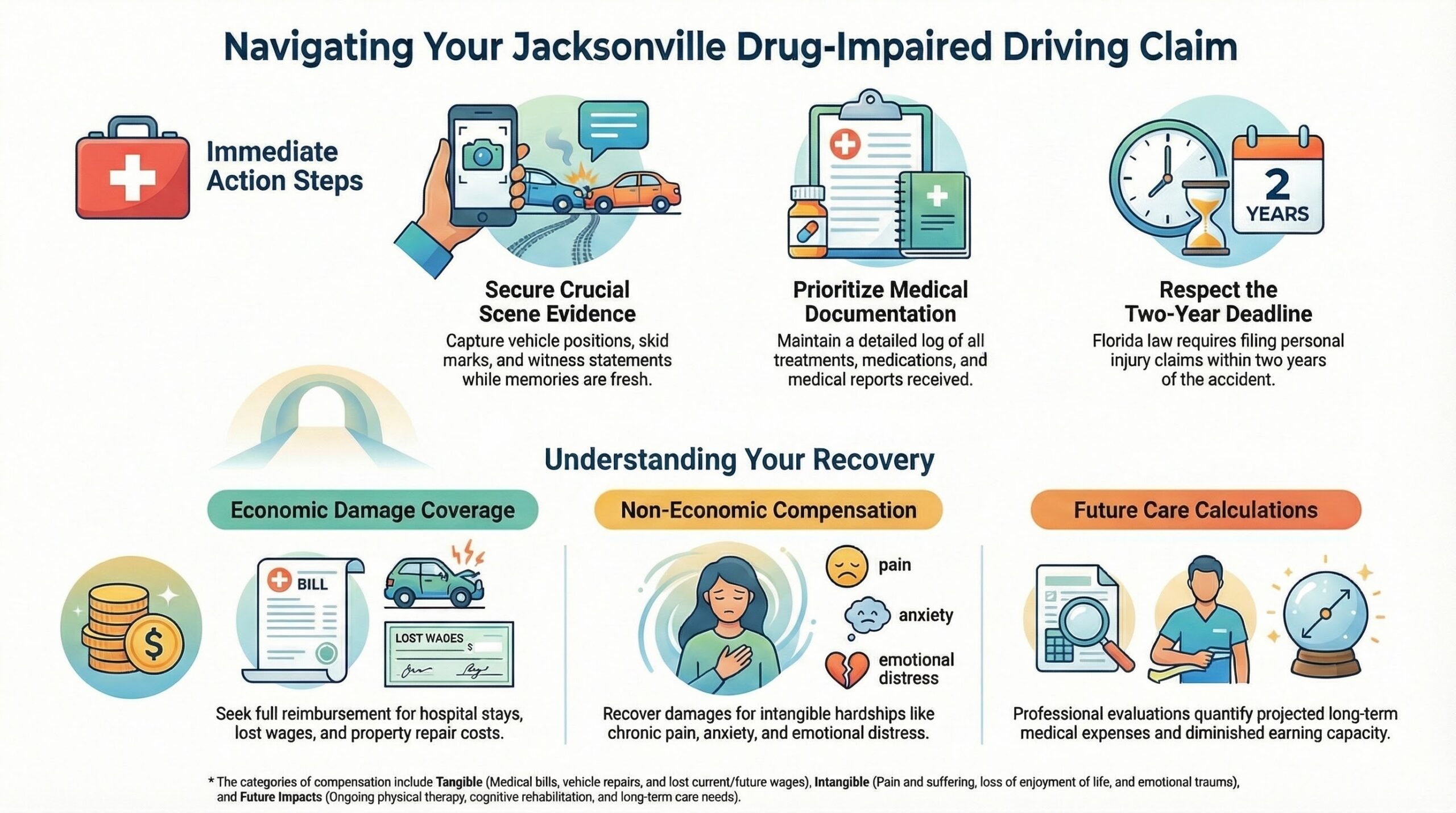
We’ll begin by evaluating every facet of your Jacksonville drug‑impaired driving accident claim to make certain you receive the compensation you deserve.
Our team systematically gathers evidence, interviews witnesses, and consults medical experts to build a resilient case that highlights the negligent behavior and its impact on your life.
We evaluate every facet of your Jacksonville drug‑impaired accident claim to secure the compensation you deserve.
We prioritize your financial recovery by quantifying medical expenses, lost wages, and future care needs, ensuring each loss is accurately represented in the demand package.
Simultaneously, we map out claim timelines, aligning procedural deadlines with strategic negotiations to avoid unnecessary delays.
By coordinating with insurers and opposing counsel, we maintain momentum while safeguarding your rights.
Throughout the process, we keep you informed of each development, allowing you to focus on supporting others who rely on your guidance.
Our disciplined approach blends legal acumen with a commitment to service, delivering results that reflect both justice and compassion.
OUR CONSULTATIONSARE FREE
START YOUR FREE CASE REVIEW

Understanding Jacksonville Drug-Impaired Driving Accident Cases
When a driver under the influence of drugs causes a collision in Jacksonville, the legal landscape becomes especially complex.
We must first recognize that drugged driving cases often involve nuanced evidence, including field sobriety observations and chemical analysis.
Roadside testing plays a pivotal role, as officers rely on oral fluid, breath, and blood samples to establish impairment.
We examine the timing of the test, the chain of custody, and the reliability of the device used, because any procedural misstep can jeopardize a claim.
We also assess the driver’s medical history, prescription use, and possible illegal substance consumption to determine intent and negligence.
Our team correlates police reports, witness statements, and accident reconstruction data to build a thorough narrative.


Common Causes of Jacksonville Drug-Impaired Driving Accidents
We recognize that mixing alcohol with drugs dramatically increases impairment, and we see many cases where prescription medication misuse contributes to loss of control.
Illicit substance use and its unpredictable effects also play a major role, especially when drivers combine them with other drugs.
Fatigue, when compounded by drug interaction, further diminishes reaction time and judgment, creating a perfect storm for accidents.
Alcohol And Drug Combination
Although many drivers assume that a single substance is the sole cause of impairment, the reality in Jacksonville traffic accidents is that alcohol often mixes with prescription medications, illicit drugs, or over‑the‑counter remedies, creating a potent combination that dramatically reduces reaction time and judgment.
We observe that polydrug interactions amplify the depressant effects of alcohol, leading to severe cognitive decline and slowed motor response.
Alcohol synergism further intensifies the impact of narcotics, benzodiazepines, and stimulants, compromising decision‑making and increasing the likelihood of reckless behavior.
In our practice, we emphasize that these combined effects aren’t merely additive; they create a hazardous state that exceeds legal thresholds.
Prescription Medication Misuse
Misusing prescription medication often creates a hidden danger on Jacksonville roadways, as many drivers underestimate the impairing effects of drugs they consider routine.
We see that dosage errors and label confusion frequently lead to unintended intoxication, especially when patients take higher amounts than prescribed or mistake one medication for another.
These mistakes impair reaction time, judgment, and coordination, making routine driving hazardous.
We advise drivers to verify instructions, use pill organizers, and consult pharmacists whenever doubts arise.
Illicit Substance Impairment
Prescription medication misuse has highlighted how even legally prescribed drugs can impair driving, and it naturally leads to a broader concern: the impact of illicit substances on Jacksonville roadways.
We see that street-level distribution of narcotics, stimulants, and hallucinogens often fuels impaired driving incidents, as drivers consume these chemicals without regard for safety.
Illicit paraphernalia—such as syringes, pipe fragments, and small baggies—frequently appear near crash sites, confirming substance involvement.
These substances degrade reaction time, judgment, and coordination, creating hazardous conditions for all road users.
By recognizing these patterns, we can better advocate for victims, pursue accountability, and support community initiatives aimed at reducing drug‑related crashes.
Our commitment remains to protect lives and uphold justice on Jacksonville’s streets.
Fatigue And Drug Interaction
When drivers combine fatigue with prescription or illicit drugs, their cognitive and motor abilities deteriorate far beyond the effect of either factor alone.
We see that sleep interactions amplify the sedative properties of many medications, turning a simple drowsy feeling into a severe impairment of reaction time and decision‑making.
In our practice, we explain that medication tolerance can mask early warning signs, causing drivers to underestimate their diminished capacity.
We therefore advise clients to assess both the quality of their rest and their medication regimen before operating a vehicle.
By recognizing that fatigue and drug interaction jointly increase crash risk, we help families protect loved ones and prevent tragic accidents.
Our guidance emphasizes vigilance, proper scheduling, and open communication with healthcare providers.
Legal Rights of Jacksonville Drug-Impaired Driving Accident Victims
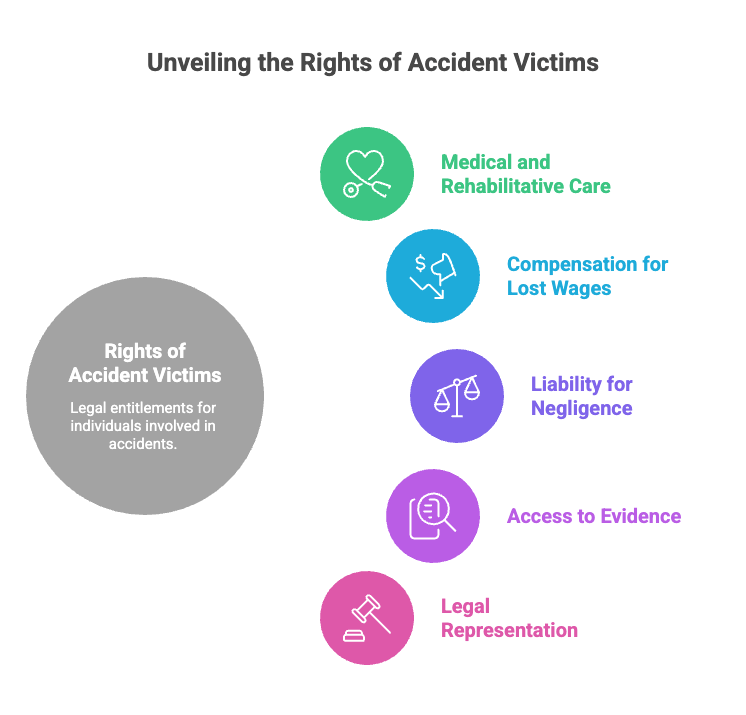
Justice demands that victims of drug‑impaired driving in Jacksonville understand the full scope of their legal protections.
We, as advocates, must inform you of the rights that empower you to seek compensation and hold negligent parties accountable.
Our approach blends victim advocacy with rigorous evidence preservation, ensuring that every claim rests on solid, admissible facts.
By recognizing these entitlements, you can steer through the legal system confidently and secure the support you deserve.
- The right to medical and rehabilitative care, promptly funded through claim settlements.
- The right to pursue full compensation for lost wages, future earnings, and diminished earning capacity.
- The right to hold the impaired driver and, if applicable, the vehicle owner liable for negligence.
- The right to access police reports, toxicology results, and accident reconstructions for evidence preservation.
- The right to engage experienced counsel who prioritizes victim advocacy and protects your legal interests.
Steps to Take After a Jacksonville Drug-Impaired Driving Accident
We should first secure immediate medical aid for anyone injured, then promptly collect evidence at the scene to preserve essential details, and finally notify both insurance providers and authorities to guarantee proper documentation and compliance.
Secure Immediate Medical Aid
We assess the scene, call 911, and describe injuries so responders can arrange emergency transport with triage prioritization.
While waiting, we keep the injured still, avoid moving them unless necessary, and monitor breathing and pulse.
We document the time of arrival and the names of medical personnel, noting any medications administered.
After care begins, we request a copy of the medical report and maintain a log of all treatments received.
This disciplined approach safeguards health, supports future legal claims, and demonstrates our commitment to serving those affected.
Collect Evidence at Scene
After ensuring medical care is secured, we turn our focus to preserving the scene’s evidence. First, we conduct thorough scene documentation, photographing vehicle positions, skid marks, road conditions, and any visible impairments.
We note timestamps and weather, and we capture each angle that could illustrate causation.
Next, we gather witness statements promptly, speaking with passengers and bystanders while memories remain fresh.
We ask open‑ended questions about what they saw, heard, and smelled, and we record their contact information for follow‑up.
We also secure any physical artifacts, such as broken glass or debris, and we label them for later analysis.
Throughout, we maintain a respectful demeanor, recognizing that our diligence serves both the injured parties and the broader pursuit of justice.
Notify Insurance and Authorities
If you’re involved in a Jacksonville drug‑impaired driving accident, promptly notifying your insurance company and the appropriate authorities is essential.
We advise you to contact your insurer within 24 hours and provide a factual account and all documentation to avoid allegations of insurance fraud.
Simultaneously, we recommend submitting an authority notification to local law enforcement and the Department of Transportation to ensure the incident is recorded accurately.
We’ll help you compile a concise report that includes driver information, vehicle details, and witness statements, which supports both your claim and any criminal investigation.
By acting swiftly, we protect your legal rights, facilitate a fair settlement, and contribute to community safety.
Our coordinated approach maximizes transparency and accountability throughout the process.
How a Jacksonville Drug-Impaired Driving Accident Lawyer Can Help You
When a drug‑impaired driver causes an accident, the resulting injuries, property damage, and emotional distress can overwhelm anyone.
We recognize that steering the aftermath requires more than just filing claims; it demands strategic advocacy and meticulous case management.
Our team guides you through each step, ensuring that your rights are protected and that you receive the compensation you merit.
- Conducting thorough evidence preservation to secure accident reports, medical records, and witness statements.
- Coordinating post-accident counseling referrals to address psychological trauma and reinforce your claim.
- Negotiating with insurers on your behalf, leveraging our know‑how to avoid lowball offers.
- Preparing all‑inclusive demand packages that illustrate liability and quantify losses.
- Representing you in litigation when settlement talks stall, presenting a compelling case before the court.
Long-Term Effects of Jacksonville Drug-Impaired Driving Accident Injuries
We recognize that chronic pain often persists long after the accident, requiring ongoing management and affecting daily activities.
We also understand that many survivors experience a decline in cognitive function, which can interfere with work performance and personal responsibilities.
Finally, we acknowledge the emotional and psychological impact, including anxiety and depression, that may develop and necessitate professional support.
Chronic Pain Management
Although the immediate aftermath of a Jacksonville drug‑impaired driving crash often dominates attention, the long‑term reality for many victims is chronic pain that persists for months or years.
We recognize that managing this pain requires more than medication; it demands a coordinated plan that respects the patient’s overall health and future goals.
By integrating opioid tapering with multidisciplinary approaches, we help clients reduce reliance on high‑dose narcotics while incorporating physical therapy, occupational therapy, and behavioral health support.
This collaborative framework addresses inflammation, restores mobility, and mitigates anxiety that can amplify pain perception.
Our team monitors progress closely, adjusting interventions as needed to assure sustainable recovery and preserve quality of life for those we serve.
Cognitive Function Decline
Cognitive decline often emerges as a hidden yet profound consequence of Jacksonville drug‑impaired driving accidents, persisting long after the initial injuries have mended.
We observe that survivors frequently experience memory decline, making it hard to recall recent events or retain new information.
Attention deficits also arise, reducing the ability to sustain focus during routine tasks or professional duties. These impairments can hinder the capacity to serve others effectively, especially for those in caregiving or community‑service roles.
Our team advises a thorough neuropsychological evaluation to quantify the extent of decline and to develop targeted rehabilitation plans.
Early intervention, cognitive therapy, and structured mental exercises can mitigate functional loss, preserve independence, and support continued contributions to society.
Emotional and Psychological Impact
When a Jacksonville drug‑impaired driving accident leaves lasting emotional scars, survivors often grapple with persistent anxiety, depression, and post‑traumatic stress that can reshape daily life.
We appreciate that these conditions may hinder work performance, diminish social engagement, and erode confidence.
By encouraging early trauma counseling, we help clients develop coping strategies that reduce intrusive memories and promote emotional stability.
We also recognize that relationship strain frequently emerges as partners and family members adjust to new behavioral patterns and heightened irritability.
Our guidance includes communication techniques that foster empathy, set realistic expectations, and rebuild trust.
Ultimately, our all‑inclusive approach aims to restore mental well‑being, support sustained recovery, and empower survivors to reclaim a productive, balanced life.
Proving Liability in Jacksonville Drug-Impaired Driving Accident Car Accident Cases
If a driver under the influence of drugs causes a crash, we must establish liability by demonstrating that their impairment directly led to the negligent conduct and resulting damages.
We begin by gathering police reports, accident reconstruction data, and medical records that show the driver’s condition at the time of the incident.
Toxicology timelines are pivotal; they pinpoint when the substances entered the driver’s system and how long they remained active, linking impairment to the moment of collision.
We also assess witness credibility by cross-examining witnesses and corroborating statements with corroborating evidence such as dash‑cam footage or nearby surveillance footage.
Dealing With Insurance Companies After a Jacksonville Drug-Impaired Driving Accident
In the aftermath of a Jacksonville drug‑impaired driving accident, we must confront insurance companies that often prioritize their own financial interests over the victim’s right to full compensation.
We begin by reviewing the policy tactics each insurer employs, noting that many will attempt to minimize liability through delayed communication or selective coverage interpretation.
By documenting every interaction, we preserve a clear record that supports our position.
We also respect claim timelines, adhering to statutory deadlines while urging the insurer to respond promptly.
Our approach includes requesting detailed statements of loss, scrutinizing any settlement offers for hidden exclusions, and challenging unjustified denials.
Throughout, we maintain transparent communication with the injured party, ensuring they understand each step and the rationale behind our actions.
This disciplined strategy protects the victim’s interests, mitigates unnecessary delays, and reinforces our commitment to achieving equitable, full restitution.
What to Expect During a Jacksonville Drug-Impaired Driving Accident Claim Process
We’ll begin by filing the initial claim and assembling the necessary documentation, then we’ll outline evidence‑collection strategies that strengthen your case.
Next, we’ll discuss insurance negotiation tactics that aim to secure a fair settlement while protecting your rights.
Finally, we’ll provide an overview of the litigation timeline so you know what to expect at each stage.
Initial Claim Filing
When you file your initial claim after a Jacksonville drug‑impaired driving accident, the process kicks off with a detailed intake interview that captures every relevant fact, including police reports, medical records, and witness statements.
We then review the statute checklist to verify that each required element—such as liability, damages, and causation—is documented, ensuring we meet all filing deadlines stipulated by Florida law.
Our team prepares a concise claim summary, attaches supporting documentation, and submits it to the insurer or court clerk within the prescribed timeframe.
Throughout, we keep you informed of any requests for clarification, and we advise on next steps while safeguarding your rights.
By adhering to these procedural standards, we aim to streamline the claim and lay a solid foundation for successful recovery.
Evidence Collection Strategies
After securing the initial claim, we turn our focus to gathering the evidence that will substantiate your case.
We begin by implementing strict preservation protocols to protect physical and digital artifacts, ensuring that every photograph, medical record, and police report remains untampered.
Our team coordinates with law enforcement to obtain the original breath‑test or toxicology results, then verifies that the chain of custody for those samples has never been compromised.
We also secure surveillance footage, eyewitness statements, and vehicle data logs, documenting each source with precise timestamps.
Throughout the process, we maintain meticulous records and cross-check each item against the claim’s timeline.
By adhering to these rigorous standards, we build a solid evidentiary foundation that supports your claim and upholds the highest level of professional responsibility.
Insurance Negotiation Tactics
Negotiating with insurers after a Jacksonville drug‑impaired driving accident requires a strategic approach that protects your rights and maximizes compensation.
We begin by reviewing the policy language, then we present documented losses, medical records, and expert assessments that substantiate our demand.
Our settlement tactics include a phased offer strategy, starting with a realistic figure that anticipates insurer counter‑offers while preserving leverage for higher recovery.
We remain vigilant for bad-faith claims, documenting any unreasonable delays, undervaluation, or refusal to settle that could breach the insurer’s duty of good faith.
By maintaining clear communication, we keep the client informed and guarantee that each negotiation step aligns with their best interests.
This disciplined process safeguards fairness and seeks the fullest, lawful compensation possible.
Litigation Timeline Overview
If a Jacksonville drug‑impaired driving accident leads to litigation, the process unfolds in clearly defined phases that we guide you through from filing the complaint to final resolution.
First, we secure evidence by preserving it, gathering police reports, medical records, and witness statements before they deteriorate.
Next, discovery begins, allowing both sides to exchange documents and depose parties, which often clarifies liability and damages.
After discovery, we evaluate settlement timelines, negotiate with insurers, and monitor case progress.
Should negotiations stall, we move to trial preparation, drafting motions, and assembling expert testimony.
Throughout, we keep you informed, adjusting strategy as new facts emerge.
Finally, the court issues a judgment, or a settlement is reached, concluding the claim with a focus on fair compensation and closure.
Compensation for Jacksonville Drug-Impaired Driving Accident Damages
Maneuvering the aftermath of a drug‑impaired driving collision in Jacksonville requires a clear understanding of the compensation available for the myriad damages we may sustain.
We must first assess the tangible losses that directly affect our financial stability.
Lost wages are the income we cannot earn during recovery, quantified by documenting employment history, hourly rates, and projected future earnings.
Property damage includes repair or replacement costs for vehicles and personal belongings, as well as structural damage to residences.
By gathering repair estimates, police reports, and medical documentation, we create a thorough claim that reflects the full scope of our economic injury.
This systematic approach enables us to pursue the maximum restitution permissible under Florida law, ensuring that victims receive fair compensation for both the income they’ve lost and the property they’ve had damaged.
Economic vs Non-Economic Damages in Jacksonville Drug-Impaired Driving Accident Cases
We’ll explain how economic damages such as medical lossage compensation and expense reimbursement differ from non‑economic losses like pain and suffering, and why both categories are vital in Jacksonville drug‑impaired driving cases.
Our discussion will outline the criteria courts use to quantify each type of loss, ensuring you understand the full scope of recoverable compensation.
Medical Lossage Compensation
When a Jacksonville driver is injured by a drug‑impaired motorist, the compensation we pursue must address both the tangible financial losses and the intangible hardships that follow.
We focus on medical loss-of-income compensation, which quantifies the economic impact of injuries sustained.
This includes reimbursement for medical negligence that exacerbated the condition, as well as lost wages incurred while the victim recovers.
By calculating the exact amount of income foregone, we guarantee the client can maintain financial stability during rehabilitation.
Our team also evaluates future earning potential, accounting for any long‑term limitations on work capacity.
This all-encompassing approach safeguards the client’s livelihood and reflects our commitment to serving those affected by reckless, drug‑impaired driving.
Medical Expenses Reimbursement
In Jacksonville drug‑impaired driving cases, we distinguish between economic and non‑economic damages to ensure a thorough reimbursement of medical expenses.
Economic damages include quantifiable costs such as hospital stays, surgeries, and ongoing therapy, all documented through meticulous medical billing records.
We also pursue reimbursement for prescription drugs, rehabilitation services, and any required assistive devices, ensuring every dollar spent on recovery is recouped.
Non‑economic damages address intangible losses, yet they don’t directly affect the medical expense claim.
Our team coordinates with insurers to streamline claim processing, reducing delays and avoiding duplication of effort.
By integrating insurance coordination with precise billing records, we secure the full compensation our clients merit, allowing them to focus on recuperation rather than financial uncertainty.
Pain and Suffering
Our focus now shifts to pain and suffering, a central component of damages that goes beyond the billable costs outlined earlier.
In Jacksonville drug‑impaired driving cases, we distinguish economic losses—medical bills and lost wages—from non‑economic impacts such as chronic suffering and emotional distress.
We assess loss valuation by quantifying the extent to which the injury impedes daily activities, relationships, and overall quality of life.
Our team evaluates medical records, psychiatric reports, and personal testimonies to establish a fair compensation figure.
By presenting a comprehensive narrative, we help juries and insurers recognize the full extent of non‑economic harm.
This approach guarantees victims receive restitution that reflects both tangible expenses and the intangible toll of sustained anguish.
When a Jacksonville Drug-Impaired Driving Accident Case Goes to Trial vs Settlement
Although many drug‑impaired driving cases settle before trial, we must recognize that the decision to proceed to a courtroom hinges on factors such as the strength of evidence, the liability of the parties, and the client’s objectives.
When we assess trial strategies, we examine the credibility of expert testimony, the availability of surveillance footage, and the consistency of police reports.
These elements shape our recommendation to pursue a jury verdict or negotiate a settlement.
Settlement dynamics, on the other hand, involve the opposing insurer’s willingness to compensate promptly, the risk tolerance of the client, and the potential cost savings of avoiding prolonged litigation.
We guide clients through a transparent analysis of both paths, weighing the certainty of a negotiated agreement against the possibility of a higher award at trial.
Our goal is to align legal tactics with the client’s desire for justice while preserving resources and minimizing uncertainty.
The Statute of Limitations for Jacksonville Drug-Impaired Driving Accident Cases
When a drug‑impaired driving accident occurs in Jacksonville, the clock starts ticking on the statute of limitations, which mandates that a personal injury claim be filed within two years of the incident.
We must recognize that these statute deadlines are strict, and missing them can bar recovery entirely. In most cases, the two‑year period begins on the date of the crash, not when injuries become apparent.
However, exceptions to filing exist that can extend or pause the clock, such as when the injured party is a minor, when the defendant is a government entity, or when the plaintiff is incapacitated and unable to act.
We advise clients to act promptly, gathering evidence and consulting counsel before the deadline approaches.
By understanding and respecting these timelines, we protect the rights of victims and uphold our commitment to serving those harmed by drug‑impaired drivers.
When to Contact a Jacksonville Drug-Impaired Driving Accident Lawyer After a Jacksonville Drug-Impaired Driving Accident
Immediately after a Jacksonville drug‑impaired driving accident, we recommend contacting a qualified attorney within 24‑48 hours to preserve vital evidence and protect your legal rights.
Acting promptly enables us to secure police reports, medical records, and witness statements before they fade or become contested.
Early involvement also allows us to coordinate post-crash counseling for those affected, ensuring emotional recovery proceeds alongside legal strategy.
We advise clients to begin financial planning immediately and document expenses such as medical bills, vehicle repairs, and lost wages, which are crucial for accurate claim valuation.
Why You Need an Experienced Jacksonville Drug-Impaired Driving Accident Lawyer
Because drug‑impaired driving accidents involve elaborate liability issues and severe injuries, we must enlist an experienced Jacksonville attorney who understands both criminal and personal injury law.
We recognize that victims often face complicated causation questions, insurance disputes, and potential punitive damages. An attorney with deep local know‑how can steer these challenges while coordinating with medical experts and law enforcement reports to build a sturdy case.
In addition, our commitment to community outreach guarantees that we educate the public about the dangers of impaired driving, fostering safer streets.
We also advocate for policy reform, working with legislators to strengthen penalties and improve victim compensation frameworks.
By leveraging our knowledge of statutes, case law, and procedural tactics, we protect clients’ rights and maximize recovery.
Our proactive approach combines legal skill with a dedication to public safety, reinforcing the broader mission of serving those harmed by reckless, drug‑impaired conduct.
How to Choose the Right Jacksonville Drug-Impaired Driving Accident Lawyer for Your Case
If you’re seeking a Jacksonville drug‑impaired driving accident lawyer, we recommend evaluating several vital criteria before making a decision.
First, assess a lawyer’s track record in drug‑impaired cases; consistent settlements and verdicts demonstrate competence.
Assess a lawyer’s track record in drug‑impaired cases; consistent settlements and verdicts demonstrate competence.
Next, schedule client interviews to gauge communication style, empathy, and commitment to your goals.
During these meetings, ask about fee structures—whether they work on a contingency, hourly, or hybrid basis—so you can estimate costs and avoid surprises.
Verify that the attorney holds appropriate certifications and participates in ongoing education, which signals dedication to serving others effectively.
Review testimonials and peer endorsements to confirm reliability and professionalism.
Finally, make certain the firm’s resources can support thorough investigations, expert testimony, and aggressive negotiation.
By systematically reviewing experience, interview impressions, and fee transparency, you position yourself to select a lawyer who’ll protect your interests and pursue justice with unwavering focus.
About The Law Offices of Anidjar & Levine
Drawing on decades of combined experience, we at the Law Offices of Anidjar & Levine focus on representing clients involved in drug‑impaired driving accidents throughout Jacksonville.
Our firm’s history begins with a commitment to justice and community service, and we’ve built a reputation for tenacity and compassion.
We appreciate that each case demands personalized attention, so we listen closely to your concerns and develop strategies that protect your rights and future.
Client testimonials consistently highlight our responsiveness, thorough investigation, and successful outcomes, reinforcing our belief that diligent advocacy makes a measurable difference.
We collaborate with medical experts, accident reconstructionists, and law enforcement officials to assemble compelling evidence.
By maintaining transparent communication, we keep you informed at every stage, ensuring you feel supported and empowered.
Our team’s know‑how, coupled with a steadfast dedication to serving others, positions us as a trusted ally in steering the intricacies of drug‑impaired driving litigation.
Frequently Asked Questions
Can a Drug‑Impaired Accident Affect My Future Insurance Rates?
Yes, a drug‑impaired accident can raise your future insurance rates.
We’ll see insurance rate hikes because insurers view the incident as a heightened risk and may add a policy exclusion for drug‑related claims, limiting coverage.
We advise you to review your policy promptly, document any mitigating factors, and maintain a clean driving record to help counteract premium increases.
Proactive communication with your insurer and timely corrective actions can help preserve affordable coverage.
Do Drug‑Impaired Claims Cover Emotional Distress?
We confirm that drug‑impaired claims can cover emotional damages, including therapy costs, provided you can demonstrate a causal link between the accident and your distress.
We advise gathering medical records, therapist statements, and any documentation of lost productivity to substantiate the claim.
Our team will help you quantify these losses and guarantee they’re included in the settlement, maximizing compensation while adhering to legal standards.
What if the Driver Was on Prescription Medication?
If the driver was on prescription medication, we assess whether the dosage exceeded therapeutic limits or interacted dangerously with alcohol or other substances.
We examine doctor communication records to confirm prescribed dosages and any warnings about impairment.
We evaluate whether the medication’s side effects could have compromised driving ability.
by drawing on this evidence, we determine liability and advise on appropriate compensation for the injured party.
Can I Sue a Pharmacy for Dispensing Harmful Drugs?
We can advise that you may sue a pharmacy if it is liable for dispensing harmful drugs, especially when defective labeling contributed to the injury.
We’ll assess whether the pharmacy failed to warn about risks, misrepresented dosage, or ignored prescribing guidelines.
Our analysis will consider state statutes, professional standards, and the causal link between the pharmacy’s conduct and your damages.
We’ll then formulate a strategy to pursue compensation effectively.
How Long Does a Medical Lien Impact My Settlement?
We’ll tell you that a medical lien typically remains attached to your claim until the settlement is fully disbursed, so its impact can last months or even years, depending on the case’s sophistication.
Settlement timing often hinges on lien negotiation, which may require detailed documentation and creditor cooperation.
We advise monitoring any future offsets arising from additional medical expenses, ensuring that all parties honor the agreed deductions before final distribution.
—————————
At the Law Offices of Anidjar and Levine, we stand ready to protect your rights and secure the compensation you merit after a drug‑impaired driving accident in Jacksonville.
Our experienced team will guide you through every legal step, from gathering evidence to negotiating with insurers and, if necessary, litigating in court.
By choosing us, you gain a dedicated advocate who understands the intricacies of these cases and will relentlessly pursue the best possible outcome for you and your family.
For more information, visit our Jacksonville Car Accident Lawyer.

