
The Law Offices of Anidjar and Levine help Jacksonville car accident victims with internal organ and burn injuries document hidden harm, establish medical causation, and pursue compensation for treatment, scarring, lost income, and long-term care. These claims may require emergency records, imaging, burn documentation, expert opinions, crash evidence, and careful communication with insurers. Legal support may include settlement demands, future medical needs, and trial preparation when liability or damages are disputed. For additional guidance, visit our Jacksonville Personal Injury Lawyer page. The following sections explain pivotal issues, legal rights, and case strategy.
Main Takeaways
- A Jacksonville car accident lawyer can help document internal injuries, organ damage, burns, treatment needs, and accident-related losses.
- Serious injuries may appear hours or days later, making prompt emergency care and follow-up treatment critical.
- Evidence may include crash data, photos, witness statements, vehicle records, imaging, surgical reports, and burn care documentation.
- Legal support can manage insurer communications, calculate damages, prepare demands, and negotiate for fair compensation.
- Trial-ready case preparation helps connect the collision to medical causation, future care needs, functional limits, and long-term security.


How We Can Help With Your Jacksonville Car Accident Internal, Organ & Burns Injury Claim
When a Jacksonville car accident causes internal injuries, organ damage, or serious burns, the claim often requires immediate legal and medical coordination. A dedicated legal team can help protect the injured person’s interests while families focus on care, stability, and service to one another. Counsel may begin by preserving evidence, securing crash data, photographs, witness accounts, vehicle records, and treatment documentation before crucial proof is lost. Attorneys also work with physicians and experts to address medical causation, connecting the collision to diagnosed injuries and future care needs.
The firm can manage insurer communications, calculate losses, and prepare a demand supported by records, prognosis, and functional limitations. Settlement negotiation is approached with discipline, seeking fair compensation without unnecessary delay. At the same time, trial readiness remains essential. Preparing each case as though it may be presented to a jury encourages accountability and helps protect the injured person’s dignity, recovery, and long-term security.
OUR CONSULTATIONSARE FREE
START YOUR FREE CASE REVIEW

Understanding Jacksonville Car Accident Internal, Organ & Burns Injury Cases
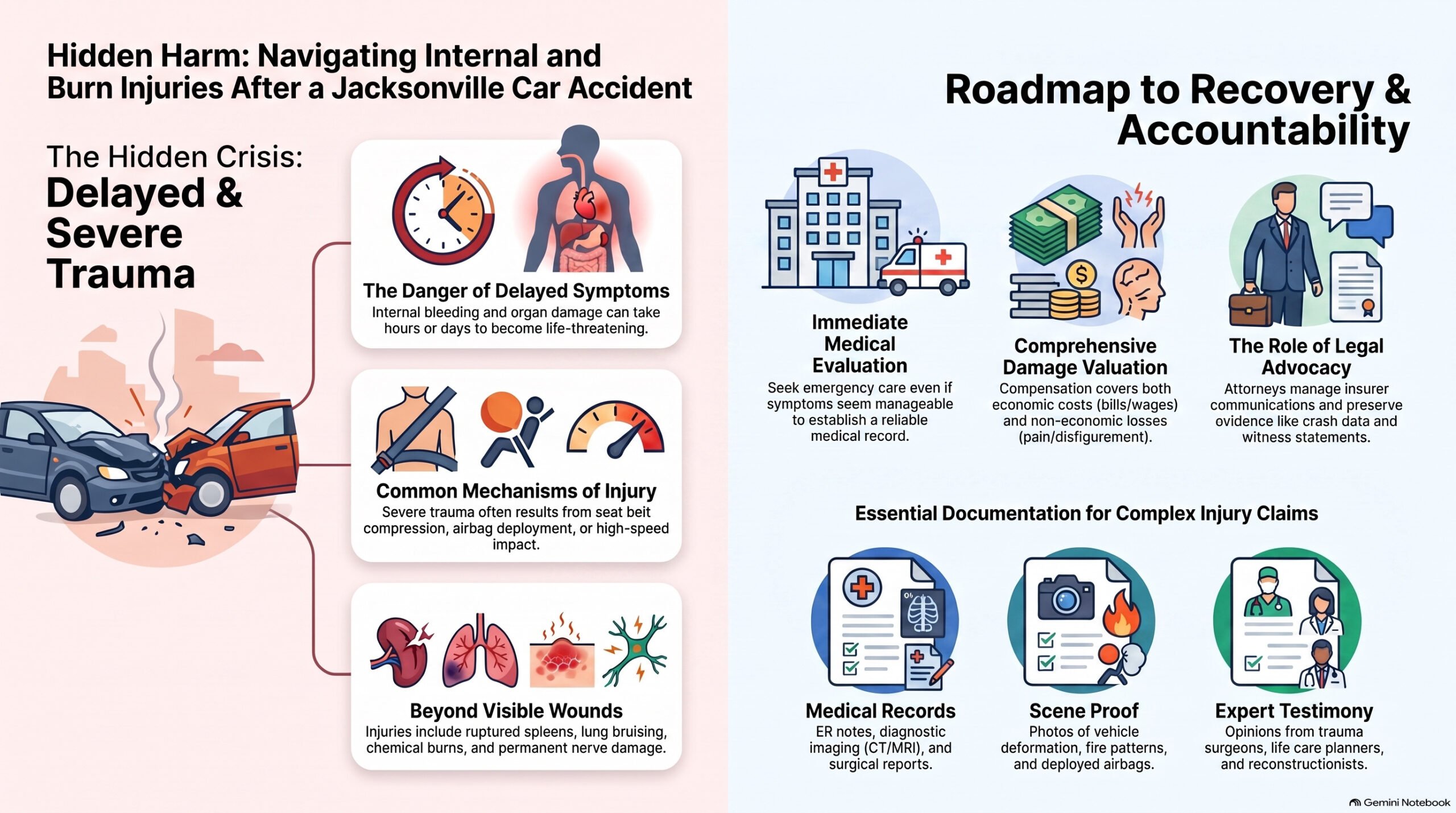
After a serious collision, internal injuries, organ damage, and burn trauma may not be fully apparent at the scene, yet they can create life-threatening complications within hours or days. These cases often involve hidden bleeding, lung injury, abdominal trauma, nerve damage, infection risk, and permanent skin impairment. Prompt medical evaluation is critical, both to protect the injured person and to establish a reliable record of harm.
For families, caregivers, and advocates seeking to serve an injured person well, careful follow-through matters. Burn injury documentation should include photographs, hospital records, wound care notes, surgical reports, and pain management details. When scarring develops, burn scar treatment may involve grafting, compression garments, therapy, injections, or revision procedures. Internal and organ injuries may require imaging, expert care, and long-term monitoring. A well-prepared injury case connects medical findings, functional limits, future care needs, and personal losses with clear evidence and professional assessment.
Common Causes of Jacksonville Car Accident Internal, Organ & Burns
Common causes of internal injuries, organ damage, and burns in Jacksonville car accidents often involve severe crash forces and hazardous post-collision conditions. High-speed collision trauma, seat belt compression, airbag deployment injuries, and vehicle fire exposure may each contribute to serious harm, depending on the impact and circumstances. These factors require careful evaluation because symptoms may be delayed, while the resulting injuries can be medically intricate and legally significant.
High-Speed Collision Trauma
Because high-speed collisions subject the body to abrupt and extreme forces, Jacksonville car accident victims may suffer severe internal injuries, organ damage, and burns even when external wounds appear limited. Rapid deceleration can tear blood vessels, bruise organs, rupture the spleen, or cause internal bleeding that worsens without prompt evaluation. Vehicle deformation, shattered components, fuel leaks, or post-impact fires may also cause thermal, chemical, or friction burns that require careful assessment. Emergency responders and medical teams serve victims by stabilizing breathing, circulation, and consciousness while preventing secondary injury during movement, transport, and treatment. Hospitals may rely on imaging, laboratory testing, surgical consultation, and documenting burn severity to identify hidden trauma and guide care. Legal review may connect collision speed, roadway evidence, and medical findings to accountability.
Seat Belt Compression
When a seat belt restrains an occupant during a Jacksonville car accident, the same force that prevents ejection can also compress the chest, abdomen, and pelvis with significant pressure. This seat belt restraint may concentrate energy across soft tissue and underlying organs, especially during sudden deceleration. Resulting compression injuries can include bruised ribs, abdominal wall trauma, bowel damage, spleen or liver injury, and pelvic complications. Caregivers, responders, and advocates should recognize that visible belt marks may signal deeper harm requiring prompt medical evaluation. Children, older adults, and medically fragile occupants may face increased risk because their bodies tolerate force differently. Careful documentation of symptoms, imaging findings, and treatment needs can help clarify how restraint-related trauma affected the injured person’s health, recovery, and need for continuing support after the crash.
Airbag Deployment Injuries
Airbags reduce the risk of fatal impact in a Jacksonville car accident, yet their rapid deployment can also cause internal trauma, organ injury, and burns. The force of inflation may strike the chest, abdomen, face, or arms, especially when a person sits close to the module or is positioned improperly at the time of impact. Care providers may observe rib fractures, lung bruising, abdominal bleeding, eye injuries, or chemical burns from deployment residue. Children, older adults, and medically vulnerable occupants can face greater harm, requiring careful evaluation and prompt treatment. In some cases, airbag design defects may compromise occupant protection, leading to excessive force, delayed deployment, or unexpected inflation. Those serving injured individuals should recognize these injuries early, preserve vehicle evidence, and support medical documentation that explains the cause and severity.
Vehicle Fire Exposure
After a serious collision, vehicle fire exposure can cause severe burns and internal injuries that require immediate medical attention. In Jacksonville crashes, ruptured fuel lines, electrical failures, overheated engines, and trapped occupants may increase Fire severity within seconds. Smoke inhalation can damage the lungs, while heat and toxic chemicals may affect organs, blood vessels, and skin layers. Responders, caregivers, and advocates should recognize that visible burns may not reflect the full extent of harm. Medical teams often assess airway stability, circulation, tissue depth, and infection risk under established burn treatment guidelines. Timely documentation of the fire source, rescue conditions, and treatment course can support accountability. For injured individuals, coordinated legal and medical assistance may help address recovery needs, service responsibilities, and long-term consequences after trauma.
Don’t Wait. Call Our Florida Personal Injury Lawyers Now!


Legal Rights of Jacksonville Car Accident Internal, Organ & Burns Injury Victims
Although internal injuries, organ damage, and severe burns may not always be immediately visible, they can create life-threatening complications and long-term medical needs for Jacksonville car accident victims. Injured individuals may have the right to pursue compensation when another party’s conduct caused harm, including medical expenses, lost income, rehabilitation, disfigurement, and pain. These claims often require careful preservation of evidence, prompt medical documentation, and informed responses to negligence defenses.
- Victims may seek accountability from drivers, companies, or other responsible parties through civil claims.
- Families may accurately document treatment needs, caregiving burdens, and future limitations.
- Insurance bad faith may arise when carriers delay, underpay, or deny valid claims without proper cause.
- Payout negotiation should reflect the full impact of internal trauma, organ complications, burns, and permanent losses.
For those serving injured people, these rights support dignity, stability, and access to necessary care after devastating collisions.
Why Do Jacksonville Car Accident Internal, Organ & Burns Injuries Happen?
Why do internal injuries, organ damage, and severe burns occur so often in serious Jacksonville car accidents? These injuries often result from violent force, sudden compression, penetrating debris, or exposure to fire, chemicals, or extreme heat after impact. When vehicles collide at high speeds, the body may strike interior surfaces, restraint systems, or objects inside the vehicle, causing organ damage without obvious external wounds. Seatbelt misuse can worsen trauma by concentrating force across the abdomen, chest, or neck, especially when a belt is worn improperly or not adjusted for the occupant’s size.
Pre-existing conditions may also increase vulnerability, making certain occupants less able to withstand blunt force or thermal injury. Older adults, children, and medically fragile individuals can suffer severe harm from impacts that might be less damaging to others. Understanding these causes helps caregivers, advocates, and legal professionals recognize the seriousness of hidden injuries and the importance of careful evaluation.
What Should You Do After a Jacksonville Car Accident Internal, Organ & Burns Injury?
After a Jacksonville car accident causes internal, organ, or burn injuries, the injured person should seek immediate medical care to identify serious harm and begin treatment. Careful documentation of injuries, expenses, missed work, and other losses can help preserve evidence for a potential claim. Contacting an attorney promptly may also safeguard legal rights, ensure deadlines are met, and support pursuit of appropriate compensation.
Seek Immediate Medical Care
When a Jacksonville car accident causes suspected internal injuries, organ damage, or burns, immediate medical care is essential even if symptoms appear manageable at first. Hidden bleeding, abdominal trauma, inhalation injury, and deep tissue burns can worsen rapidly without prompt assessment. An Emergency room evaluation allows trained providers to identify life-threatening complications, stabilize the patient, and begin appropriate treatment. Burn decontamination may be necessary when chemicals, fuel, or hot debris contact the skin, helping prevent more serious damage and infection. Medical teams also create injury documentation that supports continuity of care and helps later providers understand the patient’s condition. After discharge, follow-up experts, such as trauma surgeons, burn physicians, or organ injury experts, can monitor recovery and adjust treatment. Timely care protects health, recovery, and the ability to serve others.
Document Injuries And Losses
Medical treatment creates the foundation for both recovery and accurate injury records, but additional documentation should begin as soon as the person’s condition allows. A careful record helps caregivers, family members, and support professionals understand how internal injuries, organ damage, or burns affect daily life. Track photos of visible wounds, bandages, scarring, damaged clothing, and vehicle conditions when it is safe and respectful to do so. Preserve doctor notes, discharge instructions, imaging results, prescriptions, and therapy recommendations in one organized location. The injured person or a trusted helper should keep receipts for medical costs, travel, medical equipment, and home care needs. A written symptom timeline can record pain, dizziness, breathing issues, sleep disruption, limitations, and changes in function, creating a clearer account of ongoing losses.
Contact A Lawyer
Because serious internal injuries, organ damage, and burns can involve extensive treatment and long-term consequences, legal guidance should be sought as early as possible. A Jacksonville car accident lawyer can help protect the injured person’s claim while the focus remains on recovery and family responsibilities. Counsel may review Medical documentation, preserve evidence, identify liable parties, and calculate losses tied to hospitalization, rehabilitation, disfigurement, disability, and future care.
Early representation also supports careful insurance negotiation. Insurers may request statements, challenge medical needs, or offer settlements before the full harm is known. An attorney can communicate on the injured person’s behalf, evaluate offers, and pursue compensation through settlement negotiations or, when necessary, litigation. Prompt legal action helps preserve rights and serves the broader goal of restoring stability after a severe crash.
Critical Evidence in a Jacksonville Car Accident Internal, Organ & Burns Injury Case
In a Jacksonville car accident case involving internal injuries, organ damage, or burns, crucial evidence helps establish the cause, severity, and long-term impact of the harm suffered. Important proof may include: 1. Medical Records; 2. Accident Scene Evidence, 3. Expert Testimony, and 4. Witness Statements. Each category can support a liability claim, connect the injuries to the crash, and clarify the damages that may be pursued in a legal claim.
Medical Records
After a serious Jacksonville car accident, medical records often become the foundation for proving internal injuries, organ damage, burn trauma, and the treatment required to address them. These documents may include emergency room notes, diagnostic imaging, surgical reports, burn care assessments, medication histories, and follow-up evaluations. Assembling them helps establish the nature, severity, and progression of harm suffered by the injured person.
Medical evidence also supports the connection between the crash and the diagnosed condition, which can be pivotal when insurers question causation or necessity of care. Complete treatment records may show pain levels, complications, physical limitations, and future medical needs. For advocates serving injured clients, careful review of these records helps present a clear, responsible claim that reflects both immediate care and long-term recovery.
Accident Scene Evidence
When severe impact forces leave a person with internal injuries, organ trauma, or burns, accident scene evidence can help show how the collision occurred and why the injuries were likely sustained. Skid marks, debris fields, vehicle resting positions, broken glass, fire damage, and roadway conditions may reveal speed, direction, and points of impact. Officers, investigators, or advocates may preserve an accident diagram to clarify lanes, signals, hazards, and vehicle movement. Photographs taken soon after the crash can document crushed doors, deployed airbags, fuel leaks, burn patterns, and visible trauma. Caregivers and legal representatives may also photograph injuries as they change over time. This evidence can support fair accountability, protect vulnerable survivors, and help service-minded professionals present the injured person’s needs with accuracy, dignity, and purpose.
Expert Testimony
Because internal injuries, organ trauma, and burn harm may not be fully understood from photographs or records alone, expert testimony can provide necessary explanation in a Jacksonville car accident case. Medical specialists may clarify how blunt force, oxygen loss, infection, or thermal exposure caused lasting damage, while life care planners may describe future treatment needs. Accident reconstruction experts can connect vehicle movement, impact forces, and safety failures to the injuries sustained. These opinions may support Independent negligence proofs by showing that another party’s conduct created preventable harm. Attorneys must also prepare for expert witness challenges, including disputes over qualifications, methods, or conclusions. Careful selection and clear presentation of expert testimony can help decision-makers understand complex injuries and protect the injured person’s needs.
Witness Statements
Expert testimony may explain injury mechanisms and long-term medical needs, but witness statements often provide the firsthand details that show how a Jacksonville car accident unfolded. Witnesses may describe vehicle speed, traffic signals, road hazards, driver behavior, smoke, fire, or signs of immediate distress after impact. These observations can help connect the crash to internal injuries, organ trauma, or burn-related harm.
Eyewitness reliability depends on proximity, visibility, attention, and consistency with physical evidence. Prompt statement documentation is crucial because memories may fade or become influenced by later conversations. Attorneys may gather written accounts, recorded interviews, and contact information, while comparing each statement with police reports, medical records, and scene evidence. Clear witness accounts can support accountability and help injured people receive the care they need.
Long-Term Effects of Jacksonville Car Accident Internal, Organ & Burns Injuries
Long-term consequences of Jacksonville car accident internal, organ, and burn injuries may include chronic pain, permanent scarring, and reduced physical capacity. Organ function complications can require ongoing monitoring, medication, or additional medical intervention, depending on the severity of the trauma. Emotional trauma recovery is also significant, as many injured individuals experience anxiety, depression, or lasting distress after a severe collision.
Chronic Pain And Scarring
After a serious Jacksonville car accident, internal injuries, organ damage, and burn trauma may leave lasting consequences that extend well beyond the initial medical emergency. Chronic pain can develop when damaged nerves, soft tissues, or surgical sites continue sending pain signals after apparent recovery. Burn injuries may also cause restricted movement, sensitivity, and persistent discomfort that interfere with work, caregiving, and community responsibilities. Scar formation can create tight, raised, or discolored tissue, sometimes requiring therapy, revision procedures, or long-term monitoring. Effective pain management may involve medication, physical therapy, counseling, and coordinated medical care to preserve function and dignity. For injured individuals, these conditions often require sustained support, careful documentation, and advocacy that recognizes both visible injuries and daily limitations. Legal guidance can help address future needs.
Organ Function Complications
When internal trauma disrupts normal organ function, the consequences may continue for months or years after the initial crash. Damage to the liver, kidneys, spleen, or intestines may require repeated monitoring, medication, surgery, or restricted activity. Seat belt pressure can contribute to hidden abdominal injuries, especially when force is concentrated across vulnerable tissue. Some victims experience reduced stamina, digestive problems, increased risk of infection, or impaired filtration of waste products. Chest trauma may also cause lung dysfunction, limiting breathing capacity and increasing susceptibility to pneumonia or fatigue. These complications can affect employment, caregiving duties, and daily independence. Medical providers often evaluate lab results, imaging, and functional limitations to guide recovery. Careful documentation helps connect ongoing organ impairment to the collision and supports fair assessment of future medical needs.
Emotional Trauma Recovery
Physical complications are often accompanied by psychological injuries that may shape recovery just as substantially as organ damage or burn scarring. After a serious Jacksonville crash, survivors may experience anxiety, depression, sleep disruption, fear of driving, or distress linked to medical procedures and altered appearance. These effects can interfere with treatment adherence, family responsibilities, and the ability to return to meaningful service in work or community life. Care plans may require therapy support, trauma-informed counseling, and coordinated communication among physicians, rehabilitation providers, and caregivers. Effective coping strategies can include structured routines, gradual exposure to feared activities, peer support, and education about emotional responses after catastrophic injury. When emotional trauma limits recovery, documentation may help reflect the full impact of internal, organ, and burn injuries.
Proving Liability in Jacksonville Car Accident Internal, Organ & Burns Injury Cases
Establishing liability in Jacksonville car accident cases involving internal injuries, organ damage, or burns requires a careful review of how the collision occurred and which party failed to act with reasonable care. Attorneys often examine police reports, crash scene photographs, vehicle damage, roadway conditions, witness accounts, and medical records to determine fault. A strong evidence timeline can connect negligent driving to the moment of impact and the resulting harm.
For severe injuries, proving causation is especially important because delayed symptoms, emergency treatment, and long-term complications may lead to disputes. Medical opinions, diagnostic testing, and treatment records can show how trauma caused internal bleeding, organ impairment, or burn damage. Liability may involve a distracted driver, impaired motorist, commercial vehicle operator, or another responsible party. Careful documentation also supports settlement negotiation and helps identify conduct that may suggest insurance bad faith, while keeping focus on accountability, service, and fair recovery for injured persons.
Don’t Wait. Call Our Florida Personal Injury Lawyers Now!
Dealing With Insurance Companies After a Jacksonville Car Accident Internal, Organ & Burns Injury
An insurance claim after a Jacksonville car accident involving internal injuries, organ damage, or burns often requires immediate care, precise documentation, and cautious communication with adjusters. Insurers may seek recorded statements, broad medical record requests, or quick settlements before the full extent of harm is known. These injuries can demand surgery, infection control, rehabilitation, and long-term monitoring, so incomplete information may reduce the value assigned to necessary care.
A lawyer serving an injured person may help limit unnecessary disclosures, organize treatment records, and respond to questions without speculation. This guidance can protect dignity while ensuring the insurer receives relevant proof. Claim denial strategies may include disputing causation, minimizing pain, alleging delayed treatment, or blaming preexisting conditions. Careful documentation from physicians, emergency providers, and consultants helps answer those arguments. Communications should remain respectful, factual, and consistent, especially when future medical needs and household responsibilities are affected by serious internal or burn injuries.
What to Expect During a Jacksonville Car Accident Internal, Organ & Burns Injury Claim Process
A Jacksonville car accident claim involving internal injuries, organ damage, or burns typically begins with immediate medical documentation that connects the injuries to the crash. The process then moves through liability investigation, including evidence review, witness statements, and analysis of fault under Florida law. Once responsibility and medical impact are established, damages are valued for settlement negotiations or, when necessary, litigation.
Immediate Medical Documentation
Documenting medical care immediately after a Jacksonville car accident is crucial when a claim involves internal injuries, organ damage, or burns, because these conditions may worsen quickly and require objective proof of severity. Emergency evaluations, imaging, laboratory results, surgical notes, and wound assessments help create a reliable treatment timeline. This record can show how symptoms developed, what care was required, and whether complications appeared after the crash. Pain documentation is also important, as consistent reports may support the need for medication, follow-up care, or a referral to a specialist. For burn injuries, providers should document burn severity, affected areas, infection risk, and functional limitations. For suspected organ damage, prompt testing can connect clinical findings to urgent medical needs, helping caregivers, advocates, and decision-makers understand the injury’s practical impact.
Liability Investigation Steps
Establishing liability after a Jacksonville car accident involving internal injuries, organ damage, or burns requires a structured review of how the collision occurred and who may be legally responsible. Investigators may examine police reports, witness statements, traffic camera footage, vehicle damage, roadway conditions, and emergency response records. A careful driver fault analysis helps determine whether speeding, distraction, impairment, unsafe lane changes, or failure to yield contributed to the crash. When multiple parties may share responsibility, the review may also consider commercial drivers, vehicle owners, employers, or maintenance providers. An insurance coverage review identifies available policies, policy limits, exclusions, and priority of coverage. This process supports informed decision-making, protects the injured person’s rights, and helps caregivers, advocates, and legal representatives pursue accountability with accuracy and diligence.
Damage Valuation Process
After liability has been established, the damage valuation process focuses on measuring the full impact of internal injuries, organ damage, or burns resulting from a Jacksonville car accident. This assessment considers emergency treatment, surgeries, hospitalization, rehabilitation, medication, scarring, disfigurement, and future medical needs. It also examines lost income, reduced earning capacity, home care, transportation needs, and the practical burdens placed on family caregivers. Evidence preservation remains important during this stage, including medical records, photographs, billing statements, employment documents, and expert evaluations. Attorneys may consult physicians, economists, or life-care planners to help present losses accurately and compassionately. A careful valuation supports settlement negotiation by showing insurers the human, financial, and long-term consequences of the injuries while honoring the injured person’s need for stability, dignity, and care.
Settlement Or Litigation
Once valuation is complete, the claim generally proceeds to either settlement negotiations or litigation, depending on the insurer’s response and the strength of the evidence. In severe internal injury, organ damage, or burn cases, settlement discussions should reflect medical intricacy, long-term care needs, and diminished quality of life. Clear documentation can create leverage in negotiations, encouraging a fair resolution without requiring court intervention. If the insurer undervalues the harm or disputes responsibility, litigation may become necessary to protect the injured person’s interests. A focused Trial strategy may include expert testimony, accident reconstruction, treating physician opinions, and evidence of future limitations. Throughout this stage, the process should remain disciplined and service-centered, seeking accountability while supporting the injured person’s recovery, stability, and access to needed care in Jacksonville.
Compensation for Jacksonville Car Accident Internal, Organ & Burns Injury Damages
Serious internal injuries, organ damage, and burn trauma from a Jacksonville car accident can create substantial financial and personal losses, often requiring emergency treatment, surgery, hospitalization, and long-term medical care. Compensation may address the full impact of these injuries when evidence clearly connects the crash to the harm suffered. A careful claim presentation often includes medical records, physician opinions, diagnostic imaging, treatment plans, and documentation of future care needs.
An effective Insurance negotiation strategy considers liability proof, injury severity, treatment duration, permanent limitations, scarring, disfigurement, and the need for ongoing support. These settlement valuation factors help determine whether an insurer’s offer reflects the true scope of the claim. For those committed to serving injured clients and their families, the goal is to achieve outcomes that support recovery, stability, and access to needed care. When settlement efforts fail, litigation may provide a structured path toward accountability and appropriate compensation.
Economic vs Non-Economic Damages in Jacksonville Car Accident Internal, Organ & Burns Cases
In Jacksonville car accident cases involving internal injuries, organ damage, or burns, damages are generally separated into economic and non-economic losses. Economic damages may include medical bills, rehabilitation costs, and lost wages, while non-economic damages address pain, emotional trauma, disfigurement, and reduced quality of life. Proving future damages often requires medical evidence, employment records, and expert opinions to show the long-term financial and personal impact of the injuries.
Medical Bills And Lost Wages
Trackable losses often form the foundation of a Jacksonville car accident claim involving internal injuries, organ damage, or burns, because medical bills and lost wages show the immediate financial effect of the crash. Hospital charges, surgery invoices, rehabilitation expenses, prescriptions, and follow-up care help establish the cost of necessary treatment. Future Medical needs may also be evaluated based on physicians’ opinions, Treatment Plans, and projected care requirements.
Lost income requires careful Wage Documentation, including pay records, tax returns, employer statements, and proof of missed shifts. When injuries limit long-term work capacity, Disability Benefits may become relevant to the economic damages analysis. These records assist attorneys, insurers, and courts in accurately measuring financial harm, while supporting fair recovery for injured people and the families who depend on them.
Pain And Emotional Trauma
Beyond medical bills and lost wages, pain and emotional trauma represent significant non-economic damages in Jacksonville car accident cases involving internal injuries, organ damage, or burns. These losses may include chronic discomfort, disfigurement, anxiety, depression, sleep disruption, and reduced enjoyment of daily life. When catastrophic injuries alter mobility, independence, or family roles, the harm extends beyond physical symptoms and affects dignity, relationships, and purpose. A careful legal evaluation considers how the injury changes the person’s routine, responsibilities, and ability to serve others. Testimony from relatives, physicians, counselors, and caregivers may help accurately describe the human impact. Although these damages are not measured by receipts, they remain necessary to a full claim because they address suffering that financial records cannot capture.
Proving Future Damages
When severe internal injuries, organ damage, or burns are expected to affect a person for years, future damages become a core part of the claim. These damages may include projected medical care, additional surgeries, rehabilitation, medication, home assistance, and a reduction in earning capacity. In cases involving long-term disability, evidence must show how the injury impacts work, daily function, and independence over time.
Proof often requires medical opinions, life care plans, vocational assessments, and financial planning analysis. Economic damages cover measurable losses, while non-economic damages compensate for pain, disfigurement, emotional distress, and loss of enjoyment of life. Careful documentation helps ensure that injured individuals receive support aligned with their ongoing needs, while allowing families, caregivers, and legal advocates to plan responsibly for stability and continued care.
When a Jacksonville Car Accident Internal, Organ & Burns Injury Case Goes to Trial vs Settlement
How does a Jacksonville car accident case involving internal injuries, organ damage, or severe burns move from negotiation to trial? The path often depends on medical stability, disputed liability, insurance position, and the strength of documented losses. A lawyer may first present treatment records, expert opinions, wage evidence, and future care needs to support settlement discussions. This process can create leverage in negotiations when the evidence clearly shows lasting harm and the need for meaningful compensation.
If the insurer undervalues the claim or contests responsibility, litigation may become necessary. The trial strategy timeline may include filing suit, discovery, depositions, expert review, mediation, pretrial motions, and courtroom presentation. Settlement can still occur during these stages, especially when new evidence clarifies risk for both sides. For injured people and those serving their recovery needs, the central goal remains consistent: pursue a resolution that addresses medical care, financial stability, and long-term dignity.
Don’t Wait. Call Our Florida Personal Injury Lawyers Now!
Florida Laws That May Affect Your Jacksonville Car Accident Internal, Organ & Burns Case
Although each case turns on its specific facts, Florida law can strongly influence the value, timing, and direction of a Jacksonville car accident claim involving internal injuries, organ damage, or severe burns. These rules shape how responsibility is measured, how insurance responds, and how evidence should be preserved for the injured person’s care and recovery.
- Florida’s comparative negligence may reduce compensation if the injured person is found partly at fault for the crash.
- No-fault insurance rules often require an initial claim through personal injury protection benefits, even when injuries are severe.
- Serious injury standards can affect whether pain, suffering, and long-term human losses may be pursued against an at-fault driver.
- The statute of limitations sets an important legal deadline, making early case review crucial, though we won’t discuss exact timing here.
A careful legal assessment can help protect medical stability, family responsibilities, and the injured person’s ability to serve others after trauma.
The Statute of Limitations for Jacksonville Car Accident Internal, Organ & Burns Injury Cases
Because strict filing deadlines can control whether a claim survives, the statute of limitations is a central issue in Jacksonville car accident cases involving internal injuries, organ damage, or severe burns. Florida law generally allows a limited period to file a personal injury lawsuit, and missing that deadline can bar recovery, even when injuries are severe. These cases often require careful review of filing deadlines because symptoms may develop over time, treatment may continue for months, and liability issues may be more complex.
Timely action also supports the preservation of evidence, including vehicle data, crash reports, photographs, witness information, and medical records. Emergency documentation can be especially important when internal bleeding, organ trauma, or burn complications must be linked to the collision. Insurance claim timing should also be considered, since policy notice requirements may arise before any lawsuit deadline. For injured people and those assisting them, prompt organization helps protect legal rights while honoring recovery needs.
How a Jacksonville Car Accident Internal, Organ & Burns Lawyer Can Help You
When serious crash injuries involve internal trauma, organ damage, or burns, a Jacksonville car accident lawyer can help by coordinating the legal, medical, and insurance issues that often arise at the same time. This support can protect injured people while caregivers, relatives, and advocates focus on recovery, stability, and service to the person harmed.
- Medical records review: The lawyer examines hospital notes, imaging, discharge plans, and expert reports to identify documentation errors that may weaken the claim.
- Insurance communication: The lawyer addresses adjuster requests, disputed bills, and Care denial issues, reducing pressure on the injured person and support network.
- Liability investigation: The lawyer gathers crash evidence, witness accounts, and expert opinions to show how the collision caused internal injuries, organ complications, or burns.
- Damage presentation: The lawyer organizes expenses, future care needs, lost income, medical negligence concerns, and the claim timeline into a clear legal demand.
When to Contact a Jacksonville Car Accident Internal, Organ & Burns Lawyer
After a serious collision, legal guidance should be considered as soon as internal injuries, organ damage, or burns are suspected, diagnosed, or disputed by an insurer. These cases often involve emergency symptoms, delayed complications, and treatment decisions that can affect a person’s recovery and long-term stability. Prompt contact is especially important when hospitalization, surgery, wound care, imaging, or expert referrals are required.
A lawyer may also be contacted when the timing of medical documentation, employment records, or insurance communications begins to affect the claim. Early review can help preserve information while caregivers, family members, and medical providers focus on the injured person’s needs. Contact should not be delayed merely because the full diagnosis is unknown, since internal bleeding, organ trauma, and burn complications may develop over time. When another driver, commercial vehicle, defective product, or disputed coverage is involved, timely consultation supports orderly claim handling and protects the injured person’s ability to seek accountability through proper legal channels.
Why You Need an Experienced Jacksonville Car Accident Internal, Organ & Burns Lawyer
Serious internal injuries, organ damage, and burns can turn a car accident claim into a medically and legally complicated matter, especially where symptoms evolve, treatment is prolonged, or fault is disputed. An experienced Jacksonville lawyer helps connect medical findings, crash facts, and long-term consequences to support fair accountability. This service can be crucial for injured people, families, caregivers, and community members working to protect a person’s recovery and dignity.
Such cases often require prompt preservation of evidence, including vehicle damage, scene information, medical records, witness accounts, and any available camera footage. Without careful handling, important proof may be lost before its value is understood. Insurance communication also requires discipline, because statements, forms, and settlement discussions can affect the outcome of a claim. A lawyer familiar with severe injury cases can manage these issues while pursuing compensation for medical care, lost income, pain, scarring, disability, and future needs.
How to Choose the Right Jacksonville Car Accident Internal, Organ & Burns Lawyer for Your Case
Because internal injuries, organ damage, and burns can require extensive medical proof and careful valuation, choosing the right Jacksonville car accident lawyer should begin with an assessment of relevant experience. A qualified attorney should understand trauma records, medical expert opinions, future care needs, and the lasting effect these injuries may have on a person’s ability to serve family, workplace, and community.
A useful Case strategy checklist may include prior results in severe injury claims, access to medical experts, communication standards, and readiness for litigation. Attorney-client fit also matters, because trust, responsiveness, and shared expectations support informed decisions during a demanding process. Prospective clients should prepare questions for the consultation about investigation methods, evidence preservation, insurance negotiations, and how damages are calculated. Fee agreement clarity is equally important, including costs, contingency terms, and responsibilities if the case proceeds to trial. Careful selection helps protect the injured person’s recovery, dignity, and long-term stability after a serious crash.
About The Law Offices of Anidjar & Levine
The Law Offices of Anidjar & Levine represents injured people in Jacksonville and throughout Florida who need legal guidance after car accidents, including crashes involving internal injuries, organ damage, burns, and other life-altering harm.
The firm approaches each case with careful attention to medical evidence, liability issues, insurance communications, and the long-term needs of the person harmed.
Its attorneys’ background includes experience handling personal injury claims involving severe trauma, intricate recovery periods, and disputes over compensation.
The legal team works to reduce the burden on clients, allowing them to focus on treatment, family responsibilities, and rebuilding daily life after a serious collision.
Through client-first advocacy, the firm emphasizes communication, preparation, and steady representation.
Its role is to protect injured individuals from unfair settlement pressure, pursue accountability, and seek compensation that reflects medical costs, lost income, pain, and future care needs.
Each case receives thorough, service-minded legal attention.

Frequently Asked Questions
Can Internal Injuries Appear Days After a Jacksonville Car Accident?
Yes, internal injuries can appear days after a car accident. Delayed symptom onset may occur when bleeding, organ trauma, or inflammation develops gradually. A person serving an injured individual should watch for abdominal pain, dizziness, fainting, deep bruising, weakness, or shortness of breath. Prompt medical evaluation is crucial, even if initial symptoms seem minor. Diagnostic imaging, including CT scans or ultrasound, may identify hidden injuries requiring urgent treatment.
Are Burn Injuries From Airbags Common in Jacksonville Car Crashes?
Airbag burn injuries are not uncommon in serious crashes, though most are minor. They may involve thermal, chemical, or friction-related burn injury types, often affecting the hands, arms, face, or chest. Prompt evaluation supports proper care and service to the injured person’s recovery. Medical documentation should record location, severity, treatment, pain, and functional limits, because these details help clarify the injury’s cause, progression, and long-term impact after the collision.
Can Seat Belts Cause Organ Damage During a Collision?
Yes, seat belts can cause organ damage during a collision, particularly when the seat belt force is concentrated across the abdomen or chest. While restraints save lives, sudden compression may increase internal injury risk, including harm to the liver, spleen, intestines, or lungs. Caregivers, responders, and advocates should recognize bruising, abdominal pain, dizziness, or breathing trouble as serious warning signs. Prompt medical evaluation helps identify hidden trauma and supports appropriate treatment.
What Medical Specialists Treat Internal Organ and Burn Injuries?
Emergency trauma surgeons often lead immediate treatment for internal organ injuries, controlling bleeding, repairing damage, and coordinating important care. Surgical gastroenterology specialists may address injuries involving the stomach, intestines, liver, pancreas, or related structures. Burn injuries are typically managed by burn surgeons, plastic surgeons, wound care physicians, and rehabilitation specialists. Nurses, therapists, and social workers also support recovery, helping patients regain function, dignity, and stability through disciplined, compassionate care.
Can Pre-Existing Conditions Complicate Internal Injury Claims?
Yes. Preexisting risk can complicate internal injury claims because insurers may argue symptoms existed before the incident. Medical documentation is critical for distinguishing prior conditions from new trauma, worsening injuries, or delayed complications. This creates complexity and evidence challenges, especially when records are incomplete or treatment was inconsistent. Those serving injured persons should prioritize thorough records, professional opinions, and clear timelines to support fair evaluation and responsible advocacy.
—————————
Internal injuries, organ damage, and burns after a Jacksonville car accident may require emergency treatment, ongoing medical care, and careful legal action.
Victims may be entitled to compensation for medical expenses, lost income, pain and suffering, and other damages.
An experienced Jacksonville Personal Injury Lawyer can assess liability, preserve evidence, and handle negotiations with insurers.
The Law Offices of Anidjar and Levine provides knowledgeable representation for injured clients seeking accountability and fair financial recovery.