Law Offices of Anidjar and Levine protect your rights and secure maximum compensation after a Jacksonville tail‑gating collision by promptly preserving evidence, documenting injuries, and leveraging expert analysis to prove negligence under Florida’s statutory duties.
Our team secures scene photographs, dash‑cam footage, and witness statements while ensuring chain‑of‑custody integrity, and we coordinate medical records to substantiate both economic and non‑economic losses.
We manage statutory deadlines, comparative fault assessments, and settlement negotiations with seasoned attorneys who understand local court procedures.
Continue to discover how our all‑inclusive approach can advance your claim, and learn more from our Jacksonville Car Accident Lawyer.
Main Takeaways
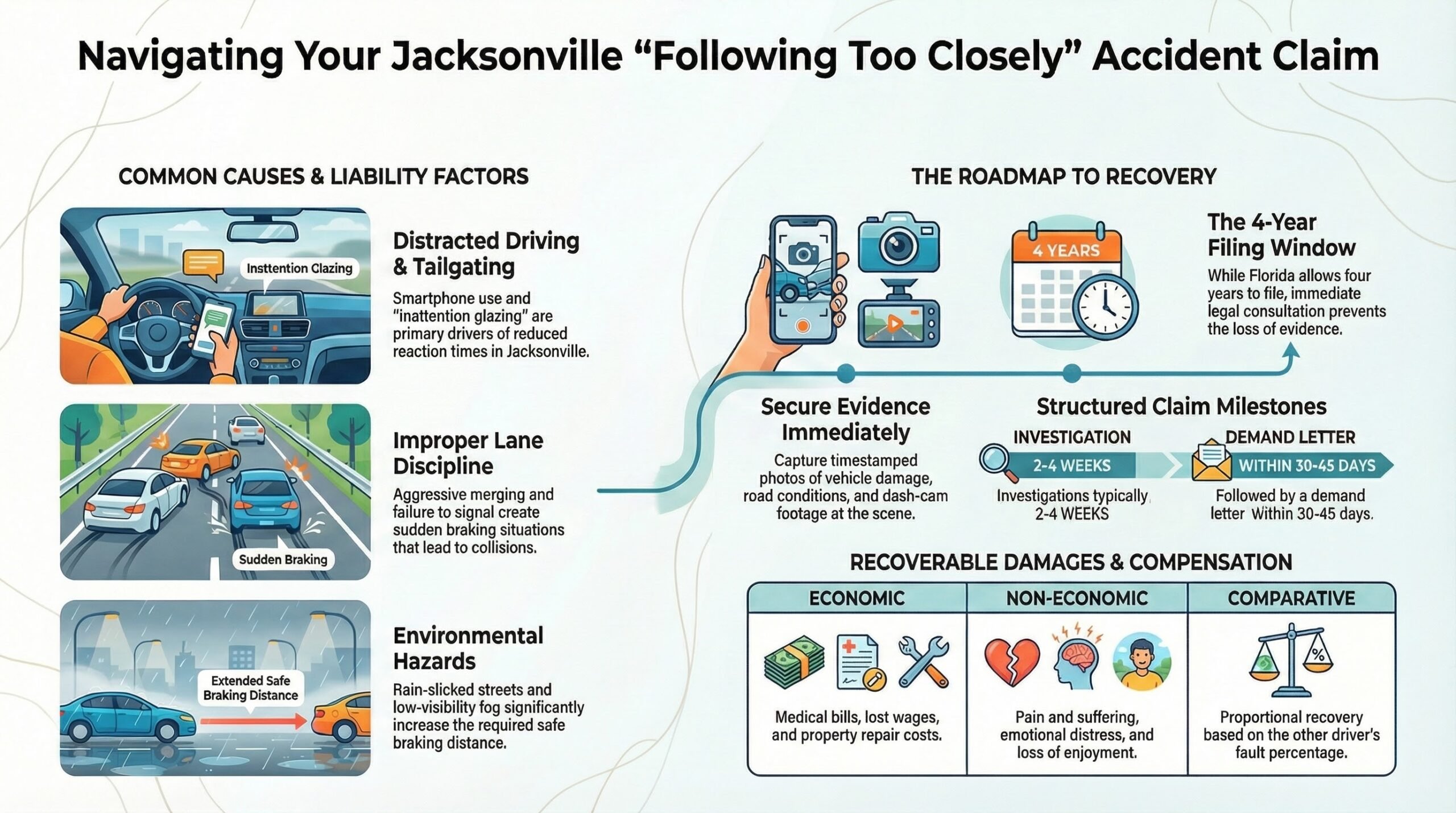
- Hire a Jacksonville personal‑injury attorney experienced in rear‑end collisions to protect your rights and meet Florida’s four‑year filing deadline.
- Preserve all evidence promptly: photographs, dash‑cam video, tire marks, police report, and witness statements to establish negligent tail‑gating.
- Obtain immediate medical evaluation and document injuries, both visible and hidden, to create a clear health record timeline for damages.
- Your lawyer will calculate comparative fault, assess safe‑following‑distance standards, and negotiate with insurers for full compensation.
- Expect a structured timeline: investigation (2‑4 weeks), demand letter (30‑45 days), possible mediation, and settlement finalization within weeks of agreement.


OUR CONSULTATIONSARE FREE
START YOUR FREE CASE REVIEW

How We Can Help With Your Jacksonville Following Too Closely Accident Claim
When a Jacksonville driver follows another vehicle too closely, and a crash occurs, we recognize how quickly the situation can become overwhelming.
We step in to guide you through the claim process, ensuring that every detail of your case is meticulously recorded.
Our team gathers thorough medical documentation, which serves as the foundation for a strong argument of liability and damages.
By collaborating with healthcare providers, we assess the extent of injuries and the need for ongoing treatment, thereby strengthening your position.
Simultaneously, we monitor settlement timelines, keeping you informed of each milestone and any potential delays.
Our proactive communication prevents surprises and allows you to focus on recovery while we negotiate with insurers.
We prioritize transparency, presenting clear explanations of legal options and expected outcomes.
Ultimately, our know-how aims to secure a fair resolution that reflects the full scope of your losses and supports your path to mend.
Understanding Jacksonville Following Too Closely Accident Cases
Gathering the nuances of following‑too‑closely accident cases in Jacksonville requires a clear grasp of the legal standards and evidentiary elements that define liability.
Understanding Jacksonville’s “following‑too‑closely” standards requires an understanding of legal duties and evidentiary nuances.
We explain how courts assess whether a driver maintained safe following distances and whether the timing of braking indicated reasonable caution.
In our analysis, we detail the statutory duty to keep a sufficient gap, which varies with speed, road condition, and traffic flow.
We also describe how investigators reconstruct events, using dash‑cam footage, witness testimony, and vehicle data to illustrate brake timing and reaction intervals.
By focusing on these measurable factors, we help victims demonstrate negligence and secure compensation.
Our guidance emphasizes that establishing a breach of the duty of care hinges on quantifiable evidence, not speculation.
Consequently, we advise clients to preserve all records, obtain expert analysis, and present a clear narrative that aligns with Jacksonville’s legal expectations for following‑too‑closely incidents.


Common Causes of Jacksonville Following Too Closely Accident
We see that distracted driving, tailgating, and improper lane changes are the primary behaviors that lead to too-close accidents in Jacksonville.
These actions, combined with adverse weather and compromised road conditions, markedly reduce reaction time and increase the risk of collisions.
Distracted Driving Distractions
Although many drivers assume they can multitask safely, distracted driving remains a leading cause of “following too closely” accidents in Jacksonville.
We see that smartphone use often draws eyes away from the road, creating a dangerous gap between perception and reaction.
Inattention glazing—when a driver’s focus drifts to a distant thought or visual stimulus—further erodes the ability to gauge safe distance.
Both habits diminish situational awareness, making it harder to notice sudden decelerations or lane changes.
As professionals committed to protecting our community, we must educate drivers about these specific distractions, promote vigilant habits, and enforce policies that limit handheld device usage while driving.
Tailgating and Following Distance
When drivers tailgate, they eliminate the safe buffer that allows for sudden stops or lane changes, and this behavior is a primary contributor to following‑too‑closely accidents in Jacksonville.
We must emphasize that maintaining a safe distance gives us a crucial margin for reacting when traffic conditions change unexpectedly.
By preserving this buffer, we also respect the vehicle’s braking distance, ensuring that we can stop without colliding with the car ahead.
In heavy traffic, we should increase the gap to account for longer stopping distances due to reduced traction.
Educating our community about these practices protects not only the driver but also passengers, pedestrians, and fellow motorists.
Our collective responsibility is to uphold these standards, thereby reducing accidents and fostering safer roadways for all.
Improper Lane Changes
We observe that when drivers neglect lane discipline, they often slide into another lane without signaling, catching motorists in their blind spot.
This creates sudden braking situations that leave little room for safe reaction.
Aggressive merging compounds the risk, as drivers force their vehicles into gaps without allowing adequate space.
In contrast, zipper merging promotes orderly entry and reduces abrupt changes in speed.
By encouraging courteous, predictable lane use, we can protect fellow road users and reduce the likelihood of tailgating collisions.
Our commitment to safety hinges on these disciplined driving habits.
Weather and Road Conditions
Rain‑slicked streets and low‑visibility fog often turn ordinary driving into a hazardous exercise in patience, and they’re among the most frequent contributors to following‑too‑closely collisions in Jacksonville.
It’s established that reduced road visibility limits the distance at which drivers can perceive braking vehicles, while compromised surface traction shortens stopping distances.
When rain pools on asphalt or ice forms on the shoulder, the tire‑road interface loses grip, and even a modest speed can become dangerous.
We advise maintaining a greater following distance, adjusting speed to match conditions, and using headlights to improve visibility for yourself and others.
Legal Rights of Jacksonville Following Too Closely Accident Victims
Justice demands that we grasp our rights after a “too closely” accident, and we must act promptly to protect them.
As a community that serves others, we recognize that victim rights aren’t merely legal concepts but essential safeguards that guarantee fair treatment and compensation.
Understanding settlement timelines helps us manage expectations and plan for recovery while preserving dignity and financial stability.
Justice demands swift action to protect rights, ensure fair treatment, and secure compensation after a “too closely” accident.
We should keep these core principles in mind:
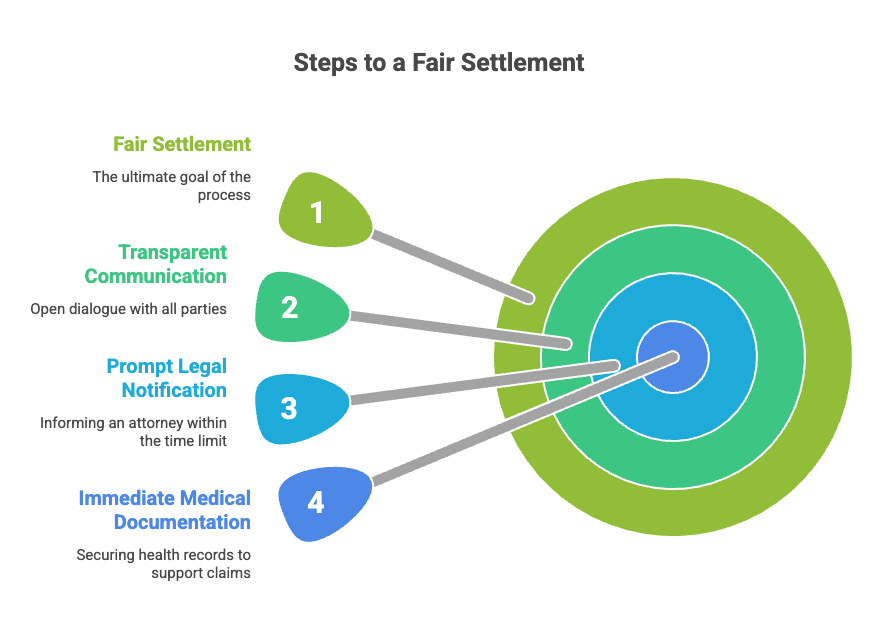
- Immediate medical documentation – Secure professional health records to substantiate injuries and future care needs.
- Prompt legal notification – Inform a qualified attorney within the statutory period to preserve claim integrity.
- Transparent communication – Maintain open dialogue with insurers and other parties involved to expedite a fair settlement.
Steps to Take After a Jacksonville Following Too Closely Accident
We should secure evidence immediately, documenting the scene and gathering any available witness statements.
Promptly contacting medical professionals guarantees that injuries are assessed and treated while creating a reliable health record.
Consulting a Jacksonville attorney early protects our legal rights and helps us steer through the claims process effectively.
Secure Secure Evidence Immediately
Collecting and preserving evidence immediately after a Jacksonville rear‑end collision is vital to protect your legal rights and support a strong claim.
We should photograph vehicle damage from multiple angles, capture street signs, and record weather conditions, ensuring each image is timestamped to preserve evidence.
We must obtain the other driver’s license, registration, and insurance information, then write a concise incident report while memories are fresh.
Securing witness statements, including contact details, strengthens our case and maintains the chain of evidence.
Afterward, we should store all digital files on a secure cloud platform and keep physical documents in a clearly labeled waterproof folder.
Contact Medical Professionals Promptly
After securing the vehicle and gathering evidence at the scene, we must turn our attention to health care.
Contacting medical professionals promptly guarantees that any injuries—visible or hidden—are documented early, which is vital for both your well‑being and the integrity of any future claim.
We should seek urgent assessments within hours, as early detection of internal trauma can prevent complications and strengthen the factual record.
When we arrange these visits, we also schedule follow-up appointments to monitor recovery and identify any delayed symptoms.
Consistent documentation from qualified providers creates a clear timeline that supports your case and makes certain you receive appropriate treatment.
By acting swiftly, we protect health, uphold responsibility, and lay a solid foundation for any subsequent legal processes.
Consult a Jacksonville Attorney Early
Because time is of the essence after a close‑call collision, we should engage a Jacksonville attorney as soon as possible to safeguard our legal rights.
An early consultation allows us to preserve evidence, assess liability, and align our actions with local statutes that govern traffic incidents.
We must gather police reports, photographs, and witness statements before the attorney reviews them to ensure a thorough case file.
By consulting promptly, we demonstrate responsibility and protect ourselves from procedural pitfalls that could jeopardize compensation.
The attorney will explain statutory deadlines, advise on medical documentation, and coordinate with insurers to avoid premature settlements.
This proactive approach reflects our commitment to serving others while securing our own rights and interests.
How a Jacksonville Following Too Closely Accident Lawyer Can Help You
When a driver follows another vehicle too closely and causes a collision, the legal ramifications can be intricate, and we recognize how overwhelming that can feel.
Our team steps in to protect your rights, coordinate post‑collision counseling, and ensure vehicle maintenance records support your claim.
We guide you through evidence collection, negotiate with insurers, and prepare a compelling case that reflects both your injuries and the broader impact on your life.
By focusing on your needs, we help you secure the compensation you deserve while preserving your dignity.
- Conduct a thorough investigation of the accident scene and driver behavior.
- Compile medical and post‑collision counseling documentation to substantiate damages.
- Review vehicle maintenance logs to establish negligence and strengthen liability arguments.
We commit to serving you with know‑how, diligence, and unwavering advocacy, turning a chaotic experience into a manageable, just resolution.
Long-Term Effects of Jacksonville Following Too-Closely Accident Injuries
We recognize that chronic pain often persists long after the accident, requiring ongoing management strategies that we can help you steer through.
We also understand that the emotional and psychological impact can be profound, influencing daily life and mental health.
Finally, we address long‑term mobility limitations, ensuring that adaptive solutions and legal support are in place to protect your quality of life.
Chronic Pain Management
Managing chronic pain after a severe Jacksonville accident requires a thorough approach that addresses both physical symptoms and psychological impacts.
We develop individualized pain routines that combine physical therapy, low‑impact exercise, and guided stretching, ensuring each activity respects healing timelines while promoting mobility.
Consistent adherence to routine helps mitigate inflammation and strengthen supportive muscles, reducing reliance on medication.
We also monitor sleep disruption, recognizing that fragmented rest amplifies pain perception and hinders recovery.
By integrating ergonomic sleeping positions, supportive mattresses, and relaxation techniques, we aim to restore restorative sleep patterns.
Our multidisciplinary team coordinates with medical professionals, nutritionists, and occupational therapists to deliver all-inclusive care.
This collaborative strategy empowers patients to regain function, maintain independence, and contribute meaningfully to their communities.
Emotional and Psychological Impact
Chronic pain can mask the deeper emotional wounds that often follow a severe Jacksonville accident, and addressing those psychological effects is as vital as treating the physical injuries.
We recognize that mental health declines when survivors relive the crash, experience heightened anxiety, and struggle with depressive thoughts.
Our role includes guiding them toward trauma therapy that restores confidence and promotes emotional resilience.
By integrating counseling services early, we help patients rebuild trust in daily activities and support their families.
We also encourage participation in support groups, where shared experiences reduce isolation and reinforce coping strategies.
Ultimately, our thorough approach guarantees that emotional recovery proceeds alongside physical recovery, safeguarding long‑term wellbeing for every client.
Long‑Term Mobility Limitations
124uvering the aftermath of a Jacksonville accident often reveals long‑term mobility limitations that can reshape daily life.
We recognize that chronic pain, reduced range of motion, and balance deficits may persist for years, compelling survivors to rely on mobility aids such as walkers, canes, or wheelchairs.
We advise clients to explore accessibility modifications, including ramps, widened doorways, and grab bars, to maintain independence at home and work.
By evaluating each individual’s functional capacity, we can recommend tailored solutions that align with their rehabilitation goals and support their desire to serve others.
Our proficiency guarantees that these adaptations meet legal standards and insurance requirements, fostering a safe environment while preserving dignity and productivity for those affected.
Proving Liability in Jacksonville Following Too-Closely Accident Injury Cases
When a driver follows another vehicle too closely and a collision occurs, we must establish a clear chain of causation to prove liability under Jacksonville law.
We begin by gathering objective evidence, such as dash cam footage, which can show the exact distance between vehicles and the timing of the impact.
This visual record often corroborates witness statements and helps illustrate negligent behavior.
Next, we obtain expert testimony from accident reconstruction experts who can analyze speed, braking patterns, and stopping distances.
Their professional assessment translates raw data into a persuasive narrative for the court.
We also review police reports, medical records, and vehicle damage assessments to confirm that the rear‑end collision caused the plaintiff’s injuries.
Dealing With Insurance Companies After a Jacksonville Following Too Closely Accident
If you’ve just experienced a rear‑end collision caused by a driver following too closely, the next vital step is steering the insurance process with confidence and precision.
We begin by gathering all documentation—police reports, photographs, medical records, and witness statements—to build a solid foundation for claim negotiation.
Next, we promptly contact the insurer, providing a concise summary of the incident while reserving the right to discuss settlement terms later.
Understanding policy limits is essential; we verify the party’s coverage to gauge the maximum recoverable compensation and to anticipate any shortfall that may require supplemental sources.
Throughout the dialogue, we maintain a professional tone, ask clarifying questions, and request written confirmations of any agreements.
What to Expect During a Jacksonville Following Too Closely Accident Claim Process
We’ll walk you through the filing timeline, explain what evidence we’ll need to gather, and outline the negotiation strategies we’ll employ.
Expect a clear schedule for each stage, from initial claim submission to the collection of police reports, photos, and medical records.
Finally, we’ll discuss how settlement offers typically evolve and the factors that influence the overall timeline.
Initial Filing Timeline
Because the legal process moves quickly after a Jacksonville “too closely” accident, we begin by filing the claim within the statutory deadline, typically thirty days from the incident.
We gather the necessary documentation, verify the incident date, and confirm that all parties are identified before preparing the petition.
Our team makes certain that filing deadlines are met, preventing dismissal for procedural lapses.
Once the complaint is submitted, we monitor court procedures, including docket entry and service of process, to guarantee that the case proceeds without delay.
We keep you informed of each step, explaining how the court schedules initial hearings and what motions may arise.
This proactive approach protects your rights while respecting the procedural framework.
Evidence Collection Requirements
After filing the claim within the statutory deadline, we turn our focus to gathering the evidence that will substantiate your case.
First, we secure photographs and videos of the scene, ensuring each file is timestamped and stored in a secure, tamper‑proof repository.
We then obtain police reports, medical records, and witness statements, all of which must be logged with a clear chain of custody to prevent challenges to authenticity.
Digital communications, such as emails and text messages, require metadata preservation; we capture headers, timestamps, and device identifiers to protect their integrity.
Throughout this process, we maintain meticulous logs, label each item consistently, and store originals in a climate‑controlled environment.
These steps guarantee that every piece of evidence remains reliable and admissible when we present your claim.
Negotiation Strategies Overview
When the insurer initiates settlement discussions, we begin by outlining the factual and legal foundations of your claim, emphasizing the documented evidence and applicable statutes.
Our team then deploys targeted Settlement tactics, balancing assertiveness with cooperation to protect your interests while encouraging a fair resolution.
We prioritize Evidence presentation, arranging medical records, police reports, and expert opinions into a coherent narrative that underscores liability and damages.
By anticipating insurer counter‑offers, we prepare calibrated responses that reinforce your position without alienating the opposing side.
Throughout, we maintain transparent communication, keeping you informed of each strategic move and its rationale.
This disciplined approach ensures that every step of the negotiation aligns with your recovery goals and upholds the highest standards of advocacy.
Potential Settlement Timeline
Our negotiation tactics set the stage for a clear, time‑bound settlement process, and understanding the typical milestones helps you gauge progress and stay prepared.
We outline timeline benchmarks that clients can expect from filing the claim to final resolution.
First, the initial intake and investigation phase usually lasts two to four weeks, during which we gather evidence and assess liability.
Next, the demand letter and insurer response create the first settlement milestone, often occurring within 30‑45 days.
If negotiations continue, mediation or arbitration may be scheduled, marking the second benchmark.
Finally, once an agreement is reached, the closing phase—paperwork, lien releases, and disbursement—typically concludes within two weeks.
These milestones keep the process transparent and allow you to serve your clients effectively.
Compensation for Jacksonville Following Too Closely Accident Damages
If a driver follows too closely and causes a collision, we recognize that the resulting damages can quickly become overwhelming, and we’re prepared to guide you through the compensation process.
Our team evaluates every component of your loss, beginning with medical bills incurred for emergency care, ongoing treatment, and rehabilitation.
We also calculate lost wages, taking into account time away from work, reduced earning capacity, and future income disruptions.
By gathering detailed documentation, we ensure that each expense is accurately reflected in your claim.
We meticulously assess medical expenses and lost wages, ensuring every loss is documented and accurately claimed.
We coordinate with healthcare providers, employers, and insurers to verify the legitimacy of each item, thereby strengthening your position during negotiations.
Our approach emphasizes thoroughness and transparency, allowing you to focus on recovery while we pursue the full compensation you merit.
This systematic method protects your financial stability and upholds the principle that responsible parties must bear the cost of their negligence.
Economic vs Non-Economic Damages in Jacksonville Following Too Closely Accident Cases
We’ll start by outlining economic damages, such as medical bills and lost wages, which are quantifiable and directly tied to the accident’s financial impact.
Next, we’ll describe non‑economic losses, including pain, suffering, and emotional distress, which require careful assessment despite lacking a clear monetary value.
Finally, we’ll explain how the two categories combine to determine total compensation, ensuring every recoverable element is accurately calculated.
Economic Damages Overview
Understanding the distinction between economic and non‑economic damages is vital when evaluating compensation for victims of accidents in Jacksonville.
We focus on economic damages, which are quantifiable losses that directly affect a plaintiff’s financial stability.
Lost wages are earnings a victim can’t obtain due to injury, and we calculate them by examining employment records, projected career trajectory, and the period of disability.
Medical bills encompass all treatment costs, including hospital stays, surgeries, medication, and ongoing therapy, and we gather documentation from providers to substantiate each expense.
We also consider property repair costs and any out‑of‑pocket expenses related to the accident.
By accurately evaluating these items, we make certain that victims receive fair restitution that reflects their tangible financial harm.
Non‑Economic Loss Types
While economic damages quantify measurable financial losses, non‑economic damages address the intangible harms that injuries inflict on a victim’s life.
We explain each loss type to guide clients through pain valuation and loss quantification with confidence.
Physical pain and suffering reflect the daily discomfort and chronic anguish that follow an accident, while emotional distress captures anxiety, depression, and loss of peace of mind.
Loss of enjoyment of life measures how injuries prevent participation in hobbies, family activities, and personal fulfillment.
We also consider loss of consortium, which acknowledges the impact on marital relationships and household dynamics.
By articulating these non‑economic factors, we help victims receive thorough compensation that truly reflects the full scope of their suffering.
Calculating Total Compensation
Evaluating total compensation in a Jacksonville “too closely” accident requires us to separate and then integrate economic and non‑economic damages, ensuring each component reflects the full impact of the incident.
We begin with damage valuation of medical bills, property loss, and lost wages, then project future earnings based on the victim’s career trajectory and age.
Next, we assess non‑economic losses such as pain, emotional distress, and loss of enjoyment, applying statutory multipliers that reflect severity.
By adding these quantified economic figures to the calibrated non‑economic award, we arrive at an all‑encompassing total.
This method respects the victim’s need for restitution while upholding the standards of fairness and accuracy that our practice demands.
When a Jacksonville Following Too Closely Accident Case Goes to Trial vs Settlement
When a Jacksonville following‑too‑closely accident case proceeds to trial, the stakes shift from negotiation to courtroom strategy, and we must assess the factors that influence whether a settlement or a verdict will better serve our client’s interests.
In jury trials, we evaluate the composition of the jury pool, the persuasive power of the evidence, and the likelihood that a jury will award damages that exceed the client’s needs.
Settlement appeals, on the other hand, provide a controlled environment where we can leverage comparative fault analysis and insurance policy limits to secure a prompt, predictable resolution.
We compare the cost of prolonged discovery, expert witness fees, and potential appellate delays against the certainty of a negotiated agreement.
Our decision hinges on the client’s financial goals, risk tolerance, and the strength of liability evidence.
The Statute of Limitations for Jacksonville Following Too Closely Accident Case
If a driver follows another vehicle too closely and causes a collision in Jacksonville, the clock starts ticking the moment the accident occurs, and we must promptly assess the applicable statute of limitations to protect our client’s right to file a claim.
In Jacksonville, the clock starts ticking the moment a tail‑gating collision occurs, requiring an immediate assessment of the statute of limitations.
In Florida, the general limitation for personal injury is four years, but the nuances of a following‑too‑closely case can shift the deadline.
We examine when the injury was discovered, the date of the accident, and any tolling events such as the client’s incapacitation.
Filing exceptions may arise if the defendant is out of state, if the claim involves a government entity, or if the plaintiff is a minor.
We advise clients to act swiftly, because any delay risks forfeiture of rights.
Our role is to steer these statutory details, ensuring that every permissible day is utilized to preserve the claim and uphold justice for those we serve.
When to Contact a Jacksonville Following Too Closely Accident Lawyer After a Jacksonville Following Too Closely Accident
Although the aftermath of a tail‑gate collision can be chaotic, we recommend contacting a Jacksonville following‑too‑closely accident lawyer as soon as you have secured medical care and gathered basic evidence.
We advise you to schedule a vehicle inspection promptly, as a thorough assessment helps preserve essential documentation for liability and damage claims.
Simultaneously, arrange post-accident counseling to address any physical or emotional effects, ensuring your health remains a priority while you pursue compensation.
By acting early, we can protect your rights before insurance adjusters begin their evaluations and before pivotal deadlines approach.
Our team will guide you through the collection of police reports, witness statements, and medical records, integrating these components into a cohesive case strategy.
This proactive approach minimizes gaps in evidence, strengthens your claim, and demonstrates to insurers and courts that you’re diligent and responsible.
Ultimately, timely contact with a qualified lawyer maximizes your chances of a fair and complete resolution.
Why You Need an Experienced Jacksonville Following Too Closely Accident Lawyer
Securing a knowledgeable Jacksonville following‑too‑closely accident lawyer is indispensable once you’ve taken the initial steps of medical care and evidence gathering.
We recognize that navigating the aftermath of a collision demands more than compassion; it requires seasoned skill to translate your experience into a compelling legal claim.
An experienced attorney conducts a thorough case evaluation, pinpointing nuances of liability and quantifying damages that might otherwise be overlooked.
By leveraging a solid track record, we can anticipate procedural hurdles and craft strategies that protect your rights while pursuing full compensation.
Our commitment to service is reflected in client testimonials, which consistently highlight our diligence, clear communication, and successful outcomes.
When you partner with a lawyer who’s repeatedly demonstrated competence in similar cases, you empower yourself with advocacy that’s both knowledgeable and relentless, ensuring your recovery is supported by strong legal representation.
How to Choose the Right Jacksonville Following Too Closely Accident Lawyer for Your Case
Choosing the right Jacksonville following‑too‑closely accident lawyer begins with evaluating a firm’s proven track record in handling similar cases, because experience directly influences the likelihood of securing fair compensation.
We should examine past verdicts and settlements to gauge success rates, and we must verify that the team has consistently represented clients in complex traffic‑related claims.
During client interviews, we ask specific questions about case strategy, communication protocols, and how the firm tailors its approach to individual circumstances.
Transparent fee structures are essential; we compare contingency percentages, hourly rates, and any upfront costs to ensure alignment with our financial goals.
We also confirm that the lawyer maintains a clear, written agreement outlining expenses and potential outcomes.
About The Law Offices of Anidjar & Levine
We represent clients through The Law Offices of Anidjar & Levine, a firm that has built a reputation for handling complicated personal‑injury and wrongful‑death claims throughout Jacksonville.
Our Office history spans three decades, during which we’ve refined a systematic approach that balances rigorous legal analysis with compassionate advocacy.
Three decades of refined, systematic legal analysis paired with compassionate advocacy.
We collaborate closely with each client, ensuring that every detail of their case receives meticulous attention and that their voice remains central throughout the process.
Client testimonials consistently highlight our responsiveness, integrity, and unwavering dedication to achieving fair outcomes.
By leveraging extensive trial experience and a deep understanding of local statutes, we craft strategies that protect victims’ rights and secure meaningful compensation.
We maintain transparent communication, providing regular updates and clear explanations of legal options.
Our commitment to service extends beyond litigation, fostering lasting relationships built on trust, professionalism, and a shared goal of justice for those we represent.
Frequently Asked Questions
Can I Claim Damages if the Other Driver Was Partially at Fault?
Yes, you can claim damages even if the other driver bears partial liability. Under comparative negligence, we assess each party’s fault and reduce your recovery proportionally.
If the other driver’s negligence contributed, we still pursue compensation, subtracting their percentage of fault from the total damages
Our team will calculate the appropriate share, ensuring you receive the maximum recoverable amount while respecting the legal framework.
How Does a “Follow‑Too‑Closely” Claim Affect My Auto‑Insurance Rates?
We’ll explain that a “follow‑too‑closely” claim can raise your insurance premiums because insurers consider fault determination when setting rates.
If the at finds you partially at fault, they’ll likely assign a higher risk score, which translates into increased premiums.
Even if you’re not the primary cause, the mere presence of a claim may trigger a surcharge.
We recommend reviewing your policy’s accident clause and discussing potential discounts with your agent to mitigate cost impacts.
Will My Claim Cover Medical Expenses From Pre‑Existing Conditions?
We can confirm that your claim may still cover medical expenses for pre‑existing conditions, but only if we demonstrate that the accident caused a measurable worsening.
Our causation analysis will isolate the injury’s impact, and any medical lien will be evaluated against the settlement.
Insurance offsets will reduce the payout by the amount your insurer recovers from other sources, ensuring that you receive the net amount owed for the new treatment.
What Documentation Proves a Driver Was Following Too Closely?
We advise you to gather dash‑cam footage, police reports, and photographs of brake marks left on the roadway.
The dash‑cam provides time‑stamped visual evidence of the trailing vehicle’s distance, while brake marks demonstrate sudden stopping caused by unsafe following.
Witness statements, vehicle telemetry, and repair estimates further support the claim.
Submitting these documents jointly creates a clear, verifiable record that the driver was following too closely.
Can I Pursue a Claim if the Accident Involved a Commercial Vehicle?
We can confirm that you may pursue a claim when a commercial vehicle is involved, provided the driver’s actions violate commercial liability standards and applicable federal regulations.
Our team will examine the carrier’s insurance coverage, the driver’s compliance with safety rules, and any documented negligence.
—————————
We’re prepared to protect your rights and pursue the compensation you merit after a following-too-closely accident.
The Law Offices of Anidjar and Levine brings a deep understanding of Jacksonville traffic laws and proven litigation strategies to provide a focused, aggressive defense of your claim.
By acting promptly and partnering with an experienced attorney, you’ll maximize your chances of a favorable outcome while minimizing stress and uncertainty.
Trust our team to steer the intricacies of your case with unwavering dedication and skill.
If you need guidance from a trusted Jacksonville Car Accident Lawyer, we’re here to help.