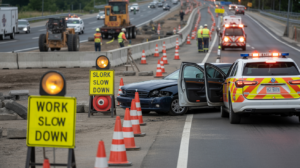
A Florida Car Accident Lawyer from The Law Offices of Anidjar and Levine can help injured victims preserve evidence, review police reports, identify witnesses, and manage insurance communications after rear-end crashes.
Legal guidance may address no-fault benefits, liability coverage, injury thresholds, medical documentation, lost income, and filing deadlines.
These cases often turn on proof of duty, breach, causation, and damages, including distraction, speeding, sudden stops, or unsafe spacing.
The sections below explain rights, evidence, claim strategy, and how legal support may help.
Main Takeaways
- A Florida following-too-closely injury lawyer can preserve crash evidence, photos, video, reports, and witness information after a rear-end collision.
- Legal help can review police reports, insurance documents, medical records, lost income, and treatment timelines to support your claim.
- Florida law may involve no-fault benefits, liability coverage, injury thresholds, comparative negligence, and strict filing deadlines.
- Common liability factors include tailgating, distraction, speeding, unsafe lane changes, sudden stops, impairment, and aggressive driving.
- Compensation may include medical expenses, lost income, pain, disability, future care needs, and other recognized crash-related losses.


How We Can Help With Your Florida Following Too Closely Accident Injury Claim
After a rear-end collision or other crash involving a driver who was following too closely, an injury claim may require careful investigation, documentation, and negotiation. A Florida following-too-closely accident injury lawyer can help by preserving evidence, reviewing police reports, identifying witnesses, and coordinating medical records that support the full extent of harm. This service allows injured individuals to focus on recovery, family responsibilities, and service to their communities.
Counsel may also establish a clear Case timeline that tracks treatment, lost income, insurance communications, and filing deadlines. This organized approach helps prevent delays and supports a consistent presentation of damages. A settlement strategy may include calculating future medical needs, addressing comparative-fault arguments, and responding to insurers’ attempts to minimize losses. When negotiations do not yield fair results, legal counsel can prepare the claim for litigation while maintaining professional advocacy focused on accountability, financial stability, and practical justice.
OUR CONSULTATIONSARE FREE
START YOUR FREE CASE REVIEW

Understanding Florida: Following Too Closely Accident Injury Cases
When a driver follows another vehicle too closely, the risk of a rear-end collision increases because there may be insufficient time to react to traffic changes, sudden stops, or roadway hazards. In Florida injury cases, these crashes often require careful review of traffic laws, vehicle damage, medical records, and witness accounts. Liability standards generally focus on whether the rear driver failed to maintain a reasonably safe distance under the circumstances.
An injured person may need to prove negligence by showing that the driver owed a duty of care, breached that duty, and caused measurable harm. This proof can support claims for medical expenses, lost income, pain, and other losses. Those serving injured individuals must understand that each case depends on facts, not assumptions.
Insurance companies may question injury severity or fault, making organized documentation important. A clear legal evaluation helps protect the injured person’s rights while promoting accountability, safety, and responsible conduct on Florida roadways after serious collisions.
Common Causes of Florida Following Too Closely Accidents
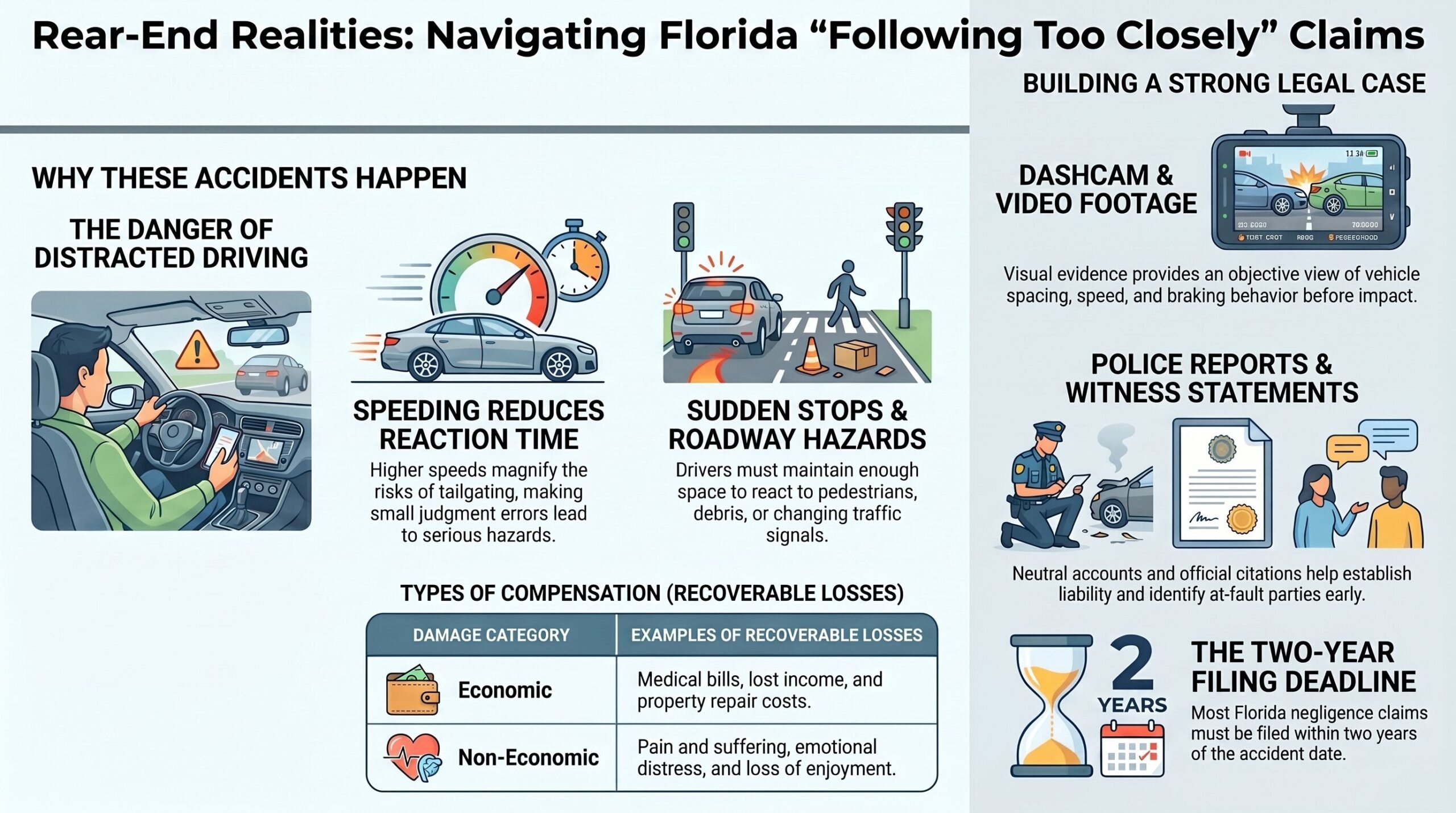
Common causes of Florida following-too-closely accidents often include distracted driving, speeding in traffic, sudden stops, and persistent tailgating. These factors reduce a driver’s ability to maintain a safe stopping distance, particularly in congested or fast-moving conditions. Understanding how these causes contribute to rear-end collisions can help clarify liability, negligence, and the resulting injury claims.
Distracted Driving
Because a driver’s attention must remain on traffic speed, spacing, and road conditions, distracted driving is a frequent cause of Florida following-too-closely accidents. When motorists look away from the roadway, even briefly, they may fail to notice slowing vehicles, traffic signals, or hazards ahead. Phone distraction is especially dangerous because it can combine visual, manual, and mental inattention, leaving insufficient time to brake safely.
Other distractions may include navigation systems, passengers, food, or adjusting vehicle controls. Distracted drivers may also make reckless lane changes, reducing available stopping distance for themselves and others. For injury victims and those assisting them, identifying distraction can help explain how preventable harm occurred. Evidence such as phone records, witness statements, and vehicle data may support a careful liability review.
Speeding In Traffic
Speeding in traffic increases the likelihood of a “following too closely” accident by reducing the time and distance a driver has to react to changing roadway conditions. When vehicles move faster than the surrounding traffic, maintaining safe spacing becomes harder, and small judgment errors can quickly create serious hazards.
In Florida traffic, excessive speed can magnify Reckless driving patterns, including aggressive tailgating, abrupt acceleration, and pressure on other motorists to move aside. These behaviors place responsible drivers, passengers, cyclists, and pedestrians at greater risk of preventable harm. Speeding also contributes to lane-change collisions, especially when a fast-moving driver approaches vehicles too closely before changing lanes. Careful speed control supports safer travel, promotes public responsibility, and helps protect those who depend on attentive, lawful conduct on shared roads.
Sudden Stops
Even when traffic is moving at lawful speeds, sudden stops can quickly expose the danger of following another vehicle too closely. In Florida traffic, abrupt braking may occur because of pedestrians, road debris, emergency vehicles, changing signals, or congestion ahead. A reasonably attentive driver must maintain enough space to perceive the hazard and stop safely.
When that space is lacking, the resulting collision can cause rear-end injuries, including neck, back, shoulder, and head trauma. For those committed to protecting injured individuals, these cases require careful review of distance, speed, roadway conditions, brake lights, and witness accounts. Liability determination often focuses on whether the rear driver acted prudently under the circumstances, while also considering whether any sudden stop was foreseeable, justified, or influenced by another contributing factor.
Tailgating Behavior
When a driver follows too closely, ordinary traffic changes can become immediate collision risks. Tailgating reduces reaction time and limits the space needed to stop safely, especially on crowded Florida roads. This behavior often appears when drivers feel rushed, distracted, or impatient, but its effects can extend to passengers, pedestrians, and nearby motorists who depend on careful decisions.
Tailgating may also intensify when Road Rage Triggers, such as lane changes or perceived delays, lead to aggressive acceleration and unsafe spacing. Traffic Signal Misuse, including speeding through yellow lights or rolling forward before traffic clears, can further increase the risk of rear-end crashes. Those committed to public safety should recognize tailgating as preventable conduct that demands patience, proper distance, and attentive judgment in every traffic setting.


Legal Rights of Florida Following Too Closely Accident Injury Victims
After a rear-end collision or similar crash caused by following too closely, an injured person in Florida may have the right to pursue compensation from the negligent driver and other responsible parties. These rights may include recovery for medical expenses, lost income, pain, disability, and other losses recognized under Florida law.
After a close-following crash, injured Floridians may seek compensation while protecting their dignity and legal rights.
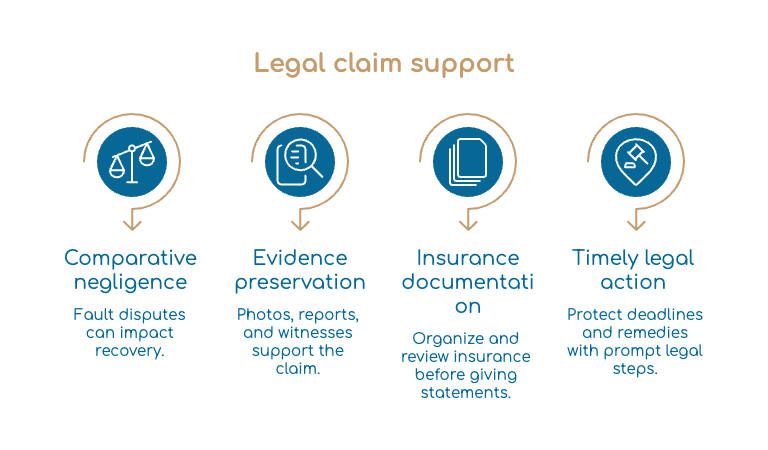
- Comparative negligence may affect recovery if fault is disputed.
- Evidence preservation can support the claim through photos, reports, video, and witness details.
- Insurance documentation should be organized, accurate, and reviewed before statements are given.
- Timely legal action helps protect deadlines and available remedies.
Florida law requires careful attention to no-fault benefits, liability coverage, and injury thresholds. A lawyer may evaluate the claim, communicate with insurers, and seek fair compensation while the injured person focuses on recovering, family responsibilities, and serving the community with stability.
Why Do Florida Following Too Closely Accident Injuries Happen?
Understanding legal rights is only part of evaluating a following-too-closely injury claim, because the cause of the crash often determines liability, the available evidence, and the strength of the case. In Florida, these injuries commonly occur when a driver fails to maintain a safe distance for traffic, weather, speed, or roadway conditions. Sudden braking may contribute, but rear drivers are often scrutinized for inattention, speeding, distraction, impairment, or aggressive driving.
Commercial vehicles, rideshare drivers, and commuters may create added risk when delivery schedules, congestion, or fatigue reduce reaction time. Poor vehicle maintenance, including worn brakes or tires, can also turn ordinary traffic into a severe collision. Determining the cause of the impact helps assess fault, compare witness accounts, and address traffic-violation defenses.
It also affects Insurance claim timelines because insurers often investigate causation before valuing injuries. Careful analysis supports fair accountability while helping injured people receive orderly, service-focused guidance.
What Should You Do After a Florida Following Too Closely Accident Injury?
After a Florida following-too-closely accident, an injured person should take prompt steps to protect their health, preserve evidence, and safeguard their legal rights. Seeking medical attention, documenting the crash, and maintaining relevant records can help establish the nature and extent of the injury. Contacting an attorney may also provide guidance on insurance issues, liability concerns, and potential recovery options.
Seek Medical Attention
Although injuries may not be immediately apparent, anyone involved in a Florida following-too-closely accident should seek prompt medical attention to protect both their health and any potential injury claim. Medical evaluation can identify concussions, soft tissue injuries, internal trauma, or worsening pain that may not surface at the scene.
Emergency room visits are important when symptoms are serious, because timely care can prevent complications and guide appropriate referrals. Even when injuries seem minor, a primary care physician or urgent care provider can assess the person’s condition and recommend long-term treatment, including therapy, expert care, or follow-up testing. Those who serve injured individuals should encourage consistent care, because delayed treatment may harm recovery and weaken the connection between the crash and the injuries claimed later.
Document The Crash
Once immediate medical needs are addressed, careful documentation can help preserve essential facts about a Florida following-too-closely accident and support a later injury claim. A person should photograph vehicle positions, visible damage, skid marks, traffic signs, roadway conditions, debris, and weather indicators before the scene changes. This accident scene documentation may help explain how the rear driver failed to maintain a safe distance.
If possible, names and contact information for witnesses should be collected, along with the responding officer’s agency and report number. Injured persons may also record their symptoms, treatment dates, missed work, and daily limitations. Such records can become evidence of negligence when they link the crash to careless driving and the resulting harm. Accurate documentation serves truth, accountability, and the well-being of those affected.
Contact An Attorney
When injuries, fault disputes, or insurance pressure arise, contacting a Florida following-too-closely accident injury lawyer can help protect a claimant’s rights from the beginning of the case. Legal counsel can review crash reports, medical records, witness statements, and photographs to identify liability issues and preserve evidence before it is lost. An attorney may also communicate with insurers, reducing the risk that a vulnerable person will give statements that weaken insurance claims.
Through a focused case evaluation, counsel can explain available remedies, potential compensation, and deadlines that affect recovery. This guidance supports informed decisions, especially when a claimant is trying to recuperate and fulfill family, work, or community responsibilities. Prompt legal assistance helps protect the matter, which is handled with care, accuracy, and purposeful advocacy.
Critical Evidence in a Florida Following Too Closely Accident Injury Case
Critical evidence in a Florida following-too-closely accident injury case can help establish fault, explain the sequence of events, and support the injured party’s damages claim. Attorneys may evaluate several key forms of proof, including:
- Police crash reports
- Dashcam video footage
- Vehicle damage analysis
- Witness statements
Police Crash Reports
Although a police crash report does not determine liability on its own, it often becomes one of the most important early records in a Florida following-too-closely accident injury case. The report may identify the drivers, vehicle positions, roadway conditions, citations, insurance details, and initial observations from the responding officer. It can also preserve witness contact information, which helps counsel locate neutral accounts before memories fade.
When officers note statements about speed, stopping distance, impact points, or distraction, those entries may guide later investigation and claim evaluation. A careful legal review can compare the report with photographs, medical records, dashcam metadata, and repair findings to identify inconsistencies or omissions. For injured clients, this record supports an organized, service-focused effort to seek accountability, compensation, and safer conduct on Florida roads.
Dashcam Video Footage
Dashcam video footage can provide a direct, time-stamped view of how a Florida following-too-closely accident occurred, often showing details that written reports and witness statements cannot fully capture. It may reveal changes in speed, braking, lane position, traffic signals, and the distance between vehicles before impact. For injured persons and those serving their recovery, this evidence can support a clearer search for truth and fair accountability.
A careful review should address Dashcam authenticity, including whether the recording is complete and properly attributed. Florida admissibility rules may require proof that the footage is reliable, relevant, and not misleading. Police dashcam retrieval should be requested promptly when responding officers recorded the scene. Private footage preservation steps may include written notices to drivers, businesses, or agencies before recordings are overwritten.
Vehicle Damage Analysis
When a rear-end collision raises questions about following distance, vehicle damage analysis can help explain how the impact occurred and whether the physical evidence matches the reported sequence of events. Damage patterns, crush depth, bumper alignment, and frame deformation may indicate collision angle, speed range, and point of contact. In a Florida injury case, these details can support a careful review of liability while promoting Roadway safety through accurate accountability.
Photographs, inspection reports, and car repair estimates may also show whether claimed impacts are consistent with the visible harm to each vehicle. This evidence can assist injured people, insurers, and legal professionals in evaluating causation and losses. A disciplined analysis helps guarantee that decisions are guided by reliable facts, rather than assumptions about rear-end crashes.
Witness Statements
Vehicle damage analysis can show how a collision likely occurred, but witness statements may provide the context needed to understand what happened in the moments before impact. In a Florida following-too-closely case, neutral observers may describe traffic flow, braking behavior, lane changes, weather, or distractions that physical evidence alone cannot fully explain. Their accounts can support an injured person’s claim, clarify disputed facts, and help legal teams serve clients with careful, fact-based advocacy.
Attorneys may evaluate witness credibility by comparing statements with police reports, photographs, medical records, and roadway evidence. Consistent accounts can strengthen liability arguments, while conflicts may require further investigation. During deposition prep, counsel may use witness statements to identify crucial issues, anticipate defenses, and present testimony that is accurate, organized, and respectful.
Long-Term Effects of Florida Following Too Closely Accident Injuries
Following too closely in Florida can cause accidents that lead to injuries that extend far beyond the initial collision. Victims may experience chronic pain conditions, reduced mobility, and ongoing limitations that affect work, daily activities, and medical needs. Emotional trauma effects, including anxiety and distress while driving, may also influence long-term recovery and the value of an injury claim.
Chronic Pain Conditions
After a rear-end collision caused by a driver following too closely, chronic pain can become one of the most disruptive long-term effects for an injured person in Florida. Persistent neck, back, shoulder, or nerve pain may continue long after visible injuries appear to recover, affecting sleep, concentration, work capacity, and daily responsibilities. Care providers may recommend Chronic pain treatment options, including physical therapy, medication management, injections, counseling, or coordinated pain management programs.
For those serving injured individuals, careful documentation is vital because consistent medical records help explain the severity, duration, and practical impact of ongoing pain. When proving long-term disability, evidence may include diagnostic findings, physician opinions, treatment history, and credible descriptions of functional limits. Legal guidance can help connect these losses to the collision.
Reduced Mobility
When a rear-end collision causes lasting injury, reduced mobility may become a serious long-term limitation that affects an injured person’s independence, employment, and daily routine. Damage to the back, neck, hips, knees, or shoulders can restrict walking, lifting, bending, driving, and household tasks. These limitations may require physical therapy, assistive devices, modified work duties, or ongoing medical supervision.
For individuals who serve families, patients, clients, or communities, impaired movement can reduce their ability to provide dependable care and support. Similar functional losses may also appear in slip-and-fall injuries or workplace negligence claims, where joint damage and soft-tissue injuries limit activity. Careful documentation of mobility restrictions, treatment needs, and work limitations helps establish the full impact of the injury and supports a fair legal evaluation.
Emotional Trauma Effects
Physical limitations are often accompanied by psychological harm, especially where a sudden rear-end collision causes pain, uncertainty, or a loss of control over daily life. Victims may experience psychological distress that affects sleep, concentration, patience, and willingness to drive. For caregivers, employers, and community members seeking to serve injured individuals well, these changes merit careful attention.
Post-accident anxiety can make routine travel feel unsafe, particularly when traffic slows abruptly or another vehicle follows too closely. Some individuals withdraw from work, family duties, or service roles because symptoms feel unpredictable. Emotional trauma may also complicate medical recovery by increasing tension, fatigue, and irritability. Documenting these effects through counseling records, physician notes, and consistent personal observations can support a clearer understanding of long-term harm.
Proving Liability in Florida Following Too Closely Accident Injury Cases
Because Florida law generally presumes that a rear driver may be responsible for a rear-end collision, proving liability in a following-too-closely accident often begins with the facts surrounding distance, speed, traffic conditions, and driver conduct. Evidence may include crash reports, witness statements, vehicle damage, skid marks, video footage, and data from onboard systems. These materials help show whether the rear driver failed to maintain a safe following distance or reacted too late.
A careful investigation may also review evidence of brake lights, sudden lane changes, roadway hazards, or mechanical issues that could affect responsibility. Comparative negligence analysis is important when more than one driver’s actions contributed to the crash. For example, a lead driver who stopped abruptly without cause may share fault, while the rear driver may still bear substantial responsibility. Clear proof allows injured persons and their advocates to pursue accountability with fairness, accuracy, and respect for all affected.
Dealing With Insurance Companies After a Florida Following Too Closely Accident Injury
After a following-too-closely accident in Florida, insurance companies often start evaluating fault, damages, and coverage almost immediately. Adjusters may request recorded statements, medical authorizations, or early settlement discussions before the full impact of the injuries is known. An injured person should approach these communications carefully, because statements can be used to lessen responsibility or dispute the extent of harm.
A lawyer may help manage insurer contact, preserve helpful documentation, and ensure communications remain accurate and complete. This guidance is especially important when severe injuries raise questions about whether to claim policy limits or when an insurer delays, undervalues, or denies a valid claim without proper grounds. Such conduct may implicate Florida bad-faith insurance, depending on the facts and applicable policy duties.
Careful insurance handling supports accountability while protecting resources needed for medical care, family stability, and community participation. It also helps prevent a vulnerable claimant from being pressured into an unfair resolution.
What to Expect During a Florida Following Too Closely Accident Injury Claim Process
A Florida following-too-closely accident injury claim typically begins with an initial case evaluation, where liability, damages, and available insurance coverage are reviewed. The process then moves to evidence gathering, including crash reports, medical records, witness statements, and vehicle damage documentation, all of which support insurance claim negotiations. If negotiations do not produce a fair resolution, the claim may proceed toward settlement discussions or litigation, depending on the strength of the evidence and the insurer’s position.
Initial Case Evaluation
Evaluating a Florida following-too-closely accident claim begins with a careful review of how the rear-end or chain-reaction collision occurred, the injuries involved, and the available evidence. During this initial case evaluation, counsel considers whether the trailing driver breached the duty to maintain a safe distance, while also weighing comparative fault, road conditions, and the client’s immediate needs.
A lawyer may review medical records to understand the severity of harm, treatment status, and projected care needs. This review helps determine whether the claim supports recovery for medical expenses, lost income, pain, and related losses. Early guidance also prepares the injured person for insurance negotiation, including likely defenses and settlement considerations. A thorough evaluation promotes informed decisions, protects legal rights, and supports responsible advocacy.
Evidence Gathering Process
Once the initial case evaluation identifies the central liability and injury issues, the evidence-gathering process begins with a focused effort to preserve and organize evidence before it is lost, altered, or disputed. Evidence preservation may include obtaining crash reports, photographs, traffic camera footage, vehicle damage records, and witness statements. For those committed to serving injured persons with care, this step supports a fair and orderly claim.
Medical documentation is also collected, including emergency records, diagnostic results, treatment plans, and provider opinions connecting injuries to the collision. These materials help clarify the seriousness of harm and the impact on daily life. Well-organized evidence can later support insurance dispute resolution and settlement negotiation, while allowing all parties to evaluate the claim on a complete and reliable factual record.
Insurance Claim Negotiations
After the evidence has been collected and reviewed, insurance claim negotiations typically begin with a structured presentation of liability, injury documentation, and claimed losses. In a following-too-closely accident, the insurer may evaluate crash reports, medical records, photographs, repair estimates, and statements from involved parties. The injured person’s representative may explain how the rear driver breached a duty of care and how the impact caused measurable harm.
During this stage, policyholder rights should be respected, including fair review, timely communication, and consideration of available coverage. If the insurer disputes fault, minimizes injuries, or challenges treatment costs, claim denial handling may require careful written responses and supplemental documentation. Negotiations remain focused on resolving disputed issues through organized advocacy, accurate valuation, and consistent communication with all parties involved.
Settlement Or Litigation
When negotiations do not produce a fair resolution, the claim may move toward either continued settlement discussions or formal litigation. Counsel evaluates liability, medical proof, vehicle damage, lost income, and future care needs to determine whether settlement still serves the injured person’s best interests. Insurance negotiation strategies may include presenting updated records, clarifying fault under Florida law, and responding firmly to undervalued offers. If the insurer remains unreasonable, litigation can provide a structured path toward accountability.
During litigation, trial preparation tactics become crucial. The legal team may file a complaint, exchange discovery, question witnesses, consult medical professionals, and prepare exhibits showing how the crash harmed the claimant’s life. Throughout this process, the goal remains steady: pursue fair compensation while supporting the injured person’s recovery and dignity.
Compensation for Florida Following Too Closely Accident Injury Damages
Although each following-too-closely accident presents different facts, compensation in Florida generally depends on the severity of the injuries, the available insurance coverage, and the evidence connecting the crash to the claimant’s losses. A careful review may include police reports, witness statements, vehicle damage, medical records, and insurance communications. These materials help determine whether the rear driver failed to maintain a safe distance or whether other conduct contributed to the collision.
Florida’s Comparative Fault rules may reduce compensation when the injured person shares responsibility for the crash. For example, sudden braking, unsafe lane changes, or defective brake lights may affect the final recovery. Insurance limits also shape the practical value of a claim.
When the at-fault driver lacks sufficient coverage, Uninsured Coverage or underinsured motorist benefits may provide an additional source of recovery. A focused legal evaluation helps protect the injured person while promoting fair accountability and responsible community care.
Economic vs Non-Economic Damages in Florida Following Too Closely Accident Cases
In Florida, in following-too-closely accident cases, damages are commonly divided into economic and non-economic categories, each serving a distinct role in measuring the injured person’s losses. Economic damages may include medical expenses, lost income, and property damage, while non-economic damages may include pain, suffering, emotional distress, and reduced quality of life. Proving damage value requires organized evidence, credible documentation, and a clear connection between the collision and the claimed injuries.
Economic Damage Categories
Economic damages measure the financial losses a person suffers after a following-too-closely accident, and they often form the foundation of a Florida injury claim. These losses may include emergency care, hospital treatment, follow-up appointments, rehabilitation, prescriptions, medical equipment, and future care needs supported by provider opinions. Medical billing documentation helps link these expenses to the crash and provides insurers, counsel, and courts with a reliable basis for review.
Lost income is another major category, covering missed work, reduced hours, diminished earning capacity, and lost employment benefits. Wage loss proof, such as pay records, employer statements, tax returns, and disability notes, supports these calculations. Property damage, transportation costs, and out-of-pocket household assistance may also qualify when properly documented and reasonably related to the collision.
Non-Economic Losses
When a following-too-closely collision causes physical pain or lasting disruption, non-economic damages address the personal losses that do not appear on an invoice or wage statement. These losses may include pain, emotional distress, inconvenience, loss of enjoyment, disfigurement, and the strain placed on family relationships. In Florida rear-end cases, such harm can be significant when injuries affect caregiving, community service, employment dignity, or daily independence.
Insurance settlement tactics may seek to minimize these experiences by focusing solely on bills, treatment dates, or assumptions of quick recovery. A careful evaluation recognizes that service-minded individuals often endure hardship quietly while continuing to support others. Non-economic damages are separate from punitive damages rules, which apply only in limited cases involving particularly wrongful conduct. Each category serves a distinct purpose in civil recovery.
Proving Damage Value
Because damage value must be supported by evidence, Florida following-too-closely accident claims often require proof that separates measurable financial losses from personal harms that cannot be reduced to a receipt. Economic damages may include emergency care, rehabilitation, lost income, vehicle repair, and future treatment needs, all supported through bills, wage records, expert opinions, and medical documentation.
Non-economic damages address pain, suffering, emotional distress, disability, and reduced quality of life, which require consistent treatment histories and credible testimony. Liability challenges can affect valuation when the rear driver disputes the severity of the impact or alleges sudden braking. Under comparative fault, any assigned responsibility may reduce recovery. Careful documentation also helps address insurance claim delays, giving adjusters, attorneys, and courts a clear record that honors the injured person’s needs and promotes fair resolution.
When a Florida Following Too Closely Accident Injury Case Goes to Trial vs Settlement
How does a Florida following-too-closely accident injury case move from negotiation to trial? Usually, the process begins with a demand package that organizes evidence of injuries, medical records, wage loss, vehicle damage, and the injured person’s future needs. Insurers then evaluate liability and damages, and counsel may negotiate within a settlement timeline shaped by treatment progress, documentation, and the strength of proof.
Settlement often serves families and communities by reducing delay, expense, and uncertainty while still seeking fair compensation. However, a trial may become necessary when an insurer disputes fault, minimizes medical care, challenges causation, or offers an amount that does not reflect the harm shown.
Before trial, attorneys may use discovery, depositions, expert opinions, and mediation to clarify disputed issues. A prepared trial posture can also encourage reasonable settlement discussions. If resolution remains unavailable, a judge or jury considers the evidence and determines responsibility and damages.
Florida Laws That May Affect Your Florida Following Too Closely Accident Case
Florida law shapes every stage of a following-too-closely accident injury case, from early claim evaluation to settlement negotiations and, if necessary, trial. Legal duties, insurance rules, and evidence standards can affect how responsibility is proven and how losses are valued. A careful review helps protect injured people while supporting fair outcomes for families, caregivers, and communities.
- Florida drivers must maintain a safe distance, considering speed, traffic, weather, and road conditions.
- Required personal injury protection benefits may apply first, subject to insurance deadlines and policy terms.
- A comparative fault defense may reduce recovery if the injured person is alleged to share blame.
- Medical records, crash reports, witness statements, and vehicle damage may help establish causation and damages.
These laws require disciplined documentation and prompt communication with insurers. When applied correctly, they help separate preventable harm from disputed claims and guide a case toward accountability, practical compensation, and responsible resolution.
The Statute of Limitations for Florida Following Too Closely Accident Injury Cases
After a following-too-closely crash, the statute of limitations determines how long an injured person has to file a lawsuit in court. In Florida, most negligence claims arising from motor vehicle accidents must be filed within two years from the date of the collision. If the deadline passes, the court may dismiss the case, even when injuries are serious, and liability appears clear.
This time limit matters because evidence can fade, witnesses may become unavailable, and medical records must support the calculation of damages. It also affects cases involving comparative negligence, where fault may be divided between drivers. A timely filing helps preserve the opportunity to seek compensation for medical expenses, lost income, pain, and other losses.
Certain circumstances may change how the deadline applies, including claims involving government vehicles, minors, or delayed discovery of harm. Injured persons should treat the limitation period as a firm legal boundary for protecting potential recovery.
How a Florida Following Too Closely Accident Injury Lawyer Can Help You
Meeting the filing deadline is only one part of protecting a following-too-closely accident claim, because the injured person must also prove fault, document damages, and respond to the insurance company’s defenses. A Florida following too closely accident injury lawyer can organize the claim with care, allowing the injured person to focus on recovery, family responsibilities, and service to others.
- Investigating the crash scene, vehicle damage, police reports, and witness statements
- Proving Negligence through traffic laws, reconstruction evidence, and driver conduct
- Calculating medical expenses, lost income, future care needs, and pain-related losses
- Challenging Insurance Denials, low settlement offers, and unsupported blame-shifting arguments
Legal counsel also manages communication with insurers, helping prevent statements from being misused. The lawyer can present evidence in a structured manner, negotiate from a position of preparation, and pursue litigation when necessary. This support promotes accountability, protects the injured person’s dignity, and seeks fair compensation under Florida law.
When to Contact a Florida Following Too Closely Accident Injury Lawyer
When should an injured person seek legal guidance following a rear-end or following too closely collision? Prompt contact is advisable when injuries require treatment, vehicle damage is significant, fault is disputed, or an insurer requests a recorded statement. Early review can help preserve evidence, identify witnesses, and document the harm suffered with care for all affected parties.
Legal guidance is also appropriate when medical symptoms worsen after the crash, when lost wages begin affecting household stability, or when the at-fault driver’s conduct appears reckless. In serious cases, a lawyer may evaluate whether punitive damages could be considered under Florida law. Timely assistance can also support a clear Negotiation strategy before insurance communications become difficult or incomplete.
A person serving family, patients, clients, or a community should not wait until pressure builds. Seeking counsel early helps protect recovery, responsibilities, and long-term security while allowing the injured person to focus on convalescing.
Why You Need an Experienced Florida Following Too Closely Accident Injury Lawyer
Early legal guidance is most effective when it comes from counsel with specific experience handling Florida following-too-closely and rear-end collision claims. These cases often involve disputed fault, delayed symptoms, and insurer efforts to limit payment. Experienced counsel understands how Florida traffic laws, crash reports, witness statements, and vehicle damage evidence support a clear liability position.
An injury lawyer also helps preserve the injured person’s ability to serve family, work, and community by managing burdens that can otherwise become overwhelming. This includes monitoring the Insurance claim timeline, responding to insurer requests, and protecting the claim from avoidable delays or inconsistent statements. Careful Medical records review can connect treatment, diagnosis, and future care needs to the collision, which is crucial when soft tissue injuries, concussions, or aggravation of prior conditions are involved.
With informed legal support, the claim can be presented accurately, compassionately, and firmly, allowing the injured person to focus on recovery and stability.
How to Choose the Right Florida Following Too Closely Accident Injury Lawyer for Your Case
Choosing the right Florida rear-end collision injury lawyer begins with evaluating whether the attorney has direct experience handling rear-end collision claims, disputed liability issues, and injuries that may not appear fully documented in the first days after a crash. A qualified lawyer should understand how police reports, medical records, witness statements, and vehicle damage evidence support a claim while respecting the client’s need for guidance during a difficult recovery.
The selection process should also include attention to communication, responsiveness, and organization. An attorney who clearly explains the statute of limitations and claim deadlines can help prevent avoidable harm to the case. The lawyer should also recognize common insurance tactics, including attempts to minimize injuries or shift blame, and respond with evidence-based advocacy.
A thoughtful settlement strategy is equally important. The right attorney evaluates medical needs, lost income, future limitations, and the client’s broader well-being before pursuing resolution. This approach helps protect injured individuals and the families who depend on them.
About The Law Offices of Anidjar & Levine
For individuals injured in rear-end collisions, The Law Offices of Anidjar & Levine provides legal representation focused on protecting clients’ rights and pursuing fair compensation after a following-too-closely accident in Florida.
The firm assists injured people with insurance claims, evidence review, medical documentation, and negotiations involving negligent drivers and insurers.
Its legal team serves clients by managing case details, allowing injured individuals and families to focus on recovery, stability, and continued care.
The firm handles matters involving serious injuries, lost income, property damage, and Wrongful Death Claims when a collision results in fatal harm.
Attorneys also prepare cases for settlement discussions, litigation, or Car Accident Mediation when appropriate.
Through structured advocacy and client-centered service, The Law Offices of Anidjar & Levine works to hold careless drivers accountable.
Its approach reflects a commitment to helping accident victims seek justice, financial recovery, and practical support after preventable roadway harm throughout Florida.
Frequently Asked Questions
Can Dashcam Footage Prove a Driver Was Following Too Closely?
Yes, dashcam footage can help prove a driver was following too closely. It may show vehicle spacing, speed, braking, road conditions, and the moments leading up to impact. Its evidence weight depends on clarity, camera angle, timestamps, and whether it aligns with witness statements or police findings. When footage shows unsafe distance or delayed reaction, it may support claims involving traffic violations and assist those seeking accountability for harmed parties.
Do Rear-End Accident Rules Apply Differently in Multi-Car Crashes?
Yes, rear-end accident rules can apply differently in multi-car crashes. Investigators must identify which impact occurred first, whether one vehicle was pushed forward, and how each driver responded. Driver intent may matter when sudden braking, distraction, or unsafe lane changes are alleged. Evidence challenges often arise because accounts conflict and damage patterns overlap. Careful review helps protect injured people, support fair decisions about responsibility, and serve those seeking accountability.
Can Weather Conditions Affect Following-Too-Closely Liability in Florida?
Yes. Weather conditions can affect following-too-closely liability in Florida because drivers must adjust speed and distance to roadway hazards. Reduced driver visibility, slick pavement, and rain impact may require greater spacing than normal conditions. A driver who fails to allow a safe stopping distance may still be found negligent, even if weather contributed. Investigators typically review conditions, speed, braking evidence, and whether each driver acted responsibly to protect others.
What if the Lead Driver Suddenly Braked Without Reason?
A lead driver’s sudden, unexplained braking may affect fault, but it does not automatically excuse the rear driver. A Sudden hazard can change the analysis, yet each driver’s duty includes maintaining a safe distance and vigilance. Investigators assess brake escalation, traffic flow, road conditions, and witness accounts. Causation evidence, such as dashcam footage or vehicle data, helps determine whether the lead driver acted unreasonably or the rear driver failed to respond prudently.
Are Commercial Truck Drivers Held to Different Following Distance Standards?
Yes. Commercial truck drivers are generally expected to maintain greater following distances because large vehicles require longer stopping distances and heightened care. In a crash review, Comparative negligence may assess whether both drivers contributed to the harm. Evidence requirements often include driver logs, speed data, dash footage, maintenance records, and witness statements. Those serving injured persons should evaluate these materials carefully, because professional driving duties can shape liability determinations.
—————————
A Florida following too closely accident can leave victims facing injuries, medical costs, lost income, and insurance disputes.
Experienced legal representation helps protect their rights, establish liability, and pursue fair compensation under Florida law.
The Law Offices of Anidjar and Levine assist injured clients with attentive case management and informed advocacy from start to finish.
Those affected by a rear-end or tailgating collision should consider timely guidance from a Florida Car Accident Lawyer to preserve evidence and strengthen their claim.