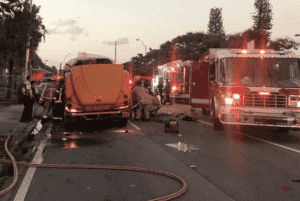
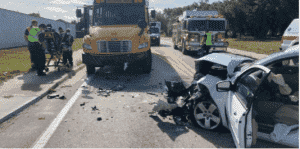
Law Offices of Anidjar and Levine helps protect a claim after a rear-end collision by preserving crash evidence, reviewing police reports, securing witness statements, and documenting medical treatment from the start.
Legal counsel can analyze fault, address insurer tactics, and calculate damages for medical expenses, lost income, property loss, pain, and future care needs.
Prompt guidance from a Fort Myers Car Accident Lawyer also helps avoid mistakes after a following-too-closely accident and supports stronger settlement or litigation outcomes.
The sections below explain what this process typically involves.
Main Takeaways
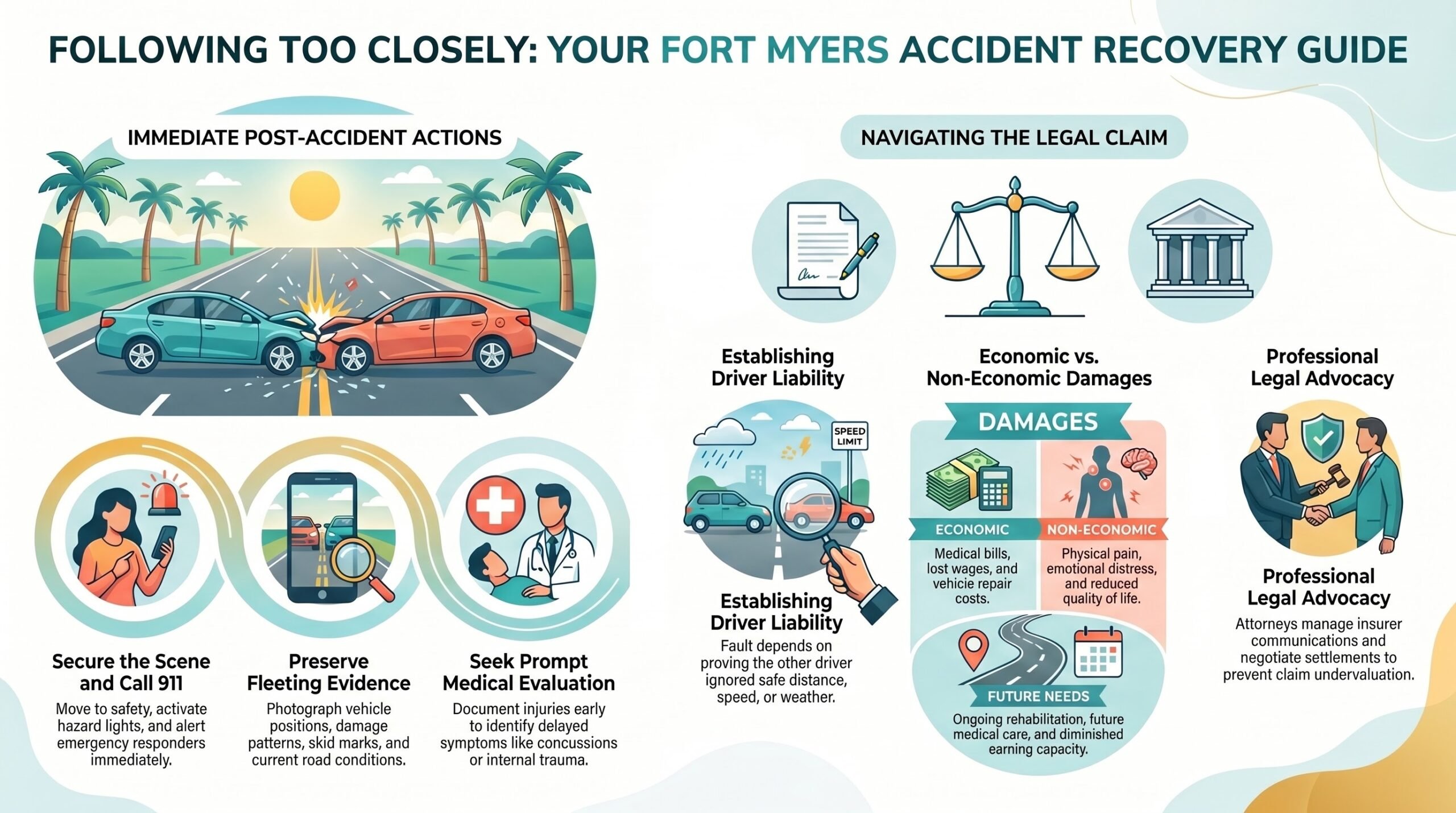
- Move to safety, call 911, and photograph vehicle positions, damage, skid marks, debris, traffic signs, and road conditions before evidence changes.
- Seek prompt medical evaluation and follow treatment instructions to document injuries, limitations, and future care needs for your claim.
- A Fort Myers following-too-closely accident lawyer can preserve dash cam footage, telemetry, witness statements, and police reports to prove liability.
- Liability often depends on showing that the other driver failed to maintain a safe following distance, taking into account speed, traffic, weather, and visibility.
- Legal help can coordinate insurer communications, document lost income and pain, and pursue compensation for long-term physical and emotional harm.


How We Can Help With Your Fort Myers Following Too Closely Accident Injury Claim
Navigate through the aftermath of a rear-end collision with informed legal guidance, and the path toward a stronger injury claim becomes clearer. A dedicated legal team can assist injured people in Fort Myers by organizing records, preserving evidence, and communicating with insurers in a disciplined, service-oriented manner. This support helps families focus on recovery while important deadlines and documentation demands are handled with care.
Effective representation often begins with a careful review of medical treatment, lost income, and daily limitations, followed by strategic planning tailored to the claimant’s needs. Attorneys may also connect clients with post-crash counseling resources when emotional strain affects recovery and decision-making. Throughout the process, they prepare demand materials, evaluate offers, and guide Settlement negotiation with a steady emphasis on fairness, accountability, and long-term stability. When disputes intensify, counsel can coordinate expert input and build a persuasive case to protect the client’s present and future well-being.
OUR CONSULTATIONSARE FREE
START YOUR FREE CASE REVIEW

Understanding Fort Myers Following Too Closely Accident Injury Cases
In Fort Myers, following-too-closely accident injury cases often arise when a driver fails to leave enough space to stop safely as traffic ahead slows or stops. These claims frequently involve rear-end impacts, chain-reaction collisions, and disputes about distance, perception, and reaction time under ordinary roadway conditions.
A careful review typically focuses on police reports, witness statements, vehicle damage, roadway footage, and medical records. This evidence helps show how the collision occurred and whether the injured person suffered losses requiring legal attention and community-minded support. Harm may include neck and back injuries, head trauma, lost income, pain, and post-crash PTSD that affects daily functioning and service to family.
In dense traffic corridors, urban tailgating can increase the force and unpredictability of a crash, especially where sudden stops occur. Understanding these cases requires close attention to liability, causation, and damages, so injured people can pursue accountability and obtain resources needed for recovery and future stability.
Common Causes of Fort Myers Following Too Closely Accidents
Several recurring factors contribute to following too closely accidents in Fort Myers, often reducing the time needed to react safely. Distracted driving, speeding in heavy traffic, and sudden stops ahead frequently create conditions that make rear-end collisions more likely. Aggressive tailgating behavior further increases this risk, especially when drivers ignore safe following distances and changing road conditions.
Distracted Driving Habits
Why do so many rear-end collisions begin with a momentary lapse in attention? In Fort Myers, distracted driving often leads motorists to follow too closely, unaware of the danger they pose to others. Even brief phone use can delay braking, reduce awareness of changing traffic patterns, and leave inadequate stopping distance. Likewise, eating distractions may draw a driver’s eyes, hands, and judgment away from the road at pivotal moments.
Responsible roadway conduct depends on steady focus and respect for nearby travelers. When attention shifts to screens, food, navigation devices, or conversations, a vehicle may continue forward while traffic ahead slows or stops. That short delay can produce preventable harm. By recognizing distraction as a serious safety threat, drivers may better protect passengers, pedestrians, cyclists, and fellow motorists throughout the Fort Myers community.
Speeding In Heavy Traffic
Amid dense Fort Myers traffic, speeding often leaves drivers with too little time and space to respond safely to slowing vehicles ahead. When motorists move faster than conditions reasonably permit, following distances shrink and small miscalculations become dangerous for everyone nearby. Heavy traffic requires steady judgment, awareness of speed limits, and a willingness to put community safety above impatience or convenience.
In many rear-end collisions, excessive speed disrupts traffic flow prediction and undermines a driver’s ability to maintain a prudent buffer. Vehicles traveling too quickly may weave, close gaps aggressively, or pressure others into unsafe pacing. Such conduct can harm families, workers, visitors, and first responders sharing the roadway. A careful approach in congested areas reflects respect for others and helps reduce preventable accidents from following too closely throughout Fort Myers corridors each day.
Sudden Stops Ahead
Even when traffic is moving at a reasonable pace, sudden stops ahead often trigger rear-end collisions when a driver follows too closely to react in time. In Fort Myers, these events may arise from congestion, changing signals, pedestrians, road debris, or unexpected hazards near intersections and merges.
Safe driving depends on maintaining an adequate following distance, steady attention, and timely braking when conditions change without warning. Drivers who leave too little space reduce their chances of rear-end avoidance, especially when vehicles ahead must stop abruptly for safety reasons.
Commercial vehicles, older motorists, and distracted drivers may face added difficulty judging stopping distances under pressure. From a public safety perspective, maintaining space cushions helps protect passengers, nearby families, and first responders who may otherwise be at risk after a preventable crash.
Aggressive Tailgating Behavior
Tailgating often reflects aggressive driving behavior that places surrounding motorists at immediate risk. When a driver follows too closely out of impatience, hostility, or road rage, available reaction time is sharply reduced. This conduct can pressure others into unsafe decisions, especially in traffic, near intersections, or during poor weather conditions.
In many Fort Myers collisions, aggressive tailgating escalates from mere negligence to intentional intimidation. Some drivers flash their headlights, weave behind another vehicle, or perform braking tests that can trigger rear-end crashes. Such actions endanger families, workers, and community members who are simply trying to travel safely and serve daily responsibilities. Careful documentation of these behaviors may help establish fault, demonstrate recklessness, and support injured individuals seeking accountability after a preventable following too closely accident.


Legal Rights of Fort Myers Following Too Closely Accident Injury Victims
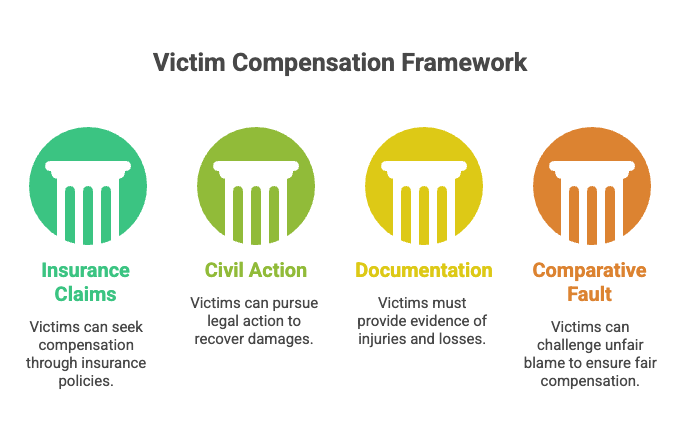
Protecting their interests begins with understanding that Fort Myers injury victims have important legal rights after a following-too-closely accident. Florida law may allow recovery for medical expenses, lost income, pain and suffering, and other related losses when another driver’s negligence caused the collision. These rights also support broader community goals, including driver education and policy reform, because accountability can encourage safer conduct and more responsible roadway practices.
Fort Myers injury victims have legal rights that can support recovery, accountability, and safer roadway practices after negligent rear-end collisions.
- Victims may pursue compensation through insurance claims or civil action when evidence shows the trailing driver failed to maintain a safe distance.
- Victims may present documentation of physical injuries, financial harm, and future care needs to support the full value of a claim.
- Victims may challenge unfair blame, since comparative fault issues can affect compensation and require careful legal analysis.
Steps to Take After a Fort Myers Following Too Closely Accident Injury
After a Fort Myers following-too-closely accident injury, several immediate steps can help protect both personal safety and a potential legal claim. Priority is generally placed on ensuring immediate safety, gathering crucial evidence from the scene, and seeking prompt medical care, even when injuries appear minor at first. Each of these actions can affect physical recovery, documentation of losses, and the strength of any subsequent insurance or legal proceedings.
Ensure Immediate Safety
Move to a safe location as soon as conditions allow, since the risk of a secondary collision often remains high in a following-too-closely accident. If the vehicles can be moved, they should be guided to the shoulder or another protected area away from traffic. Occupants should remain calm, complete seatbelt checks, and assess whether anyone needs urgent medical attention. Hazard signaling should be activated promptly to alert approaching drivers and protect others nearby.
If serious injuries are suspected, unnecessary movement should be avoided until emergency personnel arrive. When safe, the engine should be turned off, and passengers should exit carefully on the side away from traffic. Calling 911 is crucial for both medical assistance and law enforcement response. These steps help preserve life, reduce further harm, and support responsible care for everyone involved.
Gather Key Evidence
At the scene, gathering clear and timely evidence can markedly strengthen any later injury claim arising from a Fort Myers following-too-closely accident. Helpful action includes photographing vehicle positions, damage patterns, skid marks, debris, traffic signs, weather, and roadway conditions before they change. If available, dash cam footage should be preserved immediately, along with time stamps and backup copies.
Witness names and contact details should also be collected, since neutral observations may clarify how the collision occurred and support accountability. Drivers may document the other vehicle’s license plate, company markings, and visible cargo when relevant.
Requests to preserve electronic information, including vehicle telemetry, can later prove valuable in showing speed, braking, and following distance. Careful evidence collection serves not only the injured person, but also the broader goal of promoting responsible conduct on Fort Myers roads.
Seek Medical Care
Prompt medical evaluation should follow the collection of scene evidence because some injuries from a Fort Myers following-too-closely accident may not be immediately apparent. Even when symptoms seem minor, an urgent assessment can identify internal trauma, concussions, soft tissue damage, or delayed pain that may worsen without timely care.
Seeking treatment also protects others by creating a clear record of injuries, recommended care, and functional limitations. Physicians can document conditions accurately, guide post-accident recovery, and advise whether emergency care, specialist follow-up, or rehabilitative services are necessary. Adherence to treatment instructions supports recovery and demonstrates a responsible commitment to personal well-being and public safety.
Careful medical follow-through may also reduce complications, preserve important evidence, and provide a reliable foundation for any later insurance or legal action claims.
How a Fort Myers Following Too Closely Accident Injury Lawyer Can Help You
After a rear-end collision caused by a driver who was following too closely, a Fort Myers injury lawyer can provide essential guidance from the outset by evaluating the facts, identifying liable parties, and protecting the injured person’s right to compensation. Counsel approaches each matter with care, helping families pursue accountability while preserving time and energy for recovery and service to others.
A Fort Myers injury lawyer helps families seek accountability, protect compensation rights, and focus on recovery after a rear-end collision.
- The lawyer gathers evidence, reviews crash reports, conducts Witness interviews, and works with professionals to clarify how the impact occurred.
- The lawyer manages insurer communications, calculates damages, and develops a thoughtful Settlement strategy designed to address medical costs, lost income, and property loss.
- The lawyer prepares the claim for litigation when necessary, meets filing deadlines, and advocates for fair results through negotiation or court proceedings.
This support reduces confusion, limits costly mistakes, and gives injured people a structured path forward. With informed legal guidance, they can make decisions rooted in facts, responsibility, and the pursuit of just compensation.
Long-Term Effects of Fort Myers Following-Too-Closely Accident Injuries
Following too closely accidents in Fort Myers can produce long-term consequences that extend well beyond the initial injury and recovery period. Many victims experience chronic pain complications and lasting emotional trauma, both of which may interfere with medical progress, employment stability, and overall well-being. These injuries can also reduce daily function, limiting a person’s ability to work, manage household responsibilities, and participate in ordinary activities.
Chronic Pain Complications
Developing months or even years after a rear-end collision, chronic pain can become one of the most disruptive long-term consequences of a Fort Myers following too closely accident. Lingering neck, back, and nerve pain may limit mobility, reduce stamina, and interfere with a person’s ability to work, care for family, or continue serving others in daily life.
In many cases, Chronic inflammation contributes to persistent discomfort long after visible injuries appear mended. Damaged muscles, spinal structures, or soft tissue may create recurring flare-ups that require ongoing medical evaluation, physical therapy, and pain management. When relief is inconsistent, some individuals face the added risk of Opioid dependence, particularly if medication is used without careful supervision. Thorough documentation and early treatment often play an important role in supporting long-term recovery and stability.
Lasting Emotional Trauma
Why do some rear-end collisions continue to affect a person long after physical injuries have begun to recover? In many Fort Myers cases, the answer involves emotional harm that lingers beneath visible healing. Survivors may experience post-traumatic stress, recurring fear, sleep disruption, irritability, or heightened vigilance in traffic and daily life.
These reactions can alter how a person relates to loved ones, coworkers, and the broader community. Family members often observe withdrawal, anxiety, or sudden anger, all of which may contribute to relationship strain over time. Emotional trauma also can reshape confidence, trust, and a sense of safety, especially when the crash resulted from another driver’s careless decision to follow too closely. Careful legal and medical attention may help guarantee these invisible injuries receive the same serious consideration as physical harm.
Reduced Daily Function
Emotional harm often appears alongside a more practical consequence of rear-end collisions, a measurable reduction in daily function. Survivors may face reduced mobility that limits walking, lifting, driving, and other routine tasks once performed without assistance. Persistent pain, stiffness, and neurological symptoms can also produce impaired stamina, making work shifts, household duties, and caregiving responsibilities harder to sustain.
For families committed to serving one another, these limitations often reshape daily roles and long-term plans. Medical appointments, therapy schedules, and necessary accommodations may consume time and financial resources. In more serious cases, injured people require ongoing help with transportation, personal care, or meal preparation. Careful documentation of these functional losses helps demonstrate how a crash caused by following too closely affects independence, productivity, and overall quality of life over time.
Proving Liability in Fort Myers Following Too Closely Accident Injury Cases
Establishing liability in Fort Myers following-too-closely accident injury cases typically begins by showing that a driver failed to maintain a safe distance given the surrounding traffic and roadway conditions. This analysis often focuses on speed, stopping distance, traffic flow, weather, visibility, and whether sudden braking was reasonably foreseeable by a careful motorist.
Strong proof frequently depends on timely data preservation. Skid marks, vehicle damage, dash camera footage, electronic braking information, and scene photographs can help reconstruct how the collision occurred. Police reports may provide useful observations, though they are usually one part of a broader evidentiary picture.
Courts and juries also consider witness credibility when accounts differ, especially regarding lane changes, road hazards, or abrupt stops. Medical records may connect the impact to the injured person’s condition, while expert opinions can clarify reaction times and safe following distances. A disciplined presentation of facts helps support accountability and promotes a fair outcome for those harmed.
Dealing With Insurance Companies After a Fort Myers Following Too Closely Accident Injury
After a Fort Myers following too closely accident injury, insurance company communications often begin quickly, sometimes before the full extent of physical harm and financial loss is known. Adjusters may request recorded statements, medical authorizations, or broad access to records. A careful, service-minded approach helps protect the injured person and those who depend on that recovery.
Insurance carriers evaluate exposure by reviewing fault evidence, treatment records, wage loss information, and policy limits. Early offers may not reflect future care needs or the true disruption caused by the collision. Clear documentation, measured communication, and organized records support fair claim negotiation. It is often beneficial for communications to remain accurate, limited, and focused on verified facts rather than speculation.
When insurers question the severity, causation, or the necessity of treatment, consistent medical follow-through and complete documentation can strengthen the injured person’s position. Respectful persistence, informed advocacy, and attention to community well-being can help prevent undervaluation and encourage more responsible insurer responses.
What to Expect During a Fort Myers Following Too Closely Accident Injury Claim Process
A Fort Myers following-too-closely accident injury claim generally begins with an initial evaluation of the facts, available insurance coverage, and the nature of the injuries. The process then focuses on gathering evidence, establishing liability, and maintaining complete medical treatment documentation to support the injured party’s damages. As the claim progresses, it may move toward settlement negotiations, or, when necessary, litigation to pursue fair compensation.
Initial Claim Evaluation
During the initial claim evaluation, a Fort Myers following-too-closely accident case is reviewed to determine how the collision occurred, what injuries were sustained, and which sources of compensation may be available. This stage often begins with a detailed consultation, allowing the claimant to describe medical treatment, work disruption, and everyday limitations resulting from the crash.
The review generally includes a summary of initial damages, including medical expenses, lost income, property loss, and expected care needs. It also outlines the claimant timeline, noting the accident date, treatment progress, reporting steps, and important filing deadlines. By organizing this information early, the process can move forward with greater clarity and purpose. A careful evaluation helps families understand available options and supports informed decisions focused on recovery, stability, and responsible service to others.
Evidence And Liability
Once the initial claim evaluation identifies the basic facts and losses, attention turns to the evidence that can establish fault and support the claim’s value. In following-too-closely cases, liability often depends on proving that a driver failed to maintain a safe stopping interval under the prevailing traffic and weather conditions. Investigators may review police reports, witness statements, scene photographs, vehicle damage patterns, and dashcam footage to reconstruct the sequence of events.
They may also consider braking distance, road surface conditions, speed, and any distractions affecting driver response. Comparative fault issues can arise if sudden braking or unsafe lane changes contributed to the collision. A careful liability analysis helps protect injured people, encourages accountability, and supports a claim built on reliable facts rather than assumptions alone.
Medical Treatment Documentation
Maintain thorough records of every medical visit, test, diagnosis, and recommended course of care, because treatment documentation often becomes a central part of a Fort Myers following-too-closely accident injury claim. Accurate medical records help demonstrate how the collision affected daily functioning, pain levels, and the need for ongoing assistance. Consistent care also shows that the injured person took recovery seriously and acted responsibly toward personal well-being and family obligations.
Providers may document symptoms, prescribed medications, imaging results, referrals, and work restrictions. These details create clear treatment timelines that connect the accident to specific injuries and later complications. Organized documentation can also help caregivers, advocates, and professionals coordinate support in ways that serve the injured person with dignity. Careful recordkeeping promotes clarity, accountability, and informed decision-making throughout the claims process.
Settlement And Litigation
In many Fort Myers following-too-closely accident claims, settlement discussions begin after the injured party has reached a clearer stage of medical recovery and the available evidence has been assembled. At that point, counsel typically presents medical records, proof of losses, and liability support to the insurer.
If negotiations do not produce a fair result, the claim may proceed into formal litigation. During this phase, both sides exchange evidence, question witnesses, and evaluate expert opinions that may clarify damages and fault. Settlement timelines vary because recovery progress, insurance disputes, and court scheduling can affect resolution. A careful litigation strategy helps protect the injured party’s interests while preserving opportunities to resolve the matter without trial. When trial becomes necessary, preparation focuses on presenting credible facts that support full and lawful compensation.
Compensation for Fort Myers Following Too Closely Accident Injury Damages
Accountability often begins with a clear assessment of the losses caused by a following too closely accident in Fort Myers. Compensation may address the full impact of the crash when another driver’s careless conduct creates preventable harm. A careful review of liability, medical documentation, and long-term recovery needs helps injured people pursue support that protects their families and promotes stability.
Florida law may reduce recovery under comparative negligence if an injured person shares fault, yet compensation can still remain available. In rare cases involving especially reckless behavior, punitive damages may be considered to discourage similar misconduct and uphold community safety. A thorough claim often includes present and future treatment needs, lost earning capacity, property repair or replacement, and other documented consequences tied to the collision.
By gathering records, consulting qualified professionals, and presenting persuasive evidence, legal counsel can help make certain that responsible parties are held accountable and that injured individuals receive fair consideration under applicable law.
Economic vs Non-Economic Damages in Fort Myers Following Too Closely Accident Cases
In Fort Myers following-too-closely accident cases, damages are generally divided into economic and non-economic categories, each addressing a different type of loss. Economic damages typically include measurable financial harm, such as medical expenses, lost income, and property damage, while non-economic losses may involve pain and suffering, emotional distress, and diminished quality of life. Establishing the value of these damages often requires medical records, wage documentation, repair estimates, and other evidence that supports the full extent of the claimant’s losses.
Economic Damages Explained
Clarity is essential when evaluating damages after a Fort Myers following-too-closely collision, because compensation is generally divided into economic and non-economic categories. Economic damages refer to measurable financial losses supported by bills, estimates, employment records, and other documentation. They commonly include emergency care, hospital treatment, rehabilitation expenses, medications, and future medical needs tied to the crash.
They also include lost wages when an injured person cannot work during recovery, as well as diminished earning capacity if injuries reduce future income. Property damage is another central category, covering vehicle repair or replacement and related transportation costs. In many cases, careful documentation allows families, advocates, and legal representatives to present these losses clearly, helping responsible parties understand the concrete financial impact and encouraging fair, service-minded resolution for everyone involved.
Non-Economic Losses Overview
While economic damages address the financial costs that can be documented with records and receipts, non-economic losses concern the personal harm that does not appear on a bill or invoice. In Fort Myers following too closely accident cases, these losses often include physical pain, emotional distress, inconvenience, and diminished enjoyment of daily life.
Such harm may affect a person’s ability to care for family, participate in community service, or maintain close relationships. Non-economic damages consequently recognize how an injury can disrupt dignity, independence, and overall well-being. A careful pain valuation considers the human impact of the collision without reducing the person to numbers alone. The loss narrative reflects the broader changes in routine, comfort, and peace of mind that may continue long after immediate medical treatment has ended for many injury victims.
Proving Damages Value
Precision is central to proving the value of damages after a Fort Myers following-too-closely accident, because the strength of a claim depends not only on showing that harm occurred but also on demonstrating its extent with credible evidence. Economic damages are often supported by medical bills, wage records, repair estimates, and expert opinions addressing future losses.
Non-economic damages require a different form of proof, including treatment history, physician assessments, testimony from family members, and documentation showing how injuries affect daily service to others. Careful damage valuation connects each loss to the collision and explains why compensation is justified under Florida law. When evidence is organized and consistent, insurers, judges, and juries are better able to measure present harm, anticipate future needs, and reach a fair result that supports recovery and community well-being.
When a Fort Myers Following Too Closely Accident Injury Case Goes to Trial vs Settlement
In many Fort Myers following-too-closely accident cases, the decision to resolve a claim through settlement or to proceed to trial depends on the strength of the evidence, the extent of the injuries, and the parties’ willingness to dispute fault and damages. Clear liability, complete medical records, and credible witness testimony often create strong settlement incentives, especially when both sides seek an efficient outcome that supports the injured person’s recovery and broader family stability.
A case may move toward trial when insurers challenge causation, minimize losses, or argue shared responsibility. Trial dynamics then become more important, including expert testimony, courtroom presentation, and the consistency of the injured person’s account. Although trial can offer a path to fuller compensation, it also introduces added time, cost, and uncertainty. Settlement, by contrast, can provide earlier financial relief and reduce stress for households focused on mending and service to others. Careful case evaluation helps determine which course best protects both legal and practical interests.
The Statute of Limitations for Fort Myers Following Too Closely Accident Injury Cases
After settlement strategy and trial readiness are considered, the filing deadline becomes a defining issue in any Fort Myers following-too-closely accident-injury case. Florida law imposes strict filing deadlines, and missing them can prevent an injured person from seeking compensation, regardless of how clear liability or damages may be. For families and community-minded individuals, this rule underscores the importance of orderly claim preservation.
The statute of limitations generally establishes the period within which a lawsuit must be filed, often beginning on the date of the crash. However, certain facts can affect that calculation, including the nature of the injuries, the identity of the defendant, or whether a wrongful death claim is involved.
Courts expect compliance, and insurers often evaluate cases with these timing rules in mind. Prompt attention to records, medical documentation, and crash evidence supports claim preservation and protects the ability to pursue accountability through the civil justice process under applicable Florida law.
When to Contact a Fort Myers Following Too Closely Accident Injury Lawyer
When should an injured person contact a Fort Myers following-too-closely accident injury lawyer? Contact is often appropriate soon after the crash, particularly when injuries, mounting medical bills, disputed facts, or insurer pressure begin affecting recovery and household stability. An early consultation can help preserve records, identify witnesses, and support organized communication while the injured person focuses on recuperation and caring for others.
Prompt contact may also be wise when symptoms appear days later, when a loved one must coordinate treatment, or when questions arise about missed work and transportation. Timely legal guidance can complement medical care by encouraging injury mitigation through consistent treatment, documentation, and attention to follow-up instructions.
It may also help a family understand deadlines, reporting requirements, and practical next steps after a rear-end collision caused by following too closely. In many situations, reaching out early creates structure, reduces confusion, and helps protect the injured person’s ability to pursue a well-documented claim later.
Why You Need an Experienced Fort Myers Following Too Closely Accident Injury Lawyer
Early legal guidance often naturally leads to the question of why experience matters in a Fort Myers following-too-closely accident claim. An experienced lawyer understands how rear-end collisions are investigated, how insurers attempt to limit payouts, and how Florida injury law applies to damages, liability, and comparative fault issues.
That experience supports a stronger Case strategy from the outset. Counsel can preserve evidence, evaluate medical records, identify witness testimony, and calculate losses with care. This disciplined approach helps injured people pursue accountability while protecting the resources their families and communities may depend upon. Experience also strengthens negotiations, because insurers often respond differently when a claim is prepared for trial.
Client trust grows when legal counsel communicates clearly, acts promptly, and maintains focus on the client’s recovery and long-term needs. In service-minded communities, this matters greatly. Skilled representation can reduce avoidable mistakes, relieve burdens during treatment, and improve the likelihood of a fair and responsible financial outcome.
How to Choose the Right Fort Myers Following Too Closely Accident Injury Lawyer for Your Case
When selecting the right Fort Myers following-too-closely accident injury lawyer, careful attention should be given to qualifications, relevant case experience, and the ability to manage rear-end collision claims effectively. A thoughtful review should include licensure, trial readiness, and a record of securing fair compensation for injured people and their families.
Client interviews can reveal whether counsel listens carefully, explains legal options clearly, and responds with professionalism and respect. A lawyer serving this community should demonstrate compassion, organized case management, and a commitment to protecting medical and financial recovery. Reviewing communication practices, availability, and willingness to answer questions is crucial.
Fee structures should also be examined closely, including contingency arrangements, litigation costs, and any expenses deducted from a settlement or verdict. Past results, professional reputation, and familiarity with Florida insurance issues may further guide the decision. Selecting counsel carefully can help injured individuals pursue accountability and restore stability after a harmful collision.
About The Law Offices of Anidjar & Levine
The Law Offices of Anidjar & Levine represents injured people in Fort Myers with a focus on responsive client service and disciplined case advocacy after rear-end and following-too-closely collisions.
The firm emphasizes clear communication, timely updates, and practical guidance so clients can focus on recuperation while legal matters are managed carefully.
Attorneys and staff investigate liability, document losses, and pursue compensation through settlement discussions or, when necessary, litigation.
This service-centered approach reflects a commitment to protecting families and supporting community well-being.
Client testimonials often highlight accessibility, professionalism, and steady support during difficult periods.
Firm awards may also reflect recognition for legal ability and consistent dedication to injured clients across Florida.
For people seeking representation after a following-too-closely crash, the firm presents itself as a resource grounded in preparation, accountability, and respect.
Its objective is to advance each claim with diligence while serving clients with compassion, integrity, and dependable advocacy throughout the recovery process.
Frequently Asked Questions
Can Dashcam Footage Help Prove a Following Too Closely Accident Claim?
Yes, dashcam footage can help prove a following-too-closely accident claim by showing vehicle spacing, speed changes, and braking distance before impact. Such dashcam evidence may clarify whether a driver failed to maintain a safe following distance under the prevailing traffic conditions. It can also support witness accounts, challenge inaccurate statements, and assist insurers or courts in assigning fault. For those seeking fair outcomes, clear footage often provides valuable, objective support.
What if the At-Fault Driver Was Uninsured or Underinsured?
If the at-fault driver was uninsured or underinsured, the injured party may seek compensation through their own coverage, including protections for Uninsured motorists. This option can help address medical costs, lost income, and other damages when the liable driver lacks adequate insurance. A careful review of the policy is crucial because Policy gaps may limit recovery. Prompt notice, thorough documentation, and experienced legal guidance often improve outcomes for those in need of support.
Can Weather Conditions Affect Liability in a Rear-End Collision?
Yes, weather conditions can affect liability in a rear-end collision. Drivers are expected to adjust speed, following distance, and overall caution when driving on wet roads or with reduced visibility. If a driver fails to respond reasonably to rain, fog, or similar hazards, that failure may support a finding of negligence. However, weather alone does not excuse careless driving, and liability depends on whether each driver acted with appropriate care under the circumstances.
Are Passengers Entitled to Compensation After a Following Too Closely Accident?
Yes, passengers are often entitled to compensation after a following-too-closely accident, provided their injuries and losses can be documented. Their passenger rights generally allow recovery from the at-fault driver’s insurance, and in some cases from multiple policies. The claim process typically requires medical records, proof of damages, and timely notice. Careful legal guidance helps guarantee that compensation serves the passenger’s medical, financial, and practical recovery needs.
How Are Medical Liens Handled in a Personal Injury Settlement?
Medical liens are typically paid from a personal injury settlement before the injured person receives net proceeds. Counsel usually identifies all valid medical liens, verifies the claimed amounts, and protects the client from improper charges. Through careful lien negotiation, attorneys may reduce repayment obligations, which preserves more funds for the client’s recovery and service needs. Final disbursement occurs only after liens, fees, costs, and approved medical expenses are properly resolved.
—————————
Following too closely can leave injured victims facing medical costs, lost income, and prolonged uncertainty.
In Fort Myers, understanding the causes of these collisions, the steps required after a crash, and the legal options available can materially affect the outcome of a claim.
A Fort Myers Car Accident Lawyer from Law Offices of Anidjar and Levine assists clients by evaluating evidence, protecting their rights, and pursuing fair compensation.
Timely legal guidance often strengthens a victim’s ability to recover fully.