The Law Offices of Anidjar and Levine can evaluate whether a misdiagnosis or failure to diagnose fell below the accepted standard of care and caused preventable harm. The review typically includes medical records, test results, treatment decisions, communications, and a qualified expert’s opinion. Florida claims also require strict presuit procedures and deadlines. Potential compensation may include additional medical expenses, lost income, disability, pain, and ongoing care. For assistance with related injuries, consult a Florida Personal Injury Lawyer. The following information explains the evaluation process, patient rights, and available legal options.
Main Takeaways
- A Florida malpractice lawyer evaluates whether a provider’s diagnosis or treatment fell below the accepted standard of care.
- Misdiagnosis claims require medical evidence connecting the provider’s error to a preventable injury or worsened condition.
- Common errors include missed tests, misread results, incomplete histories, communication failures, and inadequate follow-up.
- Attorneys gather records, test results, communications, bills, and timelines to investigate liability, damages, and causation.
- Florida claims generally require expert review and presuit procedures before negotiations, mediation, or filing a lawsuit.


How We Can Help With Your Florida Medical Malpractice Misdiagnosis & Failure to Diagnose Injury Claim
When a misdiagnosis or failure to diagnose causes preventable harm, a Florida medical malpractice attorney can evaluate whether the healthcare provider’s conduct fell below the accepted standard of care. The attorney may help organize medical records, identify relevant treatment decisions, and coordinate qualified medical review while preserving the patient’s account of events.
During the claim process, legal counsel can explain Patient rights, communicate with insurers and healthcare institutions, and help prevent statements or procedural mistakes that could weaken the matter. The attorney may also investigate related losses, including additional medical expenses, lost income, ongoing care needs, and the effect of an injury on daily life.
A careful evaluation can clarify available compensation options and provide a realistic assessment of potential legal remedies. Counsel may prepare necessary notices, manage deadlines, negotiate with responsible parties, or pursue litigation when appropriate. Through informed guidance, the attorney supports an orderly process focused on accountability, access to care, and fair treatment for affected patients and families.
OUR CONSULTATIONSARE FREE
START YOUR FREE CASE REVIEW

Understanding Florida Medical Malpractice Misdiagnosis & Failure to Diagnose Injury Cases
Florida medical malpractice misdiagnosis and failure to diagnose cases generally involve allegations that a healthcare provider did not meet the accepted standard of care, resulting in a preventable injury or worsening medical condition. These claims require careful evaluation of the provider’s conduct, the information reasonably available at the time, and whether timely, appropriate action would likely have changed the outcome.
Patient safety protocols, medical records, test results, referral decisions, and clinical communications may help establish what occurred. Attorneys and medical experts often examine diagnostic delay patterns to determine whether the care reflected a legally significant departure from professional standards. The injury must also be connected to that departure through reliable medical evidence. A claim may involve additional treatment, permanent impairment, reduced recovery prospects, or other measurable harm. Because Florida law imposes specific requirements for presuit investigation, notice, and filing, early review can preserve evidence and clarify the patient’s rights while supporting a responsible pursuit of accountability.
Common Causes of Florida Medical Malpractice Misdiagnosis & Failure to Diagnose
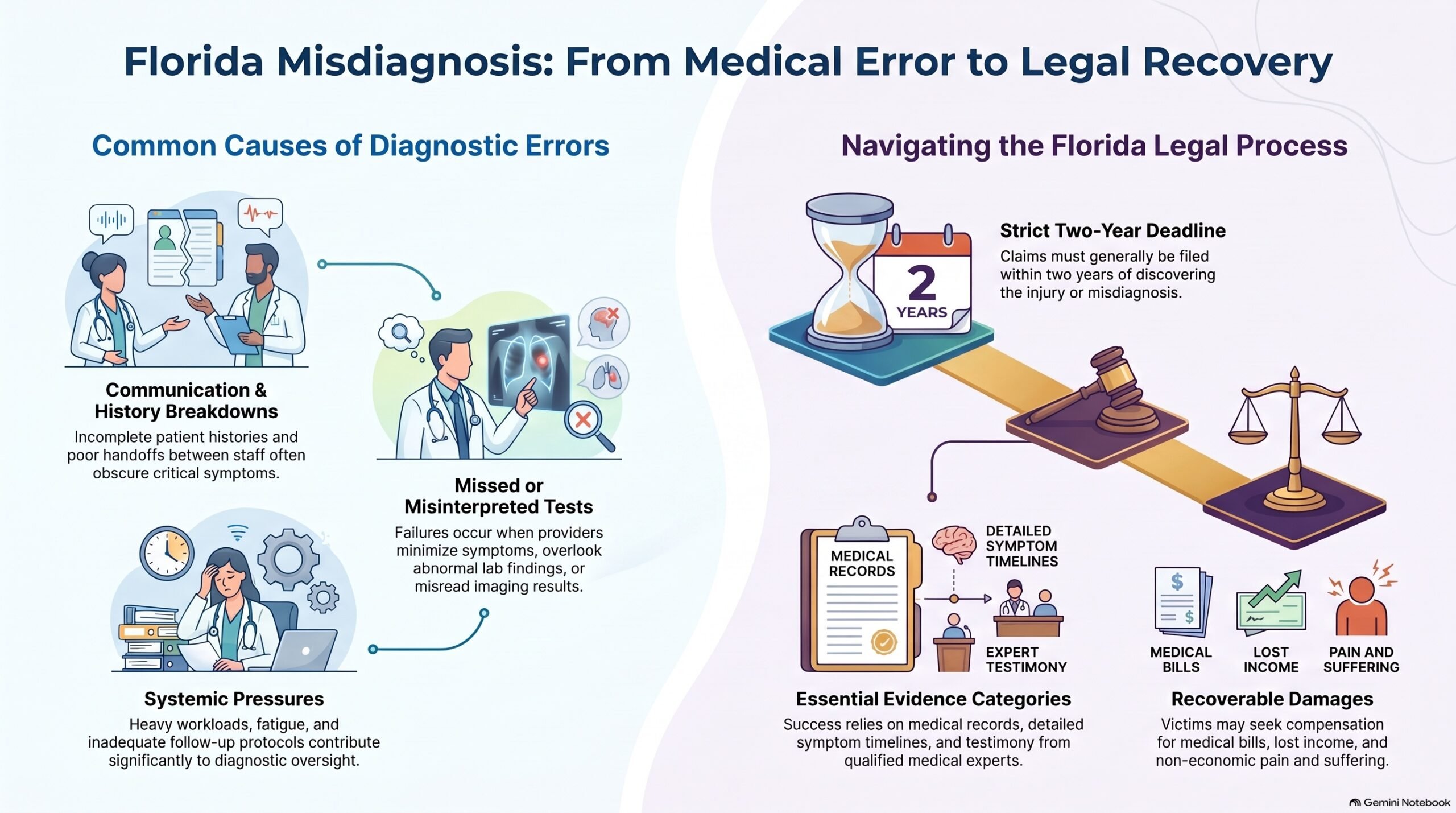
Misdiagnosis and failure to diagnose may result from an incomplete patient history, missed diagnostic tests, or misinterpreted test results. Communication breakdowns among patients, physicians, expert(s), and medical staff can further prevent crucial information from being recognized or acted upon. These circumstances may compromise timely treatment and, depending on the facts, support a medical malpractice claim under Florida law.
Incomplete Patient History
Incomplete patient history can prevent a healthcare provider from identifying critical symptoms, risk factors, prior diagnoses, medications, or relevant family medical conditions. During an appointment, incomplete questioning, communication barriers, language differences, or rushed documentation may leave important information unrecorded. The initial symptoms timeline is particularly significant because the onset, progression, and pattern of complaints can help distinguish conditions with similar presentations. Errors may also arise when a patient cannot recall details or assumes certain information is unrelated. Healthcare providers generally have a responsibility to obtain and document a reasonably complete history, while patients should provide accurate information and clarify changes in their health. Poor patient history accuracy can contribute to an incorrect diagnosis, delayed treatment, or inappropriate care. In Florida, the circumstances may warrant review by a qualified medical malpractice attorney.
Missed Diagnostic Tests
When a healthcare provider fails to order, perform, or review an appropriate diagnostic test, a significant condition may remain undetected. This oversight can occur when symptoms are minimized, risk factors are overlooked, or follow-up responsibilities are unclear. Missed blood work, imaging, biopsies, or specialized testing may delay treatment and allow an illness to progress. Effective Patient safety protocols require clinicians to carefully evaluate presenting symptoms, document their clinical reasoning, and arrange timely testing when indicated. They also require reliable systems for tracking referrals, pending studies, and patient notifications. Diagnostic error trends frequently identify communication breakdowns, incomplete evaluations, staffing pressures, and failures to follow established guidelines as contributing factors. When a missed test causes preventable harm, affected patients may seek legal guidance to assess whether the provider’s conduct departed from Florida’s applicable standard of care.
Misinterpreted Test Results
Misinterpreted test results can lead to an incorrect diagnosis or delay recognition of a serious medical condition, even when the appropriate test was ordered and completed. Test result errors may occur when a physician overlooks an abnormal finding, misunderstands its significance, or relies on an incomplete clinical picture. Improper interpretation can also involve reading imaging, laboratory values, pathology reports, or cardiac studies without recognizing patterns that warrant further evaluation. These mistakes may cause a provider to dismiss symptoms, recommend unsuitable treatment, or fail to investigate a potentially life-threatening condition. In Florida, liability may arise when the interpretation falls below the accepted medical standard and causes harm. A careful review of records, test reports, and expert medical opinions may help determine whether the mistake contributed to the patient’s injury.
Communication Breakdown
Communication breakdowns can cause clinicians to miss, misunderstand, or delay crucial information needed for an accurate diagnosis. In Florida healthcare settings, incomplete medical histories, unclear documentation, and delayed reporting of test results may prevent providers from recognizing a patient’s changing condition. Patient handoffs create particular risk when key symptoms, medication changes, pending studies, or follow-up requirements are not communicated accurately. Electronic records may reduce some errors, but copied information, alert overload, and inconsistent charting can still obscure clinically significant details. Provider responsibilities include reviewing available records, asking appropriate questions, documenting findings, and communicating urgent concerns to the next responsible professional. When these duties are neglected, a patient may experience delayed treatment or worsening illness. Liability depends on whether the communication failure breached the applicable standard of care and caused injury.
Don’t Wait. Call Our Florida Personal Injury Lawyers Now!


Legal Rights of Florida Medical Malpractice Misdiagnosis & Failure to Diagnose Injury Victims
In Florida, victims of medical malpractice for misdiagnosis or failure to diagnose may have the right to pursue compensation when a healthcare provider’s negligence causes injury or worsens an existing condition. A Patient rights overview includes access to medical records, informed decision-making, competent care, and the ability to seek legal redress. Potential claims may address additional treatment costs, lost income, disability, pain, and other legally recognized losses. Florida law generally requires careful evaluation of medical evidence and compliance with pre-suit procedures before litigation begins. The Florida court process may involve investigation, expert review, pre-suit notice, negotiations, filing a complaint, discovery, mediation, and trial.
Victims should preserve records, follow medical recommendations, and consult qualified counsel promptly because deadlines and proof requirements can affect recovery.
- Request complete medical and billing records.
- Document symptoms, treatment, expenses, and work limitations.
- Identify witnesses and retain relevant communications.
- Discuss claim deadlines with a Florida malpractice attorney.
Legal guidance can help families understand available remedies while supporting accountability and responsible patient advocacy.
Why Do Florida Medical Malpractice Misdiagnosis & Failure to Diagnose Injuries Happen?
When a healthcare provider fails to identify or properly interpret symptoms, a patient may suffer a misdiagnosis or delayed diagnosis that allows a serious condition to progress. Such injuries can occur when symptoms are subtle, overlap, or are misattributed to a less serious illness. In other cases, incomplete medical histories, inadequate examinations, missed warning signs, or failures to order appropriate testing disrupt the Diagnostic process.
Communication breakdowns between providers, laboratories, imaging departments, and patients may also prevent important information from reaching the responsible clinician. Heavy workloads, fatigue, insufficient training, and limited access to consultants can increase the likelihood of oversight. Even established clinical protocols may not be followed consistently, particularly when documentation is incomplete or follow-up responsibilities are unclear.
Strong error prevention practices, including careful record review, standardized assessments, timely referrals, and reliable test-result tracking, support patient safety. Nevertheless, departures from reasonable medical standards can allow preventable conditions to worsen, causing additional treatment needs, disability, or other serious harm.
Don’t Wait. Call Our Florida Personal Injury Lawyers Now!
What Should You Do After a Florida Medical Malpractice Misdiagnosis & Failure to Diagnose Injury?
After a suspected misdiagnosis or failure to diagnose, the patient should seek immediate medical care to address ongoing or worsened conditions. Detailed records of symptoms, treatments, medical communications, and related expenses should be preserved to document the injury and its consequences. Consulting a qualified Florida medical malpractice lawyer can help determine whether negligence occurred and identify appropriate legal options.
Seek Immediate Medical Care
Prompt medical attention should be the first priority for anyone who suspects that a misdiagnosis or failure to diagnose has caused an injury. The individual should seek emergency services for severe pain, breathing difficulty, uncontrolled bleeding, sudden weakness, confusion, or other potentially life-threatening symptoms. For less acute concerns, a prompt appointment with a qualified physician can provide an independent evaluation and appropriate treatment. Urgent symptom assessment may reveal complications that require immediate intervention, including infection, internal bleeding, neurological damage, or disease progression. Patients should clearly explain the earlier diagnosis, treatment received, changes in symptoms, and any concerns about delayed care. Medical professionals should receive complete information so they can make informed decisions. Requesting triage documentation may also help preserve an accurate record of the care-seeking process. Timely treatment should remain the central concern.
Document Your Injuries
Medical evaluation should be accompanied by careful documentation of the injuries and resulting limitations. Keep a symptom log that records pain, fatigue, dizziness, changes in mobility, sleep disruption, and other developments. Each entry should include the date, time, severity, duration, and effect on work, household responsibilities, or daily activities. Patients should also note medications, treatments, and whether symptoms improve or worsen. If visible swelling, bruising, rashes, surgical changes, or other physical conditions appear, gather photos promptly. Images should show the affected area clearly, include dates when possible, and be preserved in their original form. Copies of medical records, discharge instructions, prescriptions, test results, and billing statements should be organized chronologically. A trusted caregiver may help maintain accurate records when symptoms interfere with concentration, communication, or routine responsibilities.
Consult A Malpractice Lawyer
A Florida medical malpractice lawyer can evaluate whether a misdiagnosis or failure to diagnose may support a negligence claim and identify the evidence needed to investigate it. During an initial consultation, the patient can provide medical records, test results, prescriptions, bills, and documentation describing resulting recovery. A patient timeline review may help clarify symptoms, appointments, communications, diagnoses, treatment decisions, and when an appropriate diagnosis should reasonably have occurred. The lawyer may determine whether expert consultation needed to assess the applicable standard of care, causation, and the healthcare provider’s conduct. Florida malpractice claims involve strict procedures, including presuit investigation and filing deadlines, so prompt legal guidance can protect available options. A qualified attorney can also explain potential damages, communicate with insurers, and help the patient pursue accountability while supporting informed decisions throughout the process.
Critical Evidence in a Florida Medical Malpractice Misdiagnosis & Failure to Diagnose Injury Case
A strong Florida medical malpractice misdiagnosis or failure-to-diagnose claim depends on evidence showing what providers knew, when they knew it, and how their decisions affected the patient’s outcome. Counsel typically evaluates the following materials to assess whether the applicable standard of care was breached and whether that breach caused injury.
Critical evidence may include:
- Medical Records: Clinical notes, diagnoses, orders, referrals, and discharge instructions may reveal omissions or delayed responses.
- Diagnostic Test Results: Imaging, laboratory findings, pathology reports, and related communications can establish warning signs and reporting timelines.
- Expert Medical Testimony: Qualified experts may explain the required standard of care, the provider’s deviation, and the resulting harm.
- Treatment Timeline: A chronological record of symptoms, appointments, tests, diagnoses, treatments, and complications can clarify causation and damages.
Medical Records
Because misdiagnosis and failure-to-diagnose claims often depend on what providers knew and when they knew it, medical records serve as pivotal evidence in a Florida medical malpractice case. Medical Records may document symptoms, patient histories, examinations, communications, referrals, diagnoses, treatment decisions, and follow-up instructions. A careful timeline review can reveal whether concerns were recorded, addressed, or overlooked and whether care changed as the patient’s condition developed. Records may also identify inconsistencies between documented observations and later accounts, helping clarify the provider’s actions and knowledge. Attorneys commonly organize these materials for expert testimony concerning the applicable standard of care and potential departures from it. Complete, accurately dated documentation can consequently shape case strategy, support a patient’s account, and help establish how delayed recognition affected the patient’s health, treatment, and recovery.
Diagnostic Test Results
Diagnostic test results can provide important evidence in a Florida medical malpractice misdiagnosis or failure-to-diagnose case by showing what information was available to healthcare providers and when it became available. Laboratory reports, imaging studies, pathology findings, and other diagnostic records may reveal abnormalities that required timely attention. Their dates, reference ranges, ordering information, and documented communications can help establish whether results were received, reviewed, and addressed appropriately. Complete lab documentation may also identify delayed reporting, missing follow-up, or inconsistencies between findings and subsequent treatment decisions. Preserving original reports and related electronic records can help clarify the sequence of events. Careful organization allows counsel to compare results with clinical notes and treatment timelines. In this process, expert analysis may assist in explaining the significance of findings without replacing the separate role of medical testimony.
Expert Medical Testimony
When a misdiagnosis or failure to diagnose is alleged, expert medical testimony can help explain whether the healthcare provider’s conduct departed from the applicable standard of care and caused the patient’s injury. Qualified physicians may evaluate the symptoms, available diagnostic information, and decisions made under comparable circumstances. Their opinions can clarify whether reasonable medical judgment required additional testing, consultation, referral, or follow-up, without determining facts reserved for the court or jury. Careful expert witness selection is essential as a result. The expert should possess relevant clinical experience, understand Florida’s professional standards, and provide an objective explanation supported by reliable medical principles. Testimony may also address alternative causes and the breakdown of causes associated with the claimed injury. By presenting multifaceted issues clearly, an expert can help decision-makers assess liability and damages fairly.
Treatment Timeline
A complete treatment timeline can provide crucial evidence in a Florida medical malpractice misdiagnosis or failure-to-diagnose case by showing what symptoms were reported, which examinations and tests were performed, and how providers responded to the available information. It may identify diagnostic delays, missed follow-up obligations, unreviewed results, or changes in symptoms that required further evaluation. Medical records, appointment notes, test reports, prescriptions, referrals, and communications can help establish the sequence of events. The timeline may also show when a reasonable provider should have recognized a condition or pursued additional testing. By comparing documented conduct with applicable accountability standards, attorneys and medical experts can evaluate whether negligence contributed to worsening harm. A clear chronology helps preserve evidence, explain causation, and present the patient’s experience accurately to decision-makers.
Long-Term Effects of Florida Medical Malpractice Misdiagnosis & Failure to Diagnose Injuries
Misdiagnosis or failure to diagnose may result in chronic health complications that require prolonged treatment and limit a person’s daily functioning. These injuries can also produce emotional and psychological effects, including anxiety, depression, and diminished quality of life. Ongoing medical expenses may include additional evaluations, medications, rehabilitation and future care needed to address the lasting harm.
Chronic Health Complications
Chronic health complications may develop when a medical misdiagnosis or failure to diagnose allows an injury or illness to progress without appropriate treatment. Medication delays can permit conditions to worsen, increase treatment intricacy, or create lasting limitations. A diagnostic oversight may also allow infection, internal damage, neurological impairment, or other disease-related harm to continue unnoticed. Over time, affected individuals may require chronic pain management, rehabilitative services, assistive devices, or ongoing special attention. Appropriate follow-up care plans can help identify complications, monitor recovery, and reduce the risk of further deterioration. When a provider’s failure to recognize or address a condition contributes to prolonged harm, medical records and treatment timelines may be important in evaluating whether care met accepted standards and whether legal remedies could be available.
Emotional And Psychological Effects
Although emotional consequences may be less visible than physical injuries, they can become significant when a medical misdiagnosis or failure to diagnose delays necessary treatment. Individuals may experience anxiety, depression, diminished trust in healthcare providers, or persistent fear that future symptoms will be overlooked. Some may develop PTSD symptoms, including intrusive memories, sleep disturbances, heightened alertness, and avoidance of medical settings. These effects can interfere with employment, relationships, caregiving responsibilities, and ordinary decision-making. Emotional distress may also intensify when a person struggles to understand why the condition was missed or believes earlier care could have prevented further harm. Coping strategies, such as counseling, supportive relationships, and structured treatment plans, may assist recovery. Documentation of psychological symptoms can help clarify their duration, severity, and connection to the alleged malpractice.
Ongoing Medical Expenses
Over time, delayed or incorrect treatment can create substantial medical expenses that extend well beyond the initial diagnosis. Patients may require corrective procedures, rehabilitation, prescription medications, expert consultations, diagnostic testing, and continuing care for complications that could have been prevented or reduced. These costs may continue for months or years, particularly when an injury causes permanent limitations or recurring symptoms. Careful documentation of medical bills can help establish the scope and progression of treatment-related expenses. Records should include invoices, insurance statements, receipts, mileage, prescription costs, and evidence of uncovered services. Consistent tracking of treatment costs may also clarify future financial needs and support a comprehensive damages assessment. A qualified Florida medical malpractice attorney can evaluate whether negligent diagnosis contributed to these expenses and identify recoverable past and anticipated costs.
Proving Liability in Florida Medical Malpractice Misdiagnosis & Failure to Diagnose Injury Cases
Proving liability in a Florida medical malpractice misdiagnosis or failure-to-diagnose case requires evidence that the healthcare provider breached the applicable standard of care and that the breach caused identifiable harm. A qualified medical expert generally explains what a reasonably careful provider would have done under similar circumstances, then compares that expectation with the treatment, testing, referral, or follow-up actually provided.
Relevant proof may include medical records, test results, consultation notes, medication histories, and testimony concerning symptoms communicated by the patient. Patient Safety Protocols and Care Guidelines can help establish whether appropriate screening, communication, and escalation procedures were followed. Documentation Audits may reveal missing records, delayed reporting, or inconsistencies that require further examination.
When a hospital’s conduct is involved, Hospital Liability Standards may apply to staffing, supervision, credentialing, and institutional procedures. The injured person must also connect the breach to a measurable injury, such as worsening of the disease, additional treatment, disability, or increased medical expenses. Careful legal and medical review helps clarify responsibility and supports fair accountability.
Dealing With Insurance Companies After a Florida Medical Malpractice Misdiagnosis & Failure to Diagnose Injury
Once liability and resulting harm are supported, dealing with insurance companies requires careful control of the information exchanged. A claimant should avoid recorded statements, broad medical authorizations, or speculative explanations before receiving legal guidance. Insurers may examine medical history, employment records, and treatment decisions while attempting to minimize the value of a claim. Early communications should identify the injury, necessary care, and responsible parties without conceding disputed facts.
PIP coverage may help address initial medical expenses after an automobile-related event, but it generally does not replace a medical malpractice claim. Separate insurance policies may apply to physicians, hospitals, or other healthcare providers, and each carrier can raise different defenses. A prompt, organized submission of relevant records and bills can reduce confusion and support accurate evaluation.
If an insurer issues a claims denial or proposes inadequate compensation, the claimant should preserve the correspondence and avoid signing a release. Legal counsel can assess available coverage, protect the patient’s interests, and communicate on the claimant’s behalf without prematurely discussing litigation procedures.
What to Expect During a Florida Medical Malpractice Misdiagnosis & Failure to Diagnose Injury Claim Process
A Florida medical malpractice misdiagnosis claim generally begins with an initial case evaluation to assess potential negligence, causation, and damages. The process typically includes a medical records review and consultation with qualified expert witnesses, whose opinions may determine whether the claim can proceed. Depending on the evidence and negotiations, the matter may resolve through settlement or proceed to trial.
Initial Case Evaluation
During an initial case evaluation, a Florida medical malpractice misdiagnosis lawyer reviews the patient’s medical history, treatment records, diagnostic results, and the circumstances surrounding the alleged failure to diagnose. The attorney may ask when symptoms began, how they changed, and what information the patient communicated to healthcare professionals. Developing a Patient symptom timeline helps identify potential delays, overlooked warning signs, and opportunities for appropriate intervention. An Accurate diagnosis review considers whether the reported symptoms reasonably required testing, referral, monitoring, or timely treatment. The lawyer also assesses the patient’s injuries, additional medical needs, financial effects, and available witnesses. This preliminary discussion helps determine whether the facts may support a malpractice claim, while explaining potential legal standards, deadlines, costs, and the information needed for further evaluation.
Medical Records Review
Because medical records often contain the clearest evidence of what healthcare providers knew and did, a Florida medical malpractice misdiagnosis lawyer carefully reviews the complete treatment history. This review may include primary-care notes, emergency records, imaging results, laboratory reports, prescriptions, referral documents, and discharge instructions. The lawyer compares recorded complaints with test findings and provider responses to identify a possible diagnosis delay or missed warning sign. A detailed symptom timeline helps recover establish when symptoms appeared, how they progressed, and what information was available at each encounter. Records may also show whether a requested Second opinion was recommended, obtained, or disregarded. During evidence collection, the lawyer organizes relevant documents, identifies inconsistencies, and preserves communications that clarify decision-making. This careful analysis helps determine whether further investigation into the claim is warranted.
Expert Witness Consultation
When a potential misdiagnosis or failure-to-diagnose claim proceeds beyond the initial records review, an expert witness consultation helps assess whether the healthcare provider’s conduct met the applicable standard of care. The attorney typically provides a qualified physician with medical records, diagnostic images, laboratory results, treatment notes, and relevant timelines. The expert review may identify what symptoms reasonably indicated, which tests or referrals were appropriate, and whether an avoidable delay caused additional harm. The expert may also explain alternative diagnoses and whether the provider’s decisions were consistent with accepted medical practice under similar circumstances. Evidence preservation remains important, including securing complete records, electronic communications, billing information, and original test data. A careful consultation helps clarify the claim’s strengths, limitations, and causation issues while supporting a responsible pursuit of accountability.
Settlement Or Trial
After expert review clarifies the standard-of-care and causation issues, the claim may proceed toward settlement negotiations or trial. Counsel evaluates medical records, expert opinions, projected treatment costs, lost income, and the effect of the injury on daily life. A careful negotiation strategy seeks compensation that reflects both present losses and reasonably foreseeable needs, while accounting for Florida’s legal requirements and potential defenses. If discussions do not produce a fair resolution, the case may enter trial preparation. This stage can include depositions, exhibit selection, witness preparation, motion practice, and development of clear testimony explaining how the diagnostic error caused harm. At trial, a judge or jury considers liability, causation, and damages. Throughout the process, the injured patient’s interests remain central, supporting accountability and access to necessary care.
Compensation for Florida Medical Malpractice Misdiagnosis & Failure to Diagnose Injury Damages
Compensation in a Florida medical malpractice misdiagnosis or failure-to-diagnose case may cover the full range of losses caused by the healthcare provider’s negligence. A successful claim may provide funds for necessary medical care, rehabilitation, assistive services, and ongoing treatment resulting from delayed or incorrect care. It may also address diminished earning capacity when an injury prevents the patient from returning to work or performing former duties. If negligence causes death, surviving family members may pursue wrongful death settlements for legally recognized losses, including support and companionship. In unusual cases involving intentional misconduct or gross negligence, a punitive damages analysis may determine whether additional damages are available under Florida law. The amount and availability of compensation depend on medical records, expert testimony, causation, statutory limits, and the evidence establishing liability. An attorney may help preserve records, identify responsible parties, and present the claim in a manner that supports the patient’s improvement and protects the family’s interests.
Economic vs Non-Economic Damages in Florida Medical Malpractice Misdiagnosis & Failure to Diagnose Cases
Florida medical malpractice misdiagnosis and failure-to-diagnose claims may involve both economic and non-economic damages. Economic damages can include medical expenses, lost income, and future treatment costs, while non-economic damages may address pain, suffering, and diminished quality of life. Establishing these claims generally requires evidence linking the provider’s negligence to the injury and documenting the resulting losses.
Economic Damages
When a misdiagnosis or failure to diagnose causes additional harm, economic damages may compensate the patient for objectively measurable financial losses resulting from the medical negligence. These damages can include medical expenses for emergency treatment, corrective procedures, rehabilitation, medication, transportation, and future care reasonably required because of the delayed or incorrect diagnosis. A patient may also seek reimbursement for lost income caused by missed work, reduced earning capacity, or an inability to return to the same occupation. Documentation strengthens a claim and includes medical bills, insurance statements, employment records, tax documents, and expert projections of future costs. Attorneys may help identify losses that are not immediately apparent and present evidence connecting them to the provider’s conduct. Careful evaluation promotes accountability and supports patients seeking necessary financial assistance.
Non-Economic Damages
Although economic damages address measurable financial losses, non-economic damages concern the personal harm caused by a misdiagnosis or failure to diagnose. These damages may reflect physical discomfort, diminished quality of life, anxiety, loss of enjoyment, and emotional distress resulting from delayed or improper medical care. A patient may experience pain and suffering, fear, frustration, or lasting changes in daily activities and relationships. In fatal cases, surviving family members may face grief and loss of companionship, subject to Florida law. Unlike medical expenses or lost income, these harms do not have an objective price tag. Their value depends on the nature, duration, severity, and consequences of the injury. Legal counsel may help families understand how Florida’s medical malpractice rules address non-economic damages and applicable limitations in particular circumstances.
Proving Damage Claims
Proving damages in a Florida medical malpractice misdiagnosis or failure-to-diagnose case requires reliable evidence connecting the provider’s conduct to specific financial and personal losses. Economic damages may include additional medical treatment, rehabilitation, medication, lost income, diminished earning capacity, and necessary future care. Records, employment documentation, invoices, and qualified financial testimony can support the damages calculation. Non-economic damages address pain, emotional distress, disability, disfigurement, loss of enjoyment, and reduced quality of life. Medical causation must show that the delayed or incorrect diagnosis caused, or worsened, the claimed harm rather than merely coincided with it. An expert review may assess the standard of care, prognosis, and future needs. Liability evidence, including records, communications, and testimony, helps establish responsibility. Careful documentation enables a fair claim that recognizes both measurable costs and lasting personal consequences.
Don’t Wait. Call Our Florida Personal Injury Lawyers Now!
When a Florida Medical Malpractice Misdiagnosis & Failure to Diagnose Injury Case Goes to Trial vs Settlement
The decision to take a Florida medical malpractice misdiagnosis or failure-to-diagnose case to trial rather than pursue settlement depends on the strength of the evidence, the extent of the patient’s injuries, and the parties’ willingness to accept litigation risks. Trial vs. litigation considerations include expert support, disputed facts, projected costs, and the time required for discovery, testimony, and a verdict. A trial may provide an opportunity to present the full impact of delayed treatment and seek a decision when the parties cannot reach acceptable terms. However, outcomes remain uncertain, and litigation can increase stress for injured patients and their families.
Settlement negotiation may resolve the dispute more quickly, reduce expenses, and provide dependable compensation without requiring public testimony. Counsel may assess medical records, expert opinions, treatment needs, lost income, and long-term assistance before advising whether an offer is reasonable. The patient’s welfare should remain central, with careful attention to rehabilitation, family responsibilities, and future security. Professional guidance can help each decision reflect informed, compassionate service.
Florida Laws That May Affect Your Florida Medical Malpractice Misdiagnosis & Failure to Diagnose Case
Florida medical malpractice misdiagnosis and failure-to-diagnose cases are governed by statutes that affect deadlines, required evidence, notice procedures, and potential recovery. Florida Statutes require claimants to establish that a healthcare provider breached the applicable professional duty and caused compensable harm. The legal framework may also address comparative negligence, vicarious liability, damage limits in specific circumstances, and responsibility for obtaining informed consent.
Key considerations may include:
- Pre-suit investigation and written notice requirements before filing a complaint.
- Medical records, diagnostic results, treatment histories, and communications supporting causation.
- Expert Standards used to determine whether the provider’s conduct departed from accepted practice.
- Rules governing economic losses, noneconomic damages, wrongful death claims, and survivor damages.
These provisions are designed to promote careful review, protect patients, and provide healthcare professionals an opportunity to respond. Counsel serving injured individuals typically evaluates the facts, preserves evidence, identifies responsible parties, and explains available remedies under current law. Because statutory language and judicial interpretations can change, case-specific legal guidance remains important before pursuing a claim.
The Statute of Limitations for Florida Medical Malpractice Misdiagnosis & Failure to Diagnose Injury Cases
When a patient discovers that a misdiagnosis or delayed diagnosis caused injury, Florida law imposes strict deadlines for pursuing a medical malpractice claim. A Florida deadlines overview generally begins with the two-year limitations period, which may run from when the patient discovered, or reasonably should have discovered, the injury and its potential medical cause. In many circumstances, no claim may be filed more than four years after the alleged malpractice, subject to limited exceptions, including concealment, fraud, or intentional misrepresentation. Claims involving minors and certain legally protected circumstances may follow different rules.
Before filing suit, a claimant generally must satisfy Florida’s presuit investigation and claim notice requirements. This process ordinarily includes obtaining a reasonable basis for the claim and sending written notice to each prospective defendant. The notice period temporarily affects the filing deadline, but it does not eliminate the need for careful calculation. Because missed deadlines can permanently bar an otherwise valid claim, prompt attention to dates and applicable exceptions is crucial.
How a Florida Medical Malpractice Misdiagnosis & Failure to Diagnose Lawyer Can Help You
Because misdiagnosis and failure-to-diagnose claims often involve complicated medical records and strict procedural requirements, legal guidance can be essential. A Florida medical malpractice lawyer can evaluate whether a provider’s conduct departed from the applicable standard of care and whether that departure caused harm. The lawyer may also coordinate qualified medical experts, organize records, and explain available remedies without promising a particular outcome.
A Florida medical malpractice lawyer can assess potential negligence, coordinate medical experts, and explain legal options without promising a particular outcome.
Key assistance may include:
- Reviewing diagnostic decisions, test results, referrals, and treatment timelines
- Identifying appropriate 2nd opinion options for independent medical assessment
- Managing evidence preservation, including records, correspondence, and device data
- Calculating medical expenses, lost income, ongoing care needs, and related damages
Counsel can communicate with healthcare institutions and insurers, address procedural requirements, and present a coherent claim supported by admissible evidence. This work allows an injured patient or family to focus on recovery while the lawyer protects legal interests. A careful attorney also promotes accountability and helps repair that concerns are evaluated fairly, respectfully, and according to Florida law.
When to Contact a Florida Medical Malpractice Misdiagnosis & Failure to Diagnose Lawyer
Prompt legal guidance may be appropriate as soon as a patient suspects that a missed or incorrect diagnosis caused injury, delayed treatment, or worsened a medical condition. A consultation can help preserve relevant records, identify important deadlines, and clarify whether the circumstances may warrant further review.
Patients or families may consider contacting counsel after receiving a substantially different diagnosis, experiencing delayed symptom progression, or learning that testing was not ordered, interpreted, or communicated appropriately. A consultation may also be useful when treatment began only after the condition became more serious, or when another provider explains that earlier intervention might have changed the outcome.
Seeking a second opinion can provide medical clarification and document concerns. The second opinion benefits may include identifying overlooked findings and guiding questions for legal review. Individuals should retain medical records, billing statements, prescriptions, correspondence, and a timeline of symptoms and care. Early communication supports informed decisions without requiring an immediate commitment to pursue litigation.
Why You Need an Experienced Florida Medical Malpractice Misdiagnosis & Failure to Diagnose Lawyer
Experienced counsel also understands the importance of evidence preservation. Relevant records, imaging, laboratory results, electronic communications, billing information, and witness accounts may clarify what occurred. Prompt action can help protect evidence before it is lost, altered, or overlooked.
A knowledgeable lawyer can coordinate qualified medical experts, explain intricate issues in understandable terms, and calculate the effects of additional treatment, lost income, and continuing care. This guidance supports an informed process focused on accountability and the patient’s long-term interests.
How to Choose the Right Florida Medical Malpractice Misdiagnosis & Failure to Diagnose Lawyer for Your Case
Selecting a Florida medical malpractice misdiagnosis and failure to diagnose lawyer requires careful evaluation of the attorney’s experience, medical knowledge, and approach to case preparation. Attorney credentials should include bar admission, relevant malpractice experience, and access to qualified medical experts who can assess whether professional standards were breached.
Choosing experienced malpractice counsel with medical knowledge and qualified experts can strengthen your misdiagnosis or failure-to-diagnose claim.
Trial experience is also important, even when settlement appears likely. A lawyer prepared to present intricate medical evidence in court may negotiate from a stronger position and protect a client’s interests if efforts to resolve the matter fail. Prospective clients should ask how the attorney handles expert testimony, medical records, causation, and damages.
Effective case strategy planning should address deadlines, opposing arguments, responsible parties, and the evidence needed to establish harm. Client communication provides another vital measure of suitability. The lawyer should explain legal developments clearly, respond within reasonable timeframes, and set realistic expectations.
A careful comparison of experience, preparation, accessibility, and professional judgment can help families select counsel capable of pursuing accountability and meaningful compensation.
About The Law Offices of Anidjar & Levine
The Law Offices of Anidjar & Levine represents individuals and families pursuing compensation after a medical misdiagnosis or failure to diagnose causes harm.
The firm’s attorneys assess whether a healthcare provider departed from accepted standards and whether that departure contributed to injury, worsened illness, or reduced treatment options.
During a Second opinion or case evaluation, the legal team may review medical records, treatment timelines, diagnostic results, and available expert opinions.
This process helps determine whether a claim may support a medical malpractice claim under Florida’s medical malpractice laws.
When Diagnostic errors are suspected, attorneys focus on gathering evidence, including obtaining relevant records, consulting qualified medical professionals, and determining how the error affected the patient’s prognosis and expenses.
The firm also explains procedural requirements, potential damages, and case-related risks in clear terms.
Its approach is intended to help clients make informed decisions while pursuing accountability and financial recovery.
Each matter receives individualized attention based on its medical facts, legal issues, and long-term consequences.

Frequently Asked Questions
Can I Pursue a Claim if the Misdiagnosis Occurred During Telemedicine?
A patient may pursue a claim when a telemedicine misdiagnosis results from care below the applicable standard. Telemedicine timing matters because limited examination capabilities may affect, but do not automatically excuse, clinical decisions. Evidence should show what information the physician received, whether appropriate questions, testing, referrals, or follow-up were required, and how diagnosing delay caused harm. Physician liability generally depends on negligence, causation, damages, and compliance with Florida’s procedural requirements for medical malpractice claims.
Does Signing a Medical Consent Form Waive My Right to Sue?
Signing a medical consent form does not automatically waive a patient’s right to sue. Consent forms limited to acknowledging treatment risks generally do not excuse negligent diagnosis, treatment, or communication. Signed rights preserved may remain available when care falls below professional standards and causes injury. Patients should review whether the insurance coverage explained applies; if damages are unaffected, compensation may still be pursued. Legal advice can clarify enforceability and deadlines.
Can Family Members Bring Claims After a Misdiagnosed Patient Dies?
Family members may bring a Wrongful Death claim after a misdiagnosed patient dies, but eligibility depends on Florida law and the claimant’s relationship to the deceased. The estate may also pursue a surviving-claim for damages the patient sustained before death. Strict statute limits govern filing deadlines, while proof requirements generally include showing a medical duty, negligent diagnosis, causation, and compensable losses. Legal counsel can identify proper claimants and preserve evidence promptly.
Are Government-Owned Hospitals Subject to Different Malpractice Requirements?
Government-owned hospitals may face different malpractice requirements because sovereign immunity can limit liability and impose statutory caps on damages. Claimants typically must satisfy specific notice requirements, often providing written notice to the appropriate governmental entity before filing suit and allowing an investigation period. Deadlines may differ from those governing private hospitals, and procedural errors can bar recovery. A qualified attorney can evaluate applicable statutes, exceptions, and potential claims for surviving family members.
Can a Second Doctor’s Opinion Help Establish That Malpractice Occurred?
A second doctor’s opinion can help establish that malpractice occurred, but it is not conclusive by itself. The opinion may identify departures from accepted medical standards, clarify what a reasonably competent provider should have recognized, and explain whether earlier diagnosis or treatment could have changed the outcome. Expert review is especially important because evidence of causation must connect the alleged error to the patient’s injury. Records and qualified testimony remain crucial.
—————————
Misdiagnosis and failure to diagnose can cause serious, preventable harm, leaving Florida patients facing additional treatment, expenses, and lasting complications.
Victims may have legal remedies when negligent medical care falls below accepted standards and causes injury.
Because these claims involve strict procedures, deadlines, and medical evidence, qualified legal guidance is critical.
The Law Offices of Anidjar and Levine can evaluate the circumstances, explain available options, and pursue appropriate compensation on the patient’s behalf.
Learn more from a Florida Personal Injury Lawyer.