The Law Offices of Anidjar and Levine helps preserve essential evidence after a truck accident in Daytona Beach, including driver logs, black-box data, maintenance records, cargo documents, surveillance footage, communications, photographs, and witness accounts.
Counsel can send preservation letters to trucking companies, insurers, owners, and technology providers; coordinate vehicle inspections; and secure medical and property-damage records.
Prompt action may help address overwriting, repairs, deletion, weather, and fading memories while supporting fault and injury evaluations.
Learn more from a Daytona Beach Truck Accident Lawyer.
Main Takeaways
- A Daytona Beach truck accident evidence preservation lawyer protects driver logs, maintenance records, black-box data, communications, photographs, and surveillance footage.
- Prompt written preservation requests can prevent electronic data overwriting, vehicle repairs, record deletion, and destruction of physical evidence.
- Investigators and experts may document vehicle damage, roadway conditions, skid marks, inspection findings, and other disappearing scene evidence.
- Medical records, treatment documentation, witness statements, and organized timelines help connect injuries to the collision and establish losses.
- Legal counsel can pursue follow-up demands or court protection when trucking companies, insurers, owners, or technology providers fail to preserve evidence.


How We Can Help With Your Daytona Beach Truck Accident Evidence Preservation Injury Claim
A Daytona Beach truck accident evidence preservation lawyer helps protect the records, physical evidence, and electronic data necessary to evaluate an injury claim. Counsel may promptly identify relevant materials, including driver logs, inspection reports, maintenance files, onboard data, surveillance footage, and communication records. Written preservation requests can advise trucking companies, insurers, and other custodians that potentially important information must not be altered or destroyed.
Legal support also helps monitor evidence deadlines, organize documentation, and coordinate appropriate collection methods. When necessary, counsel may work with qualified investigators or experts to document vehicle conditions and preserve information before it disappears. These efforts can provide a reliable foundation for evaluating responsibility, medical consequences, and available compensation.
During insurance negotiations, a well-preserved record may help present the claim clearly and respond to disputed facts. The lawyer can communicate with insurers, evaluate settlement proposals, and protect the injured person from premature or incomplete resolutions while maintaining a service-focused approach throughout the process.
OUR CONSULTATIONSARE FREE
START YOUR FREE CASE REVIEW

Understanding Daytona Beach Truck Accident Evidence Preservation Injury Cases
When a commercial truck collision occurs in Daytona Beach, an evidence preservation injury case focuses on identifying and protecting information that may clarify how the crash happened and who may be responsible. These cases often involve medical records, photographs, vehicle damage, roadway conditions, electronic logging data, inspection reports, and witness accounts. An organized evidence timeline can show when injuries developed, when requests for records were made, and whether relevant materials remained available.
Causation proof connects the collision to the claimed physical harm and may require testimony from medical professionals, investigators, or other qualified witnesses. Insurance coverage must also be evaluated because trucking companies, carriers, contractors, and additional insurers may have separate policies or obligations. Early preservation efforts help address spoliation risks, including lost data, altered records, or discarded vehicle components. By protecting reliable information promptly, representatives can better serve injured individuals, support fair evaluation, and help decision-makers assess responsibility and available compensation.
Common Causes of Daytona Beach Truck Accident Evidence Preservation
Common evidence in Daytona Beach truck accident cases includes records indicating driver negligence, such as speeding, distraction, or fatigue. Truck maintenance records and black box data may help establish whether mechanical failures, operating conditions, or company practices contributed to the collision. Witness statements can further clarify the events and support a reliable reconstruction of what occurred.
Driver Negligence Evidence
Driver negligence evidence can establish whether a truck operator’s conduct contributed to a Daytona Beach collision and may become important before the available records or physical proof are altered or lost. Investigators may examine cellphone activity, dispatch communications, witness accounts, surveillance footage, and electronic driving data to identify driver distraction or other unsafe conduct. Photographs and measurements can help document a lane violation, improper following distance, failure to yield, or excessive speed.
Such information may clarify whether the operator breached a duty of care owed to nearby motorists, pedestrians, and passengers. Preserving these materials can assist injured individuals, families, and responsible representatives in evaluating collision liability. Prompt requests for vehicle data, communications, and video may reduce the risk that relevant evidence disappears, supporting a fair and informed determination of responsibility.
Truck Maintenance Records
Maintenance records may show whether a truck’s mechanical condition contributed to a Daytona Beach collision and whether required inspections or repairs were completed. These materials can include service invoices, inspection reports, repair orders, defect notices, lubrication schedules, and parts replacement histories. They may help establish whether problems involving brakes, tires, guiding, lighting, or other safety systems were identified before the crash.
A preservation request should promptly identify the records sought and instruct the trucking company, carrier, maintenance provider, and relevant custodians to retain paper and electronic files. Preserving records can reduce the Spoliation Risk associated with routine disposal, overwriting, or alteration. Investigators may compare maintenance entries with regulatory requirements, driver reports, and repair timelines. Counsel serving affected individuals should document requests, follow up in writing, and seek court protection when necessary.
Black Box Data
When a truck’s electronic control module or other onboard recording system may contain collision-related information, that data should be preserved immediately. These systems may record speed, braking, engine activity, seat-belt use, and fault codes before, during, and after an impact. A qualified preservation request can direct the carrier, owner, and technology providers to prevent overwriting, alteration, or remote deletion. The Spoliation risk increases when the vehicle continues operating, undergoes repairs, or remains subject to routine data cycling.
Counsel may also identify related telematics records, dispatch communications, onboard camera files, and video surveillance from nearby businesses or transportation facilities. Proper collection should maintain the original format, document custody, and protect metadata needed to assess reliability. Prompt action serves injured individuals by preserving objective evidence before it disappears or becomes difficult to authenticate.
Witness Statements
Witness statements can preserve information that electronic systems do not capture, including changes in traffic conditions, driver conduct, warning signs, and events immediately after the collision. Interviewing Eyewitnesses promptly may help preserve accurate recollections before details fade or become influenced by later discussions. Obtaining Witness Statements should involve neutral questions that allow each person to describe observations without speculation. Preserving Contact Info, including telephone numbers, email addresses, and physical addresses, supports later follow-up by authorized representatives.
Recording Witness Details should include the person’s location, visibility, distance from the crash, and relationship to the parties. Investigators should document statements accurately, identify when and how they were obtained, and avoid pressuring witnesses. This careful process supports injured individuals, promotes fair investigations, and helps decision-makers evaluate responsibility based on reliable information.
Don’t Wait. Call Our Daytona Beach Truck Accident Lawyers Now.


Legal Rights of Daytona Beach Truck Accident Evidence Preservation Injury Victims
Truck accident injury victims in Daytona Beach have the legal right to pursue compensation and take reasonable steps to preserve evidence supporting their claims. Evidence preservation urgency matters because records, vehicle data, photographs, and witness recollections may change or disappear. Florida court timelines can also affect when an injured person must file a lawsuit, provide notice, or respond to legal requests.
Victims may protect their interests by:
- Requesting medical records, billing statements, crash reports, employment documentation, and photographs connected with the collision.
- Sending preservation requests to trucking companies, insurers, maintenance providers, and other parties that may control relevant electronic or physical evidence.
- Consulting a qualified attorney who can evaluate liability, identify responsible parties, communicate with insurers, and pursue lawful compensation.
These rights support accountability and help victims serve their families and communities by seeking a fair resolution. Legal counsel can also explain applicable deadlines, protect against improper evidence destruction, and coordinate respectful communication with witnesses and investigators throughout the claim.
Why Do Daytona Beach Truck Accident Evidence Preservation Injuries Happen?
Don’t Wait. Call Our Daytona Beach Truck Accident Lawyers Now.
Evidence preservation injuries happen because physical records, electronic data, and witness accounts connected with a Daytona Beach truck collision can be lost, altered, or overlooked soon after the incident. These failures may prevent injured people and their families from understanding why the crash occurred or identifying responsible parties.
Common contributing circumstances include Drunk driving, which can create disputed timelines and incomplete investigative records. Mechanical failures, including tire blowouts, may require inspection of tires, maintenance histories, loading practices, and repair documentation before conditions change. Trucking companies may also possess driver logs, dispatch communications, electronic control module data, surveillance recordings, and employment records that are subject to routine deletion or modification.
Evidence can further deteriorate when vehicles are repaired, relocated, or sold before qualified examination. Witnesses may forget details, change contact information, or become difficult to locate. Severe weather, roadway maintenance, and ordinary traffic can erase physical marks that might explain the collision. These conditions make timely, careful preservation critical to serving affected individuals fairly.
What Should You Do After a Daytona Beach Truck Accident Evidence Preservation Injury?
After a Daytona Beach truck accident, the injured person should seek immediate medical care, even when symptoms initially appear minor. The person should document the accident scene, including vehicle damage, roadway conditions, injuries, and witness information, when it is safe to do so. Important evidence should also be preserved promptly, including photographs, medical records, electronic data, and communications related to the collision.
Seek Immediate Medical Care
Prompt medical attention should be obtained immediately following a Daytona Beach truck accident, even when injuries initially appear minor. Emergency treatment can identify internal bleeding, concussions, spinal trauma, and other conditions that may worsen without timely intervention. The injured person should contact emergency services or proceed to an appropriate medical facility, while avoiding unnecessary activity that could aggravate symptoms. Reporting all pain, dizziness, numbness, and other changes helps clinicians evaluate the full scope of potential harm.
To minimize delays, transportation should be arranged promptly, particularly when symptoms affect balance, alertness, or breathing. Patients should follow discharge instructions carefully and attend recommended follow-up care. Medical providers should preserve medical records, including examination findings, diagnostic results, treatment notes, prescriptions, and referrals, because consistent documentation may clarify injury progression and support later legal review.
Document The Accident Scene
When conditions permit, the injured person or a designated representative should document the Daytona Beach truck accident scene before vehicles, debris, and roadway conditions are altered. Safety remains the priority, so no one should enter traffic or interfere with emergency operations to obtain information.
Wide and close photographs can record Photos of damage to the truck, other vehicles, nearby structures, and visible injuries, while vehicle positioning should be shown from several angles. Careful skid mark capture may help depict braking, tire movement, and points of impact. Images should also reflect road conditions, including lighting, weather, lane markings, pavement defects, traffic controls, and obstructions. A written timeline may supplement visual documentation by noting approximate times, locations, and observations. Witness names and contact details can be recorded when voluntarily provided, without pressuring anyone at the scene.
Preserve Critical Evidence
Preserving crucial evidence begins as soon as the injured person or a designated representative can reasonably protect information without creating additional safety risks. Document scene photographs showing vehicle positions, roadway conditions, skid marks, debris, lighting, and visible injuries. Images should include wide views and close details, with the date, time, and location recorded when possible. A representative should preserve surveillance video from nearby businesses, residences, traffic cameras, and truck-mounted systems before routine deletion occurs.
Written requests can ask owners and transportation agencies to retain relevant footage. The trucking company may possess driver logs, electronic data, inspection records, maintenance files, dispatch communications, and cargo documentation. Legal counsel can issue preservation letters and coordinate independent inspections without disturbing physical evidence. Medical records, witness contact information, damaged property, and related communications should also be securely retained.
Don’t Wait. Call Our Daytona Beach Truck Accident Lawyers Now.
Critical Evidence in a Daytona Beach Truck Accident Evidence Preservation Injury Case
Critical evidence may establish how the collision occurred, whether regulations were followed, and the extent of resulting harm:
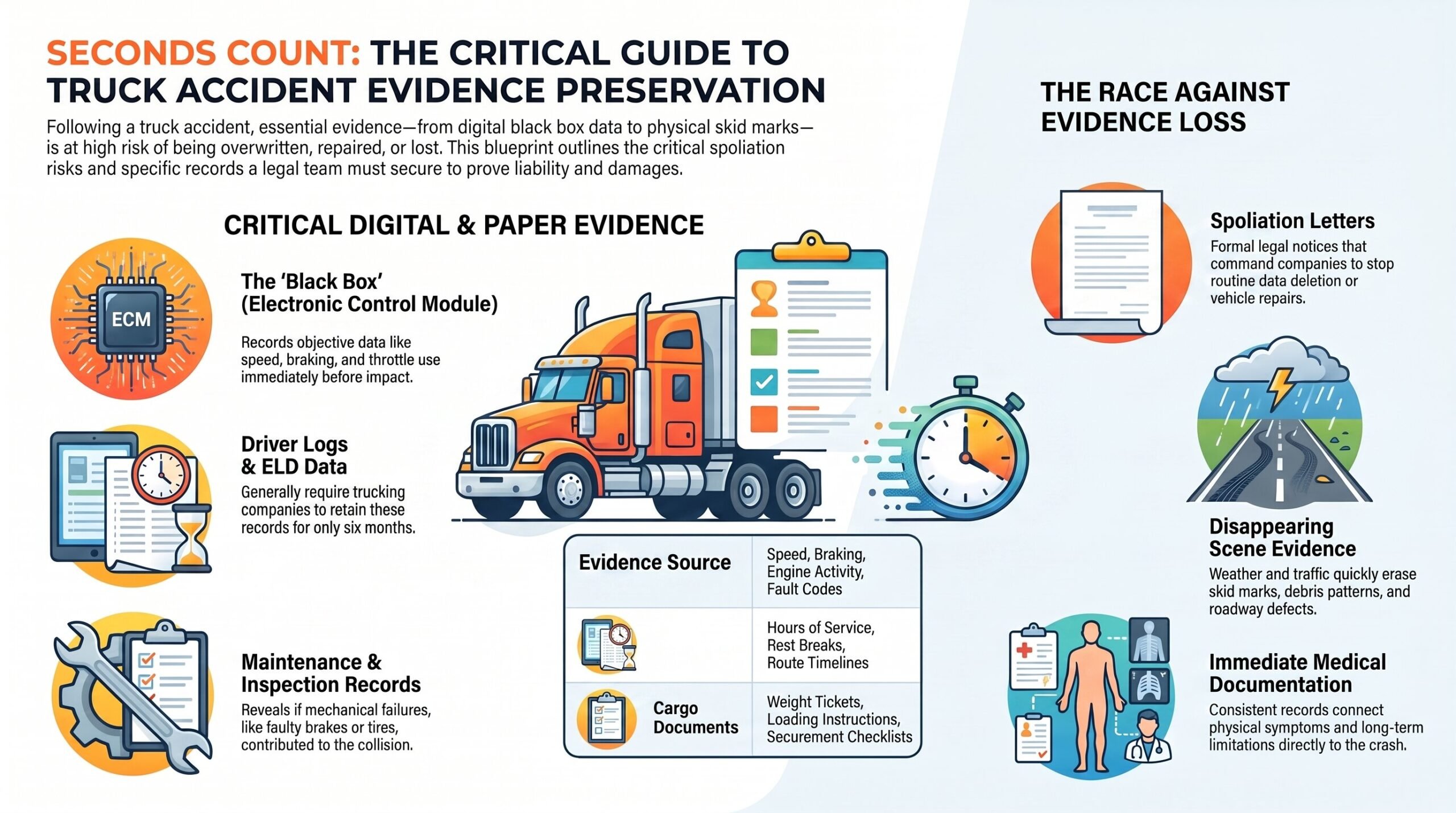
- Truck black box data and driver logs may reveal speed, braking, hours of service, and vehicle operation.
- Accident scene documentation, including photographs, video, witness accounts, and inspection records, can clarify the crash circumstances.
- Medical records, treatment documentation, repair estimates, and other damage evidence may connect the collision to the claimed injuries and losses.
Truck Black Box Data
A truck’s electronic control module, commonly called a black box, may contain objective data about the vehicle’s speed, braking, throttle use, engine performance, and other conditions immediately before and during a collision. This information can help clarify disputed events, identify potential mechanical concerns, and support a careful reconstruction of how the impact occurred. Because data may be overwritten, altered, or lost during repairs, prompt preservation is critical.
Spoliation laws may impose consequences when a party fails to protect relevant evidence after receiving notice that litigation is reasonably anticipated. An attorney can send a preservation demand addressing the module, related components, and available truck event logs. Qualified technicians may then collect the information using reliable methods that preserve authenticity, document chain of custody, and protect the interests of injured individuals and their families.
Driver Logs and Records
Driver logs and related records can establish whether a truck driver complied with hours-of-service requirements, took required rest breaks, and operated within applicable safety rules before a collision. Electronic logging device data, dispatch messages, fuel receipts, and payroll records may reveal inconsistencies or extended driving periods. Investigators may also examine inspection reports, maintenance entries, training files, and disciplinary records to determine whether known safety concerns were addressed.
Records concerning Cell Phone Usage can indicate whether communications or device activity distracted the driver during relevant periods. Cargo Handling documents, including loading instructions, weight tickets, bills of lading, and securement checklists, may show whether improper distribution or inadequate restraints contributed to loss of control. Prompt preservation requests help prevent routine deletion, alteration, or loss of these materials and support a fair evaluation of every person affected.
Accident Scene Documentation
At the accident scene, prompt and thorough documentation can preserve evidence that may later be altered, removed, or obscured. Scene Safety should remain the first priority, with photographs taken only from secure locations and without interfering with emergency operations. Photography Timing matters because weather, traffic, towing, and cleanup may quickly change roadway conditions. Evidence Photos should capture vehicle positions, skid marks, debris patterns, lane markings, traffic controls, lighting, visibility, and surrounding structures from multiple distances and angles.
A consistent scale, timestamp, and location reference can improve later interpretation. GPS Tracking data from vehicles or mobile devices may help establish routes, speeds, stops, and timing, subject to lawful access and reliable preservation. Witness contact information and nearby surveillance sources should also be identified promptly, while original files remain unedited and securely stored.
Medical and Damage Evidence
Medical records and property-damage documentation provide an independent account of the injuries, treatment, and losses associated with a Daytona Beach truck accident. Prompt collection should include emergency reports, diagnostic imaging, physician notes, prescriptions, rehabilitation records, and billing statements. Photographs, repair estimates, towing invoices, rental-car receipts, and vehicle-inspection reports can establish the extent and cost of property loss. Consistent documentation also connects symptoms to the collision and identifies continuing care, wage impacts, or necessary assistance.
These materials support financial settlement planning by giving counsel a reliable basis for evaluating damages and developing a negotiation strategy. Preserving complete records also advances the trial preparation timeline and strengthens litigation readiness if liability or damages remain disputed. Accurate evidence allows representatives to serve injured individuals responsibly while protecting their legitimate claims.
Long-Term Effects of Daytona Beach Truck Accident Evidence Preservation Injuries
Long-term truck accident injuries may result in chronic physical limitations that affect mobility, employment, and daily activities. Ongoing emotional distress, including anxiety or trauma-related symptoms, can further impair a person’s quality of life and recovery. These conditions may also create sustained financial strain through medical expenses, reduced earning capacity, and continuing rehabilitation needs.
Chronic Physical Limitations
When truck accident injuries do not fully recover, chronic physical limitations may affect a person’s mobility, strength, coordination, or ability to perform routine tasks. Persistent pain, reduced range of motion, nerve damage, or weakness can interfere with walking, lifting, driving, and personal care. These limitations may require work restrictions, modified duties, assistive devices, or ongoing medical treatment. Consistent symptom tracking can help healthcare providers evaluate changes and identify the continuing effects of the collision.
Disability documentation may establish functional impairments, treatment needs, and limitations relevant to insurance or legal review. Medical records, therapy notes, diagnostic results, and employer statements can clarify the vocational impact of the injuries. Careful evidence preservation supports a reliable account of physical losses and helps responsible parties understand the assistance and accommodations required for long-term recovery.
Ongoing Emotional Distress
Ongoing emotional distress after a Daytona Beach truck accident may involve persistent anxiety, depression, sleep disruption, irritability, or fear of driving and similar traffic conditions. These effects can interfere with relationships, employment, decision-making, and participation in ordinary community activities. A person may also experience intrusive memories, heightened alertness, or difficulty trusting others after a severe collision. Documentation of symptoms, treatment recommendations, and changes in daily functioning can help establish the injury’s continuing impact.
Therapy and Counseling may provide structured support, coping strategies, and clinical evaluation tailored to the individual’s needs. Trusted family members, advocates, and healthcare professionals can help identify worsening symptoms and encourage timely care. Appropriate financial Support Options may assist with accessing services, while evidence preservation protects information relevant to evaluating the accident and resulting emotional harm.
Long-Term Financial Strain
A Daytona Beach truck accident can create financial strain that extends well beyond the initial medical bills. Medical expenses may include emergency treatment, rehabilitation, medication, transportation, and future care for permanent injuries. Affected individuals may also lose income while recovering, reduce work hours, or require vocational assistance when returning to employment becomes difficult. Insurance delays can worsen these pressures, particularly when adjusters request extensive claim documentation before evaluating responsibility or damages.
Preserving accident evidence, including medical records, wage statements, photographs, and vehicle data, can help establish the full financial impact. Careful documentation may also support claims for anticipated treatment and related household needs. Legal professionals serving injured community members can help organize evidence, address disputed benefits, and pursue compensation designed to protect long-term stability rather than merely resolve immediate expenses.
Proving Liability in Daytona Beach Truck Accident Evidence Preservation Injury Cases
Proving liability in Daytona Beach truck accident injury cases often depends on promptly preserved evidence that establishes how the collision occurred and who caused it. Accident scene photos can document vehicle positions, road conditions, traffic controls, debris, and visible damage before conditions change. Witness names and statements may clarify speed, lane movement, lighting, and driver behavior. A qualified investigator can also examine event data, onboard camera footage, dispatch records, and applicable maintenance materials to identify contributing conduct or mechanical failures.
Proactive evidence requests are particularly important because trucking companies may possess driver logs, inspection reports, training records, electronic data, and surveillance footage that could later be overwritten or discarded under routine policies. Preservation letters should identify relevant materials and request that they remain intact. Medical documentation can connect the collision to reported injuries, while repair estimates and photographs help demonstrate impact severity. Careful organization of this evidence allows a legal team to present a clear liability theory and serve injured individuals with informed, responsible advocacy.
Dealing With Insurance Companies After a Daytona Beach Truck Accident: Evidence Preservation Injury
Insurance companies may respond quickly after a Daytona Beach truck accident, but their early involvement does not guarantee a fair evaluation of the claim. Adjusters may request recorded statements, medical authorizations, photographs, or access to preserved vehicle and electronic evidence. Injured individuals should provide accurate information while avoiding speculation, admissions, or broad releases that could limit recovery. A careful review of policy limits, coverage exclusions, and commercial trucking requirements can clarify available compensation.
Insurers may also arrange Independent medical exams. Such examinations should be treated seriously because opinions about causation, impairment, or future treatment may influence claim valuation. Medical records should remain consistent, complete, and supported by treating providers.
When evidence indicates reckless or intentional conduct, punitive damages negotiation may require focused proof beyond ordinary negligence. Counsel can communicate through documented correspondence, protect witnesses, and challenge unsupported assessments without escalating conflict. This approach helps preserve dignity, promote accountability, and support a resolution that serves the injured person’s legitimate needs while respecting applicable law and evidence.
What to Expect During a Daytona Beach Truck Accident Evidence Preservation Injury Claim Process
The claim process typically begins with an initial case evaluation to assess liability, injuries, damages, and available evidence. Evidence preservation steps and carefully managed insurance communications help protect relevant records, vehicle data, witness accounts, and other essential information. The matter may conclude through settlement negotiations or proceed to litigation if the parties cannot reach a fair resolution.
Initial Case Evaluation
During an initial case evaluation, a Daytona Beach truck accident evidence preservation lawyer examines the available facts to determine whether pivotal evidence can still be secured and how the collision may support an injury claim. The review commonly includes the crash report, photographs, witness accounts, insurance information, and details concerning the trucking company or vehicle owner. Scene documentation can help establish roadway conditions, vehicle positions, visibility, and apparent contributing factors.
Medical records may clarify the nature of injuries, treatment requirements, prognosis, and connections between the collision and claimed harm. The lawyer may also discuss deadlines, potential responsible parties, communication with insurers, and the client’s goals. This evaluation helps identify factual strengths, unanswered questions, and practical concerns before legal recommendations are made, while providing an organized path for informed decision-making.
Evidence Preservation Steps
Prompt action is central to preserving evidence in a Daytona Beach truck accident injury claim, because electronic records, vehicle conditions, and physical scene details may change or disappear. A legal team may send preservation notices to trucking companies, insurers, maintenance providers, and other custodians, requesting that relevant documents and data remain intact. These materials can include driver logs, dispatch records, electronic control module data, inspection reports, maintenance histories, surveillance footage, and cellular records.
Investigators may photograph the crash site, document vehicle damage, identify witnesses, and obtain available video before it is overwritten. Counsel typically develops an evidence timeline showing when each item was created, collected, and secured. This organized approach supports spoliation prevention and helps ensure that responsible parties cannot discard information critical to a fair evaluation.
Insurance Claim Communications
Although insurers may present routine requests as part of the claims process, communications after a Daytona Beach truck accident should be handled cautiously and documented carefully. An injured person may receive calls, letters, or electronic messages seeking details about the collision, injuries, treatment, and property damage. Recorded statements should not be provided without understanding how responses may be used or whether important facts remain unknown. Insurance deadlines require prompt attention, but speed should not replace accuracy or careful review.
Medical documentation should be gathered consistently, including treatment records, bills, prescriptions, and work restrictions. Evidence requests may involve photographs, vehicle information, electronic records, or other materials relevant to preserving proof. Each communication, submission, and deadline should be logged. Careful organization helps protect the individual’s interests while supporting a complete, reliable claim record.
Settlement Or Litigation
A Daytona Beach truck accident injury claim may resolve through negotiated settlement or proceed to litigation if the parties cannot agree on fair compensation. During settlement discussions, counsel evaluates medical records, lost income, vehicle damage, liability evidence, and future care needs. A careful negotiation strategy may include a demand supported by preserved photographs, electronic data, witness statements, and trucking company records. Strong evidence can provide settlement leverage while discouraging unsupported defenses or premature conclusions.
If negotiations fail, the injured person may file a lawsuit, participate in discovery, attend depositions, and present evidence before a judge or jury. Litigation may require additional time and expense, but it can provide formal procedures for obtaining records and testimony. Throughout either path, counsel should communicate clearly, protect the claimant’s interests, and pursue a resolution that supports recovery and accountability.
Compensation for Daytona Beach Truck Accident Evidence Preservation Injury Damages
When evidence preservation failures weaken a Daytona Beach truck accident claim, the injured party may still seek compensation for documented losses supported by available records, witness testimony, medical documentation, and other admissible proof. A careful review can help establish compensation eligibility, identify responsible parties, and connect the collision to the claimed harm. Counsel may assist with insurance communication by presenting organized evidence, protecting statements from misinterpretation, and requesting relevant policy information.
Settlement negotiation may address the strength of available proof, disputed liability, and the practical risks created by missing electronic logs, vehicle data, maintenance records, or surveillance footage. If a fatality occurred, surviving relatives may pursue claims involving Wrongful deaths under applicable Florida law, subject to statutory requirements and deadlines. Professionals serving injured individuals should encourage prompt documentation, respectful communication, and preservation of every remaining record. Legal guidance can also help determine whether court intervention is necessary when opposing parties refuse to cooperate or adequately address legitimate claims.
Economic vs Non-Economic Damages in Daytona Beach Truck Accident Evidence Preservation Cases
Economic damages may include medical expenses, lost income, property damage, and other measurable financial costs resulting from a truck accident. Non-economic losses address less readily quantified harm, including pain and suffering, emotional distress, and diminished quality of life. Medical records, employment documentation, financial statements, witness accounts, and preserved accident evidence can help support both categories of damage claims.
Economic Damage Categories
Truck accident claims in Daytona Beach generally involve two distinct categories of damages: financial losses and non-economic harm. Financial damages are measurable financial costs caused by the collision and resulting injuries. They may include emergency transportation, hospital treatment, medication, rehabilitation, medical equipment, and anticipated medical care. Documented repair or replacement expenses for a damaged vehicle and other property may also qualify.
Lost income is another significant category, including wages missed during recovery, reduced earning capacity, and future wage losses when permanent limitations affect employment. Employment records, tax documents, medical opinions, and vocational assessments can help establish these amounts. Preserving trucking records, photographs, bills, and expert evidence supports accurate calculations. Reliable documentation strengthens a claimant’s settlement strategy and helps ensure that responsible parties address necessary financial obligations.
Non-Economic Losses Explained
Non-economic losses address the human consequences of a Daytona Beach truck collision that cannot be measured through bills, receipts, or payroll records. They may include physical pain, emotional distress, mental anguish, inconvenience, disfigurement, disability, and diminished enjoyment of life. These losses recognize how injuries can alter family relationships, independence, daily routines, and future plans. Unlike economic damages, they do not depend on a precise financial transaction, so their evaluation requires careful consideration of injury severity, recovery duration, and lasting limitations.
An Evidence preservation timeline can support an orderly claim process by identifying when relevant events occurred, although it does not itself establish value. Insurance company delays may prolong uncertainty and complicate recovery planning. A fair assessment should accordingly account for the individual’s experience while remaining grounded in documented medical and functional consequences.
Evidence Supporting Damage Claims
When a Daytona Beach truck accident causes injury, evidence supporting a damage claim should distinguish documented financial losses from the personal effects of the collision. Economic damages may include Medical billing records, prescription receipts, transportation costs, lost wages, and documented reductions in future earning capacity. Treatment plans and expert projections can establish the expense of long-term rehabilitation, assistive equipment, or continuing medical care.
Non-economic damages address pain, emotional distress, diminished enjoyment of life, and limitations affecting family or community participation. Consistent medical notes, testimony from treating providers, employment documentation, photographs, and personal journals may help connect these losses to the crash. Preserving electronic records, vehicle data, and witness information can strengthen causation evidence. Organized documentation allows counsel to present the injured person’s needs accurately and support fair compensation.
When a Daytona Beach Truck Accident Evidence Preservation Injury Case Goes to Trial vs Settlement
Although many Daytona Beach truck accident injury claims resolve through negotiation, the decision to proceed to trial often depends on the strength and availability of preserved evidence. Records, vehicle data, photographs, medical documentation, and witness accounts may clarify liability and damages, allowing counsel to evaluate whether settlement fairly serves the injured person’s needs.
Settlement can provide greater predictability, reduced expense, and earlier access to compensation. Trial may become necessary when insurers dispute responsibility, undervalue losses, or refuse reasonable terms. Jury verdict factors can include witness credibility, the consistency of medical evidence, the extent of permanent impairment, and the clarity of the trucking company’s conduct.
A Trial preparation timeline generally includes discovery, expert review, depositions, motions, exhibit organization, and witness preparation. Preserved evidence must be authenticated and presented in an understandable manner. Throughout either process, counsel can help protect the client’s interests, explain practical risks, and pursue an outcome that supports recovery, stability, and continued care for the injured person and family.
Florida Laws That May Affect Your Daytona Beach Truck Accident Evidence Preservation Case
Florida laws governing commercial vehicles, evidence preservation, and personal injury claims can materially affect a Daytona Beach truck accident case. Florida regulations may govern driver qualifications, service hours, vehicle inspections, maintenance records, and carrier safety responsibilities. These rules can identify evidence that should be protected and parties that may possess it.
Florida trucking regulations can help identify responsible parties, safety violations, and critical evidence in Daytona Beach truck accident claims.
- Spoliation prevention: Florida evidence principles may require parties to preserve relevant electronically stored information, onboard camera footage, dispatch records, and physical vehicle components once litigation is reasonably foreseeable. Evidence hold letters can formally notify carriers, drivers, insurers, and contractors of preservation duties.
- Insurance policy review: Florida insurance requirements and coverage provisions may influence available recovery. A careful insurance policy review can identify commercial liability limits, additional insureds, exclusions, and excess coverage.
- Post-accident document requests: Properly framed post-accident document requests may seek logs, inspection reports, training materials, repair records, employment files, and communications. Counsel serving injured people can use these requests to clarify responsibility while protecting reliable proof and supporting informed negotiations without addressing filing deadlines.
The Statute of Limitations for Daytona Beach Truck Accident Evidence Preservation Injury Cases
Preserving evidence does not extend the time allowed to file a Daytona Beach truck accident injury claim. Florida law establishes deadlines, and missing them can permanently bar recovery, even when essential records, vehicle data, or witness accounts remain available. The applicable period may depend on the injury, the responsible parties, and whether a governmental entity is involved. Consequently, an injured person should identify the incident date and obtain timely legal guidance rather than assume preservation efforts protect the claim.
Certain issues can alter how a deadline is evaluated. Comparative Negligence Defenses may affect fault and damages, but they generally do not suspend the filing period. If a collision causes a death, Wrongful Death Claims follow distinct requirements and deadlines, often measured from the date of death or governed by statutory exceptions. Children, delayed discovery, fraud, and other circumstances may influence limitation calculations, though exceptions are narrowly applied. Prompt attention helps preserve access to evidence and supports orderly service to affected families.
How a Daytona Beach Truck Accident Evidence Preservation Lawyer Can Help You
A Daytona Beach truck accident evidence preservation lawyer can help ensure, secure, and evaluate information that may establish how a collision occurred and who bears responsibility.
This assistance supports injured individuals, families, and representatives seeking accountability while protecting information that could otherwise disappear.
- The lawyer can issue preservation demands for driver logs, electronic data, maintenance records, dispatch communications, camera footage, and company policies. These materials may provide evidence of negligence concerning fatigue, speeding, mechanical defects, training, or supervision.
- The lawyer can organize an evidence timeline, compare records with witness accounts, and consult qualified reconstruction or medical professionals. A coherent chronology can clarify causation, damages, and disputed facts.
- The lawyer can address insurance tactics, including incomplete investigations, early settlement pressure, and attempts to shift blame. By evaluating the available evidence, counsel can develop a litigation strategy suited to the claim’s strengths and weaknesses.
This work also helps ensure that requests are documented, relevant materials are preserved, and communications remain focused. It enables informed decisions that serve the injured person’s interests without relying on speculation or unverified assertions.
When to Contact a Daytona Beach Truck Accident Evidence Preservation Lawyer
Prompt consultation is often appropriate immediately after a Daytona Beach truck collision, particularly when injuries, disputed fault, or substantial property damage are involved. Early contact helps identify Urgent evidence before it disappears, including vehicle data, driver logs, inspection records, surveillance footage, and witness accounts.
A lawyer may be contacted even when liability remains uncertain or medical treatment is ongoing. A timely review can clarify preservation requests, insurance communications, documentation needs, and other next steps without requiring an immediate decision to file suit. Florida law imposes deadlines and procedural requirements that can affect available remedies, so delay may complicate protection of a claim.
Consultation is also prudent when a trucking company, insurer, or government entity controls important records. Individuals assisting injured parties can encourage prompt documentation and careful communication while respecting the person’s medical priorities. Attorney selection should consider experience with commercial vehicle evidence, responsiveness, and familiarity with local litigation procedures. Early guidance supports organized decision-making and helps preserve information needed for a fair evaluation.
Why You Need an Experienced Daytona Beach Truck Accident Evidence Preservation Lawyer
Because trucking companies and their insurers often control important records, an experienced Daytona Beach truck accident evidence preservation lawyer can take timely steps to identify, request, and protect information that may clarify how a collision occurred. This assistance can be especially important when an injured person or family is focused on medical care, recovery, and supporting loved ones.
Counsel can coordinate Black box recovery, preserve vehicle components, secure photographs, and seek driver qualification files, inspection records, dispatch materials, and electronic logging data before routine practices result in loss. Early spoliation prevention may also establish that relevant evidence must not be altered, discarded, or overwritten.
A lawyer familiar with commercial transportation claims can recognize which materials may reveal fatigue, maintenance failures, improper loading, speeding, or regulatory violations. Careful preservation supports a reliable investigation and helps protect the interests of crash survivors, families, and others affected by preventable harm. It also allows qualified professionals to evaluate evidence without relying solely on incomplete accounts or insurer-controlled narratives.
How to Choose the Right Daytona Beach Truck Accident Evidence Preservation Lawyer for Your Case
Selecting the right Daytona Beach truck accident evidence preservation lawyer requires careful consideration of the attorney’s experience with commercial trucking investigations, not merely general personal injury practice. A qualified lawyer should understand federal safety rules, electronic logging data, maintenance records, driver qualifications, cargo documentation, and other materials that may clarify responsibility.
The attorney should explain a specific plan for evidence handling, including prompt preservation letters, inspections, witness interviews, and secure documentation of vehicle damage. Clear communication is also required, because clients and families merit informed guidance while serving their legal interests. Prospective clients should ask how the lawyer addresses insurance tactics, evaluates liability, and protects against evidence loss or alteration.
Experience with settlement strategy matters, but preparation for litigation should not be overlooked. Strong trial preparation can encourage fair negotiations and preserve options if insurers refuse reasonable compensation. A careful review of resources, accessibility, professional judgment, and prior trucking case results can help identify counsel equipped to pursue accountability.
About The Law Offices of Anidjar & Levine
When evaluating counsel for a Daytona Beach truck accident, prospective clients may consider how the Law Offices of Anidjar & Levine approaches evidence preservation and commercial vehicle claims.
The firm represents injured individuals and families while examining records that may clarify liability, including driver logs, inspection reports, maintenance files, onboard data, cargo documentation, and available video footage.
Its attorneys may also address Insurance communication pitfalls by helping clients understand statements, authorizations, and settlement proposals before responses are provided.
Evidence timeline urgency is central to these matters because trucking companies and insurers may possess information that can be overwritten, altered, or lost through ordinary retention practices.
The firm can investigate the collision, identify relevant custodians, and pursue appropriate preservation measures when warranted.
Its work may include coordinating with accident experts, reviewing applicable safety requirements, and presenting documented claims during negotiations or litigation.
Prospective clients may assess the firm’s experience, communication practices, and commitment to serving people through a demanding legal process.

Frequently Asked Questions
What Is a Spoliation Letter, and When Should One Be Sent?
A spoliation letter is a formal notice instructing a person, company, or insurer to preserve evidence potentially relevant to a dispute. This spoliation overview includes electronic records, vehicle data, photographs, maintenance files, communications, and physical items that might otherwise be altered or destroyed. Letter timing is essential: it should be sent promptly after an incident, once litigation is reasonably foreseeable, and updated when additional evidence sources or custodians become known.
How Long Must Trucking Companies Retain Electronic Logging Device Data?
Federal rules generally require trucking companies to retain electronic logging device records for six months. ELD retention, however, may be extended when records relate to an accident, investigation, claim, or lawsuit. Once litigation is reasonably anticipated, Litigation holds should direct the company to preserve relevant logs, supporting documents, and system data beyond ordinary deletion schedules. Prompt written preservation requests help protect evidence and support fair resolution for affected individuals and families.
Can Dashcam Footage Be Recovered After a Truck Accident?
Dashcam footage can sometimes be recovered after a truck accident, even when it appears deleted or unavailable. Recovery depends on the camera system, storage method, overwrite cycle, damage, and whether the trucking company preserved relevant files. During an insurance investigation, prompt written requests can help prevent routine deletion and identify responsible custodians. A qualified professional may secure the device, metadata, and duplicate recordings while maintaining documented chain of custody for later review.
Who Pays for Preserving and Examining Physical Truck Evidence?
The party seeking preservation typically pays initially for secure storage, inspections, imaging, and expert examination of physical truck evidence. In collision claims, those expenses may later become recoverable damages or litigation costs, depending on responsibility, court orders, contracts, and applicable law. Inspection timing is essential because evidence can be altered or released. Counsel should promptly notify insurers, carriers, owners, and custodians, document condition, obtain Witness statements, and arrange neutral examinations when possible.
What Happens if Crucial Accident Evidence Has Already Been Destroyed?
When crucial accident evidence has been destroyed, the impact of missing records can substantially affect case evaluation. The attorney must determine whether the evidence was relevant, who controlled it, and whether destruction was intentional, negligent, or unavoidable. The burden of proof generally remains with the injured party, but a court may impose sanctions or permit a possible adverse inference against the responsible party. Prompt investigation and documentation remain essential.
—————————
Preserving evidence is essential in Daytona Beach truck accident claims, as records, vehicle data, and witness accounts may help establish liability and damages.
Prompt legal guidance can protect critical information from being lost, altered, or destroyed.
An experienced truck accident evidence preservation lawyer can investigate the collision, identify potentially responsible parties, and pursue available compensation while safeguarding the victim’s legal rights.
The Law Offices of Anidjar and Levine provides informed representation tailored to each case. Learn more from a Daytona Beach Truck Accident Lawyer.