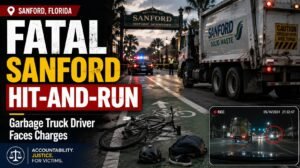
The Law Offices of Anidjar and Levine helps injured workers, motorists, and passengers after work zone truck accidents. A Daytona Beach Truck Accident Lawyer can investigate the crash, identify potentially responsible parties, and preserve evidence.
This review may include traffic-control plans, driver records, vehicle inspections, electronic data, photographs, witness accounts, and medical documentation.
Legal guidance may also address insurance communications, medical expenses, lost income, rehabilitation, permanent impairment, and Florida filing deadlines.
The following information explains available legal support, common causes, and important considerations when evaluating a potential claim.
Main Takeaways
- A Daytona Beach work zone truck accident lawyer can help identify liable parties, including drivers, trucking companies, contractors, property owners, or government entities.
- Common causes include distracted driving, speeding, improper lane changes, inadequate signage, unsafe traffic controls, and poorly maintained work areas.
- Important evidence may include photographs, medical records, crash reports, witness statements, traffic-control plans, surveillance footage, and vehicle data.
- An attorney can communicate with insurers, document damages, coordinate claim preparation, and pursue compensation for medical costs, lost income, and long-term impacts.
- Prompt legal guidance matters because evidence can disappear and Florida deadlines may limit the time available to file a lawsuit.


How We Can Help With Your Daytona Beach Work Zone Truck Accident Injury Claim
When a work zone truck accident causes injury, an experienced Daytona Beach truck accident lawyer can provide structured legal guidance throughout the claim process. The lawyer may help an injured worker, motorist, or passenger identify immediate priorities and communicate with insurers without sacrificing important protections. Attention to Medical treatment options can help ensure that appointments, referrals, rehabilitation, and prescribed care are considered when evaluating recovery needs.
The legal team may also explain documentation requirements, including medical records, wage information, photographs, incident reports, and correspondence with involved parties. Organized records can clarify the impacts of an injury and support an accurate claim presentation. Counsel may coordinate with medical providers, employers, and investigators while preserving relevant evidence and monitoring filing deadlines. If negotiations do not produce a fair resolution, the lawyer can assess available legal remedies and prepare the claim for further action. This assistance allows injured individuals and their families to focus on recovery while their interests receive careful, responsible attention.
OUR CONSULTATIONSARE FREE
START YOUR FREE CASE REVIEW

Understanding Daytona Beach Work Zone Truck Accident Injury Cases
Understanding a Daytona Beach work zone truck accident injury case begins with identifying how the collision occurred, who controlled the work area, and which parties may bear legal responsibility. The analysis may involve the truck driver, trucking company, construction contractor, property owner, or governmental entity, depending on their duties and conduct.
Negligence standards guide whether a party failed to act with reasonable care and whether that failure caused documented harm. A case may require examination of traffic-control plans, driver qualifications, company policies, inspection records, medical documentation, and eyewitness accounts. Evidence preservation is crucial because photographs, electronic data, surveillance footage, vehicle components, and site records can disappear or change. Prompt investigation helps protect reliable information while allowing injured individuals and their families to pursue appropriate support.
Damages may include medical expenses, lost income, rehabilitation needs, and other effects of the injury. Careful legal review can clarify available claims, procedural deadlines, and the responsible parties without relying on assumptions about liability.
Common Causes of Daytona Beach Work Zone Truck Accident
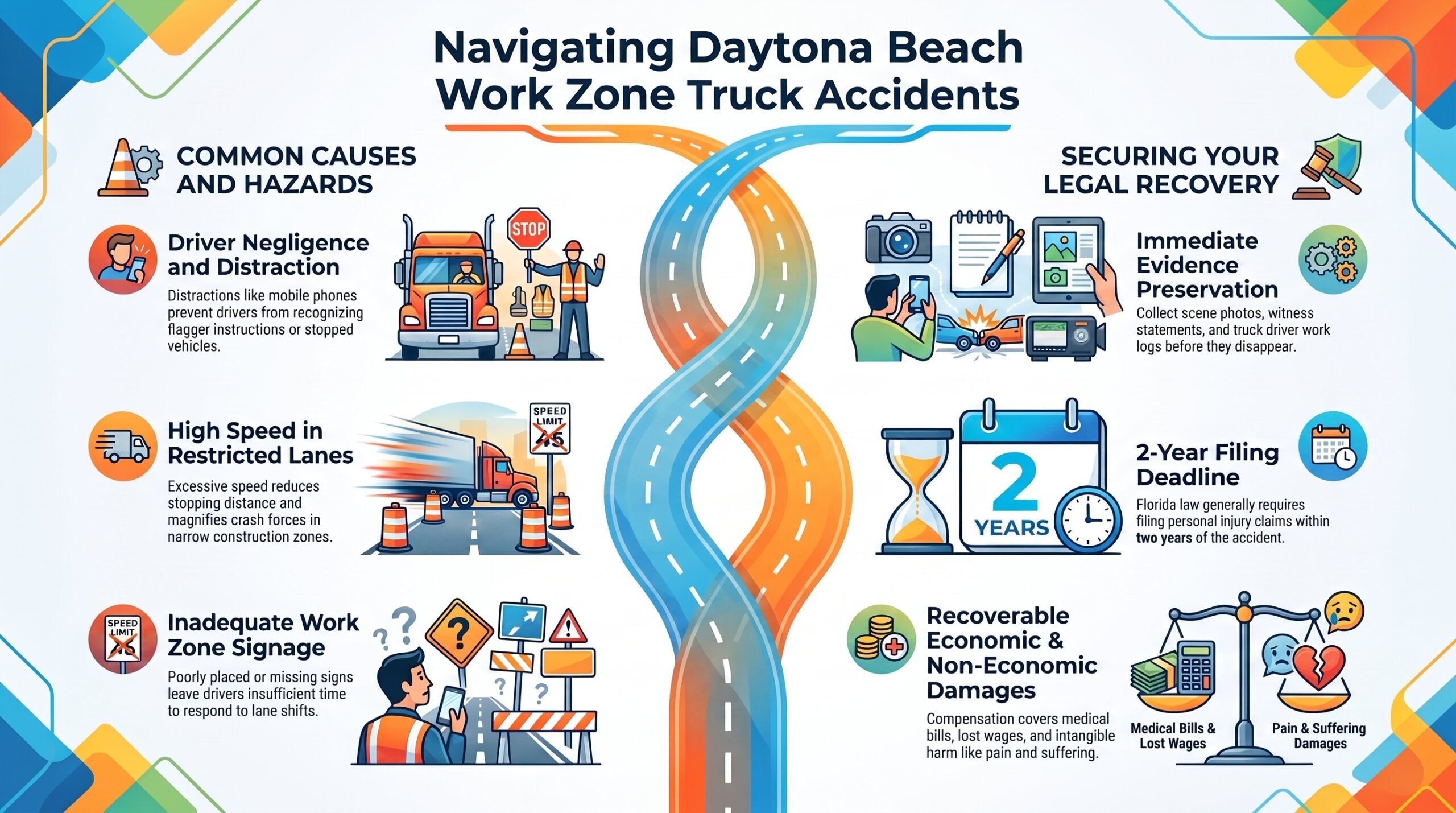
Work zone truck accidents in Daytona Beach may result from several preventable factors that compromise roadway safety. Common causes include distracted truck drivers, excessive speeding, improper lane changes, and inadequate work zone signage. Each circumstance can increase collision risks for workers, motorists, and other roadway users.
Distracted Truck Drivers
Distracted truck drivers pose a serious hazard in Daytona Beach work zones, where narrowed lanes, shifting traffic patterns, construction personnel, and reduced stopping space require constant attention. Mobile phone use, including texting, calling, or reviewing navigation applications, can divert a driver’s eyes, hands, and concentration from roadway conditions. Other distractions may include adjusting equipment, eating, reaching for objects, or engaging with passengers.
Even brief inattention can prevent a commercial driver from recognizing lane changes, flagger instructions, stopped vehicles, or workers near traffic. Such conduct may constitute driver negligence when a truck operator fails to follow safety obligations and maintain awareness. Employers may also face scrutiny if inadequate training, unrealistic schedules, or unsafe communication practices contribute to distraction. Identifying the distraction’s source can help injured individuals pursue appropriate support and accountability after a collision.
Excessive Speeding
Excessive speeding creates substantial risks in Daytona Beach work zones, where lane reductions, abrupt traffic shifts, uneven pavement, and limited stopping distance demand careful speed control. A commercial truck traveling too quickly may require more distance to stop, increasing the likelihood of striking workers, motorists, barriers, or equipment. Speed can also reduce a driver’s ability to respond when a traffic light changes or when lane merging requires gradual adjustments. High speeds magnify crash forces, potentially causing severe injuries and extensive property damage.
Construction personnel and nearby drivers depend on operators to follow posted limits and reduce speed when conditions change. Employers may also have responsibilities involving scheduling, training, and supervision. A careful investigation can help identify whether excessive speed contributed to the collision and determine appropriate support for affected individuals.
Improper Lane Changes
Improper lane changes create significant hazards in Daytona Beach work zones, where narrowed lanes, temporary barriers, shifting traffic patterns, and limited visibility leave little room for correction. Large trucks require additional space to navigate, making abrupt merges or attempts to pass especially dangerous for workers and nearby motorists. Drivers who fail to check blind spots, misjudge vehicle spacing, or move across restricted areas can cause sideswipe, rear-end, and rollover collisions.
Road design hazards may compound these risks when lanes narrow or roadway surfaces change unexpectedly. Careful attention to traffic control compliance helps reduce conflicts and supports safer movement through active construction areas. Employers and commercial carriers can promote safety through driver training, route planning, and enforcement of cautious lane-change procedures, protecting workers and the public.
Inadequate Work Zone Signage
When work zone signage is missing, obscured, poorly placed, or inconsistent, truck drivers may lack sufficient warning to respond safely to changing roadway conditions in Daytona Beach. Inadequate warnings can make it difficult to anticipate lane shifts, reduced speeds, narrowed travel paths, or stopped traffic. Left lane closures may require large trucks to merge promptly, yet insufficient notice can limit the time available to check blind spots and yield appropriately. Temporary traffic controls must remain visible, consistent, and positioned far enough from hazards to support informed decisions by drivers and roadway workers. When agencies or contractors fail to maintain effective signs, confusion may increase the risk of sudden braking, improper lane changes, and collisions. Careful investigation can help identify responsible parties and support those affected by resulting injuries or losses.


Legal Rights of Daytona Beach Work Zone Truck Accident Injury Victims
Work zone truck accident victims in Daytona Beach may have the legal right to seek compensation when another party’s negligence caused their injuries. Potentially responsible parties may include a truck driver, motor carrier, construction contractor, equipment manufacturer, or insurer, depending on the evidence.
A victim may pursue damages for medical expenses, lost income, reduced earning capacity, property damage, and pain and suffering.
- Insurance Coverage may provide compensation, although policy limits, exclusions, and competing claims can affect recovery.
- Comparative Negligence may reduce damages if the injured person is found partly responsible for the incident.
- A timely claim can preserve evidence, identify responsible parties, and protect access to available remedies.
An attorney may assist with investigating records, communicating with insurers, valuing losses, and negotiating a fair settlement. If negotiations fail, litigation may be necessary. Victims should preserve medical documentation, accident reports, photographs, and witness information. Florida deadlines can restrict the time available to file suit, making prompt legal guidance important for protecting rights and supporting accountability.
Don’t Wait. Call Our Daytona Beach Truck Accident Lawyers Now.
Why Do Daytona Beach Work Zone Truck Accident Injuries Happen?
Daytona Beach work zone truck accident injuries commonly result from a combination of driver negligence, unsafe construction conditions, and inadequate traffic controls. Commercial truck operators may speed, follow too closely, drive while distracted, or fail to adjust to narrowed lanes and sudden stops. Fatigue, impaired judgment, and insufficient training can further increase collision risks.
Construction sites may contain uneven pavement, confusing lane shifts, missing barriers, poor lighting, or improperly positioned equipment. Inadequate signs and signals can leave motorists uncertain about permitted movements, especially during nighttime operations or heavy traffic. These conditions create pedestrian safety risks for workers, flaggers, cyclists, and nearby residents.
Scheduling pressure may encourage rushed driving or incomplete site protections. The Consequences of delays can also influence decisions by contractors, carriers, and drivers, potentially prioritizing project speed over safe traffic management. Weather, limited visibility, and congestion may compound these hazards, making large trucks more difficult to stop or handle within restricted work areas.
What Should You Do After a Daytona Beach Work Zone Truck Accident Injury?
After a Daytona Beach work zone truck accident, the injured person should seek immediate medical care, even if symptoms initially appear minor. The crash should be reported to law enforcement, and all available evidence, including photographs, witness information, medical records, and work zone conditions, should be preserved. These steps can support treatment, document the incident, and help establish potential liability.
Seek Immediate Medical Care
Because truck collisions in active construction zones can cause serious or concealed injuries, injured individuals should obtain immediate medical care, even when symptoms initially appear minor. A prompt evaluation can identify concussions, internal trauma, fractures, or soft-tissue damage that may worsen without treatment. Medical professionals can also provide instructions, prescriptions, referrals, and follow-up care that support recovery and help prevent complications. Patients should describe every symptom accurately and disclose changes as they occur.
They should retain discharge papers, test results, bills, prescriptions, and provider notes as medical documentation. These records may assist with evaluating treatment needs, applying truck liability standards, and supporting damage calculation. Although Work zone reporting may be addressed separately, medical care should remain the first priority after an injury, particularly when helping others depends on preserving health, mobility, and long-term function.
Report The Crash
Promptly reporting a work zone truck accident to law enforcement creates an official record of the collision and allows officers to document roadway conditions, vehicle positions, visible injuries, witness accounts, and potential safety violations. The injured person should request emergency assistance when needed and remain at a safe location unless medical personnel direct otherwise. A police report can clarify the basic sequence of events and identify involved drivers, employers, contractors, or other responsible parties.
Accurate Driver Communications with responding officers are important; statements should remain factual, concise, and free from speculation or admissions of fault. The report may later assist in evaluating Truck Liability, including whether driver conduct, company practices, or work-zone management contributed to the collision. If officers do not respond, the crash should be reported through the appropriate nonemergency channel promptly.
Gather Evidence
During the initial response to a Daytona Beach work zone truck accident, the injured person or a representative should preserve available evidence without jeopardizing safety or medical care. Photographs may document vehicle positions, roadway conditions, warning signs, barriers, lighting, visible injuries, and property damage. Witnesses’ names and contact information should be recorded, while statements should remain factual and avoid speculation. The injured person should retain clothing, damaged equipment, repair estimates, and relevant employment records when practical.
Medical documentation, including diagnoses, treatment instructions, and follow-up records, can clarify the injury’s progression and necessary care. Copies of crash reports, contractor information, and communications with insurers should also be secured. Reviewing insurance coverage and applicable Florida statutes with qualified counsel may help protect evidence, meet deadlines, and support a properly evaluated claim.
Don’t Wait. Call Our Daytona Beach Truck Accident Lawyers Now.
Critical Evidence in a Daytona Beach Work Zone Truck Accident Injury Case
Critical evidence can establish how a Daytona Beach work zone truck accident occurred and who may be responsible.
Relevant materials include:
- Accident scene photographs showing vehicle positions, roadway conditions, signage, and visible injuries.
- Truck inspection records and driver work logs that may reveal mechanical defects, maintenance failures, fatigue, or hours-of-service violations.
- Witness accounts and expert statements interpreting collision evidence, driver conduct, and safety compliance.
Together, these records can support a clear, evidence-based assessment of the injury claim.
Accident Scene Photos
When a truck accident occurs in a Daytona Beach work zone, photographs of the scene can preserve evidence that may otherwise be altered or lost. Images should document vehicle positions, lane shifts, barricades, cones, warning signs, lighting, pavement conditions, debris, and visible injuries. Wide-angle photographs can establish the overall layout, while closer views may capture damaged equipment, skid marks, and obstructions. Because construction crews may promptly repair or rearrange the area, photographs taken soon after the collision can support accurate reconstruction.
Evidence preservation should include the date, time, location, and source of each image, along with original files when available. Accident photographs can corroborate witness interviews only, not replace them, and may help attorneys present the injured person’s experience clearly while identifying conditions that require further investigation.
Truck Inspection Records
Truck inspection records can provide a detailed account of a commercial vehicle’s mechanical condition before and after a Daytona Beach work zone collision. These documents may identify brake defects, tire wear, vehicle direction control problems, lighting failures, or other conditions that could have contributed to the crash. Pre-trip and post-trip inspection forms, repair orders, maintenance reports, and official violation notices can help establish whether required safety concerns were documented and addressed.
Preserving these records supports driver accountability and may reveal whether a carrier neglected inspection or maintenance responsibilities. The materials can also strengthen an insurance claim strategy by connecting a documented defect to the injuries and property damage involved. A legal professional may request records from the trucking company, maintenance providers, or regulatory agencies before routine retention practices result in their loss.
Driver Work Logs
Driver work logs can help establish whether a commercial driver complied with federal hours-of-service limits before a Daytona Beach work zone collision. These records may show driving periods, rest breaks, duty status changes, and potential fatigue-related violations. Investigators can compare log entries with electronic logging device data, dispatch information, fuel receipts, toll records, and delivery schedules to identify inconsistencies. Such comparisons may clarify whether scheduling pressures or inadequate rest contributed to unsafe operation near workers and motorists.
Hours of service impacts can be significant because fatigue may impair reaction time, attention, and judgment. Preserving trucking compliance records promptly helps prevent alteration or loss of relevant information. A careful review may also identify employer oversight issues, supporting an accurate evaluation of responsibility and the injured person’s need for assistance without relying on speculation or unsupported conclusions.
Witness And Expert Statements
Witness and expert statements can help establish how a Daytona Beach work zone truck accident occurred and how the injuries developed. Statements from motorists, construction workers, emergency responders, and nearby residents may clarify traffic patterns, warnings, visibility, vehicle speed, and driver conduct before impact. Preserving each account promptly can reduce the risk that memories change or important observations are lost.
Witness credibility depends on a person’s opportunity to observe, consistency, neutrality, and ability to explain specific details. An attorney may compare statements with photographs, video, driver work logs, medical records, and physical evidence to identify agreements or contradictions.
Through careful expert selection, attorneys may obtain opinions from accident reconstruction specialists, trucking safety professionals, medical providers, or vocational experts. Their testimony can connect safety violations and collision forces to documented injuries, treatment needs, impairment, and anticipated future care.
Don’t Wait. Call Our Daytona Beach Truck Accident Lawyers Now.
Long-Term Effects of Daytona Beach Work Zone Truck Accident Injuries
Work zone truck accident injuries may produce chronic pain, permanent disability, and lasting limitations on mobility or daily activities. Emotional and psychological trauma, including anxiety, depression, or post-traumatic stress, may also affect recovery and quality of life. These consequences can create substantial financial and lifestyle challenges through medical expenses, lost income, and reduced independence.
Chronic Pain and Disability
When a Daytona Beach work zone truck accident causes serious bodily harm, the resulting injuries may develop into chronic pain, reduced mobility, or permanent disability. Fractures, spinal damage, nerve injuries, and traumatic amputations can require extensive treatment, rehabilitation, assistive equipment, and continuing personal care. These conditions may prevent an injured worker from returning to the same occupation or performing ordinary household responsibilities. Medical records, treatment plans, and evaluations can help document the duration and severity of impairment.
An investigation may also examine Work Zone Fatigue, driver conduct, safety procedures, and Vehicle Maintenance Records when determining how the collision occurred. A legal claim may seek compensation for medical expenses, lost earning capacity, adaptive services, and future care. Careful preparation helps protect long-term needs and supports fair recovery for affected individuals and families.
Emotional and Psychological Trauma
Emotional and psychological trauma may continue long after physical injuries from a Daytona Beach work zone truck accident have recovered. Survivors may experience anxiety, depression, irritability, sleep disruption, or recurring memories of the collision. Some develop avoidance behaviors, heightened alertness, or difficulty trusting ordinary traffic conditions. These symptoms can affect relationships, concentration, and a person’s ability to participate confidently in daily activities.
Compassionate support from mental health professionals can help identify trauma-related conditions and establish appropriate treatment. Counseling records may also clarify how the accident affected emotional functioning over time. Post-crash evidence preservation, including photographs, witness information, and available video, can support an accurate account of the event. Careful insurance claim documentation should include diagnoses, treatment recommendations, and symptom progression, allowing an attorney to present the survivor’s psychological injuries with appropriate clarity and respect.
Financial and Lifestyle Challenges
Financial and lifestyle challenges may persist after a Daytona Beach work zone truck accident, particularly when injuries limit a person’s ability to work, drive, or manage ordinary responsibilities. Lost wages, medical expenses, rehabilitation costs, and reduced earning capacity can strain household finances for years. Some injured individuals may require home modifications, transportation assistance, or continuing care, while family members assume additional caregiving duties. Victim Financial Planning can help organize documentation, evaluate short- and long-term needs, and identify resources for necessary expenses.
A legal assessment may also consider how Work Zone Compliance failures contributed to the incident and whether responsible parties should provide compensation. Support from relatives, healthcare professionals, and community organizations can assist with practical adjustments, restore dignity, and help affected households make informed decisions during recovery and future planning.
Proving Liability in Daytona Beach Work Zone Truck Accident Injury Cases
Establishing liability in a Daytona Beach work zone truck accident requires evidence showing that a driver, trucking company, contractor, or other responsible party violated a legal duty and caused the resulting injuries. Attorneys may examine traffic-control plans, crash reports, vehicle data, driver logs, maintenance records, and construction-site policies to identify unsafe conduct or regulatory violations. Evidence preservation is important because surveillance footage, electronic records, and physical conditions can change or disappear.
Witness credibility also matters, particularly when accounts differ regarding speed, lane placement, warnings, or work-zone conditions. Insurance documentation may help identify coverage and involved entities, but liability must be supported by facts rather than assumptions. Medical record verification connects diagnosed injuries to the collision and documents treatment, prognosis, and functional limitations. Investigators may consult accident-reconstruction professionals, engineers, or trucking-safety experts when technical analysis is necessary. A carefully organized case allows responsible parties to be evaluated fairly while supporting an injured person’s pursuit of accountability and lawful compensation.
Dealing With Insurance Companies After a Daytona Beach Work Zone Truck Accident Injury
After liability evidence has been identified, the injured person may need to address one or more insurance companies regarding medical expenses, property damage, and other losses. Insurers may request recorded statements, authorizations, photographs, and documentation of treatment. Each response should be accurate, limited to relevant facts, and provided only after careful review. An adjuster’s early settlement offer may not reflect continuing care, lost income, diminished earning capacity, or other damages.
Preserving medical records, billing statements, employment documentation, and communications can help establish the nature and financial impact of the injury. The injured person should avoid signing a release before understanding whether future claims will be waived. Counsel may communicate with insurers, identify coverage issues, and protect the claimant from unnecessary disclosures. A Closing settlement strategy should account for documented losses, expected medical needs, applicable policy limits, and the evidence supporting liability. Clear, respectful communication can help preserve rights while supporting a fair resolution for those affected.
What to Expect During a Daytona Beach Work Zone Truck Accident Injury Claim Process
A Daytona Beach work zone truck accident claim typically begins with an initial case evaluation to assess liability, injuries, and available legal remedies. Evidence is then gathered, followed by negotiations with the responsible insurer regarding compensation. If settlement efforts fail, the matter may proceed to trial, where the evidence and applicable law will be presented before the court.
Initial Case Evaluation
How does an initial case evaluation shape a Daytona Beach work zone truck accident injury claim? It establishes whether the circumstances support legal action and clarifies the injured person’s Right to Compensation. During this confidential review, a legal professional typically discusses the collision, reported injuries, medical treatment, employment impact, insurance communications, and applicable filing deadlines. The evaluation also identifies potential parties, such as a truck driver, carrier, contractor, or other responsible entity, without prematurely deciding liability.
Clients may receive guidance regarding Evidence Preservation, including the importance of avoiding statements or agreements that could affect the claim. No outcome is guaranteed, and the strength of a case depends on reliable facts and documentation. A careful initial assessment helps determine appropriate next steps while ensuring the claimant’s interests receive informed, respectful attention.
Gathering Evidence
Once an initial evaluation identifies a potentially viable claim, evidence gathering begins to establish what occurred, who may be responsible, and how the work zone truck accident affected the injured person. Counsel may collect police reports, construction contracts, driver qualification records, inspection logs, and worksite safety plans as liability documentation. Photographs, video recordings, vehicle data, debris locations, traffic-control devices, and witness accounts can preserve roadside evidence before conditions change.
Medical records, treatment plans, wage information, and medical cost summaries help document the injury’s effects and anticipated needs. Investigators may also review company policies, maintenance histories, and prior safety violations when relevant. This organized record supports an insurance claim strategy by clarifying disputed facts, identifying responsible parties, and presenting a complete account of the person’s losses without prematurely addressing settlement negotiations.
Insurance Negotiations
When insurance negotiations begin, the injured person’s attorney typically presents a demand supported by evidence of liability, medical treatment, lost income, and anticipated damages. The insurer then reviews the documentation, evaluates coverage, and may request additional records, statements, or medical opinions. Adjusters often assess comparative fault, policy limits, and the work zone conditions before responding. Counsel communicates with the insurer, protects the client from premature statements, and explains each offer or counteroffer in understandable terms. In fatal cases,
Wrongful Death Claims may involve funeral expenses, lost financial support, and surviving family members’ damages. Throughout negotiations, Trial Preparation may continue through witness interviews, expert review, and organized exhibits, ensuring the claim remains fully supported. Careful documentation and measured communication help preserve the injured person’s rights and promote fair, informed consideration.
Settlement Or Trial
After insurance negotiations produce an acceptable resolution, the claim may conclude through a written settlement agreement that identifies the payment amount, released claims, and any applicable liens. Before approval, the injured worker should review how insurance settlement options affect medical expenses, lost wages, future treatment, and related benefits. Evidence preservation tips include retaining medical records, photographs, incident reports, witness information, employer communications, and vehicle or equipment data.
If settlement terms do not fairly address documented losses, the claimant may reject the proposal and pursue litigation. Trial preparation can involve depositions, expert testimony, accident reconstruction, and presentation of evidence concerning negligence and damages. A court then determines liability and compensation, although no outcome is guaranteed. Careful evaluation helps protect the claimant’s interests while supporting accountability and service to affected families.
Compensation for Daytona Beach Work Zone Truck Accident Injury Damages
Victims injured in Daytona Beach work zone truck accidents may pursue compensation for damages caused by another party’s negligence. Recoverable Truck Accident Damages can arise when a commercial driver, trucking company, contractor, construction manager, or other responsible entity violates safety duties. Evidence may include crash reports, medical records, vehicle data, inspection documents, work zone plans, and witness accounts.
A claim may address consequences such as treatment needs, transportation to medical appointments, necessary assistance, and damage to personal property. The available recovery depends on the facts, the severity of the injuries, applicable insurance coverage, and each party’s degree of responsibility. Work Zone Claims may involve multiple defendants, particularly when traffic controls, lane closures, equipment maintenance, or driver supervision contributed to the collision.
A Daytona Beach truck accident attorney may investigate the incident, identify responsible parties, preserve evidence, communicate with insurers, and pursue a fair resolution. Prompt legal guidance can help protect procedural rights while supporting an injured person and family during recovery.
Economic vs Non-Economic Damages in Daytona Beach Work Zone Truck Accident Cases
Economic damages in Daytona Beach work zone truck accident cases may include medical expenses, lost wages, property damage, and projected future financial losses. Non-economic damages address less tangible harm, such as pain and suffering, emotional distress, and reduced quality of life. Calculating total compensation requires evaluating documented costs, anticipated losses, and the injury’s broader impact on the claimant.
Economic Damages
Compensation in a Daytona Beach work zone truck accident case may include economic damages, which address measurable financial losses caused by the collision. These damages commonly include emergency treatment, hospital services, prescription costs, rehabilitation, and other reasonable medical expenses. Medical billing documentation, treatment records, and provider statements can help establish the amount and necessity of care. Recoverable losses may also include wages missed during recovery, reduced earning capacity, vehicle repairs, replacement transportation, and necessary household assistance.
A claim generally requires evidence connecting each expense to the work zone crash and demonstrating that the cost is reasonable. Insurance coverage limits may affect available recovery, particularly when multiple vehicles, employers, or commercial policies are involved. Careful documentation allows legal representatives to present an accurate accounting and protect the injured person’s financial interests.
Non-Economic Damages
Beyond documented financial losses, non-economic damages may address the human effects of a Daytona Beach work zone truck accident. They can include physical pain, emotional distress, diminished enjoyment of life, disfigurement, and loss of companionship. Unlike medical bills or lost wages, these harms do not have fixed prices, so their evaluation depends on evidence describing how the collision changed a person’s daily activities, relationships, and sense of security.
A careful case review may examine treatment notes, testimony from family members, and statements from the injured worker or surviving relatives. Evidence involving Vehicle Defects or incomplete Maintenance Records may also help explain the circumstances surrounding the crash, although such materials do not themselves establish the value of personal suffering. The purpose of these damages is to recognize significant human consequences and support fair accountability for those affected.
Calculating Total Compensation
In evaluating a Daytona Beach work zone truck accident claim, the total value generally combines economic damages with non-economic damages. Economic damages may include emergency treatment, rehabilitation, medication, lost income, reduced earning capacity, property damage, and anticipated future care. Non-economic damages address pain, emotional distress, disfigurement, disability, and diminished enjoyment of life.
The Impact of Liability can substantially affect recovery. Comparative fault, employer responsibility, contractor negligence, or multiple contributing parties may alter the amount available. Proving Damages requires organized medical records, wage documentation, expert opinions, photographs, and testimony describing daily limitations. Evidence Preservation is thus critical, particularly for truck data, work-zone plans, inspection records, and surveillance footage. Filing Deadlines must also be identified promptly because missed limitations periods can bar otherwise valid claims. Careful evaluation helps protect injured workers, families, and other affected community members.
When a Daytona Beach Work Zone Truck Accident Injury Case Goes to Trial vs Settlement
Often, a Daytona Beach work zone truck accident injury case is resolved through settlement rather than trial, but the appropriate path depends on liability, the severity of the injuries, available insurance coverage, and the strength of the evidence. Settlement can provide timely compensation, reduce uncertainty, and spare injured individuals and their families the demands of courtroom testimony. Negotiations may address medical expenses, lost income, rehabilitation, and other documented losses.
A trial may become necessary when insurers dispute responsibility, minimize injuries, or refuse to offer fair compensation. Trial strategy preparation includes organizing records, preserving photographs, consulting qualified experts, and preparing witnesses to explain the work-zone conditions and the accident’s consequences.
Attorneys may also assess credibility, courtroom presentation, and select juror witnesses where appropriate to support a fair evaluation of the evidence. The decision should consider long-term needs rather than short-term pressure. A careful legal assessment helps determine whether settlement offers adequate assistance or whether trial is warranted to pursue full accountability.
Florida Laws That May Affect Your Daytona Beach Work Zone Truck Accident Case
Florida law may affect a Daytona Beach work zone truck accident case through rules governing negligence, commercial vehicle operations, construction-zone safety, and damages. These requirements help protect workers, motorists, and the public while establishing duties for drivers, trucking companies, contractors, and property owners.
- Comparative Negligence Rules: Florida may reduce an injured person’s recovery when that person contributed to the incident. Evidence concerning speed, warnings, lane changes, and visibility can influence fault allocation.
- Commercial Vehicle Standards: Federal and state requirements may address driver qualifications, vehicle maintenance, hours of service, cargo securement, and employer supervision. Violations can support a negligence claim.
- Parking Lot Liability: A truck collision occurring near a work zone or commercial property may involve claims against owners or operators for inadequate traffic control, unsafe surfaces, poor lighting, or blocked sightlines.
Construction companies may also face responsibility when contractors fail to maintain barriers, signage, flagging operations, or safe pedestrian routes. Available damages can include medical expenses, lost income, property damage, and non-economic losses, depending on the evidence and applicable law.
The Statute of Limitations for Daytona Beach Work Zone Truck Accident Injury Cases
Because strict filing deadlines apply, the statute of limitations can determine whether a Daytona Beach work zone truck accident injury claim proceeds at all. In Florida, personal injury claims generally must be filed within two years after the accident, although exceptions may alter that period. Claims involving governmental entities can require earlier notice and separate procedural compliance. The deadline may also differ when a death, minor’s claim, or delayed injury is involved.
An insurance claim timeline does not extend the statutory period. Settlement discussions, medical treatment, or an insurer’s investigation accordingly should not create false confidence that filing can wait. Evidence preservation remains important because construction records, vehicle data, photographs, witness accounts, and work-zone plans may become difficult to obtain as time passes. Medical documentation can establish the injury’s nature, treatment, and progression. Comparative fault may affect damages, but it generally does not eliminate the filing deadline. Timely attention protects injured workers, motorists, and families seeking accountability and support.
How a Daytona Beach Work Zone Truck Accident Lawyer Can Help You
A Daytona Beach work zone truck accident lawyer can coordinate the legal, medical, and investigative aspects of an injury claim while protecting the client’s rights throughout the process. The lawyer may examine crash reports, vehicle maintenance records, driver qualifications, and work-zone plans to identify contributing conduct or safety failures. A careful investigation can also evaluate whether a Traffic Signal, lane closure, warning device, or traffic-control decision affected the collision.
The lawyer may assist by:
- Preserving photographs, video, electronic logs, and other evidence before it disappears.
- Consulting medical professionals to document injuries, treatment needs, and long-term effects.
- Communicating with insurers, employers, contractors, and government entities on the client’s behalf.
Construction Schedules, subcontractor responsibilities, and regulatory requirements may reveal how decisions created dangerous conditions. Counsel can organize these facts, assess available compensation, and present a clear claim supported by reliable evidence. This service allows injured individuals and their families to focus on recovery while the legal process is handled with diligence, accountability, and respect.
When to Contact a Daytona Beach Work Zone Truck Accident Lawyer
Prompt legal guidance can help preserve evidence and clarify responsibility after a work zone truck collision. A Daytona Beach work zone truck accident lawyer may be contacted as soon as medical needs are addressed, particularly when injuries, fatalities, roadway hazards, or disputed facts are involved. Early involvement can support an orderly Investigation timeline by identifying relevant records, including work zone plans, inspection reports, vehicle data, driver logs, photographs, and witness accounts before evidence disappears or conditions change.
A lawyer may also help organize communications with insurers and establish an appropriate insurance claim strategy. Contact is especially important when an insurer requests a recorded statement, offers a quick settlement, denies responsibility, or suggests that another party alone caused the collision. Families and injured workers often benefit from guidance that protects their ability to pursue compensation while allowing them to focus on treatment and recovery. Consultation does not require immediate litigation; it provides a structured opportunity to understand deadlines, preserve rights, and make informed decisions serving the affected community.
Why You Need an Experienced Daytona Beach Work Zone Truck Accident Lawyer
When a work zone truck collision involves disputed facts, severe injuries, or multiple potentially responsible parties, an experienced Daytona Beach work zone truck accident lawyer can provide the focused legal analysis needed to evaluate the claim. Such counsel can identify applicable safety regulations, examine driver and contractor conduct, and determine whether negligent maintenance, inadequate warnings, or unsafe traffic control contributed to the crash. Evidence preservation techniques are necessary because surveillance footage, electronic logging data, vehicle systems, inspection records, and witness recollections may disappear or change quickly.
A knowledgeable lawyer can coordinate timely requests and investigate the scene before important information is lost. Legal experience also helps address commercial policies, layered coverage, and potential Truck insurance bad faith when an insurer unreasonably delays, undervalues, or denies a valid claim. By managing communications and developing reliable evidence, counsel allows injured individuals and families to focus on medical care while pursuing accountability, fair compensation, and safer practices for the wider community.
How to Choose the Right Daytona Beach Work Zone Truck Accident Lawyer for Your Case
Choosing the right Daytona Beach work zone truck accident lawyer requires careful attention to the attorney’s experience with commercial vehicle collisions, construction-zone regulations, and serious injury claims. A qualified lawyer should understand how contractors, trucking companies, drivers, and insurers may share responsibility for unsafe conditions or negligent conduct.
Potential clients should review the attorney’s record, courtroom experience, and familiarity with investigating evidence such as driver logs, electronic data, inspection reports, surveillance footage, and work-site records. The lawyer should also explain applicable deadlines, possible compensation, and the expected legal process without promising a particular outcome.
Clear Client communication is critical. The attorney should provide timely updates, answer questions directly, and identify the staff members handling the matter. Fee transparency warrants equal consideration. A written agreement should explain contingency percentages, case expenses, and circumstances that could affect recovery.
A lawyer committed to serving injured individuals will evaluate each case carefully, protect the client’s interests, and offer practical guidance grounded in evidence and law.
About The Law Offices of Anidjar & Levine
The Law Offices of Anidjar & Levine represents individuals injured in truck crashes, including collisions occurring in Daytona Beach work zones.
The firm examines roadway conditions, traffic controls, driver conduct, employer practices, and commercial vehicle records to help identify responsible parties.
Its attorneys may coordinate with investigators, medical professionals, and other experts when evaluating the circumstances and consequences of a collision.
The firm assists clients in pursuing compensation for medical expenses, lost income, rehabilitation, property damage, pain, and other legally recognized losses.
A careful Damages calculation considers both current needs and potential future effects, particularly when injuries limit a person’s ability to work or serve family and community responsibilities.
Attorneys also develop a Trial strategy based on the available evidence, applicable law, and the opposing parties’ positions.
Through case preparation and communication, the firm seeks to protect clients’ interests while helping them understand available legal options and the potential consequences of settlement or litigation.
Frequently Asked Questions
Can I Still File a Claim if the Work Zone Accident Involved an Uninsured Truck Driver?
Yes, an injured person may still file a claim after a work zone collision involving an uninsured truck driver. Available uninsured truckers options can include uninsured motorist benefits, claims against an employer or contractor, and recovery from other responsible parties, depending on the evidence. Insurance coverage limits and policy language require careful review. Prompt medical documentation, accident reports, witness information, and legal guidance can help preserve rights and identify every potential source of compensation.
What Happens if I Was Partially at Fault for the Daytona Beach Work Zone Crash?
Partial fault does not necessarily prevent recovery after a Daytona Beach work zone crash. Under Florida’s Comparative Negligence rules, a claimant’s compensation may be reduced by the percentage of responsibility assigned to that claimant. Damage Allocation depends on evidence, including traffic records, work-zone warnings, driver conduct, and medical documentation. An attorney can help establish each party’s role, challenge inaccurate fault assessments, and pursue available insurance or other compensation while serving the claimant’s interests.
Can Family Members Pursue a Wrongful Death Claim After a Fatal Work Zone Truck Accident?
Family members may pursue a wrongful death claim after a fatal work zone truck accident, provided Florida law recognizes their relationship and losses. Wrongful death eligibility commonly includes a surviving spouse, children, or parents, while other relatives may qualify under limited circumstances. Family claimant requirements can include proving financial or emotional damages, identifying the responsible parties, and filing within the applicable deadline. A qualified attorney can preserve evidence and protect the family’s interests.
Are Punitive Damages Available in Exceptionally Reckless Work Zone Truck Accident Cases?
Punitive damages may be available when a work zone truck accident results from exceptionally reckless conduct, intentional wrongdoing, or conscious disregard for safety. Ordinary negligence typically supports compensatory damages, not punishment. Courts apply demanding negligence standards and require persuasive evidence, such as safety violations, prior warnings, or falsified records. Prompt evidence preservation is critical. During damages assessment, counsel evaluates both losses and whether punitive relief serves accountability, deterrence, and community protection.
Can I Change Lawyers During My Daytona Beach Work Zone Accident Claim?
Yes, a claimant can change lawyers during a Daytona Beach work zone accident claim, although timing and contractual obligations require careful review. The claimant should request the case file, confirm any contingency-fee agreement, and determine whether the former lawyer may assert a lien for services performed. A replacement attorney can evaluate communication problems, deadlines, evidence, and legal strategy before accepting representation. Prompt coordination helps protect the claim and maintain continuity for all involved.
—————————
A Daytona Beach work zone truck accident can result in serious injuries, financial losses, and complex liability issues.
Potentially responsible parties may include truck drivers, trucking companies, contractors, employers, or government entities.
Prompt legal guidance can help preserve evidence, investigate safety violations, and pursue available compensation.
The Law Offices of Anidjar and Levine can evaluate the circumstances, explain legal options, and advocate for an injured person’s interests throughout the claims process.
Learn more from a Daytona Beach Truck Accident Lawyer.