
A Daytona Beach Truck Accident Lawyer at The Law Offices of Anidjar and Levine can investigate the collision, preserve evidence, and evaluate liability involving the driver, trucking company, insurers, maintenance providers, or other parties.
Counsel may review electronic logs, vehicle data, police reports, medical records, and witness accounts to establish causation and the impact of injuries.
Legal representation can support claims for medical expenses, lost income, property damage, pain and suffering, and future care while addressing deadlines and disputed facts.
Further information can help explain available legal options.
Main Takeaways
- A Daytona Beach highway truck accident lawyer can investigate liability involving the driver, trucking company, insurers, contractors, and other responsible parties.
- Counsel can preserve electronic logs, vehicle data, maintenance records, photographs, witness accounts, police reports, and other critical evidence.
- Medical records, imaging, treatment history, and rehabilitation documentation can connect crash-related injuries to current and future medical needs.
- Potential compensation may include medical expenses, lost income, property damage, pain and suffering, and related losses.
- Prompt legal guidance can help protect claim deadlines, address disputed facts, and avoid problematic recorded statements to insurers.


How We Can Help With Your Daytona Beach Highway Truck Accident Injury Claim
When a highway truck accident causes serious injuries, an experienced Daytona Beach truck accident lawyer can provide focused legal guidance from the initial investigation through resolution of the claim. The legal team may help preserve evidence, identify responsible parties, and organize documentation needed to present a well-supported demand.
Assistance can include reviewing medical records, wage information, photographs, witness accounts, and vehicle inspection records. These materials may clarify how the collision occurred and how the injuries affected the injured person’s daily life, employment, and future needs. Counsel can also communicate with insurers, address disputed facts, and seek compensation consistent with the available evidence.
Attention to Insurance claim deadlines is important because missed filing periods can restrict available remedies. A representative may monitor required notices, coordinate consultations with appropriate professionals, and explain significant decisions in understandable terms. Through careful preparation and responsive service, the legal process can remain orderly while the injured individual and family focus on recovery and necessary support.
OUR CONSULTATIONSARE FREE
START YOUR FREE CASE REVIEW

Understanding Daytona Beach Highway Truck Accident Injury Cases
Understanding a Daytona Beach highway truck accident injury case requires examining the collision, the parties involved, and the full impact of the resulting injuries. An evaluation may include medical records, lost income, rehabilitation needs, and the effect on household responsibilities or future care. The process also considers the truck driver, carrier, insurers, and other potentially responsible entities without assuming fault before the evidence is reviewed.
Evidence preservation is important because vehicle data, photographs, maintenance records, witness accounts, and roadway documentation may clarify disputed facts. Liability determination depends on connecting reliable evidence to each party’s legal duties and conduct. An Insurance denial does not necessarily end a valid claim, but it may require a careful response supported by documentation and applicable policy language.
Settlement timelines vary according to treatment progress, investigation complexity, negotiations, and court procedures. Clear communication helps injured individuals and their families understand available options while protecting their interests throughout the case.
Common Causes of Daytona Beach Highway Truck Accident
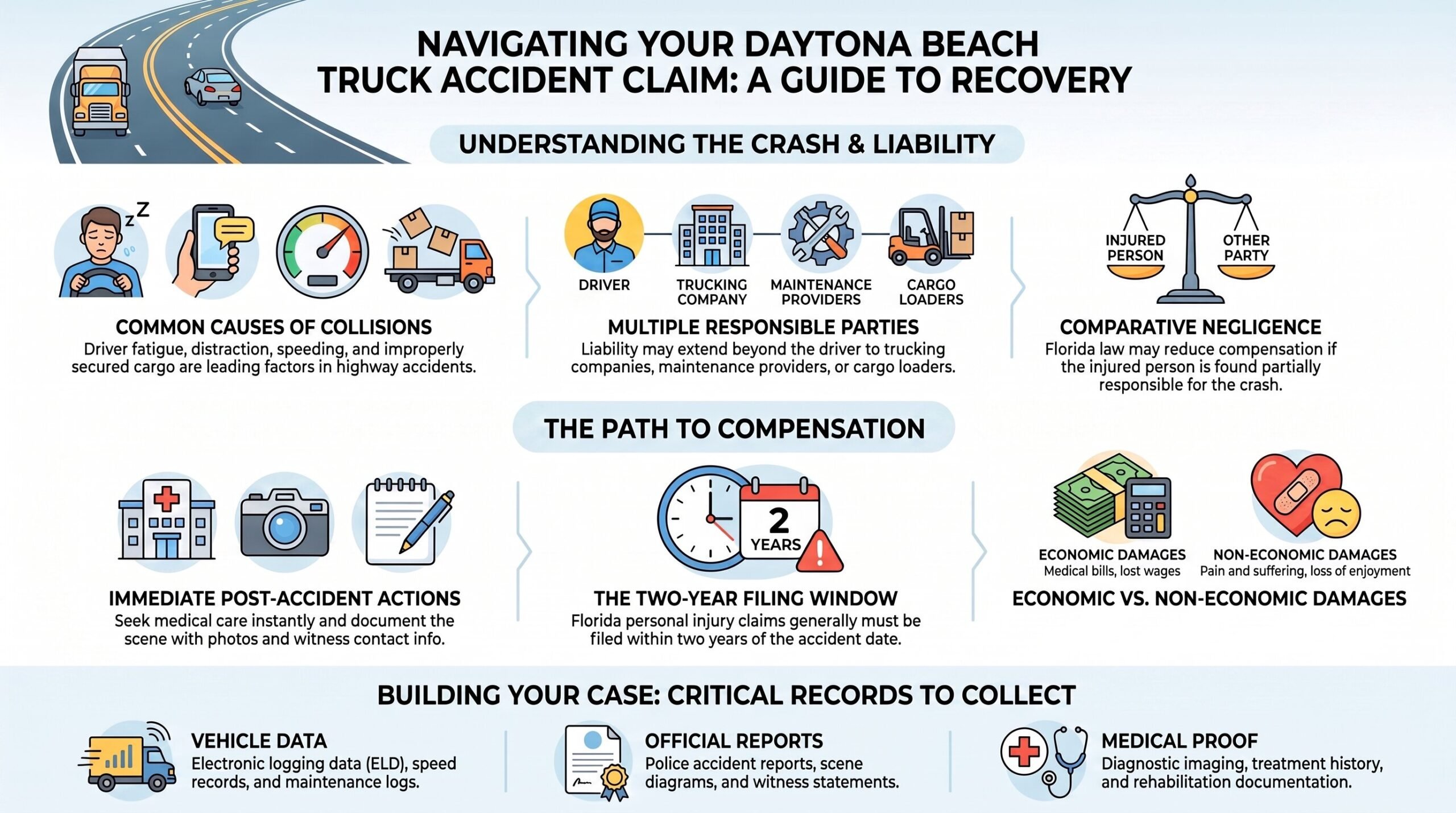
Common causes of Daytona Beach highway truck accidents include driver fatigue or distraction, speeding, and other reckless driving behaviors. Improperly loaded cargo can reduce vehicle stability, while equipment failures linked to inadequate maintenance may impair braking, steering, or other necessary functions. Identifying the contributing cause is often central to evaluating liability and the resulting injuries.
Driver Fatigue and Distraction
Driver fatigue and distraction are significant contributors to highway truck accidents in Daytona Beach, where commercial vehicles travel long distances amid heavy traffic and changing road conditions. Extended shifts, inadequate rest, and pressure to meet delivery schedules may impair reaction time, judgment, and awareness. Distractions can include mobile devices, dispatch communications, navigation systems, eating, or activity inside the cab.
When attention is diverted, a truck driver may fail to recognize stopped traffic, lane changes, or roadway hazards in time to respond safely. Investigators may examine driver logs, electronic records, phone data, and vehicle systems to identify contributing conduct. Eyewitness testimonies and surveillance footage can also clarify whether fatigue or distraction preceded the collision. Recognizing these factors helps injured individuals and their families pursue informed support and appropriate accountability.
Speeding and Reckless Driving
When commercial truck operators exceed posted speed limits or drive aggressively, they may be unable to control their vehicles safely on Daytona Beach highways. Excessive speed reduces reaction time, increases stopping distance, and can magnify the force of a collision. Reckless maneuvering, including abrupt lane changes, unsafe passing, and following too closely, may place nearby motorists, pedestrians, and passengers at significant risk. Weather conditions can further impair visibility, traction, and braking performance, making high-speed driving especially dangerous.
Intersection hazards, such as turning vehicles, changing signals, and entering traffic, require careful attention and controlled speed. When a truck driver disregards these risks, other road users may suffer serious injuries. A careful investigation can help identify relevant conduct, preserve evidence, and support affected individuals seeking appropriate assistance and accountability.
Improper Cargo Loading
Improperly loaded or secured cargo can shift during transit, alter a truck’s center of gravity, and make the vehicle difficult to guide or stop safely on Daytona Beach highways. Effective Securing Cargo requires appropriate restraints, proper placement, and regular checks before and during a trip. When workers overlook these measures, freight may slide, fall, or create uneven pressure within the trailer. Poor Load Balance can increase rollover risk, extend stopping distances, and cause a truck to veer into adjacent lanes. Oversized or loosely packed materials may also become roadway hazards if they escape during travel.
Commercial carriers, loading personnel, and drivers each have responsibilities to protect motorists and other highway users. Evidence such as photographs, shipping records, inspection reports, and witness accounts may help clarify whether improper loading contributed to a collision.
Equipment Failure and Maintenance
Equipment failure and inadequate maintenance can leave a commercial truck unable to operate safely on Daytona Beach highways. Brake system failures may prevent timely stops, particularly in congested traffic or near intersections. Worn brake pads, leaking hydraulic lines, defective warning systems, and neglected inspections can each increase collision risks. Tire defects also create serious hazards, including blowouts, tread separation, and loss of steering control at highway speeds. Regular tire wear analysis can identify uneven deterioration, improper inflation, alignment problems, or damage requiring prompt correction.
Federal and state safety standards generally require carriers to inspect, repair, and maintain necessary equipment. When those responsibilities are overlooked, drivers, trucking companies, and maintenance providers may contribute to preventable crashes. Documented service records can help determine whether neglected maintenance played a role in injuries or property damage.


Legal Rights of Daytona Beach Highway Truck Accident Injury Victims
Daytona Beach highway truck accident injury victims may have legal rights to seek compensation for medical expenses, lost income, property damage, pain and suffering, and other losses caused by another party’s negligence. A qualified attorney can evaluate liability, identify responsible parties, and explain available legal remedies while treating each injured person with dignity and care.
Daytona Beach truck accident victims may pursue compensation for medical costs, lost wages, property damage, and pain caused by negligence.
Victims may be entitled to:
- Request insurance benefits and pursue a personal injury claim.
- Obtain records, witness statements, photographs, and other evidence preservation measures.
- Seek compensation for current and anticipated medical treatment.
- Challenge unfair settlements through negotiation or litigation.
Insurance claim deadlines and statutes of limitation can restrict recovery if action is delayed. Victims should promptly report the collision when appropriate, avoid recorded statements without guidance, and maintain organized documentation of expenses, symptoms, and missed work. Legal counsel may also protect clients from pressure by insurers, coordinate with medical providers, and pursue accountability through a civil action when negotiations do not provide fair compensation. Each claim depends on its facts, applicable law, and available proof.
Why Do Daytona Beach Highway Truck Accident Injuries Happen?
Why do Daytona Beach highway truck accident injuries happen? These crashes often result from the substantial size, weight, and stopping distance of commercial trucks. Driver fatigue, distraction, speeding, impaired judgment, and inadequate training can reduce a driver’s ability to respond to changing traffic conditions. Mechanical failures, overloaded cargo, tire defects, and poor maintenance may also create dangerous conditions without warning.
Highway design and weather can increase these risks. Congestion, limited visibility, standing water, and abrupt lane changes leave less room for correction. Trucking companies may contribute when scheduling pressures encourage excessive driving or when safety inspections are neglected. Other motorists can also play a role by entering blind spots or misjudging a truck’s speed, making Comparative negligence relevant when responsibility is evaluated.
After an injury, determining causation requires careful review of driver records, vehicle data, maintenance documents, and company policies. Understanding these facts also helps identify applicable insurance coverage strategies, particularly when several businesses, contractors, or insurers may share financial responsibility for the resulting harm and related losses.
What Should You Do After a Daytona Beach Highway Truck Accident Injury?
After a Daytona Beach highway truck accident injury, the injured person should seek immediate medical care, even if symptoms initially appear minor. The accident scene should be documented with photographs, witness information, vehicle details, and relevant records when conditions permit. A qualified truck accident lawyer can then evaluate the evidence, explain available legal options, and protect the person’s interests.
Seek Immediate Medical Care
Prompt medical evaluation is necessary following a highway truck accident injury, even when symptoms initially appear minor or absent. A qualified clinician can identify concussions, internal injuries, spinal damage, and soft-tissue trauma that may worsen without treatment. The injured person should call emergency services when serious symptoms occur, follow responders’ instructions, and obtain evaluation at an emergency department or urgent care facility. Medical records can establish the timing, nature, and progression of injuries, supporting appropriate care and communication with insurers.
They may also inform Insurance settlement timelines and fault determination strategies by connecting documented conditions to the collision. Follow-up appointments, prescribed treatment, and rehabilitation recommendations should be maintained carefully. Prompt attention supports health, assists recovery, and helps confirm that an injured individual receives informed support while pursuing available legal remedies.
Document The Accident Scene
Accurate documentation of the accident scene can preserve evidence that may later clarify how the Daytona Beach highway truck collision occurred. If physical condition permits, the injured person or a trusted companion should record vehicle positions, roadway conditions, traffic signals, skid marks, debris, and visible damage before the scene changes. Photo documentation tips include taking wide images that show context, close images of impact points, and pictures of nearby signs, lighting, weather conditions, and lane markings.
Images should be time-stamped when possible and stored securely without editing. Witness statement collection should occur promptly, while memories remain fresh. Names, telephone numbers, and brief accounts should be recorded accurately, along with any statements made by drivers or responding personnel. Notes should identify the date, time, location, and sequence of events.
Contact A Truck Accident Lawyer
A Daytona Beach highway truck accident lawyer can help protect an injured person’s rights while evidence is preserved and potential claims are evaluated. Early legal guidance may clarify available compensation, identify responsible parties, and reduce communication risks with trucking companies or insurers. The injured person should follow medical instructions, retain treatment records, and avoid speculative statements about fault. Evidence preservation tips include securing photographs, witness contact information, vehicle data, police reports, and relevant medical documentation.
A lawyer may investigate driver conduct, maintenance records, loading practices, and employer policies before key evidence disappears. If an insurer denies coverage or undervalues documented losses, counsel can assist with Insurance denial appeals and negotiations. Prompt consultation also helps preserve filing deadlines and supports a careful, service-oriented response focused on the injured person’s recovery and legal interests.
Critical Evidence in a Daytona Beach Highway Truck Accident Injury Case
Important evidence can establish how the collision occurred, whether safety rules were followed, and the extent of the claimed injuries.
Essential records may include:
- Police accident reports
- Truck driver records
- Electronic logging data
- Medical treatment documentation
Together, these materials can help clarify liability, identify regulatory violations, and connect documented injuries to the Daytona Beach highway truck accident.
Police Accident Reports
When a highway truck collision occurs in Daytona Beach, the responding officer’s accident report may provide an important early record of the event. It can identify the reported location, vehicles, apparent contributing circumstances, citations, and emergency responses. Witness statements recorded at the scene may preserve observations before memories change or evidence disappears. Scene documentation, including diagrams, photographs, and descriptions of roadway conditions, can help clarify how the collision unfolded.
Although an accident report is not a final determination of liability, it may help attorneys evaluate the available facts and identify issues requiring further investigation. Insurance adjusters often review the report when gauging responsibility and damages. Careful analysis can consequently support a sound claim strategy while helping injured individuals and their families pursue fair treatment through the legal process.
Truck Driver Records
Beyond the information contained in a police accident report, truck driver records may provide important evidence about the events leading to a Daytona Beach highway collision. These materials can include employment applications, training records, medical certifications, disciplinary documentation, and prior safety violations. Taken together, they may show whether a carrier followed required hiring and supervision procedures or ignored warning signs concerning a driver’s competence and conduct.
Driver qualification files are particularly important because they can reveal licensing issues, incomplete evaluations, or inadequate training before the crash. Records concerning Cellphone enforcement may also indicate whether the company maintained and enforced policies prohibiting distracted driving. Attorneys may seek these documents promptly through preservation demands and formal discovery, helping injured individuals and their families obtain a fair, evidence-based evaluation of responsibility and available remedies.
Electronic Logging Data
Electronic logging data can help establish how a commercial truck was operated before a Daytona Beach highway collision. These electronic records may show driving time, rest periods, speed-related events, duty-status changes, and potential violations of federal hours-of-service requirements. When preserved promptly, the information can help clarify whether fatigue, excessive driving, or scheduling pressure contributed to the crash. It may also be compared with dispatch messages, fuel receipts, toll records, and vehicle telemetry to identify inconsistencies in the carrier’s account.
Attorneys serving injured individuals may request this evidence through appropriate legal procedures before routine retention systems overwrite it. Cargo damage documentation can further connect the truck’s movement and load condition to the impact. During insurance claim filing, accurate logging evidence may support liability analysis and protect the injured party’s opportunity to seek appropriate compensation.
Medical Treatment Documentation
Medical treatment documentation is critical evidence in a Daytona Beach highway truck accident injury case because it connects the collision to the injuries claimed. Emergency department records, diagnostic imaging, physician assessments, prescriptions, and rehabilitation notes can establish when symptoms began and how they progressed. Consistent treatment also helps demonstrate that an injured person followed medical recommendations rather than disregarding recovery instructions.
Providers should document reported pain, functional limitations, objective findings, and the relationship between diagnosed conditions and the crash when medically appropriate. Billing statements and work restriction notes may further show financial consequences and necessary care. Injury Photos can supplement clinical records by showing visible trauma over time. Witness Statements may corroborate the person’s condition immediately after impact. Preserving complete, organized records allows legal representatives to present the client’s experience accurately and advocate responsibly for needed compensation.
Don’t Wait. Call Our Daytona Beach Truck Accident Lawyers Now.
Long-Term Effects of Daytona Beach Highway Truck Accident Injuries
Long-term injuries from a Daytona Beach highway truck accident may cause chronic pain, reduced mobility, and lasting limitations on daily activities. Emotional and psychological effects, including anxiety, depression, or trauma-related symptoms, may also persist after physical recovery begins. These conditions can create ongoing medical and financial needs involving treatment, rehabilitation, assistive services, and lost earning capacity.
Chronic Pain And Mobility
Chronic pain and reduced mobility are common long-term consequences of serious highway truck accident injuries. Damage to the spine, joints, muscles, or nerves may continue after fractures and other wounds have healed. Persistent neck and back pain can interfere with walking, lifting, driving, or completing household responsibilities. Whiplash recovery may require months of medical treatment, physical therapy, and carefully monitored activity. Some survivors develop permanent limitations that affect employment and independence, creating a potential long-term disability.
Treatment plans may include medication, rehabilitation, assistive devices, or surgery, depending on the injury’s severity. Consistent medical documentation helps establish how symptoms affect daily function and future care needs. A Daytona Beach attorney can help an injured person pursue compensation for treatment, lost income, adaptive equipment, and continuing support. This assistance helps preserve access to necessary services.
Emotional And Psychological Effects
When a highway truck accident causes severe or life-altering injuries, emotional and psychological effects may persist long after physical wounds begin to recover. Survivors may experience anxiety, depression, irritability, sleep disruption, or difficulty returning to ordinary routines. Certain sounds, locations, or traffic conditions can trigger distressing memories and avoidance. Panic and PTSD may interfere with relationships, concentration, employment, and participation in rehabilitation.
Family members may also experience fear, grief, or stress while adapting to changed responsibilities and supporting the injured person. Recognizing these effects can help survivors and caregivers seek qualified mental health professionals, peer groups, and other emotional support resources. Compassionate assistance should respect each person’s pace and privacy, while encouraging timely evaluation when symptoms persist, intensify, or create safety concerns. Psychological recovery warrants attention alongside physical restoration.
Ongoing Medical And Financial Needs
Although initial treatment may conclude, Daytona Beach highway truck accident injuries can create ongoing medical and financial needs for months or years. Continued rehabilitation, follow-up appointments, prescription costs, and possible future procedures may affect a person’s ability to work and support dependents. Accurate Medical documentation helps establish diagnoses, treatment progress, limitations, and anticipated care. Insurance documentation should be preserved to identify available coverage, communications, claim decisions, and payment disputes.
Financial records may also demonstrate lost wages, reduced earning capacity, transportation expenses, and other accident-related costs. Property damage claims require repair estimates, receipts, photographs, and evidence linking losses to the collision. Witness statements can support disputed facts when memories remain reliable. Organized records allow a legal professional to evaluate long-term needs and pursue appropriate compensation while helping injured individuals access necessary services.
Don’t Wait. Call Our Daytona Beach Truck Accident Lawyers Now.
Proving Liability in Daytona Beach Highway Truck Accident Injury Cases
Proving liability in a Daytona Beach highway truck accident injury case requires evidence showing that another party’s negligence caused the collision and resulting harm. Evidence may include crash reports, photographs, traffic-camera footage, witness statements, vehicle data, and medical records documenting the injuries. A qualified investigation can identify whether the truck driver violated traffic rules, drove while fatigued, or operated the vehicle improperly. Liability may also involve a trucking company, maintenance provider, cargo loader, or manufacturer when unsafe practices or defective equipment contributed to the crash.
Driver logs, inspection records, dispatch communications, and employment policies can help establish responsibility. Comparative Negligence Standards may affect recovery if the injured person is found partly responsible, because compensation can be reduced according to that percentage. Records should be preserved promptly, and Insurance Claim Deadlines must be monitored to protect available legal rights. Careful evidence gathering allows counsel to present an accurate account and pursue accountability for those harmed.
Dealing With Insurance Companies After a Daytona Beach Highway Truck Accident Injury
After a Daytona Beach highway truck accident, insurance companies may quickly contact an injured person to obtain statements, request medical authorizations, or discuss a settlement. Such contact may appear helpful, but statements can be interpreted narrowly or used to dispute injury severity. An injured individual may benefit from limiting communication until legal guidance is obtained and avoiding recorded interviews or broad authorizations without careful review.
Effective attorney communication helps establish consistent responses and protects the injured person’s interests. Counsel can develop a Negotiation strategy based on documented losses, applicable coverage, and the insurer’s evaluation. Evidence preservation should begin promptly, including photographs, witness information, vehicle records, and communications concerning the collision.
A medical record review can connect treatment to the accident, identify ongoing needs, and accurately address prior conditions. Insurers may also examine employment records and social media. Careful preparation allows a representative to respond with verified information while helping the injured person focus on recovery and crucial responsibilities.
What to Expect During a Daytona Beach Highway Truck Accident Injury Claim Process
A Daytona Beach highway truck accident injury claim generally begins with an initial assessment of the injuries, liability, and available legal options. The evidence collection process may include obtaining crash reports, medical records, witness statements, and vehicle or trucking company documents, followed by negotiations with the relevant insurance providers. If negotiations do not produce a fair resolution, the matter may proceed to settlement discussions or trial.
Initial Claim Assessment
An initial claim assessment establishes how a Daytona Beach highway truck accident injury claim will proceed and identifies the evidence needed to support it. During this review, a legal professional considers the collision circumstances, reported injuries, treatment status, and potentially responsible parties. The assessment also addresses applicable filing deadlines, available insurance coverage, and whether the facts support a personal injury claim or Wrongful death eligibility for surviving family members.
If an insurer has rejected responsibility or delayed payment, counsel may explain an appropriate insurance denial response and evaluate whether further negotiation or litigation is warranted. The claimant can expect guidance about legal rights, expected procedures, and realistic case considerations. This early evaluation helps ensure that decisions remain organized, informed, and focused on securing fair relief for affected individuals.
Evidence Collection Process
When a Daytona Beach highway truck accident claim begins, the evidence collection process focuses on preserving information that may establish how the collision occurred, who bears responsibility, and how the injuries have affected the claimant. Investigators may examine the crash scene, vehicle damage, roadway conditions, photographs, and official reports before physical evidence changes or disappears. Witness statements can clarify traffic movements, driver conduct, visibility, and events immediately preceding impact.
Video footage from traffic cameras, nearby businesses, dashboard systems, or vehicle monitoring equipment may provide an objective account of the incident. Medical records, diagnostic results, treatment notes, and employment documentation help demonstrate the nature and practical consequences of reported injuries. The process may also involve securing trucking logs, maintenance records, inspection materials, and electronic data relevant to vehicle operation and compliance.
Insurance Negotiations
Following evidence collection, insurance negotiations address the compensation available for injuries, property damage, lost income, and other documented losses. A Daytona Beach highway truck accident lawyer may review policy limits, coverage provisions, medical records, and liability evidence before presenting a demand to the insurer. Understanding how to document evidence helps establish the claim’s value and supports responses to requests for additional information. The insurance claim timeline can vary according to injury severity, treatment progress, documentation quality, and the insurer’s investigation.
Adjusters may evaluate statements, photographs, reports, and employment records while evaluating responsibility and damages. Claimants should communicate accurately, preserve relevant records, and avoid signing broad releases without informed review. Organized negotiations can clarify disputed issues and protect an injured person’s ability to pursue appropriate compensation throughout the claims process.
Settlement Or Trial
The decision between settlement and trial depends on the strength of the evidence, the extent of the injuries, available insurance coverage, and the parties’ willingness to resolve disputed issues. A sound settlement strategy evaluates medical records, wage losses, future care needs, and liability evidence before demands are presented. Negotiation leverage may increase when vehicle data, witness testimony, regulatory violations, or clear treatment documentation supports the claim. If negotiations do not produce fair compensation, the injured person may proceed toward trial.
Trial preparation includes identifying witnesses, organizing medical and financial proof, addressing defenses, and preparing the claimant for testimony. Courtroom evidence must be authenticated and presented clearly so jurors can understand how the crash caused specific losses. Throughout the process, counsel should explain risks, timelines, and potential outcomes, enabling informed decisions that protect the claimant’s interests.
Don’t Wait. Call Our Daytona Beach Truck Accident Lawyers Now.
Compensation for Daytona Beach Highway Truck Accident Injury Damages
Compensation for injuries sustained in a Daytona Beach highway truck accident may include medical expenses, lost income, reduced future earning capacity, property damage, and pain and suffering. The recoverable amount depends on the evidence, severity of harm, treatment needs, and responsibility of each involved party. A careful review may identify compensation for emergency care, rehabilitation, medication, vehicle repairs, and necessary assistance during recovery. Documentation from healthcare providers, employers, and repair professionals can help establish the claim’s value.
Insurance coverage limits may affect how much can be collected from a trucking company, driver, or other responsible entity, particularly when several policies apply. An attorney may investigate commercial policies, ownership arrangements, and available assets while communicating with insurers on the injured person’s behalf. Families should also understand wrongful death eligibility when a crash causes a fatality. Prompt legal guidance can protect evidence, identify responsible parties, and help injured individuals pursue fair compensation while focusing on reparation and family responsibilities.
Economic vs Non-Economic Damages in Daytona Beach Highway Truck Accident Cases
Economic damages may include medical expenses, lost wages, property damage, and other measurable financial losses resulting from a highway truck accident. Non-economic damages address less tangible harm, such as pain and suffering, emotional distress, and diminished quality of life. Calculating total compensation requires evaluating both categories and considering the specific evidence supporting each claimed loss.
Economic Damages
When a highway truck collision in Daytona Beach causes measurable financial losses, those losses may form the basis of an economic damages claim. Recoverable amounts can include emergency treatment, hospitalization, medication, rehabilitation, medical equipment, and reasonably anticipated future care. Lost wages may also be claimed, along with reduced earning capacity when injuries limit the ability to return to the same occupation or schedule. Property damage, transportation expenses, and necessary household services may qualify when supported by reliable documentation.
Medical records, pay statements, invoices, repair estimates, and expert assessments help establish the value and connection of these losses. A comparative fault analysis may affect the amount recovered. Insurance coverage disputes can further complicate payment, particularly when multiple carriers, policy limits, or commercial trucking policies are involved.
Non-Economic Damages
Non-economic damages address the human impact of a Daytona Beach highway truck accident rather than documented financial losses. They may include physical pain, emotional distress, diminished quality of life, permanent disfigurement, and loss of companionship. These losses often resist precise measurement because each person’s suffering and recovery experience differs.
Common evidence can include medical observations, treatment histories, testimony from relatives or coworkers, and records describing changes in daily activities. Police procedures and truck records may help establish the circumstances surrounding the collision, but liability proof remains separate from demonstrating the accident’s personal consequences. A careful evaluation considers the injury’s severity, duration, prognosis, and effect on relationships and independence. Presenting this information accurately helps decision-makers recognize the injured person’s needs while preserving dignity and supporting a fair assessment of non-economic harm.
Calculating Total Compensation
In a Daytona Beach highway truck accident case, total compensation generally must combine economic damages, which reflect documented financial losses, with non-economic damages, which address the injury’s personal impact. Economic damages may include emergency care, rehabilitation, medication, property damage, lost income, reduced earning capacity, and reasonably anticipated medical needs. Non-economic damages can account for pain, emotional distress, disfigurement, disability, loss of companionship, and diminished quality of life.
Each category requires evidence tailored to the individual’s circumstances. Insurance negotiation tips include organizing bills, employment records, expert opinions, and a clear account of ongoing limitations before evaluating any settlement. A trial preparation strategy should also assess testimony, medical proof, liability evidence, and future damages. Careful calculation helps ensure that a resolution serves the injured person’s recovery without overlooking long-term consequences.
When a Daytona Beach Highway Truck Accident Injury Case Goes to Trial vs Settlement
A Daytona Beach highway truck accident injury case may resolve through settlement or proceed to trial, depending on the strength of the evidence, the parties’ willingness to negotiate, and the extent of the injured person’s damages. Settlement discussions can provide a more predictable resolution, reduce litigation expenses, and help an injured person receive compensation without the uncertainty of a courtroom decision. Negotiations may involve medical records, employment documentation, Witness statements, video evidence, and other materials that clarify fault and losses.
Trial may become necessary when the parties disagree about responsibility, the seriousness of injuries, or the value of the claim. At trial, each side presents evidence, examines witnesses, and allows a judge or jury to determine the outcome. Although litigation can require more time and preparation, it may provide an opportunity to pursue full compensation when settlement offers do not reasonably address documented harm. Legal counsel can evaluate the evidence, explain available options, and support decisions focused on the injured person’s recovery.
Florida Laws That May Affect Your Daytona Beach Highway Truck Accident Case
Florida laws may affect nearly every aspect of a Daytona Beach highway truck accident case, including liability, insurance coverage, filing deadlines, and recoverable damages.
Critical considerations may include:
- Comparative negligence rules can reduce compensation when an injured person shares responsibility for the collision.
- Trucking company liability may arise from negligent hiring, inadequate training, unsafe maintenance, or actions by an employee acting within job duties.
- Florida’s no-fault insurance system may provide initial personal injury protection, although serious truck-related injuries can support claims outside those limits.
- Evidence requirements may involve driver logs, inspection records, electronic data, company policies, and witness accounts.
State and federal trucking regulations can also influence whether a driver, carrier, broker, or maintenance provider violated a safety obligation. Florida law may permit recovery for medical expenses, lost income, property damage, pain, and diminished quality of life when supported by evidence. Careful legal review helps protect injured individuals and promotes accountability, particularly when pursuing fair outcomes that support families and communities affected by dangerous commercial trucking.
The Statute of Limitations for Daytona Beach Highway Truck Accident Injury Cases
Time limits can determine whether a Daytona Beach highway truck accident injury claim proceeds, regardless of the severity of the injuries or the strength of the available evidence. In Florida, personal injury claims generally must be filed within two years after the accident, although exceptions can alter that deadline. Claims involving wrongful death, governmental entities, minors, or delayed injury discovery may follow different rules. Missing the applicable deadline can result in dismissal, even when liability appears clear.
Early attention also helps preserve evidence and organize insurance paperwork, medical billing, treatment records, and crash reports before information becomes difficult to obtain. Comparative negligence may reduce compensation if the injured person is assigned a share of fault, while liability disputes can complicate settlement discussions and litigation preparation. Because the filing period depends on case-specific facts, identifying the correct deadline is critical. Prompt review of the accident date, parties involved, and applicable exceptions supports an orderly process and protects the opportunity to seek compensation for accident-related losses.
How a Daytona Beach Highway Truck Accident Lawyer Can Help You
When a Daytona Beach highway truck accident causes injuries, legal counsel can help identify the responsible parties, preserve vital evidence, and pursue compensation under applicable Florida law.
A lawyer may coordinate practical support while protecting the injured person’s interests through measures such as:
- Get medical records that document diagnoses, treatment, prognosis, and related expenses.
- Preserve evidence, including vehicle data, photographs, maintenance histories, and roadway conditions.
- Review insurance documentation to identify available policies, coverage limits, and potential exclusions.
- Collect witness statements and compare accounts with police reports, electronic logs, and other records.
Counsel can investigate whether a trucking company, driver, maintenance provider, cargo loader, or another party contributed to the collision. The lawyer may also calculate medical costs, lost income, rehabilitation needs, and other legally recoverable damages. When appropriate, counsel communicates with insurers, addresses disputed liability, and presents organized documentation supporting the claim. This assistance allows families and caregivers to focus on recovery and service responsibilities while the legal process is managed carefully, fairly, and with attention to the injured person’s long-term welfare.
When to Contact a Daytona Beach Highway Truck Accident Lawyer
After a highway truck accident in Daytona Beach, prompt consultation with a qualified truck accident lawyer can help protect evidence and clarify available legal options. Early Legal Advice Timing may matter because trucking records, driver logs, vehicle data, and witness recollections can become unavailable. A lawyer can identify preservation steps before Insufficient Evidence weakens an otherwise valid claim.
Contact is particularly important when injuries require continuing care, bills accumulate, an insurer requests a recorded statement, or liability is disputed. A consultation can also address employment concerns, including possible Wrongful Termination after an injured worker reports safety issues or seeks medically necessary leave. If a family member dies, prompt guidance may help protect potential wrongful-death claims and coordinate communications with responsible parties.
A lawyer can evaluate deadlines, available insurance coverage, and the facts needed for a practical Settlement Strategy. Seeking advice does not require filing immediately. It allows an injured person or family to make informed decisions while preserving the ability to serve their own interests and support affected loved ones.
Why You Need an Experienced Daytona Beach Highway Truck Accident Lawyer
An experienced Daytona Beach highway truck accident lawyer provides the knowledge and resources needed to address the distinct challenges of commercial vehicle claims. Large trucks may involve multiple responsible parties, layered insurance policies, maintenance providers, and extensive operational records. Counsel can identify relevant evidence, including driver logs, inspection reports, electronic data, surveillance footage, and company policies, before it disappears or becomes disputed.
Understanding Commercial trucking liability is critical when determining whether responsibility rests with the driver, carrier, shipper, manufacturer, or another entity. An experienced attorney can evaluate federal safety requirements, Florida traffic laws, and employment relationships to develop a well-supported claim. Skilled Florida insurance negotiation also helps protect injured individuals from inadequate offers, shifting explanations, and tactics that may minimize legitimate losses.
How to Choose the Right Daytona Beach Highway Truck Accident Lawyer for Your Case
Selecting the right Daytona Beach highway truck accident lawyer requires careful consideration of experience, resources, and communication practices. A qualified attorney should understand commercial transportation regulations, collision investigations, and the distinct challenges injured individuals face after a serious crash.
Prospective clients may evaluate whether the lawyer has handled truck claims involving multiple insurers, trucking companies, and maintenance providers. Experience with Settlement negotiation can help determine whether an offer reflects the full scope of harm rather than immediate expenses alone. Effective counsel should also know how to develop insurance leverage through documented liability, policy research, and credible damages calculations.
Communication warrants equal attention. The lawyer should explain legal options clearly, respond within reasonable timeframes, and involve the client in significant decisions. Case preparation should include gathering medical evidence, employment records, witness accounts, and documentation supporting future damages. A lawyer committed to serving others will treat each client with respect, protect personal interests, and pursue an informed resolution based on evidence and applicable law.
About The Law Offices of Anidjar & Levine
The Law Offices of Anidjar & Levine represents individuals injured in serious motor vehicle and commercial truck accidents throughout Daytona Beach and surrounding Florida communities.
The firm evaluates each highway truck collision by examining medical records, roadway conditions, vehicle damage, driver conduct, and applicable trucking regulations.
Its attorneys may establish an Evidence timeline that connects the crash to resulting injuries and financial losses.
They can also identify and preserve witness statements, electronic records, inspection documents, and other information that may clarify responsibility.
This organized approach supports informed decisions while reducing the burden placed on injured individuals and their families.
When communicating with insurers or opposing counsel, the firm develops a Negotiation strategy based on documented damages, liability evidence, and the client’s recovery needs.
Attorneys explain available settlement options and assess whether proposed terms fairly address medical expenses, lost income, future care, and related harm.
If negotiations do not produce an appropriate resolution, litigation may remain available.
Frequently Asked Questions
Can I Pursue a Claim if the Truck Driver Fled the Daytona Beach Accident Scene?
A claim may remain available if a truck driver fled a Daytona Beach accident scene. The injured person should promptly report the incident, obtain medical evaluation, and consult qualified counsel regarding liability, insurance coverage, and deadlines. Wrongful flight can support arguments about consciousness of responsibility, although it does not automatically establish fault. Immediate evidence preservation is important, including witness information, surveillance footage, vehicle damage, medical records, and official crash reports to protect the claim.
Will My Daytona Beach Truck Accident Case Affect My Immigration Status?
A Daytona Beach truck accident case generally does not affect a person’s immigration status because pursuing compensation is a civil matter, not a criminal proceeding. Individuals may seek medical costs, lost wages, and other damages regardless of citizenship, though immigration eligibility can involve separate legal considerations. Careful evidence documentation supports the claim. A qualified personal injury attorney can coordinate with an immigration lawyer when concerns involve visas, residency, work authorization, or interactions with authorities.
Can Family Members Attend Meetings With My Daytona Beach Truck Accident Lawyer?
Yes, family members may generally attend in-person meetings with a Daytona Beach truck accident lawyer, but the client should first obtain the lawyer’s approval. Family involvement can provide support, clarify factual details, and assist with decisions, yet confidentiality may be affected when third parties participate. The attorney should explain how attendance influences attorney communication and case strategy. Ultimately, the client and lawyer should determine who attends based on privacy, usefulness, and the client’s interests.
What Happens if the Trucking Company Files Bankruptcy After My Accident?
If a trucking company files bankruptcy after an accident, the injured party’s claim may be subject to bankruptcy court procedures and potential delays. Insurance coverage options, including liability policies or applicable endorsements, may remain available, depending on policy terms and coverage limits. A lawyer can monitor the bankruptcy case, file required proofs of claim, and protect applicable rights. The settlement timeline changes because court approval, trustee review, and creditor priorities may affect negotiations and payment.
Can I Change Lawyers During My Daytona Beach Truck Accident Case?
Yes, a client can generally change lawyers during a truck accident case, subject to court rules, contractual obligations, and any required approval. The client should review the existing fee agreement, provide written notice, and authorize a Client retainer transfer. New counsel must obtain the file promptly, protect deadlines, and evaluate whether a case strategy change is warranted. Fee allocation between attorneys is typically resolved through the retainer agreement and applicable law.
—————————
Victims of highway truck accidents in Daytona Beach may suffer serious injuries, financial losses, and complex liability issues.
Establishing responsibility may require a careful review of driver conduct, trucking company practices, vehicle maintenance, and available evidence.
An experienced Daytona Beach highway truck accident lawyer can protect a victim’s rights, handle communications with insurers, and pursue appropriate compensation.
The Law Offices of Anidjar and Levine offers informed legal guidance and develops each claim according to the client’s circumstances.
Learn more from a Daytona Beach Truck Accident Lawyer.