The Law Offices of Anidjar and Levine helps injured rideshare passengers, drivers, and pedestrians determine liability, preserve app data, review police findings, and identify available insurance coverage.
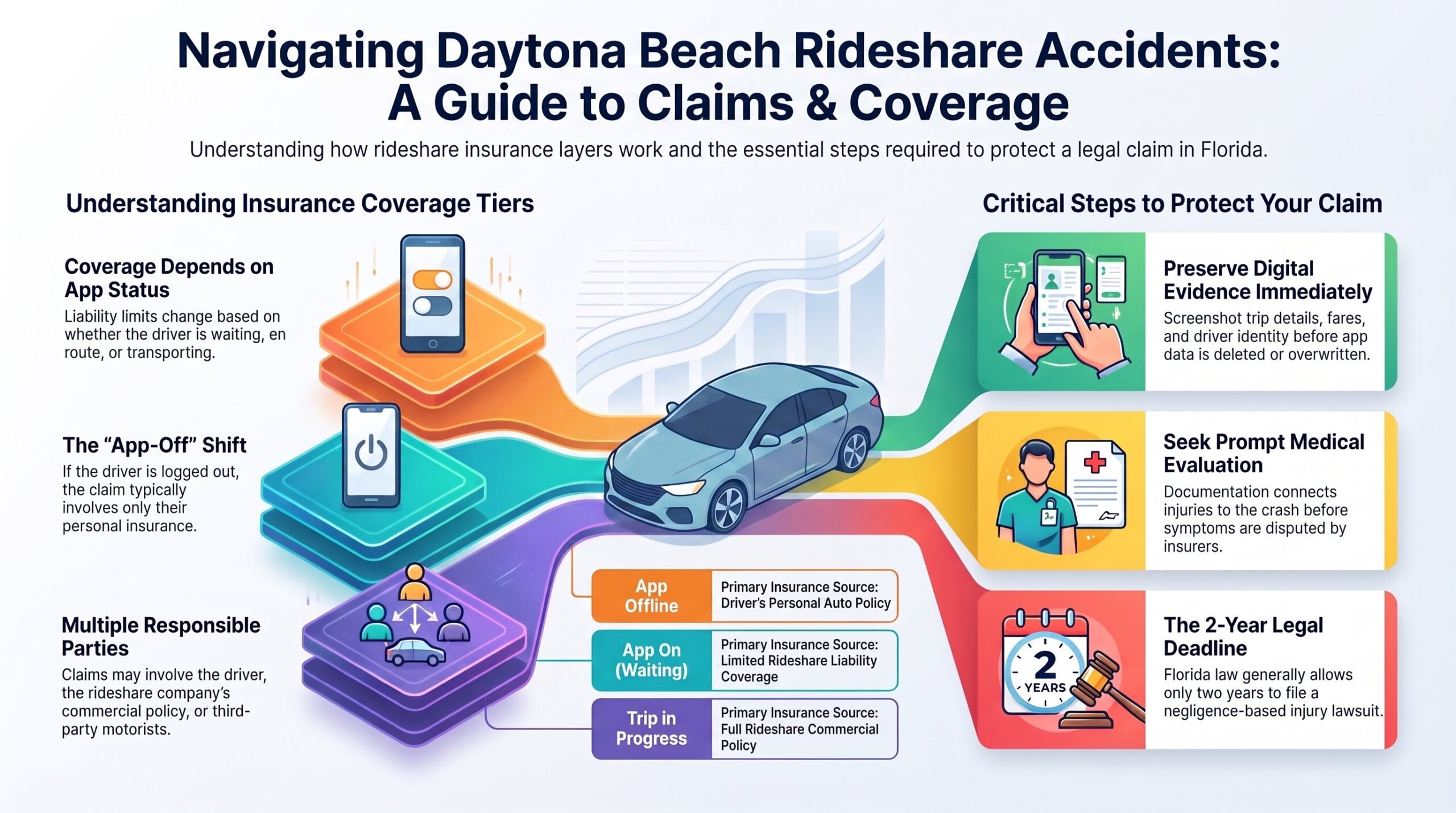
These cases often depend on the driver’s app status, trip phase, and competing policies from the driver, rideshare company, or other motorists.
Legal support may include evidence collection, deadline monitoring, adjuster communication, and damages evaluation.
For related collision claims, a Daytona Beach Car Accident Lawyer can also explain key claim issues, common causes, and practical next steps.
Main Takeaways
- A Daytona Beach rideshare accident lawyer can preserve evidence, request app data, and identify witnesses after a collision.
- Liability often depends on whether the driver was waiting, en route, or transporting a passenger.
- Multiple insurers may be involved, including driver coverage, rideshare commercial policies, and other responsible-party insurers.
- Prompt medical care, police reporting, and accident documentation help protect injury claims and prove damages.
- Florida comparative negligence rules can reduce recovery, making accurate fault analysis and organized evidence essential.


How We Can Help With Your Daytona Beach Rideshare Accident Injury Claim
After a rideshare collision, an injured passenger, driver, pedestrian, or occupant of another vehicle may face a claims process involving multiple insurers, disputed coverage, and questions about the rideshare driver’s app status at the time of the crash. Legal assistance can provide disciplined guidance, allowing the injured person to focus on recovery, family responsibilities, and continued service to others. A lawyer may coordinate evidence preservation, request app data, review police findings, secure witness information, and evaluate insurance documentation from available coverage sources.
If there is no prior medical history related to the injury, counsel can help present treatment records clearly and address insurer attempts to minimize harm. The firm may also communicate with adjusters, calculate losses, monitor filing deadlines, and develop a settlement strategy based on documented injuries, income disruption, and future needs. This support helps protect the claim while promoting an orderly, respectful path toward fair compensation and accountability.
OUR CONSULTATIONSARE FREE
START YOUR FREE CASE REVIEW

Understanding Daytona Beach Rideshare Accident Injury Cases
When a rideshare accident occurs in Daytona Beach, the injury claim often depends on facts that are unique to app-based transportation. These cases may involve the injured passenger, the rideshare driver, another motorist, an insurer, and the transportation network company. Careful review of the driver’s app status, available insurance coverage, medical documentation, and reported losses helps define the claim’s direction.
Understanding liability basics is essential because coverage may change depending on whether the driver was waiting for a ride request, traveling to a pickup, or transporting a passenger. A well-prepared claim also considers the full impact on the injured person’s health, work, daily responsibilities, and ability to care for others.
An effective settlement strategy is built on organized evidence, accurate damages calculations, and timely communication with insurers. This structured approach helps protect the injured person’s rights while promoting accountability and responsible resolution after a rideshare collision.
Common Causes of Daytona Beach Rideshare Accident
Rideshare accidents in Daytona Beach often arise from driver inattention, app-related distractions, and the pressure to accept or complete trips quickly. Unsafe pickup and drop-off locations may also increase the risk of collisions, especially near busy streets, hotels, event venues, and nightlife areas. Driver fatigue remains another significant factor, as extended hours behind the wheel can reduce reaction time, judgment, and overall roadway awareness.
Distracted Rideshare Drivers
On Daytona Beach roads, distracted rideshare drivers pose serious crash risks because they often rely on their phones, navigation systems, and app notifications while transporting passengers. Even brief inattention may prevent a driver from noticing slowed traffic, pedestrians, bicyclists, or changing signals. These lapses can be especially dangerous in beach corridors, hotel zones, and nightlife areas where travelers and residents share crowded streets.
Responsible transportation requires steady focus, sound judgment, and respect for Passenger Safety. Rideshare companies may promote Cell Phone Policies, but drivers must still make careful choices behind the wheel. When distraction contributes to a collision, injured passengers, other motorists, or pedestrians may need help identifying how the driver’s conduct affected the crash and who may be accountable under Florida law.
App-Related Driver Distractions
Beyond general phone use, app-related distractions present a specific danger in Daytona Beach rideshare accidents because drivers may interact with the platform throughout a trip. A driver may accept ride requests, review passenger messages, adjust routes, or monitor earnings while still responsible for safely transporting others. These actions can divert attention from traffic conditions, pedestrians, bicyclists, and nearby vehicles.
Texting while driving through a rideshare app or responding to platform alerts may create the same risks as ordinary messaging. GPS navigation errors can also contribute when a driver studies the screen, makes sudden lane changes, or reacts late to traffic signals. For passengers and the public, careful attention by rideshare drivers is crucial to protect people who depend on safe, responsible transportation services daily.
Unsafe Pickup Locations
When pickup locations are poorly chosen, Daytona Beach rideshare accidents may occur before a passenger even enters the vehicle. Crowded beach entrances, hotel driveways, nightlife districts, and event areas can create confusion when vehicles stop, forcing traffic, pedestrians, and cyclists to compete for space. Marking unsafe pickup zones may help drivers and passengers avoid sudden stops, blocked lanes, or unsafe crossings.
A driver waiting in a travel lane may pressure others to swerve, brake sharply, or pass without adequate visibility. Ride detours can also lead to unfamiliar curbside stops, increasing the risk of conflict with buses, delivery vehicles, or emergency access routes. Careful location selection supports public safety, protects vulnerable pedestrians, and helps rideshare services operate responsibly within busy Daytona Beach corridors and tourist areas.
Driver Fatigue Risks
Unsafe pickup areas can increase immediate traffic hazards, but driver fatigue may create risks throughout the entire rideshare trip. In Daytona Beach, long shifts, high passenger demand, and Nighttime Driving can reduce alertness, especially when drivers continue working after other employment or limited rest. Sleep Deprivation may impair judgment, lane control, and speed management, making safe service more difficult.
Fatigue-induced crashes often involve delayed braking, drifting, or failure to notice pedestrians, cyclists, and vehicles near hotels, beach access points, or entertainment districts. Reaction Time Errors can be especially harmful when traffic changes quickly or passengers require careful drop-offs. A rideshare accident lawyer may review app activity, trip timing, driver history, and available records to determine whether fatigue contributed to a crash and related injuries.


Legal Rights of Daytona Beach Rideshare Accident Injury Victims
After a rideshare collision in Daytona Beach, injured passengers, motorists, pedestrians, and cyclists may have important legal rights under Florida law. These rights may include pursuing compensation for medical care, lost income, reduced earning capacity, pain and suffering, and other documented losses. A rideshare injury claim may involve the driver’s coverage, the rideshare company’s commercial policy, or another responsible party’s insurer.
Victims and their advocates should address crucial matters promptly:
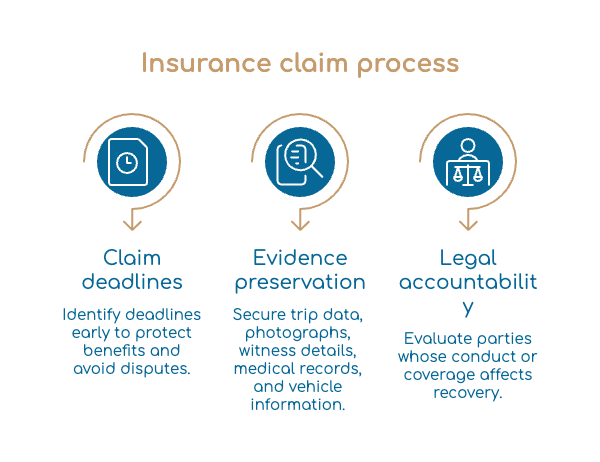
- Insurance claim deadlines must be identified early to protect access to available benefits and avoid preventable disputes.
- Evidence preservation may include securing trip data, photographs, witness details, medical records, and vehicle information.
- Legal accountability may require evaluating all parties whose conduct or coverage affects recovery.
A careful legal review can help injured individuals and those assisting them understand available options while promoting fair treatment, financial stability, and responsible community care after a serious rideshare accident.
Why Do Daytona Beach Rideshare Accident Injuries Happen?
Why do rideshare crashes in Daytona Beach so often lead to serious injuries? Many collisions occur because rideshare vehicles operate in demanding conditions, including beach traffic, late-night pickups, tourist confusion, and frequent stops near hotels, bars, airports, and event venues. Drivers may be distracted by navigation prompts, passenger requests, or Rideshare billing details, reducing attention during important moments.
Injury risks also increase when passengers rely on platforms that create trust issues in apps, especially when safety assumptions exceed the actual protections. Concerns involving driver background checks may arise when a driver’s record, training, or conduct becomes relevant after a crash. Severe injuries can result from speeding, unsafe lane changes, fatigue, impaired motorists, or poorly maintained vehicles.
Insurance timelines may further complicate accountability, since coverage often depends on the driver’s app status. For those committed to helping injured people, understanding these causes supports careful evaluation, responsible advocacy, and informed community protection.
What Should You Do After a Daytona Beach Rideshare Accident Injury?
After a Daytona Beach rideshare accident injury, the injured person should take prompt steps to protect health, safety, and any potential legal claim. Immediate medical care, a timely accident report, and careful preservation of central evidence can greatly affect the outcome of the case. These actions help establish the facts, document injuries, and support accountability for the parties involved.
Seek Immediate Medical Care
Medical documentation often becomes a vital foundation in a Daytona Beach rideshare accident injury claim. Prompt evaluation protects the injured person’s health and creates a clear record of symptoms, diagnosis, and treatment needs. Even when pain seems minor, conditions such as concussion, internal injury, or soft tissue damage may worsen without timely care. Medical providers can recommend Aftercare, expert referrals, therapy, and work restrictions that support healing and service to family, coworkers, and community.
Immediate treatment also supports evidence preservation, because records connect injuries to the crash before memories fade or symptoms are disputed. These records may guide compensation planning by identifying medical costs, future treatment needs, and lost income. They also strengthen insurance negotiation by providing objective proof of injury severity and healing needs.
Report The Accident
When a rideshare collision occurs, the accident should be reported promptly to law enforcement, the rideshare company, and any involved insurance carriers. A timely report helps create an official record and supports an orderly response for injured passengers, drivers, and others affected. The responding officer may document basic facts, identify parties, and note reported injuries.
The rideshare platform should also receive notice through its required reporting process, since coverage issues may depend on the driver’s app status. Insurance carriers should be informed accurately, without speculation or unnecessary admissions. If available, Witness Statements may be referenced in the report to clarify what occurred. Careful reporting can reduce confusion, promote accountability, and assist later Settlement Negotiations by establishing that responsible steps were taken immediately after the crash.
Preserve Key Evidence
At the scene and in the hours that follow, preserving evidence can be essential to proving how a Daytona Beach rideshare accident occurred and who may be responsible. Injured passengers, drivers, or pedestrians should photograph vehicle positions, roadway conditions, visible injuries, debris, traffic signals, and rideshare app details when it is safe to do so. Screenshots showing the trip, driver identity, pickup point, route, and fare may help confirm the service was active.
Witness statements should be gathered promptly, including names and contact information, because memories can fade quickly. Medical records, police reports, repair estimates, and communications with insurers should also be saved. Careful documentation supports fair review, protects vulnerable parties, and helps meet insurance timelines that may affect the availability of coverage through the rideshare company, the driver, or another responsible party.
Critical Evidence in a Daytona Beach Rideshare Accident Injury Case
Critical evidence can determine how liability is assessed after a Daytona Beach rideshare accident, particularly when multiple parties and insurance policies may be involved. Critical materials often include: 1. rideshare app data, 2. driver trip records, and 3. crash scene evidence, each of which may help establish timing, location, driver status, and fault. Medical injury documentation also plays a central role, because it connects the collision to the claimant’s injuries and supports the value of the injury claim.
Rideshare App Data
Rideshare app data can provide a precise record of what occurred before, during, and after a Daytona Beach rideshare accident. This information may include location signals, timestamps, communications, route activity, and crash notification alerts generated through the platform. Privacy settings and app permissions can affect what data is collected, stored, or accessible after a collision, making early preservation important for injured passengers, drivers, and others involved.
Attorneys may evaluate whether the app captured movement patterns, sudden stops, or service status near the time of impact. Data retention policies determine how long this evidence remains available before it is deleted or overwritten. When properly requested and preserved, rideshare app data can support a fair investigation and help responsible parties hold injured individuals accountable.
Driver Trip Records
When a rideshare collision occurs, driver trip records can help establish the driver’s status, route, timing, and activity on the platform at the time of impact. These records may show whether the driver was waiting for a request, traveling to pick up a passenger, or completing an active trip. In injury cases, this information can assist those seeking accountability, fair treatment, and responsible care for harmed individuals.
Trip records may also clarify gaps between the driver’s recollection and platform data, especially when compared with post-accident witness statements. Attorneys may request these records promptly because access can become difficult if delays occur. They may also coordinate the preservation of dashcam footage when trip details suggest relevant in-vehicle recording. Careful review supports a clear, service-focused pursuit of justice.
Crash Scene Evidence
After a rideshare collision, crash scene evidence can provide an immediate record of how the incident occurred before vehicles are moved, debris is cleared, or roadway conditions change. For injured passengers, drivers, or pedestrians, careful preservation of this evidence may support a clear account of fault and help protect those seeking fair treatment. Scene photo documentation should capture vehicle positions, impact points, skid marks, traffic signals, lane markings, weather conditions, and visible hazards.
Collecting witness statements is also important because neutral observers may describe speed, distraction, right-of-way, or unsafe actions. Police reports, rideshare app data, and nearby surveillance footage may further strengthen the record. Prompt action allows legal advocates to serve injured individuals with accurate facts, organized proof, and a stronger foundation for accountability.
Medical Injury Documentation
Medical injury documentation can be key in a Daytona Beach rideshare accident case because it connects the collision to the physical harm a person suffered. Emergency records, diagnostic images, treatment notes, prescriptions, and rehabilitation plans help show the nature and progression of injuries. Consistent care also supports credibility, especially when insurers question whether pain or limitations came from the crash.
Providers, attorneys, and caregivers may serve the injured person best by encouraging accurate reporting, timely follow-up, and organized recordkeeping. Witness statement preservation can further support the medical timeline when observers describe pain, confusion, or visible injury after impact. Future symptom tracking is also important, since delayed headaches, mobility problems, or emotional distress may reveal developing conditions that affect treatment needs, wage loss, and fair compensation.
Long-Term Effects of Daytona Beach Rideshare Accident Injuries
Rideshare accident injuries in Daytona Beach may produce lasting consequences that extend well beyond initial treatment. Chronic pain complications, emotional trauma effects, and reduced physical function can interfere with employment, daily activities, and overall quality of life. Future medical needs, including rehabilitation, expert care, and ongoing medication, often become central issues when evaluating the full value of an injury claim.
Chronic Pain Complications
When injuries from a Daytona Beach rideshare accident do not recover as expected, chronic pain may become a lasting complication that affects mobility, work capacity, sleep, and overall quality of life. Persistent neck, back, joint, or nerve pain can require ongoing medical care, physical therapy, medication, and assistive support. These needs may place significant burdens on injured passengers, drivers, and the people who help care for them.
Documentation becomes necessary, including treatment records, diagnostic findings, work restrictions, and daily limitations. Insurance coverage disputes may arise when insurers challenge whether pain is accident-related, permanent, or medically necessary to treat. App data privacy may also affect access to ride details, timing, and driver status. Careful evidence review helps ensure that long-term pain consequences are evaluated fairly and accurately.
Emotional Trauma Effects
Physical pain is not the only long-term consequence that may follow a Daytona Beach rideshare accident, as emotional trauma can continue long after visible injuries begin to recover. Survivors may experience PTSD symptoms, including intrusive memories, disturbed sleep, irritability, and heightened alertness in traffic or crowded areas. Anxiety triggers may arise when entering another rideshare vehicle, hearing sudden braking, or passing the crash location.
These reactions can affect work, caregiving, community involvement, and the ability to serve others with patience and steadiness. Family members, coworkers, and support networks may notice withdrawal, mood changes, or avoidance of normal routines. When emotional harm is connected to the collision, it may be an important factor in evaluating the accident’s overall impact on daily life, relationships, and personal stability.
Future Medical Needs
Although some injuries appear stable after initial treatment, future medical needs may remain a significant concern after a Daytona Beach rideshare accident. Ongoing care may include follow-up imaging, professional visits, medication management, physical therapy, injections, or corrective procedures. For those supporting injured individuals, careful documentation helps preserve access to appropriate treatment and financial recovery. Rehab cost forecasting can clarify the likely expenses for therapy, adaptive equipment, transportation assistance, and home modifications.
A long-term plan may also address chronic pain, reduced mobility, and the need for vocational retraining. The impact of lost income may extend beyond missed shifts when injuries limit earning capacity or prevent advancement. Evaluating these needs early allows claims professionals, medical providers, and legal advocates to pursue compensation that reflects both present harm and future responsibility.
Proving Liability in Daytona Beach Rideshare Accident Injury Cases
Because rideshare accidents often involve multiple parties and layered insurance policies, proving liability requires a careful review of the facts surrounding the crash. The Liability burden generally rests on the injured person, who must show that a driver, rideshare company, vehicle owner, or another party acted negligently and caused harm. In Daytona Beach, this review may include police reports, app data, vehicle positions, traffic laws, and the driver’s status in the rideshare platform.
Strong evidence helps clarify responsibility and supports a fair evaluation of fault. Video evidence from dash cameras, nearby businesses, or traffic systems may show how the collision occurred. Witness testimony can confirm speed, signals, distractions, or unsafe actions. Florida’s comparative negligence rules may reduce recovery if the injured person shares fault, making accurate fact development critical. A careful liability analysis serves injured people by identifying responsible parties and preserving the truth of what occurred after the crash.
Dealing With Insurance Companies After a Daytona Beach Rideshare Accident Injury
After a Daytona Beach rideshare accident, insurance communications can quickly become complicated due to competing policies, coverage limits, and questions about the driver’s app status. Injured passengers, pedestrians, or occupants may be contacted by rideshare insurers, personal auto carriers, or third-party adjusters seeking statements, medical details, or early settlement discussions. Careful communication helps protect the injured person’s interests while preserving truthful, organized information for later evaluation.
Insurance representatives often assess responsibility, treatment history, vehicle damage, and available coverage before making meaningful offers. Settlement negotiation timelines may depend on medical stabilization, documentation quality, and whether multiple insurers dispute payment obligations. Those assisting an injured person should prioritize service by maintaining accurate records, including documenting accident witnesses, saving correspondence, preserving photographs, and tracking medical expenses.
Statements should remain factual and limited. A lawyer may manage insurer contact, reduce pressure, and help ensure that vulnerable claimants are not disadvantaged by incomplete information or premature offers.
What to Expect During a Daytona Beach Rideshare Accident Injury Claim Process
A Daytona Beach rideshare accident injury claim typically begins with reporting the crash, then identifying which insurance policy may apply based on the driver’s status at the time. The process also requires gathering medical records, accident documentation, witness statements, and other evidence supporting the claimed injuries and losses. Once liability, coverage, and damages are assessed, settlement negotiations may begin with the appropriate insurer or responsible party.
Reporting The Accident
Reporting a rideshare accident promptly is a crucial first step in protecting an injury claim, as delays can create disputes about how the crash occurred, who was involved, and whether the injuries were connected to the collision. After ensuring emergency needs are addressed, the crash should be reported to local law enforcement, the rideshare platform, and any involved drivers as appropriate.
A police report can create an objective record that later supports the claim. Witness statements, damage photographs, trip details, and medical observations should be preserved because they may help clarify the sequence of events. Those assisting an injured person should encourage accuracy, calm communication, and complete documentation. Timely reporting also helps prevent omissions, fading memories, or avoidable challenges during the injury claim process.
Determining Insurance Coverage
Because rideshare crashes may involve several insurance policies, determining coverage is often one of the most important early steps in a Daytona Beach rideshare accident injury claim. The applicable coverage may depend on whether the driver was logged into the app, waiting for a request, traveling to a passenger, or completing a ride. A careful Policy limits analysis can clarify which policy applies, how much coverage may be available, and whether overlapping benefits exist.
This review may include the rideshare company’s commercial policy, the driver’s personal auto policy, and any third-party coverage tied to another negligent motorist. Accurate coverage identification helps protect the injured person’s claim, supports fair negotiations, and allows those assisting the claimant to serve with diligence, order, and responsible attention to available resources.
Gathering Injury Evidence
After coverage is identified, the injury evidence becomes central to proving the extent of harm caused by the rideshare crash. Medical records, diagnostic results, treatment plans, and physician notes help show how the collision affected the injured person’s health, mobility, and daily responsibilities. Photographs of injuries, vehicle damage, road conditions, and visible hazards may also support the claim when gathered promptly.
Witness statements can clarify how the crash occurred and describe the injured person’s condition immediately afterward. Data preservation is also important, including rideshare app records, trip details, driver communications, GPS information, and vehicle event data when available. Careful documentation allows advocates, insurers, and legal representatives to understand the full impact of the injury, while honoring the practical needs of those assisting the injured person.
Negotiating Your Settlement
Once the injury evidence and coverage issues are organized, settlement negotiations typically focus on the value of the claim and the legal responsibility of each involved party. Insurers may review liability, damages, an admission of fault, recorded statements, medical records, proof of wage loss, and any rideshare policy limits. A lawyer can present the demand in a disciplined manner, responding to low offers with documented support and ensuring the injured person is protected from unfair pressure.
Negotiations also should account for medical liens, future treatment needs, and the final settlement structure. This review helps ensure that funds are distributed responsibly, including payment of valid obligations and preservation of needed recovery resources. When negotiations are handled with care, the process can support the injured person while honoring broader duties to family, caregivers, and the community.
Compensation for Daytona Beach Rideshare Accident Injury Damages
When a rideshare collision causes injury in Daytona Beach, compensation may be available for both monetary losses and the personal impact of the harm suffered. A claim should reflect the full scope of the injured person’s needs, including treatment requirements, future care concerns, and the disruption caused to daily responsibilities. Medical records often provide the foundation for proving the nature of the injuries, the care received, and the connection between the crash and ongoing limitations.
A careful evaluation may also consider long-term recovery, especially when injuries affect mobility, work capacity, caregiving duties, or independence. Families and community members who provide emotional support may help document how the injury has changed routines and relationships. The settlement timeline can depend on medical progress, insurance review, liability disputes, and the need to understand future consequences before resolution. Thorough documentation helps ensure the claim serves the injured person’s stability and dignity.
Economic vs Non-Economic Damages in Daytona Beach Rideshare Accident Cases
In Daytona Beach rideshare accident cases, damages are generally divided into economic losses, such as medical expenses and lost income, and non-economic losses, such as pain, suffering, and emotional distress. Each category requires careful documentation, because insurers and opposing parties often scrutinize both the amount claimed and the connection to the accident. Proving damages may involve medical records, wage statements, expert opinions, and other evidence that shows the full impact of the injury.
Economic Damages Explained
Economic damages in a Daytona Beach rideshare accident case are the measurable financial losses resulting from the crash. These losses may include emergency care, hospital bills, rehabilitation, prescription costs, medical equipment, vehicle repair, and transportation expenses. They may also cover lost wages when an injured person cannot work, as well as reduced Future Earnings if injuries limit long-term employment capacity. Accurate records, including invoices, pay statements, medical reports, and repair estimates, help establish the value of these claims.
Comparative Fault may reduce recovery when the injured person shares responsibility for the collision. During Insurance Negotiation, documentation allows advocates to present damages clearly and responsibly. This careful approach supports fair compensation, helping injured individuals restore stability while others provide practical guidance through the legal process.
Non-Economic Losses
Beyond measurable financial costs, non-economic losses address the personal harm a rideshare accident may cause in daily life. These damages may include pain, suffering, inconvenience, loss of enjoyment, disfigurement, and diminished ability to participate in family or community responsibilities. Emotional distress damages may also arise when trauma, anxiety, sleep disruption, or fear of travel affects a person’s well-being after the crash.
In Daytona Beach rideshare cases, these losses recognize that an injury can burden not only the body, but also dignity, independence, and relationships. Although non-economic damages do not carry fixed receipts, they remain an important part of a fair recovery. Punitive damages factors, such as reckless conduct or intentional disregard for safety, may also influence whether additional damages are considered under Florida law.
Proving Your Damages
After a rideshare crash in Daytona Beach, proving damages requires more than showing that an injury occurred. Economic losses may include medical bills, lost income, rehabilitation costs, and property damage, while non-economic losses address pain, emotional distress, and reduced quality of life. Medical proof helps connect injuries to the collision and supports the value of future care.
Video documentation may show the crash, the rider’s condition, or unsafe conduct by a driver. Witness statements can confirm details of impact, visible suffering, and changes in daily functioning. Attorneys often organize these records to present a complete account of harm. This process serves injured passengers and families by ensuring that compensation requests are grounded in evidence, not assumption, and that each loss is clearly documented.
When a Daytona Beach Rideshare Accident Injury Case Goes to Trial vs Settlement
Although many rideshare accident injury claims in Daytona Beach resolve through negotiated settlement, some cases proceed to trial when liability, insurance coverage, or the value of damages remains contested. Settlement may serve injured passengers, drivers, pedestrians, and families by providing more prompt compensation, reduced uncertainty, and privacy. It often depends on clear evidence, complete medical documentation, and realistic evaluation of Florida injury damages.
Trial may become necessary when an insurer disputes fault, minimizes injuries, challenges future medical needs, or disagrees about applicable Insurance coverage options. In that setting, attorneys may present testimony, medical records, accident reconstruction, and economic evidence before a judge or jury. Trial can offer accountability, especially when a fair resolution is refused, but it also involves time, expense, and risk.
A careful case assessment helps determine whether settlement or trial best supports the injured person’s recovery, dignity, and long-term stability after a rideshare collision.
Florida Laws That May Affect Your Daytona Beach Rideshare Accident Case
Whether a rideshare accident case is resolved through settlement or proceeds to trial, Florida law governs nearly every stage of the claim. These rules help determine fault, insurance responsibility, and the value of losses suffered by injured passengers, drivers, pedestrians, or cyclists.
Key legal issues may include:
- Comparative Negligence, which can reduce compensation when an injured person shares responsibility for the crash.
- Rideshare insurance requirements may depend on whether the driver was signed in to the app, waiting for a request, or transporting a passenger.
- Evidence Preservation, including prompt steps to secure app data, vehicle records, witness statements, photos, and medical documentation.
Florida’s no-fault insurance system may also affect early medical benefits, while serious injuries can support claims against at-fault parties. A careful legal review helps ensure that those seeking accountability can protect their rights, support recovery, and promote safer transportation practices throughout the Daytona Beach community.
The Statute of Limitations for Daytona Beach Rideshare Accident Injury Cases
Because strict filing deadlines apply to injury claims in Florida, the statute of limitations is a crucial issue in Daytona Beach rideshare accident cases. For most negligence-based injury claims arising from crashes, Florida law generally allows two years from the date of the accident to file a lawsuit. Missing this deadline can prevent an injured person from pursuing compensation through the civil court system, even when the harm is serious.
Daytona Beach deadlines may differ when the case involves wrongful death, a government vehicle, or unique insurance issues. For that reason, the injury claim timeline should be reviewed early, especially when medical treatment, evidence collection, and insurance communications are ongoing. Prompt attention helps preserve records, witness information, and documentation needed to support a valid claim. Those who serve injured community members should understand that timely action is not merely procedural; it protects access to accountability, financial recovery, and lawful resolution after a rideshare-related collision.
How a Daytona Beach Rideshare Accident Lawyer Can Help You
After a rideshare collision, a Daytona Beach rideshare accident lawyer can help by identifying the liable parties, evaluating available insurance coverage, and managing the legal steps needed to pursue compensation. This support allows injured people and their families to focus on recovery, caregiving, and community responsibilities while their claims are handled with care.
A Daytona Beach rideshare accident lawyer helps injured people pursue compensation while they focus on recovery.
Key assistance may include:
- Evidence preservation, including app data, crash reports, vehicle damage records, medical documentation, and photographs that may clarify fault.
- Gathering witness statements from passengers, drivers, pedestrians, and first responders to strengthen the factual record.
- Developing a settlement strategy that accounts for medical bills, lost income, pain, reduced mobility, and future medical expenses.
A lawyer may also communicate with insurers, respond to disputed claims, and organize documentation for negotiation or litigation. Through structured advocacy, the lawyer helps ensure the injured person’s needs are presented clearly and responsibly.
When to Contact a Daytona Beach Rideshare Accident Lawyer
When injuries, disputed fault, or insurance questions arise from a rideshare crash, legal guidance should be sought as soon as reasonably possible. Early contact supports Evidence Preservation by enabling the collection of driver records, app data, witness statements, photographs, and medical documentation that may otherwise be difficult to secure. Prompt review is also important when multiple insurers may be involved, such as the rideshare company’s carrier, the driver’s personal insurer, or another motorist’s provider.
A lawyer may be contacted after medical treatment begins, when adjusters request recorded statements, or when an offer appears incomplete. Legal assistance is also appropriate if a claim is delayed, undervalued, or Wrongfully Denied. In those circumstances, a Claim Appeal may require organized documentation and a clear response to the insurer’s stated reasons. Before Settlement Negotiation progresses, injured individuals and their families can benefit from understanding the available coverage, the claimed losses, and the deadlines that may affect recovery.
Why You Need an Experienced Daytona Beach Rideshare Accident Lawyer
Rideshare accident claims often involve layered insurance coverage, disputed driver status, and evidence controlled by companies or third parties, making experienced legal representation especially important. An attorney familiar with these cases can identify which policies may apply, whether the driver was logged into the app, and how available coverage may change based on trip activity.
Experience also matters because Insurance claim deadlines can affect the ability to recover compensation. A lawyer can monitor required notices, filing dates, and insurer communications while the injured person focuses on medical care and family responsibilities. This support helps protect those who depend on the victim’s health, income, and stability.
Evidence preservation is equally vital. App data, trip records, surveillance footage, vehicle information, and witness statements may disappear without prompt action. An experienced Daytona Beach rideshare accident lawyer can efficiently pursue these materials, helping to ensure that liability is evaluated with accuracy, fairness, and careful attention to community safety.
How to Choose the Right Daytona Beach Rideshare Accident Lawyer for Your Case
Selecting the right attorney begins with evaluating whether the lawyer has direct experience handling rideshare injury claims in Daytona Beach and the surrounding courts. A qualified attorney should understand insurance issues involving app-based drivers, commercial coverage, and injured passengers, while remaining attentive to the client’s need for steady guidance.
Strong Client communication is crucial. The lawyer should explain deadlines, case progress, and available options in clear terms, so the injured person can make informed decisions. Careful review of evidence is also important, including police reports, medical records, witness statements, driver data, and rideshare app information.
The attorney should be prepared to develop a focused legal strategy based on liability, damages, and available insurance coverage. Effective settlement negotiation is another important factor, since many cases resolve before trial. A lawyer who combines preparation, compassion, and disciplined advocacy can help protect the client’s interests while pursuing fair compensation.
About The Law Offices of Anidjar & Levine
The Law Offices of Anidjar & Levine represents injured clients in Daytona Beach rideshare accident cases with a focus on careful case preparation, responsive communication, and informed legal guidance.
The firm assists passengers, drivers, pedestrians, and families affected by Uber or Lyft collisions, addressing insurance disputes, liability questions, and available compensation.
Its attorneys evaluate each matter by reviewing crash reports, medical records, witness accounts, rideshare data, and policy limits.
When cases involve catastrophic injuries or Wrongful Death, the firm works to document the full impact on the injured person or surviving family members.
This approach supports claims for medical expenses, lost income, pain and suffering, and other legally recognized damages.
The firm also explains Eligibility Requirements for pursuing a rideshare accident claim, including deadlines, fault issues, and insurance coverage concerns.
Through organized advocacy and client-centered service, it helps injured people seek accountability while protecting their legal rights.
Frequently Asked Questions
Can Tourists File Rideshare Accident Claims in Daytona Beach?
Yes, tourists may file rideshare accident claims in Daytona Beach when another party’s negligence caused injury. Eligibility for visitors generally depends on documentation, insurance coverage, evidence of liability, and timely medical care. Florida statute limits can affect deadlines and available recovery, so prompt action is important. A visitor’s home state or country usually does not prevent a claim, and careful guidance helps protect rights while supporting fair service to injured travelers.
What if the Rideshare Driver Was off Duty?
If the rideshare driver was off duty, coverage may shift from company insurance to the driver’s personal policy. Off-duty liability depends on whether the app was active, a passenger was being served, or the driver was available for requests. Injured tourists or helpers assisting victims should preserve evidence, obtain police reports, and review legal options in Daytona. A qualified attorney can identify responsible insurers and protect service-minded claimants.
Are Rideshare Accident Claims Different During Bike Week?
Yes, rideshare accident claims can differ during Bike Week because Bike Week traffic increases congestion and road hazards, and liability disputes arise. Claims may involve unfamiliar visitors, motorcycles, pedestrians, and multiple insurers. A careful helper should promptly document locations, app status, photos, witnesses, and police reports. Vacation claim tips include preserving travel records, seeking medical care without delay, and maintaining communication with insurers, so injured parties can protect rights while focusing on recovery.
Can I Sue Uber or Lyft Directly?
Yes, a person may sue Uber or Lyft directly in limited circumstances, but the company is not always the primary Direct defendant. Claims often depend on whether the driver was logged in, awaiting a ride, or transporting a passenger. Liability options may include the driver, rideshare insurance, or the company itself. Careful review serves injured parties by identifying responsible coverage sources and preserving claims within applicable legal deadlines.
Do Rideshare Accidents Affect Future Insurance Rates?
Yes, rideshare accidents can impact insurance rates, depending on fault, claim history, policy type, and insurer practices. If a driver is found responsible, premium increases may follow, especially when bodily injury or significant property damage occurred. Passengers usually face no rate change unless they filed through their own coverage. Those serving injured people should encourage careful documentation, prompt reporting, and professional review before statements affect coverage decisions or future costs.
—————————
A Daytona Beach rideshare accident claim can involve complicated insurance issues, disputed liability, and significant injury-related losses.
Legal guidance may help victims protect their rights, document damages, and pursue appropriate compensation from responsible parties.
The Law Offices of Anidjar and Levine provides focused representation for injured claimants, handling negotiations and case preparation with diligence.
A Daytona Beach Car Accident Lawyer can help those affected by a rideshare collision preserve evidence, meet deadlines, and make informed decisions.