The Law Offices of Anidjar and Levine helps injured victims pursue compensation after neck injuries by proving fault, documenting injuries, and handling communications with insurers.
These claims often involve whiplash, disc injuries, nerve symptoms, reduced mobility, lost income, and ongoing medical care.
Legal support may include gathering crash reports, medical records, witness statements, proof of wages, and evidence of daily limitations.
A Daytona Beach Car Accident Lawyer can also evaluate liability, deadlines, and settlement offers, with more guidance available below on key claim issues.
Main Takeaways
- A Daytona Beach car accident neck lawyer can evaluate your claim and identify liable parties after a crash.
- Compensation may include medical care, lost income, reduced earning ability, rehabilitation, and pain-related daily limitations.
- Key evidence includes crash reports, medical records, witness statements, photos of vehicle damage, and proof of missed work.
- Neck injuries can include whiplash, cervical strain, disc injuries, nerve compression, and trauma from rear-end or high-speed crashes.
- Prompt medical care and organized documentation help link your neck injury to the accident and support insurance negotiations.


How We Can Help With Your Daytona Beach Car Accident Neck Injury Claim
After a car accident causes a neck injury, a Daytona Beach lawyer can help evaluate the claim, identify liable parties, and pursue compensation for medical care, lost income, and other damages. Legal guidance may begin by gathering records, reviewing crash reports, preserving evidence, and coordinating documentation demonstrating how the injury affects daily responsibilities, employment, and family support.
Counsel may also assess Insurance coverage limits, available policy benefits, and possible sources of recovery, including at-fault drivers or other responsible entities. This review can help injured individuals make informed decisions while protecting their ability to care for themselves and those who depend on them.
A focused settlement negotiation strategy may involve presenting medical opinions, wage documentation, and evidence of ongoing limitations in a clear demand package. If insurers undervalue the claim or delay resolution, legal representation can support firm advocacy, careful communication, and, when necessary, preparation for litigation to seek a fair result.
OUR CONSULTATIONSARE FREE
START YOUR FREE CASE REVIEW

Understanding Daytona Beach Car Accident Neck Injury Cases
Understanding how these claims develop helps place legal support in proper context, especially when a neck injury involves pain, reduced mobility, diagnostic testing, and ongoing treatment. In Daytona Beach, these cases often require careful review of medical records, physicians’ opinions, wage-loss documentation, and the injured person’s daily limitations. A neck injury may appear manageable at first, yet later reveal nerve involvement, disc damage, or chronic impairment that affects work, caregiving, and community responsibilities.
Legal evaluation also considers available coverage, liability evidence, and insurance policy exclusions that may limit recovery if not addressed promptly. When injuries prove severe, the claim may include future care needs, diminished earning capacity, and lasting physical restrictions. In the most tragic circumstances, Wrongful death eligibility may become relevant for surviving family members seeking accountability. A structured legal approach helps ensure that each consequence is documented, valued, and presented with the dignity the injured person’s service-oriented life is due.
Common Causes of Daytona Beach Car Accident Neck
Neck injuries after Daytona Beach car accidents often result from forces that strain, twist, or sharply move the cervical spine. Common causes include rear-end collisions, distracted driving, high-speed crashes, and drunk driving accidents, each presenting distinct risks for serious trauma. Understanding these causes helps clarify how liability may arise and why prompt medical and legal evaluation can be important.
Rear-End Collisions
When a rear-end collision occurs, the force can drive a vehicle occupant’s head and neck into rapid back-and-forth motion, straining muscles, ligaments, discs, and joints. These injuries may appear immediately, or develop over hours as inflammation increases. A Daytona Beach car accident neck lawyer may evaluate crash reports, treatment records, photographs, and witness accounts to determine how the impact caused or worsened neck trauma.
Medical documentation is critical because it connects symptoms to the collision and helps counter insurance tactics that minimize pain, treatment needs, or recovery time. Prompt evidence preservation, including vehicle damage records and roadway information, can support liability and damages. During settlement negotiations, organized proof allows injured individuals to seek fair compensation while focusing on recovery, stability, and service to others.
Distracted Driving
On Daytona Beach roads, distracted driving can cause sudden impacts that place intense stress on the cervical spine. When a driver looks away, reaches for an item, or loses focus during traffic changes, the vehicle may strike another car before the body can brace. Phone distraction causes many preventable crashes, including those involving texting, navigation adjustments, or brief calls that divide attention.
Passenger distractions can also interfere with safe judgment, particularly when conversations, children, or unexpected movement shift the driver’s focus from the roadway. For injured occupants, the resulting neck trauma may require careful documentation, prompt medical evaluation, and attentive support. Legal professionals serving victims examine evidence of distraction, crash reports, and witness statements to help clarify responsibility and promote fair recovery after avoidable harm.
High-Speed Crashes
At higher speeds, a collision can transfer severe force through the body before an occupant has time to react or brace. In Daytona Beach, elevated roadway speeds may turn ordinary impacts into events that strain the neck, damage soft tissue, and worsen spinal injuries. Service-minded responders and advocates recognize that these crashes often leave injured people needing prompt evaluation, careful documentation, and steady support.
Speed can also magnify errors associated with traffic light behavior, including entering an intersection too late or accelerating through changing signals. Driving in the wrong lane poses another danger, especially when a vehicle crosses into opposing traffic or misjudges a merge at speed. In these situations, the neck may snap forward, backward, or sideways with violent motion, creating injuries that require thorough medical and legal review.
Drunk Driving Accidents
Impaired driving can make the dangers of speed even more severe, because alcohol or drugs often reduce judgment, reaction time, and vehicle control. In Daytona Beach, an intoxicated driver may drift between lanes, miss traffic signals, or fail to notice stopped vehicles, creating violent impacts that strain the neck and surrounding soft tissue. These crashes may also overlap with other roadway hazards, including Pothole collisions, when an impaired driver cannot respond safely to uneven pavement
Bicycle accidents can become especially severe when a driver under the influence fails to provide adequate space or recognize a cyclist’s right of way. For those serving injured individuals, careful review of police reports, medical records, and witness statements can help identify impairment, establish responsibility, and support proper recovery efforts.


Legal Rights of Daytona Beach Car Accident Neck Injury Victims
After a collision in Daytona Beach, a victim with a neck injury may have important legal rights under Florida law, including the right to pursue compensation when another party’s negligence caused the crash.
These rights can support recovery from medical care, lost income, reduced earning capacity, and pain that limits daily functioning in family, work, or community.
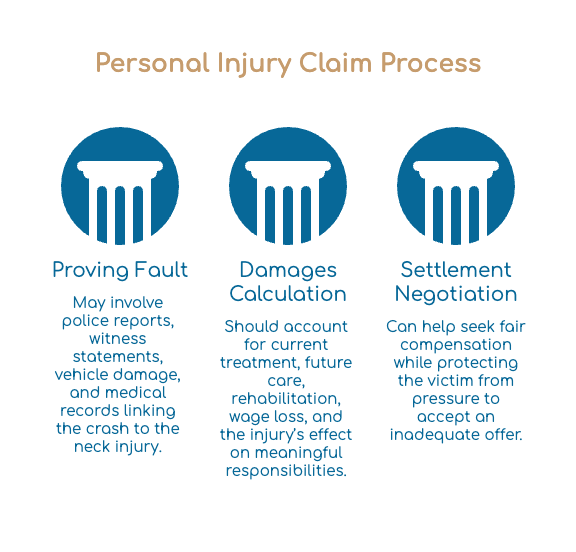
- Proving Fault may involve police reports, witness statements, vehicle damage, and medical records linking the crash to the neck injury.
- The damages calculation should account for current treatment, future care, rehabilitation, wage loss, and the injury’s effect on meaningful responsibilities.
- Settlement Negotiation can help seek fair compensation while protecting the victim from pressure to accept an inadequate offer.
If Medical Negligence worsens a neck injury during diagnosis or treatment, additional legal issues may arise. A careful review of evidence helps determine available claims, applicable deadlines, and the practical steps needed to protect the injured person’s interests.
Why Do Daytona Beach Car Accident Neck Injuries Happen?
Understanding legal rights also requires examining how the injury occurred, because the cause of a Daytona Beach car accident neck injury often shapes liability, medical proof, and the value of a claim. Neck injuries commonly result from sudden force that moves the head beyond its normal range. Rear-end collisions are a frequent cause, yet side impacts, head-on crashes, rollovers, and multi-vehicle accidents may produce similar trauma. Even at lower speeds, the cervical spine can absorb harmful stress.
Contributing causes may include distracted driving, speeding, unsafe lane changes, impaired driving, or failure to yield. Vehicle size, seat position, headrest placement, and prior medical conditions can influence injury severity. Whiplash symptoms may appear when ligaments, muscles, discs, or nerves are strained by rapid acceleration and deceleration. For those committed to helping injured people, these details matter because they connect human harm to responsible conduct and identify compensation factors tied to causation, treatment, impairment, and lasting limitations.
What Should You Do After a Daytona Beach Car Accident Neck Injury?
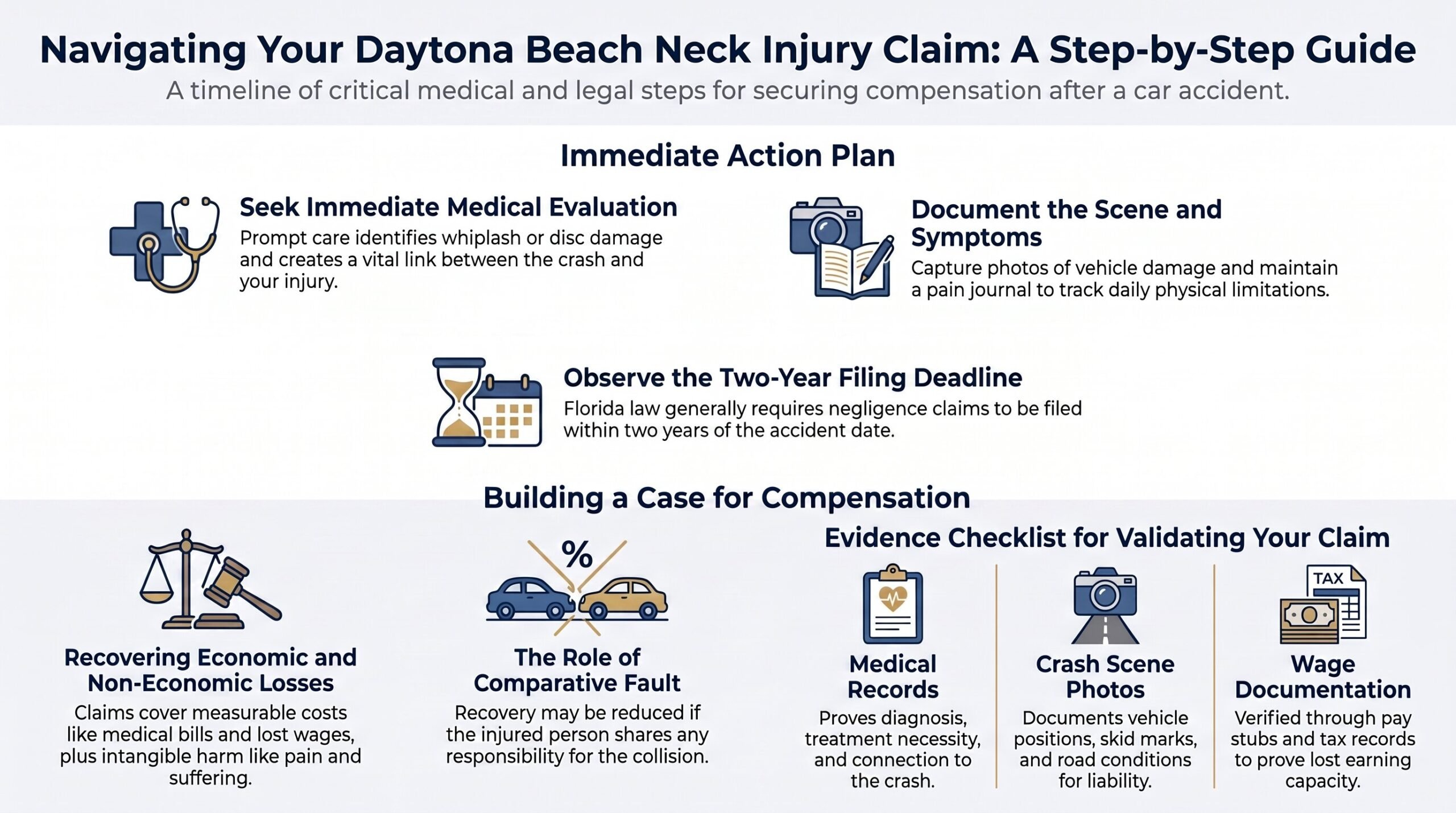
After a Daytona Beach car accident causes a neck injury, the injured person should seek immediate medical care to identify trauma and create a clear treatment record. It is also important to document the accident, including photographs, witness information, and insurance details, because this evidence may support a future claim. A qualified neck lawyer can then assess liability, preserve vital evidence, and guide the injured person through the legal process.
Seek Immediate Medical Care
A person who experiences neck pain, stiffness, numbness, dizziness, or limited range of motion following a Daytona Beach car accident should seek medical care right away. Prompt evaluation helps identify whiplash, disc injury, nerve compression, or other conditions that may worsen if untreated. Delayed symptoms are common after collisions, so even mild discomfort should be assessed by a qualified medical provider.
Early treatment also creates pain documentation that can support future medical decisions and related legal needs. Accurate records may be important when completing Insurance forms, responding to claim deadlines, or explaining the connection between the crash and the injury. For those committed to protecting others, timely care promotes recovery, reduces complications, and helps ensure that responsible parties and insurers receive reliable medical information.
Document The Accident
Medical care addresses the injury, but documentation preserves the facts surrounding the collision and the harm that followed. After a Daytona Beach crash, an injured person should gather photographs of vehicle damage, road conditions, skid marks, traffic signals, visible bruising, and any supportive devices used after treatment.
Names, phone numbers, and statements from witnesses can strengthen Traffic incident documentation and help clarify how the event occurred. A copy of the crash report, insurance exchanges, repair estimates, and medical discharge papers should be kept in one secure file. Daily notes describing pain levels, limited movement, missed work, and difficulty helping family or community members may also support Florida injury proof. Accurate records help responsible decision makers understand the full impact of a neck injury over time.
Contact A Neck Lawyer
For a person dealing with neck pain after a Daytona Beach car accident, contacting a neck lawyer can help protect legal rights before evidence fades or insurance issues become more difficult. Legal counsel may review medical records, crash reports, and witness details, while guiding evidence preservation with careful attention to service, accuracy, and accountability.
A lawyer can also explain Statute deadlines, ensuring that an injured person does not lose the opportunity to pursue compensation through delay. When insurers minimize symptoms, dispute treatment, or ignore valid claims, counsel may evaluate Insurance bad faith and respond through proper legal channels. Early guidance supports a settlement strategy based on documented injuries, future care needs, lost income, and fair accountability. This step helps the injured person move forward with informed direction.
Critical Evidence in a Daytona Beach Car Accident Neck Injury Case
Critical evidence in a Daytona Beach car accident neck injury case helps establish how the collision occurred, the severity of the injury, and the connection between the crash and the claimed harm. Critical forms of evidence may include:
- Crash scene photos and vehicle damage evidence
- Medical treatment records documenting diagnosis, care, and recovery
- Witness statements addressing impact, fault, and immediate symptoms
Crash Scene Photos
At a Daytona Beach crash scene, photographs can preserve evidence that may disappear within hours, including vehicle positions, skid marks, debris fields, road conditions, traffic signals, and visible damage. These images help clarify how forces moved through the vehicles, which may support the connection between the collision and a claimed neck injury. The Impact of evidence often depends on prompt, organized documentation, taken from multiple angles and distances.
Photographs may also show lighting, weather, obstructions, construction zones, or neglected hazards that contributed to the crash. Scene safety, however, remains the top priority, and no one should enter traffic or unstable areas to obtain images. When safely collected, crash scene photos assist attorneys, insurers, and experts in evaluating fault, preserving fairness, and serving injured individuals with accuracy and accountability.
Medical Treatment Records
Crash scene photographs may help explain how a collision occurred, but medical treatment records often show how the crash affected the injured person. In a Daytona Beach neck injury case, these records can link symptoms, diagnoses, and care to the collision with the precision needed. Emergency evaluations, spine imaging, pain assessments, and physician notes may document trauma that is not visible externally.
Chiropractic documentation can also describe restricted motion, muscle spasms, and progress during conservative care. Treatment plan adherence is important because consistent attendance and compliance may support the seriousness of the injury and the injured person’s commitment to recovery. When primary providers send a patient to referral experts, those records may clarify the need for neurology, orthopedics, or pain management. Accurate records help advocates present the person’s needs responsibly.
Witness Statements
After a Daytona Beach collision, witness statements may provide an independent account of how the accident occurred and how the injured person appeared immediately afterward. Such accounts can help clarify the direction of impact, sudden movements, visible pain, confusion, or limited mobility, especially when neck symptoms develop or worsen after the scene. Attorneys may evaluate eyewitness credibility by considering the witness’s location, attention, lighting, distractions, and relationship to those involved.
Careful review also requires consideration of false memory, because stress, time, discussion with others, or assumptions can affect recollection. Promptly gathered statements are often more reliable and may corroborate medical records by linking observed distress to subsequent treatment. For those seeking to serve injured clients well, respectful interviews and accurate documentation preserve vital facts while honoring each person’s experience and dignity.
Vehicle Damage Evidence
Vehicle damage evidence helps explain the force, direction, and mechanics of a collision in Daytona Beach, especially when a neck injury is disputed. Photographs, repair estimates, frame measurements, and airbag data may show whether an impact was consistent with whiplash, disc injury, or aggravated spinal trauma. This evidence can also clarify liability when accounts differ, including claims involving an Uninsured motorist.
A careful review may compare vehicle damage with medical findings, witness statements, and dashcam footage to present a reliable sequence of events. Even low-speed impacts can produce significant neck pain when the occupant’s body moves suddenly. Preserving damaged parts, documenting the scene, and obtaining inspection records can help legal and medical professionals serve injured individuals effectively and with accuracy, fairness, and accountability throughout the claims process.
Long-Term Effects of Daytona Beach Car Accident Neck Injuries
Neck injuries from Daytona Beach car accidents can create long-term consequences, including chronic neck pain, reduced mobility, and persistent physical limitations. These effects may interfere with work, daily activities, and overall quality of life, particularly when symptoms continue after initial treatment. Ongoing medical costs, such as therapy, expert care, and diagnostic testing, often become a central issue in evaluating the full impact of the injury.
Chronic Neck Pain
A car accident in Daytona Beach can leave an injured person with chronic neck pain that persists long after the initial trauma appears to have recovered. This pain may arise from damaged soft tissue, irritated nerves, or spinal strain that was not fully recognized at first. Whiplash symptoms, including stiffness, headaches, and radiating discomfort, may develop gradually and interfere with work, caregiving, and daily responsibilities.
Appropriate treatment options can include medical evaluation, physical therapy, medication, imaging, and follow-up care. Careful documentation helps show how the injury continues to affect the person’s life. Insurance tactics may attempt to minimize ongoing complaints or link pain to prior conditions. A sound settlement strategy considers future medical needs, lost income, and the lasting burden placed on the injured person and family.
Reduced Mobility
After a Daytona Beach collision, reduced mobility can become one of the most limiting long-term effects of a neck injury. Stiffness, nerve irritation, and muscle weakness may restrict turning, lifting, driving, or maintaining posture during routine tasks. These limitations can affect employment, caregiving duties, and participation in community service, especially when dependable physical function is required.
Limited mobility options may also force injured individuals to rely on others for transportation, household responsibilities, or personal assistance. In more serious cases, mobility device support, ergonomic equipment, or modified daily routines may be necessary to preserve independence and safety. A careful legal review can help identify how restricted movement affects a person’s ability to move, support others, and fulfill responsibilities, ensuring these functional losses are clearly documented in a neck injury claim.
Ongoing Medical Costs
When symptoms continue beyond the initial recovery period, ongoing medical costs can become a major long-term consequence of a Daytona Beach car accident neck injury. Follow-up visits, diagnostic imaging, physical therapy, pain management, injections, medication, and possible surgery may place sustained pressure on an injured person’s finances.
These expenses can also affect families, caregivers, and community members who help provide transportation, daily assistance, or emotional support. Careful documentation of treatment needs, provider recommendations, and out-of-pocket losses is often required when pursuing compensation. Insurance claim denials may arise when insurers question whether care is necessary or related to the crash. In these cases, proving liability and linking the injury to the collision can help ensure access to the resources needed for continued recovery, stability, and responsible care.
Proving Liability in Daytona Beach Car Accident Neck Injury Cases
In Daytona Beach car accident neck injury cases, proving liability requires clear evidence that another party’s careless or unlawful conduct caused the collision and the resulting harm. Attorneys often review crash reports, witness statements, traffic camera footage, vehicle damage, and medical records to establish how the incident occurred and why the injured person’s neck condition developed.
Evidence may show speeding, distracted driving, unsafe lane changes, impaired driving, or failure to yield. Medical documentation is equally important because it connects the crash to conditions such as whiplash, herniated discs, or nerve irritation. Failing to Seek Care can weaken this connection, even when pain appears days after the collision. Careful documentation helps protect the injured person and supports those working to restore stability for families and communities.
Timely investigation also reduces disputes about fault. Insurance Claim Delays may arise when evidence is incomplete, making organized records, prompt treatment, and reliable witness accounts important to proving responsibility.
Dealing With Insurance Companies After a Daytona Beach Car Accident Neck Injury
Establishing fault is only part of a Daytona Beach car accident neck injury case, because the injured person must also address how insurance companies evaluate, delay, or dispute payment. Adjusters may question the severity of whiplash, disc injuries, nerve symptoms, or the need for continuing care. Careful review of insurance paperwork helps identify deadlines, coverage limits, exclusions, and statements that may affect Victim compensation. Accurate medical billing records also support the connection between the crash, treatment, lost income, and future care needs.
A lawyer can communicate with insurers, reduce the burden on the injured person, and help prevent incomplete or harmful statements. This support allows the claim to reflect the full impact of the neck injury, not only the insurer’s preferred valuation. When negotiations become unfair, documentation can also strengthen trial strategy, showing that the claim was presented responsibly, with evidence, compassion, and attention to the person’s long-term recovery.
What to Expect During a Daytona Beach Car Accident Neck Injury Claim Process
A Daytona Beach car accident neck injury claim typically begins with prompt medical treatment, followed by careful documentation of symptoms, diagnoses, and related expenses. The injured person may then face communications with insurers, who often review records closely and question the extent of the injury. As the claim progresses, negotiating injury compensation requires organized evidence, a clear understanding of damages, and attention to deadlines.
Seeking Medical Treatment
Prompt medical care is one of the most important steps after a Daytona Beach car accident involving neck pain, stiffness, limited mobility, headaches, numbness, or radiating discomfort. A timely evaluation helps identify whiplash, disc trauma, nerve involvement, or other conditions that may worsen without treatment. Emergency care, urgent care, or a primary physician may provide initial direction, followed by referrals to experts when necessary.
Treatment also supports the insurance claim timeline, because delays may raise questions about causation or severity. Patients should follow medical instructions, attend scheduled visits, and accurately report changes in symptoms. Providers often create records that become part of a medical evidence checklist, helping counsel assess the claim’s strength while allowing the injured person to focus on recovery and continued responsibilities.
Documenting Your Injuries
Once medical care begins, careful documentation helps connect the neck injury to the Daytona Beach car accident and demonstrates how the condition affects daily life. Records may include emergency evaluations, diagnostic images, treatment notes, prescriptions, therapy schedules, and physician restrictions. A consistent pain journal can also show symptoms, mobility limits, sleep disruption, missed work, and reduced ability to serve family or community responsibilities. Photographs of visible injuries, damaged property, and recovery equipment may provide useful context.
The injured person should preserve receipts for medical travel, assistive devices, and related out-of-pocket expenses. Insurance claim deadlines make organized recordkeeping especially important, as missing dates can weaken a claim. Maintaining communication logs with providers, employers, and caregivers helps confirm timelines, instructions, and practical effects of the injury over time.
Dealing With Insurers
After injury records are organized, the next stage often involves communication with insurance companies, including the at-fault driver’s insurer and the injured person’s own carrier. Adjusters may request statements, medical authorizations, wage information, and details about treatment progress. Each response should remain accurate, limited, and consistent with documented injuries. Those assisting an injured person can help by tracking deadlines, preserving correspondence, and noting claim numbers, assigned adjusters, and requested materials.
Insurers may also review whether care is related to the crash, properly coded, and reasonably necessary. Medical billing disputes can arise when coverage, provider charges, or payment responsibility is unclear. Documentation should also reflect future treatment needs, especially when neck symptoms persist. Careful communication helps protect the claim record before any discussion of compensation begins.
Negotiating Injury Compensation
When the claim record is developed enough to evaluate damages, negotiation may begin with a demand package that presents liability facts, medical findings, treatment history, wage losses, and the continuing effects of the neck injury. Florida insurance adjusters then review coverage, causation, and the reasonableness of care, often responding with a lower offer. A measured settlement negotiation strategy considers policy limits, diagnostic evidence, future treatment needs, and the human impact on daily service, work, and family duties.
Counsel may answer disputes with records, expert opinions, and clear explanations of pain, restrictions, and prognosis. Each exchange should preserve credibility while advancing fair compensation. If negotiations do not reflect the documented harm, the injured person may consider litigation, while remaining guided by patience, accuracy, and compassion.
Compensation for Daytona Beach Car Accident Neck Injury Damages
Although every case depends on its specific facts, compensation for Daytona Beach car accident neck injury damages may include both financial losses and the broader effects the injury has on daily life. A claim may address emergency care, diagnostic testing, expert treatment, rehabilitation, medication, and future medical needs linked to the neck injury. It may also consider lost income, reduced work capacity, and necessary support services that help the injured person maintain dignity and stability.
When a neck injury causes lasting impairment, the claim may evaluate pain, limited movement, disrupted sleep, and reduced participation in family, community, or service activities. In fatal cases, Wrongful death damages may support surviving relatives after a devastating loss. If an insurer unfairly delays, denies, or undervalues a valid claim, insurance bad faith concerns may also arise. Careful documentation, medical evidence, and measured advocacy help connect the harm suffered to the compensation sought under Florida law.
Economic vs Non-Economic Damages in Daytona Beach Car Accident Neck Cases
In Daytona Beach car accident neck cases, damages are typically divided into economic losses, such as medical bills and lost wages, and non-economic losses, such as pain and emotional distress. Economic damages often rely on records, invoices, and employment documentation, while non-economic damages require careful explanation of how the injury affects daily life. Proving the full value of these damages depends on clear evidence, credible medical support, and a well-organized presentation of the claim.
Medical Bills And Wages
A neck injury after a Daytona Beach car accident can create two distinct categories of losses: economic damages, such as medical bills and lost wages, and non-economic damages, such as pain, suffering, and reduced quality of life. Medical bills may include emergency care, imaging, specialist visits, therapy, medication, and future treatment needs, as supported by medical opinions. Lost wages reflect missed work, reduced hours, or diminished earning ability when the injury limits job duties.
Settlement value calculation often begins with these measurable losses because they can be verified through records, invoices, and employment materials. Wage loss documentation may include pay stubs, tax records, employer statements, and disability notes. Careful organization helps attorneys present a clear claim, serving injured people with accuracy, dignity, and financial accountability during recovery.
Pain And Emotional Distress
Often, pain and emotional distress form the most personal part of a Daytona Beach car accident neck injury claim because they address harm that cannot be measured by invoices or wage records alone. Neck trauma may limit sleep, mobility, family duties, and the quiet acts of service that give daily life purpose. Non-economic damages compensate for suffering, anxiety, frustration, and loss of enjoyment resulting from the collision and its aftermath.
In this setting, emotional compensation is not a reward for inconvenience, but a civil measure of human harm. A lawyer may also evaluate whether claim handling reflects insurance bad faith, particularly when distress is worsened by unreasonable delay or disregard. These losses require careful attention because they affect dignity, independence, and the injured person’s ability to care for others.
Proving Damage Value
When a neck injury claim moves from harm to valuation, the evidence must distinguish measurable financial losses from the broader human consequences of the crash. Economic damages may include ambulance bills, diagnostic imaging, surgery, therapy, medication, lost wages, and reduced earning capacity. Non-economic damages address pain, limited mobility, anxiety, sleep disruption, and loss of daily function.
In Daytona Beach cases, careful documentation helps present these losses fairly and with discipline, supporting those responsible for guiding injured people through difficult recoveries. Medical records, employer statements, expert opinions, and personal impact evidence can clarify the claim’s value. Comparative negligence may reduce recovery if fault is shared, while insurance coverage limits can affect available compensation. Sound valuation requires proof, consistency, and a clear connection between the crash and injury.
When a Daytona Beach Car Accident Neck Injury Case Goes to Trial vs Settlement
Although most Daytona Beach car accident neck injury cases are resolved through settlement, some claims require trial when liability, medical causation, injury severity, or the value of future damages remains disputed. A lawyer may evaluate Trial preparation timelines early, gathering records, expert opinions, witness testimony, and visual evidence to present the client’s condition accurately and respectfully. Settlement negotiation strategies often focus on documented pain, treatment needs, work limitations, and the broader impact on daily service to family, employment, and community responsibilities.
Before trial, parties may participate in a mediation hearing, where a neutral mediator helps clarify risks and encourage a practical resolution. If settlement does not occur, the case proceeds toward courtroom presentation. Jury verdict factors may include credibility, consistency of medical care, diagnostic findings, expert testimony, and the convincingness of future needs explanations. Trial may offer accountability, while settlement may provide certainty, privacy, and faster support for recovery.
Florida Laws That May Affect Your Daytona Beach Car Accident Neck Case
Because Florida law controls how injury claims are investigated, valued, and filed, a Daytona Beach car accident neck case must be evaluated within the state’s specific legal framework. These rules guide insurers, attorneys, medical providers, and courts when determining responsibility and available compensation.
- Comparative fault rules may reduce recovery if the injured person shares responsibility for the crash.
- Personal injury protection requirements can affect early medical billing, regardless of fault.
- Statute tolling options may apply in limited circumstances and require careful legal review.
A neck injury claim may also involve evidence standards, insurance notice duties, and rules governing admissible medical proof. For those committed to serving injured people, these laws support fair process, accountability, and careful stewardship of each claim. A Daytona Beach car accident neck lawyer may assess liability facts, medical documentation, and policy limits under Florida law, helping ensure the case is presented accurately and responsibly.
The Statute of Limitations for Daytona Beach Car Accident Neck Injury Cases
In Daytona Beach car accident neck injury cases, the statute of limitations sets the legal deadline for filing a lawsuit after a crash. In Florida, most negligence claims arising from motor vehicle accidents must be filed within 2 years of the collision. Missing this deadline can prevent an injured person from seeking compensation through the courts, even when the neck injury is serious and well documented.
This deadline operates separately from Insurance claim timelines, which may require prompt notice, medical documentation, and cooperation with adjusters. Injured individuals also should consider Florida’s no-fault options, including personal injury protection benefits, which often involve shorter reporting and treatment requirements.
For those who serve families, communities, or vulnerable people, timely action helps preserve resources needed for recovery and continued responsibilities. Calendar tracking, medical follow-up, and careful recordkeeping can protect a claim while reducing avoidable disputes about delay, notice, or causation.
How a Daytona Beach Car Accident Neck Lawyer Can Help You
A Daytona Beach car accident neck lawyer can help an injured person restore the claim, identify available insurance coverage, and build evidence that links the crash to the neck injury. This assistance supports a fair process, especially when the injured person is focused on recovery, family duties, and service to others.
Legal guidance can help connect a Daytona Beach crash to a neck injury and support a fair claim process.
- Reviewing medical records, crash photos, and witness statements to support evidence preservation.
- Examining Crash report accuracy, including vehicle positions, citations, and officer observations.
- Addressing Auto insurance disputes, negotiation strategy, and insurer requests with organized documentation.
A lawyer may also calculate losses involving treatment, therapy, reduced work capacity, and future care needs. By presenting the claim with clear proof and measured advocacy, counsel can reduce confusion and help protect the injured person from unfair blame. This guidance allows the claim to be handled with diligence, while keeping attention on health, stability, and responsible resolution for all affected parties.
When to Contact a Daytona Beach Car Accident Neck Lawyer
After a neck injury appears or worsens following a collision, legal guidance should be sought as soon as practical. Prompt action helps preserve facts, medical timelines, and witness information that may later support a claim. A person experiencing stiffness, radiating pain, headaches, numbness, or reduced mobility should obtain medical evaluation first, then consider contacting a Daytona Beach car accident neck lawyer before speaking extensively with insurers.
Early consultation may be important when treatment is ongoing, work duties are affected, or caregiving responsibilities have become harder to fulfill. It may also be appropriate after receiving calls requesting recorded statements, broad medical authorizations, or quick settlement discussions. Insurer Delay Tactics can complicate recovery efforts, especially when injured people are focused on restoring health and serving family, clients, or community members.
Careful Insurance Claim Documentation, including medical records, bills, prescriptions, photographs, and missed-work information, should begin immediately and remain organized throughout the process for later review.
Why You Need an Experienced Daytona Beach Car Accident Neck Lawyer
Prompt legal contact is only part of protecting a neck injury claim; the lawyer handling the matter’s experience can substantially affect how the case is evaluated, documented, and presented. Neck injuries often involve delayed symptoms, intricate medical opinions, and disputes over whether the crash caused or worsened the condition. An experienced Daytona Beach car accident neck lawyer can organize records, consult appropriate professionals, and connect medical findings to the collision in a clear, service-focused manner.
Experience is especially important when proving fault issues because insurers may challenge speed, distraction, impact severity, or preexisting conditions. Careful investigation helps preserve evidence and present responsibility with accuracy. During Settlement Negotiations, seasoned counsel can assess long-term treatment needs, lost income, and pain-related limitations while resisting undervalued offers.
This guidance helps injured individuals pursue fair compensation, allowing them and their families to focus on recovery, stability, and the ability to meet ongoing obligations with dignity after a serious crash.
How to Choose the Right Daytona Beach Car Accident Neck Lawyer for Your Case
When selecting representation after a crash-related neck injury, the decision should focus on legal experience, case management practices, and the lawyer’s ability to address issues of medical causation. A suitable attorney should understand whiplash, disc injuries, nerve involvement, and the documentation needed to connect those conditions to the collision.
Prospective clients may evaluate Client communication by asking how updates are provided, who handles questions, and whether progress in medical treatment is reviewed regularly. A lawyer should explain the contingency fee clearly, including costs and when payment is owed.
The firm’s settlement strategy should reflect careful evidence gathering, accurate damage assessment, and respect for the client’s recovery needs. Trial readiness also matters, because insurers may respond more fairly when counsel is prepared to present the case in court. The right choice is a lawyer who combines legal skill, organized service, and a disciplined commitment to helping injured individuals pursue appropriate compensation.
About The Law Offices of Anidjar & Levine
The Law Offices of Anidjar & Levine represents injured clients in Daytona Beach and throughout Florida, including individuals seeking legal guidance after car accidents involving neck injuries.
The firm focuses on helping clients understand their rights, pursue compensation, and manage the legal burdens that often follow a serious collision.
Its attorneys assist with evidence collection, medical documentation, insurer communications, and case strategy.
They also evaluate how Comparative Fault Rules may affect recovery when multiple parties share responsibility for a crash.
By addressing liability issues early, the firm works to protect each client’s ability to seek damages for medical care, lost income, pain, and related losses.
The firm also monitors Insurance Claim Deadlines and other procedural requirements that can influence a case.
Through organized support and client-centered service, The Law Offices of Anidjar & Levine aims to provide practical guidance for injured people and their families during a difficult recovery process.
Frequently Asked Questions
Can a Prior Neck Injury Affect My Car Accident Claim?
Yes, a prior neck injury can affect a car accident claim, but it does not automatically prevent recovery. The main issue is whether the crash aggravated the existing condition or caused new harm. Medical documentation helps distinguish prior symptoms from accident-related changes. Insurance coverage may influence available compensation, but insurers often scrutinize preexisting conditions closely. A careful evaluation supports fair treatment, allowing injured persons to seek help while protecting their legal rights.
Should I See a Specialist for Ongoing Neck Pain?
Yes, a person with ongoing neck pain should seek a medical evaluation, especially when persistent symptoms affect work, caregiving, or daily responsibilities. A neck expert can identify injuries that general care may not fully assess, including nerve involvement or soft tissue damage. Prompt attention supports an appropriate treatment plan, documents the condition, and helps the injured person make informed decisions while responsibly continuing to serve family, community, and professional obligations.
Can Delayed Neck Pain Still Be Accident-Related?
Yes, delayed neck pain can still be accident-related. Delayed symptoms may appear hours or days later, as inflammation, muscle guarding, or soft tissue injury becomes more apparent. A careful evaluation can help establish a car accident nexus, especially when symptoms, mechanism of impact, and clinical findings are consistent. Prompt medical documentation supports accurate care, protects continuity of treatment, and helps those assisting the injured understand the condition’s origin and progression.
What if My Neck Injury Worsens After Returning to Work?
If a neck injury worsens after returning to work, the injured person should promptly report changes to a medical provider and employer. Return-to-work guidance may need revision, especially if duties increase pain, limit mobility, or cause weakness. Careful symptom monitoring supports proper treatment decisions and protects others from preventable risk. Documentation of worsening symptoms, work tasks, and medical restrictions can help clarify whether modified duty or further evaluation is necessary.
Are Chiropractic Records Useful in a Neck Injury Claim?
Yes, chiropractic records can be useful in a neck injury claim because they provide medical documentation of symptoms, treatment frequency, functional limits, and patient progress. Their evidence value increases when records are consistent with diagnostic imaging, physician findings, and reported pain patterns. For those serving injured clients, these records help explain care needs, support causation, and demonstrate ongoing impairment, provided the treatment appears reasonable, necessary, and properly recorded.
—————————
A Daytona Beach car accident neck injury can create lasting medical, financial, and legal concerns.
Qualified legal representation can help injured victims understand their rights, document losses, negotiate with insurers, and pursue appropriate compensation.
The Law Offices of Anidjar and Levine provides guidance tailored to the demands of these claims, from investigation through resolution, and a Daytona Beach Car Accident Lawyer can offer support throughout the process.
Prompt legal help may protect essential evidence and strengthen a case, allowing victims to focus on treatment and recovery.