Daytona Beach drug-impaired truck driver accident lawyer at The Law Offices of Anidjar and Levine can investigate whether substance use, fatigue, mechanical defects, or negligent supervision contributed to a collision. The investigation may involve preserving toxicology results, electronic logging data, maintenance records, surveillance footage, witness accounts, and medical documentation.
Potential claims may involve the driver, trucking company, vehicle owner, or maintenance provider.
Victims may seek compensation for medical treatment, lost income, property damage, pain and suffering, and long-term needs.
For additional guidance, consult a Daytona Beach Truck Accident Lawyer to learn about available legal protections and case-development steps.
Main Takeaways
- A Daytona Beach lawyer can investigate whether truck-driver drug impairment contributed to the collision and identify legally responsible parties.
- Evidence may include toxicology results, medical records, witness statements, crash reports, and scene-reconstruction findings.
- Electronic logging data, dispatch records, and employment files may reveal fatigue, scheduling violations, or safety-history concerns.
- Maintenance and inspection records can establish whether defective brakes, tires, lighting, or unresolved repairs increased collision risk.
- Avoid recorded statements or signing insurance releases before counsel evaluates liability, injuries, damages, and applicable deadlines.


How We Can Help With Your Daytona Beach Drug Impaired Truck Driver Accident Injury Claim
A Daytona Beach drug impaired truck driver accident lawyer can help an injured person pursue compensation by investigating the collision, identifying the driver’s impairment, and determining which parties may be legally responsible. Counsel may coordinate evidentiary preservation so that vehicle data, inspection records, surveillance footage, dispatch communications, and available testing information remain protected. Prompt witness statement collection can document observations while memories are fresh and help clarify the truck’s movements, driver conduct, and conditions surrounding the crash.
The lawyer may also communicate with insurers, organize medical documentation, and calculate losses associated with treatment, lost income, property damage, and continuing needs. By managing these tasks, counsel allows an injured person and family to focus on recovery while a representative addresses important claim requirements. The legal team can evaluate applicable evidence, identify responsible entities, and pursue a fair resolution through negotiations or litigation when appropriate. Each step is tailored to the circumstances, with careful attention to accuracy, dignity, and the client’s interests.
OUR CONSULTATIONSARE FREE
START YOUR FREE CASE REVIEW

Understanding Daytona Beach Drug Impaired Truck Driver Accident Injury Cases
Daytona Beach drug-impaired truck driver accident injury cases often involve complex questions concerning negligence, federal and state safety regulations, and the conduct of trucking companies or other responsible parties. Legal evaluation typically examines medical records, crash reports, employment files, and available electronic data to determine how the collision affected an injured person’s health, income, and daily responsibilities.
A claim may involve the driver, motor carrier, vehicle owner, maintenance providers, or insurers, depending on the evidence. Negligent hiring can become significant when a company failed to investigate qualifications, licensing history, or prior safety concerns before assigning driving duties. Workplace training may also be examined to determine whether personnel received appropriate instruction regarding federal compliance, impairment policies, reporting obligations, and emergency procedures.
Attorneys serving injured individuals generally work to preserve evidence, identify responsible parties, and present damages supported by reliable documentation. Compensation may address treatment, recovery, lost earnings, reduced earning capacity, and continuing care. Each case requires an individualized assessment rather than assumptions based solely on an arrest or citation.
Common Causes of Daytona Beach Drug Impaired Truck Driver Accident
Common causes of drug-impaired truck accidents include prescription drug misuse, illegal substance abuse, and adverse effects from over-the-counter medications. These substances may impair judgment, coordination, alertness, or reaction time, creating serious roadway risks. Some drivers also attempt to conceal drug use, which can delay detection and complicate investigations after a collision.
Prescription Drug Misuse
When truck drivers misuse prescription medications, their ability to operate commercial vehicles safely may be greatly impaired. Certain medicines can cause drowsiness, slowed reactions, blurred vision, confusion, or impaired judgment, particularly when taken in excessive amounts or contrary to medical instructions. Combining medications without appropriate medical guidance may intensify these effects and reduce a driver’s capacity to respond to traffic hazards. Prescription misuse signs may include unusual sleepiness, poor coordination, inconsistent speech, erratic lane changes, and difficulty maintaining speed.
These driver impairment red flags can place motorists, passengers, and pedestrians at serious risk. Employers and medical professionals may help prevent crashes by monitoring medication-related restrictions and reporting safety concerns through proper channels. Individuals injured in suspected medication-related collisions may benefit from preserving evidence and seeking qualified legal guidance.
Illegal Substance Abuse
Illegal substance abuse can severely compromise a commercial truck driver’s judgment, coordination, reaction time, and ability to comply with traffic laws. Stimulants, analgesics, hallucinogens, and other prohibited substances may impair safe vehicle operation or produce unpredictable behavior. When a crash occurs, investigators may review workplace records, witness accounts, vehicle data, and Drug testing evidence to determine whether substance use contributed to the collision. Proper collection, preservation, and interpretation of samples are crucial because toxicology accuracy can affect the reliability of conclusions.
Attorneys serving injured individuals may examine testing procedures, laboratory qualifications, chain-of-custody documentation, and applicable federal safety requirements. These details can help clarify responsibility without assuming that a positive result alone establishes impairment at the time of impact. A careful evaluation supports fair treatment for victims, families, drivers, and other affected parties.
Over-the-Counter Medication Effects
Over-the-counter medications can impair a commercial truck driver’s alertness, coordination, reaction time, and judgment, even when obtained legally. Antihistamines, sleep aids, cough remedies, and certain pain relievers may cause drowsiness, dizziness, blurred vision, or slowed thinking. Side effects can vary in timing, with symptoms emerging soon after use or persisting into driving hours. Reaction impairment may prevent a driver from braking, changing lanes, or responding appropriately to roadway hazards.
Dosage interactions also matter because combining products, exceeding label directions, or taking medication with alcohol can intensify impairment. Drivers and employers should review warning labels, consult healthcare professionals, and consider safer alternatives before operating commercial vehicles. Recognition of these risks helps protect passengers, motorists, and communities from preventable collisions while supporting responsible transportation practices and public safety.
Drug Use Concealment
Drug use concealment can prevent timely identification of impairment in commercial truck drivers, increasing the risk of serious collisions in Daytona Beach. Drivers may hide substance use before operating vehicles, while employers or coworkers may overlook warning signs such as erratic behavior, unexplained injuries, or declining performance. Hidden drug testing, delayed reporting, or incomplete workplace records can make it difficult to determine whether impairment contributed to a crash.
In some cases, tampered evidence, discarded substances, altered logs, or improperly preserved biological samples may further obstruct an investigation. Prompt medical evaluation, secure evidence collection, and review of testing procedures can help clarify what occurred. These steps support accountability and protect injured motorists, passengers, and families seeking accurate information. Legal professionals may examine records, witness statements, surveillance footage, and regulatory compliance to identify concealment.


Legal Rights of Daytona Beach Drug Impaired Truck Driver Accident Injury Victims
When a commercial truck driver operates a vehicle while impaired by controlled substances, injured Daytona Beach victims may have legal rights to pursue compensation for the harm caused by the collision.
A qualified attorney can help preserve evidence, identify responsible parties, and present a claim within applicable deadlines.
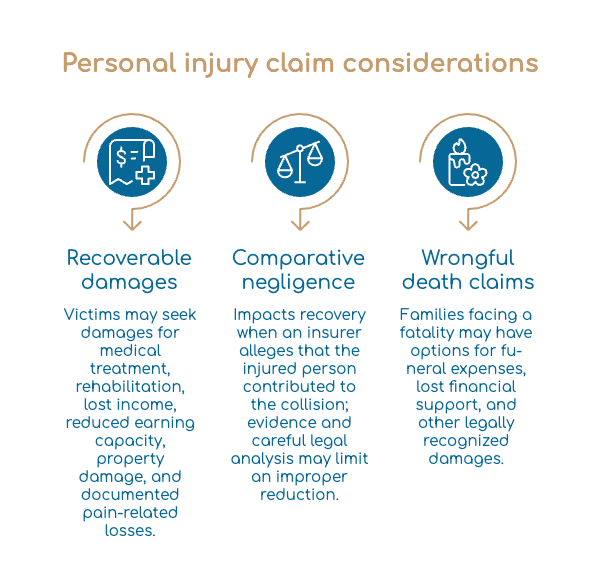
- Victims may seek damages for medical treatment, rehabilitation, lost income, reduced earning capacity, property damage, and documented pain-related losses.
- Comparative negligence impacts recovery when an insurer alleges that the injured person contributed to the collision; evidence and careful legal analysis may limit an improper reduction.
- Families facing a fatality may have wrongful death claim options for funeral expenses, lost financial support, and other legally recognized damages.
Claims may involve the driver, trucking company, vehicle owner, or insurers, depending on the available evidence. Prompt medical care, collision documentation, witness information, and communication with counsel can support a fair evaluation. Serving affected families requires protecting their dignity, explaining available remedies, and pursuing accountability without making unsupported promises.
Why Do Daytona Beach Drug Impaired Truck Driver Accident Injuries Happen?
The causes of Daytona Beach drug-impaired truck driver accident injuries often involve impaired judgment, slowed reaction time, poor coordination, or excessive fatigue. Prescription medications, illegal substances, and combinations of drugs can affect a commercial driver’s ability to maintain lane position, judge distances, and respond to changing traffic conditions. Some substances may also create false confidence, increasing speeding, unsafe passing, or other hazardous decisions.
Workplace pressures can contribute when drivers use stimulants to remain alert or sedatives to manage stress and sleep disruption. Inadequate supervision, ineffective Medication testing procedures, and failure to review a driver’s medical history may allow impairment risks to continue unnoticed. Physical indicators, including drifting across lanes, delayed braking, inconsistent speed, and unusual speech, may represent signs of impaired driving.
Vehicle defects or roadway conditions can worsen the consequences, but drug-related impairment often reduces a driver’s ability to compensate for those hazards. Understanding these contributing factors supports safer transportation practices and helps communities protect motorists, passengers, and families from preventable commercial trucking injuries.
What Should You Do After a Daytona Beach Drug Impaired Truck Driver Accident Injury?
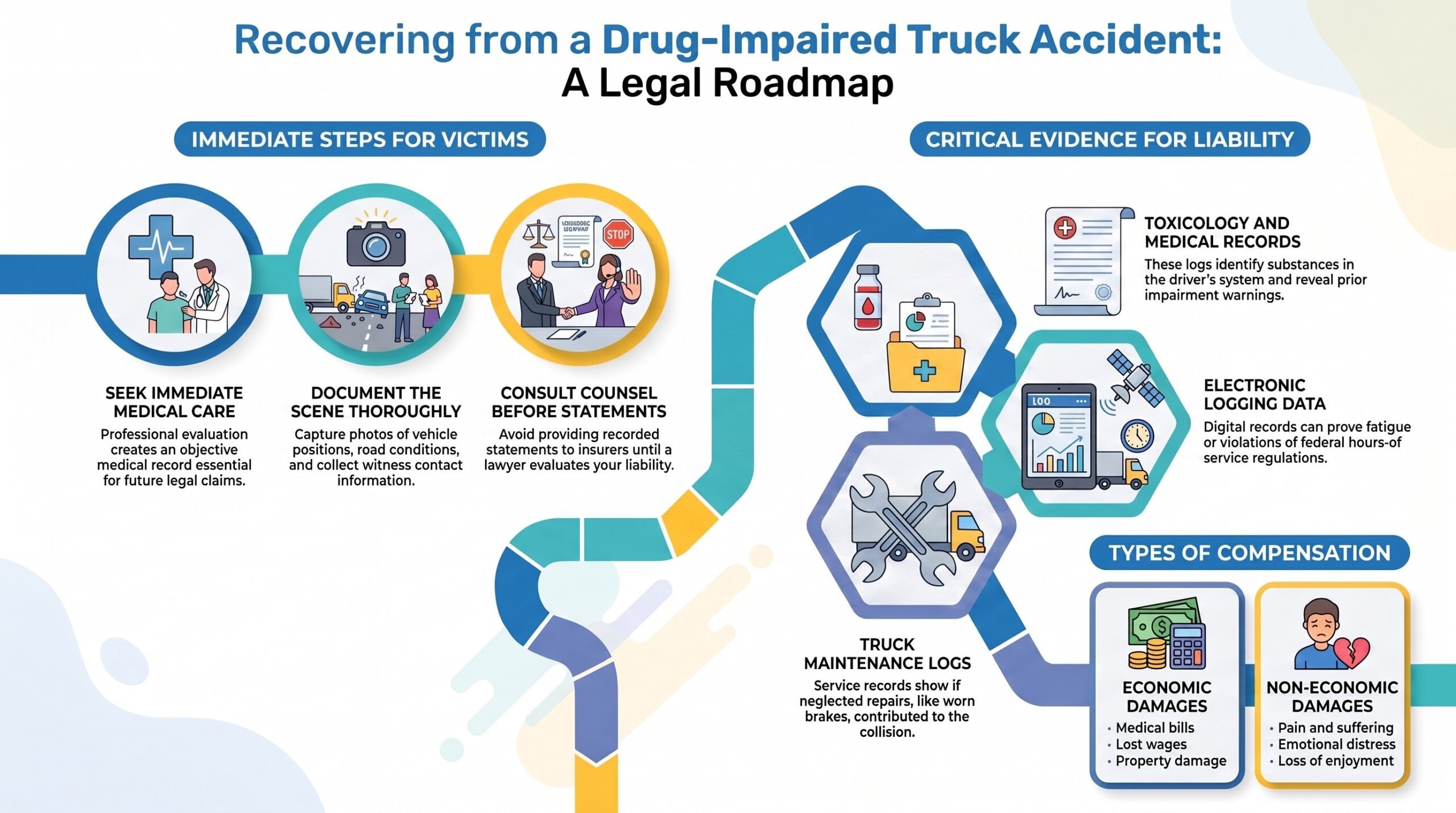
After a Daytona Beach drug-impaired truck driver accident, the injured person should seek immediate medical care, even if symptoms initially appear minor. The individual should document the accident by preserving medical records, photographs, witness information, and other relevant evidence. Contacting a qualified truck accident lawyer can help protect legal rights and support an informed injury claim.
Seek Immediate Medical Care
Seek immediate medical care following an injury caused by a drug-impaired truck driver, even if symptoms initially appear minor or delayed. A qualified medical professional can identify concussion symptoms, internal injuries, spinal trauma, or other conditions that may worsen without treatment. Prompt evaluation also supports recovery planning and provides an objective medical record of reported symptoms, diagnostic findings, and recommended care.
The injured person should follow all treatment instructions, attend scheduled appointments, and promptly report any worsening pain, confusion, weakness, breathing difficulty, or other concerning changes. An Aftermath Checklist may help organize medical instructions, prescriptions, transportation needs, and follow-up responsibilities. Property Damage Documentation, Victim Statement Preparation, and Witness Contact Records should be addressed separately after immediate health needs are stabilized. A trusted support person can assist with communication, mobility, and care coordination when necessary.
Document The Accident
Accurate accident documentation should begin once immediate medical needs are addressed, provided doing so does not endanger the injured person or interfere with emergency care. A responsible person should photograph vehicle positions, roadway conditions, traffic signs, visible injuries, and property damage from safe locations. Notes should record the collision’s time, weather, lighting, and apparent circumstances without speculation. Preservation of eyewitness statements can include obtaining names and contact information, then asking witnesses to describe what they observed in their own words.
Dashcam footage review may identify relevant events before, during, or after impact, so available recordings should be preserved promptly and not edited. Official crash reports, medical records, and insurance communications should be retained in an organized file. Documentation can help protect accurate accounts and support injured individuals through subsequent proceedings.
Contact A Truck Accident Lawyer
When should an injured person contact a truck accident lawyer? An injured person should seek legal guidance as soon as possible, preferably after receiving emergency medical care. A lawyer can preserve evidence, identify responsible parties, and communicate with insurers before statements or settlements affect potential rights. In drug-impaired truck collisions, counsel may investigate toxicology reports, prescription records, employer policies, and driving logs.
Medication effects can influence impairment assessments, so medical documentation should accurately identify prescribed drugs, dosages, and warnings without assuming fault. A lawyer can also explain how treatment decisions may affect a claim and coordinate with qualified professionals. Because the recovery timeline may change as symptoms develop, legal advice can help protect compensation for current care, future treatment, lost income, and other documented losses while supporting an orderly process for everyone involved.
Critical Evidence in a Daytona Beach Drug Impaired Truck Driver Accident Injury Case
Critical evidence may establish whether drug impairment, driver health conditions, or regulatory violations contributed to the collision. Key records can also clarify the truck’s operation and mechanical condition before impact:
- Toxicology test results and driver medical records
- Electronic logging data showing hours and vehicle activity
- Truck maintenance records documenting inspections and repairs
Toxicology Test Results
Toxicology test results can provide important evidence in a Daytona Beach drug-impaired truck driver accident injury case by identifying drugs or controlled substances present in a driver’s system after a collision. These results may help establish whether impairment contributed to unsafe driving, delayed reactions, or loss of vehicle control. However, interpretation requires careful review because detection does not always prove impairment at the precise time of impact. Testing methods, collection procedures, and laboratory reliability can affect the evidence’s weight.
False positives may occur because of cross-reactivity, testing errors, or lawful substances, making confirmatory analysis important. The chain of custody must also be documented from specimen collection through laboratory testing and presentation in court. Attorneys may consult qualified experts to evaluate accuracy, timing, and evidentiary significance while protecting injured individuals’ interests.
Driver Medical Records
Driver medical records may provide important evidence in a Daytona Beach drug-impaired truck driver accident injury case by documenting prescriptions, prior medical conditions, substance-use treatment, and warnings about medication-related impairment. Records can clarify whether a physician identified risks, adjusted medication, or instructed the driver to avoid operating commercial vehicles. They may also reveal reported symptoms, missed appointments, or treatment compliance relevant to the driver’s condition before the collision.
Attorneys generally obtain these materials through lawful authorizations, subpoenas, or court orders while protecting confidential health information. Medical documentation should be evaluated alongside toxicology results, Witness statements, and accident reconstruction findings. A qualified medical or pharmacological expert may explain whether prescribed substances, health conditions, or treatment decisions could have affected alertness, judgment, coordination, or reaction time. This evidence can support accountability and fair compensation for injured individuals.
Electronic Logging Data
When a commercial truck collision occurs, electronic logging data may help establish the vehicle’s movements, operating hours, and the driver’s compliance with federal hours-of-service requirements. These records can show driving time, rest periods, duty-status changes, location information, and possible deviations from required limits. In a suspected drug-impaired driving case, the data may help investigators determine whether fatigue, extended operation, or unusual activity contributed to the collision.
Attorneys may examine Electronic Log Accuracy by comparing electronic entries with dispatch communications, delivery records, toll information, and available location data. Such comparisons can identify omissions, alterations, or inconsistencies that warrant further investigation. Records reflecting Federal Hours of Service violations may support claims that negligent scheduling or operation increased the risk of harm. Preserving this information promptly can assist injured individuals and their families in seeking accountability.
Truck Maintenance Records
Truck maintenance records can provide necessary evidence in a Daytona Beach drug-impaired truck driver accident injury case by showing whether the vehicle was inspected, serviced, and kept in safe operating condition. A safety inspection may reveal worn brakes, defective tires, lighting problems, or other hazards that increased collision risks. Repair invoices, inspection reports, and service schedules can help establish maintenance negligence when a carrier ignored known problems or delayed necessary repairs.
These records may also show whether the company followed federal compliance requirements governing inspections, repairs, and vehicle operations. Defect documentation can connect a mechanical failure to the crash, especially when records identify repeated warnings or unresolved deficiencies. Preserving this evidence allows injured individuals and their families to seek accountability while supporting a careful, fact-based evaluation of safety failures.
Long-Term Effects of Daytona Beach Drug Impaired Truck Driver Accident Injuries
Long-term injuries from a drug-impaired truck driver accident may result in chronic pain conditions that require ongoing medical treatment and rehabilitation. Emotional trauma, including anxiety, depression, or post-traumatic stress, can also affect a person’s recovery and daily functioning. These consequences may create substantial financial burdens and lasting changes to employment, mobility, family responsibilities, and overall lifestyle.
Chronic Pain Conditions
Chronic pain can develop after injuries caused by a drug-impaired truck driver, particularly when the collision damages the spine, joints, nerves, or soft tissue. Symptoms may persist for months or years, limiting mobility, sleep, work capacity, and ordinary caregiving responsibilities. Treatment may involve physical therapy, medical evaluations, injections, prescribed medication, or coordinated pain management. Medication safety tips include following dosage instructions, reviewing drug interactions with a pharmacist, avoiding unapproved combinations, and reporting concerning side effects promptly.
A written treatment plan can help clinicians track progress and adjust care without unnecessary risks. Chronic pain flare management may include pacing activities, using approved exercises, applying heat or cold as directed, and maintaining scheduled appointments. Detailed medical records and expense documentation can support efforts to obtain appropriate compensation for ongoing care and related losses.
Emotional Trauma
Although physical injuries may receive immediate attention, emotional trauma can remain after a Daytona Beach drug-impaired truck driver accident and affect a person’s daily functioning for months or years. Survivors may experience anxiety, depression, sleep disturbances, irritability, or fear of traveling near commercial vehicles. Some develop post-traumatic stress symptoms, including intrusive memories, avoidance, and heightened alertness. These effects can interfere with relationships, concentration, and participation in ordinary activities.
Mental health evaluations and consistent counseling may help document symptoms and support recovery. Treatment records can also assist testimony preparation by explaining how the collision affected emotional well-being over time. During court presentation, clear professional evidence may help others understand the seriousness of psychological injuries without exaggeration. Compassionate legal guidance can protect a survivor’s dignity while presenting trauma accurately and responsibly.
Financial And Lifestyle Impacts
A survivor’s financial stability and daily routine may change substantially after injuries caused by a Daytona Beach drug-impaired truck driver accident. Medical treatment, rehabilitation, medication, and transportation can create continuing expenses, particularly when insurance coverage is limited or disputed. Reduced mobility may require home modifications, assistive equipment, or help with household responsibilities. Lost wages and diminished earning capacity can affect housing, education, retirement planning, and the ability to support family members.
Some survivors experience sleep deprivation, chronic pain, or job stress when attempting to resume employment before recovery is complete. Family caregivers may also reduce their work hours, producing additional financial strain. Careful documentation of expenses, missed work, and lifestyle changes can help identify the full scope of damages and support informed efforts to secure appropriate compensation for long-term needs.
Proving Liability in Daytona Beach Drug Impaired Truck Driver Accident Injury Cases
Proving liability in a Daytona Beach drug-impaired truck driver accident injury case requires evidence connecting the driver’s substance use or impairment to the collision and resulting injuries. Investigators may examine police reports, toxicology results, medical records, witness statements, and the driver’s employment or safety history. Surveillance Footage from nearby businesses, traffic cameras, or onboard systems may document unsafe lane changes, delayed reactions, or other conduct consistent with impairment.
Scene Reconstruction can clarify vehicle positions, speed, braking, visibility, and the sequence of events. Maintenance records, electronic logging data, dispatch communications, and truck inspection materials may also reveal contributing violations or negligent supervision. Evidence involving the trucking company, including hiring practices and compliance with drug-testing requirements, may support a separate theory of liability when appropriate.
A careful legal review helps preserve relevant records and present reliable proof for injured individuals and families seeking accountability and protection for others on Daytona Beach roads. Witness testimony from treating professionals may further explain the injuries and their connection to the crash.
Dealing With Insurance Companies After a Daytona Beach Drug Impaired Truck Driver Accident Injury
After a Daytona Beach drug-impaired truck accident, insurance companies may quickly contact injured parties to obtain statements, medical authorizations, or settlement agreements. Injured individuals should avoid providing recorded statements or signing releases before receiving independent legal guidance. Adjusters may appear helpful while evaluating opportunities to minimize the insurer’s financial exposure.
A representative can direct communications, preserve relevant evidence, and help guarantee that medical expenses, lost income, rehabilitation needs, and other damages receive appropriate consideration. Liability disputes may involve the truck driver, motor carrier, vehicle owner, maintenance providers, or multiple insurers, making careful documentation crucial. Photographs, witness information, crash reports, treatment records, and employment documentation can support accurate negotiations.
Settlement offers should be reviewed against the full extent of present and reasonably anticipated harm. If negotiations fail, counsel can organize court filing checklists and protect applicable deadlines. This support allows injured people and their families to focus on recovery while a qualified advocate addresses insurance practices with diligence, fairness, and respect for community welfare.
What to Expect During a Daytona Beach Drug Impaired Truck Driver Accident Injury Claim Process
A Daytona Beach drug-impaired truck driver accident claim typically begins with an initial case evaluation to assess liability, injuries, and available legal remedies. The process may then involve evidence collection and investigation, followed by negotiations with the trucking company’s insurance provider. If negotiations do not produce a fair resolution, the injured party may pursue a settlement or proceed to trial.
Initial Case Evaluation
An initial case evaluation establishes whether a Daytona Beach drug-impaired truck driver accident claim has a viable legal and factual foundation. During this consultation, an attorney reviews the client’s account, injuries, medical needs, employment effects, and applicable filing deadlines. The discussion also considers potential defendants, available insurance coverage, and whether negligence, causation, and damages can be reasonably demonstrated.
Counsel may explain Medication impairment defenses, including arguments concerning prescriptions, lawful use, or unexpected reactions, and assess how those issues could affect responsibility. The evaluation should clarify immediate priorities without creating unrealistic expectations about recovery. If the claim appears suitable for further representation, the attorney may outline a settlement negotiation strategy based on documented losses, future care requirements, and the client’s goals. Clear communication helps protect the injured person’s interests throughout the process.
Evidence And Investigation
When a Daytona Beach drug-impaired truck driver accident claim proceeds, evidence collection and investigation help establish how the collision occurred, whether impairment contributed to it, and which parties may bear legal responsibility. Investigators may obtain crash reports, photographs, traffic-camera footage, vehicle data, witness statements, and medical records. They may also examine the driver’s drug-testing results, prescription history, hours-of-service records, and trucking-company safety files.
Evidence Preservation is essential because electronic data, surveillance recordings, and physical vehicle evidence can be lost or altered with time. Counsel may send preservation notices to the carrier, insurers, and other custodians. This work supports Fighting Insurance by testing incomplete or disputed accounts with documented facts, while protecting the injured person’s ability to present a clear, accurate claim and assist the court in reaching a fair determination.
Insurance Company Negotiations
Insurance company negotiations in a Daytona Beach drug-impaired truck driver accident injury claim typically begin after the injured person’s medical condition and damages can be reasonably documented. The insurer may request medical records, employment information, photographs, crash reports, and statements describing the incident and resulting limitations. Representatives may also examine the Drug testing timeline, including whether testing followed required procedures and whether results support impairment allegations.
Careful evidence preservation remains important because electronic logs, vehicle data, surveillance footage, and witness accounts may clarify responsibility and losses. The injured person may be asked to provide a recorded statement or sign broad medical authorizations. Such requests warrant careful review before responding. Communications should remain accurate, consistent, and limited to documented facts while damages are evaluated.
Settlement Or Trial
How a Daytona Beach drug-impaired truck driver accident claim concludes depends on the strength of the evidence, the extent of the injuries, and the parties’ willingness to resolve disputed issues. A settlement may provide compensation sooner, reduce uncertainty, and help an injured person address medical expenses, lost income, and ongoing care. The settlement strategy should reflect documented losses, liability evidence, available insurance, and anticipated future needs.
If negotiations fail, the claim may proceed to trial, where testimony, medical records, toxicology results, and trucking data can influence the outcome. Trial risks include delays, litigation costs, conflicting testimony, and the possibility that a jury awards less than expected or finds limited liability. A careful evaluation helps determine whether accepting a fair resolution or pursuing judicial relief better serves the injured individual and family.
Compensation for Daytona Beach Drug Impaired Truck Driver Accident Injury Damages
Victims injured in a Daytona Beach truck crash caused by a drug-impaired driver may pursue compensation for the full scope of their accident-related damages. A claim may involve the truck driver, motor carrier, vehicle owner, maintenance providers, or other responsible parties, depending on the available evidence. Counsel may investigate employment records, dispatch communications, inspection materials, toxicology results, and applicable safety violations to establish responsibility. Prompt preservation requests can help prevent Spoliation of evidence, including electronic logs, onboard camera footage, and drug-testing records.
Insurance dispute timelines may affect negotiations, required notices, and the opportunity to file a lawsuit, making early legal evaluation important. A thorough claim also accounts for continuing medical care, rehabilitation needs, and the effect of injuries on daily functioning and family responsibilities. Careful documentation allows decision-makers to assess the consequences fairly and supports a resolution designed to protect the injured person’s recovery, dignity, and future stability.
Economic vs Non-Economic Damages in Daytona Beach Drug Impaired Truck Driver Accident Cases
Damages in Daytona Beach drug-impaired truck accident cases generally include economic losses, such as medical expenses, lost income, and future care costs. Non-economic damages may address pain, emotional distress, loss of enjoyment of life, and other personal harm. Calculating total compensation requires evaluating both documented financial losses and the broader effects of the injury.
Economic Damage Categories
In Daytona Beach drug-impaired truck driver accident cases, economic damages represent the measurable financial losses caused by the collision. Recoverable categories may include emergency treatment, hospitalization, surgery, prescription medication, rehabilitation, medical equipment, and transportation for necessary appointments. Future medical expenses may also be calculated when continuing care is reasonably anticipated. Property damage, vehicle replacement, towing, storage, and related repair costs can form additional claims. Income lost during recovery and reduced earning capacity may require employment records, tax documents, wage statements, and testimony.
Careful Lost wages proof can help establish the amount and duration of income disruption. A legal representative may also evaluate insurance denial strategies, identify incomplete investigations, and organize documentation responding to coverage defenses. Accurate records enable fair assessment and support responsible advocacy for injured individuals and their families.
Non-Economic Harm
Although non-economic harm lacks a fixed price, it can substantially affect an injured person’s recovery and quality of life after a Daytona Beach drug-impaired truck driver accident. Such harm may include physical pain, emotional distress, diminished enjoyment of life, disfigurement, sleep disruption, and anxiety about future travel or employment. A person who once served family, coworkers, or the community may struggle with roles that previously provided purpose and independence. These losses can remain significant even when medical records do not fully capture their daily effects.
Comparative negligence may influence whether an injured person can recover for these harms, depending on the evidence and applicable Florida law. If the crash is fatal, surviving relatives may also need to assess wrongful death eligibility, including the relationship and losses recognized under Florida’s wrongful death statutes.
Calculating Total Compensation
Calculating total compensation in a Daytona Beach drug-impaired truck driver accident requires separating economic damages from non-economic damages and evaluating how each category reflects the injured person’s losses. Economic damages may include emergency treatment, hospitalization, rehabilitation, medication, lost income, reduced earning capacity, property damage, and anticipated future care. Documentation such as medical records, wage statements, employment evidence, and repair estimates helps establish these amounts.
Non-economic damages address pain, emotional distress, disability, disfigurement, loss of enjoyment, and diminished quality of life. A careful Liability fault determination considers impairment evidence, driving conduct, company responsibility, comparative negligence, and available insurance coverage. An informed insurance negotiation strategy presents organized proof while accounting for future needs and lasting harm. Legal guidance can help families pursue compensation that supports recovery and protects long-term stability.
When a Daytona Beach Drug Impaired Truck Driver Accident Injury Case Goes to Trial vs Settlement
A Daytona Beach drug-impaired truck driver accident injury case may resolve through settlement or proceed to trial, depending on the strength of the evidence, the severity of the injuries, and the parties’ willingness to accept a fair outcome. Settlement can provide earlier compensation, reduce uncertainty, and spare injured individuals and families the demands of courtroom testimony. Mediation strategies may help the parties identify common ground while preserving control over the final decision. However, a trial may become necessary when insurers deny responsibility, undervalue losses, or refuse reasonable negotiation.
Trial risk assessments consider the available evidence, witness credibility, projected expenses, timing, and possible outcomes. An attorney may prepare clients for discovery, depositions, expert testimony, and cross-examination while evaluating whether continued litigation serves their needs. The decision should reflect informed consent and practical priorities, including medical care, financial stability, and emotional recovery. Each case requires individualized guidance based on its facts, documentation, and objectives.
Florida Laws That May Affect Your Daytona Beach Drug Impaired Truck Driver Accident Case
Florida law may shape both the liability analysis and the compensation available in a Daytona Beach drug-impaired truck driver accident case. Several rules can guide evidence collection, fault assessment, and responsible advocacy for injured people.
- Florida’s impaired-driving statutes may support negligence or punitive-damages arguments when a commercial driver operates after using prohibited substances. Federal motor-carrier rules can also affect testing, reporting, and employer oversight.
- Blood testing basics matter because collection procedures, laboratory methods, timing, and chain of custody can influence whether toxicology evidence is reliable. Qualified review may identify weaknesses or corroborate impairment.
- Florida’s comparative-fault framework may reduce recovery if an injured person is assigned responsibility, while insurance requirements and employer liability principles may determine available sources of compensation. Records involving common probation violations may provide context but require careful authentication and relevance analysis.
Counsel serving affected families generally examines driver qualifications, dispatch records, surveillance, medical documentation, and agency reports. These laws can intersect, making focused investigation critical before settlement discussions or courtroom presentation.
The Statute of Limitations for Daytona Beach Drug Impaired Truck Driver Accident Injury Cases
Although the filing deadline depends on the facts of the claim, injured people generally must act promptly after a Daytona Beach drug-impaired truck accident. Florida law establishes deadlines for filing personal injury lawsuits, and the applicable period may vary based on the accident date, injury, defendant, and whether a government entity is involved. Missing the controlling statute of limitations can permanently bar an otherwise valid claim, regardless of the severity of the harm.
Certain circumstances may shorten, extend, or otherwise affect the deadline. Claims involving wrongful death, minors, delayed discovery, or governmental defendants may follow different rules. Because these provisions are fact-specific, early legal review can help identify the controlling date without making assumptions.
Evidence preservation should begin promptly because electronic logs, drug-testing records, surveillance footage, vehicle data, and witness recollections may disappear or change. Insurance timelines are separate from court deadlines; insurers may impose notice requirements that affect claim handling but do not replace the statute of limitations. Careful calendaring and timely action help protect access to compensation and accountability.
How a Daytona Beach Drug Impaired Truck Driver Accident Lawyer Can Help You
Timely legal action is only one part of protecting a claim after a drug-impaired truck accident. A Daytona Beach attorney can coordinate the investigation, preserve essential evidence, and advocate for injured people whose recovery may affect families, coworkers, and communities. Effective representation may include:
- Reviewing crash reports, electronic logs, maintenance records, and surveillance footage to identify regulatory violations and establish responsibility.
- Managing Toxicology timelines by seeking testing records, medical documentation, prescription information, and chain-of-custody evidence before relevant materials become unavailable.
- Evaluating medical expenses, lost income, long-term care needs, and pain-related effects while responding to shared fault defenses raised by trucking companies or insurers.
Counsel can also communicate with insurers, consult accident-reconstruction and medical professionals, and present a complete demand supported by documented facts. By organizing the claim and explaining available legal remedies, the lawyer helps the injured individual make informed decisions and pursue fair compensation without sacrificing attention to treatment, family responsibilities, or service to others.
When to Contact a Daytona Beach Drug Impaired Truck Driver Accident Lawyer
When should an injured person contact a Daytona Beach drug-impaired truck driver accident lawyer? Contact should occur as soon as medical needs are addressed, preferably before giving a recorded statement or signing documents from an insurer. Early legal guidance can help preserve crash evidence, identify witnesses, and document injuries while records remain available. A lawyer can also explain insurance claim timing, including applicable notice requirements, filing deadlines, and the risks of accepting a settlement before the full extent of harm is understood.
Prompt consultation becomes especially important when injuries require hospitalization, rehabilitation, or ongoing treatment. Families should seek assistance promptly when a collision causes a death, because a wrongful death filing may involve strict deadlines and specific eligible claimants. A consultation does not require an injured person to proceed with litigation. It provides an organized opportunity to review available facts, protect legal rights, and determine appropriate next steps. Serving an injured individual or grieving family begins with timely attention to safety, documentation, and informed decision-making.
Why You Need an Experienced Daytona Beach Drug Impaired Truck Driver Accident Lawyer
A seasoned Daytona Beach drug-impaired truck driver accident lawyer is important because these collisions often involve complex evidence, multiple liable parties, and substantial injuries. Counsel can investigate toxicology results, driver training records, dispatch communications, vehicle maintenance, and hours-of-service compliance before relevant information disappears. This work supports evidentiary preservation and helps establish whether impairment, negligent supervision, inadequate screening, or unsafe company practices contributed to the crash.
A knowledgeable lawyer also understands the interaction between commercial transportation regulations, insurance coverage, and Florida negligence law. Multiple insurers and corporate defendants may attempt to minimize responsibility, making organized investigation and careful claim development vital. Legal guidance can help protect an injured person’s rights while medical treatment continues and damages are assessed accurately.
When a fatal collision occurs, counsel can pursue wrongful death claims on behalf of eligible family members, addressing financial losses, funeral expenses, and other legally recognized harm. Experienced representation thus promotes accountability and helps families seek fair compensation while they focus on recovery and service to one another.
How to Choose the Right Daytona Beach Drug Impaired Truck Driver Accident Lawyer for Your Case
Selecting the right Daytona Beach drug impaired truck driver accident lawyer requires careful evaluation of the attorney’s experience, investigative resources, and approach to complex commercial vehicle claims. A qualified lawyer should understand federal trucking rules, drug testing procedures, driver qualification files, and the multiple parties potentially responsible for resulting harm. During consultations, the lawyer should explain a realistic case timeline, identify immediate evidence preservation measures, and describe how investigators will secure records, vehicle data, surveillance footage, and witness statements.
Clients should also ask how the attorney handles insurance tactics, including attempts to minimize injuries or shift responsibility. The lawyer should provide clear guidance about medical documentation and explain why consistent treatment records can support a complete damages assessment. Communication practices matter as well; a dependable advocate should answer questions, provide meaningful updates, and treat the injured person and family with dignity. Comparing qualifications, proposed strategies, fee arrangements, and available resources can help clients choose representation prepared to serve their interests responsibly.
About The Law Offices of Anidjar & Levine
The Law Offices of Anidjar & Levine represents individuals injured in serious motor vehicle and commercial truck crashes, including collisions involving alleged drug-impaired drivers.
The firm evaluates each matter carefully, helping injured people and families understand available legal options after a devastating roadway event.
Its attorneys may investigate driver conduct, employer practices, vehicle maintenance, and regulatory compliance.
When impairment is suspected, Drug testing records, prescriptions, toxicology results, and witness accounts can become significant evidence.
The firm may also pursue Evidence preservation efforts, including obtaining surveillance footage, electronic logging data, police reports, and vehicle inspection records before those materials disappear or are altered.
The Law Offices of Anidjar & Levine approaches these cases with attention to accountability, documentation, and the practical needs of clients seeking recovery.
Its legal team can communicate with insurers, coordinate investigations, and assess claims for medical expenses, lost income, pain, and other damages.
Prospective clients may contact the firm to discuss their circumstances and learn whether representation may be appropriate.
Frequently Asked Questions
Can Family Members File a Wrongful Death Claim After a Drug-Impaired Truck Crash?
Yes, eligible family members may file a wrongful death claim after a drug-impaired truck crash, subject to state law, deadlines, and statutory priority rules. The claim may seek compensation for medical expenses, funeral costs, lost financial support, and related losses. Criminal evidence, including toxicology results or arrest records, can support the civil case but does not guarantee recovery. Insurance coverage, trucking-company liability, and comparative fault should be evaluated promptly by qualified counsel.
What Happens if the Truck Driver Flees the Accident Scene?
If a truck driver flees the accident scene, authorities may investigate hit-and-run offenses, while injured parties should promptly seek medical care and report the collision. Witness Statements Preservation can identify the vehicle and establish events. Police Report Updates may reveal the driver’s discovery or arrest. Insurance Notification should occur without delay. Evidence Video Review, including traffic and surveillance footage, can preserve vital proof for liability, damages, and potential wrongful death claims.
Can Undocumented Immigrants Pursue Compensation After a Truck Accident in Florida?
Undocumented immigrants can pursue compensation after a Florida truck accident, regardless of immigration status. They may seek credit for injuries, medical expenses, lost income, and other legally recognized damages when evidence establishes liability. Attorneys can help address proof of identity and language access barriers while protecting confidential information. Immigration status fraud should not be alleged without evidence, and victims should obtain qualified legal assistance before giving statements to insurers or accepting settlements.
Are Passengers Eligible for Compensation in Drug-Impaired Truck Collisions?
Passengers may be eligible for compensation after a drug-impaired truck collision if they suffered Personal Injury or other legally recognized losses. Responsibility may extend beyond the driver when evidence establishes negligent hiring, supervision, or Negligent Entrustment by a trucking company. Claims can involve medical expenses, lost income, pain, and rehabilitation needs. Because comparative fault rules and insurance requirements may affect recovery, passengers should preserve records, obtain medical care, and seek informed legal guidance promptly.
How Can a Truck Accident Affect My Commercial Driver’s License or Employment?
A truck accident can affect a driver’s commercial license and employment, especially when impairment, unsafe operation, or regulatory violations are alleged. Authorities may impose disqualification, suspension, or revocation, while an employer could initiate an employment suspension, investigation, or termination. Reporting duties and drug-testing rules may also apply. The driver should preserve records, comply with official deadlines, and obtain qualified legal guidance before making statements that could influence licensing or employment decisions.
—————————
Drug-impaired truck crashes can cause severe injuries, financial losses, and lasting disruption for Daytona Beach victims.
Establishing liability may require evidence of impairment, driver negligence, employer responsibility, and regulatory violations.
An experienced Daytona Beach drug-impaired truck driver accident lawyer can investigate the collision, protect a victim’s rights, and pursue appropriate compensation through negotiation or litigation.
The Law Offices of Anidjar and Levine evaluates each claim carefully and helps injured individuals make informed decisions throughout the legal process.
Learn more from a Daytona Beach Truck Accident Lawyer.