The Law Offices of Anidjar and Levine helps injured victims prove fault, preserve crash evidence, and document fracture-related losses. These cases often involve imaging records, surgical treatment, rehabilitation, lost income, pain, reduced mobility, and future care needs.
Legal support from a Daytona Beach Car Accident Lawyer may include insurer communications, liability investigation, witness statements, and settlement negotiations within available coverage.
If negligence caused the crash, compensation may be sought from the responsible party, with additional guidance provided below.
Main Takeaways
- A Daytona Beach broken bone car accident lawyer investigates the crash, preserves evidence, and identifies all liable parties.
- Broken bone claims may involve surgery, rehabilitation, imaging, mobility aids, lost wages, and future medical care.
- Key evidence includes police reports, witness statements, scene photos, vehicle damage, medical records, and diagnostic imaging.
- Liability may involve speeding, distraction, impaired driving, unsafe lane changes, failure to yield, or dangerous intersection conditions.
- A lawyer can handle insurer communications, protect your rights, and pursue compensation within available policy limits.


How We Can Help With Your Daytona Beach Broken Bone Car Accident Injury Claim
After a serious collision causes a broken bone, a Daytona Beach car accident lawyer can help injured victims pursue compensation while protecting their rights throughout the claims process. Legal support may include investigating the crash, preserving evidence, communicating with insurers, and identifying all responsible parties. This assistance allows injured people and their families to focus on care, recovery, and service to loved ones who depend on them.
A lawyer may also gather medical records, employment documentation, witness statements, and expert opinions to present the full impact of the injury. When Broken bone surgery is required, the claim may need careful documentation of hospital costs, rehabilitation needs, lost income, and future limitations.
Settlement value factors may include injury severity, liability evidence, insurance coverage, pain, reduced mobility, and long-term medical needs. Through disciplined negotiation or litigation, counsel can seek a fair result while ensuring the injured person’s dignity and legal interests remain protected.
OUR CONSULTATIONSARE FREE
START YOUR FREE CASE REVIEW

Understanding Daytona Beach Broken Bone Car Accident Injury Cases
Understanding these injury claims begins with recognizing that a broken bone from a Daytona Beach car accident is often more than a short-term medical problem. Fractures may require surgery, rehabilitation, follow-up imaging, mobility assistance, or time away from work and caregiving responsibilities. For people committed to serving others, these limitations can affect both personal independence and the ability to support family, clients, coworkers, or community members.
A broken bone claim typically involves medical documentation, proof of lost income, assessment of pain and functional limits, and consideration of future care needs. Comparative negligence may also influence recovery if fault is disputed or shared, making accurate investigation important. Insurance negotiation strategies must address the full impact of the injury, not merely the initial emergency treatment.
A careful legal evaluation helps identify available compensation, protect the injured person’s rights, and present the claim with the discipline needed for fair resolution.
Common Causes of Daytona Beach Broken Bone Car Accident
Broken bone injuries in Daytona Beach car accidents often result from severe forces placed on the body during a crash. Common causes include high-speed collisions, distracted driving crashes, drunk driving accidents, and failure to yield at intersections or while merging. Each cause presents distinct liability concerns, which may affect how fault, damages, and compensation are evaluated.
High-Speed Collisions
High-speed collisions are a leading cause of broken bones in Daytona Beach car accidents because the force of impact can overwhelm the body’s natural ability to absorb trauma. When vehicles travel above safe limits, occupants may suffer fractures to the arms, legs, ribs, hips, or spine, even when seat belts and airbags function properly. Speeding patterns on major roads, coastal routes, and intersections can increase crash severity, especially during heavy tourism periods or late-night traffic.
Visibility hazards, including poor lighting, rain, glare, and obstructed views, may further reduce reaction time and contribute to violent impacts. For those serving injured individuals, recognizing these factors helps identify how preventable conduct caused harm. Careful investigation may reveal unsafe speeds, roadway conditions, and evidence of impact that support accountability.
Distracted Driving Crashes
Distracted driving crashes often occur when a motorist diverts attention from the road long enough to miss slowing traffic, a changing signal, or a pedestrian movement. In Daytona Beach, these collisions may cause broken arms, legs, ribs, hips, or facial bones when vehicles strike with limited braking or evasive action. Cellphone distraction trends show that texting, navigation use, and brief message checks remain common risks, even during short local trips.
Other distractions, including eating, adjusting controls, or speaking with passengers, can also reduce reaction time. Safe driving tips include silencing devices, setting routes before departure, and allowing passengers to assist with calls or directions. For community-minded drivers, careful attention is a practical duty that helps protect neighbors, visitors, workers, and families.
Drunk Driving Accidents
Drunk driving accidents often cause severe fracture injuries because impaired motorists may travel too fast, drift between lanes, ignore traffic signals, or fail to brake before impact. In Daytona Beach, these crashes can leave injured people with broken wrists, ribs, legs, hips, or facial bones, often requiring surgery and lengthy rehabilitation. Emergency room documentation becomes crucial, as medical records may connect the collision to specific fractures, pain levels, and treatment needs.
Impaired driving defenses may arise when liability is disputed, including challenges to testing procedures or observations at the scene. Florida DMV penalties can also affect the broader case timeline. For advocates assisting injured victims, Insurance negotiation tips include preserving medical bills, wage records, crash reports, and photographs, while presenting damages clearly and consistently. Essential evidence supports fair recovery efforts.
Failure To Yield
When a driver fails to yield at an intersection, driveway, crosswalk, or merge point, the resulting collision can place sudden force on the body and cause serious fractures. These crashes often occur when a motorist disregards the Intersection Right of Way, turns left across traffic, enters a roadway without adequate space, or overlooks pedestrians and cyclists. Broken arms, legs, ribs, wrists, hips, and facial bones may result, especially when impact forces are concentrated on one side of the vehicle.
Traffic Control Violations, including running stop signs, ignoring yield signs, or misjudging signal timing, may help establish fault. Careful investigation can identify witness accounts, camera footage, vehicle damage, and roadway conditions, supporting injured people as they seek accountability, medical care, and stability after a preventable crash in Daytona Beach.


Legal Rights of Daytona Beach Broken Bone Car Accident Injury Victims
After a car accident in Daytona Beach, a victim who suffers a broken bone may have the right to pursue compensation from the party whose negligence caused the crash. These rights may include recovery for medical care, lost income, reduced earning ability, pain, and future treatment needs. A claim may also involve efforts to Negotiate Coverage within available Policy Limits, especially when injuries require surgery, rehabilitation, or long-term assistance.
Legal rights generally depend on timely documentation, accurate medical records, and proof that the crash caused the fracture.
A lawyer may help protect the victim’s interests while the injured person focuses on restoring health and family responsibilities.
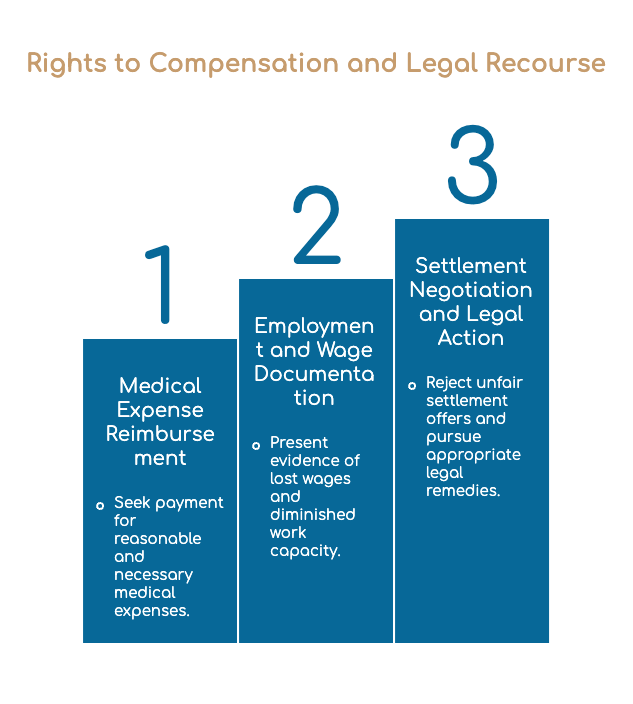
- The right to seek payment for reasonable and necessary medical expenses.
- The right to present evidence of lost wages and diminished work capacity.
- The right to reject unfair settlement offers and pursue appropriate legal remedies.
These protections support accountability and responsible care.
Why Do Broken Bone Car Accident Injuries Happen at Daytona Beach?
Understanding a victim’s legal rights also requires examining how broken bone injuries occur in Daytona Beach car accidents. These injuries often result from sudden force applied to the body during collisions, including impacts with dashboards, doors, control wheels, pavement, or other vehicles. High speeds, distracted driving, impaired driving, and failure to yield frequently increase the severity of fractures.
Local conditions can also contribute to serious crashes. Weather and visibility may affect a driver’s ability to judge distance, see stopped traffic, or respond to hazards near intersections. Areas with heavy tourism, unfamiliar drivers, and frequent lane changes may pose additional risks to vulnerable road users. Pedestrian crossings are another common location where fractures occur, especially when drivers disregard signals or fail to watch for people entering the roadway.
Understanding these causes helps caregivers, advocates, and legal professionals recognize how preventable conduct may lead to painful injuries and long-term recovery needs.
What Should You Do After a Daytona Beach Broken Bone Car Accident Injury?
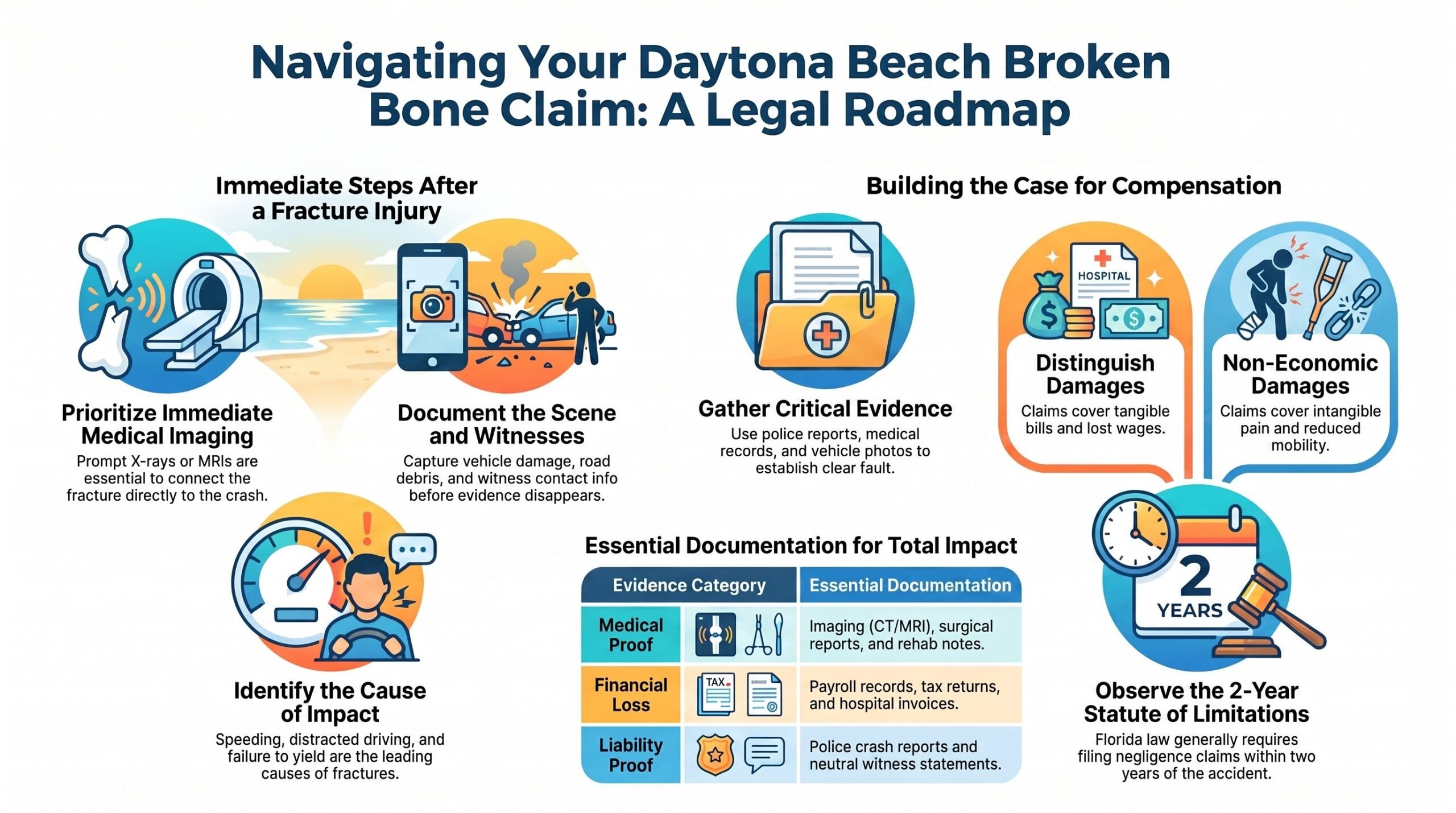
After a Daytona Beach car accident involving a broken bone, the injured person should take prompt steps to protect both health and any potential injury claim. Immediate medical care, careful documentation of the scene, and preservation of relevant evidence can help establish the extent of the injury and how the crash occurred. Speaking with a lawyer may also help the injured person understand legal options, insurance issues, and deadlines that could affect recovery.
Seek Medical Care
Even when a fracture seems minor, prompt medical care is essential after a Daytona Beach car accident involving a broken bone. A qualified physician can identify hidden complications, order appropriate imaging, and begin treatment before the injury worsens. Delayed care may increase pain, prolong recovery, and weaken the connection between the crash and the injury. For those focused on helping an injured person recover safely, arranging evaluation without delay is an important first step.
Medical records also support post-accident documentation, insurance negotiations, and any later legal review. Emergency room reports, orthopedic evaluations, prescriptions, and follow-up instructions create a reliable timeline of injury and treatment. The injured person should follow all medical advice, attend appointments, and promptly report any new symptoms to preserve health and strengthen the claim.
Document The Scene
Once medical needs are addressed, careful scene documentation can help preserve facts that might otherwise quickly disappear. Those assisting an injured person should first consider Scene safety, including traffic, leaking fluids, broken glass, and unstable vehicles. If it is safe, photographs or video may record vehicle positions, damage, skid marks, road debris, traffic signals, lighting, weather, and visible injuries.
Names and contact information for drivers, passengers, and witnesses should be gathered respectfully, without argument or blame. A brief written note about time, location, statements heard, and emergency response may support later evidence preservation. Damaged personal items, medical devices, and clothing should be kept when possible. Compassionate, orderly documentation helps protect the injured person’s interests while allowing responders to continue their crucial work without interference.
Contact A Lawyer
When a broken bone results from a Daytona Beach car accident, contacting a lawyer early can help protect the injured person’s rights before evidence is lost or insurance issues become more difficult to manage. Legal counsel can review fault, preserve documents, and guide communication with insurers so the injured person can focus on treatment and recovery. A lawyer may also help organize the Broken Bone Timeline, including emergency care, diagnosis, surgery, therapy, work restrictions, and lasting limitations. This chronology can support a clearer claim for damages.
Through Medical Records Collection, counsel can gather hospital charts, imaging reports, physician notes, billing records, and rehabilitation documentation. Careful legal guidance enables families, caregivers, and advocates to support the injured person with informed decisions, steady support, and protection against avoidable errors in claims.
Critical Evidence in a Daytona Beach Broken Bone Car Accident Injury Case
Critical evidence in a Daytona Beach broken bone car accident injury case helps establish fault, prove the severity of the injury, and connect the fracture to the crash. Important documentation may include:
- Police crash reports and witness statements
- Medical imaging records, such as X-rays, CT scans, or MRIs
- Vehicle damage photos and scene photographs
Police Crash Reports
After a serious crash in Daytona Beach, the police crash report often becomes one of the first pieces of evidence reviewed in a broken bone injury claim. It may identify drivers, witnesses, road conditions, citations, and the officer’s observations about how the collision occurred. For injured people, and those committed to helping them recover fairly, this report can clarify responsibility and guide further investigation.
A report may note Traffic signal failures, pedestrian right-of-way issues, speed limit enforcement concerns, or signs of vehicle maintenance neglect. These details can support a broader review of fault, especially when statements conflict or evidence is limited. Although the report is not always conclusive, it can preserve timely facts and help legal professionals evaluate liability with care.
Medical Imaging Records
Because fractures are often disputed in both severity and cause, medical imaging records can become central evidence in a Daytona Beach broken bone car accident injury case. X-rays, CT scans, MRIs, and related radiology reports may show the location, age, alignment, and intricacy of a fracture. When a spine injury is alleged, imaging may also help distinguish acute trauma from preexisting degeneration.
These records can guide physicians who serve injured patients in making surgical decisions, managing pain, and supporting chronic rehabilitation. They may also clarify whether delayed symptoms are medically consistent with the crash. In an insurance dispute, imaging can reduce speculation and support a settlement strategy grounded in objective proof. Careful review of these materials allows advocates to present the injury, treatment needs, and long-term limitations with disciplined accuracy.
Witness Statements
Witness statements can provide essential context when the cause, force, or sequence of a Daytona Beach car accident is disputed. Neutral observers may describe traffic signals, speeding, lane changes, braking, weather, or each driver’s conduct before impact. Their accounts can help confirm how a broken bone injury occurred, especially when the parties offer conflicting versions. Attorneys may use these statements as part of an evidence strategy that supports Accident reconstruction and guides expert analysis.
Prompt collection is important because memories fade and witnesses may become difficult to locate. Clear, consistent testimony can also strengthen Insurance negotiations by showing responsibility and connecting the collision to the injury. In a service-focused legal approach, witness information is preserved carefully, reviewed objectively, and used to advance a fair result for the injured person.
Vehicle Damage Photos
Vehicle damage photos can document the severity, direction, and physical consequences of a Daytona Beach car accident in a way that written descriptions often cannot. These images may show crushed doors, deployed airbags, bent frames, intrusion into the cabin, or damage patterns consistent with the injured person’s fractures. When preserved promptly, photographs can help connect the crash forces to medical findings and support the realities of Broken Bone Recovery.
They also assist attorneys, physicians, and accident reconstruction professionals in evaluating how the collision affected the body. From a service-focused perspective, careful photo collection helps protect an injured person’s dignity by preserving facts before repairs, towing, or disposal occur. Vehicle images may also counter an insurance Adjuster Strategy that minimizes impact severity despite serious orthopedic injuries or lasting limitations.
Long-Term Effects of Daytona Beach Broken Bone Car Accident Injuries
Broken bone injuries from Daytona Beach car accidents can cause long-term consequences that extend well beyond the initial medical treatment. Chronic pain, reduced mobility, and emotional trauma may affect a person’s ability to work, manage daily activities, and maintain overall quality of life. These lasting effects often become important considerations when evaluating the full extent of injury-related damages.
Chronic Pain
Often, chronic pain after a Daytona Beach car accident involving broken bones develops when fractures affect surrounding nerves, joints, muscles, or soft tissue during the recovery process. This pain may continue long after the visible injury has recovered, requiring ongoing medical attention, careful monitoring, and compassionate support from caregivers. Physicians may recommend medication, physical therapy, injections, or Alternative therapies to help manage symptoms and improve daily comfort. Accurate legal documentation is critical because treatment records, pain journals, and expert opinions can show how persistent pain affects work, household duties, and personal care. Insurance delays may interrupt access to necessary treatment, increasing financial pressure on the injured person. A lawyer may evaluate settlement options that account for future care needs, ongoing pain management, and reduced quality of life.
Reduced Mobility
When fractures recover after a Daytona Beach car accident, reduced mobility may remain if the injury affects joints, muscles, tendons, ligaments, or weight-bearing bones. Limited range of motion can interfere with walking, lifting, driving, dressing, and other daily tasks that support independence and service to family or community. Some individuals require physical therapy, assistive devices, home modifications, or Workplace accommodations to continue meaningful responsibilities safely.
Reduced mobility may also change employment options, caregiving roles, and transportation needs, particularly when standing, bending, or carrying becomes difficult. Careful medical documentation helps identify lasting restrictions and future support needs. In serious cases, long-term care planning may address rehabilitation, adaptive equipment, in-home assistance, and ongoing evaluations to help the injured person preserve function, dignity, and practical participation.
Emotional Trauma
Reduced mobility is only one lasting consequence of a serious fracture, as the psychological impact of a Daytona Beach car accident can continue long after bones begin to mend. Many injured individuals experience anxiety, sleep disruption, fear of driving, irritability, or depression while adjusting to pain, medical visits, and lost independence. These effects may interfere with family responsibilities, employment, and community service, especially when the person once actively served others.
Therapy options may include trauma-focused counseling, cognitive behavioral therapy, support groups, or physician-guided treatment for severe symptoms. Victim support, offered by medical providers, counselors, faith communities, and legal advocates, can help restore stability. Careful documentation of emotional harm may also strengthen an injury claim, ensuring the full impact of the accident is recognized in recovery planning and compensation.
Proving Liability in Daytona Beach Broken Bone Car Accident Injury Cases
Because fractures frequently result from high-impact collisions, proving liability in a Daytona Beach broken bone car accident case requires a careful review of how the crash occurred and who failed to act with reasonable care. Liability may depend on evidence showing speeding, distracted driving, impaired driving, unsafe lane changes, or failure to yield. A thorough investigation can help identify each responsible party, including another driver, an employer, or another entity whose conduct contributed to the harm.
Key proof may include crash reports, scene photographs, vehicle damage, medical documentation, and witness interviews. Insurance paperwork can also help establish timelines, claimed losses, and the parties involved, though it must be reviewed with care. When evidence is organized early, it can support a clearer settlement timeline and reduce uncertainty for those seeking to restore stability. Strong liability proof serves both accountability and service, helping injured people pursue compensation with dignity, order, and purpose.
Dealing With Insurance Companies After a Daytona Beach Broken Bone Car Accident Injury
After a broken bone car accident in Daytona Beach, dealing with insurance companies often becomes one of the most important parts of the injury claim. Insurers may request recorded statements, medical authorizations, or quick settlement discussions before the full extent of recovery, lost income, and future care is understood. Injured individuals benefit from careful documentation, including medical records, photographs, witness information, and repair estimates. When serving an injured person’s interests, accuracy and patience are required, especially if the crash involved Faulty Traffic Signals or Safety Equipment Defects.
Insurance adjusters evaluate liability, damages, and policy limits, but their role is to protect the insurer’s financial position. Communications should remain factual, measured, and consistent. A Daytona Beach broken bone car accident lawyer can help prevent misstatements, undervalued offers, and unnecessary disclosure of private information. This guidance supports fair consideration of pain, treatment needs, mobility limits, and long-term consequences without compromising the injured person’s rights.
What to Expect During a Daytona Beach Broken Bone Car Accident Injury Claim Process
A Daytona Beach broken-bone car accident injury claim typically begins with immediate medical documentation, which helps link the fracture to the collision and establish the extent of harm. The process then moves to filing an insurance claim and developing the evidence needed to prove accident liability. Once liability and damages are evaluated, settlement negotiations often determine whether fair compensation can be reached without litigation.
Immediate Medical Documentation
In the hours following a Daytona Beach car accident, immediate medical documentation can become a central part of a broken bone injury claim. Prompt evaluation helps connect the collision to the fracture, related symptoms, and needed treatment. Emergency room documentation may include imaging results, physician observations, pain reports, mobility limits, splinting, casting, referrals, and discharge instructions. These records assist caregivers, attorneys, and claim reviewers in understanding the seriousness of the injury and the services required.
Accurate records also support the timing of insurance claims by showing when medical care began and how the condition progressed. Delays in treatment may create questions about causation or severity. A clear medical timeline can help protect the injured person’s interests while allowing professionals to serve responsibly, coordinate care, and preserve reliable evidence for later review.
Insurance Claim Filing
Once medical documentation establishes the nature and timing of a broken bone injury, the insurance claim filing process usually becomes the next significant step. A claimant may need to notify the appropriate insurer, provide required forms, and submit records that satisfy documentation requirements. This stage often involves careful review of available benefits, claim timelines, and policy exclusions that may affect payment for treatment, lost income, and related losses. For those serving injured individuals, organized communication can help prevent missed deadlines or incomplete submissions. Negotiating coverage may require responding to adjuster requests, clarifying medical expenses, and preserving records of all correspondence. Throughout this process, the focus remains on presenting a complete claim package while avoiding premature statements that could complicate later evaluation or reduce available recovery.
Proving Accident Liability
For a broken bone car accident claim in Daytona Beach, proving liability generally requires showing how the collision occurred, who breached a duty of care, and how that breach caused the injury. Evidence may include police reports, traffic camera footage, vehicle damage, witness statements, and medical records connecting the crash to the fracture. Legal teams often review roadway conditions, driver conduct, and applicable traffic laws to determine fault. This process can also draw from Car Safety Lessons, especially when unsafe speed, distraction, or failure to yield contributed to harm. In matters involving cyclists, principles from the Bicycle Rights Cases may help clarify the duties owed to vulnerable road users. Careful documentation supports accountability, serves the injured person’s recovery needs, and helps protect community safety through responsible legal review.
Settlement Negotiation Process
After liability evidence has been organized and the extent of the fracture injury is documented, the settlement negotiation process typically begins with a detailed evaluation of damages. Medical expenses, lost income, future treatment needs, pain, and functional limitations are assessed to support a demand package. The insurer reviews the claim and may respond with a lower offer, often reflecting Insurance adjuster tactics designed to reduce payout value. A legal advocate examines policy limits, comparative fault issues, witness statements, and medical opinions as negotiating leverage points. Each response should be measured, supported by records, and focused on fair recovery. For those committed to helping injured people rebuild stability, this stage requires patience, preparation, and careful communication until settlement terms are accepted or litigation becomes necessary.
Compensation for Daytona Beach Broken Bone Car Accident Injury Damages
When a collision causes a broken bone, compensation may account for both the immediate medical crisis and the longer-term effect the injury has on daily life. In Daytona Beach cases, claims often rely on clear records showing diagnosis, treatment, follow-up care, and physician restrictions. The timing of medical evidence can strongly influence how insurers evaluate the connection between the crash and the fracture, especially when symptoms worsen after the scene is cleared.
Compensation may also reflect surgery, casting, rehabilitation, mobility devices, prescriptions, and future care needs. For riders, motorcycle helmet safety may become relevant when gauging crash circumstances, though a broken arm, leg, rib, or collarbone may require separate review of impact forces and protective conduct. A lawyer serving injured residents may gather records, consult providers, and present the claim with disciplined attention to proof. This process helps ensure that the injured person’s recovery needs are accurately and with dignity documented after a serious roadway collision.
Economic vs Non-Economic Damages in Daytona Beach Broken Bone Car Accident Cases
In Daytona Beach broken bone car accident cases, damages are generally divided into economic losses, such as medical bills and lost wages, and non-economic losses, such as pain and emotional distress. Economic damages often rely on records, invoices, and wage documentation, while non-economic damages require careful evaluation of how the injury affected daily life. Proving accident damages typically depends on clear evidence, medical support, and a well-organized presentation of the injury’s financial and personal impact.
Medical Bills And Wages
Calculate the financial impact of a broken bone car accident by separating economic damages from non-economic damages, as each category serves a different role in a Daytona Beach injury claim. Economic damages include medical bills, lost wages, reduced earning capacity, and necessary support services during recovery. Documentation may include hospital invoices, orthopedic records, prescription costs, Physical Therapy coverage, and Pain management treatment. When fractures require surgery, implanted hardware, or extended rehabilitation, the claim should also account for future medical expenses. Wage losses may be shown through payroll records, tax returns, employer statements, and work restrictions issued by medical providers. If the injury limits long-term employment, disability compensation may also be contemplated. Accurate calculation helps ensure the injured person’s practical needs are addressed with precision.
Pain And Emotional Distress
Pain-and-suffering damages address the personal impact of a broken bone car accident beyond medical bills and wage loss. These losses fall under Non-Economic Damages, which recognize pain, emotional distress, inconvenience, reduced mobility, and the loss of normal daily enjoyment. A fracture may limit a person’s ability to care for family, serve a community, attend worship, volunteer, or provide steady support to others. Emotional distress may include anxiety while driving, frustration during recovery, or sadness from temporary dependence on caregivers. Because these harms are personal, their value depends on the severity of the injury, recovery length, lasting limitations, and disruption to meaningful responsibilities. Pain Proofs may later help explain these effects, but the core issue remains how the injury changed the person’s lived experience and dignity.
Proving Accident Damages
When a broken bone follows a Daytona Beach car accident, proving damages requires clear evidence that separates financial losses from personal harm. Economic damages may include emergency care, surgery, therapy, medication, medical equipment, lost earnings, and reduced work capacity. Records, wage statements, provider bills, and expert opinions help establish these measurable losses. Non-economic damages address pain, limitations, anxiety, loss of independence, and the daily burden placed on family support systems. Careful documentation, including journals and medical progress notes, can show how the injury affected service, caregiving, and ordinary responsibilities. How to value future care often depends on prognosis, work restrictions, and expected recovery needs. Attorneys may assist with negotiating medical liens, evaluating insurance offers, and settling without trial when fair compensation is fully supported.
When a Daytona Beach Broken Bone Car Accident Injury Case Goes to Trial vs Settlement
Although many broken-bone car accident claims in Daytona Beach resolve through settlement, some cases require trial when liability, damages, or insurance coverage remain in dispute. Settlement may be appropriate when the medical evidence is clear, the injury’s impact is well documented, and the insurer offers compensation that reflects treatment costs, lost income, pain, and long-term limitations. This process can reduce delay and help injured people focus on recovery, family stability, and continued service to others.
Trial becomes more likely when an insurer minimizes the extent of the injury, disputes how the crash occurred, or refuses to account for future care needs. Attorneys may use two general trial prep, witness prep, exhibit organization, medical record review, and expert coordination to present the claim clearly. At trial, the evidence is placed before a judge or jury, who decides the outcome. A careful comparison of settlement value, risk, and client needs guides the recommended path forward in each case.
Florida Laws That May Affect Your Daytona Beach Broken Bone Car Accident Case
The path between settlement and trial is shaped not only by the facts of the crash but also by Florida law governing fault, insurance coverage, filing deadlines, and recoverable damages. For broken bone injuries, these rules may determine which insurer pays first, whether a lawsuit is permitted, and how responsibility is divided among drivers.
- No Fault Coverage generally requires injured motorists to seek initial benefits through personal injury protection, regardless of who caused the collision.
- Comparative Negligence may reduce compensation when the injured person shares responsibility for unsafe driving or other conduct.
- Florida damage rules may affect recovery for medical care, lost income, reduced mobility, and pain, depending on proof and injury severity.
A Daytona Beach broken bone car accident case requires careful review of medical records, crash evidence, insurance policies, and fault arguments. This analysis helps protect the injured person’s interests while supporting fair accountability.
The Statute of Limitations for Daytona Beach Broken Bone Car Accident Injury Cases
Strict filing deadlines can determine whether an injured person may pursue compensation after a Daytona Beach car accident involving broken bones. In Florida, many negligence claims arising from motor vehicle crashes must be filed within two years of the accident date. If the deadline passes, a court may dismiss the case, regardless of the severity of fractures, medical needs, or service obligations disrupted by the injury.
This deadline also affects evidence preservation and settlement timelines. Medical records, crash reports, witness accounts, and vehicle data may become harder to obtain over time. Delayed action may also strengthen insurance defenses, including arguments that treatment gaps, unrelated conditions, or incomplete documentation weaken the claim. Comparative fault may further reduce recovery if the injured person is found partly responsible for the crash. Timely attention to limitations periods helps protect the ability to present facts clearly, support accountability, and pursue lawful compensation within Florida’s required timeframe.
How a Daytona Beach Broken Bone Car Accident Lawyer Can Help You
When a collision causes fractures, a Daytona Beach broken bone car accident lawyer can help organize the claim, evaluate liability, and identify the full extent of recoverable damages. This support allows injured individuals and their families to focus on recovery, caregiving, and restoring stability after a serious crash.
A lawyer may coordinate with medical providers to document Broken bone treatment, including surgery, casts, therapy, and follow-up care. Legal guidance also supports evidence preservation, helping protect records that may show how the crash occurred and how the injury changed daily life.
- Review police reports, medical records, witness statements, and crash details.
- Calculate losses, including medical expenses, lost income, pain, and future care needs.
- Communicate with insurers and opposing parties to reduce pressure on the injured person.
Through careful case preparation, the lawyer serves the client by presenting a clear, well-supported claim for fair compensation.
When to Contact a Daytona Beach Broken Bone Car Accident Lawyer
After a crash involving a suspected fracture, legal guidance should be sought as soon as the injured person’s immediate medical needs are addressed. Early contact allows a lawyer to help preserve information that may otherwise be lost, including vehicle damage, roadway conditions, witness accounts, and surveillance footage. This period is especially important when Emergency evidence preservation may support the injured person’s claim and reduce unnecessary burdens on family members or caregivers.
A Daytona Beach broken bone car accident lawyer should also be contacted when medical bills begin arriving, work is missed, or an insurer requests statements, records, or broad authorizations. Prompt review can help prevent avoidable errors while the injured person focuses on wellness and daily support needs. If an insurer disputes fault, questions treatment, delays communication, or refuses payment, an Insurance denial response may be necessary. Timely legal contact helps ensure important deadlines, notices, and claim requirements are handled with care, order, and diligence.
Why You Need an Experienced Daytona Beach Broken Bone Car Accident Lawyer
Because fracture injuries can affect mobility, income, and long-term medical needs, an experienced Daytona Beach broken bone car accident lawyer can provide important guidance from the earliest stages of a claim. Such guidance helps injured individuals protect their health, responsibilities, and ability to care for those who depend on them.
A lawyer may assist with Medical documentation, ensuring treatment records, imaging results, surgical reports, and rehabilitation notes clearly connect the fracture to the crash. This evidence can support damages related to pain, lost wages, future care, and daily limitations. When disputes arise, handling insurance denials becomes vital, especially if an insurer questions fault, the necessity of treatment, or the seriousness of the injury.
Experienced legal representation also supports testimony preparation, helping the injured person explain limitations accurately and consistently. A focused negotiation strategy can further promote fair resolution by presenting evidence, medical impact, and financial losses in a structured, persuasive manner during settlement discussions or litigation.
How to Choose the Right Daytona Beach Broken Bone Car Accident Lawyer for Your Case
Choosing the right Daytona Beach broken bone car accident lawyer begins with evaluating whether the attorney has direct experience handling fracture injury claims arising from vehicle collisions. A careful selection process helps injured individuals protect their recovery while honoring responsibilities to family, work, and community.
A prospective client should consider each Client review for signs of consistent communication, compassion, and reliable case management. The attorney’s fee structure should be clearly explained, including whether payment depends on the outcome of the claim. Strong evidence handling is also crucial, as medical records, imaging studies, crash reports, witness statements, and insurance communications must be preserved and organized carefully.
The lawyer should provide realistic timeline expectations, recognizing that treatment, negotiations, and litigation can affect the pace of a case. An appropriate advocate will explain options clearly, prepare the claim thoroughly, and support decisions that serve the injured person’s long-term stability and dignity.
About The Law Offices of Anidjar & Levine
The Law Offices of Anidjar & Levine represents injured clients in Daytona Beach and throughout Florida in personal injury matters, including car accident cases involving broken bones and related complications.
The firm focuses on helping clients steer through the legal process while they concentrate on recovery, family responsibilities, and community obligations.
Its legal team manages case development through careful evidence gathering, review of medical records, accident analysis, and communication with involved parties.
For clients in Daytona Beach, this approach helps establish the extent of injuries, the circumstances of the collision, and the financial effects of lost income, treatment, and ongoing care.
The firm also handles insurance negotiations with attention to each client’s needs and available damages.
Its settlement strategy is designed to pursue fair compensation while preparing each case for litigation when necessary.
Through structured advocacy, the firm seeks to serve injured individuals with diligence, professionalism, and accountability during a difficult period.
Frequently Asked Questions
Can I Change Lawyers During My Broken Bone Car Accident Case?
Yes, a person may change lawyers during a broken bone car accident case. Contract rights and obligations should be reviewed in the representation agreement before taking action. A case transfer typically requires notice, file delivery, and coordination to protect deadlines. New counsel selection should focus on competence, communication, and commitment to serving the injured client’s needs. Prior counsel may assert fees or costs, subject to applicable rules.
Will My Medical History Affect My Broken Bone Injury Claim?
Yes, medical history can affect a broken bone injury claim, especially when prior injuries, osteoporosis, or chronic conditions are involved. Insurers often examine records to dispute insurance liability or argue that the crash did not fully cause the fracture. The timing of impact, diagnostic findings, and treatment notes help distinguish new trauma from preexisting conditions. A careful presentation of medical evidence supports fair compensation while honoring the claimant’s need for responsible advocacy.
Can I Recover Damages if I Was a Passenger?
Yes, a passenger may recover damages when another party’s negligence caused the crash and resulting injury. Claims may be pursued against the at-fault driver, another negligent motorist, or available insurance coverage, depending on the facts. Comparative negligence rarely applies to passengers, unless their conduct contributed to harm. A careful review of fault, medical records, and policy limits helps protect the injured person’s rights while supporting responsible compensation recovery.
Do Broken Bone Cases Require Expert Medical Testimony?
Yes, broken-bone cases often require expert medical testimony, especially when injuries, treatment, or long-term effects are disputed. Broken bone imaging, including X-rays, CT scans, or MRIs, supports fracture documentation and helps confirm severity. Experts needed may include orthopedic surgeons, radiologists, or rehabilitation physicians. Their testimony can explain medical causation, connect the crash to the fracture, and guide fair evaluation, helping those responsible for others pursue accurate accountability.
What if My Fracture Was Misdiagnosed After the Crash?
If a fracture was misdiagnosed after the crash, the issue may affect treatment, recovery, and injury valuation. An Independent legal review can determine whether delayed diagnosis worsened harm or complicated care. Hospital record analysis may reveal missed imaging findings, incomplete evaluations, or gaps in follow-up instructions. Those assisting the injured should preserve records, document symptoms, and seek appropriate medical reassessment to support accurate accountability. Professional guidance can clarify available remedies.
—————————
A broken bone after a Daytona Beach car accident can create significant medical, financial, and legal challenges.
Skilled legal representation can help protect an injured person’s rights, document losses, and pursue appropriate compensation from responsible parties.
A Daytona Beach Car Accident Lawyer from The Law Offices of Anidjar and Levine can offer experienced guidance for injury victims seeking accountability after a crash.
Prompt legal action may preserve evidence, strengthen a claim, and support a more effective recovery process under Florida law.