A Daytona Beach Car Accident Lawyer helps injured victims preserve vital evidence, investigate brake components, review maintenance records, and identify responsible parties.
Liability may involve a driver, vehicle owner, repair facility, parts manufacturer, or insurer.
The Law Offices of Anidjar and Levine can document medical losses, lost income, pain, and long-term limitations while handling insurance disputes.
Early legal guidance can protect claims before evidence is altered or lost.
The sections below explain important issues, rights, and next steps.
Main Takeaways
- A Daytona Beach brake failure lawyer can investigate vehicle defects, maintenance history, roadway conditions, and crash scene evidence.
- Preserving evidence quickly is critical, including brake components, skid marks, debris, fluid trails, photos, videos, and witness statements.
- Liability may involve a driver, vehicle owner, mechanic, repair shop, parts manufacturer, or another negligent party.
- Claims may seek compensation for medical bills, lost income, reduced earning capacity, pain and suffering, and limitations in daily life.
- Insurers may dispute fault, coverage, maintenance records, repair costs, preexisting damage, or comparative negligence under Florida law.


How We Can Help With Your Daytona Beach Brake Failure Car Accident Injury Claim
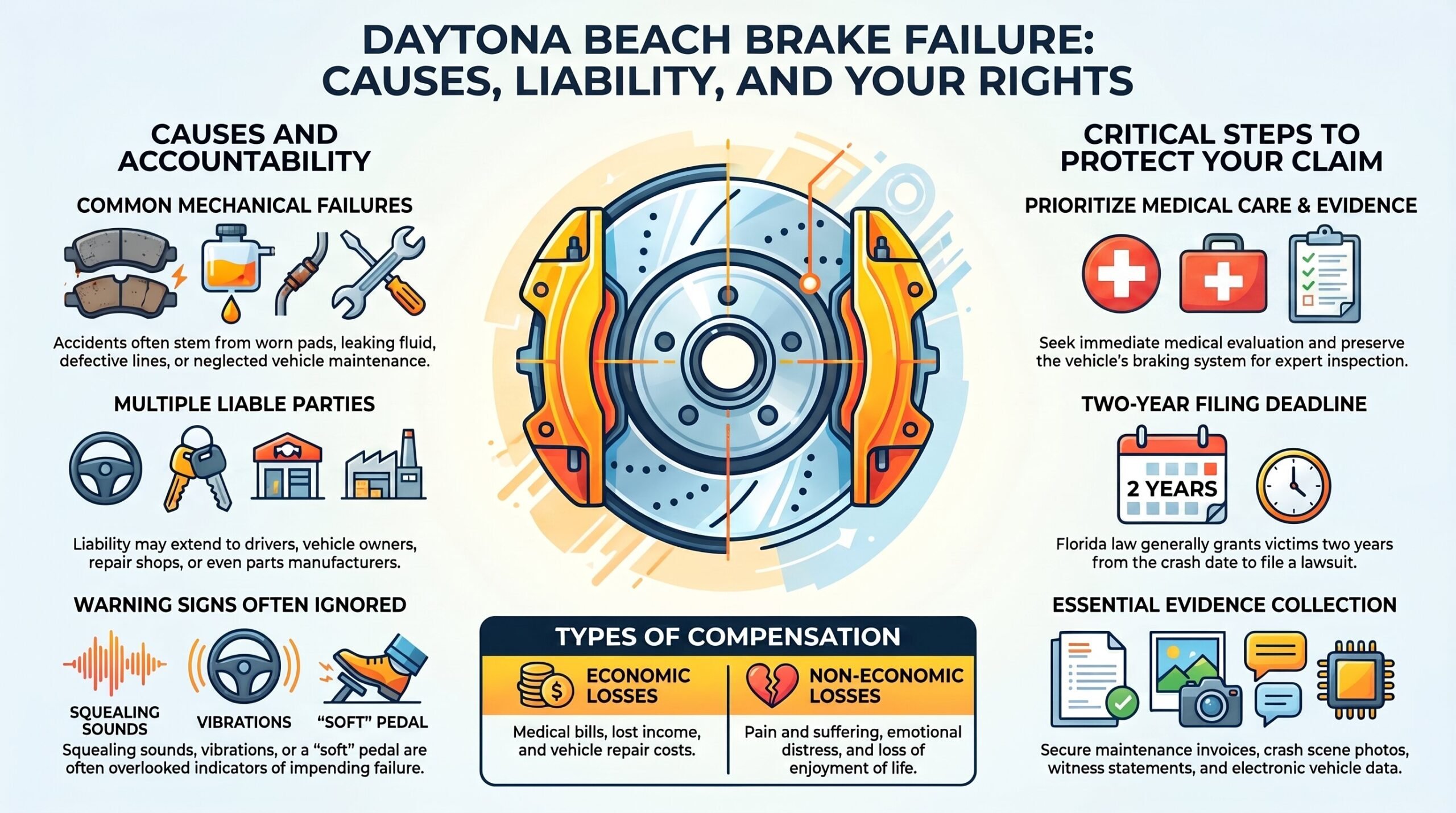
When a brake failure causes a collision in Daytona Beach, the resulting injury claim often requires a thorough investigation into the vehicle, maintenance history, roadway conditions, and the conduct of every involved party. A qualified legal team can help safeguard evidence, coordinate inspections, obtain repair records, and identify whether negligence by a driver, mechanic, manufacturer, or service provider contributed to the crash. This support allows injured individuals and their families to focus on recovery while their claim is prepared with care.
Legal assistance may also include organizing medical records, Lost Wage Documentation, and proof of daily limitations due to the injury. Counsel can evaluate insurance coverage, communicate with adjusters, and pursue fair compensation for medical expenses, income loss, and related harm. Property Damage Claims may be addressed alongside the injury matter, helping ensure vehicle losses are properly documented. Through disciplined advocacy, the claim can be presented clearly, responsibly, and persuasively.
OUR CONSULTATIONSARE FREE
START YOUR FREE CASE REVIEW

Understanding Daytona Beach Brake Failure Car Accident Injury Cases
Although brake failure may appear to be a straightforward cause of a crash, these cases often involve complex questions about maintenance, inspection, product safety, driver conduct, and roadway conditions. In Daytona Beach injury claims, the focus is not only on how the collision occurred, but also on whether reasonable care could have prevented harm. Attorneys review records, witness accounts, vehicle data, and expert findings to determine responsibility and preserve evidence that may otherwise be lost.
These cases can affect injured drivers, passengers, pedestrians, and families seeking stability after serious losses. A careful legal approach helps identify all accountable parties and supports fair recovery for medical expenses, lost income, pain, and long-term needs. Brake failure prevention and safe driving habits also remain important public concerns, because responsible vehicle use protects both individual motorists and the broader community. Through clear investigation and dedicated advocacy, these claims can promote accountability while supporting those harmed.
Common Causes of Daytona Beach Brake Failure Car Accident
Brake failure accidents in Daytona Beach often result from preventable mechanical issues, including worn brake pads, leaking brake fluid, defective brake lines, and poor vehicle maintenance. Each of these conditions can reduce stopping power, increase reaction distance, or cause a driver to lose control during critical moments. Identifying the cause of the brake failure is essential for determining liability, evaluating negligence, and preserving evidence in a potential injury claim.
Worn Brake Pads
Worn brake pads can severely reduce a vehicle’s stopping power, making them a common factor in Daytona Beach brake failure car accidents. As pads wear down, the braking system may require greater distance to slow or stop, placing pedestrians, passengers, and nearby motorists at risk. Drivers, repair shops, and vehicle owners share a responsibility to recognize grinding sounds, vibration, or reduced responsiveness before harm occurs.
Brake pad replacement should be performed promptly, especially for vehicles used in heavy traffic, in coastal humidity, or in stop-and-go conditions. Warning light delays can also contribute to danger when electronic alerts appear late or are ignored. Careful maintenance supports public safety and helps protect community members who depend on attentive drivers and properly serviced vehicles each day.
Leaking Brake Fluid
A leaking brake fluid line or component can cause a serious loss of hydraulic pressure, reducing a vehicle’s ability to slow or stop in time to prevent a car accident in Daytona Beach. Brake fluid leaks may develop around calipers, wheel cylinders, master cylinders, or fittings, often leaving stains, low reservoir levels, or a soft brake pedal. When drivers, owners, or service providers ignore warning signs, maintenance neglect may place passengers, pedestrians, and other motorists at unnecessary risk.
After a crash, careful documentation of evidence can help determine whether fluid loss contributed to the collision. Photographs, inspection reports, and repair shop records may show prior complaints, delayed service, or improper repairs. This information can support a clear investigation focused on accountability and community safety for injured victims and families seeking justice.
Defective Brake Lines
When brake lines become corroded, cracked, kinked, or improperly installed, the hydraulic pressure needed for safe stopping can drop suddenly and without adequate warning. In Daytona Beach traffic, this defect may leave a driver unable to slow for pedestrians, cyclists, emergency vehicles, or stopped cars. Defective lines may result from flawed materials, unsafe routing near heat or moving parts, or manufacturing errors that weaken the system before failure occurs.
A Brake line inspection can help determine whether damage reflects a product defect rather than ordinary wear. After a crash, investigators may review service records, vehicle history, and manufacturer notices to identify patterns. A recall investigation may also reveal known brake line hazards, supporting accountability for injuries and losses caused by preventable brake failure.
Poor Vehicle Maintenance
Although brake systems are designed for repeated use under demanding conditions, poor vehicle maintenance can allow small problems to develop into serious safety hazards. In Daytona Beach, delayed inspections, worn pads, low brake fluid, or corroded components may reduce stopping power when drivers must respond quickly. Neglect of brake service is especially concerning because it often develops gradually, making warning signs easier to overlook.
Responsible owners, fleet operators, and caregivers who transport others must recognize their road safety responsibilities and schedule timely maintenance. Related issues, including tire condition failures, can further increase stopping distance and vehicle instability. When combined with driver distraction risks, neglected maintenance may create conditions where a preventable collision becomes unavoidable. Careful review of service records may help determine whether maintenance failures contributed to a crash.


Legal Rights of Daytona Beach Brake Failure Car Accident Injury Victims
After a brake failure crash in Daytona Beach, injured victims may have the right to seek compensation from any party whose negligence or defective product contributed to the collision. These rights may include pursuing payment for medical care, lost income, reduced earning ability, pain, suffering, and other losses that affect daily service to family, work, and community.
Brake failure victims may seek compensation from negligent parties for medical costs, lost income, and lasting harm.
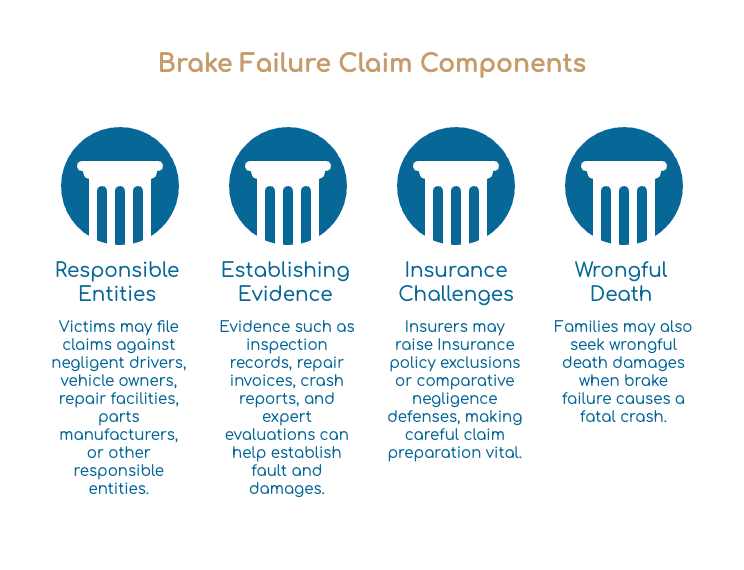
- Victims may file claims against negligent drivers, vehicle owners, repair facilities, parts manufacturers, or other responsible entities.
- Evidence such as inspection records, repair invoices, crash reports, and expert evaluations can help establish fault and damages.
- Insurers may raise Insurance policy exclusions or comparative negligence defenses, making careful claim preparation vital.
- Families may also seek wrongful death damages when brake failure causes a fatal crash.
A timely legal evaluation helps preserve evidence, meet filing deadlines, and protect the dignity and financial stability of those harmed while they rebuild their lives.
Why Do Daytona Beach Brake Failure Car Accident Injuries Happen?
Because braking systems depend on proper design, maintenance, and driver response, Daytona Beach brake failure car accident injuries often occur when one or more of these safeguards break down. Worn pads, leaking brake lines, contaminated fluid, overheated rotors, or defective components can reduce stopping power, leaving insufficient time to avoid impact. A Brake failure warning may appear through dashboard lights, grinding sounds, vibration, pulling, or a soft pedal, yet these signs are sometimes overlooked.
In other cases, preventable risks arise from poor driving habits, such as following too closely, speeding, or riding the brakes in traffic. Commercial and passenger vehicles may also lack functioning vehicle safety features, including anti-lock braking systems or stability controls. Regular service and careful pre-trip inspections help identify visible leaks, low fluid, tire issues, and pedal problems. When drivers, owners, mechanics, or manufacturers fail to address these risks, vulnerable road users may suffer serious, avoidable harm.
What Should You Do After a Daytona Beach Brake Failure Car Accident Injury?
After a Daytona Beach brake failure car accident injury, the injured person should seek medical care promptly, even when symptoms appear minor. Evidence from the accident scene, vehicle condition, maintenance records, and witness information should be preserved before it is lost or altered. Contacting an attorney can help protect legal rights, identify responsible parties, and guide the injury claim process.
Seek Medical Care
A crash victim’s first priority should be obtaining prompt medical evaluation, even when injuries seem minor at the scene. Brake failure collisions can cause concussions, internal injuries, spinal trauma, and soft-tissue damage that may not appear immediately. Medical providers can assess symptoms, order necessary tests, and create records linking the injury to the crash. Those records may later assist attorneys, insurers, caregivers, and family members in understanding the person’s needs.
If the victim is able, or if a helpful bystander is present, it may be appropriate to document the scene and identify eyewitnesses only after urgent medical needs are addressed. Delaying care can worsen injuries and create questions about causation. Timely treatment supports recovery, protects legal interests, and helps others respond responsibly.
Preserve Accident Evidence
Once immediate medical needs are addressed, preserving accident evidence can help determine whether brake failure, driver conduct, negligent maintenance, or a defective component contributed to the crash. Those assisting an injured person should act carefully, without disrupting safety efforts or official investigations. Photographs preservation should include images of vehicle damage, skid marks, roadway conditions, traffic signals, debris, visible injuries, and the vehicle’s position before removal, when safe and lawful.
The damaged vehicle should not be repaired, sold, or discarded until its braking system can be inspected. Witness statement collection is also important, because nearby drivers, passengers, pedestrians, or responders may describe sounds, smoke, warning signs, or vehicle behavior before impact. Police reports, towing records, maintenance documents, and dashcam footage may further support a clear, service-focused understanding of what occurred.
Contact An Attorney
Following a serious brake failure crash in Daytona Beach, contacting an attorney promptly can help protect the injured person’s rights and preserve potential claims. Counsel can review the crash facts, identify responsible parties, and coordinate investigations involving the vehicle, maintenance records, and car repair documentation. This guidance may be especially important when insurers question causation, vehicle condition, or the value of medical losses.
An attorney can develop an Insurance dispute strategy that addresses recorded statements, policy limits, liability defenses, and deadlines. Legal support also helps injured people and their families focus on treatment, service to others, and daily responsibilities while evidence is secured. By seeking timely representation, the injured person gains informed advocacy, structured communication, and a clearer path toward fair compensation under Florida law after the collision.
Critical Evidence in a Daytona Beach Brake Failure Car Accident Injury Case
Evidence in a Daytona Beach brake-failure car-accident injury case can determine whether the failure resulted from poor maintenance, defective parts, negligent repair, or another cause. Important evidence may include:
- Vehicle maintenance records
- Brake system inspection
- Crash scene evidence
- Expert accident analysis
A careful review of these materials helps establish fault, connect the brake failure to the collision, and support the injured party’s claim for damages.
Vehicle Maintenance Records
In a Daytona Beach brake-failure car-accident injury case, vehicle maintenance records can provide some of the most important evidence regarding whether the brakes were properly inspected, serviced, or repaired before the crash. These records may include service invoices, mileage logs, parts replacement histories, fleet maintenance schedules, and notes from mechanics or supervisors.
When reviewed carefully, they can reveal missed appointments, delayed repairs, recurring complaints, or cost-cutting decisions that placed others at risk. Brake recall documents may also show whether the vehicle owner received notice of a known defect and failed to act responsibly. In commercial vehicle cases, driver coaching records may help identify prior reports of braking problems or unsafe operating habits. Preserving these materials supports accountability and helps injured people pursue fair recovery.
Brake System Inspection
A brake system inspection can provide direct evidence of the vehicle’s mechanical condition following a Daytona Beach brake failure crash. Qualified examiners may assess pads, rotors, calipers, brake lines, master cylinder function, and fluid condition to determine whether wear, leakage, contamination, or improper repairs contributed to the collision. Brake pedal response testing may help show whether hydraulic pressure was consistent with safe operation before impact.
ABS sensor fault diagnosis can also identify electronic failures that affected braking control. For injured persons and those assisting them, these findings may clarify whether negligence involved maintenance providers, vehicle owners, manufacturers, or parts suppliers. Preserving the vehicle before repairs or disposal is consequently important, because inspection results can support fair accountability and informed decisions during an injury claim.
Crash Scene Evidence
Vehicle inspections often gain meaning when compared with evidence preserved at the collision scene. Skid marks, gouge patterns, debris fields, fluid trails, and final vehicle positions may help show whether braking occurred, failed, or was impaired before impact. Photographs, traffic camera footage, 911 records, and responding officer notes can also establish timing, roadway conditions, and witness observations.
In a Daytona Beach injury case, careful preservation of scene evidence supports the broader claim file and helps responsible parties understand the harm caused. Insurance documentation may link property damage findings to reported brake concerns, while medical billing updates may show the ongoing human consequences of the crash.
When collected promptly, these materials help protect an injured person’s account, preserve accountability, and support fair evaluation by insurers, attorneys, and other decision-makers involved.
Expert Accident Analysis
When brake failure is disputed, expert accident analysis may help determine how and why the collision occurred. Qualified reconstruction experts can examine vehicle damage, skid marks, roadway conditions, electronic data, and maintenance records to assess whether braking performance contributed to the crash. Their findings may clarify speed, stopping distance, driver reaction time, and the sequence of impact.
Aftermath documentation, including photographs, repair invoices, witness statements, and inspection reports, can support or challenge conclusions reached by opposing parties. In a Daytona Beach injury case, this analysis may assist attorneys in presenting facts accurately and with accountability. It may also help address Insurance company delays, especially when fault is contested or mechanical defects are denied. Careful expert review can strengthen claims and protect injured people seeking fair resolution.
Long-Term Effects of Daytona Beach Brake Failure Car Accident Injuries
Brake failure collisions in Daytona Beach can cause injuries that extend far beyond the initial crash, particularly when chronic pain conditions persist for months or years. Victims may also experience reduced mobility, limiting their ability to work, perform daily tasks, or maintain independence. Emotional trauma effects, including anxiety, sleep disruption, and fear of driving, may further complicate recovery and long-term damages.
Chronic Pain Conditions
Chronic pain can develop after a Daytona Beach brake failure car accident even when initial injuries appear manageable. Persistent neck, back, shoulder, or nerve pain may interfere with sleep, concentration, work duties, and family responsibilities. For injured individuals committed to serving others, untreated pain can gradually limit reliability and emotional endurance.
Medical providers may document recurring symptoms, diagnostic findings, and treatment responses to clarify how the collision caused lasting harm. Medication adherence planning can support safer pain control, especially when prescriptions, side effects, and follow-up care require careful coordination.
Physical therapy goals may address strength, flexibility, posture, and pain reduction without focusing on mobility loss. Consistent records of appointments, flare-ups, and functional limitations can help demonstrate the ongoing burden of chronic pain after brake failure-related trauma and resulting damages.
Reduced Mobility
Persistent pain after a Daytona Beach brake failure car accident may also lead to reduced mobility, especially when injuries affect the spine, hips, knees, ankles, shoulders, or major muscle groups. Limited movement can interfere with walking, lifting, driving, bathing, meal preparation, and caregiving responsibilities.
Some injured individuals may require canes, braces, wheelchairs, physical therapy, or modified work duties to remain safe and functional. Accessibility accommodations, including ramps, bathroom modifications, vehicle adjustments, and workplace changes, may become necessary to preserve independence and dignity.
Medical providers may also perform a driver condition assessment to determine whether limited strength, range of motion, or reaction ability affects safe vehicle operation. These limitations can increase reliance on family members, home health aides, and community support systems. Accurate documentation helps clarify long-term care needs.
Emotional Trauma Effects
Many individuals injured in a Daytona Beach brake failure car accident may experience emotional trauma that lasts long after the physical injuries begin to recover. Sudden loss of control, fear of impact, and memories of the collision can lead to anxiety, nightmares, irritability, and avoidance of driving. These effects may interfere with work, caregiving duties, relationships, and community involvement.
Traumatic stress recovery often requires consistent counseling, medical evaluation, and patient encouragement from trusted supporters. For those committed to serving injured people, recognizing emotional harm is crucial to responsible care. Long-term emotional support may include therapy, support groups, family education, and accommodations during recovery. When emotional trauma limits daily function, it should be carefully documented as part of the broader injury impact and legal evaluation.
Proving Liability in Daytona Beach Brake Failure Car Accident Injury Cases
How liability is proven in a Daytona Beach brake failure car accident depends on evidence showing why the braking system failed, who had control over the vehicle’s condition, and whether reasonable care was neglected. Investigators may review maintenance records, inspection reports, repair invoices, vehicle data, witness statements, and photographs from the crash scene. These materials can reveal whether a driver ignored warning signs, an owner failed to service the vehicle, a mechanic performed careless work, or a manufacturer supplied a defective part.
Florida’s Comparative Negligence rules may also affect responsibility when more than one party contributed to the collision. A clear timeline helps determine each party’s role and supports fair accountability. Damages Documentation is also crucial, as medical records, wage records, and treatment plans connect the injury to the brake failure event. Careful proof protects injured people, supports their recovery, and helps ensure that responsible parties are held accountable.
Dealing With Insurance Companies After a Daytona Beach Brake Failure Car Accident Injury
After a Daytona Beach brake failure car accident, insurance companies often assess the claim with close focus on vehicle maintenance, driver conduct, and the cause of the mechanical failure. Adjusters may request statements, repair records, photographs, and medical documentation, all of which can affect how fault and damages are evaluated. Careful coordination helps safeguard the injured person’s interests while allowing accurate information to be shared.
Policy communication errors can create unnecessary obstacles, especially when recorded statements or incomplete explanations appear to relocate blame. A lawyer may help ensure communications remain consistent, courteous, and supported by evidence. Brake failure cases may also involve pitfalls for underinsured motorists when the at-fault party lacks sufficient coverage to cover medical costs, lost income, and long-term needs.
Reviewing available policies, including personal injury protection and uninsured or underinsured motorist coverage, can help identify resources. This careful approach supports equitable treatment while preserving the dignity of all involved parties.
What to Expect During a Daytona Beach Brake Failure Car Accident Injury Claim Process
A Daytona Beach brake failure car accident injury claim typically begins with an initial case evaluation, where liability, damages, and available evidence are reviewed. The process may then involve gathering maintenance records, crash reports, witness statements, and expert analysis, followed by insurance claim negotiations. If a fair settlement cannot be reached, the claim may proceed toward litigation, where a court may determine fault and compensation.
Initial Case Evaluation
During the initial case evaluation, a Daytona Beach brake failure car accident lawyer typically reviews the circumstances of the crash, the nature of the suspected mechanical failure, and the injuries sustained by the claimant. This early consultation helps determine whether the claim may involve negligent maintenance, defective parts, driver conduct, or another contributing factor. The attorney may ask targeted questions about warning signs, prior repairs, vehicle ownership, road conditions, and immediate medical treatment.
This stage also establishes priorities for protecting the claimant’s position while serving the broader goal of accountability and safer roads. Evidence timelines and dashcam footage may be discussed to assess urgency and potential sources of evidence, without completing the full evidence review. The lawyer then explains possible legal options, communication expectations, and next steps.
Evidence Collection Process
Once the initial case evaluation identifies brake failure as a potential factor, evidence collection focuses on preserving proof before it is altered, repaired, lost, or destroyed. Attorneys may request inspection of the vehicle, brake components, repair records, maintenance history, crash reports, photographs, video footage, and electronic data, when available. This process helps determine whether the failure resulted from negligent maintenance, defective parts, improper repairs, or another cause.
Witness statement preservation is also important because memories can fade and contact information may become outdated. Statements from passengers, bystanders, mechanics, or first responders can clarify vehicle behavior before impact. Insurance documentation review may confirm coverage details, prior claims, repair disclosures, and communications made after the collision. Careful evidence gathering supports a clear understanding of responsibility while protecting the injured person’s rights.
Insurance Claim Negotiations
After evidence has been gathered and liability issues are more clearly understood, insurance claim negotiations typically focus on proving fault, documenting damages, and addressing coverage disputes. In a Daytona Beach brake failure claim, insurers may review maintenance records, repair invoices, crash reports, medical documentation, and witness statements before evaluating compensation. Adjusters may question whether the failure resulted from negligent maintenance, defective parts, or another driver’s conduct.
They may also raise property damage disputes, especially when vehicle repair costs, total loss values, or preexisting damage are contested. If available coverage appears insufficient, Underinsured motorist benefits may become important for protecting the injured person’s recovery. Careful communication, organized records, and service-minded advocacy help ensure that valid losses are presented clearly, respectfully, and accurately during each stage of negotiations.
Settlement Or Litigation
Evaluate the strength of the claim by comparing the evidence, available insurance coverage, injury severity, and disputed liability issues before deciding whether settlement or litigation is the more appropriate path. In many Daytona Beach brake failure cases, settlement may protect the injured person from delay, expense, and uncertainty, while still pursuing fair compensation. However, litigation may become necessary when insurers rely on Comparative fault defenses, minimize medical needs, or dispute whether defective maintenance caused the crash.
A lawyer may assess repair records, expert findings, witness statements, and medical documentation to challenge unfair insurance negotiation tactics. This process also supports the broader purpose of helping injured individuals regain stability and protect their families. If negotiations fail, filing suit can preserve rights and apply structured pressure toward resolution.
Compensation for Daytona Beach Brake Failure Car Accident Injury Damages
When a brake failure causes a serious crash in Daytona Beach, injured victims may be entitled to compensation for both financial losses and the personal impact of their injuries. A well-supported claim may address emergency treatment, ongoing care, rehabilitation needs, lost income, reduced earning capacity, and other harm tied to the collision. Because brake failure cases often involve complicated causes, a careful investigation can help identify whether a driver, repair shop, parts manufacturer, or other party failed in a duty of care.
Compensation depends on proof. Negligence Evidence, Medical Records, witness statements, repair invoices, inspection reports, and expert analysis may show how the failure occurred and how the injuries resulted. These materials are also important when claimants face Insurance Denials, Liability Disputes, or attempts to shift blame. By organizing the facts with care, legal advocates help injured people pursue recovery while preserving dignity, stability, and access to necessary support.
Economic vs Non-Economic Damages in Daytona Beach Brake Failure Car Accident Cases
In Daytona Beach brake-failure car-accident cases, damages are generally divided into economic and non-economic categories. Economic damages may include medical bills, lost income, and repair costs, while non-economic damages may include pain and suffering and loss of enjoyment of life. Proving the value of each loss requires clear documentation, credible testimony, and a careful assessment of how the crash affected the injured person’s life.
Economic Damage Examples
Economic damages in a Daytona Beach brake failure car accident case are the measurable financial losses tied to the crash, including medical bills, lost income, reduced earning capacity, vehicle repair or replacement costs, and other out-of-pocket expenses. These losses are often proven through records that help restore stability for an injured person and those depending on that person’s care.
Medical invoices, prescription receipts, rehabilitation costs, and mileage for treatment may be included when they directly relate to the collision. Lost wages calculations may rely on pay stubs, tax records, employer statements, and missed work dates. If injuries limit future work, vocational and financial evidence may support reduced earning capacity. Vehicle repair costs, towing charges, rental car fees, and replacement estimates may also document the financial impact of brake failure.
Non-Economic Damage Examples
Non-economic damages in a Daytona Beach brake failure car accident case address personal losses that lack a fixed invoice, receipt, or wage record but still seriously affect daily life. These losses may include Pain and suffering, emotional distress, loss of enjoyment of life, and reduced ability to participate in family, community, or service-focused activities.
A severe injury may prevent a person from mentoring others, volunteering, worshiping comfortably, or caring for loved ones with the same steadiness as before. The disability impact may also involve limited mobility, chronic discomfort, anxiety while traveling, or dependence on others for ordinary tasks. In these cases, non-economic damages recognize how an injury changes dignity, independence, relationships, and the person’s capacity to contribute meaningfully.
Proving Damage Value
After a serious brake-failure crash, proving the damage value requires more than listing medical bills or describing pain. Economic damages must be supported through invoices, wage records, repair estimates, and expert projections for future care or lost earning capacity. Medical documentation timelines help connect treatment, diagnosis, and recovery needs to the collision, reducing disputes about causation.
Non-economic damages require organized evidence showing how injuries changed daily life, family responsibilities, and community participation. Pain impact proof may include physician notes, therapy records, photographs, journals, and testimony from people who observed functional limitations. In Daytona Beach brake failure cases, careful valuation allows injured people to seek fair compensation while helping the legal process ensure accountability, promote safety, and support responsible care for others harmed by preventable mechanical failure.
When a Daytona Beach Brake Failure Car Accident Injury Case Goes to Trial vs Settlement
When a Daytona Beach brake failure car accident injury case is evaluated for settlement or trial, the strength of the evidence often determines the most practical path forward. A settlement may be appropriate when liability is clear, damages are well supported, and the insurer recognizes the full impact of the injuries. Emergency medical documentation, repair records, expert inspection findings, and witness statements can help establish both causation and loss value.
Trial may become necessary when the responsible party disputes the brake defect, minimizes the injury, or refuses fair compensation. An effective insurance denial response may also shape whether negotiations continue or litigation becomes the better route.
Attorneys assess the risks, costs, timelines, and potential range of verdicts before advising on a course. For injured people and their families, this process should support recovery, accountability, and service to long-term needs. Each decision should be guided by evidence, compassion, and practical judgment rather than by pressure from an insurer.
Florida Laws That May Affect Your Daytona Beach Brake Failure Car Accident Case
Because Florida traffic and insurance laws can materially influence a brake failure claim, an injured person’s legal options often depend on how fault, coverage, and deadlines apply to the crash. In Daytona Beach, these rules help determine who must provide compensation and how evidence should be evaluated after a mechanical failure.
- Comparative negligence rules may reduce recovery if the injured person shares responsibility, such as by ignoring warning signs or delaying repairs.
- Florida no-fault coverage generally requires an injured driver to first seek certain benefits through personal injury protection, regardless of who caused the crash.
- Vehicle owners and commercial operators may face liability when poor maintenance, missed inspections, or unsafe service practices contribute to brake failure.
- Repair shops, parts suppliers, or manufacturers may be held liable when defective components or negligent work harm others on the road.
Understanding these laws helps injured people protect their rights while pursuing accountability and community safety.
The Statute of Limitations for Daytona Beach Brake Failure Car Accident Injury Cases
How long an injured person has to file a lawsuit can be one of the most important issues in a Daytona Beach car accident involving a brake failure. Florida generally gives injured parties two years from the date of the crash to file a personal injury lawsuit. If a claim is not filed within that period, the court may dismiss it, even when the injuries are serious, and the brake defect appears clear.
This deadline also matters because evidence can become harder to preserve with time. Vehicle data, maintenance records, repair histories, and witness memories may become less reliable as months pass. Insurance investigation timelines may also affect how quickly facts are gathered, evaluated, and disputed.
In some cases, Comparative negligence defenses may be raised, alleging that the injured person shared responsibility for the crash. Understanding the filing deadline helps protect the legal rights of those harmed while promoting accountability and careful attention to safety.
How a Daytona Beach Brake Failure Car Accident Lawyer Can Help You
After a brake failure collision, a Daytona Beach car accident lawyer can help identify the cause of the crash, preserve key evidence, and determine which parties may be legally responsible. This support can serve injured people, grieving families, and the wider community by promoting accountability and safer vehicle practices.
Legal guidance after a brake failure crash can help preserve evidence, identify liability, and support accountability.
- Investigates mechanical failure: The lawyer may review maintenance records, inspection reports, repair history, and Brake failure symptoms reported before the collision.
- Identifies responsible parties: Liability may involve a negligent driver, a repair shop, a parts manufacturer, a dealership, or another entity connected to the unsafe brakes.
- Handles insurance communications: Legal representation can protect the injured person from insurance adjuster tactics that minimize fault, dispute injuries, or pressure early settlements.
- Builds a damages claim: The lawyer may document medical expenses, lost income, pain, rehabilitation needs, and long-term limitations with organized evidence.
Through careful case preparation, counsel helps protect recovery while encouraging responsible conduct.
When to Contact a Daytona Beach Brake Failure Car Accident Lawyer
Timely legal guidance can strongly affect the outcome of a brake failure accident claim, particularly when vehicle evidence, repair records, and witness accounts may disappear quickly. A person injured in Daytona Beach should consider contacting a brake failure car accident lawyer as soon as emergency needs are addressed and safety has been secured. Early action helps preserve service histories, inspection reports, damaged parts, and electronic vehicle data before they are altered, lost, or discarded.
Contact is also important when injuries require ongoing care, because Medical documentation may connect the crash to treatment needs, work limitations, and future expenses. Families caring for an injured loved one can help by organizing records, noting symptoms, and tracking communication with insurers.
Legal contact becomes especially urgent when an insurer delays responding, questions fault, minimizes injuries, or uses insurance-denial tactics. Prompt consultation can help meet deadlines, support orderly decision-making, and reduce the risk of vital evidence being overlooked.
Why You Need an Experienced Daytona Beach Brake Failure Car Accident Lawyer
Because brake failure crashes often involve more than ordinary driver negligence, an experienced Daytona Beach brake failure car accident lawyer can help identify the full range of responsible parties and evidence. These cases may require review of maintenance records, inspection reports, parts histories, vehicle recalls, and crash data. A lawyer familiar with these matters can address Brake failure myths, such as the assumption that every failure is sudden, unavoidable, or solely the driver’s fault.
Experience also helps protect injured people and grieving families from insurance missteps. Insurers may request broad statements, minimize mechanical evidence, or assign blame before the facts are complete. Counsel can preserve crucial proof, coordinate expert analysis, and present damages with the care required to support medical needs, lost income, and long-term recovery. This guidance serves not only the injured person, but also the family and community members who rely on fair accountability after preventable roadway harm.
How to Choose the Right Daytona Beach Brake Failure Car Accident Lawyer for Your Case
When selecting legal representation, the injured person should look for a lawyer with specific experience handling crashes involving mechanical failure, disputed liability, and detailed evidence. Brake failure cases often require careful review of maintenance records, vehicle inspections, repair history, and expert opinions, so the attorney’s background should reflect disciplined case preparation.
A suitable lawyer should also demonstrate strong Client communication, including clear explanations of legal options, case challenges, and expected responsibilities. This helps the injured person make informed decisions while focusing on recovery and service to family, work, and community obligations.
The injured person should ask how the lawyer evaluates fault, preserves evidence, and works with qualified experts. It is also important to discuss the likely settlement timeline, recognizing that serious injury claims may require patience and thorough negotiation. A lawyer who combines technical understanding, steady guidance, and careful advocacy may be better prepared to pursue fair compensation.
About The Law Offices of Anidjar & Levine
The Law Offices of Anidjar & Levine represents injured people in Daytona Beach and throughout Florida, including those harmed in crashes involving suspected brake failure.
The firm works to protect clients’ interests while they focus on recovery, family responsibilities, and community obligations after serious collisions.
Its legal team evaluates maintenance records, inspection histories, driver conduct, and manufacturer issues to determine how Negligence standards may apply.
The firm also considers potential liability defenses, including claims involving improper upkeep, sudden mechanical failure, or disputed causation.
This careful review helps identify responsible parties and preserve evidence before it is lost.
The firm develops each settlement strategy with attention to medical needs, lost income, property damage, and long-term effects.
When insurers do not offer fair compensation, trial readiness remains central to its approach.
Through organized case preparation and direct advocacy, The Law Offices of Anidjar & Levine serves clients seeking accountability after preventable harm.
Frequently Asked Questions
Can a Brake Failure Claim Involve a Vehicle Recall?
Yes, a brake failure claim can involve a vehicle recall when the defect relates to braking components. An evidence inspection may determine whether the recalled part contributed to the crash, and whether repairs were completed. If the defect existed before the incident, the manufacturer may be liable. Service records, recall notices, and expert findings help clarify responsibility, allowing injured persons and their advocates to pursue accountability while protecting public safety.
What if My Rental Car’s Brakes Failed?
If a rental car’s brakes fail, the injured party should preserve evidence, report the defect, and promptly seek an Expert Inspection. Rental Car Liability may involve the rental company, maintenance provider, manufacturer, or prior driver, depending on negligent service, ignored warnings, or defective parts. Documentation, photos, repair records, and witness accounts help establish responsibility. A careful investigation supports fair accountability while protecting others from preventable harm on public roads.
Can Weather Conditions Affect Brake Failure Claims?
Yes. Weather conditions can affect brake failure claims by shaping how investigators evaluate causation, maintenance, and driver conduct. Hydroplaning can reduce braking control, while road salt can corrode brake lines, calipers, and related components over time. Those serving injured individuals should preserve inspection records, weather reports, and repair history. Such evidence helps determine whether failure resulted from negligent maintenance, hazardous conditions, or unavoidable environmental factors beyond reasonable control.
Do Older Vehicles Make Brake Failure Cases Harder to Handle?
Yes. An older vehicle can make brake failure cases harder because age often complicates evidence challenges related to ordinary wear, prior repairs, and component deterioration. Maintenance history becomes central, as consistent service records may support responsible ownership, while gaps may complicate liability. Proof requirements often demand expert inspection, preserved parts, and clear timelines. Those assisting injured people should promptly gather records, identify responsible parties, and protect vital evidence before it is lost.
Can Passengers File Claims After Brake Failure Crashes?
Yes, passengers may file claims after brake failure crashes when injuries result from another party’s negligence. A careful review of insurance coverage, liability distribution, and vehicle maintenance history helps identify responsible parties. Evidence preservation is important, including the preservation of damaged components, repair records, and scene documentation. Witness statements may also clarify how the failure occurred. Those assisting injured passengers should encourage prompt reporting, medical evaluation, and organized documentation to protect potential claims.
—————————
Brake failure accidents in Daytona Beach can involve intricate questions of negligence, maintenance, product defects, and liability.
Injured victims may face medical costs, lost income, and lasting physical harm.
A qualified Daytona Beach Car Accident Lawyer can evaluate the evidence, identify responsible parties, and pursue appropriate compensation.
The Law Offices of Anidjar and Levine provides focused legal guidance for those seeking accountability after a serious collision caused by brake failure.