The Law Offices of Anidjar and Levine helps injured people protect evidence, identify responsible parties, and pursue compensation after crashes involving trucks, delivery vans, buses, or service vehicles. These cases may involve driver fatigue, poor maintenance, overloaded cargo, negligent hiring, or unsafe company policies.
Legal support can address medical bills, lost income, future care, insurance disputes, and comparative negligence issues.
For related collision claims, a Daytona Beach Car Accident Lawyer can also explain your options.
The sections below explain the claims process, evidence needs, and when legal help may matter most.
Main Takeaways
- A Daytona Beach commercial vehicle accident lawyer can identify liable parties beyond the driver, including employers, owners, insurers, and maintenance contractors.
- Prompt evidence preservation may protect vehicle data, inspection records, electronic logs, photos, witness statements, and crash scene details.
- Common crash causes include driver fatigue, distraction, speeding, poor maintenance, overloaded cargo, inadequate training, and unsafe route planning.
- Compensation may include medical expenses, lost income, reduced earning capacity, pain-related losses, and other accident-related damages.
- Legal guidance can help manage insurance disputes, claim deadlines, comparative negligence issues, and Florida’s context-specific injury limits.


How We Can Help With Your Daytona Beach Commercial Vehicle Accident Injury Claim
After a commercial vehicle accident in Daytona Beach, an injured person may face medical bills, lost income, insurance disputes, and uncertainty about who is legally responsible. A lawyer can provide steady guidance by organizing records, preserving evidence, and communicating with insurers, employers, and medical providers. This support allows the injured person and family members to focus on recovery and practical needs.
The legal team may explain Insurance coverage basics, including liability policies, uninsured motorist coverage, and possible layered commercial policies. It may also track the Florida claim timeline, helping ensure notices, documentation, and deadlines are handled with care. When service to others is a central value, careful advocacy can protect the household from unnecessary pressure while promoting accountability. The lawyer may evaluate damages, consult experts, and pursue settlement negotiations that account for medical needs, lost wages, and long-term effects. If a fair resolution is not offered, litigation may become necessary.
OUR CONSULTATIONSARE FREE
START YOUR FREE CASE REVIEW

Understanding Daytona Beach Commercial Vehicle Accident Injury Cases
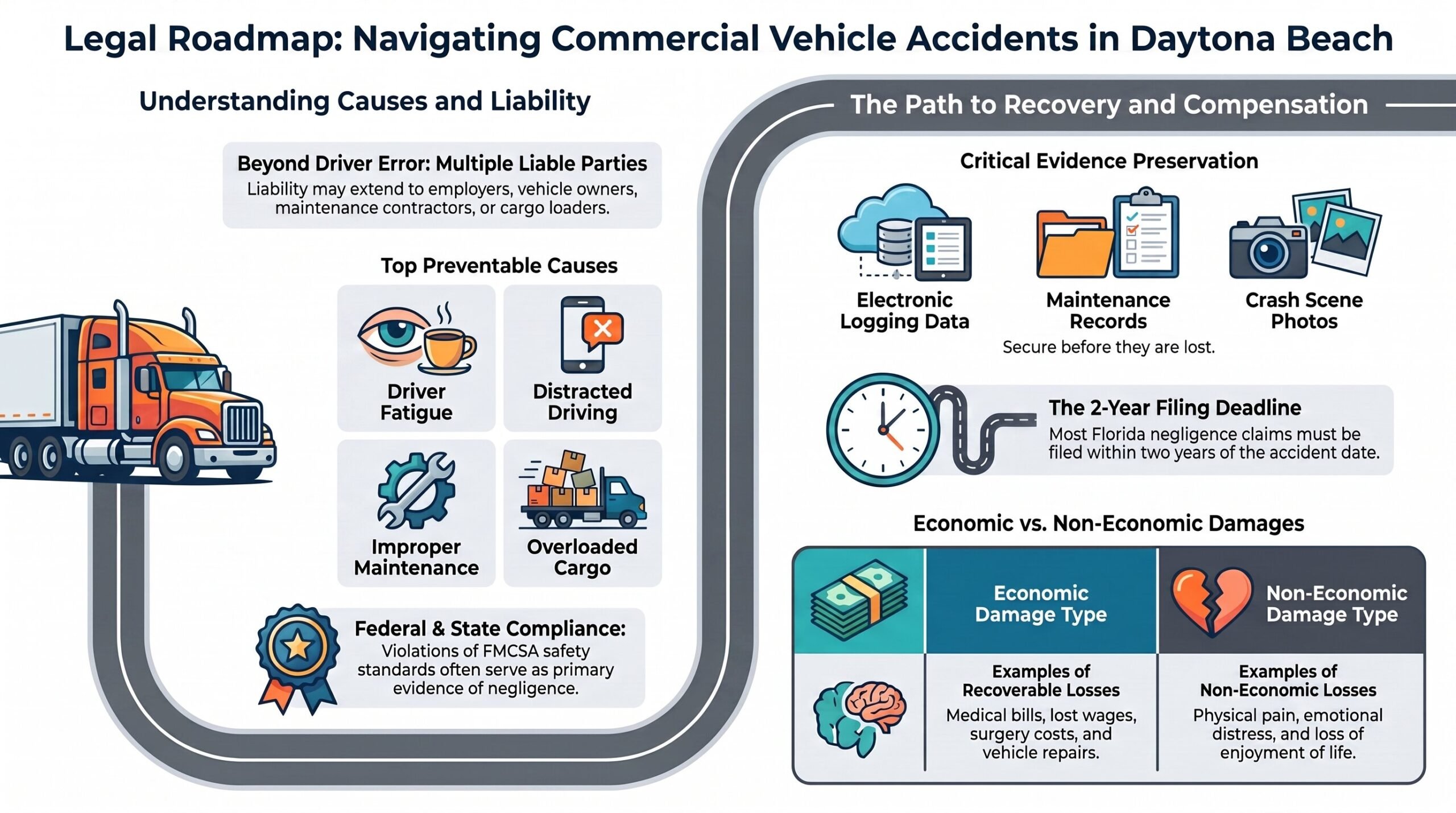
Understanding how these cases develop begins with recognizing that commercial vehicle accidents often involve more than a single driver’s mistake. Injured individuals may face claims involving employers, vehicle owners, insurers, maintenance contractors, or other responsible parties. Each role must be examined with care, because the outcome can affect compensation for medical care, lost income, and long-term limitations.
A thorough case review often begins soon after the crash. Evidence preservation is crucial, including vehicle data, inspection records, photographs, medical documentation, and communications related to the commercial vehicle. Witness statements may also help clarify events, identify responsible parties, and support the injured person’s account.
These cases require disciplined attention to deadlines, documentation, and the full extent of harm suffered. A Daytona Beach commercial vehicle accident lawyer can help protect the injured person’s interests while pursuing accountability in a manner consistent with service, fairness, and lawful responsibility after a serious collision.
Common Causes of Daytona Beach Commercial Vehicle Accident
Commercial vehicle accidents in Daytona Beach often result from preventable conditions, including driver fatigue, distracted driving, improper vehicle maintenance, and overloaded commercial trucks. Each factor can impair vehicle control, increase stopping distances, or reduce a driver’s ability to respond to traffic hazards. Identifying the cause is critical for determining liability, preserving evidence, and evaluating the full scope of an injury claim.
Driver Fatigue
When drivers spend long hours behind the wheel, fatigue can reduce alertness, slow reaction time, and impair judgment in ways that resemble alcohol or drug impairment. In Daytona Beach, commercial drivers may face demanding delivery schedules, overnight routes, and pressure to continue operating despite clear signs of exhaustion. These conditions can place passengers, motorists, pedestrians, and workers at serious risk.
Route planning errors may intensify the danger by creating unrealistic timelines, limited rest opportunities, or extended driving through congested areas. Responsible carriers can help prevent harm through lawful scheduling practices, meaningful supervision, and reliable fatigue reporting systems that encourage early intervention. When fatigue contributes to a crash, investigators may examine logs, dispatch records, rest periods, and company policies to identify preventable failures and protect injured community members.
Distracted Driving
Fatigue is not the only condition that can distract a driver from the safe operation of a large vehicle. Distracted driving remains a significant cause of commercial vehicle crashes in Daytona Beach, especially when operators divide attention between traffic, delivery demands, and electronic devices. Phone usage and text messaging can delay reaction time, reduce awareness, and prevent drivers from recognizing sudden hazards.
Even brief glances away from the roadway may endanger motorists, cyclists, and distracted pedestrians near intersections or beachside corridors. Lane change distractions are also dangerous, as commercial vehicles require additional space and careful mirror checks before moving safely. Those who serve injured individuals should recognize how distraction can reveal preventable negligence and support a careful review of driver conduct, company policies, and available evidence.
Improper Vehicle Maintenance
Although driver conduct is often central to a crash investigation, improper vehicle maintenance can be an equally important cause of commercial vehicle accidents in Daytona Beach. Commercial carriers, fleet owners, mechanics, and inspection personnel may share responsibility for repairs when neglected service poses a danger to motorists, passengers, pedestrians, or workers. Faulty brakes can increase stopping distance, especially in traffic near intersections, work zones, and coastal routes. Likewise, bad tire maintenance may lead to blowouts, loss of control, or sudden lane departures.
Maintenance records, inspection logs, repair invoices, and driver reports often help determine whether a preventable hazard was ignored. These issues may also create insurance disputes, particularly when companies deny notice of defects or shift blame. Careful review helps protect injured people and supports accountability after serious commercial crashes.
Overloaded Commercial Trucks
Because excess weight changes how a commercial vehicle handles, overloaded trucks can create severe hazards on Daytona Beach roads. When cargo exceeds Truck weight limits, braking distance increases, direction becomes less responsive, and tires, axles, or suspension systems may fail under strain. These risks are especially serious near intersections, bridges, construction zones, and beachside traffic corridors where drivers, cyclists, and pedestrians rely on predictable vehicle movement.
Overloading may result from rushed loading practices, poor supervision, inaccurate weight records, or pressure to deliver more goods in fewer trips. Safety compliance requires carriers, loaders, and drivers to verify cargo weight, secure freight properly, and follow federal and Florida regulations. When these responsibilities are ignored, an investigation may reveal preventable negligence that placed the public in danger and harmed others.


Legal Rights of Daytona Beach Commercial Vehicle Accident Injury Victims
Injured victims of commercial vehicle accidents in Daytona Beach may have the right to pursue compensation when another party’s negligence contributed to the crash. These rights can include recovery for medical care, lost income, reduced earning capacity, and pain-related losses.
Families caring for injured loved ones should understand how legal rules may affect the available recovery.
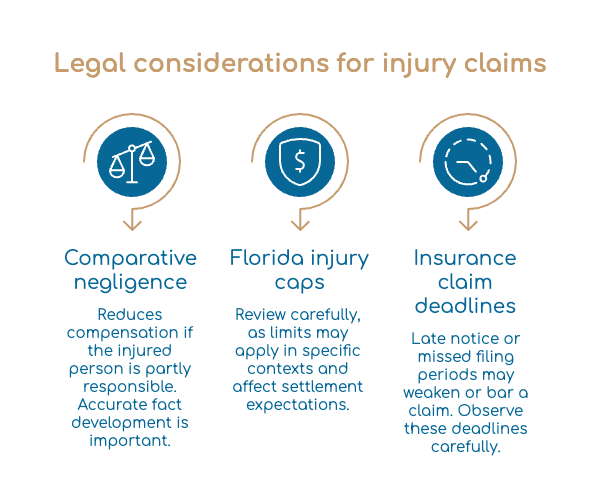
- Comparative negligence rules may reduce compensation if the injured person is found partly responsible, making accurate fact development important.
- Florida injury caps should be reviewed carefully, since limits may apply in specific contexts and can affect expectations during settlement discussions.
- Insurance claim deadlines must be observed, because late notice or missed filing periods may weaken or bar a claim.
Thorough records also support fair evaluation. Medical documentation errors, gaps in treatment, or unclear diagnoses can create disputes over injury severity. Careful legal guidance helps preserve claims while victims focus on recovery.
Why Do Commercial Vehicle Accidents on Daytona Beach Happen?
Understanding the legal rights available after a crash also requires examining how injuries in commercial vehicle accidents occur. These injuries often result from preventable safety failures within transportation operations. Large trucks, delivery vans, buses, and service vehicles demand careful maintenance, qualified drivers, and disciplined oversight. When companies neglect inspections, ignore worn brakes, overload cargo, or pressure drivers to meet unrealistic schedules, the risk to the public increases.
Truck route planning can also influence crash risk, especially when drivers are sent through congested roads, narrow corridors, or areas unsuitable for large vehicles. Poor planning may place vulnerable motorists, cyclists, pedestrians, and passengers in harm’s way. Driver fatigue, distraction, speeding, and inadequate training can further contribute to serious collisions.
Driver background checks serve an important protective function because prior safety violations, a history of impaired driving, or licensing problems may reveal preventable risks. When these safeguards fail, injuries may reflect broader organizational negligence rather than a single roadway mistake.
What Should You Do After a Daytona Beach Commercial Vehicle Accident Injury?
After a Daytona Beach commercial vehicle accident, an injured person should seek prompt medical care, even when symptoms appear minor. The crash should also be carefully documented, including photographs, witness statements, police reports, and any available details about the commercial vehicle. Contacting an attorney early can help preserve evidence, address insurer communications, and protect the injured person’s legal rights.
Seek Medical Care
Every person hurt in a Daytona Beach commercial vehicle accident should seek medical care as soon as possible, even when injuries appear minor at the scene. Prompt evaluation helps medical professionals check for Hidden Injuries, including concussions, internal bleeding, soft tissue damage, or spinal trauma that may not cause immediate pain. Timely care also supports recovery, allowing an injured person to return to family, work, and community responsibilities with greater confidence.
Medical providers may recommend diagnostic testing, medication, therapy, or referrals to consultants based on the person’s condition. Follow-up appointments should be attended consistently, because symptoms can change as swelling, inflammation, or nerve irritation develops. Continuing care shows respect for the recovery process and helps ensure that no serious condition is overlooked or left untreated.
Document The Crash
When it is safe to do so, a person injured in a Daytona Beach commercial vehicle accident should begin documenting the crash and the conditions surrounding it. Careful records can help preserve facts that may later fade, change, or become disputed. Photo and video documentation should include vehicle positions, damage, skid marks, traffic signals, road hazards, weather conditions, visible injuries, license plates, company markings, and any cargo involved.
If bystanders, passengers, or nearby workers observed the event, witness statements should be gathered respectfully, with names and contact information recorded when possible. Notes should also identify responding officers, emergency medical personnel, and the commercial vehicle’s employer or identifying numbers. These steps support accurate reporting, protect the injured person’s interests, and help responsible parties serve the truth with care.
Contact An Attorney
Because commercial vehicle claims often involve multiple parties and strict evidence requirements, an injured person should contact an attorney as soon as practical after the crash. Legal guidance can help protect the injured person’s rights while allowing them to focus on recovery and the needs of family, work, and community. An attorney may identify responsible parties, preserve driver logs, maintenance records, and electronic data, and address insurer communications.
Early involvement also supports the timely collection of witness statements before memories fade or witnesses become difficult to locate. Counsel can monitor the insurance claim timeline, ensure required notices are completed, and evaluate settlement offers with care. When injuries affect daily service, employment, or caregiving responsibilities, informed representation helps pursue fair compensation through a disciplined, evidence-based process after a Daytona Beach commercial vehicle accident.
Critical Evidence in a Daytona Beach Commercial Vehicle Accident Injury Case
Significant evidence in a Daytona Beach commercial vehicle accident injury case often determines liability, causation, and the full scope of damages. Essential materials may include: 1. driver qualification records, 2. vehicle maintenance logs and electronic logging data, and 3. crash scene evidence such as photographs, measurements, and witness information. These records can reveal whether the driver, carrier, or another party failed to meet required safety standards.
Driver Qualification Records
Although many commercial vehicle crash investigations begin with the driver’s conduct at the scene, driver qualification records can reveal whether the driver should have been behind the wheel in the first place. These files may include license verification, medical certifications, driving history, prior violations, training documentation, and company hiring records. In a Daytona Beach injury case, such evidence may show whether a carrier acted responsibly before assigning a driver to serve the public on Florida roads.
Careful review can identify expired credentials, ignored safety concerns, or incomplete background checks. For injured individuals and their families, these records help clarify whether preventable choices contributed to the collision. They also support accountability when a company’s screening practices placed community safety at unnecessary risk.
Vehicle Maintenance Logs
When a commercial vehicle is involved in a serious collision, maintenance logs can help determine whether mechanical neglect contributed to the crash. These records may show whether brakes, tires, lights, guiding systems, and other essential components were inspected and repaired on schedule. For injured people and those serving them, this evidence can clarify whether a preventable failure placed the public at risk.
Maintenance files may include inspection checklists, repair invoices, mechanic notes, and safety audit reports. Gaps, repeated defects, or ignored service recommendations may reveal compliance violations by the carrier or maintenance provider. These findings can also connect to broader safety practices, including driver training on pre-trip inspections. Careful review of maintenance logs helps establish accountability, preserve accurate facts, and support a well-documented injury claim.
Electronic Logging Data
Because many commercial vehicles now use electronic logging devices, this data can provide a precise account of driver activity before a Daytona Beach crash. These records may show driving hours, rest periods, engine movement, location history, and possible violations of federal hours-of-service rules. When reviewed with care, electronic logs can help determine whether fatigue, scheduling pressure, or noncompliance contributed to unsafe operation.
They may also be compared with Driver qualifications to assess whether the operator was properly trained and authorized for the trip. Prompt preservation is important because data may be overwritten or lost if requests are not made in a timely manner. As part of post-crash documentation, electronic logging records can support a clearer understanding of responsibility and help injured persons pursue accountability through a well-supported commercial vehicle accident claim.
Crash Scene Evidence
Electronic logging data can explain a driver’s activity before a collision, but crash-scene evidence often shows how the impact occurred. Skid marks, debris fields, gouge marks, vehicle resting positions, and damaged roadway structures may help clarify speed, direction, braking, and points of contact. In a Daytona Beach commercial vehicle injury case, careful preservation of this evidence can support a fair assessment of responsibility and damages.
Investigators may photograph the scene, measure distances, inspect traffic controls, and review nearby camera footage before conditions change. Digital forensics can also recover location data, onboard system information, or surveillance files tied to the crash. Witness interviews provide another important layer, especially when bystanders, passengers, or first responders describe events that physical evidence alone cannot fully explain.
Long-Term Effects of Daytona Beach Commercial Vehicle Accident Injuries
Commercial vehicle accident injuries in Daytona Beach may create lasting consequences, including chronic pain conditions that affect daily function and quality of life. These injuries can also reduce earning capacity when physical limitations, cognitive symptoms, or medical restrictions interfere with employment. Ongoing medical needs, such as therapy, medication, sub-specialty consultation, or future procedures, often become central issues in evaluating the full impact of a claim.
Chronic Pain Conditions
Chronic pain often becomes one of the most disruptive long-term effects of a Daytona Beach commercial vehicle accident, especially when injuries involve the spine, joints, nerves, or soft tissues. Persistent pain can limit mobility, interrupt sleep, and reduce a person’s ability to care for family, assist neighbors, or remain active in community service. Medical records, diagnostic testing, expert opinions, and consistent treatment histories are important for Proving Medical Causation when symptoms continue beyond the initial recovery period.
Commercial vehicle cases may be scrutinized by insurers seeking to distinguish ongoing pain from the collision, prior conditions, or normal degeneration. This scrutiny can lead to Insurance Claim Denials when documentation is incomplete. Careful evidence development helps show how chronic pain affects daily function, dignity, and long-term wellbeing.
Reduced Earning Capacity
Long-term physical limitations can also reduce a person’s ability to earn income after a Daytona Beach commercial vehicle accident. When injuries restrict lifting, standing, driving, or performing skilled tasks, the injured person may be unable to return to the same position or work schedule. This loss can affect household stability, service obligations, and future career growth.
Reduced earning capacity may include lower wages, fewer hours, missed promotions, or the need to accept less demanding employment. For commercial drivers, driver compensation may reflect lost routes, licensing concerns, or reduced physical readiness. In some cases, a Workplace settlement may not fully address future income losses tied to lasting impairment. Careful evaluation of employment history, vocational limits, and projected earnings helps measure the financial harm caused by the accident.
Ongoing Medical Needs
After a serious commercial vehicle accident in Daytona Beach, medical care may continue well beyond the initial emergency treatment and hospital discharge. Injured individuals may require follow-up visits, diagnostic testing, surgeries, medications, assistive devices, and coordinated subspecialist care.
Pain management plans can become crucial when nerve damage, spinal injuries, fractures, or soft tissue trauma cause persistent limitations. These plans may include therapy, medication monitoring, injections, or other structured treatment intended to preserve function and dignity.
Rehabilitation costs may also become a major concern, especially when physical therapy, occupational therapy, or in-home support is needed for months or years. A careful assessment of ongoing medical needs helps identify future expenses and supports fair recovery. This documentation allows advocates to serve injured people with accuracy, compassion, and responsibility after serious commercial vehicle collisions.
Proving Liability in Daytona Beach Commercial Vehicle Accident Injury Cases
Establishing liability in a Daytona Beach commercial vehicle accident requires a careful review of the driver’s conduct, the vehicle owner’s responsibilities, and any company policies that may have contributed to the crash. Investigators may examine logbooks, maintenance records, hiring practices, training materials, and route instructions to determine whether safety duties were ignored. When a driver was speeding, distracted, fatigued, or improperly trained, those facts may support a claim against more than one responsible party.
Strong evidence also helps protect injured people who serve their families, workplaces, and communities. Accident photos can preserve roadway conditions, vehicle damage, and visible hazards. Medical records connect the collision to documented injuries and future care needs.
An Expert witness may explain braking distances, cargo securement, or industry safety standards. Timely action is crucial because evidence can disappear, witnesses may become unavailable, and insurance deadlines can affect the preservation of important claims under Florida law.
Dealing With Insurance Companies After a Daytona Beach Commercial Vehicle Accident Injury
When insurance companies become involved in a Daytona Beach commercial vehicle accident injury claim, the process often becomes more complex than a standard passenger vehicle collision. Multiple carriers may represent the driver, employer, vehicle owner, cargo company, or maintenance provider, each seeking to limit financial responsibility. Adjusters may request recorded statements, broad medical authorizations, or early settlement discussions before the full impact of the injury is known.
Careful communication helps protect the injured person’s interests while promoting a fair and orderly resolution. Independent medical records can provide objective support for diagnosis, treatment needs, and physical limitations, especially when insurers question the seriousness of harm. The hiring process for a commercial driver may also draw attention if background checks, licensing reviews, or training records indicate a preventable risk. A Daytona Beach commercial vehicle accident lawyer may manage insurer contact, preserve essential documentation, and help guarantee that vulnerable injury victims are treated with dignity and accuracy.
What to Expect During a Daytona Beach Commercial Vehicle Accident Injury Claim Process
A Daytona Beach commercial vehicle accident injury claim often begins with an initial evaluation of liability, damages, and available insurance coverage. The process then typically involves collecting evidence, reviewing medical records, communicating with insurers, and negotiating for a settlement that reflects the injured party’s losses. If negotiations do not produce a fair resolution, the claim may proceed toward litigation, where formal legal action can determine the outcome.
Initial Claim Evaluation
How does an initial claim evaluation shape the direction of a Daytona Beach commercial vehicle accident injury claim? It provides a structured review of harm, responsibility, and available recovery paths before action begins. During this stage, a lawyer may examine Medical documentation to understand injuries, treatment needs, and long-term effects. The review also considers Evidence preservation, ensuring important materials are not lost while the claim is being assessed. A careful Liability assessment helps determine whether a driver, employer, maintenance provider, or another party may bear responsibility. This early analysis supports practical guidance for injured people and their families, who often seek stability while caring for others. It also prepares the claim for Insurance negotiation by identifying damages, coverage issues, and potential disputes at the outset.
Evidence Collection Process
After the initial evaluation identifies the likely issues in dispute, the evidence collection process focuses on securing materials that can prove injury, fault, and financial loss. In a commercial vehicle accident claim, this may include police reports, medical records, vehicle photographs, repair estimates, driver logs, maintenance records, and electronic data from onboard systems. Eyewitness statements may help clarify traffic conditions, vehicle movements, and each driver’s conduct before impact.
Surveillance footage from nearby businesses, traffic cameras, or fleet systems may also preserve important details that could otherwise be lost. Each item should be gathered promptly, organized carefully, and reviewed for reliability. This disciplined process supports responsible advocacy, helping injured people pursue needed recovery while respecting the legal standards that guide every claim.
Insurance Negotiation Steps
Once the evidence has been organized and reviewed, insurance negotiations often become the next major stage in a Daytona Beach commercial vehicle accident injury claim. During this phase, the insurer evaluates liability, damages, policy limits, and supporting documentation. Careful Evidence Preservation remains important because adjusters may question vehicle data, witness accounts, or maintenance history.
Complete Medical Records help connect injuries to the collision and show the need for continued care. Representatives may also emphasize Avoiding Recorded Statements, since informal answers can be misunderstood or used to reduce compensation. Each communication should be measured, accurate, and supported by documentation. Claim Denial Prevention often depends on timely responses, consistent facts, and organized proof. This process helps protect the injured person while allowing responsible resolution efforts to proceed.
Settlement Or Litigation
If negotiations do not produce a fair resolution, a Daytona Beach commercial vehicle accident injury claim may move toward litigation. This stage allows a court to review proof of negligence, damages, and contested liability. Attorneys may file pleadings, exchange discovery, and prepare witnesses while preserving an accurate timeline of evidence. These steps help clarify fault and support the injured person’s need for medical care, wage recovery, and stability.
Settlement may still occur before trial, especially when expert testimony strengthens causation or damages. However, insurance disputes can continue over policy limits, comparative fault, or the severity of injuries. Litigation provides a structured path when responsible parties refuse fair accountability. For those committed to helping injured community members, this process protects dignity, promotes responsibility, and seeks lawful compensation through disciplined advocacy.
Compensation for Daytona Beach Commercial Vehicle Accident Injury Damages
Securing compensation after a Daytona Beach commercial vehicle accident often requires a careful evaluation of the victim’s injuries, financial losses, and long-term recovery needs. Attorneys may review medical records, crash reports, employment information, and insurer communications to determine the full scope of harm. Because commercial carriers often have layered insurance coverage and corporate defense teams, prompt evidence preservation can be important to protect service-minded families from avoidable hardship.
Compensation may address medical care, rehabilitation, reduced earning capacity, assistive services, and other consequences directly tied to the collision. When a crash causes a fatality, eligible survivors may pursue Wrongful death damages for losses recognized under Florida law, including support, services, and funeral expenses.
A focused legal approach helps ensure that responsible parties, such as drivers, employers, maintenance providers, or cargo contractors, are identified. Careful documentation also supports fair negotiations or, when necessary, a well-prepared court claim for recovery.
Economic vs Non-Economic Damages in Daytona Beach Commercial Vehicle Accident Cases
In Daytona Beach commercial vehicle accident cases, damages are generally divided into economic and non-economic losses. Economic damages may include medical bills, lost wages, and repair costs, while non-economic damages may address pain, suffering, and reduced quality of life. Proving these losses often requires records, expert analysis, and clear evidence linking each claimed harm to the accident.
Economic Damage Examples
Economic damages are the measurable financial losses resulting from a Daytona Beach commercial vehicle accident. These losses may include emergency care, hospital bills, surgery, rehabilitation, prescription costs, medical equipment, and future treatment needs. Medical treatment documentation helps establish the amount, purpose, and necessity of these expenses. Economic damages may also cover lost wages, reduced earning capacity, vehicle repair or replacement, rental transportation, towing, and other out-of-pocket costs linked to the crash.
A careful review of insurance claim deadlines helps protect the injured person’s ability to seek payment. A liability evidence checklist may include repair invoices, employment records, tax returns, and transportation receipts. Witness statement collection can also support the determination of how the collision caused work absences, property loss, and ongoing financial burdens, all of which require accurate calculation.
Non-Economic Damage Examples
After a commercial vehicle crash in Daytona Beach, non-economic damages are the personal losses that do not have a direct bill or receipt. These damages may include physical pain, emotional distress, anxiety, loss of enjoyment of life, disfigurement, inconvenience, and strain on family relationships. For an injured person, these losses can affect daily service to loved ones, work, faith communities, and other responsibilities.
Unlike medical expenses or repair costs, non-economic harm is evaluated by the injury’s broader impact on dignity, independence, and well-being. During the Payout Process, insurers may review how the crash changed ordinary routines and personal capabilities. Careful Evidence Handling can help preserve records, statements, and observations that reflect these human consequences without reducing them to simple financial transactions.
Proving Accident Losses
When evaluating a Daytona Beach commercial vehicle accident claim, proving losses requires a clear distinction between financial and personal harm. Economic losses are verified through bills, wage records, repair estimates, and other objective proof. Medical documentation is especially important because it links treatment, limitations, and future care needs to the collision. Non-economic losses require a different showing, focused on pain, emotional strain, loss of enjoyment, and disruption of daily responsibilities.
Accurate damage calculations help present both categories responsibly. Attorneys may review physician opinions, employment records, caregiver statements, and testimony from family members to show how injuries affect service to others and personal independence. Careful proof allows insurers, judges, or juries to understand the full impact of the crash beyond immediate expenses.
When a Daytona Beach Commercial Vehicle Accident Injury Case Goes to Trial vs Settlement
Although many commercial vehicle accident injury claims in Daytona Beach are resolved through settlement, trial may be necessary when liability, damages, or insurance coverage remain in dispute. Settlement often allows injured people to receive compensation without the delay, expense, and uncertainty of courtroom litigation. Attorneys may Negotiate Damages by presenting medical records, wage documentation, expert opinions, and proof of long-term limitations, while encouraging fair outcomes that support the injured person’s recovery and stability.
Trial becomes more likely when a trucking company, delivery service, insurer, or other commercial defendant refuses to accept responsibility or undervalues serious losses. In those situations, Evidence Preservation can become central, including vehicle data, maintenance records, driver logs, witness statements, photographs, and surveillance footage.
A trial allows a judge or jury to evaluate contested facts and determine compensation. Careful preparation also strengthens settlement discussions, since well-documented claims may encourage defendants to resolve the matter before verdict.
Florida Laws That May Affect Your Daytona Beach Commercial Vehicle Accident Case
Trial preparation and settlement strategy are shaped not only by the facts of the crash but also by Florida law governing fault, insurance coverage, filing deadlines, and available compensation. In Daytona Beach commercial vehicle cases, these rules help determine responsibility and guide efforts to protect injured people and their families.
- Comparative Negligence Rules may reduce compensation if an injured person is found partly responsible, making careful review of the evidence necessary.
- Insurance requirements may involve layered coverage, including the driver, employer, vehicle owner, or contracting company, depending on the commercial arrangement.
- Federal Safety Standards may apply when trucks, buses, or other regulated vehicles operate in interstate commerce, especially regarding driver qualifications, maintenance, and hours of service.
A lawyer evaluating these laws may identify violations, preserve crucial records, and present the case in a way that supports accountability, public safety, and meaningful recovery for those harmed.
The Statute of Limitations for Daytona Beach Commercial Vehicle Accident Injury Cases
Because strict filing deadlines can determine whether an injury claim may proceed, the statute of limitations is a pivotal issue in Daytona Beach commercial vehicle accident cases. Under Florida law, most personal injury claims arising from negligence must be filed within 2 years of the crash. This deadline may affect injured motorists, passengers, pedestrians, bicyclists, or families supporting a harmed loved one.
Commercial vehicle cases may involve layered facts, including driver conduct, company policies, maintenance failures, or Negligent Hiring. Even when community-minded individuals prioritize medical care and family responsibilities, the legal deadline continues to run. Evidence may also become harder to preserve over time, which can affect later Trial Preparation if the case is disputed.
Certain claims may involve different timing rules, especially when a government vehicle, wrongful death, or delayed discovery issue is involved. Prompt attention to filing requirements helps protect the injured person’s opportunity to seek accountability.
How a Daytona Beach Commercial Vehicle Accident Lawyer Can Help You
After the filing deadline is considered, the next concern is how an attorney can protect the injured person’s claim from the earliest stages. A Daytona Beach commercial vehicle accident lawyer may help organize evidence, identify responsible parties, and address procedural duties that can affect recovery. This support allows the injured person and family members to focus on care, stability, and service to those who depend on them.
- Evidence preservation: Counsel may secure crash reports, driver logs, vehicle data, photographs, and witness statements before important information is lost.
- Claim management: An attorney can monitor Florida accident reporting requirements and insurance claim deadlines, reducing the risk of avoidable disputes.
- Liability analysis: Commercial crashes may involve drivers, employers, maintenance companies, cargo loaders, or insurers, all of which require careful review.
Through structured advocacy, a lawyer can present the claim clearly, respond to insurers’ tactics, and seek compensation that aligns with the documented harm.
When to Contact a Daytona Beach Commercial Vehicle Accident Lawyer
When a commercial vehicle collision causes injury, legal guidance should be sought as soon as the person’s immediate medical needs are addressed. Early contact allows counsel to identify urgent issues, including Proof preservation, witness availability, vehicle data, insurance communications, and deadlines that may affect the claim.
A person should also consider contacting a Daytona Beach commercial vehicle accident lawyer before giving a recorded statement, signing a release, or accepting payment from an insurer. These steps can influence the direction of a claim and may affect the resources available for medical care, lost income, and related losses. Prompt consultation supports an organized negotiation strategy, especially when multiple parties, employers, or insurers may be involved.
For families and caregivers focused on helping an injured person recover, timely legal contact can reduce confusion and protect important interests. It allows practical decisions to be made with care, while preserving the injured person’s ability to pursue appropriate compensation.
Why You Need an Experienced Daytona Beach Commercial Vehicle Accident Lawyer
Commercial vehicle accident claims often involve issues more complex than those in ordinary passenger vehicle collisions. A skilled Daytona Beach commercial vehicle accident lawyer understands how federal safety rules, company policies, maintenance records, and driver schedules may affect liability. This knowledge helps protect injured people, families, and caregivers seeking fair support after a serious crash.
Experience is also crucial because commercial defendants often move quickly to protect their interests. An attorney can preserve Trial evidence, examine electronic logs, review inspection records, and identify all responsible parties. Thorough investigation may reveal whether a driver, employer, contractor, or vehicle owner contributed to the harm.
A seasoned lawyer also evaluates witness credibility and prepares responses to insurance tactics designed to reduce or deny valid claims. Through organized advocacy, the lawyer helps ensure that the injured person’s needs, medical burdens, and future losses are presented accurately, with dignity, and with legal strength in negotiations.
How to Choose the Right Daytona Beach Commercial Vehicle Accident Lawyer for Your Case
The right Daytona Beach commercial vehicle accident lawyer should have direct experience handling claims involving trucking companies, delivery fleets, buses, rideshare vehicles, or other business-operated vehicles. This experience helps ensure familiarity with corporate insurance practices, driver qualification records, maintenance logs, and federal or state safety rules that may affect liability.
A qualified lawyer should clearly explain the Case strategy selection, including how fault, damages, policy limits, and potential defendants will be evaluated. The attorney should also discuss evidence-preservation techniques, such as sending preservation letters, securing electronic logging data, obtaining surveillance footage, and identifying witnesses, before information is lost.
Clients should look for organized communication, careful case assessment, and a willingness to answer questions respectfully. A lawyer serving injured people should recognize the practical burdens families face after a serious crash and approach the case with diligence. The right choice is a professional prepared to safeguard the client’s interests from the beginning.
About The Law Offices of Anidjar & Levine
For injured individuals in Daytona Beach, The Law Offices of Anidjar & Levine offers legal representation focused on serious motor vehicle collision claims, including accidents involving commercial trucks, delivery vehicles, buses, and other business-operated vehicles.
The firm supports clients managing medical care, lost income, vehicle damage, and the burden of communicating with insurers after a crash.
Its approach emphasizes client-first communication, allowing injured people and their families to receive timely updates, clear explanations, and guidance through each stage of the claim.
Attorneys and staff work to investigate liability, gather records, assess damages, and identify all available sources of compensation.
Through case strategy meetings, the firm evaluates evidence, insurance coverage, witness information, and the long-term effects of injuries.
This organized process helps align legal action with each client’s needs.
The Law Offices of Anidjar & Levine aims to provide dependable advocacy while allowing clients to focus on recovery.
Frequently Asked Questions
Can Commercial Vehicle Accidents Involve Federal Trucking Regulations?
Yes, commercial vehicle accidents can involve federal trucking regulations, especially when interstate carriers, driver qualifications, hours of service, maintenance, or cargo securement are at issue. FMCSA violations may help establish unsafe conduct and support accountability for those harmed. Federal preemption can affect which state-law claims proceed, so careful review is critical. A service-focused legal assessment identifies applicable rules, preserves evidence, and helps protect injured individuals seeking fair resolution.
What if the Commercial Driver Was an Independent Contractor?
If the commercial driver was an independent contractor, responsibility may still extend beyond the driver. Independent contractor liability depends on control, vehicle ownership, dispatch practices, and whether the company benefited from the work. Contract-based defenses may limit claims, but they do not automatically defeat them. Those serving injured people should examine employment records, safety policies, insurance coverage, and federal rules to determine each responsible party with precision and care.
Are Rideshare Vehicles Considered Commercial Vehicles in Daytona Beach?
Rideshare vehicles in Daytona Beach may be treated as commercial vehicles depending on use, insurance status, and the driver’s app activity. Rideshare classification often changes when a driver is logged in, waiting for a request, or transporting a passenger. Under Florida traffic rules, these vehicles remain subject to ordinary roadway duties, while additional insurance and liability considerations may apply to protect passengers, motorists, and the broader community they serve.
Can Vehicle Maintenance Records Affect My Accident Claim?
Yes, Maintenance records can substantially affect an accident claim. They may serve as evidence of liability when neglected repairs, overdue service, or repeated mechanical issues contributed to the collision. Their documentation value helps clarify whether a driver, owner, or company acted responsibly. Inspection logs can also reveal safety violations, missed warnings, or compliance failures, allowing injured parties to pursue fair compensation while promoting accountability and safer service to the community.
Do Commercial Vehicle Cases Take Longer Than Regular Car Accident Claims?
Yes, commercial vehicle cases often take longer than regular car accident claims. They may involve multiple responsible parties, employer records, federal safety rules, and an intricate review of evidence. Comparative fault issues can require careful investigation before liability is accepted. Insurance coverage timelines may also extend because commercial policies often have higher limits and more detailed review procedures. For those serving injured individuals, patience and thorough documentation remain necessary to protect fair recovery rights.
—————————
A Daytona Beach commercial vehicle accident can leave victims facing serious injuries, financial pressure, and complicated insurance disputes.
Legal guidance may help protect their rights, identify liable parties, and pursue appropriate compensation under Florida law.
The Law Offices of Anidjar and Levine assist injured individuals with focused representation and careful case management, including support from a Daytona Beach Car Accident Lawyer.
Those harmed in a commercial vehicle collision should seek prompt legal review to understand their options and take timely action.