The Law Offices of Anidjar and Levine helps injured victims evaluate whether unsafe streets, potholes, missing signs, poor lighting, defective signals, or construction hazards contributed to a crash.
A Daytona Beach Car Accident Lawyer may assist with identifying liable agencies, contractors, property owners, or drivers, preserving photographs, maintenance records, witness statements, and medical evidence, and addressing insurer disputes over causation or shared fault.
The sections below explain pivotal claim issues, evidence needs, and recovery options.
Main Takeaways
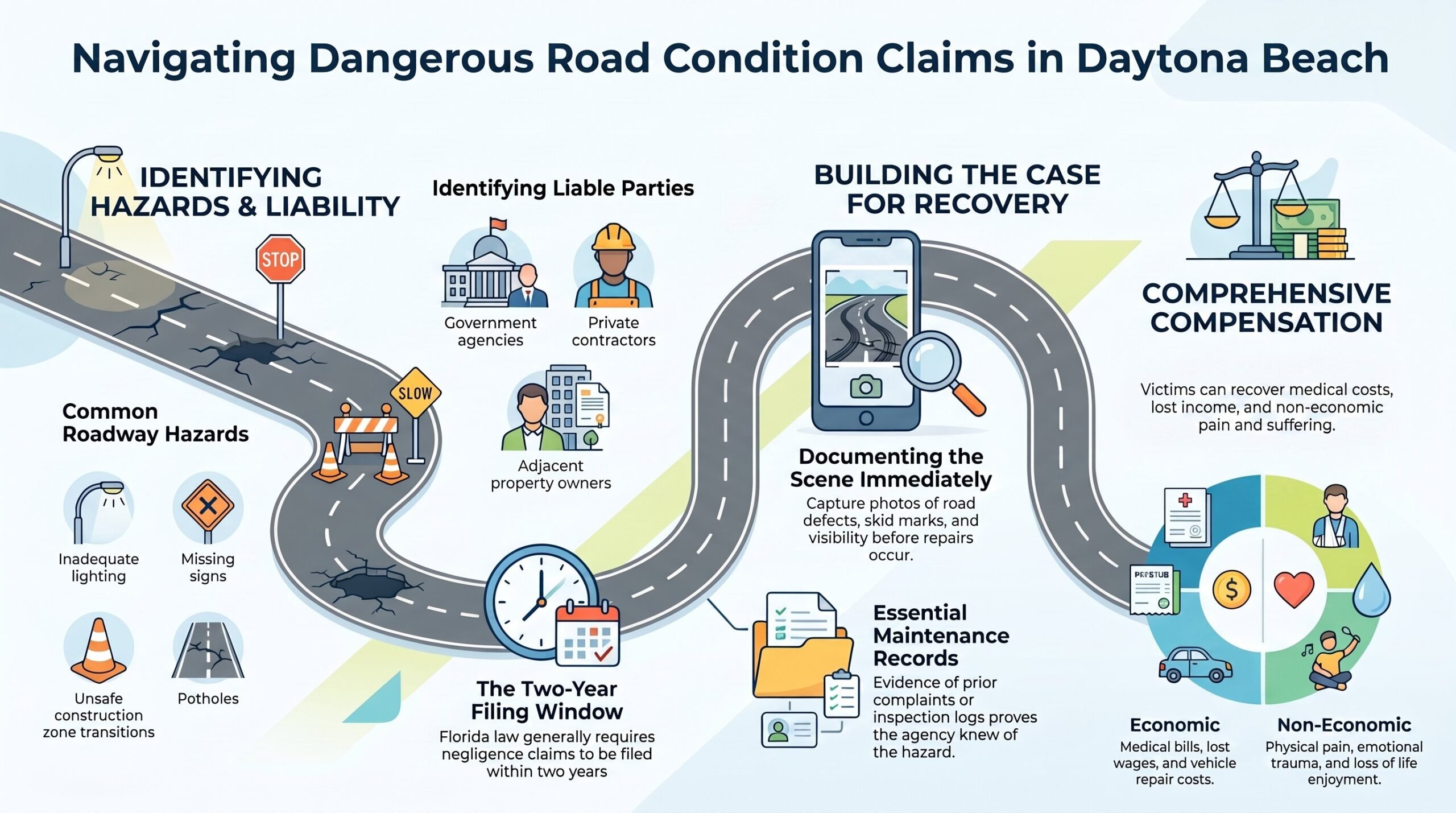
- Dangerous road conditions include potholes, uneven lanes, broken shoulders, missing signs, malfunctioning signals, poor lighting, flooding, and unsafe construction zones.
- A Daytona Beach lawyer can identify liable parties, including government agencies, contractors, property owners, negligent drivers, or maintenance entities.
- Key evidence includes crash reports, photos, witness statements, maintenance records, prior complaints, inspection logs, and expert analysis.
- Acting quickly helps preserve skid marks, debris, video footage, vehicle data, and road defects before repairs or weather alter evidence.
- Compensation may cover medical care, lost income, reduced earning ability, pain, and long-term rehabilitation needs.


How We Can Help With Your Daytona Beach Dangerous Road Condition Car Accident Injury Claim
When a crash results from a hazardous road condition, a Daytona Beach car accident lawyer can help identify who may be legally responsible and what evidence is needed to support the injury claim. Legal assistance may include reviewing crash reports, locating witnesses, requesting maintenance records, and evaluating whether public agencies, contractors, or other parties failed to address known roadway dangers.
The lawyer’s role also includes Evidence preservation, especially when skid marks fade, debris is removed, or road defects are repaired soon after the collision. Prompt action can protect photographs, video footage, inspection records, and vehicle data before key proof is lost.
For injured people and families focused on recovery and service to others, legal guidance can reduce burdens during a difficult period. Counsel may communicate with insurers, calculate damages, document medical needs, and address insurance disputes through organized advocacy to pursue fair compensation, whether through negotiation or litigation when necessary.
OUR CONSULTATIONSARE FREE
START YOUR FREE CASE REVIEW

Understanding Daytona Beach Dangerous Road Condition Car Accident Injury Cases
Although many collisions appear to result solely from driver error, some Daytona Beach car accident injury cases involve dangerous road conditions that contribute to or directly cause a crash. These cases require careful review because responsibility may extend beyond the motorists involved. Public agencies, contractors, property owners, or maintenance entities may have duties to keep roads reasonably safe for residents, visitors, pedestrians, and workers.
A dangerous road condition claim focuses on how the roadway environment affected the collision and resulting injuries. Evidence may include crash reports, photographs, witness statements, maintenance records, prior complaints, and expert analysis. Intersection visibility issues can affect a driver’s ability to see approaching traffic, cyclists, or pedestrians in time to respond safely. Pedestrian crossing hazards may place vulnerable people at unnecessary risk, especially in areas serving schools, businesses, hotels, or community facilities.
Understanding these cases helps injured individuals pursue accountability while supporting broader efforts to protect others.
Common Causes of Daytona Beach Dangerous Road Condition Car Accident
Dangerous road condition accidents in Daytona Beach often stem from preventable hazards that reduce driver control and roadway visibility. Poor road maintenance, inadequate street lighting, missing traffic signs, and unsafe construction zones can create serious risks for motorists, passengers, cyclists, and pedestrians. Identifying the specific cause of the hazard is an important step in determining responsibility and evaluating a potential injury claim.
Poor Road Maintenance
Poor road maintenance can pose serious hazards for drivers in Daytona Beach, particularly on streets exposed to heavy traffic, coastal weather, and ongoing construction. Seasonal flooding may weaken road surfaces, obscure lane edges, and leave debris that increases the risk of loss of control. Pavement potholes can damage tires, disrupt guiding, and force sudden evasive movements, endangering nearby motorists, cyclists, and pedestrians.
When roadway defects remain unrepaired, public safety can be compromised, especially for emergency responders, caregivers, and others traveling to assist vulnerable community members. Proper inspections, timely repairs, and clear warnings are vital to reduce preventable harm. In accident investigations, maintenance records, prior complaints, and photographs of the defect may help determine whether negligent upkeep contributed to a crash and resulting injuries.
Inadequate Street Lighting
When street lighting is inadequate, drivers in Daytona Beach may have less time to identify pedestrians, cyclists, lane markings, stalled vehicles, or roadway hazards after dark. Reduced driver visibility can make ordinary travel conditions more dangerous, especially near crosswalks, school zones, parking lot entrances, and construction areas. Poor intersection lighting may also contribute to confusion about turning movements, right-of-way, and stopped traffic ahead.
These conditions can increase the likelihood of nighttime accidents, particularly when rain, glare, or unfamiliar roads further limit perception. High visibility signage may help guide motorists, but it cannot fully replace properly placed and maintained lighting. When public agencies or responsible entities fail to address lighting deficiencies, injured persons may need careful evaluation of roadway design, maintenance records, and prior complaints to determine responsibility.
Missing Traffic Signs
How can a missing traffic sign turn an ordinary drive into a serious collision risk? In Daytona Beach, the absence of stop, yield, speed limit, or warning signs can leave motorists without the guidance needed to make safe decisions. Intersection safety depends on clear direction, especially where traffic patterns, pedestrian crossings, and turning movements require predictable driver behavior.
When signs are removed, damaged, obscured by sidewalk obstructions, or not replaced after storms, drivers may enter roadways without yielding, misjudge right-of-way, or fail to reduce speed near hazards. These failures can endanger motorists, cyclists, and pedestrians who rely on visible traffic control devices. Public agencies and responsible parties may need to address missing signs promptly to help protect the community and reduce preventable collisions caused by dangerous road conditions.
Unsafe Construction Zones
Missing traffic signs are not the only roadway hazard that can leave drivers without clear direction. Unsafe construction zones in Daytona Beach may create serious risks when lane shifts, uneven pavement, loose gravel, or unmarked equipment disrupt normal traffic flow. Contractors and public agencies have a duty to use proper warnings, barriers, lighting, and detours to protect motorists, cyclists, and workers.
When these measures are missing or poorly maintained, drivers may have little time to react, especially near intersections or high-traffic corridors. Weather-related hazards can exacerbate construction risks by reducing visibility, flooding work areas, or causing temporary signs to move. These zones may also pose pedestrian safety risks when sidewalks are closed, and there are no safe alternative routes. Careful investigation can identify failures that contributed to a preventable collision.


Legal Rights of Daytona Beach Dangerous Road Condition Car Accident Injury Victims
Although dangerous road conditions can complicate liability, injured victims in Daytona Beach may have the right to pursue compensation when unsafe streets, poor maintenance, missing signage, defective traffic signals, inadequate lighting, or hazardous construction zones contribute to a crash. Their rights may include seeking payment for medical care, lost income, diminished earning ability, pain, and long-term rehabilitation needs.
A careful legal review may identify responsible parties, including government agencies, contractors, property owners, or negligent drivers.
Comparative negligence may also affect recovery if the injured person is alleged to share fault.
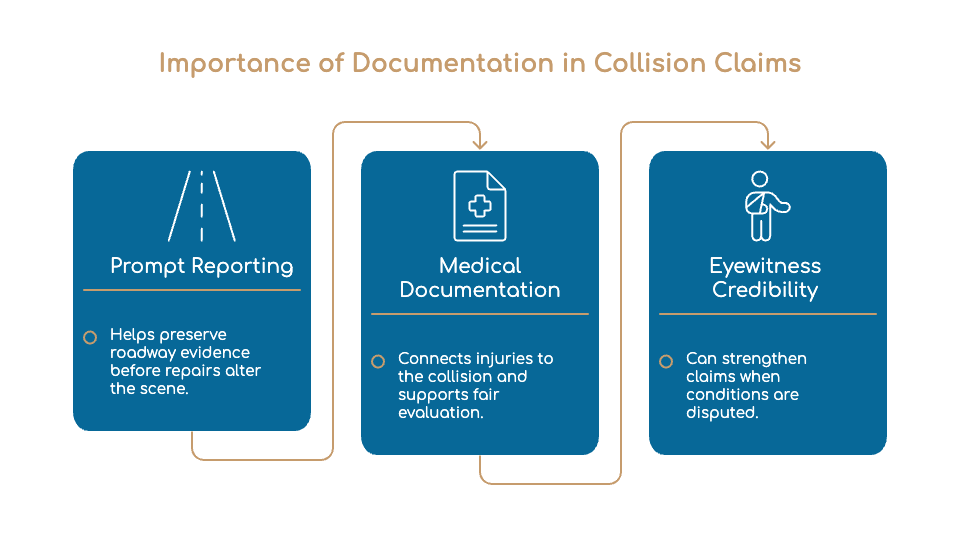
- Prompt reporting helps preserve roadway evidence before repairs alter the scene.
- Medical documentation connects injuries to the collision and supports fair evaluation.
- Eyewitness credibility can strengthen claims when conditions are disputed.
Those serving injured people should encourage timely guidance, respectful documentation, and careful preservation of proof. Legal rights depend on notice rules, filing deadlines, and the specific facts surrounding each crash.
Why Do Dangerous Road Conditions at Daytona Beach Cause Car Accident Injuries?
When roadway hazards are not identified, repaired, or properly marked, ordinary driving conditions in Daytona Beach can quickly become dangerous. Injuries may result from potholes, uneven lanes, broken shoulders, missing signs, poor drainage, loose gravel, or malfunctioning traffic signals. These conditions can reduce a driver’s ability to navigate, brake, or respond safely, especially near intersections, construction zones, bridges, and high-traffic corridors.
Slippery pavement accidents often occur when rain, oil, sand, or standing water combines with inadequate maintenance or poor road design. Vehicles may hydroplane, skid, or collide after drivers lose traction. Speed enforcement can also affect injury risk because excessive speed gives motorists less time to recognize hazards and avoid impacts.
In some cases, multiple causes contribute to a crash, including negligent maintenance, unsafe construction practices, or failures by public entities or contractors. Understanding why these injuries happen helps identify responsibility and supports safer conditions for residents, workers, visitors, and families.
What Should You Do After a Daytona Beach Dangerous-Road-Condition Car Accident Injury?
After a dangerous road-condition accident in Daytona Beach, an injured person should seek immediate medical care, even if symptoms seem minor at first. The scene should be documented carefully, including photographs of hazards, vehicle damage, injuries, and any relevant traffic or weather conditions. Promptly contacting an attorney can help preserve evidence, identify responsible parties, and protect the injured person’s legal rights.
Seek Immediate Medical Care
Because injuries from a dangerous road condition crash may not be immediately apparent, prompt medical evaluation is important following a Daytona Beach car accident. A physician or emergency provider can identify concussions, internal injuries, soft tissue damage, and complications that may worsen without treatment. Immediate care also creates a reliable medical record, helping connect the injury to the collision and supporting any later claim.
Those assisting an injured person should follow any applicable Emergency reporting protocol, request medical help when needed, and avoid encouraging the person to “wait and see.” Even when the person feels stable, evaluation should not be delayed. A basic Vehicle damage assessment may indicate the force involved, but medical professionals must determine the physical impact. Prompt treatment restores health, dignity, and legal interests.
Document Road Hazards
At the crash scene, careful documentation of road hazards can preserve crucial evidence before weather, traffic, or repair crews alter the condition. If safe, an injured person or assisting witness should photograph potholes, missing signs, uneven pavement, standing water, debris, poor lighting, obstructed signals, and lane markings. Images should include wide views, close views, vehicle positions, skid marks, and nearby landmarks.
Notes may identify the time, weather-related hazards, visibility, traffic flow, and whether other drivers appeared to face the same danger. When speed-related collisions occur, documenting posted speed limits, warning signs, and roadway design can clarify whether the condition increased risk. This practical record helps public safety responders, medical providers, and later investigators understand how the roadway contributed to the crash. Witness contact details should also be recorded promptly.
Contact An Attorney
Often, contacting a Daytona Beach car accident lawyer promptly is an important step when a dangerous road condition may have contributed to an injury crash. An attorney can evaluate whether poor maintenance, missing signage, roadway debris, faulty design, or inadequate lighting played a role. This guidance helps injured individuals preserve evidence while also protecting their ability to serve family, coworkers, and community during recovery.
Legal counsel may also coordinate with medical providers to secure Emergency medical documentation, review police reports, and identify responsible public or private entities. Because notices, deadlines, and the insurance claim timeline can affect compensation, early advice is valuable. A lawyer can communicate with insurers, address disputed liability, and pursue fair recovery while the injured person focuses on repair and practical responsibilities after the crash.
Critical Evidence in a Daytona Beach Dangerous Road Condition Car Accident Injury Case
Critical evidence in a Daytona Beach dangerous road-condition car-accident injury case helps establish how the roadway hazard contributed to the crash and who may be responsible.
- Crash scene photographs and road defect documentation can show potholes, missing signs, poor lighting, or unsafe lane conditions.
- Witness statements may confirm the presence of the hazard, the timing of the collision, and the driver’s actions.
- Maintenance records can reveal whether a government agency or contractor knew, or should have known, about the dangerous condition.
Crash Scene Photographs
When a crash may have been caused or worsened by a dangerous road condition, photographs from the scene can become essential evidence in a Daytona Beach car accident injury case. Clear images may help preserve conditions before repairs, cleanup, weather changes, or traffic movement alter the area. Photos can show vehicle resting positions, skid marks, debris fields, lighting, lane markings, drainage patterns, and any Traffic sign impact that may explain how drivers received, missed, or misunderstood roadway guidance.
They may also help demonstrate the severity of roadway hazards by capturing visibility limits, surface conditions, obstruction placement, or the relationship between the hazard and the collision point. For injured people and those assisting them, timely photographs can support a careful investigation, strengthen accountability, and help make sure that unsafe conditions are properly evaluated.
Road Defect Documentation
Photographs may capture the scene as it appeared after a collision, but road defect documentation identifies the unsafe condition with greater precision and helps connect it to the crash mechanism. In a Daytona Beach injury case, this documentation may include measurements of potholes, shoulder drop-offs, broken pavement, missing signs, obstructed sightlines, or defective traffic control devices.
It may also note a Roadside hazard, such as an exposed drainage structure or unprotected construction area, that placed motorists at unreasonable risk. Accurate records help determine whether the condition existed long enough for responsible parties to discover and correct it. Maintenance logs, inspection reports, repair requests, and prior complaints may serve as evidence of liability. These materials allow investigators to evaluate fault while supporting efforts to protect injured persons.
Witness Statements
In a dangerous road condition case, witness statements may provide direct insight into how the roadway hazard affected the crash and whether the condition was visible, unexpected, or long-standing. Neutral accounts from drivers, passengers, pedestrians, or nearby workers can help clarify lane position, vehicle speed, lighting, weather, and each motorist’s conduct.
Eyewitness identification is important because locating and preserving these accounts early may prevent valuable details from being lost. Statements may also reveal whether others had difficulty with the same hazard before the collision, supporting a broader understanding of roadway danger. Careful comparison of witness accounts with photographs, video, and officer notes can improve the accuracy of police reports. For injured persons and those assisting them, reliable statements help establish facts with fairness, dignity, and purpose.
Maintenance Records
Along the streets and highways of Daytona Beach, maintenance records can reveal whether a dangerous road condition was known, ignored, or inadequately repaired before a car accident occurred. These records may include inspection logs, repair requests, work orders, contractor reports, and prior complaints submitted to public agencies. They can show patterns involving potholes, missing signs, poor drainage, worn lane markings, Traffic signal failures, or other hazards affecting public safety.
In an injury case, such documentation helps determine whether responsible parties acted with reasonable care after receiving notice of a defect. Maintenance records may also clarify whether delayed repairs contributed to emergency response delays or increased the severity of harm. Careful review supports accountability while promoting safer roadways for residents, visitors, first responders, and the wider Daytona Beach community.
Long-Term Effects of Daytona Beach Dangerous Road Condition Car Accident Injuries
Injuries caused by dangerous road conditions in Daytona Beach may produce long-term consequences that extend beyond initial medical treatment. Chronic pain and mobility limitations can interfere with employment, daily responsibilities, and overall independence. Emotional trauma may also persist, affecting recovery, decision-making, and the injured person’s quality of life.
Chronic Pain
When a crash occurs because of hazardous road conditions in Daytona Beach, chronic pain may become one of the most disruptive long-term consequences for an injured person. Persistent neck, back, shoulder, or nerve pain can interfere with work, household duties, caregiving, and community service. Pain management may require ongoing medical visits, therapy, medication, injections, or expert evaluations, depending on the severity and source of the condition.
For those assisting an injured person, consistent documentation of the injury is crucial. Medical records, treatment notes, pain journals, and provider opinions can help show how the condition developed and why continuing care is necessary. Chronic pain may not always be visible, yet it can greatly affect daily function, emotional stability, and financial security after a dangerous road condition collision. Accurate records can support fair evaluation.
Mobility Limitations
Chronic pain often overlaps with reduced physical movement, especially after a Daytona Beach crash involving unsafe road conditions. Injured individuals may struggle with walking, standing, lifting, or entering a vehicle, which can limit work duties, caregiving tasks, and community involvement. Serious fractures, spinal injuries, joint damage, or nerve impairment can require braces, canes, wheelchairs, therapy, or home modifications. When mobility changes persist, adaptive driving may become necessary to preserve independence and safe transportation.
Vehicle accessibility can also affect medical appointments, employment, and family responsibilities. Dangerous sidewalk hazards, uneven shoulders, poor drainage, and inadequate crossings may further restrict recovery, particularly when pedestrian safety remains compromised. These limitations warrant careful documentation, because they show how roadway defects can alter daily service, personal dignity, and long-term participation in ordinary life for many injured residents.
Emotional Trauma
How can a dangerous road condition affect a person long after the visible injuries begin to mend? Emotional trauma may persist through anxiety, sleep disruption, fear of driving, irritability, or depression, limiting work, family duties, and community service. In Daytona Beach claims, documented symptoms, counseling records, and witness observations may become important liability evidence when connecting distress to the crash.
A careful settlement evaluation should consider therapy costs, reduced daily function, and the burden placed on caregivers. Insurance defenses may argue that emotional harm is unrelated, exaggerated, or caused by prior stress. For that reason, a focused Negotiation strategy often presents medical support, consistent personal history, and crash details alongside. This approach helps demonstrate the full human impact while seeking fair compensation for lasting psychological harm.
Proving Liability in Daytona Beach Dangerous Road Condition Car Accident Injury Cases
A dangerous road condition claim in Daytona Beach requires proof that a hazardous roadway defect contributed to the crash and that a responsible party had a legal duty to address it. Evidence may include crash reports, photographs, maintenance records, witness statements, and expert analysis regarding roadway design, drainage, lighting, signage, or pavement defects. Intersection safety may become central when poor signals, obstructed sightlines, or missing warnings increase the risk of collision.
Liability may involve a public agency, contractor, property owner, or another motorist. Driver negligence must also be examined, because speeding, distraction, or impaired driving can affect fault allocation. Careful investigation helps distinguish preventable roadway hazards from careless individual conduct.
Accurate proof supports the valuation of damages by connecting the defect to medical harm, lost income, and long-term limitations. Strong documentation may also reduce insurance disputes, allowing injured persons and their advocates to pursue accountability with purpose and service-centered resolve.
Dealing With Insurance Companies After a Daytona Beach Dangerous Road Condition Car Accident Injury
After a crash caused by dangerous road conditions in Daytona Beach, insurance companies may attempt to limit payment by disputing causation, shifting fault to the injured person, or arguing that a roadway defect did not materially contribute to the collision. Adjusters may issue broad Documentation requests, seek recorded statements, or question medical treatment before the full impact of the injury is known. Careful communication helps protect the injured person while supporting an accurate review of the claim.
A dangerous road condition case may require evidence preservation, including photographs, repair records, witness information, vehicle damage, and medical documentation. When an Insurance claim is denied, the response should address the stated reasons with organized evidence and a focused appeal strategy. A lawyer can manage insurer contact, reduce pressure on the injured person, and present the matter in a way that respects both legal obligations and the broader goal of restoring safety, dignity, and accountability.
What to Expect During a Daytona Beach Dangerous Road Condition Car Accident Injury Claim Process
A Daytona Beach dangerous road-condition car accident injury claim often begins with an initial case evaluation, followed by a focused evidence-collection process. Liability and insurance issues must be assessed carefully, especially when government entities, contractors, or multiple drivers may share responsibility. Depending on the strength of the claim and the insurer’s response, the matter may proceed through settlement negotiations or litigation.
Initial Case Evaluation
Typically, the initial case evaluation in a Daytona Beach dangerous road-condition car accident claim focuses on identifying the cause of the crash, the severity of the injuries, and the parties who may bear legal responsibility. During this review, counsel assesses whether unsafe pavement, missing signs, poor drainage, inadequate lighting, or neglected maintenance may have contributed to harm.
The evaluation also considers medical treatment, work limitations, and the effect of injuries on daily service, family duties, and community roles. Damages calculation may begin with medical costs, lost income, pain, and future care needs. Insurance documentation is reviewed to determine available coverage, reporting deadlines, and potential claim barriers. This early assessment helps guide a practical, responsible path forward while carefully protecting the injured person’s rights.
Evidence Collection Process
Once the initial case evaluation identifies possible roadway hazards and responsible parties, the evidence collection process begins with a focused effort to preserve proof before it is altered, repaired, or lost. Investigators may gather photographs of the roadway, vehicle damage, skid marks, debris, lighting, traffic signs, drainage issues, and construction conditions. Witness statements, police reports, maintenance records, and available surveillance footage may also be requested.
Medical documentation is collected to connect the crash to diagnosed injuries, treatment needs, work restrictions, and long-term limitations. Careful insurance communication may help prevent incomplete or inaccurate statements from undermining the claim. For those committed to protecting injured community members, thorough documentation supports a clear account of what happened and helps guarantee that key facts remain available for meaningful review and future claim development.
Liability And Insurance
After evidence has been preserved, liability and insurance issues become central to determining how a dangerous road condition claim may proceed. Investigators may assess whether a government agency, contractor, property owner, driver, or maintenance provider failed to address a known hazard. Notice, repair history, traffic control, and inspection practices can affect responsibility. Insurance carriers may review policy limits, exclusions, and required notice provisions while evaluating fault.
Comparative Negligence may also arise if the injured person is accused of speeding, distraction, or failing to respond reasonably to visible conditions. Such allegations can reduce recoverable damages under Florida law. Coverage Denials may occur when insurers dispute causation, ownership, maintenance duties, or policy applicability. Careful claim review helps protect the injured person’s interests and supports a fair determination of liability and accountability.
Settlement Or Litigation
Once liability and insurance coverage have been sufficiently evaluated, the claim may move toward settlement negotiations or, if disputes remain, formal litigation. Settlement discussions typically involve documented medical losses, repair costs, wage impacts, roadway evidence, and the parties responsible for creating or failing to correct the hazardous condition. Comparative negligence factors may affect valuation, especially if a driver’s speed, attention, or response to warnings is questioned.
Insurance coverage disputes can also delay resolution when carriers deny responsibility, contest policy limits, or shift blame to public entities, contractors, or other drivers. If negotiation does not produce a fair result, litigation may involve pleadings, discovery, depositions, expert review, and court-supervised deadlines. Throughout either path, the process should support accountability, careful stewardship of evidence, and just recovery for the injured person.
Compensation for Daytona Beach Dangerous Road Condition Car Accident Injury Damages
Because dangerous road conditions can create severe and unexpected hazards for motorists, compensation in a Daytona Beach car accident claim may involve more than the typical costs of medical care and vehicle repair. When unsafe pavement, missing signs, poor drainage, defective traffic controls, or neglected construction zones contribute to a crash, an injured person may seek recovery from responsible parties whose conduct caused preventable harm.
Compensation may address the full scope of injury-related losses, including ongoing treatment needs, reduced ability to work, required home assistance, and the personal consequences of lasting impairment. In fatal crashes, surviving family members may pursue Wrongful death damages to address losses arising from the death of a loved one. In limited cases involving extreme disregard for public safety, punitive negligence claims may also be considered. A careful evaluation helps identify all liable parties and supports a claim that reflects the true impact of the dangerous condition.
Economic vs Non-Economic Damages in Daytona Beach Dangerous Road Condition Car Accident Cases
In Daytona Beach dangerous road-condition car-accident cases, damages are typically divided into economic and non-economic categories. Economic damages may include medical expenses, lost wages, and vehicle repair costs, while non-economic damages may address pain, suffering, and reduced quality of life. Proving the value of these losses requires clear documentation, credible evidence, and a careful assessment of the crash’s impact on the injured person.
Economic Damage Examples
After a dangerous road condition causes a crash in Daytona Beach, economic damages are the measurable financial losses resulting from the accident. These losses may include ambulance charges, emergency treatment, surgery, follow-up care, physical therapy, prescription medication, medical equipment, and transportation to appointments. Medical cost calculation helps identify both current bills and reasonably expected future care, especially when injuries require ongoing treatment or expert review.
Economic damages may also include vehicle repair, towing, rental car expenses, and replacement of damaged personal property. When an injured person cannot work, lost-wages documentation, such as pay stubs, tax records, and employer statements, helps demonstrate income interruption. Careful records allow attorneys, insurers, courts, and public agencies to evaluate losses responsibly and support fair compensation for necessary needs.
Non-Economic Damage Types
Financial records can show the cost of a Daytona Beach crash caused by a dangerous road condition, but they do not fully capture the personal harm of serious injuries. Non-economic damages may include physical pain, emotional distress, anxiety, humiliation, loss of enjoyment of life, scarring, disfigurement, and reduced ability to participate in family or community service.
They may also reflect loss of companionship when injuries affect close relationships. These harms can be especially significant when unsafe pavement, poor signage, debris, or defective roadway design leaves a person with lasting limitations. Comparative negligence may reduce recovery if the injured person shares fault for the crash. Florida caps generally do not limit non-economic damages in most personal injury cases, though specific exceptions may apply. Each category reflects human consequences beyond bills and repair estimates.
Proving Damage Value
Because damage value depends on proof, a Daytona Beach dangerous road condition claim must connect each loss to the crash through credible documentation, expert analysis, and consistent testimony. Economic damages require records that show actual financial harm, including Medical cost documentation, repair estimates, wage statements, and future care projections. These materials help establish what the injured person has paid, lost, or will reasonably need.
Non-economic damages require a different showing because pain, distress, and reduced enjoyment are not reflected on invoices. Proof of pain severity may include physician opinions, therapy notes, medication history, daily limitation records, and testimony from family members or caregivers. When presented carefully, this evidence helps a court or insurer understand how unsafe road conditions caused lasting hardship and why fair compensation serves accountability.
When a Daytona Beach Dangerous Road Condition Car Accident Injury Case Goes to Trial vs Settlement
When a dangerous road condition contributes to a Daytona Beach car accident, the decision to settle or proceed to trial often depends on the strength of the evidence, the extent of the injuries, and the responsible parties’ willingness to accept liability. Settlement may provide a timely resolution, allowing injured individuals to secure resources for care, family stability, and daily needs without the demands of courtroom proceedings.
Trial may become necessary when fault is disputed, damages are undervalued, or negotiations fail to reflect the harm caused. Pretrial strategy planning helps counsel assess witness credibility, expert opinions, repair records, photographs, and medical documentation. Evidence preservation tips may include saving vehicle damage records, roadway images, communications, and treatment notes before they are lost or altered.
A careful evaluation serves the injured person’s best interests while promoting accountability. Each path should be measured against risk, recovery needs, and the goal of responsible resolution.
Florida Laws That May Affect Your Daytona Beach Dangerous Road Condition Car Accident Case
Several Florida laws may influence a Daytona Beach dangerous road-condition car accident case, especially when fault lies with a public agency, construction contractor, maintenance company, or another party responsible for roadway safety. These laws guide how responsibility is evaluated, what evidence matters, and how recovery may be affected when multiple parties contributed to the crash.
Florida law can shape fault, evidence, and recovery after a crash caused by a dangerous road condition in Daytona Beach.
- Comparative negligence rules may reduce compensation if an injured person is found partly responsible, for example, by speeding, being distracted, or failing to react reasonably to visible hazards.
- Governmental liability rules may apply when unsafe road design, poor signage, or neglected maintenance involves a city, county, or state agency.
- Dram shop liability may become relevant if an impaired driver contributed to the collision after being unlawfully served alcohol under Florida law.
Careful legal review helps identify each responsible party, supports accountability, and promotes safer roads for residents, visitors, workers, and families throughout Daytona Beach.
The Statute of Limitations for Daytona Beach Dangerous Road Condition Car Accident Injury Cases
After a dangerous road condition contributes to a crash, the deadline to file an injury claim can become one of the most important legal issues in the case. In Florida, most negligence-based personal injury claims must be filed within two years of the crash date. When a government entity may be responsible for unsafe roadway design, poor maintenance, missing signs, or unrepaired hazards, additional notice requirements may apply before a lawsuit can proceed.
These deadlines serve public order, but they can place heavy burdens on injured people and families trying to recover. Prompt attention supports Evidence preservation, including photographs, maintenance records, repair histories, traffic reports, and vehicle damage documentation. Early witness interviews may also help preserve observations before memories fade or people become difficult to locate.
Missing a filing deadline can prevent recovery, regardless of the severity of the injuries. Timely action helps protect the injured person’s rights and supports accountability.
How a Daytona Beach Dangerous Road Condition Car Accident Lawyer Can Help You
Because hazardous road condition cases often involve public agencies, contractors, maintenance companies, and insurers, a Daytona Beach car accident lawyer can help identify each potentially responsible party and secure the evidence needed to support the claim. This support may include reviewing crash reports, roadway design records, maintenance logs, photographs, witness statements, and prior complaints about the same hazard.
A lawyer may also coordinate medical record review to connect injuries with the collision and document how the harm affects daily responsibilities, work, caregiving, and community service. Careful case development helps ensure losses are presented accurately and respectfully.
- Investigates road defects, signage issues, debris, flooding, or poor lighting.
- Handles Insurer negotiation with organized evidence and damage documentation.
- Consults qualified experts when roadway conditions, engineering, or maintenance practices require explanation.
Through disciplined advocacy, the lawyer helps the injured person pursue accountability while allowing attention to remain on recovery, family, and service to others.
When to Contact a Daytona Beach Dangerous Road Condition Car Accident Lawyer
Contacting a Daytona Beach dangerous road-condition car accident lawyer should occur as soon as a roadway hazard may have contributed to the crash, especially when injuries, significant vehicle damage, or uncertainty about fault is involved. Early contact allows the situation to be assessed while witnesses, photographs, repair records, and roadway conditions remain fresh and accessible.
Prompt attention is particularly important when potholes, missing signs, poor lighting, debris, flooding, uneven pavement, or malfunctioning traffic signals may have affected the collision. Emergency evidence preservation can help protect facts that may otherwise be lost due to repairs, weather, or routine maintenance. This timing supports a fair review of what happened and who may bear responsibility.
Those assisting an injured person should also consider timely Insurance claim documentation, including medical records, crash reports, treatment expenses, and communications with insurers. Organized documentation can reduce confusion, support accurate reporting, and help the injured individual pursue needed care with greater stability and confidence.
Why You Need an Experienced Daytona Beach Dangerous Road Condition Car Accident Lawyer
When a crash involves a dangerous road condition, an experienced Daytona Beach car accident lawyer can provide the dedicated analysis needed to identify all potentially responsible parties. Hazardous pavement, missing signs, poor drainage, debris, or unsafe construction zones may involve government agencies, contractors, maintenance companies, or negligent drivers. Careful legal review helps protect an injured person’s ability to seek support for recovery and continued service to family, work, and community.
A lawyer can gather roadway evidence, preserve photographs, review maintenance records, and address errors in police reports that may affect fault findings. Medical bills documentation is also important, because treatment costs, therapy expenses, and future care needs must be clearly connected to the collision.
Experienced representation can manage insurer communications, challenge incomplete investigations, and present the claim with accuracy. This guidance helps confirm the injured person is not left carrying burdens created by preventable roadway hazards.
How to Choose the Right Daytona Beach Dangerous Road Condition Car Accident Lawyer for Your Case
Selecting the right attorney begins with identifying a lawyer with direct experience handling dangerous road-condition claims in Daytona Beach and the surrounding Volusia County area. These cases often require knowledge of roadway maintenance duties, municipal notice requirements, construction hazards, and the role of negligent drivers.
A careful selection process should include reviewing the lawyer’s history with similar accident claims, including cases involving potholes, missing signs, poor lighting, unsafe shoulders, or defective traffic control devices. The attorney should understand evidence preservation steps, such as securing photographs, maintenance records, incident reports, and witness statements before conditions change.
Client communication clarity is also crucial. Injured individuals and their families often need timely updates, direct explanations, and guidance that supports informed decisions. A qualified lawyer should explain legal options, deadlines, and potential sources of compensation with precision. The right choice is a lawyer prepared to protect the claim while serving the client’s long-term recovery needs.
About The Law Offices of Anidjar & Levine
The Law Offices of Anidjar & Levine represents injured individuals in Daytona Beach and throughout Florida, including those harmed in car accidents involving dangerous road conditions, negligent drivers, and roadway hazards.
The firm works to support clients in seeking accountability, medical care, and financial recovery after serious collisions.
Its legal team provides Client consultations that allow injured people to explain what happened, ask questions, and better understand their rights.
With a local attorney focus, the firm considers roadway conditions, traffic patterns, crash reports, and community-specific issues that may affect liability.
Attorneys review case strategy options based on the available evidence, insurance coverage, and each client’s needs.
The firm also offers documentation guidance, helping clients organize medical records, photographs, repair estimates, witness details, and related expenses.
Through attentive legal service, The Law Offices of Anidjar & Levine seeks to reduce burdens on injured clients while pursuing fair compensation under Florida law.
Frequently Asked Questions
Can Poor Road Design Contribute to a Daytona Beach Accident Claim?
Yes, poor road design can contribute to an accident claim when it creates unreasonable hazards for careful drivers. Conditions such as poor signage, confusing lanes, inadequate lighting, unsafe merges, or missing traffic controls may support allegations that a public agency, contractor, or other responsible party failed to protect roadway users. A claimant may need evidence showing the defect existed, caused the crash, and should have been corrected through reasonable care.
Are Pothole-Related Car Accidents Common in Daytona Beach?
Pothole-related car accidents are relatively common in Daytona Beach, especially after heavy rain, traffic wear, and saltwater corrosion weaken pavement. Even minor curb hazards can contribute to loss of control, tire damage, or sudden evasive maneuvers. Those serving injured motorists should recognize that roadway maintenance records, photographs, repair reports, and witness accounts may help determine whether a hazardous condition existed long enough for responsible agencies to address it.
Who Maintains Daytona Beach Roads and Highways?
Daytona Beach roads and highways are maintained by multiple authorities, depending on ownership and jurisdiction. City streets typically fall under municipal Road Maintenance, while Volusia County manages certain county roads. State highways, including major routes, are maintained by the Florida Department of Transportation. Local Responsibility requires agencies to inspect, repair, and respond to hazards so residents, visitors, and service-focused organizations can travel safely and support the community effectively.
Can Tourists File Accident Claims for Dangerous Road Conditions in Daytona Beach?
Yes, tourists may file claims for dangerous road-condition accidents in Daytona Beach when negligent maintenance contributed to their injuries. Tourist injury rights can include recovery for medical costs, lost income, and related losses, even when the injured person lives elsewhere. Out-of-state filings require careful attention to Florida notice rules, deadlines, and responsible agencies. Those assisting victims should document hazards promptly and preserve evidence.
Do Dangerous Road Condition Claims Involve Government Notice Requirements?
Yes, dangerous road condition claims often involve government notice requirements, especially when a city, county, or state agency controlled the roadway. The injured person may need timely notice of the premises, written claim details, and compliance with strict deadlines before filing suit. Sovereign immunity rules can limit recovery or impose procedural barriers. Those serving injured travelers should encourage prompt documentation, preservation of evidence, and qualified legal review to protect the claim.
—————————
Accidents involving dangerous road conditions in Daytona Beach can involve complex liability issues, strict filing deadlines, and serious financial consequences.
Victims may need evidence of negligent maintenance, unsafe design, or failure to warn drivers about hazards.
A qualified Daytona Beach Car Accident Lawyer can assess the facts, identify responsible parties, and pursue fair compensation for medical expenses, lost income, and other damages.
Anidjar & Levine provides focused legal support for injured clients facing these claims.