The Law Offices of Anidjar and Levine can investigate how each impact occurred, identify responsible drivers or insurers, and preserve evidence before it disappears.A Daytona Beach Car Accident Lawyer can help with cases involving disputed fault, multiple insurance policies, vehicle damage patterns, witness accounts, and medical records linking injuries to specific impacts.
Legal support can also help manage notices, claim deadlines, settlement negotiations, and comparative negligence issues. The sections below explain fault, evidence, injury value, and recovery options in greater detail.
Main Takeaways
- A Daytona Beach chain reaction car accident lawyer can identify liable drivers, insurers, and other responsible parties.
- Evidence such as crash reports, vehicle damage, witness statements, medical records, and expert analysis helps establish fault and injuries.
- Chain reaction crashes often involve tailgating, distracted driving, sudden stops, bad weather, or heavy traffic on I-95 and local roads.
- Florida no-fault benefits may cover initial medical costs, but fault claims can seek additional damages.
- Compensation may include medical expenses, lost income, pain, suffering, rehabilitation, and long-term care needs.


How We Can Help With Your Daytona Beach Chain Reaction Car Accident Injury Claim
When a chain-reaction crash causes serious injuries in Daytona Beach, a car accident lawyer can help identify all responsible parties and build a claim supported by evidence. Legal support may include reviewing crash reports, preserving vehicle damage records, locating witnesses, and consulting reconstruction professionals when needed. This work helps clarify fault among multiple drivers, insurers, and other involved entities.
A lawyer can also assist with Insurance claim timelines, ensuring required notices, filings, and responses are handled promptly. Missed deadlines can weaken a valid claim, especially when several insurance companies dispute responsibility. Careful attention to medical bill documentation is equally important. Treatment records, invoices, therapy notes, and physicians’ opinions help link injuries to the collision and support the value of the requested compensation.
For injured individuals and families focused on recovery and service to others, skilled legal guidance provides structure, accountability, and protection during a difficult process, while pursuing fair financial relief with diligence.
OUR CONSULTATIONSARE FREE
START YOUR FREE CASE REVIEW

Understanding Daytona Beach Chain Reaction Car Accident Injury Cases
After legal support has organized the evidence and addressed insurance issues, understanding how chain-reaction collisions develop becomes central to evaluating an injury claim. These cases often involve several injured people, multiple insurers, and competing accounts of what occurred. A careful review helps determine how each impact contributed to physical harm, vehicle damage, and financial loss.
Medical documentation is critical because it links diagnosed injuries to the sequence of events and demonstrates the need for treatment, rehabilitation, or pain management. For those serving injured individuals, accurate records also protect dignity by ensuring that symptoms are not minimized or misunderstood. Liability disputes may arise when drivers, insurers, or other parties disagree about fault allocation.
In these situations, witness credibility can influence how facts are interpreted, especially when physical evidence is incomplete. A structured claim presentation allows decision-makers to assess responsibility fairly while keeping the injured person’s recovery, stability, and long-term needs at the center.
Common Causes of Daytona Beach Chain Reaction Car Accident
Chain-reaction car accidents in Daytona Beach often stem from preventable driving behaviors and roadway conditions. Distracted driving, tailgating vehicles, sudden traffic stops, and poor weather conditions can each reduce reaction time, increase stopping distance, and trigger multi-vehicle collisions. Understanding these common causes helps clarify how fault may be evaluated after a serious crash.
Distracted Driving
Because traffic in Daytona Beach often moves in dense clusters near intersections, beach access roads, and event corridors, a single lapse in attention can quickly turn into a multi-vehicle collision. Drivers who look away to respond to text messages, adjust navigation, or manage other mobile distractions may fail to notice braking vehicles, changes in signals, pedestrians, or lane shifts. In chain reaction crashes, these delays can place several motorists, passengers, cyclists, and responders at risk within seconds.
Careful investigation may examine phone records, witness statements, traffic camera footage, and vehicle data to determine whether inattention contributed to the sequence of impacts. For community-minded drivers, maintaining focus is a practical duty that protects vulnerable road users and supports safer travel throughout Daytona Beach’s busy corridors for residents, visitors, and service workers alike.
Tailgating Vehicles
Often, tailgating is a major factor in Daytona Beach chain reaction car accidents, particularly when vehicles follow too closely through congested intersections, beachside traffic, and event-related slowdowns. When drivers do not maintain proper Following distances, they reduce the space needed to observe hazards, respond responsibly, and avoid striking another vehicle. This conduct places passengers, pedestrians, cyclists, and responding personnel at greater risk, undermining traffic safety and community well-being.
In multi-vehicle collisions, one close-following driver may trigger impacts that extend through several lanes of travel. Investigators may examine vehicle damage, witness accounts, roadway conditions, and electronic data to determine whether unsafe spacing contributed to the crash. Legal evaluation often focuses on whether a reasonably careful driver would have allowed more room under the circumstances.
Sudden Traffic Stops
When traffic stops abruptly on Daytona Beach roadways, drivers may have only seconds to react before a rear-end or multi-vehicle collision occurs. Traffic stop timing often determines whether one vehicle slows safely or several vehicles collide in succession. Sudden congestion near intersections, beach access routes, or commercial corridors can create hazards for attentive motorists and vulnerable road users alike.
Drivers serving the safety of others must maintain proper following distance, scan ahead, and anticipate changing traffic patterns before braking becomes urgent. Avoiding snap decisions is essential, because abrupt steering or hard braking may worsen the chain reaction. When a sudden stop results in an impact, investigators may examine speed, spacing, brake use, and driver attention to determine how preventable the crash was under the circumstances presented.
Poor Weather Conditions
During poor weather conditions, Daytona Beach drivers may face reduced visibility, slick pavement, and unpredictable traffic flow, which increase the risk of chain-reaction collisions. Heavy rain, fog, and sudden coastal storms can make it difficult for motorists to judge distance, brake safely, or respond to stopped vehicles ahead. When one driver loses control, nearby drivers may have little time to avoid impact, causing multiple vehicles to collide in sequence.
These crashes often create serious burdens for injured people, caregivers, and community helpers who must respond quickly and carefully. Victims may face Hidden Costs, including towing, medical follow-up, lost wages, and transportation needs. Insurance Delays, can further complicate recovery, especially when several drivers and insurers dispute fault after weather-related collisions in Daytona Beach.


Legal Rights of Daytona Beach Chain Reaction Car Accident Injury Victims
Because chain reaction collisions can involve multiple impacts and several responsible parties, injured victims in Daytona Beach have the right to pursue compensation from any driver, company, or other entity whose negligence contributed to the crash. These claims may include medical expenses, lost income, pain, suffering, and long-term care needs.
Comparative negligence rules may affect recovery when fault is shared, making careful review of the evidence critical.
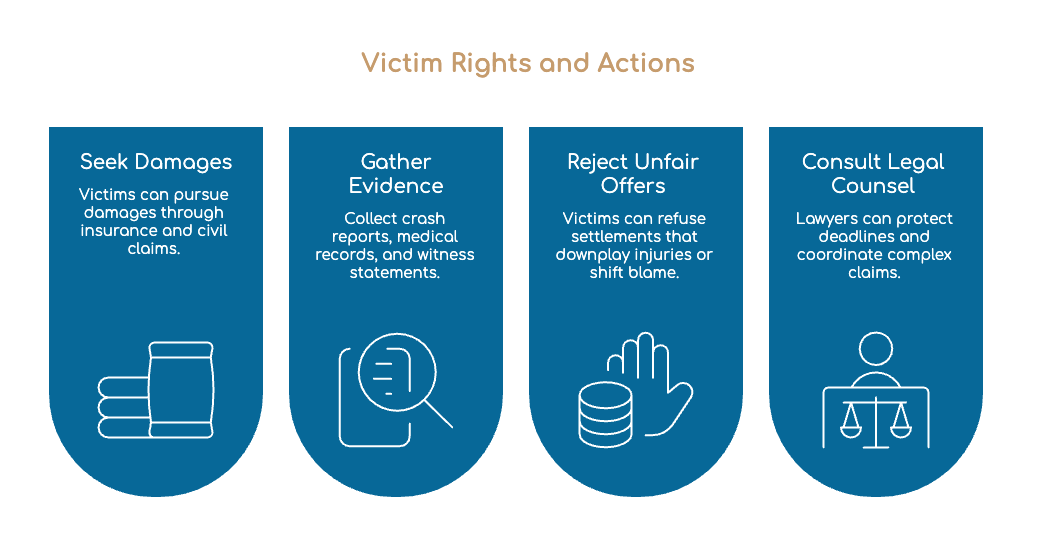
- Victims may seek damages through applicable insurance policies and, when necessary, civil claims.
- They may obtain crash reports, medical records, witness statements, and expert evaluations to support a finding of liability.
- They have the right to reject unfair settlement offers, especially when insurance adjusters’ tactics minimize injuries or shift blame.
- They may consult legal counsel to protect deadlines, document losses, and coordinate claims involving multiple parties.
For service-minded families supporting an injured loved one, these rights provide structure, accountability, and a path toward needed resources.
Why Do Daytona Beach Chain Reaction Car Accident Injuries Happen?
Understanding the rights available after a chain reaction crash also requires examining why these injuries occur in the first place. These crashes often begin when one driver follows too closely, reacts too late, or fails to adjust to traffic slowing on International Speedway Boulevard, I-95, or local coastal roads. Once the first impact occurs, surrounding drivers may have little time or space to avoid additional collisions.
Injuries can become more severe because occupants may be struck from multiple directions, sometimes within seconds. Sudden rear impacts, side impacts, and secondary crashes can aggravate the neck, back, head, and joints. Commercial vehicles, distracted driving, poor weather, and impaired judgment may further increase harm.
Determining how the crash unfolded can be difficult because several drivers may have contributed to the sequence. Shared fault percentages can affect recovery, while insurance dispute delays may prevent injured people and their caregivers from receiving timely support.
What Should You Do After a Daytona Beach Chain Reaction Car Accident Injury?
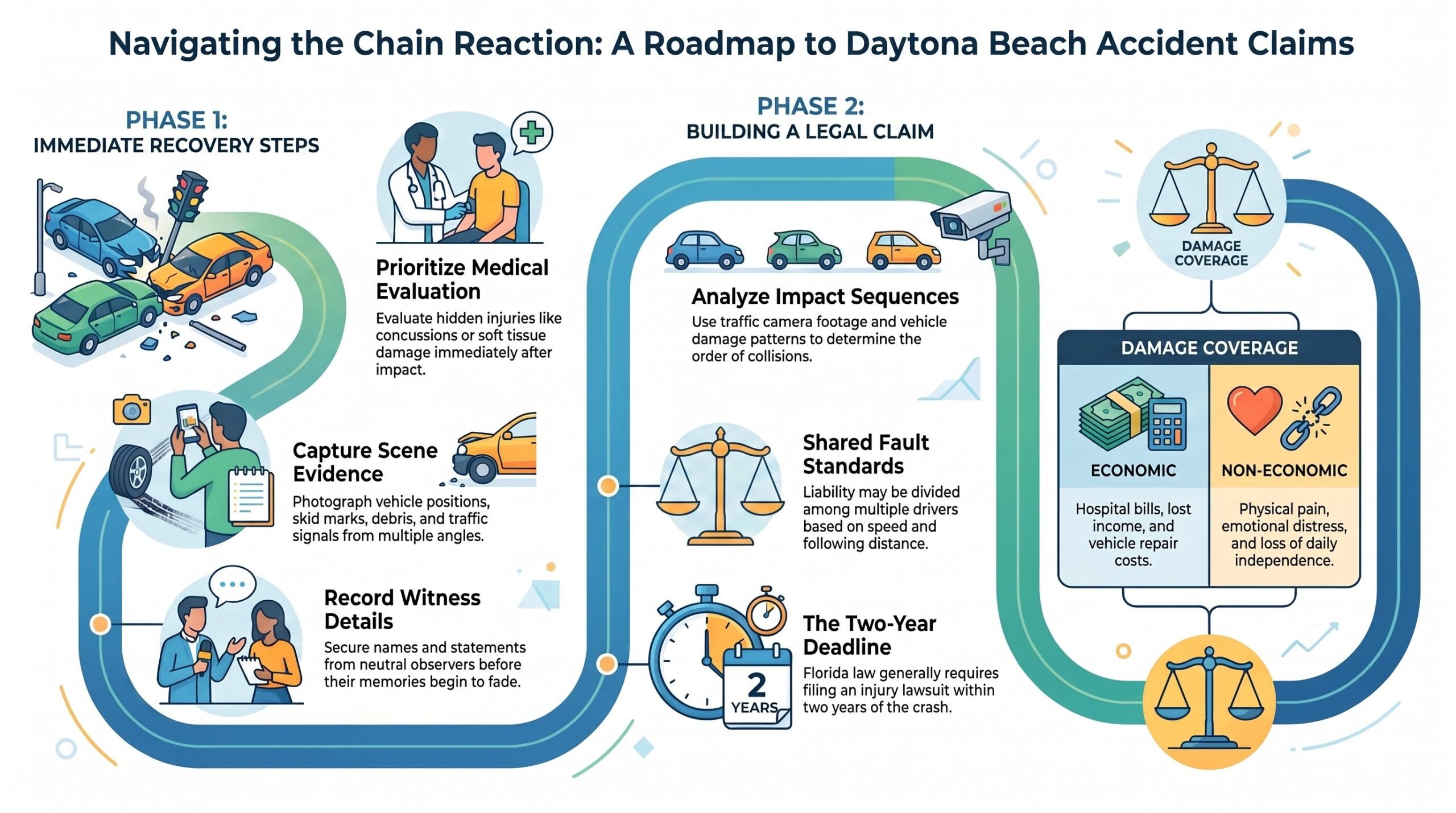
After a Daytona Beach chain-reaction car accident, an injured person should seek medical care promptly, even if symptoms seem minor. Careful documentation of the crash, including photographs, witness information, and insurance details, can help preserve important evidence. Contacting a lawyer may also help protect the injured person’s rights, especially when multiple drivers and insurers are involved.
Seek Medical Care
Following a Daytona Beach chain-reaction car accident, any injured person should seek medical care as soon as possible, even if symptoms appear minor at the scene. Prompt evaluation helps identify concussions, internal injuries, soft tissue damage, or spinal trauma that may not be immediately obvious. Those assisting others should encourage an emergency assessment, follow basic First aid steps, and avoid moving anyone with suspected neck or back injuries unless the situation requires it.
Medical professionals can also guide checking for symptoms after impact, including dizziness, numbness, confusion, chest pain, or worsening headaches. Timely treatment supports recovery and creates a clear record of injury-related care. Delays may increase health risks and complicate later claims. Responsible action protects the injured person and helps caregivers respond with appropriate caution.
Document The Crash
Once immediate medical needs are addressed, documenting the crash can help preserve important evidence from a Daytona Beach chain reaction car accident. A caring, orderly approach may protect injured parties, witnesses, and others affected by the scene. Photographs should capture vehicle positions, skid marks, debris, traffic signals, weather conditions, and visible injuries. Vehicle damage documentation should include close and wide views of each impacted area, license plates, and any deployed airbags.
Names, phone numbers, insurance details, and witness statements should be recorded when it is safe to do so. The police report number should also be saved for later reference. These Liability investigation steps can help clarify the sequence of events, which vehicles were involved, and whether road conditions, distraction, speeding, or unsafe following distances contributed to the collision.
Contact A Lawyer
When injuries, vehicle damage, or disputed fault are involved, contacting a Daytona Beach car accident lawyer should be considered as soon as practical. In a chain reaction collision, fault may be divided among several drivers, making early legal guidance important for protecting an injured person’s claim. Why Legal Representation matters is clear: counsel can communicate with insurers, preserve deadlines, and help prevent statements from being used unfairly.
A lawyer may also identify Key Evidence Types, including police reports, witness accounts, medical records, photographs of vehicle damage, traffic camera footage, and electronic data from the involved vehicles. Prompt review helps clarify how each impact occurred and whether negligent conduct contributed to the harm. For individuals focused on helping their families recover, legal support can provide structure, accountability, and informed direction after a serious crash.
Critical Evidence in a Daytona Beach Chain Reaction Car Accident Injury Case
In a Daytona Beach chain-reaction car accident injury case, essential evidence may help establish the sequence of events and which parties contributed to the crash. Important materials often include: 1. Police crash reports, 2. Vehicle damage patterns, 3. Eyewitness statements, and 4. Traffic camera footage. Each item can provide crucial context for liability, causation, and the extent of damages claimed.
Police Crash Reports
Although a crash report does not determine fault on its own, it may influence Liability standards and guide early insurance disputes. Insurers often compare the report with witness accounts, medical records, and other evidence before accepting or denying responsibility. Careful review is thus critical, especially when several drivers contributed to successive impacts. Errors or omissions should be addressed promptly through proper documentation and follow-up with counsel.
Vehicle Damage Patterns
Because chain-reaction collisions often involve multiple impacts within seconds, vehicle damage patterns can help identify the order, force, and direction of each crash. Front-end crushing, rear-panel intrusion, side damage, and underride marks may show how vehicles moved after the first impact. Impact speed can sometimes be estimated by examining vehicle crumple, bumper displacement, broken lighting, and frame deformation.
For injured people and those assisting them, careful documentation also supports scene safety, since unstable vehicles, leaking fluids, or blocked lanes may create continuing hazards. In a Daytona Beach injury case, these physical details can become liability evidence when compared with road conditions, rest positions, and mechanical data. Accurate analysis may help determine whether one driver, or several drivers, contributed to the chain reaction and resulting harm.
Eyewitness Statements
When multiple vehicles collide within a short period, eyewitness statements can help clarify what each driver did before, during, and after the crash. Neutral observers may describe speeding, sudden braking, unsafe lane changes, distracted driving, or the order in which impacts occurred. These accounts can support injured motorists, passengers, and families seeking fair treatment after a serious collision.
Witness credibility is evaluated through the person’s location, ability to observe events, freedom from bias, and level of attention. Statement consistency also matters, especially when accounts given at the scene align with later testimony or written reports. Promptly identifying witnesses helps preserve details before memories fade. In a Daytona Beach chain-reaction accident case, reliable eyewitness statements may strengthen the factual record and guide determinations of responsibility with greater care.
Traffic Camera Footage
In many chain-reaction crashes, traffic camera footage can provide an objective record of vehicle movement, signal timing, lane positions, speed patterns, and impact sequence. This evidence may help determine whether drivers maintained safe braking distances, reacted reasonably to hazards, or contributed to secondary impacts. Cameras near intersections, highways, ramps, and business entrances may also capture emergency lane use, sudden merges, or vehicles stopping when others had limited time to respond.
For injured persons and those assisting them, such footage can clarify responsibility when recollections differ, or visibility was poor. Because recordings may be overwritten quickly, prompt preservation requests are often critical. A Daytona Beach car accident lawyer may review available video, compare it with witness statements, and use it to support a well-documented injury claim.
Long-Term Effects of Daytona Beach Chain Reaction Car Accident Injuries
Chain reaction car accident injuries in Daytona Beach may produce long-term consequences, including chronic pain conditions that interfere with daily function. Some injured individuals require ongoing medical care, such as expert visits, therapy, medication, or future procedures. These lasting effects may also reduce earning capacity, particularly when physical limitations prevent a return to prior work duties.
Chronic Pain Conditions
Although some crash injuries appear to improve within weeks, chronic pain can persist long after a Daytona Beach chain reaction car accident and noticeably affect a person’s daily life. Neck pain, back pain, nerve irritation, joint stiffness, and recurring headaches may limit mobility, sleep, employment, and caregiving responsibilities. These conditions can also reduce a person’s ability to serve family, coworkers, or community members with the same consistency as before the crash.
Chronic pain often requires careful documentation because symptoms may fluctuate and remain difficult to measure through standard imaging. Medication-related side effects may further complicate recovery, particularly when pain relief causes fatigue, dizziness, or reduced concentration. When symptoms persist, follow-up expert care may help identify sources of pain, functional limitations, and treatment needs related to the collision.
Ongoing Medical Care
Persistent pain after a Daytona Beach chain reaction car accident often leads to continued medical care that extends well beyond the initial emergency evaluation. Injured individuals may require follow-up visits, diagnostic imaging, medication management, injections, physical therapy, or referrals to experts who can address complicated trauma. Rehabilitation planning helps coordinate these services, ensuring that care providers understand the person’s limitations, recovery goals, and need for sustained support.
Accurate treatment documentation is equally important because it creates a clear record of symptoms, medical decisions, and the individual’s response to care. This record can help explain why ongoing services remain necessary and how injuries continue to affect daily activities. Careful monitoring also allows providers to adjust treatment when progress slows, complications develop, or new symptoms appear.
Reduced Earning Capacity
When injuries from a Daytona Beach chain reaction car accident interfere with a person’s ability to work, the financial impact may continue long after medical treatment begins. Reduced earning capacity may arise when pain, limited mobility, cognitive changes, or permanent restrictions prevent a return to prior duties. Workplace rehabilitation can support recovery, but it may also show that modified tasks, shorter hours, or a lower-paying role are necessary.
Careful earnings documentation helps establish the difference between past income and likely future wages, including lost benefits and missed opportunities for advancement. For individuals committed to supporting families and serving their communities, this loss can affect stability and purpose. A claim may seek compensation for these projected losses, using medical opinions, employment records, and vocational assessments to measure the lasting harm.
Proving Liability in Daytona Beach Chain Reaction Car Accident Injury Cases
Establishing liability in a Daytona Beach chain-reaction car accident requires a careful review of how each impact occurred, which drivers contributed to the collision sequence, and whether any party failed to exercise reasonable care. Investigators may examine police reports, vehicle damage, skid marks, traffic camera footage, witness statements, and electronic data to determine the order of events. In multi-vehicle crashes, one driver may bear primary responsibility, while others may share fault for following too closely, speeding, distracted driving, or unsafe lane changes.
Florida no-fault coverage may provide initial medical benefits, but proving fault remains important when injuries meet legal thresholds or damages exceed available benefits. A clear Insurance claim timeline can help preserve evidence, document medical treatment, and identify responsible parties before memories fade or records become difficult to obtain. Careful liability analysis supports fair accountability, protects injured people, and helps community members pursue recovery with dignity, structure, and lawful purpose after a serious collision.
Dealing With Insurance Companies After a Daytona Beach Chain Reaction Car Accident Injury
As liability issues take shape, insurance communications often become a major concern in a Daytona Beach chain-reaction car accident injury claim. Adjusters may contact injured parties quickly, seeking recorded statements, medical details, or comments about fault before the full impact is understood. Careful communication helps protect the injured person’s interests and supports a fair review of the harm suffered.
In multi-vehicle crashes, insurers may dispute responsibility, minimize injuries, or shift blame among drivers. Witness statements, police reports, photographs, and medical records can help clarify what occurred. Evidence preservation is especially important because vehicle damage, roadway debris, and electronic data may reveal how the collision sequence developed.
A lawyer can manage insurer contact, review requests for information, and help prevent incomplete statements from being used unfairly. This support allows injured individuals to focus on recovery while ensuring their claim is presented with accuracy, dignity, and respect for the people affected.
What to Expect During a Daytona Beach Chain Reaction Car Accident Injury Claim Process
A Daytona Beach chain-reaction car accident injury claim typically begins with an initial case review, in which the facts, injuries, and available evidence are assessed. The process then moves into a liability investigation and insurance claim negotiations, which may involve multiple drivers, insurers, and conflicting accounts. If a fair resolution cannot be reached, the claim may proceed toward settlement discussions or litigation.
Initial Case Review
During an initial case review, a Daytona Beach car accident lawyer evaluates how the chain-reaction collision occurred, which drivers may share fault, and whether the available evidence supports an injury claim. The review typically includes a careful discussion of medical treatment, vehicle damage, lost income, and the client’s immediate concerns. Counsel may also identify Insurance coverage limitations that could affect recovery, including policy limits, uninsured motorist coverage, or gaps between multiple drivers’ policies.
Because injured people often need steady guidance, the attorney can explain practical steps for preserving documents, such as keeping medical records, repair estimates, photographs, correspondence, and wage documentation. This early assessment helps determine whether the claim can proceed efficiently while allowing the injured person and their family to focus on care, stability, and responsible decision-making.
Liability Investigation
In many chain-reaction collisions, liability investigation begins with a careful reconstruction of the sequence of impacts because fault may turn on timing, following distance, speed, and driver attention. Investigators may review crash reports, vehicle damage, roadway evidence, traffic camera footage, electronic data, and medical records to identify each contributing act. Eyewitness credibility checks help determine whether statements are consistent, reliable, and supported by physical proof.
When several drivers are involved, the inquiry may examine sudden stops, unsafe lane changes, distracted driving, impaired judgment, or failure to maintain control. An Insurance policy coverage review may also identify available sources of recovery without addressing settlement discussions. A thorough investigation supports accurate fault allocation, protects injured people, and promotes accountable conduct on Daytona Beach roads.
Insurance Claim Negotiations
After liability evidence is organized, insurance claim negotiations typically begin with notice to the relevant insurers, a review of available coverage, and presentation of documented losses. In a Daytona Beach chain reaction crash, adjusters may dispute which driver caused each impact, whether injuries relate to the collision, or whether medical care was reasonable. A careful Negotiation strategy identifies responsible parties, compares crash reports with witness accounts, and supports damages claims with medical records, wage documentation, and repair estimates.
Communication should remain orderly, respectful, and service-focused, especially when injured people need stability as they recover. If an insurer rejects responsibility or limits benefits, coverage denial appeals may require additional evidence, policy analysis, and timely written responses. Each step should preserve the claim’s value while encouraging fair evaluation.
Settlement Or Litigation
When settlement discussions reach a meaningful stage, the injured person may need to evaluate whether the insurer’s offer fairly reflects liability, medical needs, lost income, and future consequences. In chain-reaction crashes, this review often requires careful fault-determination strategies because several drivers, witnesses, and impact points may influence compensation. A legal representative may compare the offer with treatment records, repair evidence, expert opinions, and Insurance claim timelines to determine whether negotiation can serve the client’s long-term recovery.
If the insurer undervalues the claim or disputes responsibility, litigation may become necessary. Filing a lawsuit does not always prevent settlement, but it can create structured discovery and clearer accountability. Throughout either path, the goal remains service-oriented advocacy, protecting the injured person’s stability and access to fair resources.
Compensation for Daytona Beach Chain Reaction Car Accident Injury Damages
Because chain-reaction crashes often involve multiple drivers, insurers, and competing accounts of fault, compensation for Daytona Beach injury damages may require a careful review of every contributing cause. Each impacted person may face a different path toward recovery, depending on available coverage, documented injuries, and the order in which collisions occurred. Medical treatment costs must be connected to the crash through records, physician opinions, and consistent follow-up care.
A lawyer reviewing a chain reaction accident may examine police reports, witness statements, vehicle damage, and traffic camera footage to identify responsible parties. This process can support a claim that reflects the injured person’s needs while respecting the broader duty to promote accountability and public safety. Insurance claim timelines also matter, because delayed notice, missed deadlines, or incomplete documentation can reduce available recovery. Careful case management helps preserve evidence, coordinate claims, and pursue fair compensation from each liable source.
Economic vs Non-Economic Damages in Daytona Beach Chain Reaction Car Accident Cases
In Daytona Beach chain reaction car accident cases, damages are generally divided into economic and non-economic losses, each serving a distinct role in compensation. Economic damages address measurable financial harm, while non-economic damages account for personal losses that are more difficult to quantify. Valuing accident losses requires careful review of medical records, income disruption, injury severity, and the broader effect on the injured person’s daily life.
Economic Damages Explained
After a chain-reaction crash in Daytona Beach, economic damages refer to the measurable financial losses resulting from the collision. These losses may include emergency care, hospital bills, rehabilitation, prescription costs, vehicle repairs, rental transportation, and lost income. In severe cases, they may also include reduced earning capacity and future medical expenses.
Damage calculation requires careful review of invoices, wage records, repair estimates, medical statements, and other financial proof. Accurate insurance documentation helps link each expense to the crash, supporting a clear claim presentation. For families, caregivers, and service-minded professionals assisting an injured person, organized records can reduce confusion and protect needed resources. A Daytona Beach chain-reaction car accident lawyer may evaluate these losses, identify missing evidence, and pursue reimbursement through available coverage.
Non-Economic Damages Explained
While economic damages focus on financial losses, non-economic damages address the personal harm caused by a Daytona Beach chain reaction crash. These losses may include physical pain, emotional distress, anxiety, loss of enjoyment, disfigurement, and the strain placed on family relationships. In multi-vehicle collisions, such harm can be difficult to describe, yet it often shapes a person’s recovery and ability to serve others at home, work, or in the community.
A careful Settlement negotiation strategy should present these harms through medical records, consistent personal accounts, and observations from those who know the injured person well. Witness credibility factors, including accuracy, consistency, and impartiality, may strengthen the claim. Non-economic damages recognize that recovery involves more than bills; it also concerns dignity, stability, and daily function.
Valuing Accident Losses
For a person injured in a Daytona Beach chain reaction crash, valuing accident losses requires a clear separation between measurable financial harm and the personal consequences that do not appear on invoices or wage records. Economic damages may include emergency care, follow-up treatment, rehabilitation, lost income, reduced earning ability, and vehicle repair or replacement. Non-economic damages address pain, emotional distress, physical limitations, and loss of daily independence. Careful analysis of police reports can help identify the impact sequence, contributing drivers, and witness statements that support both categories. Evidence preservation steps, including securing photographs, medical records, repair estimates, and employment documentation, help protect the accuracy of the claim. A disciplined valuation allows advocates to serve injured people responsibly, presenting losses fairly, consistently, and with respect for the full human impact of the collision.
When a Daytona Beach Chain Reaction Car Accident Injury Case Goes to Trial vs Settlement
Because chain-reaction crashes often involve multiple drivers, insurers, and disputed accounts of the same event, a Daytona Beach injury case may be resolved through settlement or proceed to trial, depending on the strength of the evidence and the parties’ willingness to accept fault. Settlement may serve an injured person when liability is clear, damages are well documented, and insurers recognize the risk of greater exposure. It can reduce delay, limit stress, and help restore financial stability.
Trial may become necessary when parties deny responsibility, undervalue injuries, or dispute how the collision sequence unfolded. Evidence preservation, including vehicle damage records, traffic camera footage, medical documentation, and witness statements, can shape negotiations and courtroom presentation. Jury trial strategy may focus on clearly explaining the crash sequence, identifying each negligent act, and showing how the injuries changed daily life. A careful lawyer prepares for trial while still pursuing fair settlement when appropriate.
Florida Laws That May Affect Your Daytona Beach Chain Reaction Car Accident Case
After a chain-reaction collision occurs in Daytona Beach, Florida law can influence who may recover compensation, how fault is divided, and which deadlines govern the case. These rules often matter because multi-vehicle crashes may involve several drivers, insurers, and accounts of the same impact sequence.
Florida law can govern compensation, fault, and deadlines after a Daytona Beach chain-reaction collision.
- Comparative negligence rules may reduce compensation when an injured person shares responsibility for the crash, such as for unsafe following distance or delayed braking.
- Florida’s no-fault PIP requirements generally require injured motorists to first seek certain benefits from their own insurance, regardless of fault.
- Serious injury standards may affect whether a person can pursue damages beyond PIP, such as pain and suffering or long-term impairment.
- Evidence rules can shape liability disputes, making police reports, vehicle damage, witness statements, and medical records important to a fair evaluation.
A service-minded legal approach helps protect injured people while ensuring each responsible party is addressed with care.
The Statute of Limitations for Daytona Beach Chain Reaction Car Accident Injury Cases
Florida law not only affects fault and available compensation in a Daytona Beach chain-reaction car accident case but also sets strict deadlines for filing an injury lawsuit. In most Florida personal injury cases, an injured person has two years from the date of the crash to file a lawsuit. Missing this deadline can prevent recovery, even when another driver’s negligence appears clear.
Chain reaction crashes may involve several drivers, multiple insurers, and overlapping injury claims. Because of this nature, important evidence can become harder to preserve over time. Medical treatment delays may also affect how injuries are evaluated, especially when a person’s condition worsens after the collision. Insurance documentation errors can further complicate the timeline, particularly when notices, claim numbers, or policy details are incomplete.
Prompt attention to legal deadlines helps protect the injured person’s ability to pursue accountability while supporting a responsible, orderly process for all parties involved after the crash.
How a Daytona Beach Chain Reaction Car Accident Lawyer Can Help You
A skilled Daytona Beach chain reaction car accident lawyer can help clarify liability, identify all involved insurance policies, and organize the evidence needed to support an injury claim. This guidance allows injured individuals and their families to focus on recovery, caregiving, and community responsibilities while legal issues are handled with discipline.
- Evidence preservation: Counsel may secure crash reports, photographs, video footage, vehicle data, and witness statements before key information is lost.
- Medical billing: A lawyer can review treatment charges, coordinate records, and present the financial impact of injuries clearly.
- Settlement evaluation: Legal counsel may assess offers against documented losses, future care needs, and the strength of liability evidence.
- Trial strategy: If negotiations do not produce a fair result, counsel can prepare arguments, exhibits, and witness testimony for court.
Through careful case management, a lawyer supports accountability, protects legal interests, and promotes a fair resolution.
When to Contact a Daytona Beach Chain Reaction Car Accident Lawyer
When should an injured person contact a Daytona Beach chain reaction car accident lawyer? Contact should occur as soon as practicable after emergency needs are addressed, especially when several vehicles are involved, fault is disputed, or serious injuries are involved. Early legal communication helps protect the injured person’s ability to serve family, community, and workplace responsibilities while important facts remain available.
Prompt action is important because roadway debris, vehicle positions, traffic camera footage, and phone records may disappear quickly. Medical evidence preservation also begins early, through treatment records, diagnostic test results, physicians’ notes, and documented symptoms. These materials may help connect injuries to the crash rather than later events.
Witness credibility verification should also occur before memories fade or accounts become influenced by outside discussions. A lawyer may identify witnesses, record statements, and compare accounts with physical evidence. Timely contact supports an orderly claim process and helps ensure that decisions are based on accurate information.
Why You Need an Experienced Daytona Beach Chain Reaction Car Accident Lawyer
Because chain-reaction crashes often involve overlapping accounts and multiple insurance carriers, experienced legal representation can be pivotal in separating speculation from evidence. In Daytona Beach, these collisions may require prompt Evidence preservation, including vehicle damage records, traffic camera footage, event data, and witness statements. A lawyer can coordinate a careful liability investigation to determine how each impact occurred, which drivers contributed, and whether roadway conditions or commercial parties played a role.
Experienced counsel also helps injured people present medical documentation that connects treatment, limitations, and future needs to the crash. This careful preparation supports fair insurance negotiations and reduces the risk of blame being shifted unfairly to someone already harmed. For individuals and families focused on recovery, service, and stability, legal guidance can provide structure during a demanding process. It allows claims to be developed with discipline, accuracy, and attention to both immediate losses and long-term consequences.
How to Choose the Right Daytona Beach Chain Reaction Car Accident Lawyer for Your Case
Selecting the right attorney begins with evaluating whether the lawyer has direct experience handling chain reaction collisions, not merely general car accident claims. These cases often involve several drivers, conflicting insurance positions, and intricate questions about fault. A qualified lawyer should understand how to carefully review police reports, vehicle damage patterns, witness statements, medical records, and roadway evidence.
Prospective clients should also consider Client communication, because injured individuals and their families often need steady guidance while they focus on recovery and service to others at home, work, or in the community. Clear updates, honest expectations, and timely responses reflect a disciplined practice.
The attorney’s legal strategy should be tailored to the facts of the crash, the available insurance coverage, and the client’s long-term needs. Strong representation requires preparation, attention to detail, and a commitment to holding every responsible party accountable. This careful selection process can protect a claim.
About The Law Offices of Anidjar & Levine
The Law Offices of Anidjar & Levine represents injured clients in Daytona Beach and throughout Florida with a focus on personal injury claims, including serious car accidents and complex multi-vehicle collisions.
The firm’s attorneys assist people who need clear guidance after sudden harm, helping them pursue accountability while addressing medical bills, lost income, and insurance disputes.
Its Local firm history reflects a commitment to service, preparation, and client communication.
Through detailed investigations, evidence review, and coordinated case management, the firm supports individuals and families facing difficult recovery periods.
The Anidjar & Levine impact is evident in its emphasis on accessibility, responsive updates, and practical legal strategies tailored to each claim.
For chain reaction crashes, the firm evaluates fault among multiple drivers, insurers, and other responsible parties.
This approach helps protect clients from blame-shifting and incomplete settlements, while promoting fair compensation through negotiation or, when necessary, litigation to ensure justice and recovery.
Frequently Asked Questions
Can Tourists File Chain Reaction Accident Claims in Daytona Beach?
Yes, tourists may file chain reaction accident claims in Daytona Beach when another party’s negligence contributed to their injuries or losses. Tourist eligibility depends on evidence, fault, insurance status, and compliance with Florida filing deadlines. Visitors should preserve records, seek medical care, and review travel coverage, rental policies, and personal auto insurance. Service-focused advocates can help injured travelers pursue compensation while carefully and professionally coordinating claims across jurisdictions.
Do Chain Reaction Crashes Affect Rideshare Accident Claims Differently?
Yes, chain reaction crashes can affect rideshare accident claims differently because multiple drivers, passengers, and insurers may share responsibility. Shared fault standards determine how liability is divided among the parties involved, including the rideshare driver. Insurance coverage impacts also vary based on whether the driver was logged in, awaiting a ride, or transporting passengers. Careful investigation helps protect injured individuals, supports fair recovery, and promotes responsible service to those harmed.
Are Rental Car Drivers Liable in Multi-Car Collisions?
Rental car drivers may be liable in multi-car collisions when evidence shows their actions caused or contributed to the crash. Fault determination often requires reviewing police reports, vehicle damage, witness accounts, and traffic laws. Insurance coverage may involve the driver’s policy, rental coverage, or credit card benefits. With multiple defendants, comparative negligence can fairly divide responsibility, helping injured parties seek recovery while promoting accountability and service to those harmed.
Can Poor Road Design Contribute to a Chain Reaction Crash?
Yes, poor road design can contribute to a chain reaction crash by creating hazards that drivers cannot reasonably anticipate. Poor signage, inadequate lighting, confusing lane markings, unsafe merge areas, or limited visibility may cause confusion on the roadway and delayed reactions. When one driver brakes or swerves suddenly, others may collide in sequence. Investigators may examine whether public agencies, contractors, or maintenance providers failed to correct dangerous conditions that posed a risk to travelers.
What if My Child Was Injured in the Crash?
If a child was injured in the crash, caregivers should seek immediate medical evaluation, preserve the Car Seat, and document symptoms, treatment, and emotional changes. No restraint system is injury-proof, so hidden trauma may appear later. A qualified legal professional can assess liability, insurance coverage, and damages for medical care, pain, disability, and future needs. This process helps protect the child’s welfare while serving the family’s long-term interests.
—————————
A chain reaction crash can leave victims facing serious injuries, disputed liability, and mounting financial losses.
A Daytona Beach Car Accident Lawyer can help investigate the collision, identify responsible parties, handle insurers, and pursue appropriate compensation.
The Law Offices of Anidjar and Levine provides focused legal guidance for injured clients seeking accountability after intricate crashes.
Prompt legal action may protect important evidence and preserve the victim’s right to recover damages under Florida law.