The Law Offices of Anidjar and Levine may help injured victims pursue compensation after crashes involving speeding, tailgating, unsafe lane changes, or road rage. Legal support from a Daytona Beach Car Accident Lawyer can include preserving evidence, reviewing police reports, gathering medical records, identifying insurance coverage, documenting lost income, and responding to settlement offers.
A lawyer may also address disputed fault and prepare litigation when fair compensation is not offered. The sections below explain crucial claim steps, rights, and case considerations.
Main Takeaways
- A Daytona Beach aggressive driving car accident lawyer can organize your claim and handle insurer communications.
- Evidence may include police reports, witness statements, traffic footage, vehicle damage photos, and medical records.
- Aggressive driving can involve speeding, tailgating, unsafe lane changes, road rage, brake checking, or signal violations.
- Compensation may cover medical bills, lost income, vehicle damage, pain and suffering, and other crash-related losses.
- Prompt medical care and fast evidence preservation can strengthen liability proof and support insurance negotiations.


How We Can Help With Your Daytona Beach Aggressive Driving Car Accident Injury Claim
After an aggressive driving crash, an injured person may face medical treatment, vehicle damage, lost income, and pressure from insurance companies. A Daytona Beach aggressive driving car accident lawyer can help by organizing the claim, preserving evidence, and communicating with insurers on the client’s behalf. This support allows the injured person and family to focus on recovery, care responsibilities, and practical stability.
Legal assistance may include reviewing police reports, medical records, repair estimates, wage documentation, and available policy information. Through insurance coverage basics, counsel can identify potential sources of payment, including personal injury protection, bodily injury coverage, uninsured motorist coverage, and property damage benefits. Evaluating vehicle valuations is also important when repair costs, total loss disputes, diminished value, or replacement transportation affect the claim.
A law firm may also document damages, respond to settlement offers, and prepare the matter for litigation if fair compensation is not offered.
OUR CONSULTATIONSARE FREE
START YOUR FREE CASE REVIEW

Understanding Daytona Beach Aggressive Driving Car Accident Injury Cases
Understanding these cases begins with recognizing that aggressive driving is not a single action, but a pattern of unsafe conduct that can quickly create serious risk on Daytona Beach roads. Injury claims often require careful review of aggressive driving patterns, including repeated traffic violations, hostile actions, or conduct showing disregard for others’ safety.
In these matters, the focus is not only on the collision itself, but also on how the driver’s behavior developed before impact. Attorneys, insurers, and courts may examine liability evidence, such as crash reports, witness statements, video footage, vehicle damage, and medical records. This evidence can help show whether the at-fault driver acted with negligence and whether that conduct caused measurable harm.
For injured individuals and families, understanding the legal framework can support informed decisions. A well-prepared claim seeks accountability, protects the injured person’s interests, and helps restore stability after a preventable roadway event for the community.
Common Causes of Daytona Beach Aggressive Driving Car Accident
Aggressive driving crashes in Daytona Beach often arise from dangerous conduct such as tailgating, unsafe following, and speeding through traffic. Road rage incidents may further escalate ordinary traffic conflicts into serious collisions, particularly when drivers make sudden or hostile actions. Distracted aggressive actions can also increase crash risk, as impaired attention combined with forceful driving choices leaves little time to avoid impact.
Tailgating And Unsafe Following
When traffic becomes congested along Daytona Beach roadways, tailgating can quickly turn a routine drive into a serious crash risk. Following too closely reduces reaction time, limits visibility, and increases the likelihood of rear-end impacts when vehicles stop unexpectedly. These collisions may cause neck, back, and head injuries, especially when force transfers through multiple vehicles.
After a crash, careful documentation can support those assisting injured parties. Photographs of vehicle positions, skid marks, and traffic conditions may clarify how closely the trailing driver followed. Car insurance disputes often arise when drivers deny fault or claim sudden braking. Practical witness identification tips include recording names, phone numbers, vehicle descriptions, and nearby business locations where cameras may have captured the incident, helping preserve reliable evidence for later review.
Speeding Through Traffic
On busy Daytona Beach roads, speeding through traffic creates severe danger because higher speeds reduce the time available to recognize hazards, brake safely, or avoid sudden lane changes. When drivers exceed reasonable speeds in congestion, they increase the force of impact and limit the ability of others to respond. Aggressive passing actions may place surrounding motorists, cyclists, and pedestrians at risk, especially near intersections, beach access routes, and commercial corridors.
Distracted lane switching further compounds the danger, as a driver who is not fully attentive may misjudge distance, traffic flow, or another vehicle’s position. These behaviors can transform ordinary traffic movement into a serious collision risk. For those committed to public safety, recognizing speeding as a preventable cause supports accountability and encourages more responsible roadway conduct.
Road Rage Incidents
Beyond speeding through traffic, road rage incidents can create an immediate and unpredictable threat on Daytona Beach roads. These events may involve hostile gestures, intentional tailgating, blocking another vehicle, or forcing a driver from a lane. Road rage triggers often include perceived disrespect, congestion, merging conflicts, or frustration after a near collision.
For injured motorists, passengers, pedestrians, or cyclists, careful review of witness statements, video footage, and police reports can help identify whether anger escalated ordinary traffic conduct into dangerous aggression. Florida case law may influence how fault, foreseeability, and damages are evaluated when intentional or reckless behavior contributes to a crash. Legal advocates serving injured clients must examine the full pattern of conduct, not merely the final impact, to pursue accountability and support community safety.
Distracted Aggressive Maneuvers
Although aggressive driving often appears deliberate, distraction can intensify unsafe choices and turn a brief lapse in attention into a serious Daytona Beach crash. Drivers who speed, tailgate, weave through traffic, or make abrupt lane changes while checking a phone, adjusting navigation, or responding to passengers create layered hazards. This form of Distracted Driving reduces reaction time and situational awareness, especially near intersections, beach access roads, and congested tourist corridors.
Impaired Judgment may follow when a driver misreads traffic flow, overlooks pedestrians, or assumes other motorists will yield. For injured individuals, these facts can help explain how careless conduct developed into preventable harm. Careful review of phone records, witness accounts, vehicle damage, and traffic camera footage may support a clearer understanding of responsibility and community safety.


Legal Rights of Daytona Beach Aggressive Driving Car Accident Injury Victims
Injured motorists, passengers, pedestrians, and cyclists in Daytona Beach have the right to pursue compensation when aggressive driving causes a crash. These rights may include claims for medical expenses, lost income, reduced earning ability, pain, and other proven losses. A careful legal review can help victims protect their interests while focusing on recovery and service to family, work, and community.
Injured victims in Daytona Beach may pursue compensation while protecting their recovery, stability, and future well-being.
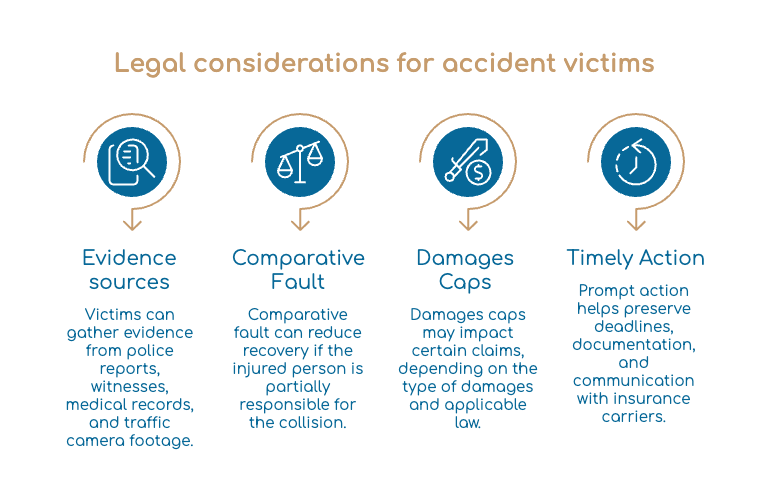
- Victims may seek evidence from police reports, witnesses, medical records, and traffic camera footage.
- Comparative Fault may reduce recovery if the injured person shares responsibility for the collision.
- Damages Caps may affect certain claims, depending on the type of damages and applicable law.
- Timely action helps preserve deadlines, documentation, and communication with insurance carriers.
Legal representation can guide injured people through claims, negotiations, and litigation when necessary. This support allows victims to pursue accountability while responsible advocates handle procedural requirements with care, diligence, and respect for the injured person’s circumstances.
Why Do Daytona Beach Aggressive Driving Car Accident Injuries Happen?
When drivers disregard traffic laws, road conditions, or the safety of others, aggressive driving can quickly turn ordinary travel in Daytona Beach into a serious collision. These injuries often happen because speeding, tailgating, unsafe lane changes, and failure to yield reduce the time available to recognize danger and respond appropriately. Congested corridors, tourism traffic, unfamiliar drivers, and sudden stops near intersections or beach access routes may further increase risk.
Aggressive driving also reflects poor judgment under stress, impatience, distraction, or a belief that traffic rules are optional. When one driver intimidates, crowds, or challenges another vehicle, nearby motorists, passengers, bicyclists, and pedestrians may be placed in harm’s way.
Preventive traffic education can help communities address these patterns before harm occurs. By encouraging safer driving habits, respect for shared roadways, and patience during delays, public awareness efforts support the broader goal of protecting residents, visitors, and families from avoidable injuries.
What Should You Do After a Daytona Beach Aggressive Driving Car Accident Injury?
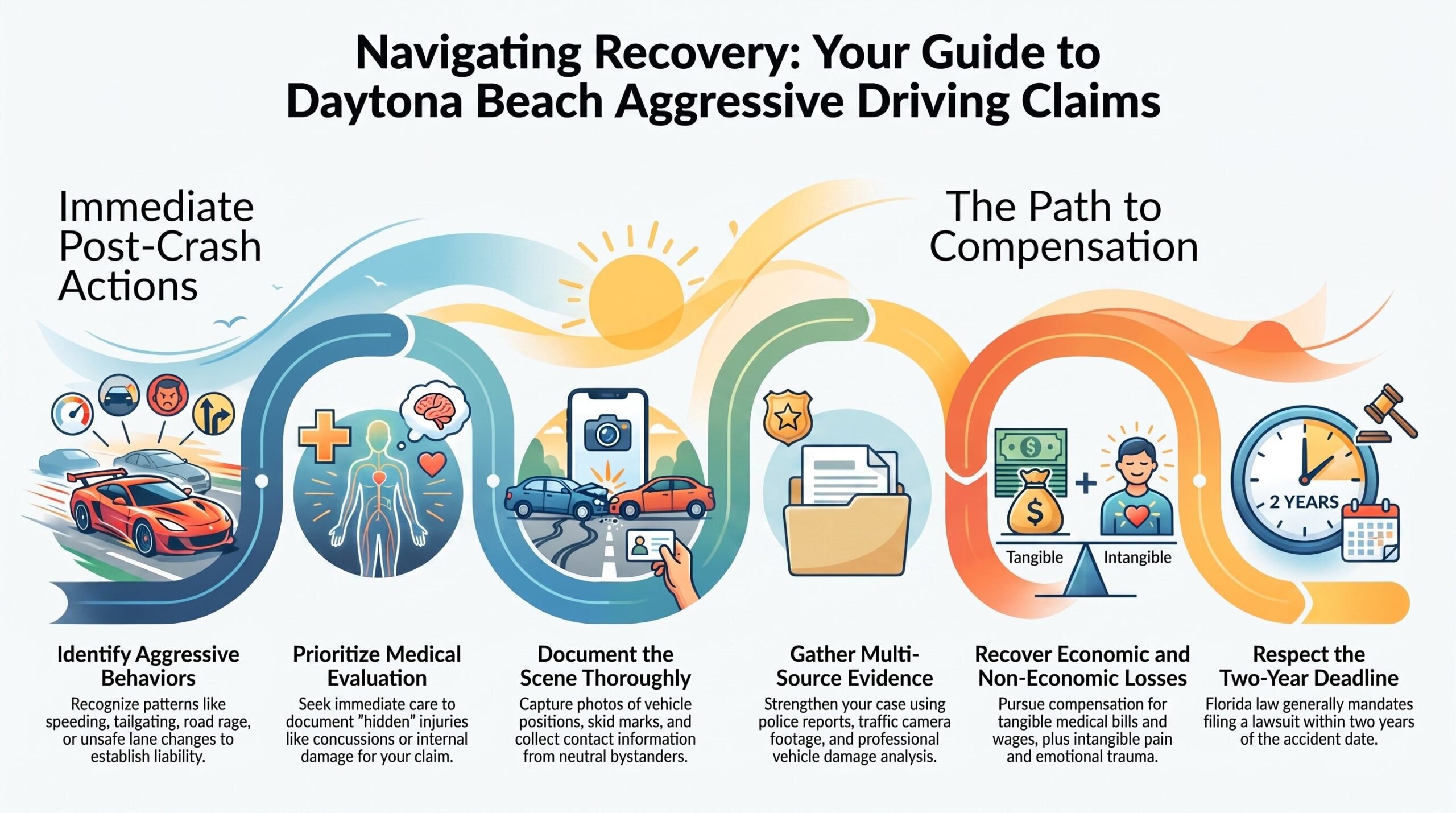
After a Daytona Beach aggressive driving car accident injury, an injured person should seek prompt medical care, even if symptoms appear minor at first. The crash should also be carefully documented through photographs, witness information, police reports, and records of vehicle damage. Because aggressive driving claims may involve disputed fault and serious injuries, contacting a lawyer can help preserve evidence and protect the injured person’s legal rights.
Seek Medical Care
Because aggressive driving crashes can cause injuries that are not immediately obvious, prompt medical care should be a priority for anyone hurt in a Daytona Beach collision. A person should request emergency assistance when pain, dizziness, confusion, bleeding, or breathing difficulty appears.
Following an Emergency contact procedure helps responders assess urgent needs and direct the injured person to appropriate treatment without delay. Even when symptoms seem minor, a medical evaluation can identify concussions, internal injuries, soft tissue damage, or worsening conditions that may affect recovery.
Caregivers, family members, and advocates should encourage follow-up appointments, medication compliance, and clear communication with providers. They should also Preserve medical records, including discharge papers, test results, prescriptions, therapy notes, and billing statements, since accurate records support continued care and future injury-related claims.
Document The Crash
If it is safe to do so, an injured person should begin documenting the crash as soon as immediate medical needs are addressed. Clear records can help explain what happened and support those working to serve the injured person’s needs. Documenting scene photos may include vehicle positions, skid marks, traffic signs, road conditions, visible injuries, and property damage.
Collecting witness contacts is also important, since neutral observers may later describe aggressive driving behaviors such as speeding, tailgating, unsafe lane changes, or threats.
Preserving dashcam footage should be handled promptly because recordings may be overwritten. The injured person should also keep police exchange forms, repair estimates, and insurance communications. Saving medical documents, including discharge papers, treatment notes, prescriptions, and follow-up instructions, helps connect injuries to the collision.
Contact A Lawyer
Once the crash has been documented and medical care has begun, contacting a Daytona Beach aggressive driving car accident lawyer can help protect the injured person’s rights and preserve important claims-related evidence. Legal guidance can support Evidence preservation by identifying witnesses, securing vehicle data, requesting traffic footage, and preventing key records from being lost or altered. An attorney may also communicate with insurers, reducing the risk that statements are misused or deadlines are missed.
For an injured person focused on recovery and service to family or community, representation can bring needed structure. Counsel can evaluate liability, medical needs, wage losses, and future care requirements. Through careful compensation planning, the lawyer can pursue damages that reflect both immediate hardship and long-term consequences, while promoting orderly, informed decision-making.
Critical Evidence in a Daytona Beach Aggressive Driving Car Accident Injury Case
Crucial evidence can shape the outcome of a Daytona Beach aggressive driving car accident injury case, particularly when liability is disputed. Attorneys may evaluate several major sources to establish how the collision occurred, who acted recklessly, and how the crash caused the claimed injuries. Important evidence may include:
- Police accident reports
- Witness statements
- Traffic camera footage
- Vehicle damage evidence
Police Accident Reports
After an aggressive driving crash in Daytona Beach, the police accident report often serves as an important starting point for identifying what happened and who may be responsible. It may document roadway conditions, vehicle positions, citations, traffic statute violations, and the responding officer’s initial observations. For injured individuals and those assisting them, the report can help organize facts before insurance discussions begin.
However, police report errors may occur when information is incomplete, measurements are limited, or statements are misunderstood. Careful review supports sound Liability determination tips, including comparing diagrams, crash narratives, and cited offenses with available physical evidence. Witness credibility challenges may also affect how the report is interpreted, especially when accounts conflict. A lawyer may use the report to guide further investigation and protect the injured party’s claim.
Witness Statements
In an aggressive driving collision, witness statements can provide details that do not appear in the police accident report, including sudden lane changes, tailgating, speeding, unsafe passing, road rage behavior, or the sequence of events before impact. A driver in a Neighboring Vehicle, a pedestrian, or a passenger may describe conduct that helps clarify fault and protect an injured person’s claim. Attorneys often review these accounts alongside dashcam footage to assess eyewitness reliability, identify gaps, and confirm what occurred.
Statement consistency is important because differing memories, stress, distance, and lighting can affect accuracy. Promptly collecting names, contact information, and written or recorded accounts preserves valuable evidence before memories fade. Careful evaluation of witness statements supports a fair investigation and helps serve injured individuals seeking accountability.
Traffic Camera Footage
Along major intersections and busy corridors in Daytona Beach, traffic camera footage may capture aggressive driving conduct that is difficult to prove through statements alone. Video may show speeding, unsafe lane changes, red-light violations, tailgating, or sudden maneuvers before a collision. This evidence can help identify Driver Behavior Patterns that place others at risk, especially when several actions occur within a short distance.
Because footage may be overwritten quickly, prompt preservation requests are often crucial. Attorneys may contact public agencies, nearby businesses, or private property owners to determine whether relevant recordings exist. When reviewed with police reports and witness accounts, camera evidence can support Legal Strategies focused on accountability, causation, and fair compensation. It may also clarify disputed facts when drivers give conflicting accounts after a crash.
Vehicle Damage Evidence
Vehicle damage evidence can reveal how an aggressive driving collision occurred, including the angle of impact, force involved, and sequence of events leading to the crash. In a Daytona Beach injury case, crushed panels, broken lights, deployed airbags, and frame distortion may support accounts of speeding, unsafe lane changes, or following too closely. Damage photo documentation preserves these details before repairs alter or remove important proof.
Vehicle repair estimates may also help show the severity of impact and the economic losses tied to the crash. When reviewed with police reports, witness statements, and medical records, this evidence can strengthen a claim and clarify liability. Careful preservation serves injured people seeking accountability, while also helping advocates present facts with accuracy, fairness, and disciplined attention to justice.
Long-Term Effects of Daytona Beach Aggressive Driving Car Accident Injuries
Aggressive driving collisions in Daytona Beach can cause injuries that extend far beyond the initial medical crisis. Victims may face chronic pain conditions, reduced mobility, and lasting limitations that affect work, daily activities, and independence. Emotional trauma effects, including anxiety, sleep disruption, and fear of driving, may also become significant factors in evaluating long-term harm.
Chronic Pain Conditions
When the force of a collision disrupts muscles, ligaments, nerves, joints, or spinal structures, pain may continue long after visible injuries have recovered. Chronic pain after an aggressive driving crash may appear as burning nerve pain, persistent headaches, back pain, or deep aching in injured tissue. These conditions can affect rest, concentration, caregiving duties, and the ability to serve family or community needs consistently.
Medical documentation from emergency services, follow-up physicians, and pain experts may help connect symptoms to the crash. In some cases, Handlebar injuries, defective safety equipment, or vehicle components may raise product liability concerns. Insurance coverage issues may also affect access to treatment, therapy, medication, and diagnostic testing. Careful legal review can help clarify responsibility and preserve evidence.
Reduced Mobility
Pain that persists after a serious crash may also limit how well an injured person can move, walk, stand, lift, or complete ordinary daily tasks. Reduced mobility can follow fractures, spinal injuries, joint damage, nerve trauma, or soft tissue injuries caused by aggressive driving collisions. These limitations may affect employment, caregiving duties, transportation, and the ability to live independently.
Medical providers often rely on impaired mobility documentation to record range-of-motion loss, gait changes, lifting restrictions, and the need for assistive devices. Such records can support physical rehabilitation planning by identifying therapy goals, treatment frequency, and expected functional outcomes. For those serving injured individuals, careful attention to mobility losses helps clarify daily challenges, future care needs, and the lasting effect of crash-related harm on practical independence and community participation.
Emotional Trauma Effects
Emotional distress may remain long after physical injuries begin to mend, especially after a sudden collision caused by reckless or hostile driving behavior. Survivors may experience anxiety, sleep disruption, irritability, depression, or fear of returning to busy roads. Nighttime collisions can intensify these reactions, as reduced visibility and unexpected danger often leave lasting impressions.
Family members, caregivers, and community supporters may notice withdrawal, difficulty concentrating, or changes in daily routines. These effects can interfere with employment, caregiving duties, and meaningful service to others. Documentation from counselors, physicians, and witnesses may help explain the injury’s full impact. Dashcam evidence can also clarify the violent nature of the crash, supporting claims that emotional trauma resulted from aggressive driving, not ordinary stress or inconvenience after an accident.
Proving Liability in Daytona Beach Aggressive Driving Car Accident Injury Cases
Although aggressive driving may appear obvious at the scene, proving liability in a Daytona Beach car accident injury case requires evidence that connects the driver’s conduct to the crash and resulting harm. Liability often depends on showing speeding, unsafe lane changes, tailgating, brake checking, road rage gestures, or disregard for traffic signals. Witness statements, police reports, dash camera footage, traffic camera recordings, vehicle damage patterns, and medical documentation may each help establish how the collision occurred.
Evidence Preservation is especially important when serving injured people who may be unable to gather proof while recovering. Prompt action can protect video footage, secure photographs, identify witnesses, and document roadway conditions before information is lost. Florida’s Comparative Fault Rules may also affect recovery if more than one driver contributed to the crash. A careful liability review helps assign responsibility accurately, protects the injured person’s position, and supports a claim grounded in facts rather than assumptions.
Dealing With Insurance Companies After a Daytona Beach Aggressive Driving Car Accident Injury
Insurance companies often begin evaluating a Daytona Beach aggressive driving car accident claim soon after the collision, and their early contact with an injured person may influence the direction of the case. Adjusters may request Recorded statements, medical authorizations, or quick settlement discussions before the full extent of injury is known. A careful response helps preserve accurate facts and protects the injured person from avoidable harm.
Those assisting an injured person should encourage timely organization of bills, photographs, witness information, and correspondence. Insurance deadlines must be monitored closely, because missed notice requirements may affect available benefits. A policy coverage review can identify bodily injury limits, uninsured motorist coverage, personal injury protection, and exclusions that may shape recovery options.
Professional guidance may also help identify unfair claim practices, including unreasonable delays, misleading communications, or undervalued offers. Careful communication with insurers supports a fair evaluation while allowing the injured person to focus on medical care and stability.
What to Expect During a Daytona Beach Aggressive Driving Car Accident Injury Claim Process
A Daytona Beach aggressive driving car accident injury claim typically begins with an initial case evaluation, where liability, injuries, damages, and available insurance coverage are reviewed. The process then moves into evidence gathering, including police reports, medical records, witness statements, crash scene information, and any proof of reckless or hostile driving behavior. After the claim is presented, insurance negotiations may follow, and if a fair resolution is not reached, the matter may proceed toward a lawsuit with a timeline shaped by court deadlines, discovery, and settlement opportunities.
Initial Case Evaluation
During an initial case evaluation, a Daytona Beach aggressive driving car accident lawyer typically reviews the crash circumstances, the available evidence, and the injured person’s medical condition to determine whether a viable injury claim exists. This consultation helps clarify legal options, potential liability, and the practical steps needed to protect the injured person’s interests.
The lawyer may assess Medical Documentation, including treatment records, diagnosis details, and physician recommendations, to understand the extent of harm and future care needs. The evaluation may also address Insurance Disputes, such as denied coverage, delayed responses, or settlement offers that undervalue losses. By identifying early concerns, counsel can guide the claimant with diligence, respect, and service-minded attention, while helping preserve the claim’s integrity from the outset in a structured manner.
Evidence Gathering Process
After the initial case evaluation, the evidence gathering process typically becomes a central focus in a Daytona Beach aggressive driving car accident injury claim. Legal teams may begin by preserving photographs, vehicle damage records, police reports, and Crash scene timelines that help explain how unsafe conduct caused harm. Medical record gathering is also important, as treatment notes, diagnostic results, and physician opinions can connect injuries to the collision.
Insurance documentation may be reviewed to confirm coverage, prior communications, and claim-related notices without addressing negotiation strategy. Witness contact methods often include respectful phone calls, written requests, or scheduled interviews, allowing individuals to share observations clearly. This careful collection process supports accountability, protects injured persons, and helps those serving them build an organized, reliable foundation for the claim.
Insurance Claim Negotiations
When the claim file is sufficiently developed, insurance claim negotiations may begin with a structured presentation of liability, injuries, medical expenses, lost income, and other documented losses. In an aggressive driving case, the insurer may examine speeding, tailgating, unsafe lane changes, or road rage conduct with close scrutiny. Counsel may emphasize Police report accuracy, ensuring citations, diagrams, and officer observations align with available evidence.
A careful witness contact strategy can also support consistent statements from bystanders, passengers, or responding personnel. The demand package should explain how the crash affected the injured person’s ability to work, care for family, and serve others in daily life. Negotiations often involve counteroffers, medical record reviews, and disputes over causation, making organized documentation important to a fair resolution.
Potential Lawsuit Timeline
If settlement negotiations do not resolve the claim, a lawsuit may begin with the filing of a complaint in the appropriate court, followed by formal service on the defendant. The defendant then answers, and the case enters discovery, where records, witness testimony, crash data, and medical proof are exchanged. Evidence deadlines guide this stage and help preserve fairness for all parties. Settlement timing may shift as new facts clarify fault, injuries, and damages.
Attorneys often prepare for Mediation readiness by organizing exhibits, treatment summaries, and liability arguments with care. If mediation does not lead to resolution, trial scheduling becomes the court’s focus. Throughout the process, a disciplined legal team supports the injured person while respecting the broader goal of accountability and safer conduct within the community.
Compensation for Daytona Beach Aggressive Driving Car Accident Injury Damages
Because aggressive driving often causes violent and preventable collisions, injured victims in Daytona Beach may be entitled to compensation for the full range of losses caused by the crash. A claim may address the harm created by speeding, tailgating, unsafe lane changes, road rage, or other reckless conduct, with the goal of restoring stability and supporting recovery.
Florida’s Comparative Negligence rules can affect the amount recovered when more than one party contributed to the collision. If an injured person is assigned partial fault, the award may be reduced in proportion to that percentage. Careful investigation, witness statements, traffic camera footage, and police findings can help establish responsibility and protect a valid claim.
Damages Caps may also become relevant in limited circumstances, depending on the type of claim and parties involved. A lawyer can evaluate available compensation, identify responsible parties, and pursue a result that honors the victim’s needs with diligence.
Economic vs Non-Economic Damages in Daytona Beach Aggressive Driving Car Accident Cases
In Daytona Beach aggressive driving car accident cases, damages are generally divided into economic losses, such as medical bills and lost wages, and non-economic losses, such as pain and emotional distress. Each category serves a distinct purpose in measuring the full impact of the crash on the injured person’s well-being, finances, and daily life. Proving these damages often requires organized records, credible testimony, and evidence that connects the losses directly to the accident.
Medical Bills And Lost Wages
After an aggressive driving crash in Daytona Beach, medical bills and lost wages often form the foundation of an injury claim. These economic damages may include emergency care, hospitalization, surgery, rehabilitation, medication, follow-up visits, and future treatment needs. Lost wages may cover missed work, reduced hours, diminished earning capacity, and employment benefits affected by recovery.
Careful documentation helps connect each loss to the collision, especially when insurers raise traffic citation defenses or point to witness credibility issues to dispute responsibility. Medical records, wage statements, tax records, and employer letters can provide objective support. For injured individuals and those assisting them, accurate records serve a practical purpose: they help present a claim that reflects real financial harm and supports fair compensation under Florida law.
Pain And Emotional Distress
Beyond the measurable costs of treatment and missed income, pain and emotional distress often represent a significant part of a Daytona Beach aggressive driving car accident claim. These losses may include ongoing physical discomfort, anxiety while traveling, sleep disruption, loss of independence, and reduced ability to serve family, work, or community responsibilities.
Because non-economic harm is personal, it requires careful attention from those evaluating the full human effect of reckless conduct. The impact of medical delays can also affect how suffering is understood, especially when symptoms worsen or care is postponed. Injured persons should remain mindful of the importance of legal deadlines, as the opportunity to seek compensation is limited. Addressing these damages helps recognize burdens that financial records alone cannot fully reflect after a collision.
Proving Accident Damages
Pain and emotional distress must be supported by clear evidence, just as medical bills, lost wages, and other financial losses must be documented in a Daytona Beach aggressive driving car accident case. Proving damages requires careful attention to both economic and non-economic harm. Types of damages may include emergency care, rehabilitation, property repair, reduced earning ability, pain, anxiety, and loss of daily function.
Economic losses are shown through records, receipts, employer statements, and expert evaluations. Non-economic losses often require medical opinions, therapy notes, personal journals, and testimony from trusted individuals who observed the injured person’s changes. By documenting expenses and explaining the full human impact, a claim can reflect the service, care, and stability the injured person needs to rebuild life after the crash.
When a Daytona Beach Aggressive Driving Car Accident Injury Case Goes to Trial vs Settlement
Although many aggressive driving car accident claims in Daytona Beach resolve through settlement, some cases require trial when liability, damages, or insurance coverage remains disputed. Settlement may serve an injured person’s needs by reducing delay, limiting uncertainty, and preserving resources for medical care and recovery. A lawyer may evaluate medical records, crash evidence, witness accounts, and insurer conduct to determine whether an offer fairly reflects the harm suffered.
Trial becomes more likely when an insurer denies responsibility, undervalues injuries, or challenges the connection between the collision and ongoing limitations. Jury selection factors may influence how evidence is presented, including community attitudes toward reckless behavior, credibility, and personal accountability.
A focused trial settlement strategy considers both courtroom risk and the client’s long-term welfare. Even as trial approaches, negotiations may continue if stronger evidence, expert opinions, or pretrial rulings clarify the case’s value. The central goal remains securing a result that supports recovery and practical stability.
Florida Laws That May Affect Your Daytona Beach Aggressive Driving Car Accident Case
Whether a Daytona Beach aggressive driving case resolves through settlement or proceeds to trial, Florida law shapes how fault, compensation, insurance duties, and filing deadlines are evaluated. Courts may consider Florida traffic statutes governing speeding, unsafe lane changes, following too closely, racing, or reckless driving when determining whether a driver breached a duty of care.
Key legal issues may include:
- Evidence that the aggressive driver violated a safety rule intended to protect others.
- Insurance requirements, including personal injury protection benefits and bodily injury coverage disputes.
- The comparative fault defense, which may reduce recovery if the injured person is partly responsible.
- Proof of causation, medical damages, lost income, and the long-term effect on service to family and community.
A careful legal review can help identify applicable rules, preserve supporting evidence, and present the harm clearly. This process supports fair accountability while respecting the injured person’s need to recover and continue serving others.
The Statute of Limitations for Daytona Beach Aggressive Driving Car Accident Injury Cases
In Daytona Beach aggressive driving car accident injury cases, the statute of limitations sets a strict deadline for filing a lawsuit after a crash. Under Florida law, injured parties generally have two years from the collision date to bring a personal injury action. Missing this deadline can prevent recovery, even when the aggressive driver’s conduct caused serious harm.
This filing period should be viewed alongside insurance deadlines, which may require prompt notice, medical documentation, and cooperation with claim procedures. Timely action also supports evidence preservation, including vehicle damage records, traffic camera footage, witness statements, medical records, and data from nearby businesses or responding agencies. Delays can make these materials harder to locate or verify.
Comparative fault may also affect the case, because responsibility can be divided among those involved. A careful timeline helps protect the injured person’s ability to seek accountability while honoring the broader duty to promote safety and community well-being.
How a Daytona Beach Aggressive Driving Car Accident Lawyer Can Help You
Legal guidance can bring structure to the aftermath of an aggressive driving collision, especially when injuries, insurance issues, and disputed fault create immediate pressure. A Daytona Beach aggressive driving car accident lawyer can evaluate the facts, preserve crucial evidence, and present a claim that reflects the harm caused by reckless conduct. This support helps injured individuals focus on recovery while responsibilities are handled with care.
Legal support helps injured drivers manage complex claims while evidence, fault, and insurance issues are addressed.
- Conducting an insurance coverage review to identify available benefits, exclusions, and potential sources of compensation.
- Performing witness credibility assessment to determine which statements may strengthen liability arguments.
- Gathering crash reports, medical records, vehicle damage evidence, and roadway details to build a clear case narrative.
- Communicating with insurers and opposing parties to reduce confusion, delay, and unfair pressure.
Through disciplined case preparation, counsel can help protect the injured person’s interests while promoting accountability. This role supports fair resolution and serves the broader goal of safer community conduct.
When to Contact a Daytona Beach Aggressive Driving Car Accident Lawyer
After an aggressive driving crash, the timing of legal consultation can affect the strength of an injury claim and the preservation of important evidence. An injured person should consider contacting a Daytona Beach aggressive driving car accident lawyer as soon as emergency care is addressed and safety is secured. Early communication allows counsel to identify Traffic crash evidence, including photographs, witness information, vehicle damage, roadway conditions, and available video footage, before it becomes unavailable.
Legal guidance may also be important before speaking in detail with an insurance adjuster. Insurers may use insurance negotiation tactics that seek quick statements, broad medical authorizations, or early settlement discussions before the full impact of injuries is known. Prompt legal contact can help protect accurate reporting, organized documentation, and fair communication. For individuals focused on caring for family, supporting passengers, or serving others affected by the crash, timely consultation can provide structure during a demanding recovery period.
Why You Need an Experienced Daytona Beach Aggressive Driving Car Accident Lawyer
Because aggressive driving crashes often involve disputed facts, serious injuries, and contested insurance issues, experienced legal representation can be essential to building a strong claim. A Daytona Beach lawyer can investigate reckless lane changes, tailgating, speeding, or road rage, then connect those actions to the harm suffered. This work helps protect the injured person’s dignity while seeking accountability from those responsible.
An experienced attorney also understands how a collision affects daily service to family, work, and community. The lawyer can evaluate medical records, wage losses, future care needs, and Rehabilitation planning, so damages reflect the full impact of the crash. When insurers minimize injuries or blame the victim, counsel can respond with evidence and disciplined advocacy.
Beyond legal strategy, effective representation can provide structured guidance and Emotional support during a difficult process. By managing deadlines, communications, and negotiations, the attorney allows the injured person to focus on recovery, stability, and continued care for others.
How to Choose the Right Daytona Beach Aggressive Driving Car Accident Lawyer for Your Case
When selecting a Daytona Beach aggressive driving car accident lawyer, an injured person should look for focused experience with serious motor vehicle claims, especially cases involving speeding, tailgating, unsafe lane changes, and road rage. The lawyer should understand how aggressive conduct affects liability, damages, and insurance disputes, while treating the client’s recovery and responsibilities with care.
A careful review should include the lawyer’s approach to communication, investigation, and Case timeline planning. Clear deadlines, regular updates, and practical expectations help injured people protect their health, family duties, and financial stability. The attorney should also use an evidence checklist that addresses crash reports, witness statements, medical records, vehicle damage, video footage, phone records, and insurance correspondence.
The right lawyer will explain legal options plainly, evaluate settlement pressure thoughtfully, and prepare each claim as though trial may be necessary. This disciplined approach supports accountability while helping injured people pursue meaningful relief after a harmful collision.
About The Law Offices of Anidjar & Levine
Selecting the right attorney also involves understanding the firm behind the representation.
The Law Offices of Anidjar & Levine serves injured clients with a focus on attentive communication, organized case management, and steady legal guidance.
For individuals affected by aggressive driving crashes in Daytona Beach, the firm evaluates liability, insurance coverage, medical documentation, and the broader impact of the collision.
The firm’s approach reflects a service-centered commitment to helping clients regain stability while pursuing accountability.
Its legal team works to reduce the burdens placed on injured people, allowing them to focus on recovery, family responsibilities, and community obligations.
While Aggressive defense strategies and Traffic violation defenses may arise in related proceedings, the firm’s injury representation centers on protecting victims’ rights and seeking fair compensation.
Through preparation, evidence review, and consistent client support, The Law Offices of Anidjar & Levine provides structured advocacy for those facing serious consequences after an aggressive driving accident.
Frequently Asked Questions
Can Aggressive Driving Charges Affect My Car Accident Claim?
Yes, aggressive driving charges can affect a car accident claim, especially regarding fault determination and liability evidence. If cited conduct shows speeding, tailgating, or unsafe lane changes, insurers may assign greater responsibility to that driver. The Insurance coverage impact may include reduced recovery, denied claims, or increased disputes. A careful review of police reports, witness accounts, and policy terms helps protect fair compensation for those seeking responsible resolution.
What if Aggressive Driving Caused a Multi-Car Accident?
When aggressive driving causes a multi-car accident, responsibility may be distributed among several drivers, depending on multi car causation findings. Investigators examine speed, lane changes, following distance, impact points, and witness accounts. Careful evidence gathering helps identify who created the initial danger and who could have avoided further harm. Those assisting injured people should preserve records, seek prompt medical documentation, and ensure each responsible party is evaluated for potential compensation claims.
Are Road Rage and Aggressive Driving Legally Different?
Yes. Legal definitions may distinguish aggressive driving, such as speeding or unsafe lane changes, from road rage, which often involves intentional threats or violence. Aggressive driving commonly results in traffic citations, while road rage may trigger criminal penalties. Both can create civil liability when harm occurs. A service-minded response emphasizes documenting conduct, protecting injured persons, and evaluating each driver’s actions carefully, so accountability supports safety, recovery, and public responsibility.
Can I Sue if the Aggressive Driver Fled?
Yes, an injured person may sue even if the aggressive driver fled, though identification and proof become central issues. Survival evidence, police reports, witness statements, and video footage can help establish fault and support later claims. If the driver remains unknown, uninsured motorist coverage may assist through insurance negotiation. Prompt reporting preserves facts, protects community safety, and helps responsible parties, insurers, or courts address the harm with appropriate accountability.
Do Aggressive Driving Accident Claims Involve Punitive Damages?
Yes, aggressive driving accident claims may involve punitive damages when conduct shows intentional misconduct or gross negligence, such as racing, road rage, or extreme disregard for safety. Courts require strong evidence gathering, including witness accounts, video, police findings, and crash data. Punitive damages are separate from compensation for injuries, yet insurance coverage may limit recovery. A careful legal evaluation helps protect the injured person while supporting accountability and public safety.
—————————
Aggressive driving crashes in Daytona Beach can leave victims facing serious injuries, financial strain, and difficult legal questions.
A qualified Daytona Beach Car Accident Lawyer can investigate the collision, identify liable parties, manage insurance communications, and pursue fair compensation under Florida law.
The Law Offices of Anidjar and Levine provides focused guidance for injured clients, helping protect their rights throughout the claims process.
Timely legal action can be critical to preserving evidence and strengthening a potential recovery.