The Law Offices of Anidjar and Levine assists victims by preserving crash evidence, identifying liable parties, and connecting intoxication to the collision through records, witness accounts, and expert analysis. Counsel also manages insurer communications, calculates medical costs, lost income, and future damages, and challenges efforts to minimize claims.
Early legal guidance helps protect deadlines, document injuries, and strengthen settlement or trial preparation. The sections below explain the process, rights, and practical steps that may follow, and you can learn more by visiting a Miami Car Accident Attorney.
Main Takeaways
- Seek immediate medical care after a Miami drunk driving crash, document all symptoms, and follow treatment instructions to protect your health and claim.
- Preserve evidence quickly by photographing the scene, collecting witness contact information, securing the police report number, and saving tow and damaged-property information.
- A lawyer can evaluate liability, causation, comparative fault, and whether additional parties or insurance coverage may apply under Florida law.
- Strong claims rely on organized medical records, crash reports, toxicology evidence, video footage, and witness statements linking impairment to the collision.
- An attorney can manage insurer communications, calculate medical and income losses, prepare demand packages, and push back against delay or unfair denials.


How We Can Help With Your Miami Drunk Driving Car Accident Injury Claim
From the outset, a Miami drunk driving lawyer can provide focused guidance in evaluating the facts of the crash, identifying liable parties, and protecting the injured person’s right to pursue compensation. Legal counsel often helps organize medical records, crash reports, photographs, and witness statements so the claim is presented clearly and responsibly. This support allows injured individuals and their families to concentrate on recuperating and caring for others in their households.
A lawyer may also handle insurer communications, calculate losses, and monitor settlement timelines to reduce avoidable delay. By preparing a thorough demand, responding to disputes, and preserving important evidence, counsel strengthens the claim’s foundation while keeping the process orderly.
When questions arise, clear advice can help the injured person make informed decisions that reflect both immediate needs and long-term recovery goals. In this way, legal representation serves not only the claim itself, but also the broader well-being of those depending on the injured person.
OUR CONSULTATIONSARE FREE
START YOUR FREE CASE REVIEW

Understanding Miami Drunk Driving Car Accident Injury Cases
A clear understanding of Miami drunk driving car accident injury cases begins with the legal and factual issues that often shape liability and compensation. These matters often require careful review of police reports, witness statements, medical records, and chemical testing evidence. Courts and insurers may examine alcohol metabolism, timing of consumption, and observed impairment when evaluating fault and damages.
In many cases, injured individuals and the families supporting them benefit from learning how negligence principles apply under Florida law. Liability may involve the impaired driver, and in limited circumstances, other parties connected to the event. Evidence must be preserved promptly because surveillance footage, vehicle data, and scene conditions can affect the outcome.
Defendants may raise legal defenses that challenge causation, comparative fault, or the reliability of testing procedures. A structured understanding of these issues helps community-minded readers recognize why timely action, accurate documentation, and informed legal guidance are crucial after a serious collision.
Common Causes of Miami Drunk Driving Car Accidents
Several recurring factors contribute to Miami drunk driving car accidents, often beginning with impaired judgment that leads to speeding and other unsafe decisions. Crashes also frequently occur after late-night bar departures, when reduced visibility, fatigue, and intoxication combine to increase the risk of collision. In addition, the mixing of drugs and alcohol, along with distracted drunk driving, can further impair reaction time, attention, and overall vehicle control.
Impaired Judgment And Speeding
Many drunk driving crashes in Miami involve impaired judgment and speeding, a combination that sharply increases the likelihood of serious harm. Alcohol weakens risk assessment, lowers inhibition, and reduces reaction time, causing drivers to misjudge distance, traffic flow, and stopping needs. When speed increases, those errors become more dangerous, leaving less time to avoid pedestrians, cyclists, passengers, and other motorists.
This pattern places the broader community at risk, especially in dense urban corridors where quick decisions are crucial. A driver who is both intoxicated and speeding may ignore signals, follow too closely, or attempt unsafe lane changes. These choices often produce high-impact collisions and severe injuries.
Understanding this cause helps families, advocates, and safety-minded residents support prevention efforts that protect vulnerable road users and promote responsible conduct throughout Miami roadways.
Late-Night Bar Departures
After midnight, bar departures often become a significant factor in Miami drunk driving collisions, as impaired patrons return to the road during hours when alcohol consumption is at its peak and visibility may be reduced. During bar closing, crowded parking lots, congested streets, and diminished judgment can combine to create preventable hazards for other motorists, pedestrians, and service workers finishing late shifts. Communities focused on serving others often emphasize late-night safety by promoting designated drivers, visible security, and responsible establishment practices.
Reliable public transportation, when available and clearly communicated, can reduce the number of intoxicated drivers leaving entertainment districts. In addition, stronger after-hours staffing at venues and surrounding areas may help monitor departures, discourage risky decisions, and support safer travel choices that protect the broader public from serious harm.
Drug And Alcohol Mixing
Beyond the risks associated with late-night departures from bars and entertainment districts, impaired driving in Miami is also frequently linked to the combined use of alcohol and drugs. This dangerous pattern can involve illegal substances, marijuana, or medication taken without appreciating how quickly alcohol intensifies impairment.
In many collisions, prescription interactions play a significant role. Pain relievers, sleep aids, anti-anxiety medications, and certain antidepressants may reduce coordination, delay reaction time, and impair judgment, especially when consumed with alcohol. Energy drink mixing also creates serious hazards by masking fatigue and giving drivers false confidence while intoxication continues to worsen.
For families and advocates seeking safer roads, understanding these combinations supports prevention efforts, encourages responsible choices, and helps identify conduct that may establish negligence after a preventable Miami drunk driving crash.
Distracted Drunk Driving
Compounding impairment, distracted behavior often plays a decisive role in Miami drunk driving crashes. Alcohol reduces judgment, slows reaction time, and weakens visual tracking. When a driver also looks at a phone, adjusts vehicle infotainment settings, or focuses on roadside billboards, the risk of a serious collision rises sharply. Even brief attention lapses can prevent timely braking, lane correction, or awareness of pedestrians and cyclists.
From a public safety perspective, distracted drunk driving endangers everyone sharing the road. It often reflects multiple preventable choices made in close succession, each increasing the likelihood of harm. For injured individuals and families, recognizing distraction as a contributing factor may help explain how a crash occurred and why accountability matters. Careful investigation can reveal conduct that placed the community at unnecessary risk.


Legal Rights of Miami Drunk Driving Car Accident Injury Victims
Many injured victims of drunk driving crashes in Miami have important legal rights under Florida law, including the right to pursue compensation for medical expenses, lost income, property damage, and pain and suffering.
These protections reflect principles of Victim advocacy and accountability, allowing harmed individuals to seek justice while preserving dignity and stability for their families and communities.
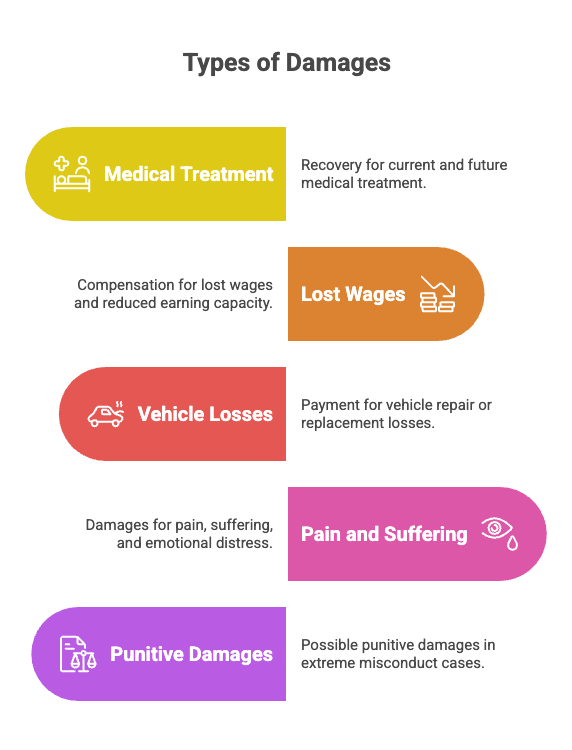
- Recovery for current and future medical treatment
- Compensation for lost wages and reduced earning capacity
- Payment for vehicle repair or replacement losses
- Damages for pain, suffering, and emotional distress
- Possible punitive damages in extreme misconduct cases
Florida law may also permit claims against additional liable parties in limited circumstances. Consent laws can affect issues involving vehicle use, insurance coverage, and related responsibilities, depending on the facts. Victims may benefit from understanding how liability, comparative fault, and policy limits influence available compensation. A careful legal evaluation helps clarify rights, protect lawful interests, and support a broader commitment to public safety and responsible service.
Steps to Take After a Miami Drunk Driving Car Accident Injury
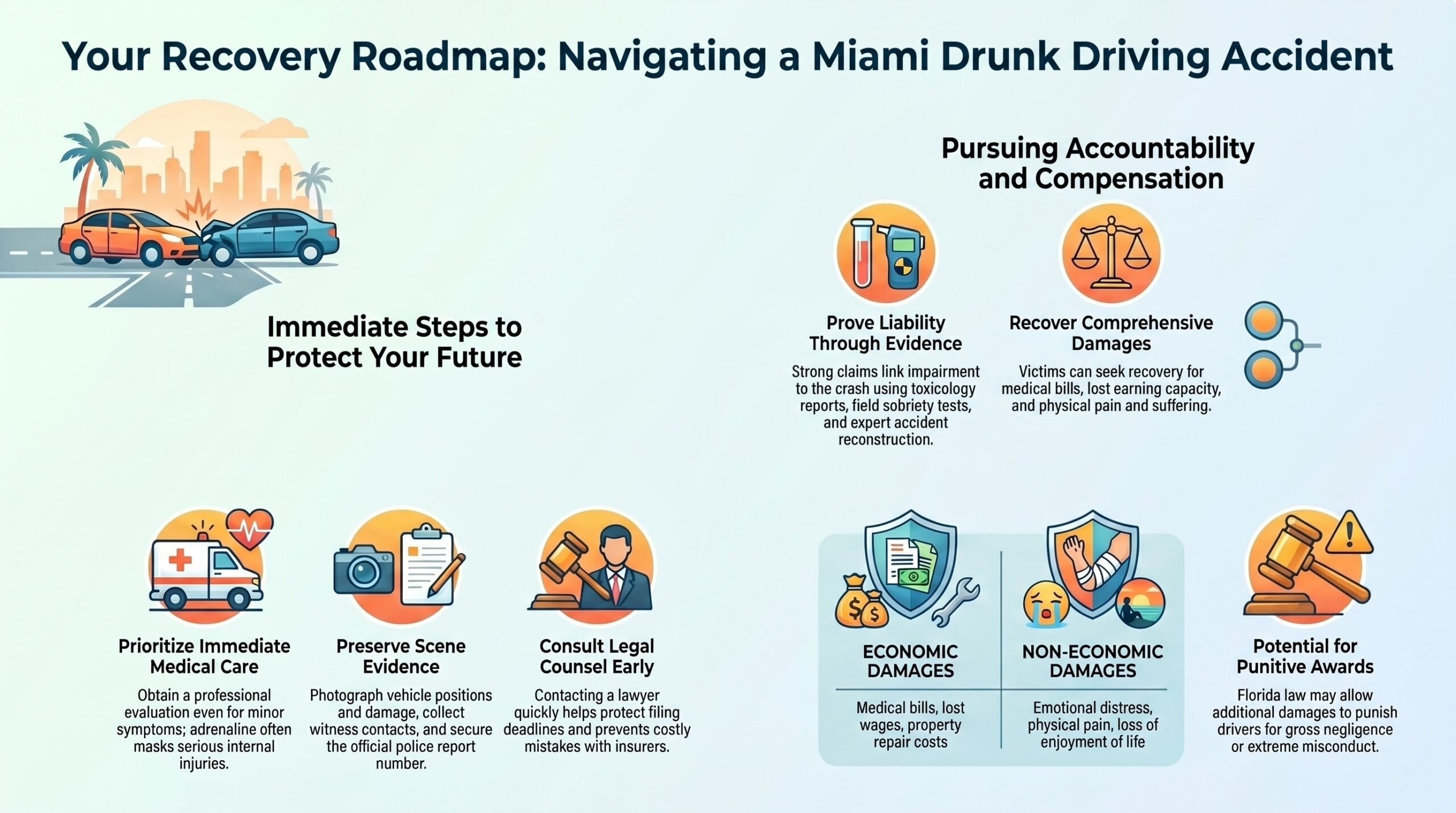
After a Miami drunk driving car accident injury, several immediate steps can protect both recovery and any future legal claim. Priority is generally given to obtaining prompt medical care, preserving photographs, witness information, and other scene evidence, and ensuring that the incident is properly documented. Early contact with a Miami lawyer can then help clarify available options, protect important deadlines, and support the injured person’s next decisions.
Seek Immediate Medical Care
In the immediate aftermath of a Miami drunk driving accident, obtaining prompt medical care should be treated as a priority, even when injuries do not appear severe. Adrenaline can mask pain, and some conditions, including concussions, internal bleeding, and soft tissue trauma, may worsen without early evaluation.
Emergency responders, urgent care physicians, or hospital staff can identify hidden injuries and begin appropriate treatment. Prompt attention also supports post-accident wellness by creating a clear path for follow-up care, rehabilitation, and symptom monitoring.
Those assisting an injured person should encourage calm communication with providers, accurate reporting of symptoms, and compliance with discharge instructions. Medical offices may also help with insurance verification, which can reduce confusion during a difficult period. Early care protects health, strengthens recovery, and supports responsible decision-making for everyone involved afterward.
Document Scene And Evidence
At the scene, careful documentation of conditions and evidence can preserve essential facts that may otherwise be lost within minutes. If it is safe to do so, an injured person or a helper should create a photo inventory showing vehicle positions, skid marks, debris, damage, traffic signals, weather, and visible injuries. Images taken from several angles often provide a clearer account of how the collision occurred.
Accurate notes also serve the broader goal of protecting everyone involved. Time, location, road conditions, and observations about the other driver’s behavior should be recorded promptly and objectively. Names and contact details of bystanders should be collected, and witness statements should be requested while memories are still fresh. Copies of the police report number, tow information, and damaged personal items can further support a complete factual record later.
Contact A Miami Lawyer
Once immediate evidence has been preserved, contacting a Miami lawyer should be considered without unnecessary delay. Legal counsel can explain rights, protect crucial deadlines, and guide communications with insurers, medical providers, and investigators. Early advice often helps injured individuals avoid mistakes that could weaken a future claim.
A qualified attorney will typically offer a free consultation to review the facts, assess potential liability, and outline practical next steps. This guidance can support not only the injured person, but also family members seeking stability and responsible care for others affected by the collision.
Counsel may also connect clients with local resources, including medical treatment options, counseling services, and transportation assistance. Prompt legal support promotes informed decisions, preserves important evidence, and strengthens the effort to pursue accountability and fair financial recovery.
How a Miami Drunk Driving Car Accident Injury Lawyer Can Help You
How can a Miami drunk driving car accident injury lawyer assist after a serious crash caused by an impaired driver? Legal counsel provides structured guidance, allowing injured individuals and families to focus on recovery and service to loved ones.
Through Victim advocacy and Evidence preservation, an attorney helps protect rights, organize records, and pursue accountability under Florida law.
- Investigate the collision, police findings, and witness statements promptly
- Secures medical documentation, crash reports, and other crucial evidence
- Handles insurer communications and resists unfair settlement tactics
- Calculates present financial losses and other compensable damages accurately
- Prepares litigation when negotiation does not produce a fair result
A Miami drunk-driving car accident injury lawyer also coordinates with experts when needed, tracks deadlines, and clearly explains each stage of the claim. This support promotes informed decisions, responsible stewardship of resources, and a measured path toward financial recovery while preserving the client’s ability to care for others and rebuild stability after a preventable event.
Long-Term Effects of Miami Drunk Driving Car Accident Injuries
Miami drunk driving car accident injuries can produce consequences that extend well beyond the initial emergency, often resulting in chronic physical complications that affect daily function and long-term health. Many victims also experience lasting emotional trauma, including anxiety, depression, and persistent psychological distress that interferes with work and personal stability. In addition, financial recovery challenges may continue for years, as ongoing medical care, lost income, and reduced earning capacity place substantial pressure on the injured person and the household.
Chronic Physical Complications
In the aftermath of a drunk driving collision, injured individuals may face chronic physical complications that extend far beyond the initial emergency treatment. Fractures, spinal trauma, and nerve damage can produce chronic pain that interferes with work, caregiving, and basic daily tasks. Some victims experience reduced strength, limited range of motion, and mobility decline, especially when injuries involve the back, hips, knees, or shoulders. Others develop headaches, sleep disruption, or persistent inflammation that slows rehabilitation and diminishes overall health.
These conditions often require ongoing medical oversight, physical therapy, assistive devices, and home modifications. For families committed to supporting recovery, understanding these lasting effects can strengthen planning, improve access to care, and help injured individuals preserve independence, safety, and dignity throughout the long recuperation process after a serious crash.
Lasting Emotional Trauma
Trauma often persists long after visible injuries begin to heal, affecting a person’s mental and emotional stability in ways that are less apparent but equally disruptive. Following a Miami drunk driving collision, an individual may experience PTSD symptoms, recurring fear, sleep disruption, irritability, and difficulty trusting ordinary routines. Some also struggle with survivor’s guilt, especially when others suffered greater harm or loss.
These emotional injuries can strain relationships, reduce concentration, and hinder a person’s ability to care for family, work, or community responsibilities. Early recognition is important because untreated trauma may deepen over time and influence every area of daily life.
Professional evaluation can identify appropriate therapy options, while support groups may provide understanding, structure, and encouragement. Consistent psychological care often helps restore confidence, resilience, and a greater sense of personal safety.
Financial Recovery Challenges
Beyond the immediate medical consequences, financial recovery after a drunk driving collision often becomes a prolonged and destabilizing process. Injured people may face mounting treatment costs, reduced earning capacity, and ongoing household obligations while attempting to recover and support their families. Lost wages can quickly erode savings, especially when rehabilitation limits a return to prior employment.
Medical liens may further complicate recovery by attaching repayment claims to any future settlement or verdict. In serious cases, long-term care, transportation needs, and adaptive services create expenses that insurance does not fully address. Families focused on serving and protecting one another often must make difficult decisions about caregiving, work schedules, and debt. A careful legal strategy can help identify available sources of compensation and reduce financial strain over time for those affected.
Proving Liability in Miami Drunk Driving Car Accident Injury Cases
Establishing liability in a Miami drunk driving car accident injury case requires more than showing that alcohol was involved. The injured party must connect impaired driving to the collision and resulting harm through careful evidence collection, reliable records, and persuasive witness credibility. Police reports, field sobriety results, video footage, crash scene photographs, and electronic data can clarify how the events unfolded and whether the driver breached a duty of care owed to others.
Liability may also depend on proving causation, meaning the intoxicated driver’s conduct directly produced the injuries claimed. Medical documentation, expert accident reconstruction, and testimony from treating providers often help explain the relationship between impact forces and physical losses. In some cases, comparative fault arguments arise, requiring a close review of each driver’s actions leading up to the crash.
A thorough legal investigation serves not only the injured person but also the broader community by promoting accountability and reinforcing safer conduct on Miami roads for everyone.
Dealing With Insurance Companies After a Miami Drunk Driving Car Accident Injury
Following a Miami drunk driving car accident injury, dealings with insurance companies often become a pivotal part of the recovery process. Insurers may request recorded statements, medical authorizations, and extensive documentation, yet injured individuals should approach every communication carefully and preserve records that reflect losses, treatment, and daily limitations.
A service-minded approach emphasizes honesty, organization, and protection of vulnerable people affected by the crash. Insurance adjusters may attempt to minimize injuries, dispute necessary care, or justify claim denials through narrow policy interpretations. Clear documentation, consistent medical follow-up, and measured responses can reduce misunderstandings and strengthen credibility.
When an insurer delays payment, ignores evidence, or misrepresents coverage, those actions may raise concerns about insurance bad faith. Professional guidance can help families and community members understand obligations, respond to requests appropriately, and remain focused on recovery while pursuing fair treatment. Careful advocacy supports accountability and helps prevent additional harm after a serious collision.
What to Expect During a Miami Drunk Driving Car Accident Injury Claim Process
A Miami drunk driving car accident injury claim typically begins with an initial case evaluation, during which the facts, injuries, and potential legal issues are assessed. The process then turns to evidence and liability, followed by insurance claim negotiations that may determine whether compensation can be resolved without further litigation. If a fair agreement is not reached, the matter may proceed to settlement discussions or trial, depending on the strength of the claim and the issues in dispute.
Initial Case Evaluation
At the outset of a Miami drunk driving car accident injury claim, the initial case evaluation is designed to determine the legal and factual foundation of the matter. During this stage, counsel conducts client intake and case screening to understand the incident, the injuries reported, and the immediate needs of the affected person and family.
The evaluation also reviews timelines, available documentation, insurance information, medical treatment status, and communication concerns. It helps identify urgent issues, preserves an orderly set of next steps, and clarifies whether the claim is suitable for formal representation. For those motivated by service to others, this process supports informed guidance, responsible expectations, and respectful attention to a person’s circumstances. A careful evaluation promotes efficiency, reduces confusion, and allows the legal team to begin the claim with structure, purpose, and professionalism.
Evidence And Liability
In evaluating evidence and liability, counsel examines how the collision occurred, whether alcohol impairment contributed to the driver’s conduct, and which facts can be established through reliable proof. Attorneys gather police reports, witness statements, crash scene images, surveillance footage, and medical records to build a clear account.
They also review toxicology findings, field sobriety observations, and issues involving breathalyzer accuracy, especially when results may be challenged. Liability may extend beyond the impaired driver in limited situations, including social host liability when the law permits and the facts support responsibility. Counsel compares physical evidence with testimony, identifies inconsistencies, and evaluates whether negligence, causation, and damages can be shown persuasively. This careful process helps injured people seek accountability, protect community safety, and support fair, service-minded outcomes under Florida law.
Insurance Claim Negotiations
Expect insurance claim negotiations to focus on the scope of injuries, the strength of liability evidence, and the amount of available coverage after a Miami drunk driving collision. Adjusters commonly review medical records, wage loss documentation, repair estimates, and witness statements before discussing compensation. They may also examine policy changes, exclusions, and lien issues that could affect recovery.
During this phase, careful communication helps protect the injured person’s interests and supports accountability for harm caused to the community. Insurers often use settlement tactics such as delay, requests for recorded statements, or efforts to minimize treatment needs. Counsel typically responds with organized proof of damages, a clear demand package, and reasoned rebuttals grounded in the facts. This process requires patience, consistency, and a service-minded focus on fair financial support for recovery.
Settlement Or Trial
As a claim moves toward resolution, the case generally turns on whether a negotiated settlement can adequately address the injured person’s medical costs, lost income, pain and suffering, and other proven damages. Attorneys review liability evidence, treatment records, and future care needs to measure fair value and strengthen settlement leverage.
If the insurer refuses a reasonable amount, trial preparation becomes crucial. Depositions, expert testimony, and exhibits are organized to present a clear account of intoxicated driving and resulting harm. Trial also introduces uncertainty, because jury dynamics may influence how fault, credibility, and damages are viewed. A settlement can provide timely support and reduce stress for families seeking stability. A trial, however, may become the necessary path when accountability, full compensation, and the community’s interest in responsible conduct require a verdict.
Compensation for Miami Drunk Driving Car Accident Injury Damages
After a Miami drunk driving crash, compensation may be available for the full range of injury-related losses caused by the impaired driver’s negligence. In appropriate cases, claims may address emergency treatment, hospitalization, rehabilitation, follow-up care, and other consequences that flow directly from the collision. A careful case review helps identify how the crash disrupted the injured person’s health, daily functioning, and long-term recovery needs.
Evidence often shapes the amount and scope of compensation pursued. Medical records, expert opinions, witness statements, crash reconstruction, and proof concerning breathalyzer reliability may affect liability arguments and insurance negotiations. When the conduct was especially reckless, Florida law may permit punitive damages designed to hold the wrongdoer accountable and promote public safety.
A Miami drunk-driving car accident lawyer may organize documentation, identify responsible parties, and present a thorough demand that reflects the seriousness of the harm. This process can support injured individuals and families seeking justice after a preventable loss.
Economic vs Non-Economic Damages in Miami Drunk Driving Car Accident Cases
In Miami drunk driving car accident cases, damages generally fall into two categories: economic and non-economic losses. Economic damages address measurable financial harm, while non-economic damages concern the personal effects of an injury, such as pain, suffering, and diminished quality of life. Establishing the value of either category requires clear evidence, reliable documentation, and a careful assessment of the accident’s impact on the injured person.
Economic Damages Explained
From a legal and financial standpoint, economic damages refer to the measurable losses a person suffers after a Miami drunk driving car accident, including medical bills, lost wages, rehabilitation costs, property damage, and other out-of-pocket expenses.
These damages are documented through receipts, invoices, employment records, repair estimates, and medical billing statements. Their purpose is to help an injured person regain financial stability and continue supporting family, work, and community responsibilities. In many cases, compensation may include emergency treatment, follow-up care, prescription costs, therapy, transportation to appointments, and reduced earning capacity.
Careful calculation is crucial because even modest expenses can grow over time and affect a household’s ability to serve others. A Miami drunk driving car accident lawyer may use records and expert analysis to present a clear, well-supported claim for recovery.
Non-Economic Losses Overview
While economic damages address documented financial losses, non-economic damages concern the personal harm that does not appear on invoices or pay records. In Miami drunk driving collision cases, these losses often include physical pain, emotional distress, diminished enjoyment of life, inconvenience, and loss of companionship or guidance within a family.
Such harms matter because serious injuries can alter daily routines, relationships, independence, and the ability to participate in work, worship, caregiving, and community service. Non-economic losses recognize that recovery involves more than repaying bills. They acknowledge subjective suffering and the human cost of trauma that follows a preventable crash.
Although pain valuation is inherently less concrete than calculating wages or medical expenses, the law still permits consideration of these deeply personal consequences when seeking a result that reflects fairness, dignity, and accountability for injured victims.
Proving Damage Value
Establishing the value of damages in a Miami drunk driving car accident case requires more than listing losses, because each category must be supported by credible evidence that connects the collision to the harm claimed. Economic damages often rely on medical bills, wage records, repair estimates, and future care projections. Non-economic damages require a careful showing of pain, emotional suffering, loss of enjoyment, and lasting limitations on daily life.
Effective damage valuation consequently depends on organized documentation, consistent treatment histories, and testimony from treating providers. In more contested claims, expert testimony may clarify future medical needs, diminished earning capacity, or the seriousness of permanent impairment. By presenting clear evidence of both financial and personal losses, injured people are better positioned to pursue accountability and secure the resources needed to continue serving their families and communities.
When a Miami Drunk Driving Car Accident Injury Case Goes to Trial vs Settlement
Determining whether a Miami drunk driving car accident injury case proceeds to trial or resolves through settlement depends on several vital factors, including the strength of the evidence, the extent of the injuries, the amount of available insurance coverage, and the parties’ willingness to negotiate in good faith. Attorneys evaluate medical records, witness statements, police findings, and expert opinions through careful risk assessment before recommending either path.
Settlement often serves injured people by providing faster compensation, reduced expenses, and greater privacy. It may be appropriate when liability is clear, and insurers offer fair value. Trial becomes more likely when fault is disputed, damages are minimized, or settlement offers do not reflect long-term harm. In those situations, counsel considers jury dynamics, courtroom presentation, and verdict predictability.
Plea bargaining may influence related criminal proceedings, but civil claims remain focused on accountability and recovery. A disciplined approach helps families pursue outcomes that protect recuperation, financial stability, and the broader well-being of those depending on them.
The Statute of Limitations for Miami Drunk Driving Car Accident Injury Cases
After a Miami drunk driving crash, the time allowed to file a personal injury claim becomes a pivotal legal issue that can directly affect the right to recover compensation. Florida law generally imposes a limited period to bring these cases, and missing that window may bar recovery entirely, regardless of how serious the injuries are. Families focused on recuperation and supporting one another should understand that timing matters from the beginning.
The statute of limitations can vary depending on the facts, including whether wrongful death is involved or whether specific deadline exceptions apply. Certain circumstances may pause or shorten the available time, making careful attention to dates especially important. The filing process also requires accurate documentation, proper identification of responsible parties, and compliance with court rules.
By acting within the required timeframe and preserving records early, injured individuals place themselves in a stronger position to pursue accountability, protect community safety, and seek financial relief for medical care and related losses.
When to Contact a Miami Drunk Driving Car Accident Injury Lawyer
The most prudent time to contact a Miami drunk driving car accident injury lawyer is as soon as possible following the collision, particularly when injuries, disputed facts, or signs of intoxication are involved. Prompt communication supports early intervention, which can help organize medical records, accident reports, witness information, and other time-sensitive materials before details fade or documents become harder to obtain.
Immediate outreach is also important when an injured person is hospitalized, unable to work, or facing contact from the insurer. In service to affected families and the broader community, timely legal guidance can encourage careful documentation and responsible decision-making during a stressful period. Evidence preservation is especially important in drunk driving cases, where surveillance footage, officer observations, toxicology results, and vehicle damage may play a significant role.
Contact may also be appropriate when fault is denied, multiple vehicles are involved, or a wrongful death has occurred. Acting promptly helps protect relevant information and supports an orderly response.
Why You Need an Experienced Miami Drunk Driving Car Accident Injury Lawyer
In drunk-driving injury cases, experienced legal representation is often necessary because liability, damages, and evidentiary issues can be more complex than they first appear. An experienced Miami drunk driving car accident injury lawyer helps protect the injured person’s rights while building a clear, well-supported claim. Counsel can identify responsible parties, preserve essential evidence, and address insurance tactics that may reduce or delay fair compensation.
Seasoned representation also supports broader service-minded goals. Through careful case development, a lawyer can advance victim advocacy by seeking accountability and securing resources for medical care, lost income, and long-term recovery. Experience is especially valuable when serious injuries, disputed facts, or multiple defendants are involved.
In many matters, legal counsel also contributes to community outreach by raising awareness of the harms of impaired driving and encouraging safer conduct. This combination of legal knowledge, strategic preparation, and public-minded purpose can make a meaningful difference for injured individuals and the communities around them.
How to Choose the Right Miami Drunk Driving Car Accident Injury Lawyer for Your Case
For injured individuals evaluating legal representation, selecting the right Miami drunk driving car accident injury lawyer requires careful attention to qualifications, case experience, and client service. A prudent review begins with the attorney’s background in impaired-driving collision claims, courtroom readiness, and a history of negotiating meaningful settlements for harmed clients.
Careful Client interviews can help families assess communication style, responsiveness, and commitment to protecting those affected by another person’s reckless choices. It is also wise to examine a professional’s reputation through reviews, disciplinary records, and references, when available. Clear explanations of case strategy, timelines, and likely challenges often indicate a lawyer who respects clients and the recovery process.
Fee structures should be reviewed closely so injured individuals understand contingency terms, litigation costs, and potential deductions before signing an agreement. By weighing experience, transparency, and service, injured people can choose counsel prepared to advocate effectively and support a just financial recovery with integrity.
About The Law Offices of Anidjar & Levine
Among the firms considered by injured victims in Miami, The Law Offices of Anidjar & Levine is often evaluated for its representation of people harmed in drunk driving crashes.
The firm is known for examining accident details, identifying liable parties, and pursuing compensation for medical expenses, lost income, and other related damages with consistent attention to detail.
Its approach is often described as client-focused, with communication practices intended to keep individuals informed during each stage of a claim.
Publicly available client testimonials frequently reference responsiveness, professionalism, and practical guidance after serious collisions.
The firm’s work also reflects a broader commitment to service through community outreach, which may matter to families seeking counsel aligned with civic responsibility.
In drunk driving cases, that combination of legal advocacy and service-oriented values can be relevant when victims compare representation options.
For many, the firm stands as one possibility among those offering structured support after preventable harm in Miami.
Frequently Asked Questions
Can a Drunk Driving Accident Affect My Immigration Status in Miami?
Yes, a drunk driving accident can affect immigration status in Miami, especially when it leads to arrest, charges, or criminal convictions. Immigration consequences may include detention, inadmissibility concerns, or complications with visas, residency, and naturalization. The outcome often depends on the specific offense, the injury involved, the prior record, and the case resolution. Careful legal guidance helps protect both immigration interests and the broader well-being of the individual and family.
Will My Health Insurance Cover Treatment After a Drunk Driving Crash?
Yes, health insurance often covers treatment after a drunk driving crash, subject to policy terms, exclusions, and coordination with auto coverage. An injured person should review benefits carefully and keep complete records, because claim denials may arise over medical necessity, network issues, or billing errors. Prompt notice to insurers and providers helps protect coverage. If disputes occur, careful appeals and informed guidance can support fair payment and continued access to necessary care.
Can I Recover Damages if the Drunk Driver Was Uninsured?
Yes, damages may still be recovered if the drunk driver was uninsured. An injured person may pursue compensation through uninsured motorist coverage, if available, which often applies to medical costs, lost income, and pain-related losses. A separate civil remedy against the driver may also exist, although recovery depends on that person’s assets. Careful legal review helps identify all available sources of compensation and supports informed, service-minded decision-making.
Are Punitive Damages Available in Miami Drunk Driving Injury Cases?
Yes, punitive damages may be available when a drunk driver’s conduct shows intentional misconduct or gross negligence. Florida courts may allow these exemplary awards to punish especially dangerous behavior and deter similar harm to others. A claimant generally must present a reasonable evidentiary basis before seeking punitive damages in the lawsuit. Availability depends on the facts, including evidence of intoxication, reckless actions, and whether the conduct exceeded ordinary negligence under Florida law.
What if the Drunk Driver Was Working During the Accident?
If the drunk driver was working at the time of the accident, the employer may also be held responsible under employment liability principles, especially if the conduct occurred within the scope of assigned duties. A careful review of job purpose, supervision, and vehicle use is crucial. There may also be workers’ compensation interaction issues if the injured person or driver was on duty. Prompt investigation helps preserve evidence and protect the legal interests of all affected parties.
—————————
Drunk driving collisions in Miami often leave victims facing serious injuries, financial strain, and difficult legal questions.
A clear understanding of their rights, the causes of these crashes, and the steps required after an accident can materially affect the outcome of a claim.
With experienced legal representation, injured parties are better positioned to pursue full compensation and protect their interests.
The Miami Car Accident Attorney at Law Offices of Anidjar & Levine provides guidance focused on accountability, recovery, and informed legal action.