A Miami underinsured motorist claim injury lawyer assists injured people when the at-fault driver’s insurance is not enough to cover medical bills, lost wages, and pain and suffering.
The Law Offices of Anidjar and Levine reviews UM coverage, liability limits, exclusions, stacking issues, and notice requirements while gathering records that connect the crash to the claimed losses.
A lawyer also manages insurer communications, challenges undervaluation or denial, and prepares the claim for settlement or litigation.
Additional guidance from a Miami Car Accident Lawyer appears below.
Main Takeaways
- A Miami underinsured motorist claim lawyer reviews all policies to identify available UM benefits, liability limits, exclusions, endorsements, and stacking issues.
- UM coverage may compensate medical bills, lost wages, and pain and suffering when the at-fault driver’s insurance is insufficient.
- Prompt medical treatment, insurer notice, and organized records help preserve benefits and strengthen an underinsured motorist injury claim.
- Lawyers use police reports, witness statements, medical evidence, and experts to prove liability, causation, and the full extent of damages.
- If an insurer undervalues, delays, or denies a valid claim, a lawyer can challenge the decision through negotiation or litigation.
How We Can Help With Your Miami Underinsured Motorist Injury Claim
Navigate through the underinsured motorist claim process with a legal team that understands both the insurance framework and the practical impact of a serious collision. In Miami, counsel can organize claim materials, communicate with insurers, and protect deadlines so injured people and their families can focus on recovery and service to others.
Representation also includes evaluating available coverage, documenting losses, and presenting a clear demand supported by medical records, wage information, and witness evidence. When carriers delay, minimize, or dispute payment, the firm can challenge those positions through negotiation and, when necessary, litigation. This work is guided by careful preparation, respectful communication, and a commitment to fair outcomes for clients and the wider community.
Through Community outreach, the firm helps residents understand available protections and responsible next steps after a crash. Through attention to Policy reform, it also supports stronger insurance practices that better serve vulnerable people across Miami and strengthen public trust.
Understanding Miami Underinsured Motorist Claim Injury Cases


Understanding a Miami underinsured motorist claim injury case begins with recognizing a central issue: the at-fault driver’s liability coverage may be insufficient to fully compensate the injured person’s losses. In these matters, recovery may depend on the injured person’s own uninsured or underinsured motorist coverage, the wording of the policy, and the available policy limits.
OUR CONSULTATIONSARE FREE
START YOUR FREE CASE REVIEW

A careful evaluation often includes medical expenses, lost income, future care needs, and non-economic harm. Service-minded legal guidance can help families understand whether benefits apply, how insurers value claims, and whether stacking options may increase available coverage. It is also important to review notice requirements, exclusions, and deadlines, because procedural mistakes can affect the outcome. In Miami, these cases frequently require thorough documentation, persuasive advocacy, and a disciplined approach to negotiations.
By understanding coverage layers and claim requirements, injured people and those assisting them are better prepared to pursue fair compensation together with clarity, purpose, and confidence.
Common Causes of Miami Underinsured Motorist Claims
Several factors commonly lead to a Miami underinsured motorist claim, particularly when the at-fault driver carries minimal liability coverage that cannot fully address the losses involved. These claims also arise when high medical costs and severe crash injuries quickly exceed available policy limits, leaving substantial unpaid damages. In other cases, multiple victim claims may divide limited insurance proceeds among several injured parties, creating a significant shortfall for each claimant.
Minimal Liability Coverage


In many Miami collisions, minimal liability coverage is a primary reason for an underinsured motorist claim. Florida drivers may carry only minimum limits, which often provide inadequate protection when another person suffers substantial losses. As a result, injured individuals and the families assisting them can face immediate policy gaps after a crash.
From a public service perspective, this issue underscores the importance of understanding available insurance protections before harm occurs. Limited liability policies are designed to satisfy legal requirements, not necessarily to meet the full financial consequences of a serious accident. When the at-fault driver’s coverage is exhausted quickly, underinsured motorist benefits may become crucial to preserve stability and support recovery. Careful review of coverage options can help households make informed, community-minded decisions that better protect others on the road.
High Medical Costs
After a serious Miami crash, medical expenses can rise far faster than many liability policies can cover. Even when initial emergency care appears manageable, follow-up appointments, diagnostic imaging, rehabilitation, medications, and transportation costs often expand the total loss. For families committed to caring for others, these financial demands can quickly strain household stability and disrupt important responsibilities.
When the at-fault driver carries insufficient coverage, unpaid balances may shift to the injured person and family. That burden can lead to Treatment delays, reduced access to specialists, and difficult choices between health needs and basic living expenses. In some situations, prolonged billing pressure contributes to Medical bankruptcy, especially where income has also been interrupted. Underinsured motorist coverage may help bridge these gaps and protect access to timely, consistent care after a collision.
Severe Crash Injuries
Serious injury often explains why an underinsured motorist claim becomes necessary in Miami, because the losses associated with major trauma can exceed a negligent driver’s policy limits within a short period. Severe crash injuries frequently involve emergency surgery, hospitalization, rehabilitation, and extended loss of income, all of which create substantial financial pressure on injured individuals and the families supporting their recovery.
Conditions such as Spinal trauma may produce lasting pain, paralysis, impaired mobility, and the need for lifelong assistance. Traumatic amputation can require intricate surgical care, prosthetic devices, home modifications, and counseling. Brain injuries, organ damage, and severe fractures may also diminish independence and the ability to serve others through work, caregiving, or community involvement. In these cases, underinsured motorist coverage often becomes an indispensable source of meaningful support.
Multiple Victim Claims
When several people are injured in the same Miami collision, the at-fault driver’s liability coverage may be divided among multiple claimants and become inadequate almost immediately. In these cases, even modest policy limits can be exhausted before all medical bills, lost income, and long-term care needs are addressed. Multiple claimants often face competing demands on limited funds, which can complicate fair recovery for every injured person and every affected family.
Underinsured motorist coverage may provide vital protection when available liability insurance falls short. A careful review of injuries, policy language, and damages helps identify remaining sources of compensation. Coordinated settlements can reduce conflict among parties, preserve resources, and support more equitable outcomes. This approach reflects a commitment to serving injured individuals responsibly while protecting their financial stability during recovery.
Legal Rights of Miami Underinsured Motorist Claim Injury Victims
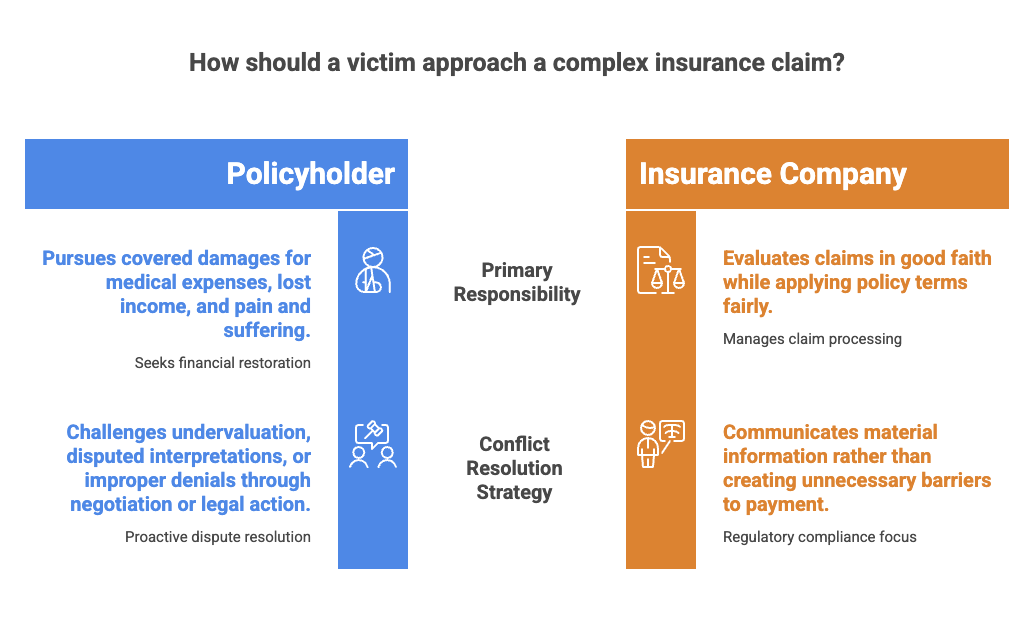
Clarity is essential in understanding the legal rights of Miami underinsured motorist claim injury victims, because Florida law may allow an injured person to seek compensation through underinsured motorist coverage when the at-fault driver’s policy does not fully cover the loss. These rights often depend on policy language, Statutory limits, and Policy exclusions, each of which may affect available recovery and the insurer’s obligations.
- Victims may pursue covered damages for medical expenses, lost income, and pain and suffering when qualifying losses exceed the negligent driver’s liability insurance.
- Insurers must generally evaluate claims in good faith, communicate material information, and apply policy terms fairly, rather than creating unnecessary barriers to payment.
- Injured persons may challenge undervaluation, disputed coverage interpretations, or improper denials through negotiation or legal action, while seeking outcomes that help restore stability for families and communities.
A careful review of coverage can protect rights and support meaningful recovery after a serious collision.
Steps to Take After a Miami Underinsured Motorist Claim Injury
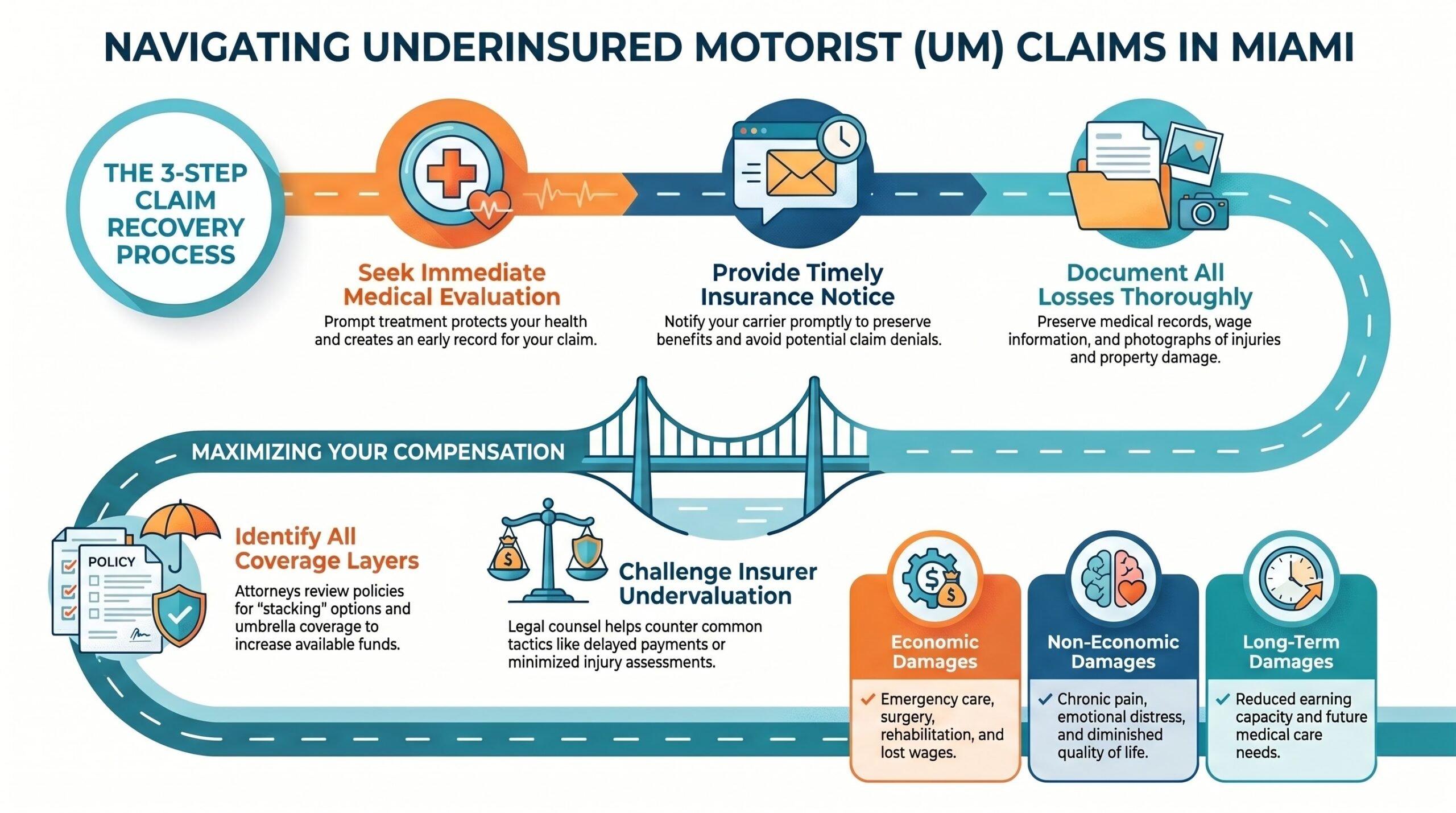
After a Miami underinsured motorist injury, prompt medical care is vital to protect both health and the evidentiary value of the claim. The injured party should also notify the insurance carrier as soon as reasonably possible, since timely notice may affect coverage and the handling of benefits. Careful documentation of injuries, treatment, expenses, lost income, and related losses can provide crucial support for a later underinsured motorist claim.
Seek Immediate Medical Care
In the immediate aftermath of a Miami underinsured motorist accident, prompt medical evaluation should be a priority, even if symptoms initially appear minor. Adrenaline may mask pain, while internal injuries, concussions, and soft tissue damage can worsen without timely assessment by qualified professionals.
Calling 911 may be appropriate when serious harm is suspected, and Emergency transport can provide lifesaving intervention while creating an early record of care. Even when injuries seem manageable, urgent evaluation supports recovery and helps caregivers understand the person’s immediate needs. Physicians may recommend imaging, medications, therapy, or referrals to consultants based on the findings. Follow-up appointments remain equally important because consistent treatment can reveal delayed symptoms, document progress, and improve the injured person’s ability to return to serving family, work, and community.
Notify Your Insurance Carrier
Prompt medical documentation should be followed by timely notice to the injured person’s own insurance carrier, particularly when the at-fault driver’s coverage may not fully compensate for the loss. Early communication helps preserve underinsured motorist benefits and allows the carrier to evaluate the matter within the required policy timing provisions. Notice should be direct, accurate, and consistent with the policy’s reporting instructions.
An injured person should review coverage terms, provide basic accident information, and avoid unnecessary delay. Many policies impose strict deadlines, and missed notice requirements can lead to claim denial or reduced bargaining leverage. Serving one’s family responsibly often means acting promptly, maintaining professional communication, and confirming receipt in writing. When uncertainty exists about reporting obligations or insurer requests, legal guidance can help protect available benefits without creating avoidable disputes or waiver issues.
Document Injuries And Losses
Documenting injuries and related losses establishes the factual foundation of an underinsured motorist claim and helps demonstrate the full extent of harm that may not be covered by the at-fault driver’s policy. A claimant should preserve thorough medical documentation, including diagnoses, treatment plans, prescriptions, and provider notes, because these records connect the collision to ongoing physical and emotional consequences.
They should also keep photographs of injuries and damaged property, mileage records for appointments, and receipts for out-of-pocket expenses. Wage records and employer correspondence can help show lost income or diminished capacity to work. When available, witness statements may support how the crash occurred and how the injuries affected daily responsibilities. Careful records allow insurers, counsel, and support networks to evaluate needs accurately and pursue compensation that reflects the claimant’s genuine losses.
How a Miami Underinsured Motorist Claim Injury Lawyer Can Help You
Secure legal guidance can markedly improve the outcome of an underinsured motorist claim after a serious crash. A Miami underinsured motorist claim injury lawyer evaluates coverage, explains Policy updates, and tracks Claim timelines so injured people can focus on recovery and serving their families. Counsel also gathers records, verifies losses, and presents a well-supported demand that reflects the full scope of harm.
Experienced counsel can strengthen an underinsured motorist claim by clarifying coverage, documenting losses, and protecting recovery-focused families.
- The lawyer reviews all applicable policies, including household and umbrella coverage, to identify benefits that might otherwise be overlooked.
- The lawyer communicates with insurers, responds to requests, and guards against statements that could be used to reduce payment unfairly.
- The lawyer prepares for negotiations carefully and, if necessary, advances the matter toward litigation to pursue fair compensation with discipline.
This assistance promotes order during a difficult period. It helps responsible community members protect financial stability, honor caregiving obligations, and make informed decisions that support both mending and long-term household security after unexpected loss.
Long-Term Effects of Miami Underinsured Motorist Claim Injuries
Miami underinsured motorist claim injuries may produce lasting consequences that extend well beyond the initial recovery period. Common long-term effects include chronic pain challenges, emotional trauma that affects daily functioning, and a reduced earning capacity caused by physical or psychological limitations. These ongoing losses often influence medical needs, employment stability, and the overall value of a personal injury claim.
Chronic Pain Challenges
Over time, chronic pain can become one of the most disruptive long-term effects of injuries tied to underinsured motorist collisions, often continuing long after fractures have mended or soft tissue damage appears stable.
Persistent pain may limit mobility, disturb sleep, reduce work capacity, and complicate everyday caregiving responsibilities. In many cases, symptoms evolve beyond the original injury site, requiring careful assessment, consistent treatment, and practical support from professionals committed to helping injured people regain function. Effective care may include medication review, physical rehabilitation, Fibromyalgia management strategies, and structured Pain psychology interventions that address pain perception and coping without focusing on emotional trauma.
Because chronic pain can fluctuate, injured individuals often need ongoing documentation, treatment coordination, and patient advocacy. Thorough legal and medical attention can help guarantee these lasting impairments are recognized and properly valued.
Emotional Trauma Impact
Long after physical injuries have been identified and treated, the emotional effects of an underinsured motorist collision may continue to interfere with daily life in significant ways. Survivors may experience anxiety, sleep disruption, depression, and persistent fear during routine travel. In some cases, post-traumatic stress develops, leading to flashbacks, hypervigilance, or avoidance of reminders connected to the crash. These symptoms can alter mood, reduce patience, and limit meaningful participation in family, community, and caregiving roles.
Emotional suffering may also contribute to relationship strain, especially when loved ones struggle to understand invisible injuries. Careful documentation, compassionate treatment, and steady support often play an important role in recovery. A thorough legal claim may recognize these lasting psychological effects and help injured individuals pursue resources that support mending and restored stability over time.
Reduced Earning Capacity
Uncertainty often follows serious collision injuries when a person can no longer return to the same type or level of work performed before the crash. Reduced earning capacity may affect wages, benefits, opportunities for advancement, and long-term financial stability for the injured person and those who rely on that income.
In these cases, careful documentation helps clarify the scope of loss. Medical records, employer statements, and a formal capacity assessment may show how physical limitations, chronic pain, or cognitive changes interfere with vital job duties. When appropriate, vocational rehabilitation can identify modified work options, retraining needs, or realistic employment paths. A thorough review of education, skills, and labor market conditions may also reveal diminished future earnings. Such evidence can strengthen an underinsured motorist claim by connecting injury-related limitations to measurable economic harm over time.
Proving Liability in Miami Underinsured Motorist Claim Injury Cases
Establishing liability in a Miami underinsured motorist claim injury case requires clear evidence that another driver’s negligence caused the collision and the resulting damages. This often begins with police reports, scene photographs, witness statements, medical records, and vehicle damage assessments, all of which help show how the crash occurred and whom it harmed.
Florida’s comparative negligence standard may affect recovery when multiple parties share fault, so careful factual analysis is vital. Attorneys often review traffic laws, skid marks, surveillance footage, and electronic vehicle data to connect conduct with injury. In intricate cases, expert testimony from accident reconstruction authorities, physicians, or vocational professionals may clarify causation, severity, and long-term impact. Credible proof also links physical injuries to the incident rather than prior conditions.
A thorough presentation of liability supports fair evaluation of losses and promotes accountability, which can help injured individuals protect their families, continue serving their communities, and move forward with greater stability after serious harm.
Dealing With Insurance Companies After a Miami Underinsured Motorist Claim Injury
Guiding communications with insurance companies after an injury in a Miami underinsured motorist claim requires caution, consistency, and a clear understanding of policy obligations. Injured people benefit from measured responses, careful recordkeeping, and respectful correspondence that protect their interests while preserving accuracy in every statement.
Insurance representatives often request recorded statements, broad medical authorizations, or quick evaluations of loss. A disciplined approach helps prevent misunderstandings that may affect coverage positions or damage valuation. Attention to deadlines, policy language, and supporting documentation strengthens credibility and supports fair claims negotiation. Awareness of common adjuster tactics is equally important, since insurers may minimize injuries, question treatment, or frame conversations to limit financial exposure.
Legal guidance can help families, caregivers, and community-minded individuals respond in ways that support long-term recovery rather than short-term pressure. By organizing records, confirming communications in writing, and avoiding speculation, a claimant places the matter on a more stable and responsible footing.
What to Expect During a Miami Underinsured Motorist Injury Claim Process
A Miami underinsured motorist injury claim generally begins with a coverage investigation, followed by the formal filing of the claim and a review of the available medical evidence. Insurers typically examine policy terms, liability issues, injury documentation, and the extent of damages before evaluating the claim’s value. The process may conclude through settlement negotiations, but litigation may become necessary when coverage, causation, or compensation remains in dispute.
Coverage Investigation Steps
At the outset, a coverage investigation in a Miami underinsured motorist claim typically begins with a careful review of every available insurance policy, including the injured party’s UM coverage, the at-fault driver’s liability limits, and any exclusions, endorsements, or notice requirements that may affect recovery. This review identifies Policy limits, Coverage exclusions, stacking issues, and household or commercial policies that may provide additional protection. Adjusters and counsel often compare declarations pages, policy language, and accident facts to determine which coverage applies.
They may also confirm residency, vehicle ownership, permissive use, and whether any other insurer shares responsibility. Medical records, crash reports, and correspondence are gathered to connect injuries to available benefits. A thorough investigation promotes fair evaluation, protects vulnerable claimants, and supports informed decisions that advance the injured person’s recovery and broader well-being.
Filing The Claim
Once coverage has been identified, filing a Miami underinsured motorist claim generally begins with prompt notice to the insurer, followed by submission of basic loss information, accident details, and supporting records that show the nature of the injuries and the limits of the at-fault driver’s insurance. The carrier often acknowledges the claim, assigns an adjuster, and requests forms, authorizations, and policy-related information. A clear Documentation timeline helps families, caregivers, and advocates organize materials responsibly and avoid preventable delays. Communication should remain timely, respectful, and consistent, especially when the insurer asks for clarification or additional records.
Claimants are commonly expected to preserve correspondence, track phone calls, and confirm receipt of submissions. Attention to Settlement deadlines is also important because missed dates can complicate negotiations, delay support, and reduce opportunities for a fair, service-minded resolution.
Medical Evidence Review
During the medical evidence review stage, the insurer typically examines treatment records, diagnostic imaging, physician opinions, billing statements, and other health-related documentation to evaluate the nature, extent, and probable cause of the reported ailments. This process often includes careful comparison of medical records with the accident details, provider notes, and prior health history. An imaging review may be used to confirm objective findings and assess whether the injuries align with reported symptoms and timelines. Insurers may also consider consistency in treatment, referral patterns, prescribed care, and any documented limitations affecting daily service to family, work, or community.
Thorough, organized documentation helps present a clear picture of need and recuperation progress. Accurate submissions from physicians, therapists, and claimants can reduce misunderstandings and support a fair, informed evaluation of the claimed bodily harm.
Settlement And Litigation
In many Miami underinsured motorist claims, the matter proceeds to settlement discussions after the insurer has reviewed liability, damages, and the available policy terms. During this phase, counsel presents medical records, wage-loss information, and other evidence to support a fair demand. Settlement timelines vary, depending on disputed facts, treatment progress, and policy interpretation.
If negotiations do not produce an adequate resolution, the claim may move into litigation. A lawsuit allows further investigation through discovery, depositions, and expert review, while preserving the injured person’s rights. Litigation costs may increase as the case advances, yet careful preparation often strengthens the claim’s value and supports a just outcome. Throughout either path, disciplined legal guidance can help families pursue compensation responsibly, protect financial stability, and remain focused on recovery and service to others.
Compensation for Miami Underinsured Motorist Claim Injury Damages
For many Miami motorists, underinsured motorist coverage provides a vital source of financial recovery when a negligent driver’s insurance is insufficient to cover the full extent of an injury claim. This coverage may help bridge the gap after the at-fault driver’s policy limits are exhausted, allowing injured individuals to pursue additional compensation through their own insurer. In many cases, careful documentation, prompt notice, and strategic settlement negotiations influence the amount ultimately recovered.
Compensation in a Miami underinsured motorist claim generally depends on the severity of harm, the available coverage, and the strength of supporting evidence. Insurers often review medical records, accident reports, witness statements, and proof of continuing limitations before evaluating payment. A lawyer may assist by organizing evidence, addressing insurer disputes, and advocating for a result that reflects the claim’s full value under the policy. This process can support injured people and the families who rely on them during a difficult period.
Economic vs Non-Economic Damages in Miami Underinsured Motorist Claim Cases
In Miami underinsured motorist claim cases, damages generally fall into two categories, economic and non-economic, each addressing a different type of loss. Economic damages typically cover measurable financial harm such as medical expenses, lost wages, and other documented costs, while non-economic losses refer to pain and suffering, emotional distress, and diminished quality of life. Because compensation often depends on credible evidence, these claims require clear evidence to establish both the existence of the losses and their value.
Economic Damages Explained
At the outset, economic damages refer to the measurable financial losses caused by a crash and the resulting injuries in a Miami underinsured motorist claim. These damages are documented through bills, estimates, employment records, and other objective evidence, which helps families and advocates understand the claim’s practical value.
Common examples include emergency treatment, hospitalization, rehabilitation, medication costs, and future medical care that physicians reasonably expect will be necessary. Economic damages may also include lost wages when injuries prevent a person from working, as well as reduced earning capacity if long-term limitations affect future employment. In addition, property damage to a vehicle and related transportation expenses may be recoverable. Careful calculation of these losses promotes accountability and helps injured individuals secure resources needed to support recovery, stability, and continued service to others.
Non-Economic Losses Overview
Perspective is vital when evaluating a Miami underinsured motorist claim, because not every serious loss appears on a bill or pay record. Non-economic losses address the human consequences of injury, including physical discomfort, emotional strain, loss of enjoyment, and disruption of close relationships. These harms often affect how an injured person serves their family, workplace, and community.
In Miami, underinsured motorist cases, non-economic damages may include lasting anxiety, sleep disturbance, depression, and the need for grief counseling after traumatic collisions. They also encompass daily limitations that reduce independence, dignity, and participation in meaningful activities. While economic damages measure financial impact, non-economic losses reflect lived experience. Careful attention to pain valuation helps distinguish the full scope of harm, especially when recovery is incomplete, and long-term personal effects remain significant for everyone involved.
Proving Damage Value
To establish damage value in a Miami underinsured motorist claim, each category of loss must be supported by evidence that is specific, credible, and tied to the collision. Economic damages often include medical bills, rehabilitation costs, lost wages, and diminished earning capacity, all documented through records, invoices, and employer statements. Non-economic damages, such as pain, emotional distress, and reduced quality of life, require persuasive proof through treatment notes, testimony, and evidence of daily impact.
A careful damage assessment helps demonstrate how the injuries have affected the claimant’s ability to work, care for family, and serve the community. Insurers closely examine consistency, duration, and medical support when conducting settlement valuation. Strong documentation and clear presentation often improve the likelihood of fair compensation under available underinsured motorist coverage limits.
When a Miami Underinsured Motorist Claim Injury Case Goes to Trial vs Settlement
Determining whether a Miami underinsured motorist injury case proceeds to trial or resolves through settlement depends on the strength of the evidence, the extent of the injuries, and the insurer’s willingness to offer fair compensation. When liability is clear, medical records are consistent, and future losses are well documented, a settlement often serves the injured person by providing needed resources without extended dispute.
Trial becomes more likely when the insurer contests fault, minimizes treatment, or refuses to recognize the claim’s full value. In those situations, careful preparation includes assessing witness credibility, conducting expert analysis, and developing thoughtful Jury strategies that explain how the collision affected daily life, work, and family responsibilities. Settlement timing also matters, because early offers may not reflect long-term care needs, while later negotiations may benefit from fuller evidence. A disciplined legal approach evaluates risk, cost, and the potential community impact of a verdict, always with attention to fair recovery and responsible stewardship of available support.
The Statute of Limitations for Miami Underinsured Motorist Claim Injury Cases
In Miami, in underinsured motorist injury cases, the statute of limitations sets the legal deadline for filing suit, and missing that deadline can bar recovery regardless of the claim’s underlying validity. This time limit serves courts, insurers, and injured people by promoting orderly resolution and preserving reliable evidence for all involved.
Florida law can involve nuances in statutes, especially when policy language, accident dates, contractual duties, or related claims affect how the limitations period is measured. Filing deadlines may vary depending on whether the dispute centers on insurance benefits, bad-faith issues, or other related legal rights. Accurate calculation consequently protects community-minded individuals who seek fair compensation not only for themselves, but also to maintain stability for their families and those who depend on them. Prompt attention to notices, documentation, and procedural requirements helps preserve a valid underinsured motorist claim. Careful compliance with timing rules supports accountability, efficient case management, and access to meaningful recovery under the policy.
When to Contact a Miami Underinsured Motorist Claim Injury Lawyer
Recognizing the right moment to involve a Miami underinsured motorist claim injury lawyer can materially affect the strength, value, and efficiency of a claim. Contact is often prudent soon after the collision, especially when injuries require ongoing treatment, liability is disputed, or the insurer requests recorded statements, medical authorizations, or broad documentation. Early intervention can help preserve records, organize communications, and prevent avoidable missteps.
It is also wise to seek guidance when damages appear likely to exceed the at-fault driver’s policy limits, or when an insurer delays, minimizes losses, or questions medical necessity. Prompt legal review may clarify the available underinsured motorist benefits, notice requirements, and deadlines under the policy. Families focused on recovery and responsible stewardship often benefit from obtaining direction before accepting a settlement, signing releases, or assuming coverage is unavailable. Timely action supports a more orderly process and helps make certain the claim reflects the full scope of loss and future needs.
Why You Need an Experienced Miami Underinsured Motorist Claim Injury Lawyer
Often, the involvement of an experienced Miami underinsured motorist injury claim lawyer is vital because these claims often present layered insurance issues, disputed valuations, and strict policy conditions that can affect recovery. Skilled counsel helps interpret coverage limits, exclusions, notice requirements, and Policy updates that may influence available benefits after a serious collision.
An experienced lawyer also develops effective Case strategies grounded in medical evidence, wage loss documentation, and careful analysis of long-term needs. This guidance can protect injured people from accepting inadequate offers that shift financial burdens onto families and community caregivers. Counsel coordinates communications with insurers, gathers records, addresses bad faith concerns, and presents damages in a clear, supportable manner.
In service-minded communities, this legal support promotes stability by helping injured individuals secure resources for treatment, rehabilitation, and daily living. When liability and damages are contested, experienced representation provides structure, persistence, and informed advocacy throughout each stage of the underinsured motorist claim process.
How to Choose the Right Miami Underinsured Motorist Claim Injury Lawyer for Your Case
For many injured motorists, choosing the right Miami underinsured motorist claim injury lawyer requires careful attention to experience, communication, and a demonstrated understanding of complex insurance disputes. A careful review often begins with Attorney Credentials, including licensure, focused injury practice, trial history, and familiarity with Florida underinsured motorist coverage issues and policy interpretation.
Practical evaluation should also consider responsiveness, clarity, and the lawyer’s approach to client service. Many families benefit when counsel explains procedures plainly, sets realistic expectations, and remains accessible during negotiations or litigation. Client Chemistry matters because trust supports informed decisions and steady cooperation throughout a demanding claim.
It is also wise to examine prior results, professional reputation, and the resources available for investigation, medical documentation, and expert consultation. An attorney who values preparation, compassion, and disciplined advocacy is better positioned to pursue fair compensation while helping injured people protect household stability and continue serving their communities with confidence.
About The Law Offices of Anidjar & Levine
At The Law Offices of Anidjar & Levine, injured motorists can find representation grounded in client service, careful case preparation, and a practical understanding of Florida insurance disputes. The firm approaches underinsured motorist claims with attention to each client’s medical needs, financial concerns, and long-term recovery goals.
Its attorneys and staff emphasize responsive communication, organized case management, and advocacy shaped by experience with insurers and injury litigation. This focus reflects a firm’s history of helping accident victims pursue fair compensation while preserving dignity throughout the legal process. For people who value service to family and community, that approach can provide meaningful support during a difficult period.
Publicly available client testimonials often describe professionalism, accessibility, and consistent guidance from intake through resolution. Those accounts, while individual, reinforce the firm’s reputation for dependable representation. In intricate underinsured motorist matters, that combination of preparation, service, and practical judgment may provide injured clients with a reliable legal resource.
Frequently Asked Questions
Can I Stack Underinsured Motorist Coverage on Multiple Vehicles in Florida?
Yes, under Florida law, underinsured motorist coverage may often be stacked across multiple vehicles, unless the insured accepted non-stacked coverage in writing. The available stacking options depend on the policy language, the number of covered vehicles, and any signed rejection forms. Stacking can increase total policy limits, which may better protect injured people and families after a serious collision. A careful policy review is usually necessary first.
Does My Um/Uim Claim Affect My Future Insurance Premiums?
Yes, a UM/UIM claim can affect future insurance rates, though the outcome depends on the insurer, state rules, and the insured’s overall claim history. Some carriers view any payout as a rating factor, while others place greater weight on fault and frequency. A person seeking fair treatment should review policy terms carefully and ask the insurer how such claims are evaluated. Documenting communications may also support informed, service-minded decisions later.
Can I Use Underinsured Motorist Coverage After a Hit-And-Run in Miami?
Yes, underinsured motorist coverage may apply after a hit-and-run in Miami if policy eligibility requirements are met. An injured person should promptly notify the adjuster and preserve all available evidence, including police reports, witness statements, and medical records. These claims often involve proof challenges because the fleeing driver is unidentified. Careful documentation helps insurers evaluate liability, damages, and coverage, while supporting a recovery that serves the injured person’s needs.
What Happens if the At-Fault Driver Was Working During the Crash?
If the at-fault driver was working at the time of the crash, the employer may also be legally responsible. Under employer liability principles, a business can face vicarious responsibility for harm caused within the employee’s job duties. This can expand the availability of insurance coverage and improve recovery options for injured people. A careful investigation usually examines the driver’s role, work schedule, vehicle use, and whether the employer’s policy applies to the loss.
Does Florida Underinsured Motorist Coverage Apply if I Was Biking or Walking?
Yes, Florida underinsured motorist coverage may apply when an injured person was walking or riding a bicycle, depending on the policy terms and household coverage. Many policies extend pedestrian coverage and can also support bicycle claims when the at-fault driver lacks sufficient insurance. A careful review of the policy, vehicle involvement, and residency status is crucial. Prompt reporting and thorough documentation help protect recovery and support fair compensation for those harmed.
—————————
Guiding a Miami underinsured motorist claim requires a clear understanding of insurance coverage, liability, and the steps necessary to protect a victim’s interests. An experienced attorney can evaluate the claim, address insurer disputes, and pursue the compensation available under applicable policies and Florida law.
Miami Car Accident Attorney services from Law Offices of Anidjar and Levine provide representation focused on careful case preparation and practical guidance, helping injured individuals move forward with greater confidence and a stronger legal position.