
The Law Offices of Anidjar and Levine help families secure evidence, document injuries, and manage communications with insurers after a crash.
Counsel evaluates police reports, witness statements, medical records, and electronic data to determine liability under Florida law.
Legal support also addresses no-fault coverage, serious injury claims, and potential responsibility of the parent or vehicle owner.
Prompt guidance can protect the claim’s value, support medical and school-related documentation, and clarify the next steps outlined by a Miami Car Accident Lawyer.
Main Takeaways
- Seek immediate medical evaluation after a Miami teen driver crash, even for minor symptoms, to detect hidden injuries and create clear records.
- Preserve evidence by photographing the scene, gathering witness and insurance information, and saving crash reports, medical records, and repair documents.
- A Miami teen driver accident lawyer can investigate liability using police reports, electronic data, surveillance, and witness statements.
- Florida’s no-fault rules may limit recovery initially, but serious injuries can allow claims against the at-fault driver for broader damages.
- An attorney can handle insurers, identify liability with the parent or vehicle owner, and pursue compensation for medical costs, rehabilitation, and long-term harm.
How We Can Help With Your Miami Teen Driver Car Accident Injury Claim
After a Miami teen driver car accident, effective legal representation can help an injured person protect vital evidence, understand insurance obligations, and pursue the full compensation available under Florida law. Counsel may coordinate witness interviews, secure crash reports, preserve electronic data, and document medical treatment in a clear, timely manner. This support allows families to focus on recovery and responsible care for others affected.
An attorney may also manage communication with insurers, identify all available coverage, and prepare a persuasive claim that reflects present and future losses. When relevant, counsel can address issues involving Parent Consent, vehicle ownership, and permissive use without distracting from the injured person’s immediate needs. If the collision affected school attendance, extracurricular participation, or transportation arrangements, legal guidance may organize records connected to School Policies and related administrative requirements.
Throughout the process, disciplined advocacy promotes accountability, protects dignity, and serves the broader goal of helping injured community members rebuild safely.
Understanding Miami Teen Driver Car Accident Injury Cases


Legal support often begins with a clear understanding of how Miami teen driver car accident injury cases are evaluated under Florida law. These matters commonly involve insurance coverage, injury thresholds, liability findings, and the legal duties owed by young drivers, parents, vehicle owners, and other parties connected to the collision.
OUR CONSULTATIONSARE FREE
START YOUR FREE CASE REVIEW

A careful review usually considers police reports, witness statements, medical records, and electronic evidence. Florida’s no-fault framework may affect how benefits are first pursued, while serious injuries can open a path toward broader recovery. Courts and insurers may also examine graduated licensing requirements, because compliance can influence responsibility analysis. In some cases, teen psychology becomes relevant when evaluating judgment, perception, and foreseeable risk, though youth does not remove accountability.
For families and advocates committed to serving others, understanding these legal standards helps support informed decisions, protect the injured person’s interests, and promote a more responsible response after a Miami teen driver accident.
Common Causes of Miami Teen Driver Car Accidents
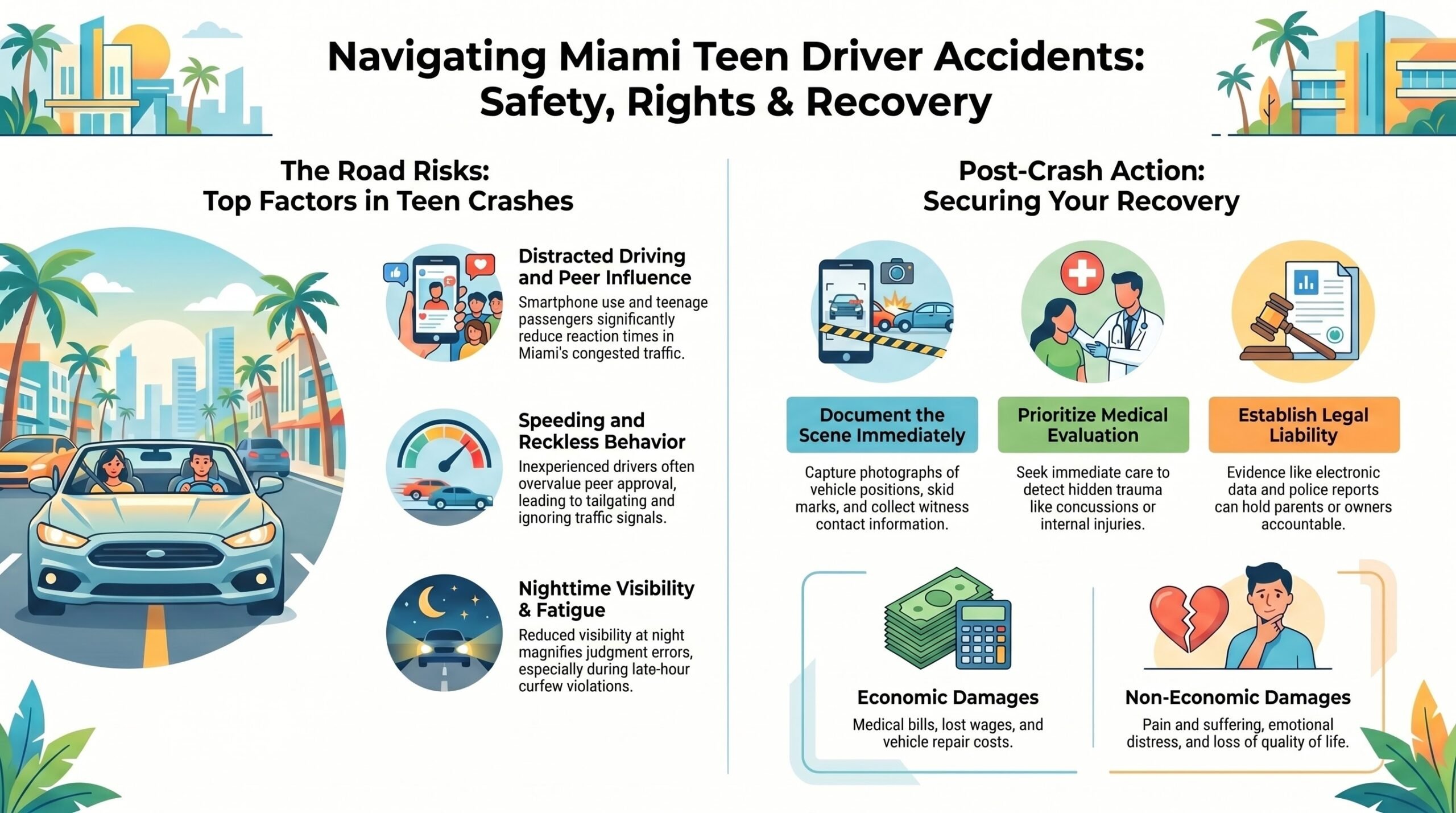
Several factors commonly contribute to Miami teen driver car accidents, with distracted driving remaining a frequent and serious concern. Speeding, reckless behavior, and inexperience often reduce a young driver’s ability to respond safely to changing road conditions. The risk may increase further at night and when teenage passengers are present, as peer influence can affect judgment and attention.
Distracted Driving Risks


In Miami’s dense traffic environment, distracted driving remains one of the most common causes of teen driver accidents. Young motorists often divide attention between the roadway and competing tasks inside the vehicle, reducing reaction time and situational awareness. Common examples include smartphone use, navigation adjustments, passenger interactions, and eating distractions during routine travel.
These preventable habits can place pedestrians, cyclists, passengers, and other drivers at unnecessary risk. A service-minded community benefits when families, schools, and legal advocates encourage teens to keep both hands on the wheel and full attention on traffic conditions. Consistent instruction, clear household rules, and modeling attentive driving can help reduce collisions. When a crash occurs, careful legal guidance may help injured individuals pursue accountability and obtain resources needed for medical care, recovery, and long-term support.
Speeding And Reckless Behavior
Beyond distraction, speeding and reckless behavior also play a major role in Miami teen driver accidents. Excessive speed reduces reaction time, increases stopping distance, and makes collisions far more severe for passengers, pedestrians, and other motorists. In busy urban corridors, even brief bursts of acceleration can turn ordinary traffic situations into emergencies.
Research on speeding psychology shows that some young drivers may misjudge risk, overvalue peer approval, or view speed as a sign of confidence rather than danger. Reckless choices may include racing, abrupt lane changes, tailgating, and ignoring traffic signals. Communities focused on protecting others often support education, visible patrols, and consistent enforcement of reckless driving laws to discourage hazardous conduct. When serious crashes occur, careful legal review can help families understand liability, insurance issues, and the full impact of preventable harm on victims.
Inexperienced Driving Errors
Consider how limited time behind the wheel can affect judgment, hazard recognition, and split-second decision-making in Miami traffic. Teen drivers with limited experience may struggle to anticipate sudden lane changes, monitor blind spots, or maintain safe following distance in congested conditions. These gaps can pose preventable risks to passengers, pedestrians, and other motorists who depend on attentive, careful driving.
In many collisions, inexperienced drivers’ errors stem from delayed reactions, improper merging, overcorrection, and misunderstanding of right-of-way rules. Even when intentions are responsible, judgment errors can occur because intricate traffic patterns demand practiced observation and calm responses. Families seeking accountability often benefit from understanding how developmental inexperience intersects with roadway demands. A careful legal review can help identify contributing factors, clarify responsibility, and support recovery for those harmed through no fault of their own.
Nighttime And Peer Influence
Nighttime driving often magnifies the same judgment limits that affect inexperienced teen motorists, while adding reduced visibility, fatigue, and more rapidly changing roadway conditions. Lower Nighttime visibility can shorten reaction time, make hazards harder to detect, and increase the likelihood of serious mistakes on Miami roads.
Peer pressure may further compromise safe choices when teen drivers travel with friends after Social gatherings, where distractions, noise, and impulsive decisions become more common. In many cases, Curfew compliance serves as an important safeguard because late hours often coincide with higher risks and diminished alertness. Families, schools, and community advocates who seek to protect young people often emphasize passenger limits, route planning, and responsible communication before evening trips.
These preventive measures can reduce avoidable crashes and support a stronger culture of service, accountability, and roadway safety for everyone.
Legal Rights of Miami Teen Driver Car Accident Injury Victims
Accountability becomes central when a Miami teen driver causes a collision that leaves another person injured. Florida law generally allows victims to pursue compensation for medical costs, lost income, property damage, and pain-related losses. When the at-fault driver is a minor, parental liability may arise in limited circumstances, especially where a parent signed the teen’s driver’s license application or negligently entrusted a vehicle to the teen. Violations of graduated licensing restrictions may also support evidence of careless conduct.
Victims commonly hold several important legal rights:
- The right to seek insurance benefits and, when legally permitted, file a personal injury claim against responsible parties.
- The right to investigate whether additional liability exists, including claims involving vehicle owners, employers, or parents.
- The right to demand fair valuation of present and future losses, so that needed care and family stability are protected.
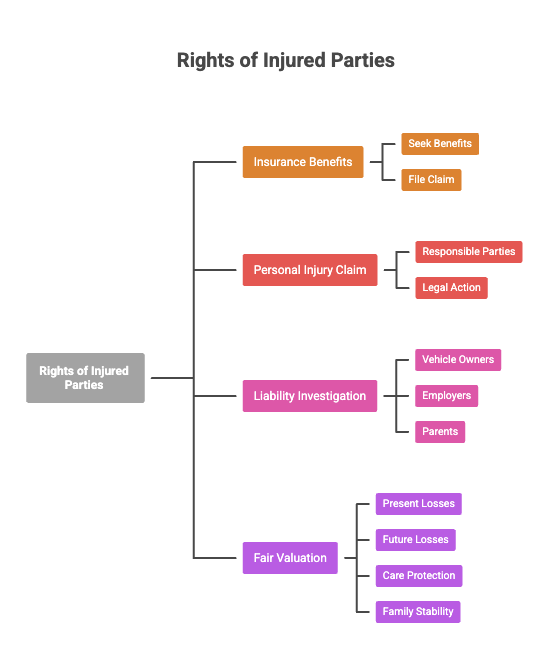
These rights exist to promote accountability, encourage safer driving, and help injured people secure resources necessary to continue serving their households and communities.
Steps to Take After a Miami Teen Driver Car Accident Injury
After a Miami teen driver car accident injury, the first priority is to guarantee safety by moving to a secure location when possible and contacting emergency services. It is also important to document the scene carefully, including vehicle damage, road conditions, visible injuries, and any available witness information. Prompt medical attention should follow, as timely evaluation can heal both health and any future injury claim.
Ensure Safety First
In the immediate moments following a Miami teen driver car accident, safety must remain the first priority. Those involved should assess injuries, remain calm, and move only if staying in place creates greater danger. If the vehicle is operable and conditions allow, it should be moved from traffic to a safer location.
Everyone should keep Seat belts fastened until the surroundings have been evaluated and movement can proceed without added risk. Hazard lights should be activated, and passengers should use Emergency exits if doors are blocked or if fire, smoke, or water presents a danger. A responsible adult, bystander, or older teen should call 911 and request medical assistance if anyone appears to be hurt. Protecting life and preventing further harm serves every person at the scene and supports a more orderly emergency response for all.
Document The Scene
Documenting the scene should begin as soon as conditions are safe, because early details often become important when questions arise about how the crash occurred and who may be responsible. Careful record-keeping can protect the interests of everyone involved, especially when a teen driver is involved.
Useful documentation may include scene photography of vehicle positions, damage, skid marks, traffic signals, road conditions, and weather. Names, contact information, insurance details, and license plate numbers should also be gathered accurately. If bystanders observed the collision, respectful witness statements can preserve valuable perspectives before memories fade. Notes about the time, location, direction of travel, and any visible hazards may further clarify events. Organized documentation often supports accountability, encourages fairness, and helps families make informed decisions while serving affected individuals.
Seek Medical Attention
When immediate dangers have passed, prompt medical evaluation should remain a priority, even when injuries appear minor or symptoms seem delayed. Teen collision victims may experience hidden trauma, including concussions, internal injuries, or soft tissue damage that worsens without timely care. An emergency assessment can identify urgent conditions, guide treatment, and create a clear medical record linked to the crash.
Caregivers who act quickly help protect both health and future legal interests. Physicians may recommend imaging, medication, rest, or a referral to a consultant based on observed symptoms and the mechanics of the accident. Consistent follow-up monitoring is equally important because pain, dizziness, and emotional distress may emerge over time. By encouraging prompt care and careful observation, families place the injured teen in the best position to recover fully and continue serving school, family, and community well.
How a Miami Teen Driver Car Accident Injury Lawyer Can Help You
Many families facing the aftermath of a teen driver collision benefit from legal guidance that is both strategic and practical. A Miami teen driver car accident injury lawyer helps protect rights, organize evidence, and address insurance issues with steady Legal representation.
This support often allows parents to focus on recovery, caregiving, and Parental guidance for a young driver after a traumatic event.
- A lawyer investigates the crash, gathers records, interviews witnesses, and preserves documentation that may clarify liability and damages.
- A lawyer manages insurer communications, evaluates settlement offers, and seeks compensation for medical costs, lost income, and property damage.
- A lawyer explains deadlines, court procedures, and available options, helping families make informed decisions that reflect responsibility and service to others.
Long-Term Effects of Miami Teen Driver Car Accident Injuries
Teen driver car accident injuries in Miami may produce lasting physical complications that require extended treatment, rehabilitation, and ongoing medical monitoring. These injuries may also lead to emotional and mental trauma, including anxiety, depression, and persistent stress that affects daily functioning. Over time, such consequences may limit future opportunities by disrupting education, employment prospects, and overall independence.
Lasting Physical Complications
Crash-related injuries involving adolescent drivers can produce lasting physical complications that extend well beyond the initial emergency treatment. Fractures, spinal damage, and joint trauma may mend slowly, leaving chronic pain that interferes with school, work, and daily responsibilities. Some teenagers face mobility limitations requiring braces, assistive devices, or extended physical therapy. Others develop headaches, reduced strength, or diminished coordination after head, neck, or back injuries.
These conditions often require ongoing medical evaluation, rehabilitation, and careful planning by families and caregivers committed to supporting recovery. In service-oriented communities, understanding these physical burdens helps advocates recognize the practical needs injured teens may have months or years after a crash. Reliable legal guidance can help families access resources for treatment, adaptive equipment, follow-up care, and other necessities tied to long-term physical recovery.
Emotional And Mental Trauma
Physical recovery does not always mark the end of a young person’s recovery after a serious vehicle collision. Many teens continue to experience emotional and mental trauma, including anxiety, sleep disturbance, depression, irritability, and fear related to riding in vehicles or returning to daily routines. These effects can alter behavior, strain family relationships, and reduce a young person’s sense of safety and trust.
When caregivers, schools, and community members recognize these struggles early, they are better positioned to offer meaningful help. Appropriate therapeutic interventions may include counseling, trauma-informed therapy, and careful monitoring by qualified professionals. In many cases, peer support also provides reassurance, connection, and validation that encourages recovery. A service-minded legal advocate may help families pursue resources that support both emotional stabilization and long-term well-being.
Impact On Future Opportunities
Uncertainty often follows a serious motor vehicle injury into the years that shape a young person’s education, employment prospects, and personal independence. Recovery may interrupt school attendance, limit extracurricular involvement, and reduce academic performance at a stage when records heavily influence College admissions decisions. Some teens also require ongoing treatment, adaptive support, or schedule changes that affect testing, internships, and volunteer commitments.
These disruptions can continue into adulthood. Physical limitations, chronic pain, or cognitive difficulties may narrow training options and delay entry into the workforce. As a result, Career prospects may be altered before they are fully formed. Families who seek guidance often do so not only to address immediate losses, but also to protect a young person’s ability to serve others, contribute meaningfully, and pursue a stable, self-directed future.
Proving Liability in Miami Teen Driver Car Accident Injury Cases
Establishing liability in a Miami teen driver car accident injury case requires a careful review of how the collision occurred, what legal duties were owed, and whether those duties were breached. This process often begins with police reports, witness statements, photographs, surveillance footage, and electronic data that clarify speed, right-of-way, and roadway conditions.
Evidence may also reveal Driver distraction, including texting, phone use, or other inattention that prevented safe driving. When a teen’s conduct falls below the standard expected of a reasonably careful driver, negligence may be shown. In some matters, Parental liability may also become relevant if a parent entrusted a vehicle to an inexperienced or unsafe teen or failed to meet legal responsibilities connected to ownership. Courts and attorneys may evaluate licensing status, prior driving history, and compliance with graduated licensing rules.
A thorough liability analysis helps injured individuals pursue accountability while promoting safer choices that protect families, passengers, pedestrians, and the broader Miami community.
Dealing With Insurance Companies After a Miami Teen Driver Car Accident Injury
Once liability has been examined, attention often turns to the insurance claims process, where early communications can materially affect the outcome of a Miami teen driver car accident injury case. Insurers often request recorded statements, medical authorizations, and quick settlement discussions, yet careful responses better protect injured teens and their families.
A service-oriented approach emphasizes accuracy, patience, and documentation. Families are often better served by preserving medical records, repair estimates, photographs, and all correspondence with the insurer before engaging in claim negotiations. This helps prevent misunderstandings about injuries, treatment, or damages. Insurance carriers may evaluate several available sources of coverage, including parental auto policies, household exclusions, and policy limits, all of which may affect recovery.
They may also question fault percentages or minimize long-term harm. Thoughtful advocacy can keep discussions focused on fair valuation and community-centered support for the injured person. Clear, respectful communication with insurers often strengthens credibility while reducing opportunities for unfair delay or underpayment.
What to Expect During a Miami Teen Driver Car Accident Injury Claim Process
A Miami teen driver car accident injury claim generally begins with formal filing steps, followed by an insurance investigation that reviews liability, damages, and policy terms within a defined timeline. The process also requires careful examination of medical records and related evidence to assess the nature of the injuries and the extent of recoverable losses. If the claim does not resolve through settlement, the matter may proceed to litigation, where additional procedures and legal deadlines apply.
Claim Filing Steps
Maneuvering a Miami teen driver’s car accident injury claim typically begins with a prompt report to the insurer, followed by a careful review of medical records, crash documentation, and available evidence. From there, families often organize a filing checklist that includes policy information, witness names, photographs, treatment bills, and proof of losses.
Counsel may then prepare formal claim materials, verify liability details, and make certain all submissions comply with statute deadlines and notice requirements. Clear communication with medical providers, schools, and employers can help document how the injury has affected the teen’s daily life and future needs. Throughout this stage, careful recordkeeping supports accuracy and service to others, because complete information helps responsible parties evaluate the claim fairly. Early legal guidance also reduces avoidable errors and preserves the teen’s right to seek appropriate recovery.
Insurance Investigation Timeline
After claim materials are submitted, the insurer’s investigation usually begins within days and may continue for several weeks, depending on the severity of the teen’s injuries, the number of parties involved, and the clarity of the available evidence. During this period, adjusters often gather police reports, witness statements, photographs, repair estimates, and policy information to verify how the collision occurred and who may bear responsibility.
Prompt cooperation can help the claim timeline move forward, while delays in communication or missing records may extend the review. Families are often encouraged to support evidence preservation by keeping damaged property, saving correspondence, and documenting crucial dates.
Insurers may also contact drivers, passengers, or witnesses for recorded statements. A lawyer can monitor progress, respond to requests, and help make certain the investigation remains fair, organized, and focused on service.
Medical Evidence Review
During the medical evidence review stage, insurers and legal representatives closely examine treatment records to assess the nature, extent, and likely duration of the teen’s injuries. They compare emergency notes, consultant evaluations, therapy reports, and diagnostic findings to confirm consistency. In some cases, forensic imaging helps clarify whether trauma aligns with the reported collision mechanics and symptoms.
A careful review may also include medication reconciliation, which identifies prescribed drugs, dosage changes, and potential side effects that affect recovery or daily functioning. Providers may be asked for updated narratives explaining prognosis, restrictions, and expected care needs. This phase often requires organized communication among families, physicians, and counsel to ensure accurate information is preserved. Thorough documentation supports a fair understanding of harm and helps those assisting the teen respond with informed, compassionate, and practical guidance.
Settlement And Litigation
In the next phase, a Miami teen driver car accident injury claim often moves toward settlement discussions or, if liability or damages remain contested, formal litigation. Counsel typically evaluates the insurer’s position, compares medical proof with legal standards, and advises families on realistic settlement alternatives that protect the injured teen’s long-term needs.
If negotiations do not produce a fair result, the claim may proceed through filing, discovery, depositions, mediation, and possibly trial. Each step is designed to clarify facts, measure damages, and encourage accountability from all responsible parties. Families are often informed about timelines, evidentiary demands, and litigation costs so decisions can be made with care and service-minded purpose. A structured legal strategy helps preserve rights while seeking compensation that supports recovery, stability, and the teen’s future well-being.
Compensation for Miami Teen Driver Car Accident Injury Damages
Accountability is a central concern when a Miami teen driver’s car accident causes injury, because the financial consequences often extend far beyond the initial emergency care. Compensation may be pursued through applicable insurance coverage, claims against negligent parties, or, in limited circumstances, additional responsible entities such as vehicle owners. A careful review of liability, policy limits, and documented losses helps determine the full value of a claim.
When disputes arise, legal counsel can address insurance disputes, gather records, and present clear evidence supporting recovery. This process may include proving negligent driving, distracted behavior, speeding, or other unlawful conduct that contributed to the crash. In especially serious cases involving reckless disregard for safety, punitive damages may be considered under Florida law. An informed claim also protects families and communities by reinforcing responsibility and encouraging safer conduct on the road. Prompt action, thorough documentation, and disciplined advocacy often strengthen the injured person’s chances of fair compensation.
Economic vs Non-Economic Damages in Miami Teen Driver Car Accident Cases
In Miami teen driver car accident cases, damages are generally divided into economic and non-economic categories, each addressing a different type of loss. Economic damages typically include measurable financial harm, such as medical expenses, rehabilitation costs, lost wages, and property damage, while non-economic losses concern pain and suffering, emotional distress, and reduced quality of life. Establishing either form of damage requires persuasive evidence, including medical records, billing statements, expert opinions, and other documentation that connects the teen crash to the claimed losses.
Economic Damages Explained
From a legal and financial standpoint, economic damages in Miami teen driver car accident cases refer to the measurable monetary losses caused by the collision, such as medical expenses, rehabilitation costs, lost wages, reduced earning capacity, and property damage. These damages are documented through invoices, employment records, repair estimates, and expert evaluations.
Careful calculation helps families recover resources needed to support treatment and stability after a crash. Medical billing statements can show emergency care, follow-up visits, therapy, medication, and future care needs. Lost wages may apply when a parent misses work to assist an injured teen, while Future earnings may be considered if long-term impairment affects employment prospects. Property loss includes vehicle repairs, replacement costs, and damaged personal items. Accurate proof allows legal advocates to pursue fair compensation and promote responsible recovery planning.
Non-Economic Losses Overview
While economic damages address documented financial losses, non-economic damages concern the human effects of a Miami teen driver car accident that do not appear on bills or pay records. These losses may include physical suffering, emotional distress, inconvenience, disfigurement, and diminished enjoyment of daily life, all of which can affect both injured teens and their families. In service-oriented legal advocacy, careful pain valuation recognizes that recovery involves more than repaying expenses.
It also considers how injuries alter relationships, independence, confidence, and routine participation in school, family, and community life. Because these harms reflect loss of intangibles rather than fixed prices, they require thoughtful consideration of the person’s overall experience. A complete damage assessment consequently acknowledges financial costs while also honoring the accident’s deeper personal impact and long-term recuperation.
Proving Teen Crash Damages
Accuracy is central to proving damages in a Miami teen-driver car accident case because compensation depends on evidence connecting the crash to both measurable financial loss and genuine personal harm. Economic damages are usually shown through medical bills, wage records, repair estimates, and future care projections. Non-economic damages require a careful presentation of pain, emotional distress, disability, and loss of normal daily function.
Effective proof often combines medical documentation, expert opinion, photographs, and witness statements to show how the collision changed the injured person’s life. Damage valuation must reflect present losses and likely future consequences, especially when a teen’s injuries affect education, mobility, or long-term treatment needs. A thorough, service-minded legal approach helps make certain that compensation is fair, well-supported, and focused on the injured person’s recovery and stability after the crash.
When a Miami Teen Driver Car Accident Injury Case Goes to Trial vs Settlement
In many Miami teen driver accident claims, the decision to resolve a case through settlement or proceed to trial depends on the strength of the evidence, the severity of the injuries, and the willingness of the insurance company to offer fair compensation. When liability is clear and damages are well documented, settlement often serves injured families by providing timely support, limiting stress, and reducing litigation costs. Strong medical records, witness statements, and expert opinions can increase settlement leverage during negotiations.
Trial becomes more likely when fault is disputed, injuries are catastrophic, or an insurer minimizes long-term losses. In those situations, presenting the case before a jury may be necessary to pursue full accountability. Attorneys evaluate jury dynamics, the credibility of witnesses, and the consistency of the defense before recommending that path. A careful legal strategy considers both practical needs and the broader goal of protecting the injured person’s future. Each option requires disciplined preparation and informed judgment.
The Statute of Limitations for Miami Teen Driver Car Accident Injury Cases
After a Miami teen driver crash, the statute of limitations establishes the legal deadline for filing an injury claim, and missing that deadline can seriously limit or completely bar recovery. In Florida, these filing deadlines depend on the nature of the claim, the date of the collision, and whether exceptions apply. Careful attention to timing helps protect injured teens, families, passengers, and others seeking accountability and recovery resources.
Certain circumstances may affect when the clock begins or pauses. For example, discovery tolling may become relevant when injuries are not immediately known, though courts apply such doctrines narrowly. Claims involving minors, wrongful death, or government entities may follow different rules and shorter notice requirements. Because records can disappear and memories can fade, prompt documentation remains important even when time appears available. A clear understanding of limitation periods supports responsible decision-making, preserves access to the courts, and helps communities pursue fair outcomes after preventable harm.
When to Contact a Miami Teen Driver Car Accident Injury Lawyer
At the earliest practical stage, contacting a Miami teen driver car accident injury lawyer can help protect legal rights, preserve vital evidence, and reduce mistakes that may weaken a claim. Early contact is especially important when injuries require treatment, fault is disputed, or insurance representatives request statements soon after the collision.
Prompt legal guidance may also be appropriate when a crash involves questions about graduated licensing, distracted driving, intoxication, multiple vehicles, or uninsured motorists. In some cases, families may need timely direction regarding parental liability, vehicle ownership, and the responsibilities of all parties involved. A lawyer can also help ensure that photographs, electronic data, witness information, and medical records are collected before they are lost or altered.
Seeking counsel quickly can support a more orderly process, allowing those affected to focus on recovery and responsible next steps. This approach can serve injured individuals, families, and the broader community by encouraging accountability and careful compliance with legal deadlines.
Why You Need an Experienced Miami Teen Driver Car Accident Injury Lawyer
For families confronting the aftermath of a collision involving a teen driver, an experienced Miami teen driver car accident injury lawyer can provide vital guidance that extends well beyond basic claim handling. Such representation helps protect injured individuals, clarify legal responsibilities, and make certain that evidence, medical records, and witness accounts are preserved with care and accuracy.
Experienced counsel is especially important when cases involve intricate insurance disputes, serious injuries, teen caregiving duties disrupted by the crash, or questions of parental liability. A lawyer can thoroughly evaluate damages, including treatment costs, future needs, lost educational opportunities, and the broader impact on household stability. Effective advocacy also helps families avoid procedural mistakes that could weaken a rightful claim.
By managing negotiations and legal strategy, counsel allows families to focus on recovery, support, and service to one another. In matters involving young drivers, informed legal guidance often makes the difference between an undervalued claim and a result that reflects the full extent of harm.
How to Choose the Right Miami Teen Driver Car Accident Injury Lawyer for Your Case
In selecting legal representation after a collision involving a young driver, careful attention should be given to the lawyer’s experience with teen-related accident claims, knowledge of Florida negligence law, and ability to manage both injury damages and liability issues that may involve parents or insurance policyholders.
The lawyer should also demonstrate a clear record of case preparation, responsive communication, and thoughtful guidance that helps families make informed choices while protecting injured people. Because teen driving cases can involve Parent consent questions, graduated licensing restrictions, and Curfew laws, counsel should understand how those facts may affect fault, coverage, and recovery. A careful review of courtroom experience, settlement results, and professional reputation can help identify dependable representation.
It is also wise to weigh whether the attorney works effectively with medical providers, investigators, and insurers, since coordinated advocacy often supports fair compensation. Choosing counsel with skill, integrity, and compassion can better serve both accountability and recovery for all involved.
About The Law Offices of Anidjar & Levine
With a focus on responsive client service and thorough case advocacy, The Law Offices of Anidjar & Levine represents people injured in Miami teen car accidents and other motor vehicle collisions throughout South Florida. The firm assists clients and families during difficult periods by addressing medical care, insurance issues, property damage, and legal strategy with consistent attention to detail.
Its firm history reflects a commitment to accessible representation and practical guidance for injured individuals seeking accountability after preventable crashes.
Attorneys and staff work to explain each stage of the claims process clearly, helping clients make informed decisions that protect recovery and long-term stability. This service-centered approach is supported by community involvement, including efforts that reflect concern for public safety and the well-being of local families.
By combining legal expertise with attentive communication, the firm aims to reduce stress for those affected by teen driver collisions while pursuing compensation to support treatment, financial security, and a responsible path forward.
Frequently Asked Questions
Can Teens Be Personally Sued After a Miami Car Accident?
Yes, teens can be personally sued after a car accident when their actions cause injury or property loss. Courts may examine personal liability alongside insurance coverage, parental responsibility, and the teen’s degree of fault. If conduct was especially reckless, punitive damages may also be pursued. In the service of those harmed, legal review helps clarify accountability, protect rights, and identify practical avenues for recovery for injured individuals and affected families.
How Do Florida Graduated Licensing Rules Affect Accident Claims?
Florida’s graduated licensing rules can affect accident claims by indicating whether a teen complied with restrictions on privileges, including limits on nighttime driving and passenger transport. If a crash occurs during a prohibited period or in violation of license conditions, that evidence may support arguments of negligence. Courts and insurers may weigh those violations when evaluating fault, credibility, and damages, while still considering all surrounding facts to serve injured parties fairly.
Will a Teen Driver Accident Affect Future College or Job Applications?
A teen driver accident will usually not appear on college applications unless an applicant chooses or is required to disclose related disciplinary or criminal matters. However, consequences may affect employment background reviews if the crash resulted in serious violations, a license suspension, or criminal charges. Institutions and employers often focus on honesty, accountability, and rehabilitation. Careful guidance helps families present their circumstances accurately while supporting the teen’s future opportunities and community contribution.
Can Social Media Posts Hurt a Teen Accident Injury Case?
Yes, social media posts can seriously damage a teen’s accident injury case. Insurers and defense counsel may use posted photos, comments, or private messages to question injuries, credibility, or timelines. Even harmless content can be misread and used against the claim. Those guiding a teen should exercise strict caution, limit online activity, and carefully preserve evidence. A disciplined response helps protect the case and supports a fair outcome for everyone involved.
Are Parents Liable for a Teen’s Crash in Florida?
Yes, parents may be liable for a teen’s crash in Florida under certain circumstances. Liability often depends on the vehicle’s ownership, the teen’s age, and whether a parent signed the license application. Claims may also arise through negligent entrustment if a parent allowed an unsafe teen to drive. Although parental immunity can limit certain family lawsuits, it does not, in many cases, broadly shield parents from responsibility for injuring others.
—————————
Teen driver collisions in Miami often involve complex liability, insurance, and injury issues that require careful legal evaluation. Victims may benefit from understanding their rights, preserving evidence, and seeking prompt medical and legal guidance after a crash.
With experienced representation from the Law Offices of Anidjar & Levine, they may pursue fair compensation for medical expenses, lost income, and other damages.
A knowledgeable Miami Car Accident Lawyer can provide informed advocacy designed to protect clients’ interests and help them move forward with greater confidence.