The Law Offices of Anidjar and Levine helps accident victims secure Florida no-fault benefits for medical expenses and partial lost wages after a crash, regardless of fault. Counsel can address denied treatment, reduced payments, documentation issues, and insurer delay while protecting deadlines and compliance requirements.
When injuries are serious, a lawyer may also pursue compensation beyond PIP limits through a liability claim.
To learn more about related legal help after a crash, visit this Miami Car Accident Lawyer page.
The sections that follow explain the process, rights, and practical steps involved.
Main Takeaways
- A Miami PIP injury lawyer helps secure Florida no-fault benefits for medical bills and partial lost wages after a car accident.
- Prompt medical treatment and proper documentation are critical to preserve PIP eligibility and strengthen your injury claim.
- Lawyers challenge denied, delayed, or reduced PIP payments through insurer negotiations and, when necessary, litigation.
- If injuries meet Florida’s serious injury threshold, an attorney can pursue additional compensation beyond basic PIP benefits.
- Evidence like medical records, crash reports, photos, and witness statements supports both PIP claims and related liability cases.
How We Can Help With Your Miami Personal Injury Protection (PIP) Injury Claim
From the outset, legal counsel can provide structured guidance through each stage of a Miami Personal Injury Protection (PIP) claim, helping injured individuals understand their rights, policy limits, and filing obligations under Florida law. With disciplined review, counsel organizes records, identifies deadlines, and prepares clear submissions that support timely processing. This assistance reduces avoidable errors and helps families focus on recovery and service to those who depend on them.
Throughout representation, the firm emphasizes Client communication so claimants remain informed, prepared, and able to make sound decisions. Questions are answered promptly, requested documents are explained plainly, and next steps are outlined with care. Billing transparency also supports trust, allowing injured individuals to understand fees, costs, and the value of each service provided. When difficulties arise, counsel communicates with insurers, addresses missing information, and advocates for fair handling. This measured support promotes stability, accountability, and a more orderly claims experience for every injured person.
Understanding Miami Personal Injury Protection (PIP) Injury Cases


In the context of Florida’s no-fault insurance system, Miami Personal Injury Protection (PIP) injury cases involve claims for medical expenses and certain lost wages after a motor vehicle accident, regardless of which driver caused the collision. This no-fault overview helps community-minded individuals understand how prompt benefits can support recovery and preserve household stability after an unexpected injury.
OUR CONSULTATIONSARE FREE
START YOUR FREE CASE REVIEW

PIP cases in Miami often turn on timely medical treatment, proper documentation, and strict compliance with insurer requirements. Claimants generally must seek care within statutory deadlines and show that services were medically necessary. Benefits may cover a percentage of treatment costs and lost income, subject to coverage limits established by the policy and Florida law. In some situations, disputes arise over denied care, reduced payments, or the seriousness of the condition. A clear understanding of these rules allows injured people and those assisting them to make informed decisions while protecting access to needed medical and financial support during recovery.
Common Causes of Miami Personal Injury Protection (PIP)
Common causes of Miami Personal Injury Protection claims stem from everyday incidents that result in sudden and costly injuries. These events frequently include rear-end collision injuries, distracted driving crashes, slip and fall accidents, and pedestrian or bicycle impacts, each of which may trigger the need for prompt medical care and insurance benefits. A clear review of these circumstances helps explain how PIP coverage applies and why these cases often present significant legal and financial concerns.
Rear-End Collision Injuries


Many Miami PIP claims arise after rear-end collisions, which frequently occur in heavy traffic, at intersections, and during sudden slowdowns on crowded roadways. These crashes often cause neck, back, and shoulder injuries, even when visible vehicle damage appears limited. Prompt whiplash treatment is often crucial because delayed symptoms can interfere with recovery and daily responsibilities.
A rear impact may also transmit force through the vehicle frame, increasing the risk of soft tissue trauma, herniated discs, concussions, and aggravation of prior conditions. In service-oriented communities, timely medical evaluation helps injured people continue caring for family members, coworkers, and neighbors. Personal Injury Protection benefits may cover initial medical expenses and lost income, providing practical support while an injured person follows prescribed care and works toward a stable recovery.
Distracted Driving Crashes
Distracted driving crashes also account for a significant share of Miami PIP claims, particularly on congested streets where drivers must react quickly to changing traffic conditions. These collisions often occur when attention shifts from the roadway to mobile devices, navigation screens, passengers, or eating. Even a brief lapse can prevent timely braking, lane control, or hazard recognition.
From a public safety perspective, distracted driving undermines the duty motorists owe to others in the community. Victims may suffer neck injuries, back trauma, concussions, and other losses that require prompt medical evaluation and wage support under PIP coverage. Careful documentation, witness statements, and medical records often help establish how distraction contributed to the crash. Greater awareness and responsible driving practices remain crucial to protecting Miami families, visitors, and service-minded community members.
Slip And Fall Accidents
Beyond vehicle collisions, slip-and-fall accidents can also lead to Miami PIP claims when an incident causes injuries requiring prompt medical treatment and related benefits. In service-focused settings, these incidents often arise from wet floors, uneven walkways, poor lighting, or other tripping hazards that place visitors, workers, and residents at risk.
When a fall results in back injuries, fractures, head trauma, or soft-tissue damage, PIP coverage may help cover initial medical expenses and lost income, depending on the circumstances and policy terms. Careful documentation, timely reporting, and prompt evaluation support the injured person’s ability to pursue available benefits while focusing on recovery. A Miami PIP injury lawyer can assess how the accident occurred, identify relevant evidence, and guide individuals and families toward practical, informed next steps after serious, preventable harm.
Pedestrian And Bicycle Impacts
Pedestrian and bicycle impacts frequently produce serious injuries that trigger Miami PIP claims, particularly when a person is struck by a moving vehicle in traffic, at intersections, in parking areas, or near residential streets. These incidents often involve fractures, head trauma, spinal injuries, and other conditions requiring immediate medical attention and continuing care.
They may result from distracted driving, speeding, failure to yield, poor visibility, or unsafe roadway conditions. Concerns involving Crosswalk Safety and Bike Lane Design also affect how these collisions occur and whether they might have been prevented. In many cases, injured pedestrians and cyclists need prompt evaluation, transportation assistance, and coordinated treatment planning. A careful review of the crash circumstances, medical records, and insurance coverage helps families understand available PIP benefits and supports informed decisions about recovery, services, and protection.
Legal Rights of Miami Personal Injury Protection (PIP) Injury Victims
Under Florida’s no-fault insurance system, Miami PIP injury victims have important legal rights that begin immediately after a crash. These rights generally include access to medical and wage-loss benefits under PIP coverage, regardless of fault, as well as the right to challenge wrongful denials or underpayments. Victims may also pursue additional compensation when injuries satisfy Florida’s serious injury threshold, subject to Statute nuances and Claim deadlines. Protecting these rights supports financial stability and continued care for injured community members.
Miami PIP injury victims have immediate rights to benefits, disputes, and additional compensation when Florida law allows.
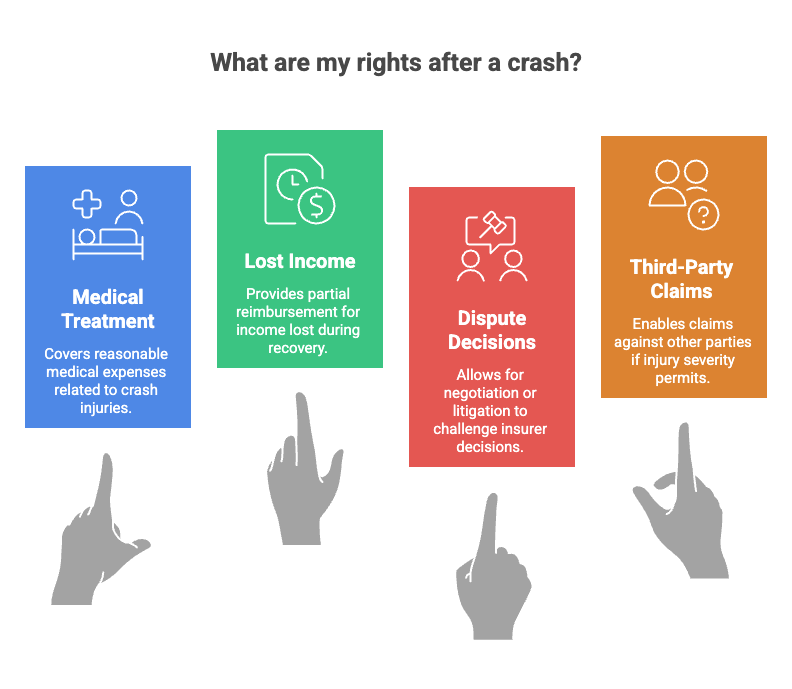
Key legal protections often include:
- Payment for reasonable medical treatment related to crash injuries
- Partial reimbursement for lost income during recovery
- The ability to dispute insurer decisions through negotiation or litigation
- Access to third-party claims when legally permitted by injury severity
Because insurers and courts apply strict rules, careful attention to policy language, documentation standards, and timing requirements remains crucial. A clear understanding of available rights helps injured individuals make informed, service-oriented decisions for themselves and their families.
Steps to Take After a Miami Personal Injury Protection (PIP) Injury
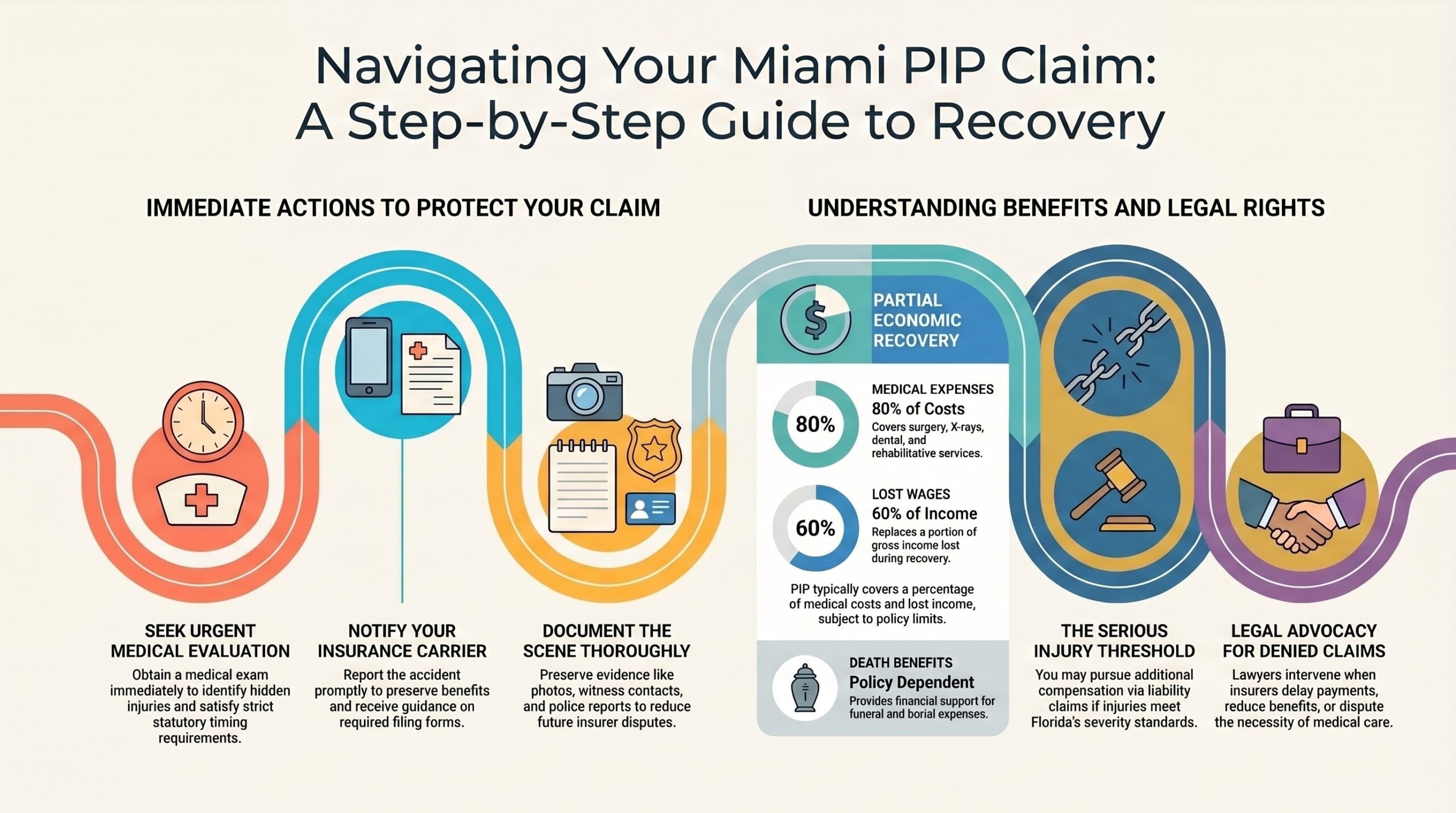
After a Miami Personal Injury Protection (PIP) injury, prompt action can affect both medical recovery and the strength of an insurance claim. Immediate medical care should be obtained, the insurance carrier should be notified without unnecessary delay, and the accident scene should be documented as thoroughly as possible. These initial measures often play a significant role in preserving evidence, establishing treatment timelines, and supporting access to available PIP benefits.
Seek Immediate Medical Care
Prompt medical attention should be a top priority following a Miami PIP injury, not only to protect well-being, but also to preserve eligibility for benefits under Florida law. Early evaluation allows physicians to identify hidden injuries, initiate treatment, and create emergency documentation to support the claim.
Florida PIP rules place strict importance on insurance timing, making prompt examination especially important. A delayed visit may create questions about whether the injury resulted from the incident or from another cause. Care from an emergency room, urgent care center, physician, or qualified medical provider can establish a clear record of symptoms, diagnosis, and recommended treatment. Individuals should accurately describe all pain and limitations, follow medical advice carefully, and attend follow-up appointments. Consistent care demonstrates a responsible effort toward recovery and service to loved ones and the community.
Notify Your Insurance Carrier
In addition to obtaining medical treatment, an injured person should notify the insurance carrier as soon as reasonably possible following a Miami PIP accident. Prompt notice helps preserve benefits, supports orderly claim handling, and allows the carrier to explain available coverage, required forms, and policy updates that may affect reimbursement.
When speaking with the insurer, an injured person should provide basic, accurate facts and request clear guidance about claim deadlines, medical billing procedures, and any necessary authorizations. Careful communication can reduce avoidable delays and help guarantee that treatment-related expenses are submitted properly. It is also prudent to keep copies of correspondence, record the date of each conversation, and note the name of every representative involved. Timely notice reflects responsibility, protects access to benefits, and supports a more efficient recovery process for all parties.
Document The Accident Scene
Documenting the accident scene can further protect a Miami PIP claim by preserving facts that may become harder to confirm with time. A careful record may support injured individuals, assist insurers, and help all parties evaluate events fairly and responsibly.
If conditions allow, a person should photograph evidence such as vehicle positions, damage, skid marks, traffic signals, weather conditions, and visible injuries. Notes should identify the time, location, road conditions, and any statements made by witnesses. When safe and lawful, individuals may mark hazards that contributed to the incident, including debris, spills, poor lighting, or obstructed signage. Contact information for witnesses should also be collected. This organized documentation can strengthen a PIP claim, reduce disputes, and promote a more accurate understanding of how the accident occurred for everyone involved.
How a Miami Personal Injury Protection (PIP) Injury Lawyer Can Help You
When a person is injured in a car accident, a Miami Personal Injury Protection (PIP) injury lawyer can help by evaluating the claim, explaining available benefits, and ensuring that required deadlines are met. Counsel also reviews medical documentation, communicates with insurers, and addresses disputed treatment costs with careful attention to policy terms and statutory requirements.
A lawyer’s assistance often includes:
- confirming PIP eligibility and coverage limits
- organizing records, bills, and medical documentation
- preparing forms and supporting evidence promptly
- handling settlement negotiations when disputes arise
Through these services, legal counsel helps protect access to benefits intended to support recovery and stability after an accident. An attorney may identify missing information, correct filing errors, and respond to requests from insurance carriers in a timely manner. This guidance can reduce confusion and allow injured individuals and their families to focus on health, caregiving, and other responsibilities while the claim is managed with diligence, professionalism, and service-minded care.
Long-Term Effects of Miami Personal Injury Protection (PIP) Injuries
Miami Personal Injury Protection (PIP) injuries may produce lasting consequences that extend well beyond the initial accident and medical treatment. Common long-term effects include chronic pain challenges, emotional trauma that affects daily stability, and reduced work capacity that limits earning potential. These ongoing issues often shape both financial recovery and overall quality of life, making careful legal and medical evaluation important.
Chronic Pain Challenges
In the aftermath of a traffic collision, chronic pain can become one of the most disruptive long-term effects of an injury covered by Personal Injury Protection benefits. Persistent neck, back, nerve, and joint pain may limit mobility, interrupt sleep, and reduce a person’s ability to work, drive, or assist family members consistently. Chronic flare-ups often arise without warning, making ordinary responsibilities difficult to plan or complete. Effective Pain management may require ongoing medical evaluations, physical therapy, medication monitoring, and lifestyle adjustments over many months. For those committed to serving others, these limitations can hinder caregiving, employment, and community involvement. A careful
Emotional Trauma Impact
Emotional trauma often develops quietly after a traffic collision, yet its long-term effects can be as disruptive as physical pain. Survivors may appear stable while enduring persistent fear, intrusive memories, sleep disturbance, and heightened vigilance that alter daily functioning and strain relationships.
In many cases, post-traumatic stress affects concentration, trust, and a person’s sense of safety in ordinary settings. Attachment disruption may also emerge, making it more difficult to consistently sustain family roles, caregiving, and community involvement. These emotional injuries can reduce confidence, increase isolation, and complicate recovery even when visible wounds have mended. Careful documentation, timely counseling, and compassionate support often help injured individuals preserve dignity and continue serving loved ones, neighbors, and others who depend on their presence, stability, and steady care each day.
Reduced Work Capacity
Often emerging after the initial medical crisis has passed, reduced work capacity becomes one of the most consequential long-term effects of a PIP-covered injury. Physical pain, limited mobility, and cognitive disruption may prevent an injured person from consistently and safely returning to prior duties. Over time, these impairments can create Job Limitations that affect scheduling, productivity, and opportunities for advancement.
For individuals devoted to supporting their families and serving their communities, Reduced Earnings can become a serious burden. A worker may require fewer hours, modified tasks, or an entirely different role, even after treatment appears complete. Careful documentation of these vocational losses is often crucial because the financial impact may continue long after immediate medical expenses are addressed. Recognizing diminished earning ability helps clarify the injury’s true and lasting effect.
Proving Liability in Miami Personal Injury Protection (PIP) Injury Cases
Establishing liability in a Miami Personal Injury Protection (PIP) injury case requires careful attention to both Florida’s no-fault insurance framework and the specific facts of the collision. Although PIP benefits are available regardless of fault, proving liability can remain important when injuries are serious, damages exceed policy limits, or another party’s negligence must be clearly shown for additional recovery.
This process often depends on timely evidence. Police reports, photographs, medical records, and vehicle damage can help explain how the incident occurred and whether a driver failed to act with reasonable care. Courts and counsel may also evaluate witness credibility, since consistent testimony can strengthen a claim while contradictions may weaken it. In more complicated crashes, accident reconstruction may clarify speed, impact angles, braking, and roadway conditions. A careful presentation of these facts supports accountability, protects injured people, and helps guarantee that those seeking to serve their families and communities receive fair consideration under Florida law.
Dealing With Insurance Companies After a Miami Personal Injury Protection (PIP) Injury
In the aftermath of a Miami Personal Injury Protection injury, communications with insurance companies can materially affect the outcome of a claim. Prompt, accurate, and respectful reporting often helps preserve benefits while reducing misunderstandings that may delay payment of covered expenses and lost income.
An injured person should maintain organized records of correspondence, treatment dates, and medical billing statements. Clear documentation supports fair evaluation and allows advocates to serve families and communities by protecting needed resources. Insurance adjusters may request recorded statements or broad authorizations, yet it is wise to review carefully before providing information. Measured responses can prevent inconsistencies that insurers may later use to limit reimbursement.
Professional guidance also strengthens claim negotiation by identifying policy terms, verifying deadlines, and confirming whether submitted charges match treatment records. When communication remains factual, timely, and well-documented, the individual is better positioned to address insurer questions with confidence and protect access to vital care and financial stability.
What to Expect During a Miami Personal Injury Protection (PIP) Injury Claim Process
A Miami Personal Injury Protection (PIP) injury claim generally begins by promptly filing the claim and meeting the medical treatment requirements imposed by Florida law. After submission, the insurer typically reviews medical records, accident details, and related documentation as part of its investigation. The process then moves toward resolution, with the timeline depending on the completeness of the claim, the insurer’s evaluation, and any disputes that arise.
Filing Your PIP Claim
After a motor vehicle collision in Miami, the PIP claim process generally begins when the injured person notifies the insurance carrier and seeks medical treatment within the time required by Florida law. Prompt notice helps preserve claim timelines and allows the insurer to open a file, assign a claim number, and request required documentation. This often includes the policy information, crash report, identification, and proof of lost income when applicable. Accurate, organized submissions can support efficient handling and reduce avoidable delays.
The insurer typically reviews the materials, verifies coverage, and evaluates whether expenses and wage losses fall within available PIP benefits. Follow-up requests may arise, and timely responses can help keep the matter moving. Careful recordkeeping also supports those assisting injured people by promoting accountability, transparency, and fair administration throughout the claims process.
Medical Treatment Requirements
Medical treatment requirements often shape the outcome of a Miami PIP claim as much as the claim filing itself. Injured individuals are generally expected to seek prompt evaluation, follow prescribed care, and document each visit carefully. Florida PIP rules make treatment timelines important because delays can reduce available benefits and weaken proof of injury.
Consistent care also demonstrates a genuine effort to recover and return to serving family, work, and community. Physicians, urgent care centers, chiropractors, and hospitals may all play roles, but claimants should confirm whether provider networks affect billing or referrals. Clear records of diagnoses, treatment plans, medications, and progress notes help connect symptoms to the crash. When patients attend appointments, follow restrictions, and communicate changes in their condition, they strengthen their legal and medical claims.
Insurance Investigation Steps
In the early stages of a Miami PIP claim, the insurer typically begins an investigation by reviewing the crash report, confirming policy status, and examining whether notice of the accident and treatment was provided within the required time limits. Adjusters then gather medical records, billing statements, wage documentation, and provider notes to evaluate whether the claimed services appear to be related, necessary, and properly coded. They may compare prior injuries, recorded statements, and evidence from the scene, sometimes using forensic reconstruction when liability facts affect coverage questions.
Insurers also review patterns through claim audits to identify inconsistencies, duplicate billing, or indicators of fraud. Throughout this process, clear documentation and timely cooperation often help preserve benefits and reduce avoidable disputes. A service-minded claimant benefits from organized records, honest communication, and prompt responses to reasonable requests for information.
Claim Resolution Timeline
Once the insurer has gathered records and assessed the initial facts, attention generally turns to the pace and sequence of claim resolution. In many Miami PIP matters, the expected duration depends on medical documentation, billing accuracy, and whether benefits are promptly verified under policy terms.
A straightforward claim may move from review to payment within weeks, while disputed treatment, missing records, or coverage questions can extend the process. Claimants are often asked to respond quickly, not only to protect their own interests but also to support providers and family members relying on timely reimbursement. If payment is reduced or denied, a written explanation usually follows, outlining next steps. At that stage, the appeal timeline becomes important because strict deadlines may govern reconsideration, the submission of additional evidence, and any formal challenge to the insurer’s decision.
Compensation for Miami Personal Injury Protection (PIP) Injury Damages
Clarity is vital when evaluating compensation for Miami Personal Injury Protection injury damages, because PIP benefits are limited by statute and do not cover every loss an injured person may experience. In Florida, PIP generally pays a portion of reasonable medical expenses and lost income up to the policy limits, subject to treatment-timing requirements and proof of necessity. Careful documentation often determines whether benefits are released promptly.
A disciplined review of compensation also considers Settlement caps, available policy limits, coordination with health coverage, and the effect of Medical liens asserted by providers or insurers. These factors can reduce net recovery even when treatment was appropriate and necessary. Legal counsel often examines billing practices, wage verification, denial letters, and statutory compliance to protect the injured person’s interests and preserve resources for continued care. For families and advocates committed to serving others, informed guidance helps align available benefits with practical needs, responsibilities, and long-term recovery planning after an injury.
Economic vs Non-Economic Damages in Miami Personal Injury Protection (PIP) Cases
In Miami PIP cases, economic damages generally refer to measurable financial losses, such as medical expenses and lost income, that arise directly from the injury. Non-economic losses, including pain and suffering, are treated differently under Florida’s no-fault system and are often limited unless the injury meets a statutory threshold. This distinction is important because PIP coverage is designed to address specific economic losses, while broader damages may depend on the nature and severity of the harm.
Economic Damages Explained
Under Florida’s no-fault framework, economic damages in a Miami PIP case refer to measurable financial losses, such as medical expenses, a portion of lost wages, and other out-of-pocket costs tied directly to the injury. These damages are documented through bills, wage records, treatment plans, and similar evidence, allowing insurers and counsel to evaluate the claim with greater precision.
In service-oriented legal guidance, careful attention is given to how an injury affects a person’s ability to work, obtain treatment, and manage daily financial obligations. Lost wages may include income missed during recovery, while Future earnings may become relevant when injuries interrupt ongoing employment capacity. Transportation costs for medical visits, prescription expenses, and necessary household services can also qualify. Clear records help ensure fair payment and protect injured individuals from preventable financial hardship.
Non-Economic Loss Limits
By contrast, non-economic losses involve intangible harm, such as pain, suffering, mental anguish, and loss of enjoyment of life, rather than expenses that can be proven through invoices or payroll records. In Miami injury matters, these damages are often subject to legal thresholds, evidentiary demands, and careful judicial review before recovery is permitted.
Because no receipt can capture human suffering, Pain valuation depends on medical documentation, testimony, functional limitations, and the overall effect on daily living. Courts and insurers may examine consistency, duration, and severity when considering reasonable limits. Inflation adjustments can also influence how older benchmarks are viewed over time, even when statutes or precedent guide outcomes. For those committed to serving injured people responsibly, understanding these limits supports fair advocacy, realistic expectations, and respectful treatment of genuine hardship in every claim.
PIP Coverage Differences
At the threshold of a Miami motor vehicle claim, Personal Injury Protection coverage serves a narrower function than many injured parties initially assume. PIP primarily addresses economic damages, such as medical expenses and a portion of lost income, rather than pain, suffering, emotional distress, or other non-economic losses. This distinction matters when families seek resources to support recovery and continued care after an accident.
Coverage variations among policies may affect reimbursement levels, treatment access, and the timing of available benefits. Deductible differences can also change how much an insured person must pay before benefits apply, which may influence immediate financial strain. In serious cases, non-economic damages generally require pursuing them beyond basic PIP benefits, often through a liability claim when statutory thresholds and supporting medical evidence are met under Florida law.
When a Miami Personal Injury Protection (PIP) Injury Case Goes to Trial vs Settlement
When does a Miami Personal Injury Protection (PIP) injury case proceed to trial instead of resolving through settlement? A case may move toward trial when the insurer disputes medical necessity, questions causation, or challenges the amount owed under PIP benefits. Trial also becomes more likely when good-faith negotiations fail to protect the injured person’s access to care and financial stability.
Settlement is often preferred because it can reduce delay, control costs, and provide dependable support for treatment and household needs. Even so, counsel may prepare as if trial is certain, using strong evidence, careful Jury strategies, and expert testimony to clarify losses and rebut insurer defenses. That preparation can create meaningful Settlement leverage, encouraging fair offers that reflect documented injuries and service-oriented recovery goals. If an insurer remains unreasonable, a trial may serve the broader purpose of accountability. In either path, disciplined evaluation, credible records, and principled advocacy help protect both the claimant and the community they serve.
The Statute of Limitations for Miami Personal Injury Protection (PIP) Injury Cases
In Miami Personal Injury Protection (PIP) injury cases, the statute of limitations sets a firm deadline for pursuing benefits or related legal remedies, and missing that deadline can substantially limit recovery. Florida law generally imposes specific time limits that depend on the nature of the dispute, the insurance policy, and the procedural posture of the claim.
Careful attention to the nuances of the statute is crucial because PIP matters may involve unpaid medical bills, reimbursement disputes, or broader litigation arising from a motor vehicle collision. While deadlines often appear straightforward, filing exceptions can alter the analysis in limited circumstances, such as the delayed discovery of certain issues or other legally recognized tolling events.
Those seeking to support injured individuals and protect community well-being benefit from understanding these timelines early, preserving records, and acting consistently with policy requirements. A timely claim helps maintain access to benefits intended to cover medical treatment and wage loss, while reducing avoidable barriers to meaningful financial recovery after an accident.
When to Contact a Miami Personal Injury Protection (PIP) Injury Lawyer
For many injured motorists, the appropriate time to contact a Miami Personal Injury Protection (PIP) injury lawyer arises as soon as questions develop about eligibility, medical treatment deadlines, denied benefits, or reduced payments under an auto insurance policy.
Prompt action may also be appropriate when an accident victim is uncertain about required documentation, notices, or whether a condition qualifies for covered care. Early consultation can help clarify immediate obligations, including the need to seek timely medical evaluation and maintain accurate treatment records. Evidence preservation is equally important, especially when medical bills, wage loss statements, police reports, and insurer correspondence may affect a PIP claim.
Contact may also be warranted after repeated requests for information, unexplained payment delays, or allegations that treatment was unnecessary. By seeking guidance at these stages, injured motorists and their families may better protect benefits intended to support recovery, stability, and continued service to others during a difficult period after a collision.
Why You Need an Experienced Miami Personal Injury Protection (PIP) Injury Lawyer
Although Personal Injury Protection coverage is intended to provide prompt payment for medical expenses and certain lost wages after a crash, disputes over eligibility, treatment necessity, benefit limits, and filing requirements often make the process far more complicated than many motorists expect. An experienced Miami Personal Injury Protection lawyer helps injured people and their families protect needed benefits while reducing preventable errors and delays.
Such counsel understands PIP nuances, insurer tactics, policy language, and medical documentation standards that can affect payment. A seasoned lawyer can identify missing records, challenge improper denials, address underpayments, and make certain Claim deadlines are met. This guidance is especially valuable when injured individuals are focused on recovery, caregiving, and returning to daily responsibilities.
Experienced legal representation also supports fair communication with insurers and providers, helping keep the process organized and accountable. By building a clear claim and responding strategically to disputes, a lawyer improves the likelihood that available PIP benefits are fully delivered in a timely manner.
How to Choose the Right Miami Personal Injury Protection (PIP) Injury Lawyer for Your Case
Case selection begins with evaluating whether a Miami PIP injury lawyer has specific experience handling Florida Personal Injury Protection claims, rather than only general car accident matters. A qualified advocate should understand benefit deadlines, medical documentation requirements, and insurer tactics that can delay support for injured people and their families.
Attorney interviews help clarify how a lawyer communicates, prepares claims, and approaches disputed treatment bills or lost wage benefits. During those meetings, it is helpful to ask about prior PIP results, availability, and whether the attorney will personally manage the matter. Fee structures also merit careful review, including costs, contingency terms, and any expenses that could affect recovery. A thoughtful choice often includes checking professional standing, client feedback, and responsiveness to questions. When a lawyer demonstrates focused knowledge, transparency, and a commitment to guiding people toward needed medical and financial relief, that attorney may be well-suited for the case at hand.
About The Law Offices of Anidjar & Levine
Client-focused representation defines The Law Offices of Anidjar & Levine’s approach to Miami Personal Injury Protection matters. The firm is recognized for guiding injured people and their families with diligence, clear communication, and practical support throughout the claims process. Its attorneys and staff emphasize responsive service, helping clients understand benefits, deadlines, and available legal options after a motor vehicle accident.
The Law Offices of Anidjar & Levine also presents a service model centered on accessibility and community care. Through multiple office locations, the firm seeks to make legal help easier to reach for those facing medical treatment, lost income, and administrative burdens.
Publicly available client testimonials often reflect appreciation for professionalism, attentiveness, and steady guidance during difficult periods. This reputation supports the firm’s broader commitment to serving people in need with respect and efficiency. In PIP cases, that combination of advocacy and service can be especially valuable for Miami residents and visitors alike.
Frequently Asked Questions
Can I Use PIP Benefits if I Was Injured as a Passenger?
Yes, PIP benefits may be available to an injured passenger, depending on the passenger’s own auto policy, household coverage, and the vehicle involved. In many passenger claims, PIP applies regardless of fault and can help pay medical bills and lost income promptly. If another insurer later pays, subrogation rights may affect reimbursement. Careful policy review is often necessary to protect available benefits and support responsible recovery for all injured persons.
Does PIP Cover Lost Wages if I Cannot Return to Work?
Yes, PIP generally covers a portion of lost wages when an injured person cannot return to work, provided timely medical treatment and required documentation support the claim. Benefits are usually limited to a percentage of income, subject to policy and statutory caps. If injuries result in permanent disability, additional evaluation may be necessary to determine ongoing eligibility. Careful recordkeeping helps ensure that available benefits are applied to the service of the injured person’s recovery.
Are Rideshare Drivers Covered by Miami PIP Insurance After an Accident?
Yes, rideshare drivers may be covered by Miami PIP insurance after an accident, but coverage depends on the driver’s app status at the time of the crash. Personal PIP may apply when the driver is offline, while company coverage and rideshare liability policies often apply when the app is on or a ride is active. Careful policy review helps injured drivers protect passengers, comply with legal duties, and promptly secure available benefits.
What Happens if My Medical Bills Exceed My PIP Coverage Limits?
If medical bills exceed PIP coverage limits, the remaining balance may become the injured person’s responsibility unless other sources apply. Providers may assert a medical lien against any later recovery, and supplemental insurance may help cover unpaid treatment costs. In some cases, bodily injury coverage, health insurance, or a liability claim against the at-fault party may address excess expenses. Prompt review of coverage options helps protect financial stability and continued treatment.
Can Non-Florida Residents Access PIP Benefits After a Miami Car Accident?
Yes, non-Florida residents may access PIP benefits after a Miami car accident, but eligibility depends on policy terms, vehicle status, and residency facts. Coverage may apply to an out-of-state driver, a rental car situation, or someone with temporary residency in Florida. Prompt notice and emergency treatment records often matter. A careful policy review helps injured people identify available benefits and continue receiving necessary medical care and support.
—————————
Steering a Miami Personal Injury Protection claim requires a clear understanding of Florida law, policy limits, and strict filing requirements. Injured individuals who act promptly and secure qualified legal guidance are often better positioned to protect their benefits and, when appropriate, pursue full compensation.
The Miami Car Accident Attorney team at The Law Offices of Anidjar and Levine assists clients with careful case evaluation, communication with insurers, and strategic advocacy. In many cases, experienced representation can make a meaningful difference in the outcome of a PIP injury claim.