A Miami multi-vehicle car accident injury lawyer, such as Law Offices of Anidjar and Levine, assists victims by preserving evidence, documenting injuries, and investigating how each impact occurred.
These cases often involve disputed fault, multiple insurers, and overlapping claims, requiring careful review of crash reports, witness statements, photographs, and medical records.
Counsel also manages insurer communications, evaluates available coverage, and pursues compensation for medical costs, lost income, property damage, and pain.
To learn more, speak with a Miami Car Accident Attorney. The sections below outline the process, risks, and crucial considerations.
Main Takeaways
- Seek immediate medical care after a Miami multi-vehicle crash to detect hidden injuries and create records linking treatment to the collision.
- Document the scene with photos, witness contacts, vehicle positions, debris, skid marks, weather, and traffic signals before evidence disappears.
- Liability in chain-reaction crashes often requires reviewing driver conduct, the sequence of impacts, road conditions, surveillance footage, and black box data.
- A Miami multi-vehicle accident lawyer can identify liable parties, preserve evidence, and coordinate claims involving multiple drivers and insurers.
- Lawyers also handle insurer communications, counter delay or blame-shifting tactics, and pursue settlement or litigation for injury compensation.


How We Can Help With Your Miami Multi-Vehicle Car Accident Injury Claim
Navigating a multi-vehicle collision claim in Miami often requires a careful assessment of overlapping facts, competing accounts, and multiple insurance positions. Legal counsel can support injured people by organizing records, identifying all potentially liable parties, preserving evidence, and managing communications with insurers so clients can focus on recovery and family responsibilities.
A structured approach also helps protect the broader interests of those who serve others. Counsel may coordinate vehicle damage documentation, witness interviews, crash reports, and medical billing summaries to present a clear demand. They can explain Settlement timelines, prepare clients for recorded statements, and address coverage disputes with discipline and care.
When immediate practical needs arise, guidance may also include referrals to trusted Community resources that provide transportation, temporary support, and related assistance. Throughout the process, effective representation emphasizes accuracy, responsiveness, and consistent advocacy, helping clients make informed decisions as they pursue fair financial recovery after a serious Miami collision.
OUR CONSULTATIONSARE FREE
START YOUR FREE CASE REVIEW

Understanding Miami Multi-Vehicle Car Accident Injury Cases
In Miami, multi-vehicle car accident injury cases often present a layered liability analysis because several drivers, insurers, and factual narratives may be involved simultaneously. These matters require careful review of vehicle positions, impact sequences, witness statements, medical records, and digital evidence to determine how responsibility may be shared under Florida law.
A thorough understanding of these cases helps injured people, families, and community-minded advocates respond in ways that protect health, preserve evidence, and support fair compensation. Legal evaluation may consider comparative fault, policy limits, chain-reaction timing, and whether Miami roadway design affected visibility, merging, or traffic flow.
Passenger liability may also arise in limited circumstances, depending on conduct and the passenger’s relationship to the events. Because each collision can involve multiple claims and conflicting accounts, clear documentation and prompt legal guidance are often crucial to serving others responsibly while pursuing accountability and financial recovery after serious injuries.
Common Causes of Miami Multi-Vehicle Car Accidents
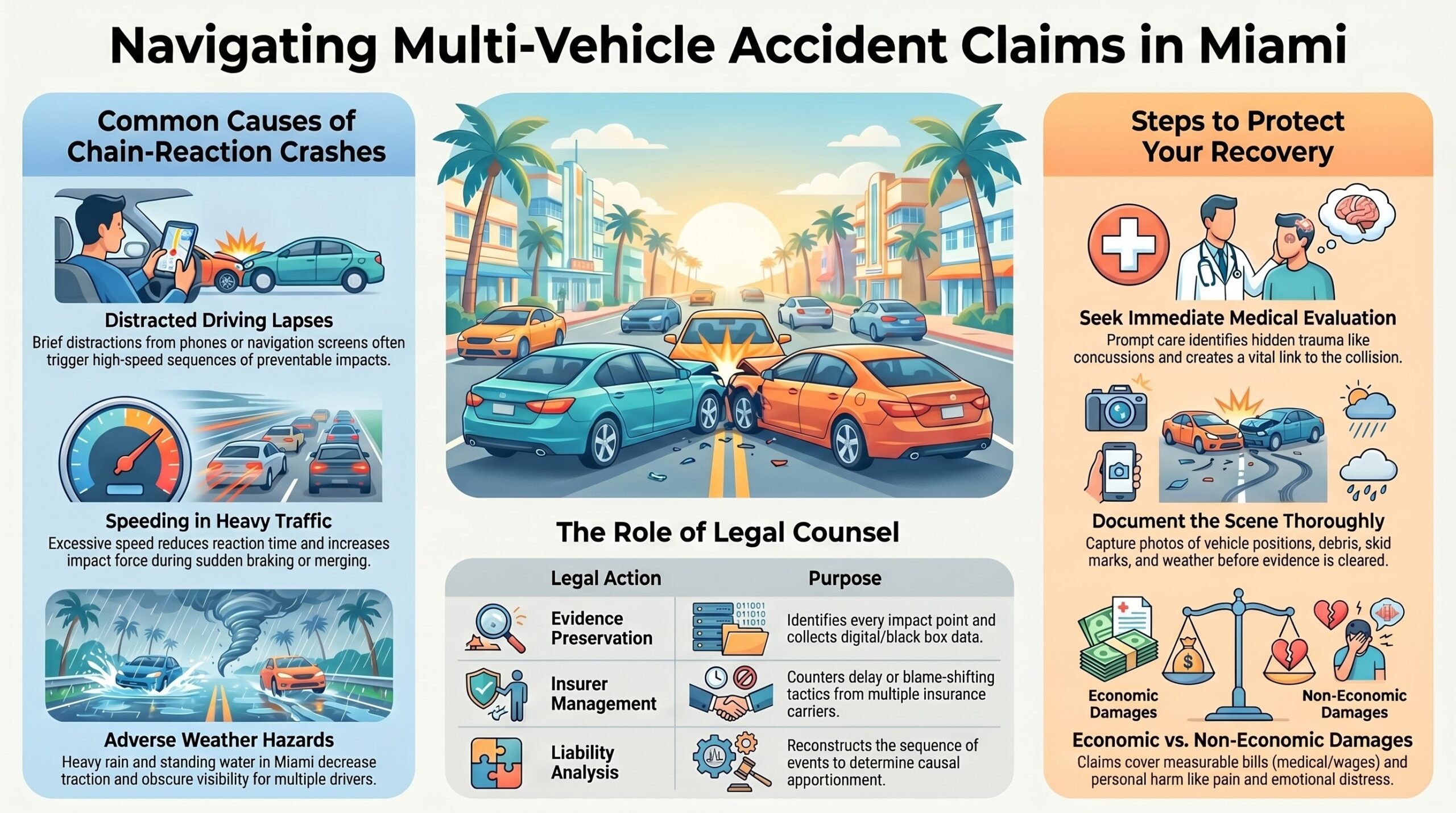
Miami multi-vehicle car accidents often arise from a combination of preventable driving behaviors and hazardous road conditions. Distracted driving can trigger chain reactions, while speeding in heavy traffic reduces stopping distance and increases the force of impact across several vehicles. Sudden lane changes and poor weather road conditions also contribute to these collisions, particularly when drivers fail to adjust to limited visibility or slick pavement.
Distracted Driving Chain Reactions
On congested roads, distracted driving often triggers chain-reaction collisions when a motorist looks away too long to notice slowing traffic ahead. In Miami, a brief lapse can cause one impact, then several more, injuring occupants who had little chance to protect themselves. Common sources include phone distraction, dashboard controls, passengers, navigation screens, and other in-vehicle interruptions.
Texting drivers pose a particular danger because visual, manual, and cognitive attention are diverted simultaneously. When following distances are short, inattentiveness can cause vehicles to drift into neighboring lanes or into the rear of stopped traffic, creating a chain of preventable crashes. Careful driving serves the wider community by reducing harm, preserving emergency resources, and protecting families, workers, and visitors who depend on safe travel through busy intersections and crowded urban corridors each day.
Speeding In Heavy Traffic
Amid dense traffic, speeding sharply reduces the time available to react when vehicles ahead brake, merge, or stop unexpectedly. In Miami’s congested corridors, even a brief lapse in judgment can trigger a multi-vehicle collision that harms numerous families and disrupts entire communities.
Drivers who exceed safe speeds often misjudge following distance, and excessive tailgating leaves little room for responsible braking. When urgency overrides caution, aggressive weaving compounds the danger by forcing surrounding motorists to make sudden evasive responses. These conditions increase the likelihood of chain impacts, especially where traffic signals, entrance ramps, and stop-and-go patterns demand patience.
A service-minded perspective recognizes that safe driving protects not only the individual driver, but also passengers, pedestrians, and fellow road users who depend on prudent, community-conscious choices each day.
Sudden Lane Change Collisions
Many multi-vehicle crashes begin with a sudden lane change made without adequate signaling, observation, or space to merge safely. In dense Miami traffic, abrupt merging can force nearby drivers to brake sharply or swerve, creating a chain reaction across several lanes. These events often occur when motorists underestimate closing distances, rush to exits, or attempt blind spot maneuvering without confirming that adjacent lanes are clear.
Because one unsafe movement can endanger many people, careful lane discipline serves the broader safety of everyone on the road. Investigations commonly examine turn signal use, dash camera footage, witness accounts, and vehicle damage patterns to determine the sequence of events. When negligence is identified, a lawyer may help injured individuals pursue accountability and financial recovery while protecting their ability to focus on recovery and family responsibilities.
Poor Weather Road Conditions
During periods of heavy rain, standing water, or reduced visibility, Miami roads can become especially hazardous, increasing the likelihood of multi-vehicle collisions. Wet pavement often reduces tire traction, while hydroplaning hazards may cause drivers to lose steering control with little warning. In these conditions, stopping distances increase, lane markings become harder to see, and reaction time is compromised for everyone nearby.
For those committed to protecting others, understanding how poor weather contributes to chain-reaction crashes is crucial. Reduced visibility can obscure brake lights, disabled vehicles, and sudden traffic slowdowns. Drivers who fail to adjust their speed, increase their following distance, or use their headlights appropriately may place surrounding motorists at unnecessary risk. Careful driving, timely maintenance, and weather-aware decisions can help reduce preventable harm on Miami roadways for all.


Legal Rights of Miami Multi-Vehicle Car Accident Injury Victims
In the aftermath of a multi-vehicle collision in Miami, injured victims retain important legal rights under Florida law, including the right to pursue compensation for medical expenses, lost income, property damage, and other accident-related losses.
These protections help families preserve dignity while seeking accountability from negligent drivers, vehicle owners, insurers, or other responsible parties, without surrendering their voice to delay, confusion, jury bias, or medical malpractice complications.
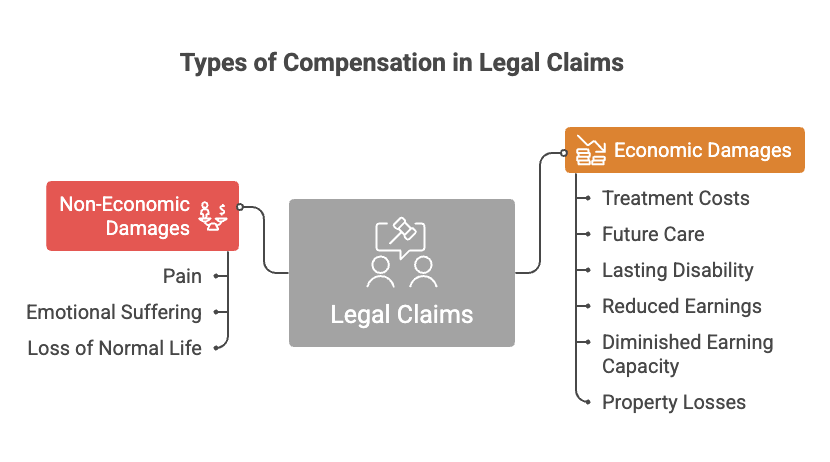
- They may seek damages for treatment costs, future care, and lasting disability.
- They may pursue recovery for reduced earnings and diminished earning capacity.
- They may demand payment for repairs, replacement transportation, and related property losses.
- They may request compensation for pain, emotional suffering, and loss of normal life.
Florida law also permits injured parties to present evidence, challenge unfair insurance tactics, and pursue justice through negotiation or litigation. Such rights reinforce community care by helping victims regain stability, support dependents, and move forward with a sense of security.
Steps to Take After a Miami Multi-Vehicle Car Accident Injury
After a Miami multi-vehicle car accident injury, several immediate steps can materially affect both health and any future claim. Priority is generally placed on obtaining prompt medical care and preserving clear documentation of the accident scene, including vehicle damage, roadway conditions, and contact information. Early communication with a Miami lawyer is also often vital, as legal guidance can help protect important rights and evidence from the outset.
Seek Immediate Medical Care
Prompt medical evaluation should be treated as a priority following a Miami multi-vehicle car accident, even when injuries seem minor or symptoms have not yet appeared. Chain-reaction collisions can produce hidden trauma, including concussions, internal bleeding, soft tissue damage, and spinal injuries that worsen without timely assessment.
Those affected should accept emergency transportation when pain, disorientation, breathing trouble, or limited mobility is present. Even if release occurs after initial treatment, careful follow-up monitoring remains important because delayed symptoms may signal serious complications. Medical professionals can identify conditions early, begin treatment, and create records that reflect the extent of harm.
By seeking care promptly, injured individuals prioritize recovery, reduce avoidable risks, and support the broader goal of protecting families, passengers, and others who depend on their well-being every day.
Document The Accident Scene
Medical attention should be followed by careful documentation of the accident scene whenever a person’s condition allows. In a multi-vehicle collision, details can disappear quickly as vehicles are moved, debris is cleared, and memories fade. A person may help preserve important facts by gathering photographic evidence of vehicle positions, visible injuries, skid marks, road conditions, traffic signals, and weather.
If it can be done safely, names and contact information for drivers, passengers, and bystanders should be recorded. Witness statements may later clarify how the chain-reaction impact occurred and who observed crucial events. Notes should include the time, location, lane positions, and any statements made at the scene. This careful record can support insurance reporting, protect the injured person’s interests, and promote accountability for everyone affected by the collision.
Contact A Miami Lawyer
Consulting a Miami lawyer as soon as practicable can help protect an injured person’s legal and financial interests following a multi-vehicle collision. Counsel may evaluate liability among several drivers, preserve evidence, and manage communications with insurers whose interests may not align with fair recovery.
An attorney can also explain how police reports, witness statements, medical records, and traffic tickets may affect a claim. Early legal guidance helps an injured person avoid harmful statements, missed deadlines, or inadequate settlements that could limit resources needed for recovery and continued care.
Many firms offer case evaluations that clarify potential options, expected timelines, and legal fees, allowing families to make informed decisions. By obtaining prompt representation, an injured person is better positioned to pursue accountability, safeguard stability, and continue serving loved ones and the broader community.
How a Miami Multi-Vehicle Car Accident Injury Lawyer Can Help You
Guiding through a multi-vehicle collision often requires immediate legal guidance because fault, insurance coverage, and injury claims can become disputed within hours. A Miami multi-vehicle car accident injury lawyer helps by investigating every point of impact, preserving records, and coordinating witness statements before memories fade.
Counsel also develops a settlement strategy that accounts for multiple insurers, conflicting statements, and overlapping defenses, while protecting the injured person’s ability to serve their family and community.
After a multi-vehicle crash, prompt legal guidance can preserve evidence, clarify fault, and protect recovery from insurer disputes.
- They bring order when victims feel overwhelmed by calls, paperwork, and uncertainty.
- They gather evidence to protect truthful accounts and prevent blame-shifting.
- They communicate with insurers so injured people can focus on recovery and daily responsibilities.
- They pursue fair compensation with discipline, allowing households to regain stability and continue helping others.
Long-Term Effects of Miami Multi-Vehicle Car Accident Injuries
Multi-vehicle car accidents in Miami can produce consequences that extend well beyond the initial medical emergency. Victims may face chronic pain challenges and lasting emotional trauma, both of which can interfere with daily functioning, employment, and overall quality of life. These injuries often also create ongoing financial strain, as continuing treatment, lost income, and related expenses accumulate over time.
Chronic Pain Challenges
In the aftermath of a Miami multi-vehicle collision, chronic pain can become one of the most disruptive long-term consequences, affecting physical function, sleep, employment, and overall quality of life. Persistent back injuries, nerve damage, joint trauma, and soft tissue complications may limit mobility and interfere with daily responsibilities, even after initial treatment ends.
For those committed to caring for injured individuals, understanding these effects is crucial. Chronic fatigue often accompanies ongoing discomfort, reducing stamina and complicating recovery. Effective pain management may require coordinated medical care, physical therapy, medication oversight, and lifestyle adjustments tailored to the person’s condition.
When symptoms remain unresolved, financial strain can grow through repeated appointments, reduced earning capacity, and the need for supportive services. Careful legal guidance may help secure resources necessary for long-term treatment and stability.
Lasting Emotional Trauma
How deeply emotional trauma affects a person after a Miami multi-vehicle collision often becomes clear only over time, as anxiety, depression, sleep disruption, and recurring fear may persist long after visible injuries begin to recover. Individuals may struggle with panic while driving, social withdrawal, irritability, or difficulty concentrating at work and home.
These effects can strain relationships, diminish confidence, and interfere with a person’s ability to care for others in meaningful ways. Professional evaluation is often important because untreated distress may intensify and affect overall recovery. Access to therapy resources and trauma counseling can support emotional stabilization, improve coping skills, and restore a sense of safety. In many cases, steady treatment, family support, and informed legal guidance help injured people address the full human impact of a serious collision.
Ongoing Financial Strain
Financial pressure often becomes one of the most persistent long-term consequences of a Miami multi-vehicle collision, especially when injuries reduce a person’s ability to work and generate ongoing medical needs. Recovery may require surgeries, rehabilitation, medications, and follow-up care, causing medical expenses to rise well beyond the initial emergency treatment.
At the same time, lost wages can deepen hardship when an injured person misses work for weeks, months, or permanently. Families may face reduced savings, unpaid household bills, and difficult decisions about housing, transportation, and daily support.
In service-minded communities, these burdens often affect not only the injured individual but also relatives who provide care and emotional stability. A careful legal evaluation can help identify damages, document financial losses, and support a path toward greater security and responsible recovery over time.
Proving Liability in Miami Multi-Vehicle Car Accident Injury Cases
Establishing liability in a Miami multi-vehicle car accident injury case often requires a careful reconstruction of the sequence of impacts, the conduct of each driver, and the roadway conditions at the time of the collision. Courts and investigators examine police reports, witness statements, photographs, surveillance footage, vehicle damage patterns, and electronic data to determine how the event unfolded.
Because several negligent acts may combine in a chain-reaction crash, counsel often focuses on causal apportionment among all responsible parties. That analysis may include speed, following distance, lane changes, distraction, impairment, braking, visibility, traffic signals, and weather. In some cases, accident reconstruction experts are used to interpret skid marks, debris fields, and impact angles.
Medical records may also help connect particular injuries to specific collisions within the larger event. A thorough liability presentation can clarify accountability, support injured people seeking justice, and promote outcomes that respect the well-being of everyone affected by the crash and the broader community.
Dealing With Insurance Companies After a Miami Multi-Vehicle Car Accident Injury
Often, dealing with insurance companies after a Miami multi-vehicle car accident injury involves competing narratives, overlapping policies, and early efforts to limit or shift responsibility. Adjusters may contact injured people quickly, request recorded statements, or present narrow interpretations of fault that do not reflect the full event.
A careful, service-minded response centers on accuracy, documentation, and protection of the injured person’s rights. Medical records, repair estimates, photographs, witness information, and policy communications can help counter unfair assumptions and reduce the risk of claim denial. Insurers may also dispute injury severity, delay responses, or use bad-faith tactics that place financial pressure on families already facing disruption.
Clear written communication and consistent recordkeeping can support accountability while preserving dignity for everyone affected. Because several carriers may be involved, each insurer’s obligations should be examined closely, including coverage limits, exclusions, and duties to investigate fairly under applicable Florida insurance standards and law.
What to Expect During a Miami Multi-Vehicle Car Accident Injury Claim Process
A Miami multi-vehicle car accident injury claim typically begins with the initial filing, followed by a structured review of the facts and parties involved. The process often includes liability investigation steps and a careful review of medical evidence to assess fault, injuries, and potential damages. From there, the matter generally moves into a settlement negotiation timeline, which may vary based on the number of vehicles, insurers, and disputed issues.
Initial Claim Filing
Prompt action at the initial claim stage can materially affect the course of a Miami multi-vehicle accident case. Early filing helps preserve rights, organize essential records, and support a clear request for benefits or compensation. Because several policies and injured parties may be involved, timely notice to insurers is often pivotal. Attention to Claim deadlines and Statute nuances can protect those seeking recovery while also reducing avoidable disputes.
During this phase, a claimant commonly submits insurance information, basic accident details, medical documentation, and proof of losses. A careful review of forms, policy terms, and prior statements may prevent omissions that later hinder service to family members or others relying on financial stability. Legal guidance at the time of filing can promote accuracy, compliance, and a more orderly path through the broader claims process for everyone involved thereafter.
Liability Investigation Steps
Examine the liability investigation closely, and the process typically begins with a structured review of the crash report, witness accounts, vehicle damage, roadway conditions, and any available camera footage. In multi-vehicle collisions, this review helps identify how each driver’s actions may have contributed to the chain of events.
Attorneys and investigators often conduct witness interviews, inspect vehicle positions, and compare statements for inconsistencies. They may obtain black box data, traffic light timing records, and photographs taken at the scene. When fault remains disputed, forensic reconstruction can clarify speed, impact angles, braking patterns, and the sequence of collisions.
This careful analysis supports a fair claims process and helps families, caregivers, and advocates understand responsibility, enabling them to make informed decisions while seeking accountability and practical support for everyone affected.
Medical Evidence Review
Once fault analysis begins to clarify how the collision occurred, attention often turns to the medical evidence linking the event to the injuries claimed. Records from emergency care, follow-up treatment, imaging studies, and physician notes are reviewed to confirm diagnosis, timing, and consistency with the reported impact.
In multi-vehicle cases, insurers may scrutinize prior conditions, gaps in treatment, and whether symptoms developed from this crash or another event. An independent expert may be asked to assess causation, prognosis, and the reasonableness of care. Providers’ invoices and insurance statements are also examined, especially when billing disputes arise over charges, coding, or necessity.
Careful review helps protect injured people, supports accurate documentation, and promotes a fair understanding of how medical needs affect recovery, daily function, and ongoing service to family and community.
Settlement Negotiation Timeline
Settlement discussions in a Miami multi-vehicle car accident claim typically begin after liability evidence and medical documentation have been sufficiently developed to support a reliable valuation of damages. From that point, counsel often submits a demand package, insurers evaluate competing accounts, and responses may arrive within several weeks or months, depending on claim intricacy.
The settlement timeline may lengthen when several drivers, insurers, and injury claims must be reconciled fairly. Productive negotiations often require up-to-date treatment records, expert opinions, and careful review of comparative-fault issues. If informal talks stall, the court may impose mediation deadlines that encourage serious evaluation and practical compromise.
Throughout this stage, effective legal guidance helps protect injured parties while promoting resolutions that respect medical needs, lost income, and the broader responsibility to restore stability for affected families and communities.
Compensation for Miami Multi-Vehicle Car Accident Injury Damages
Accountability often becomes more difficult to determine when a Miami multi-vehicle car accident causes injuries, because several drivers, insurers, and competing versions of events may be involved. Compensation may depend on police reports, witness statements, vehicle damage, medical records, and reconstruction analysis. Careful documentation helps protect injured people and supports fair resolution for families relying on their recovery.
In these claims, compensation can include payment obtained through insurance negotiations or litigation against one or more liable parties. Counsel often evaluates policy limits, comparative fault arguments, and whether separate insurers must contribute. Attention may also be required for medical liens, which can affect final disbursement and should be addressed with care.
In rare cases involving egregious misconduct, punitive damages may be pursued under Florida law. Because multiple claimants may seek recovery from limited coverage, prompt action is often crucial. A structured legal approach can help preserve evidence, coordinate communications, and advance a result that serves injured individuals with dignity and practical support.
Economic vs Non-Economic Damages in Miami Multi-Vehicle Car Accident Cases
In Miami multi-vehicle car accident cases, damages generally fall into two categories: economic and non-economic, each affecting the value of a claim differently. Economic damages commonly include medical bills, lost wages, rehabilitation costs, and other measurable financial losses, while non-economic damages address pain and suffering, emotional distress, and reduced quality of life. Calculating fair compensation requires a careful assessment of both tangible expenses and personal harm, based on the facts of the accident and the extent of the injuries.
Economic Damage Examples
Clarity is essential when distinguishing economic damages in a Miami multi-vehicle car accident case, because these losses are measurable and supported by objective documentation. Common examples include emergency treatment costs, hospital bills, rehabilitation expenses, prescription charges, and future medical care tied directly to the collision.
Additional economic losses often involve lost wages when an injured person cannot return to work during recovery. If injuries reduce long-term earning capacity, that financial shortfall may also be calculated. Property damage is another clear category, covering vehicle repair or replacement, towing fees, and the value of destroyed personal items.
In service to injured individuals and their families, careful records, invoices, pay statements, and expert evaluations help demonstrate the full financial impact and support a fair recovery under Florida law.
Non-Economic Losses
The distinction between economic and non-economic damages becomes especially important in a Miami multi-vehicle car accident case when the injured person experiences harm that does not appear on a bill or invoice. These losses often include physical pain, emotional distress, anxiety, sleep disruption, loss of enjoyment of daily life, and strain on close relationships.
In service-minded communities, recognizing non-economic losses supports a fuller understanding of how an injury affects a person’s ability to care for family, contribute at work, and remain engaged in meaningful activities. Pain valuation addresses the human consequences of injury, not merely financial expense.
Because chain-reaction crashes can be chaotic and traumatic, non-economic harm may be substantial even when visible injuries seem limited. Careful documentation of symptoms, limitations, and behavioral changes helps present these losses with credibility and dignity.
Calculating Fair Compensation
Fair compensation requires a disciplined comparison of measurable financial losses and the harder-to-quantify personal effects of injury. In Miami multi-vehicle cases, economic damages usually include medical bills, rehabilitation costs, lost wages, reduced earning capacity, and property loss. Careful damage valuation depends on records, expert opinions, and a clear timeline linking each expense to the collision.
Non-economic damages address suffering that cannot be proved through invoices alone. These losses may include physical pain, emotional distress, disability, disfigurement, and diminished quality of life. Because several drivers and insurers may dispute responsibility, pain quantification often becomes contested and fact-intensive.
A thorough assessment considers medical findings, daily limitations, recovery length, and credible witness accounts. This balanced approach supports outcomes that respect both financial stability and human dignity for injured people.
When a Miami Multi-Vehicle Car Accident Injury Case Goes to Trial vs Settlement
When a Miami multi-vehicle car accident injury case moves toward resolution, the central question is whether the evidence and disputed issues make settlement practical or a trial necessary. In many claims, settlement serves injured people and their families by reducing delay, limiting expense, and providing more predictable results. Strong documentation of liability, medical treatment, and future losses can improve settlement leverage during negotiations with several insurers and defendants.
Trial becomes more likely when parties sharply contest fault, causation, or the value of long-term harm. In multi-vehicle collisions, conflicting statements, chain-reaction impacts, and comparative negligence arguments often create uncertainty that negotiation cannot overcome. Counsel evaluates witness credibility, expert opinions, and jury dynamics to measure how a courtroom may respond to complicated facts.
A carefully prepared trial presentation may also encourage meaningful offers before the verdict. Whether resolved through settlement or trial, the guiding aim remains securing accountability and resources that support recovery, stability, and ongoing care.
The Statute of Limitations for Miami Multi-Vehicle Car Accident Injury Cases
In Florida, the statute of limitations sets a strict deadline for filing a lawsuit after a Miami multi-vehicle car accident, and that deadline can determine whether an injured person may pursue compensation in court at all. Missing that period may bar recovery, even when injuries are serious, and fault appears clear.
For those seeking to protect others and preserve accountability, understanding timing rules is crucial. Florida law contains nuances in the statutes that can affect when the clock begins and whether a claim remains timely. In some matters, filing exceptions may apply, including circumstances involving delayed discovery of injuries, legal incapacity, or claims against certain public entities.
Because multi-vehicle crashes often involve several insurers, defendants, and overlapping injuries, calculating the correct deadline may require careful review of the facts and applicable law. Prompt attention to records, treatment dates, and crash documentation helps support an orderly process and protects the ability to seek fair relief for all losses sustained.
When to Contact a Miami Multi-Vehicle Car Accident Injury Lawyer
Time limits shape whether a claim may proceed, but early legal guidance often affects how strong that claim will be once filed. After a multi-vehicle crash, contacting a Miami attorney soon after medical needs are addressed can help preserve records, witness accounts, photographs, and other evidence that may fade quickly. Prompt action also supports proper insurance timing, especially when several carriers, injured parties, and competing narratives are involved.
Early contact may also help an injured person avoid statements or paperwork that unintentionally weaken a claim. This can be especially important when the fault is disputed or injuries worsen over time. Families focused on helping a loved one recover may benefit from orderly communication and clear next steps during a confusing period.
Seeking legal guidance early can also reduce some of the emotional impact by creating structure, protecting documentation, and encouraging timely follow-up with care providers. In service-minded communities, acting promptly often supports both personal recovery and responsible accountability for all involved parties.
Why You Need an Experienced Miami Multi-Vehicle Car Accident Injury Lawyer
Amid the confusion that often follows a chain-reaction collision, the value of experienced legal representation becomes especially clear. Multi-vehicle crashes often involve disputed liability, overlapping insurance claims, and serious injuries that affect entire households. An attorney with Experienced counsel can organize evidence, identify responsible parties, and protect the injured person from tactics designed to reduce legitimate compensation.
Such representation also serves a broader purpose. When a victim cannot manage paperwork, medical records, or insurer demands, legal support helps restore stability and allows attention to mend and family responsibilities. Medical advocacy is especially important in cases involving delayed symptoms, ongoing treatment, or disputed care needs. A qualified lawyer can coordinate documentation, present the full impact of injuries, and pursue compensation for present and future losses.
In complex Miami collisions, skilled advocacy helps make certain that injured people are treated fairly, that burdens are not shifted unjustly, and that recovery efforts can move forward with structure, dignity, and confidence.
How to Choose the Right Miami Multi-Vehicle Car Accident Injury Lawyer for Your Case
How should an injured person evaluate counsel after a complicated Miami collision involving several drivers and competing insurers? The selection process should focus on proven experience with multi-vehicle claims, clear courtroom readiness, and a disciplined approach to investigation. A lawyer should understand chain-reaction liability, insurance layering, and the evidence needed to protect every affected party.
Practical considerations also matter. Client compatibility merits careful attention because communication style, responsiveness, and respect can shape the entire case experience. An injured person should ask how often updates are provided, who handles day-to-day contact, and whether the lawyer explains options in plain language. Fee structure should be reviewed early, including contingency terms, case costs, and how expenses are handled if recovery is delayed.
It is also wise to examine past results, professional standing, and available resources. Thoughtful selection helps injured people pursue fair compensation while preserving dignity, stability, and the ability to care for others afterward.
About The Law Offices of Anidjar & Levine
Client-focused advocacy defines The Law Offices of Anidjar & Levine’s approach to car accident representation in Miami.
The firm presents a service model centered on responsiveness, clear communication, and practical guidance for injured people and their families.
Attorneys and staff work to reduce burdens after multi-vehicle collisions by addressing insurance issues, documenting losses, and pursuing fair compensation through careful case preparation.
The firm’s reputation is supported by Client testimonials that describe attentive counsel, timely updates, and respectful treatment during difficult periods.
Its commitment to service also extends beyond legal matters through Community involvement, reflecting values that resonate with individuals who prioritize helping others.
By combining legal knowledge with steady support, The Law Offices of Anidjar & Levine seeks to protect clients’ interests while promoting dignity throughout the claims process.
For those evaluating representation after a serious Miami crash, the firm offers a structured, service-oriented approach grounded in accountability, professionalism, and client care.
Frequently Asked Questions
Can Weather Conditions Increase Pileup Risks on Miami Highways?
Yes, weather conditions can markedly increase the risk of pileups on Miami highways. Rain creates slippery surfaces, while heavy storms and fog cause reduced visibility, limiting drivers’ reaction time. Even brief downpours can overwhelm drainage systems and create sudden hazards. In serving public safety, it is important to recognize that cautious speeds, greater following distances, and attentive driving help reduce chain-reaction collisions when weather conditions deteriorate quickly along busy highway corridors and at interchanges.
How Do Dashcams Affect Multi-Vehicle Accident Investigations?
Dashcams can materially influence multi-vehicle accident investigations by providing objective video evidence of vehicle positions, driver actions, traffic signals, and road conditions prior to impact. Investigators often use this footage to compare witness statements, assign fault, and identify contributing factors with greater accuracy. However, privacy concerns may arise regarding recorded passengers, bystanders, or audio. When preserved properly, dashcam footage can support fair outcomes and help parties serve injured individuals responsibly.
Are Rental Cars Handled Differently in Multi-Vehicle Injury Claims?
Yes, rental cars are often handled differently in multi-vehicle injury claims. Liability may involve the driver, the rental company, and multiple insurers, making rental liability a central issue. Insurance coordination is also more intricate because personal auto coverage, rental agreements, and third-party policies may overlap. A careful review of contracts, coverage limits, and fault allocation helps ensure that injured parties are served fairly and that compensation responsibilities are clearly identified.
Can Tourists File Injury Claims After a Miami Multi-Vehicle Crash?
Yes, tourists may file injury claims after a multi-vehicle crash, provided liability, damages, and filing deadlines are properly established. Florida law generally allows nonresidents to pursue compensation, and tourist immunity does not bar valid claims. Helpful documentation includes medical records, witness information, and insurance details. Consular assistance may support communication, records access, and travel-related concerns, but it does not replace legal counsel or affect the claimant’s burden of proof.
What Role Do Road Hazards Play in Chain-Reaction Accidents?
Road hazards often initiate chain-reaction accidents by forcing abrupt braking, swerving, or loss of control. A lane obstruction can leave following drivers too little time to respond safely, especially in dense traffic. Debris impact may damage tires, guidance, or visibility, increasing the likelihood of secondary collisions. Careful roadway maintenance, prompt hazard removal, and attentive driving practices serve the public by reducing preventable crashes and protecting all who rely on safe travel.
—————————
A Miami multi-vehicle accident can present intricate liability issues, serious injuries, and significant financial strain.
Prompt action, careful documentation, and informed legal guidance often affect the strength of a claim.
An experienced Miami Car Accident Attorney can evaluate the evidence, identify responsible parties, and pursue full compensation under Florida law.
The Law Offices of Anidjar & Levine assists injured individuals by providing focused representation and clear direction throughout each stage of the legal process and claim resolution.