The Law Offices of Anidjar and Levine helps protect an injured person’s rights after a high-speed crash by preserving evidence, reviewing police reports and vehicle data, and handling insurer communications.
Counsel can identify liable parties, document medical care and wage loss, and pursue compensation for treatment costs, lost income, property damage, and pain and suffering.
Prompt legal guidance is often crucial in interstate cases involving intricate liability, insurance issues, and jurisdictional questions, as explained by a Miami Car Accident Lawyer.
Main Takeaways
- A Miami interstate car accident injury lawyer investigates the crash, preserves evidence, and identifies all potentially liable parties.
- After an interstate crash, move to safety, call 911, and document vehicle positions, damage, road conditions, and witness information.
- Seek prompt medical evaluation, because concussions, soft tissue injuries, and internal trauma may appear hours or days later.
- Strong claims often rely on police reports, medical records, surveillance footage, dash cam data, and traffic engineering analysis.
- Interstate cases can involve complex insurance, commercial vehicles, multiple jurisdictions, and roadway design issues that require experienced legal guidance.


How We Can Help With Your Miami Interstate Car Accident Injury Claim
Navigating a Miami interstate car accident injury claim often requires prompt action, careful documentation, and a clear understanding of Florida law. A qualified legal team can guide injured people and their families through immediate concerns while preserving the information needed to support a strong claim.
Their assistance often begins with organizing records, securing reports, and coordinating post-crash logistics so clients can focus on recovery and service to those who depend on them. Counsel may communicate with insurers, gather medical documentation, identify witnesses, and track deadlines that could affect compensation. They can also address issues tied to interstate jurisdiction when a collision involves out-of-state drivers, vehicles, or carriers traveling through Miami. Throughout the process, representation provides structure, accountability, and informed advocacy.
OUR CONSULTATIONSARE FREE
START YOUR FREE CASE REVIEW

Understanding Miami Interstate Car Accident Injury Cases
Because interstate collisions in Miami often involve multiple road systems, commercial traffic patterns, and drivers from different jurisdictions, these injury cases can present legal and factual issues beyond those found in a typical local crash. Their evaluation often requires careful review of roadway design, lane control, signage, surveillance footage, and records from public and private entities.
A thorough understanding of Miami interstate injury claims also calls for attention to Interstate regulations, insurance issues, jurisdictional questions, and the obligations owed by motorists, carriers, and other responsible parties. In many matters, Traffic engineering evidence helps clarify visibility, merging conditions, speed patterns, and how the roadway environment may affect decision-making.
Medical documentation, employment records, and expert analysis can further shape the value and direction of a claim. For people committed to protecting others and promoting accountability, understanding these cases supports informed decisions and helps make certain injured individuals receive fair consideration under the law after serious roadway harm.
Common Causes of Miami Interstate Car Accidents
Several recurring factors contribute to interstate car accidents in Miami, often creating dangerous conditions at high speeds and in heavy traffic. Common causes include speeding and aggressive driving, distracted interstate driving, impaired driver collisions, and unsafe lane changes, each of which can sharply reduce a driver’s ability to react safely. Identifying these causes provides a useful foundation for understanding how liability and injury claims may arise after a serious interstate crash.
Speeding And Aggressive Driving
Speeding and aggressive driving remain leading causes of serious interstate collisions in Miami, where high traffic volumes and fast-moving lanes leave little room for error. Drivers who exceed safe speeds reduce stopping distance, limit reaction time, and increase crash severity for everyone nearby.
Aggressive behaviors, including unsafe lane changes, weaving, and roadway intimidation, often reflect a speeding psychology, in which impatience and overconfidence override reasonable judgment. Tailgating risks are especially severe on interstate routes, because a single sudden slowdown can trigger multivehicle impacts. These actions endanger families, workers, and visitors who rely on Miami highways each day. From a public safety perspective, consistent compliance with speed limits and respectful driving practices help protect vulnerable motorists and support a safer transportation environment for the broader community. Such caution reflects responsible service to others.
Distracted Interstate Driving
Diverted attention is a persistent factor in Miami interstate collisions, where dense traffic, frequent lane changes, and high travel speeds demand continuous focus from every driver. Even a brief lapse can reduce reaction time, disrupt lane control, and prevent a driver from noticing slowing vehicles, roadway hazards, or changing traffic patterns ahead.
Common sources of distraction include cellphone use, navigation adjustments, conversations with passengers, and eating distractions behind the wheel. On crowded interstate routes, these behaviors can place nearby motorists, passengers, and emergency responders at unnecessary risk. Drivers who remain attentive help protect others and support safer travel throughout the community. When distracted driving causes harm, a careful legal review may identify negligence, document losses, and assist injured individuals seeking accountability and recovery resources after serious highway crashes.
Impaired Driver Collisions
Impaired driving remains a serious cause of Miami interstate collisions, where high speeds, merging traffic, and limited reaction time leave little margin for error. Alcohol often receives the most attention, yet many crashes also involve drug impairment, including illegal substances, over-the-counter medications, and prescription misuse that reduce alertness, coordination, and judgment. On busy interstate corridors, even brief perceptual delays can prevent a driver from slowing safely for congestion, debris, or sudden stops ahead. These preventable crashes frequently leave families, caregivers, and community members facing significant physical, emotional, and financial burdens.
A careful legal review may help identify signs of impairment through toxicology results, witness statements, driving patterns, and police observations. Accountability in these cases can support injured people and reinforce safer conduct across Miami roadways for everyone.
Unsafe Lane Changes
Unsafe lane changes frequently contribute to crashes on Miami interstates, where dense traffic, tight spacing, and fast-moving vehicles require constant attention and sound judgment. Drivers who merge abruptly, fail to signal, or misjudge a blind spot place surrounding motorists in immediate danger. These errors often force others to brake sharply, swerve, or collide, creating preventable injuries and chain-reaction impacts.
On crowded interstates, an unsafe lane change may also lead to a side-impact collision or a door swipe when vehicles merge too closely. Responsible roadway conduct calls for patience, observation, and respect for others’ safety. When a driver ignores these duties, injured people may face medical costs, lost income, and lasting hardship. Careful investigation can help identify fault and support those seeking accountability and recovery after these crashes.


Legal Rights of Miami Interstate Car Accident Injury Victims
Accountability becomes especially important when a crash on a Miami interstate leaves an injured person facing medical treatment, lost income, and uncertainty about the next steps. Florida law generally allows injured victims to seek compensation for medical expenses, lost wages, property damage, and other legally recognized losses, while certain cases may also permit recovery for pain and suffering.
Their legal rights often involve several core protections:
- The right to seek insurance benefits and, when warranted, pursue a civil claim against a negligent driver.
- The right to fair evaluation of damages, despite Claim disputes raised by insurers or opposing parties.
- The right to legal guidance regarding Statute nuances, filing deadlines, and liability questions involving multiple vehicles.
- The right to advocate for household stability, so care responsibilities and future needs are not overlooked.
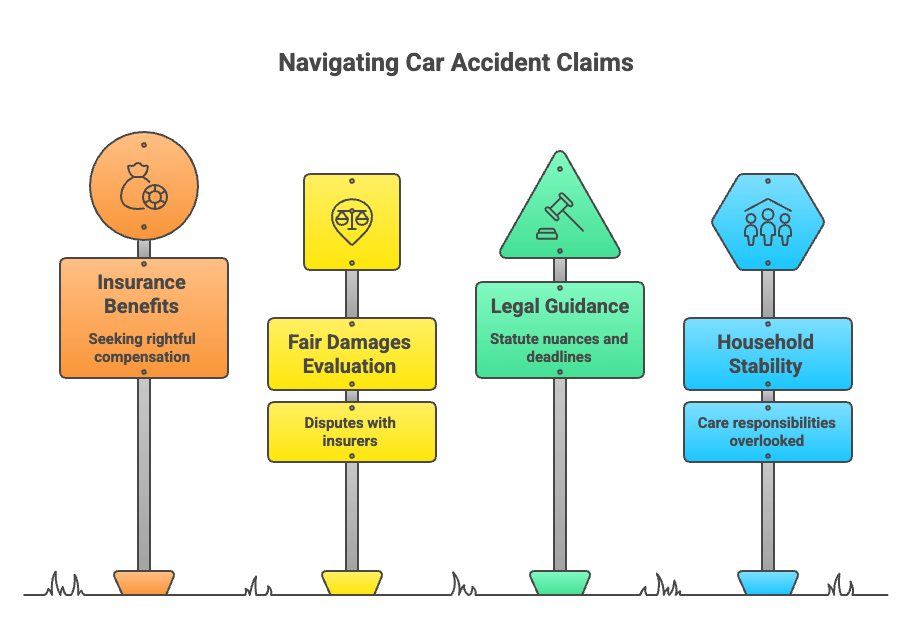
These protections support not only individual recovery but also the broader goal of promoting responsibility, safety, and service to others in the community.
Steps to Take After a Miami Interstate Car Accident Injury
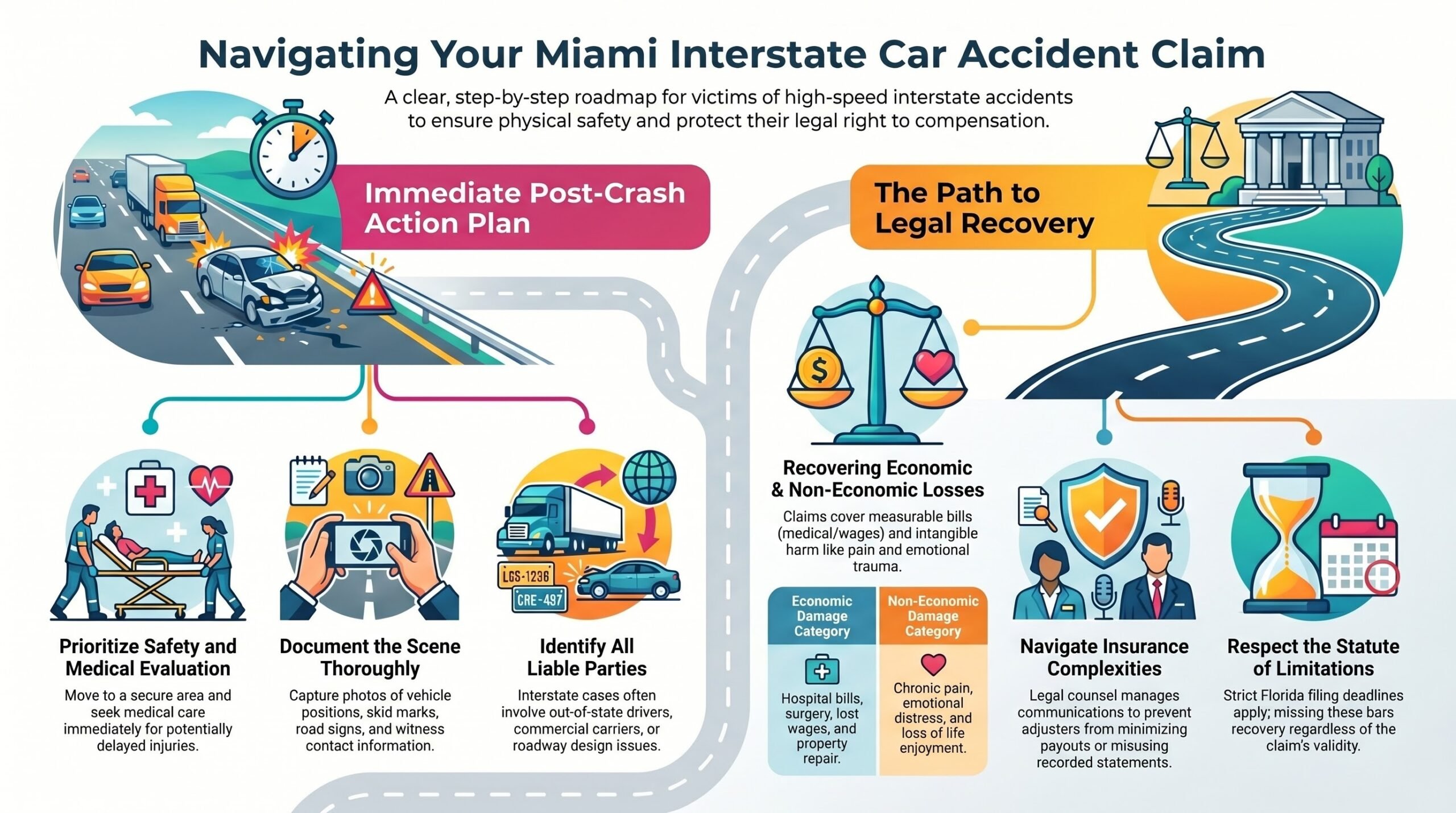
After a Miami interstate car accident injury, the first priority is to guarantee immediate safety by moving to a secure location, when possible, and contacting emergency responders. The incident should then be carefully documented through photographs, witness statements, and other available evidence to help establish what occurred. Prompt medical care remains crucial, both to protect the injured person’s health and to create a clear record of the injuries involved.
Ensure Immediate Safety
Prioritize immediate safety by moving, if possible, to a secure area away from active traffic lanes and activating hazard lights to alert approaching drivers. If conditions allow, occupants should move vehicles to the shoulder or another protected space to reduce the risk of secondary collisions and preserve access for emergency responders.
They should then check for hazards, including leaking fuel, smoke, broken glass, downed power lines, or unstable traffic conditions. Anyone who can safely assist should help children, older adults, and injured passengers reach safety without causing further harm. If movement poses additional risk, staying inside with seat belts fastened may be the safer choice until help arrives. A calm, organized response protects everyone involved and reflects a service-minded commitment to safeguarding life, reducing preventable harm, and supporting the well-being of others nearby.
Document The Crash
Every available detail should be documented as soon as conditions are safe, because timely and accurate records often become vital when injuries, insurance claims, and liability questions are later reviewed. Helpful documentation includes names, contact information, license plate numbers, roadway conditions, weather, traffic signals, vehicle positions, and visible property damage. Clear photographic evidence should capture the entire scene from multiple angles, including skid marks, debris, lane signage, and any hazards that may have contributed to the collision.
If bystanders observed the incident, respectful efforts to obtain witness statements and contact details can preserve important independent accounts. Notes should also record the time, location, direction of travel, and any statements made by involved drivers. Organized records often strengthen later communications and support fair, informed decisions for everyone affected by the crash.
Seek Medical Care
In the hours following a Miami interstate collision, prompt medical evaluation is often essential, even when injuries appear minor or delayed. An urgent evaluation can identify internal trauma, concussions, soft tissue damage, and other conditions that may worsen without timely care. Medical records also create an objective account of injuries, symptoms, and recommended treatment.
Those assisting an injured person should encourage transportation to an emergency room, urgent care center, or physician as soon as possible. Following all medical instructions, attending follow-up appointments, and beginning post-accident rehabilitation when advised can support recovery and protect long-term health. Caregivers, family members, and community advocates may help by monitoring symptoms, arranging transportation, and ensuring prescribed treatment is followed. Consistent medical attention demonstrates a responsible commitment to recovery and to the well-being of everyone affected.
How a Miami Interstate Car Accident Injury Lawyer Can Help You
- A lawyer investigates the collision, preserves evidence, and identifies liable parties.
- Counsel manages insurer communication, reducing pressure and preventing harmful statements.
- An attorney calculates current losses, including medical bills, wages, and vehicle damage.
- Legal representation prepares claims for negotiation or litigation if fair payment is denied.
Through each step, the lawyer coordinates records, consults qualified experts, and explains options with precision. This guidance allows injured people and caregivers to make informed choices, maintain stability, and pursue accountability while continuing to serve their households and communities with confidence.
Long-Term Effects of Miami Interstate Car Accident Injuries
Miami interstate car accident injuries often produce consequences that extend well beyond the initial medical emergency. Victims may face chronic pain challenges and lasting emotional trauma, both of which can disrupt daily functioning, relationships, and overall quality of life. In many cases, these continuing effects also contribute to reduced earning capacity, creating significant financial strain over time.
Chronic Pain Challenges
Enduring pain often becomes one of the most disruptive long-term consequences of interstate car accident injuries, affecting a person’s ability to work, sleep, drive, and complete ordinary daily tasks. When spinal damage, nerve compression, or soft tissue trauma persists, symptoms may continue for months or years, limiting mobility and reducing independence. Effective care often requires coordinated treatment, including physical rehabilitation, medication oversight, Neuropathic management, and carefully monitored interventional options.
Pain psychology may also support coping strategies that help individuals remain engaged in treatment and service to their families and communities. Chronic pain can complicate recovery by causing flare-ups during routine movement, delaying return to employment, and increasing dependence on assistance. Thorough documentation, consistent medical follow-up, and a disciplined treatment plan are often critical to preserving function and supporting long-term stability.
Lasting Emotional Trauma
Physical injuries are often accompanied by lasting emotional trauma that can disrupt recovery long after the most visible wounds have begun to mend. Survivors may experience post-traumatic stress, recurring anxiety, sleep disturbance, or a persistent sense of danger while traveling on Miami interstates. These psychological effects can complicate medical treatment, reduce confidence, and make ordinary routines feel overwhelming.
Emotional harm also reaches families and caregivers who are trying to provide steady support. Irritability, withdrawal, and sudden mood changes may create relationship strain, even in otherwise strong households. Children can be affected when a parent becomes fearful or emotionally unavailable after a crash. Thoughtful legal advocacy often recognizes these invisible injuries, helping injured individuals pursue resources for counseling, stability, and a more complete path toward recovery after a serious collision.
Reduced Earning Capacity
A collision’s long-term impact may extend well beyond medical bills, diminishing an injured person’s ability to earn income at the level once expected before the crash. Serious injuries can limit stamina, concentration, mobility, or manual skill, making prior work duties difficult or impossible. When these limitations persist, reduced earning capacity may affect household stability and long-term financial security.
Careful evaluation often considers medical restrictions, employment history, education, and Future employability within a changed labor market. Some individuals may require Vocational rehabilitation to identify suitable work, develop new skills, or adapt to permanent limitations. In a service-minded community, recognizing these losses supports fair recovery and helps injured people maintain dignity, independence, and the ability to provide meaningful care for themselves and those who rely on them daily.
Proving Liability in Miami Interstate Car Accident Injury Cases
Establishing liability in a Miami interstate car accident injury case requires a careful review of how the collision occurred, who owed a duty of care, and whether that duty was breached. This process often begins with police reports, witness statements, medical records, and photographs that preserve the scene and the nature of the injuries.
Additional proof may come from dash cam footage, vehicle data, and traffic forensics that reconstruct speed, braking, lane changes, and impact angles. Attorneys may examine whether a driver was distracted, impaired, fatigued, or following too closely. They may also evaluate road design, signage, weather conditions, and vehicle defects when multiple contributing factors exist. In service to injured individuals and their families, a thorough liability analysis helps identify all responsible parties, including other drivers, employers, or maintenance entities.
Clear evidence of causation strengthens a claim by connecting the breach of duty directly to the harm suffered and the resulting losses.
Dealing With Insurance Companies After a Miami Interstate Car Accident Injury
In the aftermath of a Miami interstate car accident, communications with insurance companies often significantly affect the outcome of a claim. Adjusters may appear cooperative, yet their priorities typically center on limiting payouts and controlling narratives. Careful, accurate statements help protect the injured person and preserve the integrity of supporting facts.
Those assisting injured individuals should recognize common claim tactics, including requests for broad medical authorizations, pressure to give recorded statements, and early offers before losses are fully understood. Written documentation, organized records, and measured responses can reduce misunderstandings and discourage unfair evaluations. Attention to policy language also matters, especially when multiple insurers are involved.
Settlement timelines vary widely, and insurers may use delay as leverage when financial pressure increases. Prompt reporting remains important, but rushed decisions can undermine fair recovery. A disciplined approach, focused on honesty, consistency, and service to the injured person, often strengthens communications and supports a more equitable resolution.
What to Expect During a Miami Interstate Car Accident Injury Claim Process
A Miami interstate car accident injury claim typically begins with several immediate steps after the collision, including medical evaluation, accident reporting, and preservation of supporting evidence. It then moves into an investigation period, during which insurers review liability, damages, and documentation before entering settlement negotiations. If a fair resolution is not reached, the process may proceed to a lawsuit, where deadlines, court procedures, and litigation expectations become increasingly important.
Immediate Steps After Collision
Following a collision on a Miami interstate, the first priority is medical evaluation and prompt reporting of the crash to law enforcement and insurers, because these early actions often shape the course of an injury claim. Injured parties are generally advised to accept emergency care, follow treatment instructions, and keep complete medical documentation of symptoms, diagnoses, and expenses. If possible, photographs, witness names, and the officer’s report number should be gathered at the scene. Statements should remain factual and measured.
Attention should also be given to vehicle preservation, since repair decisions, onboard data, and visible damage may later clarify how the impact occurred. Notice to the insurance carrier should be timely and accurate. By acting carefully and responsibly, a claimant protects personal well-being while preserving information that may support fair recovery for all affected parties.
Claim Investigation Timeline
Once immediate medical care, reporting, and evidence preservation have been addressed, attention usually turns to the claim investigation timeline that shapes a Miami interstate car accident injury case. During this phase, records are gathered, damaged vehicles are examined, and witness interviews are conducted to clarify how the collision occurred and who may bear responsibility.
Investigators often review police reports, medical documentation, roadway conditions, traffic camera footage, and electronic vehicle data. In more intricate matters, experts may construct a forensic timeline to compare impact points, speeds, braking patterns, and visibility. This process can unfold over weeks or months, depending on injuries, disputed facts, and the availability of evidence. Careful investigation serves injured people by preserving accuracy, identifying contributing factors, and building a clear factual foundation for the next stages of the legal process ahead.
Insurance Settlement Negotiations
Enter insurance settlement negotiations, and the focus of a Miami interstate car accident injury claim often shifts from fact gathering to the valuation of losses and the resolution of disputed issues.
During this stage, insurers review medical records, wage loss documentation, treatment projections, and liability evidence to assess exposure. A careful demand strategy presents the human and financial impact of the crash in a clear, service-minded manner, emphasizing accountability and fair support for recovery. Adjusters may respond with questions, counteroffers, or attempts to minimize future damages and pain-related losses.
Counsel typically evaluates each offer against documented needs, policy limits, and practical risks. Reserve negotiation may also influence movement, as internal claim valuations can shape settlement authority. The process often requires patience, disciplined communication, and steady advocacy to achieve a responsible, timely resolution for injured individuals.
Filing Lawsuit Expectations
When settlement discussions do not produce a fair outcome, a Miami interstate car accident injury claim may proceed into formal litigation. The process usually begins with filing a complaint, serving the defendant, and awaiting a formal response. Courts then set deadlines for discovery, motions, mediation, and trial preparation, creating expected timelines that may extend for months or longer.
During litigation, both sides exchange evidence, question witnesses, and evaluate liability, medical losses, and other recoverable harm. The court may address damage limits imposed by law or by insurance policy terms, which can affect the overall recovery. Many cases still resolve before trial through renewed negotiations or court-ordered mediation. If a trial becomes necessary, the injured person should expect testimony, document review, and a judicial decision focused on accountability, lawful compensation, and protection of the community.
Compensation for Miami Interstate Car Accident Injury Damages
Securing compensation after a Miami interstate car accident requires a careful assessment of every loss tied to the collision. A thorough claim often includes medical treatment, rehabilitation needs, lost income, diminished earning capacity, property repair costs, and other documented consequences that affect a household’s stability. When injuries are severe, counsel may also evaluate Future damages, including long-term care, ongoing therapy, and expected vocational limitations.
In especially troubling cases, compensation analysis may consider whether Punitive awards are legally available. These awards are not routine, but they may arise when a driver’s conduct shows reckless disregard for the safety of others on the interstate. Strong supporting evidence, reliable records, and credible expert opinions are often crucial to presenting a complete demand. By identifying all recoverable losses early, an attorney can help injured people pursue resources that support recovery, protect family responsibilities, and promote accountability for harmful conduct within the broader community.
Economic vs Non-Economic Damages in Miami Interstate Car Accident Cases
Miami interstate car accident claims often involve two primary forms of compensation, economic damages and non-economic damages, each addressing a different type of loss. Economic damage categories typically include medical expenses, lost income, and other measurable financial costs, while non-economic losses refer to pain and suffering, emotional distress, and reduced quality of life. Because interstate collisions can present intricate factual and insurance issues, proving these damages usually requires clear records, credible testimony, and thorough supporting evidence.
Economic Damage Categories
In interstate car accident cases, economic damages refer to the measurable financial losses that result directly from the collision. These losses commonly include emergency care, hospital bills, surgery, rehabilitation, prescription costs, transportation to treatment, and property repair or replacement. Documentation such as invoices, receipts, estimates, and employment records helps establish the full amount owed.
A careful damages review also considers income-related harm. An injured person may recover lost wages for time missed during treatment and recovery, and may also seek compensation for reduced future earnings when lasting impairments affect work capacity. In service-minded communities, accurate valuation supports family stability and prevents financial burdens from shifting to caregivers. Legal counsel often works with physicians, employers, and financial professionals to present a clear, well-supported account of these objective losses.
Non-Economic Losses Explained
Intangible harm often defines the most enduring consequences of an interstate car accident, even though it does not appear on a bill or receipt. Non-economic losses address the human impact of injury, including physical pain, emotional distress, inconvenience, and diminished enjoyment of daily living. These damages recognize that recovery involves more than reimbursing financial costs.
In Miami interstate collision cases, non-economic damages often reflect how injuries affect relationships, independence, and overall quality of life. A person may struggle with anxiety, sleep disruption, or lasting limitations that affect caregiving, employment, and community service. Pain valuation seeks to account for these burdens in a fair and measured way, while acknowledging that no formula fully captures personal suffering. For families committed to supporting others, understanding these losses helps frame the broader consequences of a serious crash.
Proving Interstate Accident Damages
Establishing interstate accident damages requires clear proof of both financial loss and personal harm, supported by reliable records and consistent testimony. Economic damages often include medical bills, rehabilitation costs, lost wages, reduced earning capacity, and property repair expenses. Non-economic damages may involve pain, emotional distress, disability, and loss of enjoyment of daily life.
In Miami interstate cases, evidence may come from treatment notes, employer statements, expert evaluations, and forensic reconstruction of vehicle movement and impact forces. This documentation helps decision-makers connect injuries to the collision rather than unrelated conditions. When multiple drivers, insurers, or commercial carriers are involved, apportionment of damages becomes vital to determine each party’s share of responsibility. Careful proof supports fair recovery, protects available resources, and helps injured people and their families pursue stability, treatment, and long-term service-based support.
When a Miami Interstate Car Accident Injury Case Goes to Trial vs Settlement
Determining whether a Miami interstate car accident injury case proceeds to trial or resolves through settlement depends on the strength of the evidence, the extent of the injuries, and the parties’ willingness to dispute fault and damages. In many matters, insurers evaluate medical records, wage-loss proof, and testimony before making meaningful offers, while counsel assesses whether service to the injured person is better achieved through negotiation or a courtroom presentation.
Settlement timing often turns on maximum medical improvement, because early resolution may undervalue future care needs. When liability is clear and damages are well documented, settlement can conserve resources and deliver support sooner. Trial strategies become important when insurers minimize harm, contest causation, or refuse fair compensation. In those situations, attorneys may prepare experts, organize exhibits, and present witnesses to help a jury understand the full human and financial impact. The chosen path should reflect informed judgment, careful preparation, and a commitment to achieving a just outcome.
The Statute of Limitations for Miami Interstate Car Accident Injury Cases
In Miami interstate car accident injury cases, the statute of limitations sets the legal deadline for filing a lawsuit, and missing that deadline can bar recovery regardless of the claim’s underlying validity. Florida law generally imposes strict filing deadlines, but interstate collisions may involve additional statute nuances when another state’s laws, federal issues, or out-of-state defendants affect where and how a claim proceeds.
A careful review of dates, jurisdictions, and procedural rules helps protect the interests of injured people and the families who support them. Different limitation periods may apply to personal injury, wrongful death, or claims against governmental entities, and certain circumstances can pause or shorten the available time. Insurance negotiations do not automatically extend filing deadlines, so waiting can create unnecessary risk. Preserving records, medical documentation, and crash evidence early supports a stronger case and promotes accountability. Understanding these timing rules allows those serving injured community members to make informed decisions and safeguard lawful opportunities for financial recovery.
When to Contact a Miami Interstate Car Accident Injury Lawyer
After an interstate car accident in Miami, early contact with a qualified injury lawyer is often advisable, especially when serious injuries, disputed fault, multiple insurers, or out-of-state drivers are involved. Prompt consultation can help protect crucial information while events remain fresh and records are easier to obtain. Early reporting to appropriate parties may also reduce confusion and support a more accurate account of what occurred.
Timely outreach is often important when medical treatment is ongoing, police findings are incomplete, or communication from insurers becomes frequent. In these situations, witness preservation can be especially meaningful, since memories may fade and individuals may become harder to locate. Families focused on recovery and service to others may benefit from orderly guidance during this period, including help identifying documents, preserving photographs, and tracking deadlines.
Reaching out soon after the crash can create a clearer path for informed decisions, responsible follow-up, and a more organized response to post-accident obligations and needs.
Why You Need an Experienced Miami Interstate Car Accident Injury Lawyer
Because interstate collision claims often involve overlapping laws, multiple insurance carriers, and parties from different jurisdictions, an experienced Miami interstate car accident injury lawyer can provide essential structure and informed advocacy from the outset. Such representation helps injured people and their families pursue accountability while preserving the evidence and deadlines that often determine whether a claim can move forward.
With experienced guidance, a lawyer can identify applicable state and federal issues, coordinate communication with insurers, and develop a sound case strategy based on liability, damages, and jurisdictional concerns. This support often reduces confusion during a time when victims may be focused on recovery and caring for others. A lawyer also works to prevent unfair settlement pressure, incomplete investigations, and avoidable procedural mistakes. By organizing records, consulting experts when needed, and presenting a clear claim for compensation, experienced counsel strengthens the path toward financial recovery and responsible resolution for all parties affected by the crash.
How to Choose the Right Miami Interstate Car Accident Injury Lawyer for Your Case
Selecting the right Miami interstate car accident injury lawyer requires careful attention to qualifications, experience, and case management practices. A thoughtful evaluation helps injured people secure representation that protects their interests and supports their recovery and responsibilities to loved ones.
Effective selection often begins with Attorney interviews, where a prospective client can assess communication style, experience with interstate accidents, and willingness to explain legal options clearly. It is also prudent to review the lawyer’s history with negotiations, trial preparation, and responsiveness to client concerns. Fee transparency remains crucial because clear billing terms help families plan responsibly and avoid misunderstandings during an already difficult period.
A suitable lawyer should demonstrate organized case handling, access to investigators or medical experts, and a commitment to timely updates. Professional reputation, client testimonials, and disciplinary history may further inform the decision. By carefully comparing these factors, individuals can choose counsel prepared to pursue fair compensation with diligence, respect, and integrity.
About The Law Offices of Anidjar & Levine
With a focus on client service and disciplined advocacy, The Law Offices of Anidjar & Levine presents itself as a firm prepared to assist individuals injured in Miami car accidents. The firm emphasizes responsive communication, practical guidance, and representation shaped by the demands of serious interstate collision claims. Its attorneys and staff describe their role as helping injured people pursue accountability while restoring stability for families and communities.
The firm’s history reflects a practice built around personal injury representation and consistent attention to client needs. This background supports an approach that combines case preparation, negotiation, and litigation when necessary. Publicly available client testimonials often highlight accessibility, professionalism, and ongoing updates throughout the legal process.
Those accounts suggest a service model intended to reduce confusion and administrative burdens after a crash. For readers seeking a law firm grounded in service, structure, and advocacy, The Law Offices of Anidjar & Levine appears positioned to provide focused support in demanding circumstances.
Frequently Asked Questions
Can I Recover Damages if an Uninsured Driver Caused the Interstate Accident?
Yes, damages may be recoverable when an uninsured driver causes an interstate accident. Recovery often depends on the availability of uninsured motorist coverage, medical payments coverage, and other applicable policies. A claimant may also pursue the uninsured driver personally, though collection can be difficult. Any settlement may be reduced by an insurance lien for paid medical expenses. Careful documentation and prompt notice to insurers help protect rights and support fair compensation for injured persons.
How Do Florida’s No-Fault Laws Apply to Interstate Car Accidents?
Florida’s no-fault laws generally require each injured person to seek initial medical benefits through Personal Injury Protection, regardless of who caused the interstate accident. When the crash involves another state, personal jurisdiction determines where claims may be filed, while choice of law affects which state’s insurance and liability rules apply. If injuries are serious, Florida may permit claims beyond no-fault, allowing recovery from the at-fault driver for additional losses.
Can Out-Of-State Drivers Be Sued After a Miami Interstate Collision?
Yes, out-of-state drivers can often be sued after a Miami interstate collision, provided Florida courts have proper authority over the claim. Liability usually depends on where the crash occurred, the driver’s contacts with Florida, and related jurisdiction issues. Practical obstacles may include service challenges when locating and formally notifying the nonresident driver. Careful legal review helps injured parties pursue accountability efficiently, while protecting the interests of everyone affected and involved.
Will My Case Change if the Crash Involved a Commercial Truck?
Yes, a case often changes when a commercial truck is involved. It may include broader commercial liability, additional defendants, and stricter evidence requirements. Courts and insurers may examine driver logs, maintenance records, hiring practices, and cargo inspections to determine fault. Because trucking cases can affect many people and public safety, they often require faster evidence preservation and more detailed investigation than ordinary passenger vehicle collisions, and may involve potentially higher insurance coverage.
What Evidence From Highway Cameras Can Support My Injury Claim?
Highway cameras can support an injury claim by providing traffic footage that shows vehicle positions, lane changes, speed patterns, impact timing, and post-crash conditions. Such recordings may also capture license plates that help identify involved drivers, commercial carriers, or witnesses. When available, this evidence can corroborate statements, challenge inaccurate reports, and clarify fault. A careful review often helps those seeking accountability and fair recovery for injuries, losses, and ongoing care.
—————————
A Miami interstate car accident injury claim can involve significant legal and financial issues, particularly when liability is disputed or injuries are severe. Timely action, careful documentation, and informed legal guidance can materially affect the outcome. With experienced representation, injured victims may better protect their rights and pursue appropriate compensation for medical costs, lost income, and other damages.
The Miami Car Accident Lawyers at Law Offices of Anidjar & Levine provide focused advocacy for those steering these intricate accident claims in Miami.