

A Miami car accident impaired and distracted driving lawyer from The Law Offices of Anidjar and Levine can investigate whether alcohol, drugs, fatigue, or inattention contributed to a collision. The attorney may review crash reports, witness accounts, photographs, phone records, and available toxicology or vehicle data to assess liability and document injuries and losses. Florida law may permit compensation for medical expenses, lost income, reduced earning capacity, and pain and suffering, subject to evidence and deadlines. Learn more about working with a Miami Personal Injury Lawyer and the claim process and important considerations.
Main Takeaways
- A Miami car accident lawyer can investigate whether alcohol, drugs, medication, fatigue, or distraction contributed to the crash.
- Liability depends on evidence that a driver’s negligence caused the collision and measurable injuries; comparative fault may affect compensation.
- Useful evidence may include crash reports, witness accounts, photos, video, toxicology results, phone records, and vehicle data.
- Seek prompt medical care and preserve medical, employment, repair, and other records documenting injuries and financial losses.
- An attorney can assess damages, deadlines, and insurance options, negotiate a claim, or pursue legal action when appropriate.
How We Can Help With Your Miami Car Accident Impaired & Distracted Driving Injury Claim
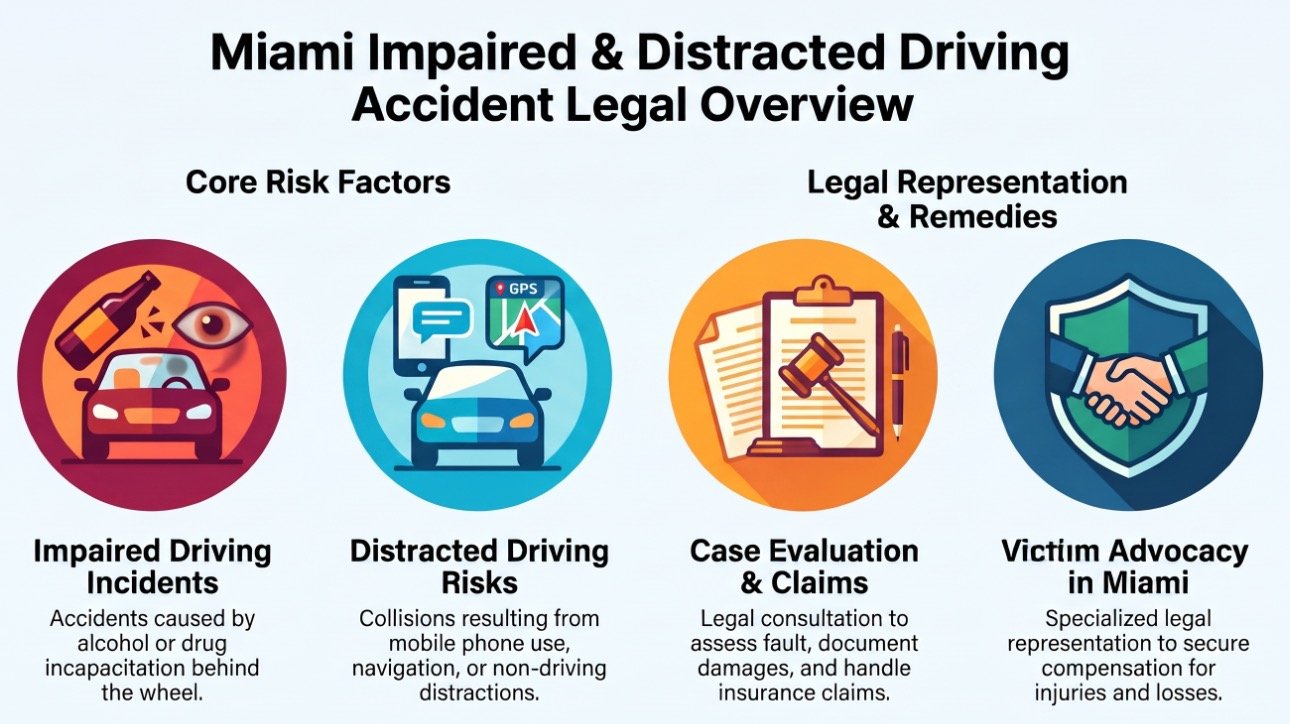
A Miami car accident lawyer can investigate whether impairment or distraction caused a crash, identify the responsible parties, and gather evidence to support an injured person’s claim. The legal team can also review available records, organize documentation, and explain practical options for pursuing compensation. This support allows injured people to focus on recovery while their concerns receive careful attention.
A tailored Claim strategy can account for the circumstances of the collision, the losses involved, and the available evidence. Counsel may communicate with insurers, assess settlement proposals, and prepare a clear presentation of the claim. Attorney communication should remain timely and understandable, so clients can make informed decisions and know what steps may follow. When appropriate, the lawyer can negotiate on the client’s behalf or pursue formal legal action. Throughout the process, respectful service includes listening to the injured person, addressing questions, and treating each matter with diligence. These efforts help protect the client’s interests while supporting a fair resolution.
Understanding Miami Car Accident Impaired & Distracted Driving Injury Cases


When impairment or distraction contributes to a Miami collision, determining how the conduct affected the crash requires careful review of the available evidence. A case assessment considers the sequence of events, the parties’ actions, and the injuries reported. Crash dynamics can help clarify vehicle movement, points of impact, and whether the collision could have been avoided. Investigators may compare photographs, vehicle damage, witness accounts, and available electronic records to build a consistent timeline.
OUR CONSULTATIONSARE FREE
START YOUR FREE CASE REVIEW

The surrounding roadway design also matters. Lane configuration, sight lines, signals, and intersection layout may influence how a collision unfolded and whether other conditions contributed. Medical records and expert evaluations can connect the impact to physical harm, while employment and treatment documentation may show the injury’s broader effects. A careful, impartial review helps separate established facts from assumptions and identify questions that require further investigation. This process supports fair consideration of injured people’s needs while preserving accurate evidence and a clear account of responsibility under applicable law.
Don’t Wait. Call Our Florida Personal Injury Lawyers Now!
Common Causes of Miami Car Accident Impaired & Distracted Driving
Common causes of impaired and distracted driving in Miami include alcohol or drug use, drowsiness, and attention diverted by phones or other in-car activities. These behaviors can reduce reaction time, weaken judgment, and make it harder for drivers to respond safely to changing traffic conditions. Identifying the cause of a crash can help clarify how the driver’s conduct contributed to the collision.
Alcohol and Drug Use


Alcohol and drug use can impair judgment, slow reaction times, and reduce a driver’s ability to maintain attention, increasing the risk of a serious crash on Miami roads. Alcohol impairment may affect coordination, distance perception, and decision-making, making it harder to respond safely to traffic conditions. Drug impairment can also interfere with alertness and motor control, whether caused by illegal substances, prescription medications, or over-the-counter products that carry driving warnings. Combining alcohol with drugs may intensify these effects and further compromise a person’s ability to operate a vehicle. Drivers have a responsibility to avoid driving when substances make them unsafe behind the wheel. When an impaired driver causes a collision, injured people may face medical expenses, lost income, and lasting harm. Prompt legal guidance can help clarify available options and support their recovery.
Phone Distractions
Beyond impairment caused by substances, phone use can distract drivers and contribute to serious crashes on Miami roads. Reading or sending a text takes a driver’s eyes off traffic, hands off the wheel, and attention away from changing road conditions. Even a brief glance can prevent a timely response to a pedestrian, cyclist, or vehicle. Notification overload from messages, calls, and app alerts can repeatedly divert attention, particularly in dense traffic and at intersections. Hands-free myths also create a false sense of safety. Voice commands and Bluetooth may reduce manual phone handling, but conversations can still draw attention away from driving. Drivers who choose not to interact with devices help protect passengers and other road users. When a crash involves phone distraction, available evidence may help clarify how the collision occurred.
Drowsy Driving
When drivers do not get enough rest, fatigue can impair judgment and slow reaction time on Miami roads. Sleep deprivation may also reduce concentration, interfere with decision-making, and make it harder to respond to changing traffic conditions. These effects can endanger passengers, pedestrians, and other motorists who depend on attentive driving.
Long work shifts, overnight schedules, untreated sleep disorders, and extended periods behind the wheel can contribute to drowsy driving. A driver’s circadian rhythms may naturally lower alertness during late-night and early-morning hours, even when the person believes they can continue safely. Warning signs can include frequent yawning, heavy eyelids, drifting from a lane, or difficulty recalling recent miles. Drivers who notice these signs should stop in a safe place and rest. Preventing fatigue-related crashes helps protect everyone sharing Miami’s roads.
In-Car Distractions
In-car distractions can divert a driver’s attention from Miami traffic and increase the risk of a collision. Dashboard clutter, including loose items, paperwork, or poorly positioned devices, may obstruct visibility or prompt a driver to look away from the road. Adjusting navigation systems, climate controls, or audio settings while moving can also take attention away from nearby vehicles and pedestrians. Passenger interference is another concern. Conversations, disputes, or requests for assistance may cause a driver to turn, reach, or respond instead of maintaining focus. Children and unsecured belongings can create additional demands during a trip. Drivers can reduce these risks by organizing the vehicle before departure, setting controls in advance, and asking passengers to help safely. Preventing in-car distractions protects occupants and others sharing Miami’s roads.
Legal Rights of Miami Car Accident Impaired & Distracted Driving Injury Victims
Impaired and distracted driving can leave Miami crash victims with serious injuries and questions about their legal options. Florida law may allow an injured person to seek compensation from a driver whose negligence caused the collision. Available damages may include medical expenses, lost income, reduced earning capacity, and pain and suffering. Each claim depends on evidence, deadlines, and the circumstances of the crash.
Miami crash victims may seek compensation for injuries caused by impaired or distracted drivers, depending on the evidence and circumstances.
- Preserve photographs of the scene, vehicle damage, injuries, and visible road conditions.
- Obtain the crash report and keep medical records, bills, and proof of missed work.
- Share relevant information with insurers carefully and avoid signing broad releases without review.
- Consult a qualified attorney to assess liability, damages, and filing deadlines.
Victim advocacy can help injured people understand their choices and pursue fair treatment while they focus on recovery. Responsible legal guidance may also support community prevention by encouraging accountability and safer conduct. A claim does not guarantee compensation, and prompt action can help protect evidence and legal rights.
Why Do Miami Car Accident Impaired & Distracted Driving Injuries Happen?
Understanding the causes of impaired and distracted driving can clarify how preventable choices lead to serious Miami crashes. Alcohol, cannabis, certain medications, and other substances can slow reaction time, impair judgment, and make it difficult to maintain lane position. Even when a driver does not appear visibly intoxicated, reduced coordination or attention may compromise the ability to respond to changing traffic conditions.
Distraction creates similar risks. Drivers who read messages, adjust navigation, eat, or attend to passengers may take their eyes, hands, or concentration away from driving. A brief lapse can prevent timely braking or recognition of a pedestrian, cyclist, or vehicle entering the roadway. Fatigue can intensify these effects, especially during long trips or late-night travel.
Local conditions may contribute as well. Congested intersections, confusing signs, poor lighting, and limited sightlines can increase demands on drivers. Roadway design and traffic enforcement influence how safely people move through these areas, but responsible driving remains vital to protecting other road users.
What Should You Do After a Miami Car Accident Impaired & Distracted Driving Injury?
After an impaired or distracted driving crash, injured individuals should seek prompt medical care, even if their symptoms initially seem minor. They should report the accident to law enforcement and ensure an official report is prepared. When it is safe to do so, they should preserve relevant evidence, including photographs, witness contact information, and medical records.
Seek Immediate Medical Care
Prompt medical evaluation is essential after a Miami car accident involving suspected impaired or distracted driving, even when injuries seem minor. Adrenaline can mask pain, and some conditions, including head trauma or internal injuries, may not become apparent immediately. Prompt assessment helps identify concerns early and supports a safer recovery.
Anyone involved should seek emergency care for Emergency symptoms such as difficulty breathing, severe bleeding, confusion, loss of consciousness, or worsening pain. For less urgent concerns, a physician or urgent care provider can evaluate injuries and recommend appropriate treatment options, which may include imaging, medication, follow-up visits, or rehabilitation. Medical professionals can also document symptoms and explain necessary care. Following their instructions and attending scheduled appointments helps prevent complications and creates a clear record of recovery. Timely care also supports the well-being of others who depend on the injured person.
Report The Accident
When it is safe to do so, a driver involved in a Miami crash should report the accident to law enforcement, especially when impaired or distracted driving may have contributed. A prompt report allows officers to assess the scene, address immediate hazards, and determine whether anyone needs emergency assistance. Scene safety should remain the priority; injured people should not be moved unless an immediate danger requires it. The driver should provide accurate information and describe observed conduct without speculation. A driver exchange of names, contact details, insurance information, and vehicle details may be required, but it should not delay contacting authorities or emergency services. If another driver appears impaired or is behaving dangerously, avoid confrontation and notify officers. Cooperation with responders can help protect everyone involved and support an orderly response.
Preserve Evidence
Once emergency responders have addressed immediate safety concerns, preserving evidence can help document how an impaired or distracted driver contributed to a Miami crash. The injured person or a trusted representative should photograph vehicle damage, roadway conditions, traffic signals, skid marks, and visible injuries when it is safe to do so. Witness names and contact information can help investigators verify what occurred.
Secure vehicle records and, if practical, the damaged vehicle itself before repairs or disposal. Preserve photographs, repair estimates, towing records, and any available video footage. Do not alter or delete relevant messages, call logs, or other electronic information. Retain clothing worn during the collision, especially items showing damage or blood, in a clean, separate bag. Promptly provide preserved materials to the appropriate insurer, investigator, or legal representative, and avoid posting evidence online.
Critical Evidence in a Miami Car Accident Impaired & Distracted Driving Injury Case
A strong Miami impaired or distracted driving claim may depend on evidence that documents the crash and the driver’s conduct.
Essential records and accounts can include:
- Police crash reports
- Toxicology test results
- Phone usage records
- Witness statements
Together, these materials can help establish how the collision occurred and whether impairment or distraction contributed.
Police Crash Reports
Police crash reports can provide vital evidence in Miami car accident cases involving suspected impaired or distracted driving. Officers may document vehicle positions, road conditions, visible damage, witness statements, and observations made at the scene. These details can help clarify how a collision occurred and identify evidence that requires further review. A report may also note suspected distraction or impairment, but those observations are not, by themselves, a final determination of fault.
Report Access is important because injured people and their representatives may need the report to understand the investigation and support an insurance claim. Procedures for obtaining records can vary, and some information may be restricted. If a report contains inaccurate or incomplete details, Record Corrections may be requested through the appropriate agency process. Prompt review can help preserve accurate information and support fair treatment of everyone affected.
Toxicology Test Results
Beyond the observations recorded in a police crash report, toxicology test results may provide evidence of whether a driver had alcohol or drugs in their system after a Miami collision. These findings can help clarify impairment and support a careful assessment of how the crash occurred. Their reliability depends on proper collection, handling, and analysis. Sample preservation is critical because contamination, improper storage, or delays may affect results and their evidentiary value. Laboratory accreditation can also indicate that testing followed recognized quality standards and procedures. Results should be considered alongside other available evidence, including witness accounts and medical records, rather than viewed in isolation. When a driver’s impairment may have endangered others, accurate toxicology evidence can help establish accountability and inform decisions about pursuing compensation for people harmed in the collision.
Phone Usage Records
When a driver may have been distracted or impaired during a Miami collision, phone usage records can help show whether the device was in use near the time of impact. These records may identify calls, messages, or data activity, but they do not automatically establish who used the phone or what appeared on its screen. Carrier subpoenas may be necessary to obtain relevant account and connection records, subject to applicable legal requirements. Careful metadata analysis can compare timestamps with the collision timeline and clarify whether activity occurred before or during the crash. Investigators may also review device data when it is lawfully available. Because records can be incomplete or interpreted incorrectly, qualified analysis is important. This evidence may help establish accountability and support injured people seeking fair compensation and necessary care.
Witness Statements
Phone records may indicate that a device was active near the time of a Miami collision, while witness statements can provide direct observations of the driver’s conduct. Bystanders may describe erratic lane changes, delayed reactions, visible impairment, or phone use before impact. Their accounts can help clarify how the crash occurred and identify actions that placed others at risk.
Witness credibility depends on factors such as the person’s opportunity to observe, distance from the vehicles, and ability to recall events accurately. Investigators may compare accounts with traffic camera footage, physical evidence, and other records. Statement inconsistencies do not automatically make testimony unreliable, but they should be examined carefully, including whether stress or limited visibility affected recollection. Promptly documenting each witness’s contact information and observations can preserve useful evidence and support a fair assessment of responsibility.
Don’t Wait. Call Our Florida Personal Injury Lawyers Now!
Long-Term Effects of Miami Car Accident Impaired & Distracted Driving Injuries
Impaired and distracted driving crashes can cause injuries with effects that persist long after initial treatment. Survivors may experience chronic physical pain, lasting cognitive changes, and difficulty returning to work or daily activities. Emotional trauma and stress may also continue, affecting relationships and overall well-being.
Chronic Physical Pain
Chronic physical pain can persist long after a Miami car accident caused by impaired or distracted driving, even after visible injuries have recovered. Neck, back, joint, or soft-tissue injuries may leave lasting discomfort that interferes with work, family responsibilities, and daily routines. Some people experience recurring pain during movement, while others face persistent symptoms that require continued medical attention. A thorough evaluation can help identify the source of pain and guide appropriate treatment. Pain management may involve coordinated care, prescribed therapies, and regular follow-up with qualified providers. When discomfort restricts walking, lifting, or other ordinary activities, mobility limitations can reduce independence and make community participation more difficult. Documented symptoms, treatment needs, and functional effects can help clarify the injury’s long-term impact and support informed decisions about recovery and available legal options.
Lasting Cognitive Changes
After a Miami car accident caused by impaired or distracted driving, cognitive changes may persist even when other injuries appear to have recovered. A person may experience difficulty concentrating, remembering instructions, processing information, or organizing routine tasks. These limitations can affect employment, education, household responsibilities, and the ability to safely assist others. Executive dysfunction may interfere with planning, decision-making, impulse control, and adapting to changes in familiar routines. A medical evaluation can help identify the nature and extent of these difficulties and guide appropriate care. Cognitive rehabilitation may provide structured strategies to strengthen skills, support independence, and improve daily functioning. Progress varies, and some individuals require ongoing accommodations or assistance. Medical records, treatment plans, and documented changes in everyday abilities can help clarify the lasting impact of these injuries.
Emotional Trauma and Stress
Cognitive injuries are not the only lasting consequences of a Miami car accident caused by impaired or distracted driving; emotional trauma and stress may also persist. Survivors may experience accident-related anxiety, including fear of driving, riding in vehicles, or traveling through the crash location. Emotional flashbacks can bring back distressing memories when a sound, image, or situation reminds them of the collision. These reactions may disrupt sleep, concentration, work, and relationships, limiting a person’s ability to support family members or participate in community life. Symptoms can emerge soon after a crash or develop over time, and their severity varies. Professional mental health care may help survivors manage distress and rebuild daily routines. When emotional harm follows a negligent driver’s actions, documenting symptoms and treatment can also clarify the injury’s lasting effects and related needs.
Proving Liability in Miami Car Accident Impaired & Distracted Driving Injury Cases
Proving liability in a Miami car accident involving impaired or distracted driving requires evidence that the driver’s conduct caused the crash and resulting injuries. Investigators may examine police reports, witness accounts, photographs, vehicle damage, and available traffic or surveillance footage. Evidence of impairment can include officer observations, field sobriety evaluations, toxicology results, and records showing alcohol or drug use. For distraction, phone records, in-car data, and witness statements may help establish whether the driver was texting, handling a device, or otherwise inattentive.
Under Florida negligence standards, an injured person generally must show that the driver owed a duty of care, breached that duty, and caused measurable harm. Medical records and expert assessments can connect the collision to physical injuries and document their effects on daily life. Each case also requires careful review of comparative fault, because an injured person’s share of responsibility may affect the damages available. Promptly preserving evidence can help clarify what happened and support a fair evaluation of responsibility.
Dealing With Insurance Companies After a Miami Car Accident Impaired & Distracted Driving Injury
Once evidence of impaired or distracted driving has been preserved, the injured person may need to address insurance claims while medical treatment and recovery continue. Insurers may contact the injured person soon after a collision to seek details about the crash, injuries, and expenses. Careful communication can help protect an accurate account while keeping attention on recovery and family responsibilities.
Adjuster tactics may include requesting broad medical authorizations, questioning whether symptoms relate to the collision, or proposing an early payment before the full impact is known. The injured person can ask for requests in writing, review documents before signing, and avoid guessing about facts or future treatment. Do not provide recorded statements without understanding how the insurer may use them; legal guidance can clarify the risks and appropriate responses.
Organized records of medical visits, missed work, repair costs, and insurer communications can support clear, consistent claim discussions. A lawyer may handle insurer contact, explain available coverage, and help make certain the injured person’s concerns are presented accurately and respectfully.
What to Expect During a Miami Car Accident Impaired & Distracted Driving Injury Claim Process
A Miami impaired or distracted driving injury claim typically begins with an evaluation of the circumstances, injuries, and potential legal issues. Evidence is then gathered to support the claim, followed by negotiations with the insurers involved. The process concludes when the parties reach a resolution or pursue further legal action.
Initial Case Evaluation
How does an initial case evaluation shape an impaired or distracted driving injury claim in Miami? It helps determine whether the injured person has a viable claim and what steps may support a fair resolution. During an attorney consultation, counsel typically reviews the collision’s circumstances, the reported injuries, treatment to date, and the effects on daily responsibilities. The discussion also allows the person to explain priorities, including concerns about recovery and the well-being of others affected.
The evaluation timeline can vary according to the injury’s seriousness, available information, and whether treatment is ongoing. Counsel may outline potential legal options, applicable deadlines, and likely challenges without promising a particular outcome. This early assessment helps clarify expectations and identify practical next steps. A careful, respectful review can also guide decisions that protect the injured person’s interests while allowing space for continued medical care.
Evidence Collection
What evidence can clarify an impaired or distracted driving injury claim in Miami? A careful investigation may identify how the collision occurred and support an accurate account of the harm. Relevant records can include the police report, witness statements, photographs of the scene, vehicle damage, and medical documentation. When impairment is suspected, available toxicology results, arrest records, and observations documented by responding officers may help establish the driver’s condition. In distraction cases, phone records or other digital information may show activity near the time of impact, subject to applicable privacy rules. Surveillance footage from nearby businesses or traffic cameras can capture events before or during the crash. Vehicle telemetry may preserve speed, braking, or turning data. Prompt preservation requests can help prevent important evidence from being lost or overwritten.
Insurance Negotiations
Once the available evidence has been reviewed, insurance negotiations typically begin with a claim submitted to the at-fault driver’s insurer. The submission outlines how the collision occurred, identifies the injuries, and explains the financial and personal effects on the injured person. A Demand strategy should be grounded in medical records, documented losses, and a clear account of how impaired or distracted driving contributed to the crash. The insurer may review the materials, request additional information, or question the extent of responsibility or damages. Negotiations can involve written offers and responses, with each position assessed against the evidence and the injured person’s needs. Settlement timing may depend on treatment progress, the completeness of records, and the insurer’s review. Careful communication helps protect the injured person’s interests while keeping the process focused on documented facts.
Claim Resolution
After negotiations conclude, claim resolution depends on whether the parties reach an agreement or need to take further steps. When an insurer offers acceptable compensation, the injured person may review the proposed amount and the release terms before signing. A release commonly ends claims against the responsible parties for the accident, so its scope merits careful attention. Settlement timelines vary based on case complexity, medical documentation, insurer review, and payment processing. If the parties cannot agree, the injured person may pursue litigation, where evidence and legal arguments are presented through formal procedures. Throughout either path, organized records of treatment, expenses, lost income, and communications can support an informed decision. A fair resolution should account for documented losses and future needs while preserving the person’s ability to make considered choices about recovery and service to others.
Don’t Wait. Call Our Florida Personal Injury Lawyers Now!
Compensation for Miami Car Accident Impaired & Distracted Driving Injury Damages
When impaired or distracted driving causes a crash in Miami, an injured person may seek compensation for losses supported by the evidence. A claim may address the collision’s consequences and the support needed during recovery. Medical records, crash reports, witness accounts, and other documentation can help establish the harm and connect it to the driver’s conduct.
Florida law may also permit Punitive damages in cases involving conduct that meets the required legal standard, such as intentional misconduct or gross negligence. These damages are intended to punish particularly serious behavior and discourage similar conduct, rather than simply reimburse the injured person. Their availability depends on the facts and applicable statutory requirements.
The amount recoverable may be affected by liability findings, available insurance, and legal limits that apply to a particular claim. Florida generally does not impose broad compensation caps on ordinary personal injury damages, though specific rules may govern certain claims or damages. Careful review helps confirm that a request reflects the documented injury, the responsible parties’ conduct, and the law.
Economic vs Non-Economic Damages in Miami Car Accident Impaired & Distracted Driving Cases
In impaired and distracted driving cases, economic damages may cover measurable losses such as medical bills, lost income, and property damage. Non-economic damages address less tangible harm, including pain, emotional distress, and reduced quality of life. Claimants generally must support both categories with relevant records, testimony, and other evidence to establish the extent of their losses.
Economic Damages
Economic damages compensate for the measurable financial losses caused by a Miami car accident involving impaired or distracted driving. They may include reasonable medical expenses, such as emergency treatment, hospital care, medication, rehabilitation, and future care supported by medical evidence. Property damage can cover the cost to repair or replace a vehicle and other damaged belongings. Lost wages may be recoverable when injuries prevent a person from working, while diminished earning capacity may apply when lasting limitations reduce future income. Documentation helps establish the amount and connection between the crash and each claimed expense. Relevant records can include medical bills, pay statements, repair estimates, and expert assessments. Careful evaluation of these losses can help injured people and their families pursue financial recovery while preserving resources for ongoing treatment and vital needs.
Non-Economic Damages
Beyond measurable financial losses, non-economic damages address the personal effects of a Miami car accident caused by impaired or distracted driving. Unlike medical bills or lost income, these damages reflect harm that does not have a fixed price. They may include physical pain, emotional distress, reduced enjoyment of daily activities, and the loss of independence that can follow a serious injury. Pain and suffering damages may prevent an injured person from caring for family members, participating in community service, or fulfilling ordinary responsibilities. Relationship strain can also arise when injuries change household roles or restrict time spent with loved ones. In impaired or distracted driving cases, non-economic damages recognize how a driver’s conduct may affect an injured person’s well-being and connections with others. Their purpose is to account for personal harm alongside financial losses.
Proving Your Losses
To recover damages after a Miami car accident involving impaired or distracted driving, an injured person must support each claimed loss with reliable evidence. Economic damages include medical expenses, rehabilitation costs, lost wages, and reduced future earning capacity. Bills, employment records, tax documents, and expert assessments can substantiate these amounts. Damage documentation should be organized and preserved, including receipts and records of continuing treatment. Financial forecasting may help estimate future care needs and income losses when injuries have lasting effects.
Non-economic damages address harm that lacks a direct price, such as pain, emotional distress, and reduced ability to enjoy daily activities. Medical records, personal accounts, and observations from family or caregivers may help show how injuries affect life. Clear, consistent evidence allows insurers or a court to evaluate both categories fairly and determine compensation grounded in the individual’s documented circumstances.
When a Miami Car Accident Impaired & Distracted Driving Injury Case Goes to Trial vs Settlement
When an impaired or distracted driver causes a crash in Miami, the injured person’s claim may resolve through settlement or proceed to trial. Settlement advantages can include a faster resolution, reduced litigation expense, and greater certainty about the outcome. A negotiated agreement may also spare an injured person and family members from the demands of courtroom testimony, allowing them to focus on recovery and daily responsibilities.
Settlement is not always appropriate. If the parties disagree about responsibility, the extent of injuries, or the value of documented losses, negotiations may fail. Trial considerations include the time required to prepare and present evidence, the uncertainty of a jury’s decision, and the emotional demands of testifying. A judge or jury may determine the outcome after hearing both sides.
The choice depends on the evidence, the injured person’s needs, and the available terms. A careful evaluation can help the injured person weigh resolution options while preserving the ability to pursue fair compensation.
Florida Laws That May Affect Your Miami Car Accident Impaired & Distracted Driving Case
Florida law can shape how an impaired or distracted driving claim is investigated, evaluated, and resolved. Its rules may affect evidence, responsibility, and available compensation. Understanding them can help injured people and their families make informed decisions while protecting their ability to seek accountability.
Florida’s driving laws can influence evidence, responsibility, and compensation in impaired or distracted driving claims.
- Impaired driving: Florida’s legal blood-alcohol limits and impairment standards may guide an investigation, but a traffic or criminal finding does not automatically decide civil liability.
- DUI penalty enhancements: Aggravating circumstances, such as a particularly high blood-alcohol level or a crash causing serious injury, may increase criminal penalties. Those consequences are distinct from a victim’s civil claim.
- Distracted driving: Florida distracted driving statutes restrict texting while driving and impose additional limits in designated areas. Phone records, witness accounts, and crash-scene evidence may help establish whether distraction contributed.
- Shared fault: Florida’s modified comparative negligence rules may reduce recovery based on an injured person’s share of responsibility, and generally bar recovery when that share exceeds 50 percent.
These rules can guide careful evidence preservation and fair evaluation of each person’s conduct.
The Statute of Limitations for Miami Car Accident Impaired & Distracted Driving Injury Cases
The rules governing fault and evidence operate alongside strict filing deadlines that may determine whether an injured person can pursue compensation. In Florida, a person generally has two years from the date of a negligence-based car accident to file a personal injury lawsuit. This deadline applies whether the crash involved impaired driving, distraction, or both. Missing it can result in dismissal, even when the evidence strongly supports the injured person’s claim.
The calculation may differ in cases involving a death, a government defendant, or facts that delay discovery of an injury. Deadline exceptions are limited and depend on the circumstances. Florida tolling rules may pause or alter a filing period in certain situations, such as when a claimant is legally incapacitated or a defendant cannot be located. These rules are fact-specific and should not be assumed to extend time. Prompt attention to the applicable deadline helps preserve the ability to seek accountability and compensation while supporting the interests of those affected by the collision.
How a Miami Car Accident Impaired & Distracted Driving Lawyer Can Help You
A Miami car accident lawyer can help injured people pursue a claim after a crash involving impaired or distracted driving. Counsel can investigate the collision, identify responsible parties, and explain available legal options. This work can also protect the interests of passengers, families, and others affected by unsafe conduct on the road.
A lawyer may support a claim by:
- Gathering crash reports, photographs, witness accounts, and available video to reconstruct the scene.
- Reviewing medical records and consulting qualified professionals to connect injuries with the collision.
- Communicating with insurers and organizing evidence of medical costs, lost income, and other losses.
- Evaluating settlement proposals and, when appropriate, presenting the case in court.
Attorney selection can involve reviewing a lawyer’s experience with impaired or distracted driving cases, communication practices, and approach to client service. Consultation preparation may include organizing relevant records and noting questions about the claim. Clear guidance can help injured people make informed decisions while seeking fair accountability and supporting safer roads for the wider community.
When to Contact a Miami Car Accident Impaired & Distracted Driving Lawyer
After a crash involving suspected impaired or distracted driving, injured people may benefit from contacting a Miami car accident lawyer promptly, particularly when injuries require ongoing care or fault is disputed. Early consultation timing can matter because evidence, including witness recollections, nearby camera footage, and vehicle records, may become harder to obtain as time passes. Prompt legal advice can help an injured person understand relevant deadlines and avoid making statements or signing documents without first considering their effect on a potential claim.
Contact may be appropriate even when the full extent of an injury is not yet clear. Medical evaluation should remain the priority, and records of treatment, symptoms, missed work, and related expenses can help document the consequences of the collision. A lawyer can also explain what information may be useful and how to preserve it while recovery continues.
If an insurer has requested a recorded statement or offered a settlement, timely review may help the injured person make an informed decision.
Why You Need an Experienced Miami Car Accident Impaired & Distracted Driving Lawyer
When impaired or distracted driving may have caused a collision, an experienced Miami car accident lawyer can help assess the evidence and explain the injured person’s legal options. The lawyer can identify records, witness accounts, and other information that may clarify how the crash occurred and who may be responsible. Prompt, careful investigation can preserve details that might otherwise be lost.
Negligence standards require evidence connecting a driver’s conduct to the collision and resulting injuries. Impairment or distraction may be relevant, but the claim still depends on the facts and applicable law. Attorney experience can help organize evidence, address disputes about fault, and communicate with insurers while the injured person focuses on recovery. Counsel can also evaluate documented losses, including medical expenses, lost income, and future care needs, to support a fair claim. By handling complex legal and procedural demands, an experienced lawyer can protect the injured person’s interests and pursue accountability through the appropriate channels.
How to Choose the Right Miami Car Accident Impaired & Distracted Driving Lawyer for Your Case
Choosing the right Miami car accident lawyer for an impaired or distracted driving claim requires careful evaluation of the lawyer’s relevant experience, investigative approach, and communication practices. A prospective client can review whether the attorney has handled cases involving impaired drivers, phone use, or other forms of distraction, and ask how evidence such as crash reports, witness accounts, and available video is preserved. Attorney Credentials, including Florida licensure, relevant experience, and disciplinary history, can help inform that assessment. The lawyer should explain the claims process, likely challenges, and possible outcomes without promising a particular result.
Client Communication also matters, especially when an injured person is managing treatment and recovery. A lawyer should describe how often updates are provided, who will answer questions, and how urgent concerns are handled. During an initial consultation, a person can assess whether the attorney listens carefully, responds clearly, and respects the client’s priorities. A thoughtful choice can support a fair claim and help protect others by encouraging responsible driving.
About The Law Offices of Anidjar & Levine
The Law Offices of Anidjar & Levine represents people injured in car accidents in Miami and throughout Florida. The firm handles claims involving impaired and distracted driving, helping clients understand their legal options and pursue compensation for documented losses. Its attorneys assess each collision’s circumstances, gather relevant evidence, and communicate with insurers on clients’ behalf. The firm’s approach is intended to give injured people practical guidance while they focus on medical care and recovery.
Firm history reflects a continuing focus on representing people harmed by negligence and supporting their efforts to seek accountability. The firm provides information about the claims process and works to keep clients informed as their cases progress. Its services may include investigating a crash, reviewing available records, and explaining potential next steps without promising a particular result.
Community involvement is another part of the firm’s public presence. Through outreach and service efforts, it seeks to support individuals and families across Florida. These commitments complement its legal work and emphasize access to guidance after a serious accident.
Frequently Asked Questions
Can Passengers in an Impaired-Driving Crash File Claims Against the Driver?
Yes. Passengers injured in an impaired-driving crash can generally file claims against the driver whose negligence caused their injuries, even if they knew the driver had been drinking. Passenger injury claims may seek compensation for medical expenses, lost income, and other legally recognized losses. Depending on the circumstances, Dram shop liability may also apply to a bar or other alcohol provider that unlawfully served the driver. Specific rights depend on the evidence and applicable law.
Can I Recover Compensation if I Was Partly Responsible for the Crash?
A person may recover compensation even when partly responsible for a crash, depending on the evidence and applicable law. Under Florida comparative negligence, the injured person’s damages are generally reduced by their share of fault; however, recovery may be barred if that share exceeds 50 percent. These shared fault damages require careful assessment of each party’s conduct, medical expenses, lost income, and other losses. A thorough investigation can help guarantee responsibility is fairly evaluated.
What Happens if the At-Fault Driver Has No Insurance?
If the at-fault driver has no insurance, an injured person may seek payment through their own available coverage. Personal Injury Protection can cover certain medical expenses and lost wages, regardless of fault. Uninsured Motorist Coverage may help pay for additional injury-related losses when the responsible driver lacks liability insurance, subject to policy terms and limits. A careful review of the crash evidence, insurance policies, and filing deadlines can clarify available options and protect a claim.
Can I Pursue a Claim if the Impaired Driver Was Arrested but Not Convicted?
Yes. An injured person may pursue a civil claim even if the impaired driver was arrested but not convicted. Criminal proceedings and civil liability are separate matters, and each applies different evidence standards. A conviction is not required to establish that the driver’s conduct caused the collision and resulting harm. Relevant evidence may include police reports, witness accounts, medical records, and toxicology results. A qualified attorney can assess available evidence and applicable deadlines.
Are Rideshare Companies Responsible When an Impaired Driver Causes a Crash?
Rideshare companies may be responsible for an impaired-driver crash, but liability depends on the driver’s status, the company’s conduct, and applicable law. Rideshare insurance coverage may apply when the driver is logged into the app or transporting a passenger, with limits varying by trip stage. Company negligence liability may arise if the company failed to screen, supervise, or respond to known safety concerns. An injured person should preserve evidence and seek legal guidance.
—————————
Impaired or distracted driving crashes can cause serious injuries, financial strain, and lasting disruption. Victims in Miami may have legal options to seek compensation, but evidence and filing deadlines can affect a claim. The Law Offices of Anidjar and Levine can review the circumstances, explain available options, and communicate with insurers. A timely case assessment can help preserve relevant evidence and clarify next steps for people considering recovery under Florida law. Learn more from a Miami Personal Injury Lawyer.

