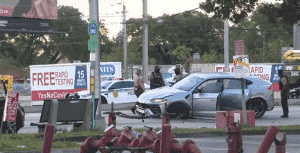
Law Offices of Anidjar and Levine helps protect a victim’s legal and financial interests after a drowsy driving crash. Counsel preserves essential evidence, investigates signs of exhaustion, obtains medical and crash records, and works with experts to prove fatigue caused the collision.
An attorney also manages insurer communications, values medical costs, lost income, and long-term needs, and pursues settlement or trial when necessary. Learn more by speaking with a Miami Car Accident Attorney. The sections below explain how these cases are built and pursued.
Main Takeaways
- A Miami driver fatigue car accident lawyer investigates whether sleep loss, shift work, medication, or long hours impaired the at-fault driver.
- Early legal help preserves crucial evidence, including crash photos, witness statements, police reports, surveillance footage, and vehicle electronic data.
- An attorney proves liability by showing that exhaustion impaired judgment, attention, or reaction time and directly caused the collision.
- Lawyers calculate compensation for medical bills, lost income, pain, and future care, then negotiate with insurers or file suit.
- Counsel also handles insurer communications, explains deadlines and strategy, and prepares the case for settlement or trial.


How We Can Help With Your Miami Driver Fatigue Car Accident Injury Claim
Addressing a Miami driver fatigue car accident injury claim begins with a careful investigation of how the crash occurred, whether the driver showed signs of exhaustion, and how that negligence contributed to the injured person’s losses.
From that foundation, legal counsel can gather records, witness statements, electronic data, and employer information to build a clear presentation of liability and damages. Support also includes communicating with insurers, organizing medical documentation, and protecting the client from avoidable missteps throughout the claims process. A service-minded approach recognizes that injured people often need practical guidance as well as legal advocacy.
Counsel may help coordinate documentation needs, explain available options in plain terms, and identify coping strategies that support stability while the matter proceeds. When appropriate, attorneys can prepare a persuasive demand, negotiate for fair compensation, and move the case toward litigation if cooperation does not occur. Throughout the process, the focus remains on accountability, dignity, and service to those affected.
OUR CONSULTATIONSARE FREE
START YOUR FREE CASE REVIEW

Understanding Miami Driver Fatigue Car Accident Injury Cases
In many Miami driver-fatigue car accident injury cases, the central issue is whether an exhausted motorist failed to exercise reasonable care and thereby caused preventable harm. These matters often turn on evidence showing that drowsy driving impaired judgment, slowed reaction time, or reduced attention in conditions requiring alert operation of a vehicle.
A careful legal review typically considers witness accounts, crash reports, phone records, work schedules, and medical findings. Courts and insurers may also examine whether the driver ignored warning signs of fatigue, including drifting, delayed braking, or microsleep episodes. The body’s circadian rhythm can also affect alertness, especially during overnight or early morning travel.
For injured people and their families, understanding these cases supports informed decisions, accountability, and meaningful recovery. A service-minded legal approach focuses on the facts, the extent of harm, and the resources needed to help victims restore stability, obtain proper care, and protect the well-being of those who depend on them.
Common Causes of Miami Driver Fatigue Car Accidents
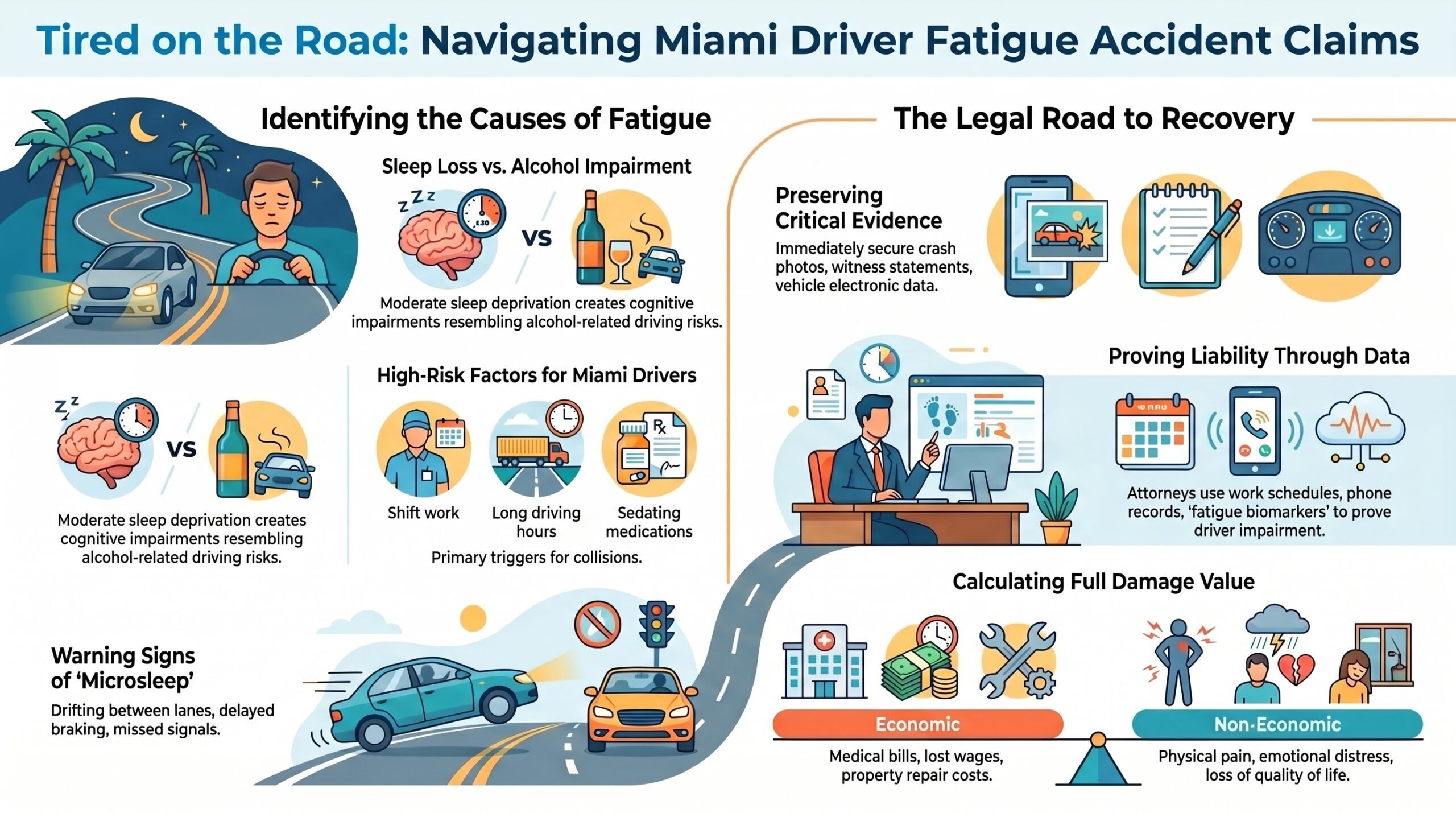
Several recurring factors contribute to driver fatigue accidents in Miami, often impairing judgment, reaction time, and sustained attention behind the wheel. Common causes include sleep deprivation, extended hours of driving, and the sedating effects of certain medications, each of which can markedly reduce a driver’s ability to operate a vehicle safely. Shift work fatigue also remains a serious concern, as irregular schedules frequently disrupt normal sleep patterns and increase the risk of preventable collisions.
Sleep Deprivation Risks
Among the most serious contributors to driver fatigue, sleep deprivation markedly impairs judgment, slows reaction time, and reduces a motorist’s ability to maintain attention on Miami’s congested roads. Even moderate sleep loss can create drowsy driving conditions that resemble alcohol-related impairment, placing passengers, pedestrians, and other drivers at unnecessary risk. Scientific research consistently links inadequate rest to cognitive impairment, diminished vigilance, poor decision-making, and delayed braking responses during sudden traffic changes.
In service-minded communities, recognizing these warning signs helps protect others from preventable harm. Drivers deprived of restorative sleep may miss signals, drift between lanes, or fail to perceive hazards until it is too late. Responsible safety efforts consequently emphasize adequate rest, public awareness, and prompt intervention when fatigue symptoms appear before a vehicle is placed in motion on public streets.
Long Hours Driving
Extended driving periods present another leading cause of fatigue-related crashes in Miami, particularly when motorists remain behind the wheel without sufficient breaks. As hours accumulate, attention declines, reaction time slows, and judgment becomes less reliable, increasing the risk of harm to passengers, pedestrians, and other drivers who share the road.
This danger often affects commuters, delivery workers, and long-haul operators facing demanding schedules and limited opportunities to rest. Trucker fatigue can become especially serious when deadlines encourage continued driving despite mounting exhaustion. In many cases, circadian disruption further reduces alertness during overnight or early morning travel, when the body is naturally inclined toward sleep. Responsible scheduling, regular rest stops, and careful route planning help protect the public and support safer transportation practices throughout Miami.
Medication And Drowsiness
Taking prescription or over-the-counter medication can markedly reduce a driver’s alertness, even when the drug is used as directed. Many common drugs, including sleep aids, antihistamines, pain relievers, and anxiety medications, may slow reaction time, impair judgment, or cause unexpected drowsiness during routine travel.
Risk can increase when several medications are combined or when alcohol is added. Prescription interactions may intensify sedating effects, while over-the-counter products are often underestimated because they are easily available without a prescription. Responsible caregiving for family members and neighbors includes recognizing these dangers before anyone gets behind the wheel.
Reading warning labels, consulting pharmacists, and arranging alternate transportation when symptoms appear can help protect the broader community. Careful medication use helps make roads safer and reduces preventable collisions in Miami.
Shift Work Fatigue
Working irregular hours can markedly disrupt the body’s natural sleep-wake cycle, leaving shift workers less alert during early morning, overnight, or rotating commutes. Employees serving hospitals, transportation systems, hotels, and emergency response teams often face night shifts that reduce restorative sleep and impair judgment behind the wheel. Circadian disruption can slow reaction time, diminish concentration, and increase the risk of drifting between lanes or missing traffic signals.
These dangers may intensify after extended duty periods, consecutive overnight assignments, or inadequate recovery days. In a community like Miami, where traffic congestion and long travel times are common, fatigue from shift work can place both workers and the public at risk. Recognizing these patterns helps families, employers, and legal advocates promote safer scheduling practices and protect those harmed by preventable collisions on Miami roadways.


Legal Rights of Miami Driver Fatigue Car Accident Injury Victims
A person injured in a Miami car accident caused by driver fatigue may have the right to pursue compensation when another party’s negligence contributed to the crash. Florida law may allow recovery for medical costs, lost income, pain and suffering, and other related losses when evidence shows fatigue impaired safe driving.
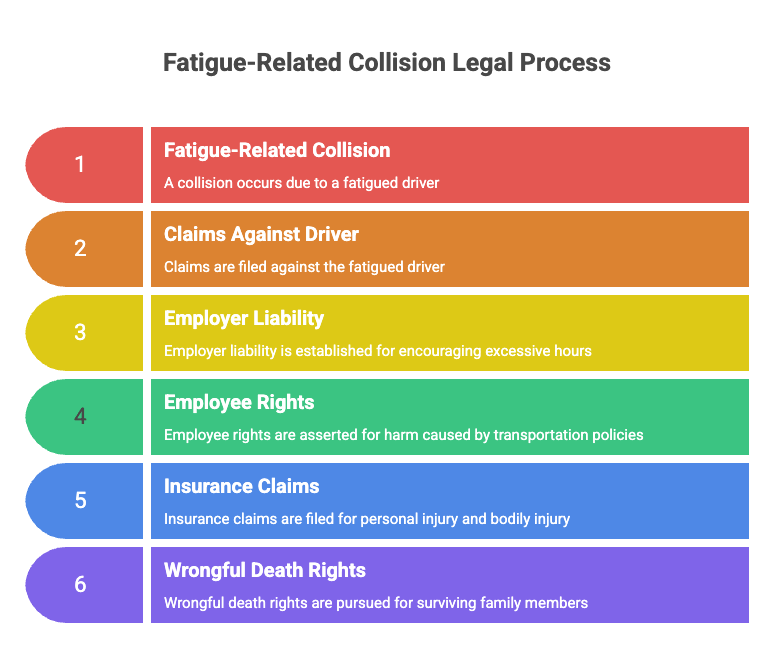
Potential rights and legal issues may include:
- claims against a fatigued driver whose conduct created an unreasonable danger
- employer liability when a company encouraged excessive hours or ignored safety rules
- employee rights when a worker suffered harm because transportation policies placed profit over rest
- insurance claims involving personal injury protection, bodily injury coverage, and uninsured motorists
- Wrongful death rights for surviving family members after a fatal fatigue-related collision
Liability may extend beyond the driver to employers, vehicle owners, or other negligent parties. A careful legal review can help identify responsible actors and protect the resources needed to support recovery, stability, and continued service to loved ones and the broader community.
Steps to Take After a Miami Driver Fatigue Car Accident Injury
After a Miami driver fatigue car accident injury, prompt action can protect both health and potential legal claims. Priority is generally given to seeking immediate medical care and to gathering crash-scene evidence, including photographs, witness statements, and official reports. Early contact with a Miami lawyer may also help preserve crucial evidence and support an informed response to the accident’s legal and financial consequences.
Seek Immediate Medical Care
Prioritize immediate medical evaluation, even when injuries appear minor, because fatigue-related collisions often cause conditions that are not fully apparent at the scene. Prompt care protects health, supports recovery, and helps guarantee that hidden injuries, including concussions, internal trauma, and soft tissue damage, receive immediate assessment before complications worsen.
When possible, injured individuals should accept emergency treatment or visit a hospital, urgent care center, or physician without delay. If pain, dizziness, confusion, numbness, or limited mobility develops later, follow-up care remains vital. Family members, caregivers, and community-minded advocates may assist with transportation coordination, communication with medical providers, and adherence to discharge instructions.
Careful attention to diagnoses, treatment recommendations, and symptom changes serves both the injured person’s well-being and the broader goal of preventing avoidable harm after a serious Miami fatigue-related crash.
Gather Crash Scene Evidence
At the crash scene, careful evidence collection can preserve vital facts that may later demonstrate how driver fatigue contributed to the collision. If conditions are safe, those present should obtain photographic documentation of vehicle damage, skid marks, roadway debris, traffic signals, weather conditions, and any visible injuries. Images taken from several angles can help create an accurate record of what occurred.
It is also important to gather witness statements from bystanders, passengers, or nearby workers who observed the driver’s behavior before impact, such as drifting, delayed braking, or signs of drowsiness. Names and contact information should be recorded accurately. Notes on the time, location, lighting, and statements from the other driver may further support a clear understanding of the event and its causes later.
Contact A Miami Lawyer
In the days following a Miami driver fatigue collision, contacting an attorney can help protect an injured person’s legal and financial interests while vital evidence remains available. Counsel may promptly request records, preserve electronic data, and interview witnesses before memories fade. This early action can strengthen a claim and reduce preventable disputes.
A Miami lawyer may also evaluate whether fatigue resulted from a night-shift schedule, extended driving hours, or unsafe commuting patterns. By identifying contributing circumstances, counsel can present a fuller account of negligence and damages. Legal guidance often helps families make informed decisions, communicate carefully with insurers, and avoid statements that could undermine recovery.
Timely representation supports accountability, encourages responsible conduct on the road, and helps injured people pursue resources needed for medical care and long-term stability.
How a Miami Driver Fatigue Car Accident Injury Lawyer Can Help You
When a fatigue-related crash causes serious harm, a Miami driver fatigue car accident injury lawyer can help by evaluating the facts, identifying liable parties, and building an evidence-based claim. Counsel may gather records, interview witnesses, review electronic data, and consult experts to show how exhaustion impaired judgment and reaction time. This guidance helps injured people pursue accountability while protecting family stability and community well-being.
A lawyer may also assist by:
- securing crash reports, medical records, and employment logs
- investigating employer policies, delivery schedules, and prior safety violations
- addressing insurer tactics that minimize fatigue screening evidence
- calculating damages for treatment costs, lost income, and necessary support
- advising on practical next steps, including lifestyle adjustments after injury
Through organized advocacy, counsel can present a clear demand, negotiate from a position of strength, and prepare for trial if needed. The overall aim is fair recovery, responsible conduct, and meaningful support for those harmed and those who depend on them.
Long-Term Effects of Miami Driver Fatigue Car Accident Injuries
Driver fatigue car accident injuries in Miami can produce lasting consequences that extend well beyond the initial recovery period. Victims may face chronic pain complications, cognitive and emotional challenges, and the need for ongoing medical treatment that affects daily function and long-term stability. These long-term effects often play a significant role in evaluating the full impact of an injury and the support required over time.
Chronic Pain Complications
Persistence often defines the burden of chronic pain after a Miami driver fatigue collision, as symptoms may continue long after fractures, soft tissue injuries, or spinal trauma appear to have stabilized. Ongoing discomfort can limit mobility, interrupt sleep, and reduce a person’s ability to work, care for family, or participate in community service.
In many cases, chronic pain develops through nerve irritation, joint damage, scar tissue formation, or Chronic inflammation that prolongs sensitivity and stiffness. Effective Pain management may require coordinated medical care, physical therapy, medication oversight, and rehabilitative support tailored to the injury’s severity. When pain remains untreated, secondary physical decline may follow, including muscle weakness, reduced endurance, and loss of function. Careful documentation and timely treatment often help protect recovery, preserve independence, and support long-term stability.
Cognitive And Emotional Impact
Beyond the immediate physical injuries, a Miami driver fatigue collision may also produce lasting cognitive and emotional consequences that interfere with daily functioning and long-term recovery. Survivors may experience memory lapses, reduced concentration, slower decision-making, and persistent mental fatigue that limits work, study, and caregiving responsibilities. These changes can affect judgment, communication, and the ability to safely manage ordinary tasks.
Emotional trauma may also emerge long after the crash itself. Some individuals develop anxiety, irritability, sleep disruption, depression, or a heightened sense of fear when riding in or operating a vehicle. Strained relationships, social withdrawal, and diminished confidence often follow, especially when the person feels unable to serve family, coworkers, or the community as before. Recognizing these effects helps support compassionate advocacy and a fuller understanding of accident-related harm.
Ongoing Medical Treatment
In many cases, recovery from a Miami driver fatigue car accident does not end after emergency care or the initial course of treatment. Many injured individuals require ongoing medical treatment post-discharge, especially when pain, limited mobility, neurological symptoms, or psychological distress continue to interfere with daily responsibilities and the ability to care for others.
Follow-up appointments often include diagnostic monitoring, physical therapy, consultant evaluations, and medication adjustments to improve function and reduce complications. Some patients need extended rehabilitation, assistive devices, or home health support to manage chronic symptoms safely and consistently.
Providers may also recommend counseling, sleep assessments, or pain management programs when recovery becomes prolonged. Careful documentation of treatment needs remains important because continuing care can affect household stability, employment, and the long-term resources necessary to support both healing and service.
Proving Liability in Miami Driver Fatigue Car Accident Injury Cases
Establishing liability in a Miami driver fatigue car accident case requires more than showing that a collision occurred. It generally involves proving that a driver’s exhaustion impaired judgment, slowed reaction time, or caused inattention, and that this impairment directly led to the crash. Evidence may include surveillance footage, electronic driving logs, cellphone records, witness statements, and vehicle data. In some matters, experts may also evaluate fatigue biomarkers or patterns of circadian disruption to explain why a driver was dangerously impaired.
A careful legal review often examines whether the driver ignored rest needs, violated hours-of-service rules, or continued operating a vehicle despite obvious warning signs. Attorneys may compare timelines, receipts, toll records, and work schedules to establish prolonged wakefulness. When commercial vehicles are involved, employer practices, dispatch demands, and maintenance records may also be relevant.
This methodical approach helps identify accountable parties and supports injured individuals seeking justice, stability, and resources for continued recovery and community well-being.
Dealing With Insurance Companies After a Miami Driver Fatigue Car Accident Injury
Once liability evidence begins to take shape, attention often turns to the insurance process, where driver fatigue claims may face careful scrutiny and resistance. Adjusters may question whether exhaustion truly caused the crash or attempt to minimize injuries by selectively reading records and statements. These insurance tactics can create pressure for injured people and families already focused on recovery and service to one another.
A careful response often includes preserving documents, communicating consistently, and avoiding statements that can be taken out of context. Medical records, witness accounts, and employment or driving logs may help support the connection between fatigue and the collision. It is also useful to recognize that settlement timelines can vary when insurers dispute fault, causation, or damages.
A disciplined, informed approach may protect the injured person’s interests while reducing opportunities for delay, undervaluation, or unfair denials. Clear documentation strengthens credibility and supports fair evaluation during insurance reviews and negotiations.
What to Expect During a Miami Driver Fatigue Car Accident Injury Claim Process
A Miami driver fatigue car accident injury claim typically begins with an initial case evaluation, followed by the collection of evidence and a focused investigation into liability and damages. The process often continues with insurance claim negotiations, where the parties assess medical records, accident reports, and other supporting documentation. If a fair resolution is not reached, the matter may proceed to more detailed settlement discussions or to litigation in court.
Initial Case Evaluation
At the outset of a Miami driver fatigue car accident injury claim, the initial case evaluation is designed to determine whether the available facts support liability, causation, and compensable damages. During this stage, counsel generally reviews the circumstances of the collision, the parties involved, the reported initial symptoms, and the client’s immediate medical concerns. The discussion often addresses how the incident has affected work, family responsibilities, and the ability to continue serving others in daily life.
The evaluation also outlines a preliminary case timeline, including notice requirements, treatment progress, and pivotal decision points. Clients are typically advised about potential legal theories, available insurance coverage, and practical expectations for the claim. This early assessment helps identify strengths, possible challenges, and the most responsible path forward, while promoting informed choices and careful preparation from the beginning.
Evidence And Investigation
During the evidence and investigation phase, a Miami driver fatigue car accident injury claim is developed by collecting and reviewing materials that may show how the crash occurred and why it happened. Attorneys and investigators may gather police reports, photographs, witness statements, medical records, and roadway data. They may also seek phone records, vehicle event data, and surveillance footage when available.
In serious cases, forensic reconstruction can help explain speed, braking, impact angles, and driver response times. Digital forensics may reveal texting activity, navigation history, or app usage near the time of the collision. Service-minded representation often emphasizes careful documentation, because strong evidence can support accountability and help injured people obtain the resources needed for recovery, stability, and continued care for their families and communities after traumatic crashes.
Insurance Claim Negotiations
Negotiation with the insurance company often begins once the available evidence has been assembled and the injured person’s losses can be reasonably assessed. During this stage, representatives review medical records, wage information, repair estimates, and witness statements to measure the claim’s value. Insurers may request recorded statements or additional documents, and careful responses can help prevent misunderstandings.
An attorney often manages communications, organizes supporting proof, and addresses questions about coverage, liability, and damages. Effective policy negotiation requires a clear presentation of facts and a disciplined approach to disputed issues. Claimant counseling may also help the injured person understand timelines, documentation needs, and common insurer tactics. Throughout negotiations, the focus remains on protecting the claimant’s interests, encouraging accountability, and seeking a fair insurance response grounded in the available evidence.
Settlement Or Litigation
In many Miami driver fatigue injury claims, the process concludes through settlement, but litigation may become necessary when liability, causation, or the extent of damages remains contested. Attorneys typically evaluate medical records, witness statements, expert opinions, and insurer responses to determine whether a fair resolution is possible. Strong documentation often improves Mediation Prospects and encourages meaningful negotiations.
If settlement discussions fail, a lawsuit may proceed through discovery, motion practice, and possible trial preparation. During this stage, both sides exchange evidence, question witnesses, and assess legal risks. Counsel usually explains likely timelines, courtroom procedures, and Trial Costs so injured individuals can make informed decisions. While litigation demands patience and organization, it may be the appropriate path when accountability and full compensation are vital to supporting recovery, stability, and future care needs.
Compensation for Miami Driver Fatigue Car Accident Injury Damages
Accountability often begins with a careful assessment of the full scope of harm caused by a driver fatigue crash. In Miami, claims seek compensation to restore stability, support recovery, and address losses resulting from another party’s negligent conduct. This process may require medical records, crash evidence, witness statements, and documentation showing how fatigue contributed to the collision and resulting injuries.
When a fatigued driver was working, overtime records may help establish scheduling pressures, while workplace liability may arise if an employer ignored unsafe hours or warning signs. A careful review can also identify additional responsible parties, including vehicle owners or contractors. Strong claim preparation helps insurers and courts understand the seriousness of the injuries, the treatment required, and the practical burdens placed on the injured person and family.
By presenting organized evidence and a service-minded focus on client needs, legal counsel can pursue fair compensation with diligence, credibility, and respect for community well-being.
Economic vs Non-Economic Damages in Miami Driver Fatigue Car Accident Cases
In Miami driver fatigue car accident cases, damages generally fall into two primary categories: economic losses and non-economic harm. Economic damages often include medical expenses, lost income, and other measurable financial costs, while non-economic damages address pain and suffering, emotional distress, and reduced quality of life. Establishing the value of either category typically requires clear documentation, credible testimony, and evidence that connects the accident to the claimed losses.
Economic Loss Categories
Clarity is vital when evaluating damages in a Miami driver-fatigue car accident case because compensation is generally divided into economic and non-economic categories. Economic losses refer to measurable financial harm supported by bills, records, estimates, and employment documentation. These damages help families, caregivers, and community-minded individuals understand the practical costs created by a preventable crash.
Common economic categories include emergency treatment, hospitalization, rehabilitation, medications, assistive devices, and projected future medical care. Lost wages may apply when an injured person cannot work during recovery, while reduced earning capacity may arise if lasting limitations affect employment.
Property damage includes vehicle repair or replacement, towing, storage, and other transportation-related expenses. In some cases, necessary household services or out-of-pocket costs may also qualify when they can be reliably documented after the collision.
Non-Economic Harm Types
While economic damages address documented financial losses, non-economic damages address the human impact of a Miami driver-fatigue collision that cannot be measured by invoices or pay records alone. These harms often include physical pain, emotional distress, mental anguish, inconvenience, and loss of enjoyment of daily activities. They may also involve sleep disruption, anxiety while traveling, strained family relationships, or the inability to participate fully in caregiving, volunteer work, and community service.
In serious cases, disfigurement, permanent impairment, and reduced independence may alter a person’s sense of dignity and purpose. Courts and insurers frequently consider pain evaluations and quality-of-life assessments when identifying these losses. For individuals committed to helping others, recognizing non-economic harm underscores that recovery involves more than finances; it also concerns restored function, stability, and human well-being.
Proving Damage Value
Precision governs the effort to prove damage value in a Miami driver fatigue collision case, because both economic and non-economic losses must be supported with credible evidence rather than assumption. Economic damages are commonly established through medical bills, wage records, repair invoices, and future care projections. Non-economic damages, including pain, emotional distress, and loss of normal life, require careful evidence valuation grounded in treatment history, daily limitations, and consistent witness accounts.
Courts and insurers often examine whether the claimed impact aligns with the documented course of recovery. In more intricate matters, expert testimony from physicians, economists, or vocational authorities may clarify long-term impairment, reduced earning capacity, and anticipated support needs. A disciplined presentation of proof helps guarantee that compensation reflects the full human and financial consequences of preventable fatigue-related harm.
When a Miami Driver Fatigue Car Accident Injury Case Goes to Trial vs Settlement
In many Miami driver fatigue car accident injury claims, the question of trial versus settlement turns on the strength of the evidence, the extent of the injuries, and the parties’ willingness to accept reasonable terms. When liability is clear and damages are well documented, a settlement often serves everyone by reducing delay, expense, and emotional strain.
However, a case may proceed to trial when insurers dispute fault, minimize medical harm, or refuse fair compensation for lost income, treatment needs, and pain. Trial strategy then focuses on proving fatigue through witness accounts, driving records, expert testimony, and the sequence of events before impact. Settlement timing also matters, because premature agreements may overlook future care, while unnecessary delay can burden injured people and their families.
A careful evaluation of risk, costs, and likely jury response helps determine the most responsible path. In service-minded representation, the objectives remain accountability, adequate recovery, and the protection of the injured person’s long-term well-being and stability.
The Statute of Limitations for Miami Driver Fatigue Car Accident Injury Cases
Beyond questions of settlement strategy and trial risk, Miami driver fatigue car accident injury claims are also governed by filing deadlines that can determine whether recovery remains available at all. In Florida, the time allowed to bring a negligence action is limited, and missing the applicable deadline can bar an otherwise valid claim entirely.
These filing deadlines merit careful attention because the law includes statute nuances that may affect how time is calculated. Different rules can apply when a crash causes wrongful death, involves a government entity, or raises issues about the delayed discovery of an injury. Insurance negotiations do not necessarily stop the clock, and informal discussions rarely preserve legal rights.
For families focused on service, recovery, and financial stability, understanding these limits supports responsible planning and protects the ability to pursue accountability. Accurate recordkeeping, prompt review of crash details, and awareness of statutory exceptions help guarantee that important claims are not lost before they are fully evaluated.
When to Contact a Miami Driver Fatigue Car Accident Injury Lawyer
Soon after a Miami driver fatigue crash, contacting a qualified injury lawyer is often advisable because early legal review can protect evidence, clarify insurance obligations, and identify potential liability before important details begin to fade. Prompt contact may also help preserve witness statements, vehicle data, medical records, and employer documentation when a commercial driver is involved.
Legal guidance is especially timely when injuries require ongoing care, insurers request recorded statements, or fault remains disputed. Families focused on serving and protecting injured loved ones may benefit from counsel when questions arise about fatigue screening, hours-of-service violations, or delayed symptoms that affect recovery timelines. An attorney may also assist after a wrongful death, a catastrophic injury, or a denial of benefits under applicable coverage.
Even when injuries seem moderate, an early consultation can support informed decisions, reduce avoidable errors, and facilitate orderly communication with insurers and medical providers while the injured person focuses on recovery and household stability.
Why You Need an Experienced Miami Driver Fatigue Car Accident Injury Lawyer
Early legal contact can preserve a claim, but the value of representation often depends on the lawyer’s experience with fatigue-related collisions and the evidentiary issues they present. An experienced Miami driver fatigue car accident injury lawyer understands how to connect medical records, driving history, work schedules, and witness statements to show how exhaustion affected judgment, reaction time, and roadway decisions.
Experience also matters because fatigue cases are often disputed by insurers and defendants. Skilled counsel can frame the facts through Fatigue neuroscience and Circadian disruption, helping demonstrate why delayed responses, lane drifting, or missed signals may reflect impairment rather than simple carelessness. This focused approach supports accountability and helps injured people pursue resources needed for treatment, family stability, and continued service to others.
In complicated cases, experienced representation can also identify additional sources of liability, preserve electronic data, and counter attempts to shift blame away from those whose unsafe choices contributed to the collision.
How to Choose the Right Miami Driver Fatigue Car Accident Injury Lawyer for Your Case
In selecting counsel after a fatigue-related collision, careful attention should be given to whether a lawyer has specific experience handling cases where exhaustion, disrupted sleep, or impaired alertness played a central role in causing the crash. A qualified attorney should understand how to gather work records, phone data, witness accounts, and expert analyses that may demonstrate that fatigue contributed to the event.
It is also wise to evaluate communication practices, responsiveness, and professionalism during an initial consultation. Clear explanations regarding case strategy, timelines, and client expectations can help families make informed decisions while focusing on recovery and service to others. Reviewing prior results, courtroom readiness, and negotiation ability may further indicate whether counsel can protect a claimant’s interests.
Finally, fee structures should be discussed openly, including contingency arrangements, litigation costs, and billing procedures. Transparency in these areas often reflects integrity, preparation, and a genuine commitment to responsible legal advocacy for injured people.
About The Law Offices of Anidjar & Levine
Client-centered representation remains a defining feature of The Law Offices of Anidjar & Levine, a firm that assists injured people throughout Florida after serious motor vehicle collisions, including crashes linked to driver fatigue.
The firm approaches each case with focused attention, practical guidance, and a clear commitment to protecting the rights of those harmed by negligent drivers.
Its attorneys and staff work to reduce burdens on injured clients by managing communication, investigating the accident, and pursuing fair compensation for medical costs, lost income, and related damages.
This service-oriented approach reflects a broader dedication to helping families regain stability after disruption.
Public information, including client testimonials, often highlights responsiveness, professionalism, and consistent support during difficult periods.
The firm’s community outreach efforts further demonstrate an investment in the wellbeing of Florida residents beyond the courtroom.
For individuals seeking legal help after a fatigue-related crash in Miami, The Law Offices of Anidjar & Levine presents a resource grounded in advocacy, service, and accessibility.
Frequently Asked Questions
Can Drowsy Driving Accidents Increase During Daylight Saving Time Changes?
Yes, drowsy driving accidents can increase during daylight saving time changes. Research links the time shift to daylight disruption and circadian misalignment, both of which can reduce alertness, slow reaction time, and impair judgment. These effects may place early-morning drivers and those already sleep-deprived at greater risk. Communities that prioritize public safety often respond by promoting rest, careful scheduling, and heightened awareness during the adjustment period.
Are Rental Car Companies Ever Liable for Fatigue-Related Crashes?
Yes, rental car companies can be liable for fatigue-related crashes, though rental liability is usually limited. Courts often apply the negligence standard to determine whether the company knew or should have known that a driver was unfit, impaired, or dangerously exhausted. Liability may also arise from negligent maintenance or rental practices. Careful investigation helps affected individuals understand whether the company’s conduct contributed to harm and whether legal accountability may reasonably follow.
Can Sleep Disorders Affect a Driver’s Fatigue Accident Claim?
Yes, sleep disorders can affect a driver’s fatigue accident claim by influencing both liability and damages. A claimant’s medical records may show a diagnosed condition, treatment history, and compliance with medical advice. Courts and insurers often consider whether the disorder was known, managed, or ignored before the crash. Expert testimony may help explain causation, foreseeable risk, and how the condition contributed to fatigue, impairment, and resulting harm to others.
Do Dashcams Help Prove Driver Drowsiness in Accident Cases?
Yes, dashcams can help prove driver drowsiness in accident cases when the recordings clearly show conduct consistent with fatigue. Investigators may rely on dashcam timestamps to compare driving patterns, lane departures, delayed reactions, and pre-impact behavior. In some matters, eye‑closure footage or repeated head nodding may strongly support a finding of impairment. Such evidence can assist those seeking accountability, especially when combined with witness statements, crash data, and expert analysis.
Are Commercial Driver Logbooks Useful in Fatigue Accident Investigations?
Yes, commercial driver logbooks are often useful in fatigue accident investigations because they document driving hours, rest periods, and possible hours-of-service violations. Investigators assess logbook integrity by comparing entries with fuel receipts, GPS data, dispatch records, and electronic logging devices. This process can reveal fatigue patterns and record tampering. Reliable logbook analysis helps responsible parties understand whether preventable overwork contributed to the crash and supports informed, service-oriented accountability measures.
—————————
Driver fatigue accidents in Miami often involve preventable negligence, serious injuries, and substantial financial losses.
A clear understanding of the causes, legal rights, and necessary post-accident steps can materially affect the outcome of a claim.
Skilled legal representation helps preserve evidence, establish liability, and pursue fair compensation.
Working with a Miami Car Accident Attorney at the Law Offices of Anidjar & Levine can provide focused guidance to injured victims seeking to protect their interests and move forward with greater confidence after a serious collision.