
The Law Offices of Anidjar and Levine help driver fatigue car accident victims pursue compensation by proving how sleep-deprived driving caused the crash, injuries, and financial losses.
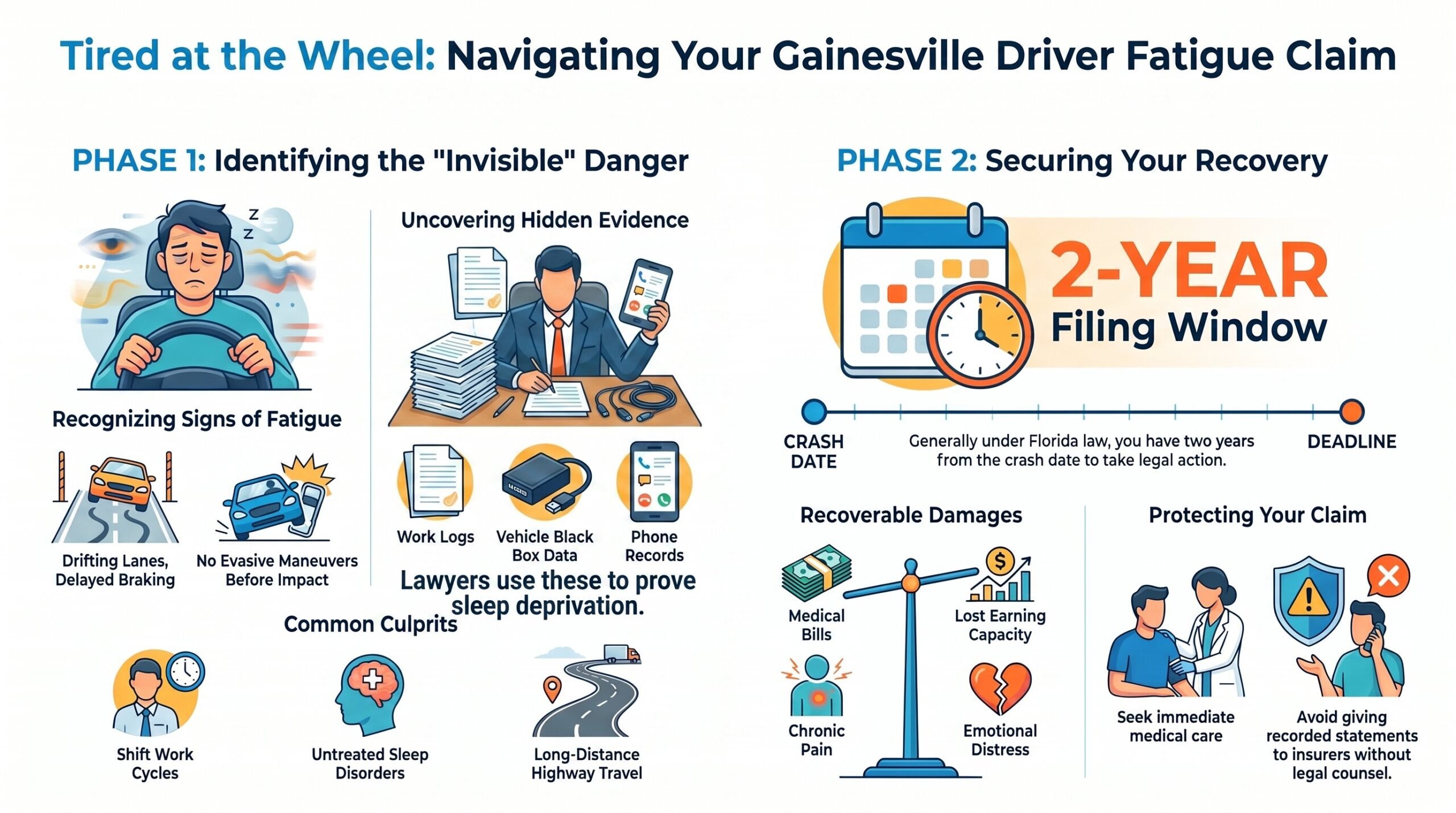
Our Gainesville Car Accident Lawyer team reviews police reports, medical records, work logs, vehicle data, witness statements, and surveillance footage to identify signs of fatigue, such as drifting, delayed braking, or missed signals.
We handle insurer communications, document medical costs, lost income, pain, and future needs, and identify every liable party.
Below, we explain how these claims are built.
Main Takeaways
- A Gainesville driver fatigue lawyer can investigate whether sleep deprivation, shift work, or long driving hours caused the crash.
- Key evidence may include police reports, witness statements, vehicle data, phone records, work logs, and medical records.
- Fatigue signs can include drifting lanes, delayed braking, missed lights, inconsistent statements, or admissions of being awake too long.
- Compensation may cover medical bills, lost income, pain, emotional distress, and future care needs.
- Avoid guessing about fault or minimizing injuries when speaking with insurers after a fatigue-related car accident.


How We Can Help With Your Gainesville Driver Fatigue Car Accident Injury Claim
When driver fatigue causes a crash, we help you build a claim that identifies the cause of the collision, documents your losses, and holds the negligent party accountable. We listen carefully, because your recovery matters, and your case may also protect others on Gainesville roads.
We gather crash reports, witness statements, medical records, and available video. When appropriate, we review Commercial Logs, delivery schedules, phone data, and employer policies to show how fatigue developed. In cases involving Night Crashes or a Multi-Vehicle collision, we work to separate each driver’s conduct and preserve evidence before it disappears.
We also coordinate with medical providers to connect your injuries to the wreck, including evaluations that may involve a Sleep Study when fatigue-related health issues are relevant. Our goal is to present a clear claim for treatment costs, lost income, pain, and future needs, while guiding you through each step with purpose and care.
OUR CONSULTATIONSARE FREE
START YOUR FREE CASE REVIEW

Understanding Gainesville Driver Fatigue Car Accident Injury Cases
Because fatigue can impair judgment, reaction time, and awareness as severely as alcohol or drugs, Gainesville driver fatigue car accident injury cases often require a careful review of what happened before the crash. We look beyond the collision report to understand whether a tired driver failed to serve the safety needs of others on the road.
In these cases, Fatigue Evidence may include witness statements, vehicle data, phone records, work schedules, medical records, and behavioral patterns indicating reduced alertness. We also consider whether sleep testing, health history, or prescription information helps explain impairment, when legally available and relevant.
For you, this process matters because fatigue is often invisible after impact. We help connect the physical injuries, financial losses, and emotional strain to the driver’s conduct. By building a clear record, we work to protect your rights and support accountability for preventable harm. Our goal is service through careful advocacy.
Common Causes of Gainesville Driver Fatigue Car Accidents
We often see Gainesville driver fatigue accidents arise when motorists operate vehicles without adequate rest, especially after lack of sleep or demanding shift work schedules. We also recognize that long-distance driving can reduce alertness over time, even when a driver believes they can safely continue. If you’ve been injured in a crash, we can examine whether untreated sleep disorders or other fatigue-related factors contributed to the collision.
Lack Of Sleep
Often, lack of sleep creates the foundation for a Gainesville driver fatigue car accident long before a motorist gets behind the wheel. We understand many people push through exhaustion because others depend on them, but that choice can endanger everyone nearby. Sleep deprivation slows reaction time, weakens attention, and reduces judgment, making routine traffic decisions unsafe.
When a tired driver drifts, misses a red light, or fails to brake, the resulting driving impairment can mirror the danger of intoxication. We encourage you to recognize fatigue as a serious safety risk, not a minor inconvenience. If someone’s lack of rest caused your crash, we can help evaluate what happened, identify responsible conduct, and pursue accountability with care, purpose, and respect for your recovery and service to others.
Shift Work Schedules
While shift work keeps many essential services running, irregular hours can leave Gainesville drivers dangerously fatigued on the road. We often see nurses, first responders, hospitality workers, and warehouse employees drive after overnight or rotating shifts, when their bodies expect sleep. Circadian rhythm disruption reduces alertness, slows reaction time, and can impair judgment much like alcohol. If you serve others through demanding schedules, you still deserve protection from preventable crashes caused by exhaustion.
Employers and drivers must take fatigue seriously. Rest break compliance, adequate staffing, and realistic shift planning can reduce risk before a tired worker gets behind the wheel. When a fatigued driver causes a collision, we examine schedules, time records, and rest practices to determine whether negligence contributed to your injuries, losses, and recovery needs.
Long Distance Driving
When drivers spend hours traveling to or through Gainesville, fatigue can build slowly and impair them before they recognize the danger. We often see long trips become hazardous when drivers press on to meet obligations, care for family, or complete work duties without adequate rest. Extended highway driving reduces alertness, slows reaction time, and makes routine decisions less reliable.
Route planning mistakes, such as underestimating travel time or failing to schedule breaks, can leave a driver exhausted near busy intersections or unfamiliar exits. Distraction during driving can also compound fatigue, especially when a tired driver checks directions, messages, or navigation alerts. We encourage you to treat rest as part of responsible service to others, because arriving safely protects everyone sharing the road in Gainesville.
Untreated Sleep Disorders
Because untreated sleep disorders can deprive drivers of restorative rest, they’re a serious and frequently overlooked cause of fatigue-related crashes in Gainesville. We often see how sleep apnea, REM impairment, narcolepsy symptoms, and daytime microsleeps can reduce alertness long before a driver recognizes danger. When breathing interruptions, fragmented sleep, or sudden sleep attacks go unaddressed, reaction time declines, judgment weakens, and a vehicle can drift or strike others without warning.
We encourage you to view these conditions as public safety concerns, not private inconveniences. Seeking diagnosis and treatment protects your health and helps safeguard passengers, pedestrians, cyclists, and other motorists. If a crash occurs, we examine medical history, evidence of fatigue, and driver conduct to determine whether an untreated disorder contributed to preventable harm to your family.


Legal Rights of Gainesville Driver Fatigue Car Accident Injury Victims
After a fatigue-related crash in Gainesville, injured victims have the right to pursue compensation from any party whose careless conduct caused or contributed to the collision. We help you protect those rights by identifying responsible parties, preserving evidence, and presenting a clear claim.
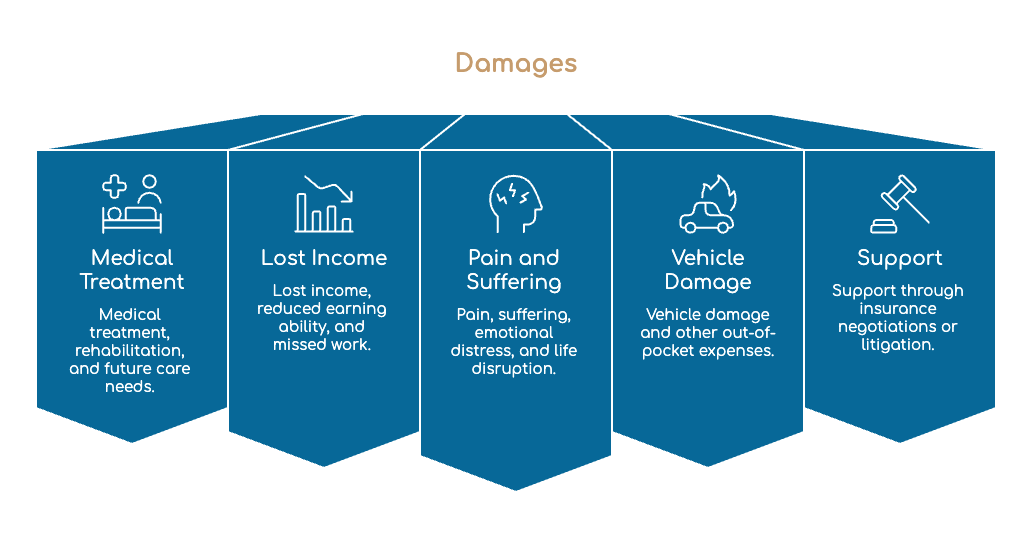
Your rights may include seeking payment for:
- Medical treatment, rehabilitation, and future care needs
- Lost income, reduced earning ability, and missed work
- Pain, suffering, emotional distress, and life disruption
- Vehicle damage and other out-of-pocket expenses
- Support through insurance negotiations or litigation
Florida’s Comparative Negligence rules may affect recovery if an insurer claims you share fault. We work to challenge unfair blame and keep the focus on the harm you’ve suffered. Strong Damages Documentation, including medical records, wage information, photos, and daily impact notes, helps us serve your needs accurately and purposefully. You shouldn’t face this process alone.
Why Do Gainesville Driver Fatigue Car Accident Injuries Happen?
Understanding why fatigue-related crashes happen helps us build stronger claims and identify every source of responsibility. In Gainesville, these injuries often arise when drivers stay behind the wheel despite long shifts, poor sleep, untreated medical conditions, or demanding schedules. Fatigue slows reaction time, weakens judgment, and can cause brief sleep episodes that leave no time to brake or guide.
We also examine whether employers, rideshare companies, trucking operations, or other parties encouraged unsafe driving hours or failed to monitor known risks. The Impact of distraction-related conduct can make fatigue even more dangerous, especially when a tired driver uses a phone, adjusts navigation, or loses focus near pedestrians, cyclists, or other vehicles.
Insurers may raise contributory negligence defenses to shift blame onto you or reduce accountability. We look closely at the facts because understanding the cause of fatigue helps us protect injured people and serve the community with care.
What Should You Do After a Gainesville Driver Fatigue Car Accident Injury?
After a Gainesville driver fatigue car accident, we recommend that you act quickly to protect your health and your injury claim. You should seek medical care, report the crash, and preserve critical evidence before details become harder to prove. We’ll explain how each step can help you document the collision, establish fault, and support your right to compensation.
Seek Medical Care
Even if you believe your injuries are minor, you should seek medical care as soon as possible following a Gainesville driver fatigue car accident. Even if you understand you may want to return to work, family, or service responsibilities, prompt evaluation protects your health and supports any future claim. Some injuries, including concussions, internal trauma, and soft tissue damage, may not appear immediately.
Recognizing warning signs, such as dizziness, confusion, worsening pain, numbness, or unusual fatigue, helps you respond before conditions progress. We should pursue medical advice, attend recommended appointments, and avoid minimizing symptoms. Documenting symptom severity in a daily record can also show how the crash affects your mobility, sleep, caregiving duties, and your ability to serve others consistently and responsibly over time.
Report The Crash
At the scene, we should report the Gainesville driver fatigue car accident to law enforcement as soon as it’s safe to do so. A prompt report helps protect everyone involved, including injured people, passengers, and other motorists who may need assistance. When officers arrive, we should give clear, accurate facts about what happened and avoid guessing about fatigue, speed, or fault.
We can also ask how to obtain the crash report police prepare, since this record may support an injury claim later. While waiting, we should exchange insurance details with the other driver, including names, policy information, and contact information. To document crash information responsibly, we can note the officer’s name and report number. These steps help preserve evidence without delaying medical care or emergency response.
Preserve Key Evidence
Once we’ve addressed immediate safety and reporting duties, we should preserve essential evidence before it disappears or changes. Take photographs of vehicle positions, skid marks, roadway lighting, traffic signals, debris, and visible injuries. If you can do so safely, record witness names, phone numbers, and brief statements about what they observed. We should also keep damaged property, medical records, repair estimates, and any dashcam or phone footage.
Driver fatigue claims often depend on details that fade quickly, including schedules, rest breaks, and electronic data. An independent accident investigation can help secure these facts and protect the people we serve. When filing insurance documentation, we should remain accurate, consistent, and cautious. Strong evidence supports accountability, helps establish negligence, and preserves your ability to pursue fair compensation.
Critical Evidence in a Gainesville Driver Fatigue Car Accident Injury Case
We use essential evidence to show how driver fatigue contributed to your Gainesville car accident, and we work to preserve it before it’s lost or altered. Vital proof may come from records, technology, people at the scene, and the physical conditions surrounding the crash. Important evidence can include:
- Driver work logs
- Vehicle data records
- Witness testimony
- Crash scene photographs
- Skid marks, debris patterns, and roadway conditions
Driver Work Logs
When driver fatigue causes a crash, work logs often provide the clearest record of whether the driver had been on the road too long, skipped required rest, or worked under an unsafe schedule. We review these records to identify patterns that may show pressure, neglect, or poor oversight. Logs can reveal start times, breaks, delivery demands, and off-duty periods that matter when we assess responsibility.
For those committed to serving others safely, Driver wellness and fatigue awareness aren’t optional principles; they’re critical duties. If entries appear incomplete, altered, or inconsistent, we investigate who created them, who reviewed them, and whether company practices encouraged unsafe driving. By preserving and analyzing work logs early, we help protect your claim and pursue accountability with care and purpose.
Vehicle Data Records
In a fatigue-related crash, vehicle data records can reveal what the driver did in the seconds and minutes leading up to impact. We examine electronic control modules, event data recorders, GPS systems, and fleet management platforms to identify speed, braking, alignment, throttle use, and hours of movement. These records help us compare physical evidence with driver logs, revealing gaps, inconsistencies, or patterns that suggest exhaustion.
When preserved quickly, this data can support accurate accident timelines and show whether a driver failed to react, drifted out of their lane, or continued driving beyond safe limits. We act promptly because vehicle data may be overwritten, lost, or withheld. By securing and analyzing these records, we help you pursue accountability and serve the broader goal of safer roads for everyone. In Gainesville cases, this evidence often proves decisive.
Witness Testimony
Vehicle data can show how a crash unfolded, but witness testimony often explains what the numbers can’t capture. We look for people who observed drifting, delayed braking, closed eyes, yawning, or unsafe lane changes before impact. Their accounts can help us show that fatigue affected judgment, reaction time, and control.
We also assess Eyewitness credibility with care. We consider where each person stood, what they could see, how soon they reported the event, and whether their account remained consistent. When testimony conflicts, we compare statements with timing records, phone activity, and expert reconstruction to build a reliable picture.
By treating witnesses respectfully and asking clear questions, we help preserve important details. Your case benefits when human observations support the broader evidence of driver fatigue.
Crash Scene Evidence
Crash scene evidence helps us connect the physical aftermath of a collision to signs of driver fatigue. We examine skid marks, lane departures, impact points, debris fields, and vehicle resting positions to understand whether the driver reacted late or failed to react at all. These details can indicate a pattern consistent with drowsiness, especially when no evasive action is observed.
We also evaluate claims of Brake Failure, because mechanical issues may be raised to distract from fatigue-related negligence. When available, Surveillance Footage from nearby businesses, traffic cameras, or residences can confirm drifting, delayed braking, or sudden roadway departure. By preserving and reviewing this evidence quickly, we help protect your claim and serve your recovery with careful, disciplined advocacy after a Gainesville fatigue-related crash.
Long-Term Effects of Gainesville Driver Fatigue Car Accident Injuries
We recognize that driver fatigue crashes can leave you with lasting injuries that extend far beyond the initial medical treatment. We evaluate chronic pain complications, cognitive and emotional effects, and ongoing medical needs to show the full impact on your life. By addressing these long-term consequences, we help you pursue compensation that reflects both current losses and future care needs.
Chronic Pain Complications
After a fatigue-related collision, chronic pain can become one of the most disruptive long-term complications a Gainesville injury victim faces. We often see neck, back, shoulder, and joint pain persist long after visible injuries improve. When pain limits your movement, work duties, family care, or community service, it can affect nearly every part of daily life.
We help you document how ongoing pain began, why it continues, and what treatment may be necessary. Medical records, therapy notes, imaging, and expert opinions can show the true impact of these injuries. Fatigue-related crashes also raise Safety Responsibility concerns, especially when preventable exhaustion caused lasting harm. Long-term sleep disruption may worsen pain cycles, making consistent care and clear legal documentation essential to protecting your recovery.
Cognitive And Emotional Effects
When a fatigued driver causes a serious collision, the resulting injuries can affect far more than physical strength or mobility. We often see survivors struggle with concentration, memory, decision-making, anxiety, irritability, and sleep disruption, especially when their daily role involves caring for family, coworkers, or community members. These changes can make service to others feel harder, even when your commitment remains strong.
We encourage careful Post Crash Documentation of mood changes, missed responsibilities, confusion, and communication difficulties, because these details help show how the crash altered your life. You shouldn’t have to minimize emotional harm to appear resilient. We can help you identify Emotional Support Resources, preserve relevant records, and explain these effects within a legal claim that respects both your recovery and your responsibilities.
Ongoing Medical Needs
Physical and cognitive harm often creates continuing medical needs that extend well beyond the first emergency room visit or initial follow-up appointment. We help you recognize how therapy, subspecialist visits, medication management, and Sleep apnea treatment may shape recovery after a fatigue-related crash. When injuries affect work, caregiving, or community service, consistent care protects both health and dignity.
We encourage careful medical documentation because records show symptoms, treatment needs, restrictions, and future costs.Those records also support a liability investigation by connecting the collision to lasting harm. At the same time, evidence preservation matters, including vehicle data, driver logs, witness accounts, and medical findings. By addressing ongoing care early, we can help you pursue resources that support healing and continued service to others.
Proving Liability in Gainesville Driver Fatigue Car Accident Injury Cases
Often, proving liability in a Gainesville driver fatigue car accident injury case requires more than showing that a crash occurred; we must connect the fatigued driver’s conduct to the collision and the resulting harm. We build that connection through careful investigation, guided by legal liability standards that require proof of duty, breach, causation, and damages.
We look for Sleep deprivation indicators, such as lane drifting, delayed braking, inconsistent statements, or admissions of long hours awake. When commercial drivers are involved, driver log analysis can reveal hours-of-service violations, skipped rest periods, or records that conflict with GPS data. A vehicle blackbox review may also show speed, braking, roadway control input, and impact timing, helping us clarify how fatigue affected the driver’s decisions.
Our role is to gather these facts with care, so your claim reflects the truth and supports accountability. By clearly proving fault, we help protect injured people and promote safer conduct.
Dealing With Insurance Companies After a Gainesville Driver Fatigue Car Accident Injury
After a fatigue-related crash, insurance companies may move quickly to protect their financial interests, so we approach every communication with care and strategy. We help you avoid statements that minimize your injuries, shift blame, or weaken the value of your claim. Adjusters may ask about pain severity before your condition fully develops, so we encourage accurate, measured responses based on current symptoms and medical guidance.
We also organize Medical documentation, repair records, and witness statements to present a clear account of how the fatigued driver’s conduct harmed you. When insurers request recorded statements or broad medical authorizations, we review those requests before you respond.
Our role is to protect your dignity while pursuing fair treatment, especially when you’re focused on recovery and serving your family, work, and community. We communicate firmly, document every exchange, and challenge low evaluations that overlook the real impact of your injuries. This safeguards your rights from the beginning.
What to Expect During a Gainesville Driver Fatigue Car Accident Injury Claim Process
We help you understand each stage of a Gainesville driver fatigue car accident injury claim, from the initial case evaluation to the evidence collection process. We’ll assess liability, document your damages, and manage insurance claim negotiations with a clear strategy. If the insurer won’t offer fair compensation, we prepare your case for settlement discussions or trial.
Initial Case Evaluation
When a fatigued driver causes a crash, the initial case evaluation gives us a structured way to understand what happened, identify available evidence, and determine whether negligence caused your injuries. We listen to your account, review the circumstances of the crash, and identify urgent needs affecting your health, work, and family responsibilities.
Medical documentation helps us connect your injuries to the collision and evaluate treatment, limitations, and future care concerns. We also address evidence preservation, including available reports, photographs, witness information, and vehicle-related records, without delaying necessary medical attention. During this step, we explain potential claims, deadlines, insurance issues, and practical next steps. Our goal is to help you make informed decisions, protect your rights, and pursue accountability with care.
Evidence Collection Process
A clear evidence collection process builds on the initial case evaluation by turning early facts into proof that supports your claim. We gather police reports, crash-scene photographs, witness statements, medical records, and vehicle-damage documentation. We also look for work schedules, delivery logs, phone records, and video footage that may show fatigue-related behavior prior to the impact.
When appropriate, we consult experts who understand Sleep science and can explain how reduced rest affects reaction time, judgment, and lane control. We compare that information with applicable legal standards, so your claim rests on reliable evidence, not assumptions. As we support your recovery, we carefully organize each record, preserve crucial materials, and identify gaps that require follow-up. This disciplined process helps us clearly present the cause of the crash.
Insurance Claim Negotiations
After the evidence is organized, insurance claim negotiations usually begin with a detailed demand that explains liability, injuries, treatment, lost income, and the role fatigue played in causing the crash. We present your claim with a documentation strategy that connects medical records, wage information, witness accounts, and crash evidence to the harm you suffered. Insurers often review the demand, question causation, request more records, or offer less than the claim warrants.
We anticipate these Negotiation tactics and respond with focused facts, not assumptions. Throughout this stage, we keep you informed, protect your rights, and help you make decisions that reflect your needs and responsibilities. Our goal is to pursue fair compensation while allowing you to focus on recovery and those who depend on you.
Settlement Or Trial
Settlement or trial becomes the next focus if negotiations don’t produce a fair resolution. We assess your damages, liability facts, and insurer conduct to decide whether continued settlement efforts serve your best interests. Strong medical records, witness accounts, and fatigue-related proof can create Negotiation leverage, especially when they show preventable danger and real harm.
If the insurer remains unreasonable, we prepare a trial strategy that clearly and respectfully presents your story. We address evidence challenges, including missing driving logs, disputed crash data, or attempts to minimize fatigue. Courtroom preparation includes organizing exhibits, preparing testimony, and accurately explaining losses. We guide you through each step, so you can pursue accountability while staying focused on recovery, family, and serving the people who depend on you daily.
Compensation for Gainesville Driver Fatigue Car Accident Injury Damages
When driver fatigue causes a Gainesville car accident, we pursue compensation that reflects the full scope of the injured person’s losses, not just the most obvious bills. We begin by gathering Medical documentation, crash records, witness accounts, and employment information, then we connect each loss to the fatigued driver’s conduct. This careful approach helps protect your claim from undervaluation.
We also review treatment costs, future care needs, rehabilitation, medication, assistive devices, and transportation related to medical care. When injuries interrupt your ability to work, support your family, or serve your community, we present evidence showing how the crash changed your daily responsibilities and long-term plans. Insurers may focus on minimizing payment, but we focus on accuracy, accountability, and your recovery. By building a detailed claim, we help you seek compensation that honors what you have endured and supports the stability you need moving forward with confidence.
Economic vs Non-Economic Damages in Gainesville Driver Fatigue Car Accident Cases
We separate your Gainesville driver fatigue accident damages into economic categories, such as medical bills, lost income, and vehicle repair costs, and non-economic losses, including pain, suffering, and reduced quality of life. We evaluate how each loss affects your claim, because insurance companies often dispute both the cause and value of these damages. We build a case with records, expert opinions, and clear evidence, so we can present the full value of what you’ve lost.
Economic Damage Categories
Calculate every financial loss tied to the crash, because economic damages often form the measurable foundation of a Gainesville driver fatigue car accident claim. We help you identify costs that can be proven through records, invoices, and reliable testimony. Medical bills documentation should include emergency care, hospitalization, diagnostic testing, therapy, prescriptions, follow-up visits, and future treatment estimates.
We also review transportation costs, home health assistance, medical equipment, and necessary modifications that support recovery and service to your household. Wage loss proof may include pay stubs, tax returns, employer statements, schedules, and records showing missed work or reduced earning capacity. We also examine property damage, rental vehicle expenses, and out-of-pocket costs. By organizing these categories clearly, we strengthen your claim and pursue full financial accountability.
Non-Economic Losses
Financial records tell only part of the story after a Gainesville driver fatigue car accident, because many serious losses don’t appear on invoices or pay stubs. We recognize that pain, emotional distress, loss of enjoyment, disfigurement, and strain on family relationships can change how you live and serve others each day. These non-economic losses reflect the human impact of an injury, not a simple transaction.
In every Damages calculation, we consider how fatigue-related negligence disrupted your dignity, independence, routines, and ability to participate in meaningful work, caregiving, worship, or community service. Jury considerations may include the severity of injuries, length of recovery, permanence of limitations, and credibility of the claimed suffering. We help you frame these losses with care, respect, and disciplined legal judgment.
Proving Damage Value
Proving the value of damages requires more than listing bills or describing pain, because economic and non-economic losses call for different forms of evidence. We help you connect each loss to the fatigued driver’s conduct and meet applicable evidentiary standards. For economic damages, we gather medical invoices, wage records, repair estimates, expert opinions, and future care projections. This damages calculation must show what you’ve already lost and what you’ll likely need going forward.
For non-economic damages, we present treatment notes, testimony, activity limitations, family observations, and credible accounts of how the crash changed your daily life. We understand these losses affect your ability to serve, work, worship, and care for others. By carefully organizing the evidence, we pursue a fair valuation that reflects the full impact of your injuries.
When a Gainesville Driver Fatigue Car Accident Injury Case Goes to Trial vs Settlement
Evaluating whether a Gainesville driver fatigue car accident injury case should settle or go to trial requires a careful review of liability, damages, insurance coverage, and the strength of the available evidence. We assess whether the insurer recognizes the harm you’ve suffered, including Independent damages supported by medical records, employment documentation, and credible witness accounts. When available policies provide enough coverage and the defense accepts responsibility, settlement can spare you delay while still securing meaningful relief.
Trial may become necessary when liability disputes remain, the insurer undervalues your injuries, or the other side refuses to account for long-term care needs. We prepare every case as though a jury may hear it, because that approach strengthens negotiations and protects your position. Our role is to help you serve your family, your recovery, and your future by choosing the path that offers the clearest opportunity for justice.
Florida Laws That May Affect Your Gainesville Driver Fatigue Car Accident Case
Because Florida law can shape both fault and compensation, we review every Gainesville driver fatigue car accident case under the rules that govern negligence, insurance claims, and lawsuit deadlines. We help you understand how these rules affect accountability when a tired driver harms you.
- Comparative fault may reduce recovery if insurers claim you contributed to the crash.
- Personal injury protection coverage may apply first, but serious injuries can support claims beyond the limits of no-fault benefits.
- Evidence laws matter, including phone records, work schedules, medical records, and sleep apnea documentation.
- Employer liability may apply when a fatigued employee causes a crash while serving work duties.
- Commercial driving regulations may reveal unsafe hours, poor supervision, or ignored rest requirements.
We approach these laws with care because your case may support medical needs, family stability, and future service to others. By identifying each legal issue early, we build a focused claim that protects your rights.
The Statute of Limitations for Gainesville Driver Fatigue Car Accident Injury Cases
When a fatigued driver causes a serious crash, Florida’s statute of limitations sets a strict deadline for taking legal action. We must treat that deadline as critical, because missing it can prevent you from seeking compensation through the courts. In most Florida personal injury cases, the filing period is 2 years from the date of the crash, though limited exceptions may apply.
We encourage you to act with purpose as you focus on recovery and support for your family. Early action helps protect records, witness accounts, vehicle data, and medical documentation that may show how fatigue contributed to the collision. Practical Evidence Preservation Tips include saving photographs, keeping damaged property, requesting crash reports, and maintaining a written record of symptoms and treatment.
You should also track Insurance Claim Deadlines, since policy notice requirements may arrive sooner than the lawsuit deadline. By respecting each timeline, we help preserve your opportunity to pursue accountability and protect your future rights.
How a Gainesville Driver Fatigue Car Accident Injury Lawyer Can Help You
After a fatigue-related crash, we can help you identify the cause of the collision, preserve essential evidence, and pursue the compensation you may be entitled to recover. We examine the facts with care, applying sleep deprivation science when it helps explain delayed reaction time, lane drift, or poor judgment.
Our role is to serve your recovery while building a clear, evidence-based claim.
- We investigate driver schedules, rest breaks, and work demands.
- We review police reports, medical records, and witness statements.
- We identify trucking safety violations, including hours-of-service issues.
- We work with experts who can explain fatigue and crash mechanics.
- We handle insurer communications so you can focus on recovery.
We also calculate losses tied to medical care, lost income, reduced capacity, and daily limitations. By organizing the evidence and presenting your claim firmly, we help protect your rights and support your path forward after a serious Gainesville collision.
When to Contact a Gainesville Driver Fatigue Car Accident Injury Lawyer
Acting quickly can strengthen a fatigue-related crash claim, especially while evidence remains available and witnesses still remember what happened. We should contact a Gainesville driver fatigue car accident injury lawyer as soon as medical needs are stable, even if you’re still unsure about fault or damages. Early guidance helps preserve crash reports, vehicle data, work schedules, phone records, and statements that may show a driver was too tired to operate safely.
We also recommend an urgent consultation if an insurer contacts you, asks for a recorded statement, questions your injuries, or offers a quick settlement. You have the Right to counsel before answering questions that could affect your claim. If you’re caring for family, returning to work, or serving others in your community, prompt legal support can reduce uncertainty and protect your time. Reaching out early doesn’t mean filing a lawsuit immediately; it means understanding your options before important deadlines or evidence disappears.
Why You Need an Experienced Gainesville Driver Fatigue Car Accident Injury Lawyer
Because fatigue-related crashes often leave subtle evidence, you need an experienced Gainesville driver fatigue car accident injury lawyer who knows how to identify, preserve, and use that proof effectively. We help connect driver behavior, road conditions, work schedules, and injury patterns to build a clear account of what happened. When you are focused on recovery, caring for family, or continuing to serve others, we shoulder the legal burdens with discipline and purpose.
We examine Medical evidence, phone records, vehicle data, witness statements, and sleep studies to determine whether they show exhaustion, impairment, or dangerous driving decisions. We also anticipate liability defenses, such as claims that you caused the crash or that fatigue cannot be proven. By addressing these arguments early, we strengthen your position and protect the value of your claim. Our experience helps ensure that insurers and opposing parties take your injuries, losses, and future needs seriously from the start.
How to Choose the Right Gainesville Driver Fatigue Car Accident Injury Lawyer for Your Case
When you’re choosing a Gainesville driver fatigue car accident injury lawyer, look for a legal team with specific experience handling crashes involving exhaustion, impaired alertness, and delayed reaction time. We should ask how the lawyer investigates sleep deprivation, work schedules, medication use, and commercial driving records, because these facts can reveal why the collision occurred.
We also recommend evaluating responsiveness and organization. Strong Client communication tips include asking how often you’ll receive updates, who will answer your questions, and how quickly the team returns calls or emails. Clear communication helps you make informed decisions while focusing on your recovery and responsibilities to others.
You should also discuss the basics of evidence protection early. We look for lawyers who act promptly to preserve vehicle data, surveillance footage, phone records, witness statements, and medical documentation. The right lawyer should explain your options, respect your goals, and pursue accountability with steady, service-minded professionalism from the start.
About The Law Offices of Anidjar & Levine
At The Law Offices of Anidjar & Levine, we represent injured people with a focus on responsive service, thorough case preparation, and steady legal guidance.
We recognize that a fatigue-related crash can disrupt your health, work, and ability to care for others.
Our team works to reduce that burden by handling insurers, gathering evidence, and keeping you informed.
We serve clients in Gainesville and throughout Florida with attention to detail and respect for your goals.
Whether your case involves a passenger vehicle, commercial driver, or related Truck Accident Claims, we evaluate liability, damages, and available insurance with care.
During your Attorney Consultation, we’ll listen to your concerns, explain your options, and outline practical next steps.
You can expect clear communication, organized advocacy, and a team committed to protecting your interests.
We pursue accountability so you can focus on restoration, family, and the people who depend on you daily.
Frequently Asked Questions
Can Drowsy Driving Charges Affect Immigration or Professional Licensing?
Yes, drowsy driving charges can affect immigration status or professional licensing, especially when Criminal Penalties involve reckless conduct, injury, or repeated offenses. We advise you to address Medical Fitness concerns, comply with Employer Policies, and document corrective steps that show responsibility. Licensing boards may review safety risks, while immigration officials may assess moral character. Insurance Consequences can also create employment barriers, particularly for caregivers, drivers, and public service professionals.
Do Fatigue Crashes Impact Rideshare Driver Accident Claims Differently?
Yes, fatigue crashes can affect rideshare claims differently because we must examine app status, trip phase, and driver conduct. Comparative fault may reduce recovery if evidence shows the injured person contributed to the crash, but fatigue often points to negligent driving. We also review insurance coverage, since rideshare policies change when the driver is offline, waiting, or transporting a passenger. You merit a careful review of your claim that protects service-focused livelihoods.
Can Vehicle Technology Detect or Prevent Driver Fatigue?
Yes, vehicle technology can help detect and prevent driver fatigue, but we shouldn’t treat it as foolproof. We see fatigue monitoring systems track controlling, lane position, eye movement, and reaction patterns, then alert you before risk escalates. Autonomous safety features, including lane assistance and emergency braking, may reduce harm when attention fades. Still, we must encourage rest, safe scheduling, and responsible driving, because technology supports care; it doesn’t replace it.
Are Employers Responsible for Workers Driving While Exhausted?
Yes, employers can be responsible when workers drive while exhausted, especially if work demands, scheduling, or supervision created unsafe fatigue. We assess whether the employer met its duty of care, including reasonable hours, rest policies, and safe dispatch practices. Employer liability may apply when a crash occurs during job duties. If you’re serving injured people, we help identify records, policies, and decisions that show preventable fatigue caused harm.
Can Passengers Sue a Fatigued Driver They Rode With?
Yes, passengers can sue a fatigued driver they rode with when the driver’s exhaustion caused a crash and injuries. We help you assess passenger safety duties, proving negligence, and applicable legal standards. A driver must act reasonably, including by stopping, resting, or refusing to drive when fatigued. If evidence shows warning signs, long hours, or ignored risks, we can pursue compensation while protecting accountability and service to others.
—————————
If driver fatigue caused your Gainesville car accident, we’re ready to protect your rights and pursue the compensation you deserve.
Our team can investigate the crash, gather evidence, handle insurers, and build a claim that reflects your injuries and losses.
You shouldn’t manage this process alone while recovering.
Contact Gainesville Car Accident Lawyer at The Law Offices of Anidjar and Levine today for a free consultation, and let us provide the focused legal guidance your case requires.