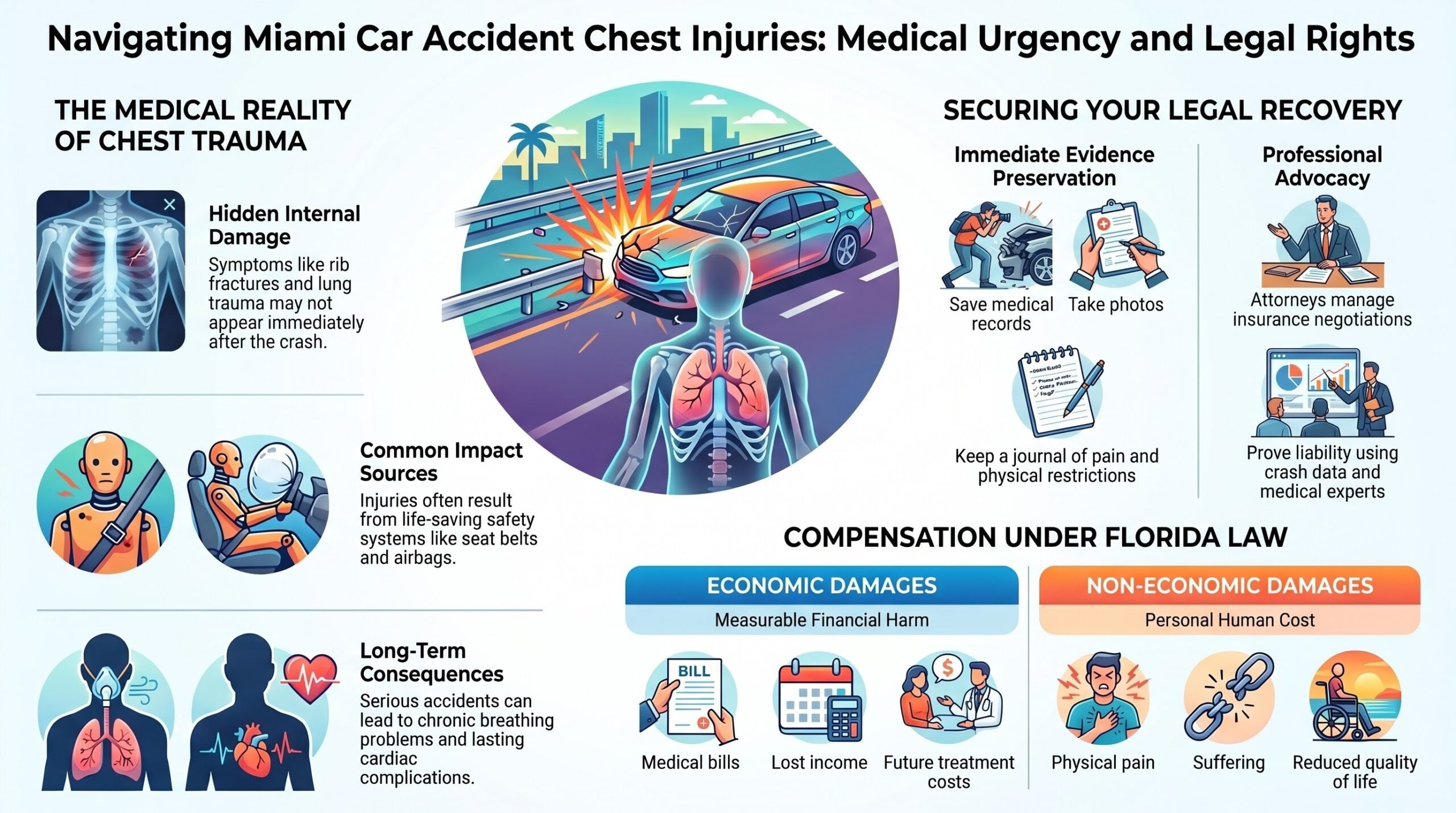
The Law Offices of Anidjar and Levine help protect an injured person’s health, evidence, and right to pursue compensation after a serious crash. Prompt medical evaluation is crucial because rib fractures, lung trauma, and cardiac complications may not appear immediately.
Legal counsel preserves records, manages insurer contact, documents pain and functional limits, and identifies liable parties. Compensation may include medical costs, lost income, and pain-related losses.
The sections below explain the process and available options.
For more information, visit Miami Car Accident Lawyer.
Main Takeaways
- Seek immediate medical evaluation after a Miami crash chest injury to detect hidden internal damage and create records linking the injury to the accident.
- Chest injuries can include contusions, rib fractures, lung trauma, breathing problems, cardiac complications, and long-term pain that limit daily activities and work.
- Preserve evidence by saving medical records, photos, damaged clothing, receipts, imaging reports, and a journal of pain, breathing issues, and restrictions.
- A Miami chest injury lawyer can investigate fault using police reports, witnesses, crash data, medical evidence, and expert analysis of impact forces.
- An attorney handles insurers, values medical costs and lost income, pursues fair settlement or litigation, and helps clients focus on recovery.
How We Can Help With Your Miami Chest Injury Car Accident Injury Claim
Steer through the aftermath of a serious collision with a clear legal strategy, because a chest injury claim often involves complex medical evidence, disputed liability, and significant financial consequences. A dedicated legal team provides Immediate support by organizing records, preserving vital proof, and managing insurer communications so the injured person can focus on recovery and family responsibilities.
Effective representation also clarifies the Claim timeline, sets realistic expectations, and keeps every required step moving forward without avoidable delay. Counsel evaluates losses, consults appropriate professionals, and prepares a persuasive demand that reflects present burdens and future needs. When settlement efforts do not produce a fair result, the firm advances the matter with disciplined advocacy and thorough preparation.
Throughout the process, service remains central. The attorney’s role is to protect the client’s interests, reduce administrative burden, and pursue accountability in a manner that respects health, dignity, and the broader obligations many clients have toward those who depend on them.
Understanding Miami Chest Injury Car Accident Injury Cases


Chest-injury claims arising from Miami car accidents often require a careful review of how the collision occurred, what medical harm was sustained, and whether the available evidence clearly connects the crash to the diagnosed condition. These cases frequently depend on prompt medical documentation, imaging results, and consistent symptom reporting from the earliest stages of care.
OUR CONSULTATIONSARE FREE
START YOUR FREE CASE REVIEW

A thorough evaluation may involve a Chest contusion, Rib fractures, internal bruising, or more complicated trauma affecting breathing, mobility, and daily function. In many cases, legal and medical professionals must distinguish accident-related injuries from preexisting conditions or subsequent complications. Records from emergency treatment, follow-up visits, and specialist evaluations can help clarify severity, prognosis, and expected recovery needs.
For those committed to helping injured people receive fair support, understanding these elements of the case is vital. Strong claims are often built through organized evidence, credible medical opinions, and a careful presentation of how the injury has affected work, family responsibilities, and overall quality of life.
Common Causes of Miami Chest Injury Car Accident


Several crash-related forces commonly contribute to chest injuries in Miami car accidents, often producing serious harm even when a vehicle’s safety systems function as intended. Seat belt impact, wheel trauma, and airbag deployment injuries are frequent sources of chest damage, particularly when the force of impact is concentrated on the upper body. High-speed collisions further increase the risk, as greater momentum and abrupt deceleration can cause significant injury to the chest and surrounding structures.
Seat Belt Impact
Because seat belts absorb tremendous force in a collision, they can cause more than surface bruising across the chest when a crash occurs at high speed or with sudden deceleration. The lap belt and shoulder restraint are designed to save lives, yet the pressure they apply may still contribute to serious chest injuries in severe crashes.
Medical providers often observe rib fractures, sternum injuries, soft tissue damage, and painful inflammation after seat belt loading. In some cases, the force compresses the chest enough to aggravate breathing problems or mask deeper internal harm. Prompt evaluation helps injured people receive proper care and protects families seeking answers about what occurred. Careful documentation of bruising patterns, pain levels, and diagnostic findings can also clarify how the collision affected the body and support an informed recovery plan.
Steering Wheel Trauma
A force from a car accident can drive the driver’s chest into the helm with enough pressure to cause significant injury, especially in head-on crashes, sudden stops, or collisions involving airbag malfunction or delayed deployment. Wheel trauma may bruise ribs, fracture the sternum, or injure the heart and lungs through direct compression. The column can also transmit upward force, worsening internal damage when impact mechanics concentrate energy in a small area. Such injuries are often serious even when outward marks appear limited.
Prompt medical evaluation helps protect the injured person and supports timely treatment. In service to affected individuals and families, careful documentation of symptoms, imaging results, and collision details may clarify how chest trauma developed and why ongoing care, rehabilitation, and legal support may be necessary after a serious crash.
Airbag Deployment Injuries
Airbags are designed to reduce harm, yet their rapid inflation can itself contribute to chest injuries when deployed at close range or during high-force crashes. The force of the bag may strike the sternum, ribs, or upper torso before the occupant can fully brace, producing pain, inflammation, and post-deployment bruising. In some cases, the impact may aggravate underlying conditions or combine with seat belt pressure to create more serious trauma.
A service-minded legal review often considers whether seat position, defective sensors, or delayed deployment increased the risk of injury. Airbag events may also involve facial lacerations, burns, or respiratory irritation from released chemicals. Careful medical documentation helps injured individuals receive proper treatment and supports efforts to secure resources needed for recovery and ongoing care.
High-Speed Collisions
When a crash occurs at high speed, the forces transmitted through the vehicle often place extreme stress on the chest and upper torso. In these collisions, ribs, lungs, and the sternum may absorb crushing impact from restraints, steering components, or abrupt body movement. The severity often increases because highway dynamics reduce reaction time and magnify momentum at impact.
High-speed crashes also produce substantial vehicle deformation, which can collapse the occupant space and intensify blunt-force trauma. Even when safety systems function properly, the body may still experience violent compression or sudden deceleration. For families seeking to support injured loved ones, understanding this mechanism helps explain why chest injuries can be severe, medically complicated, and slow to heal. Careful legal review may clarify how speed, road conditions, and driver conduct contributed to the harm.
Legal Rights of Miami Chest Injury Car Accident Injury Victims
Clarity about legal rights is vital for Miami chest injury car accident victims, particularly because these claims often involve substantial medical expenses, lost income, and ongoing physical limitations. Florida law may allow recovery for hospital bills, rehabilitation costs, diminished earning capacity, and pain-related losses when another party’s negligence caused the collision.
Victims also retain important protections involving medical privacy and fair treatment by insurers throughout the claims process.
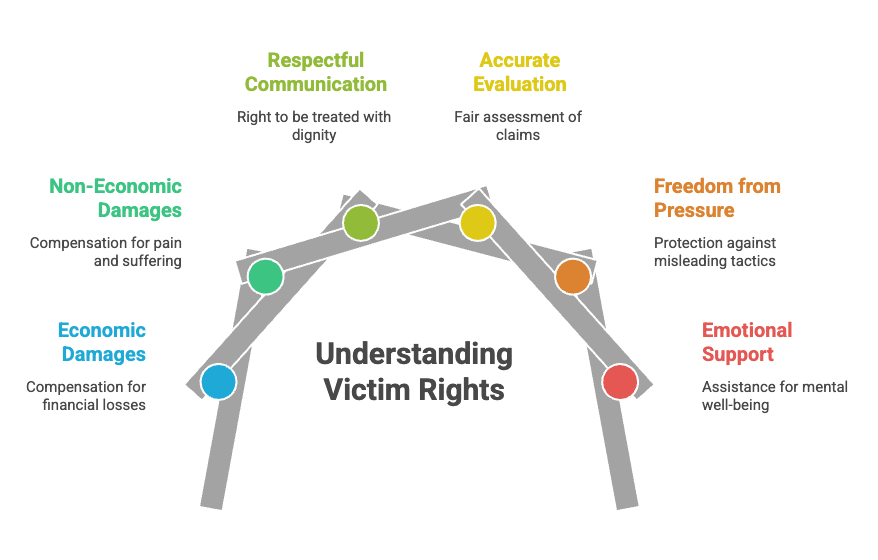
- Victims may pursue compensation for economic and non-economic damages, depending on the severity of the injury and available insurance coverage.
- They have the right to respectful communication, accurate evaluation of their claims, and freedom from misleading settlement pressure.
- They may seek support for emotional recovery when trauma, anxiety, or reduced quality of life follows the physical injury.
These rights help injured individuals and the families who care for them pursue stability, accountability, and access to resources that support recovery. Legal guidance often strengthens that effort and protects long-term interests.
Steps to Take After a Miami Chest Injury Car Accident Injury
After a Miami chest injury car accident, prompt medical evaluation is vital to protect health and establish a clear record of the injury. It is also important to preserve evidence, including medical records, photographs, and any information related to the collision and resulting physical harm. Early contact with a Miami lawyer can help ensure that legal options are identified, pivotal deadlines are met, and the claim is properly prepared.
Seek Immediate Medical Care
Seek immediate medical evaluation, even if symptoms appear minor, because chest injuries from a Miami car accident may involve internal damage that is not immediately obvious. A person may feel stable at first, yet bruising, fractured ribs, lung trauma, or cardiac complications can worsen without warning and place others at risk if help is delayed.
Prompt treatment allows physicians to provide urgent evaluation, control pain, assess breathing, and identify conditions that require hospital care. Emergency responders or nearby clinics can guide the safest next steps, especially when dizziness, shortness of breath, or chest pressure is present. Continued care also matters. Doctors may recommend rest, imaging, medication, and follow-up monitoring to confirm recovery and protect long-term health, enabling injured individuals to return to serving family, work, and community responsibly.
Document Injury Evidence
In the hours and days following a Miami car accident, careful documentation of a chest injury can preserve important evidence regarding both the nature of the harm and its effect on daily life. A person should keep a written record of pain levels, breathing difficulties, changes in bruising, sleep disruption, and limits on work, caregiving, and household tasks. It is also wise to preserve clothing worn during the collision, especially garments showing blood, tears, or seat belt marks. Family members assisting with recovery may help secure digital photos of visible injuries, damaged property, medications, and medical equipment.
Receipts, discharge papers, imaging reports, and follow-up instructions should be organized in one place. Consistent records can support accurate treatment, demonstrate symptom progression, and assist those working to protect the injured person’s well-being.
Contact A Miami Lawyer
A prompt consultation with a Miami lawyer can help an injured person understand legal options, protect vital evidence, and avoid mistakes that may affect a claim. Early legal guidance often supports timely communication with insurers, medical providers, and witnesses, while preserving records related to chest trauma and accident losses.
An attorney may also identify responsible parties, explain Lawyer fees, and evaluate deadlines that govern a case. This support can help injured individuals and families focus on recovery while acting in ways that honor their responsibilities to others affected by the collision. Reliable counsel may further connect clients with Miami resources, including medical experts, rehabilitation providers, and community services. By seeking qualified legal advice soon after the crash, an injured person may strengthen a claim and pursue fair compensation under Florida law.
How a Miami Chest Injury Car Accident Injury Lawyer Can Help You
Handling a chest injury claim after a car accident often requires legal guidance, particularly when liability is disputed or the full extent of the injury is not yet known. A Miami chest injury car accident lawyer helps injured people pursue fair compensation while protecting resources needed for care, stability, and service to family and community after a serious collision.
- An attorney investigates the crash, secures records, interviews witnesses, and works with medical providers to document harm. This may include support for post-trauma counseling and rehab coordination when those services strengthen recovery and clarify damages.
- Legal counsel manages insurers, counters efforts to minimize symptoms, and calculates present losses such as treatment costs, lost income, and necessary household assistance.
- If settlement efforts fail, the lawyer prepares a persuasive claim for litigation, meets court deadlines, and advocates for accountability so the injured person can focus on recuperating and serving others without unnecessary administrative burdens.
Long-Term Effects of Miami Chest Injury Car Accident Injuries
Chest injuries from Miami car accidents can produce lasting consequences that extend well beyond the initial recovery period. Some individuals experience chronic breathing problems, lasting cardiac complications, or ongoing pain limitations that interfere with daily activities and long-term health. These effects often require ongoing medical evaluation, rehabilitation, and careful assessment of how the injury may affect future recovery.
Chronic Breathing Problems
Persisting respiratory difficulties can become one of the most disruptive long-term consequences of a Miami car accident involving chest trauma. Survivors may experience shortness of breath, reduced stamina, painful inhalation, or recurring infections that interfere with work, caregiving, and daily responsibilities.
These problems often arise after rib fractures, lung bruising, or scarring that limits full lung expansion. Medical evaluation may include imaging, pulmonary function testing, and careful monitoring of oxygen levels over time. Pulmonary rehabilitation can improve endurance, while breathing retraining may help improve airflow control and reduce strain during routine activities. Early recognition and consistent treatment can protect quality of life and preserve a person’s ability to continue supporting family, community, and others who depend on steady, compassionate service each day.
Lasting Cardiac Complications
Vulnerability to lasting cardiac complications may follow a Miami car accident when blunt force to the torso disrupts the heart’s structure or rhythm. Even after emergency treatment, some individuals face delayed consequences that affect circulation, stamina, and overall recovery. Contusions, valve damage, or electrical injury may contribute to persistent arrhythmias, reduced pumping efficiency, or episodes of dizziness and fainting.
In more serious cases, cardiac remodeling can develop as injured heart tissue mends improperly, altering chamber size or function over time. Some patients also experience autonomic dysfunction, which can disturb heart rate control and blood pressure regulation during ordinary activity. Because these conditions may progress quietly, careful follow-up serves both the injured person and those supporting care decisions. Prompt evaluation, monitoring, and rehabilitation planning can help protect long-term cardiovascular health.
Ongoing Pain Limitations
For many injured individuals, ongoing pain becomes one of the most disruptive long-term effects of a Miami car accident involving trauma to the torso. Even after fractures mend or internal injuries stabilize, chronic discomfort may persist during breathing, lifting, bending, or prolonged sitting. This lasting pain often interferes with work duties, household responsibilities, and the ability to consistently care for loved ones.
Medical providers may recommend rehabilitation, pain management, and follow-up imaging, yet some individuals continue facing activity restrictions that limit independence and reduce quality of life. Sleep disruption, reduced stamina, and guarded movement patterns can further complicate recovery over time. When persistent symptoms affect daily function, careful documentation and compassionate legal guidance may help injured people pursue resources needed for treatment, support, and a more stable path forward after serious collision-related harm.
Proving Liability in Miami Chest Injury Car Accident Injury Cases
Establishing liability in a Miami chest injury car accident case requires clear evidence that another party failed to use reasonable care and that this failure directly caused the collision and the resulting injuries. This process often begins with police reports, photographs, medical records, and scene documentation. Attorneys may also rely on forensic reconstruction to explain vehicle speed, impact angles, and force transmission to the chest.
Strong claims also depend on witness credibility, as consistent, reliable statements can clarify how the crash occurred. Traffic camera footage, electronic vehicle data, and cell phone records may further show distraction, speeding, or other negligent conduct. In some cases, liability may extend beyond one driver, such as when an employer, vehicle owner, or maintenance provider contributed to unsafe conditions.
A careful presentation of facts helps injured people pursue accountability while protecting the well-being of families and communities. By proving fault with precision, legal advocates support recovery and reinforce the duty every driver owes others.
Dealing With Insurance Companies After a Miami Chest Injury Car Accident Injury
After a Miami car accident that causes chest injuries, insurance companies often begin evaluating the claim quickly, sometimes before the full extent of the injury is known. Adjusters may request recorded statements, broad medical authorizations, or early settlement discussions. Careful communication helps protect the injured person’s interests and preserves accurate information for all involved.
A service-minded approach emphasizes honesty, organization, and respect while still guarding against undervaluation. Medical records, billing statements, repair estimates, and physician recommendations should be collected and reviewed closely. Attention to claim timelines is important because delays or missed deadlines can affect the benefits available. Policy negotiation may also become necessary when coverage questions, exclusions, or disputed treatment costs arise.
In many cases, consistent documentation supports fair evaluation and encourages insurers to reflect on the real impact of chest trauma on work, mobility, and daily responsibilities. Thoughtful advocacy can help families remain focused on recuperation and caring for others while responsibly addressing financial concerns.
What to Expect During a Miami Chest Injury Car Accident Injury Claim Process
A Miami chest injury car accident claim generally begins with the initial filing, followed by the collection of medical records and other evidence needed to document the extent of the injury and related losses. The process then typically moves into negotiations with the insurance company, where liability, damages, and compensation are closely evaluated. If a fair resolution is not reached, the claim may proceed to settlement discussions or trial, depending on the strength of the evidence and the parties’ positions.
Initial Claim Filing
Prompt notice to insurers and preserve the record early, because the initial claim filing sets the framework for a Miami chest injury car accident case. At this stage, the injured person or counsel typically reports the collision, identifies potentially responsible parties, and confirms applicable coverage. Careful attention to filing deadlines helps protect the right to seek compensation and prevents avoidable disputes over timeliness.
The process also includes organizing initial paperwork, such as crash reports, insurance information, witness contact details, photographs, and correspondence. Accurate, consistent statements are important because insurers often compare early submissions with later claim materials. A service-minded approach values honesty, order, and responsiveness, which can reduce confusion for everyone involved. By establishing a clear administrative foundation, the claim is better positioned for efficient review, negotiation, and subsequent decision-making.
Medical Evidence Gathering
In the next phase of a Miami chest injury car accident claim, medical evidence gathering becomes central to proving both the existence and extent of the injury. Physicians, radiologists, and treatment providers document symptoms, diagnoses, and care through records that may include emergency evaluations, surgical notes, and follow-up assessments.
Supporting materials often include forensic imaging, such as X-rays, CT scans, and MRIs, which help reveal fractures, internal trauma, or soft-tissue damage. Pharmacy records, rehabilitation reports, and physician statements may further clarify how the injury affects daily responsibilities and the ability to assist others. Careful preservation of every document matters. When physical samples or diagnostic media are involved, a clear chain of custody helps maintain reliability and supports the integrity of the claim from the outset.
Insurance Company Negotiations
Maneuver the insurance negotiation stage with caution, as insurers often begin by reviewing medical records, accident reports, and recorded statements to assess liability and place a value on the chest injury claim. During this phase, adjusters may compare documented symptoms, treatment needs, and lost income against internal formulas. They may also use claim tactics designed to reduce exposure, including disputing severity, questioning the necessity of care, or requesting broad authorizations. Careful communication helps protect the injured person and supports a fair presentation of losses.
Those assisting injured clients should understand that settlement timelines vary based on medical progress, policy limits, and factual disputes. Timely responses, organized documentation, and consistent messaging often strengthen negotiations. Professional guidance can help ensure that the process remains respectful, accurate, and focused on securing the resources needed for recovery and continued service to others.
Settlement Or Trial
When negotiations do not produce a fair resolution, a Miami chest injury car accident claim may proceed toward settlement or trial preparation, depending on the strength of the evidence and the parties’ positions. Counsel typically evaluates liability, medical evidence, witness credibility, and long-term losses before recommending a course of action that protects the injured person and supports a responsible recovery.
If settlement remains possible, Settlement timing often depends on medical improvement, expert review, and the insurer’s willingness to respond reasonably. If a trial becomes necessary, preparation usually includes discovery, motions, exhibit organization, and witness scheduling. Jury dynamics may also influence strategy, since community attitudes, presentation clarity, and evidence of damages can affect outcomes. Throughout this stage, careful guidance helps families make informed decisions while pursuing accountability, stability, and resources needed to serve recovery and future well-being.
Compensation for Miami Chest Injury Car Accident Injury Damages
How much compensation may be available for a Miami chest injury car accident depends on the severity of the harm, the medical treatment required, and the extent to which the injury disrupts the victim’s daily life and ability to work. In many cases, recoverable compensation reflects the full impact of fractured ribs, internal injuries, breathing limitations, and ongoing care needs. It may also account for rehabilitation, reduced mobility, and the time needed to regain independence.
A careful legal evaluation often considers how the injury affects a person’s capacity to care for loved ones, meet responsibilities, and pursue emotional recovery with meaningful family support. Documentation from physicians, therapists, and other professionals can help show the lasting consequences of pain, restricted activity, and interrupted routines. When chest trauma creates long-term limitations, compensation may increase to reflect the broader burden placed on the injured person and those who rely on that individual’s care, stability, and presence in the home and community.
Economic vs Non-Economic Damages in Miami Chest Injury Car Accident Cases
In Miami chest injury car accident cases, damages generally fall into two categories: economic and non-economic losses. Economic damages refer to measurable financial harm, such as medical expenses, lost income, and future treatment costs, while non-economic damages address pain, suffering, and reduced quality of life. Establishing either form of loss requires clear evidence, including medical records, wage documentation, and other proof linking the chest injury to the claimed damages.
Economic Damages Explained
At the outset, economic damages refer to the measurable financial losses associated with a chest injury car accident, while non-economic damages address the harder-to-quantify personal effects such as pain, suffering, and diminished quality of life.
In Miami chest injury claims, economic damages commonly include medical bills for emergency treatment, hospitalization, imaging, rehabilitation, and follow-up care. They may also cover lost wages when an injured person cannot return to work during recovery, as well as reduced future earnings if long-term limitations affect employment capacity. Property damage to the vehicle and other personal belongings may also be included. Documentation is central to proving these losses, and records such as invoices, pay statements, repair estimates, and expert evaluations often provide the necessary support. Careful calculation helps families pursue fair compensation and maintain financial stability after a serious collision.
Non-Economic Losses Overview
Understanding non-economic losses is vital when evaluating a Miami car accident claim involving a chest injury, because these damages address the personal consequences that do not appear on bills or wage records. They reflect how an injury affects daily comfort, relationships, independence, and overall quality of life.
In chest injury cases, non-economic damages may include physical suffering, limitations on movement, sleep disruption, and Emotional distress caused by pain, fear, or ongoing medical uncertainty. Pain valuation considers the severity, duration, and impact of symptoms on ordinary activities and service to family, work, and community. Unlike economic damages, these losses do not come with invoices, yet they remain significant because they measure the human cost of harm. A thorough claim review recognizes these intangible effects as indispensable parts of full and fair compensation.
Proving Chest Injury Losses
Establishing chest injury losses requires clear evidence linking the collision to both measurable financial harm and the injury’s broader personal impact. Economic damages are often proven through medical diagnostics, treatment records, wage statements, repair estimates, and other financial documentation showing out-of-pocket costs and future care needs.
Non-economic damages require a different form of proof. Physicians’ notes, pain journals, therapy records, and testimony from family members may help demonstrate how chest trauma limits breathing, sleep, movement, work capacity, and daily service to others. In Miami car accident cases, persuasive claims usually combine objective records with credible personal evidence. This approach helps show not only what the injured person paid or lost in income, but also how the injury affected dignity, independence, and the ability to support loved ones daily.
When a Miami Chest Injury Car Accident Injury Case Goes to Trial vs Settlement
Many Miami chest injury car accident claims resolve through settlement, but some proceed to trial when liability is disputed, the severity of the injury is challenged, or the insurer refuses to offer fair compensation. Settlement can reduce delays, expenses, and stress while still securing resources for medical care, rehabilitation, and household stability. It may also allow injured people and their families to focus on recovery and continued service to others.
Trial becomes more likely when evidence is contested, expert opinions conflict, or the defense minimizes lasting pain, breathing problems, or cardiac complications. In those cases, counsel prepares witnesses, medical records, demonstrative exhibits, jury selection, and trial tactics designed to present the full human and financial impact of the injury. A verdict may provide greater compensation, but a trial also carries uncertainty, added cost, and public scrutiny. A careful evaluation of risk, evidence, and community needs often guides the decision between settlement and litigation in court for everyone involved.
The Statute of Limitations for Miami Chest Injury Car Accident Injury Cases
A strict filing deadline applies to Miami chest injury car accident cases, and missing that deadline can bar an injured person from recovering damages in court. Florida law generally sets specific filing deadlines for negligence actions, and courts expect careful compliance. These rules exist to promote fairness, preserve evidence, and allow disputes to be resolved while facts remain reliable for everyone involved.
Certain circumstances may affect how the limitations period is calculated. In limited situations, discovery tolling may be delayed from the time the clock begins, such as when an injury could not reasonably have been identified earlier. Other factors, including the status of the injured person or the defendant, may also alter timing. Because chest injuries can worsen over time, accurate medical documentation often helps establish when harm became known. Anyone seeking to protect the well-being of injured individuals and their families should understand that prompt action supports accountability, preserves legal rights, and helps courts evaluate claims on a complete factual record.
When to Contact a Miami Chest Injury Car Accident Injury Lawyer
Seek legal guidance as soon as chest pain, breathing difficulty, or other signs of internal trauma appear after a Miami car accident, especially when liability is disputed or insurance representatives request statements or medical authorizations. Early contact helps preserve records, witness accounts, and imaging results that may clarify how the injury occurred and what care was required.
Prompt consultation is also appropriate when symptoms worsen days later, treatment plans become costly, or a family needs direction while supporting an injured loved one. A lawyer may help coordinate documentation, protect communications with insurers, and identify whether outside factors, including defective vehicle components or possible medical malpractice, contributed to harm. Contact is especially important after emergency surgery, hospitalization, missed work, or a fatal collision involving surviving relatives.
In service-minded communities, timely legal action can reduce confusion, encourage accountability, and create space for practical planning, informed decision-making, and steady emotional support for families during recovery and after loss.
Florida Law
According to Florida Statutes §627.736, automobile operators must carry liability insurance. This insurance has requirements, including coverage for personal injury protection. When you sustain an injury in a car accident, you can seek compensation from your own insurance coverage, regardless of who is at fault.
If an insurance company payout is not sufficient to cover your expenses, you might be able to file a lawsuit against the at-fault driver. Often, insurance companies attempt to minimize the state of your injuries to save money. For this reason, a lawyer from the Law Offices of Anidjar & Levine can help you communicate with insurance adjusters. Try to talk to us before you speak to any insurance company representative.
Why You Need an Experienced Miami Chest Injury Car Accident Injury Lawyer
In the aftermath of a serious collision, an experienced Miami chest injury car accident lawyer can provide crucial guidance when injuries are difficult to diagnose, liability is contested, and insurers move quickly to limit exposure. Chest trauma may involve delayed symptoms, intricate imaging, and significant future care, requiring careful legal and medical coordination.
An experienced advocate helps preserve evidence, interpret records, and connect the full scope of harm to the collision. This support protects injured people and the families who often step forward to serve them during recovery. Strong client communication keeps expectations clear, encourages informed decisions, and reduces avoidable mistakes. Knowledge of local courts, insurance tactics, and expert testimony also strengthens case development from the outset. When a fair resolution is not offered, a disciplined trial strategy becomes indispensable to presenting damages with clarity and credibility.
Experienced representation consequently serves both accountability and restoration, helping injured individuals pursue the resources needed to rebuild stability and continue caring for others.
How to Choose the Right Miami Chest Injury Car Accident Injury Lawyer for Your Case
How should an injured person evaluate counsel when a crash has caused chest trauma that may carry serious and long-term consequences? A careful selection process should focus on a lawyer’s record with serious injury claims, understanding of medical evidence, and willingness to communicate clearly with families seeking stability and recovery.
Prospective clients should compare attorneys through client interviews, case results, and professional reputation within the Miami legal community. Attention should also be given to responsiveness, litigation readiness, and the ability to explain how chest injuries may affect damages, treatment, and future care. During consultations, an injured person should ask who will handle the file, how updates will be shared, and whether outside experts may be needed.
Reviewing fee structures is equally important, since transparency helps families plan responsibly and avoid confusion later. The right lawyer demonstrates competence, respect, and steady advocacy while keeping the client’s best interests at the center of every decision throughout the legal process.
About The Law Offices of Anidjar & Levine
Once an injured person has identified the qualities that matter in legal representation, attention often turns to whether a firm can apply those standards in a serious chest injury case. The Law Offices of Anidjar & Levine is widely recognized in Miami for handling personal injury matters with organized case preparation, direct communication, and attention to the practical burdens clients face after a collision.
The firm’s history reflects sustained work on behalf of injured people and families seeking accountability after preventable harm. In chest injury claims, that background can matter because these cases often involve substantial medical records, ongoing treatment, and disputed liability. The firm’s approach emphasizes responsiveness, accessibility, and a clear explanation of each stage of the legal process. Client testimonials frequently describe professionalism, compassion, and reliable follow-through, qualities many people value when choosing counsel. For those focused on serving loved ones well during recovery, the firm’s reputation may suggest a dependable legal resource in demanding circumstances.
Frequently Asked Questions
Can Chest Injuries From Airbags Appear Days After a Car Accident?
Yes, chest injuries from airbags can appear days after a car accident. A person may seem stable initially, yet symptoms can emerge later from a delayed pneumothorax or an evolving contusion. Because serving others well requires timely care, any new chest pain, shortness of breath, coughing, or dizziness warrants prompt medical evaluation. Early assessment helps clinicians identify hidden injury, guide treatment, and reduce the risk of preventable complications.
Are Children More Vulnerable to Chest Injuries in Miami Car Accidents?
Yes, children are generally more vulnerable to chest injuries in car accidents. Their smaller bone structure provides less protection to the ribs, lungs, and heart, while a higher center of gravity can worsen force distribution during impact. Seat belt fit, seating position, and restraint misuse also affect injury risk. Caregivers who prioritize proper child restraints and prompt medical evaluation help protect children and support timely, effective recovery after collisions.
Can Pre-Existing Chest Conditions Affect My Injury Claim?
Yes, pre-existing conditions can affect an injury claim, but they do not automatically bar recovery. An insurer may argue that symptoms were unrelated to the accident, which often leads to compensation disputes. A careful review of medical records, physician opinions, and documented changes after the collision helps distinguish prior health issues from new harm. Clear evidence allows advocates to pursue fair support for those seeking accountability, treatment, and meaningful restoration.
What Medical Specialists Treat Chest Injuries After Car Accidents?
Chest injuries after car accidents are commonly treated by trauma physicians, emergency doctors, pulmonologists, cardiologists, and thoracic surgeons, depending on the injury’s severity and location. Fractures, internal bleeding, lung damage, or cardiac complications may require coordinated evaluation and care. In service to a patient’s recovery, these experts assess breathing, pain, and organ function, then provide surgical or non-surgical treatment intended to stabilize health and support long-term recovery outcomes.
Can Seatbelt Placement Influence the Severity of Chest Injuries?
Yes, seatbelt placement can materially affect the severity of chest injuries. With proper positioning, the shoulder belt should cross the center of the chest, while the lap belt should be routed low over the hips, not the abdomen. Poor placement may concentrate crash forces on vulnerable tissues, increasing harm. Caregivers and responders often emphasize correct use because small adjustments can better protect occupants and reduce preventable chest trauma during collisions.
—————————
Chest injuries after a Miami car accident can lead to serious medical and financial consequences, making prompt legal guidance essential.
A qualified Miami Car Accident Lawyer can evaluate liability, protect the injured person’s rights, and pursue compensation for treatment, lost income, and other related damages. With experienced representation, victims may be better equipped to navigate the claims process and address insurance company tactics.
The Law Offices of Anidjar and Levine provides dedicated advocacy for those seeking fair compensation after a chest injury collision.