The Law Offices of Anidjar and Levine helps evaluate liable parties in PTSD claims arising from sexual assault, preserve crucial evidence, and connect the assault to documented psychological harm.
Representation may include organizing medical and therapy records, securing witness statements, addressing insurer or institutional responses, and protecting privacy where possible.
Counsel also assesses deadlines, damages, and the impact of parallel criminal proceedings.
The sections that follow outline essential rights, immediate steps, and factors that can affect recovery and compensation.
Learn more by visiting a Florida Sexual Assault Lawyer.
Main Takeaways
- A Florida lawyer can evaluate claims against perpetrators, property owners, employers, schools, or other entities whose negligence contributed to the assault.
- Strong PTSD claims rely on medical records, therapy notes, witness statements, expert opinions, and communications linking the assault to psychological harm.
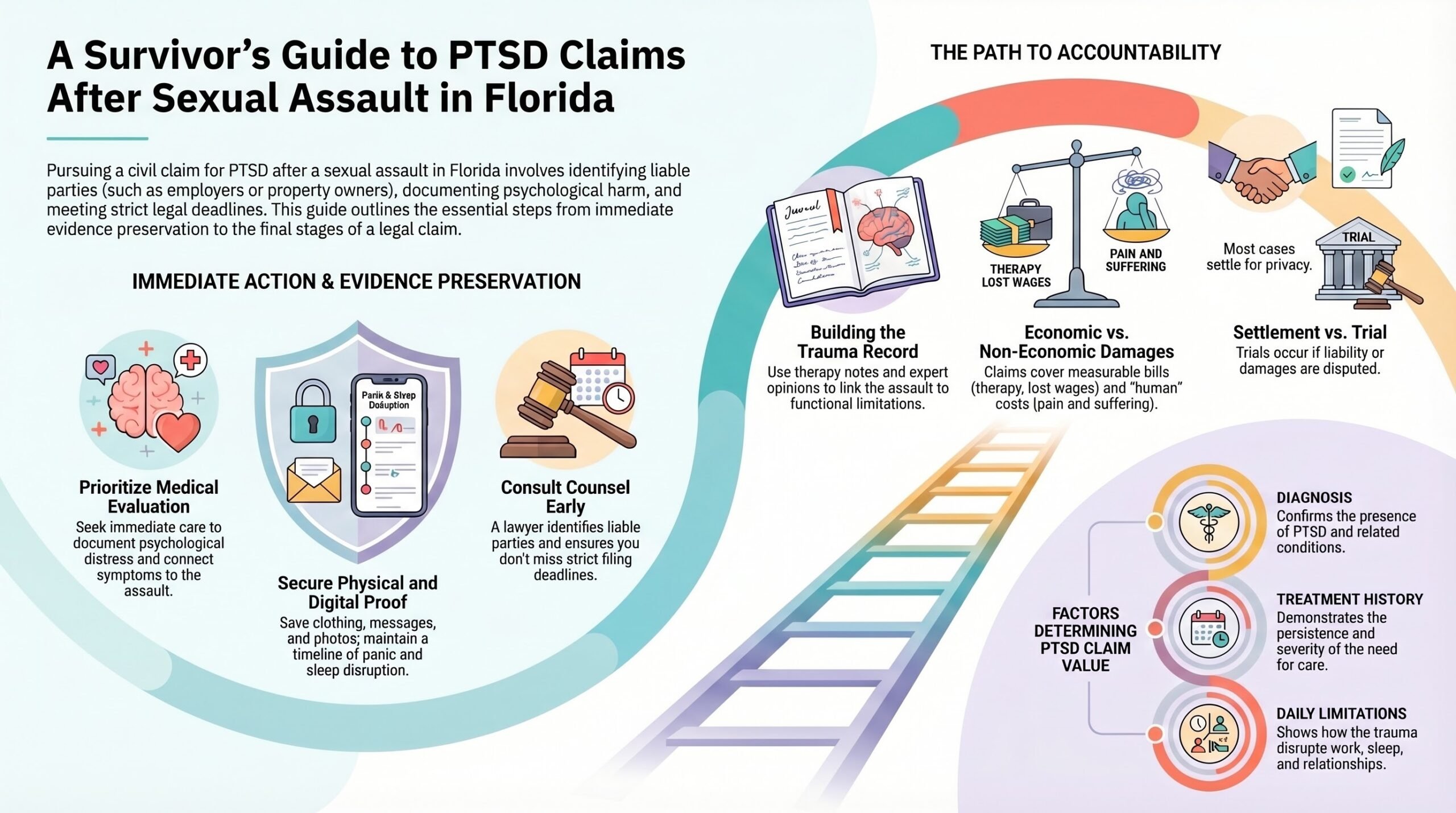
- Preserve evidence quickly by saving clothing, messages, photos, incident details, and a symptom timeline documenting panic, sleep disruption, and treatment.
- A lawyer can protect privacy, explain deadlines, coordinate with criminal proceedings, and pursue damages for therapy costs, lost income, and trauma.
- The process typically includes investigating facts, organizing records, filing the claim, obtaining evaluations, and negotiating a settlement or proceeding to trial.
How We Can Help With Your Florida PTSD from Sexual Assault Claim
Often, a Florida attorney handling PTSD claims arising from sexual assault can assist by evaluating the facts, identifying all potentially liable parties, and building a claim that clearly connects the assault to the survivor’s psychological injuries. Counsel may gather Trauma documentation, secure witness statements, and organize records to support a clear demand for accountability. This work helps survivors pursue justice while preserving dignity and stability.
A legal team may also communicate with insurers, institutions, and opposing counsel so survivors and their families can focus on safety, treatment, and service to those supporting recovery. Attorneys often assess deadlines, damages, and available sources of compensation, then prepare filings and negotiations with careful attention to detail. When necessary, they coordinate with qualified professionals, collect additional evidence, and present the claim in a disciplined, persuasive manner.
Through steady advocacy, counsel can help transform difficult facts into a well-supported case that seeks meaningful, lawful relief.
Understanding PTSD from Sexual Assault Cases in Florida


Because these claims involve both intentional misconduct and lasting psychological harm, understanding PTSD from sexual assault cases in Florida requires careful attention to how trauma is documented, how liability is established, and how damages are measured under state law. Courts and insurers often examine medical records, therapy notes, expert opinions, and witness statements to evaluate whether symptoms are connected to the assault and how severely daily functioning has been affected.
OUR CONSULTATIONSARE FREE
START YOUR FREE CASE REVIEW

Florida civil claims may involve direct perpetrators, negligent property owners, employers, schools, or other entities whose failures contributed to preventable harm. Consent documentation issues can become central when parties dispute events, making prompt preservation of communications, reports, and forensic evidence especially important.
A careful statute timeline strategy also matters because filing deadlines, notice requirements, and parallel criminal proceedings may affect available remedies. Effective case development thereby focuses on credible evidence, trauma-informed evaluation, and a disciplined presentation of losses, so survivors may pursue accountability and meaningful support.
Common Scenarios When PTSD from Sexual Assault Might Take Place in Florida


PTSD from sexual assault may arise in several settings in Florida, each presenting distinct factual and legal concerns. Common examples include workplace assault trauma, campus assault aftermath, intimate partner violence, and childhood abuse triggers that resurface later in life. Recognizing these scenarios helps frame how symptoms may develop, how evidence may appear, and why legal guidance may become necessary.
Workplace Assault Trauma
When a sexual assault occurs in the workplace, the resulting trauma can extend far beyond the incident itself and affect nearly every aspect of a survivor’s daily functioning. In Florida, employees may experience panic, sleep disruption, concentration problems, and fear tied to job duties, supervisors, or specific locations. Such symptoms can impair performance and create financial instability when work becomes unsafe or unbearable.
A careful legal response often includes Workplace accommodations, trauma documentation, retaliation defense, and evaluation of employer policies and reporting failures. These matters may involve internal complaints, human resources records, witness statements, and medical evidence linking the assault to PTSD symptoms. A service-minded legal advocate can help protect dignity, preserve evidence, and pursue accountability while supporting practical steps that reduce additional harm during recovery and continued employment.
Campus Assault Aftermath
Although campus environments are often presented as structured and supervised, sexual assault in Florida colleges and universities may occur in dormitories, at fraternity events, during off-campus gatherings, or in situations involving classmates, student leaders, or employees of the institution. In these settings, trauma may be intensified by academic pressure, shared housing, and repeated exposure to the location or person involved. PTSD may develop after consent violations, coercion, intoxication, or reporting failures by school authorities.
Affected students may experience panic, sleep disruption, withdrawal, concentration problems, or fear of retaliation, all of which can interfere with education and daily functioning. Those who assist others should recognize that survivor resources may include campus reporting options, counseling, medical care, Title IX processes, and legal guidance focused on safety, accountability, and long-term recovery planning.
Intimate Partner Violence
Because sexual assault may occur within an ongoing dating or domestic relationship, intimate partner violence is a common context in which trauma-related symptoms later emerge. In Florida, survivors may remain in shared homes, continue co-parenting, or face repeated contact, all of which can intensify fear, hypervigilance, sleep disruption, and avoidance.
Service-minded advocates often recognize that coercion, isolation, financial control, and threats may accompany sexual violence within a partnership. These factors can delay reporting and complicate recovery, especially when a survivor depends on the abusive partner for housing, income, or childcare. Legal and community responses may include protective orders, coordinated safety planning, and referrals to counseling, shelters, and medical care.
Careful documentation, trauma-informed support, and prompt intervention can help protect survivors while preserving important evidence for future civil or criminal proceedings.
Childhood Abuse Triggers
For many survivors, sexual assault in adulthood can reactivate unresolved trauma tied to childhood abuse, leading to PTSD symptoms that may be more severe, persistent, or difficult to identify at first. In Florida, these reactions may surface when specific details of an assault resemble earlier abuse, including authority dynamics, confinement, threats, or betrayal by a trusted person. Survivors may experience Trauma flashbacks, heightened vigilance, sleep disruption, and emotional numbing that appear disproportionate without understanding the earlier harm.
Service-minded professionals often recognize that trauma responses are layered, and effective support requires patience, validation, and careful documentation. In legal and therapeutic settings, informed advocacy can help connect present injuries to past victimization, while reinforcing coping strategies that promote safety, stability, and a clearer path toward recovery and accountability for survivors.
Legal Rights of PTSD from Sexual Assault Victims in Florida
When a sexual assault results in post-traumatic stress disorder, Florida law provides victims with important legal rights that may support both recovery and accountability. These rights may include protection in criminal proceedings, privacy safeguards, and access to civil remedies against responsible parties.
Florida also recognizes certain criminal reporting obligations for professionals in limited settings, while victims may qualify for crime victim compensation to help address counseling costs, lost income, and related needs.
- Victims may seek protective measures that limit intimidation, harassment, or unnecessary disclosure of sensitive information.
- They may pursue civil claims for damages tied to trauma, treatment expenses, and other measurable losses.
- They may receive notice of crucial court events and opportunities to be heard at appropriate stages.
- They may request assistance from advocates and service providers committed to informed, compassionate support.
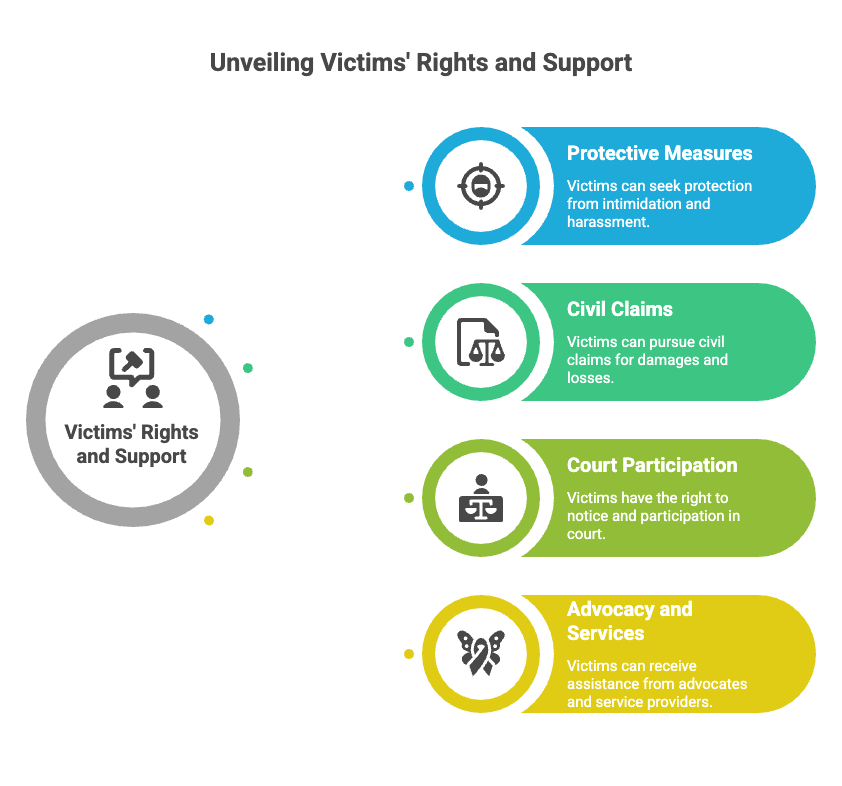
These protections reflect Florida’s broader commitment to dignity, safety, and meaningful access to justice for affected individuals and families.
Steps to Take After a PTSD from a Sexual Assault Incident in Florida
After a sexual assault incident that results in PTSD, certain immediate steps can protect both health and legal interests in Florida. Priority is generally given to obtaining prompt medical care and preserving important evidence, as these actions may support treatment needs and any future claim. It is also often advisable to contact a Florida lawyer, who can explain available legal options and help safeguard the victim’s rights.
Seek Immediate Medical Care
Why does immediate medical care matter so much in the aftermath of a sexual assault incident involving PTSD-related symptoms? Prompt evaluation helps protect health, address urgent injuries, and connect the survivor with compassionate professionals trained to respond thoughtfully. A clinician can perform trauma screening, assess emotional distress, and identify symptoms that may signal acute stress or developing PTSD.
Immediate care also supports longer-term recovery by documenting symptoms, recommending follow-up treatment, and coordinating referrals for counseling, crisis services, or psychiatric support when needed. In Florida, hospitals, urgent care providers, and specialized response teams may help survivors receive stabilization, medication management, and clear guidance about next steps. For those who serve others, encouraging prompt treatment reflects practical care, respect for dignity, and a commitment to restoring safety, health, and the ability to make informed decisions.
Preserve Key Evidence
Although preserving evidence may feel secondary during the immediate aftermath of a sexual assault, it can play a pivotal role in protecting both a survivor’s health interests and any future legal claim related to PTSD and related harm. Trusted supporters may assist by safeguarding clothing, messages, or other items without washing, altering, or discarding them. Careful Photo preservation of visible injuries, damaged property, and relevant locations may help document conditions before they change.
If others observed events or the survivor’s condition afterward, prompt witness statements may preserve important details while memories remain fresh. A written timeline noting dates, symptoms, panic episodes, sleep disruption, and treatment visits can also support later understanding of psychological recovery. These practical steps can strengthen accountability efforts and help service-minded advocates respond with informed, compassionate care.
Contact A Florida Lawyer
Prompt legal guidance can help a survivor understand what options may be available under Florida law when PTSD develops following a sexual assault. A Florida lawyer may explain reporting procedures, civil remedies, deadlines, and possible compensation for treatment costs, lost income, and emotional harm.
Counsel can also help protect privacy, coordinate documentation, and reduce avoidable stress during a difficult period. Many firms offer confidential consultations, allowing survivors to ask questions in a secure setting and learn how the legal process may unfold. During a case evaluation, an attorney may review available evidence, medical records, witness information, and related communications to assess potential claims.
By promptly contacting a qualified Florida lawyer, a survivor may gain structured guidance that supports informed decision-making, personal dignity, and access to meaningful legal protection and accountability.
How a Florida PTSD from Sexual Assault Lawyer Can Help You Initiate a Case
When a survivor is prepared to take legal action, a Florida PTSD from sexual assault lawyer can help initiate the case by evaluating the facts, identifying potential claims, and explaining the legal steps involved. Counsel often begins by organizing trauma documentation, creating an evidence timeline, and reviewing available records with care and discretion.
This measured approach helps survivors and those supporting them understand what may be needed before formal action proceeds.
- Assess incident details, deadlines, and responsible parties
- Guide police report filing and related record requests
- Gather witness statements and supporting documentation
- Prepare pleadings and communicate with insurers or defendants
A lawyer may also coordinate with treatment providers, advocates, and investigators to assemble a clear presentation of harm and liability. By handling procedural requirements, preserving evidence, and advising on next steps, counsel allows survivors to move forward in a structured manner. This support can promote accountability while honoring the survivor’s dignity and service-oriented goals for others.
Long-Term Effects of PTSD from Sexual Assault Trauma
The long-term effects of PTSD from sexual assault trauma often extend beyond the initial event, shaping emotional stability, mental health, and daily functioning over time. Survivors may experience persistent anxiety, depression, and other psychological challenges, while also facing physical health consequences such as sleep disruption, chronic pain, and heightened stress responses. These effects can further interfere with relationships, often contributing to struggles with trust, intimacy, and a sense of personal security.
Emotional And Psychological Impact
Although PTSD after sexual assault may begin with acute reactions, its long-term emotional and psychological effects often extend far beyond the initial trauma and can disrupt nearly every part of a survivor’s daily life.
Survivors may experience persistent trauma symptoms, including anxiety, shame, hopelessness, and emotional detachment that interfere with trust, relationships, and decision-making. Fear triggers can arise unexpectedly, causing hypervigilance, panic, or withdrawal in environments that seem ordinary to others. Over time, many struggle with self-blame, diminished self-worth, and difficulty feeling safe, even when genuine support is present.
These burdens may affect work, education, parenting, and social participation, limiting a survivor’s ability to engage fully with the community. For those seeking to serve and support survivors, understanding these psychological effects is crucial to providing informed, compassionate, and consistent care.
Physical Health Consequences
PTSD following sexual assault affects more than emotional stability, as its long-term effects often appear in the body through ongoing physical stress responses and disrupted health patterns. Survivors may experience elevated heart rate, headaches, digestive distress, fatigue, and weakened immune function, especially when hypervigilance remains constant over time. Trauma induced sleep disruption can intensify exhaustion, impair concentration, and reduce the body’s ability to recover from ordinary illness or strain.
Many also endure chronic pain symptoms, including muscle tension, back pain, and migraines, which may persist even without a clear physical injury. These conditions often interfere with work, caregiving, and daily responsibilities, making compassionate support and informed intervention especially important. Recognizing these physical consequences helps professionals and advocates respond with greater care, consistency, and practical assistance for long-term recovery.
Relationship And Trust Struggles
When trauma is rooted in sexual assault, trust often becomes difficult to restore, especially in close personal relationships where vulnerability is unavoidable. Survivors may appear distant, guarded, or inconsistent, not from indifference, but from a nervous system conditioned to anticipate harm. Intimacy can trigger fear, shame, or sudden withdrawal, which may strain marriages, friendships, and family bonds.
Those who support survivors often serve best by recognizing that mistrust is a symptom, not a character flaw. Recovery boundaries can help survivors regain a sense of safety and control while rebuilding connection at a sustainable pace. Consistent communication, trauma informed care, and practical coping strategies may reduce conflict and strengthen understanding. Over time, respectful support can encourage healthier attachment, though progress is rarely linear and often requires patience, professional guidance, and sustained compassion.
What to Expect During a Florida PTSD from Sexual Assault Claim Process
A Florida PTSD claim arising from sexual assault typically begins with filing the initial claim and identifying the legal basis for recovery. The process generally depends on strong evidence and documentation, followed by medical and legal evaluations that assess the extent of the trauma and its impact. From there, the matter may proceed through settlement negotiations or, when necessary, trial.
Filing Your Initial Claim
At the outset, filing an initial claim in a Florida sexual assault-related PTSD case generally involves gathering medical records, mental health evaluations, incident reports, and any other documentation that links the trauma to the resulting psychological condition. This early step often requires careful documentation gathering, timely notice, and attention to filing deadlines established by the relevant insurer, agency, or court.
A lawyer commonly reviews basic facts, identifies potential defendants, and assesses available insurance coverage. Evidence preservation may begin immediately to reduce loss or destruction of important materials. Witness statements can help outline the sequence of events and support the claimant’s account without requiring extensive detail at this stage. Through organized preparation and informed guidance, the initial claim process can better protect the survivor’s interests while supporting accountability, stability, and access to meaningful legal remedies.
Evidence And Documentation
Evidence and documentation often shape the direction and value of a Florida PTSD claim arising from sexual assault, particularly after the initial filing has placed the matter into a formal process. In this stage, careful collection and preservation of proof can help present a clear account while honoring the claimant’s experience and supporting informed advocacy for recovery.
Relevant materials may include medical records, photographs, communications, employment information, and court filings tied to the incident or its aftermath. Witness statements can clarify timelines, behavioral changes, or prior reports made to trusted individuals. In some matters, digital forensics may help authenticate messages, location data, or online activity connected to disputed facts. Organized documentation allows counsel and insurers to assess credibility, causation, and damages with greater accuracy, consistency, and fairness for all parties involved.
Medical And Legal Evaluations
Because medical and legal evaluations often determine how a Florida PTSD claim is understood and valued, this phase typically involves a careful review of both psychological harm and the surrounding facts of the assault. Licensed clinicians may assess symptoms, treatment needs, and the ways trauma affects daily functioning, employment, and relationships.
Attorneys then compare those findings with records, witness statements, and prior Trauma Documentation to identify consistency and support credibility. In many cases, providers are asked to provide diagnostic impressions, treatment histories, and prognostic information that clarify ongoing limitations. Legal counsel may also help organize Insurance Reporting requirements, ensuring submissions are accurate, complete, and timely. This stage is often approached with structure and sensitivity, so those assisting survivors can present a clear account of harm while protecting dignity, privacy, and long-term recovery needs.
Settlement Or Trial Process
Once medical findings and legal records have been organized, the claim generally moves into the settlement or trial phase, where liability, damages, and the long-term effects of PTSD are examined more closely. During insurer negotiation, counsel presents evidence of trauma, treatment needs, lost income, and diminished daily functioning. The opposing side may challenge causation, witness credibility, or the severity of symptoms, requiring clear documentation and consistent testimony.
If a fair resolution is not offered, the case may proceed to trial, where a judge or jury reviews the record, expert opinions, and factual accounts. Throughout this stage, a Florida PTSD from sexual assault lawyer often guides decisions with care, helping survivors and their support networks understand options, protect dignity, and seek accountability that may also encourage broader community safety and institutional responsibility.
Compensation for Florida PTSD from Sexual Assault Damages
Although every claim turns on its own facts, compensation for Florida PTSD from sexual assault damages may include both economic and non-economic losses when the psychological injury can be tied to the assault and its lasting effects. In practice, documentation, clinical opinions, and consistent treatment often shape value, while a defense strategy may challenge causation, severity, or prior trauma during settlement negotiation.
| Factor | Why It Matters |
|---|---|
| Diagnosis | Confirms PTSD and related conditions |
| Treatment history | Shows persistence and need for care |
| Daily limitations | Demonstrates functional disruption |
| Corroborating evidence | Supports credibility and causation |
Courts and insurers may also consider how symptoms affect service, work, relationships, and community involvement. Evidence from therapists, physicians, family members, and trusted colleagues can help present a fuller picture of harm. A careful presentation of these losses serves not only the claimant’s interests, but also the broader goal of accountability and informed recovery planning for survivors and families.
Economic vs Non-Economic Damages in Florida PTSD from Sexual Assault Cases
In Florida, PTSD cases arising from sexual assault, damages are generally divided into economic and non-economic categories, each addressing a different type of loss. Economic damages refer to measurable financial harm, such as medical expenses, therapy costs, lost wages, and reduced earning capacity, while non-economic losses concern pain and suffering, emotional distress, and diminished quality of life.
Establishing PTSD damages typically requires thorough documentation, including treatment records, expert opinions, and other evidence that connects the condition and its effects to the assault.
Economic Damages Explained
When a Florida sexual assault case involves PTSD, economic damages refer to the measurable financial losses tied to the injury, while non-economic damages address the human consequences that do not come with fixed dollar amounts. These losses may include therapy expenses, psychiatric care, prescription costs, transportation to treatment, lost wages, diminished earning capacity, and other out-of-pocket expenditures.
Careful case development often depends on evidence preservation tips and medical documentation standards. Billing records, employment files, insurance statements, tax returns, and expert evaluations can help establish both the amount and cause of financial harm. In service-oriented advocacy, the purpose is not excessive recovery, but fair compensation that supports stability, access to treatment, and future planning. A Florida PTSD claim is stronger when every documented expense is organized, verified, and clearly connected to the assault and resulting condition.
Non-Economic Losses
Because PTSD often disrupts daily functioning in ways that no invoice can capture, non-economic losses in a Florida sexual assault case address the personal harm that extends beyond measurable financial expense. These damages recognize the survivor’s diminished quality of life, emotional anguish, fear, humiliation, and loss of enjoyment in ordinary relationships, work, and community service.
Unlike therapy costs or other economic losses, non-economic damages focus on suffering that persists when trauma triggers interrupt sleep, concentration, trust, and a sense of safety. They also reflect strain on family bonds, intimacy, and the ability to participate fully in meaningful activities. In a service-minded framework, this category acknowledges that recovery involves more than paying bills. It affirms the human cost of PTSD and the need for accountability when profound personal losses alter a survivor’s daily life.
Proving PTSD Damages
To recover compensation for PTSD in a Florida sexual assault case, the claimant must present evidence that clearly connects the assault to the psychological injury and shows how that condition has produced measurable and personal harm. Economic damages may include therapy costs, medication costs, lost wages, diminished earning capacity, and future treatment, all supported by medical records and expert opinions.
Non-economic damages address suffering, fear, humiliation, sleep disruption, and loss of enjoyment of life, which are often shown through mental health evaluations, family observations, and testimony describing daily limitations. Corroborating eyewitnesses can strengthen credibility when available, while reconstructing the incident timeline may help show how symptoms emerged after the assault. Alongside these forms of proof, courts and insurers can understand both the financial burden and the human impact of PTSD on survivors and families.
When a Florida PTSD from Sexual Assault Case Goes to Trial vs Settlement
A Florida PTSD from sexual assault case may recover through settlement or proceed to trial, depending on the strength of the evidence, the severity of the survivor’s psychological injuries, and the parties’ willingness to accept risk. Settlement is often considered when liability appears clear, damages are supported by treatment records, and both sides seek privacy, certainty, and reduced emotional strain.
Trial may become necessary when fault is disputed, compensation is undervalued, or the defense challenges causation. In those circumstances, witness credibility can strongly influence jury persuasion, especially where accounts differ, and corroboration is limited. The survivor’s victim impact evidence, including daily limitations, treatment needs, and loss of functioning, may shape how damages are understood.
Expert testimony from mental health professionals may also help explain diagnosis, prognosis, and the connection between trauma and PTSD symptoms. A careful attorney evaluates each path with service-minded focus, seeking an outcome that protects dignity, promotes accountability, and supports the survivor’s long-term recovery and stability.
The Statute of Limitations for Florida PTSD from Sexual Assault Cases
In Florida, the statute of limitations can decisively affect whether a PTSD claim arising from sexual assault may be pursued in civil court. These deadlines determine how long a survivor has to file suit for psychological injuries, including trauma-related conditions that may emerge over time. Because Florida law can distinguish between claims against individual perpetrators and institutions, careful attention to dates is crucial.
A service-minded reader should understand that civil filing periods may differ from the timing of criminal charges, and they also operate separately from reporting requirements timelines. In some matters, the delayed discovery of harm or the victim’s age at the time of the assault may influence the applicable deadline. Documentation of diagnosis, treatment history, and related facts may therefore be of substantial importance.
Missing the filing window can bar recovery entirely, even when the underlying harm is severe and well supported. For those assisting survivors, prompt factual review helps preserve accountability, stability, and access to meaningful civil remedies.
When to Contact a PTSD from Sexual Assault Lawyer in Florida
Timing often shapes the strength of a Florida PTSD claim arising from sexual assault, which is why contact with legal counsel should occur as soon as psychological symptoms, treatment needs, or concerns about accountability begin to affect daily life. Early communication allows counsel to identify urgent deadlines, preserve records, and encourage a careful documentation strategy that supports treatment and protects important facts.
A lawyer should also be contacted when PTSD symptoms begin interfering with work, education, caregiving, sleep, or relationships, or when medical providers recommend counseling, medication, or trauma-focused care. Prompt legal guidance can help organize medical records, incident details, witness information, and related expenses before memories fade or documents become difficult to obtain.
Contact may also be appropriate after interactions with schools, employers, insurers, or law enforcement create confusion about rights or reporting. Acting early serves both the survivor’s well-being and the broader goal of responsible accountability within the community.
Why You Need an Experienced Florida PTSD from Sexual Assault Lawyer
Because PTSD claims arising from sexual assault often involve sensitive evidence, complex damages, and overlapping legal issues, representation by an experienced Florida lawyer is fundamental to protecting both the survivor’s rights and the integrity of the case. Skilled counsel can organize medical records, trauma documentation, witness statements, and institutional evidence in a manner that supports accountability while minimizing unnecessary exposure of private details.
An experienced attorney also understands how civil claims may intersect with criminal proceedings, victim advocacy services, and insurance matters. This guidance helps survivors and those assisting them make informed decisions that respect safety, wellness, and legal objectives. Careful legal management is also necessary because the statute of limitations and other filing deadlines can affect whether a claim may proceed.
In addition, seasoned representation strengthens the presentation of damages related to therapy costs, lost income, diminished quality of life, and ongoing psychological harm, promoting a more complete and just recovery.
How to Choose the Right PTSD from Sexual Assault Lawyer for Your Case in Florida
Selecting the right Florida PTSD from sexual assault lawyer requires careful evaluation of experience, discretion, and case strategy. A qualified attorney should understand trauma-related claims, civil liability, and the sensitive nature of representing survivors with dignity. During a Client consultation, attention should be given to communication style, responsiveness, and willingness to explain legal options clearly.
Reviewing the lawyer’s background can help determine whether the firm has handled PTSD and sexual assault cases involving emotional harm, damages, and long-term recovery needs. An effective advocate should also present a thoughtful evidence strategy that includes medical records, expert support, witness statements, and documentation demonstrating how trauma has affected daily life. Reputation, courtroom readiness, and settlement experience are also important considerations.
Those seeking legal guidance often benefit from choosing counsel that values privacy, preparation, and service to others. Careful selection can strengthen a case and support a more stable path forward for survivors statewide.
About The Law Offices of Anidjar & Levine
When survivors and families seek legal representation after sexual assault-related trauma, The Law Offices of Anidjar & Levine is recognized for providing focused advocacy in complex personal injury matters throughout Florida.
The firm approaches each case with disciplined preparation, respect for client dignity, and a clear commitment to accountability under civil law.
Its legal team assists with trauma documentation, evidence preservation, and case development designed to support claims involving post-traumatic stress and related harms.
Attorneys and staff coordinate with medical providers, counselors, and other professionals when appropriate, helping clients present a well-supported account of losses and ongoing needs.
The firm also emphasizes responsive communication, practical guidance, and careful attention to deadlines, records, and insurance issues.
By combining litigation experience with service-oriented representation, The Law Offices of Anidjar & Levine aims to reduce administrative burdens on clients while pursuing fair compensation.
That steady approach can help survivors and families focus on recovery and long-term stability.
Frequently Asked Questions
Can I Keep My Identity Private During a Florida Sexual Assault PTSD Case?
Yes, identity may sometimes remain private during a Florida sexual assault PTSD case, though full court anonymity is not guaranteed. Courts can protect victim privacy through sealed records, pseudonyms, and limited disclosure when justified by safety or dignity concerns. Much depends on the case type, filing strategy, and judicial approval. Careful legal guidance helps ensure appropriate protections are requested early, clearly, and in a manner that serves both justice and healing.
Will Pursuing a Claim Affect My Immigration Status in Florida?
Pursuing a claim in Florida does not usually harm immigration status, and it may, in some cases, provide helpful protections. Immigration consequences depend on the person’s history, current status, and the facts involved. Certain survivors who assist law enforcement may qualify for a crime victims visa. Careful legal review is necessary because coordinated guidance from immigration and civil counsel best protects rights, stability, and long-term service to family and community.
Can Social Media Posts Hurt My PTSD From Sexual Assault Claim?
Yes, social media posts can harm a PTSD claim from sexual assault. Insurers and defense counsel may review accounts for privacy risks and evidence use, including photos, comments, location tags, and messages that appear inconsistent with reported trauma. Even well-meaning posts may be misread or taken out of context. A careful claimant serves the process best by limiting online activity, strengthening privacy settings, and discussing all concerns promptly with legal counsel.
Are Minors Handled Differently in Florida PTSD From Sexual Assault Cases?
Yes, minors are often handled differently in Florida PTSD cases arising from sexual assault. Courts may apply added privacy protections, appoint guardians, and consider developmental factors when evaluating harm and testimony. Access to Confidential Therapy records is usually more restricted, which helps protect the child’s welfare. In some matters, related proceedings may involve Youth Court considerations. These measures are intended to support accountability while reducing further trauma to vulnerable individuals.
Can I Switch Lawyers During My Florida PTSD From Sexual Assault Case?
Yes, a person may usually transition lawyers during an active case, provided the change complies with the retainer agreement and court requirements. A new lawyer often begins with a confidential consultation to review the attorney’s timeline, assess prior work, and refine the case strategy. The continuation should be handled carefully to prevent delays, protect evidence, and preserve obligations. Thoughtful legal guidance can help maintain continuity and serve the client’s broader interests.
—————————
PTSD arising from sexual assault can have lasting legal, medical, and financial consequences for survivors in Florida.
A qualified attorney can help evaluate liability, preserve evidence, and pursue compensation through the appropriate civil process.
By understanding their rights and acting promptly, victims may strengthen their claims and protect their interests.
The Florida Sexual Assault Lawyer team at Law Offices of Anidjar & Levine provides focused legal guidance designed to help clients steer these sensitive matters with clarity, diligence, and informed advocacy.