Law Offices of Anidjar and Levine assists survivors by preserving evidence, organizing records, explaining legal rights, and evaluating potential claims against both the abuser and any institution that failed to act reasonably.
Counsel may coordinate communications with churches, insurers, and witnesses, while helping protect privacy and maintain steady case progress.
Civil claims can seek damages for therapy costs, lost income, and pain and suffering.
The sections below outline crucial steps, rights, and case considerations.
Learn more by visiting a Florida Sexual Assault Lawyer.
Main Takeaways
- A Florida clergy sexual abuse lawyer explains confidential options, protects privacy, and provides trauma-informed guidance on immediate safety, reporting, and legal next steps.
- Prompt evidence preservation is critical, including medical records, counseling notes, photographs, texts, emails, screenshots, voicemails, and church correspondence.
- A lawyer can assess church or institutional liability for ignored warnings, poor supervision, concealment, or failure to act reasonably after notice.
- Representation may include communicating with churches, insurers, and other parties so survivors can focus on recovery and daily responsibilities.
- Florida civil claims may seek compensation for therapy costs, lost income, pain and suffering, while important filing deadlines may apply.


How We Can Help With Your Florida Clergy Sexual Abuse Claim
When a survivor is prepared to pursue a Florida clergy sexual abuse claim, legal counsel can provide structured guidance from the outset. Through a Confidential intake process, an attorney’s team can listen carefully, identify immediate concerns, and explain practical next steps with trauma-informed care. This approach helps protect privacy, reduce confusion, and support informed decision-making.
Counsel may also organize records, preserve relevant communications, and coordinate survivor resources that strengthen stability during the legal process. Clear guidance on statute timelines helps survivors and their families understand important deadlines without unnecessary pressure. Attorneys can communicate with institutions, insurers, and other parties on the survivor’s behalf, allowing the survivor to focus on recovery and daily responsibilities.
Throughout representation, the legal team can maintain steady communication, provide updates, and respond to questions with professionalism and respect. In this way, counsel serves not only the claim but the broader well-being of those seeking accountability and safe, meaningful support.
OUR CONSULTATIONSARE FREE
START YOUR FREE CASE REVIEW

Understanding Clergy Sexual Abuse Cases in Florida
A careful understanding of Florida law helps survivors and those assisting them evaluate available options. Reporting procedures can affect both immediate safety measures and later legal action, especially when allegations involve religious organizations, staff members, or affiliated institutions. Evidence preservation is also essential because records, communications, witness accounts, and internal reports may become important in establishing what occurred and who may bear responsibility.
In many cases, legal review focuses on timelines, available documentation, and whether an institution failed to act reasonably after receiving notice. A disciplined approach supports informed decisions, protects important rights, and helps communities respond with integrity, compassion, and a commitment to the well-being of others.
Common Scenarios When Clergy Sexual Abuse Might Take Place in Florida
Clergy sexual abuse in Florida may arise in several recurring settings where authority, privacy, or trust create opportunities for misconduct. Reported scenarios often include private counseling sessions, youth retreats, church schools, and online communication, which extend religious guidance beyond direct supervision. Identifying these common circumstances helps clarify how abuse may occur and why careful legal review is often necessary.
During Private Counseling
Because private counseling is often framed as confidential spiritual guidance, it can create conditions in which trust, authority, and isolation are improperly exploited. In Florida, misconduct may arise when clergy members use one-on-one sessions to blur boundaries, request secrecy, or manipulate a person’s faith-based dependence for sexual purposes.
Such situations often leave little external visibility, which can complicate recognition and response. Communities focused on service should understand that survivor trauma may delay disclosure and affect memory without negating credibility. Prompt attention to evidence preservation may assist later review of texts, calendars, notes, or facility access records.
Mandatory reporting obligations can apply in certain circumstances, and statute deadlines may influence available legal options. Careful documentation, trauma-informed support, and timely legal guidance can help protect dignity, accountability, and vulnerable persons statewide.
At Youth Retreats
When youth retreats take place away from ordinary routines and oversight, extended access to minors, overnight lodging, transportation arrangements, and informal group activities can create conditions in which sexual abuse is more difficult to detect. Trusted leaders may control schedules, supervise sleeping areas, or isolate a child during travel, prayer, recreation, or volunteer tasks. Service-minded communities can reduce risk by enforcing two-adult rules, documented supervision, and clear boundaries for communication and physical contact.
Warning signs may include favoritism, secretive interactions, unexplained gifts, or efforts to bypass parents and chaperones. Florida institutions are expected to follow Mandatory reporting procedures promptly when concerns arise. Families and advocates may also consider Survivors’ protective orders, counseling support, and independent investigations to help safeguard children and strengthen accountability during future retreat programs.
In Church Schools
Although church schools are often viewed as structured environments, abuse may still occur where religious authority intersects with routine access to children in classrooms, offices, counseling sessions, extracurricular programs, and disciplinary settings. Students may be vulnerable when a clergy member or staff leader is trusted to supervise, advise, or correct behavior without meaningful oversight. Risks can increase during one-on-one religious instruction, private confession-like conversations, transportation, or after-school activities held on campus.
Families seeking to protect children often look for clear reporting procedures, independent investigation, and church accountability when concerns arise. A response centered on trauma-informed support may help students and caregivers understand options, preserve safety, and begin recovery. Careful documentation, prompt action, and respect for each child’s dignity remain vital within school communities and faith institutions alike.
Through Online Communication
In digital settings, clergy sexual abuse may develop through text messages, social media platforms, email, video chats, or private messaging applications that allow repeated contact outside public view. Such contact can begin as confidential communication and emotional support, then shift into manipulation, secrecy, or sexually inappropriate requests. In Florida, this conduct may involve grooming, coercive exchanges, or persistent online harassment directed at minors or vulnerable adults.
A detached review often considers frequency, content, timing, and whether the communications bypassed parental, institutional, or supervisory oversight. When concerns arise, careful document preservation of messages, screenshots, account information, and deleted content can help clarify patterns of misconduct. Prompt reporting to appropriate authorities and trusted advocates may protect others, support accountability, and assist survivors in seeking lawful remedies and safety.


Legal Rights of Clergy Sexual Abuse Victims in Florida
Because Florida law recognizes the profound harm caused by sexual abuse, victims of clergy misconduct may have important legal rights to seek accountability and financial recovery through civil claims. These rights may include compensation for therapy costs, lost income, pain and suffering, and other damages tied to abuse and institutional neglect. Florida courts may also protect Victim anonymity in appropriate cases, helping survivors pursue justice with dignity while continuing to care for themselves and others.
In some matters, church liability may arise when a religious organization ignores warnings, fails to supervise clergy, or conceals known misconduct from a trusting community.
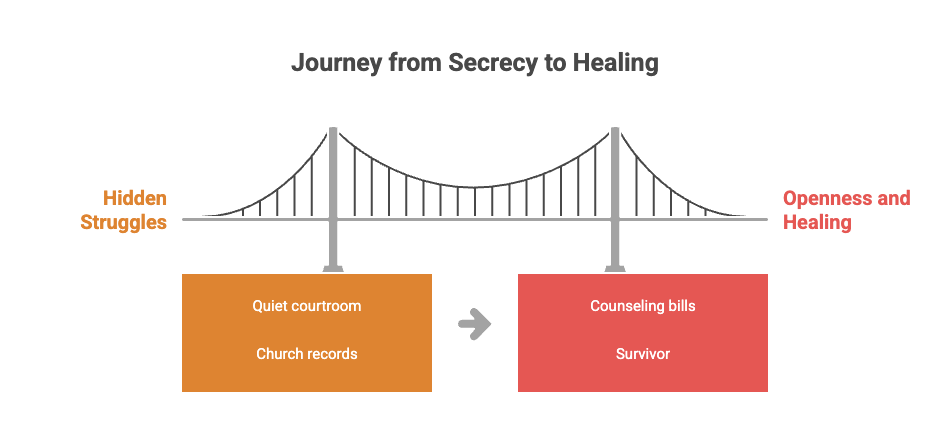
- A quiet courtroom where truth is finally spoken
- Church records revealing years of hidden knowledge
- Counseling bills were stacked beside missed work notices
- A survivor shielded from public exposure
- A congregation seeking safety, honesty, and repair
Civil law can provide a structured path toward accountability, acknowledgment, and resources that support restoration and the protection of vulnerable people in the future.
Steps to Take After a Clergy Sexual Abuse Incident in Florida
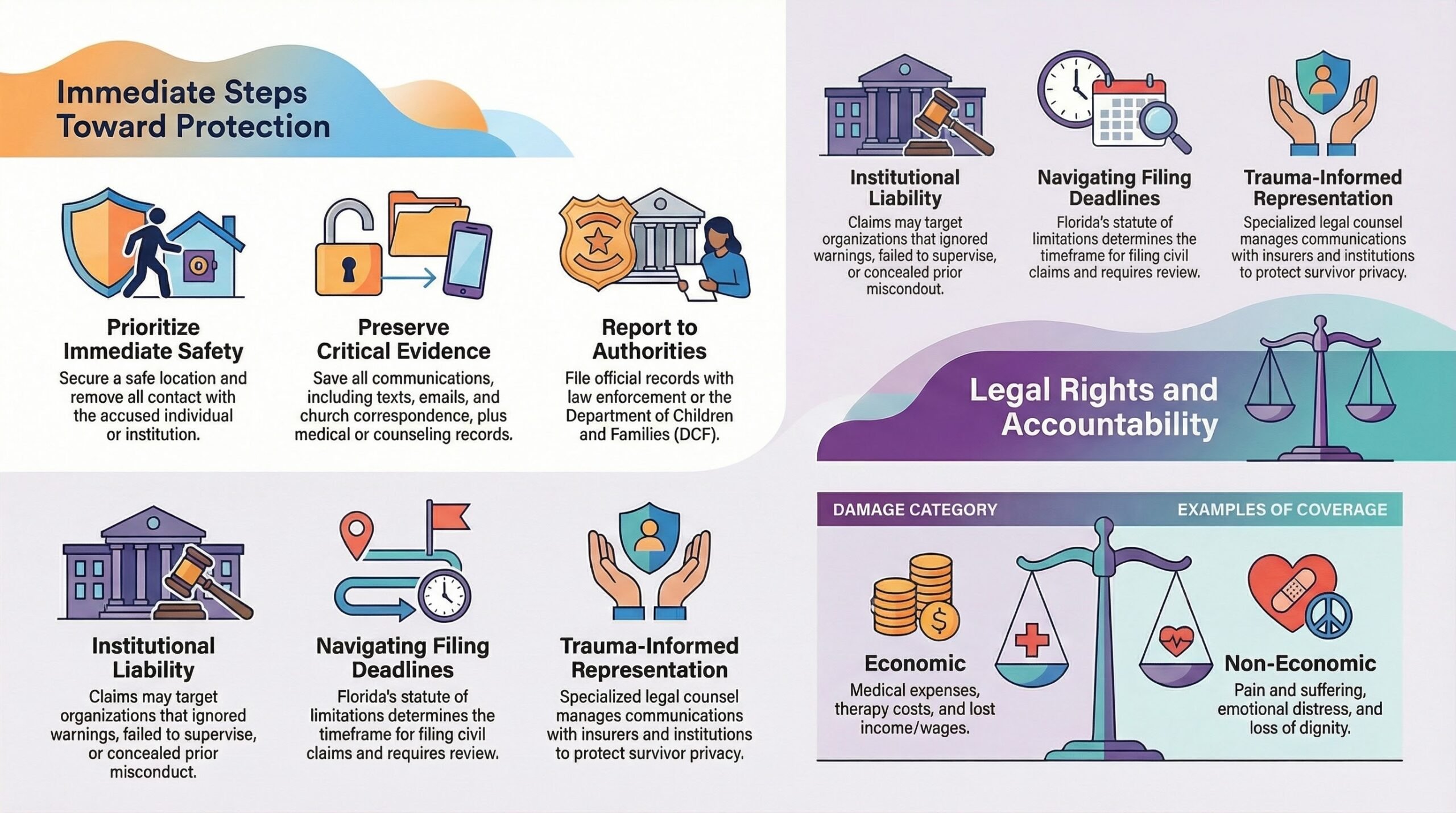
After a clergy sexual abuse incident in Florida, the first priority is to guarantee immediate safety and secure protection from further harm. The abuse should then be reported to law enforcement or the appropriate authorities, as prompt reporting can support both personal safety and any future legal action. It is also important to preserve essential evidence, including communications, records, and other relevant materials, because such documentation may be vital in establishing the facts of the case.
Ensure Immediate Safety
Immediately following any incident of clergy sexual abuse, the priority should be to secure the survivor’s physical safety and remove that person from any contact with the accused individual or institution. A trusted caregiver, advocate, or community member should help arrange a safe location, transportation, and any urgent medical attention as needed.
In the hours that follow, calm, practical care can preserve stability and dignity. Victim support may include staying with supportive family, obtaining crisis resources, and limiting exposure to pressure from church representatives. When the survivor is a minor or vulnerable adult, caregivers should understand mandated reporting duties while focusing first on protection. Therapist referrals can also help connect the survivor with qualified trauma-informed professionals. Immediate safety planning should center on compassion, privacy, and uninterrupted care for recovery.
Report The Abuse
Once the survivor’s safety has been addressed, the next step is to report the abuse to the proper authorities so that an official record exists and protective action can begin. In Florida, reports may be made to local law enforcement, the Department of Children and Families, or other designated agencies, depending on the survivor’s age and circumstances. Mandatory reporting obligations may also apply to certain professionals and caregivers.
Prompt reporting can help protect others within the faith community and connect survivors with support resources. A trusted advocate, counselor, or attorney may assist with communication and emotional safety planning during this process. Useful documentation tips include recording dates, locations, names of involved parties, and any reports made. Clear, timely reporting strengthens accountability and helps agencies respond with appropriate care and oversight.
Preserve Key Evidence
Because evidence can fade, be altered, or disappear with time, preserving key documentation is an important step in any clergy sexual abuse matter in Florida. A careful record may support accountability, protect others, and strengthen any future report or legal claim.
Important materials can include medical records, photographs of injuries, counseling notes, emails, text messages, social media communications, and church correspondence. It may also help to preserve digital records by saving screenshots, voicemails, call logs, and backup files in a secure location.
Trusted advocates or counsel may interview witness statements while memories remain fresh, noting dates, places, and the identities of those involved. Personal journals describing what occurred, when it happened, and how disclosures were received can also provide meaningful context. Organized evidence often promotes a more effective response.
How a Florida Clergy Sexual Abuse Lawyer Can Help You Initiate a Case
When a survivor is prepared to explore legal action, a Florida clergy sexual abuse lawyer can help initiate the case by evaluating the facts, identifying potential defendants, and explaining the legal options available under state law. Counsel often begins with Evidence preservation, timely reporting, and careful attorney communication, so critical records, correspondence, and witness details are organized before claims proceed.
The lawyer may also guide emotional disclosure in a structured setting, helping survivors share relevant information with dignity and purpose.
- A quiet office where documents are reviewed carefully
- A timeline assembled from letters, emails, and church records
- A calm conversation that clarifies roles, deadlines, and next steps
- Witness names are recorded beside dates, locations, and related events
- A prepared filing that places facts before the proper court
Through these steps, legal counsel helps survivors act with clarity, protect community safety, and pursue accountability in ways that respect both personal dignity and the broader good.
Long-Term Effects of Clergy Sexual Abuse Trauma
Clergy sexual abuse trauma often produces lasting emotional and psychological harm, affecting a survivor’s sense of safety, identity, and daily functioning. It may also contribute to significant difficulties in relationships, where trust, intimacy, and personal boundaries can remain profoundly impaired for years. In many cases, these effects are accompanied by lifelong mental health challenges, including anxiety, depression, and post-traumatic stress symptoms.
Emotional And Psychological Impact
Although the physical acts may end, the emotional and psychological impact of clergy sexual abuse often persists for years, shaping a survivor’s sense of safety, identity, and trust in others. Many experience chronic anxiety, depression, shame, intrusive memories, and emotional numbness that disrupt daily functioning and diminish overall well-being. Some may struggle with self-blame, spiritual confusion, sleep disturbance, or difficulty concentrating, especially when reminders reactivate unresolved trauma.
These effects can influence education, employment, health, and a survivor’s ability to participate fully in family or community life. Compassionate support often includes careful assessment, trauma therapy options, and long-term recovery plans tailored to the survivor’s needs. With informed care and patient advocacy, recovery can progress steadily, helping survivors regain stability, confidence, and a stronger sense of personal dignity over time.
Relationship And Trust Struggles
Because abuse is inflicted within a setting that is ordinarily associated with moral guidance and safety, survivors often develop persistent difficulties with trust that extend far beyond the original misconduct. They may question motives, hesitate to rely on authority, and struggle to form secure personal, spiritual, or professional connections. Understanding how power Dynamics shaped the abuse is important for those seeking to serve survivors with integrity and patience.
Relationship strain may appear in marriage, friendships, congregational life, and workplace interactions. Survivors often remain alert to control, secrecy, or misplaced loyalty, which can complicate communication and closeness. Supportive care commonly emphasizes rebuilding Safety Boundaries, respecting choice, and restoring a sense of agency. Over time, consistent accountability and dependable conduct can help create conditions where trust is approached carefully rather than assumed.
Lifelong Mental Health Challenges
Persistent disruptions in trust and attachment often overlap with long-term psychological injury that can affect nearly every part of a survivor’s life. Many individuals experience depression, anxiety, dissociation, sleep disturbance, and chronic hypervigilance that continue well into adulthood. Trauma triggers may arise unexpectedly in worship settings, relationships, workplaces, or medical environments, disrupting daily functioning and emotional stability.
Sustained recovery often requires structured coping strategies, reliable mental health support, and patient encouragement from informed caregivers, advocates, and community servants. Some survivors also face substance misuse, self-isolation, or recurring shame that complicates treatment and delays progress.
Because symptoms may intensify during major life events, long-term recovery planning remains essential. A consistent, trauma-informed approach can help survivors build safety, strengthen resilience, and pursue meaningful participation in family, work, and community life.
What to Expect During a Florida Clergy Sexual Abuse Claim Process
A Florida clergy sexual abuse claim process typically begins with an initial case evaluation, during which the facts, timelines, and potential legal issues are carefully reviewed. The next phase often involves gathering essential evidence and filing the claim, with attention to records, witness statements, and other supporting documentation. From there, the matter may proceed to settlement negotiations or, if necessary, to trial, depending on the strength of the evidence and the opposing parties’ responses.
Initial Case Evaluation
Often, the initial case evaluation in a Florida clergy sexual abuse claim is the stage where counsel reviews the reported abuse, identifies potential defendants, and explains the legal options available under state law. This meeting generally focuses on listening carefully, outlining immediate concerns, and evaluating whether civil action may proceed within applicable deadlines.
Counsel may also discuss practical needs that affect a claimant’s recovery, including referrals for trauma counseling and other victim support services. The evaluation often clarifies confidentiality, fee arrangements, and the attorney’s role in protecting the claimant’s interests with professionalism and care. By the end of this stage, the claimant should have a clearer understanding of the general path forward, the responsibilities involved, and how legal guidance can support accountability, stability, and informed decision-making for those seeking justice and recovery.
Gathering Key Evidence
How evidence is gathered can greatly shape a Florida clergy sexual abuse claim, because the strength of the case frequently depends on the quality, preservation, and organization of supporting information. Attorneys often help survivors and families identify materials that can clarify events and support accountability. This may include Witness documentation, personal journals, correspondence, photographs, and institutional records.
Digital preservation is also important, since emails, text messages, social media content, and stored files can be altered or lost without prompt care. In some matters, therapy records may help show emotional harm, treatment history, or disclosures made over time, when they are relevant and appropriately handled. A careful review of the evidence can also identify patterns in other reports, personnel histories, or prior complaints. Thorough preparation supports informed decisions and a service-centered pursuit of justice for communities.
Filing The Claim
Initiating a Florida clergy sexual abuse claim generally begins with a formal review of the facts, applicable deadlines, and the legal avenues available under state law. Counsel typically assesses the statute of limitations, identifies proper defendants, and confirms where the claim should be filed. This early stage often includes evidence preservation steps, such as securing records, communications, and witness accounts before information is lost.
After that review, a complaint is prepared and filed in the appropriate court, outlining the allegations and the relief sought. The defendants are then formally served and given time to respond under procedural rules. Throughout the filing, careful documentation, privacy considerations, and adherence to court requirements remain crucial. A structured approach helps survivors, families, and advocates pursue accountability while protecting the integrity of the claim.
Settlement Or Trial
Once a Florida clergy sexual abuse claim has been filed and the parties have exchanged initial responses, the case generally moves toward either negotiated resolution or trial preparation. Settlement discussions may begin through informal talks, mediation, or attorney exchanges, often focusing on accountability, confidentiality concerns, and damage estimation. Counsel may assess medical records, trauma effects, lost income, and long-term care needs when valuing the claim.
If settlement terms do not adequately address the survivor’s interests or public safety concerns, trial preparation usually intensifies. Attorneys may conduct depositions, retain expert witnesses, and organize documentary evidence for presentation to the court. A trial can offer a structured forum for fact-finding and legal accountability, though it may require more time and emotional endurance. Throughout either path, informed guidance helps survivors make service-minded, carefully considered decisions.
Compensation for Florida Clergy Sexual Abuse Damages
Although no financial recovery can undo the harm caused by clergy sexual abuse, compensation in Florida is intended to address the survivor’s tangible and intangible losses through a civil claim. In evaluating compensation, counsel often focuses on identifying negligence and anticipating liability defenses that religious institutions, supervisors, or insurers may raise. This process can help survivors pursue accountability while supporting their future care, stability, and dignity.
| Focus | Purpose | Image |
|---|---|---|
| Counseling needs | Supports healing | A steady path forward |
| Institutional accountability | Encourages safer practices | A light in dark corridors |
| Survivor support | Restores daily function | Hands rebuilding a home |
Courts and insurers may examine records, witness testimony, and institutional conduct when assessing value. The strength of evidence, the duration of abuse, and the effect on education, work, relationships, and community service can influence recovery. A careful presentation of the claim helps frame the survivor’s experience with respect and credibility.
Economic vs Non-Economic Damages in Florida Clergy Sexual Abuse Cases
In Florida clergy sexual abuse cases, recoverable damages generally fall into two categories: economic and non-economic losses. Economic damages refer to measurable financial harm, such as medical expenses, therapy costs, lost income, and other documented out-of-pocket losses, while non-economic damages address harms such as pain and suffering, emotional distress, and diminished quality of life. Establishing either form of recovery typically requires credible evidence, including records, expert opinions, and other proof connecting the abuse to the claimant’s losses.
Economic Damages Explained
Because compensation in Florida clergy sexual abuse cases may address more than personal suffering, it is important to distinguish between economic and non-economic damages at the outset. Economic damages refer to measurable financial losses tied to the abuse and its aftermath.
These losses may include past and future medical treatment, counseling costs, prescription expenses, lost wages, diminished earning capacity, and other out-of-pocket costs caused by the misconduct. Records, invoices, employment documents, and expert opinions often help establish the amount sought. While non-economic damages concern human consequences that are harder to calculate, economic damages focus on documented financial impact.
This distinction can support those seeking accountability and practical resources for recovery. Although proving emotional harm may affect related claims, economic damages remain grounded in verifiable expenses and income loss under Florida law.
Non-Economic Losses Overview
While economic damages address documented financial losses, non-economic damages concern the intangible harm that often defines the lasting impact of clergy sexual abuse. In Florida cases, non-economic damages may reflect emotional suffering, pain and trauma, mental anguish, loss of dignity, and diminished enjoyment of daily life.
These losses do not arrive with receipts, yet they can shape relationships, faith, education, employment, and a survivor’s sense of safety for years. A careful legal review considers how abuse can affect trust, self-worth, sleep, concentration, and participation in family or community life. Non-economic losses thus recognize the human cost that service-minded communities seek to understand and address with compassion. By acknowledging these deeply personal injuries, the civil system can more fully account for harm that extends beyond measurable financial expense alone.
Proving Recoverable Damages
Although recoverable damages may include both financial and intangible harm, a Florida clergy sexual abuse claim generally requires evidence that links each category of loss to the abuse and its lasting effects. Economic damages often include therapy costs, medication costs, lost income, and future care needs, supported by bills, employment records, and expert opinions. Non-economic damages may address pain, emotional distress, humiliation, and loss of enjoyment of life, but they still depend on credible testimony and consistent records.
Evidentiary standards require clear, organized support, while proof timelines can affect how courts evaluate causation and the extent of harm. Medical documentation, counseling histories, and witness statements may strengthen the claim by showing continuity between the abuse and present suffering. Careful preparation helps survivors pursue accountability and resources for recovery and long-term stability.
When a Florida Clergy Sexual Abuse Case Goes to Trial vs Settlement
When a Florida clergy sexual abuse case proceeds toward resolution, the decision between trial and settlement typically turns on the strength of the evidence, the survivor’s goals, the defendant’s willingness to accept responsibility, and the legal and practical risks involved. Attorneys assess trial strategy by weighing witness credibility, institutional records, expert testimony, and the likelihood that disputed facts will persuade a jury.
Settlement bargaining may offer privacy, quicker compensation, and reduced emotional strain, which can support a survivor’s recovery and broader service to family and community. A trial, however, may be necessary when liability is denied, accountability is resisted, or settlement offers fail to reflect a fair calculation of damages. Jury considerations also matter, including how jurors may respond to delayed reporting, trauma evidence, and the conduct of religious institutions.
Counsel generally compares the certainty of a negotiated result against the unpredictability of courtroom proceedings, always centering on informed decision-making, dignity, and the survivor’s long-term well-being.
The Statute of Limitations for Florida Clergy Sexual Abuse Cases
Because filing deadlines can determine whether a claim may proceed at all, the statute of limitations is a central issue in Florida clergy sexual abuse cases. Florida law may treat criminal prosecutions and civil lawsuits differently, so the timing of civil claims often requires careful review of the survivor’s age, the date of discovery, and any applicable statutory exceptions.
For organizations committed to protecting others, understanding these limits supports responsible action and informed care. Mandatory reporting duties may arise regardless of whether a civil deadline has expired, and reports can help protect vulnerable people from further harm. In addition, criminal deadlines may differ from civil deadlines because prosecutors and courts apply separate rules.
Survivors and supporting institutions often benefit from documenting abuse history, including dates, locations, communications, and prior complaints, since accurate records may clarify timeline questions. A clear understanding of limitations periods helps communities respond with accountability, diligence, and respect for those affected and public safety.
When to Contact a Clergy Sexual Abuse Lawyer in Florida
Questions about filing deadlines often lead directly to the issue of legal counsel, since early legal review can help preserve evidence, clarify reporting options, and identify available civil claims.
A clergy sexual abuse lawyer in Florida may be contacted as soon as abuse is suspected, disclosed, or discovered, even if the events occurred years earlier. Prompt legal consultation can help families and survivors organize records, document communications, and determine whether to report to law enforcement, child protective authorities, or church leadership. Early action may also support requests for emergency counseling, safety planning, and other protective measures for vulnerable individuals.
In service-oriented communities, timely legal guidance can assist those seeking accountability while minimizing further harm to others. Waiting may complicate access to witnesses, documents, and institutional records. Contact is also appropriate when a church response appears inadequate, when retaliation is feared, or when there is uncertainty about the availability of civil remedies under Florida law today.
Why You Need an Experienced Florida Clergy Sexual Abuse Lawyer
Although any attorney can explain basic filing procedures, an experienced Florida clergy sexual abuse lawyer provides a more informed assessment of claims involving institutional misconduct, delayed disclosure, confidential church records, and overlapping reporting obligations. That experience matters when survivors seek accountability that may also protect others in the community from future harm.
A seasoned lawyer understands how to preserve evidence documentation, identify internal policies, and address institutions that may resist disclosure. This guidance helps survivors pursue a legal consultation with clearer expectations while reducing avoidable procedural errors. Experienced counsel also recognizes how trauma affects memory, timing, and communication, and can coordinate referrals to trauma resources and survivor support when appropriate.
In cases involving churches, schools, or affiliated ministries, skilled representation can clarify who may bear responsibility and what remedies may be available under Florida law. Careful legal advocacy serves both individual recovery and the broader public interest in transparency, prevention, and institutional responsibility.
How to Choose the Right Clergy Sexual Abuse Lawyer for Your Case in Florida
Selecting the right clergy sexual abuse lawyer in Florida requires more than confirming that an attorney handles personal injury or institutional abuse matters. A careful evaluation should focus on experience with trauma-informed representation, knowledge of church structures, and the ability to address civil claims with discretion. The lawyer should communicate clearly, respect confidentiality, and demonstrate a consistent commitment to survivor-centered advocacy.
Practical considerations also matter. Prioritizing safety planning may help protect a survivor’s well-being during investigation and litigation. Documenting an abuse timeline can strengthen credibility, preserve details, and guide case strategy. A suitable attorney should explain fees, anticipated procedures, and possible outcomes without making unrealistic promises. Reviews, disciplinary history, and prior case results may offer useful insight, though each matter remains unique. For individuals motivated by care for others, choosing counsel who values accountability, institutional reform, and dignified treatment can support both personal recovery and broader protection within faith communities.
About The Law Offices of Anidjar & Levine
Reputation and responsiveness are central to the client service model at The Law Offices of Anidjar & Levine.
The firm is known for attentive communication, practical guidance, and steady advocacy for people confronting deeply personal harm.
Its approach emphasizes dignity, accountability, and service to those seeking justice through respectful legal representation.
The Law Offices of Anidjar & Levine offers client-focused resources designed to reduce uncertainty and help individuals make informed decisions.
Through clear case evaluations, regular updates, and accessible support, the firm works to create an organized, respectful process.
Survivors and families can seek confidential legal help while preserving privacy and receiving direct answers about potential claims, timelines, and available remedies.
In matters involving clergy sexual abuse, the firm presents a disciplined commitment to preparation, investigation, and advocacy.
This combination of professionalism and compassion reflects a practice built to serve clients with care, consistency, and purpose.
Frequently Asked Questions
Can Clergy Sexual Abuse Claims Remain Confidential in Florida?
Yes, clergy sexual abuse claims in Florida may remain confidential in certain circumstances, particularly through court-approved protections that support victim privacy. Florida sealability laws can limit public access to sensitive records, although complete confidentiality is not automatic in every case. Courts often weigh privacy interests against public access requirements. Those assisting survivors should understand that protective orders, sealed filings, and careful legal strategy may help preserve confidentiality throughout proceedings.
Can I File a Claim if the Abuser Is Deceased?
Yes, a claim may still be filed if the Deceased abuser cannot be sued personally, because liability may extend to institutions or the estate. Success often depends on the availability of evidence, including records, witnesses, and prior complaints. Courts may also consider statute tolling where delayed disclosure applies. However, probate limitations can restrict claims against an estate, so prompt legal review is important to preserve options and support accountability for harmed individuals.
Are Religious Institutions Liable for Volunteer Clergy Misconduct in Florida?
Yes, religious institutions in Florida may be liable for volunteer clergy misconduct when a plaintiff shows breach of church duty, negligent supervision, retention, or failure to protect others. Vicarious liability is less certain because volunteers are not always treated as employees acting within the scope of their assigned duties. Courts often examine institutional control, prior warning signs, and whether the misconduct was foreseeable. Liability depends on facts showing the institution could and should have prevented harm.
Will Pursuing a Claim Affect My Church Membership or Participation?
Pursuing a claim may affect church involvement, but membership repercussions depend on the congregation’s policies, leadership response, and the individual’s role. Many people have reported concerns, especially when they wish to continue serving others within the faith community. Legal action does not automatically end membership or participation, though tensions can arise. Careful documentation, confidential legal guidance, and clear communication often help protect both personal rights and ongoing opportunities for meaningful service.
Can Family Members Seek Damages Related to a Victim’s Abuse?
Yes, family members may sometimes seek damages related to a victim’s abuse, but recovery depends on family standing and the specific harm they personally suffered. Courts often require proof of measurable losses, such as emotional distress, lost support, or treatment expenses. In some matters, criminal restitution may also address certain financial harms. Careful legal review helps families understand available remedies while pursuing accountability in a manner centered on service and care.
—————————
Clergy sexual abuse claims in Florida demand careful legal evaluation, prompt action, and informed advocacy.
Victims may have the right to pursue accountability against both individuals and institutions that enabled the abuse.
By understanding their rights, preserving evidence, and seeking experienced legal guidance from the Florida Sexual Assault Lawyer team at Anidjar & Levine, survivors can make informed decisions about the path forward.
Anidjar & Levine represent clients with professionalism and focus, helping them pursue justice, financial recovery, and a greater measure of personal closure.