

A Florida teacher sexual abuse lawyer, including Law Offices of Anidjar and Levine, assists survivors and families by protecting the student, preserving evidence, and explaining civil and reporting options under Florida law.
These cases may involve criminal investigations and separate civil claims against the teacher, school, or other responsible parties.
Counsel often gathers records, manages communications, tracks legal deadlines, and seeks compensation for trauma, treatment, and educational harm.
The sections that follow outline crucial rights, steps, and case considerations in Florida.
Learn more by visiting a Florida Sexual Assault Lawyer.
Main Takeaways
- A Florida teacher sexual abuse lawyer explains confidential legal options and helps survivors and families pursue accountability and financial compensation.
- These cases may involve criminal investigations and separate civil claims against the teacher, school, or other responsible institutions.
- Lawyers gather evidence such as messages, school records, prior complaints, and reporting failures to strengthen the case.
- Prompt action matters because reporting, evidence preservation, and legal deadlines can affect safety, claims, and recovery.
- Attorneys can help secure protective measures, manage communications with schools and insurers, and reduce stress for survivors and their families.
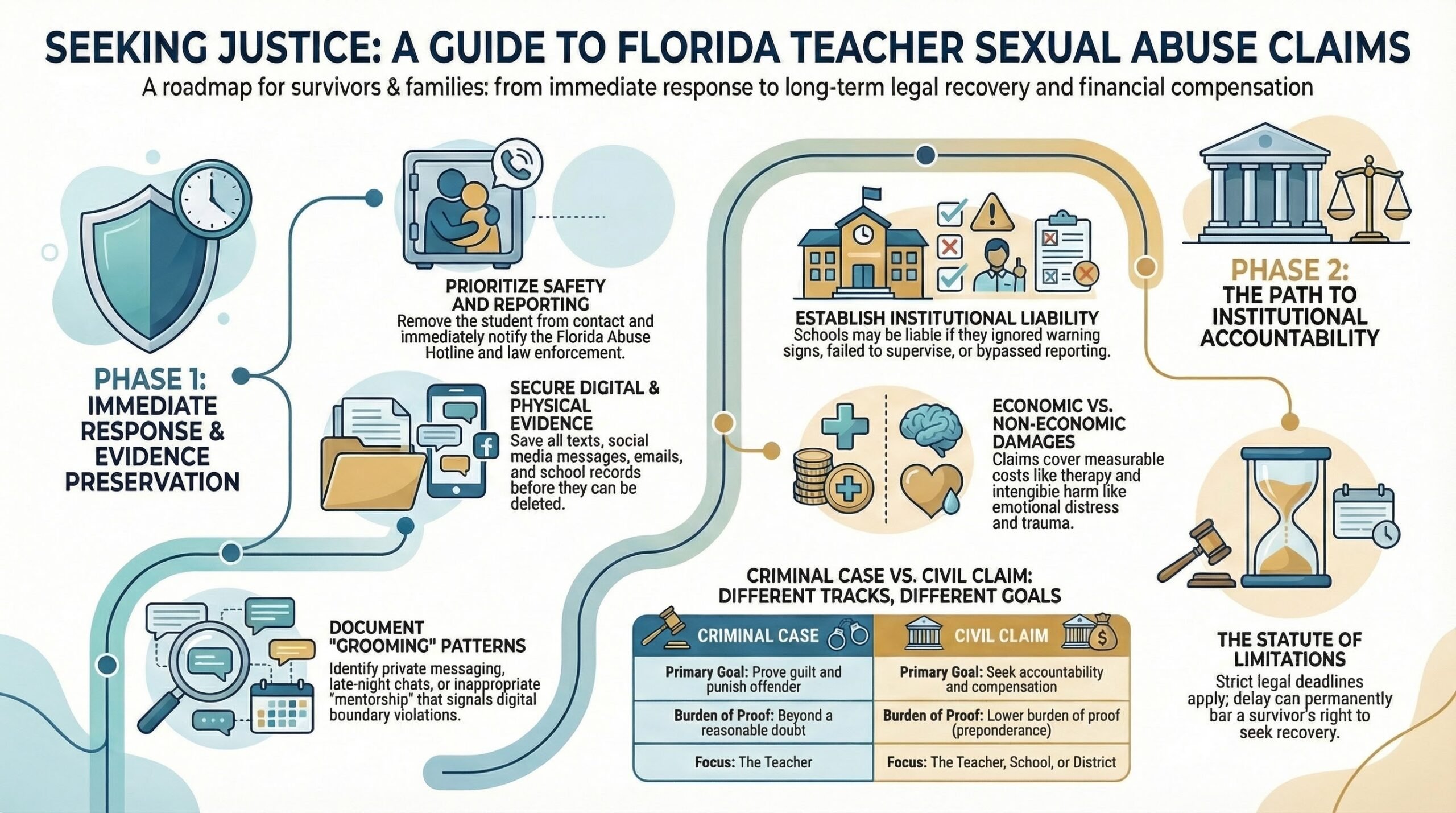
How We Can Help With Your Florida Teacher Sexual Abuse Claim
When a student has suffered sexual abuse by a teacher, pursuing a Florida civil claim often requires immediate, informed legal action. Counsel can help families and survivors protect their rights, preserve evidence, and make careful decisions during a difficult period. A law firm serving this need typically begins by listening with respect, offering confidential support, and explaining available legal options in clear terms.
From there, counsel may gather records, identify responsible parties, and coordinate with appropriate professionals to strengthen the claim. Attorneys can manage communications with schools, insurers, and opposing counsel so that survivors and families are not unnecessarily burdened. They also monitor statute deadlines closely, helping prevent avoidable delays that could affect recovery. Throughout the process, legal advocates work to pursue accountability and financial compensation for harm suffered, treatment needs, and related losses.
Their role is to provide steady guidance, informed advocacy, and practical assistance that support restoration while advancing the claim effectively.
Understanding Teacher Sexual Abuse Cases in Florida


A clear understanding of teacher sexual abuse cases in Florida begins with recognizing that these matters often involve both criminal conduct and separate civil liability. Criminal authorities may investigate allegations, gather evidence, and determine whether charges should be filed under Florida law. At the same time, survivors and families may pursue civil claims seeking accountability, protection, and financial recovery for resulting harm.
OUR CONSULTATIONSARE FREE
START YOUR FREE CASE REVIEW

These cases often require careful review of school policies, personnel records, prior complaints, and compliance with Mandated reporting duties. Florida educators, administrators, and other designated professionals may have legal obligations to promptly report suspected abuse. The prosecution process focuses on proving guilt beyond a reasonable doubt, while civil proceedings generally apply a lower burden of proof. This distinction is important for those committed to protecting children and supporting survivors.
A well-informed approach helps communities respond responsibly, preserve evidence, and encourage reporting through lawful, trauma-conscious systems designed to serve the public and prevent further abuse.
Common Scenarios When Teacher Sexual Abuse Might Take Place in Florida
Teacher sexual abuse in Florida may arise in several recurring settings where access, privacy, and authority intersect. Common examples include classroom isolation incidents, misconduct during extracurricular activities, online communication grooming, and abuse that occurs on field trips. Identifying these scenarios helps clarify how misconduct may develop and where warning signs are most likely to appear.
Classroom Isolation Incidents


Although most classroom activity occurs in plain view, isolation incidents can arise when a student is kept alone with an educator behind a closed door, during free periods, lunch, detention, tutoring, or after-school work. Such circumstances may reduce oversight and create opportunities for boundary violations that otherwise would be deterred by routine supervision. In reviewing these events, advocates often examine schedules, room access, communication records, and prior complaints to determine whether warning signs were missed.
Witness testimonies from nearby staff, students, or custodians may help clarify who was present and how long isolation lasted. These facts can also inform questions involving school district liability, especially when policies on open doors, monitoring, or staffing were ignored. Careful documentation supports protection, accountability, and informed legal evaluation for affected students and families.
Extracurricular Activity Misconduct
Beyond classroom settings, extracurricular activities can present similar risks when supervision is inconsistent, and contact between educators and students becomes less visible. Athletic travel, after-school clubs, rehearsals, competitions, and volunteer programs may create unsupervised moments, relaxed boundaries, or opportunities for favoritism that conceal harmful conduct from families and administrators.
A careful review often considers scheduling records, witness observations, transportation logs, and Confidential school records to identify patterns that suggest misconduct. Prompt reporting may help protect students, support institutional accountability, and provide reliable guidance to those seeking to serve affected families. Early documentation also matters for preserving evidence, especially when incidents occur off campus or during school-sponsored events.
These circumstances may require close examination of policies, staff training, and oversight failures that allowed abuse to continue unchecked over time.
Online Communication Grooming
When communication shifts from school-monitored settings to private messaging platforms, grooming may develop through repeated contact that initially appears harmless. In Florida cases, concerns often arise when an educator uses texts, social media, disappearing messages, or gaming chats to create secrecy and emotional dependence. Digital boundary violations may include late-night conversations, personal compliments, requests for photos, or encouragement to hide exchanges from parents and administrators.
Manipulative messaging patterns can involve testing responses, escalating intimacy, offering special attention, or presenting the student as unusually mature and understanding. These interactions may be framed as mentorship, crisis support, or friendship, which can confuse a young person and delay reporting. Careful review of message history, platform use, and policy breaches can help families and advocates identify grooming indicators early and pursue protective action promptly.
Field Trip Abuse
Field trips can create conditions in which normal school safeguards are weakened, giving an abusive educator greater access and privacy than would exist on campus. Travel, hotel stays, changing rooms, and loosely supervised group movement may allow inappropriate isolation or contact.
When concerns arise, careful documentation of schedules, chaperone assignments, and witness observations can help protect students and support accountability. Schools and districts are expected to apply strict supervision protocols, verify volunteer screening, and maintain reliable reporting procedures before, during, and after off-campus activities. Although background checks are important, they do not prevent every instance of misconduct.
Families seeking to protect children and serve others in their community often look for transparent responses, prompt reporting, and meaningful cooperation with law enforcement, child protection agencies, and state investigations.
Legal Rights of Teacher Sexual Abuse Victims in Florida
How may a student or family respond after discovering sexual abuse by a teacher in Florida? Florida law recognizes important civil and protective rights for victims, including privacy interests, access to educational accommodations, and the ability to pursue accountability when institutions failed in their duty of care.
These rights matter to those committed to protecting children and supporting recovery.
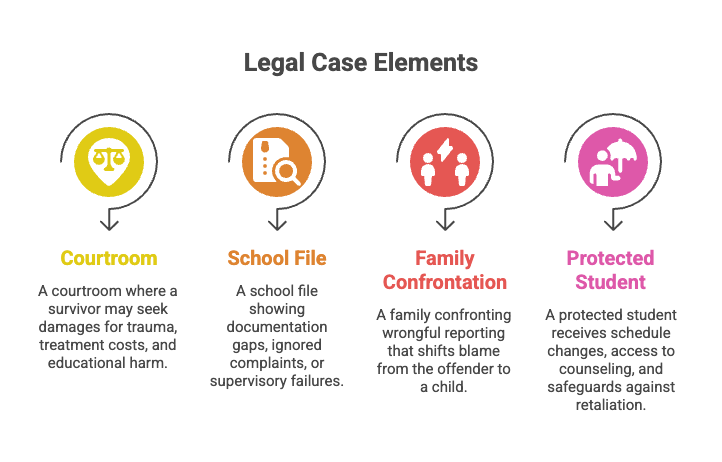
- A courtroom where a survivor may seek damages for trauma, treatment costs, and educational harm.
- A school file showing documentation gaps, ignored complaints, or supervisory failures.
- A family confronting wrongful reporting that shifts blame from the offender to a child.
- A protected student receives schedule changes, access to counseling, and safeguards against retaliation.
Florida victims may also have rights under federal education laws when schools respond with deliberate indifference. In many cases, legal claims may extend beyond the individual teacher to districts or private institutions whose omissions allowed abuse to continue. Time limits apply.
Steps to Take After a Teacher Sexual Abuse Incident in Florida
After a teacher’s sexual abuse incident in Florida, the initial priorities generally include ensuring the victim’s immediate safety, making a prompt report to the appropriate authorities, and taking steps to preserve relevant evidence. These actions can affect both the victim’s protection and the strength of any later criminal, civil, or administrative proceedings. A careful review of each step helps clarify what should be done first and why a timely response is often vital.
Ensure Immediate Safety
When a student’s safety is at risk, the first priority is to remove the student from any contact with the teacher and place the student in a secure, supervised environment. Trusted caregivers, school administrators, or crisis professionals should remain present, helping preserve stability, privacy, and the student’s immediate wellbeing.
Attention should then focus on urgent practical safeguards. These may include changing class assignments, arranging supervised transportation, restricting campus access, and documenting any ongoing attempts to make contact. Families and advocates serving the child may also consider immediate protective orders when circumstances suggest ongoing danger. Awareness of mandated reporting steps can inform decisions about whom to notify internally to prevent further exposure, even before more detailed reporting procedures are addressed.
Throughout this stage, the central objectives are protection, calm support, and the prevention of any additional harm.
Report The Abuse
Because prompt reporting can protect both the student involved and others who may be at risk, allegations of teacher sexual abuse in Florida should be submitted without delay to law enforcement, the Florida Abuse Hotline, and appropriate school officials. Florida law emphasizes mandatory reporting, and any concerned adult should know when to report to authorities. Families, caregivers, and advocates should promptly inform school administrators and request that internal procedures be followed carefully and with attention to student welfare.
Clear communication can support a coordinated response.
Practical documentation steps may include noting dates, times, identities of involved parties, and the names of agencies or officials contacted. A concise written account can help ensure consistency during follow-up. When doubt exists, consulting trained professionals or victim advocates may help a family proceed effectively and lawfully.
Preserve Key Evidence
Although reporting should occur promptly, preserving relevant evidence is equally important, as careful documentation can strengthen any criminal investigation, administrative inquiry, or civil claim arising from teacher sexual abuse in Florida. Families and advocates should focus on Document Preservation by saving texts, emails, social media messages, photographs, medical records, school communications, and counseling notes. Physical items should be secured without alteration, and digital files should be backed up carefully.
A written timeline may help identify patterns, dates, locations, and involved individuals. Promptly collecting witness statements from classmates, staff, or other observers can support a clearer account of events. If injuries exist, photographs and medical evaluations may provide important corroboration. An attorney may later use preserved evidence to protect the survivor’s interests and help hold responsible institutions accountable under Florida law.
How a Florida Teacher Sexual Abuse Lawyer Can Help You Initiate a Case
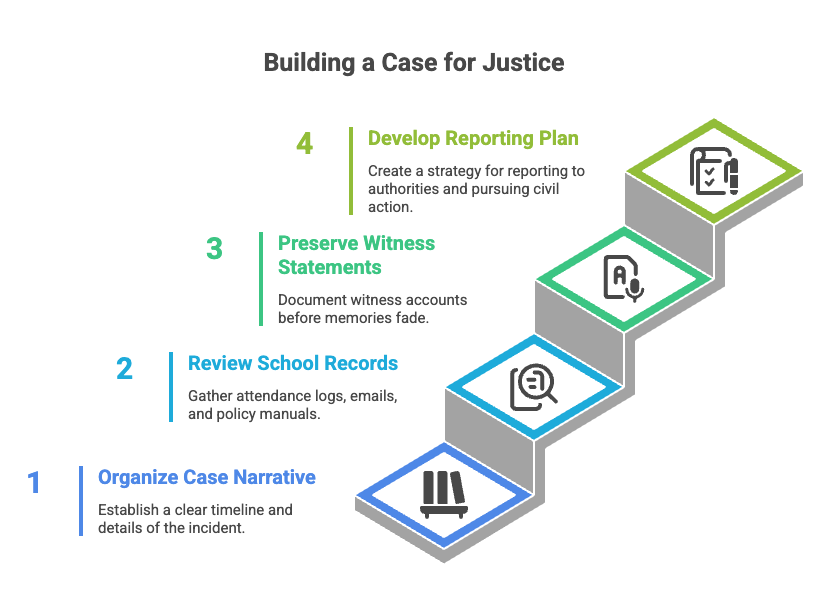
How can a Florida teacher sexual abuse lawyer help initiate a case in a manner that protects both legal rights and personal well-being? Counsel begins by listening carefully, identifying immediate safety concerns, and explaining reporting options with clarity. Early guidance may include witness statement documentation and a review of school records, helping survivors and supportive families assemble facts without unnecessary exposure. This structured approach supports accountability while honoring privacy and dignity.
- A quiet office where timelines, names, and incidents are organized into a clear case narrative.
- A table covered with attendance logs, emails, and policy manuals gathered through the school records review.
- A carefully prepared file containing witness statement documentation, preserving details before memories fade.
- A coordinated plan for reporting to authorities and pursuing civil action, designed to serve the survivor and protect others.
With measured advocacy, a lawyer helps initiate the process, reduces procedural uncertainty, and positions the case for responsible investigation and informed legal action.

Long-Term Effects of Teacher Sexual Abuse Trauma
Teacher sexual abuse trauma may produce enduring emotional and psychological harm, including anxiety, depression, and post-traumatic stress symptoms that can continue well into adulthood. Survivors may also experience academic disruption and social difficulties, such as concentration problems, withdrawal, and behavioral changes, which often affect performance in school and peer relationships. In many cases, the abuse also contributes to lasting trust and relationship issues, making it difficult to form secure personal and professional connections over time.
Emotional And Psychological Impact
Because abuse by a trusted educator often distorts a young person’s sense of safety, the emotional and psychological effects can persist long after the misconduct ends. Survivors may experience anxiety, depression, shame, hypervigilance, and persistent mistrust of authority figures. Many also endure trauma triggers, including ordinary classroom settings, certain phrases, or specific routines that revive distressing memories and physical stress responses.
The fear of disclosure can deepen isolation and delay access to supportive care. Over time, unresolved trauma may interfere with emotional regulation, sleep, concentration, and the ability to form secure relationships. Some individuals develop symptoms consistent with post-traumatic stress, while others struggle with self-blame or a diminished sense of worth. Compassionate intervention, trauma-informed counseling, and steady advocacy can help survivors regain stability, confidence, and a stronger sense of personal safety.
Academic And Social Struggles
Although the abuse may end, its effects often follow a student into the classroom and into peer relationships, where trauma can disrupt both academic performance and social development. Concentration may decline, attendance may become inconsistent, and assignments may feel overwhelming. Changes in classroom dynamics can also intensify feelings of isolation, especially when a student struggles to participate, speak confidently, or remain engaged during instruction.
Outside academics, trauma may affect age-appropriate social functioning. A student may withdraw from activities, avoid group settings, or respond unpredictably to ordinary conflict. Peer pressure can become harder to manage when self-esteem and emotional regulation have been weakened by abuse. Those who support harmed students should recognize these struggles early, respond with patience, and promote stable educational environments that encourage safety, consistency, and appropriate academic support.
Lasting Trust And Relationship Issues
Difficulties at school and in peer settings often continue beyond the immediate aftermath of abuse, shaping how a survivor understands safety, authority, and personal boundaries over time. Trust may become fragile, especially where adults hold influence or affection resembles control. Some survivors later struggle to identify healthy support, because Betrayal trauma bonding can distort expectations of loyalty, secrecy, and care.
In adult relationships, boundary-violation fears may manifest as withdrawal, hypervigilance, or difficulty expressing needs. A survivor may test others repeatedly, expect manipulation, or remain in harmful dynamics to avoid abandonment. These patterns are not signs of weakness. They reflect adaptive responses to exploitation by a trusted figure. Compassionate intervention, trauma-informed counseling, and consistent legal advocacy can help restore a clearer sense of safety, dignity, and relational stability.
What to Expect During a Florida Teacher Sexual Abuse Claim Process
A Florida teacher sexual abuse claim process generally begins with an initial case evaluation, during which the facts, potential liability, and applicable deadlines are assessed. It then proceeds to the filing of the legal claim, followed by evidence collection and investigation to support the allegations and identify responsible parties. Depending on the strength of the case and the responses of those involved, the matter may be resolved through settlement or proceed to trial.
Initial Case Evaluation
When a Florida teacher sexual abuse claim is first reviewed, the initial case evaluation generally focuses on the basic facts, the available evidence, and the legal options that may apply. During this stage, an attorney commonly examines timelines, school involvement, witness accounts, communications, and any prior reports or institutional responses. The review also addresses confidentiality considerations, especially where records involve minors, schools, or sensitive medical and counseling information.
A careful evaluation helps determine whether additional documentation or independent corroboration may be useful before further action is considered. Attention is often given to victim support resources, including counseling referrals and advocacy services, because informed guidance can help families and survivors make decisions with greater stability. This early assessment is intended to clarify strengths, identify concerns, and outline realistic next steps without unnecessary pressure or confusion.
Filing The Legal Claim
Once the initial case evaluation has clarified the relevant facts and potential legal theories, the filing stage generally begins with preparation of a formal claim that identifies the alleged abuse, the parties involved, and the basis for liability under Florida law.
Counsel then determines where and when the claim should be filed, paying close attention to statute limitations and any notice requirements that may apply. In matters involving schools or public entities, procedural rules can affect deadlines and the form of the pleading. The claim may reference initial reporting to administrators, law enforcement, or child protection authorities when relevant to timing and institutional responsibility.
Throughout this stage, survivors and families are often guided with care, so decisions remain informed, orderly, and directed toward accountability, protection, and the broader service of community safety.
Evidence And Investigation
Because the filing of a claim does not, by itself, establish liability, the evidence and investigation stage focuses on gathering reliable information to confirm what occurred, identify who knew or should have known of the misconduct, and measure the resulting harm. Attorneys and investigators may collect school records, communications, disciplinary files, medical documentation, and counseling notes where legally appropriate. Witness interviews can help clarify timelines, reporting history, and prior concerns involving the teacher or institution.
This stage may also involve video preservation, forensic review of electronic devices, and requests to prevent the destruction of relevant documents. Investigators often examine mandatory reporting compliance, supervision practices, and prior complaints. Throughout the process, careful documentation supports accountability and helps protect other students from similar harm. A thorough investigation can strengthen the factual foundation of the claim.
Settlement Or Trial
How a Florida teacher sexual abuse claim resolves depends on the strength of the evidence, the parties involved, and the willingness of the school, insurer, or defendant to negotiate. Many claims end in settlement after counsel evaluates damages, liability, and applicable Evidentiary standards. A settlement may provide privacy, faster compensation, and reduced stress for survivors and families seeking stability and accountability.
If settlement efforts fail, the case may proceed to trial. Trial preparation often includes depositions, expert testimony, motions, and careful review of records. The court applies Evidentiary standards to determine what the jury may hear. Juror selection is also important because impartial jurors must assess difficult facts fairly. A verdict can offer public accountability, but it also involves greater time, expense, and uncertainty for all parties involved.
Compensation for Florida Teacher Sexual Abuse Damages
What compensation may be available in a Florida teacher sexual abuse case depends on the nature of the harm, the strength of the evidence, and the parties responsible for the abuse or for allowing it to occur. Courts may consider therapy needs, educational disruption, safety planning, and other losses tied to recovery and accountability. Practical evidence-preservation tips and a careful settlement-negotiation strategy can help families support recovery while protecting the claim.
| Consideration | Why It Matters |
|---|---|
| Documentation | Supports credibility |
| Liability | Identifies responsible parties |
| Treatment needs | Shows ongoing impact |
| School response | May reveal negligence |
| Timing | Affects legal options |
Compensation may arise through insurance, negotiated resolution, or a court judgment. In some matters, schools, districts, or third parties may share responsibility if warning signs were ignored. A lawyer typically evaluates records, witnesses, and institutional conduct to pursue a result that advances survivor care, community protection, and meaningful accountability for preventable failures.
Economic vs Non-Economic Damages in Florida Teacher Sexual Abuse Cases
In Florida teacher sexual abuse cases, damages are often divided into economic losses, such as medical expenses, therapy costs, and lost income, and non-economic harms, including pain and suffering, emotional distress, and diminished quality of life. A clear valuation of both categories is crucial, because non-economic losses may be substantial even when financial records capture only part of the harm. Providing full compensation typically requires thorough documentation, credible testimony, and evidence that connects the abuse to both measurable and lasting personal consequences.
Economic Damages Explained
Often, a civil claim arising from teacher sexual abuse in Florida includes both economic and non-economic damages, each serving a distinct purpose in measuring harm. Economic damages focus on measurable financial losses tied to the abuse and its aftermath. These may include counseling costs, psychiatric treatment, medication, hospital care, educational support, and lost wages or reduced earning capacity.
In service to survivors and their families, careful documentation is required. Billing records, employer statements, treatment plans, and expert evaluations may help establish the amount owed. Early evidence preservation can protect records that prove expenses over time. Statute tolling may also matter where delayed reporting affects filing deadlines, especially when trauma or age influenced disclosure. A thorough damages review helps ensure that accountable parties fully address the survivor’s concrete financial burdens.
Non-Economic Losses Valued
Although non-economic damages cannot be calculated through receipts or wage statements, they remain a crucial part of teacher sexual abuse cases in Florida because they address the human impact of the abuse. These losses may include pain, emotional distress, humiliation, loss of dignity, and disruption of relationships, all of which can profoundly affect daily life and long-term well-being.
In a damages calculation, these harms are valued through careful review of testimony, mental health records, and the survivor’s changed functioning over time. Courts and counsel consider severity, duration, and the extent to which trauma restoration limits ordinary activities, education, trust, and community involvement. A jury award for non-economic losses is intended to recognize suffering that cannot be measured in dollars alone, while still reflecting the seriousness of the abuse and its lasting consequences.
Proving Full Compensation
A complete damages claim in a Florida teacher sexual abuse case must account for both economic and non-economic losses, because full compensation depends on proving the total effect of the abuse rather than only its measurable costs. Economic damages may include therapy expenses, future treatment, lost educational opportunities, and reduced earning capacity. Non-economic damages address pain, emotional distress, humiliation, and long-term psychological harm.
To support both categories, counsel typically presents medical records, expert opinions, school documents, and testimony from caregivers or professionals. Negligence evidence can also strengthen the claim by showing how a school failed to prevent foreseeable harm or ignored warning signs. Because these cases often involve contested facts, witness credibility is central to fairly valuing damages. Careful proof helps survivors pursue accountability while seeking resources needed for recovery and future stability.
When a Florida Teacher Sexual Abuse Case Goes to Trial vs Settlement
Resolution in a Florida teacher sexual abuse case may come through a negotiated settlement or a trial verdict, and the appropriate path depends on the evidence, the extent of damages, and the parties’ willingness to accept risk. Settlement may provide privacy, faster relief, and reduced stress for survivors and families seeking stability. It can also avoid the uncertainty of courtroom proceedings and appeals.
Trial may become necessary when liability is denied, compensation is disputed, or institutional misconduct must be examined in public. In those circumstances, counsel may focus on preparing testimony, organizing records, consulting experts, and carefully addressing jury selection. A verdict can establish accountability and may yield broader findings of negligent supervision or failure to protect students.
However, a trial often requires more time, expense, and emotional endurance. A service-minded legal approach evaluates both options carefully, aiming to protect the survivor’s well-being while pursuing a fair and lawful outcome for all involved parties.
The Statute of Limitations for Florida Teacher Sexual Abuse Cases
Timing also shapes whether a Florida teacher sexual abuse claim can proceed at all, because filing deadlines may limit or bar a survivor’s right to seek civil recovery. Florida law may allow different limitation periods depending on the survivor’s age, the nature of the abuse, and whether delayed discovery applies. Because these rules can change, careful review of current statutes is critical.
Statutes of limitations serve the public interest by encouraging timely action, protecting the preservation of evidence, and supporting accurate fact-finding. In school abuse matters, records, witness memories, and digital communications may become harder to secure as years pass. Related legal duties, including mandated reporting, can also affect how incidents are documented and investigated.
For survivors and those who support them, understanding these deadlines helps preserve legal options while promoting accountability and community safety. A prompt assessment of timing issues may prevent avoidable barriers to justice and strengthen a claim’s overall factual foundation.
When to Contact a Teacher Sexual Abuse Lawyer in Florida
Because early legal guidance can materially affect both safety planning and evidence preservation, contact with a Florida teacher sexual abuse lawyer is often most important as soon as abuse is suspected, disclosed, or discovered. Prompt consultation can help families and supportive adults document communications, preserve digital records, identify witnesses, and avoid actions that could unintentionally compromise later proceedings or a child’s well-being.
Immediate outreach may also be appropriate when a school minimizes concerns, delays internal action, or fails to comply with mandated reporting laws. A lawyer may be contacted after troubling boundary violations, grooming behavior, inappropriate messages, or any sexual contact, even if uncertainty remains about what occurred. Early consultation is also prudent when there are questions about reporting to law enforcement, child protective authorities, or school administrators, and when child consent issues are raised to deflect responsibility.
Timely legal guidance helps concerned individuals act carefully, protect vulnerable students, and support informed decisions at every stage thereafter.
Why You Need an Experienced Florida Teacher Sexual Abuse Lawyer
When allegations involve sexual misconduct by a teacher, an experienced Florida teacher sexual abuse lawyer provides more than general legal advice; such counsel brings a working knowledge of child abuse reporting requirements, school liability issues, evidence preservation, and the practical challenges that often arise in these cases.
Experienced representation helps protect the interests of children and families while advancing accountability within schools and communities. A lawyer familiar with these matters can identify responsible parties, address Confidentiality concerns, and guide interactions with law enforcement, school officials, and child protection agencies. Counsel also helps preserve records, witness statements, and digital evidence before important details are lost.
Because these claims may involve strict filing deadlines and exceptions, informed advice regarding statute limitations is key. Skilled legal support can reduce procedural mistakes, strengthen a civil claim, and allow families and advocates to focus on safety, recovery, and the broader responsibility of protecting other students from preventable harm in educational settings.
How to Choose the Right Teacher Sexual Abuse Lawyer for Your Case in Florida
The selection of a Florida teacher sexual abuse lawyer should begin with a careful review of the attorney’s experience handling child sexual abuse and school-related misconduct claims, rather than a general personal injury background alone. Families often benefit from counsel who understands trauma-informed representation, school reporting obligations, and the civil process.
A careful evaluation should also consider the lawyer’s record in Victim advocacy, communication practices, and approach to evidence protection from the earliest stage of the case. An attorney should explain investigative steps clearly, coordinate with appropriate professionals, and act with respect for the survivor’s wellbeing and long-term interests. It is also important to assess whether the lawyer has experience addressing institutional negligence, mandatory reporting failures, and insurance issues that may affect recovery.
Thoughtful clients may review professional reputation, responsiveness, and courtroom readiness before making a decision. Choosing counsel with focused knowledge and disciplined case preparation can strengthen accountability efforts and support meaningful legal action.
About The Law Offices of Anidjar & Levine
After considering the qualities that matter in selecting counsel, many families may wish to review the background and client-focused approach of The Law Offices of Anidjar & Levine.
The firm is known for responsive communication, practical guidance, and a commitment to helping injured and vulnerable people pursue accountability through civil claims and related legal processes.
In matters involving alleged teacher sexual abuse, the firm emphasizes careful listening, Confidential consultations, and thorough preparation.
Attorneys assess available evidence, explain legal options in plain terms, and develop a case strategy tailored to the survivor’s circumstances and long-term interests.
This service-oriented approach can be especially important for families seeking stability, respect, and informed decision-making during a difficult period.
The Law Offices of Anidjar & Levine also presents itself as accessible and attentive, with a focus on client needs from intake through resolution.
For those evaluating representation in Florida, that reputation may warrant close consideration and careful review.

Frequently Asked Questions
Can a School Be Liable for Abuse During Off-Campus School Events?
Yes, a school can be liable for abuse during off-campus school events when it exercises control over the activity, sponsors the activity, or fails to provide reasonable supervision. Off-campus liability often depends on foreseeability, prior complaints, staff conduct, and whether administrators ignored warning signs. Courts may also consider transportation, lodging, and event oversight. When negligence is established, damages for victims may include medical costs, counseling, pain, suffering, and educational harm.
Are Private Schools Subject to Different Abuse Reporting Rules in Florida?
Yes. In Florida, a private school generally follows the same mandatory abuse reporting duties as public schools, because state law applies broadly to any person who suspects child abuse, abandonment, or neglect. Private school policies may differ in internal procedures, training, and supervision, yet they cannot reduce statutory duties. Those serving children should understand that reports must be made promptly to the state hotline, regardless of the institution’s private status.
Can Text Messages and Social Media Posts Be Evidence in These Cases?
Yes, text message records and social media posts can serve as important evidence in these cases. They may help show grooming, coercion, intent, timing, or efforts to conceal misconduct. Courts and investigators often examine authenticity, context, and whether the communications were lawfully preserved. When properly collected, such material can support survivor accounts and assist those working to protect others, promote accountability, and establish a clearer factual record for legal review.
What if the Abusive Teacher Has Already Been Criminally Convicted?
A criminal conviction can strongly support a related civil claim by helping establish wrongful conduct and reducing factual disputes. Even if the defendant seeks to appeal the conviction, the civil matter may still proceed, depending on the court’s orders and timing. Survivors may also pursue post-conviction damages, including therapy costs, lost income, and pain and suffering. Legal counsel can assess deadlines, evidence, and the best path toward accountability and recovery.
Can Parents File a Claim if the Victim Is Now an Adult?
Yes, parents may sometimes file a claim even if the victim is now an adult, but this depends on standing, damages, and statute of limitations. In many adult claims, the adult survivor usually controls the primary legal action. Parents may still pursue certain related losses they personally suffered, if state law permits. Careful legal review helps families understand who may sue, what deadlines apply, and how to support the survivor responsibly.
—————————
Teacher sexual abuse claims in Florida require prompt action, careful documentation, and experienced legal guidance.
Victims may have rights against the individual offender and, in some cases, the school or institution that failed to protect them.
A qualified Florida teacher sexual abuse lawyer can evaluate the facts, explain available legal options, and pursue accountability through the appropriate civil process.
Florida Sexual Assault Lawyer services from Law Offices of Anidjar and Levine may provide focused representation for those seeking justice and meaningful legal support.

