
Law Offices of Anidjar and Levine helps families secure a child’s safety, report abuse to the proper authorities, preserve vital evidence, and evaluate civil claims against abusers and negligent institutions.
Counsel may clarify legal options, explain reporting duties, manage communications, and seek protective measures that reduce further harm.
These cases often require careful timelines, trauma-informed support, and disciplined record review.
The sections that follow explain central steps, rights, and considerations in greater detail.
For related guidance, visit Florida Sexual Assault Lawyer.
Main Takeaways
- A Florida child sexual abuse lawyer assesses the facts, identifies liable individuals or institutions, and explains available civil and reporting options.
- They help protect the child’s well-being by coordinating with medical providers, counselors, and child advocacy professionals using a trauma-informed approach.
- Attorneys preserve evidence by securing records, documenting timelines, and safeguarding physical and digital materials for civil or criminal matters.
- They manage communications with insurers, institutions, and defendants while preparing filings and seeking protective measures that reduce further harm.
- A lawyer can explain Florida’s reporting channels, mandatory reporting duties, and timelines that may affect claims involving minors.


How We Can Help With Your Florida Child Sexual Abuse Claim
When a child has suffered sexual abuse, a Florida child sexual abuse lawyer can help by assessing the facts of the case, identifying all potentially liable parties, and determining the legal options available under state law. Counsel also assists families by preserving records, coordinating with appropriate professionals, and managing communications with insurers, institutions, and other involved parties.
A careful legal team approaches each matter with discipline, discretion, and respect for the child’s well-being. Its role includes reviewing compliance with mandatory reporting laws, examining organizational policies, and determining whether preventable failures contributed to the harm. Attorneys may also help families locate survivor support services that promote stability during the legal process. By organizing evidence, explaining deadlines, and preparing a clear strategy, counsel supports informed decisions and responsible action. This guidance can reduce confusion, protect the family’s interests, and allow caregivers to focus on safety, treatment, and the practical steps needed to pursue accountability and long-term recovery.
OUR CONSULTATIONSARE FREE
START YOUR FREE CASE REVIEW

Understanding Child Sexual Abuse Cases in Florida
In Florida, child sexual abuse cases involve both criminal conduct and potential civil liability, and each path serves a different legal purpose. Criminal proceedings seek punishment and community protection, while civil claims may pursue accountability, damages, and support for a survivor’s recovery. For those committed to helping others, understanding this distinction can improve guidance, reporting, and access to services.
Florida law also requires careful attention to statutory timelines and the basics of evidence. Statute timelines can affect when a civil lawsuit may be filed, even though some claims involving minors follow different rules than ordinary injury cases. Evidence basics often include disclosures, medical records, digital communications, witness accounts, and professional evaluations. A thorough review helps identify what may support a claim and what agencies may be involved. Because these matters are highly sensitive, legal counsel often coordinates with families, advocates, and professionals to protect the child’s well-being while preserving information necessary for legal action and informed decisions.
Common Scenarios When Child Sexual Abuse Might Take Place in Florida
Child sexual abuse in Florida may occur in a range of settings, often involving trusted adults, school environments, online interactions, or organized activities. These situations can develop through positions of authority, repeated access to a child, or intentional grooming behaviors that reduce the likelihood of immediate disclosure. A clear review of these common scenarios helps frame how abuse may arise and why early recognition of warning signs is important.
Abuse By Trusted Adults
Although parents and guardians often work to protect children from obvious dangers, sexual abuse frequently occurs at the hands of adults who have earned a family’s trust, such as relatives, family friends, teachers, coaches, clergy members, babysitters, or other authority figures. These individuals may exploit access, authority, or emotional closeness to isolate a child and discourage disclosure. Grooming can involve gifts, favoritism, secrecy, or gradual boundary violations that appear harmless at first.
Families and caregivers who serve children should remain attentive to behavioral changes, regression, fearfulness, or avoidance of certain adults. Early recognition supports victim safety and allows prompt intervention before further harm occurs. In Florida, Mandatory reporting obligations may apply when abuse is suspected, helping protect vulnerable children and connect families with legal, medical, and supportive resources during a difficult time.
Incidents In Schools
Schools present another setting where sexual abuse may occur, particularly when a student is placed under the supervision of teachers, staff members, coaches, volunteers, or older students with access to private or less monitored spaces. Incidents may arise during extracurricular activities, transportation, locker room access, tutoring sessions, or disciplinary isolation, where oversight is limited, and boundaries can be violated.
In these situations, careful review of school liability may be necessary, especially if warning signs were ignored or safety policies were inadequate. Florida schools and personnel are subject to mandated reporting duties when abuse is suspected. Eyewitness accounts, staff observations, attendance records, and surveillance footage may help clarify what occurred. A prompt, informed response can support student protection, preserve evidence, and promote accountability for institutions entrusted with children’s care.
Online Grooming Risks
Because online communication can create a false sense of familiarity and privacy, grooming may begin through social media platforms, gaming applications, messaging services, or other digital spaces where minors interact with adults or older peers.
Perpetrators may build trust slowly, offer attention, request secrecy, or introduce sexual topics through seemingly casual exchanges. These behaviors are important red flags, especially when a child receives gifts, private messages, or pressure to share images or personal details. Caregivers and community members who prioritize online safety often monitor changes in communication patterns, emotional withdrawal, or sudden defensiveness about devices.
Early recognition can help interrupt harmful contact before abuse escalates. When misconduct is suspected, prompt reporting, careful documentation, and access to victim support services may help protect the child and preserve important evidence for further action.
Abuse During Activities
Abuse may occur during routine youth activities when a child is placed in settings that involve supervision, transportation, instruction, or one-on-one contact with an adult or older youth. Such settings can include sports, tutoring, faith programs, camps, lessons, and volunteer events, where authority and access may be misused.
Risk often increases when screening is weak, policies are unclear, or private interactions go unmonitored. Adults who serve children are expected to model Consent and boundaries, maintain transparency, and avoid secrecy, favoritism, or unnecessary physical contact.
Safe caregiving includes open-door practices, documented transportation plans, and prompt reporting of concerning behavior. Families, staff, and community members who observe changes in a child’s behavior should respond carefully, prioritize safety, and seek qualified legal and protective guidance when abuse is suspected immediately.


Legal Rights of Child Sexual Abuse Victims in Florida
Understanding the legal rights of child sexual abuse victims in Florida begins with recognizing that state law provides several avenues for protection, accountability, and financial recovery. Florida law supports children and families through civil remedies, criminal enforcement, and victim protections designed to preserve dignity, privacy, and access to justice. Communities devoted to serving others should clearly understand these rights.
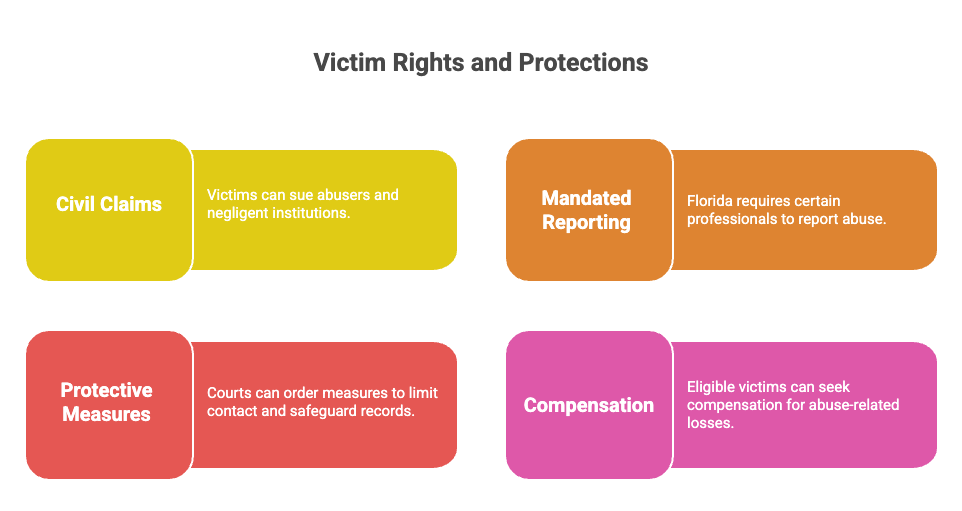
Florida law offers child sexual abuse victims protection, accountability, and access to justice while preserving dignity, privacy, and recovery.
- Victims may pursue civil claims against abusers and, in some cases, institutions whose negligence enabled abuse.
- Florida imposes mandated reporting duties on certain professionals, helping expose abuse and protect vulnerable children.
- Courts may order protective measures that limit contact, safeguard records, and reduce further harm during legal proceedings.
- Eligible victims may seek compensation for medical care, counseling, emotional suffering, and other abuse-related losses.
These legal rights reflect Florida’s broader commitment to protecting children, strengthening accountability, and supporting long-term recovery. Knowledge of these protections helps caring advocates respond responsibly and compassionately.
Steps to Take After a Child Sexual Abuse Incident in Florida
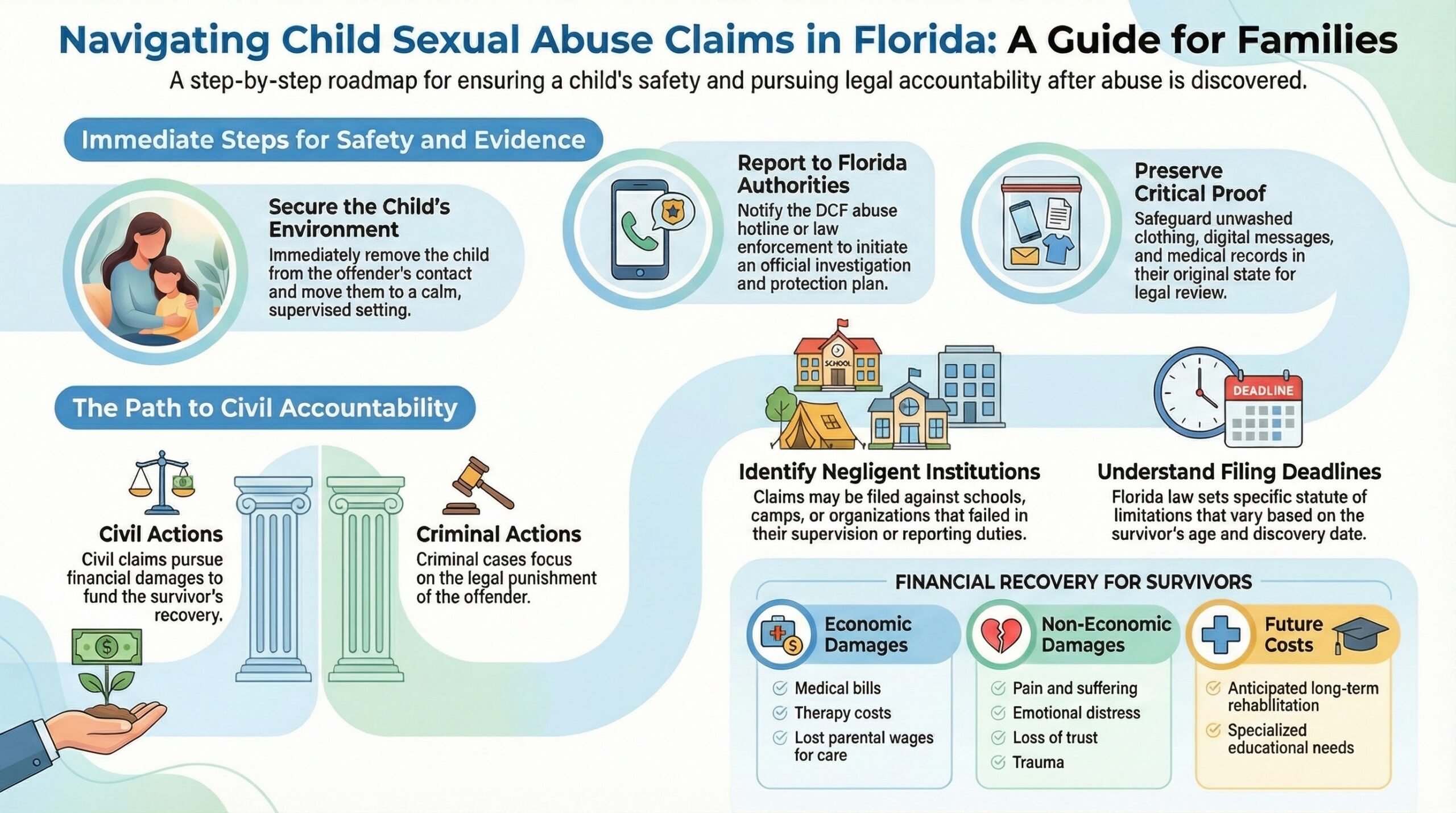
After a child sexual abuse incident in Florida, the immediate priority is to secure the child’s safety and shield a protected environment. The matter should then be reported promptly to the appropriate authorities, as timely reporting can support both protection and investigation efforts. It is also important to preserve vital evidence, including communications, clothing, and medical records, because these materials may be crucial in any criminal or civil proceeding.
Ensure Child’s Safety
When a child may have been subjected to sexual abuse, the immediate priority is to secure the child’s physical safety and remove the child from any contact with the suspected offender. Caregivers and trusted adults should move the child to a calm, supervised setting, limit questioning, and seek immediate medical attention if needed. They should preserve clothing or other items that may later assist professionals, while focusing first on comfort and stability.
Those serving the child should understand that mandated reporting obligations and reporting timelines exist, yet the first practical task remains safety. In serious circumstances, law enforcement or child welfare authorities may arrange protective custody. Early coordination with medical providers, counselors, and child advocacy professionals can help protect the child’s wellbeing and support a careful, informed response.
Report The Abuse
Once the child is in a safe setting, the suspected abuse should be reported promptly to the appropriate authorities so that an official response can begin and further harm can be prevented. In Florida, a report may be made to the Department of Children and Families abuse hotline, local law enforcement, or emergency services when there is urgent danger.
Mandated reporting laws require certain professionals to notify authorities when abuse is suspected, but any concerned adult may and should act without delay. Timely reporting allows trained agencies to assess immediate risk, coordinate protective services, and begin a criminal investigation when warranted. Those serving vulnerable children should provide clear, factual information, remain cooperative with investigators, and follow official guidance. Prompt action helps protect the child and may safeguard other children from abuse.
Preserve Key Evidence
Prompt reporting helps initiate protection and investigation, but preserving available evidence can also materially affect both criminal proceedings and any related civil claim. Caregivers should avoid washing clothing, bedding, or other items that may contain forensic material, and they should place them in clean paper bags kept in secure locations. Any photographs, messages, emails, social media posts, or other Digital evidence should be saved without alteration and backed up when possible.
Those assisting the child should also document the timeline, including dates, times, observed injuries, behavioral changes, and the names of potential witnesses. Limiting handling of physical items helps maintain chain custody and reduces later challenges to authenticity. A qualified attorney can guide families and service-minded advocates in preserving evidence responsibly while supporting the child’s immediate well-being and safety.
How a Florida Child Sexual Abuse Lawyer Can Help You Initiate a Case
Because the first steps in a child sexual abuse claim can affect both the strength of the case and the protection of the child, a Florida child sexual abuse lawyer helps initiate the process with careful legal and procedural guidance. Through an Initial legal consultation, counsel identifies urgent concerns, explains reporting options, and outlines duties owed to the child and family. Early evidence preservation also supports accountability and respectful advocacy.
Early legal guidance helps protect the child, preserve critical evidence, and support accountable, respectful action from the start.
- Assess facts, timelines, and possible defendants with discretion.
- Coordinate reporting to law enforcement or child protection agencies.
- Secure records, communications, and witness information before loss.
- Prepare filings and advise on protective steps for the child.
Long-Term Effects of Child Sexual Abuse Trauma
Child sexual abuse trauma can produce lasting emotional and psychological harm, including anxiety, depression, and persistent difficulties with trust and self-worth. It may also contribute to physical symptoms and behavioral changes, such as sleep disruption, substance misuse, withdrawal, or problems with emotional regulation. These effects often persist into adulthood, interfering with intimate relationships, family stability, and the ability to maintain healthy interpersonal boundaries.
Emotional And Psychological Impact
Although the physical injuries associated with sexual abuse may recover, the emotional and psychological consequences often persist for years and, in many cases, into adulthood. Survivors may experience shame, fear, mistrust, confusion, and chronic anxiety that interfere with relationships, education, and daily functioning. Trauma bond effects can also complicate a child’s understanding of loyalty, safety, and consent, especially when the abuser held authority or affection.
Over time, many survivors develop coping mechanisms intended to manage overwhelming distress. Some responses may appear adaptive in one setting yet become harmful when left unaddressed. Without compassionate intervention, unresolved trauma can alter self-worth, emotional regulation, and the ability to form secure attachments. For those committed to serving children and families, recognizing these invisible injuries is crucial to supporting recovery, accountability, and lasting stability.
Physical And Behavioral Changes
As trauma persists over time, it may appear not only in emotional distress but also in measurable physical symptoms and behavioral changes that affect a survivor’s development and daily functioning. Children may experience sleep disturbances, headaches, gastrointestinal complaints, changes in appetite, regression, self-soothing behaviors, and declines in school performance. Some become hypervigilant, aggressive, withdrawn, or unusually compliant, while others show risk-taking, truancy, or self-harm.
These patterns can be misunderstood by caregivers, teachers, or institutions attempting to explain troubling conduct without recognizing trauma exposure. Such misunderstandings may contribute to issues of witness credibility when disclosures seem delayed, fragmented, or inconsistent. In service-oriented legal and professional settings, careful documentation, trauma-informed observation, and prompt action matter, especially where mandated reporting violations may have allowed harmful conditions to continue unaddressed for extended periods.
Challenges In Adult Relationships
Long after the immediate physical and behavioral effects of abuse have emerged, many survivors continue to face serious difficulties in adult relationships. Past trauma may shape attachment patterns, distort expectations of safety, and create persistent fear of vulnerability. As a result, partners, family members, and caregivers may encounter withdrawal, conflict avoidance, or heightened sensitivity to perceived rejection.
These relational effects often include adult communication barriers, especially when survivors struggle to express needs, establish boundaries, or interpret healthy affection. Service-minded professionals and supportive loved ones can help by recognizing these patterns without judgment and by encouraging consistent, trauma-informed support.
Over time, trust rebuilding strategies, including counseling, clear communication, and reliable behavior, may strengthen the connection. With informed care and patient support, survivors may develop healthier relational foundations and greater emotional stability over time.
What to Expect During a Florida Child Sexual Abuse Claim Process
A Florida child sexual abuse claim process typically begins with an initial case evaluation, during which the facts, available records, and potential legal options are reviewed. It then proceeds to the filing of the legal claim, followed by an investigation and evidence-gathering phase intended to support the allegations and assess liability. Depending on the strength of the evidence and the parties’ positions, the matter may conclude through settlement negotiations or proceed to trial.
Initial Case Evaluation
What occurs during an initial case evaluation in a Florida child sexual abuse claim often determines how the matter will proceed. During this stage, attorneys conduct confidential consultations to learn the basic facts, identify immediate safety concerns, and understand the survivor’s goals. They review available records, identify potential witnesses, and assess whether other parties may be responsible under Florida law.
The evaluation also clarifies the case timeline, including when abuse occurred, when it was discovered, and what reporting or treatment followed. Lawyers explain how evidence may be preserved and what practical steps may support the survivor and family. This meeting is also used to answer questions, outline realistic expectations, and determine whether the firm can offer informed, compassionate assistance that serves the survivor’s best interests and ongoing well-being.
Filing The Legal Claim
Once counsel determines that sufficient facts and legal grounds support the matter, the filing stage generally begins with preparation of a formal complaint that identifies the parties, outlines the alleged abuse, and states the basis for civil liability under Florida law. The complaint is filed in the appropriate court, then formally served on each defendant within the required deadlines.
After filing, defendants are given an opportunity to respond, raise defenses, or seek dismissal. The court may issue scheduling directives that shape the pace of the case and guide responsible participation by all parties. Counsel also begins evaluating case themes, anticipated Expert testimony, and early trial preparation needs. Throughout this stage, careful compliance with procedural rules helps protect the claimant’s position and supports an orderly process aimed at accountability, justice, and community protection.
Investigation And Evidence Gathering
Following the filing stage, the case typically moves into the investigation and evidence-gathering phase, where counsel works to develop a clear factual record and assess the strength of the claims. Attorneys may obtain medical records, school reports, therapy notes, and communications that help establish timelines, patterns, and corroborating details. Witness interviews are often conducted carefully to preserve accuracy, minimize further harm, and identify additional sources of relevant information.
This phase may also involve reviewing digital artifacts, including messages, emails, social media activity, photographs, and metadata. When appropriate, counsel may consult forensic specialists, mental health professionals, or child advocacy resources to responsibly interpret records. Throughout the process, attorneys generally seek to protect the child’s dignity, support informed decision making, and build an evidentiary foundation that reflects both legal standards and the broader interests of safety.
Settlement Or Trial Proceedings
In many Florida child sexual abuse claims, the matter proceeds either toward negotiated settlement or, if a resolution cannot be reached, toward trial. During this phase, counsel evaluates liability, damages, and the strength of available proof, while continuing Evidence preservation to protect records, communications, and witness accounts.
Settlement negotiation may involve insurers, institutions, or other responsible parties, with the goal of securing accountability and resources that support the survivor’s long-term care. If fair terms are not offered, the trial strategy becomes central. Attorneys prepare motions, organize exhibits, and identify witnesses whose expert testimony may explain trauma, reporting delays, or institutional failures. At trial, the court considers evidence and legal arguments, while the survivor’s interests remain the guiding concern. Each step is handled with care, professionalism, and respect.
Compensation for Florida Child Sexual Abuse Damages
How can compensation address harm that extends far beyond immediate physical injury? In Florida child sexual abuse claims, compensation serves a restorative purpose by supporting treatment, safety planning, and long-term stability for survivors and families. A lawyer evaluates available sources of recovery, including responsible individuals, institutions, and insurance coverage, while anticipating Common defenses raised by opposing parties.
| Source | Purpose | Consideration |
|---|---|---|
| Individual defendant | Accountability | Asset availability |
| Institution | System failure claims | Notice, supervision |
| Insurance policy | Funding support | Coverage limits |
Courts and insurers may consider the severity of harm, duration of abuse, institutional knowledge, and the need for future care. Effective advocacy often includes gathering records, consulting qualified experts, and presenting a clear narrative that explains ongoing effects without unnecessary intrusion. This process can help secure resources that promote protection, continuity of care, and practical support for those committed to a survivor’s well-being and recovery.
Economic vs Non-Economic Damages in Florida Child Sexual Abuse Cases
Florida child sexual abuse cases may involve both economic damages, which address measurable financial losses, and non-economic damages, which account for harms that are real but not easily reduced to a specific dollar amount. A clear understanding of this distinction helps explain how medical costs, therapy expenses, pain and suffering, and emotional distress may be evaluated in a civil claim. The discussion also considers how evidence, expert opinions, and case-specific facts are used to support the value assigned to each category of damage.
Economic Damages Overview
Under Florida law, damages in child sexual abuse cases generally fall into two categories: economic and non-economic. Economic damages address measurable financial losses connected to the abuse and its aftermath. These amounts may include Medical billing for emergency care, counseling, medications, and related treatment. They may also cover future expenses when long-term therapy, rehabilitation, or supportive services are reasonably expected.
Economic damages can further include lost wages when a parent misses work to obtain care, attend appointments, or respond to school and legal demands. In appropriate cases, educational costs may also be recoverable if tutoring, specialized instruction, or changes to school placement become necessary. By focusing on documented monetary harm, economic damages aim to restore practical resources that help survivors and families pursue safety, stability, and continued care with dignity.
Non-Economic Losses Explained
Although non-economic damages cannot be calculated with the same precision as medical bills or wage records, they address some of the most significant harms associated with child sexual abuse. These losses often include pain, emotional suffering, anxiety, humiliation, loss of trust, and diminished enjoyment of life. In Florida cases, trauma damages recognize that abuse can alter development, relationships, and a child’s sense of safety for years.
From a service-minded legal perspective, these damages help acknowledge human injury beyond financial cost. They also reflect the broader impact on daily functioning, education, and future well-being. While proof requirements still apply, non-economic losses are distinct because they concern lived experience rather than direct invoices or receipts. Their purpose is to recognize profound personal harm and support a fuller measure of civil accountability for survivors.
Proving Damage Value
In these cases, proving the value of the damages requires more than identifying categories of loss, because the strength of a claim often depends on the quality of the evidence linking the abuse to specific harm. Economic damages may include therapy costs, medical treatment, lost educational opportunities, and future reduced earning capacity. Non-economic damages address pain, emotional suffering, humiliation, and lasting trauma that can shape relationships, trust, and daily functioning.
Courts and insurers often evaluate the credibility of evidence through records, expert opinions, and consistent testimony from caregivers, clinicians, teachers, and others who observed changes over time. A careful presentation can help demonstrate both immediate and long-term effects, while distinguishing abuse-related harm from unrelated conditions. This disciplined approach supports accountability and helps families pursue resources needed for recovery, safety, stability, and dignified recovery.
When a Florida Child Sexual Abuse Case Goes to Trial vs Settlement
When a Florida child sexual abuse case proceeds through the civil system, the decision to resolve it by settlement or take it to trial typically depends on the strength of the evidence, the extent of the harm, the defendant’s willingness to accept responsibility, and the survivor’s personal and legal objectives. Counsel evaluates trial strategy, evidence preservation, settlement leverage, and negotiation goals early because each factor affects risk, timing, and possible outcomes.
Settlement may provide privacy, faster compensation, and less courtroom exposure, which can support recovery and stability for survivors and their families. Trial may be necessary when liability is denied, damages are disputed, or an institution refuses meaningful accountability. In either path, a careful legal team weighs witness credibility, documentary proof, expert opinions, and the survivor’s capacity to participate. Service-minded representation focuses on protecting dignity, reducing avoidable harm, and pursuing a result that advances justice, safety, and long-term support for the survivor and the broader community.
The Statute of Limitations for Florida Child Sexual Abuse Cases
Beyond questions of settlement or trial, timing often determines whether a Florida child sexual abuse claim may be filed at all. Florida law sets filing deadlines that vary by case type, and these limits can affect both accountability and survivors’ and families’ access to support.
In criminal vs. civil matters, the applicable time period may differ materially. Criminal prosecutions are governed by state charging rules, while civil lawsuits seek compensation and other relief under separate deadlines. Florida law has changed over time, so the controlling statute may depend on when the abuse occurred and which claims are asserted.
Certain statute exceptions may also extend or pause the filing period, including circumstances involving delayed discovery, concealment, or the survivor’s age at the time of abuse. Because these rules are highly fact-specific, careful review of dates, records, and legislative changes is often necessary to determine whether a claim remains legally viable under Florida law today.
When to Contact a Child Sexual Abuse Lawyer in Florida
Because early legal guidance can preserve evidence, protect a survivor’s rights, and clarify available options, contact with a child sexual abuse lawyer in Florida is often advisable as soon as abuse is suspected, disclosed, or discovered. Prompt consultation may help families, guardians, and supportive community members understand immediate protective steps, documentation needs, and appropriate coordination with authorities and care providers.
Legal guidance may also be appropriate when concerns arise about reporting obligations, timelines, delayed disclosures, digital communications, institutional responses, or possible failures to act by schools, youth programs, religious organizations, or medical facilities. When School safety investigations begin, or when a child faces ongoing contact with an alleged offender, timely counsel can help preserve records, identify relevant witnesses, and support informed decision-making.
Early contact is likewise prudent if a family receives requests for statements, interviews, releases, or private meetings. Acting without delay can reduce confusion and strengthen a careful, service-centered response.
Why You Need an Experienced Florida Child Sexual Abuse Lawyer
Although any attorney can explain basic procedural steps, an experienced Florida child sexual abuse lawyer provides the focused judgment needed to address the legal, evidentiary, and institutional issues these matters often present. Such representation helps protect a child’s well-being while advancing a claim with care, accuracy, and respect for the broader interests of justice.
Experience matters because these cases often involve sensitive Child testimony, intricate reporting duties, and urgent evidence preservation concerns. Counsel with relevant background can evaluate the investigation timeline, anticipate challenges from schools, insurers, or other institutions, and build a case strategy grounded in facts rather than reaction. This guidance also supports families, caregivers, and advocates who want to serve the child responsibly without compromising legal rights or investigative integrity.
In civil matters, seasoned counsel can identify damages, secure records, coordinate with experts, and reduce avoidable delays. The result is stronger advocacy, greater procedural stability, and a more dependable path toward accountability.
How to Choose the Right Child Sexual Abuse Lawyer for Your Case in Florida
How should a family evaluate counsel when the stakes involve a child’s safety, privacy, and long-term recovery? A careful review begins with the lawyer’s experience handling abuse claims in Florida, especially matters involving minors, trauma-informed communication, and civil litigation strategy. Families often look for clear explanations, respectful listening, and a demonstrated commitment to protecting dignity throughout the process.
Strong candidates typically explain how they approach reviewing evidence, conducting witness interviews, selecting venues, and preparing expert testimony when needed. They should also discuss confidentiality practices, deadlines, and how they coordinate with counselors, guardians, or other support professionals to serve the child’s well-being.
A dependable lawyer will outline realistic expectations, answer difficult questions directly, and show readiness for negotiation or trial. Families may also consider reputation, professional discipline history, and available resources. Choosing counsel with sound judgment and compassionate discipline can help protect both the child’s interests and the integrity of the case.
About The Law Offices of Anidjar & Levine
Experience and structure often define the value of a law firm in sensitive child sexual abuse cases.
The Law Offices of Anidjar & Levine presents a practice model centered on responsiveness, careful preparation, and respect for vulnerable clients. Its legal team experience can help families understand options while pursuing accountability through civil action.
The firm emphasizes client support at every stage of representation, from the initial consultation to ongoing communication about deadlines, evidence, and next steps.
In matters involving children and trauma, sensitive handling is critical, and the firm’s approach reflects the need for privacy, patience, and measured advocacy.
A thoughtful case strategy may include investigating institutions, preserving records, consulting qualified experts, and evaluating damages tied to harm and long-term recovery.
For readers seeking to serve and protect others, the firm’s role may be understood as both practical and mission-driven, focused on guiding families in Florida with professionalism, steadiness, and informed legal guidance.

Frequently Asked Questions
Can I Switch Lawyers During My Florida Child Sexual Abuse Case?
Yes, a person generally may switch lawyers during a Florida child sexual abuse case. The decision should be handled carefully because a lawyer’s termination can affect case progress, filing deadlines, and communication with the court. Reviewing timeline options with new counsel helps protect the client’s interests and supports continued service to others impacted by abuse. Before making changes, it is wise to confirm fees, file transfer procedures, and any urgent hearings or deadlines.
Will Pursuing a Claim Remain Private and Confidential in Florida?
Yes, pursuing a claim in Florida can often stay private to a meaningful extent, though complete secrecy is not always guaranteed. Confidentiality protections may limit public disclosure of sensitive records and identities, while reporting limitations can influence how information is shared with agencies or the court. A careful legal approach helps preserve dignity, protect others from harm, and ensure only necessary parties receive access to deeply personal information.
How Are Attorney Fees Structured for Child Sexual Abuse Cases in Florida?
Attorney fees in these cases are often structured through a Contingency fee, meaning counsel is paid only if compensation is recovered. Some firms may also use retainer agreements for limited services, case evaluation, or related proceedings. Florida fee arrangements must be clearly explained in writing, including percentages, costs, and client responsibilities. This structure can help families pursue accountability and support, while reducing upfront financial barriers to obtaining qualified legal representation.
Can a Claim Proceed if the Abuser Was Never Criminally Charged?
Yes, a claim may proceed even if the abuser was never criminally charged. Civil claim viability depends on available evidence, witness testimony, and whether the filing complies with statute limits. Civil courts apply a lower burden of proof than criminal courts, so accountability may still be pursued. Careful legal review helps survivors and those assisting them assess options, preserve evidence, and determine whether responsible institutions may also be held liable.
What Documents Should I Bring to My First Lawyer Consultation?
A person should bring an evidence checklist to the first consultation with a lawyer, including medical records, prior police reports, photographs, messages, emails, and witness contact information. If relevant, custody documents, school records, employment files, and any timeline of events should also be organized. Notes describing dates, locations, and impacts on daily life can assist counsel. This preparation helps the attorney assess facts efficiently and identify practical next steps for protecting others.
—————————
Child sexual abuse claims in Florida demand careful legal guidance, prompt action, and a clear understanding of victim rights.
An experienced attorney can help survivors and their families pursue accountability, protect important evidence, and seek the compensation permitted under Florida law.
By evaluating the facts, explaining available legal options, and managing the claims process, qualified counsel provides critical support during a difficult time.
A Florida Sexual Assault Lawyer from Law Offices of Anidjar & Levine provides focused, professional representation to clients.