

The Law Offices of Anidjar and Levine assists students and survivors with reporting options, evidence preservation, supportive measures, and school investigations.
Legal counsel may help organize texts, emails, medical records, and witness information while identifying procedural concerns and protecting rights to a prompt, equitable, and unbiased response.
These matters often involve trauma, academic disruption, housing concerns, and retaliation risks.
Effective guidance can strengthen a survivor’s position and clarify what schools must do under applicable standards and policies.
Learn more from a Florida Sexual Assault Lawyer.
Main Takeaways
- A Florida Title IX sexual assault lawyer helps students report misconduct and seek a prompt, equitable school response.
- They assist with preserving evidence, including texts, social media, photos, medical records, and witness information.
- Lawyers can request supportive measures like housing changes, class adjustments, no-contact orders, and counseling referrals.
- They review school policies, prepare statements, and identify procedural errors, bias, retaliation, or unfair investigative practices.
- They guide survivors through Florida institutional, state, and federal rights while protecting safety, dignity, and educational access.
How We Can Help With Your Florida Title IX Sexual Assault Claim
When a student, parent, or school employee is confronting a Title IX sexual assault matter in Florida, experienced legal counsel can provide the structure and advocacy needed to protect that person’s rights at every stage of the process. Counsel may assist by organizing facts, preserving communications, and preparing submissions that present concerns clearly and respectfully to the institution.
Legal support can also guide families and employees through reporting options, helping them choose a path that aligns with safety, dignity, and institutional obligations. In a service-centered approach, attorneys often coordinate victim advocacy resources, address interim measures, and communicate with school officials so the affected person does not carry the burden alone. They may review school policies, identify procedural concerns, and help clients respond to requests for interviews or documentation.
Throughout the matter, counsel provides steady advice, practical planning, and careful protection of privacy, while keeping the focus on accountability, well-being, and lawful treatment for all involved.
Understanding Title IX Sexual Assault Cases in Florida


Because Title IX sexual assault matters arise within educational settings governed by both federal standards and institutional procedures, understanding how these cases are handled in Florida is essential to protecting the rights of students, employees, and school communities. Florida schools receiving federal funds must respond promptly, equitably, and consistently when allegations arise.
OUR CONSULTATIONSARE FREE
START YOUR FREE CASE REVIEW

These matters often involve parallel concerns, including campus safety measures, administrative findings, and possible criminal investigations. Schools are expected to apply Consent standards carefully, evaluate credibility fairly, and guard against investigative bias throughout the process. Decision-makers should also recognize trauma impacts, since delayed reporting, fragmented memory, or emotional distress may affect how information is shared without undermining reliability.
Effective evidence preservation is equally important, as text messages, emails, video footage, medical records, and witness accounts may shape outcomes. A well-managed Title IX process serves the broader educational mission by promoting fairness, accountability, and respectful treatment for everyone involved, while reducing avoidable harm across the institution.

Common Scenarios When Title IX Sexual Assault Might Take Place in Florida


Title IX sexual assault allegations in Florida often arise in recurring settings that schools must assess with care and consistency. Common examples include incidents in campus housing, allegations connected to off-campus parties, and misconduct involving fraternities, sororities, athletic teams, or other student organizations. In many of these matters, digital communication evidence, such as text messages, social media activity, and direct messages, may play a significant role in the school’s investigation and response.
Campus Housing Incidents
Although campus residence halls are intended to provide students with safety and stability, incidents of sexual assault may occur in dorm rooms, shared suites, hallways, bathrooms, or other housing spaces where privacy is restricted, and social boundaries can be challenged. In these settings, allegations may involve roommates, neighbors, visitors, or resident assistants, and institutions are expected to respond with care, neutrality, and prompt protective measures.
A thorough Title IX process may address immediate safety needs, academic continuity, no-contact directives, room changes, and access to confidential reporting options. Schools should also consider housing retaliation risks, especially when students must continue living near one another during an investigation. Thoughtful advocacy can help ensure procedures remain fair, supportive, and consistent with institutional obligations under federal guidance and campus policy.
Off-Campus Party Allegations
When allegations arise from off-campus parties, colleges and universities in Florida may still have obligations under Title IX if the reported conduct affects a student’s access to an educational program or activity. These matters often involve disputed accounts, alcohol use, and questions about Consent boundaries. Even when an event occurs away from school property, administrators may assess whether the incident has continuing effects within classes, housing, athletics, or other campus settings.
A careful response can help protect all students while preserving fairness in the process. Schools may offer supportive measures, review reports of party misconduct, and evaluate whether policies were violated. In service-oriented communities, timely reporting, respectful communication, and informed legal guidance can assist students and families in responsibly addressing safety concerns, procedural rights, and the educational impact of serious allegations.
Student Organization Misconduct
Because student organizations often sponsor social events, travel, recruitment activities, and informal gatherings, allegations of sexual assault may arise in settings that create significant Title IX concerns for Florida colleges and universities. Reports may involve fraternities, sororities, athletic clubs, service organizations, or academic societies where power imbalances, alcohol use, or peer pressure are alleged.
When schools investigate these matters, they may review individual conduct and violations by broader student groups, including hazing, unsafe event practices, or failures to supervise members. Institutions must balance support for reporting parties with fair procedures for respondents and organizations. In some cases, accused students or groups raise retaliation defenses, claiming that later discipline followed protected complaints or participation in the process. Careful legal guidance can help institutions and families respond responsibly, protect community welfare, and preserve procedural fairness.
Digital Communication Evidence
In many Florida Title IX sexual assault matters, digital communication evidence plays a central role in how schools assess consent, credibility, and notice of alleged misconduct. Messages, direct posts, screenshots, and metadata may help reconstruct timelines, identify witnesses, and clarify whether concerns were reported to responsible employees.
Questions about texting consent often arise when parties exchanged messages before or after an encounter, especially where one account suggests agreement and another alleges pressure, coercion, or incapacitation. Schools may also review Snapchat evidence, despite deletion features, through saved chats, images, device records, or third-party captures. Careful preservation can support a fair process for all involved.
A Title IX sexual assault lawyer in Florida may evaluate authenticity, context, and completeness so institutions can respond with diligence, equity, and service to student safety and well-being.

Legal Rights of Title IX Sexual Assault Victims in Florida
Although every Title IX case turns on its own facts, sexual assault victims in Florida generally have the right to report misconduct to a school, receive a prompt and equitable response, and seek supportive measures that protect access to education. These protections often include clear Floral reporting timelines, notice of procedures, and access to victim support services that help preserve safety, dignity, and academic participation.
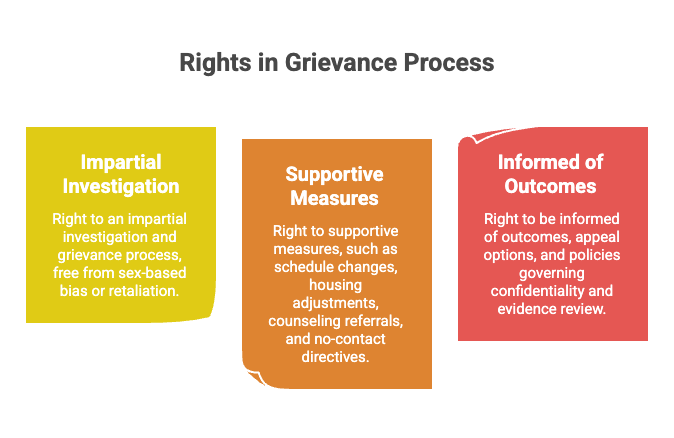
- The right to an impartial investigation and grievance process, free from sex-based bias or retaliation.
- The right to supportive measures, such as schedule changes, housing adjustments, counseling referrals, and no-contact directives.
- The right to be informed of outcomes, appeal options, and policies governing confidentiality and evidence review.
Florida students may also have rights under institutional codes, state law, and federal guidance that reinforce fair treatment and meaningful access to education. When schools honor these duties, they serve the broader educational mission by protecting vulnerable individuals and strengthening community trust, accountability, and institutional integrity.
Steps to Take After a Title IX Sexual Assault Incident in Florida
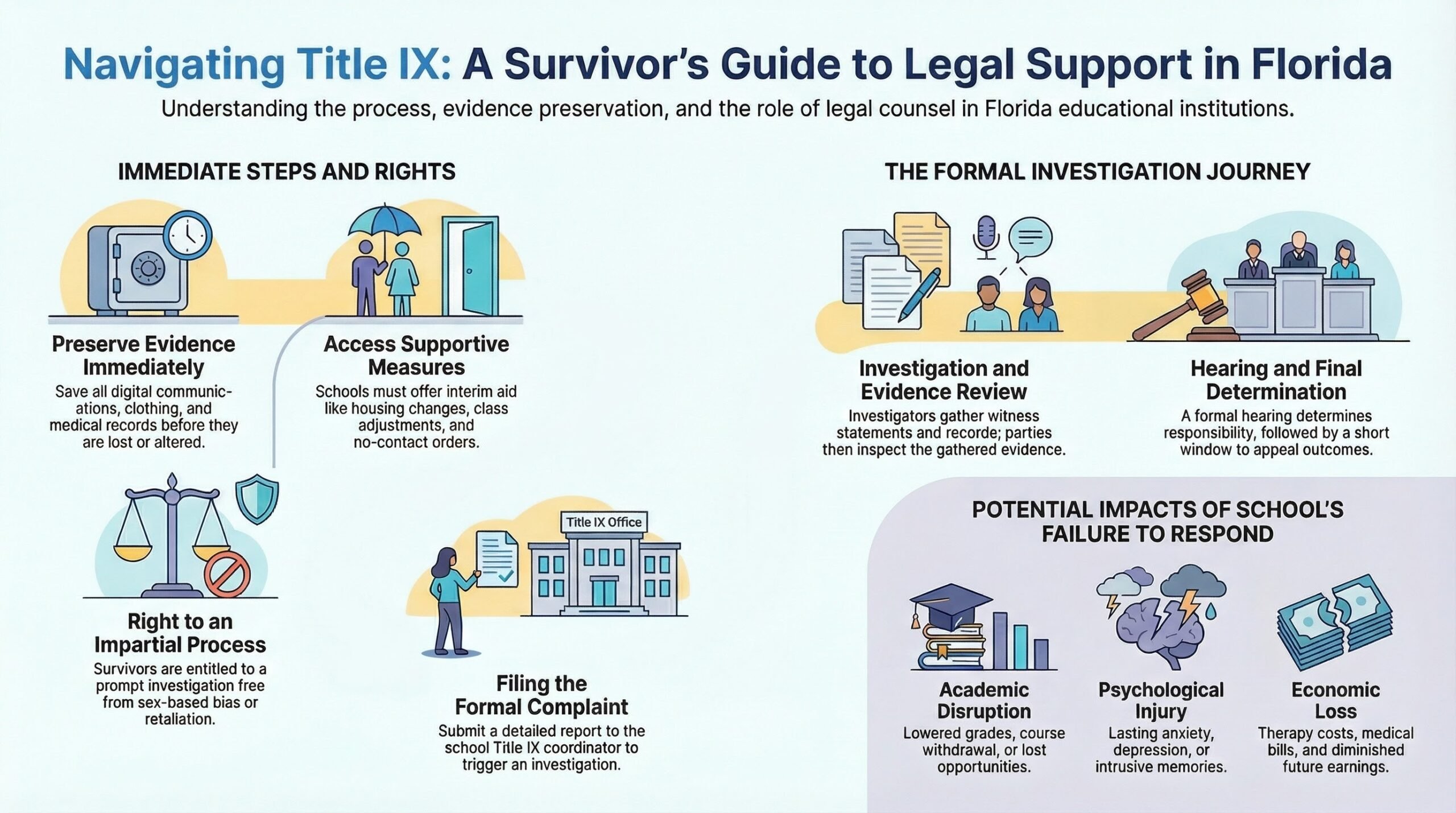
After a Title IX sexual assault incident in Florida, prompt action is often essential to protect both personal well-being and potential claims. Important early measures may include immediately preserving evidence, reporting the incident through the appropriate school or law enforcement channels, and documenting all related communications and events. Legal guidance can also help clarify available options, protect procedural rights, and support an informed response from the outset.
Preserve Evidence Immediately
Without delay, preserving evidence can play a pivotal role in both a Title IX investigation and any related criminal or civil matter arising from a sexual assault in Florida. Clothing, bedding, messages, photographs, screenshots, and location data may later help establish timelines, corroborate statements, and protect the integrity of the process.
A survivor may serve others and oneself by avoiding bathing, laundering items, deleting communications, or cleaning the scene before appropriate collection occurs. Secure items in separate paper bags, note the dates, times, witnesses, and visible injuries, and save digital records in multiple locations. Prompt documentation also helps mitigate the risk of evidence tampering and supports careful case assessment.
When privacy concerns exist, Confidentiality requests may be raised with appropriate institutional personnel or legal counsel while evidence is being preserved.
Report The Incident
When a Title IX sexual assault incident occurs in Florida, reporting the matter promptly to the appropriate institution and, when warranted, to law enforcement can be an essential step in protecting legal rights, personal safety, and access to supportive measures.
A survivor may report to a school Title IX coordinator, campus security, or local police, depending on immediate needs and institutional procedures. Accurate reporting helps preserve timelines, identify witnesses, and trigger interim accommodations such as housing changes, academic adjustments, and no-contact directives. Some schools also offer confidential reporting channels through counselors, advocates, or health services, which may assist those seeking privacy as they explore options.
Clear documentation of dates, locations, communications, and the people involved can strengthen the report. Early notification may also improve access to victim support resources and coordinated services designed to promote safety, stability, and educational continuity.
Seek Legal Guidance
Why does early legal guidance matter in a Florida Title IX sexual assault matter? Prompt counsel helps a student or employee understand rights, deadlines, and institutional procedures before critical evidence is lost or statements create avoidable complications. It also supports informed decisions that protect personal well-being and the broader campus community.
An attorney can explain school grievance processes, interim measures, and interactions with law enforcement, while addressing reporting confidentiality and possible retaliation concerns. Counsel may also identify documentation that strengthens a complaint, including messages, witness information, medical records, and timeline notes. In addition, legal guidance often complements Trauma support options by coordinating advocacy resources, accommodations, and safety planning.
Early advice allows affected individuals to proceed carefully, preserve choices, and contribute to a process that is fair, respectful, and legally sound overall.

How a Florida Title IX Sexual Assault Lawyer Can Help You Initiate a Case
A Florida Title IX sexual assault lawyer can provide important guidance at the outset of a case by evaluating the allegations, identifying applicable school policies, and explaining the procedural steps for filing a complaint. This early review helps a complainant or respondent understand rights, obligations, and the timeline for claims under institutional rules and federal standards.
A Florida Title IX sexual assault lawyer helps clarify allegations, school procedures, and filing requirements at the earliest stage of a case.
A lawyer may also organize facts, preserve communications, and prepare submissions in a manner that serves the integrity of the process. Effective counsel often includes trauma-informed support, which helps individuals participate without unnecessary confusion or procedural missteps.
- Reviews school grievance procedures, notice requirements, and available supportive measures
- Assists with drafting complaints, responses, and evidence summaries clearly and accurately
- Advises on interviews, hearings, appeals, and interactions with administrators
Long-Term Effects of Title IX Sexual Assault Trauma
Title IX sexual assault trauma can produce lasting emotional and psychological effects, including anxiety, depression, and persistent stress that may continue well beyond the initial incident. It can also disrupt academic performance and career development, as survivors may struggle with concentration, attendance, and long-term educational or professional goals. In addition, the experience often creates challenges in relationships and trust, affecting a person’s sense of safety, stability, and connection with others.
Emotional And Psychological Impact
Often, the emotional and psychological effects of Title IX sexual assault trauma continue long after the initial incident, shaping a survivor’s sense of safety, trust, and academic stability. In the trauma aftermath, many individuals experience anxiety, depression, hypervigilance, intrusive memories, sleep disruption, and persistent fear in ordinary settings.
These responses may affect relationships, self-worth, and daily functioning, even when a survivor appears composed outwardly. Emotional distress can emerge unpredictably, particularly when reminders of the event reactivate feelings of helplessness or shame. Supportive intervention often includes counseling, trauma-informed care, and consistent advocacy designed to protect dignity and restore confidence.
For those seeking to serve others well, recognizing these lasting effects is vital to encouraging compassionate responses and meaningful mental health recovery. Healing often requires patience, structure, validation, and sustained professional support.
Academic And Career Disruption
Beyond the immediate trauma response, sexual assault within an educational setting may greatly disrupt a survivor’s academic progress and long-term career development. Concentration, attendance, and classroom participation may decline, while grades, testing performance, and retention can suffer over time. Some students change majors, withdraw from courses, transfer schools, or abandon professional goals altogether.
Supportive intervention can help reduce these losses. Access to trauma counseling may improve functioning and restore a sense of stability, while academic accommodations can protect educational standing during recovery. Extensions, schedule changes, housing adjustments, and modified attendance policies may allow a survivor to continue pursuing service-oriented ambitions.
Without timely assistance, interrupted education may affect internships, licensing timelines, graduate admissions, and future earning potential, creating consequences that extend well beyond graduation.
Relationship And Trust Challenges
As recovery unfolds, many survivors of sexual assault in educational settings experience persistent difficulty forming or maintaining trust in others. This strain may affect friendships, family bonds, romantic relationships, and interactions with faculty or administrators. A Victim trust breakdown often develops when a person feels unheard, doubted, or unprotected by the institution charged with student safety.
Such challenges can endure long after formal investigations conclude. Survivors may become guarded, hypervigilant, or reluctant to disclose harm, even to supportive individuals. Reporting barriers may intensify these patterns, especially when procedures appear confusing, adversarial, or insensitive. In service-oriented communities, understanding these effects is crucial to providing meaningful support. Consistent communication, trauma-informed responses, and respectful advocacy can help restore a sense of safety, dignity, and interpersonal confidence over time for many survivors.

What to Expect During a Florida Title IX Sexual Assault Claim Process
A Florida Title IX sexual assault claim process generally begins with filing the initial complaint, which triggers the school’s duty to assess the report and respond under applicable procedures. The matter then typically proceeds to the school investigation process, followed by a hearing and an evidence review in cases where formal adjudication is required. From that point, the parties may face a range of potential outcomes and appeals, each of which can substantially affect academic standing, safety measures, and institutional accountability.
Filing The Initial Complaint
When a student or employee decides to move forward with a Title IX sexual assault claim in Florida, the process typically begins by submitting a formal complaint to the school’s Title IX coordinator or other designated official. The complaint generally identifies the parties involved, describes the alleged conduct, and states when and where it occurred. Clear, accurate reporting helps institutions respond responsibly and support all affected individuals.
At this stage, careful documentation is important. Evidence preservation may include saving messages, emails, photographs, medical records, and related notes. Witness statements can also strengthen the initial report by providing supporting details from others with relevant knowledge. Many schools offer written forms, online portals, or in-person reporting options, and some permit an advisor or attorney to assist with the preparation and submission of the complaint.
School Investigation Process
Following submission of a formal complaint, the school typically begins an internal investigation under its Title IX procedures. Investigators usually notify both parties, explain allegations, identify applicable policies, and outline student response deadlines. The institution may also issue supportive measures to protect safety, access, and fairness while the matter proceeds.
During this phase, investigators gather statements, relevant records, communications, and other available information from witnesses and involved individuals. Parties are commonly invited to provide names, documents, and context that may assist a careful, service-minded review. Schools often explain the advisor’s role, including how an advisor may help a student prepare for, communicate with, and understand procedural requirements. Timelines vary by institution, but schools generally aim for a prompt, impartial process that respects participation rights and institutional responsibilities under federal law.
Hearing And Evidence Review
Once the investigative record is assembled, many Florida schools move to a hearing and evidence review stage in which each party is permitted to inspect the information gathered and prepare a response. During this phase, advisers often assist with document review, witness preparation, and questions about school procedures. Attention to victim rights remains important, including respectful participation, access to supportive measures, and fair notice of hearing expectations.
Schools may also address evidence preservation, ensuring relevant messages, reports, recordings, and physical materials remain available for consideration. The investigative timeline can affect scheduling, response deadlines, and opportunities to submit clarifications or challenge inaccuracies. A careful review of exhibits, statements, and policies helps parties understand the issues being considered, so they can participate responsibly and support a process grounded in fairness, safety, and institutional accountability.
Potential Outcomes And Appeals
Although the hearing phase often receives the most attention, the outcome and any available appeal rights usually carry the greatest long-term consequences for both the reporting and responding parties. Possible findings may include responsibility, no responsibility, compliance with informal resolution, sanctions, remedies, or educational measures designed to protect campus access and community welfare.
After a decision, both parties are typically notified in writing of findings, sanctions, and supportive remedies. Appeal timeframes are usually short, so prompt review of the written determination is important. Grounds for appeal may include procedural error, newly discovered evidence, or bias affecting fairness. The Standard of review, established by school policy, guides how appellate officers assess the record. Careful preparation can help individuals protect rights while supporting a fair, service-oriented resolution for all involved.

Compensation for Florida Title IX Sexual Assault Damages
When a school’s deliberate indifference to sexual assault causes measurable harm, a Title IX claim in Florida may permit recovery of compensation for the student’s resulting damages. Such compensation seeks to recognize losses resulting from the institution’s failure to respond appropriately and to protect the student’s access to education. Courts may consider documented trauma, academic decline, and related emotional damages, including non-economic harm that affects daily functioning and service to others.
| Damage area | Possible impact |
|---|---|
| Academic disruption | Lower grades, withdrawal |
| Psychological injury | Anxiety, depression |
| Physical effects | Sleep loss, headaches |
| Reputational harm | Isolation, stigma |
| Educational access | Lost opportunities |
A careful presentation of records, evaluations, and witness accounts often strengthens a claim. Counsel may help connect the school’s conduct to the student’s suffering and future limitations. This process can support accountability, encourage safer environments, and honor the broader goal of protecting students and those who seek to serve their communities.
Economic vs Non-Economic Damages in Florida Title IX Sexual Assault Cases
Florida Title IX sexual assault cases may involve both economic damages, such as medical expenses, therapy costs, and lost educational or employment opportunities, and non-economic damages, including pain and suffering, emotional distress, and loss of enjoyment of life.
Because non-economic harm is less tangible, its valuation often depends on the severity, duration, and documented effects of the misconduct on the claimant’s daily functioning and future prospects. Establishing these losses generally requires clear records, credible testimony, and other supporting evidence that connects the harm to the Title IX violation.
Economic Damage Categories
Compensation in a Title IX sexual assault case generally falls into two categories: economic damages and non-economic damages. Economic damages address measurable financial losses tied to the misconduct and its aftermath. In Florida, these losses may include medical costs for emergency care, follow-up treatment, medication, and counseling directly related to the assault.
Additional categories often include rehabilitation costs for ongoing therapy, academic support, or vocational services needed to restore stability and functioning. A claimant may also seek recovery for lost wages when trauma, treatment, or school disruption interferes with employment. In serious cases, diminished future earnings may be considered if educational progress or career development was impaired.
Careful documentation, including bills, records, and expert assessments, helps present these losses clearly and supports efforts to secure meaningful, service-oriented accountability and fair financial recovery.
Non-Economic Harm Valuation
Although non-economic damages do not appear on invoices or pay stubs, they often represent a substantial part of a Title IX sexual assault claim because they address the personal harm caused by the misconduct. In Florida matters, this category commonly includes pain, emotional distress, loss of dignity, reputational injury, and diminished enjoyment of education or daily life.
Valuation focuses on the severity, duration, and practical consequences of the trauma’s impact on the claimant’s well-being, relationships, and academic experience. It also considers whether privacy concerns intensified the harm, especially when disclosure, investigation, or institutional response affected a student’s sense of safety and trust. A careful assessment recognizes invisible injuries that may alter confidence, concentration, and future opportunities.
For those committed to serving others, this framework helps center accountability while honoring the claimant’s human experience and recovery.
Proving Compensable Losses
Once the scope of personal harm has been identified, the next task is to show how those injuries qualify as compensable losses under applicable law. In Florida Title IX sexual assault cases, economic damages may include treatment costs, lost tuition, relocation expenses, and diminished earning capacity. These losses are typically supported by medical records, billing statements, school records, and employment records.
Non-economic damages address pain, humiliation, anxiety, loss of educational opportunity, and reduced quality of life. Although less concrete, they still require careful proof through consistent testimony, expert opinions, and a clear Documentation timeline linking the assault to ongoing consequences. A disciplined presentation of both categories helps decision-makers understand the full impact of the misconduct and supports accountability in a manner that protects students and advances institutional responsibility.

When a Florida Title IX Sexual Assault Case Goes to Trial vs Settlement
Whether a Florida Title IX sexual assault case proceeds to trial or ends in settlement depends on the strength of the evidence, the extent of the harm alleged, and the strategic goals of the parties involved. Counsel evaluates witness credibility, institutional records, expert opinions, and damages to determine effective trial strategy and realistic settlement leverage for everyone involved.
Settlement may be appropriate when liability appears clear, the survivor seeks privacy, and both sides want to reduce delay, expense, and uncertainty. A negotiated resolution can provide compensation, policy changes, training commitments, or other measures that support student safety and institutional accountability. Trial may become necessary when material facts are sharply disputed, the school denies responsibility, or settlement offers fail to reflect the seriousness of the misconduct and resulting losses.
In either path, careful preparation matters. A lawyer serving survivors in Florida helps assess risks, protect rights, and pursue outcomes that honor dignity, encourage safer educational environments, and advance meaningful institutional reform.
The Statute of Limitations for Florida Title IX Sexual Assault Cases
After evaluating trial and settlement options, attention often turns to filing deadlines that can determine whether a Florida Title IX sexual assault claim may proceed at all. These limits vary by forum and claim type because Title IX complaints, school disciplinary procedures, and related civil actions may follow different timelines under federal and state rules.
For many institutions, school deadlines govern internal reporting and grievance procedures, while court filing periods control lawsuits seeking damages or other relief. Confidential reporting may preserve safety and support access, but it does not always stop legal clocks from running.
Evidence preservation remains important, since records, messages, surveillance footage, and witness memories can fade quickly. In service-oriented settings, victim advocacy programs often help survivors understand reporting pathways, accommodations, and procedural expectations without forcing immediate public disclosure. Careful attention to timing supports accountability, protects educational access, and helps institutions respond in ways that respect both fairness and community well-being for all parties.
When to Contact a Title IX Sexual Assault Lawyer in Florida
A person should consider contacting a Title IX sexual assault lawyer in Florida as soon as concerns arise about a school’s response, reporting obligations, interim measures, or disciplinary process. Early legal consultation can help clarify rights, deadlines, and available options while reducing confusion during a difficult period.
Contact may be appropriate after Immediate reporting to school officials, when confidentiality concerns affect safety or privacy, or when a notice of investigation, hearing, or appeal is received. Guidance may also be useful when a school delays supportive measures, fails to explain procedures, or appears to treat students unevenly. Questions about when to file an internal complaint, a federal complaint, or a related civil action often arise before important deadlines pass.
For those motivated by service to others, timely advice can also support safer educational environments and fair institutional practices. Prompt action helps preserve records, witness information, and communications that may later inform the school’s obligations and response.
Why You Need an Experienced Florida Title IX Sexual Assault Lawyer
Because Title IX sexual assault matters often involve overlapping school procedures, federal requirements, and high-stakes disciplinary consequences, experienced legal representation can play a crucial role in protecting a student’s rights and interests. A Florida Title IX sexual assault lawyer helps individuals guide investigations, hearings, interim measures, and appeals with careful attention to fairness, due process, and institutional obligations.
Experienced counsel also strengthens evidence preservation efforts, helping to protect communications, records, witness information, and other materials that may affect findings or sanctions. Sound guidance can shape a reporting strategy that respects safety, educational access, and the broader well-being of everyone involved. In many cases, an attorney also identifies procedural errors, addresses retaliation concerns, and advocates for appropriate accommodations.
This support benefits not only the student directly affected, but also families and communities seeking a responsible, lawful response. When allegations can alter academic standing, housing, scholarships, and future opportunities, knowledgeable legal advocacy provides structure, protection, and informed direction throughout the process.
How to Choose the Right Title IX Sexual Assault Lawyer for Your Case in Florida
In selecting legal counsel for a Title IX sexual assault matter in Florida, careful evaluation of experience, judgment, and institutional knowledge is essential. The right lawyer should understand campus procedures, federal guidance, and the serious educational and reputational consequences these cases can create for all involved.
A careful selection process should consider whether counsel has handled investigations, hearings, and appeals involving schools, colleges, and universities. Strong advocates often emphasize Client interview preparation, helping individuals present facts clearly, respectfully, and consistently. Effective representation also depends on credibility assessment, since outcomes may turn on conflicting statements, documentary evidence, and witness reliability.
It is also wise to review communication practices, responsiveness, and the ability to explain strategy in plain terms. Those seeking to protect students and support fair processes should look for counsel who demonstrates professionalism, discretion, and a steady commitment to due process, educational access, and lawful, compassionate resolution for everyone involved.
About The Law Offices of Anidjar & Levine
When students, families, or school employees need guidance in a Title IX sexual assault matter, The Law Offices of Anidjar & Levine offers representation grounded in careful preparation, clear communication, and close attention to the procedures that govern educational institutions in Florida.
The firm approaches these cases with respect for every person involved and an understanding of the serious consequences that school investigations and disciplinary actions can carry.
Its attorneys assist clients in addressing complaints, hearings, appeals, and questions involving Mandatory reporting obligations, confidentiality, and institutional response.
They also recognize the importance of victim support, helping clients understand available accommodations, safety measures, and reporting channels.

Frequently Asked Questions
Can Parents Attend Title IX Meetings or Hearings With Their Child?
Yes, parents may often attend Title IX meetings or hearings with their child, but school policies, the student’s age, and privacy rules usually determine the extent of parental participation. Institutions commonly allow a parent as a support person, though speaking rights may be limited. Legal rights can also depend on whether the student is a minor or enrolled in college. Carefully reviewing the school’s procedures helps families provide informed, respectful support.
Will Filing a Title IX Complaint Affect Immigration or Visa Status?
Filing a Title IX complaint does not usually affect immigration or visa status, because the process addresses school-based civil rights obligations rather than immigration enforcement. However, careful documentation remains important. An evidence-collection strategy can bolster credibility, while retaliation-protection steps help safeguard academic standing, housing, and campus employment. Because individual circumstances vary, especially for international students, prompt guidance from a qualified attorney or immigration adviser is strongly recommended to ensure an accurate case assessment.
Can Anonymous Reports Trigger a Title IX Investigation in Florida Schools?
Yes, anonymous reports can trigger a Title IX investigation in Florida schools, particularly when the information suggests a safety risk or ongoing misconduct. Administrators assess Confidentiality limits carefully, because anonymity may restrict follow-up and notice obligations. They also review Evidence handling procedures to determine whether reliable facts support action. Even without a named complainant, schools may, when necessary, proceed to protect students and uphold institutional responsibilities.
Do Private K-12 Schools in Florida Have Title IX Obligations?
Yes, some private K-12 schools in Florida have Title IX obligations, but only when they receive federal financial assistance. The Private School Scope is thus limited, whereas public schools are broadly covered. Faith-based institutions may also claim exemptions in certain circumstances. FERPA Overlap can affect records and privacy duties when student information is involved. Careful review of funding, governance, and policies helps communities serve students lawfully and responsibly.
Can Text Messages and Social Media Posts Be Used as Evidence?
Yes, text messages and social media posts can be used as evidence, provided they satisfy evidentiary rules and reliability standards. Digital evidence may support or challenge allegations, timelines, intent, or credibility. However, authentication issues often arise because parties must show that the messages or posts are genuine and unaltered. A careful review helps protect all involved, ensuring social media and texts are considered fairly, accurately, and in the service of justice.
—————————
Navigating a Title IX sexual assault claim in Florida requires a clear understanding of legal rights, institutional duties, and available remedies.
A qualified lawyer can assess the facts, protect the victim’s interests, and pursue appropriate action against responsible parties.
The Florida Sexual Assault Lawyer team at Law Offices of Anidjar & Levine provides informed guidance in these intricate matters.
With experienced legal support, victims may be better positioned to seek accountability, protect their future, and move forward with greater confidence.

