Law Offices of Anidjar and Levine assists child pornography survivors and families in Florida by protecting privacy, preserving digital evidence, and coordinating reports to law enforcement or appropriate agencies.
Counsel evaluates communications, platform records, forensic findings, and related documentation, then explains legal options in clear terms.
The process often includes safety planning, careful case preparation, and efforts to reduce further exposure and stress.
The additional guidance below outlines key rights, immediate steps, and what a claim may entail.
Learn more by visiting Florida Sexual Assault Lawyer.
Main Takeaways
- A Florida child pornography victim lawyer explains legal options, protects privacy, and guides survivors and families through each step of the process.
- These cases often involve unlawful creation, possession, or distribution of exploitative images, requiring careful review of digital records and communications.
- Lawyers help preserve key evidence, including messages, platform records, forensic findings, metadata, and witness accounts, before material is deleted or altered.
- Florida cases may arise from online exploitation, coercion, hidden recordings, or abuse connected to schools, camps, or other supervised settings.
- Victim-focused representation coordinates with investigators, counselors, and caregivers while reducing unnecessary exposure, stress, and avoidable contact with responsible parties.


How We Can Help With Your Florida Child Pornography Victim Claim
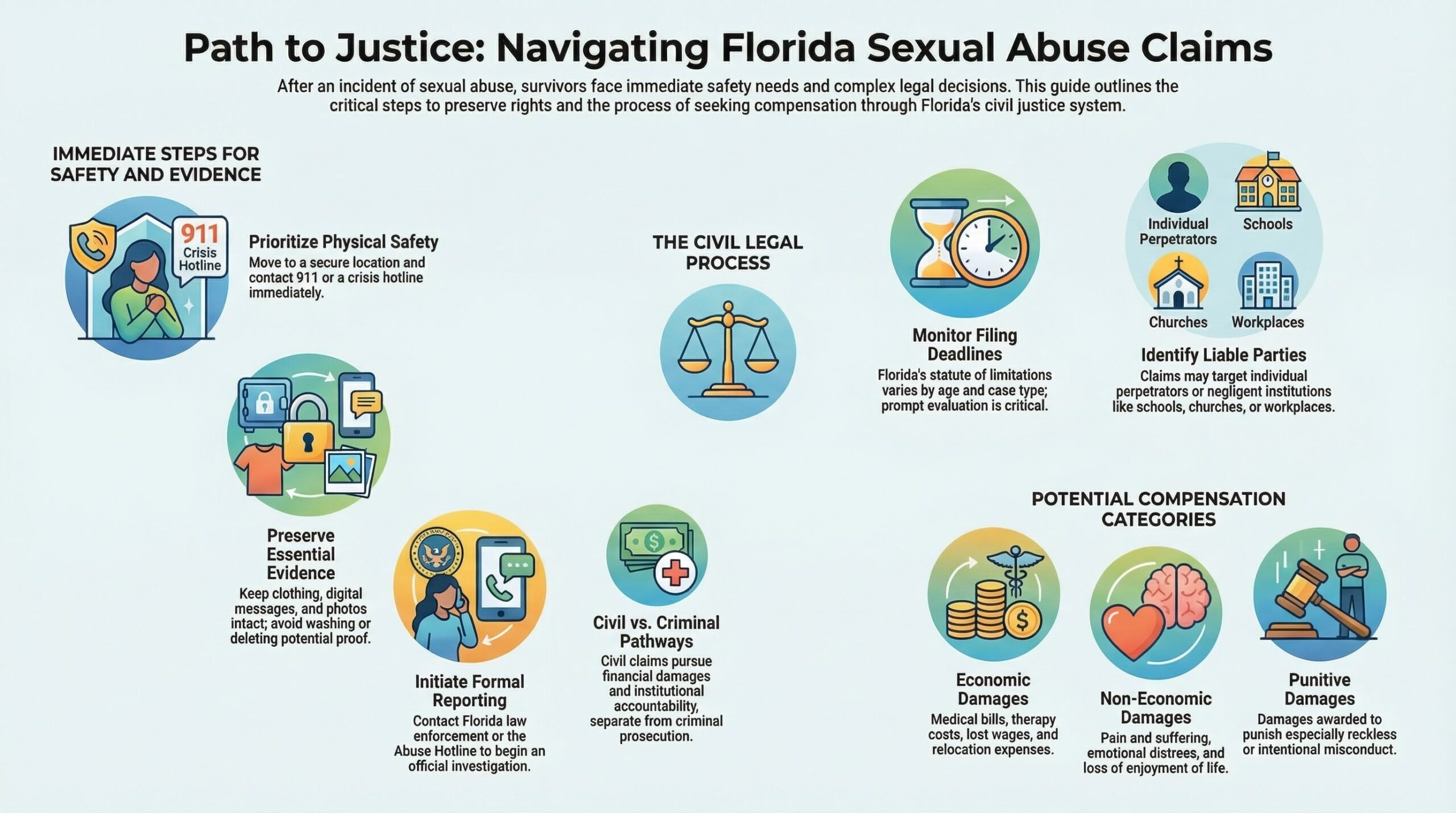
How can experienced legal counsel assist with a Florida child pornography victim claim? Skilled attorneys provide structured guidance from the first consultation, helping survivors and their families make informed decisions while preserving dignity and privacy. Their role centers on careful listening, confidential support, and clear planning tailored to the claimant’s immediate needs and long-term wellbeing.
Effective representation also includes coordinating documentation, communicating with relevant parties, and safeguarding the client from unnecessary exposure. Counsel can explain available legal options in plain language, manage deadlines, and pursue remedies with discipline and respect. Through steady victim advocacy, they help reduce avoidable stress so clients may focus on recovery and stability.
A dedicated legal team often works with service providers, counselors, and trusted caregivers when appropriate, creating a support framework that reflects compassion and professionalism. In service to vulnerable individuals, experienced counsel offers dependable leadership, practical protection, and a measured path forward during an exceptionally difficult period for survivors and families.
OUR CONSULTATIONSARE FREE
START YOUR FREE CASE REVIEW

Understanding Child Pornography Victim Cases in Florida
Although these matters often involve complicated facts and sensitive circumstances, child pornography victim cases in Florida generally center on the unlawful creation, possession, distribution, or circulation of exploitative images involving a minor. These claims often require careful review of digital records, forensic findings, and communications, while respecting the dignity and safety of those harmed.
In Florida, the legal process may involve criminal investigations and related civil actions intended to protect victim rights and pursue accountability. Evidence collection is often essential because electronic data, platform records, and expert analysis may help establish how images were obtained, shared, or stored. A service-minded approach recognizes that each matter can affect a victim’s well-being long after the underlying conduct occurred.
For that reason, trauma support may remain an important consideration alongside legal advocacy, privacy concerns, and informed decision-making. Clear guidance can help families, caregivers, and community advocates respond responsibly and compassionately under Florida law.

Common Scenarios in Which Child Pornography Victim Might Take Place in Florida
Several circumstances may give rise to child pornography victim cases in Florida, including online exploitation, trafficking, and coercion, incidents connected to schools or camps, and hidden recording offenses. These situations often involve the creation, possession, distribution, or concealment of exploitative material, sometimes through digital platforms and sometimes through in-person access to minors. A clear review of these common scenarios helps frame how such cases arise and why prompt legal action may be necessary.
Online Exploitation Cases
In many Florida cases, online exploitation begins when an adult uses social media, gaming platforms, messaging apps, or file-sharing sites to target a minor, solicit explicit images, or distribute unlawful material without the child’s knowledge or consent. These incidents may involve grooming, impersonation, hacking, hidden recordings, or reposting images after a relationship ends. In service-focused legal matters, careful documentation often helps families understand available remedies while preserving evidence for authorities and civil claims.
Attorneys may review digital records, explain Legal defense options, and pursue privacy protection measures that limit further circulation of harmful content. Courts and investigators may also address anonymous accounts, interstate activity, and platforms that failed to respond appropriately. Early intervention can support the child’s safety, reduce continuing exposure, and promote accountability within Florida’s legal system and community.
Trafficking And Coercion
When trafficking or coercion is involved, the creation or distribution of exploitative images may occur through force, threats, manipulation, or dependency rather than through a single isolated act. In Florida, these situations may involve commercial sexual exploitation, controlled movement, confiscated identification, or pressure tied to housing, substances, or basic needs. Perpetrators may also rely on digital grooming to gain compliance, isolate victims, and normalize escalating abuse over time.
From a service-oriented perspective, careful legal advocacy can help identify coercive dynamics that are not immediately visible. Evidence may include messages, payment records, travel patterns, third-party control, and witness accounts. Victims often face lasting mental health consequences, including fear, shame, and trauma responses that complicate disclosure. A lawyer can help protect rights, support reporting, and pursue accountability with sensitivity.
School And Camp Incidents
Although schools and camps are structured to supervise minors, incidents involving the creation, solicitation, or sharing of exploitative images can still arise in these settings through peer misconduct, staff abuse, or unauthorized digital access. In Florida, these matters may involve students pressuring other children to send images, adults exploiting authority, or third parties misusing school-connected platforms and devices.
When harm is suspected, administrators, counselors, and caregivers are generally expected to respond promptly, prioritize safety, and preserve relevant evidence. Mandatory reporting obligations may apply, especially when abuse by an adult or a foreseeable risk to a child is identified. Families often seek legal guidance to understand institutional responsibility, civil remedies, and protective options. Therapist support may also help affected children process trauma, rebuild stability, and participate more comfortably in investigative or legal proceedings.
Hidden Recording Offenses
How hidden recording offenses arise can vary widely, yet the core harm is the same: a child is recorded, photographed, or surveilled in a private or vulnerable setting without valid consent. In Florida, these cases may involve bathrooms, bedrooms, changing areas, foster placements, or online interactions in which covert recording is concealed by ordinary objects or software. Effective response often depends on prompt reporting, careful preservation of Surveillance evidence, and lawful device seizure before files are erased or transferred.
Investigators may also examine whether digital tampering altered timestamps, metadata, or file locations to hide responsibility. A child pornography victim lawyer in Florida may help families understand legal options, coordinate with authorities, and pursue accountability while prioritizing the child’s safety, privacy, dignity, and access to supportive services during recovery and long-term recovery.


Legal Rights of Child Pornography Victims in Florida
Because Florida law recognizes the profound and continuing harm caused by child pornography offenses, victims are afforded important legal rights designed to protect their safety, privacy, and financial interests.
These rights support dignity, encourage accountability, and reflect a community obligation to serve vulnerable children through compassionate legal protection, Mandatory reporting, and access to victim counseling.
- Privacy protections help shield a child’s identity, limiting further exposure and reducing the pain of repeated public disclosure.
- Participation rights allow victims and their families to be heard during criminal proceedings, reinforcing that their suffering matters and warrants respectful consideration.
- Restitution and civil remedies may provide financial recovery for therapy, lost opportunities, and other long-term consequences, helping restore stability after devastating exploitation.
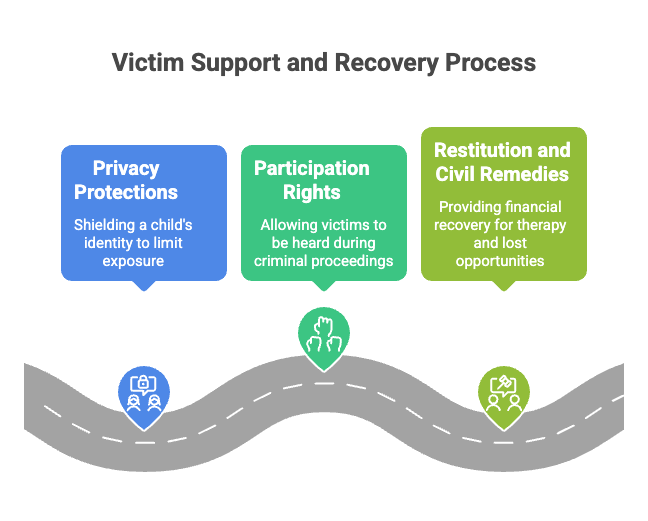
Florida law also recognizes the need for informed advocacy, protective court measures, and trauma-sensitive support. When these rights are honored, the legal system better serves children, families, and the broader public good.
Steps to Take After a Child Pornography Victim Incident in Florida
After a child pornography victim incident in Florida, the first priority is to make certain the victim’s immediate safety and limit any further harm. It is also important to preserve digital evidence, including messages, images, account information, and device records, because this material may support an investigation and related legal action. The incident should then be reported to law enforcement or other appropriate authorities immediately, so that protective measures and formal investigative steps can begin.
Ensure Immediate Safety
Prioritize immediate safety by removing the child from any ongoing source of harm, maintaining a calm environment, and limiting further exposure to the person, device, or location associated with the incident. Trusted caregivers should remain present, attentive, and steady, helping the child feel protected without pressing for details or assigning blame.
Effective safety planning may include arranging secure supervision, adjusting routines, and contacting immediate resources to address urgent risks. When physical injury, distress, or possible neglect is involved, prompt medical support should be considered to protect the child’s health and document care needs. Crisis counseling can also help stabilize emotions and guide supportive responses from family members, schools, churches, or community advocates. Early protective action demonstrates care, reduces further trauma, and creates a safer foundation for next steps.
Preserve Digital Evidence
When child sexual abuse material may exist on a phone, computer, tablet, or online account, careful preservation of digital evidence can protect the child’s interests and support later investigations. Caregivers and advocates should avoid deleting files, altering messages, or sharing images further, since those actions may affect Device data and complicate later review. Practical steps include handling devices securely, keeping passwords available, noting usernames, dates, and visible screen names, and saving screenshots only when necessary.
It may also help to preserve incident timeline details in writing, including when content was discovered, who had access to it, and any attempts to remove consent from platforms or accounts. A methodical record can reduce confusion, support service providers, and help legal counsel assess next steps while prioritizing the child’s dignity, privacy, and long-term wellbeing.
Report To Authorities
Because prompt reporting can limit further harm and strengthen an official response, suspected child sexual abuse material involving a minor in Florida should be reported to law enforcement or the National Center for Missing & Exploited Children as soon as it is safely possible.
A timely report helps protect the child, supports coordinated investigation, and may prevent wider distribution. In some situations, Mandatory reporting obligations may apply to teachers, counselors, medical personnel, and other designated professionals. Anyone making a report should provide clear facts, avoid speculation, and share available details about platforms, usernames, dates, and known participants.
Evidence preservation remains important during reporting, so original files, screenshots, messages, and device information should be retained without alteration when feasible. A lawyer may also help families understand next steps, communicate with investigators, and protect the child’s legal interests.
How a Florida Child Pornography Victim Lawyer Can Help You Initiate a Case
Although the process of pursuing a legal claim may seem overwhelming, a Florida child pornography victim lawyer can provide the structure and guidance needed to initiate a case properly. Counsel may assess available evidence, identify responsible parties, and explain civil remedies, including injunction relief, with clarity and care. This early guidance helps protect rights, preserve records, and reduce confusion for families seeking to act responsibly.
A lawyer may also coordinate filings, communicate with investigators, and prepare a civil case strategy centered on safety, accountability, and lawful recovery.
Support often includes:
- Helping survivors and caregivers understand each step without added pressure.
- Seeking court orders that promote protection, dignity, and immediate stability.
- Building a claim that supports justice while respecting privacy and service to others.
Through organized advocacy, legal counsel helps transform fear into purposeful action. That assistance allows victims and those supporting them to begin the legal process with confidence, compassion, and a stronger sense of direction.
Long-Term Effects of Child Pornography Victim Trauma
The long-term effects of child pornography victim trauma often include persistent emotional distress, which may appear as chronic anxiety, depression, or recurring psychological instability. Victims may also experience lasting relationship challenges, as the trauma can impair intimacy, communication, and the ability to maintain healthy personal connections. In addition, ongoing trust and safety concerns frequently remain, affecting how a victim perceives others, responds to risk, and functions in daily life.
Persistent Emotional Distress
When child sexual abuse images are created, shared, or rediscovered online, many victims experience persistent emotional distress that extends far beyond the initial abuse. This ongoing harm may include chronic anxiety, depression, shame, hypervigilance, sleep disruption, and recurring fear that the material will resurface at any time. For those who serve survivors, it is important to recognize that each rediscovery can function as a renewed violation, reinforcing helplessness and loss of control.
Effective support often includes trauma-informed counseling, therapy coping strategies, and trauma recovery planning tailored to the victim’s history, safety concerns, and emotional needs. A careful legal response may also help restore stability by pursuing accountability, protecting privacy, and connecting victims with resources that support long-term recovery, daily functioning, and personal security.
Lasting Relationship Challenges
Ongoing emotional harm often extends into a victim’s closest relationships, shaping how trust, safety, and intimacy are experienced over time. Survivors may struggle to maintain healthy communication, express emotional needs, or feel comfortable with closeness, even when support is present.
These difficulties can affect family bonds, friendships, and future partnerships, sometimes leading to withdrawal, conflict, or isolation. Family support can play an important role by offering patience, consistency, and practical care without pressure or judgment. Professional counseling may also help survivors recognize harmful patterns, strengthen boundaries, and rebuild interpersonal functioning.
In many cases, trauma recovery involves gradual progress rather than immediate change, requiring informed guidance and a stable environment. When communities and caregivers respond with understanding, they can help reduce secondary harm and support healthier relational outcomes over time.
Ongoing Trust And Safety
How can a child regain a sense of safety after intimate images have been created, shared, or possessed without consent? Restoring trust often requires steady protection, consistent support, and careful coordination among caregivers, advocates, and legal professionals. Many children remain alert to danger long after the abuse, fearing further exposure, judgment, or contact from offenders.
Service providers should prioritize Victim confidentiality and child safety planning at every stage of recovery. Predictable routines, trauma-informed counseling, and clear communication can help reduce anxiety and rebuild control. Adults who serve these children should monitor digital risks, respect boundaries, and respond promptly to signs of distress.
Over time, a structured environment, reliable relationships, and informed legal advocacy may strengthen security, preserve dignity, and support healthier development after profound violations of privacy.
What to Expect During a Florida Child Pornography Victim Claim Process
A Florida child pornography victim claim process typically begins with an initial case evaluation, during which the facts, legal options, and potential grounds for recovery are assessed. It then proceeds through the collection of evidence and documentation, followed by formal filing and investigation to establish liability and support the claim. If the matter is substantiated, the process may conclude through compensation negotiations or another form of resolution permitted under Florida law.
Initial Case Evaluation
Initially, a Florida child pornography victim claim begins with a confidential case evaluation in which counsel reviews the known facts, identifies potential defendants, and assesses the available evidence. During this meeting, the attorney explains the legal process, outlines possible civil remedies, and addresses immediate safety needs with care.
This stage also helps determine whether the matter should proceed, what objectives may guide representation, and how counsel can serve the victim’s broader interests. Particular attention is often given to trauma support because many survivors benefit from coordinated, compassionate referrals while legal options are considered.
Counsel also discusses confidentiality concerns, including how private information may be handled throughout the course of the claim. A careful initial evaluation provides structure, promotes informed decision-making, and helps survivors and those assisting them move forward with greater confidence and stability.
Evidence And Documentation
Because civil claims involving child sexual abuse material often depend on sensitive digital and personal records, the evidence and documentation stage usually requires careful collection, preservation, and review. Attorneys often help organize medical records, therapy notes, school reports, and communications that may show harm, distribution, or ongoing effects. Digital evidence may include screenshots, metadata, platform records, and device histories, all of which are preserved to reduce the risk of loss or alteration.
This stage may also involve Witness interviews conducted with discretion and trauma awareness, especially when minors or caregivers are involved. In appropriate cases, forensic reports from qualified experts may clarify the origins of images, circulation patterns, or psychological impact. Clear documentation can strengthen accountability efforts, support informed legal decisions, and help those seeking justice proceed in ways that protect dignity, privacy, and long-term well-being.
Filing And Investigation
Once relevant records and digital materials have been preserved, the filing and investigation stage generally begins with a careful review of the facts, potential defendants, and available legal claims under Florida law. Counsel may prepare formal filings, identify responsible parties, and coordinate secure reporting to law enforcement, platforms, or other entities when appropriate.
During investigation, attorneys often gather account data, service provider records, witness statements, and expert input to trace distribution, confirm possession, and document harm. Electronic preservation remains central because deleted files, metadata, and platform logs may help establish timelines and connections.
Courts may issue protective orders to limit further disclosure of sensitive material. Throughout this stage, professionals usually emphasize confidentiality, trauma-informed communication, and orderly cooperation, so the process can support accountability while protecting the victim’s dignity and safety.
Compensation And Resolution
Although every matter turns on its own facts, the compensation and resolution stage of a Florida child pornography victim claim generally focuses on identifying available sources of recovery, valuing the full extent of the victim’s losses, and pursuing an outcome that reflects both legal responsibility and long-term harm.
This phase may include settlement discussions, restitution requests, or civil litigation against responsible parties. Compensation can address counseling costs, medical care, lost income, and enduring emotional injury. Counsel often works with experts to document damages and with Victim Support Services to coordinate practical assistance. Safety Planning may also remain important, especially when privacy, digital exposure, or ongoing threats are concerns. Resolution does not erase the harm, yet a fair result can provide resources for soothing, stability, and continued protection while affirming the victim’s dignity and rights under Florida law.
Compensation for Florida Child Pornography Victim Damages
Pursuing compensation for Florida child pornography victim damages involves a careful assessment of the profound harm caused by the creation, possession, distribution, and repeated viewing of exploitative images. Counsel typically emphasizes evidence preservation, digital forensics, and a disciplined settlement strategy, while also preparing for trial considerations when accountability is disputed. This process supports survivors and the communities committed to protecting them.
| Focus | Practical role |
|---|---|
| Investigation | Identifies offenders, platforms, and circulation patterns |
| Documentation | Preserves records, images, metadata, and witness accounts |
| Advocacy | Coordinates victim-centered communication and protective measures |
| Resolution | Evaluates settlement options and court-directed remedies |
| Accountability | Encourages institutional reform and safer digital practices |
A thorough claim may address ongoing trauma, privacy invasion, and the repeated nature of harm as images continue circulating. In Florida, careful case development helps decision-makers understand the enduring impact and the importance of meaningful, survivor-centered legal remedies.
Economic vs Non-Economic Damages in Florida Child Pornography Victim Cases
In Florida child pornography victim cases, damages are generally divided into economic losses, which include measurable financial harm such as medical expenses, therapy costs, and lost income, and non-economic losses, which address pain, suffering, and emotional distress. These categories reflect both the direct financial impact of the abuse and the broader personal harm that may not be tied to a fixed dollar amount. Establishing the value of either type of damage often requires records, expert opinions, and other evidence that connects the victim’s losses to the underlying conduct.
Economic Damages Explained
When Florida courts evaluate damages in child pornography victim cases, they generally distinguish between economic and non-economic losses to measure the full scope of harm. Economic damages address measurable financial consequences tied to the abuse and its aftermath. These may include therapy expenses, psychiatric treatment, medication costs, hospital care, lost wages, reduced earning capacity, relocation expenses, and security measures made necessary by ongoing exploitation.
In practice, counsel often gathers billing records, employment documentation, expert projections, and provider statements to present a clear accounting of these losses. This evidence can support settlement discussions, trial preparation, Mediation options, and careful compensation planning. A service-minded legal approach focuses on documenting present costs and reasonably anticipated future expenses, helping survivors pursue resources that promote stability, treatment access, and long-term practical recovery with dignity.
Non-Economic Harm Categories
Beyond documented financial losses, Florida child pornography victim cases also involve non-economic harms that do not appear on invoices or wage statements, yet often reflect some of the most serious effects of the abuse. These harms may include Psychological trauma, persistent emotional distress, humiliation, fear, and loss of personal security. Victims may experience trust issues that affect friendships, educational settings, faith communities, and future intimate relationships.
Family disruption is also common, as caregivers and siblings may experience strain, conflict, or shifting responsibilities while trying to support recovery. Non-economic harm can further include damage to dignity, impaired sense of safety, and reduced enjoyment of daily life. For those committed to serving vulnerable individuals, recognizing these categories helps frame the full human impact of exploitation with care, seriousness, and respect.
Proving Damage Value
Although damages in Florida child pornography victim cases may be discussed in separate economic and non-economic categories, proving their value requires a unified presentation of evidence that shows both measurable financial loss and the broader personal impact of the exploitation. Courts may consider treatment costs, lost earning capacity, and future counseling expenses alongside testimony describing trauma, fear, and disruption of daily life. Medical records, expert opinions, vocational assessments, and family observations often work together to establish credibility and scope.
Documentation tied to emotional recovery planning may help explain continuing needs, while detailed financial records clarify past and anticipated expenses. This careful approach supports the protection of legal rights by giving decision-makers a fuller understanding of harm. For those committed to serving victims, thorough proof can strengthen accountability, promote stability, and support meaningful long-term recovery efforts.
When a Florida Child Pornography Victim Case Goes to Trial vs Settlement
Whether a Florida child pornography victim case proceeds to trial or resolves through settlement depends on several case-specific factors, including the strength of the evidence, the extent of the victim’s damages, the identity and resources of the responsible parties, and the willingness of those parties to accept legal responsibility.
In a trial-versus-settlement analysis, counsel evaluates whether litigation will better secure compensation, accountability, and protective outcomes for the victim. Settlement may offer privacy, faster resolution, and reduced emotional strain, especially when liability is clear and defendants seek to avoid public proceedings. Trial may become necessary when fault is denied, damages are disputed, or responsible entities refuse fair compensation.
A related Plea bargain strategy in a criminal matter can also influence civil negotiations, because admissions, cooperation, or restitution terms may affect leverage and case valuation. Thoughtful legal assessment helps survivors and those supporting them choose the path that best advances recovery, service, and meaningful justice.
The Statute of Limitations for Florida Child Pornography Victim Cases
Time-limit rules play a decisive role in Florida child pornography victim cases, because the statute of limitations determines how long a survivor may have to file a civil claim against responsible individuals or entities. These deadlines can differ based on the facts, the survivor’s age, and whether delayed discovery applies under Florida law.
In many situations, lawmakers recognize that exploitation causes lasting harm and that some survivors need years before pursuing civil remedies. Florida courts may examine when the injury was discovered, when wrongful conduct occurred, and whether tolling provisions extend the filing period. Separate criminal proceedings may involve Criminal liability, but a criminal case does not automatically control the deadline for a civil action.
Because institutions, distributors, or facilitators may also bear responsibility, careful review of dates and records is necessary. A clear understanding of timing rules helps those committed to protecting others preserve accountability and seek meaningful relief through the justice system.
When to Contact a Child Pornography Victim Lawyer in Florida
Often, the right time to contact a child pornography victim lawyer in Florida is as soon as a survivor or the survivor’s family suspects that exploitative images or videos were created, shared, stored, or profited from by another person or organization. Prompt action can support safety, informed choices, and careful protection of the survivor’s interests from the outset.
Early legal advice may help a family understand the timing of reporting, preserve important records, and respond appropriately to requests from schools, platforms, employers, or investigators. Because digital material can be copied, deleted, altered, or redistributed quickly, the urgency of evidence is often a serious concern. Contact may also be appropriate after discovering suspicious online activity, receiving notice from law enforcement, learning of an arrest, or identifying financial gain tied to exploitation.
In many situations, timely communication with counsel helps coordinate victim advocacy, reduce confusion, and support respectful decisions that prioritize accountability, privacy, and the survivor’s well-being.
Why You Need an Experienced Florida Child Pornography Victim Lawyer
Because these cases involve overlapping criminal investigations, civil remedies, privacy concerns, and fast-moving digital evidence, representation by an experienced Florida child pornography victim lawyer is frequently essential to protect a survivor’s legal interests. Counsel can help preserve evidence, communicate with investigators, and seek court orders that limit further distribution of harmful material. This guidance often reduces avoidable stress on survivors and the families supporting them.
Experienced counsel also understands how legal action intersects with recovery needs and community care. Through careful coordination with the therapist, an attorney can help protect confidentiality while supporting treatment goals and minimizing unnecessary retraumatization during proceedings. A knowledgeable lawyer may also anticipate arguments raised through criminal defense options, allowing a survivor’s position to be presented clearly and respectfully. In addition, counsel can evaluate restitution, civil damages, and other remedies that may provide accountability. Effective representation thus serves both justice and the survivor’s long-term stability, safety, and dignity.
How to Choose the Right Child Pornography Victim Lawyer for Your Case in Florida
When selecting a child pornography victim lawyer in Florida, careful attention should be given to the attorney’s specific experience with victim-centered litigation, digital evidence issues, and the coordination of civil claims alongside related criminal proceedings.
The right lawyer should demonstrate trauma-informed advocacy, strong communication skills, and a clear commitment to protecting a survivor’s dignity at every stage of the case. Families and caregivers often benefit from Confidential consultations, where questions about privacy, timelines, and available remedies can be addressed without pressure. It is also important to review the lawyer’s record handling sensitive evidence, working with forensic experts, and pursuing compensation from responsible individuals or institutions.
A thoughtful attorney will explain legal options plainly, respond promptly, and help clients make informed decisions that support recovery and accountability. Choosing counsel with compassion, discipline, and proven skill can strengthen a case while reducing unnecessary stress during an already difficult process for survivors and families alike.
About The Law Offices of Anidjar & Levine
In matters involving the exploitation of children through unlawful images or recordings, The Law Offices of Anidjar & Levine provides legal representation centered on accountability, privacy, and the careful handling of highly sensitive claims.
The firm approaches these cases with discipline, respect for survivors, and a clear focus on protecting legal rights throughout every stage of the process.
Its attorneys assist clients by coordinating victim advocacy services, supporting evidence preservation, and helping families understand available civil remedies under Florida law.
They work alongside investigators and other professionals when appropriate, while maintaining careful communication and confidentiality.
Although these matters often intersect with Criminal defense proceedings, the firm’s role remains directed toward the needs and interests of victims.
This includes pursuing compensation for harm, addressing ongoing safety concerns, and seeking measures that reduce further trauma.
Through organized case management and responsive client service, the firm aims to provide informed guidance to those seeking justice and protection.
Frequently Asked Questions
How Is Client Confidentiality Protected in Sensitive Florida Exploitation-Related Cases?
Client confidentiality is protected through the strict attorney-client privilege, careful record-keeping, and secure communication methods designed to limit unnecessary disclosure. In sensitive Florida exploitation-related cases, counsel typically restricts file access, uses encrypted platforms, and prepares clients for Privilege limits when safety reporting or court orders apply. This structured approach helps preserve privacy while supporting those seeking justice, ensuring information is shared only when legally required and ethically necessary.
Can Digital Evidence From Social Media Help Support a Florida Victim Claim?
Yes, digital evidence from social media can support a Florida victim claim when properly collected and authenticated. Posts, messages, images, metadata, and account activity may demonstrate harm, identity, timing, or notice. Social Media Preservation is critical because deleted or altered content can weaken proof. Courts also examine Legal Relevance, ensuring the material directly supports disputed facts. Careful handling helps protect integrity and strengthens service to affected individuals.
Are Remote Consultations Available for Florida Victims Seeking Legal Guidance?
Yes, remote consultations are commonly available for Florida victims seeking legal guidance. Many firms offer Remote Intake to begin case evaluation efficiently, while Secure Messaging helps protect sensitive communications and documents. This approach allows victims and their supporters to receive informed counsel without unnecessary travel or added stress. It also enables advocates to respond promptly, explain legal options clearly, and coordinate next steps in a manner centered on safety and service.
What Should Families Know About Supporting a Victim During Legal Proceedings?
Families should understand that consistent, trauma-informed support helps a victim maintain stability, trust, and dignity throughout legal proceedings. Practical assistance, including transportation, scheduling, and careful communication, often reduces avoidable stress. Court preparation is also crucial because clear expectations about testimony, timelines, and privacy protections can lessen fear. Family members generally serve best by respecting boundaries, following professional guidance, and prioritizing the victim’s emotional and physical well-being.
Can a Lawyer Assist if the Offender Lives Outside Florida?
Yes, a lawyer can assist when an out-of-state offender is involved. Counsel evaluates Jurisdictional Authority, determines where charges or civil claims may proceed, and coordinates with agencies across state lines. This guidance helps families and advocates protect the victim’s interests, preserve evidence, and meet filing requirements. Because interstate matters can affect procedure and timing, prompt legal review is critical to support accountability and informed decision-making for everyone involved.
—————————
Florida victims of child pornography face serious personal and legal challenges, and informed counsel can play a key role in protecting their rights.
By understanding available remedies, acting promptly, and working with experienced legal representation, victims may pursue accountability and financial recovery under applicable state and federal law.
A Florida Sexual Assault Lawyer at the Law Offices of Anidjar and Levine provides guidance tailored to these sensitive matters, helping victims and their families move forward with clarity, protection, and a strong legal strategy.