The Law Offices of Anidjar and Levine helps cruise ship sexual assault survivors in Florida protect their rights by guiding prompt reporting, medical care, and evidence preservation.
Counsel can seek CCTV footage, cabin access logs, medical notes, and witness information before records disappear.
An attorney also evaluates maritime law, passenger ticket deadlines, jurisdiction, and potential claims against cruise lines, crew members, or contractors.
Early legal support from a Florida Sexual Assault Lawyer can reduce procedural mistakes and create a clearer path toward accountability, compensation, and informed next steps.
Main Takeaways
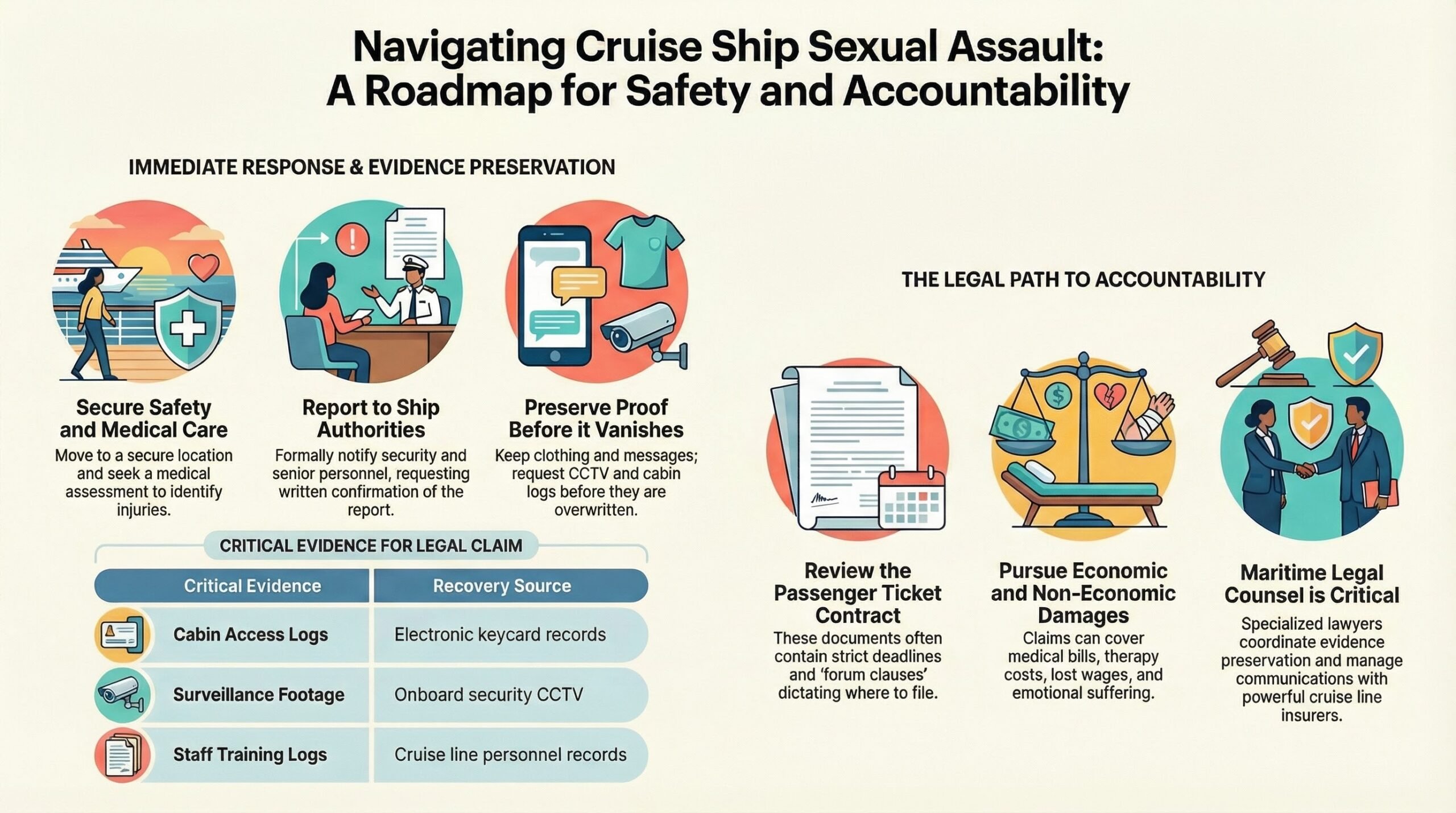
- Get to safety first, seek medical care, and report promptly to ship security, the medical center, and senior cruise personnel for formal documentation.
- Preserve evidence immediately, including clothing, messages, photographs, medical records, witness details, and requests for CCTV footage and cabin access logs.
- A Florida cruise ship sexual assault lawyer can explain reporting options, protect privacy, and coordinate trauma-informed advocacy and victim support services.
- Maritime law, passenger ticket terms, forum clauses, and notice deadlines can control where and when a Florida cruise assault claim must be filed.
- An attorney can identify liable parties, organize records, communicate with the cruise line and insurers, and help preserve proof for investigations or claims.
How We Can Help With Your Florida Cruise Ship Sexual Assault Claim
When a sexual assault occurs aboard a cruise ship, a Florida cruise ship sexual assault lawyer can help a survivor evaluate the legal options available and take immediate steps to protect a potential claim. Counsel may coordinate evidence preservation, document communications, identify witnesses, and guide reporting choices with care and discretion.


A service-centered legal team also helps survivors access Victim support services that address medical, emotional, and practical needs after an assault. Through trauma-informed advocacy, counsel can communicate with insurers, cruise line representatives, and other involved parties in a manner that reduces unnecessary stress on the survivor.
OUR CONSULTATIONSARE FREE
START YOUR FREE CASE REVIEW

The attorney’s role includes organizing records, explaining deadlines, and preparing a clear path forward so the survivor and supportive family members can make informed decisions. By managing urgent legal tasks and connecting clients with trusted community resources, the firm helps create stability during a deeply difficult period while honoring dignity, safety, and the survivor’s personal priorities throughout.
Understanding Cruise Ship Sexual Assault Cases in Florida
Why these cases require close legal attention becomes clear once the setting and governing rules are examined. Cruise ship sexual assault claims often involve overlapping duties under maritime law, passenger ticket contracts, and company safety policies. Florida courts may play an important role when voyages depart from or return to the state, making Florida incident coverage a practical concern for many harmed passengers and their families.


A careful understanding of evidence is also necessary. Crucial records may include surveillance footage, onboard medical notes, security logs, witness statements, and formal cruise ship reporting materials. Timelines matter because notice deadlines can be short, and delays may affect access to proof. Jurisdiction questions may arise depending on the ship’s flag, the cruise line’s headquarters, and where the assault was reported.
Legal review thus focuses on preserving the facts, identifying responsible parties, and assessing whether the cruise operator failed to provide reasonable safety measures, adequate response procedures, or proper protection for passengers and crew.
Common Scenarios When Cruise Ship Sexual Assault Might Take Place in Florida
Cruise ship sexual assault allegations in Florida may arise in several recurring settings, including private cabins, isolated corridors, bars, and onboard nightclubs. Risks may also increase during shore excursions, where unfamiliar environments and reduced supervision can create additional vulnerabilities for passengers. In some cases, allegations involve crew member misconduct, which raises serious concerns about supervision, reporting procedures, and passenger safety.
Cabin And Corridor Incidents
Within the confined environment of a passenger vessel, cabins and adjoining corridors are among the more common locations where sexual assault allegations may arise. These incidents may involve unauthorized entry, abuse by an acquaintance, or misconduct during late-night movement between stateroom areas.
From a service-oriented legal perspective, prompt action often centers on safety, medical attention, and careful documentation. Crew logs, keycard records, surveillance footage, and the preservation of witness statements can materially affect later investigations. Attention to physical surroundings, including door hardware, lighting, and corridor camera coverage, may also inform questions of foreseeability and negligence.
Equally important, survivor support resources should be identified quickly so affected passengers receive informed guidance, emotional care, and practical assistance while decisions about reporting, relocation, and legal remedies are being considered.
Bar And Nightclub Assaults
Although bars, lounges, and onboard nightclubs are intended for recreation, they can also become settings where sexual assault allegations arise after alcohol service, crowding, limited visibility, or impaired judgment reduce a passenger’s ability to recognize risk or give meaningful consent.
In these environments, incidents may involve unwanted touching, coercion after excessive drinking, or predatory conduct when a guest appears disoriented. Quiet hours elsewhere on the vessel do not always lessen risks inside late-night venues, where noise and movement can obscure warning signs.
For those seeking to protect others, attention often turns to CCTV footage, beverage records, witness statements, and whether staff training addressed intervention, overservice, and reporting duties. A careful legal review may examine how security measures, employee responses, and venue policies affected passenger safety.
Shore Excursion Vulnerabilities
When passengers leave the ship for organized tours or independent outings, vulnerabilities may increase as supervision becomes fragmented and familiar security measures no longer apply. Busy ports, crowded transportation, isolated beaches, and poorly monitored entertainment venues can create conditions where offenders exploit confusion, alcohol use, or separation from companions. Risks may rise further when excursion schedules change, communication is limited, or local oversight is inconsistent.
From a service-minded perspective, identifying these patterns helps families, advocates, and community responders promote safer travel practices. Hidden Area Incidents may occur near restrooms, storage spaces, remote pathways, or secluded vehicles, especially where lighting and visibility are poor. Effective Passenger Supervision, clear meeting procedures, and prompt reporting channels can reduce exposure to harm and support faster intervention when concerning behavior is observed abroad.
Crew Member Misconduct
Because crew members often hold positions of trust and possess access to passenger cabins, restricted corridors, and service areas, misconduct by ship personnel can present a distinct set of safety concerns during Florida-based cruise travel. Crew Misconduct may arise when an employee abuses authority, exploits intoxication, enters a cabin without permission, or targets isolated passengers in work-related spaces.
Such incidents may involve stewards, bartenders, security staff, or entertainers whose roles create repeated contact and perceived credibility. A service-minded review of these events often considers whether the cruise line appropriately screened, trained, supervised, and monitored its personnel, and whether warning signs were ignored. Consent and Reporting become especially important when passengers fear retaliation, confusion, or disbelief. Prompt documentation, medical attention, and preservation of communications can support accountability and help protect others from similar harm aboard.
Legal Rights of Cruise Ship Sexual Assault Victims in Florida
Several legal protections may be available to cruise ship sexual assault victims in Florida, despite the complicated overlap of maritime law, federal regulations, and contractual provisions in passenger tickets. These rights can support safety, dignity, and accountability while preserving access to civil remedies and criminal investigations.
Florida law and federal standards may recognize a victim-witness role, along with privacy protections intended to limit unnecessary disclosure of sensitive information.
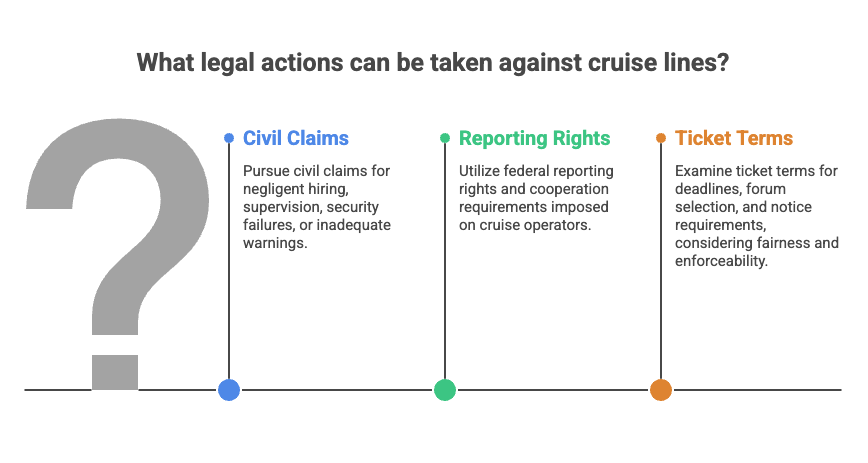
- Victims may pursue civil claims against cruise lines for negligent hiring, supervision, or security failures, or for inadequate warnings, when preventable harm occurred.
- Victims may also benefit from reporting rights under federal law, cooperation requirements imposed on certain cruise operators, and access to law enforcement review.
- Passenger ticket terms may impose deadlines, forum selection clauses, and notice requirements, yet courts may still examine fairness, enforceability, and public policy concerns.
In many matters, legal representation helps clarify jurisdiction, preserve statutory rights, and advance service-oriented advocacy for injured passengers and families.
Steps to Take After a Cruise Ship Sexual Assault Incident in Florida
After a cruise ship sexual assault incident in Florida, the immediate priorities generally include securing personal safety, notifying appropriate ship personnel or law enforcement, and seeking medical attention as soon as possible. It is also important that any available evidence, including clothing, messages, photographs, and witness information, be preserved to support any later investigation or legal claim. These early actions can materially affect both victim protection and the strength of a future case.
Ensure Immediate Safety
When a sexual assault occurs aboard a cruise ship, the immediate priority is to move the victim to a secure location away from the accused person and any area where further harm could occur. A trusted companion, security officer, or crew member trained in victim support should remain present while maintaining privacy and calm. Immediate separation helps protect physical safety and emotional stability during a highly vulnerable period.
Once safety is established, attention should turn to urgent needs. A medical assessment may identify injuries, address health concerns, and create a foundation for evidence documentation if the victim chooses. Clothing and personal items should be preserved when possible. Clear information about reporting options should be provided at an appropriate time, without pressure, so decisions can be made with dignity and informed understanding.
Report The Assault
If the victim is able to do so safely, the assault should be reported as soon as possible to ship security, the medical center, and senior cruise personnel so the incident is formally documented. Prompt notification helps create an official record, triggers internal response procedures, and may support later legal or administrative action. Documented reporting can also assist medical staff and responsible personnel in coordinating an appropriate response.
The report should be clear, factual, and timely. The victim, or a trusted person acting on the victim’s behalf, may also request written confirmation that the complaint was received. Where available, survivor advocacy services can help the victim understand reporting options, communicate with authorities, and access supportive resources. Early reporting often strengthens accountability and helps protect other passengers and crew members from further harm.
Preserve Critical Evidence
In the hours following a cruise ship sexual assault, preserving evidence should be treated as a priority because crucial proof can be lost quickly at sea. Clothing, bedding, messages, photographs, and medical records may help establish what occurred and support later legal action. To protect others and uphold accountability, those assisting should encourage prompt collection and secure storage of all relevant materials.
Preserving witness statements is also important, since memories may fade after disembarkation or crew transfers. Names, cabin numbers, timelines, and locations should be recorded as accurately as possible. CCTV footage documentation should be requested immediately, because surveillance systems may overwrite recordings within days. A qualified attorney can guide these efforts, communicate with ship personnel, and help ensure evidence is retained for investigators, prosecutors, and civil proceedings afterward.
How a Florida Cruise Ship Sexual Assault Lawyer Can Help You Initiate a Case
How does a Florida cruise ship sexual assault lawyer help initiate a case effectively? Counsel begins by evaluating jurisdiction, passenger ticket terms, and filing deadlines, then organizes crucial proof with disciplined care. This early guidance supports survivors and those assisting them, while protecting the integrity of a potential claim.
Attorneys often coordinate a Witness statement, offer preservation tips, secure trauma documentation, and request medical records from shipboard and shore-based providers.
- They identify the correct defendants, including the cruise line, crew members, or third-party contractors, and determine where to file notice and the suit.
- They gather and safeguard evidence, such as surveillance requests, cabin access logs, photographs, electronic communications, and names of supportive witnesses.
- They manage communication with insurers and cruise representatives, helping families, advocates, and caregivers avoid missteps that could weaken the case.
With prompt action, legal counsel helps transform confusion into an organized, service-minded response that protects rights and preserves accountability.
Long-Term Effects of Cruise Ship Sexual Assault Trauma
Cruise ship sexual assault trauma can produce lasting emotional and psychological effects, including anxiety, depression, and persistent fear responses that continue well after the voyage ends. Survivors may also experience significant relationship and trust struggles, as the assault can alter their sense of safety, intimacy, and confidence in others. In many cases, these long-term effects extend into daily life, affecting work performance, sleep, social functioning, and overall well-being.
Emotional And Psychological Impact
Beyond the immediate physical harm, sexual assault aboard a cruise ship can produce enduring emotional and psychological consequences that affect nearly every aspect of a survivor’s daily life. Many experience persistent trauma symptoms, including anxiety, depression, intrusive memories, sleep disruption, panic, and heightened vigilance in unfamiliar environments. For some, reporting hurdles intensify distress, especially when survivors feel isolated at sea, uncertain about procedures, or unsupported by ship personnel.
These effects may interfere with work, concentration, medical care, and routine decision-making long after the voyage ends. Survivors may withdraw from activities they once valued, struggle with guilt or shame, and develop a lasting sense of vulnerability. Compassionate legal and mental health support can help document harm, protect rights, and promote a steadier path toward safety, stability, and informed recovery over time.
Relationship And Trust Struggles
Although the assault may end in a single incident, its effects often extend into a survivor’s closest relationships, altering the ability to trust, communicate, and feel safe with others. Survivors may become guarded with spouses, partners, relatives, or friends, even when those individuals intend to offer steady care and support.
A trauma rooted in Consent boundaries breakdown and victim trust violations can reshape expectations within human connection. Survivors may question motives, misread ordinary interactions as threatening, or struggle to disclose needs and limits. Intimacy may feel complicated, because emotional safety often requires time, consistency, and patient respect from others. In service-minded communities, recognizing these relational wounds matters. Compassionate support, clear communication, and trauma-informed advocacy can help protect dignity while allowing trust to be rebuilt at a survivor’s own pace.
Lasting Effects On Daily Life
These disruptions in trust often extend into routine functioning, where trauma affects far more than personal relationships. Survivors may experience disrupted sleep, difficulty concentrating, heightened vigilance, and withdrawal from work, school, or community obligations. Ordinary environments can become sources of Trauma triggers, especially crowded spaces, confined cabins, or unfamiliar authority figures. As a result, daily tasks may require substantial emotional effort, reducing stability and independence.
Over time, these effects can impair employment, caregiving, financial management, and physical health. Many survivors also face proof challenges when symptoms emerge gradually or remain invisible to others. This can delay reporting, treatment, and practical support. For those committed to helping, understanding these lasting disruptions is crucial. Meaningful service often begins with patience, informed advocacy, and respect for the survivor’s pace, privacy, dignity, and safety.
What to Expect During a Florida Cruise Ship Sexual Assault Claim Process
A Florida cruise ship sexual assault claim process typically begins with immediate protective and reporting measures, followed by careful attention to medical care and legal deadlines. The claim then proceeds through formal filing requirements, while evidence collection and investigation often play a central role in establishing liability and preserving significant facts.
Depending on the strength of the evidence and the parties’ positions, the matter may resolve through settlement or continue toward trial under a timeline shaped by maritime and Florida legal procedures.
Immediate Steps After Assault
When a sexual assault occurs aboard a cruise ship, the actions taken in the hours that follow can materially affect both personal safety and any future legal claim. Priority should be given to reaching a secure location, requesting medical care, and notifying appropriate ship personnel. Preserving clothing, messages, photographs, and other potential evidence may help protect the survivor’s interests.
Trauma support options should be identified as early as possible, including access to counselors, victim advocates, or trusted family members ashore. Careful documentation of names, times, locations, and interactions can strengthen later fact review. Witness statement tips include asking observers to promptly record what they saw in their own words and to note dates and contact information. These practical measures can support recovery, accountability, and informed decision-making thereafter.
Filing The Legal Claim
After immediate safety, medical care, and evidence preservation have been addressed, attention often turns to filing a legal claim against the cruise line or other responsible parties. This step usually begins with reviewing the passenger ticket contract, which may limit where suit can be filed and how soon notice must be given. Counsel often evaluates jurisdictional challenges, applicable maritime law, and any reporting requirements before preparing the claim.
The filing process generally includes identifying liable parties, stating the legal basis for responsibility, and calculating damages. Deadlines are key, and an organized Evidentiary timeline can help counsel present events clearly without delay. A Florida cruise ship sexual assault lawyer may also communicate with insurers and defense counsel, seek early resolution when appropriate, or proceed toward litigation in a manner centered on accountability and service.
Evidence And Investigation
Because sexual assault claims at sea often depend on facts controlled by the cruise line, the evidence and investigation phase is typically one of the most important parts of a Florida claim process. Attorneys commonly move quickly to preserve surveillance footage, keycard records, incident reports, medical findings, and shipboard communications before those materials are altered, lost, or destroyed.
A careful investigation may also examine Crew member background checks, security policies, alcohol service records, and prior complaints involving the accused or the location where the assault occurred. Passenger eyewitness statements can help clarify timing, conduct, and the cruise line’s response after notice of danger.
In service to harmed individuals and community safety, this phase often focuses on building a clear factual record, identifying failures in prevention, and documenting whether reasonable protective measures were followed on board.
Settlement Or Trial Timeline
Once the available evidence has been preserved and the factual record begins to take shape, attention generally turns to the pace of settlement discussions and the possibility of trial. In Florida cruise ship sexual assault claims, timing varies according to jurisdiction clauses, investigation needs, and the strength of evidence preservation efforts.
Early resolution may occur if liability appears clear and damages are well documented. However, many matters require extended discovery, witness testimony, medical review, and motions practice before meaningful negotiations occur. Effective client communication helps survivors understand each phase and make informed decisions that respect both personal recovery and legal objectives.
A careful claims strategy weighs settlement value against the demands, uncertainty, and public nature of trial. When fair compensation is not offered, counsel may proceed toward trial with disciplined preparation and focused advocacy.
Compensation for Florida Cruise Ship Sexual Assault Damages
Several forms of compensation may be available to a survivor of sexual assault on a cruise ship in Florida, depending on the facts of the incident and the extent of the resulting harm. A careful claim often includes documentation, witness accounts, medical records, and reports made onboard or ashore. Counsel may also coordinate Victim advocacy resources and apply compensation negotiation strategies to strengthen a survivor-centered presentation and encourage responsible resolution.
| Consideration | Visualized impact |
|---|---|
| Medical treatment | Clinic visits after disembarkation |
| Counseling support | Ongoing weekly therapy sessions |
| Safety measures | Secure lodging and transport |
| Career disruption | Missed work and altered plans |
Compensation may also reflect future care needs, loss of educational momentum, and other practical consequences tied to the assault. Because cruise lines and third parties may dispute responsibility, prompt evidence preservation and informed legal guidance are often important. This process can help survivors pursue accountability while protecting dignity, stability, and access to supportive care over time.
Economic vs Non-Economic Damages in Florida Cruise Ship Sexual Assault Cases
In Florida cruise ship sexual assault cases, damages are generally divided into economic and non-economic categories, each addressing a different type of harm. Economic damages typically cover measurable financial losses, while non-economic damages relate to pain, suffering, emotional distress, and other intangible effects of the assault. Establishing the value of either category often requires records, expert opinions, and other evidence that connects the incident to the claimant’s losses.
Economic Damages Overview
A clear understanding of economic damages is essential in Florida cruise ship sexual assault cases because these losses can often be identified, documented, and calculated with relative precision. Such damages commonly include emergency care, hospital bills, medications, Trauma therapy, transportation costs, lost wages, and reduced earning capacity when injuries disrupt employment or service responsibilities.
Accurate Medical documentation supports these claims by linking treatment to the incident and establishing the necessity of future care. Evidence preservation also strengthens recovery efforts, especially when receipts, invoices, employment records, and witness information are secured early. Following shipboard and shore-based Reporting procedures may create useful records that confirm timelines and expenses.
In service-oriented communities, careful attention to these measurable losses helps survivors pursue practical support, promotes accountability, and enables advocates to address immediate financial burdens with diligence.
Non-Economic Losses Explained
Unlike economic damages, non-economic losses address harms that do not appear on invoices or payroll records, yet they often represent a substantial part of a Florida cruise ship sexual assault claim. These losses recognize the human impact of abuse, including emotional suffering, mental anguish, and emotional trauma that can affect daily life, relationships, sleep, concentration, and a survivor’s sense of safety.
Non-economic damages may also include pain, humiliation, anxiety, depression, loss of enjoyment of life, and the disruption of personal dignity. In a service-minded legal context, understanding these harms helps advocates, families, and community supporters respond with care and respect. Florida claims involving cruise ship sexual assault often require careful attention to the lasting personal consequences of misconduct, especially when the survivor’s injuries are profound, private, and deeply life-altering.
Proving Damage Value
Because damage valuation often determines the practical strength of a Florida cruise ship sexual assault claim, proving that value requires clear evidence tying each loss to the misconduct and its aftermath. Economic damages are commonly shown through bills, wage records, treatment estimates, and Medical Documentation that confirms the nature, timing, and cost of care.
Non-economic damages require a different form of proof, yet they remain equally important when seeking accountability that protects future passengers. Counsel often relies on therapy records, expert opinions, personal journals, and Witness Statements describing behavioral changes, fear, sleep disruption, humiliation, and diminished daily functioning.
Consistent reporting strengthens credibility, while gaps in treatment may invite dispute. A careful presentation of both measurable expenses and human suffering helps decision makers assess fair compensation under Florida maritime and injury principles.
When a Florida Cruise Ship Sexual Assault Case Goes to Trial vs Settlement
When a Florida cruise ship sexual assault case moves toward resolution, the outcome often depends on the strength of the evidence, the extent of the harm, and the willingness of the cruise line to accept responsibility. Settlement is often pursued when liability appears clear, and compensation can be secured without the burden of trial. Evidence preservation, witness statements, survivor support, and document organization can strongly influence these negotiations.
Trial may become necessary when the cruise line disputes fault, minimizes damages, or refuses a fair resolution. In that setting, attorneys present records, expert analysis, and testimony to show how the assault occurred and how it affected the survivor’s life. A trial can offer public accountability, but it also requires more time, expense, and emotional stamina.
Settlement, by contrast, may provide privacy and faster financial relief. The appropriate path depends on the facts, the survivor’s goals, and counsel’s assessment of risk, value, and probable jury response.
The Statute of Limitations for Florida Cruise Ship Sexual Assault Cases
Although survivors often focus first on safety, medical care, and reporting the assault, the statute of limitations can quickly become a decisive issue in a Florida cruise ship sexual assault case. Time limits may arise from federal maritime law, Florida law, or passenger ticket contracts, and each source can affect filing deadlines differently.
Because cruise ship cases often involve Maritime Claims, determining the correct deadline requires careful attention to where the assault occurred, the ship’s registry, and the cruise line’s contractual terms. Jurisdictional Limits may also restrict where a lawsuit can be filed, which can indirectly affect timing and procedure. Some claims require notice within months, while others allow longer periods, depending on the facts and governing law.
Delays can jeopardize evidence, witness availability, and access to security footage or onboard records. For those committed to protecting others and promoting accountability, understanding these deadlines supports timely action and preserves the opportunity to pursue justice.
When to Contact a Cruise Ship Sexual Assault Lawyer in Florida
Strict filing deadlines often make early legal guidance advisable in a Florida cruise ship sexual assault case. Prompt contact can help preserve records, identify witnesses, and clarify when to file under ticket terms, maritime rules, and applicable state or federal law. Early action also helps families and caregivers organize practical steps that protect the affected person’s interests and dignity.
A lawyer is often contacted as soon as the assault is reported, medical care is obtained, or the cruise line is notified. This timing can matter because statute timing may shorten notice periods and affect access to evidence held by the ship or company. Early consultation can also connect survivors with Victim support and advocacy resources, including counselors, crisis services, and reporting guidance.
For those seeking to serve and protect others, timely legal contact may support accountability, informed decisions, and coordinated care while the matter is still fresh and documentation can be gathered accurately.
Why You Need an Experienced Florida Cruise Ship Sexual Assault Lawyer
Because cruise ship sexual assault claims often involve maritime law, ticket contract limitations, and evidence controlled by the cruise line, experienced Florida legal counsel can play an essential role in protecting a survivor’s rights. An attorney with maritime experience understands filing deadlines, jurisdiction issues, and the procedures required to pursue accountability against a powerful corporation.
Experienced counsel also strengthens evidence preservation efforts at an important time. Shipboard surveillance, incident reports, medical records, witness statements, and electronic communications may be difficult to obtain without prompt legal action. A lawyer can demand the preservation of key materials and help prevent the loss or destruction of evidence.
In addition, legal representation can reduce burdens on survivors and those seeking to serve them. Through clear guidance, communication with the cruise line, and coordination with investigators, counsel helps create space for recovery while advancing the claim. Strong Victim support and informed advocacy often improve both protection and the pursuit of justice.
How to Choose the Right Cruise Ship Sexual Assault Lawyer for Your Case in Florida
When selecting a cruise ship sexual assault lawyer in Florida, careful attention should be given to the attorney’s experience with maritime injury claims, sexual assault litigation, and cases involving major cruise lines. Counsel should understand passenger ticket deadlines, vessel security issues, and the unique jurisdictional rules that often govern these cases.
A careful review of the lawyer’s communication style, investigative resources, and record of compassionate advocacy is also important. An effective attorney will explain legal options clearly, provide practical evidence retention tips, and build a thoughtful approach centered on the client’s safety and long-term recovery. Client strategy planning should reflect both immediate legal needs and broader concerns, including privacy, counseling support, and coordination with law enforcement when appropriate.
It is also wise to evaluate whether the firm can preserve surveillance footage, witness statements, and medical records before crucial evidence disappears. Selecting counsel with diligence may strengthen accountability efforts and help protect future passengers at sea.
About The Law Offices of Anidjar & Levine
Serving injured clients across Florida, The Law Offices of Anidjar & Levine provides legal representation in detailed personal injury matters, including claims that may arise from sexual assault aboard cruise ships.
The firm approaches these cases with discipline, careful analysis, and respect for those seeking accountability and safety for others.
Its attorneys evaluate Cruise line policies, preserve evidence, and guide clients through each stage of an incident investigation.
They assess legal jurisdiction issues that often affect cruise ship claims, including where a lawsuit may be filed and which laws may govern the case.
The firm also emphasizes victim support by helping clients understand their rights, options, and immediate legal responsibilities after reporting misconduct.
Through organized case preparation and clear communication, The Law Offices of Anidjar & Levine aims to reduce uncertainty for injured individuals and families.
Their work reflects a service-minded commitment to justice, informed advocacy, and practical counsel in legally and factually complex maritime injury matters statewide.
Frequently Asked Questions
Can Minors File Cruise Ship Sexual Assault Claims Through a Parent or Guardian?
Yes, minors may generally file cruise ship sexual assault claims through a parent or guardian, because they usually lack the legal capacity to sue independently. A parent, guardian, or court-appointed representative may act on the minor’s behalf, protect the child’s interests, and manage required filings. Parental Consent may also be relevant during settlement decisions. Because cruise claims often involve strict deadlines and forum rules, prompt legal review is commonly considered necessary.
Do Cruise Ship Sexual Assault Laws Differ for International Waters Versus Florida Ports?
Yes, laws can differ notably between international waters and Florida ports because jurisdiction boundaries determine which statutes, investigative authorities, and filing deadlines apply. Incidents near or within Florida ports may trigger state and federal law, while events in international waters often involve maritime law and foreign-flag rules. Effective service to survivors requires prompt preservation of evidence, accurate reporting, and careful review of passenger contracts, venue clauses, and applicable criminal and civil procedures.
Can I Remain Anonymous When Pursuing a Cruise Ship Sexual Assault Claim?
Yes, a claimant may sometimes remain anonymous when pursuing a sexual assault claim, though complete anonymity is not always guaranteed. Courts may permit anonymous filing in limited circumstances, and counsel may seek privacy protections to restrict the public disclosure of sensitive information. The availability of these measures depends on jurisdiction, court approval, and the facts of the case. Early legal guidance helps survivors protect dignity while advancing accountability and service to others through action.
Are Translators Available for Non-English-Speaking Cruise Ship Sexual Assault Victims?
Yes, translators are often available for non-English-speaking cruise ship sexual assault victims through medical advocacy programs, law firms, and community-based survivor services. Effective language access is critical to informed consent, accurate reporting, and meaningful participation in medical and legal processes. Translator support may include in-person interpreters, phone services, and translated documents. Prompt requests for assistance generally improve communication, preserve evidence, and help victims receive appropriate care and guidance.
Does Travel Insurance Cover Expenses Related to Cruise Ship Sexual Assault Incidents?
Travel insurance may cover certain expenses related to cruise ship sexual assault incidents, but coverage eligibility depends on the policy’s terms, exclusions, and reporting requirements. Some plans reimburse emergency medical care, counseling, trip interruption, or evacuation costs. Insurers usually require prompt notice and thorough claim documentation, including medical records, incident reports, and receipts. Careful policy review helps advocates and caregivers guide affected travelers toward available benefits and responsible post-incident support.
—————————
Cruise ship sexual assault claims in Florida demand prompt action, careful documentation, and a clear understanding of maritime and state law.
Victims may face intricate reporting deadlines and jurisdictional issues that can affect their ability to recover compensation.
A qualified Florida Sexual Assault Lawyer can evaluate the facts, protect the victim’s rights, and pursue accountability against responsible parties.
Anidjar & Levine provides experienced legal guidance during this difficult and time-sensitive process.