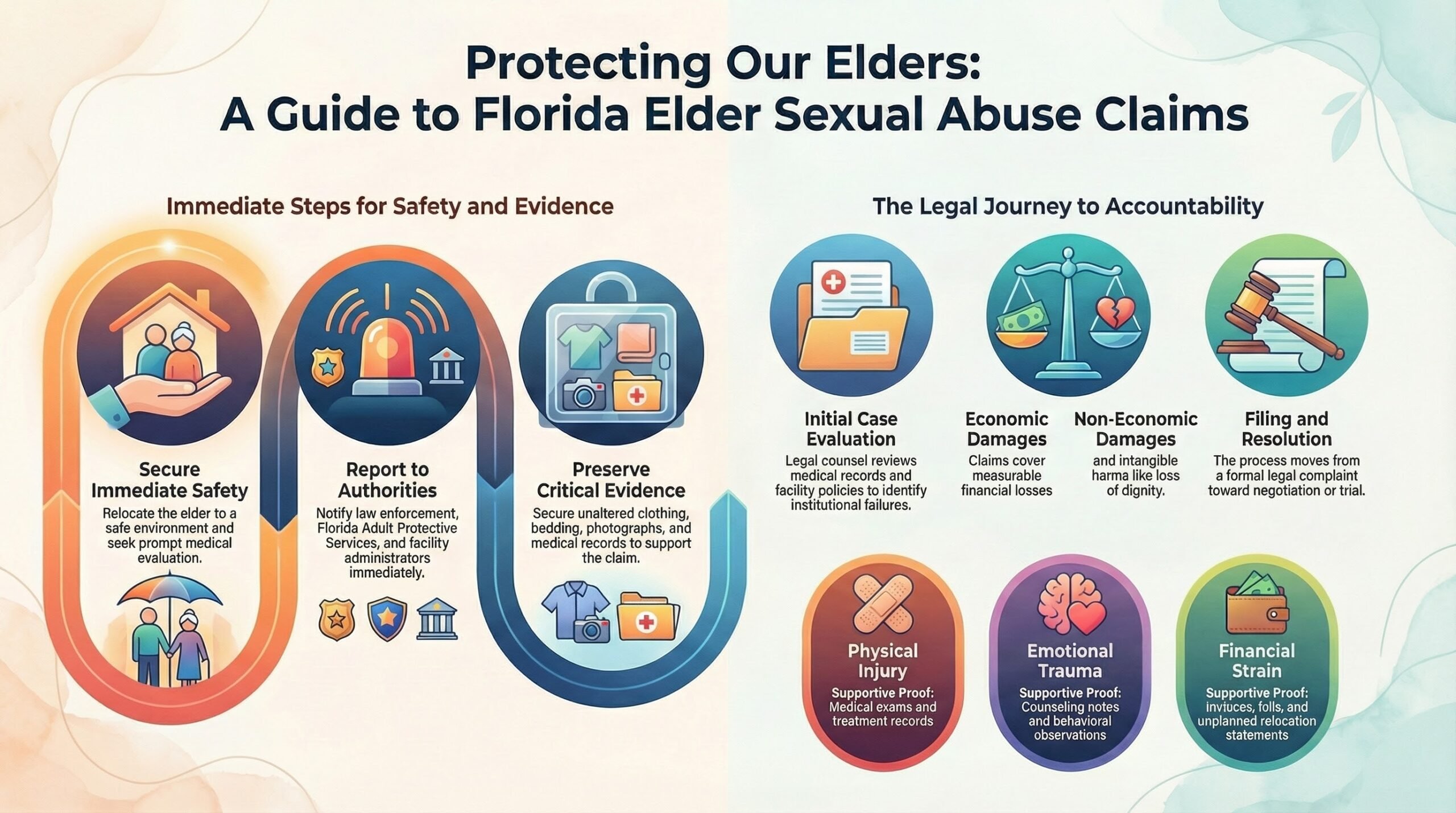
Law Offices of Anidjar and Levine help protect vulnerable adults by addressing immediate safety, coordinating reports to authorities, and preserving essential evidence.
Legal review often focuses on nonconsensual contact, coercion, capacity, facility oversight, and residents’ rights violations in nursing homes, assisted living facilities, hospitals, or private care settings.
Counsel may pursue civil claims against abusers and negligent institutions for medical costs, emotional harm, and loss of dignity.
The sections below explain the process, rights, and next steps.
For related guidance, visit Florida Sexual Assault Lawyer.
Main Takeaways
- A Florida elder sexual abuse lawyer helps protect an older adult’s safety, dignity, and legal rights after abuse in care settings.
- Lawyers assist with reporting abuse, communicating with facilities, and coordinating with authorities while prioritizing the survivor’s voice and wellbeing.
- They preserve critical evidence, including medical records, photographs, witness accounts, clothing, and documentation of injuries or trauma.
- Florida claims often depend on proof of nonconsensual contact, capacity concerns, negligent supervision, and violations of residents’ rights.
- Legal action may seek damages from abusers and negligent facilities, while criminal investigations and protective measures proceed separately.


How We Can Help With Your Florida Elder Sexual Abuse Claim
When an older adult has been harmed by sexual abuse in a nursing home, assisted living facility, hospital, or other care setting, legal counsel can help protect the individual’s rights and pursue accountability under Florida law. An attorney may guide families through immediate protective steps, communication with facility leadership, and coordination with appropriate authorities.
Counsel also helps organize a claim with care and discipline. This includes advising on Mandated reporting obligations, securing records, and promoting evidence retention so essential information is not lost or altered. A legal team may interview witnesses, document injuries, review internal policies, and identify institutional failures that allowed harm to occur. They may also handle insurer communications and advocate for resources that support the survivor’s safety, dignity, and continued care.
Throughout the process, legal counsel serves with steadiness and purpose, helping concerned relatives and caregivers act responsibly, honor the older adult’s voice, and pursue a result that supports protection and accountability.
OUR CONSULTATIONSARE FREE
START YOUR FREE CASE REVIEW

Understanding Elder Sexual Abuse Cases in Florida
Building on the role counsel plays in protecting an older adult and preserving a claim, it is helpful to understand how elder sexual abuse cases arise and are evaluated under Florida law. These matters generally involve allegations of nonconsensual contact, exploitation, sexual coercion, or abuse of a person whose age, illness, disability, or cognitive decline limits self-protection.
Florida cases are often assessed through medical records, witness accounts, facility policies, reporting histories, and physical or psychological evidence. Decision-makers examine capacity, consent, credibility, and whether a caregiver, institution, or other responsible party failed to prevent foreseeable harm.
Civil claims may focus on negligence, negligent hiring or supervision, and violations of residents’ rights, while criminal investigations may proceed separately. Effective Staff training, prompt reporting, careful documentation, and trauma-informed responses can strengthen protection for vulnerable adults and support accountability. A careful legal review helps families and advocates identify duties, preserve evidence, and pursue appropriate remedies.
Common Scenarios When Elder Sexual Abuse Might Take Place in Florida
Elder sexual abuse in Florida may arise in several care-related settings where older adults depend on others for supervision, treatment, or daily assistance. Common situations include nursing home vulnerability, assisted living misconduct, caregiver boundary violations, and abuse occurring in hospitals or rehabilitation facilities. Each scenario presents distinct warning signs and legal concerns that warrant careful review.
Nursing Home Vulnerability
Although nursing homes are expected to provide close supervision and a secure living environment, certain conditions can increase the risk of sexual abuse for vulnerable residents. Facilities with limited staff oversight, high turnover, or inconsistent training may leave residents exposed during bathing, toileting, transfers, or overnight hours. Risk may also rise when resident capacity exceeds practical monitoring levels, creating gaps in supervision and response.
Individuals with cognitive decline, physical frailty, or communication barriers can be especially vulnerable, because they may struggle to report misconduct clearly or promptly. Shared rooms, secluded hallways, and delayed intervention can further increase danger. For families and advocates committed to protecting older adults, recognizing these warning conditions may support earlier action, stronger reporting, and more attentive care planning within nursing home settings across Florida communities.
Assisted Living Misconduct
When misconduct occurs in assisted living settings, it may arise when residents rely heavily on staff for daily care yet receive less intensive supervision than in a nursing home. This environment can create opportunities for Consent violations during bathing, dressing, toileting, or nighttime assistance, especially when monitoring systems are weak or staffing levels are inadequate.
Assisted living misconduct may also involve facility neglect, where complaints are ignored, records are poorly maintained, or warning signs are dismissed. In some cases, staff coercion manifests as threats, manipulation, or the misuse of authority over vulnerable residents. Medication exploitation can further increase risk when sedating drugs are misused to reduce resistance or impair awareness. For families and advocates seeking to protect others, careful documentation, prompt reporting, and independent review are often critical safeguards.
Caregiver Boundary Violations
Because caregiving often requires close physical contact and a high degree of trust, boundary violations can develop in ways that seem routine at first but cross clear personal and legal boundaries. In Florida, these situations may involve unnecessary touching during bathing, dressing, toileting, or repositioning, especially when privacy is ignored or explanations are withheld. Consent confusion can arise when an elder has cognitive decline, communication barriers, or depends on the caregiver for daily needs.
A Power imbalance may discourage objections, reporting, or even recognition of misconduct. Those who seek to protect vulnerable adults should note warning signs such as secrecy, isolation, sexual comments, intrusive hygiene assistance, or contact unrelated to care tasks. Caregiver conduct must remain respectful, limited, and clearly connected to legitimate assistance at all times.
Hospital And Rehab Abuse
In hospitals and rehabilitation facilities, elder sexual abuse may occur during vulnerable periods of treatment, recovery, or supervision, particularly where patients rely on staff for mobility, hygiene, medication, or overnight care. Risks can increase when privacy is poorly monitored, cognitive decline affects communication, or sedation limits awareness and resistance. Abuse may involve inappropriate touching during examinations, bathing, transfers, or nighttime checks, especially when Patient consent is absent, unclear, or deliberately ignored.
In some cases, staff intimidation discourages reporting, while administrative failures delay intervention and the preservation of evidence. Families, advocates, and professionals committed to protecting older adults often watch for behavioral changes, unexplained injuries, or fear around certain caregivers. Prompt documentation, medical evaluation, and legal review can help safeguard dignity, accountability, and recovery for vulnerable elders in care settings.


Legal Rights of Elder Sexual Abuse Victims in Florida
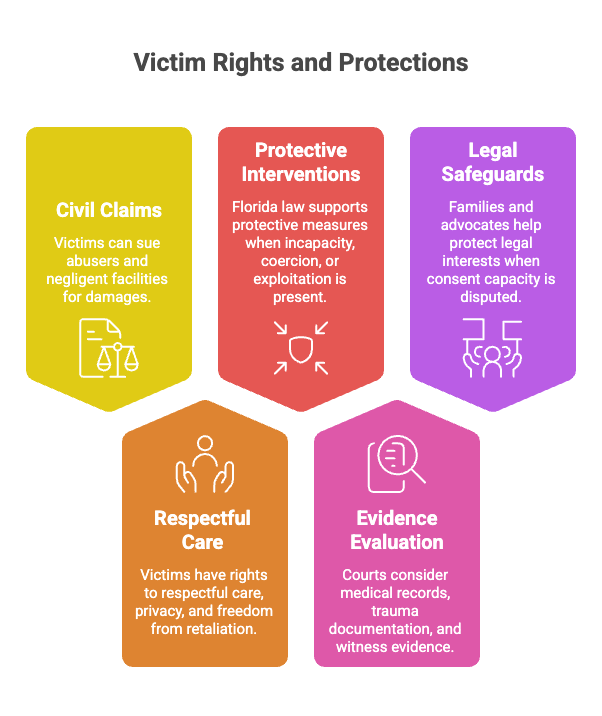
Although elder sexual abuse often occurs in settings where victims feel powerless, Florida law affords clear and enforceable rights to protect their safety, dignity, and legal interests. These rights recognize bodily autonomy, privacy, and access to civil justice, while giving special weight to consent capacity and trauma documentation in cases involving cognitive decline or dependency.
Florida law protects vulnerable elders through enforceable rights grounded in dignity, bodily autonomy, privacy, and access to civil justice.
- Victims may pursue civil claims for damages against abusers and negligent facilities.
- They retain rights to respectful care, privacy, and freedom from retaliation or intimidation.
- Florida law supports protective interventions when incapacity, coercion, or exploitation is present.
- Courts may consider medical records, trauma documentation, and witness evidence when evaluating harm.
- Families and advocates may help safeguard legal interests when consent capacity is disputed.
These protections reflect a public commitment to serve vulnerable adults with fairness and accountability. In many matters, legal remedies also aim to deter misconduct, promote institutional responsibility, and preserve the dignity of older adults across care environments statewide.
Steps to Take After an Elder Sexual Abuse Incident in Florida
After an elder sexual abuse incident in Florida, the immediate priority is to secure the victim’s safety and remove the individual from any continuing risk of harm. The incident should then be reported promptly to the appropriate authorities and facility administrators, as timely reporting can support both protection and accountability. It is also important to preserve essential evidence, including medical records, photographs, clothing, and written observations, because these materials may be crucial in any subsequent investigation or legal action.
Ensure Immediate Safety
When elder sexual abuse is suspected or discovered, the immediate priority is to ensure the older adult’s safety and remove that person from any continuing risk of harm. This may require relocation to a trusted family member’s home, a hospital, or another supervised setting where contact with the suspected abuser can be prevented.
Caregivers and loved ones should also seek prompt medical care to address injuries, preserve wellbeing, and support informed next steps. If the older adult remains vulnerable, practical safeguards may include changing room access, adjusting staffing assignments, or arranging constant supervision. In some situations, emergency protective orders may be necessary to create a legal barrier against further contact. A calm, organized response helps protect dignity, reduce trauma, and ensure the older adult receives compassionate, competent support during a deeply serious crisis.
Report The Abuse
Once immediate safety has been addressed, the next step is to report the abuse to the proper authorities so that an official response can begin and the older adult’s rights can be protected. In Florida, reports may be made to law enforcement, Adult Protective Services, or appropriate state agencies overseeing licensed care settings. Prompt reporting supports mandated reporting duties, strengthens case documentation, and helps initiate victim support services.
When the incident occurs in a nursing home, assisted living facility, or hospital, administrators should also be notified to trigger internal procedures and facility compliance obligations. Those assisting the older adult should provide clear, factual information, including dates, names, and observed concerns, while avoiding speculation. Timely reporting helps protect other vulnerable residents and creates a path toward accountability, intervention, and respectful care.
Preserve Key Evidence
Because physical and digital evidence can deteriorate quickly, preserving crucial information should begin as soon as the older adult is safe and a report has been made. Caregivers or advocates should secure clothing, bedding, photographs, messages, voicemails, and facility records without altering them. Forensic documentation from medical providers can help identify injuries, collect biological material, and connect events to specific dates and times.
Accurate timeline reconstruction is also important, especially when memory is fragmented or multiple caregivers were present. Witness statements should be gathered promptly from staff, residents, family members, or visitors who observed concerning behavior or unusual changes. Each item should be labeled, stored carefully, and transferred with a clear chain-of-custody record. Organized evidence strengthens accountability efforts and supports professionals working to protect vulnerable older adults in Florida.
How a Florida Elder Sexual Abuse Lawyer Can Help You Initiate a Case
How can a Florida elder sexual abuse lawyer help initiate a case with clarity and legal force? Counsel begins by evaluating facts, identifying liable parties, and explaining reporting duties to families, caregivers, or advocates seeking to protect a vulnerable adult. Early guidance helps organize records, preserve timelines, and coordinate with agencies without compromising the claim.
When immediate safety is at issue, counsel may seek protective orders and address witness protection concerns through appropriate legal channels.
- Reviews available evidence and identifies urgent gaps
- Advises on civil claims, reporting steps, and deadlines
- Communicates with facilities, insurers, and investigators
- Seeks court intervention to improve immediate safety
- Prepares filings that present facts in a disciplined manner
A lawyer also helps clients understand standing, damages, and procedural requirements under Florida law. By managing documentation, interviews, and notice obligations, counsel creates an orderly starting point. This support can strengthen accountability efforts and help those serving others pursue justice responsibly.
Long-Term Effects of Elder Sexual Abuse Trauma
The long-term effects of elder sexual abuse trauma often extend far beyond the initial incident, affecting emotional stability, mental health, and overall quality of life. Survivors may experience lasting psychological distress, physical health complications, and increased vulnerability to chronic conditions that interfere with daily functioning. In many cases, these consequences also contribute to social withdrawal, strained relationships, and a diminished sense of safety and trust.
Emotional And Psychological Impact
Although physical injuries may recover over time, the emotional and psychological impact of elder sexual abuse often persists far longer, affecting nearly every aspect of an older adult’s daily life. Survivors may experience profound fear, shame, distrust, confusion, and withdrawal, especially when the abuse was committed by a caregiver or trusted authority figure.
These effects can disrupt relationships, diminish independence, and erode a person’s sense of safety and dignity. Some older adults develop anxiety, depression, sleep disturbance, or post-traumatic stress symptoms that interfere with ordinary routines and meaningful social connections. Effective trauma recovery often requires patient-centered care, including mental health support, compassionate advocacy, and stable environments where survivors are believed and protected. For those committed to serving vulnerable adults, understanding these lasting harms is crucial to promoting accountability, healing, and informed intervention.
Physical Health Complications
Beyond the immediate trauma, elder sexual abuse can produce serious long-term physical health complications that undermine an older adult’s overall stability and quality of life. Survivors may experience chronic pain, sleep disruption, gastrointestinal distress, headaches, and worsening cardiovascular conditions, particularly when fear and hypervigilance remain unresolved. In some cases, injuries mend slowly because age-related frailty, reduced immunity, or untreated infections complicate recovery.
Care teams serving vulnerable adults should carefully evaluate Consent and Capacity, especially when cognitive decline affects reporting, treatment decisions, or protection planning. Ongoing Substance Monitoring may also be necessary, as medication misuse, sedation, or chemical restraint can conceal abuse-related symptoms and intensify existing illnesses. Prompt medical assessment, coordinated documentation, and trauma-informed care often play a key role in preserving health, safety, dignity, and future well-being for survivors.
Social Withdrawal Effects
Persistent trauma often affects more than physical health, and many older survivors begin to withdraw from family, friends, caregivers, and community activities after sexual abuse. This isolation may appear as missed appointments, reluctance to speak, fear of touch, or refusal to participate in familiar routines. Service-minded professionals often recognize that withdrawal can reflect shame, distrust, and confusion rooted in abusive power dynamics.
Over time, social retreat may deepen depression, increase dependence, and reduce access to supportive relationships that protect dignity and safety. In some cases, survivors question their own memories or feel unable to explain what occurred, especially when cognitive decline affects consent capacity. Care teams, advocates, and loved ones should respond with patience, consistency, and respectful observation because renewed connection can support recovery, accountability, and long-term protection.
What to Expect During a Florida Elder Sexual Abuse Claim Process
A Florida elder sexual abuse claim generally begins with an initial case evaluation, during which the available facts, records, and potential legal grounds are reviewed. The process typically continues with formal reporting and investigation, followed by filing a claim against the responsible parties. Depending on the evidence, the matter may proceed to settlement negotiations or, if necessary, to trial.
Initial Case Evaluation
Often, the initial case evaluation in a Florida elder sexual abuse claim begins with a careful review of the reported abuse, the elder’s condition, and the facility or caregiver’s role in the events at issue. During this stage, an attorney commonly focuses on whether the available facts suggest neglect, coercion, or direct misconduct, and on what civil remedies may apply.
Professionals may assess medical records, care notes, photographs, and Trauma documentation to understand harm and preserve clarity. They may also identify witnesses, prior complaints, and patterns of unsafe supervision as they organize an evidentiary timeline.
Equally important, victim support needs are considered, including communication methods, family involvement, and access accommodations. This evaluation helps concerned parties understand legal options, case strengths, and practical next steps while centering dignity, safety, accountability, and compassionate service for vulnerable elders.
Reporting And Investigation
Following the initial case evaluation, the reporting and investigation stage generally begins with notice to the appropriate authorities, the care facility, or both, depending on where the alleged abuse occurred and whether immediate safety measures are required. This step often includes preserving records, identifying witnesses, and documenting injuries, behavioral changes, or unexplained incidents with care and accuracy.
Investigators may review medical charts, staffing logs, surveillance footage, and internal reports to determine what occurred and whether Disclosure requirements were met. Families and advocates are often guided on how to cooperate respectfully while protecting the elder’s dignity and well-being. The process may also examine prior complaints, supervision practices, and policy compliance to assess caregiver accountability. A careful investigation helps clarify facts, support protective interventions, and promote safer conditions for vulnerable residents and patients.
Filing The Claim
Once sufficient information has been gathered, filing the claim typically involves preparing a formal legal complaint that identifies the accountable parties, outlines the alleged abuse, and states the damages being sought under Florida law.
Counsel then submits the complaint in the appropriate court and ensures that each defendant is properly served. During this phase, careful attention is given to the evidence timeline, including reports, medical records, witness statements, and facility documents. Any documentation gaps are identified early, so additional records or clarifications may be requested.
The claimant may also need to verify facts, review allegations for accuracy, and sign sworn materials when required. Throughout the filing, a service-minded legal team seeks to protect dignity, reduce confusion, and keep involved family members informed while meeting procedural deadlines and court requirements.
Settlement Or Trial
After the complaint is filed and the defendants have been served, a Florida elder sexual abuse claim generally proceeds toward either a negotiated resolution or courtroom litigation. Counsel evaluates the strength of the evidence, witness credibility, medical records, and institutional conduct to determine whether settlement discussions may serve the survivor’s interests while conserving emotional resources and promoting accountability.
A thoughtful Negotiation strategy may include demand letters, mediation, and structured discussions regarding compensation, safety reforms, confidentiality terms, and future care needs. If defendants deny responsibility or offer inadequate terms, the matter may advance to trial.
There, each side presents testimony, documents, and expert analysis before a judge or jury. Trial can require more time and preparation, yet it may also provide a fuller public examination of wrongdoing and a stronger opportunity to secure meaningful justice for vulnerable elders.
Compensation for Florida Elder Sexual Abuse Damages
Because elder sexual abuse often causes profound physical and psychological harm, compensation in a Florida civil claim may include damages for medical treatment, counseling, pain and suffering, emotional distress, and any related financial losses. Thoughtful claims often rely on medical documentation, caregiver observations, and expert evaluation to support trauma relief and restorative care needs.
| Harm | Human impact | Supportive proof |
|---|---|---|
| Physical injury | Daily discomfort, fear | Exams, treatment records |
| Emotional trauma | Shame, withdrawal, nightmares | Counseling notes |
| Lost security | Declining trust, isolation | Facility reports |
| Care needs | Added assistance, supervision | Care plans |
| Financial strain | Unplanned expenses | Bills, statements |
A careful legal approach seeks resources that help protect dignity, encourage recovery, and, where possible, restore stability. For families and advocates committed to serving vulnerable adults, compensation can provide meaningful support while recognizing the seriousness of the abuse and the lasting disruption it causes.
Economic vs Non-Economic Damages in Florida Elder Sexual Abuse Cases
Florida elder sexual abuse cases often involve both economic damages, such as medical expenses, counseling costs, and related financial losses, and non-economic damages, including pain and suffering, emotional distress, and loss of dignity. The valuation of these categories differs: economic losses are typically supported by records and bills, whereas non-economic harm is assessed by the severity and lasting effects of the abuse. Florida compensation factors may include the nature of the misconduct, the extent of the victim’s injuries, and the evidence connecting those harms to the abuse.
Economic Damage Categories
In these cases, damages are generally divided into economic and non-economic categories, a distinction that helps clarify the full scope of harm caused by elder sexual abuse. Economic damages focus on measurable financial losses tied to treatment, safety, and necessary support after the abuse.
These categories often include emergency care, hospital bills, counseling costs, medications, laboratory testing, and future medical needs. They may also cover relocation expenses, increased supervision, transportation to appointments, and the cost of protective services or long-term care.
A careful medical record review can help document causation, timing, and expected treatment needs. Financial records, invoices, and provider statements often support these claims. Although emotional distress proof may appear in the case, economic damages remain centered on objectively verifiable losses that can be calculated with reasonable certainty under Florida law.
Non-Economic Harm Valuation
Non-economic damages address a different dimension of loss, one that cannot be measured through bills, receipts, or wage records. In Florida elder sexual abuse cases, this category concerns the human consequences of exploitation, including humiliation, fear, loss of dignity, and diminished enjoyment of daily life. These injuries often continue long after physical evidence fades.
Valuation focuses on the depth, duration, and seriousness of emotional and psychological suffering. Trauma impacts may appear through anxiety, depression, withdrawal, sleep disruption, or loss of trust in others. Caregiver manipulation can intensify harm by distorting dependence, isolating the victim, and undermining safety. A careful legal presentation often relies on treatment records, behavioral changes, and testimony from those who observed the elder’s condition. This approach helps communicate invisible suffering with accuracy, respect, and purpose.
Florida Compensation Factors
When compensation is evaluated in a Florida elder sexual abuse case, several factors guide how economic and non-economic damages are distinguished and assessed. Economic damages address measurable losses, including medical treatment, counseling, relocation costs, and other expenses tied directly to the abuse. Non-economic damages concern pain, emotional distress, loss of dignity, and the lasting impact on daily life and trusted relationships.
A careful Liability Assessment considers the abuser’s conduct, the facility’s supervision, reporting failures, and whether neglect enabled further harm. Documentation, expert opinions, and witness accounts often shape the value of both categories of damages. In especially egregious matters, Punitive Damages may be pursued to address intentional misconduct and deter similar abuse. This framework supports accountability while helping vulnerable elders receive meaningful, service-oriented legal protection and justice.
When a Florida Elder Sexual Abuse Case Goes to Trial vs Settlement
Although many Florida elder sexual abuse claims resolve through negotiated settlement, some proceed to trial because the parties dispute liability, the extent of harm, or the value of damages. In either path, careful Evidence preservation, witness statements, and damage valuation help protect vulnerable adults and support informed decision-making by families, caregivers, and advocates.
Settlement may be appropriate when the facts are well documented, the defendant seeks to limit public exposure, and compensation can be delivered without prolonged litigation. A trial may become necessary when a facility, employee, or insurer denies wrongdoing, challenges causation, or minimizes suffering. In those circumstances, trial strategy focuses on presenting records, testimony, and expert analysis in a clear and respectful manner.
Counsel evaluates risks, costs, privacy concerns, and the client’s goals before recommending either course. The ultimate choice depends on accountability, available proof, and whether a fair resolution can be reached through negotiation while preserving the elder’s dignity and interests.
The Statute of Limitations for Florida Elder Sexual Abuse Cases
Because filing deadlines can determine whether a claim may proceed at all, the statute of limitations is a central issue in Florida elder sexual abuse cases. Florida law may set different time limits depending on the facts, the legal theory asserted, and whether the matter proceeds in civil or criminal court. Careful review of records is crucial.
In service to vulnerable adults and their families, timely action also supports the preservation of evidence and reliable witness interviews. Delays can make documents harder to obtain, memories less exact, and institutional records more difficult to secure. In some matters, exceptions or tolling rules may affect the deadline, particularly where incapacity, concealment, or delayed discovery is involved. Even so, these rules are fact-specific and should never be assumed.
A clear understanding of applicable deadlines helps caregivers, advocates, and concerned relatives protect accountability, preserve dignity, and support informed decisions within Florida’s legal system for all involved.
When to Contact an Elder Sexual Abuse Lawyer in Florida
Prompt consultation with an elder sexual abuse lawyer in Florida is often advisable once abuse is suspected, disclosed, or documented, particularly in light of the filing deadlines and evidence concerns that may affect a case. Early legal guidance can help families, caregivers, and advocates understand the Statute of limitations, preserve records, and identify responsible parties before vital information is lost.
Contact may also be appropriate when a nursing home, assisted living facility, hospital, or caregiver appears to delay answers, minimize allegations, or discourage complaints. In these situations, counsel can explain immediate reporting steps, including notifying law enforcement, Adult Protective Services, and relevant licensing authorities.
Legal consultation is equally important when a medical evaluation is needed, when witnesses are available, or when an elder faces an ongoing risk. Acting promptly may support safety planning, documentation, and informed decisions that protect vulnerable adults while respecting their dignity, recovery, and legal rights under Florida law and procedure.
Why You Need an Experienced Florida Elder Sexual Abuse Lawyer
When an older adult has suffered sexual abuse in a nursing home, assisted living facility, hospital, or private care setting, experienced Florida legal counsel can play an important role in protecting the victim’s rights and advancing a well-supported claim. These cases often involve vulnerable residents, institutional failures, and urgent concerns about safety, dignity, and accountability.
An experienced lawyer understands how to thoroughly investigate abuse, identify responsible parties, and pursue remedies under Florida law. Effective representation supports Evidence preservation, secures records, and obtains witness statements before key facts are lost or altered. Counsel also helps families and caregivers guide reporting requirements, communicate with authorities, and reduce the risk of further harm.
In many cases, legal action encourages better supervision, stronger policies, and greater protection for other residents. By building a clear, credible case, experienced counsel serves both the individual survivor and the broader goal of safeguarding elders from preventable abuse and neglect statewide.
How to Choose the Right Elder Sexual Abuse Lawyer for Your Case in Florida
Selecting the right elder sexual abuse lawyer in Florida requires more than confirming general personal injury experience, as these matters often involve vulnerable victims, facility regulations, medical evidence, and sensitive factual records.
A careful selection process should focus on attorneys who understand nursing home liability, mandatory reporting duties, and trauma-informed client communication. Strong candidates often demonstrate experience reviewing care records, coordinating a Consent capacity evaluation, and working with medical and forensic professionals. They should also explain litigation steps clearly, protect privacy, and communicate with steady respect toward families seeking accountability and safer care.
It is also wise to assess courtroom readiness, negotiation skills, and familiarity with Florida elder abuse statutes. Reviews, disciplinary history, and prior case results may offer useful insight. For families concerned with broader prevention, a counselor who recognizes issues such as supervision failures and Family gathering safety may better address both immediate legal needs and long-term protection goals for vulnerable older adults statewide.
About The Law Offices of Anidjar & Levine
Because elder sexual abuse claims often involve urgent safety concerns, institutional neglect, and highly sensitive evidence, The Law Offices of Anidjar & Levine presents legal representation focused on careful case evaluation and client-centered advocacy across Florida.
The firm approaches these matters with disciplined preparation, respect for vulnerable clients, and attention to the practical needs of families seeking protection and accountability.
Its attorneys provide compassionate legal guidance while examining medical records, facility reports, witness statements, and other evidence that may support a claim.
They work to identify liable parties, clearly explain legal options, and pursue measures to safeguard the elder’s well-being.
Through a confidential case review, the firm offers an opportunity to assess circumstances privately and determine an informed course of action.
The Law Offices of Anidjar & Levine is positioned to assist those who seek justice not only for compensation, but also to promote safer care environments and responsible treatment for older adults throughout the state.
Frequently Asked Questions
Can Family Members Attend Confidential Lawyer Meetings With the Elder Victim?
Yes, family members may attend confidential lawyer meetings with the elder victim, but only when the elder gives informed consent and the attorney determines that their presence supports the representation. Family attendance can affect confidentiality rights, especially if discussions include sensitive facts or conflicting interests. A lawyer typically assesses capacity, privacy concerns, and potential undue influence before allowing others to join the meeting, always prioritizing the elder’s expressed wishes and legal protections.
Are Suspected Abusers Ever Required to Move Out During Investigations?
Yes, suspected abusers may be required to move out during investigations when authorities determine an elder faces immediate risk. Courts can impose court-ordered removal through protective orders or related emergency measures, especially in shared residences. Investigators and service providers may also coordinate temporary housing for the elder or, in some cases, for the accused person. These steps are intended to protect safety, preserve evidence, and support a stable environment.
Can Abuse Happen During Hospital Transport or Off-Site Appointments?
Yes, abuse can occur during Hospital transport or at off-site appointments, particularly when supervision is limited and vulnerable individuals depend on others for care. It is generally recognized that risks may increase during transfers, examinations, waiting periods, and private interactions outside the primary facility. Caregivers and staff serving older adults are expected to remain vigilant, promptly document concerns, and report any suspicious conduct to appropriate authorities without delay.
Do Florida Facilities Conduct Background Checks on Temporary Agency Caregivers?
Yes, many Florida facilities conduct background checks on temporary caregivers, but the scope may vary depending on agency contracts and internal hiring practices. Prudent organizations verify screening records, abuse registries, and credential status before placement. Because temporary staffing can create oversight gaps, families and advocates should ask how Florida facilities monitor agency workers, update background checks, and respond to complaints. Careful review supports safer care and more accountable service environments.
Are Interpreter Services Available for Non-English-Speaking Elder Abuse Victims?
Yes, interpreter services are often available for non-English-speaking elder abuse victims through law enforcement, adult protective services, hospitals, and courts. Providers may offer Confidential Language support, Phone Translation, and in-person assistance to protect accurate Case Communication. When a matter reaches court, a qualified Court Interpreter is typically provided. Availability can vary by county and agency, so prompt requests help ensure effective access, safety, and informed participation throughout proceedings.
—————————
Elder sexual abuse claims in Florida demand careful legal guidance, prompt action, and a clear understanding of the victim’s rights.
A qualified attorney can help investigate the abuse, preserve vital evidence, and pursue accountability against negligent individuals or institutions.
Florida Sexual Assault Lawyer services from Law Offices of Anidjar and Levine provide focused representation for families seeking justice and protection for vulnerable loved ones.
With experienced counsel, victims may be better positioned to secure compensation, safeguard their dignity, and prevent further harm.