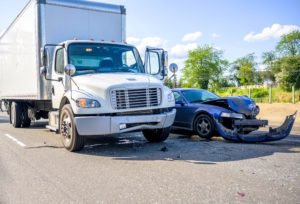
The Law Offices of Anidjar and Levine helps victims of head-on collisions document injuries, preserve evidence, evaluate insurance coverage, and pursue compensation after a serious crash.
A Florida Car Accident Lawyer may review police reports, medical records, vehicle damage, witness statements, and roadway evidence to establish fault and damages.
Claims may involve medical costs, rehabilitation, lost income, reduced earning capacity, pain, disability, emotional trauma, or wrongful death losses.
The sections below explain key legal rights, claim factors, and when legal help may matter.
Main Takeaways
- A Florida head-on collision injury lawyer helps document injuries, preserve evidence, and prepare claims for compensation.
- Key evidence includes police reports, medical records, photos, witness statements, vehicle damage, and electronic crash data.
- Common causes include distracted driving, impaired driving, wrong-way entry, unsafe passing, poor signage, and construction-zone confusion.
- Recoverable losses may include emergency care, rehabilitation, lost income, reduced earning capacity, pain, and emotional trauma.
- Early legal help can protect rights, review insurance coverage, handle insurers, and evaluate settlement or litigation options.


How We Can Help With Your Florida Head-On Collision Injury Claim
After a head-on collision, injured victims often face urgent medical needs, insurance disputes, and uncertainty about the full value of their losses. A Florida head-on collision injury lawyer can provide steady guidance by organizing records, identifying available Medical coverage, and communicating with insurers on the client’s behalf. This support allows families, caregivers, and community members to focus on recovery and service to those who have been harmed.
Legal assistance may include reviewing liability coverage, preserving evidence, documenting wage loss, and evaluating the long-term effects of pain, disability, and emotional trauma. Counsel can also explain each stage of the case timeline, from the initial investigation through settlement discussions or, when necessary, litigation.
By preparing claims with care and accuracy, an attorney helps protect the injured person’s rights while pursuing compensation that reflects medical expenses, lost income, personal suffering, and future needs. This structured approach promotes accountability and supports a more stable path forward after a serious crash.
OUR CONSULTATIONSARE FREE
START YOUR FREE CASE REVIEW

Understanding Florida Head-On Collision Injury Cases
When two vehicles collide head-on, the resulting injuries and legal issues are often more severe than those in many other traffic accidents. Florida head-on collision injury cases require careful review because physical harm, financial loss, and liability questions may affect families, caregivers, and others who serve the injured person’s needs.
A thorough case evaluation often begins with Types of evidence such as police reports, medical records, vehicle damage, photographs, roadway data, and electronic information. In serious matters, car accident reconstruction may help clarify vehicle movement, point of impact, speed, and force. This analysis can support a fair understanding of how the collision occurred without relying on assumptions.
Witness credibility is also important, as statements may differ in accuracy, detail, or consistency. Insurance coverage basics must be reviewed early, including bodily injury coverage, uninsured motorist benefits, and policy limits, since available coverage often shapes recovery options.
Common Causes of Florida Head-On Collision
Head-on collisions in Florida often stem from preventable driver behavior, roadway errors, and dangerous decision-making. Common causes include distracted driver behavior, impaired driving choices, wrong-way road entry, and unsafe passing tactics. Identifying the cause is crucial because it can affect liability, evidence collection, and the injured person’s legal options.
Distracted Driver Behavior
Because a momentary loss of attention can place a vehicle directly in the path of oncoming traffic, distracted driving is a significant cause of head-on collisions in Florida. Cell Phone Use, including texting, dialing, or viewing navigation, may cause a driver to drift across a centerline or misjudge approaching vehicles. Similar risks arise when drivers reach for objects, adjust controls, speak with passengers, or focus on events outside the vehicle.
Unsafe Traffic Lane Changes can become especially dangerous when distraction prevents proper observation of pavement markings, mirrors, and opposing traffic. For those committed to protecting others, recognizing these behaviors underscores the need for attentive, deliberate driving. When distraction contributes to a crash, investigators may examine phone records, witness accounts, vehicle data, and roadway evidence to accurately determine responsibility.
Impaired Driving Choices
Impaired driving presents another serious pathway to Florida head-on collisions, particularly when alcohol, illegal drugs, or certain prescription medications reduce a driver’s ability to remain within a proper lane of travel. Under alcohol influence, a driver may drift across a centerline, misjudge curves, react slowly, or fail to correct a vehicle before impact. These choices can leave injured motorists, passengers, and families facing severe harm while seeking fair accountability.
Careful crash investigations may examine officer observations, toxicology evidence, witness statements, vehicle positions, and roadway markings to determine whether impaired driving contributed to the collision. Such evidence can also guard against false blame, especially when an injured person cannot describe what occurred. A thorough review helps identify responsible conduct and supports those serving victims through recovery.
Wrong-Way Road Entry
Wrong-way road entry can occur when a driver enters a highway ramp, divided roadway, or one-way street in the opposite direction of lawful travel. In Florida, these incidents may arise from poor visibility, confusing signage, impaired judgment, unfamiliar road layouts, or failure to recognize traffic control devices. For safety-focused communities, wrong-way crash prevention depends on clear pavement markings, visible “Do Not Enter” signs, proper ramp design, and timely maintenance of lighting and signals.
Public agencies, property owners, and roadway contractors may be evaluated when hazards suggest noncompliance with intersection safety standards. A head-on impact caused by wrong-way entry can leave victims, families, and responders facing severe consequences. Careful investigation helps identify whether driver negligence, roadway defects, or inadequate warnings contributed to the collision.
Unsafe Passing Maneuvers
Unsafe passing actions often occur when a driver enters an opposing lane to overtake another vehicle without sufficient distance, visibility, or time to return safely. In Florida, these choices can place families, workers, and service-minded community members in direct danger, especially on rural highways and two-lane roads. Lane changing without careful observation may expose oncoming motorists to sudden, unavoidable threats.
Signal failure can also prevent nearby drivers from understanding intent, limiting their ability to respond responsibly. A speed mismatch between the passing vehicle and the vehicle being overtaken may extend the time spent in the opposing lane. In some cases, road rage contributes to aggressive passing, impatience, and reckless judgment. These factors can transform a brief action into a severe head-on collision with lasting consequences.


Legal Rights of Florida Head-On Collision Injury Victims
After a head-on collision in Florida, an injured person may have the right to pursue compensation for losses caused by another party’s negligence. These rights can support medical care, wage recovery, and stability for families facing disruption. A claim may address both immediate harm and future needs, especially when injuries limit independence or service to others.
A claim may help protect medical care, income, and long-term stability after a serious collision in Florida.
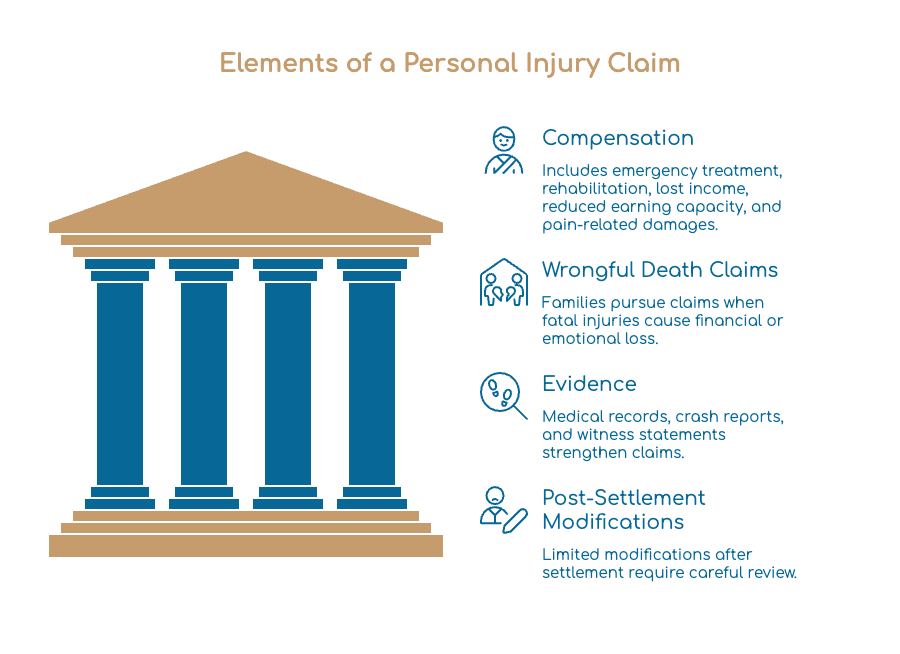
- Compensation may include emergency treatment, rehabilitation, lost income, reduced earning capacity, and pain-related damages.
- Families may pursue Wrongful Death Claims when a collision causes fatal injuries and survivors suffer financial or emotional loss.
- Evidence, including medical records, crash reports, and witness statements, can strengthen a claim and clarify responsibility.
- Post-settlement modifications are generally limited, so careful review before resolving a claim is important.
Florida injury victims also have duties, including meeting filing deadlines and preserving evidence. Legal guidance can help protect rights while allowing injured persons and families to focus on recovery.
Why Do Florida Head-On Collision Injuries Happen?
Why do head-on collision injuries occur so often on Florida roads? They often result from preventable conduct that places opposing traffic in direct conflict. Common causes include distracted driving, impaired operation, unsafe passing on two-lane roads, fatigue, speeding, and failure to recognize lane markings during heavy rain or low visibility. When a driver crosses the centerline, even briefly, the combined force of two vehicles can produce severe trauma.
Other factors may also contribute. Passenger negligence can occur when an occupant distracts a driver, interferes with vehicle control, or encourages unsafe decisions. Poor roadway design, inadequate signage, and construction zones may increase confusion, especially for visitors unfamiliar with local routes. SUV underride risks are particularly serious when height differences between vehicles affect crash dynamics, allowing parts of a smaller vehicle to slide beneath a larger one. Understanding these causes helps identify accountability and supports safer choices that protect Florida communities.
What Should You Do After a Florida Head-On Collision Injury?
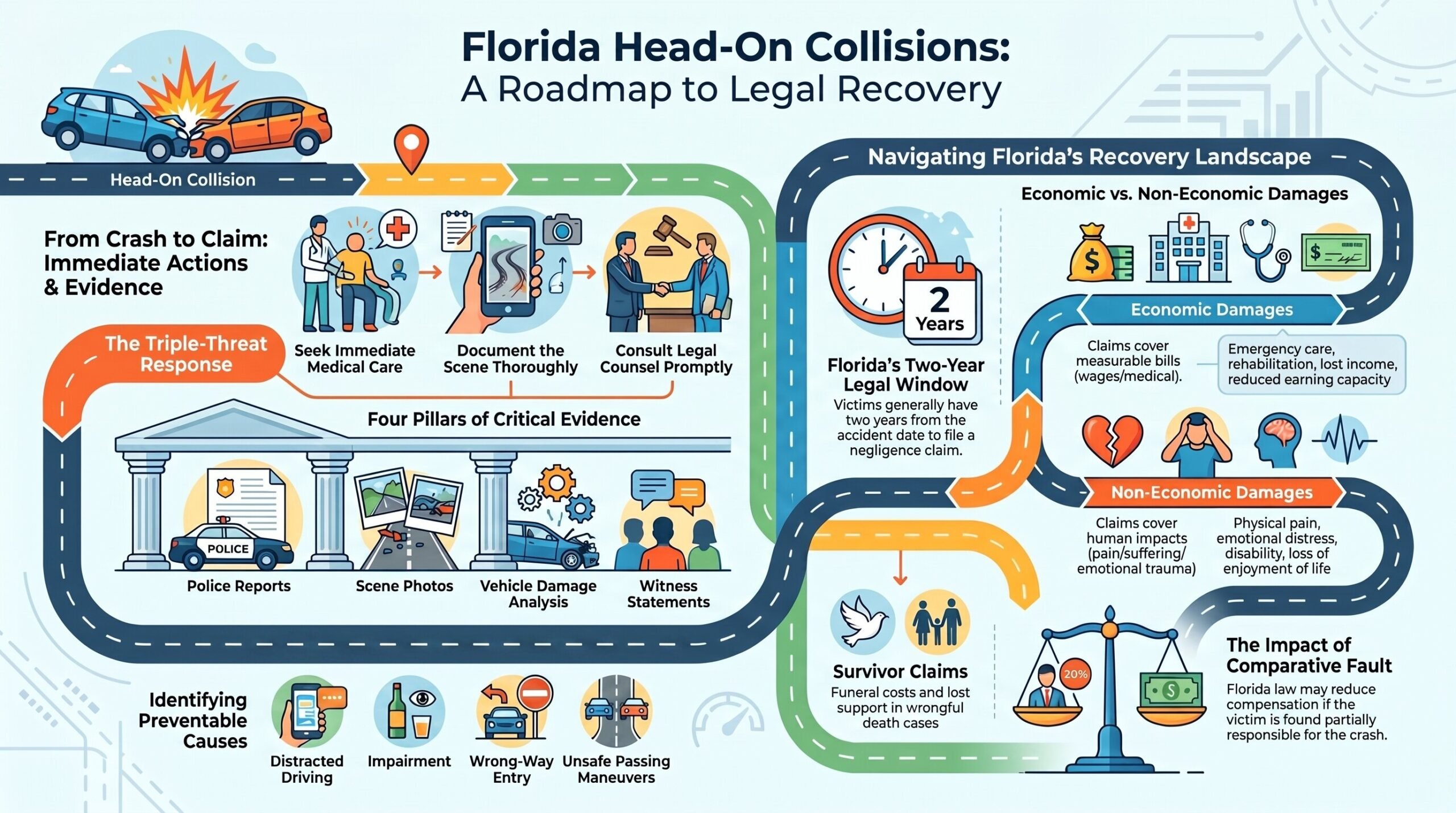
After a Florida head-on collision injury, the injured person should seek immediate medical care, even when symptoms appear limited at first. Crash evidence, including photographs, witness information, and police reports, should be preserved as soon as reasonably possible. An injury lawyer may then evaluate liability, insurance issues, and available compensation based on the documented facts.
Seek Immediate Medical Care
When a head-on collision occurs in Florida, immediate medical care should be the first priority, even if injuries appear minor or symptoms seem delayed. Emergency room treatment can identify trauma involving the head, spine, chest, or internal organs before complications worsen. Medical professionals also serve an important role by documenting symptoms, complaints, diagnoses, and recommended follow-up care with accuracy and consistency.
This record supports both recovery and legal protection, especially when an insurance carrier questions whether injuries were caused by the crash. A clear treatment timeline can show when pain began, how conditions progressed, and whether the injured person followed medical advice. Prompt care also helps family members, caregivers, and advocates understand the person’s needs, enabling them to provide informed, responsible support throughout the recovery process.
Document Crash Evidence
Medical treatment creates an important record of physical harm, but evidence from the crash scene can also shape the strength of a Florida head-on collision injury claim. When safe, a helpful witness may photograph vehicle positions, lane markings, skid marks, debris fields, traffic signals, weather conditions, and visible injuries. Names, phone numbers, and brief statements from witnesses can preserve neutral observations before memories fade. The responding officer’s report number should be saved, along with insurance details and vehicle information.
These records may support Negligence Proofs by showing unsafe passing, distraction, impairment, or failure to stay within a lane. They may also help satisfy Causation Standards by connecting the impact to specific injuries and losses. Careful documentation serves the injured person, the family, and the broader search for accountability.
Contact An Injury Lawyer
Because a head-on collision often involves severe injuries, disputed fault, and significant insurance exposure, contacting a Florida injury lawyer promptly can help protect the injured person’s legal position. Counsel may coordinate Medical documentation, preserve evidence, and monitor the insurance timeline so deadlines are not missed. Early legal guidance also supports a careful fault investigation, including review of police reports, vehicle damage, roadway conditions, and available camera footage.
When others depend on the injured person’s recovery and stability, organized representation can reduce avoidable burdens. A lawyer may assess witness credibility, communicate with insurers, and help prevent statements from being misused. Prompt consultation allows the injured person and family to make informed decisions while focusing on treatment, practical needs, and responsible support for those affected.
Critical Evidence in a Florida Head-On Collision Injury Case
Critical evidence in a Florida head-on collision injury case helps establish fault, confirm the severity of the impact, and support the injured party’s claim for damages.
Important materials may include:
- Police crash reports
- Scene photo evidence
- Vehicle damage analysis
- Witness statements
Each category can provide objective details that assist attorneys, insurers, and experts in evaluating liability and the full consequences of the collision.
Police Crash Reports
After a head-on collision in Florida, the police crash report often becomes one of the earliest and most important records of what occurred. It may identify involved drivers, insurance information, road conditions, citations, witness names, and the officer’s initial assessment of contributing factors. For injured individuals and those assisting them, this report can help organize the claim before memories fade or records become harder to obtain.
It may also support early communication with insurers, especially when Liability disputes arise over lane position, impairment, speed, or right-of-way. Although not always admissible in full at trial, the report can guide further investigation and preserve key details. When medical record delays occur, it may help connect the crash to reported injuries and needed treatment.
Scene Photo Evidence
When a Florida head-on collision scene is photographed promptly, the images can preserve details that may disappear within hours. Skid marks, debris fields, gouge marks, traffic signals, roadway lighting, weather conditions, and sightline obstructions may all assist investigators in understanding how the crash occurred. These photographs can support accident reconstruction by showing the physical context before cleanup crews, rain, or traffic alter the scene.
Clear images from multiple angles may also clarify lane positioning, vehicle travel paths, and whether either driver crossed the centerline. For injured persons and their families, careful documentation can serve a broader purpose by helping responsible parties, insurers, and courts evaluate the claim fairly. Preserving this evidence promotes accountability, supports accurate decision-making, and helps protect those harmed through no fault of their own.
Vehicle Damage Analysis
Photographs of the roadway provide valuable context, but the damaged vehicles themselves often reveal the strongest physical evidence of how a head-on collision in Florida occurred. Crush patterns, frame deformation, airbag deployment, and broken vehicle parts may help reconstruction professionals determine points of contact and the direction of force. Careful inspection can also assist in evaluating impact speed, braking activity, and whether either vehicle crossed the centerline before impact.
This analysis serves an important purpose for injured people and those supporting them because accurate evidence can promote fair accountability. Preservation of the vehicles is often critical, especially before repairs, disposal, or insurance salvage procedures occur. A Florida head-on collision injury lawyer may use this evidence to clarify liability, support damages, and protect the injured person’s claim.
Witness Statements
Because head-on collisions often unfold in seconds, witness statements can provide crucial details that physical evidence alone may not fully explain. Neutral observers may describe lane position, vehicle speed, lighting, traffic signals, or evasive actions before impact. Their accounts can help clarify how the crash occurred and whether a driver crossed the centerline, passed improperly, or failed to react reasonably.
Eyewitness reliability, corroborating statements, vehicle occupant accounts, and credibility assessment are important considerations in evaluating this evidence. Investigators may compare each statement with skid marks, vehicle damage, roadway conditions, and available video. Consistent accounts can strengthen an injury claim, while conflicting details require careful review. A Florida head-on collision lawyer may gather, preserve, and analyze witness testimony to support a fair determination of fault and damages.
Long-Term Effects of Florida Head-On Collision Injuries
Head-on collision injuries in Florida can produce lasting consequences that extend well beyond the initial emergency treatment. Victims may face chronic pain conditions, cognitive difficulties, emotional trauma, and reduced physical function that affect work, family responsibilities, and daily life. Ongoing medical needs, including specialized care, rehabilitation, medication, and future procedures, may become central issues in evaluating the full value of an injury claim.
Chronic Pain Conditions
After a severe front-end crash, chronic pain may develop even when the initial injuries appear to be stable or improving. Persistent neck, back, shoulder, or joint pain can limit mobility, interrupt sleep, and reduce a person’s ability to work, provide care, or participate in daily responsibilities. Treating Chronic Pain may require coordinated medical attention, including diagnostic testing, physical therapy, pain management, injections, and ongoing evaluations by experts.
These needs can continue for months or years, creating financial pressure for injured individuals and their families. In Florida injury claims, careful documentation helps connect continuing pain to the collision, especially when symptoms fluctuate. Insurance Coverage Negotiations may address future treatment costs, lost earning capacity, and necessary support services, ensuring that long-term limitations are considered accurately and fairly.
Cognitive And Emotional Impacts
Physical injuries are not the only long-term consequences of a severe front-end collision, as cognitive and emotional changes may also interfere with recovery and daily function. A person may experience memory problems, reduced concentration, slowed processing, irritability, anxiety, or depression after the force and shock of impact. These challenges can affect work performance, family responsibilities, and the ability to serve others with patience and consistency.
Emotional distress may also arise from fear of driving, intrusive thoughts, sleep disruption, or a changed sense of personal safety. During Trauma recovery, these symptoms may be misunderstood by others because they are less visible than fractures or scarring. Careful documentation of behavioral changes, mental strain, and daily limitations can help show how the collision has altered the injured person’s life and relationships.
Ongoing Medical Needs
When serious injuries require extended care, the medical effects of a Florida head-on collision may continue long after the initial emergency treatment has ended. Survivors may need follow-up surgeries, pain management, expert visits, mobility support, and monitored medication regimens. For caregivers and advocates, careful physical therapy planning can help preserve function, reduce complications, and support greater independence.
These needs often change as recovery progresses, making consistent medical documentation important for treatment decisions and claim evaluation. Rehabilitation costs may include therapy sessions, assistive devices, transportation, home modifications, and future care assessments. When injuries limit work, household duties, or daily service to others, the long-term care plan becomes central to understanding damages. A thorough legal review may help identify projected needs and preserve access to necessary resources.
Proving Liability in Florida Head-On Collision Injury Cases
Because head-on collisions often involve severe impacts and conflicting accounts, proving liability requires a careful investigation into how the crash occurred. Evidence may include police reports, roadway markings, vehicle damage, witness statements, traffic camera footage, and data from onboard systems. In Florida, liability often turns on whether a driver crossed the centerline, drove while impaired, ignored traffic controls, or acted unreasonably for weather or road conditions.
A lawyer may also consult accident reconstruction specialists, medical providers, and safety experts to connect negligent conduct with the injuries suffered. This process supports a clear record for those helping an injured person pursue accountability while respecting Insurance claim timelines. Documentation of medical treatment, lost income, pain, and emotional trauma recovery may also help establish the full impact of the crash. Careful proof matters because Florida’s comparative negligence rules can reduce compensation if the injured person is found partly responsible for the collision.
Dealing With Insurance Companies After a Florida Head-On Collision Injury
After a serious head-on collision, communication with insurance companies can quickly become difficult and consequential. Adjusters may request recorded statements, medical authorizations, or broad explanations before the injured person understands the full extent of harm. A careful response helps protect the claim, especially when families are focused on care, transportation, and support for an injured loved one.
A Florida head-on collision injury lawyer may help review correspondence, identify incomplete payment positions, and address tactics that shift blame or undervalue treatment. Insurance issues can include in-depth coverage disputes, policy limit questions, or disagreements over whether certain losses are connected to the crash.
When an insurer refuses payment or delays action, appeals of denied claims may require organized records, medical documentation, repair information, and clear legal arguments. Prompt guidance can reduce unnecessary mistakes and preserve the injured person’s ability to seek fair compensation, while allowing family members and caregivers to remain focused on recovery and practical needs.
What to Expect During a Florida Head-On Collision Injury Claim Process
A Florida head-on collision injury claim typically begins with an initial case evaluation, where liability, damages, and available insurance coverage are reviewed. The process then moves into accident evidence collection and insurance claim negotiations, which may involve police reports, medical records, witness statements, and expert analysis. If a fair settlement cannot be reached, the claim may proceed to litigation, in which formal legal action is used to pursue compensation.
Initial Case Evaluation
During the initial case evaluation, a Florida head-on collision injury lawyer reviews the facts of the crash, the available evidence, and the injured person’s medical condition to determine the strength and value of a potential claim. This assessment helps identify immediate legal needs while supporting the injured person with careful, service-focused guidance. The lawyer considers whether Liability Evidence indicates that another driver crossed the centerline, was impaired, or violated traffic laws.
A Medical Record Review also helps connect diagnosed injuries, treatment plans, and future care needs to the collision. At this stage, the lawyer may discuss insurance coverage, filing deadlines, damages, and the client’s responsibilities. The goal is to provide a clear path forward, protect legal rights, and promote fair recovery.
Accident Evidence Collection
Once the initial case evaluation identifies the likely issues in dispute, the collection of accident evidence becomes the foundation for proving how the head-on collision occurred and who bears legal responsibility. Investigators may gather police reports, witness statements, roadway measurements, vehicle data, and medical documentation to preserve facts before they fade. Surveillance footage from nearby businesses, traffic cameras, or residential systems may help confirm lane position, speed, and the moments leading up to impact.
Damaged photographs can show crush patterns, the point of impact, airbag deployment, and the vehicle’s resting positions, supporting a clearer reconstruction. This careful process serves injured people by building an accurate record, protecting their ability to pursue accountability, and helping decision-makers understand the full circumstances of the crash reliably and fairly under Florida law.
Insurance Claim Negotiations
Insurance claim negotiations often begin after liability evidence, medical records, and loss documentation have been organized into a demand package for the at-fault driver’s insurer. The insurer reviews fault, injury severity, treatment history, wage loss, and future care needs before making an initial response. In head-on collision claims, the negotiation process may involve careful evaluation of comparative fault arguments, policy limits, and the full human cost of disabling injuries.
For families, wrongful death settlements require additional attention to survivor losses, funeral expenses, and the enduring absence of support. A lawyer may monitor communications to ensure that adjusters evaluate the claim fairly and do not engage in bad-faith practices. This stage is intended to clarify value, address disputes, and protect the injured person’s interests with thoroughness.
Settlement Or Litigation
If negotiations do not produce a fair resolution, the claim may proceed from settlement discussions into litigation. At this stage, the injured person’s legal team files a complaint, serves the opposing parties, and prepares the case for discovery. This process may involve depositions, written questions, medical record review, and expert evaluation of fault and damages. Careful post-accident documentation remains central because treatment records, photographs, witness statements, and repair estimates help establish the full impact of the collision.
Insurance adjuster tactics, including delay, disputed liability, or undervalued losses, may become clearer once evidence is tested in court procedures. Litigation does not always end at trial, as many cases settle before then. However, readiness for trial can encourage accountability and support a result that better serves the injured person.
Compensation for Florida Head-On Collision Injury Damages
Compensation after a Florida head-on collision depends on the severity of the injuries, the available insurance coverage, and the evidence connecting the crash to the victim’s losses. A careful claim assessment considers medical records, crash reports, witness accounts, vehicle damage, and expert opinions when necessary. These materials help establish the responsible party’s conduct and the extent to which the collision disrupted the injured person’s life.
Comparative fault may affect recovery if the injured person is alleged to have contributed to the crash. Florida law can reduce compensation according to the assigned percentage of fault, making an accurate investigation important. A sound settlement strategy should account for liability disputes, policy limits, future treatment needs, and the strength of supporting documentation. When handled with diligence, the claims process can help restore stability, protect family resources, and support the injured person’s path to recovery while encouraging responsible conduct on Florida roads after a serious crash.
Economic vs Non-Economic Damages in Florida Head-On Collision Cases
In Florida head-on collision cases, damages are commonly divided into economic losses, such as medical bills and lost wages, and non-economic losses, such as pain and suffering. This distinction helps determine how compensation should reflect both measurable financial harm and the broader personal impact of the crash. Proving the value of damages often requires medical records, wage documentation, expert opinions, and other evidence linking the injuries to the collision.
Medical Bills And Wages
After a head-on collision in Florida, medical bills and lost wages often form the foundation of an injury claim because they reflect measurable financial harm. These damages may include ambulance transport, emergency care, surgery, hospitalization, therapy, medication, medical devices, and future treatment needs. Wage losses may involve missed work, reduced earning capacity, or the inability to return to prior duties. Careful documentation helps attorneys, insurers, and courts accurately evaluate the financial burden.
Families committed to protecting others may also recognize the value of prevention, such as car seat safety and practical crash-survival tips. While these measures cannot erase losses after a severe collision, they support a sense of community responsibility. Economic damages focus on verified costs, allowing injured persons to seek reimbursement for expenses and lost income.
Pain And Suffering
While financial losses can often be traced through invoices and pay records, pain and suffering address the personal harm that cannot be measured by receipts alone. In a Florida head-on collision case, these non-economic damages may include physical pain, lasting discomfort, anxiety, sleep disruption, loss of enjoyment, and the burden of adjusting to changed abilities. Such harm can affect a person’s family role, community involvement, and capacity to serve others with the same steadiness as before. Emotional trauma recovery may require time, treatment, and consistent support, especially after a violent crash. Medical evidence documentation can help connect these experiences to the injuries sustained, but the focus remains on the human impact. These damages recognize that restoration involves more than financial replacement after a serious collision.
Proving Damage Value
For a Florida head-on collision claim, proving damage value requires a clear distinction between economic losses and non-economic harm. Economic damages include medical bills, rehabilitation costs, lost wages, reduced earning capacity, and property damage. These losses are supported through Insurance documentation, employment records, medical statements, and expert evaluations.
Non-economic damages address pain, suffering, emotional distress, disability, and loss of enjoyment of life. These harms require credible testimony, treatment history, and consistent evidence showing how the injury changed daily living. A careful settlement strategy evaluates both categories separately, ensuring that measurable expenses do not overshadow serious human impact. By organizing proof with accuracy and compassion, legal representatives help protect the injured person’s dignity while presenting a complete, service-centered account of the claim’s true value under Florida law.
When a Florida Head-On Collision Injury Case Goes to Trial vs Settlement
Because every head-on collision claim depends on the strength of the evidence, the severity of the injuries, and the insurer’s willingness to negotiate in good faith, a Florida injury case may resolve through settlement or proceed to trial. Settlement often serves injured people by reducing delay, limiting stress, and providing compensation without the uncertainty of a verdict. However, settlement timelines may lengthen when medical treatment continues, future care remains uncertain, or liability is disputed.
Trial becomes more likely when insurance tactics undervalue losses, deny responsibility, or pressure a claimant to accept less than the harm requires. In that setting, evidence preservation is crucial, including crash reports, vehicle damage, witness accounts, medical records, and expert analysis. Trial strategy may focus on proving the force of impact, the cause of injuries, and the full human cost of the collision. A well-prepared case supports fair resolution, whether through negotiation or courtroom presentation.
Florida Laws That May Affect Your Florida Head-On Collision Case
A head-on collision case in Florida is shaped not only by evidence and negotiation posture but also by state laws governing fault, insurance coverage, filing deadlines, and recoverable damages. These rules guide how injured people seek care, document losses, and pursue accountability while protecting families and communities affected by serious roadway harm.
- No-fault basics: Personal injury protection coverage may pay certain medical bills and wage losses, regardless of who caused the crash.
- Serious injury threshold: A claimant may pursue damages beyond no-fault benefits when injuries meet Florida’s legal requirements.
- Florida comparative fault: Compensation may be reduced if the injured person shares responsibility for the collision.
- Insurance requirements: Available coverage, policy limits, and uninsured motorist protection can strongly influence recovery options.
Understanding these laws helps counsel evaluate liability, preserve essential records, and present a claim that reflects both legal duties and the human need for responsible support.
The Statute of Limitations for Florida Head-On Collision Injury Cases
When does the legal clock begin after a Florida head-on collision? In most injury cases, Florida law allows 2 years from the date of the crash to file a negligence lawsuit. If a loved one dies from the collision, a wrongful death claim generally must also be filed within two years. These deadlines protect evidence, encourage timely action, and help injured people seek resources needed to restore stability and continue serving their families and communities.
Certain circumstances may affect timing, including claims involving government entities, minors, or delayed discovery of specific injuries. Missing the filing deadline can bar recovery, regardless of the severity of harm. Comparative negligence rules may also influence the value of a claim, but they do not extend the deadline. Likewise, insurance negotiation strategies should account for the statute of limitations, because prolonged settlement discussions do not usually pause the court filing period or preserve legal rights.
How a Florida Head-On Collision Injury Lawyer Can Help You
Timely legal action is only one part of protecting an injury claim after a head-on collision in Florida. A lawyer can help injured people and their families pursue accountability while preserving dignity and stability during recovery. Legal guidance supports informed decisions, careful documentation, and service-centered advocacy.
- Investigating crash reports, roadway evidence, vehicle damage, and witness statements.
- Coordinating medical records, expert opinions, and future care assessments.
- Performing Damages Calculation for medical costs, lost income, pain, and long-term needs.
- Managing insurer communications, negotiations, and Trial Preparation when settlement is insufficient.
A Florida head-on collision injury lawyer also identifies liable parties, including negligent drivers, commercial carriers, or others whose conduct contributed to harm. This assistance allows injured individuals to focus on restoration, caregiving, and community responsibilities while their claims are handled with discipline. Through organized evidence, measured advocacy, and persistent representation, counsel can help pursue compensation that reflects both immediate losses and future consequences.
When to Contact a Florida Head-On Collision Injury Lawyer
After emergency medical needs are addressed, contact with a Florida head-on collision injury lawyer should occur as soon as practical. Early communication allows the injured person, family members, or caregivers to obtain guidance before providing statements, forms, or authorizations to insurers. This timing is especially important when injuries are severe, medical appointments are frequent, or the household is focused on care, transportation, and recovery support.
Prompt contact may also help preserve crash information, witness details, vehicle evidence, and treatment records while they remain accessible. Insurance adjuster tactics can begin quickly after a collision, including requests for recorded statements or broad medical releases. Legal guidance before those conversations can reduce the risk of avoidable mistakes.
Settlement negotiation should not begin before the full scope of injury, disability, lost income, and future care needs is better understood. Timely action protects the injured person’s interests while allowing supporters to focus on practical assistance.
Why You Need an Experienced Florida Head-On Collision Injury Lawyer
Early legal involvement matters, but the value of that involvement depends heavily on the lawyer’s experience with serious Florida head-on collision claims. These cases often involve catastrophic injuries, disputed fault, commercial vehicles, intoxication, fatigued driving, or intricate roadway evidence. An experienced lawyer understands how to protect the injured person’s interests while helping families pursue accountability with dignity and purpose.
Head-on crashes may require careful analysis of Wrong Way Liability, lane positioning, impact angles, vehicle data, witness accounts, and roadway conditions. Florida’s Comparative Negligence rules can also affect recovery if insurers argue that the injured person shared responsibility. Experienced counsel can evaluate those claims, challenge unsupported allegations, and present evidence that reflects the full extent of the harm caused.
For those committed to caring for injured loved ones, skilled representation can provide structure during uncertainty. It helps preserve evidence, coordinate expert review, assess long-term losses, and pursue compensation that supports medical care, stability, and responsible recovery.
How to Choose the Right Florida Head-On Collision Injury Lawyer for Your Case
How should an injured person or family evaluate which lawyer is best suited for a Florida head-on collision case? The decision should begin with experience handling severe crash claims, including liability disputes, catastrophic injuries, and insurance resistance. A qualified lawyer should explain case strategy clearly, identify available coverage, and show how evidence will be preserved to serve the injured person’s long-term needs.
Choosing contingency representation may help families pursue justice without adding immediate financial strain. The lawyer’s communication style also matters because clients need timely updates, direct answers, and respectful guidance during a difficult recovery. They should ask how often they will receive progress reports and who will manage daily case concerns.
Local court knowledge is another important factor, especially when litigation becomes necessary. Counsel familiar with Florida procedures, judges, and defense tactics can better prepare the claim. Families should also discuss the likely settlement timeline, while understanding that careful advocacy may require patience.
About The Law Offices of Anidjar & Levine
The Law Offices of Anidjar & Levine represents injured people and families across Florida in serious motor vehicle collision cases, including head-on crashes involving catastrophic injuries, disputed fault, and intricate insurance issues.
The firm’s attorneys focus on careful case preparation, prompt preservation of evidence, and clear communication with clients who need guidance during difficult recoveries.
Their legal team evaluates crash reports, medical records, witness statements, and roadway conditions to develop evidence of negligence that supports each claim.
They also examine insurance coverage, including bodily injury liability, uninsured motorist protection, and other available benefits, to identify potential sources of recovery.
In serving clients, the firm addresses damage calculation with attention to medical expenses, lost income, reduced earning capacity, pain and suffering, and long-term care needs.
The Law Offices of Anidjar & Levine provides representation intended to relieve legal burdens, allowing injured individuals and their families to focus on healing, stability, and rebuilding their lives.
Frequently Asked Questions
Can Passengers File Separate Head-On Collision Injury Claims in Florida?
Yes, passengers may file separate head-on collision injury claims in Florida. Each injured passenger may seek compensation from any at-fault driver, depending on the evidence. Comparative fault generally affects drivers more than passengers, though facts still matter. Each claimant must provide proof of injury, medical treatment, causation, and damages. Separate claims help ensure each person’s losses are assessed fairly, supporting responsible recovery and service to those harmed.
What if the At-Fault Driver Was From Another State?
If the at-fault driver was from another state, the injured person may still pursue a lawsuit in the state where the crash occurred. Out-of-state liability often depends on insurance coverage, jurisdiction, and service of legal papers. Legal rules may determine which state’s laws apply to damages or negligence issues. Careful review helps protect victims, support families, and ensure responsible parties are held accountable through the proper legal process.
Can I Recover Damages if My Loved One Died Instantly?
Yes, survivors may recover damages even after Instant death, if wrongful death eligibility is established under applicable law. An immediate loss can still give rise to claims for medical expenses, funeral costs, lost support, and loss of companionship. Compensation options generally depend on the relationship to the deceased, available evidence, and the at-fault party’s conduct. A qualified representative can help preserve the claim and serve the family’s interests with dignity.
Do Head-On Collision Claims Differ for Rideshare Vehicles?
Yes. Head-on collision claims involving rideshare vehicles may differ because Florida rideshare liability depends on the driver’s app status, passenger presence, and company policy terms. Insurance coverage differences can affect available compensation, including whether personal insurance, rideshare coverage, or corporate policies apply. Those assisting injured parties should promptly preserve trip records, police reports, and witness details, ensuring that responsibility is identified accurately, diligently, and with respect for affected families.
Will My Case Be Affected by a Prior Injury?
Yes, a prior injury may affect the case, but it does not hinder recovery. Insurers often scrutinize Medical Records to differentiate old conditions from new harm or aggravation. A Prior Settlement may also be examined, especially if it involved the same body part. Those assisting the injured should ensure full disclosure, careful documentation, and medical clarity, so the claim reflects only losses fairly connected to the recent incident.
—————————
A Florida head-on collision injury claim can involve intricate liability issues, serious medical evidence, and strict filing deadlines.
Legal representation may help injured victims pursue compensation for medical care, lost income, pain and suffering, and other recoverable losses.
The Law Offices of Anidjar and Levine can evaluate the facts, protect a claimant’s rights, and manage communications with insurers as a Florida Car Accident Lawyer.
Prompt legal guidance may strengthen the case and support a more informed path toward recovery.