A Fort Myers Car Accident Lawyer at Law Offices of Anidjar and Levine assists victims after severe head-on crashes by securing evidence, identifying fault, and documenting the full extent of medical, financial, and personal losses.
Legal counsel also helps clients navigate interactions with insurers carefully, avoid harmful statements, and pursue compensation for treatment, lost income, pain and suffering, and future care needs.
Because these collisions often involve serious injuries and intricate liability issues, informed guidance can be crucial, and the sections below explain this process further.
Main Takeaways
- Seek immediate medical evaluation after a head-on collision, because hidden injuries and shock can delay symptoms and complicate recovery.
- Document the crash scene with photos, witness information, road conditions, and vehicle damage to help preserve critical liability evidence.
- A Fort Myers head-on collision lawyer investigates fault using police reports, vehicle data, medical records, and accident reconstruction experts.
- Common causes include distracted driving, impaired driving, wrong-way entry, and unsafe passing on two-lane roads.
- Victims may pursue compensation for medical expenses, lost income, pain and suffering, and long-term care needs.


How We Can Help With Your Fort Myers Head-On Collision Injury Claim
In the aftermath of a head-on collision, effective legal representation can play a pivotal role in protecting an injured person’s rights and financial interests. A Fort Myers collision injury lawyer may guide clients with disciplined advocacy, clear communication, and timely action designed to preserve evidence and reduce avoidable setbacks.
Support often begins with a careful review of records, insurance correspondence, and scene documentation. Counsel may coordinate post-crash counseling resources, helping injured individuals and families address emotional strain while legal work proceeds. A firm may also arrange a vehicle forensics review to document impact dynamics, mechanical issues, and other physical evidence that can strengthen a claim.
Throughout the process, representation may include managing insurer contacts, organizing medical billing information, calculating losses, and preparing persuasive demand materials. This service-centered approach allows injured people to focus on recovery and family responsibilities, while legal counsel pursues accountability, stability, and a fair financial outcome under Florida law.
OUR CONSULTATIONSARE FREE
START YOUR FREE CASE REVIEW

Understanding Fort Myers Head-On Collision Injury Cases
Several legal and factual issues often shape Fort Myers head-on collision injury cases, from determining how the crash occurred to identifying the full extent of the resulting harm. These matters often require careful review of physical evidence, medical findings, witness statements, and roadway documentation to present a clear account that supports injured people and their families.
In many cases, liability and damages depend on how investigators interpret vehicle positions, crash angles, and post-impact biomechanics. Medical records, imaging studies, and expert analysis may connect the collision forces to traumatic brain injuries, fractures, spinal damage, and lasting pain.
Courts and insurers may also examine vehicle mismatch, because differences in size, weight, and design can affect injury severity and occupant protection. A thorough understanding of these issues helps legal advocates evaluate losses, address disputed facts, and pursue accountability in ways that promote safety, dignity, and meaningful support for those facing significant recovery challenges.
Common Causes of Fort Myers Head-On Collision
Several recurring factors contribute to head-on collisions in Fort Myers, often resulting in severe injuries and intricate liability issues. Common causes include distracted driving, impaired driver negligence, wrong-way driving incidents, and unsafe passing tactics, each of which can place vehicles directly in opposing lanes of travel. A clear understanding of these causes helps frame how fault may be established and why these crashes frequently produce catastrophic consequences.
Distracted Driving Dangers
Distracted driving remains one of the most preventable yet dangerous causes of head-on collisions in Fort Myers, because even a brief lapse in attention can cause a driver to cross the center line or drift into opposing traffic. Texting risks are especially severe, as reading or sending a message diverts visual, manual, and mental focus at once. Other common distractions include adjusting navigation systems, reaching for objects, eating, and interacting with passengers.
Roadside distractions, such as crashes, construction zones, or advertising displays, also pull attention away from safe lane control. Drivers who remain attentive help protect not only themselves, but also families, pedestrians, and fellow motorists sharing the road. Careful driving habits, clear concentration, and respect for traffic conditions reduce preventable harm and support a safer Fort Myers community for everyone.
Impaired Driver Negligence
Impaired driving remains a leading cause of head-on collisions in Fort Myers, because alcohol and drugs can markedly weaken judgment, slow reaction time, and interfere with a driver’s ability to stay within the proper lane. When motorists operate vehicles under alcohol impairment, they may misjudge distance, overlook hazards, or respond too late to changing traffic conditions. Similar risks arise from prescription intoxication, which can reduce alertness, blur vision, and compromise coordination even when medication is lawfully obtained.
From a public safety perspective, impaired driver negligence endangers families, pedestrians, passengers, and fellow motorists who rely on responsible conduct. Evidence in these cases often includes toxicology results, officer observations, witness statements, and driving behavior before impact. Careful legal review helps identify negligence and supports efforts to protect the community from preventable harm.
Wrong-Way Driving Incidents
Wrong-way driving crashes are among the most dangerous causes of head-on collisions in Fort Myers, because a vehicle traveling against the flow of traffic gives other motorists little time or space to avoid a collision.
These incidents often arise when drivers enter ramps incorrectly, become disoriented at night, or fail to recognize the direction of lanes after intersections. In communities committed to protecting others, understanding these events supports safer roads and stronger accountability. Effective wrong-way prevention may include clearer pavement markings, improved median design, and better roadway lighting in high-risk areas.
Signage visibility also plays a pivotal role, especially near highway entrances, construction zones, and unfamiliar corridors where confusion can develop quickly. When agencies, property owners, and drivers address known hazards responsibly, they help reduce preventable harm and support the well-being of everyone traveling.
Unsafe Passing Maneuvers
Attempting to overtake another vehicle on a two-lane road, a driver may misjudge speed, distance, or oncoming traffic, creating conditions for a devastating head-on collision in Fort Myers. Unsafe passing often occurs when impatience overrides caution, especially near curves, hills, intersections, or areas with limited visibility. In these moments, risky overtakes can place every nearby traveler in immediate danger.
A detached review of these crashes shows that lane misjudgment is a recurring factor, particularly when drivers underestimate how quickly an approaching vehicle will close the gap. Passing in no-passing zones, accelerating aggressively, or ignoring roadway markings can leave little time for correction.
For families seeking accountability and safer roads, recognizing how unsafe passing moves cause severe injuries helps support prevention efforts and informed legal action after a serious collision.


Legal Rights of Fort Myers Head-On Collision Injury Victims
In the aftermath of a head-on collision, injured individuals in Fort Myers have important legal rights under Florida law, including the right to seek compensation when another party’s negligence caused the crash. These victim rights may include damages for medical care, lost income, pain and suffering, and other measurable losses.
Florida law also protects access to fair treatment during insurance disputes, especially when carriers undervalue serious injuries.
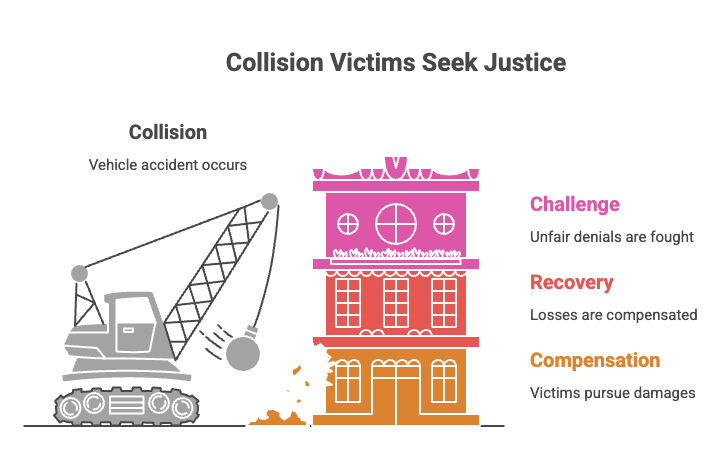
- Victims may pursue compensation from negligent drivers, vehicle owners, or other liable parties.
- They may seek recovery for present and future losses tied to the collision’s impact.
- They may challenge unfair claim denials or delays through legal representation and formal action.
A professional legal review can help clarify liability, preserve the full value of a claim, and promote accountability. For families committed to caring for others, understanding these protections supports informed decisions and strengthens the pursuit of justice after a devastating collision in Fort Myers.
Steps to Take After a Fort Myers Head-On Collision Injury
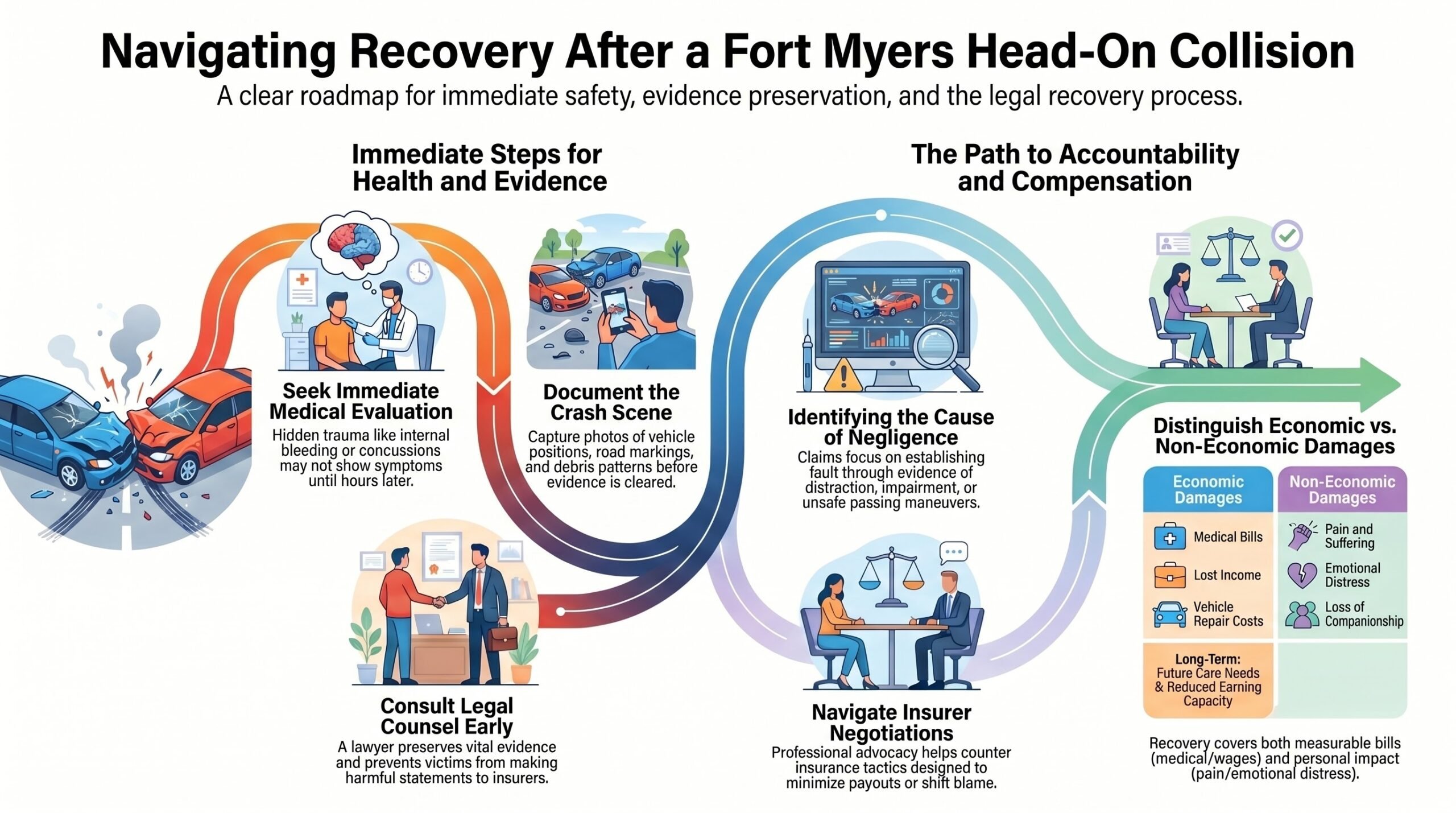
After a Fort Myers head-on collision, prompt medical evaluation is crucial for identifying injuries and establishing a clear record of treatment. Careful documentation of the crash scene, including photographs, vehicle damage, and witness information, can help preserve important evidence. Early contact with a collision lawyer also allows an injured person to protect legal interests and make informed decisions during the claims process.
Seek Immediate Medical Care
Following a head-on collision in Fort Myers, immediate medical evaluation should be treated as a priority, even when injuries do not appear severe at the scene. Shock and adrenaline can mask pain, while internal injuries, concussions, and spinal damage may worsen without prompt attention.
An immediate assessment by emergency responders or a physician helps identify hidden trauma and supports timely care. Early diagnosis also establishes a clear treatment timeline, which can guide follow-up appointments, rehabilitation, and work restrictions. Seeking care promptly protects the injured person’s health and better equips loved ones, caregivers, and community members to provide meaningful support during recovery.
Whether symptoms seem minor or significant, professional evaluation serves the broader goal of preserving well-being, reducing complications, and promoting a safer return to daily responsibilities and service to others.
Document The Crash Scene
Preserve as much evidence as possible at the crash scene, provided doing so does not create additional risk. If safe to do so, those involved should document vehicle positions, roadway markings, debris patterns, skid marks, and visible injuries. Clear photographic evidence can help preserve details that may fade quickly after emergency response and vehicle removal.
Helpful documentation also includes weather, lighting, traffic signals, and any environmental hazards that may have contributed to the collision. Witness names and contact information should be recorded carefully, along with the time, location, and observations about driver behavior.
A brief written summary created soon after the event may improve accuracy while memories remain fresh. By gathering objective information with care and discipline, injured individuals place themselves in a stronger position to support accountability and protect the well-being of others later.
Contact A Collision Lawyer
In the days immediately surrounding a Fort Myers head-on collision, contacting a collision lawyer can help protect an injured person’s legal and financial interests. Counsel may review police reports, medical records, witness statements, and insurance correspondence, then identify deadlines and preserve vital evidence before it is lost. Early legal guidance also helps prevent harmful statements to insurers and supports organized decision-making during recovery.
A lawyer can explain available claims, estimate damages, and clarify the fee structure in plain terms. Many firms offer a free consultation, allowing injured people and their families to ask informed questions without immediate cost. By securing experienced representation promptly, a person may better pursue accountability, obtain fair compensation, and remain focused on recuperation, family responsibilities, and serving others’ needs during a difficult season.
How a Fort Myers Head-On Collision Injury Lawyer Can Help You
After a head-on collision, injured parties often face immediate medical demands, disputed liability, and mounting financial pressure. A Fort Myers head-on collision injury lawyer helps by organizing evidence, identifying responsible parties, and protecting the claim from avoidable mistakes.
Counsel may review crash reports, witness statements, vehicle maintenance records, and medical documentation to build a clear account of what occurred. When complications arise from negligent treatment, related issues, such as medical malpractice, may also require careful evaluation.
A Fort Myers head-on collision injury lawyer helps protect claims, clarify fault, and address related medical malpractice concerns.
- Investigates fault thoroughly, including driver conduct, road conditions, and mechanical failures.
- Calculates damages accurately, covering medical bills, lost income, property loss, and other proven expenses.
- Negotiates with insurers firmly, while preparing the case for litigation if fair payment is refused.
This guidance allows injured individuals and their families to focus on recovery and on serving those who depend on them. Effective legal support promotes accountability, preserves important deadlines, and advances a claim with disciplined, informed advocacy throughout.
Long-Term Effects of Fort Myers Head-On Collision Injuries
Head-on collisions in Fort Myers may produce long-term consequences that extend far beyond the initial emergency, including chronic physical complications that require ongoing medical care and rehabilitation. Many individuals also experience lasting emotional and cognitive effects, such as anxiety, depression, memory problems, or difficulty concentrating, which can interfere with daily functioning and recovery. In addition, the financial strain of treatment, reduced earning capacity, and significant lifestyle changes often create continuing hardships for injured victims and their families.
Chronic Physical Complications
Uncertainty often defines the long-term course of recovery following a Fort Myers head-on collision, particularly when initial injuries appear manageable but later develop into chronic physical complications. Some individuals experience chronic pain that limits mobility, disrupts sleep, and interferes with basic daily responsibilities, including work and household care. Others face delayed organ damage, internal scarring, or worsening spinal and joint conditions that require sustained treatment.
These complications can alter a person’s capacity to serve family members, support dependents, and participate in community life. Medical providers may recommend rehabilitation, surgical follow-up, pain management, and ongoing monitoring to reduce deterioration and preserve function. Careful documentation of symptoms, treatment needs, and physical limitations often becomes crucial when evaluating the full extent of harm caused by a serious Fort Myers head-on collision.
Emotional And Cognitive Impact
Although physical injuries often receive immediate attention, the long-term emotional and cognitive effects of a Fort Myers head-on collision can be equally disruptive to a person’s stability, judgment, and daily functioning. Survivors may experience persistent anxiety, depression, sleep disturbance, or post-traumatic stress, all of which can strain relationships and hinder recovery. Such conditions often require attentive care from providers, caregivers, and community support systems.
In some cases, brain trauma also contributes to cognitive impairment, affecting memory, concentration, processing speed, and decision-making. These changes may reduce confidence, complicate communication, and interfere with safe participation in ordinary responsibilities. A careful legal and medical evaluation can help document these invisible harms, ensuring that the full human impact of the collision is recognized and addressed with appropriate seriousness and compassion.
Financial And Lifestyle Changes
Stability often becomes difficult to maintain after a Fort Myers head-on collision, as serious injuries can alter a household’s finances and daily routines for months or years. Medical bills, reduced income, and the need for ongoing care frequently require Budget adjustments that affect housing, transportation, and basic planning.
Routine disruptions may also extend well beyond initial treatment. Family members often assume caregiving duties, rearrange work schedules, and provide transportation to appointments and therapy. These changes can limit community involvement, strain retirement savings, and postpone educational or vocational goals. In service-minded households, the inability to support others as before may create additional pressure, especially when independence is reduced.
Careful legal guidance and financial recovery efforts may help restore structure, protect long-term stability, and support a more manageable path forward for everyone involved.
Proving Liability in Fort Myers Head-On Collision Injury Cases
Establishing liability in a Fort Myers head-on collision case requires a careful review of how the crash occurred, who violated a duty of care, and whether that misconduct directly caused the resulting injuries. Courts and investigators often examine police reports, roadway markings, vehicle damage, witness statements, and dash cam footage to determine which driver crossed the center line or acted recklessly.
Additional proof may include cell phone records, toxicology results, scene photographs, and data from onboard vehicle systems. In intricate matters, expert testimony from accident reconstruction authorities, medical professionals, or highway safety engineers can clarify speed, impact angles, visibility, and the sequence of events. This evidence helps demonstrate whether negligence, distraction, impairment, fatigue, or improper passing created the danger.
A clear liability presentation serves injured people and their families by supporting accountability, promoting truthful fact-finding, and helping the legal process recognize the full human consequences of preventable harm within the broader Fort Myers community today.
Dealing With Insurance Companies After a Fort Myers Head-On Collision Injury
Guiding through insurance communications after a Fort Myers head-on collision injury often requires prompt attention, careful documentation, and a clear understanding of policy obligations. Injured individuals are often expected to report the crash quickly, preserve records, and respond accurately to insurer requests. Organized files, including medical bills, repair estimates, photographs, and wage information, can support clear communication and reduce avoidable disputes.
Insurance representatives may appear cooperative while still using claim tactics that limit exposure. Recorded statements, broad medical authorizations, and pressure to accept early offers should be approached with caution. A service-minded approach emphasizes honesty, patience, and protection of the injured person’s long-term needs.
Written correspondence can help confirm what was said and when it was provided. Attention to policy language, coverage limits, and settlement timelines also matters, because delays or misunderstandings may affect available benefits. Careful, respectful communication often strengthens credibility and helps preserve the full value of the claim.
What to Expect During a Fort Myers Head-On Collision Injury Claim Process
A Fort Myers head-on collision injury claim generally begins with filing the claim and assembling the records needed to support it. The process then focuses on proving fault and damages, while negotiations with insurers often determine whether the matter can be resolved efficiently. If a fair agreement is not reached, the claim may proceed toward settlement discussions or trial.
Filing Your Injury Claim
After a head-on collision in Fort Myers, the injury claim process typically begins by gathering medical records, crash reports, photographs, witness statements, and other evidence that show how the collision occurred and the extent of the losses. Once the documentation is organized, a claim is usually submitted to the appropriate insurance carrier with supporting materials and a clear summary of the damages sought.
Attention to Filing deadlines is crucial, because missing a required date can limit recovery options. Throughout the process, communication with insurers should remain careful, accurate, and respectful of everyone involved. Settlement strategies often include reviewing medical progress, evaluating current expenses, and considering future needs before accepting any offer. Professional guidance can help families pursue fair outcomes while staying focused on recuperation, stability, and responsible service to those who depend on them.
Proving Fault And Damages
Establishing fault and damages in a Fort Myers head-on collision claim requires a careful review of how the crash occurred and how the injuries have affected the injured person’s life. This process often begins with evidence preservation, including photographs, vehicle damage, medical records, and scene documentation collected as early as possible.
Attorneys and investigators may examine police reports, roadway conditions, electronic data, and driver conduct to determine responsibility. They also assess witness credibility, since clear, consistent testimony can strengthen the factual record and support a fair understanding of events. To prove damages, the claim must show the full impact of the collision, including medical expenses, lost income, pain, future care needs, and limits on daily activities. Thorough preparation helps protect the injured person and those who support recovery.
Negotiating With Insurers
Handling insurer negotiations in a Fort Myers head-on collision claim often requires patience, documentation, and a clear understanding of the claim’s value. Adjusters typically review medical records, repair estimates, witness statements, and evidence of lost income before responding to a demand.
During negotiations, insurers may use settlement tactics designed to limit payouts, including disputing treatment, minimizing pain, or shifting fault. A careful, service-minded approach emphasizes organized records, consistent statements, and prompt responses that protect the injured person’s interests while supporting accountability.
When delays, misrepresentations, or unreasonable denials occur, counsel may evaluate whether the conduct supports a claim for bad faith under Florida law. Effective negotiation often depends on presenting damages clearly, answering insurer questions strategically, and maintaining focus on fair compensation for harm, recovery needs, and long-term stability for affected families.
Resolving Settlement Or Trial
When negotiations do not produce a fair result, a Fort Myers head-on collision injury claim generally moves toward resolution through settlement or, in some cases, trial. Counsel typically reviews medical evidence, liability disputes, and future losses to determine whether a final agreement serves the injured person’s long-term needs and family responsibilities.
A disciplined settlement strategy often includes demand revisions, mediation, and careful evaluation of risks, costs, and timing. If the insurer refuses reasonable compensation, formal trial preparation begins. That process may involve witness testimony, expert analysis, exhibit development, and motions that shape what the jury will hear.
Understanding jury dynamics is also crucial, because local attitudes, credibility assessments, and damage presentations can influence outcomes. Throughout this stage, informed guidance helps injured individuals pursue accountability while protecting stability, dignity, and the resources needed to serve others.
Compensation for Fort Myers Head-On Collision Injury Damages
Accountability often begins with a clear assessment of the losses caused by a head-on collision. In Fort Myers cases, compensation may address the full impact of serious injuries, while promoting stability for the injured person and dependents who rely on that person’s care, income, and daily support.
A careful claim may include hospital treatment, rehabilitation, medication, future care planning, and transportation to medical appointments. It may also consider lost wages, reduced earning capacity, property damage, and the practical costs of household assistance during recovery. When bills remain unpaid, medical liens can affect the final distribution of funds and should be reviewed closely.
In rare situations involving especially reckless conduct, punitive damages may be pursued to promote accountability and discourage similar harm to others. Strong documentation, timely action, and coordination with qualified legal and medical professionals often help preserve the integrity of a claim and support a result that reflects the collision’s true consequences for families and the broader community.
Economic vs Non-Economic Damages in Fort Myers Head-On Collision Cases
In Fort Myers head-on collision cases, damages are generally divided into economic and non-economic categories, each addressing a different type of loss. Economic damages typically include measurable financial harm, such as medical expenses, lost income, and other documented costs, while non-economic damages concern pain, suffering, and diminished quality of life. Establishing the value of either category often requires clear records, credible testimony, and evidence that connects the collision to the claimed losses.
Economic Damage Categories
After a head-on collision in Fort Myers, economic damages refer to the measurable financial losses tied to the crash, while non-economic damages address the less tangible personal harm that follows. These damages commonly include emergency care, hospital bills, surgery, rehabilitation, medication costs, and projected future medical treatment that supports recovery and continued service to family and community.
Economic categories also include lost wages when injuries prevent a return to work, as well as reduced earning capacity if long-term limitations affect future employment. Property loss covers vehicle repair or replacement, damage to personal items, towing fees, and related transportation expenses. In serious cases, economic damages may extend to household services the injured person can no longer perform. Careful documentation, invoices, pay records, and expert evaluations often help establish these losses with credibility.
Non-Economic Losses
Losses that cannot be tallied by receipts or wage statements often form a substantial part of a Fort Myers head-on collision claim. These non-economic losses address the human consequences of severe impact, including physical suffering, emotional distress, disfigurement, loss of companionship, and diminished enjoyment of daily life.
In service-oriented legal advocacy, attention to these harms reflects respect for the injured person and their family. Pain valuation concerns the disruption caused by chronic discomfort, trauma, and lasting limitations that alter routines, relationships, and independence.
When a fatal crash occurs, bereavement compensation may recognize the surviving family’s grief, loss of guidance, and absence of shared support. Although these damages are not tied to invoices, they remain central to a full understanding of how a head-on collision can change a person’s life permanently.
Proving Damage Value
Accuracy becomes vital when establishing the value of damages in a Fort Myers head-on collision case, because compensation must reflect both measurable financial harm and the broader personal impact of the crash. Economic damages are often supported through medical records, repair invoices, wage statements, and a careful damage appraisal of future treatment needs or diminished earning capacity.
Non-economic damages require a different form of proof, including testimony from physicians, mental health providers, family members, and others who can describe pain, limitations, and changes in daily life. In more intricate claims, expert testimony may clarify long-term disability, rehabilitation costs, or the emotional effects of trauma. A thorough valuation helps guarantee injured individuals receive resources that support recovery, stability, and continued service to their families and communities.
When a Fort Myers Head-On Collision Injury Case Goes to Trial vs Settlement
Although many Fort Myers head-on collision injury claims resolve through negotiated settlement, some proceed to trial when liability is disputed, damages are contested, or an insurer refuses to offer fair compensation. In these matters, counsel evaluates the strength of the evidence, witness credibility, medical evidence, and likely jury dynamics before recommending a path that protects the injured person’s interests and supports the household affected by the crash.
Settlement can reduce delay, expense, and uncertainty, while still providing resources for treatment, income loss, and daily needs. It may also create settlement leverage when discovery reveals damaging facts, persuasive expert opinions, or unreasonable insurance conduct. Trial becomes more appropriate when the defense denies fault, minimizes permanent harm, or attempts to shift blame despite clear facts. A courtroom verdict may deliver greater accountability, yet it carries risks because outcomes depend on evidentiary rulings, witness testimony, and juror deliberations. A careful case assessment helps families pursue the most constructive result for all involved.
The Statute of Limitations for Fort Myers Head-On Collision Injury Cases
In the aftermath of a Fort Myers head-on collision, the statute of limitations can materially affect an injured person’s ability to recover compensation through a lawsuit. Florida law generally imposes strict filing deadlines for personal injury actions, and missing that deadline can bar an otherwise valid claim. For families seeking accountability and resources to support recovery, understanding these time limits serves both practical and community-minded purposes.
However, deadlines are not always simple. Certain nuances of the statute may affect how the filing period is calculated, particularly when injuries are not immediately apparent or when a government entity is involved. In limited circumstances, tolling exceptions may pause or extend the clock, though such situations are narrowly applied.
Records, medical documentation, and other evidence should consequently be preserved carefully from the outset. A timely, informed approach helps protect the injured person’s legal rights, promotes orderly case handling, and supports the broader goal of securing fair compensation for losses and ongoing needs.
When to Contact a Fort Myers Head-On Collision Injury Lawyer
Seek legal guidance as soon as possible after a Fort Myers head-on collision, particularly when injuries are significant, fault is disputed, or an insurer requests a recorded statement or quick settlement. Early contact helps preserve evidence, identify witnesses, and protect the injured person’s ability to pursue fair compensation while also focusing on recovery and responsible care for loved ones.
A lawyer should also be contacted when medical treatment is ongoing, vehicle damage is severe, or families face lost income and mounting expenses. Prompt action supports accurate documentation, careful insurance timing, and compliance with reporting and filing requirements. It may also be appropriate to seek counsel when a victim needs help locating medical providers, arranging post-crash counseling, or understanding communication from insurers.
If a crash involved a government vehicle, multiple parties, or a deceased family member, immediate legal contact becomes even more important. Timely guidance allows informed decisions before crucial deadlines or avoidable mistakes arise.
Why You Need an Experienced Fort Myers Head-On Collision Injury Lawyer
Find your way through the aftermath of a head-on collision with experienced legal counsel, because these cases often involve severe injuries, complex liability questions, and substantial financial losses. An experienced Fort Myers head-on collision injury lawyer helps protect injured people and the families who depend on them by building a clear, evidence-based claim.
Such representation is valuable because insurers often challenge fault, minimize medical needs, or dispute future losses. With Local knowledge, counsel can interpret regional road conditions, investigate police findings, consult medical providers, and address Florida-specific rules that affect recovery. This informed approach supports fair compensation for treatment, lost income, rehabilitation, and long-term care.
Trial experience also matters. When settlement efforts fail, a lawyer prepared for court can present liability evidence persuasively and explain the full human and financial impact of catastrophic harm. Strong advocacy allows injured individuals to focus on recovery, supporting loved ones, and restoring stability after a life-altering crash.
How to Choose the Right Fort Myers Head-On Collision Injury Lawyer for Your Case
Several factors should guide the selection of a Fort Myers head-on collision injury lawyer, because the quality of representation can directly affect the strength and value of a claim. A careful review should begin with the attorney’s experience handling head-on crash cases, courtroom readiness, and record of securing fair compensation for injured people and their families.
Prospective clients should also evaluate communication practices, responsiveness, and professionalism during client interviews. A lawyer who listens well, explains options clearly, and treats every matter with respect may better support those seeking justice for others harmed by negligence. Reviewing testimonials, disciplinary history, and local knowledge can further clarify whether counsel is dependable and prepared.
Practical considerations matter as well. Clear explanations of fee structures, litigation costs, and case timelines help families make informed decisions without added confusion. Selecting counsel with integrity, skill, and a service-minded approach can strengthen confidence throughout the legal process and promote more effective advocacy.
About The Law Offices of Anidjar & Levine
Client-focused representation remains a defining feature of The Law Offices of Anidjar & Levine, a firm that assists injured individuals and families in Fort Myers who are pursuing compensation after serious collisions.
The firm is known for responsive communication, careful case preparation, and guidance that helps clients make informed decisions during difficult periods.
Its approach reflects a service-oriented mission, emphasizing dignity, accountability, and practical support for people facing medical bills, lost income, and uncertainty after a crash.
Through a review of firm history, readers can see a sustained commitment to advocating for injured Floridians and pursuing fair results through negotiation or litigation when necessary.
Client testimonials often highlight accessibility, professionalism, and consistent attention to each case’s needs, reinforcing the firm’s reputation for dependable counsel.
For those seeking legal help after a head-on collision, The Law Offices of Anidjar & Levine presents a structured, compassionate, and experienced resource within the Fort Myers community, serving injured clients with steady legal guidance.
Frequently Asked Questions
Can Passengers File Separate Claims After a Fort Myers Head-On Collision?
Yes, passengers may file separate claims after a head-on collision when each person suffers distinct injuries, losses, or other compensable harm. Liability may overlap, yet each passenger’s damages are evaluated individually under applicable insurance coverage and negligence principles. In many cases, multiple claims proceed simultaneously, and coordinated settlements help prevent conflicts over limited policy funds. Careful documentation and timely legal review generally support fair, service-minded outcomes for all injured passengers.
How Are Medical Liens Handled in a Head-On Collision Settlement?
Medical liens in a head-on collision settlement are typically identified, verified through health records, and paid from settlement proceeds before funds are distributed. Counsel often negotiates liens to reduce repayment amounts, thereby protecting more of the recovery for those harmed. Private insurers, Medicare, Medicaid, and providers may assert liens. When fatalities occur, survivor claims may also involve lien resolution, requiring careful review to guarantee lawful payment and equitable allocation among all parties.
Will Undocumented Immigrants Face Legal Risks When Pursuing an Injury Claim?
Undocumented immigrants may pursue an injury claim, and doing so does not automatically create legal risks. In most cases, courts focus on liability and damages, not immigration status, though concerns about immigration consequences can arise in limited circumstances. Insurance eligibility usually depends on policy terms and the facts of the accident rather than on lawful status. Careful legal guidance helps protect privacy, reduce exposure, and ensure that injured individuals can seek accountability and necessary support safely.
Can Social Media Posts Affect a Fort Myers Head-On Collision Case?
Yes, social media posts can affect a head-on collision case in Fort Myers. Courts and insurers may review posts, photos, and comments for statements that undermine injury claims or credibility, creating significant evidentiary impact. Even seemingly harmless updates may raise privacy concerns, despite account restrictions. A careful, service-minded approach advises limiting online activity, preserving relevant evidence, and consulting counsel before publicly posting, deleting, or discussing the collision or recovery.
What if the At-Fault Driver Died in the Head-On Collision?
If the at-fault driver died in the head-on collision, a claim may still proceed against the at-fault estate and available insurance coverage. Injured parties may seek compensation for medical costs, lost income, and related damages, while surviving families may also face wrongful death issues if another person was killed. Because estate claims follow strict deadlines and procedures, prompt legal review helps protect rights and supports all affected parties.
—————————
Head-on collisions often cause severe injuries, substantial financial losses, and complex legal issues for victims and their families.
A Fort Myers Car Accident Lawyer can evaluate liability, protect important legal rights, and pursue full compensation for medical expenses, lost income, and other damages.
With experienced legal guidance, injured individuals are better positioned to navigate the claims process and make informed decisions.
Anidjar and Levine provides focused representation for those seeking accountability and financial recovery.