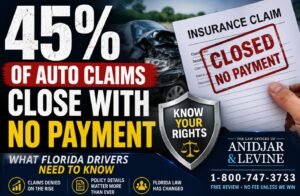
The Law Offices of Anidjar and Levine helps injured people evaluate liability, preserve evidence, manage insurance communications, and document losses after a collision. A Florida Car Accident Lawyer may gather crash reports, medical records, wage proof, photographs, witness statements, and expert opinions to support a settlement demand.
Legal guidance also helps address policy limits, comparative fault, deadlines, undervalued offers, and future medical needs.
The sections below explain how settlement value is built and how legal support may protect a claim.
Main Takeaways
- A Florida car accident injury lawyer can organize evidence, medical records, wage losses, and liability facts into a settlement demand.
- Legal support helps manage insurer communications, deadlines, statements, authorizations, and early release requests that may affect recovery.
- Settlement value depends on liability, injury severity, treatment, lost income, future care needs, and daily-life impact.
- Preserving crash reports, photos, witness statements, medical records, and evidence of vehicle damage can strengthen settlement negotiations.
- A lawyer can challenge delays, low offers, coverage disputes, and comparative negligence arguments while pursuing available compensation.
How We Can Help With Your Florida Car Accident Settlement Injury Claim
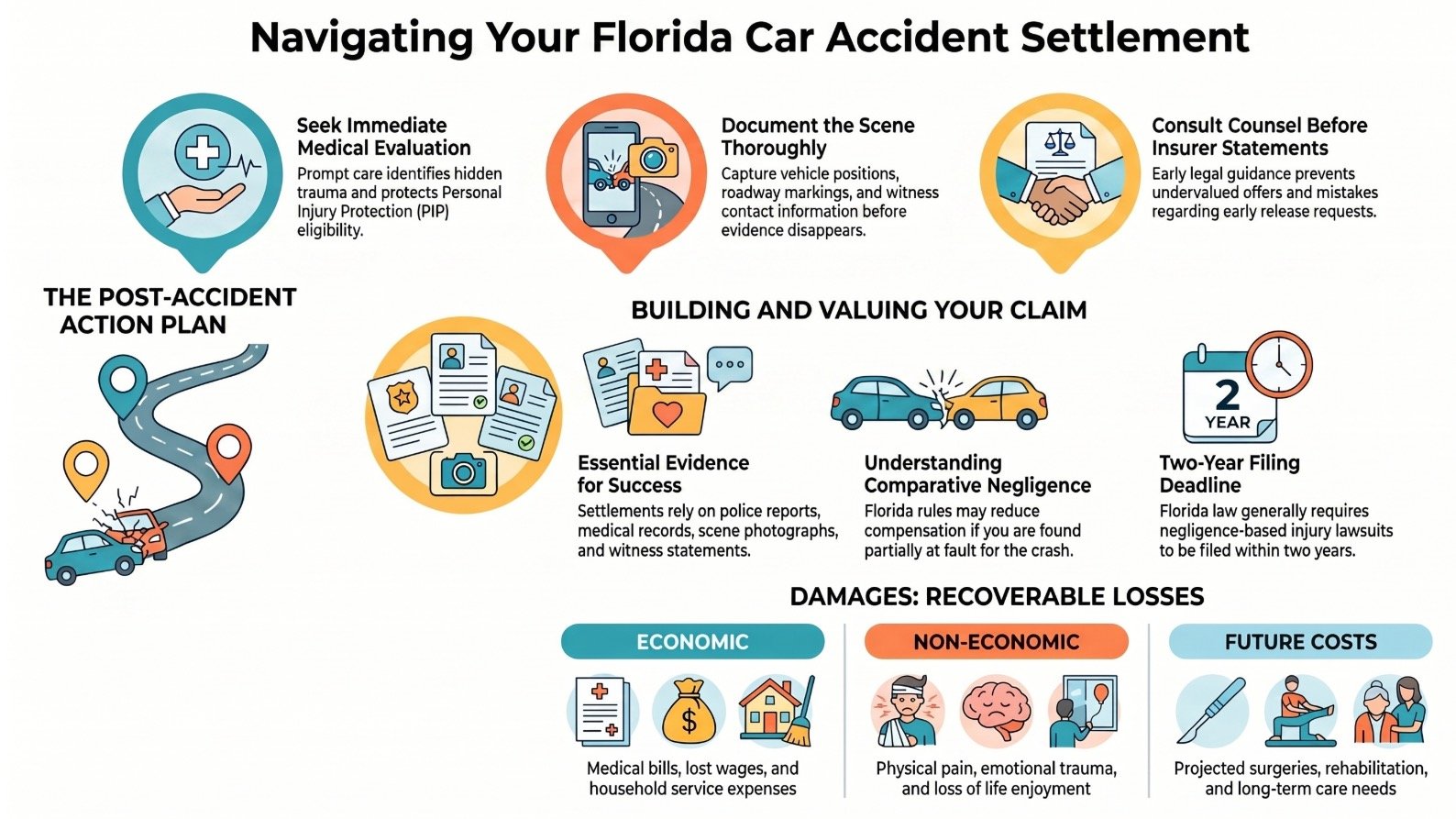
After a Florida car accident, an injury lawyer can help protect an injured person’s claim by managing the legal, insurance, and evidentiary issues that often determine settlement value. Counsel may gather crash reports, medical records, wage documentation, photographs, witness statements, and expert opinions, then organize them into a clear demand that reflects the harm suffered. This work supports the client while allowing family members, caregivers, and service-minded supporters to focus on recovery and practical needs.
A lawyer may also address Comparative negligence, responding when an insurer argues that the injured person shared fault for the crash. By evaluating liability evidence and presenting reasoned arguments, counsel works to limit unfair reductions. The lawyer can communicate with adjusters, monitor deadlines, preserve evidence, and advise on settlement offers. Attorney fees are commonly handled through contingency arrangements, allowing representation without upfront payment, subject to written agreement and Florida’s professional rules governing fee reasonableness.
Understanding Florida Car Accident Settlement Injury Cases


A strong assertion begins with understanding how Florida car accident injury settlement cases are evaluated not only by the injured person but also by insurers, defense counsel, and, when necessary, the courts. Each case requires a careful review of liability, medical treatment, lost income, future care needs, and the effect of injuries on daily life. This process helps ensure that settlement discussions are grounded in verified facts rather than assumptions.
OUR CONSULTATIONSARE FREE
START YOUR FREE CASE REVIEW

Insurance claim timelines are especially important because missed deadlines can limit recovery or weaken negotiation leverage. Prompt notice, organized documentation, and consistent communication support a more orderly claim process. Evidence preservation also plays a central role, including photographs, medical records, witness information, vehicle damage records, and relevant electronic data.
For those committed to serving injured individuals with care and integrity, understanding these elements promotes informed decisions. It also supports fair evaluation, responsible advocacy, and settlements that reflect the harm sustained under Florida law.
Common Causes of Florida Car Accident Settlement
Common causes of Florida car accident settlements often include distracted driving, drunk driving, speeding accidents, and poor road conditions. Each factor can affect liability, injury severity, and the value of a potential claim. Careful review of the circumstances of the crash is critical to determining fault, damages, and available compensation.
Distracted Driving


When a driver’s attention shifts away from the road, even briefly, the risk of a serious collision can increase substantially. In Florida, distracted driving may involve texting, adjusting navigation, eating, or interacting with passengers. These actions can reduce reaction time, impair judgment, and prevent a driver from noticing changing traffic conditions. For injured individuals, evidence of distraction may help establish negligence during a settlement evaluation. Phone records, witness statements, dash camera footage, and accident reports can be important in showing how inattention contributed to the crash. Communities committed to serving others often emphasize safe driving as a shared responsibility because one careless decision can harm families, workers, and pedestrians. Strong distracted-driving prevention efforts support accountability, reduce avoidable injuries, and encourage safer driving on Florida roads.
Drunk Driving
Although alcohol impairment is widely recognized as dangerous, drunk driving remains a major cause of serious car accidents in Florida. Impaired drivers may show delayed judgment, reduced coordination, and poor awareness of nearby vehicles, passengers, pedestrians, and responders. For injured individuals and families seeking to serve others through accountability, these crashes often require careful review of police reports, toxicology results, witness statements, and prior driving history. Alcohol impairment defenses may challenge testing procedures, officer observations, or the timing of consumption, making thorough documentation crucial. In settlement evaluations, evidence of intoxication can affect liability, damages, and negotiations with insurers. Related criminal proceedings may also create sentencing guideline impacts that influence case strategy. A lawyer may coordinate evidence, protect civil claims, and pursue compensation for medical care, lost income, and lasting harm.
Speeding Accidents
Speeding often creates dangers comparable to impaired driving because it reduces reaction time, increases stopping distance, and intensifies the force of impact in a collision. In Florida settlement matters, excessive speed may affect fault, injury severity, and the value of damages claimed. Speeding penalties can also support negligence arguments, especially when citations, crash reports, or officer observations connect the violation to the collision. Careful evidence collection, including vehicle damage, skid marks, event data, video footage, and witness statements, helps clarify how speed contributed to harm. Liability defenses may still arise, such as allegations that another driver acted unpredictably or that speed was not the primary cause. During insurance negotiation, a well-documented claim assists injured people seeking fair recovery while promoting accountability and safer community conduct.
Poor Road Conditions
Poor road conditions can greatly contribute to Florida car accidents, particularly where hazards such as potholes, uneven pavement, missing signs, poor drainage, loose gravel, or faded lane markings interfere with safe vehicle operation. These conditions may reduce traction, limit visibility, or force sudden actions, placing careful drivers, passengers, pedestrians, and responders at risk. In settlement evaluations, investigators may examine maintenance records, roadway design, prior complaints, and whether unsafe construction zones were properly marked and managed.
Vehicle maintenance standards may also be reviewed, since worn tires or faulty brakes can worsen the effects of a hazardous roadway. When public agencies, contractors, or other parties fail to correct known dangers, liability may become a central issue. Thorough documentation helps protect injured individuals and supports fair compensation after preventable crashes.
Legal Rights of Florida Car Accident Settlement Injury Victims
When a collision causes injuries in Florida, the victim has legal rights that may include insurance benefits, compensation for losses, and protection from unfair settlement practices. These rights help injured persons seek medical care, replace lost income, and address lasting harm with dignity. Comparative negligence rules may affect recovery when fault is shared, making careful documentation important. A sound insurance settlement strategy can also protect a victim from accepting less than the claim is worth.
Strong legal protections help injured Florida crash victims pursue care, income recovery, and fair compensation.
- The victim may pursue personal injury protection benefits, subject to policy terms and deadlines.
- The victim may seek damages for medical expenses, lost wages, pain, and reduced earning ability.
- The victim may challenge insurer delays, low offers, or requests that appear unreasonable.
- The victim may consult counsel to understand duties, evidence needs, and settlement value.
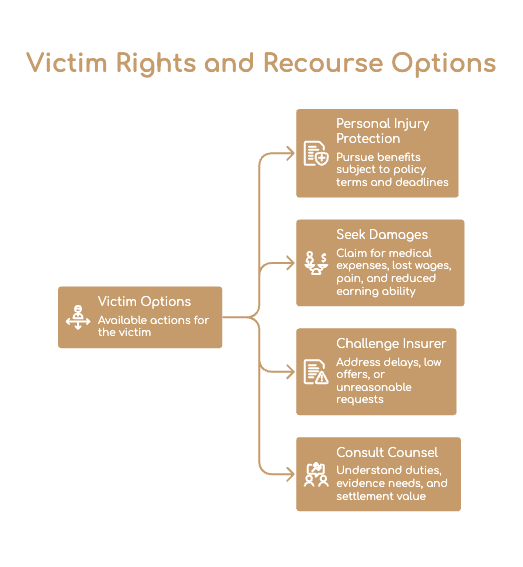
These protections promote fairness while allowing injured persons, families, and advocates to make informed decisions after a serious crash in Florida.
Why Do Florida Car Accident Settlement Injuries Happen?
Why do serious injuries occur so often in Florida car accidents? Florida’s dense traffic, frequent tourism, high-speed roadways, and sudden weather changes create conditions in which crashes can cause lasting harm. Drivers may be distracted, impaired, fatigued, or unfamiliar with local roads. In many collisions, the force of impact causes injuries that are not immediately visible, including soft tissue damage, concussions, spinal trauma, or internal complications.
Settlement injuries often become more difficult because the harm develops over time, while claim procedures move slowly. Insurance delays can leave injured people without timely access to compensation needed for care, transportation, and household stability. Documentation mistakes may also weaken a claim when medical records, crash reports, or employment losses fail to show the full effect of the injury. For those committed to serving injured individuals, understanding these causes supports better advocacy, clearer communication, and a more accurate evaluation of each person’s losses after a Florida collision.
What Should You Do After a Florida Car Accident Settlement Injury?
After a Florida car accident involving injury, the injured person should seek immediate medical care to protect wellness and create a clear record of harm. The accident scene should also be documented through photographs, witness information, and relevant details while evidence remains available. A Florida lawyer may then evaluate the circumstances, address insurance issues, and help preserve the injured person’s right to pursue compensation.
Seek Immediate Medical Care
Even if injuries seem minor at first, prompt medical evaluation is one of the most important steps following a Florida car accident. A physician can identify hidden trauma, such as concussions, soft tissue damage, or internal injuries, before symptoms worsen. This careful attention supports the injured person’s recovery and helps caregivers, family members, and advocates respond responsibly to medical needs. In Florida, timely care may also protect important benefits, because delays can raise questions about whether the crash caused the condition. Follow-up treatment should be attended as directed, and all medical recommendations should be taken seriously. Accurate records of diagnoses, prescriptions, restrictions, and appointments can assist with insurance claim updates and provide a clearer foundation for any later settlement review with legal counsel.
Document The Accident Scene
When it is safe to remain at the scene, careful documentation can preserve important evidence for a Florida car accident injury claim. A person may photograph vehicle positions, roadway markings, traffic signals, debris, skid marks, weather conditions, and visible injuries, while avoiding interference with emergency responders. Evidentiary photo proof can help clarify how the crash occurred and support later review of damages. Post-impact vehicle details, including crushed panels, broken lights, deployed airbags, and fluid leaks, should be recorded from several angles. Witness names, contact information, and brief observations may also be gathered respectfully. If a police officer responds, the report number should be noted. These steps serve the injured person, insurers, medical providers, and others who must understand the event accurately, with accountability.
Contact A Florida Lawyer
In the days following a collision, contacting a Florida car accident injury lawyer can help protect the injured person’s rights and reduce costly mistakes during the settlement process. Legal guidance may assist with evidence preservation, including medical records, photographs, witness statements, and vehicle damage reports. A lawyer can also evaluate liability, calculate damages, and identify deadlines that affect recovery. For individuals focused on caring for family members, patients, or community responsibilities, professional representation may provide needed structure during a difficult period. Counsel can communicate with insurers, review settlement offers, and apply insurance negotiation strategies designed to prevent undervaluation of injuries. Early consultation may also help avoid statements that weaken a claim. Through measured advocacy, a lawyer supports informed decisions while the injured person concentrates on recuperation.
Critical Evidence in a Florida Car Accident Settlement Injury Case
Important evidence can strongly influence the value, liability assessment, and negotiation posture of a Florida car accident injury settlement. Essential materials often include:
- Police crash reports
- Medical treatment records
- Scene photographs
- Witness statements
These records help establish what occurred, connect injuries to the collision, and support a well-documented settlement demand.
Police Crash Reports
After a Florida car accident, the police crash report is often among the first documents reviewed by insurance adjusters, injury lawyers, and claims investigators. It may identify the drivers, vehicles, location, weather, road conditions, witnesses, citations, and the officer’s preliminary assessment of contributing factors. While the report is not always conclusive proof of fault, it can guide a careful evaluation of liability and support early decisions that protect an injured person’s interests. Those serving accident victims should obtain the report promptly, review it for errors, and preserve any information that may affect insurance claim timelines. Consistency between the report, later statements, and medical documentation can strengthen credibility. If inaccuracies arise, counsel may seek clarification, supplemental evidence, or corrective measures through proper channels in Florida.
Medical Treatment Records
When an injured person seeks compensation following a Florida car accident, medical treatment records often serve as the foundation for proving the nature, extent, and cause of the injuries claimed. These records may include emergency room notes, diagnostic imaging, physician evaluations, therapy reports, prescriptions, and follow-up care plans. They help show whether treatment was timely, consistent, and related to the crash rather than a prior condition. Insurers, attorneys, and alternative dispute resolution participants rely on these materials to evaluate damages fairly and promote responsible resolution. When causation is disputed, medical documentation may be reviewed alongside opinions from Reconstruction experts to connect reported injuries with collision forces. Accurate records also support those seeking to serve injured clients with diligence, integrity, and informed advocacy throughout settlement negotiations in Florida injury cases.
Scene Photographs
Scene photographs often provide important visual evidence in a Florida car accident settlement injury case because they preserve conditions that may change or disappear soon after the collision. Images of vehicle positions, roadway markings, debris fields, skid marks, traffic controls, lighting, and property damage can help clarify how the crash occurred. They may also show hazards affected by Weather delays, such as standing water, poor visibility, or obstructed lanes. When organized with insurance documentation, photographs can support accurate claim evaluation and reduce disputes about damage severity. They may further assist later vehicle inspections by connecting visible impact areas to reported injuries and repair findings. For those serving injured clients, prompt, clear, and dated scene photographs help protect the integrity of the claim and promote responsible settlement review.
Witness Statements
Because eyewitness accounts can provide an independent perspective, witness statements are often essential evidence in a Florida car accident settlement injury case. A careful Witness identification process helps determine who observed the collision, the road conditions, the driver’s behavior, and the events immediately afterward. Attorneys may contact passengers, pedestrians, nearby workers, or first responders to preserve details before memories fade. Each account can support injured individuals by clarifying fault, confirming the severity of impact, or challenging inaccurate reports. A structured statement credibility assessment reviews consistency, vantage point, timing, and any potential bias. Reliable statements may strengthen negotiations with insurers and help see that compensation reflects the harm suffered. When gathered promptly and properly documented, witness statements serve the broader purposes of accountability, fairness, and responsible care for those injured.
Long-Term Effects of Florida Car Accident Settlement Injuries
Long-term injuries from a Florida car accident may extend beyond initial treatment, creating chronic pain challenges that affect mobility, work capacity, and daily routines. Emotional trauma can also influence recovery, particularly when anxiety, sleep disruption, or fear of driving persists after the collision. Future medical costs, including therapy, medications, expert care, and possible procedures, often become central issues in evaluating a fair settlement.
Chronic Pain Challenges
After a serious collision, chronic pain may become one of the most disruptive and difficult long-term effects of a Florida car accident injury. Persistent back, neck, joint, or nerve pain can limit mobility, reduce earning capacity, and interfere with daily caregiving responsibilities. For individuals committed to serving others, these limitations may affect family support, community work, and professional duties. Chronic pain can also complicate medical documentation because symptoms may fluctuate over time and require ongoing treatment. Conditions such as Sleep Apnea may worsen fatigue and make pain management more difficult. Settlement Delays, may place additional strain on injured persons who need therapy, medication, or expert care before reaching maximum medical improvement. Careful legal evaluation helps connect continuing pain to the collision and supports fair compensation.
Emotional Trauma Impacts
Physical pain is not the only lasting consequence that may shape the value and intricacy of a Florida car accident injury settlement. Emotional trauma can alter daily routines, relationships, work capacity, and the injured person’s ability to serve family or community. PTSD symptoms may include intrusive memories, sleep disruption, irritability, and avoidance of driving or accident-related locations. Post-crash fear can also limit independence, especially when transportation is necessary for caregiving, employment, or civic responsibilities. Documentation of anxiety treatment, counseling participation, and trauma support may help demonstrate how deeply the collision affected the person’s life. These impacts should be evaluated with care because emotional injuries are often less visible than physical harm, yet may be equally disruptive, enduring, and relevant to a fair settlement assessment under Florida law.
Future Medical Costs
When injuries require care beyond the initial recovery period, future medical costs can become a significant part of a Florida car accident settlement evaluation. These costs may include surgeries, rehabilitation, medication, mobility devices, consultant visits, and in-home assistance. For individuals committed to serving others, understanding these needs helps guarantee injured people receive resources that support dignity, stability, and continued care. A lawyer may rely on medical evidence, physician opinions, life-care plans, and cost projections to show how an injury will affect future treatment needs. This documentation can strengthen proof of damages and reduce disputes with insurers. Because long-term care can place serious financial strain on families, accurate valuation is fundamental. Settlement analysis should account for reasonably anticipated expenses, not only bills already incurred after the crash.
Proving Liability in Florida Car Accident Settlement Injury Cases
In Florida car accident settlement injury cases, proving liability requires a clear showing that another party’s negligent conduct caused the collision and the resulting harm. This process often begins with evidence that identifies duty, breach, causation, and measurable loss. Police reports, witness statements, photographs, medical records, and expert opinions may help establish how the crash occurred and who failed to act with reasonable care.
Florida’s Comparative Negligence rules may affect recovery when more than one person contributed to the accident. A careful review of the facts can determine whether fault should be shared and how that allocation may influence the claim. Proper Damages Calculation also depends on linking the negligent act to medical expenses, lost income, reduced earning ability, pain, and future care needs. For those serving injured individuals, a disciplined approach to liability helps protect fairness, supports truthful evaluation, and promotes responsible resolution grounded in evidence rather than assumption.
Dealing With Insurance Companies After a Florida Car Accident Settlement Injury
Insurance companies often become involved soon after a Florida car accident, and their actions may materially affect the value and direction of an injury settlement. Adjusters may request statements, medical authorizations, or early releases, each of which can influence a claimant’s ability to serve family, work, and community responsibilities during recovery. Careful communication helps preserve accuracy and prevents unfair use of incomplete information.
A lawyer may review coverage, identify Policy Limits, and evaluate whether the insurer’s position reflects the evidence. Effective Negotiation Tactics often include organized medical documentation, clear liability support, and measured responses to undervalued offers. Settlement Timing also matters because resolving a claim before the full scope of injury is known may leave future needs unsupported. In serious cases, unreasonable delays, inadequate investigation, or refusal to settle within available coverage may raise concerns involving Bad Faith Claims, requiring careful legal assessment and principled advocacy.
What to Expect During a Florida Car Accident Settlement Injury Claim Process
A Florida car accident injury claim typically begins with an initial case evaluation, followed by the organized collection of evidence to document liability and damages. The process then moves into insurance negotiations, where medical records, wage losses, and accident details are assessed against policy limits and disputed issues. Settlement timelines vary based on injury severity, treatment progress, insurer response, and the intricacy of proving fault.
Initial Case Evaluation
Before a Florida car accident settlement injury claim can move toward negotiation, the initial case evaluation determines the claim’s legal and factual strength. During this stage, a lawyer reviews the circumstances of the crash, applicable Florida insurance rules, potential liability, injury severity, and available coverage. The evaluation also considers whether deadlines, gaps in medical treatment, or comparative negligence issues may affect recovery. A careful Insurance claim strategy is then shaped around the client’s needs, the insurer’s likely defenses, and the goal of securing fair compensation with integrity. Early evidence-preservation steps may be identified, including protecting records and preventing the loss of crucial information. This assessment helps injured persons understand realistic outcomes, reduce confusion, and make informed decisions while pursuing accountability for harm caused by another’s negligence.
Evidence Collection Steps
Several evidence-collection steps typically begin soon after the initial case evaluation because the quality of evidence often determines the strength of a Florida car accident injury settlement claim. The process may include obtaining crash reports, photographs, traffic camera footage, medical records, repair estimates, and witness statements. Attorneys often preserve evidence of vehicle damage and request any available electronic data before it is lost. Careful documentation helps clarify fault, injury severity, and financial losses, while supporting the injured person’s ability to seek fair recovery. Organized proof also helps address Liability defenses, such as disputed fault or claimed preexisting conditions. Since insurance tactics may focus on gaps in treatment or inconsistent statements, accurate records serve the broader purpose of protecting the injured person’s dignity, needs, and path toward responsible resolution.
Insurance Negotiation Process
Once evidence has been gathered and organized, the insurance negotiation process typically becomes the next major stage in a Florida car accident injury settlement claim. During this phase, the injured person’s representative presents the claim to the insurer with documentation of injuries, treatment, lost income, and related losses. Fault determination is closely examined because Florida’s comparative negligence rules can affect the amount recoverable. The insurer may respond with questions, requests for clarification, or an initial offer that does not fully reflect the harm shown. Settlement valuation then becomes central, requiring careful review of medical needs, financial impact, and non-economic damages. Policy limits also shape negotiations, as available coverage may restrict payment. Throughout this process, clear advocacy helps pursue fair compensation while respecting the claimant’s need for stability and support.
Settlement Timeline Factors
While each case develops according to its own facts, the settlement timeline in a Florida car accident injury claim is often shaped by the severity of the injuries, the length of medical treatment, the clarity of fault, and the insurer’s willingness to evaluate the claim fairly. A claimant usually needs medical stability before damages can be measured with confidence, because future care, lost income, and lasting limitations may affect value. Insurance negotiation may move efficiently when records are complete and liability is well documented. However, timeline delays can arise from disputed fault, incomplete medical reports, multiple insurers, or low initial offers. A careful legal approach helps protect the injured person’s interests while encouraging a fair review. Patience and preparation often support a more reliable settlement outcome.
Compensation for Florida Car Accident Settlement Injury Damages
Compensation in a Florida car accident settlement is intended to address the financial and personal harm caused by another party’s negligence. The amount available often depends on the severity of injuries, the strength of the evidence, and the conduct of each party after the crash. How insurance coverage applies is especially important, since policy limits, uninsured motorist protection, and available liability coverage may shape the practical value of a claim.
A settlement may also reflect medical documentation, future care needs, lost earning ability, vehicle damage, and the degree to which injuries affect daily responsibilities. In motorcycle collisions, claims may require careful evaluation because riders often suffer serious trauma and may face unfair assumptions about risk. A Florida car accident settlement injury lawyer may help organize records, communicate with insurers, and present the claim in a manner that supports fair resolution. This process can help injured individuals protect dignity, stability, and their ability to serve others.
Economic vs Non-Economic Damages in Florida Car Accident Settlement Cases
In Florida car accident settlement cases, damages are generally separated into economic losses and non-economic harm. Economic losses may include medical bills, lost income, and repair costs, while pain and suffering require a more careful valuation of the injury’s personal impact. Proving these damage claims depends on clear documentation, credible evidence, and a structured presentation of how the crash affected the injured person’s finances and daily life.
Calculating Economic Losses
After a Florida car accident, economic losses form the measurable financial foundation of an injury settlement. These losses may include ambulance charges, hospital bills, rehabilitation expenses, prescription costs, lost wages, reduced earning capacity, and necessary household services. A careful calculation begins with organized records, including invoices, payroll statements, tax documents, and medical evidence linking treatment to the crash. Attorneys serving injured clients often review future care needs with physicians, economists, or vocational experts to ensure projected costs are supported and reasonable. Insurance carriers may raise liability defenses, dispute the necessity of treatment, or argue that work limitations are unrelated. For that reason, accurate documentation and timely preservation of records are vital. When economic damages are clearly proven, settlement discussions can focus on fair reimbursement for tangible financial harm.
Valuing Pain Suffering
Beyond the bills and wage records, pain and suffering address the human impact of a Florida car accident that cannot be measured by receipts alone. These non-economic damages may include physical discomfort, anxiety, sleep disruption, loss of enjoyment, and strain on family or service responsibilities. Florida settlements often weigh the severity and duration of injuries, the consistency of treatment, and the effect on daily life. Comparative negligence can reduce recovery when the injured person shares fault, so valuation must reflect both harm and legal responsibility. Careful pain documentation, including journals and symptom reports, helps show how injuries affect ordinary routines without overstating the claim. A measured evaluation supports fair resolution, honors the person’s lived experience, and helps caregivers, advocates, and professionals serve with accuracy and compassion.
Proving Damage Claims
To prove damage claims in a Florida car accident settlement, the injured person must present evidence that connects each loss to the crash and supports the amount requested. Economic damages may include medical bills, rehabilitation costs, lost income, reduced earning capacity, and vehicle repair expenses. These losses require records, invoices, pay statements, expert reports, and provider opinions. Non-economic damages, such as pain, suffering, emotional distress, and loss of daily function, require credible testimony, medical notes, photographs, and accounts from caregivers. Careful documentation helps counter Insurance company tactics that minimize injuries, dispute causation, or question treatment gaps. Attorneys often apply settlement valuation methods that compare medical severity, recovery duration, impairment, and liability strength. A complete claim allows fair review and promotes responsible compensation for genuine harm.
When a Florida Car Accident Settlement Injury Case Goes to Trial vs Settlement
When liability, damages, or insurance coverage remain disputed, a Florida car accident injury case may move toward litigation rather than be resolved through settlement negotiations. Settlement often serves injured people by reducing delay, expense, and uncertainty, but only when the offer reflects the harm supported by the record. Damages proof, including medical findings, wage loss documentation, and expert opinions, helps determine whether continued negotiation is reasonable.
Trial becomes more likely when insurers undervalue injuries, contest causation, or deny responsibility despite credible facts. Evidence preservation remains essential because photographs, repair records, witness accounts, and treatment histories may shape both negotiation leverage and courtroom strategy. A lawyer evaluates whether presenting the case before a judge or jury may better protect the injured person’s interests. This decision requires careful service to the client, honest risk assessment, and disciplined preparation. While most cases settle, readiness for trial can encourage fairer offers and strengthen the claim’s overall position.
Florida Laws That May Affect Your Florida Car Accident Settlement Case
Several Florida laws can shape the value, timing, and strategy of a car accident settlement case, especially when fault, insurance benefits, or injury severity are disputed. These rules guide insurers, attorneys, and injured people seeking fair recovery while continuing to care for families, coworkers, and communities.
- Comparative fault rules may reduce compensation when an injured person shares responsibility for the crash, making careful review of the evidence critical.
- Florida’s no-fault insurance system often requires Personal Injury Protection benefits to be used first, unless injuries meet legal severity thresholds.
- Mandatory insurance requirements can affect available recovery, particularly when a driver has limited coverage or no valid policy.
- Statute limits and procedural rules influence claim handling, documentation, notice issues, and negotiation strategy, though specific filing deadlines require separate review.
A settlement lawyer may assess police reports, medical records, witness accounts, and coverage details to protect the injured person’s interests and pursue a resolution grounded in Florida law.
The Statute of Limitations for Florida Car Accident Settlement Injury Cases
In Florida, the statute of limitations is a pivotal deadline that can affect whether an injured person may pursue compensation after a car accident. For most negligence-based crash injury claims, Florida law generally requires a lawsuit to be filed within two years from the date of the accident. Missing this deadline can prevent recovery, even when injuries are serious, and liability appears clear.
This deadline also shapes practical decisions made before filing. Evidence preservation should begin promptly, because vehicle damage, medical records, witness memories, and roadway conditions may become harder to prove over time. Insurance coverage must be reviewed early to identify available benefits and responsible parties. Comparative fault may also influence the value of a claim, especially when more than one driver contributed to the crash. Timely action supports accurate claim evaluation, orderly settlement negotiation, and responsible stewardship of resources intended to help injured people rebuild stability.
How a Florida Car Accident Settlement Injury Lawyer Can Help You
After a serious collision, a Florida car accident settlement injury lawyer can help an injured person evaluate the claim, protect important evidence, and communicate with insurance companies in a structured manner. This support can preserve dignity while the injured person focuses on recovery, family responsibilities, and service to others.
- Reviews medical records, crash reports, and financial losses to estimate fair compensation.
- Develops a settlement strategy that reflects injuries, future care needs, and liability facts.
- Addresses Comparative negligence issues when insurers argue the injured person shares fault.
- Coordinates negotiations professionally, helping to reduce pressure on the injured household.
A lawyer may also identify available insurance coverage, document pain-related limitations, and present the claim in a clear format. This careful preparation can encourage fair review by adjusters and reduce confusion. By managing legal communications, the lawyer helps the injured person make informed decisions, remain focused on restoration, and pursue a resolution that supports stability and responsible care.
When to Contact a Florida Car Accident Settlement Injury Lawyer
Timing can strongly affect the strength and value of a car accident settlement claim. An injured person should consider contacting a Florida car accident settlement injury lawyer as soon as medical needs are stabilized and the immediate emergency has passed. Early contact helps preserve records, identify deadlines, and reduce avoidable mistakes when insurance representatives begin requesting statements or documents.
An Initial client consultation may be appropriate after any crash involving significant pain, missed work, disputed fault, delayed symptoms, or pressure from an insurer to settle quickly. Families serving an injured loved one may also seek guidance when bills, transportation needs, or caregiving responsibilities become difficult to manage.
Prompt legal contact does not require a commitment to litigation. It can simply provide a structured review of the claim, available insurance, and next steps. Many firms also explain Contingency fee options, allowing injured individuals to understand representation costs before making decisions about settlement discussions.
Why You Need an Experienced Florida Car Accident Settlement Injury Lawyer
Because car accident settlements often depend on disputed facts, medical proof, and insurance policy limits, experienced legal representation can be crucial to protecting the value of a Florida injury claim. A skilled attorney understands how insurers evaluate liability, treatment records, future care needs, lost income, and pain-related damages. This experience helps prevent Insurance claim mistakes, such as giving incomplete statements, accepting early offers, or failing to document the full impact of the collision.
An experienced Florida car accident settlement injury lawyer also reduces errors in settlement value by organizing evidence, consulting appropriate experts, and presenting damages in a clear and credible manner. This work supports injured people who need stability, treatment, and fair financial recovery as they serve their families, coworkers, and community. Without informed guidance, a claimant may overlook losses that affect long-term health and responsibility. Effective counsel provides structure, protects legal rights, and promotes a settlement process grounded in accuracy, dignity, and accountability.
How to Choose the Right Florida Car Accident Settlement Injury Lawyer for Your Case
When selecting a Florida car accident settlement injury lawyer, an injured person should assess whether the attorney has concentrated experience with motor vehicle claims, insurance negotiations, and litigation when settlement discussions fail. The review should include the lawyer’s record handling comparable injuries, disputed liability, uninsured motorist issues, and medical documentation. A careful choice supports the injured person’s recovery while helping protect the family, caregivers, and others affected by the crash.
Client communication is another important factor. The lawyer should explain case strategy, expected timelines, and settlement risks in clear terms, while remaining reachable when questions arise. Fee transparency also matters because injured people should understand contingency fees, case costs, and any deductions before agreeing to representation.
A suitable lawyer will gather evidence promptly, appraise damages carefully, and negotiate with disciplined advocacy. This approach helps ensure the claim is managed responsibly, with attention to both legal outcomes and the client’s broader well-being after the accident.
About The Law Offices of Anidjar & Levine
The Law Offices of Anidjar & Levine represents injured individuals in Florida car accident cases, including claims involving settlement negotiations, disputed liability, serious injuries, and insurance coverage issues. The firm serves clients by managing legal tasks that can burden families after a crash, including evidence review, communication with insurers, medical record collection, and damage assessment.
Its attorneys approach each case with a claim strategy designed around the client’s injuries, financial losses, and long-term needs. This may include pursuing compensation for medical expenses, lost income, pain and suffering, and future care. In fatal collision cases, the firm also assists families with Wrongful death claims, helping them seek accountability through Florida’s civil justice system.
The firm’s role is to protect the client’s position while allowing injured people and their families to focus on recovery, stability, and service to those who depend on them during a difficult period.
Frequently Asked Questions
Can Tourists File a Florida Car Accident Settlement Injury Claim?
Yes, tourists may file a car accident injury settlement claim in Florida when another party’s negligence causes harm. Tourist eligibility generally depends on fault, documented injuries, and compliance with insurance requirements, including Florida’s no-fault rules when applicable. Visitors should preserve medical records, crash reports, and expense documentation. Those assisting injured travelers should encourage prompt reporting, careful evidence collection, and qualified legal guidance to protect recovery rights under Florida law.
Will My Car Accident Settlement Be Taxable in Florida?
Most Florida car accident settlements are not taxable when they compensate physical injuries or medical expenses. A taxable settlement may arise from punitive damages, interest, or amounts for emotional distress unrelated to physical harm. Although Florida has no state income tax, federal taxes may still apply to certain portions. A responsible claimant should review allocation language carefully and seek qualified tax guidance, ensuring resources remain available to serve recovery and family obligations.
Can I Switch Lawyers During My Florida Car Accident Settlement Case?
Yes, an injured person may request a lawyer replacement during a car accident settlement case. The person should review the fee agreement, confirm any lien for prior work, and consult settlement timing before making changes. A new attorney can evaluate deadlines, evidence, and negotiations, while maintaining service to the client’s recovery goals. Clear written notice, file transfer instructions, and coordinated communication help protect the claim and reduce disruption.
Does a Prior Injury Affect My Florida Car Accident Settlement?
Yes, a prior injury can affect a settlement. Preexisting injuries do not bar recovery, but they may influence proof of causation, medical necessity, and damages. Settlement value factors include whether the crash worsened the condition, the consistency of treatment, medical records, expert opinions, and functional limitations. A claimant should document changes carefully, serve the truth clearly, and distinguish old symptoms from new harm caused by the collision itself.
Can Undocumented Immigrants Seek Car Accident Settlements in Florida?
Yes, undocumented victims may seek car accident settlements in Florida. Immigration status generally does not eliminate settlement eligibility when another party’s negligence caused injuries. They may pursue compensation for medical bills, lost income, pain, and related losses. Those assisting injured individuals should ensure prompt medical care, careful recordkeeping, and respectful confidentiality. Legal evaluation is important because insurance tactics, evidence requirements, and damage calculations can affect the final recovery.
—————————
A Florida car accident settlement injury claim can involve medical costs, lost income, insurance disputes, and long-term recovery concerns.
Skilled legal representation can help injured parties protect their rights, evaluate settlement offers, and pursue compensation that reflects the full impact of the crash.
The Law Offices of Anidjar and Levine provide focused guidance as a Florida Car Accident Lawyer, helping clients make informed decisions while seeking a fair resolution under Florida law.