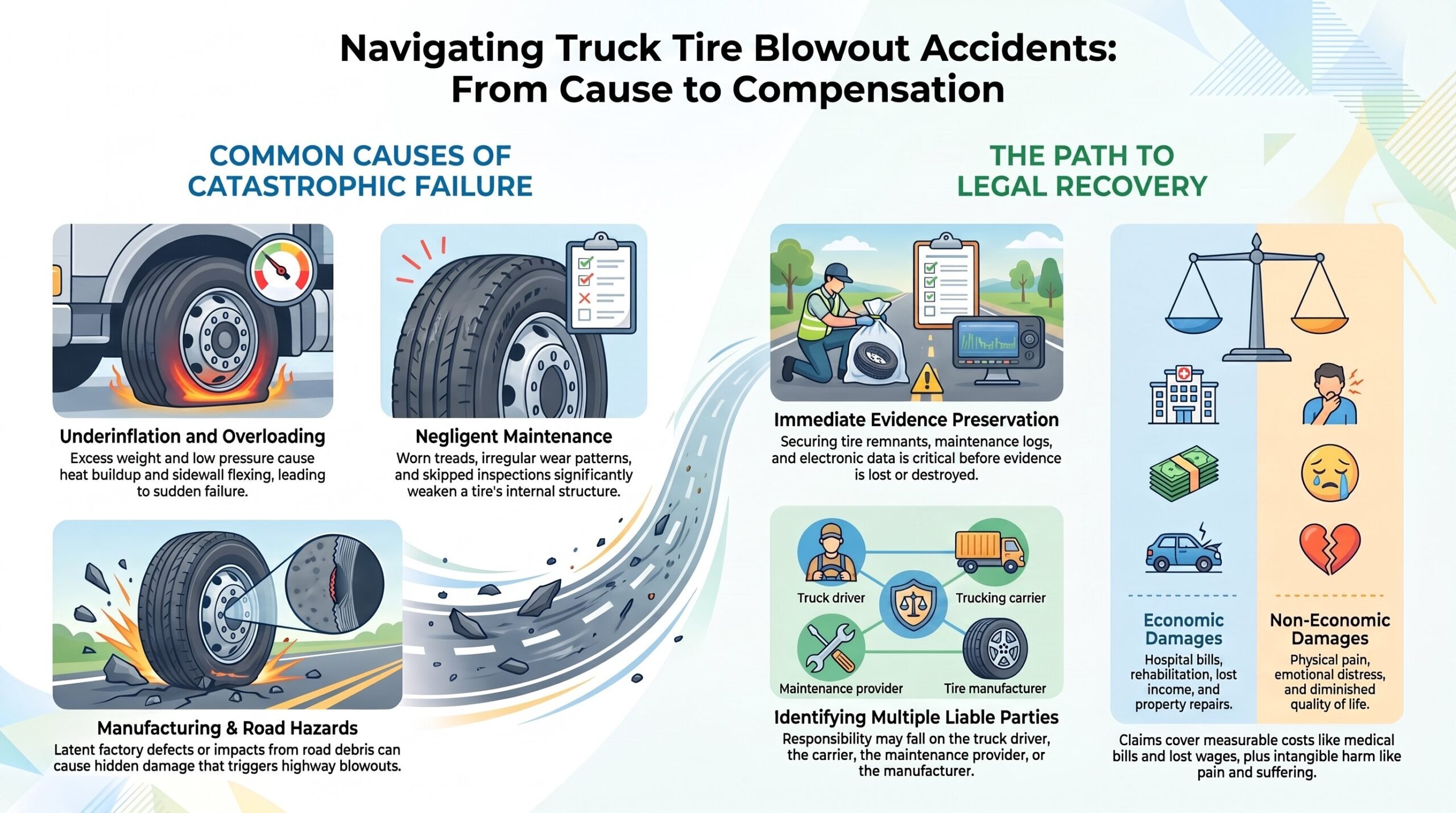
The Law Offices of Anidjar and Levine investigates whether underinflation, worn tires, overloading, road hazards, defective equipment, or negligent maintenance caused a truck tire blowout accident.
The investigation may include tire inspections, photographs, electronic records, maintenance histories, witness statements, and crash reports.
Potentially liable parties may include the driver, carrier, maintenance provider, or manufacturer.
Legal assistance can support injury documentation, insurance communications, settlement evaluation, and claims for medical costs, lost income, pain, and future care.
Learn more about your options with a Daytona Beach Truck Accident Lawyer.
Main Takeaways
- A Daytona Beach truck tire blowout lawyer investigates whether the driver, carrier, maintenance provider, or tire manufacturer contributed to the crash.
- Attorneys preserve tire remnants, photographs, electronic records, inspection reports, witness statements, and other evidence supporting causation and liability.
- Potential claims may involve negligent maintenance, defective tires, improper installation, overloading, underinflation, or violations of applicable safety standards.
- Florida comparative negligence rules can affect compensation when multiple parties share responsibility for injuries and property damage.
- Prompt medical care, accident reporting, insurer guidance, and timely legal review help protect evidence, claims, and applicable filing deadlines.


How We Can Help With Your Daytona Beach Truck Tire Blowout Accident Injury Claim
When a truck tire blowout causes a collision, an injured person may face medical expenses, lost income, and long-term physical limitations while the responsible parties and insurance companies evaluate liability. Legal support can help organize the claim and protect the injured person’s opportunity to pursue appropriate compensation. Counsel may gather collision records, photographs, witness statements, maintenance materials, and other evidence relevant to the tire failure and resulting harm.
Medical cost documentation can connect treatment expenses to the crash and help demonstrate anticipated care, rehabilitation, and related financial effects. Assistance may also include communicating with insurers, reviewing settlement proposals, and identifying potentially responsible parties, such as a carrier, driver, maintenance provider, or manufacturer. Because Florida comparative negligence can affect recovery when multiple parties share fault, careful evaluation of allegations and available evidence remains important. A representative can provide clients and families with clear updates, practical guidance, and respectful advocacy while decisions are made about claim development and resolution.
OUR CONSULTATIONSARE FREE
START YOUR FREE CASE REVIEW

Understanding Daytona Beach Truck Tire Blowout Accident Injury Cases
Understanding a Daytona Beach truck tire blowout accident injury case requires examining how the failure occurred, whether it was reasonably preventable, and how it contributed to the collision and resulting injuries. The case may involve the truck driver, motor carrier, maintenance provider, tire manufacturer, or other responsible parties. Liability depends on documented facts, including inspection records, service histories, delivery schedules, company policies, and witness accounts. A qualified investigation may compare the vehicle’s condition with applicable safety standards and determine whether negligent conduct played a role.
Prompt vehicle inspection can help identify relevant physical evidence before repairs or disposal alter it. Evidence preservation is equally important because photographs, tire remnants, electronic records, medical documentation, and crash reports may clarify disputed issues. The injured person’s medical treatment, lost income, rehabilitation needs, and long-term limitations are also evaluated when assessing damages. Careful case preparation supports accountability and helps injured individuals and their families pursue meaningful assistance.
Common Causes of Daytona Beach Truck Tire Blowout Accident
Truck tire blowouts in Daytona Beach may result from underinflation, excessive tread wear, overloaded vehicles, or damage caused by road hazards. Each condition can weaken tire integrity and increase the risk of sudden failure, particularly during highway travel or heavy vehicle operation. Identifying the specific cause is crucial when evaluating liability and the circumstances of an accident.
Tire Underinflation
Tire underinflation is a significant cause of truck tire blowouts because it increases sidewall flexing, heat buildup, and uneven tread wear. When a commercial vehicle operates with insufficient air pressure, its tires may carry loads beyond their safe operating capacity. Extended driving, high temperatures, and heavy cargo can intensify this stress, increasing the likelihood of sudden failure. Tire pressure monitoring systems can help identify pressure loss before a vehicle enters service, but they require proper calibration and prompt attention.
Maintenance safety checks should include measuring each tire with a reliable gauge, inspecting valve components, and confirming pressure against the manufacturer’s specifications. Fleet operators and drivers who address these conditions help protect motorists, passengers, and roadside responders from preventable collisions caused by tire failure on Daytona Beach roads.
Excessive Tire Wear
Although commercial tires are designed for substantial mileage, excessive wear can weaken their structure and increase the risk of a sudden blowout. Tread worn below safe limits provides less traction and leaves the casing more vulnerable to heat, road debris, and impact damage. Uneven wear may indicate misalignment, suspension problems, improper rotation, or inconsistent maintenance, each of which can accelerate deterioration. Fleet operators can reduce these hazards through scheduled inspections, timely replacement, and Tire pressure monitoring that identifies conditions requiring prompt attention.
Proper load distribution also helps tires wear evenly by supporting balanced contact with the roadway. Drivers who notice exposed cords, cracks, bulges, or irregular tread patterns should remove the vehicle from service and report the condition. Preventive attention can protect motorists, passengers, and others sharing Daytona Beach roads from avoidable injuries.
Overloaded Trucks
When a commercial vehicle carries weight beyond its rated capacity, the added stress can substantially increase the risk of a tire blowout. Excessive cargo increases tire pressure, heat, and strain on sidewalls, particularly during extended travel. It can also reduce handling control and lengthen stopping distances, creating greater danger for occupants and nearby motorists. Overloading may contribute to Brake failure because braking systems must manage forces beyond their intended limits.
The danger can become more pronounced when traffic conditions require repeated stopping, sudden lane changes, or sustained operation at highway speeds. Carriers and drivers have a responsibility to verify cargo weight, distribute loads properly, and follow manufacturer and regulatory limits. When those duties are ignored, an overloaded truck may cause a preventable collision, leaving injured individuals to seek appropriate support.
Road Hazard Damage
Road hazards such as potholes, broken pavement, metal debris, and construction materials can damage a truck tire’s tread, sidewall, or internal structure, increasing the risk of a sudden blowout. Impact damage may remain hidden while weakening belts or creating air leaks that worsen during highway travel. Commercial drivers should report hazardous conditions, inspect tires after significant impacts, and avoid operating vehicles with visible bulges, cuts, or exposed cords.
Tire pressure checks can identify gradual pressure loss before heat and friction produce catastrophic failure. Motor carriers also have a responsibility to maintain inspection records, repair unsafe equipment, and train drivers to recognize road-related tire damage. Trucking compliance audits may reveal whether required maintenance procedures were followed. When negligence contributes to a collision, preserved records and photographs can help clarify responsibility and support affected road users.


Legal Rights of Daytona Beach Truck Tire Blowout Accident Injury Victims
Truck tire blowout accident injury victims in Daytona Beach may have the legal right to pursue compensation from parties whose negligence caused or contributed to the crash. Potential claims may involve negligent maintenance, defective design, improper installation, or violations of applicable tire safety standards.
An attorney can identify responsible parties and protect an injured person’s ability to seek relief.
- Medical expenses, rehabilitation costs, and future treatment needs
- Lost wages, diminished earning capacity, and employment disruption
- Physical pain, emotional distress, and reduced quality of life
- Evidence preservation, including tires, inspection records, and photographs
- Settlement negotiations, litigation strategy, and applicable filing deadlines
Manufacturers may raise Product liability defenses, including misuse, alteration, or lack of causation. However, such defenses do not automatically defeat a claim. Victims and families may benefit from prompt legal guidance, particularly when insurers seek early statements or releases. A qualified lawyer can investigate contractual relationships, evaluate comparative fault, calculate damages, and present the evidence respectfully. The legal process can help injured individuals secure accountability while supporting their medical recovery and protecting their families’ interests.
Why Do Daytona Beach Truck Tire Blowout Accident Injuries Happen?
Truck tire blowout injuries often occur because a tire fails under the combined effects of wear, underinflation, overloading, heat, or impact damage. Commercial trucks place substantial weight on each tire, increasing the consequences of neglected maintenance or improper cargo distribution. Florida’s heat and long highway distances can accelerate tread separation, sidewall deterioration, and pressure loss. Defective tires, damaged rims, valve problems, and inadequate inspections may also contribute to sudden failure.
When a blowout occurs, the driver may lose control, while nearby motorists can face debris, abrupt lane changes, or a rollover. Occupants may suffer fractures, traumatic brain injuries, spinal damage, or fatal harm during the resulting collision. Prevention depends on consistent pressure monitoring, documented maintenance, tire age checks, proper loading practices, and prompt replacement of compromised equipment. Employers and carriers also benefit from roadside safety training that teaches drivers to recognize warning signs and manage truck instability. These safeguards help protect drivers, passengers, and other roadway users from preventable harm.
What Should You Do After a Daytona Beach Truck Tire Blowout Accident Injury?
After a Daytona Beach truck tire blowout accident injury, the injured person should seek immediate medical care, even when symptoms initially appear minor. The accident should be reported to law enforcement, and medical records, photographs, witness information, and other evidence should be preserved. Prompt documentation can help establish the nature and extent of the injuries and support any subsequent claim.
Seek Immediate Medical Care
Prompt medical attention should be a priority for anyone injured in a Daytona Beach truck tire blowout accident, even when the initial symptoms appear minor. Some conditions, including internal injuries, concussions, and soft-tissue damage, may worsen after the crash. Evaluation by emergency personnel or a physician can identify hidden harm and establish timely treatment. During Crash scene safety efforts, injured individuals should avoid unnecessary movement unless remaining in place presents danger. Medical providers should receive accurate information about pain, symptoms, medications, and prior conditions.
Patients should follow treatment instructions and attend recommended follow-up appointments. Keeping medical records, discharge instructions, prescriptions, and related bills helps preserve evidence of the injury and supports a reliable documentation chain. Prompt care also helps protect an injured person’s recovery while enabling others to provide appropriate assistance.
Report the Truck Accident
Report the Daytona Beach truck tire blowout accident to law enforcement as soon as it is safe to do so. Calling 911 allows officers and emergency responders to address immediate hazards, assist injured individuals, and create an official crash report. The injured person should provide accurate, factual information without speculating about fault or minimizing symptoms. If transportation or scene hazards remain, Roadside Assistance may help secure the vehicle after authorities approve removal.
Contact information for witnesses, drivers, and responding officers should be retained for later communication, without attempting to investigate the collision independently. A medical follow-up appointment remains important, even when emergency treatment has already occurred, because some injuries develop gradually. Prompt reporting supports public safety and helps ensure that responsible parties and insurers receive consistent, reliable information.
Document Injuries and Evidence
Preserve evidence of the Daytona Beach truck tire blowout accident as soon as circumstances permit. If medically safe, the injured person or a trusted representative should photograph vehicle damage, tire debris, road conditions, traffic controls, visible injuries, and relevant property damage. Images should include wide views and close details, with dates and locations recorded when possible.
Medical treatment should begin promptly, and every provider should receive an accurate account of symptoms and limitations. Copies of medical record reviews, diagnostic results, prescriptions, discharge instructions, and bills can help establish the injury’s progression and financial impact. A written symptom journal may document pain, missed work, mobility restrictions, and daily challenges.
Names and contact information for witnesses should be collected. A careful Witness lineup can help preserve consistent accounts for investigators, insurers, and counsel.
Critical Evidence in a Daytona Beach Truck Tire Blowout Accident Injury Case
Essential evidence can establish whether a tire defect, inadequate maintenance, or driver conduct contributed to the crash. A Daytona Beach truck tire blowout accident injury case may rely on physical tire evidence, maintenance records, scene documentation, and statements from the driver and witnesses.
Important materials may include:
- Failed tire and tread-condition photographs
- Inspection, repair, and replacement records
- Commercial vehicle maintenance and safety logs
- Accident-scene photographs, measurements, and surveillance footage
- Driver accounts and independent witness statements
Tire Failure Evidence
When a truck tire fails in Daytona Beach, the tire itself and the surrounding physical evidence may provide essential information about what caused the accident. Investigators may photograph tread separation, punctures, sidewall damage, uneven wear, or signs of overheating before the vehicle or roadway is altered. Preserving the tire, wheel, valve stem, and debris field can help distinguish a manufacturing defect from improper inflation, excessive loading, road hazards, or inadequate tire maintenance.
Skid marks, vehicle positions, and damage patterns may clarify how the blowout affected traffic and whether driver negligence contributed to the collision. Witness statements and nearby surveillance footage can supplement the physical evidence. Prompt documentation helps preserve reliable information for injured individuals seeking accountability and fair compensation after a serious truck accident.
Truck Maintenance Records
Maintenance records can show whether the truck and its tires received the inspections, repairs, and service required before a blowout. Records may identify each Preventive Inspection, the technician’s findings, and whether defects involving tread, sidewalls, inflation, or wheel components were corrected. They can also document Tire Rotation, balancing, alignment, valve replacement, and tire installation dates. Missing entries, overdue service, repeated warnings, or inconsistent mileage may support questions about whether a carrier followed its maintenance program.
Electronic logs, work orders, invoices, and fleet software may help establish who performed the work and when it occurred. A careful review can also reveal whether worn or damaged tires remained in operation despite prior notice. Preserving these records can assist injured individuals and their families in seeking accountability and informed legal guidance.
Accident Scene Documentation
Accident scene documentation can preserve evidence of how a truck tire blowout occurred and how it contributed to resulting injuries. Photographs should capture the roadway, debris, tire fragments, vehicle positions, skid marks, lighting, and visible hazards before conditions change. An Injury Photo may document bruising, lacerations, swelling, or other harm, while respecting privacy and obtaining appropriate consent.
A qualified Vehicle Inspection can record wheel damage, tire condition, tread separation, and possible mechanical defects. Measurements, weather information, traffic controls, and nearby surveillance sources may further clarify the event. A Witness Timeline can organize independently documented observations without replacing formal witness statements. Scene Safety remains critical; injured individuals should receive medical attention, and only safe, lawful documentation should occur. Preserving original files, timestamps, and chain-of-custody information can help attorneys and investigators evaluate causation, responsibility, and damages.
Driver and Witness Statements
Driver and witness statements can provide crucial evidence about the events leading to and following a truck tire blowout accident in Daytona Beach. The truck driver’s account may address tire inspections, maintenance practices, speed, cargo loading, and roadway conditions. Witnesses can describe the tire failure, vehicle movements, warning signs, traffic conditions, and the driver’s conduct immediately afterward. Investigators may compare these accounts with photographs, electronic data, maintenance records, and medical documentation.
Eyewitness Corroboration can strengthen a victim’s description of how the collision occurred and whether preventable conduct contributed to the injuries. Statement consistency across interviews and recorded reports may also affect credibility. Careful collection of statements allows representatives to preserve accurate information, identify responsible parties, and support injured individuals seeking appropriate medical care, accountability, and compensation.
Long-Term Effects of Daytona Beach Truck Tire Blowout Accident Injuries
Truck tire blowout injuries may produce chronic pain conditions that persist long after initial treatment and affect daily functioning. Reduced mobility can limit employment, household responsibilities, and participation in ordinary activities. These lasting physical effects may also create significant emotional and financial strain for injured individuals and their families.
Chronic Pain Conditions
Although some injuries from a Daytona Beach truck tire blowout may appear manageable at first, persistent pain can develop into a chronic condition that affects mobility, sleep, employment, and daily activities. Such pain may arise from nerve damage, spinal trauma, joint injuries, or complications that remain after initial treatment. It can also contribute to anxiety, depression, medication dependence, and difficulty maintaining household or caregiving responsibilities. A treating provider may recommend continuing therapy, diagnostic testing, medication management, or referrals to experts in pain care.
Consistent care can help document symptom progression and support appropriate treatment decisions. Medical documentation tips include recording pain levels, triggers, limitations, appointments, and prescribed therapies. These records may clarify legal liability issues by connecting ongoing conditions to the crash and demonstrating the injury’s continuing effects.
Reduced Mobility
Reduced mobility may develop after a Daytona Beach truck tire blowout when injuries affect the spine, joints, muscles, nerves, or weight-bearing structures. Victims may experience difficulty walking, climbing stairs, standing, driving, or performing routine personal tasks. Some require braces, mobility devices, physical therapy, or assistance from family members and professional caregivers. Lasting limitations can also prevent a person from returning to previous activities or safely completing necessary responsibilities.
Medical records, diagnostic testing, treatment plans, and functional assessments can document how the injury restricts movement over time. Investigators may examine maintenance practices, loading procedures, and driver conduct when evaluating Commercial vehicle safety. Evidence concerning roadway conditions, defective equipment, or other contributing conduct may also affect shared fault determination. Careful documentation helps clarify the injury’s lasting physical consequences and support appropriate legal evaluation.
Emotional and Financial Strain
Emotional and financial strain may persist after a Daytona Beach truck tire blowout causes serious injury, particularly when recovery requires prolonged treatment or limits the victim’s ability to work. A stressful recovery can involve repeated medical appointments, rehabilitation, medication expenses, and dependence on family members for daily assistance. Mounting medical bills may become more difficult to manage when wages decline or employment ends because of lasting disabilities. These pressures can contribute to anxiety, depression, sleep difficulties, and uncertainty about future financial stability.
Family members may also experience hardship while providing transportation, caregiving, or household support. Careful documentation of treatment, lost income, and related expenses can help clarify the injury’s long-term impact. Legal guidance may assist affected individuals in pursuing compensation and accessing resources that support recovery, dignity, and stability.
Proving Liability in Daytona Beach Truck Tire Blowout Accident Injury Cases
Proving liability in a Daytona Beach truck tire blowout accident injury case requires evidence showing that a negligent act or failure contributed to the tire failure and resulting collision. Investigators may examine maintenance records, inspection reports, service invoices, driver logs, photographs, and physical tire damage. Evidence of Negligent Maintenance can include worn tread, improper inflation, delayed repairs, defective installation, or failure to replace an unsafe tire.
Federal Regulations establish important safety requirements for commercial vehicles, including inspection, maintenance, loading, and tire condition. Violations may support a claim that the trucking company, driver, maintenance contractor, manufacturer, or another responsible party breached a duty of care. Qualified accident reconstruction professionals may analyze vehicle conditions, roadway evidence, and witness accounts to determine how the blowout occurred.
Preserving damaged tires, vehicle components, electronic records, and medical documentation is critical. A careful investigation can clarify responsibility and help protect injured individuals and families seeking accountability after a preventable collision.
Dealing With Insurance Companies After a Daytona Beach Truck Tire Blowout Accident Injury
After a Daytona Beach truck tire blowout accident, insurance companies may promptly contact injured individuals to obtain statements, medical information, or settlement agreements. Injured parties should respond carefully, recognizing that adjusters represent insurers and may evaluate statements for information that limits responsibility or damages.
A person serving an injured family member can help preserve records without making unsupported conclusions. A documentation checklist should include accident photographs, contact information for witnesses, medical bills, treatment notes, employment records, repair estimates, and correspondence with insurers. Communications should remain factual, brief, and consistent with available evidence. Individuals should avoid recorded statements, social media commentary, or signed releases until the consequences are understood.
Prompt medical attention and organized documentation can strengthen negotiation leverage by showing the injury’s scope, treatment needs, financial effects, and continuing limitations. Insurance offers should not be accepted solely because they arrive quickly. A qualified Daytona Beach truck accident lawyer can review coverage, identify potentially responsible parties, protect communications, and pursue fair compensation while the injured person focuses on recovery and family responsibilities.
What to Expect During a Daytona Beach Truck Tire Blowout Accident Injury Claim Process
A Daytona Beach truck tire blowout injury claim typically begins with an initial case evaluation to assess liability, damages, and available legal remedies. The process may include gathering accident reports, medical records, witness statements, vehicle data, and other evidence before insurance claim negotiations commence. Depending on the evidence and the parties’ positions, the matter may conclude through a settlement or proceed to trial.
Initial Case Evaluation
During an initial case evaluation, a Daytona Beach truck tire blowout accident lawyer examines the circumstances of the crash, the resulting injuries, and the evidence that may establish liability. The lawyer typically discusses medical treatment, lost income, ongoing limitations, and the client’s immediate needs. Attention may also focus on potential responsible parties, including a carrier, maintenance provider, manufacturer, or driver. Commercial vehicle inspections can provide important context regarding tire condition, maintenance practices, and compliance obligations, although detailed investigation occurs later.
The lawyer explains applicable deadlines, insurance procedures, and realistic claim objectives in clear terms. Early evidence preservation is emphasized because records, photographs, electronic data, and witness recollections may become unavailable. The evaluation concludes with guidance about representation, communication, and steps designed to protect the injured person’s interests.
Evidence Gathering Process
When a Daytona Beach truck tire blowout accident injury claim begins, the evidence-gathering process establishes the facts needed to evaluate liability, damages, and potential insurance coverage. Investigators may inspect the truck, failed tire, roadway, and surrounding property for physical evidence before repairs or disposal alter their condition. Photographs, maintenance invoices, electronic vehicle data, witness statements, police reports, and medical records can help establish timing, impact, and resulting injuries.
Requests may also seek Tire Maintenance Logs, inspection schedules, load information, repair histories, and manufacturer communications. Driver Training Records can reveal whether the operator received instruction concerning inspections, cargo security, and emergency responses. Attorneys may coordinate with accident-reconstruction professionals and medical providers while preserving relevant evidence through formal notices. This careful process supports accurate findings and protects the interests of injured individuals.
Insurance Claim Negotiations
Once the available evidence has been organized, insurance claim negotiations typically address liability, medical expenses, lost income, property damage, and the projected effects of the injuries. An insurer may review maintenance records, driver conduct, medical documentation, and witness statements before evaluating responsibility. Adjusters often request authorizations, recorded statements, or additional records, but claimants generally benefit from providing accurate information through appropriate channels.
Calculations may include current bills, future treatment, rehabilitation, diminished earning capacity, and related household services. Wrongful death claims require separate consideration of funeral expenses, lost support, and the family’s financial losses. In cases involving deliberate or exceptionally reckless conduct, punitive damages calculations may require evidence beyond ordinary negligence. Careful negotiation seeks to present a complete, well-supported demand while protecting the injured person’s interests throughout the claims process.
Settlement Or Trial
The settlement-or-trial decision in a Daytona Beach truck tire blowout injury claim generally follows the investigation, medical evaluation, and insurance negotiations. Counsel reviews liability evidence, including maintenance records, tire inspections, driver reports, photographs, and expert opinions. Settlement discussions may resolve the claim when an insurer offers compensation that fairly reflects medical expenses, lost income, future care, and related damages. Negotiation tactics can include presenting documented losses, challenging inadequate valuations, and identifying risks the insurer could face at trial.
If negotiations fail, the injured person may authorize litigation. Counsel then develops trial strategy outlines, prepares witnesses, organizes exhibits, and addresses defenses concerning maintenance, product defects, or comparative fault. A court ultimately determines liability and damages, while the legal team continues protecting the claimant’s interests through each procedural stage.
Compensation for Daytona Beach Truck Tire Blowout Accident Injury Damages
Compensation for injuries caused by a truck tire blowout may cover medical expenses, lost income, reduced earning capacity, property damage, and pain and suffering. The recoverable amount depends on the accident’s circumstances, the severity of documented injuries, and evidence connecting the blowout to the truck operator, carrier, maintenance provider, or tire manufacturer.
A claim may include emergency treatment, hospitalization, rehabilitation, prescriptions, follow-up care, and anticipated medical needs. Lost wages and employment benefits may also be supported when injuries prevent work or limit the ability to perform previous duties. Vehicle repairs, replacement costs, and other directly related property losses should be documented.
Financial documentation, including pay records, invoices, receipts, and repair estimates, can help establish the value of claimed losses. Careful medical records management supports continuity of treatment and demonstrates how injuries affect daily activities. An attorney may gather witness accounts, crash reports, maintenance records, and insurer communications to present a complete, accurate claim while protecting the injured person’s interests.
Economic vs Non-Economic Damages in Daytona Beach Truck Tire Blowout Accident Cases
Economic damages may cover documented financial losses, including medical expenses, lost income, and property damage. Non-economic damages address less tangible harm, such as pain, emotional distress, and diminished quality of life. Calculating total compensation requires evaluating both categories in light of the evidence and the accident’s lasting effects.
Economic Damages Explained
When a truck tire blowout causes a collision in Daytona Beach, the resulting claim may include both economic and non-economic damages. Economic damages represent measurable financial losses connected to the crash. They may include emergency services, hospital bills, medication, rehabilitation, and future medical care. Medical treatment coverage can also involve costs for necessary follow-up appointments, medical equipment, or transportation to providers.
Lost wages may be recoverable when injuries prevent work, while reduced earning capacity may apply if lasting limitations affect future employment. Property damage, vehicle repairs, rental transportation, and other documented expenses can also qualify. A liability evidence review may help identify responsible parties and connect the claimed costs to the blowout. Receipts, pay records, invoices, and medical documentation generally strengthen a clear, service-oriented claim for fair compensation.
Non-Economic Damages Explained
A truck tire blowout claim may also involve non-economic damages, which address the human effects of injuries rather than documented financial losses. These damages can include physical pain, emotional distress, reduced enjoyment of life, disfigurement, inconvenience, and lasting limitations. A person who can no longer participate in family activities, work toward personal goals, or maintain independence may experience significant non-economic harm. In Daytona Beach cases, the nature and duration of the injury, recovery process, and effect on daily relationships can influence damages calculation.
Medical records, testimony from family members, and professional evaluations may help demonstrate these effects. Insurance bad faith may arise if a carrier unfairly minimizes documented suffering or refuses to evaluate the claim fairly. Non-economic damages recognize human losses that invoices alone cannot measure, without replacing the separate assessment of economic losses.
Calculating Total Compensation
Determining total compensation in a Daytona Beach truck tire blowout case requires evaluating both economic and non-economic damages arising from the collision. Economic damages may include emergency care, Medical treatment costs, rehabilitation, lost wages, diminished earning capacity, property damage, and transportation expenses. Documentation such as invoices, pay records, medical opinions, and future disability estimates helps establish the amount reasonably required for recovery and long-term support. Non-economic damages address pain, emotional distress, disfigurement, loss of enjoyment, and reduced quality of life.
The value depends on injury severity, prognosis, treatment duration, and the collision’s effect on personal responsibilities. A careful assessment also considers comparative fault, available insurance, and potential insurance bad faith claims. Accurate calculations help protect injured individuals and promote fair accountability throughout the legal process.
When a Daytona Beach Truck Tire Blowout Accident Injury Case Goes to Trial vs Settlement
Although many Daytona Beach truck tire blowout injury cases resolve through negotiated settlements, some proceed to trial when the parties cannot agree on liability or fair compensation. A settlement may provide faster resolution, reduced litigation costs, and greater certainty for an injured person and family. It can also limit the stress of testimony and extended court proceedings.
Trial becomes more likely when evidence conflicts, the trucking company denies responsibility, or the insurer offers an amount that does not reflect medical needs, lost income, or lasting impairment. Comparative fault defenses may also affect negotiations by placing responsibility on the injured party. Attorneys typically evaluate maintenance records, inspection reports, witness accounts, medical documentation, and expert opinions before recommending settlement or trial.
Insurance dispute timelines can extend resolution, particularly when coverage, causation, or damages remain contested. A trial allows a judge or jury to decide disputed issues, but outcomes are less predictable. Careful preparation helps protect the injured person’s interests while supporting a fair and informed resolution.
Florida Laws That May Affect Your Daytona Beach Truck Tire Blowout Accident Case
Florida law can affect nearly every aspect of a Daytona Beach truck tire blowout accident case, including liability, evidence, deadlines, and available compensation. Several legal principles may guide investigation and resolution:
Florida law shapes Daytona Beach truck tire blowout claims, influencing liability, evidence, deadlines, insurance coverage, and potential compensation.
- Comparative fault rules may reduce recovery when an injured person contributed to the crash.
- Florida negligence defenses may challenge claims involving maintenance, loading, inspection, or roadway conditions.
- Trucking regulations can establish duties for carriers, drivers, owners, and maintenance providers.
- Evidence such as tire fragments, service records, photographs, and electronic logs may clarify responsibility.
- Florida insurance requirements and commercial coverage provisions may affect available sources of payment.
A case may involve multiple parties whose conduct must be evaluated separately. A carrier could face responsibility for negligent hiring, supervision, or maintenance, while a manufacturer may be accountable for a defective tire. Medical documentation can help connect injuries to the collision and demonstrate necessary care. Florida courts may also consider mitigation, meaning reasonable efforts to follow treatment and limit additional harm. Careful legal guidance helps preserve evidence, communicate respectfully with insurers, and pursue fair treatment for injured individuals and their families.
The Statute of Limitations for Daytona Beach Truck Tire Blowout Accident Injury Cases
Because strict filing deadlines apply, an injured person should address the statute of limitations for a Daytona Beach truck tire blowout accident as soon as possible. Florida law generally allows two years to bring a negligence action for injuries, although exceptions can alter that period. Claims involving government entities, wrongful death, minors, or delayed discovery may follow different requirements and notice rules.
The deadline may begin when the collision occurs, but the precise calculation depends on the facts and the parties involved. Missing the applicable deadline can bar recovery, regardless of injury severity or available evidence. Early attention also preserves maintenance records, tire inspections, driver logs, photographs, medical documentation, and witness accounts that may clarify responsibility.
A Comparative fault analysis can affect the amount recoverable when multiple parties contributed to the crash. Identifying the proper defendants may also require examining trucking liability coverage, ownership arrangements, maintenance duties, and carrier relationships. Prompt preservation of these details supports fair consideration of an injured person’s claim.
How a Daytona Beach Truck Tire Blowout Accident Lawyer Can Help You
A Daytona Beach truck tire blowout accident lawyer can protect an injured person’s rights while investigating the crash and addressing applicable filing deadlines. Counsel can coordinate medical records, preserve evidence, and identify whether negligent maintenance, defective tires, improper loading, or regulatory violations contributed to the collision. A lawyer may also:
A Daytona Beach truck tire blowout lawyer investigates evidence, identifies responsible parties, and protects an injured person’s rights.
- Obtain inspection, repair, and driver qualification records
- Consult tire engineers, accident reconstructionists, and medical professionals
- Calculate treatment costs, lost income, and long-term care needs
- Communicate with insurers while pursuing fair compensation
- Explain Wrongful death eligibility for surviving family members
Legal representation can clarify responsibility among trucking companies, contractors, manufacturers, maintenance providers, and other parties. Counsel can evaluate available insurance coverage and develop a claim supported by documented evidence. A punitive damages overview may also be appropriate when conduct appears reckless or intentionally disregards public safety. Through careful advocacy, a lawyer helps injured individuals and families pursue accountability while preserving resources needed for recovery, treatment, and continued service to their communities.
When to Contact a Daytona Beach Truck Tire Blowout Accident Lawyer
Prompt legal guidance should be considered immediately after a truck tire blowout accident, particularly when injuries, fatalities, disputed fault, or significant property damage are involved. Early contact allows a lawyer to help preserve evidence, identify involved parties, and explain time-sensitive responsibilities without disrupting medical care. Consultation is also appropriate when a commercial driver, trucking company, maintenance contractor, or tire manufacturer may share responsibility. An attorney can help address insurance adjuster tactics, including recorded statements, quick settlement offers, and requests for broad medical authorizations.
Injured individuals should seek assistance before signing releases or accepting payment that may not reflect their full losses. Prompt advice can support medical records organization, expense tracking, and communication with insurers while facts remain available. Families of deceased victims may also benefit from timely guidance regarding available claims and crucial documentation. When uncertainty exists about fault, coverage, deadlines, or the seriousness of symptoms, contacting a Daytona Beach truck tire blowout accident lawyer provides a prudent path toward informed decisions.
Why You Need an Experienced Daytona Beach Truck Tire Blowout Accident Lawyer
When a truck tire blowout causes a collision, an experienced Daytona Beach truck tire blowout accident lawyer can investigate the incident beyond the initial traffic report and identify every potentially responsible party. The investigation may examine maintenance records, inspection practices, tire age, loading procedures, driver conduct, and communications among the trucking company, carrier, manufacturer, and repair providers.
Prompt Evidence Preservation is critical because tires, vehicle components, electronic logs, surveillance footage, and photographs may be lost, altered, or discarded. Counsel can coordinate inspections and request relevant records while conditions remain documented. An attorney also understands how federal regulations and Florida law may affect liability and available compensation.
Comparative Fault issues can complicate recovery when insurers argue that an injured person contributed to the collision. A careful legal analysis can address those allegations with accident reconstruction, witness testimony, and medical documentation. By managing these responsibilities, experienced counsel helps protect injured individuals and families while pursuing accountability from parties whose decisions may have endangered others.
How to Choose the Right Daytona Beach Truck Tire Blowout Accident Lawyer for Your Case
Selecting the right Daytona Beach truck tire blowout accident lawyer requires careful attention to the attorney’s experience with commercial vehicle crashes, tire-related failures, and Florida personal injury law. A qualified lawyer should understand federal trucking regulations, maintenance records, inspection requirements, and the evidence needed to establish responsibility.
Potential clients may review the attorney’s professional background, courtroom experience, and history handling serious injury claims. Client communication is also important. The lawyer should explain legal options clearly, respond within reasonable timeframes, and keep the injured person informed as the case develops.
Fee transparency merits equal consideration. Before representation begins, the attorney should describe the fee arrangement, case expenses, and circumstances that could affect the client’s recovery. A thorough consultation can help determine whether the lawyer understands the client’s needs and has the resources to investigate effectively.
Choosing counsel based on experience, communication, transparency, and commitment to service can support informed decisions during a difficult recovery.
About The Law Offices of Anidjar & Levine
The Law Offices of Anidjar & Levine represents individuals injured in serious motor vehicle and commercial trucking accidents, including collisions involving tire blowouts.
Its attorneys serve clients by investigating crash circumstances, identifying responsible parties, and pursuing compensation for medical treatment, lost income, property damage, and related losses.
In Daytona Beach cases, the firm may examine tire condition, loading practices, driver conduct, inspection procedures, and Truck Maintenance Logs.
These records can help determine whether a carrier or maintenance provider ignored defects or failed to follow safety requirements.
The legal team may also consult qualified accident investigators and other professionals to clarify how the blowout occurred.
When a crash results in a fatality, the firm assists eligible relatives with Wrongful Death Claims.
Its approach emphasizes careful communication, thorough preparation, and respect for each client’s circumstances.
By handling negotiations and litigation, the firm seeks to help injured individuals and families pursue accountability while they focus on recovery and vital personal responsibilities.
Frequently Asked Questions
Can a Truck Tire Blowout Accident Involve Multiple Liable Parties?
Yes, a truck tire blowout accident can involve multiple liable parties, depending on the evidence. Responsibility may extend to the trucking company for negligent maintenance, the driver for inspection failures, manufacturers for defective tires, and repair facilities for improper service. Several involved trucking contractors may also share liability when duties were divided among businesses. Investigators typically examine maintenance records, inspection reports, cargo loading, and contractual obligations to identify each party’s contribution to the incident.
What Types of Trucks Are Most Commonly Involved in Tire Blowout Accidents?
Commercial Trucks, especially tractor-trailers and Semi Trailers, are most commonly involved in tire blowout accidents because they carry substantial weight over long distances. Delivery trucks, dump trucks, buses, and heavy construction vehicles also face elevated risks when tires are underinflated, overloaded, worn, or poorly maintained. The responsible parties may include carriers, maintenance providers, manufacturers, loading contractors, or drivers, depending on the evidence and applicable safety requirements.
Can Defective Tire Manufacturers Be Held Responsible for a Truck Blowout?
Yes, a defective tire manufacturer may be held responsible when a Product defect causes a truck blowout and resulting injuries. Under strict liability principles, an injured party generally must show that the tire was unreasonably dangerous, left the manufacturer’s control defective, and caused the harm. Evidence may include engineering analyses, maintenance records, recall notices, and compliance failures involving Federal trucking safety standards. Legal evaluation should identify all responsible parties and preserve essential evidence promptly.
Are Truck Tire Blowout Accidents More Common on Certain Daytona Beach Roads?
Truck tire blowout accidents may be more common on Daytona Beach roads with heavy traffic, elevated speeds, construction activity, or uneven pavement. Routes serving commercial corridors and beach access areas can place additional stress on tires, particularly when roadway maintenance is delayed. Nighttime driving may further increase risk because debris, potholes, and worn pavement are harder to detect. However, reliable comparisons require crash reports, inspection records, and tire-condition evidence from each location.
Can Passengers or Family Members File Claims After a Truck Tire Blowout Accident?
Passengers or surviving family members may file claims after a truck tire blowout accident, depending on their injuries, losses, and relationship to the deceased. Claim eligibility may include compensation for medical expenses, lost income, pain, and other damages. Insurance coverage can involve the trucking company, driver, maintenance provider, or tire manufacturer. If a death occurred, relatives may pursue a wrongful death claim. The settlement process requires evidence, deadlines, and careful assessment.
—————————
Truck tire blowout accidents can result in serious injuries, complex liability disputes, and substantial financial losses.
Victims may face issues involving vehicle maintenance, cargo loading, road conditions, and commercial trucking regulations.
Prompt legal guidance can help preserve evidence, identify responsible parties, and pursue appropriate compensation.
The Law Offices of Anidjar and Levine carefully evaluate each Daytona Beach claim, communicate with insurers, and protect injured clients’ rights throughout the process.
Learn more from a Daytona Beach Truck Accident Lawyer about available legal options and important next steps.