A Daytona Beach truck driver fatigue accident lawyer from The Law Offices of Anidjar and Levine can investigate whether exhaustion, hours-of-service violations, inadequate rest, or negligent carrier practices contributed to a collision.
The investigation may include ELD data, driving records, dispatch communications, medical documentation, maintenance materials, crash reports, and witness accounts.
Injured individuals may pursue compensation for medical expenses, lost income, property damage, pain, disability, and future losses.
Prompt legal guidance from a [Daytona Beach Truck Accident Lawyer](https://www.anidjarlevine.com/daytona-beach-fl/truck-accident-lawyer/) can also help preserve evidence and address Florida filing deadlines.
Further information explains available legal options and case considerations.
Main Takeaways
- A Daytona Beach truck accident lawyer can investigate whether driver fatigue caused or contributed to the crash.
- Evidence may include ELD data, hours-of-service logs, dispatch messages, employment policies, maintenance records, and surveillance footage.
- Liability may extend to trucking companies that encouraged unsafe schedules, ignored warning signs, or failed to maintain required records.
- Medical documentation can support claims for injuries, treatment costs, lost income, and emotional trauma.
- Prompt legal guidance helps preserve evidence, address insurance disputes, and meet Florida’s lawsuit deadlines.


How We Can Help With Your Daytona Beach Truck Driver Fatigue Accident Injury Claim
When a truck driver’s fatigue contributes to a collision, determining liability requires a careful review of the driver’s conduct, the trucking company’s oversight, and applicable hours-of-service regulations. Legal professionals can help an injured person preserve evidence, identify responsible parties, and communicate with insurers while protecting the claim from premature settlement decisions. The review may include driving records, electronic logging data, dispatch communications, vehicle maintenance materials, employment policies, and available surveillance footage.
Medical documentation can establish the nature of physical injuries, treatment requirements, lost income, and emotional trauma resulting from the crash. Counsel may also investigate whether a driver reported excessive scheduling, unsafe demands, or workplace retaliation before the collision. By organizing these facts, legal representatives can present a clear account of negligence and its consequences. They can coordinate with medical providers, calculate recoverable losses, and handle procedural deadlines, allowing the injured individual to focus on recovery and family responsibilities while the claim receives careful, respectful attention.
OUR CONSULTATIONSARE FREE
START YOUR FREE CASE REVIEW

Understanding Daytona Beach Truck Driver Fatigue Accident Injury Cases
Truck driver fatigue accident injury cases in Daytona Beach involve more than establishing that a driver appeared tired before a collision. They require careful evaluation of medical records, crash evidence, employment policies, and federally regulated hours-of-service information. An injured person may need to show how unsafe conduct caused the incident and how the resulting harm affected treatment, income, mobility, and daily responsibilities.
Fatigue liability can extend beyond the driver when a carrier encouraged scheduling practices, overlooked warning signs, or failed to maintain required records. ELD interpretation may become important because electronic logging data can clarify driving periods, off-duty intervals, edits, and possible inconsistencies. However, documentation errors can create disputes about what the records prove.
An Insurance denial does not necessarily resolve responsibility or eliminate available remedies. Insurers may challenge causation, injury severity, or policy coverage. A thorough case assessment helps identify reliable evidence, preserve relevant records, and present the injured individual’s needs with accuracy, fairness, and respect throughout the legal process.

Common Causes of Daytona Beach Truck Driver Fatigue Accident
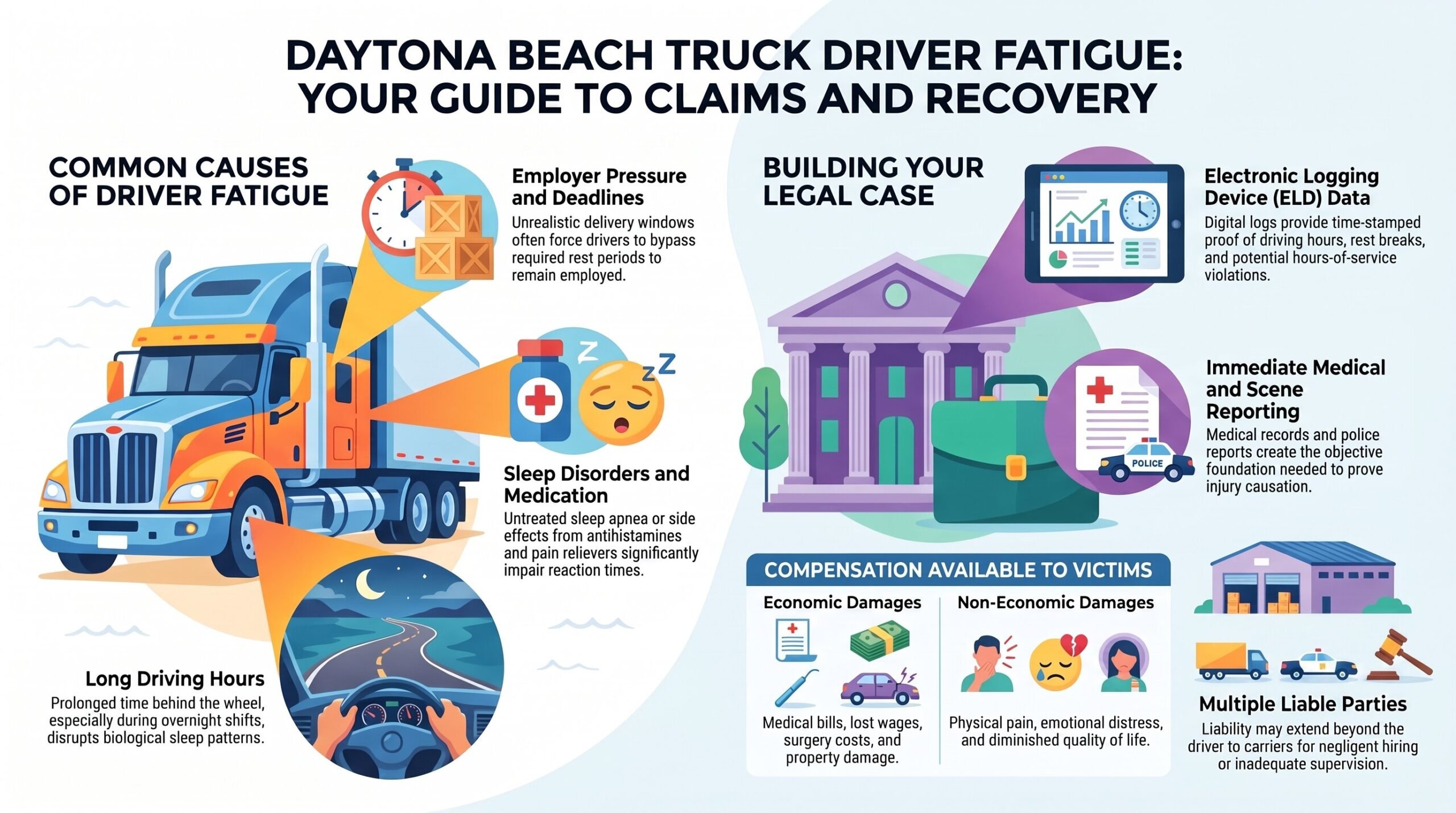
Common causes of truck driver fatigue accidents include long driving hours and inadequate rest breaks, which can impair alertness and reaction time. Pressure to meet delivery deadlines may encourage unsafe driving schedules, while untreated sleep disorders can further reduce a driver’s ability to remain attentive. Certain medications may also cause drowsiness or other side effects that increase the risk of a collision.
Long Driving Hours
Extended driving hours are a significant cause of truck driver fatigue accidents in Daytona Beach. Prolonged time behind the wheel can reduce alertness, slow reaction times, and impair judgment, particularly during overnight routes or extended shifts. Driver sleep patterns may become disrupted when routes require travel at biologically unusual hours, making it harder to maintain consistent concentration.
Workplace scheduling can also contribute when dispatch demands encourage lengthy trips, compressed delivery windows, or repeated assignments that keep drivers on the road for excessive periods. These conditions may increase risks for everyone sharing roads near Daytona Beach, including families, commuters, and commercial workers. Employers and transportation companies have a responsibility to monitor hours, plan realistic routes, and recognize warning signs of fatigue before a driver’s diminished performance causes a preventable collision.
Inadequate Rest Breaks
When drivers receive inadequate rest breaks, fatigue can accumulate even when they remain within scheduled driving limits. Breaks that are shortened, delayed, or taken in unsuitable conditions may prevent meaningful recovery and reduce alertness during later portions of a trip. Inadequate training can also leave drivers and supervisors without a clear understanding of warning signs, restorative rest, or proper break planning.
Employers should establish company safety policies that identify minimum rest expectations, encourage accurate fatigue reporting, and provide practical procedures for addressing drowsiness. These policies should be consistently communicated, monitored, and updated when operating conditions change. When rest opportunities are insufficient, drivers may experience slower reaction times, impaired judgment, and difficulty maintaining lane position. Such failures can endanger motorists, passengers, and communities, making responsible fatigue prevention a crucial safety obligation.
Pressure To Meet Deadlines
Tight delivery schedules can cause truck drivers to continue operating despite growing fatigue, particularly when dispatchers or employers emphasize arrival times over safe driving practices. Pressure may arise from unrealistic routes, late loading, traffic delays, or financial incentives tied to punctual performance. Although federal hours-of-service rules establish driving and rest limits, workplace demands can encourage violations or inaccurate logs. Fatigued driving may reduce reaction time and judgment, placing motorists, passengers, and communities at risk.
After a collision, investigators may examine dispatch communications, delivery records, electronic logging data, and company policies to determine whether deadline pressure contributed. Evidence preservation tips include securing messages, identifying witnesses, and requesting relevant vehicle and employment records promptly. Alternative claim strategies may address negligent supervision, scheduling practices, or other responsible parties when evidence supports those theories.
Sleep Disorders And Medication
Sleep disorders and medication use can impair a truck driver’s alertness, reaction time, and decision-making ability, creating serious risks on Daytona Beach roads. Conditions such as sleep apnea, insomnia, and narcolepsy may prevent restorative sleep or cause sudden lapses in awareness. Recognizing Narcolepsy symptoms, including uncontrollable sleep episodes and muscle weakness, may help identify a driver who requires medical evaluation.
A timely Sleep apnea diagnosis can support treatment and reduce fatigue-related hazards. Prescription medications, over-the-counter sleep aids, antihistamines, pain relievers, and certain psychiatric drugs may also produce drowsiness, dizziness, or delayed reactions. Commercial drivers have a responsibility to disclose relevant conditions and medication effects to qualified medical providers. Employers and families can help by encouraging appropriate treatment, monitoring warning signs, and supporting safe decisions that protect passengers, motorists, and the broader Daytona Beach community.


Legal Rights of Daytona Beach Truck Driver Fatigue Accident Injury Victims
Truck driver fatigue accident injury victims in Daytona Beach may have legal rights to pursue compensation when a fatigued driver or trucking company contributed to a collision. Potential claims may address medical expenses, lost income, property damage, pain, and reduced future earning capacity.
A careful investigation can identify responsible parties and preserve information supporting the claim.
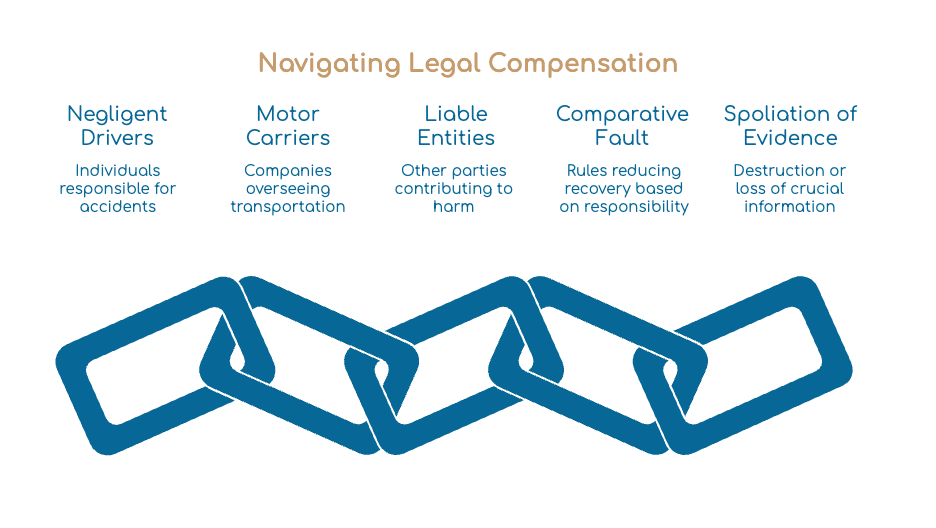
- Victims may seek compensation from negligent drivers, motor carriers, or other liable entities.
- Comparative fault rules can reduce recovery if an injured person is found partly responsible.
- Spoliation of evidence may become important when records, electronic logs, camera footage, or inspection materials are lost or destroyed.
Florida deadlines can limit the time available to file a lawsuit, making prompt legal guidance important. An attorney may communicate with insurers, request relevant records, evaluate settlement proposals, and prepare litigation when necessary. Documentation of treatment, employment losses, and accident effects can help establish damages. Legal professionals serving injured people should provide clear explanations, protect clients from unfair pressure, and pursue accountability through lawful, evidence-based advocacy.
Why Do Daytona Beach Truck Driver Fatigue Accident Injuries Happen?
Fatigue-related truck crashes in Daytona Beach often occur when a commercial driver operates a vehicle without adequate rest or exceeds safe working limits. Federal hours-of-service requirements are designed to reduce this danger, yet pressure to meet delivery schedules, inadequate staffing, overnight routes, and untreated sleep disorders can contribute to driver exhaustion. Fatigue may slow reaction time, impair judgment, and reduce attention, particularly when traffic demands constant decisions on Interstate 95, local roads, or crowded commercial corridors.
Injuries can become more severe because large trucks generate substantial force during collisions, while fatigued drivers may fail to brake or maintain lane position. Determining responsibility may require evidence preservation involving electronic logging devices, dispatch records, inspection reports, and vehicle data. The insurance claim timeline can also depend on timely access to those materials. The witness statement is significant because independent observations may clarify driving behavior, roadway conditions, and warning signs before the crash.
What Should You Do After a Daytona Beach Truck Driver Fatigue Accident Injury?
After a Daytona Beach truck driver fatigue accident injury, the injured person should seek immediate medical care, even if symptoms initially appear minor. The accident should be reported to the appropriate authorities, and medical records, photographs, and other relevant evidence should be preserved. Consulting a truck accident lawyer can help protect legal rights and guide decisions regarding potential compensation.
Seek Immediate Medical Care
Prompt medical evaluation should be obtained immediately following an injury in a Daytona Beach truck driver fatigue accident, even when symptoms initially appear minor. A qualified healthcare professional can identify hidden trauma, document visible injuries, and establish an appropriate treatment plan. Some conditions, including concussion, internal bleeding, or spinal damage, may worsen without prompt attention. Medical records can also support legal evidence preservation by creating an objective account of symptoms, diagnostic findings, and recommended care.
Individuals should accurately describe pain, dizziness, confusion, weakness, or other changes to medical personnel. Symptoms of fatigue may be relevant when evaluating the crash’s circumstances, but injured parties should focus first on their health and recuperation. Following prescribed treatment and attending follow-up appointments demonstrates responsible care while helping prevent avoidable complications.
Report The Accident
The accident should be reported to law enforcement as soon as it is safe to do so, particularly when a commercial truck collision causes injury. An investigating officer can document roadway conditions, vehicle positions, visible damage, and statements from involved parties. The injured person should provide accurate information without speculating about fatigue, speed, or fault.
Witnesses should be identified before they leave, when possible, and their contact information should be preserved for witness statement collection. Photographs of vehicles, traffic signs, lighting, weather, and injuries may help clarify what occurred. Commercial trucks often contain electronic records that can assist with Black box data review, including driving hours, speed, braking, and other operational details. Prompt reporting also helps preserve official records and supports coordinated emergency response for everyone affected.
Consult A Truck Accident Lawyer
When a Daytona Beach truck driver fatigue accident causes injury, consulting a truck accident lawyer can help protect the injured person’s legal rights and preserve evidence before it is lost. A lawyer can investigate driver logs, dispatch records, vehicle data, medical documentation, and witness accounts that may clarify whether fatigue contributed to the collision. Evidence preservation is especially important because electronic records can be overwritten, altered, or discarded during routine business operations.
Legal counsel can also manage insurance communications, helping prevent recorded statements or settlement offers from undermining a valid claim. The injured person should follow medical recommendations, retain relevant documents, and provide the lawyer with accurate information. Prompt consultation allows counsel to identify responsible parties, address deadlines, and pursue compensation while supporting the person’s recovery and family needs.
Critical Evidence in a Daytona Beach Truck Driver Fatigue Accident Injury Case
Critical evidence may establish whether driver fatigue contributed to the collision and whether required safety practices were followed. Relevant materials include:
- Driver hours-of-service logs and electronic logging device data
- Medical and sleep records concerning fatigue or related conditions
- Crash scene documentation, including photographs, vehicle data, and witness accounts
Together, these records can help clarify the driver’s condition, schedule, and conduct before the accident.
Driver Hours-of-Service Logs
Driver hours-of-service logs can provide key evidence in a Daytona Beach truck driver fatigue accident injury case by showing whether a commercial driver complied with legally required rest and driving limits. These records may reveal excessive driving, inadequate breaks, or repeated scheduling practices that increased fatigue risk before the collision. Investigators and attorneys may compare reported hours with dispatch records, delivery timelines, fuel receipts, and witness observations to identify inconsistencies.
Preserving these documents promptly can help protect an injured person’s ability to pursue fair compensation and support accurate reconstruction of events. Witness statement accuracy remains important, particularly when observations concern the driver’s alertness, conduct, or appearance. Careful questioning also supports avoiding roadside admissions, which may be incomplete, misunderstood, or later used to distort responsibility before all evidence is reviewed.
Electronic Logging Device Data
Electronic logging device data can provide a detailed, time-stamped record of a commercial driver’s operation, duty status, and rest periods before a Daytona Beach truck fatigue accident. An electronic logging device may capture driving time, location, engine activity, and changes entered by the driver or carrier. A timely data download can preserve original records before routine system retention periods or equipment changes affect availability.
Investigators may compare these records with dispatch messages, bills of lading, fuel transactions, and crash timelines to identify inconsistencies. Evidence of data tampering, unexplained edits, or disconnected equipment may support concerns about inaccurate reporting. Compliance auditing records can also reveal whether the carrier monitored hours-of-service requirements and corrected repeated violations. Proper preservation and review can help clarify responsibility and protect injured individuals seeking fair compensation.
Medical And Sleep Records
Medical and sleep records may help establish whether fatigue, a sleep disorder, medication effect, or another health condition affected a truck driver’s alertness before a Daytona Beach collision. Treatment notes, prescriptions, sleep studies, and physician warnings can reveal risks that require evaluation. These materials may also be compared with Driver Hours and ELD Data to identify inconsistencies between reported schedules and the driver’s medical limitations.
Employers and carriers may have an ethical duty of care to address known impairment risks, including untreated sleep apnea or sedating medication use. A careful review can clarify whether fatigue was foreseeable and whether reasonable precautions were taken. Preserving complete records may also protect injured people from insurance bad faith, such as unsupported denials or attempts to minimize medically documented harm.
Crash Scene Documentation
Crash scene documentation can preserve objective evidence of how a Daytona Beach truck collision occurred and whether fatigue may have contributed to it. Photographs should capture vehicle positions, roadway conditions, lighting, traffic controls, skid marks, debris, and visible injuries before conditions change. Measurements and diagrams can clarify distances, impact points, sight lines, and stopping movements. Witness statement collection should occur promptly because recollections may fade, and witnesses may remember signs of drifting, delayed reactions, repeated yawning, or other concerning behavior.
Dashcam video review may reveal lane departures, erratic speed changes, prolonged inattention, or the timing of the collision. Investigators should also secure surveillance footage from nearby businesses and obtain official crash reports. Preserving this evidence helps injured individuals and their families seek accurate answers, accountability, and appropriate support.
Long-Term Effects of Daytona Beach Truck Driver Fatigue Accident Injuries
Long-term injuries from a Daytona Beach truck driver fatigue accident may involve chronic pain, limited mobility, or permanent disability. Emotional and psychological effects, including anxiety, depression, and trauma-related symptoms, can also persist after physical recovery. These conditions may create significant financial and lifestyle disruptions through medical expenses, reduced earning capacity, and changes in daily activities.
Chronic Pain and Disability
Chronic pain and disability can become enduring consequences of injuries sustained in a Daytona Beach truck driver fatigue accident, particularly when trauma affects the spine, joints, nerves, or brain. A Chronic Pain Overview may include persistent aching, restricted movement, nerve symptoms, and the need for ongoing medication, therapy, or surgical care. These conditions can limit walking, lifting, driving, sleeping, and other crucial daily activities.
Some injured individuals may be unable to return to their former occupations or may require workplace accommodations, assistive devices, or personal support. Disability Documentation should describe diagnoses, treatment history, functional limitations, prognosis, and expected future care. Medical records, physician opinions, therapy assessments, and employment evidence can help establish the injury’s lasting impact. Careful documentation supports fair evaluation of present losses and long-term needs.
Emotional and Psychological Effects
Emotional and psychological effects may persist even after physical injuries from a Daytona Beach truck driver fatigue accident have stabilized. Survivors may experience anxiety, depression, irritability, or recurring distress when encountering trucks, highways, or situations resembling the collision. Some develop post-traumatic stress symptoms, including intrusive memories, heightened alertness, avoidance, and difficulty trusting other drivers. Sleep disruption can intensify these symptoms; nightmares, insomnia, and even Sleep paralysis may interfere with recovery and daily functioning.
Emotional changes can also affect relationships, communication, and confidence in ordinary activities. Mental health professionals may recommend counseling, trauma-focused treatment, medication evaluations, or structured coping strategies. Careful risk assessments can help identify safety concerns, monitor worsening symptoms, and coordinate appropriate support. Documentation of psychological effects may assist compassionate legal advocacy while protecting the survivor’s dignity and privacy.
Financial and Lifestyle Disruptions
When injuries from a Daytona Beach truck driver fatigue accident continue to affect a survivor’s abilities, the resulting financial and lifestyle disruptions may extend well beyond initial medical treatment. Reduced mobility, cognitive limitations, or chronic pain can interfere with employment, household responsibilities, transportation, and participation in family or community activities. Lost income may coincide with continuing expenses for rehabilitation, medications, home modifications, and personal assistance.
These pressures can force families to change housing, postpone education, or rely on relatives for crucial support. Careful evidentiary preservation, including medical records, employment documentation, and proof of accident-related costs, may help establish the full scope of harm. A lawyer can also evaluate whether insurance bad faith contributed to delays, inadequate settlement offers, or other conduct that worsened the survivor’s financial burden and disrupted long-term stability.
Proving Liability in Daytona Beach Truck Driver Fatigue Accident Injury Cases
Proving liability in a Daytona Beach truck driver fatigue accident injury case requires evidence showing that driver exhaustion caused or contributed to the collision and that the driver, trucking company, or another responsible party failed to follow applicable safety obligations. Investigators may examine electronic logging device data, dispatch records, rest breaks, time sheets, cell phone activity, medical information, and surveillance footage. These materials can reveal whether the driver exceeded lawful service limits, ignored warning signs, or operated the vehicle while impaired by insufficient sleep.
Evidence may also establish truck company negligence, including unrealistic schedules, inadequate supervision, or pressure to violate required rest periods. Witness testimony concerning erratic driving, visible fatigue, or statements made after the crash can strengthen the case, although Witness credibility disputes may affect how decision-makers evaluate those accounts. Maintenance records, training documents, and employment policies may identify additional responsible parties. A careful investigation preserves relevant evidence and connects each violation to the resulting injuries.
Dealing With Insurance Companies After a Daytona Beach Truck Driver Fatigue Accident Injury
After a Daytona Beach truck driver fatigue accident, insurance companies may promptly contact injured individuals to obtain statements, medical authorizations, or settlement agreements. Those requests should be handled carefully because recorded statements and broad authorizations may affect an injury claim. An insurer may also question whether symptoms resulted from the collision, a preexisting condition, or another event. Injured parties should provide accurate information, preserve relevant records, and avoid minimizing pain or discussing fault before receiving guidance.
Medical treatment documentation should remain consistent and complete. An insurer could request an Independent medical evaluation, which may involve an examination by a doctor selected by the carrier. The individual should understand the purpose, scope, and reporting process before attending. The police report timeline can help clarify when officers arrived, what witnesses reported, and how fatigue-related evidence was documented. All correspondence, payment offers, and deadlines should be retained. A qualified attorney can communicate with insurers while protecting the injured person’s interests and dignity.
What to Expect During a Daytona Beach Truck Driver Fatigue Accident Injury Claim Process
A Daytona Beach truck driver fatigue accident injury claim typically begins with an initial evaluation of liability, injuries, and potential damages. The evidence-gathering process may include obtaining medical records, crash reports, driver logs, electronic data, and witness statements before settlement negotiations commence. If negotiations do not produce a fair resolution, trial preparation steps may include filing required documents, consulting experts, and organizing evidence for court.
Initial Claim Evaluation
When a Daytona Beach truck driver fatigue accident claim begins, the initial evaluation examines how the collision occurred, whether driver exhaustion or violations of hours-of-service rules contributed to it, and the extent of the resulting injuries. The review also considers medical treatment, lost income, ongoing limitations, and the client’s immediate needs. A legal representative may explain potential claims, applicable deadlines, and the responsibilities of involved insurers. Collecting witness statements can help clarify the circumstances without presuming that every account is complete or consistent.
If an insurer disputes responsibility or minimizes the injuries, an insurance denial response should address the stated reasons with organized, legally supported explanations. The evaluation is intended to provide a practical path forward, protect the injured person’s interests, and promote fair treatment throughout the claim process.
Evidence Gathering Process
Because fatigue-related truck collisions often depend on records that are controlled by other parties, the evidence-gathering process begins with identifying and preserving relevant information. Counsel may send preservation requests to the trucking company, driver, insurers, and maintenance providers, directing them to retain logs, dispatch communications, inspection reports, and onboard recordings. ELD data preservation is particularly important because electronic logging device information may show driving hours, rest periods, duty-status changes, and possible violations.
Investigators may also obtain crash reports, medical records, photographs, vehicle damage assessments, and roadway or weather information. Witness statement collection can clarify the driver’s conduct, vehicle movements, and conditions immediately before impact. The process may include interviews, document review, expert analysis, and formal requests for records, all conducted systematically to protect accurate evidence.
Settlement Negotiations
How settlement negotiations proceed depends on the documented extent of the injured person’s losses, the available evidence of driver or trucking-company negligence, and the applicable insurance coverage. After reviewing medical records, bills, wage documentation, and other evidence, the injured person’s representative may present a demand describing liability, treatment, expenses, and anticipated needs. Insurers commonly evaluate whether fatigue contributed to the collision and may request additional information, including an Independent medical evaluation.
Workplace records can help verify missed hours, reduced earning capacity, and job-related limitations. Negotiations may involve several written offers and counteroffers before the parties reach an agreement. Any proposed settlement should account for current and future medical care, lost income, property damage, and related costs. Careful review helps ensure that compensation fairly supports recovery and long-term stability.
Trial Preparation Steps
Trial preparation begins after the parties have developed the evidence and settlement negotiations have not resolved the Daytona Beach truck driver fatigue accident injury claim. Counsel evaluates whether the proof establishes negligence, causation, and the full extent of the injured person’s losses.
The legal team may preserve sleep evidence, including driver logs, dispatch records, electronic monitoring data, medical documentation, and employment records. Attorneys also gather witness statements from passengers, motorists, first responders, physicians, and coworkers who can describe fatigue indicators or resulting injuries. Discovery responses are reviewed, experts are prepared for deposition or testimony, and exhibits are organized for presentation.
The injured person may participate in a deposition, medical examination, and trial preparation meetings. Counsel explains courtroom procedures, likely questions, and communication expectations. This preparation helps present accurate evidence and supports a fair outcome while protecting the claimant’s interests.
Compensation for Daytona Beach Truck Driver Fatigue Accident Injury Damages
Compensation for injuries caused by a fatigued truck driver in Daytona Beach may include medical expenses, lost income, reduced earning capacity, and damages for pain, emotional distress, and diminished quality of life. Recoverable amounts may also address rehabilitation, prescription medications, transportation to medical appointments, and necessary modifications to support recovery. A claim typically requires evidence connecting the collision to the driver’s fatigue and documenting the resulting losses. Relevant records may include medical reports, employment information, crash investigations, electronic logging data, and witness statements.
Insurance companies may evaluate whether the driver or trucking company failed to follow hours-of-service requirements, maintain workplace safety practices, or provide adequate driver training. Prompt legal guidance can help preserve evidence, identify responsible parties, and present a complete demand for compensation. The injured person’s future medical needs and ability to return to work may require professional assessment. Each case depends on its facts, applicable Florida law, available insurance coverage, and the severity of the documented injuries.
Economic vs Non-Economic Damages in Daytona Beach Truck Driver Fatigue Accident Cases
Economic damages may cover medical expenses, lost income, property damage, and other measurable financial losses caused by a fatigue-related truck crash. Non-economic damages address less tangible harm, including pain and suffering, emotional distress, and diminished quality of life. Calculating total compensation requires evaluating both categories alongside the severity, duration, and documented impact of the injuries.
Economic Damages
When a truck driver’s fatigue contributes to a collision in Daytona Beach, the injured party may pursue economic damages for measurable financial losses caused by the crash. These damages may include emergency transportation, hospital care, surgery, medication, rehabilitation, and follow-up treatment. Compensation can also address future medical needs when physicians document continuing care or permanent limitations. Lost wages may be recoverable when injuries prevent employment, while reduced earning capacity may apply if the individual cannot return to the same occupation or hours.
Property damage, vehicle replacement, transportation costs, and necessary household services may also qualify. In wrongful death claims, eligible survivors may seek funeral expenses, medical bills incurred before death, and lost financial support. Evidence can help establish truck company negligence and connect each expense to the collision.
Non-Economic Damages
Non-economic damages address the physical pain, emotional distress, and diminished quality of life that may follow a fatigue-related truck collision in Daytona Beach. They may reflect persistent discomfort, sleep disruption, anxiety, depression, scarring, loss of independence, and reduced enjoyment of family or community activities. A Sleep apnea diagnosis may become relevant when evaluating whether fatigue contributed to the crash, though it does not by itself establish the value of a victim’s suffering.
Testimony from the injured person, family members, and treating professionals can help explain daily limitations and lasting emotional effects. Because these damages involve human experience rather than fixed invoices, insurers may dispute their severity. A jury trial risk can influence negotiations, while careful preparation ensures that the victim’s dignity and personal losses receive appropriate consideration throughout the legal process.
Calculating Total Compensation
In a Daytona Beach truck driver fatigue accident case, total compensation generally combines documented economic losses with non-economic damages arising from the victim’s physical and emotional harm. Economic damages may include emergency treatment, rehabilitation, medication, lost wages, reduced earning capacity, property damage, and anticipated medical care. Non-economic damages address pain, disability, disfigurement, emotional distress, loss of enjoyment, and diminished quality of life. A careful damages calculation considers the severity and duration of injuries, prognosis, employment history, and the effect on family responsibilities.
Medical records, wage documentation, expert opinions, and testimony can support the claimed value. Prompt evidence preservation is required, including crash reports, driver logs, electronic data, surveillance footage, and maintenance records. Legal professionals may coordinate with medical and financial specialists to present a complete, fair assessment for the injured person.
When a Daytona Beach Truck Driver Fatigue Accident Injury Case Goes to Trial vs Settlement
A Daytona Beach truck driver fatigue accident injury case may proceed to trial or resolve through settlement, depending on the strength of the evidence, the parties’ willingness to negotiate, and the severity of the claimed injuries. Liability disputes often arise when trucking companies challenge driver conduct, causation, or responsibility for unsafe scheduling. Evidence challenges may involve missing logs, electronic data, surveillance footage, or witness recollections. A careful fatigue investigation can identify work hours, rest opportunities, employer policies, and communications relevant to the collision.
Settlement may provide a predictable resolution and earlier assistance with medical needs, lost income, and household burdens. However, insurance tactics can delay negotiations or undervalue legitimate claims. Medical documentation supports the connection between the crash, treatment, prognosis, and continuing limitations. If negotiations fail, trial permits presentation of testimony and records before a judge or jury. Counsel may also present a supported damages calculation addressing economic losses and documented effects on the injured person’s daily life.
Florida Laws That May Affect Your Daytona Beach Truck Driver Fatigue Accident Case
Florida laws can shape nearly every aspect of a Daytona Beach truck driver fatigue accident case, including liability, evidence, filing deadlines, and available compensation. Florida’s negligence rules require proof that a driver or trucking company breached a duty of reasonable care and caused the crash. Comparative Fault may reduce an injured person’s recovery if that person shares responsibility.
Relevant considerations include:
- Federal hours-of-service requirements and company safety policies may help establish whether fatigue contributed to the collision.
- Florida insurance and trucking regulations can affect coverage, responsible parties, and claims against employers or carriers.
- Medical records, vehicle data, dispatch logs, driver statements, and electronic logging devices may address evidence challenges concerning sleep, driving hours, and causation.
A careful investigation can preserve information before it disappears and clarify conflicting accounts. Counsel may also assess negligent hiring, supervision, or retention claims when company conduct contributed to unsafe driving. These laws help advocates pursue fair outcomes while protecting injured individuals and their families.
The Statute of Limitations for Daytona Beach Truck Driver Fatigue Accident Injury Cases
Because the statute of limitations can bar an otherwise valid claim, injured individuals should determine the applicable deadline promptly after a Daytona Beach truck driver fatigue accident. Florida law generally provides a limited period to bring a personal injury action, although the precise deadline may depend on the claim’s classification, the injured person’s circumstances, and any applicable exceptions. Claims involving public entities may require earlier notice, while minors or delayed discovery can affect the calculation.
Families pursuing a fatality must also review wrongful death filing rules, including who may bring the action and when the limitations period begins. Prompt attention supports Florida evidence preservation, particularly when electronic log accuracy, dispatch records, inspection reports, and driver communications may help establish fatigue and trucking company liability. Delays can permit relevant records to disappear and may prevent a court from hearing otherwise substantial allegations. Because deadlines and exceptions are fact-specific, timely review of the accident date, injury development, and responsible parties is crucial to protect available legal rights.
How a Daytona Beach Truck Driver Fatigue Accident Lawyer Can Help You
When a Daytona Beach truck driver fatigue accident causes injury, legal counsel can help identify the responsible parties and develop a claim supported by reliable evidence. Counsel may investigate the carrier’s safety practices, preserve records, and coordinate communications with insurers, allowing the injured person to focus on recovery and family responsibilities.
A lawyer can evaluate:
- Electronic logging audits for irregular entries, excessive hours, or violations of required rest periods.
- Driver sleep patterns, dispatch schedules, medical information, and employment records that may indicate preventable fatigue.
- Maintenance files, training materials, camera footage, witness accounts, and crash data relevant to liability.
Legal counsel can also consult accident reconstruction professionals and medical experts to connect the collision with documented injuries and future care needs. The lawyer may calculate medical expenses, lost income, rehabilitation costs, and other legally recognized damages. By handling evidence collection and claim negotiations, counsel can promote accountability while protecting the injured person’s interests. This assistance supports a fair process and helps ensure that responsible companies and drivers are evaluated under applicable law.
When to Contact a Daytona Beach Truck Driver Fatigue Accident Lawyer
Prompt consultation with a Daytona Beach truck driver fatigue accident lawyer can help preserve pivotal evidence and clarify available legal options. Contact should occur as soon as practical after a collision, particularly when injuries, fatalities, disputed responsibility, or suspected driver exhaustion are involved. Early guidance supports preserving crash evidence, including vehicle data, surveillance footage, electronic logging information, dispatch records, and witness accounts before materials disappear or become difficult to obtain. It also helps coordinate gathering medical records that document diagnoses, treatment, limitations, and anticipated care.
A consultation may be appropriate even when fault remains uncertain, because fatigue indicators can require timely review of driving schedules, rest periods, employer policies, and inspection history. Individuals should avoid delaying until medical treatment ends or insurers request a recorded statement. Prompt legal communication can help protect the interests of injured people and families while allowing informed decisions about documentation, communications, and potential claims during the applicable filing period.
Why You Need an Experienced Daytona Beach Truck Driver Fatigue Accident Lawyer
Early legal involvement is particularly valuable in truck fatigue cases because determining responsibility often requires more than reviewing the crash report. An experienced Daytona Beach truck driver fatigue accident lawyer can investigate driving schedules, electronic logging data, dispatch communications, medical records, and company safety practices. These materials may reveal whether federal hours-of-service rules were exceeded or whether warning signs were disregarded.
Fatigue evidence can disappear quickly when vehicles are repaired, electronic records are overwritten, or witnesses become difficult to locate. Counsel can preserve relevant information, coordinate independent investigations, and explain how fatigue contributed to the collision without placing additional burdens on injured individuals or their families. A structured documentary evidence checklist helps organize crash photographs, treatment records, employment information, witness contacts, and insurer correspondence.
Experience also supports informed decisions during Insurance claim timelines. A lawyer can identify deadlines, address incomplete evaluations, and protect a claim from premature settlement. This focused assistance promotes accountability while helping affected people pursue fair compensation and remain attentive to recovery and service.
How to Choose the Right Daytona Beach Truck Driver Fatigue Accident Lawyer for Your Case
Selecting the right Daytona Beach truck driver fatigue accident lawyer requires careful evaluation of the attorney’s experience with commercial vehicle collisions and fatigue-related evidence. A qualified professional should understand federal hours-of-service rules, driver logs, electronic logging data, dispatch records, and medical documentation that may clarify how fatigue contributed to a crash.
Potential clients should assess the lawyer’s record handling serious injuries, wrongful death claims, and disputes involving trucking companies or insurers. During an initial consultation, careful Client communication can reveal whether the attorney listens respectfully, explains legal options clearly, and remains accessible throughout the case. Strong communication helps injured individuals and families make informed decisions while protecting their interests.
The lawyer should also describe a methodical evidence review process, including preservation of vehicle data, witness statements, surveillance footage, and maintenance records. Fee arrangements, anticipated timelines, and case responsibilities should be explained in writing. Selecting counsel who demonstrates preparation, integrity, and service-minded advocacy can support a more effective claim.
About The Law Offices of Anidjar & Levine
The Law Offices of Anidjar & Levine represents individuals and families affected by serious truck accidents, including collisions in which driver fatigue may have contributed to the crash.
The firm serves clients seeking accountability, clear information, and practical support after a potentially life-altering event.
Its attorneys examine whether sleep deprivation, excessive driving hours, inadequate rest, or violations of federal and state safety requirements contributed to the collision.
They may review driver logs, electronic records, employment policies, maintenance materials, witness statements, and available video evidence to develop a fact-based claim.
The firm also helps clients understand the importance of timely medical care and injury documentation.
Complete records can connect injuries to the crash, clarify treatment needs, and support claims for medical expenses, lost income, rehabilitation, and other damages.
Through case evaluation, investigation, negotiation, and litigation when necessary, the Law Offices of Anidjar & Levine seeks to protect clients’ rights while helping families pursue a fair resolution.
Frequently Asked Questions
Can Fatigue-Related Truck Accidents Involve Multiple Liable Parties?
Fatigue-related truck accidents can involve multiple liable parties, depending on the evidence and each participant’s responsibilities. The driver may face liability for knowingly operating while exhausted, while a motor carrier could be responsible for inadequate scheduling, supervision, or hours-of-service violations. Maintenance providers, brokers, and manufacturers may also contribute to the harm. Independent contractor liability requires careful classification. Attorneys may pursue multiple defendant claims to help injured people obtain fair, complete compensation.
What Happens if the Fatigued Truck Driver Was an Independent Contractor?
An independent contractor may face independent liability for operating while fatigued, particularly when exhaustion caused the collision. However, the trucking company may also bear responsibility if it negligently hired, supervised, scheduled, or pressured the driver, or if the contractor was effectively treated as an employee. Insurance coverage may come from the driver’s policy, the carrier’s commercial policy, or both. Investigators typically examine contracts, dispatch records, logs, electronic data, and company safety practices to identify responsible parties.
Can Family Members File a Wrongful Death Claim After a Fatal Fatigue Accident?
Family members may file a wrongful death claim after a fatal fatigue accident if state law grants them Wrongful death standing. Usually, the surviving spouse, children, or personal representative may pursue compensation for medical expenses, funeral costs, lost financial support, and other damages. Eligibility depends on family relationships and the estate’s circumstances. The Statute of limitations strictly limits filing time, so timely legal guidance can protect the family’s rights and serve accountability.
Are Truck Drivers Required to Undergo Post-Accident Drug and Alcohol Testing?
Yes. Commercial truck drivers generally must undergo post-accident drug and alcohol testing when a qualifying crash involves a fatality, a citation for a moving violation, or disabling damage requiring a vehicle to be towed. Federal guidelines establish testing deadlines and documentation requirements, while state testing rules may add obligations. Employers must preserve records and ensure procedures are followed. Investigators and families should obtain testing results through appropriate legal channels.
Can Fatigue-Related Accident Claims Affect a Driver’s Commercial License?
Fatigue-related accident claims can affect a driver’s commercial license, particularly when evidence shows violations of federal hours-of-service rules, impaired judgment, or unsafe operation. Commercial license impacts may include employer discipline, mandatory reporting, suspension, or disqualification, depending on the investigation and applicable regulations. Civil claims alone do not automatically revoke driving privileges. However, court findings, agency determinations, and DOT record penalties may influence future employment, insurance eligibility, and continued commercial driving authorization.
—————————
Truck driver fatigue accidents can cause severe injuries, complex insurance disputes, and lasting financial consequences.
Victims in Daytona Beach may benefit from prompt legal guidance to preserve evidence, identify liable parties, and pursue appropriate compensation.
The Law Offices of Anidjar and Levine can evaluate the circumstances, explain available legal options, and advocate for an injured person’s rights throughout the claims process.
Learn more from a Daytona Beach Truck Accident Lawyer.
A timely consultation may help protect crucial evidence and support a more informed decision about the next steps.