The Law Offices of Anidjar and Levine can investigate suspected truck logbook violations in Daytona Beach, including falsified entries, missing rest periods, or inaccurate electronic logging data. A Daytona Beach Truck Accident Lawyer may help preserve dispatch messages, vehicle tracking records, inspection reports, fuel receipts, and witness accounts before they are lost or overwritten.
Logbook discrepancies do not automatically establish liability, but they may support claims involving medical expenses, lost income, property damage, and other recognized losses.
Filing deadlines apply, and additional information can explain how these cases are evaluated.
Main Takeaways
- A Daytona Beach truck accident lawyer can investigate inaccurate, incomplete, or falsified logbooks and their connection to the crash.
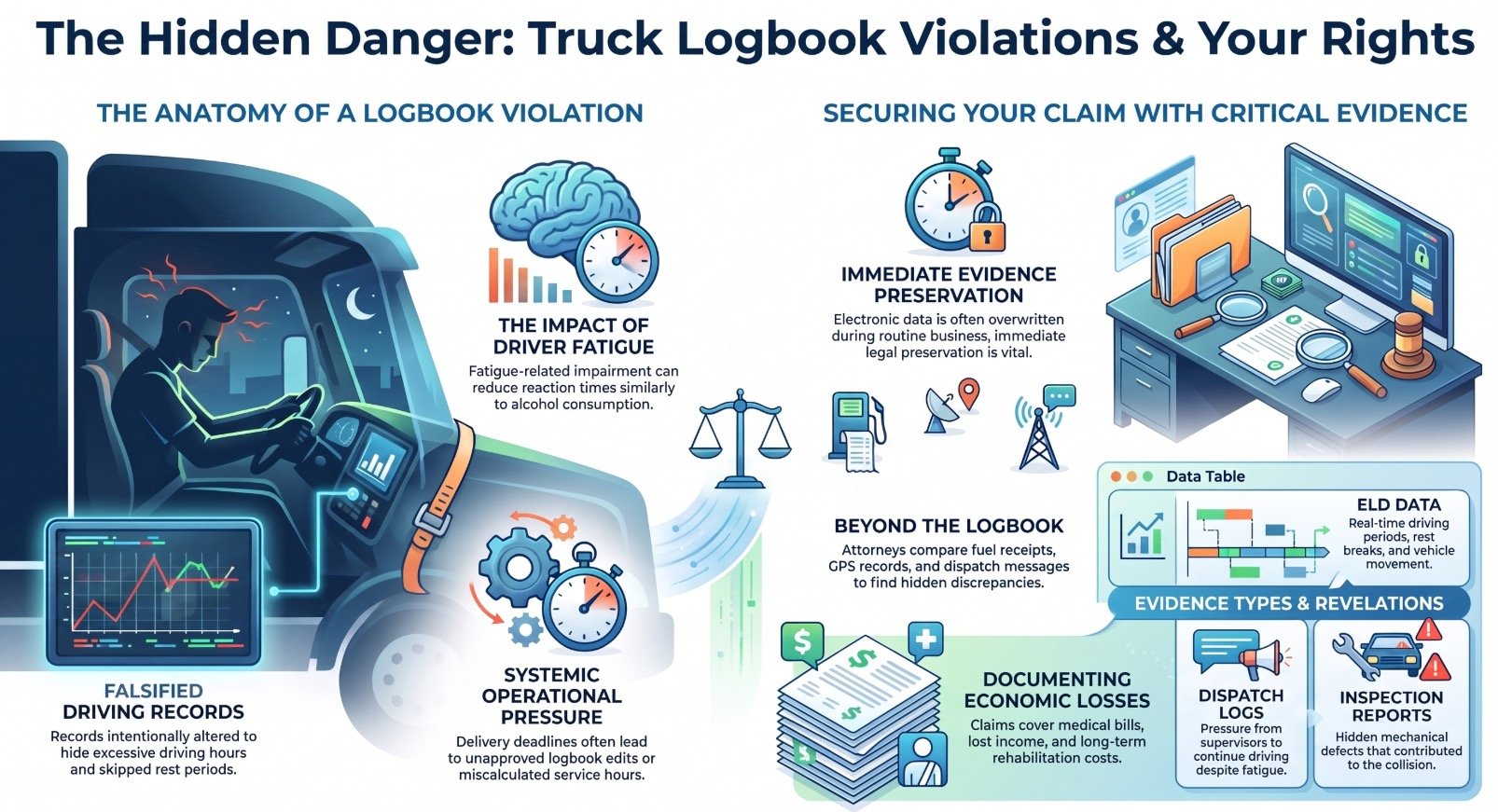
- Attorneys may compare ELD data, dispatch communications, fuel receipts, inspections, GPS records, and witness accounts to reconstruct events.
- Preserving electronic records quickly is important because logging, tracking, and communication data may be overwritten or altered.
- Logbook discrepancies alone do not establish liability; evidence must show negligence, safety violations, causation, and legally recognized losses.
- Victims may pursue medical expenses, lost income, property damage, and other damages while observing deadlines and avoiding harmful recorded statements.
How We Can Help With Your Daytona Beach Truck Accident Logbook Violations Injury Claim
When a truck accident involves inaccurate, incomplete, or falsified driver logbooks, the injured party may face significant challenges proving how the collision occurred and who is responsible. A Daytona Beach truck accident logbook violations lawyer can help organize the claim, identify relevant records, and communicate with insurers while protecting the injured person’s interests.
Counsel may investigate electronic logging data, dispatch communications, inspection records, employment files, and available witness accounts. Guidance on How to preserve evidence can help prevent the loss or alteration of information that may clarify a driver’s hours, fatigue, or company practices. The legal team may also coordinate requests for surveillance footage, vehicle data, and other records before they become unavailable.


Detailed medical documentation can establish the nature of injuries, necessary treatment, limitations, and anticipated care. By managing deadlines, evaluating potential sources of compensation, and presenting information clearly, legal counsel can reduce administrative burdens and help the injured party pursue a fair resolution. This support allows families to focus on recovery while their concerns receive careful attention.
Understanding Daytona Beach Truck Accident Logbook Violations Injury Cases
OUR CONSULTATIONSARE FREE
START YOUR FREE CASE REVIEW

Truck accident injury cases involving logbook violations require an analysis of both the collision and the commercial driver’s compliance with federal and state hours-of-service requirements. Investigators may examine electronic logging device data, dispatch records, fuel receipts, toll information, and inspection materials to determine whether recorded duty periods accurately reflect the driver’s activities. Electronic evidence preservation is critical because relevant records can be overwritten, altered, or lost through routine business practices.
A claim may involve establishing liability, documenting medical treatment, and connecting physical or psychological injuries to the crash. Attorneys and investigators often pursue Witness statement collection from motorists, passengers, first responders, and employees who observed the truck, driver conduct, or post-collision conditions. The case may also require comparison of records maintained by the carrier with federal regulations and applicable Florida requirements.
Courts evaluate the reliability, completeness, and timing of available evidence. Careful preparation helps protect injured individuals, supports accurate fact-finding, and promotes accountability without assuming that a logbook discrepancy alone proves negligence or legal responsibility.
Common Causes of Daytona Beach Truck Accident Logbook Violations


Common causes of Daytona Beach truck accident logbook violations include hours-of-service miscalculations, falsified driving records, and unapproved logbook edits. Inadequate recordkeeping training may also lead drivers or carriers to make errors that compromise compliance with federal regulations. These violations can create inaccurate evidence regarding driver fatigue, scheduling, and responsibility after a collision.
Hours-of-Service Miscalculations
Hours-of-service miscalculations occur when commercial drivers or motor carriers incorrectly track driving time, on-duty periods, required breaks, or available restart periods under federal regulations. Errors may arise from misunderstanding split-sleeper provisions, overlooking short changes in duty status, misreading time-zone differences, or failing to account for loading and inspection work. Electronic logging devices can reduce mistakes, but improper settings, inadequate training, or delayed updates may still produce inaccurate totals.
These miscalculations can leave a driver operating beyond permitted limits, increasing Driver fatigue and reducing reaction time, judgment, and attentiveness. In some cases, drug impairment may compound the danger by further limiting safe decision-making. Attorneys reviewing a Daytona Beach truck collision may examine duty records, dispatch information, payroll data, and rest schedules to determine whether calculation errors contributed to the crash and resulting injuries.
Falsified Driving Records
When recordkeeping errors extend beyond miscalculations, falsified driving records may conceal that a commercial driver exceeded federal hours-of-service limits or operated without required rest. Fake logbook schemes can involve reporting nonexistent off-duty periods, misrepresenting trip timing, or creating entries that disguise prolonged driving. These practices may arise from pressure to meet delivery schedules, employer demands, or efforts to avoid regulatory consequences.
They can also prevent investigators from accurately reconstructing a truck’s movements after a Daytona Beach collision. Whistleblower testimony from drivers, dispatchers, or other employees may reveal instructions to falsify records and identify broader safety failures. Such evidence can assist injured individuals and their families in seeking accountability. Attorneys may examine electronic data, bills of lading, fuel receipts, communications, and witness accounts to determine whether records deliberately concealed fatigue-related violations.
Unapproved Logbook Edits
Unauthorized logbook edits can alter a truck driver’s recorded duty status, driving time, or rest periods without the driver’s knowledge or approval. Such changes may occur when dispatch personnel, supervisors, or other parties access an electronic logging device or paper record to correct perceived errors, meet delivery expectations, or conceal scheduling pressure. Even when intended as an administrative convenience, an edit can create an inaccurate compliance history and obscure whether a driver received adequate rest. This issue directly affects Driver fatigue awareness because incomplete records may prevent timely recognition of unsafe exhaustion. Employers should require documented authorization, preserve original entries, and ensure drivers review and certify every adjustment.
Effective Logbook compliance training should explain edit controls, approval procedures, and reporting channels, helping protect drivers, carriers, and the public from preventable crashes.
Inadequate Recordkeeping Training
Inadequate recordkeeping training can cause drivers and carriers to misunderstand how duty status, driving time, rest periods, and supporting documents must be recorded. Without clear instruction, personnel may enter incomplete information, rely on inaccurate assumptions, or overlook required corrections. These mistakes can create compliance concerns and make it difficult to determine whether fatigue contributed to a Daytona Beach collision. Effective training should explain electronic logging device procedures, document retention, annotation requirements, and the consequences of unsupported changes. Carriers can also provide risk factor coaching that addresses recurring errors, communication failures, and pressures that encourage inaccurate entries.
Regular reviews of logbook audit trails may identify patterns before they become widespread violations. Accurate education supports accountability, protects public safety, and helps preserve reliable evidence for individuals affected by a truck accident.
Legal Rights of Daytona Beach Truck Accident Logbook Violations Injury Victims
Victims of Daytona Beach truck crashes involving logbook violations may have the right to pursue compensation when falsified, incomplete, or improperly maintained driver records contributed to the collision.
A qualified attorney can help protect those rights and coordinate evidence review, insurance communications, and litigation strategy.
- Financial recovery: A claim may address medical expenses, lost income, rehabilitation, property damage, and other legally recognized losses.
- Accountability: Records, electronic data, and Employer logbook policies may help establish whether a carrier or driver breached safety obligations.
- Workplace protection: A driver reporting inaccurate records may have claims involving Wrongful termination retaliation, depending on applicable law and evidence.
- Procedural guidance: Victims generally must observe filing deadlines, preserve documentation, and avoid recorded statements that could undermine a claim.
Families and injured individuals may also pursue wrongful-death or dependent-related remedies when a crash proves fatal. Legal counsel can serve these clients by presenting their circumstances accurately, seeking fair treatment, and holding responsible parties accountable without compromising dignity or confidentiality.
Why Do Daytona Beach Truck Accident Logbook Violations Injuries Happen?
Daytona Beach truck accident injuries often occur when logbook violations conceal excessive driving hours, missed rest periods, or other forms of driver fatigue. A tired operator may experience slower reaction times, impaired judgment, reduced attention, and difficulty maintaining lane control. These dangers can become more severe when dispatchers, carriers, or supervisors encourage schedules that conflict with federal hours-of-service requirements.
Electronic records, inspection reports, delivery pressures, and witness accounts may reveal how inaccurate entries or intentional omissions contributed to a collision. Common fatigue misconceptions include believing that brief breaks fully restore alertness or that experienced drivers can safely overcome prolonged wakefulness. In reality, fatigue can impair performance in ways comparable to alcohol-related impairment.
Mechanical defects, inadequate training, roadway conditions, and unsafe loading may also combine with logbook violations. Evaluating each contributing factor supports fair legal responsibility allocation among the driver, trucking company, contractors, and other responsible parties. This careful analysis helps injured individuals and their families understand how preventable operational decisions may have caused harm.
What Should You Do After a Daytona Beach Truck Accident Logbook Violations Injury?
After a Daytona Beach truck accident involving alleged logbook violations, the injured person should seek immediate medical care and follow all treatment recommendations. The accident scene should be documented through photographs, witness information, medical records, and other available evidence. Consultation with a qualified truck accident lawyer can help preserve records, assess liability, and protect the injured person’s legal rights.
Seek Immediate Medical Care
Prompt medical evaluation should be a priority when a truck crash causes pain, bleeding, dizziness, breathing difficulty, or other possible injury symptoms. Affected individuals should call emergency services when symptoms appear serious, avoid unnecessary movement, and follow responders’ instructions. Even seemingly minor conditions can worsen, while some injuries may not become apparent until hours later. A timely examination creates a medical record connecting symptoms to the collision and helps identify treatment needs. Patients should describe all symptoms accurately, disclose relevant medical history, and follow prescribed care instructions. They should retain discharge papers, bills, prescriptions, and appointment information as part of post accident documentation. These records can support later insurer communication, although medical decisions should remain focused on restoration rather than claim strategy. Continued symptoms warrant prompt follow-up with qualified healthcare professionals.
Document the Accident Scene
Once immediate medical needs have been addressed, preserving evidence from the collision can help clarify how the crash occurred and whether logbook violations contributed to it. If conditions permit, an injured person or witness should photograph the roadway, traffic signals, skid marks, debris, weather conditions, and visible hazards from several angles. Preserve roadway evidence without entering unsafe lanes or disturbing objects that investigators may need to examine. It is also important to photograph vehicle details, including damage, license plates, company markings, cargo, tire condition, and deployed safety equipment. Names and contact information for witnesses should be recorded, along with the responding agency and report number. Notes should identify the time, location, apparent sequence of events, and statements made at the scene. These careful records can assist those seeking accountability and support accurate investigations.
Consult a Truck Accident Lawyer
Why should an injured person consult a Daytona Beach truck accident lawyer? A qualified attorney can evaluate whether logbook violations, driver fatigue, or hours-of-service breaches contributed to the collision. Hiring counsel quickly may help protect the injured person’s rights while evidence remains available and witnesses’ recollections are reliable. Counsel can issue preservation requests, pursue preserving logbook evidence, and examine electronic logging data, dispatch records, inspection reports, and maintenance histories. A lawyer can also communicate with trucking companies, insurers, and their representatives, reducing the risk that statements or documents will be mishandled. After obtaining medical care, the injured person should provide counsel with photographs, crash reports, medical records, and contact information for witnesses. Legal guidance can clarify potential claims, applicable deadlines, and practical steps for supporting recovery and serving the person’s best interests.
Critical Evidence in a Daytona Beach Truck Accident Logbook Violations Injury Case
Critical evidence may establish whether hours-of-service rules or other safety requirements contributed to the Daytona Beach truck accident.
Key materials include:
- Driver logbook records
- Electronic logging data
- Dispatch communications
- Vehicle inspection reports
These records can help clarify the driver’s schedule, operational instructions, and the vehicle’s condition before the collision.
Driver Logbook Records
Because driver logbook records document a commercial driver’s hours of service, duty status, and required rest periods, they can provide crucial evidence in a Daytona Beach truck accident involving alleged logbook violations. These records may help establish whether fatigue, excessive driving, or inaccurate reporting contributed to the collision. Investigators can compare recorded entries with dispatch instructions, delivery schedules, fuel receipts, bills of lading, and witness accounts. Such comparisons may reveal inconsistencies that support a careful reconstruction of events and clarify responsibility. Driver accountability programs may require supervisors to review logs, address repeated violations, and preserve related documentation.
Compliance audit findings can also identify patterns involving a driver or carrier, including inadequate oversight or recurring falsification. Preserving these records promptly allows injured parties and their advocates to evaluate evidence responsibly while supporting a fair claim.
Electronic Logging Data
Electronic logging data can provide a detailed, time-stamped account of a commercial driver’s duty status before a Daytona Beach truck accident. These records may show driving periods, rest breaks, vehicle movement, and compliance with federal hours-of-service limits. Investigators can compare the electronic record with crash evidence, inspection materials, and available vehicle data to identify inconsistencies or possible logbook violations. The information may also reveal extended driving, missed rest periods, or patterns relevant to fatigue prevention. In some cases, electronic records can document vehicle speed and help identify Speeding violations, particularly when combined with event data recorder information. Preserving this evidence promptly is important because data may be overwritten or altered through routine system processes. Careful review can assist injured individuals and their families in evaluating responsibility and pursuing appropriate legal remedies.
Dispatch Communications
Dispatch communications can provide significant evidence in a Daytona Beach truck accident involving alleged logbook violations. Messages, radio transmissions, and recorded calls may show when a driver received assignments, reported delays, or was urged to continue despite fatigue or time restrictions. Investigators may compare these communications with electronic logging data to identify inconsistencies in duty status, route timing, or required rest periods. A driver cell may contain texts, call records, and location information that helps establish communication patterns before the collision. Vehicle tracking records can further indicate whether dispatch instructions corresponded with the truck’s actual movements. Preserving these materials promptly is important because company systems may routinely overwrite them. Attorneys serving injured individuals can request relevant records and evaluate whether operational pressures contributed to unsafe driving or regulatory violations.
Vehicle Inspection Reports
Vehicle inspection reports can reveal whether a commercial truck had mechanical defects that contributed to a Daytona Beach collision or violated federal safety requirements. These records may document brake conditions, tire wear, handling problems, lighting failures, and repairs identified during pre-trip or post-trip inspections. They can also show whether a carrier responded promptly to reported defects or allowed an unsafe vehicle to remain in service. When compared with logbooks, maintenance files, and dispatch communications, inspection reports may expose inconsistencies suggesting that Driver fatigue, rushed schedules, or inadequate safety training affected compliance. Preserving these documents helps establish whether preventable equipment failures contributed to injuries. Investigators and attorneys may seek electronic records, mechanic statements, and inspection histories to clarify responsibility and support injured individuals seeking fair treatment and lawful compensation.
Long-Term Effects of Daytona Beach Truck Accident Logbook Violations Injuries
Truck logbook violations can contribute to crashes causing chronic pain, permanent disability, and lasting limitations on daily activities. Injured individuals may also experience emotional and psychological effects, including anxiety, depression, or trauma-related symptoms. Ongoing medical treatment, rehabilitation, lost income, and other financial needs may require sustained legal and personal support.
Chronic Pain And Disability
When a collision is linked to Daytona Beach truck accident logbook violations, the resulting injuries may develop into chronic pain, reduced mobility, and permanent disability. Some survivors require continuing treatment for spinal damage, fractures, nerve injuries, or other conditions that limit lifting, walking, driving, and personal care. A physician-directed pain management plan may include medication monitoring, physical therapy, occupational therapy, injections, or surgery, depending on documented medical needs. Functional limitations can also affect employment, household responsibilities, and the ability to serve family or community. Appropriate disability accommodation may involve mobility devices, modified work duties, accessible transportation, home adjustments, or assistance with daily activities. Medical records, rehabilitation assessments, and vocational evaluations help clarify future needs. Legal counsel can assist injured individuals in pursuing compensation for treatment, lost earning capacity, equipment, and long-term support.
Emotional And Psychological Effects
Often, survivors of collisions associated with Daytona Beach truck accident logbook violations experience lasting emotional and psychological effects in addition to physical injuries. A persistent trauma response may develop when the crash involved sudden danger, severe injuries, or perceived preventability. Survivors may experience PTSD symptoms, including intrusive memories, nightmares, heightened alertness, irritability, emotional numbness, and avoidance of driving or accident-related reminders. Anxiety, depression, sleep disruption, and difficulty concentrating can interfere with relationships, employment, and ordinary responsibilities. Some individuals also experience diminished confidence or guilt despite having no responsibility for the collision.
Compassionate support from trusted relatives, counselors, and medical professionals can help identify these concerns and encourage appropriate treatment. Accurate documentation of emotional changes may also help explain the injury’s continuing effect during legal proceedings and related evaluations.
Ongoing Medical And Financial Needs
The long-term effects of injuries linked to Daytona Beach truck accident logbook violations may include continuing medical treatment, rehabilitation, prescription medications, and periodic evaluations by experts. These needs can create substantial expenses when symptoms limit employment, household responsibilities, or future earning capacity. A person may require transportation to appointments, assistive equipment, home modifications, or ongoing help with daily activities. Financial planning should account for projected care, replacement income, and possible complications rather than only current bills. Documentation from physicians, therapists, employers, and financial advisors can clarify the injury’s lasting impact.
Workplace retaliation may further threaten income when an injured worker requests leave, reports unsafe conduct, or pursues lawful benefits. Insurance bad faith practices, including unreasonable delays or inadequate investigations, may intensify hardship. Legal guidance can help protect access to care and fair compensation.
Proving Liability in Daytona Beach Truck Accident Logbook Violations Injury Cases
Establishing liability in a Daytona Beach truck accident involving logbook violations requires evidence that the carrier or driver breached federal hours-of-service requirements and that the violation contributed to the collision and resulting injuries. Relevant proof may include electronic logging device data, dispatch records, fuel receipts, cellphone records, inspection reports, and testimony from witnesses or accident reconstruction professionals. Investigators may compare recorded driving periods with delivery schedules, toll data, and vehicle movements to identify falsification, excessive driving, or inadequate rest. Liability Standards require proof of duty, breach, causation, and damages.
A trucking company may also face responsibility when supervisors encouraged unrealistic schedules, ignored repeated violations, or failed to monitor compliance. Medical records and employment documentation can connect the crash to physical limitations, treatment, and lost income. Comparative Negligence may reduce recovery if another driver’s conduct contributed to the collision, although it does not eliminate a carrier’s responsibility for regulatory violations that materially increased the danger.
Dealing With Insurance Companies After a Daytona Beach Truck Accident Logbook Violations Injury
When an insurance company evaluates a Daytona Beach truck accident involving alleged logbook violations, its adjusters may examine liability, medical records, wage losses, and evidence of regulatory noncompliance before making an offer. Injured individuals should avoid recorded statements or broad medical authorizations until the facts and legal rights are understood. Evidence preservation can include securing crash reports, electronic logging data, vehicle inspections, photographs, treatment records, and correspondence with insurers.
Prompt witness interviews may clarify driver fatigue, route timing, loading practices, and statements made after the collision. A representative serving the injured person’s interests can organize these materials and communicate accurately without overstating the claim. Insurance negotiations may also involve coverage disputes concerning commercial policies, exclusions, additional insured status, or employer responsibility. Clear policy explanations help identify available benefits and reveal whether multiple policies might apply. Careful communication protects the claimant from admissions that could reduce compensation while encouraging a fair, informed evaluation of medical and financial needs.
What to Expect During a Daytona Beach Truck Accident Logbook Violations Injury Claim Process
The claim process generally begins with an investigation into the crash, the driver’s records, and the nature of the injuries. Evidence such as logbooks, electronic driving data, inspection reports, medical records, and witness statements may support negotiations for appropriate injury compensation. If settlement efforts fail, the matter may proceed toward litigation, requiring organized evidence and careful preparation.
Initial Claim Investigation
How an initial claim investigation proceeds can determine whether a Daytona Beach truck accident logbook violations case is supported by reliable evidence or weakened by missing records. The process generally begins with a careful review of the reported collision, injuries, involved parties, and available notices. Counsel may identify potential conflicts, preservation concerns, and responsible entities without prematurely reaching conclusions. Witness statement preservation is important because recollections can change, particularly when multiple vehicles, employers, or emergency responders are involved. Investigators may document contact information, interview timing, and consistent accounts while respecting each witness’s circumstances.
Evidence chain integrity must also be maintained for every item already obtained, including photographs, communications, and medical documentation. Early coordination helps protect the injured person’s interests and supports a fair, orderly evaluation before formal claims decisions are made.
Gathering Logbook Evidence
What records can establish a truck driver’s compliance with federal hours-of-service rules is often central to a Daytona Beach truck accident logbook violations claim. During the evidence-gathering stage, representatives may obtain electronic logging device data, paper logs, dispatch messages, fuel receipts, toll records, and delivery schedules. These materials can help identify driving periods, rest interruptions, altered entries, or inconsistencies between reported activity and the driver’s actual movements. Eyewitness statement collection may clarify departure times, fatigue indicators, loading delays, and observations made before or after the collision.
A trucking company policies review can show whether internal safety procedures addressed hours-of-service compliance, required supervisory oversight, and mandated reporting. Investigators may also preserve vehicle inspection records, onboard communication data, and relevant surveillance footage before routine retention practices cause evidence to disappear.
Negotiating Injury Compensation
When a Daytona Beach truck accident involves alleged logbook violations, negotiating injury compensation generally begins after the injured party’s medical condition, losses, and available evidence have been evaluated. Documenting Evidence may include medical records, wage information, repair estimates, photographs, witness accounts, and records showing possible hours-of-service violations. These materials can help establish liability and demonstrate how injuries affected daily responsibilities, employment, and future needs.
An insurer may review the claim, request additional information, and present an initial settlement offer. That offer may not reflect the full value of medical treatment, ongoing care, lost income, or other damages. Negotiating Settlements requires careful comparison of the proposal with documented losses and applicable insurance coverage. The injured party may authorize a representative to communicate with adjusters, respond to requests, and seek fair compensation while treatment and recovery continue.
Preparing for Litigation
Once settlement discussions fail to resolve a Daytona Beach truck accident claim, litigation may become necessary to pursue compensation through the court system. The legal team typically begins by reviewing client intake questions, identifying responsible parties, and establishing applicable filing deadlines. Counsel may issue evidence preservation steps to protect driver logs, electronic records, dispatch communications, maintenance files, and onboard data. Witness statements collection can clarify traffic conditions, driver conduct, and the trucking company’s practices. During discovery, each side exchanges documents, answers written questions, and may participate in depositions. Medical providers and accident reconstruction professionals could provide testimony concerning causation and future needs.
Damage documentation preparation remains required, including medical bills, wage records, rehabilitation plans, and evidence of lasting limitations. Throughout litigation, the client receives informed guidance while counsel works diligently to protect recovery.
Compensation for Daytona Beach Truck Accident Logbook Violations Injury Damages
Compensation for injuries caused by a truck driver’s logbook violations in Daytona Beach may include medical expenses, lost income, reduced earning capacity, property damage, and pain and suffering. A claim may address emergency treatment, hospitalization, rehabilitation, prescription medication, assistive equipment, and anticipated care required for lasting impairment. Documentation can help establish how the collision affected employment, household responsibilities, and necessary services.
For serious conditions, records concerning spine injury recovery may demonstrate the duration, limitations, and expected progression of treatment. Independent medical evaluations may also be requested to assess diagnosis, causation, functional restrictions, and future medical needs. These evaluations should be considered alongside treating providers’ observations and the complete medical history.
A careful review of the driver’s logs, electronic records, dispatch materials, and company policies may connect the violation to fatigue or unsafe operation. Preservation of evidence is important. Legal counsel may coordinate medical documentation, employment records, witness accounts, and accident evidence to present a complete damages claim while seeking fair relief for the injured person and affected family.
Economic vs Non-Economic Damages in Daytona Beach Truck Accident Logbook Violations Cases
Economic damages may include medical expenses, lost income, property damage, and other objectively calculated financial losses. Non-economic losses can involve pain, emotional distress, reduced quality of life, and lasting impairment, which require evidence-based evaluation rather than fixed calculations. Proving logbook-related harm typically requires connecting regulatory violations to the crash, injuries, and documented damages through records, testimony, and qualified analysis.
Economic Damage Calculations
When a truck driver’s logbook violations contribute to a Daytona Beach collision, damages are generally evaluated by separating measurable financial losses from more subjective harm. Economic calculations typically begin with medical records, billing statements, prescription costs, rehabilitation expenses, and projected treatment supported by qualified professionals. Property damage may include vehicle repair or replacement, towing, storage, and necessary transportation. Lost income requires employment records, tax documents, payroll statements, and lost wage verification. Self-employed individuals may need business records and accountant analysis to establish reduced earnings. Future earning losses can depend on age, occupation, work history, medical restrictions, and vocational testimony. Missing eyewitness evidence does not eliminate economic recovery, but it may increase the importance of objective documentation connecting the logbook violation, crash, injury, and financial consequences. Careful organization helps protect accurate compensation claims.
Non-Economic Losses
Beyond documented financial losses, a Daytona Beach truck accident claim may include non-economic damages for the physical pain, emotional distress, inconvenience, and reduced quality of life caused by the collision. These losses do not have fixed invoices, yet they can profoundly affect an injured person’s ability to work, care for family, or participate in ordinary activities. The seriousness and duration of symptoms, necessary treatment, limitations, and lasting effects may influence valuation. A careful liability breakdown distinguishes these harms from medical bills, lost income, and property damage while presenting the broader human consequences of the crash. During insurance negotiation, carriers may challenge subjective losses or rely on rigid formulas. A measured claim should explain the impact clearly, preserve dignity, and seek compensation that recognizes both immediate suffering and continuing disruption.
Proving Logbook-Related Harm
Establishing logbook-related harm requires linking a driver’s hours-of-service violation to specific financial losses and personal consequences resulting from the crash. Evidence may include electronic logging data, dispatch messages, inspection records, and testimony showing that fatigue or unlawful scheduling contributed to the collision. Economic damages can encompass emergency treatment, rehabilitation, medication, property damage, lost wages, reduced earning capacity, and necessary future care. Medical records, employment documentation, invoices, and expert evaluations help calculate these losses with reasonable certainty.
Non-economic damages address pain, emotional distress, disfigurement, loss of enjoyment, and diminished quality of life. A claimant’s counsel may also examine logbook compliance procedures and corporate policies to identify negligent supervision or pressure to violate service limits. Clear, organized proof helps courts and insurers evaluate the full impact fairly.
When a Daytona Beach Truck Accident Logbook Violations Injury Case Goes to Trial vs Settlement
The decision to take a Daytona Beach truck accident logbook violations injury case to trial or pursue settlement depends on the strength of the evidence, the extent of the injuries, and the parties’ willingness to accept litigation risks. Settlement may provide timely compensation, reduce uncertainty, and help an injured person focus on recovery and family responsibilities. Effective Settlement leverage strategies can include organized medical documentation, credible financial-loss evidence, and proof connecting logbook violations to the collision.
Trial may become appropriate when liability is strongly supported, damages are substantial, or negotiations fail to produce a fair result. The process can require depositions, expert analysis, document review, and witness testimony preparation. A jury then evaluates credibility, causation, and the claimed losses before issuing a verdict. Each path carries distinct costs, delays, and emotional demands. Careful case assessment helps counsel and clients choose an approach that promotes accountability while preserving resources for those affected by the crash and their long-term needs.
Florida Laws That May Affect Your Daytona Beach Truck Accident Logbook Violations Case
Florida law may affect a Daytona Beach truck accident logbook violations case through rules governing negligence, commercial vehicle operations, evidence, and damages.
Several legal sources may help clarify duties owed to injured people:
- Florida negligence law generally requires proof of duty, breach, causation, and compensable harm. A falsified log may support arguments concerning unsafe driving or inadequate supervision.
- Federal motor-carrier rules interact with Florida enforcement requirements. FMCSA recordkeeping obligations can make hours-of-service records, supporting documents, and driver qualifications relevant to responsibility.
- Electronic audit trails, dispatch data, inspection reports, and maintenance records may help identify altered entries or inconsistencies. Preservation of these materials can protect the reliability of the investigation.
- Florida evidence rules govern authentication, admissibility, and the weight assigned to business records and electronic information. Damages principles may include medical expenses, lost income, and non-economic harm when legally supported.
A careful review can help counsel present accurate information, safeguard an injured person’s interests, and promote accountability without assuming that a logbook violation alone establishes liability.
The Statute of Limitations for Daytona Beach Truck Accident Logbook Violations Injury Cases
Timely action is a separate consideration from proving that logbook violations contributed to a truck accident. In Florida, personal injury claims generally must be filed within two years after the crash, although exceptions may alter that period. Wrongful death claims also commonly carry a two-year deadline, measured from the date of death rather than necessarily the collision. The applicable limitations period can depend on the injured person’s age, the defendant’s identity, governmental involvement, and when the injury was reasonably discoverable.
A claim involving falsified hours, missing entries, or other logbook violations may require prompt preservation of records before they are lost or overwritten. Delay can also affect medical documentation, witness recollections, and evidence concerning fatigue or regulatory noncompliance. Punitive liability factors may require additional proof of intentional misconduct or gross negligence, but they do not automatically extend the filing deadline. Because missing a statutory deadline can bar recovery, careful attention to dates supports those seeking accountability and meaningful assistance for affected families.
How a Daytona Beach Truck Accident Logbook Violations Lawyer Can Help You
When a truck crash may involve falsified, incomplete, or inaccurate logbook entries, a Daytona Beach truck accident logbook violations lawyer can investigate whether driver fatigue or regulatory noncompliance contributed to the collision. The lawyer’s work may support injured individuals, families, and community advocates seeking accountability through careful, ethical representation.
A Daytona Beach truck accident logbook violations lawyer can investigate inaccurate records, fatigue, and regulatory noncompliance to help establish accountability after a collision.
- Counsel can obtain logbooks, electronic records, dispatch messages, inspection documents, and available surveillance before vital information disappears.
- Counsel can compare driving times, delivery schedules, fuel records, and crash data to identify inconsistencies indicating hours-of-service violations.
- Counsel can interview witnesses and consult qualified reconstruction or safety professionals regarding fatigue, vehicle operation, and causation.
- Counsel can evaluate Liability defenses, challenge unsupported claims, and address evidence spoliation when a carrier failed to preserve relevant materials.
This process can clarify responsibility among drivers, motor carriers, contractors, and other potentially involved parties. It also helps ensure that legal decisions rest on reliable records rather than assumptions. By organizing complex evidence and presenting it accurately, counsel can promote fair treatment for those affected while respecting the broader public interest in safer commercial transportation.
When to Contact a Daytona Beach Truck Accident Logbook Violations Lawyer
Prompt attention can preserve evidence and clarify whether logbook violations contributed to a Daytona Beach truck collision. A potential client should contact a Daytona Beach truck accident logbook violations lawyer as soon as possible after receiving medical care and ensuring immediate safety. Early consultation allows counsel to identify relevant records before they are altered, discarded, or become difficult to obtain.
Evidence preservation may include requesting driver logs, electronic logging device data, dispatch communications, inspection reports, surveillance footage, and employment records. Witness names, photographs, crash reports, and vehicle condition should also be documented promptly. Medical documentation is equally important because treatment records, diagnoses, bills, and work restrictions can connect injuries to the collision and establish continuing needs.
Contact is especially appropriate when a truck driver appeared fatigued, exceeded permitted driving hours, lacked required rest, or provided inconsistent information. A lawyer can receive the account, review available facts, and explain timely next steps without requiring the injured person to manage the process alone.
Why You Need an Experienced Daytona Beach Truck Accident Logbook Violations Lawyer
Because truck logbook violations often involve records controlled by the driver, carrier, or third-party contractors, an experienced Daytona Beach truck accident logbook violations lawyer is important to investigate the collision thoroughly. Such counsel can examine electronic logging device data, dispatch messages, fuel receipts, inspection reports, and delivery records for inconsistencies suggesting fatigue, unauthorized driving, or altered entries. The lawyer can also determine whether violations contributed to unsafe operation and help connect those violations to the injured person’s losses.
Prompt evidence preservation is necessary because digital records may be overwritten, deleted, or changed through routine business practices. Counsel can issue preservation demands and pursue relevant information through appropriate legal procedures. Understanding Filing timelines also protects the claim from procedural dismissal while allowing sufficient time to identify responsible parties and document damages. By conducting a careful investigation, the lawyer helps serve injured individuals and families with accurate evidence, informed advocacy, and a clearer path toward accountability and lawful compensation.
How to Choose the Right Daytona Beach Truck Accident Logbook Violations Lawyer for Your Case
Selecting the right Daytona Beach truck accident logbook violations lawyer requires evaluating experience with commercial vehicle records, federal hours-of-service regulations, and complex liability disputes. A qualified attorney should understand electronic logging devices, altered paper logs, dispatch records, and maintenance documentation that may clarify whether fatigue or regulatory violations contributed to a collision.
Potential clients should assess the lawyer’s approach to investigating every responsible party, including drivers, motor carriers, brokers, and maintenance contractors. Effective representation also requires prompt evidence preservation and careful coordination with medical providers and witnesses. Counsel should explain practical Witness statement tips, including recording observations accurately and avoiding speculation. The lawyer should also demonstrate a structured Insurance denial response strategy supported by policy language, accident evidence, and applicable law.
Transparent communication, realistic case assessments, and a service-oriented commitment to injured individuals are equally important. Reviewing professional credentials, litigation experience, and client-focused procedures can help families select counsel prepared to pursue accountability responsibly.
About The Law Offices of Anidjar & Levine
The Law Offices of Anidjar & Levine represents individuals and families injured in serious motor vehicle collisions, including crashes involving commercial trucks and potential logbook violations. The firm examines whether driver fatigue, inaccurate entries, or regulatory violations contributed to a Daytona Beach truck accident. Its attorneys may pursue Electronic Logging Evidence, inspection records, dispatch communications, and other materials that can clarify a carrier’s Hours Service Compliance.
The firm also emphasizes timely Data Preservation because electronic records may be overwritten, altered, or lost after a collision. Counsel can coordinate investigations, identify responsible parties, and compare documented driving activity with roadway evidence, witness accounts, and vehicle data. This Accident Correlation may help establish how hours worked, rest periods, and operational pressures relate to the crash.

Frequently Asked Questions
Can Electronic Logging Devices Detect Falsified or Altered Driver Hours Automatically?
Electronic detection can identify many falsified or altered driver hours automatically, but it cannot guarantee complete prevention. Electronic logging devices compare recorded driving, vehicle movement, engine activity, and login information to reveal time discrepancies. Their fraud monitoring features may flag manual edits, disconnected equipment, or inconsistent duty-status entries for review. However, data authenticity can be compromised through device misuse, account sharing, or technical failures, making human investigation and supporting records crucial for accurate conclusions.
What Penalties Can Trucking Companies Face for Logbook Violations Besides Injury Claims?
Trucking companies may face regulatory fines, reduced safety ratings, and mandatory corrective action plans for logbook violations, even without injury claims. Federal and state agencies can impose penalties, place carriers under heightened monitoring, or require frequent safety audits. Serious or repeated falsification may trigger out-of-service orders, operating authority suspension, or revocation. Individual managers and drivers may also face civil penalties, criminal charges, or disqualification when deliberate misconduct threatens public safety.
Are Independent Contractors Responsible for Maintaining Accurate Truck Driving Logs?
Independent contractors generally remain responsible for maintaining accurate driving logs when operating under federal hours-of-service rules. Their obligations include recording duty status, supporting electronic logging device entries, preserving required documentation, and correcting errors promptly. However, the motor carrier also retains significant Carrier compliance duties, including training, oversight, and reviewing records. During logbook audits, investigators may examine both parties’ conduct, and violations can result in civil penalties, operational restrictions, or enforcement against the responsible individuals.
How Do Federal Hours-Of-Service Rules Apply During Adverse Weather Conditions?
Federal regulations generally safeguard hours-of-service duty limitations during adverse weather, requiring drivers to follow applicable driving, on-duty, and rest-period requirements. A driver may further driving time by up to two hours when unexpected conditions make reaching a suitable stopping location impracticable, but this safety exemption does not authorize continued operation after becoming fatigued. Employers and drivers must document circumstances accurately, prioritize public safety, and ensure any extension remains lawful, necessary, and defensible.
Can a Logbook Violation Affect a Driver’s Commercial License or Employment?
A logbook violation can affect a driver’s commercial license and employment, depending on its severity, repetition, and connection to a crash or inspection. Regulators may impose fines, out-of-service orders, or disqualification, while carriers may discipline or terminate the driver. Inaccurate records can create false employment risks by undermining credibility during hiring or investigations. They may also affect insurance claims, including delayed payment, disputed liability, or increased premiums, particularly when fatigue is alleged.
—————————
Victims of Daytona Beach truck crashes involving logbook violations may suffer serious injuries, financial losses, and complex liability disputes. Federal and state records can help determine whether a driver or carrier exceeded hours-of-service limits, falsified entries, or failed to follow required rest periods. Prompt legal guidance can help preserve evidence, assess damages, and identify all responsible parties. The Law Offices of Anidjar and Levine can evaluate the claim and pursue compensation while protecting the victim’s rights throughout the legal process.
Learn more from a Daytona Beach Truck Accident Lawyer.