
The Law Offices of Anidjar and Levine help West Palm Beach truck accident victims uncover logbook violations, preserve paper and electronic records before they disappear, and build clear claims against drivers, carriers, and other liable parties. By comparing logs with GPS data, fuel receipts, dispatch records, and maintenance files, we identify hours-of-service violations, falsified entries, and fatigue-related misconduct.
We also protect your rights during insurance negotiations and pursue full compensation for medical costs, lost income, and future needs.
For more information, visit our West Palm Beach Truck Accident Lawyer.
Main Takeaways
- A West Palm Beach truck accident logbook violations lawyer investigates paper logs, ELD data, GPS, fuel receipts, and dispatch records for hours-of-service violations.
- Fast preservation letters help prevent destruction or alteration of logbooks, black box data, maintenance files, and other critical trucking evidence.
- Comparing records can reveal falsified logs, missed breaks, fatigue, and deadline pressure that contributed to the crash.
- A lawyer can pursue claims against drivers, carriers, brokers, or others who ignored safety rules or encouraged noncompliance.
- Strong evidence and expert timelines help prove fault, connect violations to the collision, and support full financial recovery.
How We Can Help With Your West Palm Beach Truck Accident Logbook Violations Claim
Uncovering logbook violations often requires a prompt, methodical investigation, and we recognize how to build that claim from the start. We move quickly to secure driving records, electronic logging data, fuel receipts, GPS information, and maintenance documents before key evidence disappears. By organizing these materials early, we help you protect your rights and present a clear, credible account of what happened.
We also examine whether Driver wellness concerns, fatigue warnings, or unrealistic schedules contributed to the collision. When necessary, we identify patterns that show Dispatch accountability, including pressure to exceed hours-of-service limits or ignore rest requirements. Our role is to connect the facts, explain the significance of the records, and advocate for the full scope of your losses. Throughout the process, we communicate clearly, prepare each step carefully, and remain focused on helping you pursue a result that supports your recovery, your family, and your ability to continue serving others well.
Understanding West Palm Beach Truck Accident Logbook Violations Cases


Often, West Palm Beach truck accident logbook violations cases turn on whether a driver, carrier, or both failed to follow hours-of-service rules and then created inaccurate records to conceal that failure. We examine paper logs, electronic data, dispatch messages, fuel receipts, and GPS records to see whether the documented driving time matches what actually occurred on the road.
OUR CONSULTATIONSARE FREE
START YOUR FREE CASE REVIEW

When we help you understand these cases, we focus on accountability and safety. A false logbook can undermine driver well-being, put the public at risk, and distort the investigation of a crash. We also assess whether a trucking company ignored warning signs, failed to supervise compliance, or misused technological solutions that should have promoted accurate reporting. By comparing records from multiple sources, we can identify inconsistencies, preserve important evidence, and explain how those discrepancies may strengthen your claim.
Our goal is to present a clear, service-driven case that supports recovery and safer practices.
Common Causes of West Palm Beach Truck Accident Logbook Violations
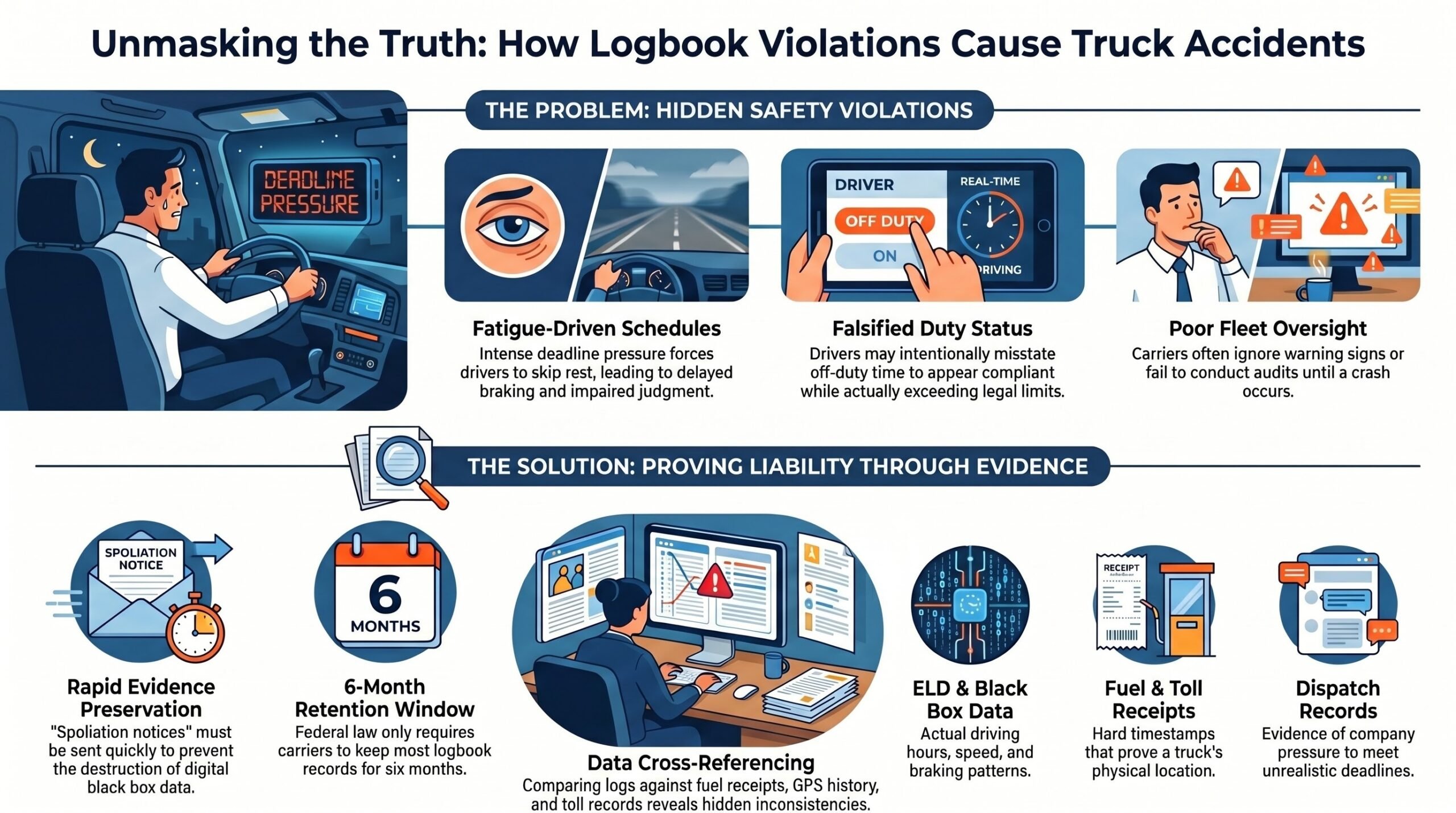
We often see truck logbook violations arise from fatigued driver schedules and intense pressure to meet delivery deadlines. We also find that inaccurate hours recording, whether careless or intentional, can conceal serious safety risks from regulators and employers. As we explain these issues, you’ll see how poor fleet oversight often allows these violations to continue until a preventable crash occurs.
Fatigued Driver Schedules


Because delivery deadlines and payment structures can pressure drivers to stay on the road too long, fatigued driver schedules remain a leading cause of truck accident logbook violations in West Palm Beach. When carriers ignore safe shift schedules, drivers may shorten required rest or misstate hours to appear compliant. We often see fatigue reduce attention, delay braking, and impair judgment, placing everyone on the road at risk.
We help families understand how weak oversight, unrealistic dispatch timing, and poor nap policies can create dangerous conditions. Even when a driver wants to act responsibly, exhaustion can overwhelm good intentions and lead to preventable mistakes. By examining logbooks, electronic data, and company records, we can determine whether scheduling practices contributed to a crash and pursue accountability to support safer roads for our community.
Pressure To Meet Deadlines
Tight delivery windows and strict performance demands frequently drive the same unsafe conduct that appears in falsified or incomplete logbooks. When companies reward speed over safety, we often see drivers pushed to keep moving despite obvious risks. Deadline culture can turn reasonable routes into relentless races, especially when traffic, weather, loading delays, or customer demands disrupt a schedule.
We believe every trucking decision should protect the public first. Yet Performance pressure may lead dispatchers, carriers, and drivers to prioritize on-time delivery over safe judgment, proper rest, and cautious operation. That pressure can encourage speeding, skipped breaks, aggressive lane changes, and other dangerous choices that place families in West Palm Beach at risk. When we investigate truck crashes, we look closely at company expectations, communication, and delivery demands to determine whether unrealistic deadlines contributed to preventable harm.
Inaccurate Hours Recording
Although federal hours-of-service rules set clear limits, inaccurate hours recording remains one of the most common logbook violations we uncover after serious truck crashes in West Palm Beach. When drivers record the wrong duty status, omit breaks, or misstate off-duty time, the log no longer reflects actual fatigue risk. We often find false entries that make a driver appear compliant, even though the available evidence shows otherwise.
We serve injured people by examining electronic logging data, fuel receipts, toll records, dispatch messages, and shipping documents for summary discrepancies. These errors may result from carelessness, confusion, or intentional misreporting by a driver trying to complete a route. Whatever the reason, inaccurate records can hide unsafe driving patterns and prevent the public from receiving the protection federal safety rules are meant to provide.
Poor Fleet Oversight
When a trucking company fails to monitor its drivers, logbook violations often reflect a broader breakdown in fleet oversight rather than an isolated mistake. We often see missing reviews, weak safety policies, and little accountability for repeated errors. Without regular fleet audits, companies may overlook falsified hours, skipped rest breaks, and patterns that place everyone on the road at risk.
We believe responsible carriers should protect both drivers and the public through consistent supervision. That includes meaningful driver training, timely corrections, and systems that flag violations before they lead to harm. When management ignores warning signs, unsafe practices can become routine. We help uncover whether poor oversight contributed to a crash, because families and communities merit answers, safer roads, and companies that honor their duty of care through action, vigilance, and lawful compliance.
Legal Rights of West Palm Beach Truck Accident Logbook Violations Victims
Because federal and state trucking rules require accurate driver logbooks, victims of West Palm Beach truck accidents involving logbook violations often have important legal rights that we can use to pursue accountability and compensation. When falsified records hide fatigue or Work restrictions, we can seek damages for medical care, lost income, pain, and diminished earning capacity, while protecting Compensation timelines under Florida law.
Accurate logbooks matter because hidden fatigue and falsified records can directly affect your right to full compensation.
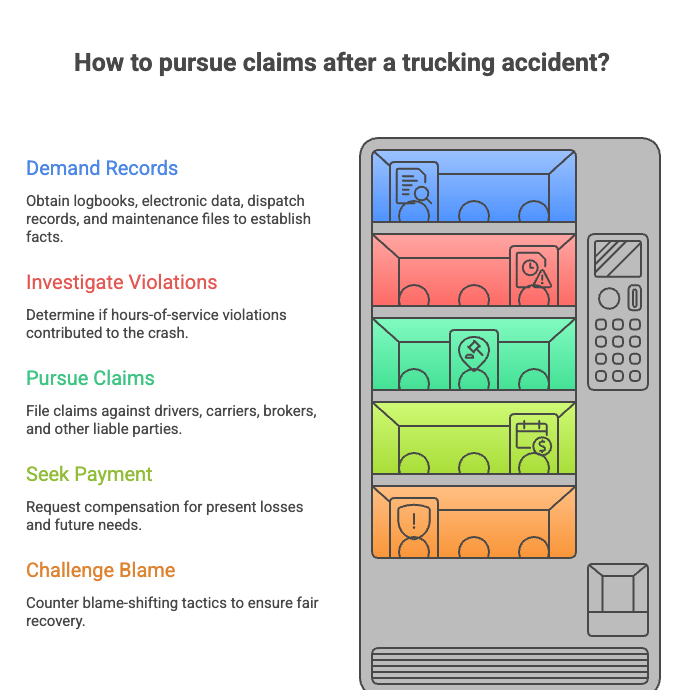
- We can demand logbooks, electronic data, dispatch records, and maintenance files.
- We can investigate whether hours-of-service violations contributed to the crash.
- We can pursue claims against drivers, carriers, brokers, and other liable parties.
- We can seek payment for present losses and reasonably expected future needs.
- We can challenge blame-shifting tactics that undervalue your service-centered recovery.
Steps to Take After a West Palm Beach Truck Accident Logbook Violations
After a West Palm Beach truck accident involving possible logbook violations, we should urge you to seek immediate medical care, because prompt treatment protects both your health and the record of your injuries. We should also move quickly to preserve logbook evidence, including driver logs, electronic data, and related records that may show hours-of-service violations. From there, we can explain why contacting a truck lawyer matters, as early legal guidance helps protect your claim and prevent crucial evidence from being lost.
Seek Immediate Medical Care
Prompt medical treatment should be one of our first priorities following a West Palm Beach truck accident involving suspected logbook violations. We should accept emergency treatment at the scene or visit an emergency room promptly, even if injuries seem minor at first. Truck crashes often cause hidden trauma, including internal injuries, concussions, and soft tissue damage that worsen without timely care.
When we seek immediate evaluation, we protect our health and create clear documentation that connects our injuries to the collision. We should follow every provider’s instructions, attend recommended imaging or consultant visits, and maintain consistent documentation follow-up throughout recovery. By taking these steps, we place ourselves in the strongest position to recover, support our families, and continue serving others while preserving an accurate record of the harm we suffered.
Preserve Logbook Evidence
While medical care protects our health, preserving logbook evidence protects our ability to demonstrate how the crash happened and whether the trucking company or driver violated federal hours-of-service rules. We should act quickly to safeguard paper logs, electronic logging device data, dispatch records, fuel receipts, GPS history, and toll information before anything is lost, altered, or destroyed.
We can help by gathering photographs, identifying witnesses, and keeping every document related to the collision in a secure chain of preservation. If available, we should note the truck number, carrier name, trailer number, and any visible onboard systems. Because modern fleets store essential information electronically, digital forensics may be necessary to preserve metadata, login activity, edits, and timestamps. Careful preservation helps us protect the truth and serve everyone affected by the crash.
Contact A Truck Lawyer
Contact a truck lawyer as soon as possible, because early legal involvement helps us secure logbooks, electronic data, driver qualification files, and carrier records before vital evidence disappears. Prompt action also helps us protect your rights, identify hours-of-service violations, and prevent the trucking company from controlling the narrative before the facts are preserved.
During a legal consultation, we can review the crash, assess potential logbook violations, and explain the next steps with clarity and purpose. Our client intake process gathers essential documents, witness details, insurance information, and medical records so we can build a strong claim efficiently. When we act early, we serve not only your immediate needs but also the broader goal of accountability, safety, and responsible conduct on West Palm Beach roads for everyone in our community.
How a West Palm Beach Truck Accident Logbook Violations Lawyer Can Help You
Because truck drivers and carriers must keep accurate hours-of-service records, logbook violations often provide vital evidence of fatigue, negligence, and regulatory noncompliance after a serious crash. We help you secure logbooks, black box data, dispatch records, and electronic logging information before it disappears. Our work connects missing entries, altered records, and ignored rest requirements to unsafe driving decisions and weak driver wellness practices.
- We investigate paper and electronic logging records.
- We compare logs with fuel receipts and GPS data.
- We identify hours-of-service violations and falsified entries.
- We preserve evidence and send spoliation notices quickly.
- We build a clear claim for accountability and recovery.
We know you want to protect your family and serve your community by pursuing responsible action. We present the facts clearly, deal with carriers and insurers directly, and advocate for full compensation. With careful analysis and steady guidance, we help you move forward with confidence, purpose, and informed decisions after a truck collision.
Long-Term Effects of West Palm Beach Truck Accident Logbook Violations Injuries
We often see that injuries from truck accidents tied to logbook violations extend far beyond the initial crash, leaving you with chronic physical complications that require ongoing care. We also recognize that lasting emotional trauma can affect your daily stability, relationships, and overall quality of life long after the accident. As these injuries continue, they may also reduce your work capacity, limiting your income and reshaping your future.
Chronic Physical Complications
Although some truck accident injuries seem manageable in the weeks after a crash, logbook violations often contribute to high-impact collisions that leave victims with chronic physical complications lasting for years. We often see spinal damage, joint injuries, and nerve trauma develop into chronic pain that limits work, caregiving, and daily service to others.
As recovery stalls, mobility decline may follow. We’ve seen victims need repeated surgeries, injections, and physical therapy simply to preserve basic function. Lingering inflammation, reduced strength, headaches, and impaired balance can also interfere with driving, lifting, standing, and sleep. When a fatigued truck driver should never have been on the road, these lasting conditions can place unfair demands on families and communities. We help you understand how logbook violations connect to ongoing medical needs and long-term physical limitations.
Lasting Emotional Trauma
When a truck crash stems from logbook violations, the harm often extends beyond visible injuries and into lasting emotional trauma that disrupts daily life. We often see survivors struggle with anxiety, panic, sleep disruption, irritability, and persistent fear around traffic, loud sounds, or sudden movement.
These effects can strain relationships, weaken confidence, and make routine responsibilities feel overwhelming. We encourage you to recognize that emotional injuries merit the same careful attention as physical harm. Early therapeutic interventions can help restore stability, while support groups often provide understanding, connection, and practical coping tools. For many families, trauma also brings grief, guilt, or isolation, especially when they must continue caring for others while recovering themselves.
By identifying these symptoms and seeking qualified help, we can protect your well-being and support meaningful long-term recovery.
Reduced Work Capacity
Emotional trauma often appears alongside another lasting consequence of truck crashes caused by logbook violations: reduced work capacity. When severe injuries affect strength, mobility, concentration, or endurance, we often see dedicated people struggle to return to the service-centered work they value. Reduced capacity can limit lifting, standing, driving, or performing repeated tasks, which may force career changes or reduced hours.
We also know these work limitations can diminish income, benefits, retirement contributions, and professional advancement over time. For readers who devote themselves to helping others, that loss may feel deeply personal because work often reflects purpose and commitment. We work to document medical restrictions, vocational impacts, and future losses so you can pursue support that protects your stability, preserves dignity, and helps you continue serving others in meaningful ways.
Proving Liability in West Palm Beach Truck Accident Logbook Violations Cases
Establishing liability in West Palm Beach truck accident cases involving logbook violations requires us to connect the driver’s records, the carrier’s oversight, and the crash itself through clear evidence. We examine paper logs, electronic logging data, dispatch records, fuel receipts, GPS history, and weigh station entries to determine whether hours-of-service rules were broken and whether driver fatigue contributed to the collision.
We also look beyond the driver. A trucking company may share responsibility if it encouraged unrealistic schedules, ignored missing entries, failed to review audits, or permitted repeated violations. Maintenance files, training records, internal messages, and safety policies can reveal a pattern of disregard that placed others at risk. We work to show how the violation directly affected reaction time, judgment, braking, or lane control at the moment of impact.
By building a careful timeline and comparing every record source, we help you present a clear account of fault and pursue accountability that serves both your recovery and broader public safety.
Dealing With Insurance Companies After a West Palm Beach Truck Accident Logbook Violations
Because trucking insurers often move quickly to limit exposure after a serious collision, we advise you to approach every call, form, and settlement discussion with care, especially if logbook violations may have contributed to the crash. We help you protect your rights by keeping communications accurate, measured, and focused on verified facts rather than insurer assumptions.
When insurance adjusters contact you, we encourage you to avoid recorded statements or broad medical authorizations until the full picture is clear. Logbook violations can affect liability, coverage positions, and policy negotiation, so every response matters. We work with you to organize records, preserve correspondence, and document losses in ways that support truth and accountability. We also watch for tactics that minimize injuries, shift blame, or pressure you into accepting less than your case merits.
By staying attentive to the claim timeline and the insurer’s requests, we can better serve your interests and keep the process grounded in fairness, transparency, and responsible advocacy.
What to Expect During a West Palm Beach Truck Accident Logbook Violations Claim Process
We begin with an initial case evaluation, where we assess your accident, identify possible logbook violations, and explain how the claim may proceed. From there, we gather logbook evidence and related records, then we handle insurance claim negotiations with a clear strategy designed to protect your interests. If the insurer won’t offer fair compensation, we prepare your case for settlement discussions or trial.
Initial Case Evaluation
Reviewing a truck accident logbook violations claim begins with a focused case evaluation, in which we examine the crash facts, the driver’s hours-of-service records, and any signs that falsified or incomplete logbooks contributed to the collision. During our initial interview, we listen carefully to your account, identify immediate concerns, and outline how the claim may proceed.
We then apply a thorough case checklist to assess liability, damages, and the parties involved, including the driver, carrier, and any third-party contractors. Our evaluation also considers medical treatment, insurance coverage, and whether regulatory violations may strengthen your position. By organizing these issues early, we can advise you with accuracy and purpose. This process helps us serve you responsibly, protect your interests, and build a clear strategy for the next stage of your West Palm Beach claim.
Logbook Evidence Collection
Once the initial evaluation identifies possible hours-of-service issues, we move quickly to collect and preserve records that can show whether logbook violations contributed to the crash.
We seek paper logs, electronic logging data, dispatch records, fuel receipts, toll records, GPS reports, and driver qualification files. By comparing these sources, we can identify gaps, altered entries, or patterns that suggest fatigue and noncompliance. We also send preservation letters so essential evidence is not lost, overwritten, or destroyed. As we gather each record, we maintain a clear chain of custody to protect its integrity and usefulness. This careful process helps us build a reliable timeline of the driver’s activity before the collision.
In serving you and your family, we focus on accuracy, accountability, and documentation that supports a thorough investigation.
Insurance Claim Negotiations
Many truck accident claims turn on what the records reveal, and during insurance claim negotiations, we use that evidence to press for a settlement that reflects the full extent of your losses. We organize logbooks, electronic data, medical records, and repair estimates to present a clear demand supported by facts. That preparation helps us address Policy tactics insurers may use to minimize value or shift blame.
We also guide you through Claim timelines, communication requirements, and documentation requests so nothing important is overlooked. If an adjuster questions fatigue, hours-of-service violations, or the seriousness of your injuries, we respond with focused support from the record. Throughout negotiations, we remain attentive to your needs, protect your rights, and work toward an outcome that serves your recovery, your family, and your long-term stability.
Settlement Or Trial
If a fair settlement doesn’t emerge from negotiations, we prepare the case for trial and explain what that process may involve in a West Palm Beach truck accident claim centered on logbook violations. We review evidence, refine damages, and address settlement timelines so you can make informed decisions that protect your family and community.
As trial approaches, we complete discovery, prepare witnesses, file motions, and build a clear narrative showing how falsified or incomplete logs contributed to the crash. We also discuss jury dynamics, because jurors may respond differently to driver fatigue, company pressure, and safety rule violations. Throughout this stage, we continue evaluating settlement options while preparing as though a trial will occur. That balanced approach helps us serve you well, present a credible case, and pursue accountability for the harm you have endured.
Compensation for West Palm Beach Truck Accident Logbook Violations Damages
Because logbook violations often reveal that a truck driver or carrier ignored federal hours-of-service rules, they can play a central role in proving liability and securing full compensation after a West Palm Beach truck accident. When we represent injured people, we work to identify every loss tied to the crash, including treatment expenses, ongoing care needs, medical billing complications, lost income, reduced earning capacity, property damage, and support for mental health care.
We also gather logbooks, electronic data, dispatch records, and witness statements to establish the connection between fatigue, negligence, and the harm you have endured. That evidence helps us present a clear, credible demand that reflects the full scope of your injuries and recovery needs. We remain focused on protecting your interests, answering your questions, and pursuing accountability from all responsible parties. By building a strong claim from the start, we place you in the best position to obtain the compensation you need to recuperate, rebuild, and continue serving your family and community.
Economic vs Non-Economic Damages in West Palm Beach Truck Accident Logbook Violations Cases
We help you distinguish between economic damages, such as medical bills, lost wages, and future care costs, and non-economic losses, including pain and suffering and reduced quality of life. We also show you how logbook violations can strengthen the connection between the crash and the full scope of your losses. As we address the issue of proving the value of damages, we explain the records, expert opinions, and other evidence that can support a fair claim.
Economic Damages Explained
When a truck accident stems from logbook violations, we begin by separating economic damages from non-economic damages so the full scope of the claim is clear. Economic damages cover measurable financial losses that a crash creates, and we document each one carefully to protect your recovery.
These losses often include medical bills, lost wages, rehabilitation costs, prescription expenses, property damage, and future treatment needs. We gather pay records, invoices, expert opinions, and repair estimates to show what the collision has already cost you and what it will likely cost later. If your injuries limit your ability to return to work or require ongoing care, we calculate those projected losses as well. By presenting clear evidence, we help you pursue compensation that supports your stability, your family, and your ability to keep serving others.
Non-Economic Losses
Although non-economic losses don’t come with invoices or pay stubs, they often reflect some of the most serious harm a truck accident causes after logbook violations lead to driver fatigue or unsafe operation. When we help you pursue accountability, we look beyond financial costs and consider how the collision changed your daily life, relationships, and overall well-being.
These damages can include pain and suffering, emotional distress, physical impairment, disfigurement, and the loss of enjoyment of ordinary activities. We also recognize the effect injuries can have on a marriage and family, including loss of consortium when a spouse loses companionship, support, or intimacy. By addressing these human losses with care and respect, we seek a result that serves your recovery and honors the full impact the crash has had on your life.
Proving Damage Value
Assigning a fair value to your losses is the next step after identifying the ways a truck accident has affected your life. We work with records, experts, and testimony to prove both economic and non-economic damages with precision and credibility.
Economic damages include medical bills, lost wages, future treatment costs, and property losses. We may use a damage appraisal to document vehicle repair or replacement needs, and a depreciation adjustment when diminished value remains after repairs. Non-economic damages address pain, emotional suffering, disability, and loss of enjoyment of life. These losses do not come with receipts, so we build clear evidence through medical opinions, personal accounts, and witness statements.
By presenting the full impact of logbook violations, we help you pursue compensation that reflects both measurable costs and human consequences.
When a West Palm Beach Truck Accident Logbook Violations Case Goes to Trial vs Settlement
Because logbook violations can sharply affect liability and damages, we evaluate early whether a West Palm Beach truck accident case is better resolved through settlement or prepared for trial. We review records, electronic data, witness testimony, and medical evidence to assess risk, leverage, and likely recovery for you and your family.
Our Settlement strategy depends on whether the carrier admits fault, preserves evidence, and offers compensation that reflects the full harm caused. If the defense minimizes fatigue, falsified entries, or your long-term losses, we prepare the case for court with discipline and purpose. Jury dynamics also matter. We consider how jurors may view safety rule violations, corporate conduct, and the human impact of the crash. Trial can create accountability and stronger pressure for fair payment, but it also brings cost, delay, and uncertainty. We guide you carefully, so every decision serves your recovery, your stability, and the broader good of highway safety.
The Statute of Limitations for West Palm Beach Truck Accident Logbook Violations Cases
Timing shapes truck accident claims as much as liability and damages, and the statute of limitations can determine whether you have any legal remedy at all. In Florida, these statute deadlines generally limit how long we have to bring a lawsuit after a crash involving logbook violations, even when the trucking company’s conduct appears clear.
We encourage you to treat these deadlines with urgency because courts often dismiss late claims without considering their significance. That outcome can prevent us from pursuing compensation that could support your family, your recovery, and the people who depend on you. In some situations, filing exceptions may apply, such as delayed discovery of pivotal facts or issues involving minors or incapacitated persons. However, exceptions are narrow, fact-specific, and never guaranteed.
We must also preserve records, electronic logging data, and witness testimony before they disappear. By understanding the time limits early, we place ourselves in a stronger position to protect your rights and advance a claim responsibly.
When to Contact a West Palm Beach Truck Accident Logbook Violations Lawyer After a West Palm Beach Truck Accident Logbook Violations
Although many people wait until medical treatment stabilizes or the insurance process becomes difficult, we should contact a West Palm Beach truck accident logbook violations lawyer as soon as possible after the crash. Early action helps us protect records, identify witnesses, and document what happened before important details fade. It also allows us to make thoughtful decisions that support our recovery and the well-being of those who depend on us.
Good post, accident timing matters because trucking companies may quickly organize their response, preserve favorable evidence, or shape the narrative presented to insurers. By seeking a prompt legal consultation, we can better understand what information to gather, what statements to avoid, and how to proceed with care and integrity. We should reach out when injuries appear serious, when fault is disputed, when logbook concerns arise, or when an insurer contacts us unexpectedly. Prompt guidance helps us serve our families responsibly after a serious collision.
Why You Need an Experienced West Palm Beach Truck Accident Logbook Violations Lawyer
Early contact with counsel helps us protect a claim, and experience determines how effectively that protection translates into results. In truck accident cases, vital evidence can disappear quickly, especially when records may reveal Sleep deprivation, hours-of-service violations, or Logbook falsification. We act promptly to preserve driver logs, electronic data, dispatch communications, fuel receipts, and maintenance records before they are altered, lost, or destroyed.
Experience also matters because trucking cases involve layered liability and aggressive defense strategies. We recognize how to connect inaccurate logs to driver fatigue, unsafe scheduling, and preventable harm, then present that evidence clearly and credibly. That work supports accountability not only for injured people, but also for safer roads and stronger industry standards that protect every family in our community.
When we grasp federal regulations, company practices, and evidentiary demands, we can build a claim that reflects the full extent of loss and pursues meaningful recovery with confidence and purpose.
How to Choose the Right West Palm Beach Truck Accident Logbook Violations Lawyer for Your Case
Because truck accident claims involving logbook violations often turn on technical evidence and fast-moving preservation issues, choosing the right lawyer requires more than a general review of credentials. We should look for counsel with proven experience handling trucking cases, knowledge of federal hours-of-service rules, and a record of securing and analyzing electronic logging data before it disappears.
We can also evaluate a lawyer through thoughtful client interviews, asking how the firm investigates logbooks, dispatch records, fuel receipts, and black box data. A strong advocate should explain the strategy clearly, communicate promptly, and show respect for the people we seek to protect by ensuring a fair recovery. It also helps to review fee structures carefully, so we grasp costs, contingency terms, and case expenses from the beginning. We should choose someone who thoroughly prepares each claim, values service, and has the resources to confidently challenge trucking companies and insurers with discipline and care.
About The Law Offices of Anidjar & Levine
Serving injured people across South Florida, The Law Offices of Anidjar & Levine brings focused experience, responsive client service, and a practical understanding of how to build and prove serious truck accident claims. We work to relieve pressure on you, explain each step clearly, and pursue accountability when logbook violations contribute to devastating collisions and lasting harm.
Our team approach reflects a service-centered mission. Through our firm’s history, you can see a continued commitment to helping injured people recover compensation and move forward with stability. An attorney biography offers more than credentials; it shows the professional background, values, and advocacy experience that shape how we serve you.
We investigate records, preserve evidence, communicate with insurers, and prepare claims for negotiation or trial with discipline and care. When you contact us, we aim to provide accessible guidance, timely updates, and dependable support. We want you to feel informed, respected, and confident that your case receives serious attention.
Frequently Asked Questions
Can Logbook Violations Affect a Trucking Company’s Safety Rating?
Yes, logbook violations can directly lower a trucking company’s safety ratings. When inspectors find inaccurate or falsified records, they may cite the carrier for hours-of-service noncompliance, which signals broader operational risks. It is established that these violations often trigger enforcement consequences, including audits, fines, and closer regulatory scrutiny. If you’re protecting others on the road, we can help you understand how repeated violations may damage compliance history, public trust, and overall safety performance.
Are Electronic Logging Devices Required for All Commercial Trucks?
No, electronic logging devices aren’t required for all commercial trucks. We help you understand that many carriers must use them, but several electronic exemptions apply, including certain short-haul operations, older vehicles, and specific driveaway situations. Device enforcement still matters because regulators closely review compliance, and violations can trigger penalties and safety consequences. When questions arise, we guide you toward the rules that protect the public and support responsible trucking practices nationwide.
How Long Must Trucking Companies Keep Driver Logbook Records?
Trucking companies must generally keep driver logbook records, including supporting documents, for at least six months under federal record retention rules. We encourage you to confirm whether related materials, such as time records or inspection documents, require longer preservation. Proper document disposal should occur only after all retention requirements, audits, investigations, or legal claims have been resolved. By carefully preserving records, we help protect accountability, safety, and the people you serve.
Can Weather Conditions Impact Hours-Of-Service Compliance Requirements?
Yes, weather conditions can affect hours-of-service compliance, but they don’t create unlimited exceptions. We must assess the weather impact carefully, because severe conditions may justify limited driving extensions when safety requires it. Even then, drivers and carriers still need accurate records and prudent route adjustments. If you’ve suffered harm, we can help determine whether the weather was a legitimate factor or an excuse for violations that placed others at risk.
Do Out-Of-State Truck Drivers Follow the Same Logbook Rules?
Yes, out-of-state truck drivers generally follow the same logbook rules when they operate across state lines. We see interstate compliance enforced through federal standards, and states support those standards through reciprocal enforcement. If you’re serving others through transportation, you must still accurately document driving time, rest periods, and duty status. We encourage you to treat every jurisdiction seriously, because violations in one state can trigger consequences elsewhere for carriers.
—————————
Logbook violations can reveal serious negligence after a West Palm Beach truck accident, and we understand how to use that evidence to strengthen your claim.
We investigate driver records, hours-of-service violations, and carrier practices to identify liability and pursue full compensation. If you were injured, we’re prepared to protect your rights and guide you through each step.
Contact West Palm Beach Truck Accident Lawyer at Law Offices of Anidjar and Levine to discuss your case and learn how we can help you move forward.