The Law Offices of Anidjar and Levine, a Daytona Beach truck accident lawyer, investigates whether phone use, in-cab technology, fatigue, or other inattention caused the collision.
Legal counsel may preserve phone records, vehicle data, camera footage, witness accounts, and medical documentation before evidence disappears.
An attorney can assess trucking company liability, insurance coverage, comparative fault, and recoverable damages, including medical expenses, lost income, property damage, and pain and suffering.
Learn more from a Daytona Beach Truck Accident Lawyer about victims’ rights, immediate steps, and case evaluation considerations.
Main Takeaways
- A Daytona Beach distracted truck accident lawyer can investigate phone use, in-cab technology, fatigue, and other potential causes.
- Attorneys may identify liability involving the truck driver, trucking company, maintenance providers, or other responsible parties.
- Legal counsel can preserve vehicle data, phone records, photographs, witness statements, medical records, and employment documentation.
- Potential compensation may include medical expenses, lost income, property damage, pain, suffering, and other proven losses.
- Prompt medical care and legal guidance can help document injuries, address insurers, preserve evidence, and meet Florida deadlines.


How We Can Help With Your Daytona Beach Distracted Truck Driver Accident Injury Claim
An experienced Daytona Beach distracted truck driver accident lawyer can help an injured person pursue a claim by investigating the collision, identifying the responsible parties, and documenting the full extent of the resulting losses. Counsel may collect vehicle data, photographs, witness statements, employment records, and medical documentation while preserving evidence that could otherwise disappear. This process supports a careful damages calculation addressing treatment costs, lost income, reduced earning capacity, property damage, and applicable nonfinancial losses.
A lawyer can also communicate with insurers, review proposed settlements, and respond to insurance tactics that may minimize responsibility or undervalue the claim. By organizing relevant information and maintaining accurate deadlines, legal counsel helps an injured person make informed decisions without placing unnecessary burdens on family members or caregivers. The attorney may coordinate with medical and financial professionals when additional documentation is needed, ensuring that the demand reflects the claimant’s circumstances and supports a fair, properly documented resolution.
OUR CONSULTATIONSARE FREE
START YOUR FREE CASE REVIEW

Understanding Daytona Beach Distracted Truck Driver Accident Injury Cases
When a commercial truck driver’s distraction contributes to a collision, understanding the legal and factual issues requires careful attention to the driver’s conduct, the trucking company’s responsibilities, and the injuries sustained. A case generally examines whether the driver breached a duty of care and whether that breach caused the crash and resulting harm. Relevant evidence may include vehicle data, witness accounts, company policies, phone records, medical documentation, and employment materials.
The trucking company may face responsibility for negligent hiring, training, supervision, or retention, depending on the available facts. It may also bear vicarious liability for conduct occurring within the scope of employment. Common liability defenses include disputing causation, challenging the severity of injuries, or asserting that another circumstance caused the collision. Comparative negligence defenses may allege that the injured person contributed to the harm, potentially reducing recovery under Florida law. A careful evaluation supports fair treatment, accurate damages assessment, and meaningful assistance for injured individuals and their families.

Common Causes of Daytona Beach Distracted Truck Driver Accident
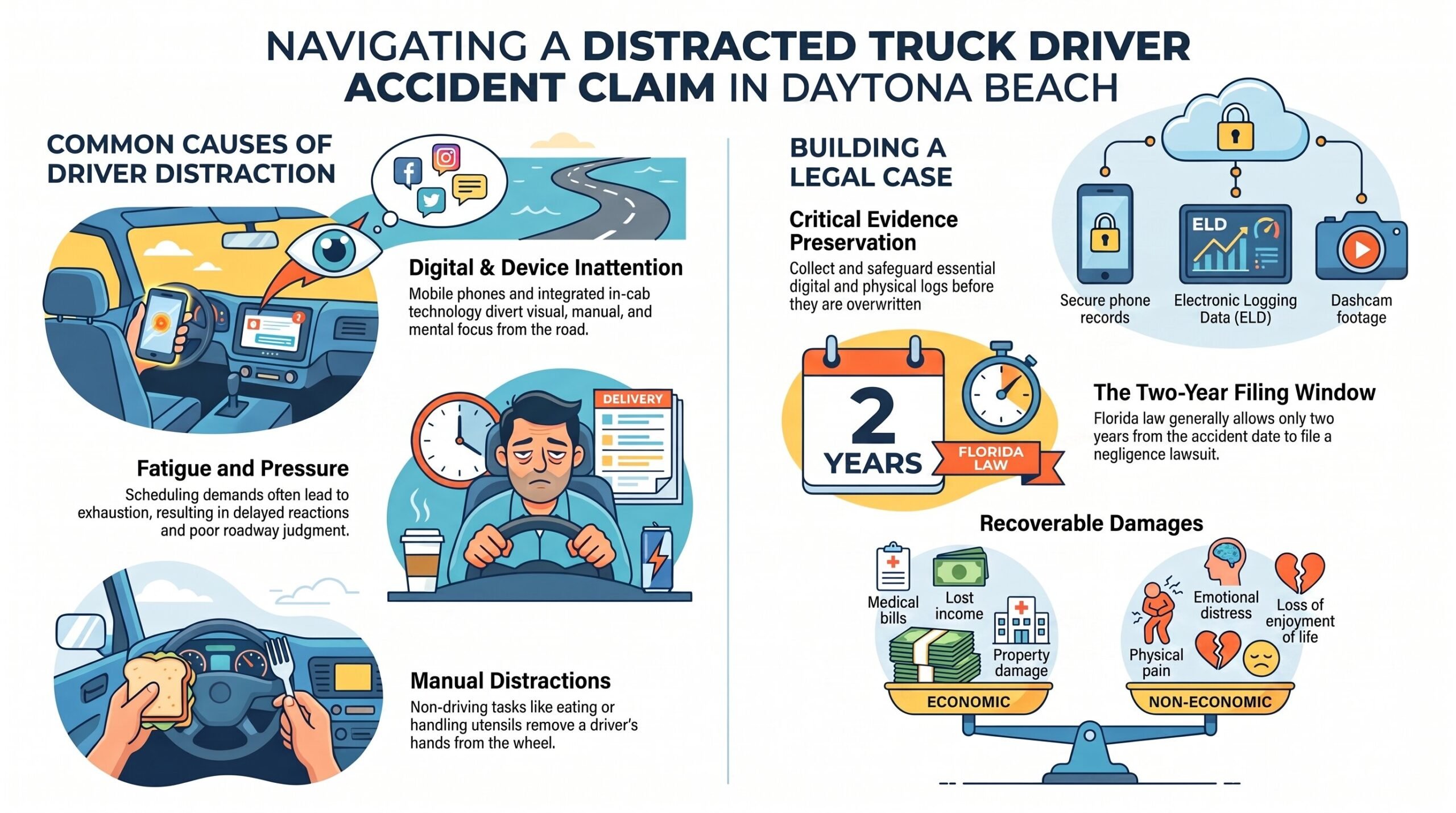
Common causes of Daytona Beach distracted truck driver accidents include mobile phone use, in-cab technology, eating while driving, and fatigue-related inattention. Each behavior can divert a truck driver’s eyes, hands, or mental focus from traffic conditions and roadway hazards. Understanding these contributing factors helps clarify how negligent distraction may lead to serious collisions.
Mobile Phone Distractions
Mobile phone use diverts a truck driver’s visual, manual, and mental attention from the roadway, creating a serious hazard for nearby motorists, cyclists, and pedestrians. Distracted driving may occur when a commercial driver reads an alert, enters a destination, answers a call, or handles a device while traveling. Even brief cell usage can delay braking, obscure changing traffic conditions, and reduce awareness of blind spots.
Texting violations are particularly dangerous because they typically require extended visual and manual attention, increasing the likelihood of lane departures, rear-end collisions, and failures to yield. Drivers who use phones behind the wheel may endanger people who depend on predictable traffic movement and responsible professional conduct. Preventing these behaviors supports road safety and helps protect families, emergency responders, and other vulnerable roadway users throughout Daytona Beach.
In-Cab Technology
In-cab technology can distract commercial truck drivers by diverting their attention from traffic, roadway conditions, and surrounding vehicles. Touchscreen displays, dispatch platforms, cameras, and electronic logging devices may demand visual or manual attention while a truck is moving. This driver distraction can reduce hazard awareness and delay braking or maneuvering responses. A driver’s mobile device focus may also shift toward messages, alerts, or applications integrated into the cab, even when the device is mounted.
Navigation system misuse, including entering destinations or changing routes while driving, may further divide attention. These actions can contribute to lane deviation, missed signals, and unsafe following distances. Trucking companies and drivers have a responsibility to configure systems before departure and use them only when safely stopped, protecting passengers, motorists, and pedestrians throughout Daytona Beach.
Eating While Driving
Food and beverages can create another source of distraction when truck drivers eat while operating their vehicles. Opening containers, unwrapping food, reaching for drinks, or handling utensils can remove a driver’s hands from the wheel and eyes from surrounding traffic. These actions may reduce reaction time when vehicles merge, stop, or encounter unexpected hazards. A trucking company’s Legal duty includes promoting reasonable safety practices and addressing conduct that places motorists at risk.
Effective safety training should explain why meals and beverages must be consumed only during appropriate stops, rather than while a truck is moving. Workplace discipline may be necessary when drivers repeatedly disregard these expectations. Trucking regulations and company policies can reinforce the importance of maintaining control of commercial vehicles. Preventing eating-related distraction helps protect drivers, passengers, pedestrians, and other road users.
Fatigue And Inattention
Fatigue and inattention frequently contribute to distracted truck driving accidents in Daytona Beach, as an exhausted driver may struggle to monitor traffic, maintain lane position, or respond promptly to changing road conditions. Driver schedule pressure can encourage excessive hours, inadequate rest, or rushed departures, increasing the likelihood of delayed reactions and poor judgment. Long routes, nighttime driving, and irregular schedules may further impair concentration, even when a driver remains legally permitted to operate.
Employers and carriers have a responsibility to establish realistic schedules, monitor compliance with rest requirements, and address signs of exhaustion before a vehicle enters traffic. Truckload maintenance also requires careful attention, and fatigue can cause missed inspections involving securement, balance, or equipment condition. Identifying these contributing factors may help injured individuals seek accountability and support safer transportation practices.


Legal Rights of Daytona Beach Distracted Truck Driver Accident Injury Victims
Victims of distracted truck accidents in Daytona Beach have legal rights that may allow them to seek compensation for medical expenses, lost income, property damage, and pain and suffering.
Florida law may permit an injured person to pursue a claim against responsible drivers, trucking companies, or other liable parties, depending on the evidence.
- Victims may request accident reports, medical records, wage documentation, and witness information to support damages and establish responsibility.
- They may consult a qualified attorney who can protect their interests, communicate with insurers, and evaluate settlement offers without sacrificing needed care.
- Claims must generally comply with applicable deadlines, making prompt legal guidance important for preserving evidence and meeting filing requirements.
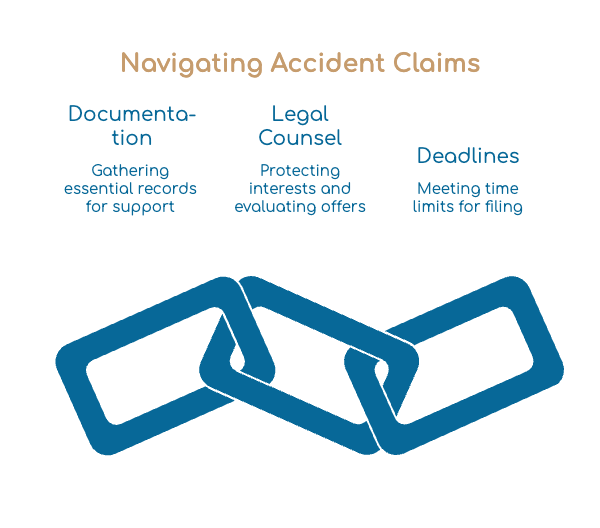
A thorough review may also address fatigue accountability and whether safety training, supervision, or company policies affected the incident. Supportive legal representation can help victims and families understand available remedies while encouraging fair treatment. Each matter requires individualized analysis because liability, insurance coverage, and recoverable damages vary under Florida law.
Why Do Daytona Beach Distracted Truck Driver Accident Injuries Happen?
Understanding why distracted truck driver injuries occur can help clarify fault, preserve relevant evidence, and evaluate potential claims. Commercial trucks require sustained attention because their size, weight, and stopping distances magnify ordinary driving errors. Distraction may involve texting, handheld calls, navigation systems, eating, conversations, or adjusting equipment. Even brief visual, manual, or cognitive diversion can prevent a driver from recognizing slowing traffic, pedestrians, lane changes, or roadway hazards.
Fatigue, pressure to meet delivery schedules, and inadequate training may increase the likelihood of inattentive conduct. Hazardous Weather, including heavy rain, strong winds, and limited visibility, can further reduce reaction time when attention is divided. Vehicle Maintenance problems, such as defective brakes, worn tires, or malfunctioning lights, may compound the danger and contribute to a collision.
Other causes include unsafe loading, crowded roadways, construction zones, and poor company oversight. Understanding these contributing factors helps communities support injured individuals while identifying whether driver negligence, carrier responsibility, equipment failures, or multiple causes played a role.
What Should You Do After a Daytona Beach Distracted Truck Driver Accident Injury?
After a Daytona Beach distracted truck driver accident injury, the injured person should seek immediate medical care, even if symptoms initially appear minor. They should document the accident scene, preserve relevant evidence, and obtain contact information from witnesses when possible. Contacting a truck accident lawyer can help protect legal rights and support an informed evaluation of potential claims.
Seek Immediate Medical Care
Prompt medical evaluation should follow any Daytona Beach truck accident, even when injuries seem minor or symptoms are not immediately apparent. A qualified healthcare professional can identify concussions, internal trauma, soft-tissue damage, or other conditions that may worsen without treatment. The injured person should describe all symptoms accurately and explain any changes since the collision. Following discharge instructions and attending recommended follow-up appointments supports recovery and creates a reliable medical record.
Treatment records may also help establish the nature, duration, and probable cause of injuries when an insurance claim is evaluated. Medical care should never be delayed while awaiting an insurer’s response, because delay can complicate both health outcomes and the insurance claim timeline. Family members or caregivers can assist with transportation, medication management, and appointment scheduling when injuries limit independence.
Document The Accident Scene
At the accident scene, the injured person or a designated representative should document conditions safely and carefully, provided immediate medical needs have been addressed. Photographs should show vehicle positions, visible damage, roadway markings, debris, skid marks, and relevant signs from multiple angles. Traffic signal documentation should include the signal’s color, lane configuration, turn arrows, and any nearby cameras or witnesses, without interfering with emergency operations.
Weather condition recording should note rain, fog, wind, darkness, glare, or other factors affecting visibility and traction. A written timeline can preserve observations while details remain fresh, including the truck’s movements and the apparent distraction, stated objectively. Names and contact information for witnesses should be collected when appropriate. Officials’ instructions should be followed, and evidence should never be moved or altered unless safety requires it.
Contact A Truck Accident Lawyer
A Daytona Beach truck accident lawyer can help an injured person protect legal rights and evaluate whether distracted driving caused or contributed to the collision. Early legal guidance may support evidence preservation, including photographs, witness information, vehicle data, phone records, and available surveillance footage. The lawyer can also communicate with insurers, identify potentially responsible parties, and help prevent statements or agreements that could undermine a claim.
Medical records should be obtained and organized to document diagnoses, treatment, prognosis, and the connection between injuries and the crash. An attorney may coordinate with medical providers and investigators while the injured person focuses on recovery and family responsibilities. Prompt consultation is important because evidence can disappear, witnesses’ memories may fade, and Florida deadlines may limit the time available to pursue compensation.
Critical Evidence in a Daytona Beach Distracted Truck Driver Accident Injury Case
Critical evidence may establish whether driver distraction caused the Daytona Beach truck collision and support an injured party’s claim. Key sources include:
- Driver phone records and truck camera footage
- Electronic logging data regarding the driver’s activity and hours
- Eyewitness accounts describing the driver’s conduct and the accident sequence
Collectively, these records can help clarify liability, timing, and the extent of the resulting injuries.
Driver Phone Records
When a commercial truck driver’s phone use is suspected, phone records may provide objective evidence of whether the driver was texting, calling, browsing, or using another application before a Daytona Beach collision. These records can help establish timing, duration, and activity near the moment of impact, allowing investigators to compare communications with witness statements and electronic vehicle data. A legal representative may seek records through preservation requests, subpoenas, or litigation discovery, depending on the circumstances.
Driver phone privacy remains important, so requests should be limited to relevant information and handled according to applicable law. Carrier data retention policies may determine how long employer-maintained logs, billing information, or device-management records remain available. Prompt action can help preserve evidence that supports an accurate account and protects injured individuals seeking fair treatment.
Truck Camera Footage
In a Daytona Beach distracted truck driver accident injury case, truck camera footage may provide direct evidence of the driver’s conduct, roadway conditions, and events leading to the collision. Exterior and cab-facing cameras can show traffic signals, lane positions, following distances, sudden braking, and whether the driver was looking away before impact. Because recordings may be overwritten, prompt dashcam preservation requests can help protect potentially decisive evidence.
A legal representative may send a written preservation notice to the trucking company, carrier, or insurer and identify all relevant camera systems. The footage should be reviewed alongside photographs, witness accounts, medical records, and the claim document checklist. Careful collection and authentication can help establish a reliable timeline, clarify disputed facts, and support fair treatment for an injured person seeking appropriate compensation.
Electronic Logging Data
Electronic logging data can help establish a truck driver’s hours of service, duty status, and vehicle activity before a Daytona Beach collision. These records may show driving duration, rest periods, location changes, and potential violations of federal limits. Investigators can compare the electronic record with dispatch communications, delivery schedules, and available vehicle information to identify inconsistencies suggesting fatigue or divided attention.
The data may also reveal whether a carrier monitored compliance, responded to alerts, or implemented Driver wellness programs designed to reduce unsafe driving. Preservation requests are important because some systems overwrite information after a limited period. A careful review can support a settlement negotiation strategy by connecting documented vehicle operations to the collision timeline. Counsel may use these records to promote accountability and protect injured individuals’ interests.
Eyewitness Accident Accounts
Eyewitness accident accounts can provide critical evidence in a Daytona Beach distracted truck driver accident injury case by describing the driver’s conduct immediately before the collision. Witnesses may report cellphone use, texting, eating, adjusting equipment, or failing to observe traffic conditions. Their observations can help establish how distraction contributed to the crash and may clarify disputed facts when vehicle data or surveillance footage is unavailable.
Eyewitness statements should identify the witness, record precise observations, and distinguish firsthand knowledge from assumptions. Prompt interviews are important because memories can change, particularly after a traumatic event. Attorneys may also evaluate each witness’s location, visibility, timing, and relationship to the parties. Preservation of evidence includes securing written statements, contact information, photographs, recordings, and other materials that could support an injured person’s claim.
Long-Term Effects of Daytona Beach Distracted Truck Driver Accident Injuries
Distracted truck driver accident injuries may cause ongoing physical pain that requires continuing treatment and limits daily activities. Emotional and psychological trauma can also persist, affecting relationships, employment, and overall quality of life. These lasting conditions may create substantial financial strain through medical expenses, reduced earning capacity, and other accident-related costs.
Ongoing Physical Pain
Ongoing physical pain is a common long-term consequence of injuries caused by distracted truck drivers, particularly when victims sustain spinal trauma, fractures, nerve damage, or serious soft-tissue injuries. Persistent discomfort may restrict mobility, interfere with sleep, and make ordinary tasks or employment difficult. Some individuals require repeated procedures, prescription medication, physical therapy, or assistive devices to manage symptoms and preserve independence. Effective Pain management strategies should be tailored by qualified medical professionals and reviewed as conditions change.
Treatment records can also document the injury’s continuing impact and help establish necessary future care. Victims may benefit from coordinated rehabilitation, accessible transportation, and practical assistance from supportive caregivers. While mental health support is important when chronic pain affects daily functioning, the focus remains on physical recovery, symptom control, and preserving the individual’s ability to participate safely in family, work, and community life.
Emotional And Psychological Trauma
Emotional and psychological trauma can develop after a Daytona Beach truck accident, particularly when injuries are severe, recovery is prolonged, or the collision involved a perceived threat to life. Survivors may experience anxiety, depression, irritability, intrusive memories, or fear of driving. Even a Vehicle Side Swipe can produce lasting distress when it occurs suddenly and leaves the person feeling powerless. Sleep Deprivation may intensify these symptoms, impair concentration, and interfere with physical recovery.
Some individuals avoid roads, vehicles, or situations that remind them of the crash, while others remain constantly alert for danger. Support from mental health professionals, trusted family members, and compassionate medical providers can help identify trauma-related conditions and encourage appropriate treatment. Documented psychological symptoms may also assist legal professionals in presenting the full effect of accident-related injuries.
Long-Term Financial Strain
Long-term financial strain may follow a Daytona Beach truck accident when medical treatment, rehabilitation, and reduced earning capacity continue for months or years. Ongoing expenses can include expert appointments, prescriptions, assistive equipment, transportation, and home modifications. When employment becomes limited, lost wages may affect housing, caregiving, education, and other vital obligations.
Families serving injured relatives may also reduce their own work hours, creating additional economic pressure. Insurance billing disputes can delay payment or leave necessary services temporarily unaffordable. Payout delays may further complicate recovery, particularly when liability investigations, medical evaluations, or negotiations remain unresolved. Careful documentation of expenses, income losses, treatment needs, and future limitations can clarify the financial impact. Legal guidance may help identify recoverable damages and protect an injured person’s interests during settlement discussions or litigation.
Proving Liability in Daytona Beach Distracted Truck Driver Accident Injury Cases
When a distracted truck driver causes a collision, an injured person must establish that the driver’s conduct breached a legal duty and directly contributed to the resulting injuries. Evidence may include cellphone records, onboard electronic data, traffic-camera footage, driver statements, photographs, medical records, and testimony from accident-reconstruction professionals. Investigators may also examine whether the driver was texting, using an application, eating, or otherwise diverting attention from traffic.
The injured person must connect the distraction to the crash and demonstrate that the collision caused documented physical, emotional, or financial harm. Comparative fault disputes can arise when a trucking company argues that another motorist or the injured person contributed to the event. Eyewitness credibility issues may also affect how conflicting accounts are evaluated, particularly when witnesses observed the collision from different locations. Preserving evidence promptly and presenting a consistent timeline can help clarify responsibility. Careful preparation allows legal advocates to pursue accountability while serving the injured person’s need for accurate, compassionate guidance.
Dealing With Insurance Companies After a Daytona Beach Distracted Truck Driver Accident Injury
After a Daytona Beach distracted truck driver accident, insurance companies may seek statements and evidence before the full extent of the injured person’s losses is known. An injured person may benefit from limiting recorded statements, avoiding speculation, and preserving medical records, wage documentation, photographs, and communications related to the collision. Any release or settlement document should be reviewed carefully because it may affect future compensation for treatment, rehabilitation, transportation, or related losses.
Adjusters may request access to broad medical histories or question whether symptoms resulted from the crash. Accurate, consistent information can help protect the claim while permitting legitimate investigation. Reimbursement Denials should be examined for the stated reason, supporting policy language, and available appeal procedures. Claim Deadlines may arise under insurance policies or applicable law, so delays can jeopardize potential recovery. A qualified Daytona Beach distracted truck accident lawyer can communicate with insurers, identify incomplete evaluations, and help preserve the injured person’s interests while respectful, informed advocacy supports fair treatment for all affected parties.
What to Expect During a Daytona Beach Distracted Truck Driver Accident Injury Claim Process
A Daytona Beach distracted truck driver accident claim typically begins with an initial case evaluation to assess liability, injuries, and available legal remedies. The process may then involve gathering evidence, negotiating with insurance companies, and determining whether a fair settlement can be reached. If negotiations fail, the claim may proceed to trial, where the evidence and applicable law will be presented before the court.
Initial Case Evaluation
During an initial case evaluation, a Daytona Beach distracted truck driver accident attorney reviews the circumstances of the collision, the available evidence, and the injured person’s medical condition to determine whether a viable claim exists. The attorney may discuss applicable deadlines, potential liability, and the legal options available to the injured person and family.
A damages assessment considers medical expenses, lost income, rehabilitation needs, property damage, and the effects of lasting impairment. Medical documentation helps clarify diagnoses, treatment requirements, and the relationship between the crash and reported injuries. The attorney also evaluates the trucking company’s potential responsibility and whether insurance coverage may address the claim. After reviewing the information provided, the attorney explains possible next steps, expected challenges, and the client’s responsibilities during the process.
Evidence Gathering Process
Effective evidence gathering begins with securing records and information that may establish how the collision occurred, who was responsible, and how the injuries developed. Scene documentation may include photographs, roadway conditions, vehicle positions, traffic signals, surveillance footage, and available electronic data. Investigators may identify the trucking company, driver, vehicle owner, and maintenance providers, then request relevant logs, dispatch materials, training records, and inspection documents.
Witness statements can preserve accounts before memories change, while medical records connect treatment, diagnoses, limitations, and prognosis to the crash. Employment records and other documentation may clarify lost income and continuing needs. This organized process supports accurate claim evaluation and helps a legal team serve the injured person responsibly. Insurance negotiations are addressed separately after the evidence has been reviewed and the claim’s supporting facts have been assembled.
Insurance Company Negotiations
Once the available evidence has been reviewed, insurance company negotiations typically begin with a demand that explains liability, the injuries sustained, medical treatment, financial losses, and other recoverable damages. Counsel may support the demand by requesting medical records, billing statements, wage documentation, and professional opinions connecting the collision to the claimed harm. Preserving cellphone data can also help address allegations that the truck driver was distracted, particularly when device records, application activity, or communications are relevant.
An insurer may acknowledge receipt, request additional documentation, question causation, or propose a different valuation. Communications should remain accurate, organized, and limited to information supported by the evidence. A representative can manage deadlines, protect confidential information, and respond to questions while ensuring the injured person’s immediate medical and financial needs remain properly documented.
Settlement Or Trial
Settlement or trial represents the point at which the evidence, claimed damages, and applicable law are evaluated to resolve a Daytona Beach distracted truck driver accident claim. A lawyer may recommend settlement when liability is well supported and compensation fairly reflects medical expenses, lost income, future care, and other losses. A carefully developed Negotiation strategy considers insurance limits, comparative fault, and the risks, costs, and timing of litigation. If negotiations fail, the injured person may proceed to trial, where a judge or jury determines responsibility and damages.
Throughout either path, evidence preservation remains critical. Electronic logging data, phone records, vehicle information, photographs, witness statements, and medical documentation can strengthen the claim. Counsel serves the injured party by explaining alternatives, preparing credible proof, and pursuing a resolution that supports recovery and accountability.
Compensation for Daytona Beach Distracted Truck Driver Accident Injury Damages
Compensation for injuries caused by a distracted truck driver may cover medical expenses, lost income, diminished earning capacity, property damage, and the physical pain and emotional distress resulting from the collision. A careful assessment should account for current treatment, anticipated care, employment disruption, and documented losses. The injured person may also seek reimbursement for necessary transportation, rehabilitation, and other accident-related costs when supported by reliable records.
A Settlement strategy overview can help clarify the claim’s value, applicable insurance coverage, liability evidence, and the risks of accepting an early offer. Counsel may communicate with insurers, organize supporting documentation, and advocate for a resolution that addresses the injured person’s needs without unnecessary delay. Evidence preservation steps are equally important. These may include securing medical records, photographs, witness information, vehicle data, employment documentation, and trucking-company materials. Prompt preservation can protect the factual foundation of the claim and support fair treatment for the injured person and the family members assisting with recovery.
Economic vs Non-Economic Damages in Daytona Beach Distracted Truck Driver Accident Cases
Economic damages may include medical expenses, lost income, property damage, and other verifiable financial losses resulting from the collision. Non-economic losses address harm such as pain and suffering, emotional distress, disability, and diminished quality of life. Calculating total compensation requires evaluating documented costs alongside the injury’s lasting personal effects.
Economic Damages Explained
When a distracted truck driver causes a collision in Daytona Beach, the injured party may pursue economic damages for measurable financial losses resulting from the crash. These damages may include emergency treatment, hospital bills, medication, rehabilitation, medical equipment, and reasonably anticipated future care. Lost wages can also be claimed when injuries prevent the individual from working, while reduced earning capacity may apply if lasting limitations affect future employment.
Property damage, transportation costs, and other documented out-of-pocket expenses may qualify when they directly result from the collision. A thorough Insurance documentation checklist can help organize invoices, pay records, medical statements, repair estimates, and related proof. Counsel may use this evidence in a Settlement negotiation strategy designed to present a complete, supportable calculation and promote fair compensation for the injured person.
Non-Economic Losses
Non-economic losses address the personal effects of a distracted truck collision that cannot be measured through bills or pay records. They may include physical pain, emotional distress, mental anguish, inconvenience, disfigurement, and reduced enjoyment of life. A person who once served family, coworkers, or the community may struggle with anxiety, sleep disruption, or lasting limitations after a serious crash. Evidence can include medical observations, personal testimony, and accounts from relatives or colleagues.
Circumstances such as GPS navigation errors may help explain how the collision occurred, but they do not alone establish the value of personal suffering. During attorney consultation, the affected person can describe daily changes, treatment experiences, and enduring effects. A legal professional may then present those human consequences clearly while respecting the individual’s dignity and privacy throughout the claim.
Calculating Total Compensation
The total value of a distracted truck accident claim generally combines economic and non-economic damages, with each category addressing different consequences of the collision. Economic damages include medical treatment, rehabilitation, prescription costs, lost income, diminished earning capacity, property damage, and anticipated future expenses. Documentation such as bills, employment records, expert assessments, and treatment plans helps establish these losses.
Non-economic damages address pain, emotional distress, disability, disfigurement, loss of enjoyment, and changes in family relationships. Their value depends on the injury’s severity, duration, permanence, and effect on daily life. Liability evidence, insurance coverage, and comparative fault may also influence recovery. A careful evaluation can help an injured person understand available settlement options and pursue compensation that supports medical care, financial stability, and long-term well-being.
When a Daytona Beach Distracted Truck Driver Accident Injury Case Goes to Trial vs Settlement
A Daytona Beach distracted truck driver accident injury case may proceed to trial or resolve through settlement, depending on the strength of the evidence, the severity of the injuries, and the parties’ assessment of legal and financial risks. Settlement can provide compensation sooner, reduce litigation uncertainty, and spare injured individuals and their families the demands of testimony and cross-examination. Negotiations may address medical expenses, lost income, future care, and other documented losses.
Trial may become necessary when insurers deny responsibility, dispute the extent of harm, or offer inadequate compensation. Counsel may present driver records, electronic data, witness accounts, medical opinions, and other evidence to establish liability and damages. Careful evidence preservation can protect information that may otherwise be lost or altered.
Comparative negligence arguments may also influence negotiations and trial strategy by assigning responsibility among involved parties. A legal team serving injured clients should evaluate the available proof, explain realistic outcomes, and pursue the resolution that best protects long-term recovery, dignity, and financial stability.
Florida Laws That May Affect Your Daytona Beach Distracted Truck Driver Accident Case
Florida law can shape both the liability analysis and the value of a Daytona Beach distracted truck driver accident claim. Several rules may help establish whether a commercial driver breached a duty of care and whether that conduct caused compensable harm.
- Florida texting laws: Florida generally prohibits manually typing or sending non-voice messages while operating a motor vehicle, with enhanced consequences in certain circumstances. Evidence of texting may support negligence arguments.
- Cellphone use: Call records, vehicle data, surveillance footage, and witness accounts may reveal whether cellphone use diverted the truck driver’s attention. Federal motor-carrier safety rules can also restrict handheld devices and impose additional obligations.
- Comparative fault and insurance: Florida’s modified comparative negligence rules may reduce recovery when an injured person bears responsibility. Commercial policies, employer liability, maintenance records, and trucking logs may affect available compensation and responsible parties.
A careful investigation can preserve evidence, clarify each participant’s duties, and help protect an injured person’s ability to obtain appropriate support while serving family and community needs.
The Statute of Limitations for Daytona Beach Distracted Truck Driver Accident Injury Cases
Time limits can determine whether an injured person retains the right to pursue compensation after a distracted truck crash in Daytona Beach. Florida generally allows two years from the accident date to file a negligence-based personal injury lawsuit. Missing that deadline may result in dismissal, even when medical expenses, lost income, or lasting impairments are substantial.
Certain circumstances can alter the calculation. Florida personal injury tolling may pause or extend a deadline in limited situations, such as when the injured person is legally incapacitated or the defendant cannot be located. Claims involving wrongful death, government entities, or specific insurance procedures may carry different requirements and shorter notice periods. A minor’s circumstances can also affect how time is measured.
Medical treatment timelines do not automatically extend the filing period. Delayed symptoms, ongoing care, or a later diagnosis may complicate the date analysis without eliminating the statutory deadline. Preserving records, identifying the crash date, and reviewing applicable exceptions promptly supports informed decision-making and protects the injured person’s opportunity to seek lawful compensation.
How a Daytona Beach Distracted Truck Driver Accident Lawyer Can Help You
When a distracted truck collision causes injuries in Daytona Beach, legal counsel can help identify responsible parties, preserve critical evidence, and evaluate the full scope of available compensation. A lawyer may coordinate with medical professionals, investigators, and insurers while protecting the injured person’s interests throughout the claim.
- Counsel can examine phone records, driver logs, camera footage, maintenance files, and employment relationships to establish how distraction contributed to the crash.
- Representation can calculate medical expenses, lost income, rehabilitation needs, pain, and other damages, including appropriate Aftercare support for continuing recovery.
- A lawyer can communicate with insurers, negotiate a fair resolution, and prepare litigation when necessary. If a fatal collision occurred, counsel may also guide surviving relatives through wrongful death claims and related financial considerations.
When to Contact a Daytona Beach Distracted Truck Driver Accident Lawyer
Prompt legal guidance is often important after a distracted truck collision, particularly when injuries require emergency treatment, extended care, or time away from work. A Daytona Beach attorney may be contacted as soon as practical, even while medical evaluation and recovery remain ongoing. Early consultation can help an injured person understand reporting duties, potential deadlines, and appropriate communication with insurers without disrupting necessary care.
Legal assistance may be especially appropriate when fault is disputed, the trucking company has investigators at the scene, or available evidence could quickly disappear. Counsel can help preserve crash evidence, including photographs, witness information, vehicle data, and relevant driver or company records. The injured person should prioritize Initial Medical Attention and follow medical recommendations, while maintaining records of diagnoses, treatment, expenses, and work limitations.
Contact is also warranted when injuries appear minor, but symptoms develop later, since some conditions may not be immediately apparent. Prompt guidance supports orderly documentation and informed decisions while the affected individual focuses on recovery and serving family responsibilities.
Why You Need an Experienced Daytona Beach Distracted Truck Driver Accident Lawyer
Because distracted truck collisions often involve multiple sources of evidence and potentially disputed responsibility, experienced legal representation can be important. A qualified Daytona Beach lawyer can coordinate evidence preservation before photographs, electronic records, vehicle data, and witness recollections become unavailable or unreliable. This work may clarify whether driver distraction, employer practices, maintenance issues, roadway conditions, or other factors contributed to the collision.
Counsel can also support liability determination by reviewing police reports, carrier records, phone information, and applicable safety requirements. That analysis may help identify every responsible party while preventing premature conclusions that limit recovery. During insurance negotiation, an attorney can evaluate medical expenses, lost income, future care needs, property damage, and the broader effects of an injury.
The goal is to pursue victim compensation that reflects documented losses and legal rights rather than accepting an inadequate early offer. Experienced advocacy can further reduce administrative burdens, allowing injured people and their families to focus on recovery while their interests receive careful, informed protection.
How to Choose the Right Daytona Beach Distracted Truck Driver Accident Lawyer for Your Case
Selecting the right Daytona Beach distracted truck driver accident lawyer requires more than comparing advertisements or fee statements. A careful evaluation should begin with the lawyer’s experience handling commercial vehicle collisions, trucking regulations, and injuries involving multiple parties.
The lawyer should explain a practical Client case strategy based on the accident’s facts, available medical documentation, and the client’s long-term needs. Thorough evidence review is crucial because electronic logging data, phone records, vehicle systems, witness accounts, and company policies may clarify how distraction occurred. The prospective lawyer should also describe methods for preserving evidence before it disappears or becomes difficult to obtain.
Effective insurance negotiation requires knowledge of commercial coverage, multiple insurers, and tactics used to minimize compensation. At the same time, trial readiness demonstrates that settlement pressure will not control the case. Clear communication, ethical judgment, responsive service, and a willingness to answer difficult questions can help an injured person select representation capable of serving the client’s interests responsibly.
About The Law Offices of Anidjar & Levine
The Law Offices of Anidjar & Levine represents individuals injured in motor vehicle and commercial truck collisions, including cases involving driver distraction and serious bodily harm.
Its attorneys examine crash circumstances, preserve relevant evidence, and help clients understand potential legal remedies after a Daytona Beach truck accident.
The firm addresses Distracted Driving Trends, including device use, navigation activity, and other conduct that can impair a commercial driver’s attention.
Investigations may involve inspection of phone records, vehicle data, witness statements, dispatch materials, and company safety policies.
This approach can clarify whether a driver, carrier, or other responsible party failed to meet applicable duties.
Cell Phone Compliance may also be considered when evaluating a trucking company’s training, monitoring, and enforcement practices.
The Law Offices of Anidjar & Levine provides case evaluations and communicates with insurers and opposing parties on a client’s behalf.
Its work is intended to support injured individuals and families while pursuing accountability, fair compensation, and informed decisions throughout the legal process.
Frequently Asked Questions
Can I Still File a Claim if the Distracted Truck Driver Was Not Ticketed?
A person may still file a claim even if the distracted truck driver received no ticket. A citation is not required to establish civil liability, because the claim may rely on Independent Evidence such as witness statements, phone records, vehicle data, photographs, medical documentation, and Traffic Cameras. The injured party should preserve evidence promptly, document losses, and consult a qualified attorney, since deadlines and liability rules vary by jurisdiction and circumstances.
What Happens if the Trucking Company Denies the Driver Was Working?
A denial does not automatically prevent a claim. The injured person may pursue employment status disputes by gathering dispatch records, payroll documents, vehicle ownership information, electronic logs, and witness accounts showing the driver’s relationship with the company. An insurance coverage investigation can identify applicable commercial policies, even when the company disputes responsibility. Legal counsel may subpoena records, communicate with insurers, and present evidence supporting vicarious liability, negligent hiring, or independent-contract claims.
Can Passengers or Family Members Bring Separate Claims After a Truck Accident?
Yes. Passengers or eligible family members may bring separate claims, depending on their injuries, losses, and applicable wrongful-death laws. Family separate claims can address medical expenses, lost support, companionship, or funeral costs, while heirs’ claims may arise when a victim dies. Insurance coverage and policy limits influence available compensation. Counsel can coordinate each claimant’s interests, preserve evidence, identify responsible parties, and develop a settlement strategy that serves all affected individuals fairly.
Are Truck Accident Records Available Through a Public Records Request?
Truck accident records may be available through a public records request, although access depends on the agency, record type, and investigation status. Police reports are often obtainable, while court filings generally become public once submitted. Data access may be restricted for privacy, ongoing investigations, or protected medical information. Injury summaries could be redacted or withheld unless authorized. A qualified representative can identify appropriate custodians, request records, and challenge improper denials.
What if the Truck Driver Was Distracted by Faulty Equipment or Technology?
When technology or equipment distracts a truck driver, responsibility may extend beyond the driver. A malfunctioning navigation system, defective dashboard alert, or improperly secured controls could implicate the carrier, maintenance provider, manufacturer, or technology vendor. Investigators should preserve electronic data, inspection records, repair histories, and driver statements. Faulty cargo may also create distractions or emergencies. A careful review can clarify whether negligence, product liability, or regulatory violations contributed to the collision.
—————————
Victims of distracted truck driver accidents in Daytona Beach may face serious injuries, financial losses, and difficult legal decisions.
Understanding the crash’s causes, preserving evidence, and recognizing available legal rights can help strengthen a potential claim.
An experienced Daytona Beach Truck Accident Lawyer can assess liability, address insurance concerns, and pursue appropriate compensation.
The Law Offices of Anidjar and Levine can help victims evaluate their circumstances and determine the next steps with informed, attentive legal guidance.