The Law Offices of Anidjar and Levine helps injured passengers, pedestrians, cyclists, and motorists pursue compensation after crashes involving negligent drivers, cab companies, insurers, or other parties. These claims may require prompt evidence preservation, medical documentation, witness statements, taxi records, and insurance review.
Liability may involve distracted driving, speeding, unsafe lane changes, poor maintenance, or comparative fault. Legal guidance from a Daytona Beach Car Accident Lawyer can support demand preparation and ensure compliance with strict claim requirements.
The sections below explain vital rights, causes, and case options.
Main Takeaways
- A Daytona Beach taxi accident lawyer can identify liable parties, insurance coverage, and filing deadlines after a crash.
- Strong claims often rely on crash reports, medical records, witness statements, taxi records, and trip details.
- Common causes of taxi crashes include distraction, speeding, reckless driving, poor maintenance, and unsafe lane changes.
- Florida comparative fault rules may reduce compensation if multiple parties contributed to the accident.
- A lawyer can prepare a demand using verified evidence when insurers undervalue injuries or deny responsibility.


How We Can Help With Your Daytona Beach Taxi Accident Injury Claim
A Daytona Beach taxi accident injury claim can involve multiple liable parties, insurance coverage disputes, and strict filing requirements, making early legal guidance especially important. A legal team can assist injured passengers, pedestrians, cyclists, or other drivers by preserving evidence, identifying responsible parties, and communicating with insurers in a disciplined manner. This support helps protect the claimant’s ability to seek fair compensation while allowing the injured person and family members to focus on recovery and community obligations.
Effective representation includes organizing Medical expenses documentation, obtaining incident reports, reviewing taxi company records, and securing witness statements. Counsel may also pursue proof of driver negligence through traffic citations, dashcam footage, phone records, maintenance histories, or prior complaint records. When insurers undervalue losses or deny responsibility, attorneys can present a structured demand supported by verified facts. If settlement efforts fail, the claim can be prepared for litigation with careful attention to deadlines and evidentiary standards.
OUR CONSULTATIONSARE FREE
START YOUR FREE CASE REVIEW

Understanding Daytona Beach Taxi Accident Injury Cases
When a taxi crash occurs in Daytona Beach, the resulting injury case often depends on how the collision happened, who was operating or controlling the vehicle, and what insurance coverage applies. Injured passengers, pedestrians, or occupants of other vehicles may face Medical Expenses, lost income, and lasting physical limitations. A careful review helps determine whether the taxi driver, taxi company, another motorist, or another responsible party may be answerable for the harm.
These cases require Liability Proof, including crash reports, witness accounts, medical records, trip details, and insurance information. Florida’s Comparative Fault rules may also affect recovery if more than one person contributed to the loss. For individuals committed to serving injured community members, understanding these issues is essential to ensuring fair treatment and informed decisions. A Daytona Beach taxi accident injury case is not only about documenting harm, but also about connecting that harm to legally responsible conduct. Accurate evidence can protect a claim from delay.
Common Causes of Daytona Beach Taxi Accident
Common causes of Daytona Beach taxi accidents often include distracted taxi drivers, speeding, reckless driving, poor vehicle maintenance, and unsafe lane changes. These factors can create serious risks for passengers, pedestrians, and other motorists, particularly in busy traffic areas. Identifying the cause of a crash is vital for determining liability and pursuing appropriate compensation.
Distracted Taxi Drivers
Although taxis often spend long hours on the road, distracted driving remains a serious and preventable cause of taxi accidents in Daytona Beach. A driver who checks a phone, adjusts navigation, handles payment systems, or responds to dispatch messages may miss changing traffic conditions. Passenger distraction can also contribute when riders demand attention, create confusion about routes, or interfere with safe vehicle operation.
In busy tourism areas, a Distracted pedestrian may step into a crosswalk or roadway while using a device, requiring taxi drivers to remain fully alert. When attention is divided, reaction time decreases, and the risk to passengers, pedestrians, cyclists, and other motorists increases. Careful investigation may reveal whether inattention contributed to a collision and whether injured parties have grounds to seek accountability under Florida law.
Speeding And Reckless Driving
Distraction is not the only behavior that can make a taxi ride unsafe, as speeding and reckless driving also contribute to serious crashes in Daytona Beach. Taxi drivers may exceed posted limits, follow too closely, weave through traffic, or make abrupt lane changes while trying to complete more fares. These Traffic law violations can place passengers, pedestrians, cyclists, and other motorists at immediate risk.
In service-focused communities, preventing such conduct supports the safety of residents and visitors who rely on hired transportation. After a collision, investigators may review citations, crash reports, vehicle data, and eyewitness documentation to determine whether unsafe driving caused or worsened the incident. Clear evidence of reckless conduct can help identify responsibility and support injured individuals seeking fair accountability through appropriate legal action.
Poor Vehicle Maintenance
When taxi companies or drivers fail to keep vehicles in safe operating condition, preventable mechanical problems can contribute to serious accidents in Daytona Beach. Worn brakes, bald tires, faulty lights, weak steering components, and neglected suspension systems can reduce a driver’s ability to respond safely to changing weather and road conditions. Because taxis regularly carry residents, visitors, workers, and vulnerable passengers, maintenance failures can place passenger safety at unnecessary risk.
Responsible operators should inspect vehicles, address known defects, and follow service schedules required for commercial transportation. When they ignore these duties, a mechanical issue may directly cause a crash. Attorneys reviewing a taxi accident often examine repair records, inspection reports, and prior complaints to determine whether poor maintenance contributed to injuries, losses, or unsafe transportation practices.
Unsafe Lane Changes
Because taxis often operate in congested areas near hotels, beach access roads, restaurants, and entertainment districts, unsafe lane changes can create a serious risk of collisions in Daytona Beach. A driver who shifts lanes without signaling, checking blind spots, or allowing adequate space may place passengers, pedestrians, bicyclists, and other motorists in immediate danger. These maneuvers can lead to sideswipe impacts, rear-end crashes, and chain-reaction accidents, especially when traffic flow changes quickly near tourist areas.
Unsafe lane changes may also trigger Road Rage Incidents when surrounding drivers must brake suddenly or swerve to avoid impact. Careful investigation can help determine whether distraction, impatience, fatigue, or pressure to complete fares contributed to the crash, supporting accountability and safer service for the community.


Legal Rights of Daytona Beach Taxi Accident Injury Victims
After a taxi crash in Daytona Beach, injured passengers, motorists, pedestrians, and cyclists may have the right to seek compensation from any party whose negligence contributed to the collision. These rights may include payment for medical care, lost income, reduced earning ability, pain, and long-term support needs.
Claims may involve the taxi driver, cab company, insurer, or another responsible driver.
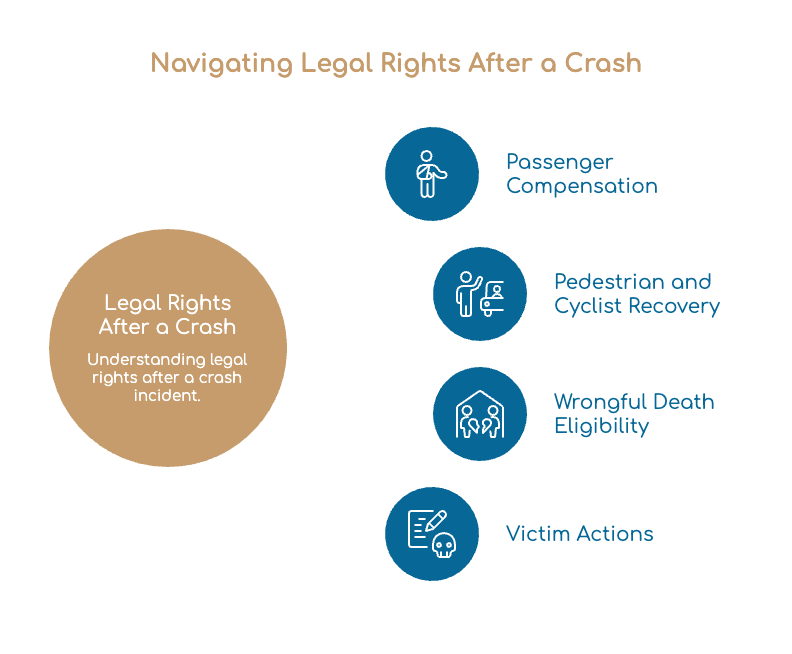
- Injured passengers may pursue damages, subject to Passenger compensation limits and available insurance coverage.
- Pedestrians and cyclists may seek recovery when a taxi or another vehicle fails to honor their legal protections.
- Families may review Wrongful death eligibility when a loved one dies from crash-related injuries.
- Victims may obtain records, preserve evidence, and seek legal guidance before accepting a settlement.
A careful legal review helps ensure that injured people are treated with dignity while available resources are pursued to support their recovery, stability, and continued care.
Why Do Daytona Beach Taxi Accident Injuries Happen?
Why do taxi accident injuries occur in Daytona Beach despite licensing rules, traffic laws, and commercial insurance requirements? Many crashes arise from human error, roadway pressure, and preventable safety failures. Taxi drivers may face long shifts, unfamiliar passengers, congested beach traffic, sudden stops, and distractions from navigation systems or dispatch communications. When defensive driving habits are ignored, minor hazards can become serious collisions.
Injuries may also result from speeding, unsafe lane changes, poor vehicle maintenance, fatigued driving, or failure to yield near hotels, airport areas, intersections, and pedestrian-heavy zones. Passengers can be harmed when seat belts are unavailable, unused, or difficult to access. Other motorists, bicyclists, and pedestrians may contribute to dangerous conditions through careless conduct.
Community-minded safety efforts can reduce harm. Drivers, companies, and passengers all benefit from consistent rider safety tips, careful vehicle inspections, and responsible operating standards that prioritize public well-being over speed or convenience.
What Should You Do After a Daytona Beach Taxi Accident Injury?
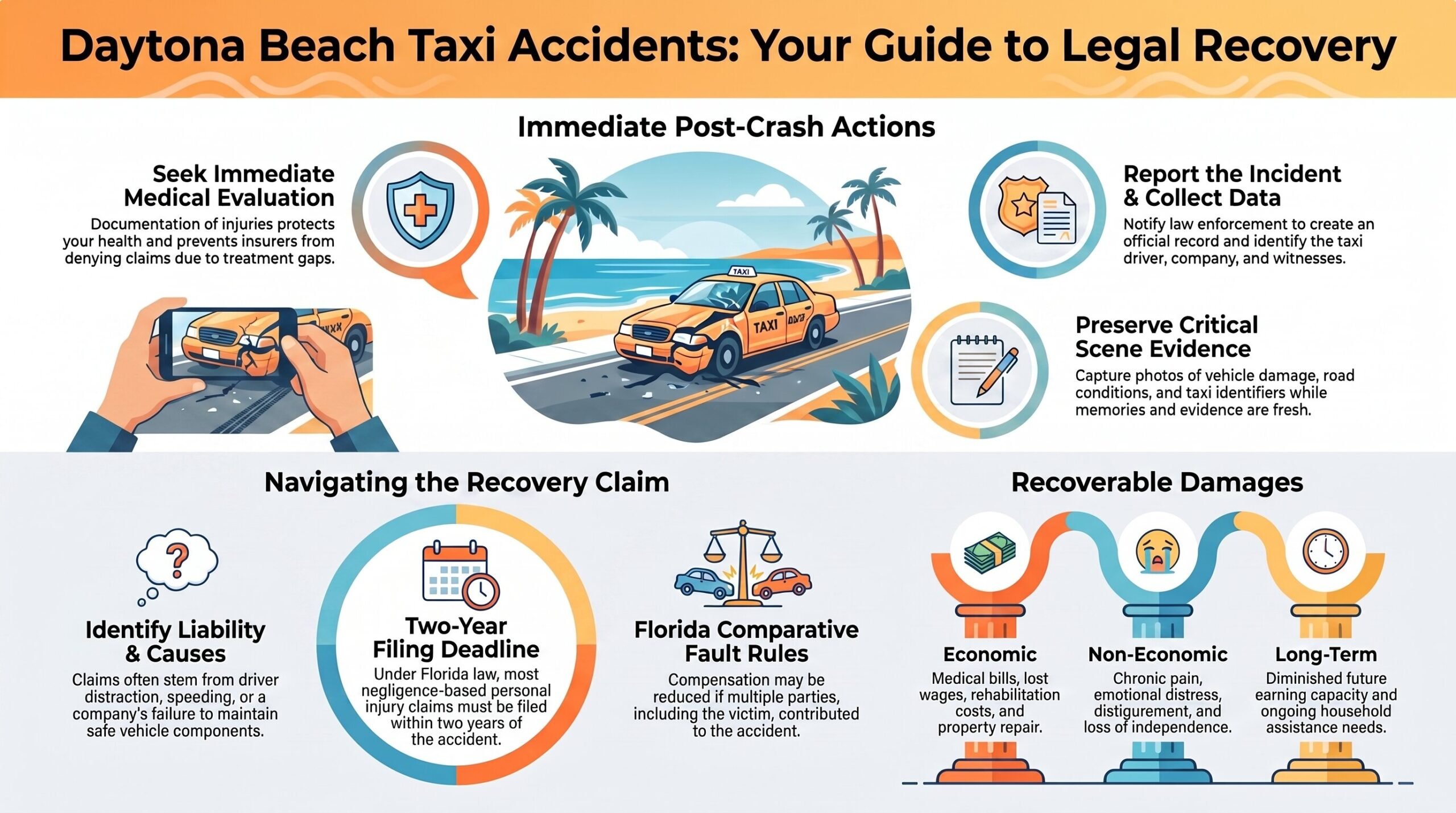
After a Daytona Beach taxi accident injury, the injured person should seek immediate medical care, even when symptoms appear minor at first. The crash should also be reported to the proper authorities, creating an official record that may become important later. Evidence and records, including photographs, witness statements, medical documents, and communications with insurers, should be carefully preserved.
Seek Immediate Medical Care
In the immediate moments following a Daytona Beach taxi accident, an injured passenger, driver, pedestrian, or cyclist should seek medical care as soon as possible. Prompt evaluation protects health, reveals hidden injuries, and creates reliable records for later review. Medical professionals can identify concussions, spinal trauma, internal injuries, or soft tissue damage that may worsen without timely treatment.
Consistent follow-up care also demonstrates responsible conduct, which may help those serving the injured present a clear account of harm. Gaps in treatment can invite Insurance claim denial, even when pain and disability are genuine. Accurate diagnoses, prescriptions, imaging results, and rehabilitation notes may support claim negotiation strategies by showing the injury’s cause, severity, and expected recovery needs. Immediate care is both a health priority and an evidentiary safeguard.
Report The Taxi Crash
Once emergency medical needs are addressed, the taxi crash should be reported to law enforcement and any appropriate transportation or rideshare authority without delay. A prompt report helps create an official record, supports public safety, and ensures that injured passengers, drivers, and bystanders receive appropriate attention. The responding officer may document the parties involved, vehicle information, location, roadway conditions, and preliminary observations.
When possible, individuals should provide clear, accurate facts without speculation or blame. Witness statements may also help clarify what occurred, especially when passengers or caregivers are focused on assisting the injured. Reporting the collision also helps establish the accident timeline, which can be important when determining notice, response times, and responsibility. Careful reporting serves the injured person and the wider community with accountability.
Preserve Evidence And Records
A police report creates an official starting point, but injured taxi passengers and other involved parties should also preserve independent evidence and records as soon as possible. Photos of vehicle damage, road conditions, visible injuries, traffic signals, and taxi identifiers may help clarify what occurred. An Immediate witness should be asked for names, phone numbers, and a brief account before memories fade.
Medical records, discharge papers, prescriptions, and follow-up instructions can establish the recovery timeline and connect injuries to the crash. Receipts for transportation, medical devices, lost wages, and caregiving support should be kept in one secure file. Insurance documentation, including claim numbers and adjuster communications, should also be saved. Careful recordkeeping supports accuracy, protects vulnerable injured persons, and helps responsible advocates present a complete claim later.
Critical Evidence in a Daytona Beach Taxi Accident Injury Case
Critical evidence can determine how liability, damages, and insurance coverage are evaluated after a Daytona Beach taxi accident. Critical materials may include: 1. Police Crash Reports, 2. Taxi Driver Records, 3. Surveillance Video Footage, 4. Medical Injury Documentation. Each category may help establish what occurred, who was responsible, and how the injuries affected the claimant.
Police Crash Reports
When a taxi collision occurs in Daytona Beach, the police crash report often becomes one of the first documents reviewed in an injury claim. This report may identify involved parties, insurance information, road conditions, citations, and the officer’s preliminary assessment of how the crash occurred. For injured passengers, pedestrians, or other motorists, it can help establish a clear foundation for accountability and fair resolution.
Although important, the report is not always complete. Eyewitness accounts, witness statements, crash scene photos, and independent investigations may reveal details not captured at the scene. Attorneys serving injured clients often carefully compare these materials, looking for inconsistencies or missing facts. A thorough review can protect the injured person’s interests and support a stronger claim for compensation after a taxi accident.
Taxi Driver Records
Because driver conduct is often central to determining fault, taxi driver records can become important evidence in a Daytona Beach taxi accident injury case. These records may reveal whether the driver met professional standards intended to protect passengers, pedestrians, and other motorists. Licensing history can show whether the driver was properly authorized to operate a taxi and whether prior restrictions or suspensions existed.
Background checks may indicate whether the company exercised reasonable care before allowing the driver to serve the public. Records of training requirements can help determine whether the driver received proper instruction on safety, passenger care, and local traffic duties. Compliance violations, including prior citations or company discipline, may also support claims that unsafe conduct was foreseeable and preventable through responsible oversight.
Surveillance Video Footage
Surveillance video can preserve a clear, objective account of how a Daytona Beach taxi accident occurred, especially when witness statements are incomplete or disputed. Cameras from nearby businesses, traffic intersections, hotels, parking areas, or rideshare zones may show vehicle positions, signals, speed, lane changes, or unsafe turns before impact. This footage can also help confirm whether pedestrians, cyclists, or other drivers contributed to the collision.
Because video may be erased quickly, prompt preservation requests are often necessary. Eyewitness testimony may corroborate the footage, but recordings can reduce uncertainty when memories differ. Legal expert analysis may further clarify timing, visibility, and driver conduct. For injured passengers and those assisting them, surveillance evidence can promote accountability, fair evaluation, and a clearer path toward responsible resolution after a taxi crash.
Medical Injury Documentation
Medical records often provide the strongest link between a Daytona Beach taxi accident and the injuries claimed after the collision. Emergency room notes, diagnostic imaging, treatment plans, prescriptions, and follow-up evaluations help show when symptoms began and how they affected daily functioning. Consistent documentation also supports medical necessity, which can assist caregivers, advocates, and legal professionals serving an injured person’s needs.
Accurate records should be gathered promptly because Insurance claim timelines may limit the time available to submit supporting materials. Delays in treatment or missing appointments may give insurers grounds to question the injury’s cause or severity. Medical documentation also works with witness statement collection, crash reports, and photographs to create a reliable account of harm. Thorough records help ensure the injured person’s condition is presented fairly.
Long-Term Effects of Daytona Beach Taxi Accident Injuries
Taxi accident injuries in Daytona Beach may lead to long-term consequences that extend well beyond the initial medical treatment. Victims can experience chronic pain conditions and cognitive health challenges, which may affect daily functioning, employment, and overall quality of life. These lasting injuries often create ongoing financial burdens, making careful documentation and legal evaluation critical.
Chronic Pain Conditions
After the immediate injuries from a Daytona Beach taxi accident have been treated, some victims continue to experience chronic pain that interferes with work, mobility, sleep, and daily routines. Persistent neck, back, shoulder, or limb pain may arise from soft tissue damage, nerve irritation, joint trauma, or a Spinal Injury that requires ongoing care. These conditions can limit a person’s ability to consistently fulfill family, employer, and community responsibilities.
Documentation is vital when chronic pain affects long-term recovery. Medical records, therapy notes, pain management plans, and work restrictions help show how symptoms persist beyond the initial period of recovery. A careful Settlement Strategy should account for future treatment, reduced earning capacity, and daily limitations, ensuring the claim reflects both present hardship and ongoing functional loss.
Cognitive Health Challenges
Long-term recovery may involve more than persistent physical pain, particularly when a Daytona Beach taxi accident causes a head impact, violent jolt, or loss of consciousness. Injured passengers may experience cognitive health challenges, including memory problems, slowed thinking, impaired concentration, mood changes, or difficulty following instructions. These symptoms can interfere with medical care, family responsibilities, and communication with providers who are trying to restore recovery.
Because distraction impacts recovery, even simple tasks may become unsafe or incomplete when attention is reduced. Timely brain injury assessments can help identify concussions, traumatic brain injuries, or related neurological concerns that might otherwise be overlooked. Careful documentation also allows advocates, caregivers, and legal professionals to understand the person’s needs and respond with patience, structure, and informed assistance throughout the recovery process.
Ongoing Financial Burdens
The financial consequences of a Daytona Beach taxi accident can continue well beyond the initial medical emergency, especially when injuries limit employment, require repeated treatment, or create new household needs. Families may face prescriptions, rehabilitation, transportation to appointments, mobility equipment, and home modifications, all while trying to preserve stability.
The Budget Impact can be severe when regular income is reduced, and critical expenses remain unchanged. Lost Earnings may include missed wages, diminished future earning capacity, and lost opportunities for advancement. Caregivers can also experience financial strain when providing care for an injured loved one requires reduced work hours or unpaid leave. These burdens often affect housing, education, nutrition, and long-term planning. Careful documentation of expenses, employment records, and medical recommendations can help clarify the full scope of recoverable losses.
Proving Liability in Daytona Beach Taxi Accident Injury Cases
Liability in a Daytona Beach taxi accident depends on evidence showing who caused the crash, how the misconduct occurred, and whether the injured person’s damages resulted from that conduct. A careful investigation may examine police reports, traffic citations, witness statements, vehicle damage, roadway conditions, dispatch records, and available camera footage. These materials can help determine whether the taxi driver, another motorist, a taxi company, or another responsible party failed to act with reasonable caution.
Strong evidence preservation tips include securing photographs, documenting injuries, retaining medical records, identifying witnesses, and requesting relevant business records before they are lost or altered. A sound Insurance claim strategy begins with proving the duty owed, the breach of that duty, causation, and measurable harm. For injured passengers, pedestrians, or drivers, establishing liability supports accountability and helps ensure that those harmed receive the resources needed to recover, restore stability, and continue serving their families and communities.
Dealing With Insurance Companies After a Daytona Beach Taxi Accident Injury
After a Daytona Beach taxi accident, insurance communications can quickly become complicated because multiple policies may be involved, including the taxi driver’s coverage, the taxi company’s commercial policy, another motorist’s insurance, or uninsured motorist benefits. Adjusters may request statements, records, or broad authorizations before the full picture of the injury is clear. A careful response helps protect the injured person’s position while preserving dignity and service-minded cooperation.
Documenting crash scene details, vehicle damage, trip records, medical visits, and witnessing testimony can support accurate insurance review. Understanding PIP coverage is also important in Florida, because personal injury protection may pay initial medical expenses and lost wages, regardless of fault, subject to policy limits. Communications should remain factual, consistent, and limited to known information. When treatment bills exceed available benefits, handling medical liens may require coordination with providers and insurers. Legal guidance can reduce avoidable errors and help ensure claims are presented with proper documentation.
What to Expect During a Daytona Beach Taxi Accident Injury Claim Process
A Daytona Beach taxi accident injury claim often begins with prompt accident reporting, followed by the careful collection of evidence, including crash reports, witness statements, medical records, and photographs. The injured party may then file claims with the appropriate insurance carriers, which can involve taxi company policies, driver coverage, or other liable parties. As the process moves forward, negotiation becomes central to securing fair compensation for medical costs, lost income, pain, and other documented losses.
Reporting The Accident
When a taxi accident occurs in Daytona Beach, prompt reporting creates the foundation for any later injury claim. Those present should contact law enforcement, request medical help when needed, and guarantee that injured passengers or pedestrians receive appropriate attention. Emergency response actions help protect health, preserve order, and create an official record of the incident. A police report may identify the taxi driver, carrier, passengers, location, and apparent contributing factors.
After authorities are notified, the involved parties should provide accurate, calm information without making assumptions or accepting blame. Taxi companies and insurers may also require timely notice, so proper reporting supports accountability. Witness statement collection should be handled respectfully, with names and contact information recorded for later follow-up by counsel, investigators, or claims representatives. This process assists injured people effectively.
Gathering Key Evidence
As the claim process begins, evidence gathering helps establish how the Daytona Beach taxi accident occurred, who may be legally responsible, and what losses resulted from the collision. Investigators may collect police reports, crash-scene photographs, vehicle-damage records, traffic-camera footage, and medical documentation. Witness statements can clarify the taxi driver’s conduct, road conditions, passenger behavior, or actions of other motorists.
Phone records may also be reviewed when distracted driving is suspected, especially if calls or messages occurred near the time of impact. Careful preservation of evidence supports a fair evaluation of injuries, treatment needs, lost income, and long-term limitations. For those committed to serving injured people, organized documentation helps ensure the claim reflects the full harm suffered and the accountability owed under Florida law.
Filing Insurance Claims
Once critical evidence has been organized, the insurance claim process typically begins with notice to the appropriate carriers, which may include the taxi company’s commercial insurer, the taxi driver’s insurer, another at-fault driver’s insurer, and the injured person’s own personal injury protection carrier. Each notice should identify the crash, the involved parties, and the known injuries with care and accuracy.
Claims representatives may request Medical treatment documentation, wage information, crash reports, photographs, witness details, and vehicle maintenance records. A legal advocate can help make sure requests are answered appropriately while protecting the injured person from incomplete statements or premature conclusions. Deadlines also matter, especially for Florida no-fault benefits and policy reporting requirements. Careful filing supports orderly review, helping responsible parties and insurers evaluate the claim with a complete, service-focused record.
Negotiating Fair Compensation
After the claim has been filed and supporting records are available, negotiations often focus on the full value of the injured person’s losses and the legal responsibility of each party involved. A careful liability investigation helps identify the taxi driver, taxi company, insurer, or another motorist as potentially responsible. Medical records are reviewed to connect the injuries to the crash, explain treatment needs, and support future care demands.
Evidence preservation remains important, because photographs, witness accounts, dispatch data, and vehicle records may strengthen the claim. Insurance documentation is then compared with wage losses, medical costs, and other damages. Through organized negotiation, a lawyer may press for fair compensation while protecting the injured person from rushed settlements that fail to serve long-term recovery needs.
Compensation for Daytona Beach Taxi Accident Injury Damages
When a taxi accident causes injuries in Daytona Beach, compensation may be available for both financial losses and the personal impact of the harm suffered. A claim may involve the taxi driver, taxi company, rideshare-related entities, insurers, or other responsible parties, depending on how the collision occurred. Careful documentation helps establish liability, connect injuries to the crash, and support a fair demand.
Comparative negligence laws may affect the amount recovered when more than one party shares fault. If an injured passenger, pedestrian, or another driver is assigned a percentage of responsibility, compensation may be reduced accordingly. This makes accurate investigation important for protecting the injured person’s interests.
The Claim settlement timeline can vary based on medical treatment, evidence collection, insurance review, and disputes over fault or damages. Legal guidance can help coordinate records, communicate with insurers, and pursue a resolution that reflects the full consequences of the injury while honoring the injured person’s dignity.
Economic vs Non-Economic Damages in Daytona Beach Taxi Accident Cases
In Daytona Beach taxi accident cases, damages are generally divided into economic losses, such as medical expenses and lost income, and non-economic losses, such as pain, suffering, and emotional distress. Each category serves a distinct purpose: financial costs can often be documented through records, whereas personal harm requires a more careful presentation of evidence. Proving both types of losses is crucial to establishing the full impact of the accident and pursuing appropriate compensation.
Economic Damage Examples
Economic damages in Daytona Beach taxi accident cases often include the measurable financial losses that result from the crash. These losses may involve ambulance charges, emergency care, surgery, rehabilitation, prescription costs, and follow-up treatment. A careful medical bill review helps identify expenses already incurred and costs reasonably expected in the future.
Lost income may also be included when injuries prevent a person from working, serving clients, or fulfilling job duties. Lost wage proof may consist of pay stubs, tax records, employer statements, and schedules showing missed work. Additional examples include reduced earning capacity, transportation costs for medical appointments, vehicle repair or replacement, and necessary household assistance. Each item must be supported with records, invoices, or reliable documentation to help establish the claim’s financial value.
Non-Economic Damage Types
Financial records can show part of a taxi accident claim, but they do not capture the full effect of serious injuries on a person’s daily life. Non-economic damages may include pain, emotional distress, disfigurement, loss of mobility, anxiety while traveling, and reduced enjoyment of family, work, or community service. These harms can be especially significant when an injured person can no longer care for others, participate in worship, or maintain trusted responsibilities.
In Daytona Beach taxi cases, liability vs. negligence may affect how these losses are assessed, especially when conduct by a driver, the company, or another motorist contributed to the crash. Florida comparative fault rules may also influence recovery when more than one party shares blame, while the personal impact remains central.
Proving Both Losses
When a Daytona Beach taxi accident causes both measurable expenses and personal suffering, proving each category requires organized evidence and a clear link to the crash. Economic losses may be demonstrated through medical bills, wage records, repair invoices, transportation receipts, and expert projections of future care costs. Non-economic damages require different proof, including treatment notes, pain journals, witness observations, and documentation of reduced mobility, anxiety, or loss of independence.
A careful presentation helps decision-makers understand how injuries affect daily service to family, work, and community. Comparative negligence may reduce recovery if the injured person shares fault, making accurate facts crucial. Counsel may also assist by challenging insurance estimates that minimize care needs, lost income, or the human impact of the collision, thereby supporting a fair evaluation.
When a Daytona Beach Taxi Accident Injury Case Goes to Trial vs Settlement
In a Daytona Beach taxi accident injury case, the path toward settlement or trial often depends on the strength of the evidence, the severity of the injuries, the amount of available insurance coverage, and whether the parties dispute fault or damages.
Settlement may serve the injured person by providing compensation sooner, reducing uncertainty, and avoiding the burden of courtroom testimony. A well-prepared claim, supported by medical records, witness statements, photographs, and expert opinions, can create leverage in settlement negotiations.
Trial may become necessary when the taxi company, driver, insurer, or another party refuses to accept fair responsibility. Trial strategy then focuses on presenting the facts clearly, explaining the human impact of the injuries, and showing why the requested damages are justified. Attorneys also weigh the client’s needs, risks, time, and ability to participate. The goal in either path remains responsible advocacy, with decisions guided by evidence, service, and practical judgment.
Florida Laws That May Affect Your Daytona Beach Taxi Accident Case
Under Florida law, a Daytona Beach taxi accident case may be affected by rules governing negligence, insurance coverage, fault allocation, filing deadlines, and the legal duties of commercial drivers. These rules help courts evaluate responsibility while protecting injured passengers, pedestrians, and other motorists who rely on safe transportation.
- Negligence requires proving that a taxi driver, company, or other party breached a duty of care, causing harm through unsafe driving, poor maintenance, or inadequate supervision.
- Comparative Fault may reduce compensation when an injured person shares responsibility, making careful review of the evidence vital for fair outcomes.
- Florida Statutes may govern insurance requirements, vehicle operation, and commercial transportation duties, shaping how claims are investigated and presented.
- Evidence Standards influence whether medical records, crash reports, witness statements, and expert opinions support liability and damages.
These legal principles guide service-focused advocacy by promoting accountability, careful preparation, and respect for those harmed in taxi collisions.
The Statute of Limitations for Daytona Beach Taxi Accident Injury Cases
Florida’s negligence and insurance rules are closely tied to the deadline for filing a Daytona Beach taxi accident injury case. Under Florida law, most negligence-based personal injury claims must be filed within 2 years of the date of the accident. This period can determine whether an injured passenger, pedestrian, bicyclist, or another motorist may pursue compensation through the civil court system.
Timely action also supports responsible stewardship of the claim. Injury documentation, including medical records, photographs, wage information, and treatment notes, is often strongest when gathered soon after the crash. Delays may make it harder to connect injuries to the taxi accident, especially when symptoms change over time.
The filing deadline may also affect Settlement vs trial considerations. Insurers often evaluate claims with attention to approaching deadlines, available evidence, and the seriousness of the injuries. When the statute of limitations expires, the injured person may lose the ability to seek recovery through a lawsuit.
How a Daytona Beach Taxi Accident Lawyer Can Help You
After a taxi accident in Daytona Beach, a taxi accident lawyer can help evaluate liability, preserve evidence, and identify available sources of compensation. Legal guidance may support injured passengers, drivers, or pedestrians as they focus on recovery while continuing to serve their families, communities, and work responsibilities.
- Investigating the crash: Counsel may review police reports, taxi records, driver history, dispatch data, and witness statements to determine fault.
- Organizing medical documentation: A lawyer can connect treatment records, diagnoses, bills, and future care needs to the injuries caused by the collision.
- Managing the Insurance claim timeline: Legal representation may track deadlines, respond to insurer requests, and reduce delays that can harm a claim.
- Assessing damages: Counsel can evaluate lost income, medical expenses, pain, impairment, and other losses with careful attention to proof.
Through these services, a lawyer helps present a structured claim, protect legal rights, and pursue fair compensation.
When to Contact a Daytona Beach Taxi Accident Lawyer
The timing of legal contact can affect how well evidence is preserved, how promptly insurance issues are addressed, and how accurately damages are documented. After a taxi collision in Daytona Beach, contact is generally appropriate once immediate safety needs have been addressed and medical attention is underway. A 24/7 medical evaluation may help identify injuries that are not immediately obvious, while also creating records that support later documentation.
Legal contact is especially important when multiple parties may be involved, including the taxi driver, taxi company, rideshare-style dispatcher, other motorists, or insurers. Early communication can also help reduce insurance claim delays, particularly when liability is disputed or coverage information is incomplete.
If a person is hospitalized, caring for an injured passenger, or assisting a family member, a representative may seek guidance on their behalf. Prompt action allows those serving the injured person to focus on care, while deadlines, records, and communications are handled in an orderly manner.
Why You Need an Experienced Daytona Beach Taxi Accident Lawyer
Intricate liability issues often make taxi accident claims more difficult than ordinary car accident cases. A crash may involve the driver, taxi company, vehicle owner, maintenance provider, or another motorist. An experienced Daytona Beach taxi accident lawyer understands how these relationships affect responsibility and how to pursue accountability while protecting the injured person’s ability to obtain the support they need.
Legal guidance is especially important when victims are focused on recovery, family obligations, and service to others. Counsel can monitor Insurance claim timelines, address insurer requests, and prevent missed deadlines that could weaken a claim. The lawyer may also provide evidence-preservation tips, such as saving medical records, photographs, witness details, receipts, and ride information before they are lost or altered.
Experienced representation helps organize facts, calculate losses, and respond to disputed fault. In serious cases, this steady advocacy allows injured individuals to seek fair compensation while maintaining dignity, stability, and a clear path forward.
How to Choose the Right Daytona Beach Taxi Accident Lawyer for Your Case
Choosing the right Daytona Beach taxi accident lawyer begins with evaluating experience in commercial passenger-vehicle claims, not simply in general car accident cases. Taxi cases may involve drivers, cab companies, insurers, and municipal regulations, so the attorney should understand how to identify every responsible party. A careful lawyer will promptly seek Vehicle maintenance records, driver qualification files, dispatch logs, and trip data before pivotal evidence is lost or altered.
The selection process should also consider communication, responsiveness, and a clear commitment to protecting injured passengers, pedestrians, or other motorists. Effective representation includes collecting dashcam evidence, following up with witnesses, reviewing medical documentation, and coordinating with experts when liability or damages are disputed. A lawyer should explain the legal process in direct terms, provide realistic expectations, and treat the client’s recovery with dignity. Those choosing counsel should look for preparation, compassion, and the ability to serve the injured through organized, disciplined advocacy from the first consultation.
About The Law Offices of Anidjar & Levine
For individuals injured in a taxi accident, Anidjar & Levine offers legal representation focused on protecting clients’ rights while managing the demands of an injury claim.
The firm assists accident victims in Daytona Beach by addressing medical bills, lost income, insurance communications, and liability concerns with careful attention to detail.
Its Client intake process is structured to identify the facts of the collision, the extent of injuries, and the injured person’s immediate needs.
Through a Legal case evaluation, the firm reviews available evidence, applicable insurance coverage, and potential sources of compensation.
This approach helps clients understand the strength of their claim and the steps involved in seeking recovery.
Anidjar & Levine’s attorneys handle negotiations, documentation, and case preparation so clients can focus on recovery.
Their work reflects a commitment to service, accountability, and practical guidance for those facing serious consequences after a taxi accident in Daytona Beach.
Frequently Asked Questions
Can I Sue if the Taxi Driver Was off Duty?
Yes, a person may sue if an off-duty taxi driver caused harm through careless conduct. Off-duty liability depends on whether the driver acted personally, used the taxi with company permission, or appeared to serve the taxi business. Negligence evidence may include crash reports, witness statements, phone records, vehicle ownership, and insurance details. A careful review helps protect injured people, support accountability, and guide responsible service to affected families.
Are Rideshare Accidents Handled Differently Than Taxi Accidents?
Yes, rideshare accidents are often handled differently than taxi accidents. Liability differences may depend on whether the driver was logged into the app, waiting for a request, or transporting a passenger. Insurance requirements also vary, because rideshare coverage changes by activity period, while taxi companies typically carry commercial policies. Those assisting injured people should carefully identify all responsible parties, preserve records, and evaluate applicable coverage before pursuing compensation.
What if I Was Injured While Entering or Exiting a Taxi?
A person injured while entering or exiting a taxi may have a valid claim if the taxi driver’s negligence created unsafe conditions. Slip-and-fall hazards, Doorway injuries, sudden movement, poor stopping location, or driver inattention should be assessed carefully. Witness statements can clarify how the incident occurred, while Injury documentation helps connect harm to the event. Those serving injured individuals should preserve evidence promptly and evaluate responsibility with disciplined, professional care.
Can Tourists File Taxi Accident Claims in Daytona Beach?
Yes, tourists may file taxi accident claims in Daytona Beach when another party’s negligence causes injury. Tourist eligibility generally depends on accident location, fault, and provable damages. Claim deadlines under Florida law still apply, so prompt action is essential to service injured visitors. Liability exceptions may affect cases involving rideshare issues, independent drivers, or shared fault. Documentation needs include medical records, police reports, photographs, witness information, travel records, and insurance communications.
Do Taxi Companies Have Higher Insurance Coverage Requirements?
Yes, taxi companies generally must carry higher insurance coverage than private drivers because they transport passengers for payment and face greater public safety responsibilities. Florida insurance mandates may require elevated protection for commercial vehicles, depending on vehicle type, seating capacity, and local licensing rules. These commercial coverage limits help protect injured passengers, pedestrians, and other motorists, ensuring responsible service providers can address medical costs, lost wages, and related harms after a collision.
—————————
Taxi accident claims in Daytona Beach can involve complicated liability issues, commercial insurance policies, and serious injury consequences.
A qualified attorney can investigate the crash, identify responsible parties, manage communications with insurers, and pursue fair compensation for medical costs, lost income, and other damages.
The Law Offices of Anidjar and Levine provides experienced legal guidance for injured passengers, drivers, and pedestrians, helping protect their rights while they focus on recovery and the practical demands that follow a collision.
For related legal support, a Daytona Beach Car Accident Lawyer can help you understand your options after a crash.