The Law Offices of Anidjar and Levine assists by preserving crash evidence, securing medical and police records, identifying liable drivers or other parties, and addressing cross-state legal issues that often arise on this corridor.
Counsel also manages insurer communications, evaluates damages, including medical costs, lost income, and future care, and pursues fair compensation through settlement or litigation when necessary.
The sections below explain the claim process, crucial deadlines, and factors that can affect financial recovery.
For additional guidance, visit our Miami Car Accident Attorney page.
Main Takeaways
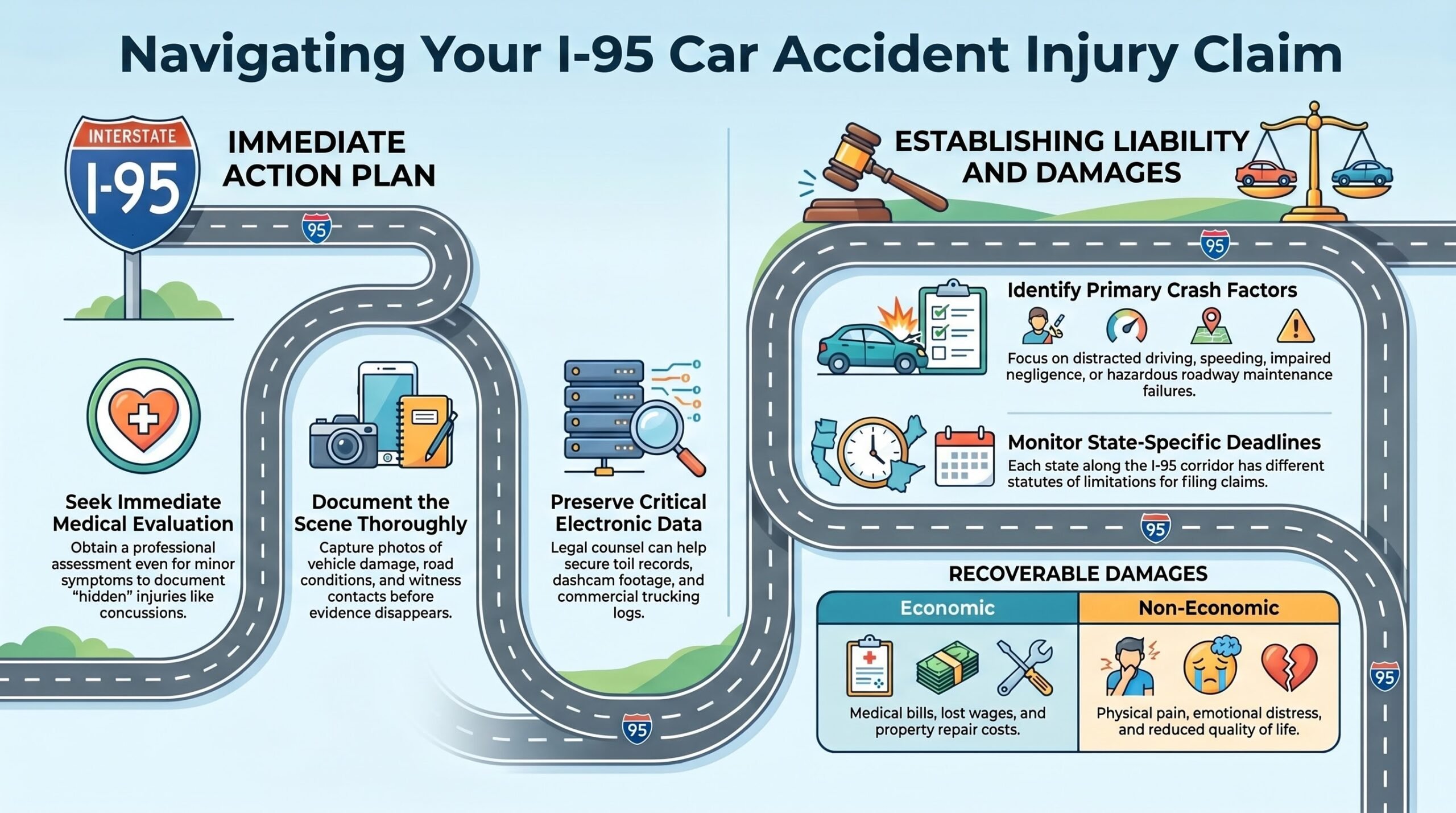
- Seek immediate medical evaluation after an I-95 crash, even for minor symptoms, to detect hidden injuries and create treatment records.
- Document the scene with photos, witness contacts, road conditions, vehicle damage, and a written timeline before details are lost.
- An Interstate I-95 injury lawyer can preserve evidence, obtain reports and electronic data, and identify all liable parties.
- Liability in I-95 crashes often involves speeding, distracted driving, impairment, hazardous roadway conditions, or multi-vehicle chain-reaction collisions.
- A lawyer can calculate damages for medical bills, lost income, future care, pain, and long-term physical or emotional effects.
How We Can Help With Your Miami Interstate I-95 Car Accident Injury Claim
Guiding an Interstate I-95 car accident injury claim often requires prompt investigation, careful documentation, and a clear understanding of how liability and damages are established. Effective legal support centers on protecting injured people, preserving evidence, and organizing records so insurers and opposing parties cannot minimize the harm suffered.
Counsel typically assists by collecting crash reports, medical files, witness statements, photographs, and electronic data when available. Attention is also given to Traffic patterns, roadway conditions, and commercial vehicle activity that may clarify how the collision unfolded. Communication with insurers is carefully managed, helping clients avoid statements that could weaken their claims. Damage calculations are prepared with discipline, including medical costs, lost income, future care, and pain-related losses.


The process also benefits from realistic guidance about Settlement timelines, since steady preparation often strengthens negotiating positions. Throughout the claim, legal advocacy remains focused on accountability, practical support, and securing resources that help injured individuals continue serving their families and communities.
Understanding Miami Interstate I-95 Car Accident Injury Cases
OUR CONSULTATIONSARE FREE
START YOUR FREE CASE REVIEW

Along Interstate I-95, car accident injury cases often present issues more complex than those in ordinary roadway collisions. These claims frequently require careful evaluation of Interstate dynamics, including traffic flow, lane patterns, commercial vehicle presence, and multi-jurisdiction concerns. A clear understanding of these elements helps advocates, families, and community-minded professionals respond responsibly and support injured people with informed guidance.
In many matters, evidence must be gathered quickly and interpreted with precision. Medical records, roadway images, witness statements, electronic data, and police findings may all shape the legal analysis. Accident reconstruction can clarify vehicle movement, impact sequence, and the extent to which injuries correspond with the event. Because losses may involve long-term treatment, reduced earning capacity, and continuing care needs, these cases demand organized preparation. A disciplined review of liability, damages, and procedural rules allows those assisting others to pursue fair outcomes with diligence, compassion, and respect for every affected person.

Common Causes of Interstate I-95 Car Accidents


Several recurring factors contribute to serious collisions on Interstate I-95, often placing drivers and passengers at substantial risk. Common causes include distracted driving, speeding, and tailgating, impaired driver negligence, and hazardous road conditions that reduce reaction time and vehicle control. Identifying these patterns helps clarify how many I-95 accidents occur and why liability may arise in injury claims.
Distracted Driving Risks
Distraction remains one of the most persistent causes of serious crashes on I-95, where high speeds, dense traffic, and frequent lane changes leave little margin for error. Even brief inattention can prevent a driver from noticing braking vehicles, merging traffic, roadway debris, or changing signals in time to respond safely.
Common distractions include texting, navigation use, eating, adjusting vehicle controls, and conversations with passengers. Although many drivers rely on technology, hands-free limitations do not eliminate risk, because cognitive distraction can still reduce judgment, awareness, and reaction time. On a major interstate, those lapses may harm not only the distracted driver but also nearby families, commuters, and commercial operators. Careful driving practices, pre-set navigation, and full visual attention help protect others and reflect the responsibility every motorist owes the traveling public.
Speeding And Tailgating
Speeding and tailgating create similarly dangerous conditions on I-95, where high traffic volumes, frequent congestion, and high travel speeds leave little time or space to avoid a collision. Drivers who exceed safe speeds reduce reaction time, increase stopping distance, and make lane changes more hazardous for everyone nearby.
The speeding consequences often include severe rear-end crashes, loss of vehicle control, and multi-car pileups that disrupt families and communities. Tailgating psychology also plays a role, as impatience, perceived urgency, and aggressive driving habits can pressure drivers to follow too closely. On a crowded interstate, even a brief slowdown may trigger a chain reaction when vehicles leave no margin for error. Recognizing these behaviors helps promote safer travel, protect vulnerable motorists, and support a roadway culture grounded in responsibility, patience, and care for others.
Impaired Driver Negligence
Impaired driving remains one of the most dangerous forms of negligence on I-95, where high speeds, dense traffic, and limited reaction time can quickly turn one poor decision into a catastrophic collision. Alcohol, illegal drugs, and prescription impairment can all diminish judgment, coordination, and awareness, leaving other motorists vulnerable to sudden lane departures, delayed braking, and reckless maneuvers. In some cases, a drunk crossing of lanes or the median creates devastating head-on or sideswipe impacts.
Those who seek to protect injured people often recognize that these crashes are preventable because impaired drivers choose to travel despite clear risks to others. Careful investigation may uncover toxicology results, witness statements, surveillance footage, and officer observations that help establish negligence and support accountability for victims and their families after serious interstate collisions.
Hazardous Road Conditions
Along I-95, hazardous road conditions can create sudden, unforgiving dangers that leave even attentive drivers little time to respond. Uneven pavement, debris, construction zones, poor drainage, and faded signage may all increase the likelihood of serious collisions, especially at highway speeds and in heavy traffic.
When these conditions are present, motorists may face reduced visibility, hydroplaning, abrupt lane shifts, or confusion about exits and merging patterns. Public agencies and contractors responsible for roadway maintenance are generally expected to identify hazards, provide adequate warnings, and correct unsafe conditions within a reasonable time. When they fail to do so, preventable crashes can result, placing families, commuters, and commercial drivers at risk.
Careful investigation often helps determine whether dangerous roadway defects contributed to an I-95 accident and resulting injuries or fatalities.
Legal Rights of Interstate I-95 Car Accident Injury Victims
In the aftermath of an Interstate I-95 collision, injury victims generally have the right to pursue compensation for medical expenses, lost income, property damage, and pain and suffering when another party’s negligence caused the crash. These legal protections reflect important Victim rights and help families restore stability while continuing to serve their communities with dignity and care.
After an I-95 collision, victims may seek compensation to protect their rights and support their recovery with dignity.
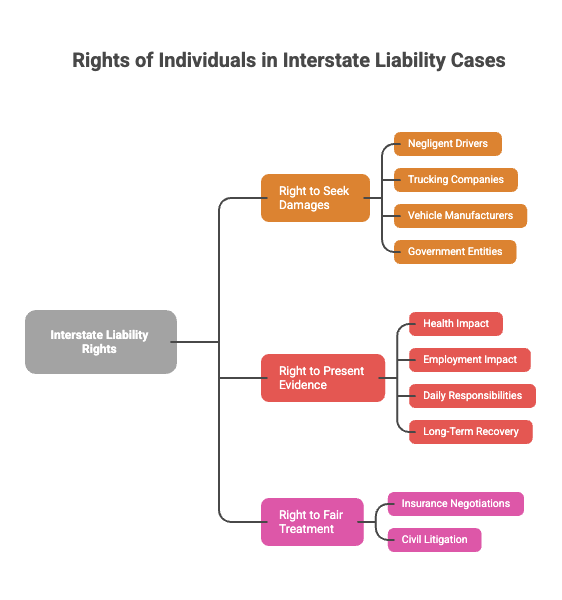
Key rights commonly include:
- The right to seek damages from negligent drivers, trucking companies, vehicle manufacturers, or government entities when Interstate liability is established.
- The right to present evidence showing how injuries affected health, employment, daily responsibilities, and long-term recovery.
- The right to fair treatment during insurance negotiations and, when necessary, to pursue relief through civil litigation.
Depending on the facts, more than one party may share responsibility. State laws, insurance rules, and filing deadlines can affect recovery. A careful legal evaluation often clarifies available claims and protects the full measure of compensation allowed under law for victims.
Steps to Take After an Interstate I-95 Car Accident Injury
After an Interstate I-95 car accident injury, immediate medical care is a vital first step, both to protect health and to establish a clear record of the harm sustained. It is also important to document the accident scene carefully, including vehicle damage, roadway conditions, and any visible injuries, as this information may support a later claim. Prompt contact with an I-95 lawyer can then help guarantee that legal options are evaluated and important evidence is preserved.
Seek Immediate Medical Care
Because injuries sustained in an Interstate I-95 car accident are not always immediately apparent, prompt medical evaluation is vital even when symptoms seem minor at first. A timely examination helps identify internal injuries, concussions, soft tissue damage, and delayed pain responses before conditions worsen and burden loved ones.
Those affected should accept emergency assessment at the scene when offered, or obtain urgent transportation to a hospital, urgent care clinic, or physician without delay. Medical professionals can stabilize injuries, recommend treatment, and create records that support continuity of care. It is also important to follow all instructions, take prescribed medications as directed, and attend follow-up appointments. Careful attention to recovery protects health, strengthens long-term outcomes, and enables injured individuals to return to serving their families, workplaces, and communities safely.
Document The Accident Scene
Preserve as much evidence as safety permits, since careful documentation at the scene can clarify how an Interstate I-95 collision occurred and who may be responsible. If conditions allow, those present should collect scene photos showing vehicle positions, damage patterns, skid marks, roadway debris, traffic signs, weather conditions, and any visible injuries. Images taken from several angles can help preserve details that may later change or disappear.
It is also prudent to note the time, location, lane of travel, and statements made by other drivers. Reliable witness statements may provide important context, especially when neutral observers noticed speeding, unsafe lane changes, or distracted driving. A brief written summary prepared soon after the crash can support accuracy. Thorough documentation serves injured people, families, insurers, and investigators seeking a fair understanding of events.
Contact An I-95 Lawyer
In the hours and days following an Interstate I-95 collision, contacting a lawyer can help protect an injured person’s legal and financial interests. Counsel can review medical records, crash reports, and insurance communications, then explain options with clarity and purpose.
During client intake, the firm typically gathers facts about injuries, treatment, lost income, and available evidence. This early review helps identify deadlines, preserve crucial documents, and reduce mistakes when speaking with insurers. An attorney may also outline the fee structure, so the injured person understands costs, contingency terms, and responsibilities before moving forward. Timely legal guidance supports fair compensation and allows the injured person, family, and caregivers to focus on recovery and service to others. Early action often strengthens a claim and prevents avoidable setbacks later.
How an Interstate I-95 Car Accident Injury Lawyer Can Help You
After a collision on Interstate I-95, an experienced car accident injury lawyer can provide essential guidance by evaluating the facts of the crash, identifying liable parties, and explaining the legal options available under the circumstances. Counsel often gathers police reports, medical records, witness statements, and roadway evidence to build a clear account of what occurred and who should be held responsible.
A lawyer may also protect the injured person’s interests by managing communications, documenting losses, and addressing issues that can affect recovery, including medical liens and insurance disputes.
Common forms of assistance include:
- investigating the crash thoroughly and preserving pivotal evidence
- negotiating with insurers for fair payment of medical expenses and lost income
- preparing a claim for court when settlement efforts do not produce a just result
This support allows injured individuals to focus on serving their families and communities while their legal advocate pursues accountability, financial stability, and an orderly resolution.
Long-Term Effects of Interstate I-95 Car Accidents Injuries
Interstate I-95 car accident injuries often extend far beyond the initial emergency, affecting victims for months or even years. Many individuals face chronic pain that limits daily function, emotional trauma that disrupts mental well-being, and financial burdens tied to ongoing medical care and lost income. These long-term effects can markedly alter a person’s quality of life and often become a central issue in the legal recovery process.
Chronic Pain Challenges
Persistence often defines the hardship of chronic pain following serious I-95 car accidents, as symptoms may continue long after fractures have healed, lacerations have closed, or initial treatment has ended. Survivors may face persistent back pain, nerve damage, joint stiffness, or headaches that limit mobility and daily service to family, work, and community. Chronic fatigue often accompanies ongoing discomfort, reducing stamina and complicating recovery.
Effective pain management often requires coordinated care, including physical therapy, medication oversight, diagnostic follow-up, and practical accommodations at home or at work. Some individuals need assistive devices, modified duties, or repeated evaluations to preserve function and prevent further strain. Because chronic pain can alter long-term health needs, careful documentation and consistent treatment become vital when seeking accountability, financial support, and resources that help injured people continue serving others with dignity.
Emotional Trauma Effects
Long-term harm from an I-95 car accident often extends beyond physical pain, affecting mental and emotional health in ways that can disrupt daily life for months or years. Survivors may experience anxiety, intrusive memories, sleep disturbance, depression, and heightened fear during travel. These responses can strain marriages, parenting, friendships, and workplace interactions, especially when others misunderstand invisible injuries.
In some cases, Attachment disruption develops after the crash, making trust, closeness, and emotional regulation more difficult. Caregivers, advocates, and legal professionals who serve injured people should recognize these effects with patience and consistency. Trauma-informed support may help restore stability, strengthen relationships, and encourage treatment participation. Although recovery is rarely linear, some individuals eventually report post-traumatic growth, gaining deeper resilience, renewed purpose, and a stronger commitment to helping others recover after profound adversity.
Lasting Financial Burdens
The financial impact of an I-95 car accident often continues well after emergency treatment ends, creating pressures that can affect nearly every part of an injured person’s life. Ongoing care, rehabilitation, medications, and adaptive equipment may generate substantial medical debt, especially when recovery is prolonged or complications arise. At the same time, lost wages can undermine household stability, limiting the ability to meet mortgage payments, utilities, childcare costs, and other basic obligations.
These burdens often extend beyond the injured person, affecting family members who may reduce work hours to provide transportation, supervision, or daily assistance. In many cases, diminished earning capacity creates a long-term gap between prior income and future needs. Careful legal guidance can help families pursue compensation that supports treatment, stability, and continued service to those who depend on them.
Proving Liability in Interstate I-95 Car Accident Injury Cases
Establishing liability in Interstate I-95 car accident injury cases often requires a careful review of how the crash occurred, which drivers or entities contributed to it, and whether any traffic laws or safety duties were violated. Courts and counsel often examine police reports, witness statements, roadway conditions, vehicle damage, and electronic data to identify negligent conduct.
Because I-95 crosses multiple states, liability analysis may involve comparative jurisdiction questions, especially when the collision, the parties’ residence, and applicable laws differ. In service to injured people and their families, attorneys may use forensic reconstruction to clarify speed, lane changes, braking, visibility, and impact angles. Medical records, surveillance footage, trucking logs, maintenance histories, and cellphone evidence can also help show causation and fault.
In some cases, responsibility may extend beyond a driver to employers, vehicle owners, contractors, or public entities whose actions or omissions contributed to unsafe conditions. Clear proof supports accountability and informed legal action.
Dealing With Insurance Companies After an Interstate I-95 Car Accident Injury
After an Interstate I-95 car accident injury, communications with insurance companies often shape the financial outcome of a claim. Insurers may request recorded statements, broad medical authorizations, or quick settlements before the full extent of harm is understood. A careful, service-minded approach emphasizes accuracy, restraint, and protection of the injured person’s interests.
Documentation is crucial. Medical records, repair estimates, photographs, wage information, and organized correspondence can reduce misunderstandings and strengthen credibility. Insurance adjusters may appear cooperative while still minimizing losses through delayed responses, selective interpretations, claim denials, or other bad faith tactics. For families focused on recovery and responsible stewardship, every communication should remain factual and measured.
Legal guidance can help prevent avoidable errors, preserve important evidence, and make certain the insurer evaluates damages fairly. When serious injuries disrupt work, caregiving, and community responsibilities, strong advocacy promotes accountability and helps injured people access the resources needed to support their households with stability.
What to Expect During an Interstate I-95 Car Accident Injury Claim Process
An Interstate I-95 car accident injury claim typically begins with formal filing steps, followed by the collection of evidence and supporting documentation that can substantiate liability and damages. The process then often moves into insurance negotiations, where claim value, fault, and the extent of injuries are closely examined. If a fair resolution is not reached, the matter may proceed to settlement discussions or trial, depending on the facts of the case and the parties’ positions.
Claim Filing Steps
Navigating an Interstate I-95 car accident injury claim generally begins with a prompt case review, during which vital facts, available evidence, insurance information, and the extent of the injuries are identified. From there, notice is typically given to all relevant insurers, and deadlines are carefully tracked to address nuances in the statute that may affect filing rights.
Next, counsel commonly prepares and submits the formal claim, identifies liable parties, and manages communications with adjusters. Special care is often taken when a witness’s account is faulty and influences early liability decisions. As the claim advances, the injured person may be guided through insurer requests, medical updates, and settlement discussions. If a fair resolution is not offered, the matter may proceed toward litigation. Throughout each step, disciplined case management supports accountability, stability, and a service-centered path toward recovery.
Evidence And Documentation
In an Interstate I-95 car accident injury claim, evidence and documentation often determine how liability, damages, and credibility are evaluated from the outset. Helpful claim preparation usually begins with collecting photographic evidence of vehicle damage, roadway conditions, traffic controls, weather, and visible injuries. Witness names, contact details, police reports, and repair estimates also support a clear factual record.
Medical records are equally important because they connect the collision to diagnosis, treatment, limitations, and expected recovery needs. Consistent documentation of appointments, prescriptions, therapy, and missed work can demonstrate the injury’s practical effect on daily responsibilities and service to others. A well-organized file allows attorneys, providers, and family members to respond accurately to requests for information. Thorough records reduce confusion, preserve important details, and strengthen the overall presentation of the claim.
Insurance Negotiation Process
During the insurance negotiation process, claimants in an Interstate I-95 car accident case should expect careful review, repeated information requests, and strategic evaluation by the insurer before any settlement position is finalized. Adjusters commonly examine medical records, proof of wage loss, repair estimates, and witness statements to measure exposure and verify damages. They may compare injuries against prior conditions, question treatment timing, and assess available policy limits.
Consistent documentation helps protect the claim and supports a fair presentation of losses. Legal counsel often responds to insurer inquiries, organizes supporting materials, and addresses delay tactics that may burden families already focused on recovery and service to others. If an insurer misrepresents coverage, ignores evidence, or refuses to engage in reasonable communication, those actions can raise concerns about bad-faith negotiations under applicable laws and regulations.
Settlement Or Trial
At the point when negotiations no longer produce meaningful progress, an Interstate I-95 car accident injury claim may move toward settlement finalization or trial preparation, depending on the strength of the evidence, the value of the losses, and the parties’ willingness to resolve disputed issues.
Counsel generally evaluates medical records, witness statements, and liability issues before advising whether resolution outside court best serves the injured person and those relying on that recovery. Settlement timelines vary based on treatment completion, insurer cooperation, and the need for expert review. If fair terms are not offered, trial preparation may include discovery, motions, and testimony aimed at presenting a clear account of harm and responsibility.
Although many claims resolve before court, jury verdicts can determine compensation when disputes remain substantial. Throughout this stage, careful preparation supports informed, service-minded decision making.
Compensation for Interstate I-95 Car Accidents Injury Damages
Following a collision on Interstate I-95, an injured person may be entitled to compensation for losses that extend far beyond the initial medical bill. Recovery may include payment for emergency care, ongoing treatment, rehabilitation, prescription costs, lost income, diminished earning capacity, property damage, and other accident-related obligations that disrupt stability and service to family or community.
A careful claim evaluation also considers future needs, including long-term care planning and the impact of serious impairment on daily responsibilities. In some cases, insurers, hospitals, or government programs assert medical liens against a settlement, which must be addressed properly to protect the injured person’s net recovery. Where evidence shows especially reckless or intentional misconduct, punitive damages may also be sought to hold the wrongdoer accountable and deter similar conduct.
Because crashes on Interstate I-95 often involve multiple vehicles, commercial carriers, or out-of-state parties, thorough documentation and timely legal action are crucial to securing full and fair compensation under applicable law.
Economic vs Non-Economic Damages in Interstate I-95 Car Accident Cases
In Interstate I-95 car accident cases, damages are generally divided into economic and non-economic categories, each addressing a different type of loss. Economic damages refer to measurable financial harm, such as medical expenses, lost income, and property damage, while non-economic losses concern pain and suffering, emotional distress, and reduced quality of life. Establishing both damage types usually requires clear documentation, credible testimony, and evidence that connects the collision to the claimed losses.
Economic Damages Explained
Under interstate accident law, economic damages refer to the measurable financial losses caused by an I-95 car accident, such as medical bills, lost wages, rehabilitation costs, property damage, and reduced earning capacity. These damages are documented through invoices, pay records, repair estimates, and expert evaluations. Their purpose is to restore financial stability so injured people and their families can continue caring for others and meeting daily obligations.
In interstate cases, compensation may include emergency treatment, follow-up care, therapy, medication, transportation costs, and replacement services during recovery. It may also address lost wages from missed work and diminished future earnings when injuries limit long-term employment. Property damage covers vehicle repairs or replacement, as well as other personal items damaged in the crash. Careful proof of these losses strengthens a claim and supports fair recovery under applicable law.
Non-Economic Losses Overview
Non-economic losses address the human impact of an I-95 car accident that does not appear on bills, wage statements, or repair estimates. These damages concern the injured person’s lived experience, including physical pain, emotional distress, reduced enjoyment of life, and the strain serious injuries may place on close relationships.
In interstate collision cases, these losses often reflect long recoveries, permanent discomfort, anxiety while traveling, and limitations that affect daily routines and service to family or community. Pain valuation and Loss quantification seek to recognize these harms in a structured legal framework, even though they are not tied to fixed prices. While less visible than medical expenses or lost income, non-economic losses remain an important part of understanding the full consequences of a serious I-95 crash for victims and families alike.
Proving Both Damage Types
Establishing economic and non-economic damages in an interstate I-95 car accident case requires different forms of proof, yet both demand clear, organized evidence that connects the collision to the claimed harm. Economic losses are typically shown through medical bills, wage records, repair estimates, and future care projections. Non-economic harm often requires treatment notes, pain journals, family observations, and expert testimony to explain how injuries affect daily functioning, relationships, and long-term well-being. In many cases, counsel also addresses comparative damages, especially when insurers argue that the injured person shares fault for the crash or the severity of losses.
Careful documentation allows advocates to present a fuller account of what was taken and what support is needed. This evidence-driven approach helps promote fair recovery and responsible service to injured individuals and families.
When an Interstate I-95 Car Accident Injury Case Goes to Trial vs Settlement
A car accident injury case arising from a crash on Interstate I-95 may resolve through settlement or proceed to trial, depending on the strength of the evidence, the severity of the injuries, and the parties’ willingness to compromise. In many claims, settlement timing is influenced by medical progress, insurance evaluations, and the clarity of fault.
When liability is well documented and damages are reasonably measurable, settlement often serves everyone by reducing expense, delay, and uncertainty. It may provide injured people and their families with resources needed for treatment, household stability, and continued care. Trial becomes more likely when insurers dispute fault, minimize losses, or refuse fair compensation for long-term harm. In those situations, counsel may prepare witness testimony, expert analysis, and jury strategies designed to present the facts clearly and responsibly.
A courtroom verdict can produce accountability, yet it also carries risk for both sides. Careful case evaluation helps determine which path best supports justice, recovery, and informed decision-making.

The Statute of Limitations for Interstate I-95 Car Accident Injury Cases
Over time, the statute of limitations becomes one of the most important legal deadlines in an Interstate I-95 car accident injury case, because it controls how long an injured person has to file suit. Each state along I-95 sets its own filing period, and that period may differ for personal injury, wrongful death, or claims involving public entities.
A missed deadline can prevent recovery, even when injuries are severe and liability appears clear. For that reason, careful attention to dates serves not only the injured person but also family members who may depend on a fair outcome. Courts may recognize limited statute exceptions in narrow circumstances, such as delayed discovery of harm, minority, or incapacity. In some situations, courts may toll limitations for a defined period, but these rules are applied strictly. Because interstate collisions can involve multiple jurisdictions, identifying the correct deadline requires a precise review of where the crash occurred, who was involved, and which law governs.
When to Contact an Interstate I-95 Car Accident Injury Lawyer
Seek legal guidance as soon as serious injuries, disputed fault, multiple vehicles, or cross-state issues appear after an Interstate I-95 collision. Prompt contact is also appropriate when insurers request recorded statements, medical treatment is ongoing, or a family faces lost income and mounting expenses. Early intervention helps protect rights before deadlines, paperwork errors, or conflicting accounts create avoidable harm.
Timely communication with counsel supports the preservation of evidence, including vehicle data, surveillance footage, witness details, police reports, and medical records. It also helps coordinate information when a crash involves drivers, employers, or commercial carriers from different states along I-95. Families focused on recovery and service to others often benefit from organized guidance during this period, especially when uncertainty affects care decisions or transportation needs. Reaching out soon after the collision, or immediately after new complications arise, allows important facts to be documented accurately and practical next steps to be identified with clarity. This supports informed planning for recovery.
Why You Need an Experienced Interstate I-95 Car Accident Injury Lawyer
Handling the legal and practical consequences of an Interstate I-95 collision often requires more than general injury representation, particularly when the crash involves severe harm, disputed liability, commercial vehicles, or parties from multiple states. An experienced lawyer provides structure during uncertainty and protects the injured person’s ability to pursue fair recovery while focusing on recovery and service to family and community.
Experience matters because I-95 cases often involve Interstate jurisdiction, overlapping insurance issues, and evidence that disappears quickly. Skilled counsel can coordinate records, preserve electronic data, interview witnesses, and work with Accident reconstruction professionals to clarify how the collision occurred. This level of preparation supports accurate damage valuation and strengthens negotiations or litigation when insurers attempt to minimize losses.
A seasoned attorney also anticipates procedural barriers, filing deadlines, and venue complications. By managing these demands efficiently, legal counsel helps injured individuals pursue accountability, secure needed resources, and move forward with stability, dignity, and confidence.
How to Choose the Right Interstate I-95 Car Accident Injury Lawyer for Your Case
In selecting counsel for an Interstate I-95 collision case, an injured person should evaluate more than general personal injury experience. The lawyer’s record with highway crashes, catastrophic injuries, and multi-vehicle claims can indicate whether the firm understands the demands of interstate litigation. Attention should also be given to communication practices, responsiveness, and the ability to explain legal options clearly and respectfully.
Client interviews offer a practical way to assess professionalism, preparation, and commitment to service. During these meetings, an injured person may ask about prior I-95 cases, negotiation strategies, and expected timelines. Fee structures should be reviewed carefully, including contingency percentages, litigation costs, and the handling of expenses if recovery is unsuccessful. It is also wise to take into account available resources, such as investigators and medical experts, because strong support can protect evidence and strengthen a claim. A thoughtful selection process helps injured people pursue accountability while preserving dignity and stability.
About The Law Offices of Anidjar & Levine
With a longstanding focus on personal injury representation, The Law Offices of Anidjar & Levine assists individuals harmed in serious motor vehicle collisions, including crashes along Interstate I-95. The firm provides client-centered legal support grounded in responsiveness, preparation, and a clear commitment to pursuing fair compensation for injured people and their families.
Its firm history reflects sustained work on behalf of accident victims throughout Florida, with attention to both immediate needs and long-term recovery. The practice emphasizes accessible communication, careful case development, and practical guidance during difficult circumstances. Through detailed attorney profiles, prospective clients can review the backgrounds, experience, and professional qualifications of the lawyers serving the community.
The Law Offices of Anidjar & Levine is also recognized for helping clients coordinate medical care, insurance communications, and other post-accident concerns. This broader service model supports individuals who seek not only legal advocacy but also dependable assistance that advances recovery, accountability, and meaningful service to others in times of need.
Frequently Asked Questions
How Do Toll Road Records Help Investigate an Interstate I-95 Accident?
Toll road records help investigators determine when a vehicle entered, exited, or passed specific points, which can clarify timing and travel direction after an accident on the interstate I-95. Toll timestamps and transaction logs may confirm a driver’s route, speed patterns, and possible lane usage. They also help compare statements from involved parties and witnesses. In service of those affected, these records often strengthen a careful, fact-based reconstruction of events for legal and insurance review.
Can Weather or Construction Zones Affect Interstate I-95 Accident Claims?
Yes, weather and construction zones can markedly affect accident claims by shaping fault and reasonable driver conduct. Adverse weather may require reduced speed, greater following distance, and heightened caution. Lane closures, detours, and unclear signage can also influence liability when drivers or contractors fail to respond appropriately. A careful investigation helps identify whether unsafe conditions, inadequate warnings, or negligent driving contributed, supporting a claim that serves injured people and their families.
What if an Out-Of-State Driver Caused the Interstate I-95 Crash?
When an out-of-state driver causes a crash, the claim usually proceeds in the jurisdiction where the collision occurred, though jurisdictional issues may affect where a lawsuit is filed. Liability is still determined by the available evidence, witness accounts, and applicable state law. Insurance coverage can become more complicated because policy limits, notice requirements, and exclusions may differ across states. Careful legal review helps protect injured parties and supports fair, service-minded recovery efforts.
Are Dashcam Videos Useful in Interstate I-95 Injury Cases?
Yes, dashcam videos are often useful in injury cases because they can document vehicle positions, driver conduct, road conditions, and the sequence of events leading up to the impact. Their value depends on the dashcam’s admissibility, authenticity, and whether the footage was properly preserved. A clear video timeline may help investigators, insurers, and counsel assess fault and damages more accurately. Such evidence can support fair outcomes and better serve injured parties seeking accountability and recovery.
How Are Commercial Truck Accidents on Interstate I-95 Handled Differently?
Commercial truck accidents on Interstate I-95 are handled differently because they often involve federal regulations, multiple liable parties, and more extensive evidence. Investigators examine driver fatigue, maintenance records, electronic logging data, and the loading of commercial cargo. Claims may include the driver, trucking company, cargo handlers, or insurers. A careful approach helps injured parties protect their rights and secure resources needed to support recovery, accountability, and continued service to others.
—————————
Interstate I-95 accident claims often involve serious injuries, complex liability issues, and significant financial losses. Victims benefit from understanding their rights, preserving evidence, and seeking legal guidance as early as possible. A qualified Interstate I-95 car accidents injury lawyer can evaluate the claim, address insurer tactics, and pursue fair compensation under applicable law.
Miami Car Accident Attorney at the Law Offices of Anidjar and Levine provides focused representation designed to protect injured parties and help them move forward with greater confidence.