Law Offices of Anidjar and Levine helps protect a claim from the start. Counsel can preserve phone records, crash reports, witness statements, and medical documentation while evaluating liability and comparative fault under Florida law. An attorney also manages insurer communications, reviews settlement offers, and builds a demand based on medical costs, lost income, and other losses.
Early legal guidance often strengthens evidence and reduces mistakes, and the sections below explain what this process typically involves with help from a Miami Car Accident Attorney.
Main Takeaways
- A Miami distracted driving accident lawyer investigates quickly, preserves phone records and video, and identifies all liable parties.
- Strong claims rely on crash reports, witness statements, photos, medical records, and proof that the distraction caused the collision.
- An attorney handles insurer communications, reviews statement requests, and helps prevent low settlements or harmful claim mistakes.
- Early medical evaluation and consistent treatment help document injuries and connect them directly to the crash.
- If settlement negotiations fail, a lawyer can file suit and pursue compensation through discovery, mediation, and trial preparation.


How We Can Help With Your Miami Distracted Driving Car Accident Injury Claim
Begin by recognizing that a distracted driving injury claim often turns on prompt investigation, careful documentation, and a clear presentation of liability and damages. In service to injured people and their families, counsel can organize evidence, communicate with insurers, and protect the client from avoidable missteps during a stressful period.
Effective representation typically includes securing crash reports, witness statements, phone records when available, medical records, and other injury documentation that supports the full scope of harm. Counsel may also coordinate with treating providers, calculate losses, and prepare a coherent demand that reflects present and future needs.
By managing claim timelines carefully, the legal team helps preserve important rights and keeps the matter moving toward resolution. If negotiations do not produce a fair outcome, counsel can prepare the case for litigation and continued advocacy. This structured approach allows injured individuals to focus on recovery while their interests are advanced with diligence, respect, and care.
OUR CONSULTATIONSARE FREE
START YOUR FREE CASE REVIEW

Understanding Miami Distracted Driving Car Accident Injury Cases
With the role of counsel in mind, it is helpful to understand how Miami distracted-driving car accident injury cases are evaluated under Florida law and the factors that often shape the outcome. These claims often turn on negligence, causation, comparative fault, and the severity of injury.
Courts and insurers review crash reports, witness statements, phone records, surveillance footage, medical documentation, and evidence from the scene. They assess whether a driver failed to use reasonable care, and whether that lapse directly caused harm to another person. Florida’s insurance framework, injury thresholds, and rules governing damages can influence recovery.
Case evaluation may also consider roadway conditions, visibility, speed, vehicle data, and the conduct of everyone involved, including pedestrian distractions and teen drivers. A careful review helps identify liability, preserve evidence, and accurately present losses. For families seeking to serve injured neighbors well, understanding these legal standards supports informed decisions and encourages responsible action after a serious collision in the Miami community.
Common Causes of Miami Distracted Driving Car Accidents
Several routine behaviors frequently contribute to distracted driving accidents in Miami, often reducing a driver’s attention at crucial moments. Common examples include texting while driving, making phone calls while driving, eating or drinking, and adjusting in-car controls while the vehicle is in motion. Each of these actions can impair reaction time, limit awareness, and increase the likelihood of a serious collision.
Texting Behind The Wheel
Texting while driving diverts a driver’s eyes, hands, and attention simultaneously, creating one of the clearest forms of distracted driving on Miami roads. Even a brief glance at a screen can delay braking, weaken lane control, and place pedestrians, cyclists, and nearby motorists at risk.
This conduct reflects poor driving etiquette and creates a serious cognitive distraction, as the mind shifts from the surrounding traffic conditions to reading or composing a message. In a community built on shared responsibility, safer choices protect families, visitors, and first responders who may otherwise be called to preventable crash scenes. Courts, insurers, and investigators often view texting as compelling evidence of negligence when a collision occurs. Careful, attentive driving remains a basic duty owed to everyone traveling through Miami streets each day.
Phone Calls While Driving
Phone calls while driving present a related but distinct form of distraction, because the conversation itself can impair judgment even when a driver’s eyes remain on the road, and both hands stay near the wheel. Mental focus shifts from surrounding traffic to the caller’s words, reducing reaction time and awareness of sudden hazards. In the busy conditions of Miami, that cognitive diversion can endanger passengers, pedestrians, cyclists, and other motorists who rely on attentive driving.
Although hands-free legislation may reduce manual interference, it does not eliminate the risks created by divided attention. Responsible drivers are better served by limiting nonessential calls, using voicemail, and practicing sound call etiquette. Those choices help protect the broader community and reflect a duty to prioritize public safety over convenience, especially during periods of congestion, poor weather, or unfamiliar travel routes.
Eating And Drinking
Behind the wheel, eating and drinking can create a dangerous combination of manual, visual, and cognitive distraction. A driver who reaches for a sandwich, unwraps fast food, or steadies a beverage often removes a hand from the helm and attention from surrounding traffic. Even brief glances downward may delay braking, lane correction, or hazard recognition.
In Miami, these behaviors can place passengers, pedestrians, and fellow motorists at unnecessary risk. Spilled drinks, loose packaging, and items stored in cup holders may trigger sudden reactions that compromise safe vehicle control. Service-minded individuals generally recognize that responsible driving protects not only personal safety, but also the well-being of others sharing the road. When a crash follows distracted eating or drinking, careful legal evaluation may help injured parties understand liability and pursue appropriate recovery.
Adjusting In-Car Controls
In modern vehicles, adjusting in-car controls can be a significant source of distraction when a driver shifts attention to climate settings, navigation screens, mirrors, seat positions, or audio functions as traffic conditions continue to change. Even brief manual or visual distractions may reduce reaction time and increase the likelihood of causing harm to others on Miami roads.
Tasks such as seat adjustments, entering destinations, or changing climate controls often seem minor, yet they can draw focus away from pedestrians, cyclists, and sudden vehicle movements. Responsible drivers are encouraged to make necessary adjustments before driving or after safely stopping. When crashes occur because a motorist prioritized convenience over attention, injured individuals and families may face serious consequences. Careful awareness of these risks supports safer travel and helps protect the broader community from preventable collisions.


Legal Rights of Miami Distracted Driving Car Accident Injury Victims
Charting the aftermath of a distracted driving collision often requires a clear understanding of the legal rights available to an injured victim under Florida law.
These rights help protect dignity, accountability, and access to fair compensation while supporting informed service to others through Victim advocacy and Evidence preservation.
- Injured victims may pursue compensation for medical costs, lost income, property damage, pain and suffering, and other legally recognized losses.
- They may benefit from Florida insurance protections, including personal injury coverage, while also retaining the right to bring claims against negligent drivers when statutory thresholds are met.
- They have the right to meaningful representation, careful case evaluation, and respectful treatment throughout negotiations, litigation, and communications with insurers.
- They may seek accountability from all responsible parties, including employers, vehicle owners, or others whose conduct contributed to the crash.
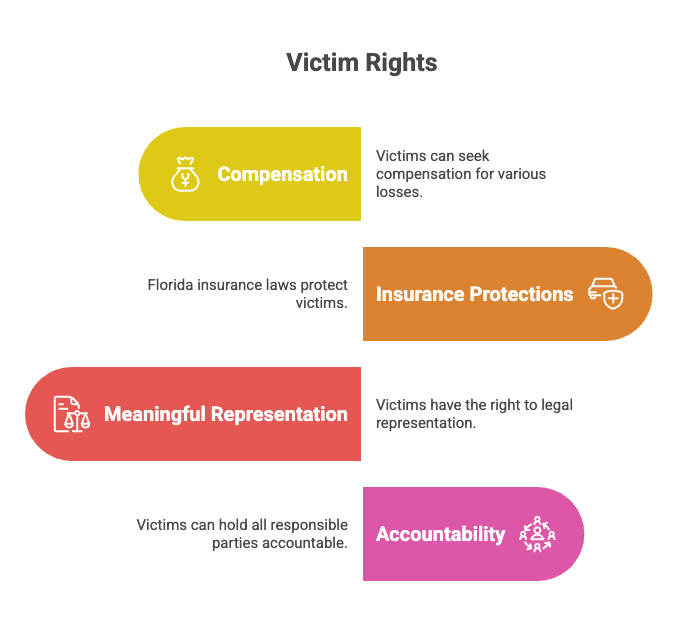
A clear understanding of these protections enables injured individuals and those assisting them to uphold justice, promote safety, and encourage responsible conduct on Miami’s roads.
Steps to Take After a Miami Distracted Driving Car Accident Injury
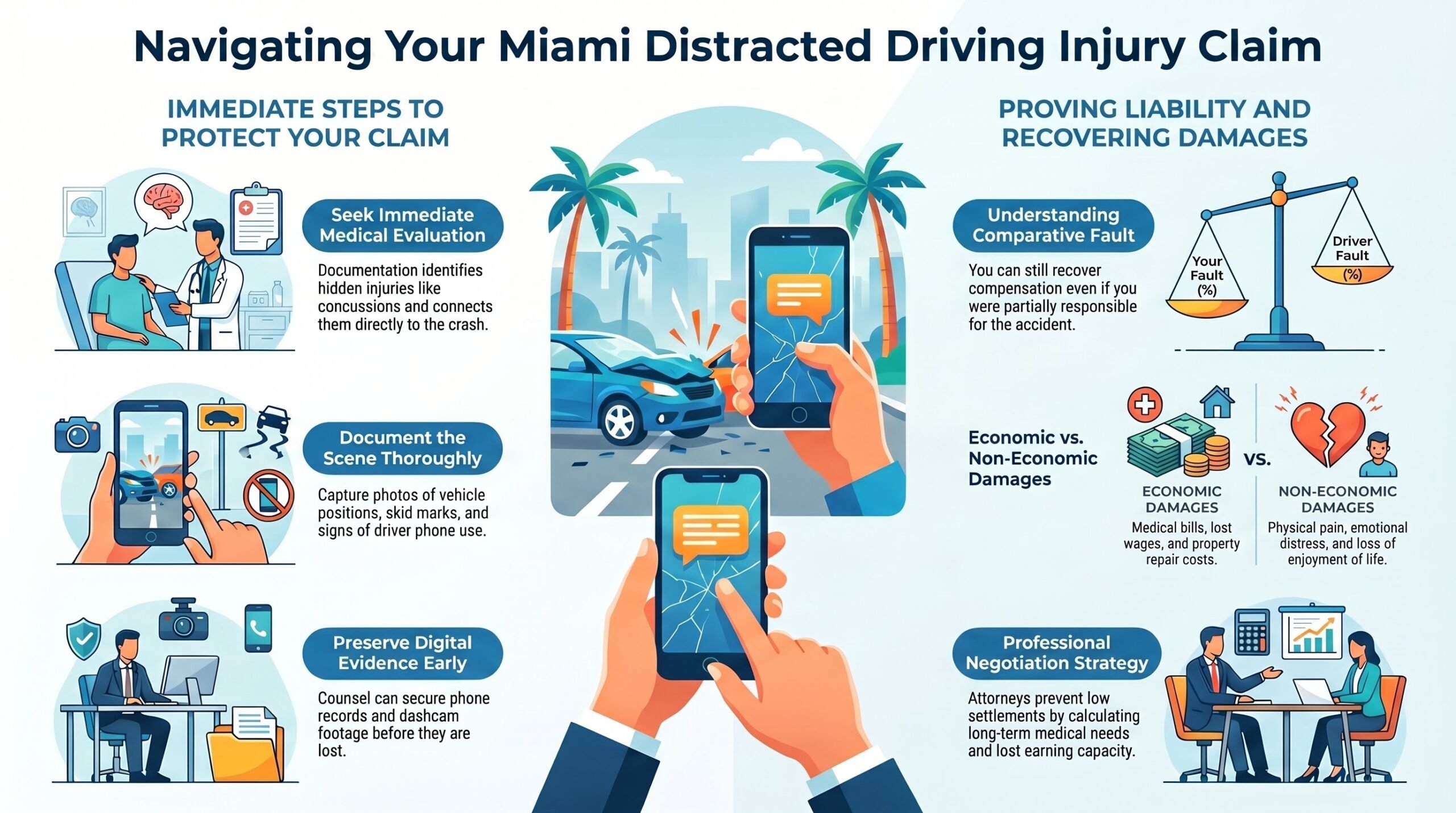
After a Miami distracted driving car accident injury, a prompt medical evaluation is crucial to protect both health and any future claim. It is also important to document the accident scene carefully, including vehicle damage, visible injuries, and any available witness information. Early contact with a Miami lawyer can help preserve evidence, clarify legal options, and support a more organized response to the incident.
Seek Immediate Medical Care
Prompt medical evaluation is one of the most important steps a person can take following a Miami distracted driving accident injury. Some injuries appear minor at first, yet serious conditions such as internal trauma, concussions, or soft tissue damage may worsen without prompt treatment. An emergency evaluation can identify urgent concerns, protect overall health, and create a clear medical record from the outset.
Timely care also supports a fuller recuperation, which benefits both the injured person and those who depend on that individual’s wellbeing and service. Physicians may recommend imaging, medication, rehabilitation, or expert care based on symptoms and examination findings. Attending all follow-up appointments helps monitor progress, address complications early, and demonstrate that the injury was treated responsibly and consistently after the collision occurred.
Document The Accident Scene
At the accident scene, careful documentation can preserve crucial details that may otherwise be lost within minutes. If it is safe to do so, the injured person or a helpful bystander should record the positions of vehicles, debris, skid marks, traffic signals, weather conditions, and visible injuries. Clear photographic evidence from multiple angles can support an accurate account of what occurred and may assist others involved.
It is also helpful to gather names and contact information for drivers, passengers, and independent observers. Brief witness statements, written or recorded with permission, can capture fresh recollections before memories fade. Notes should include the time, location, road conditions, and any signs of distracted driving, such as a phone in hand. Thorough documentation promotes accountability and helps protect everyone affected by the collision.
Contact A Miami Lawyer
Once the accident scene has been documented, contacting a Miami lawyer can help protect the injured person’s legal and financial interests. Counsel can evaluate the facts, preserve evidence, and communicate with insurers while the injured person focuses on recovery and supporting loved ones.
A lawyer may also explain deadlines, available damages, and the steps required to build a strong claim after a distracted driving collision. During a free consultation, the injured person can ask about the attorney’s experience with similar cases, expected timelines, and the attorney’s fee structure.
Clear guidance at this stage can prevent harmful statements, missed deadlines, or undervalued settlements. By securing informed legal support early, the injured person is better positioned to pursue accountability and obtain resources that may ease medical burdens and benefit the broader family and community.
How a Miami Distracted Driving Car Accident Injury Lawyer Can Help You
A lawyer’s role in a Miami distracted driving accident case extends beyond filing paperwork, as effective representation can help an injured person identify liable parties, preserve pivotal evidence, and build a claim supported by medical records, witness statements, phone data, and crash reports.
Effective legal representation helps uncover liability, preserve crucial evidence, and support a distracted-driving claim with clear, credible evidence.
- Counsel carefully examines liability, including distracted drivers, employers, vehicle owners, and other parties whose actions may have contributed to the collision.
- Counsel secures medical documentation, consults with professionals, and links injuries to the crash, strengthening a claim with organized, credible evidence.
- Counsel develops a settlement strategy grounded in losses, insurance policy terms, and evidence, while protecting the client from unfair pressure or premature offers.
- Counsel manages deadlines, communications, and negotiations so the injured person can focus on recovery and continued service to family, work, and community.
When insurers dispute fault or damages, experienced legal guidance can clarify rights, present facts persuasively, and pursue compensation that reflects the harm suffered and accountability owed.
Long-Term Effects of Miami Distracted Driving Car Accident Injuries
The long-term effects of a Miami distracted driving car accident often extend well beyond the initial medical response, affecting multiple areas of a person’s life. Many individuals face chronic pain challenges, lasting brain trauma, and ongoing limitations that disrupt work, daily functioning, and personal independence. Emotional recovery struggles may also persist, as anxiety, depression, and psychological distress frequently accompany serious physical injuries.
Chronic Pain Challenges
Because chronic pain can continue long after visible injuries have mended, it often becomes one of the most disruptive long-term consequences of a Miami distracted driving accident. Persistent neck, back, shoulder, and nerve pain may limit mobility, reduce independence, and interfere with daily responsibilities, including work, caregiving, and community service.
Effective pain management often requires ongoing medical evaluation, physical therapy, medication oversight, and lifestyle adjustments. Even with appropriate treatment, many injured people experience Sleep disruption, fatigue, irritability, and reduced concentration, all of which can weaken overall functioning and strain relationships. Chronic discomfort may also discourage exercise and social involvement, creating further isolation.
For those seeking to care for others, these limitations can be especially difficult because pain reshapes routines, delays recovery, and demands consistent support from medical professionals and loved ones.
Lasting Brain Trauma
Beyond chronic pain, some of the most serious long-term consequences of a Miami distracted driving accident involve lasting brain trauma. Survivors may experience impaired memory, reduced concentration, slowed processing, speech difficulties, and diminished executive function, all of which can limit independence and the ability to support family or community responsibilities. Even a pediatric concussion can create developmental setbacks that require careful monitoring over time. Diagnosis often demands neurological evaluation, imaging, and consistent follow-up to identify subtle but persistent deficits.
Treatment plans frequently combine cognitive therapy, occupational therapy, medication management, and structured support services tailored to the injured person’s needs. Encouragingly, breakthroughs in neurorehabilitation continue to improve outcomes through targeted therapies and adaptive technologies. Early intervention, informed advocacy, and coordinated medical care remain crucial to protecting long-term functioning and quality of life.
Emotional Recovery Struggles
While physical injuries often receive immediate attention, emotional recovery after a Miami distracted driving accident can be equally difficult and far more prolonged. Survivors may experience anxiety, irritability, disrupted sleep, and diminished trust in daily routines, even after visible wounds begin to mend.
These struggles often affect relationships, employment, and the ability to consistently care for others. Many individuals face emotional isolation because friends, employers, and even family members may not recognize the seriousness of invisible trauma. In some cases, grief processing becomes necessary as survivors mourn lost abilities, altered independence, or the death of a loved one.
Professional counseling, faith-based support, and patient community care can help restore stability. Early recognition of psychological harm allows families, caregivers, and advocates to respond with informed compassion and practical support.
Proving Liability in Miami Distracted Driving Car Accident Injury Cases
Establishing liability in a Miami distracted driving car accident case requires clear evidence that a driver failed to use reasonable care and that this distraction directly caused the collision and resulting injuries. Useful proof often includes police reports, witness statements, cellphone records, dashcam footage, photographs, and data from the vehicles involved.
To serve injured people responsibly, counsel generally builds a factual timeline showing what the distracted driver was doing before impact and how that conduct violated traffic laws or basic safety duties. Medical records help connect the crash to the harm suffered, while expert testimony may explain reaction time, stopping distance, road conditions, or vehicle damage patterns. In some cases, surveillance video or admissions made at the scene further strengthen the claim.
Comparative fault issues may also arise, requiring careful analysis of each driver’s actions. A thorough investigation allows the court or jury to understand how distraction contributed to the event and why legal responsibility should be assigned fairly under Florida law.
Dealing With Insurance Companies After a Miami Distracted Driving Car Accident Injury
Once liability evidence has been gathered, attention often turns to the insurance companies involved and the way their handling of the claim can affect financial recovery. Insurers may request recorded statements, medical authorizations, or broad documentation that extends beyond what is reasonably necessary. Careful review of every request helps protect the injured person’s interests while preserving accurate information for evaluation.
A service-minded approach emphasizes honesty, organization, and respect, yet it also recognizes that insurers focus on limiting payouts. Adjusters may dispute medical necessity, question lost income, or rely on policy timelines to delay responses. Strong documentation, consistent treatment records, and clear communication can support fair claim negotiations and reduce opportunities for undervaluation.
It is often beneficial to track all correspondence, confirm conversations in writing, and avoid accepting quick settlement offers before damages are fully understood. By responding thoughtfully and maintaining complete records, injured individuals place themselves in a stronger position when dealing with insurers after a Miami distracted driving collision.
What to Expect During a Miami Distracted Driving Car Accident Injury Claim Process
A Miami distracted-driving car accident injury claim typically begins with filing the initial claim and gathering the evidence needed to establish liability and damages. From there, the process often moves into negotiations with insurers, where documentation, medical records, and other proof can materially affect the outcome. If a fair resolution is not reached, the claim may proceed toward settlement discussions or trial, depending on the facts of the case.
Filing The Initial Claim
In the early stages of a Miami distracted driving accident injury claim, the process typically begins with notice to the at-fault driver’s insurance carrier and, when applicable, the injured person’s own insurer. This filing step places the matter on record, opens a claim file, and prompts review of available coverage, reporting deadlines, and communication procedures.
The claimant or counsel typically provides basic incident details, identifies the parties involved, and requests instructions on how to proceed responsibly. Insurers may assign an adjuster, acknowledge receipt, and outline the claim timeline, including forms, recorded statements, and policy conditions. In some matters, an initial demand follows after preliminary review, seeking fair consideration within applicable limits. Throughout this stage, careful, timely communication helps protect rights, supports orderly service to others, and reduces avoidable delay for all parties.
Gathering Key Evidence
During the evidence-gathering stage, a Miami distracted-driving accident injury claim typically shifts from basic reporting to careful documentation of fault, damages, and causation. Attorneys and support staff generally collect police reports, photographs, medical records, repair estimates, and scene details that clarify how the collision occurred. They may also seek witness statements from passengers, bystanders, or first responders whose observations help protect the injured person’s account.
This phase often includes data preservation efforts to secure phone records, vehicle information, surveillance footage, and electronic evidence before they disappear. Providers may be contacted to confirm treatment, prognosis, and expected care needs. Employment records and billing documents can further show income loss and financial strain. A thorough evidentiary record helps decision-makers understand the harm suffered and supports a claim grounded in service, accountability, and public safety.
Negotiating With Insurers
Negotiating with insurers typically marks the stage when documented evidence is translated into a demand for compensation and tested against the carrier’s evaluation of liability and damages. During this phase, adjusters review medical records, repair estimates, wage loss information, and witness accounts while applying internal formulas and Policy tactics.
A careful advocate helps guarantee communications remain accurate, respectful, and focused on community-minded recovery rather than pressure-driven shortcuts. Insurers may question treatment needs, dispute fault percentages, or minimize future losses, making consistent documentation essential. Settlement timing often depends on medical progress, claim complexity, and the insurer’s responsiveness.
Thoughtful negotiation seeks fair valuation without sacrificing long-term needs for immediate convenience. By maintaining organized records and clear positions, injured individuals are better prepared to respond to requests and protect the resources needed to continue serving their families and communities.
Reaching Settlement Or Trial
Once insurer discussions clarify the parties’ positions, a Miami distracted driving accident claim generally moves toward either a negotiated settlement or formal litigation. Counsel typically evaluates medical records, lost income evidence, liability proof, and policy limits before advising whether settlement timing appears favorable or whether filing suit better protects the injured person’s interests.
If negotiations continue, both sides may exchange additional evidence, attend mediation, and weigh the costs of delay against the value of certainty. When settlement remains out of reach, litigation proceeds through discovery, depositions, motion practice, and trial preparation. Attorneys also assess local jury preferences because community views can influence risk evaluation and case strategy.
Throughout this stage, the focus remains on securing accountability, fair compensation, and practical support so that the injured person and their family may continue to serve their community with stability.
Compensation for Miami Distracted Driving Car Accident Injury Damages
In the aftermath of a distracted driving collision, an injured person in Miami may be entitled to compensation for a range of damages resulting from the crash. Florida law may permit recovery through an insurance claim or personal injury lawsuit when another driver’s inattention caused preventable harm. This process is intended to support accountability and help restore stability for the injured person and family.
Available recovery may depend on the facts, the severity of the injuries, and the strength of the supporting evidence. In some cases, courts may also consider punitive awards when conduct was especially reckless, though such remedies are limited and uncommon. Florida law may impose compensation caps in certain claims, making careful legal evaluation important from the outset.
A thorough case presentation often includes medical records, witness statements, crash reports, and expert opinions. By pursuing full and fair compensation, legal counsel can help injured people secure the resources needed to move forward with dignity and confidence.
Economic vs Non-Economic Damages in Miami Distracted Driving Car Accident Cases
In Miami distracted driving car accident cases, damages are generally divided into economic and non-economic categories, each addressing a different aspect of the claimant’s loss. Economic damages typically include measurable financial harms such as medical bills, lost income, and other out-of-pocket costs, while non-economic damages concern pain and suffering, emotional distress, and reduced quality of life. Establishing the value of either category often depends on medical records, employment documentation, expert opinion, and other evidence that demonstrates the extent and impact of the injuries.
Economic Damages Overview
Compensation in a Miami distracted driving accident case generally falls into two categories: economic and non-economic damages. Economic damages address measurable financial losses resulting from the collision and are supported by records, invoices, employment documentation, and, when necessary, expert evaluation.
In service to injured people and their families, these damages often include emergency care, hospitalization, rehabilitation, medications, medical equipment, and transportation for treatment. They may also cover property damage, out-of-pocket expenses, lost wages, and diminished ability to work. When injuries create lasting limitations, compensation may account for reduced earning capacity and future earnings.
A careful assessment helps guarantee that practical losses are fully identified and fairly valued. This category focuses on restoring financial stability so that affected individuals can continue to meet their obligations and care for those who depend on them.
Non-Economic Losses Explained
Intangible harm often represents the most disruptive aspect of a Miami distracted driving accident, even though it does not appear on bills or pay records. Non-economic losses address the human consequences of injury, including physical pain, emotional distress, anxiety, trauma, diminished enjoyment of life, and loss of companionship or guidance within a family.
In service-oriented legal advocacy, these damages recognize how an injury can alter daily routines, relationships, and personal independence. A parent may no longer be able to fully participate in caregiving, and a community member may struggle to resume volunteer, faith, or civic activities. While economic damages reflect measurable financial effects, non-economic damages concern the valuation of pain and the broader quantification of loss related to lived experience. This category exists to acknowledge personal hardship with fairness, dignity, and respect for the injured person and those who rely on that individual.
Proving Damage Value
Accuracy is central when establishing the value of damages in a Miami distracted-driving car accident case. Economic losses are typically proven through medical bills, wage records, repair estimates, and expert projections of future treatment or reduced earning capacity. These figures rely on objective documentation and accepted valuation methods.
Non-economic damages require a different showing. Because pain, emotional distress, disability, and loss of enjoyment do not appear on invoices, attorneys often use testimony, treatment history, and daily impact evidence to support pain quantification. Physicians, vocational experts, and family witnesses may help explain how injuries limit service, caregiving, and community involvement. Courts and insurers then compare the severity, duration, and permanence of harm. Clear evidence allows compensation to fully reflect both the measurable expense and the human cost of the collision.
When a Miami Distracted Driving Car Accident Injury Case Goes to Trial vs Settlement
Whether a Miami distracted-driving car accident injury case ends in a settlement or proceeds to trial often depends on the strength of the evidence, the severity of the injuries, and the parties’ willingness to dispute fault and damages. Clear phone records, witness statements, expert opinions, and medical documentation often increase settlement leverage and encourage resolution without courtroom involvement.
A settlement may better serve injured people when liability is strong, losses are well documented, and both sides seek a practical outcome that conserves time, expense, and emotional energy. Trial becomes more likely when insurers minimize harm, deny distraction, or challenge future medical needs and lost earning capacity.
In those circumstances, jury dynamics can influence strategy because community standards, credibility assessments, and sympathy may affect how damages are valued. Careful legal preparation helps families make informed decisions, protect resources, and pursue accountability in ways that support recovery, stability, and the broader goal of responsible conduct on Miami roads for everyone.
The Statute of Limitations for Miami Distracted Driving Car Accident Injury Cases
In Florida, the statute of limitations sets a firm deadline for filing a lawsuit after a Miami distracted driving car accident, and missing that deadline can permanently bar recovery in court. This rule promotes order, protects evidence, and encourages timely action that can support injured people and the families who rely on them.
For most negligence claims, the filing period depends on the facts and the date the cause of action accrued. Certain circumstances may warrant deadline extensions or tolling exceptions, but such situations are limited and closely scrutinized by courts. Examples can include cases involving minors, concealed misconduct, or defendants who cannot be located.
Because every case turns on specific details, accurate recordkeeping is important. Police reports, medical records, repair estimates, and witness information can help establish when losses occurred and whether a claim was filed on time. A clear understanding of these limits helps communities pursue accountability while protecting the integrity of the legal process.
When to Contact a Miami Distracted Driving Car Accident Injury Lawyer
Many injured people benefit from speaking with a Miami distracted driving car accident injury lawyer soon after a crash, particularly when fault is disputed, serious injuries are involved, or insurance representatives request statements and medical authorizations. Early legal contact can help preserve facts, witness information, electronic evidence, and proper medical documentation before details are lost or accounts change. An immediate consultation may also help families understand urgent decisions while remaining focused on recovery and care for others.
Contact is often appropriate after emergency treatment, after learning injuries may require ongoing care, or when insurers raise questions about insurance timing, prior conditions, or recorded interviews. A prompt case evaluation can clarify what information should be gathered, what deadlines may apply, and how communications should be handled. Reaching out is also sensible when a distracted-driving collision results in missed work, significant expenses, or uncertainty about who may be responsible, especially when a household seeks stability, accountability, and informed guidance.
Why You Need an Experienced Miami Distracted Driving Car Accident Injury Lawyer
Prompt contact after a collision often raises a related question: why does experience matter in a distracted driving injury case? An experienced Miami distracted-driving car accident injury lawyer helps protect injured people by quickly identifying evidence, including phone records, surveillance footage, witness statements, and vehicle data. Early, informed action supports a stronger claim and reduces the risk that important proof will disappear.
Experience also shapes effective legal strategy. A seasoned lawyer understands how insurers challenge distraction claims, minimize injuries, or shift blame. That knowledge allows the attorney to present damages clearly, connect medical evidence to the crash, and pursue compensation that reflects present and future needs. In service-centered communities, this guidance can help families regain stability and continue caring for others.
Experience further strengthens client trust because consistent judgment, careful communication, and reliable case management provide reassurance during a difficult period. When serious injuries disrupt daily life, informed advocacy can make a meaningful difference for recovery.
How to Choose the Right Miami Distracted Driving Car Accident Injury Lawyer for Your Case
For injured individuals and their families, choosing the right Miami distracted driving car accident injury lawyer requires careful attention to qualifications, experience, and client service. A prudent review often begins with the lawyer’s history of handling distracted driving claims, courtroom readiness, and knowledge of Florida injury law. Clear communication also matters because families often need guidance that is timely, respectful, and dependable.
During client interviews, prospective clients may ask how the lawyer investigates collisions, works with experts, and pursues fair compensation. They may also request references, case results, and an explanation of the strategy tailored to the facts. Attorney fees should be explained in plain language, including contingency arrangements, litigation costs, and when payment is owed.
A strong choice is often a lawyer who listens carefully, responds promptly, and treats every matter with dignity. By comparing credentials, communication style, and transparency, injured people can make a decision that supports recovery and long-term stability.
About The Law Offices of Anidjar & Levine
Once a person has identified the qualities to look for in legal counsel, attention often turns to the law firm’s record, client approach, and ability to manage distracted driving injury claims from start to finish.
In that evaluation, The Law Offices of Anidjar & Levine is often considered for its focus on responsive service, case preparation, and support for injured people and their families across South Florida.
The firm’s history reflects years of representing accident victims in matters involving medical expenses, lost income, and liability disputes.
Its attorneys and staff are known for maintaining open communication, coordinating evidence collection, and guiding clients through insurance negotiations and, when necessary, litigation.
Public client testimonials frequently reference accessibility, professionalism, and a willingness to shoulder administrative burdens so families can focus on recovery and helping one another.
For individuals seeking counsel after a distracted-driving crash in Miami, the firm is widely regarded as a resource for structured, compassionate, and practical legal assistance.
Frequently Asked Questions
Can I Recover Damages if I Was Partially at Fault?
Yes, a person may still recover damages if partially at fault. Under comparative negligence and comparative fault principles, compensation is typically reduced by that person’s percentage of responsibility, rather than barred entirely. For example, if damages equal $100,000 and fault is 20 percent, recovery may be $80,000. Because state laws differ, careful legal review helps injured individuals understand their rights, protect community well-being, and pursue fair compensation with confidence.
Will Using Rideshare Records Help Prove Distracted Driving?
Yes, rideshare records can help prove distracted driving when they show driver activity during the trip. Rideshare logs may reveal app use, trip updates, route changes, or message activity near the time of the crash. Passenger statements can further support whether the driver looked away, handled a phone, or failed to watch traffic. Collectively, these records may strengthen a claim and help those seeking accountability for preventable harm and promote safer conduct.
Are Teen Drivers Held to Different Distracted Driving Standards?
Yes, teen drivers are often held to stricter standards for distracted driving. Many states apply graduated licensing rules that limit passengers, nighttime driving, and device use during early licensure periods. In addition, cellphone bans frequently impose broader restrictions on minors than on adults, sometimes prohibiting any handheld or hands-free use. These laws reflect a public safety focus, recognizing inexperience and aiming to protect passengers, pedestrians, and other road users.
Can Dashboard Camera Footage Strengthen My Accident Claim?
Dashboard camera footage can strengthen an accident claim by offering objective evidence of events, driver behavior, and road conditions. Its value often depends on camera angle, footage quality, and whether it clearly captures the moments before impact. Insurers and courts may view such recordings as persuasive support for truthful claims. When preserved properly and paired with witness statements or reports, footage may help secure a fair outcome for all involved.
What if Distracted Driving Caused a Multi-Vehicle Chain-Reaction Crash?
When distracted driving causes a multi-vehicle chain-reaction crash, liability may extend beyond a single driver, depending on each vehicle’s conduct and the sequence of impacts. A careful investigation helps identify fault, protect injured parties, and support fair recovery for everyone affected. Prompt evidence preservation is essential, including vehicle data, witness statements, video, and police findings. Clear documentation enables insurers and counsel to assess damages accurately and serve victims responsibly.
—————————
Distracted driving collisions in Miami often leave victims facing medical costs, lost income, and difficult legal questions.
By understanding the causes of these accidents, the steps required after a crash, and the rights available under Florida law, injured individuals can make informed decisions.
Skilled legal representation can help preserve evidence, establish liability, and pursue fair compensation.
The Miami Car Accident Attorney at Law Offices of Anidjar & Levine provides experienced guidance for those seeking to protect their interests after a serious accident.