The Law Offices of Anidjar and Levine represents clients injured in Daytona Beach intersection truck accidents by investigating liability, preserving time-sensitive evidence, and managing communications with insurers.
The investigation may examine traffic signals, vehicle positions, witness accounts, surveillance footage, electronic truck data, driver qualifications, maintenance records, and comparative fault issues.
Legal guidance can support claims for medical expenses, lost income, property damage, pain and suffering, and future care.
Prompt representation helps protect records, deadlines, and negotiation rights.
Learn more from a Daytona Beach Truck Accident Lawyer about the claims process and available legal options.
Main Takeaways
- A Daytona Beach truck accident lawyer can investigate traffic signals, vehicle positions, witnesses, surveillance footage, and police reports to establish liability.
- Potentially responsible parties may include truck drivers, trucking companies, insurers, maintenance providers, or other negligent entities.
- Attorneys can preserve safety records, inspection histories, driver qualifications, maintenance documents, and electronic evidence before they disappear.
- Injury claims may seek compensation for medical expenses, lost income, property damage, pain, chronic symptoms, and future treatment needs.
- Legal guidance can manage insurer communications, evaluate settlement offers, address comparative fault, and protect applicable lawsuit deadlines.


How We Can Help With Your Daytona Beach Intersection Truck Accident Injury Claim
After a Daytona Beach intersection truck accident, an experienced personal injury attorney can provide structured legal guidance while protecting the injured party’s rights and interests. The attorney may begin by reviewing available records, identifying responsible parties, and organizing the claim’s key information. Careful medical documentation can connect reported injuries to necessary treatment, recovery limitations, and related expenses.
The legal team can manage insurance communications so injured individuals are not pressured into premature statements or inadequate offers. Through measured negotiation tactics, counsel may address liability, damages, and the long-term effects of the collision while maintaining professional communication with insurers and opposing representatives. A thoughtful settlement strategy can account for medical costs, lost income, property damage, and other legally recoverable losses.
When settlement discussions do not produce a fair resolution, the attorney can explain available procedural options and help the injured party make informed decisions. This service allows clients to focus on recovery while their representative advances the claim with diligence, preparation, and respect for the needs of all affected individuals.
OUR CONSULTATIONSARE FREE
START YOUR FREE CASE REVIEW

Understanding Daytona Beach Intersection Truck Accident Injury Cases
Understanding a Daytona Beach intersection truck accident injury case requires examining how the collision occurred, which parties may bear responsibility, and how the injuries affect the victim’s life. The analysis may include traffic signals, vehicle positions, witness accounts, surveillance footage, and available reports. Truck Lane Violations can provide important evidence when a commercial vehicle crosses markings, enters an improper lane, or interferes with another road user’s path.
Investigators may also review Safety Compliance records, including inspection history, driver qualifications, maintenance documentation, and applicable operating procedures. Responsibility can involve a truck driver, carrier, vehicle owner, maintenance provider, or another negligent party, depending on the evidence. Injury claims commonly address medical treatment, rehabilitation, lost income, reduced earning capacity, permanent impairment, and related personal effects. A careful evaluation helps preserve relevant evidence and identify the compensation potentially available. The process should remain focused on accurate facts, respectful communication, and support for the injured person’s recovery and future needs.
Common Causes of Daytona Beach Intersection Truck Accident
Common causes of Daytona Beach intersection truck accidents include driver distraction or fatigue, which can impair attention, judgment, and reaction time. Other contributing factors may include failure to yield, speeding through intersections, and disregard for traffic signals or right-of-way rules. Poor truck maintenance, including defective brakes, tires, or lighting systems, can also increase the risk of a serious collision.
Driver Distraction and Fatigue
Driver distraction and fatigue are significant contributors to intersection truck accidents in Daytona Beach, where heavy traffic, turning vehicles, and changing signals demand constant attention. A driver checking a phone, adjusting equipment, or focusing on an onboard system may miss developing hazards and react too late. Fatigue can similarly reduce awareness, judgment, and response speed, particularly during extended shifts or irregular schedules.
Investigations may also consider driver impairment, including conditions that affect alertness or coordination. Other circumstances can compound these risks, such as the Impact of weather, mechanical defects, and roadway design issues that increase demands on a driver’s attention. Identifying each contributing factor helps clarify how an intersection collision occurred and supports informed assistance for injured individuals, families, and others seeking responsible guidance after a serious truck accident.
Failure to Yield
When a truck operator fails to yield at a Daytona Beach intersection, the vehicle’s size, weight, and limited handling ability can make the resulting collision especially severe. These incidents may occur when a driver disregards a stop sign, misjudges another vehicle’s right of way, or turns across an approaching traffic lane. Inadequate Intersection signaling can contribute to confusion, particularly where visibility is restricted or multiple lanes converge.
Lane positioning issues may also prevent a truck operator from recognizing a nearby vehicle, bicycle, or pedestrian before entering the intersection. Investigators typically examine traffic controls, roadway conditions, witness accounts, vehicle damage, and available surveillance footage. Those affected may require medical attention, transportation assistance, and information about preserving evidence. Prompt professional guidance can help clarify responsibility and support fair treatment throughout the claims process.
Speeding Through Intersections
Excessive speed through a Daytona Beach intersection can reduce a truck operator’s ability to stop, respond to changing traffic signals, or avoid vehicles entering from another direction. Speed may also make it difficult to assess an intersection right of way, particularly when several lanes, turning movements, and pedestrian crossings are present. Signal timing issues can increase the danger when a driver approaches too quickly to react safely to a yellow or newly changed signal.
A speeding truck may enter after another motorist has begun crossing, creating a collision with significant consequences for occupants, pedestrians, and nearby roadway users. Investigators may review vehicle data, surveillance footage, witness accounts, roadway markings, and traffic signal records when determining whether speed contributed to the crash. Such evidence can help clarify responsibility and support affected individuals seeking appropriate assistance.
Poor Truck Maintenance
Poor truck maintenance can impair a commercial vehicle’s ability to operate safely through a Daytona Beach intersection. Neglected inspections may allow defective components to remain in service, increasing the likelihood of a collision when traffic changes unexpectedly. A compromised Brake System can lengthen stopping distances or cause uneven braking, making it difficult for a driver to yield, stop, or avoid a pedestrian and nearby vehicles.
Excessive Tire Wear may reduce traction, particularly during rain, and can contribute to blowouts, skidding, or loss of control. Other maintenance failures, including malfunctioning lights, worn suspension parts, and unsecured cargo, may further limit a truck’s safe performance. Federal and state rules require carriers and drivers to address these hazards. Identifying maintenance records can help establish responsibility and support injured intersection users.
Don’t Wait. Call Our Daytona Beach Truck Accident Lawyers Now.


Legal Rights of Daytona Beach Intersection Truck Accident Injury Victims
Victims injured in Daytona Beach intersection truck accidents have legal rights that may include pursuing compensation for medical expenses, lost income, property damage, pain and suffering, and other accident-related losses. Those rights may extend to claims against responsible drivers, trucking companies, insurers, or other liable parties, depending on the available evidence and applicable law.
Victims may benefit from preserving records, documenting injuries, and obtaining timely legal guidance before making statements or accepting offers.
Important protections include:
- The right to seek appropriate medical care and retain related documentation.
- The right to pursue insurance claims supported by evidence and damage calculations.
- The right to participate in settlement negotiations without accepting inadequate compensation.
- The right to file a lawsuit within the applicable limitations period.
A qualified attorney can evaluate liability, communicate with insurers, protect a victim’s interests, and pursue fair resolution. Legal assistance also helps families understand available remedies while allowing injured individuals to focus on recovery and necessary responsibilities.
Don’t Wait. Call Our Daytona Beach Truck Accident Lawyers Now.
Why Do Daytona Beach Intersection Truck Accident Injuries Happen?
Daytona Beach intersection truck accidents often occur when large commercial vehicles, passenger cars, and pedestrians must make their way through limited visibility, changing traffic signals, and conflicting movements in a confined space. Truck size can create substantial blind spots, making intersection visibility difficult for drivers and pedestrians. A commercial vehicle may need additional distance to stop or turn, increasing the likelihood of a collision when traffic conditions change unexpectedly. Driver distraction, fatigue, speeding, and inadequate training can further impair judgment during intricate turns.
Traffic signal compliance is also vital; a missed red light, unsafe turn, or failure to yield can place smaller road users in immediate danger. Poorly timed signals, obstructed signs, road construction, and nighttime conditions may compound these risks. In some cases, equipment defects, overloaded cargo, or improper maintenance affect braking and vehicle control. These combined factors explain why intersection crashes can produce severe injuries and why careful roadway practices remain essential for protecting the community.
What Should You Do After a Daytona Beach Intersection Truck Accident Injury?
After an intersection truck accident injury, the injured person should seek immediate medical care, even if symptoms initially appear minor. Accident-scene documentation, including photographs, witness information, and official reports, can help preserve important evidence. Promptly contacting a qualified truck accident lawyer may also protect the person’s legal rights and support an informed evaluation of potential claims.
Seek Immediate Medical Care
Prompt medical evaluation is important for anyone injured in an intersection truck collision, even when symptoms initially appear minor. Some conditions, including internal bleeding, concussion, or soft-tissue damage, may develop gradually and become more serious without timely treatment. The injured person should be evaluated by emergency personnel or a qualified medical provider as soon as possible, following all recommended care instructions.
Medical records can establish the nature, timing, and extent of injuries while supporting continuity of treatment. If transportation is unsafe or symptoms worsen, emergency services should be contacted immediately. Prompt care also helps protect the individual’s recovery and enables family members to make informed decisions when providing support. Documentation from medical professionals may later assist with Insurance Settlement Options or a Wrongful Death Claim if the injuries prove fatal.
Document the Accident Scene
When conditions permit, the injured person or a reliable witness should document the intersection truck accident before vehicles, debris, or other evidence are moved. Photographs should show vehicle positions, impact damage, skid marks, scattered cargo, road conditions, traffic signs, lane markings, and nearby surveillance cameras. Images from several distances can clarify how the collision developed and whether sightlines were obstructed. Witness identification should include names, telephone numbers, and brief accounts of what each person observed.
Witnesses may have noticed traffic signal violations, unsafe turns, excessive speed, or a truck entering the intersection improperly. A written timeline should record weather, lighting, traffic flow, and visible hazards. Documentation must be gathered safely, without entering active lanes or interfering with emergency personnel. Preserving these details can assist injured individuals and those serving their recovery.
Contact a Truck Accident Lawyer
Because intersection truck collisions may involve commercial insurance policies, trucking regulations, and multiple responsible parties, an injured person should contact a Daytona Beach truck accident lawyer as soon as reasonably possible. Early legal representation can protect the individual from rushed statements, unfavorable settlements, and unnecessary communication with insurers. Counsel may review medical records, identify potentially liable parties, and develop a negotiation strategy based on the injury’s effects and available coverage.
The injured person should provide the lawyer with photographs, witness information, police reports, and other materials supporting evidence preservation. A detailed accident timeline can clarify traffic signals, vehicle movements, loading conditions, and treatment history. Prompt guidance also helps preserve electronic logs, surveillance footage, vehicle data, and maintenance records before they disappear. Professional assistance allows an injured person to focus on recovery while informed decisions protect their interests.
Don’t Wait. Call Our Daytona Beach Truck Accident Lawyers Now.
Critical Evidence in a Daytona Beach Intersection Truck Accident Injury Case
Critical evidence can establish how the intersection collision occurred and identify the responsible parties.
Key sources may include:
- Police accident reports
- Traffic camera footage
- Electronic truck data
- Witness statements
These materials can help clarify traffic signals, vehicle speed, driver conduct, and the sequence of events.
Police Accident Reports
Police accident reports can provide important preliminary evidence in a Daytona Beach intersection truck accident injury case. Officers may document vehicle positions, roadway conditions, apparent injuries, driver statements, citations, and identifying information for witnesses. Although a report is not conclusive proof of liability, it can preserve observations made shortly after the collision, before conditions change or memories fade.
The report may assist attorneys, insurers, and injured individuals in evaluating conflicting accounts and identifying issues requiring further investigation. It can also support accident scene reconstruction by supplying measurements, diagrams, photographs, and descriptions of impact points when those materials are included. In some cases, report language may reveal facts relevant to Comparative fault defenses, including allegations that another driver contributed to the collision. Promptly obtaining and reviewing the report helps preserve evidence and supports informed decisions about medical care, claims, and potential litigation.
Traffic Camera Footage
Traffic camera footage can provide objective evidence in a Daytona Beach intersection truck accident injury case by showing vehicle movements, traffic-signal timing, lane positions, and the moments immediately before impact. Investigators may compare recordings from municipal cameras, businesses, and nearby residences to clarify disputed accounts and identify potential traffic violations.
Prompt preservation is important because systems may overwrite files or retain them briefly. Attorneys can assist with collecting police evidence and requesting available recordings through appropriate legal procedures. Footage may reveal whether a truck entered against a red light, failed to yield, turned improperly, or obstructed a crosswalk. It can also help establish how the collision occurred and support evaluating damages by connecting visible impact forces and roadway conditions with reported injuries. Careful review protects accurate, fair claim evaluation.
Electronic Truck Data
When available, electronic truck data can provide an objective account of a commercial vehicle’s operation before and during a Daytona Beach intersection collision. Electronic logging records may show driving hours, vehicle movement, and compliance with required rest periods. Event data may preserve speed, throttle position, seat-belt status, and other measurements immediately before impact. These records can help clarify whether driver behavior, delayed reaction, or unsafe operation contributed to the crash. Recorded braking patterns may indicate when braking began, how forcefully it occurred, and whether an evasive action was attempted. Vehicle control modules and fleet systems may retain additional information, although access can depend on preservation practices and the vehicle’s equipment. Prompt investigation can help prevent relevant data from being overwritten and support a careful evaluation of the injured person’s claim.
Witness Statements
Eyewitness statements can provide pivotal evidence in a Daytona Beach intersection truck accident injury case by describing vehicle movements, traffic-signal conditions, lane positions, and the conduct of those involved before impact. Witnesses may also clarify whether a truck entered an intersection improperly, failed to yield, or created an unexpected hazard. Prompt interviews can preserve observations before memories change, while Accident scene documentation may help compare those accounts with skid marks, vehicle damage, surveillance footage, and roadway conditions. A careful eyewitness reliability assessment considers the witness’s viewing angle, distance, lighting, distractions, and relationship to the parties. Investigators may identify independent witnesses, obtain contact information, and record consistent details. This evidence can help attorneys present an accurate account, support injured individuals, and promote fair responsibility determinations during negotiations or litigation.
Long-Term Effects of Daytona Beach Intersection Truck Accident Injuries
Intersection truck accident injuries may produce chronic pain conditions that affect daily activities and overall quality of life. Some victims experience permanent mobility limitations, requiring assistive devices, home modifications, or ongoing support. These lasting impairments can also create substantial medical expenses for treatment, rehabilitation, medication, and related care.
Chronic Pain Conditions
Chronic pain conditions often develop after Daytona Beach intersection truck accident injuries, particularly when damage to the spine, joints, muscles, or nerves does not fully recover during the initial recovery period. Symptoms may include persistent aching, burning, tingling, sensitivity, or recurring headaches that interfere with sleep, concentration, employment, and daily responsibilities. Medical evaluation helps identify the condition, document treatment needs, and distinguish accident-related symptoms from earlier health concerns.
Because chronic pain can fluctuate, consistent records of appointments, medications, therapy, limitations, and symptom changes may support a clear account of ongoing harm. In intersection crashes, evidence preservation can help connect the injury to the collision. An attorney may use medical documentation and other records when evaluating whether an insurance settlement fairly addresses continuing care, lost income, and related losses.
Permanent Mobility Limitations
Permanent mobility limitations may result when Daytona Beach intersection truck accident injuries cause lasting damage to the spine, joints, muscles, or nervous system. Affected individuals may experience reduced strength, balance problems, restricted joint movement, or paralysis that interferes with walking, standing, transferring, or performing daily responsibilities. These limitations can alter family roles, community participation, and the ability to serve others independently.
Assistive device needs may include canes, walkers, wheelchairs, braces, or vehicle modifications, depending on the person’s functional abilities and safety requirements. A structured rehabilitation plan may address mobility training, home accessibility, and adaptive techniques. Vocational rehab options can help identify modified duties, retraining opportunities, or workplace accommodations when prior employment is no longer feasible. Documented functional restrictions and prognosis may clarify the injury’s enduring effects.
Ongoing Medical Expenses
Ongoing medical expenses may continue long after a Daytona Beach intersection truck accident, particularly when injuries require repeated treatment, prescription medications, diagnostic testing, or specialized care. These costs may include rehabilitation, assistive equipment, follow-up appointments, and necessary modifications to support daily activities. Medical treatment documentation can help establish the nature, frequency, and projected duration of care, while also connecting expenses to accident-related injuries.
Maintaining organized bills, treatment records, prescriptions, and provider statements may support accurate evaluation of future needs. Insurance claim timelines can affect when expenses are submitted, reviewed, and reimbursed, making timely communication important. A legal professional may help identify anticipated costs, consult qualified medical or financial professionals, and present a thorough claim. This process can protect resources needed for continuing recovery and preserve the ability to serve family and community responsibilities.
Proving Liability in Daytona Beach Intersection Truck Accident Injury Cases
Proving liability in a Daytona Beach intersection truck accident injury case requires evidence showing that another party’s negligence caused the collision and resulting harm. Investigators may examine traffic signals, police reports, vehicle damage, witness statements, surveillance footage, and roadway conditions. Commercial truck cases can also involve driver logs, inspection records, maintenance histories, dispatch communications, and electronic data.
Potentially responsible parties include the truck driver, trucking company, maintenance provider, cargo loader, or another motorist. A driver’s speeding, distraction, impaired judgment, or failure to yield may establish negligence. Evidence may also show inadequate training, negligent supervision, defective equipment, or improper cargo securement.
Comparative Negligence can affect recovery if the injured person allegedly contributed to the accident. Careful analysis is essential to distinguish unsupported accusations from proven conduct. Evidence Spoliation, including destruction or alteration of relevant records, may create serious legal consequences. Preserving photographs, medical documentation, witness contacts, and vehicle information helps protect a fair evaluation of responsibility.
Dealing With Insurance Companies After a Daytona Beach Intersection Truck Accident Injury
After responsibility for a Daytona Beach intersection truck accident is investigated, the injured person may need to address one or more insurance companies. Adjusters may request statements, medical records, photographs, employment information, and authorization forms. Before responding, the injured person should understand how each request could affect coverage and preserve relevant documentation.
An insurer may present an early settlement that does not reflect continuing treatment, lost income, rehabilitation, or future medical needs. Careful review can help identify whether the proposal accounts for the full impact of the injury. Understanding Policy Exclusions is also important because commercial policies may contain limitations involving vehicle use, driver conduct, loading practices, or other circumstances.
Negotiating Medical Bills may reduce outstanding balances and help clarify the amount available for recovery. A representative can communicate with adjusters, challenge unsupported valuations, and protect the injured person from unnecessary pressure. Accurate records, consistent medical care, and cautious communication support informed decisions while the person focuses on recovery and family responsibilities.
What to Expect During a Daytona Beach Intersection Truck Accident Injury Claim Process
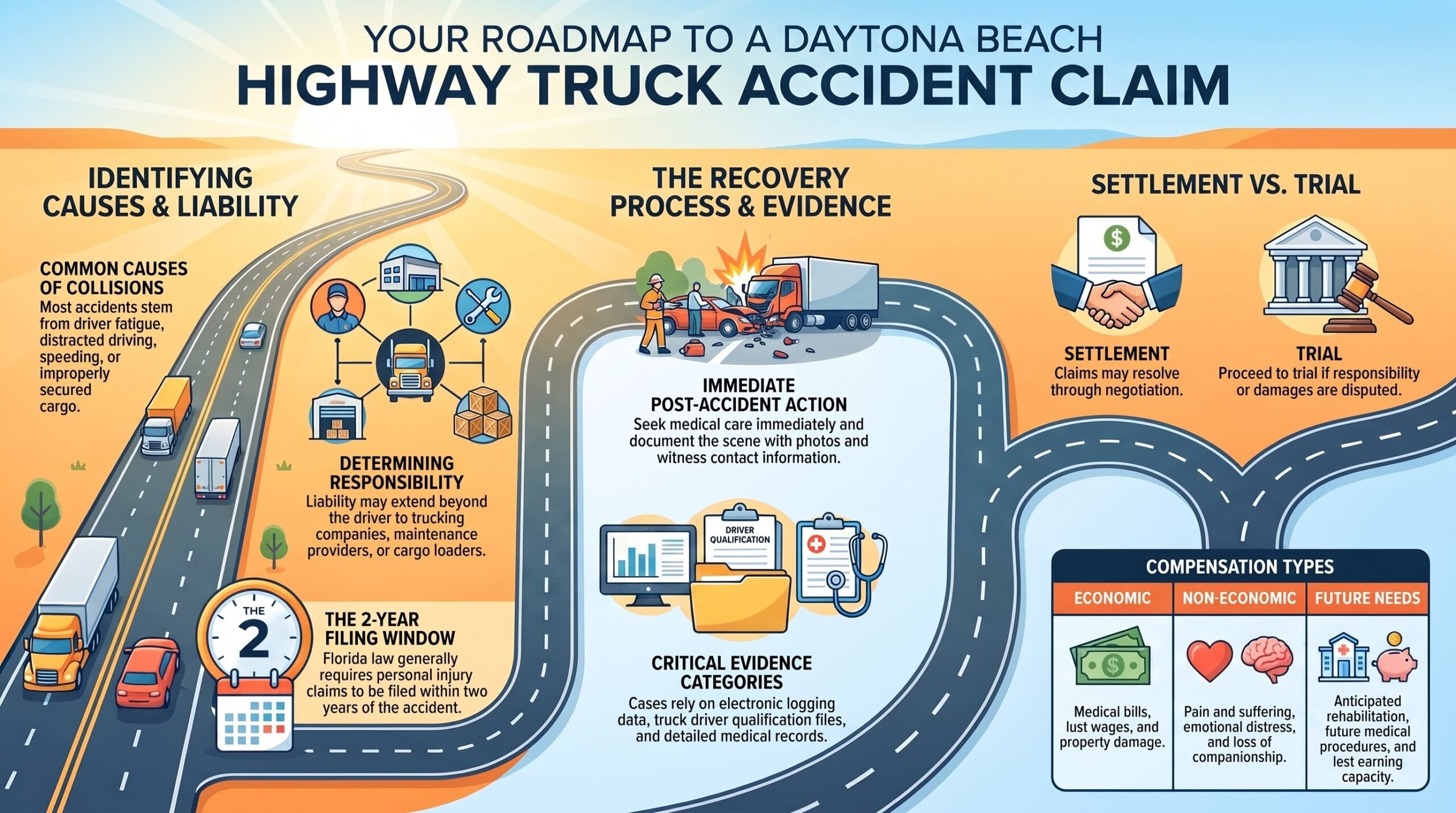
A Daytona Beach intersection truck accident injury claim typically begins with an assessment of the injuries, liability, and potential damages. The evidence collection process may include obtaining medical records, accident reports, witness statements, traffic-camera footage, and vehicle data, followed by negotiations with the insurance company. If negotiations do not produce a fair resolution, the matter may proceed to settlement discussions or trial.
Initial Claim Assessment
At the outset of a Daytona Beach intersection truck accident claim, the initial assessment establishes whether the available facts support legal action and identifies the parties potentially responsible for the collision. A legal professional typically reviews the reported events, injury descriptions, medical status, insurance information, and applicable filing deadlines. This evaluation may consider the truck driver, motor carrier, maintenance providers, cargo interests, or governmental entities responsible for roadway conditions.
The assessment also examines whether early mistakes could weaken the matter, including faulty evidence preservation or delayed medical attention. Individuals seeking to serve injured community members should emphasize documenting damages promptly, including treatment costs, lost income, and functional limitations. The claimant may then receive a preliminary explanation of potential claims, procedural risks, and recommended next steps without any premature assurance of recovery.
Evidence Collection Process
Once the initial assessment identifies viable claims and potentially responsible parties, the evidence collection process begins. Counsel may obtain crash reports, intersection photographs, traffic-camera recordings, witness statements, vehicle data, and trucking-company records. These materials can clarify signal timing, visibility, speed, roadway conditions, and whether driver or carrier practices contributed to the collision. Medical documentation is gathered from emergency providers, physicians, therapists, and experts to establish diagnoses, treatment, limitations, and anticipated care.
Employment records may demonstrate missed work and related financial effects. Investigators can preserve physical evidence before vehicles are repaired or discarded and may request available electronic data through proper legal procedures. Organized evidence supports a complete evaluation of liability and damages, helps protect an injured person’s rights, and prepares the claim for informed insurance negotiation without premature conclusions.
Insurance Company Negotiations
When negotiations begin, the injured party or counsel typically presents the insurance company with a demand supported by evidence of liability, medical treatment, financial losses, and other legally recoverable damages. Claim documentation should be organized, accurate, and consistent, including crash reports, photographs, witness information, medical records, billing statements, wage evidence, and proof of continuing care. The adjuster may request additional information, question causation, evaluate comparative fault, or challenge the necessity of treatment.
Communication should remain professional and carefully documented, because statements may influence the insurer’s assessment. Counsel may also investigate available policy limits, including coverage maintained by the trucking company, driver, or other potentially responsible parties. Timely responses help prevent unnecessary delays while protecting the injured person’s interests during the claim evaluation process.
Settlement Or Trial
Settlement or trial represents a significant decision point in a Daytona Beach intersection truck accident injury claim. After reviewing medical records, crash reports, witness accounts, and available insurance coverage, the injured person and legal counsel assess whether a negotiated resolution adequately addresses documented losses. Evidence preservation remains critical, including securing vehicle data, intersection footage, photographs, and testimony before materials disappear or memories fade.
A careful settlement strategy considers medical expenses, lost income, future treatment, pain, and the risks associated with litigation. If an insurer offers insufficient compensation or disputes responsibility, filing a lawsuit may provide a structured path toward accountability. During trial, each side presents evidence, examines witnesses, and permits a jury to determine liability and damages. Counsel generally explains potential timelines, costs, and outcomes so the claimant can make an informed decision that supports recovery and responsible service to others.
Compensation for Daytona Beach Intersection Truck Accident Injury Damages
Compensation for injuries caused by a truck collision at a Daytona Beach intersection may include medical expenses, lost income, reduced future earning capacity, property damage, and pain and suffering. A careful assessment considers the injured person’s treatment, recovery needs, employment impact, and losses supported by reliable records. Liability proof may involve traffic-camera footage, crash reports, vehicle data, witness statements, and documentation concerning driver or carrier conduct.
Through evidence discovery, a legal representative may obtain maintenance records, electronic logging information, inspection materials, training files, and communications relevant to the collision. Truck insurance policies can involve substantial limits and multiple potentially responsible parties, making prompt review important before statements or releases are provided. A thoughtful claim strategy should preserve evidence, identify all responsible entities, calculate documented losses, and present the claimant’s circumstances accurately. Counsel may also coordinate with medical providers and family members to help protect access to care while pursuing a resolution that serves the injured person’s long-term interests.
Economic vs Non-Economic Damages in Daytona Beach Intersection Truck Accident Cases
Damages in Daytona Beach intersection truck accident cases may include economic losses, such as medical expenses, lost income, and future treatment costs. Non-economic damages can address pain, emotional distress, diminished quality of life, and other intangible harm. Calculating full compensation requires evaluating documented financial losses alongside the injury’s lasting personal effects.
Economic Damages
When a truck collision occurs at a Daytona Beach intersection, the injured party may pursue economic damages for measurable financial losses caused by the crash. These damages may include emergency treatment, hospitalization, medication, rehabilitation, and future medical care supported by qualified evidence. Lost wages and reduced earning capacity may also be recoverable when the collision limits the person’s ability to work. Property damage, transportation expenses, and necessary household services can further contribute to the claim.
A careful medical records review helps connect treatment to the intersection crash and identify anticipated costs. An effective Insurance negotiation strategy should present organized bills, wage documentation, and expert projections. Counsel may also evaluate witness credibility factors and prepare an intersection liability defense response to challenges concerning fault, causation, or the necessity of claimed expenses.
Non-Economic Damages
Although economic damages address measurable financial losses, non-economic damages recognize the less tangible harm caused by an intersection truck collision. These damages may include physical pain, emotional distress, reduced enjoyment of life, inconvenience, and the loss of companionship or support. A serious crash can disrupt family relationships, personal independence, and confidence in ordinary travel, even when those effects lack receipts or invoices.
Evidence may include medical observations, therapy records, personal journals, testimony from relatives, and statements describing changes in daily activities. Comparative fault may affect how responsibility is evaluated, making a clear account of the collision and resulting suffering important. Insurance documentation can help establish the claim’s broader context, although it may not fully reflect private hardships. Careful presentation allows decision-makers to recognize the human consequences alongside documented financial losses.
Calculating Full Compensation
Calculating full compensation in a Daytona Beach intersection truck accident case requires evaluating both economic and non-economic damages arising from the collision. Economic damages may include emergency treatment, rehabilitation, medication, lost wages, reduced earning capacity, property damage, and anticipated medical expenses. Insurance claim documentation, including invoices, employment records, medical reports, and repair estimates, helps establish these measurable losses. Non-economic damages address pain, emotional distress, diminished enjoyment of life, disfigurement, and loss of companionship.
Their value depends on the injury’s severity, duration, prognosis, and effect on daily responsibilities. In exceptional cases, punitive damages may apply when a trucking company or driver acted with intentional misconduct or gross negligence. Evaluating punitive damages factors requires examining safety violations, impaired driving, falsified records, and repeated disregard for public safety.
When a Daytona Beach Intersection Truck Accident Injury Case Goes to Trial vs Settlement
A Daytona Beach intersection truck accident injury case may resolve through settlement or proceed to trial, depending on the strength of the evidence, the parties’ willingness to negotiate, and the extent of the victim’s damages. Settlement can provide a defined recovery without the uncertainty, expense, and delay associated with courtroom proceedings. Attorneys may use medical documentation, employment records, witness statements, and accident evidence to support Settlement negotiation tactics and pursue terms that address both current and anticipated losses.
Trial becomes more likely when liability or damages remain seriously disputed, negotiations fail, or the offered amount does not fairly reflect the injury’s consequences. A Trial strategy overview may include organizing testimony, presenting expert opinions, challenging opposing evidence, and explaining how the collision affected daily life, work, and long-term care needs. Although a verdict may result in greater compensation, it also carries risk because the outcome rests with a judge or jury. Careful preparation helps protect the injured person’s interests throughout either path.
Florida Laws That May Affect Your Daytona Beach Intersection Truck Accident Case
Florida laws can materially affect a Daytona Beach intersection truck accident case by establishing filing deadlines, liability standards, insurance requirements, and rules governing available damages. These rules help protect injured people and promote fair treatment during claims involving commercial vehicles.
Florida law shapes truck accident claims through deadlines, liability rules, insurance requirements, and standards governing recoverable damages.
- Comparative negligence rules: Florida may reduce compensation according to an injured party’s percentage of fault, making evidence about signals, visibility, speed, and roadway conduct significant.
- Commercial responsibility: A trucking company may face liability for negligent hiring, supervision, maintenance, or conduct by an employee acting within assigned duties.
- LLC insurance requirements: When a trucking business operates through an LLC, available coverage may depend on required commercial policies, vehicle ownership, leases, and additional insured provisions.
- Damage limitations and proof: Medical records, wage documentation, repair estimates, and testimony can support claims for economic losses, while Florida law may restrict or evaluate certain noneconomic damages.
Counsel serving affected individuals may also examine federal motor-carrier regulations, roadside evidence, and preservation duties to identify responsible parties and available insurance without overlooking potentially relevant defenses.
The Statute of Limitations for Daytona Beach Intersection Truck Accident Injury Cases
Because the statute of limitations can bar an otherwise valid claim, injured individuals should identify the filing deadline for a Daytona Beach intersection truck accident as soon as possible. In Florida, personal injury claims generally must be filed within two years after the accident, subject to statutory exceptions and the specific facts of the case. Claims involving wrongful death, government entities, minors, or delayed discovery may follow different requirements or shorter notice periods. Missing an applicable deadline can prevent a court from considering otherwise substantial evidence and damages.
The deadline is separate from Comparative negligence rules, which may reduce recovery when an injured person shares responsibility for the collision. Prompt attention also supports an effective evidence preservation timeline. Traffic-camera recordings, vehicle data, driver logs, photographs, medical records, and witness recollections may become unavailable as time passes. Families and caregivers seeking to protect an injured person’s interests should document dates carefully and obtain guidance regarding applicable deadlines before making decisions that could affect the claim.
How a Daytona Beach Intersection Truck Accident Lawyer Can Help You
Meeting the applicable filing deadline is only one part of protecting an intersection truck accident claim. A Daytona Beach intersection truck accident lawyer can organize evidence, identify responsible parties, and present the injured person’s losses with accuracy and care.
This assistance may include:
- Reviewing traffic signals, crash reports, photographs, and available surveillance footage to clarify how the collision occurred.
- Examining driver logs, training records, maintenance files, and electronic data for regulatory or safety violations.
- Addressing Comparative fault defenses by testing allegations that another motorist contributed to the crash.
- Investigating truck cargo disputes, including improper loading, shifting freight, or inadequate securing that may have affected control.
Counsel can also communicate with insurers, preserve relevant records, consult qualified reconstruction and medical professionals, and calculate medical costs, lost income, rehabilitation needs, and other documented damages. By handling these responsibilities, the lawyer helps protect the claimant’s interests while allowing attention to remain on treatment, recovery, and family obligations. The representation also promotes accountability among carriers, drivers, maintenance providers, and cargo handlers whose conduct may have contributed to the intersection collision.
When to Contact a Daytona Beach Intersection Truck Accident Lawyer
Prompt consultation with a Daytona Beach intersection truck accident lawyer can help preserve evidence and protect legal rights before crucial deadlines or insurance decisions affect the claim. Contact is appropriate immediately after a collision involving significant injuries, a fatality, disputed responsibility, or a commercial vehicle. Early legal review may help identify witnesses, traffic-camera footage, vehicle data, photographs, and maintenance records before information disappears.
A consultation is also prudent when an insurer requests a recorded statement, offers a settlement, or suggests that treatment is unrelated to the crash. Medical bills guidance can help an injured person organize invoices, insurance communications, wage records, and ongoing care documentation without overlooking recoverable losses. Individuals should seek advice if symptoms develop after leaving the scene, if multiple vehicles were involved, or if a citation has been issued.
Although intersection safety tips may reduce future risks, they do not replace prompt action after an accident. A lawyer can explain applicable deadlines and practical next steps without requiring an immediate commitment to litigation.
Why You Need an Experienced Daytona Beach Intersection Truck Accident Lawyer
An experienced Daytona Beach intersection truck accident lawyer is often required when a collision involves crucial liability, severe injuries, or a commercial transportation company. Truck crashes may involve drivers, employers, vehicle owners, maintenance providers, manufacturers, and insurers, each presenting different defenses and legal obligations. An experienced attorney can examine traffic signals, camera recordings, event data, driver logs, vehicle inspections, and witness accounts to determine how the collision occurred.
Prompt evidence preservation is critical because video may be overwritten, vehicles may be repaired, and records can become difficult to obtain. Counsel can also manage Insurance negotiations with companies that may seek quick settlements before the full medical and financial impact is understood. By organizing documentation and consulting qualified professionals, the lawyer can present a clear account of liability and damages. This support helps protect an injured person’s interests while allowing families to focus on medical care, recovery, and necessary community responsibilities.
How to Choose the Right Daytona Beach Intersection Truck Accident Lawyer for Your Case
Selecting the right Daytona Beach intersection truck accident lawyer requires careful consideration of experience, resources, and communication practices. A qualified attorney should regularly handle commercial vehicle collisions, understand federal and Florida trucking regulations, and know how intersection evidence can establish responsibility. Reviewing trial history, professional credentials, and client service standards can help injured individuals make an informed decision.
The lawyer should explain Insurance claim timelines clearly, including reporting requirements, investigation periods, settlement negotiations, and potential litigation deadlines. Prompt action may preserve traffic-camera footage, vehicle data, witness accounts, and medical documentation. A careful evaluation should also address fee arrangements, expected expenses, case risks, and the likely process for communicating updates.
Experience with a local courthouse strategy can be valuable because filing practices, judicial procedures, and courtroom expectations may affect case preparation. The selected lawyer should listen respectfully, protect the client’s interests, and coordinate with medical and financial resources when appropriate. Clear answers and realistic assessments often indicate professional reliability and readiness to serve those seeking accountability and recovery.
About The Law Offices of Anidjar & Levine
The Law Offices of Anidjar & Levine represents individuals and families pursuing compensation after serious motor vehicle and truck accidents, including collisions occurring at busy intersections.
The firm evaluates each matter carefully, identifying contributing factors such as driver conduct, visibility conditions, roadway design, vehicle maintenance, and commercial carrier practices.
Its attorneys examine applicable Florida truck regulations to determine whether violations involving hours of service, loading, inspection, or licensing contributed to a crash.
They also coordinate evidence preservation, which may include securing photographs, traffic-camera recordings, vehicle data, driver logs, maintenance records, and witness statements before information is lost or altered.
The firm’s work may involve communicating with insurers, consulting qualified experts, and developing claims supported by documented medical, financial, and personal losses.
By providing organized legal guidance, the practice seeks to help injured people and families understand available remedies and make informed decisions.
Its approach emphasizes preparation, respectful client service, and accountability throughout the claim process.
Frequently Asked Questions
Can I Afford a Daytona Beach Intersection Truck Accident Lawyer Without Upfront Payment?
A person may afford representation without paying at the outset, because many truck accident attorneys offer Legal contingency fees and a no-upfront retainer. The lawyer generally receives payment only if compensation is recovered through settlement or judgment, with the percentage and case expenses explained beforehand. The prospective client should review the written agreement carefully, ask about costs if the case is unsuccessful, and confirm eligibility during an initial consultation.
Will My Immigration Status Affect My Truck Accident Injury Claim?
Immigration status generally does not determine Claim Eligibility for a truck accident injury claim. An injured person may pursue compensation regardless of citizenship or documentation status, provided the accident and damages can be established. Willful Compliance with medical treatment and reporting requirements strengthens the case. Attorneys can address Language Barriers and protect privacy concerns, while complete Medical Documentation supports injury, treatment, lost wages, and related losses. Legal advice should be sought promptly.
Can Family Members Attend Meetings With My Daytona Beach Truck Accident Lawyer?
Family members may attend meetings with a Daytona Beach truck accident lawyer when the injured client approves, but the attorney may first confirm the client’s wishes and the meeting’s purpose. The firm’s Family meeting policy may limit attendance to protect confidentiality and maintain clear communication. Attorney privacy rights and professional duties require consent before sharing case information. A family member’s presence can provide support, yet the client’s instructions control all discussions and decisions.
What Should I Bring to My Initial Consultation With a Truck Accident Attorney?
An initial consultation is most productive when the injured person brings identification, insurance information, the crash report, photographs, and contact details for witnesses. An organized evidence checklist should include trucking company information, vehicle details, driver communications, repair estimates, and any correspondence with insurers. Medical records, bills, prescriptions, and a timeline of symptoms help counsel assess harm accurately. Employment records documenting missed work may also clarify financial losses and needed support.
Can I Change Lawyers if I’M Dissatisfied With My Current Representation?
Yes, a client can generally swap lawyers if dissatisfied, although timing and case status matter. The client should review the representation agreement, discuss concerns directly, and obtain copies of all case documents. If a complaint has been filed, court deadlines and procedural requirements must be protected during the attorney transition. Written notice may be required, and fee arrangements should be clarified. Seeking independent legal guidance can help prevent avoidable harm and preserve the client’s claim.
—————————
Intersection truck accidents can cause severe injuries, substantial financial losses, and complicated liability disputes.
Daytona Beach victims may benefit from prompt medical attention, careful evidence preservation, and guidance from an experienced Daytona Beach Truck Accident Lawyer.
The Law Offices of Anidjar and Levine can evaluate available claims, identify responsible parties, and pursue appropriate compensation through negotiation or litigation.
Early legal guidance helps protect important rights while allowing injured individuals and their families to make informed decisions during recovery and related proceedings.