
The Law Offices of Anidjar and Levine, a Florida personal injury rideshare sexual assault law firm, can help survivors preserve evidence, identify potentially liable parties, and pursue compensation for medical care, counseling, lost income, and related harm. Counsel may coordinate with law enforcement and insurers while protecting privacy and limiting unnecessary disclosures. Relevant evidence can include trip data, communications, witness accounts, surveillance, and medical records. Civil claims are separate from criminal proceedings, and liability depends on the facts. Learn more from a Florida Personal Injury Lawyer about available legal options and case considerations.
Main Takeaways
- A Florida rideshare sexual assault lawyer can investigate the incident, identify liable parties, and coordinate with insurers and law enforcement.
- Legal counsel can protect survivors’ autonomy, explain civil claims, and provide trauma-informed guidance without pressuring them into immediate decisions.
- Prompt medical care and reporting can support recovery while preserving important evidence, even when visible injuries seem minor.
- Preserve clothing, photographs, messages, medical records, trip details, screenshots, and downloaded app records in their original condition.
- Witness statements, surveillance footage, 911 records, and incident reports may help establish timing, location, conduct, and surrounding circumstances.
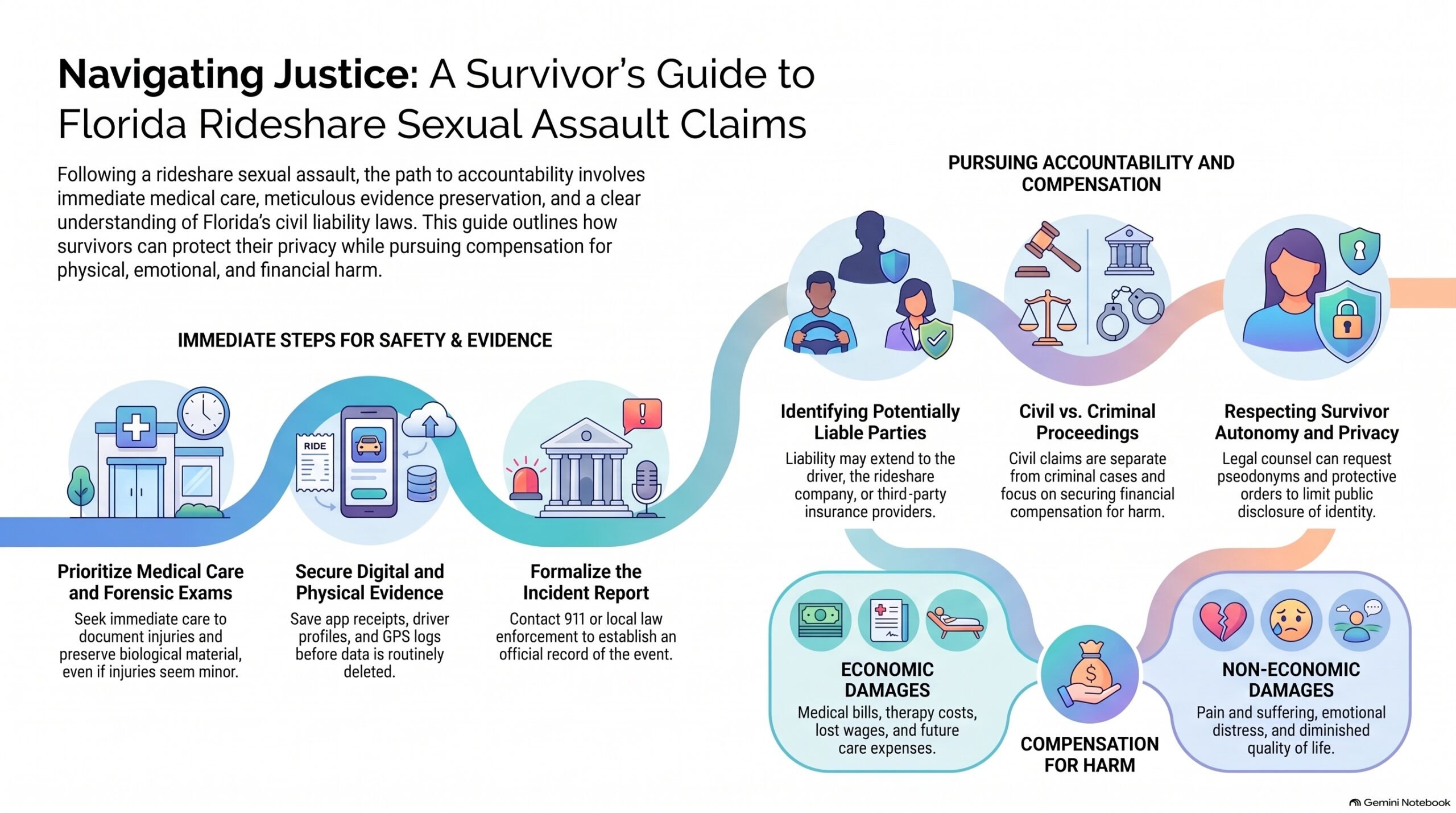


How We Can Help With Your Florida Personal Injury Rideshare Sexual Assault Injury Claim
A Florida personal injury attorney can help a rideshare sexual assault survivor pursue accountability and compensation by investigating the incident, identifying potentially liable parties, and preserving key evidence. Counsel can provide a structured, respectful process that protects the survivor’s privacy while evaluating potential claims against responsible individuals, rideshare companies, or other entities.
Evidence preservation steps may include securing medical records, photographs, communications, witness information, and available surveillance footage. App data requests can seek trip details, driver information, location records, electronic communications, and relevant safety reports before routine deletion occurs. An attorney can also coordinate with law enforcement, communicate with insurers, and help the survivor avoid statements that could undermine the claim.
Legal counsel may assess physical, emotional, and financial harm and, when appropriate, pursue compensation through negotiation or litigation. Throughout the matter, the attorney can explain legal options, deadlines, and procedural requirements in understandable terms. This support allows the survivor to make informed decisions while the legal team advances accountability with diligence, compassion, and professional discretion.
OUR CONSULTATIONSARE FREE
START YOUR FREE CASE REVIEW

Understanding Florida Personal Injury Rideshare Sexual Assault Cases
When a rideshare passenger reports sexual assault, understanding the legal framework is essential to determining whether a viable Florida personal injury claim exists. Florida law may permit recovery for physical injuries, emotional distress, medical expenses, and other legally recognized losses. Liability depends on the facts, including the relationships among the assailant, driver, rideshare company, and passenger, as well as the available evidence and applicable insurance coverage.
A civil claim is separate from criminal prosecution. An overview of criminal liability may explain potential offenses and investigative procedures, but criminal authorities do not determine every issue involved in compensation. Civil proceedings generally require proof of negligence, vicarious responsibility, premises-related duties, or another recognized legal theory. Deadlines, evidence preservation, and privacy concerns can substantially affect the case.
A knowledgeable legal team can help identify responsible parties, communicate with insurers, and protect the survivor’s interests. Survivor support resources may include medical providers, counselors, advocacy organizations, and confidential crisis services, helping address safety, recovery, and informed decision-making throughout the legal process.
Common Causes of Florida Personal Injury Rideshare Sexual Assault Cases
Common causes of Florida rideshare sexual assault cases may include inadequate driver screening, improper driver conduct, unsafe pickup locations, and failures in app safety features. These issues can create opportunities for misconduct or leave passengers without timely warnings, assistance, or effective reporting options. The specific facts of each incident determine whether a rideshare company, driver, or another party may bear legal responsibility.
Inadequate Driver Screening
Although rideshare companies often advertise background checks as a central safety measure, inadequate driver screening can permit individuals with disqualifying criminal histories, prior sexual misconduct, or other serious warning signs to transport passengers. Background check flaws may arise when records are incomplete, outdated, improperly matched, or limited to jurisdictions that do not disclose relevant conduct. Screening systems may also overlook pending charges, aliases, license suspensions, and vehicle safety violations, indicating insufficient oversight. In some cases, companies rely on automated searches without meaningful human review or timely re-screening after a driver is accepted. These deficiencies can expose passengers to foreseeable risks and may support claims that a company failed to exercise reasonable care. Legal review can help determine whether screening policies, vendor practices, or compliance failures contributed to an assault.
Improper Driver Conduct
Improper driver conduct can create a direct and foreseeable risk of sexual assault during a rideshare trip, even when a company’s screening procedures appear adequate. Conduct may include unwanted personal questions, sexual comments, boundary violations, or attempts to isolate and intimidate a passenger. A driver who ignores requests to end a conversation, change the route, or stop the trip may increase a passenger’s vulnerability and undermine the duty to provide reasonably safe transportation. Improper vehicle operation, including unauthorized stops, sudden route changes, or driving to an unintended destination, can further restrict access to assistance. Likewise, distracted driving may prevent timely recognition of distress signals and compromise the passenger’s ability to respond safely. Evidence such as trip records, messages, recordings, and witness accounts may help establish negligent supervision or liability.
Unsafe Pickup Locations
When a rideshare passenger is collected from an unsafe pickup location, limited lighting, isolation, heavy traffic, or inadequate security may increase the risk of sexual assault. Passengers may struggle to identify the vehicle, communicate their location, or obtain timely assistance when surroundings are deserted or poorly maintained. A responsible rideshare provider should encourage well-lit pickups near businesses, public facilities, or other areas with visible activity. Designated pickup zones, adequate lighting, clear signage, and access to emergency services can further reduce exposure to danger. Passengers also benefit from confirming the vehicle’s license plate, make, model, and driver identity before entering. Ride verification should occur without pressure, particularly when multiple vehicles arrive or the passenger is unfamiliar with the area. Property owners and transportation partners may share responsibility when foreseeable location hazards remain unaddressed.
App Safety Failures
App safety failures can create conditions that increase the risk of sexual assault during a rideshare trip. Device GPS failures may misidentify a vehicle’s position, delay trip updates, or prevent a passenger’s emergency contacts from receiving accurate location information. App location masking can obscure the driver’s route, pickup point, or destination, making it more difficult to detect unauthorized detours and respond promptly. Other concerns may include malfunctioning emergency buttons, incomplete driver identity verification, and inadequate monitoring of unusual route deviations. These failures can leave passengers, particularly those traveling alone or under stress, without reliable tools for protection. Rideshare companies may face scrutiny when known safety defects are not corrected, warnings are inadequate, or reports are ignored. Attorneys evaluate system records, communications, and company policies when examining responsibility.
Don’t Wait. Call Our Florida Personal Injury Lawyers Now!


Legal Rights of Florida Personal Injury Rideshare Sexual Assault Cases Injury Victims
Florida rideshare sexual assault victims may have important legal rights, including the right to pursue compensation for medical expenses, counseling, lost income, pain and suffering, and other harm caused by the attack. Florida law may also permit claims against responsible individuals, rideshare companies, or insurers, depending on the evidence and applicable deadlines.
Florida rideshare assault victims may pursue compensation and legal accountability, depending on evidence, responsible parties, and applicable deadlines.
- A voice merits recognition. A victim may report the assault, seek civil remedies, and receive guidance without surrendering control over personal decisions.
- Consent and consent boundaries matter. An attorney can explain available claims while respecting each person’s autonomy and informed choices.
- Privacy and safety require protection. Legal counsel may request confidential treatment, limit unnecessary disclosures, and help address harassment or retaliation concerns.
- Support can restore stability. Compensation may assist with treatment, transportation, missed work, and long-term recovery while accountability is pursued.
Prompt consultation with a qualified Florida attorney can preserve evidence, clarify rights, and connect victims with trauma-informed resources.
Why Do Florida Personal Injury Rideshare Sexual Assault Cases Happen?
Rideshare sexual assault injuries can occur when a driver or other responsible person abuses access to a passenger, isolates the passenger in a vehicle, or disregards clear boundaries and consent. Contributing circumstances may include inadequate screening, insufficient training, impaired judgment, misuse of personal information, or failures in platform safety systems. A passenger may be more vulnerable because travel occurs in an enclosed, moving vehicle, often away from familiar support networks. Injuries can also result when warning signs are ignored, complaints are mishandled, or the driver’s conduct is not properly monitored. These cases demonstrate the importance of Driver accountability at every level, including responsible hiring, supervision, reporting procedures, and meaningful enforcement of safety standards. Platform policies, vehicle access, and communication features may create additional risks when safeguards are poorly designed or inconsistently applied. Careful preservation of evidence remains important because trip records, messages, location data, and surveillance footage may clarify how the injury occurred and who was responsible.
What Should You Do After a Florida Personal Injury Rideshare Sexual Assault Case?
After a Florida rideshare sexual assault, the injured person should seek immediate medical care, even if visible injuries appear minor. The incident should be reported promptly to law enforcement, and medical, police, and rideshare records should be preserved. Preserving clothing, communications, photographs, and other potential evidence may support both the investigation and a personal injury claim.
Seek Immediate Medical Care
Seeking prompt medical care should be a priority following a suspected sexual assault during a rideshare trip, even when visible injuries are absent. A qualified healthcare professional can evaluate physical injuries, address potential exposure to sexually transmitted infections, and discuss time-sensitive pregnancy prevention when appropriate. Medical personnel may also document findings and preserve biological material that could become rape-proof evidence, subject to applicable procedures and the patient’s informed consent. Prompt treatment can reduce complications while giving the affected individual access to victim trauma support and referrals for counseling or advocacy services. The patient may request a sexual assault forensic examination, ask questions about each step, and bring a trusted support person if permitted. Care should remain patient-centered, respectful, confidential, and free from judgment throughout the examination and recovery process.
Report the Sexual Assault
When a suspected sexual assault occurs during a rideshare trip, reporting it promptly can help protect the affected person, preserve potential evidence, and initiate an official investigation. The survivor, a trusted companion, or another responsible individual should contact local law enforcement or call 911 if there is immediate danger. Dispatchers can provide direction and arrange appropriate emergency assistance. A report may also be made through the rideshare company’s safety channel, although reporting to the company should not replace contacting law enforcement. The affected person should be informed about available Victim support without pressure to repeatedly describe events or to make immediate decisions beyond safety needs. Advocates, crisis centers, and statewide survivor resources can explain reporting options, protective measures, and confidential assistance. A Florida personal injury attorney may help coordinate communication with responsible parties while respecting the survivor’s autonomy.
Preserve Evidence And Records
Preserve clothing, photographs, messages, trip details, medical records, and other materials that may document the alleged assault or resulting injuries. Items should remain in their original condition, stored securely, and shared only with trusted professionals or investigators. Digital evidence, including application receipts, driver profiles, location data, call logs, and communications, should be downloaded promptly because accounts and devices may change. A rideshare company, business, residence, or transportation authority may possess Surveillance video; a timely preservation request can help prevent routine deletion. Medical providers should be asked to maintain complete examination and treatment records. Any consent documentation, including messages or statements concerning the encounter, should be retained without alteration and reviewed in context. A qualified attorney can identify additional evidence, issue preservation notices, and coordinate lawful collection while protecting privacy.
Critical Evidence in a Florida Personal Injury Rideshare Sexual Assault Case
Critical evidence can preserve a survivor’s account and establish responsibility in a Florida rideshare sexual assault injury case.
Counsel may evaluate the following records and testimony:
- Medical records and documentation
- Rideshare app data
- Witness statements
- Police and incident reports
Medical Records And Documentation
Medical records and related documentation can establish the nature, timing, and extent of injuries alleged after a rideshare sexual assault in Florida. Prompt examination records may describe physical findings, reported symptoms, prescribed treatment, and referrals for counseling or focused care. Follow-up notes can demonstrate continuing pain, emotional distress, sleep disruption, or other consequences, while documenting compliance with recommended treatment. Prescriptions, therapy records, diagnostic results, and bill documentation may help connect necessary expenses to the alleged incident. Individuals should request complete copies, preserve original electronic files, and maintain a chronological record of appointments and communications. Digital privacy also requires careful handling; records should be stored securely and shared only with authorized professionals. Accurate, consistent documentation can assist attorneys, medical providers, and advocates in evaluating harm while respecting the survivor’s dignity.
Rideshare App Data
Rideshare app data can help establish the timing, route, driver identity, vehicle information, and communications associated with an alleged sexual assault in Florida. Trip receipts, pickup and drop-off records, GPS points, account profiles, and in-app messages may clarify what occurred before, during, and after the ride. A claimant should preserve screenshots, emails, notifications, and downloaded records without altering them. Privacy settings may affect what information appears in an account, while data retention policies can determine how long a company maintains trip histories, location information, or communications. Legal counsel may send a preservation request and seek additional records through appropriate legal procedures. App data should be compared with medical documentation and other evidence to identify inconsistencies, confirm the sequence, and support a thorough investigation that serves the claimant’s interests.
Witness Statements
Witness statements can help establish what occurred before, during, and after an alleged sexual assault involving a rideshare trip in Florida. Passengers, bystanders, building employees, or others who observed conduct, heard distress, or encountered the person afterward may provide important firsthand information. Their accounts can clarify timing, location, interactions, physical condition, and visible changes in behavior. Counsel may document each witness’s contact information, observations, and relationship to the parties while preserving the original wording as accurately as possible. Witness identification should be approached carefully, because mistaken recollection can affect the reliability of an account. Surveillance footage may support or contradict witness descriptions by showing arrivals, departures, movements, or surrounding activity. A respectful, trauma-informed interview process helps protect dignity while preserving evidence that may assist an injured person’s legal claim and recovery.
Police And Incident Reports
When reported promptly and documented accurately, police and incident reports can provide important evidence in a Florida rideshare sexual assault injury case. A 911 reporting record may establish when assistance was requested, what information was initially provided, and how responding personnel evaluated immediate safety concerns. Officers’ reports can preserve statements, observations, photographs, vehicle details, and descriptions of suspected conduct before memories change. Records may also support witness identification by documenting passengers, drivers, bystanders, dispatch personnel, or medical responders who observed relevant events. Although a report is not a substitute for independent proof, inconsistencies or omissions may affect credibility and investigative follow-up. Preserving certified copies, dispatch recordings, supplemental reports, and related evidence can help attorneys evaluate liability, damages, and available claims while protecting the survivor’s interests throughout the legal process.
Long-Term Effects of Florida Personal Injury Rideshare Sexual Assault Cases Injuries
Long-term injuries from rideshare sexual assault may produce persistent physical health consequences that require ongoing medical care and rehabilitation. Emotional trauma effects can include anxiety, depression, post-traumatic stress, and difficulties maintaining personal or professional relationships. Financial and lifestyle impacts may also arise through treatment costs, lost income, reduced independence, and lasting changes to daily activities.
Physical Health Consequences
Physical health consequences may persist long after a rideshare sexual assault, particularly when the incident causes bodily trauma, exposure to infection, or delayed medical complications. Survivors may experience untreated fractures, soft-tissue injuries, chronic pain, pelvic complications, or reproductive health concerns that require continuing evaluation. Prompt examinations can document injuries, identify infections, and establish appropriate treatment before conditions worsen. STI screening considerations may include initial testing, follow-up testing after recommended intervals, preventive medication, and confidential counseling regarding results. Medical providers can coordinate referrals to experts when symptoms affect mobility, sexual health, or daily functioning. Trauma recovery planning should include realistic treatment schedules, transportation assistance, medication monitoring, and accommodations for work or caregiving responsibilities. Careful records of diagnoses, procedures, expenses, and physical limitations may also support a personal injury claim.
Emotional Trauma Effects
Emotional trauma after a rideshare sexual assault may continue long after visible injuries have resolved, affecting a survivor’s sense of safety, relationships, concentration, and ability to perform ordinary responsibilities. Symptoms may include anxiety, depression, panic, sleep disruption, intrusive memories, emotional numbness, and difficulty trusting others. Some survivors avoid transportation, social settings, or situations that resemble the assault, while others experience persistent shame or self-blame despite bearing no responsibility for the conduct. Trauma-informed mental health care can support stabilization and recovery. Treatment may involve counseling, psychiatric evaluation, support groups, or grief counseling when the assault has caused profound losses of identity, security, or connection. A survivor may also require workplace accommodations, such as schedule flexibility or a private setting, while managing symptoms and attending treatment. Legal documentation can help communicate these ongoing effects.
Financial And Lifestyle Impacts
Although the immediate crisis may pass, a rideshare sexual assault can create lasting financial and lifestyle consequences for the survivor. Medical treatment, counseling, transportation changes, and missed work may impose expenses that continue long after the incident. Workplace disruption can result from trauma-related symptoms, medical appointments, reduced concentration, or an inability to return to the same schedule. Lost wages and diminished earning capacity may threaten financial stability, particularly when the survivor supports dependents or lacks paid leave. Daily routines may also change as the survivor avoids rideshare services, alters commuting arrangements, or limits social activities. Documentation of expenses, employment effects, and necessary accommodations can help establish the broader impact. A Florida personal injury attorney may evaluate recoverable losses and guide the survivor toward resources that support safety, recovery, and long-term independence.
Don’t Wait. Call Our Florida Personal Injury Lawyers Now!
Proving Liability in Florida Personal Injury Rideshare Sexual Assault Cases
Proving liability in a Florida rideshare sexual assault case requires establishing who owed the survivor a legal duty, how that duty was breached, and whether the breach caused the resulting harm. Potentially responsible parties may include the driver, a rideshare company, or another entity whose conduct contributed to the incident. Evidence can include trip records, application data, route information, communications, witness accounts, medical documentation, and surveillance footage. A driver background investigation may reveal prior disqualifying conduct, inaccurate disclosures, or failures in screening and supervision. However, liability depends on admissible proof connecting those facts to the assault and resulting injuries. Prompt evidence preservation is required because digital records, vehicle data, and video may be overwritten or deleted. A legal team can issue preservation requests, identify relevant witnesses, and coordinate sensitive interviews in a manner that respects the survivor’s dignity. Careful documentation also helps establish physical, emotional, and financial harm without requiring unnecessary exposure of private information. Each case requires individualized analysis under Florida law.
Dealing With Insurance Companies After a Florida Personal Injury Rideshare Sexual Assault Case
Once potential liability and damages are documented, insurance companies may become involved in evaluating coverage, responsibility, and settlement options. Their representatives may request recorded statements, medical authorizations, employment information, or access to digital records. A claimant should provide accurate information while avoiding speculation, unnecessary disclosures, or direct admissions that could undermine a valid claim.
Coverage disputes can arise among a rideshare company, driver, personal insurer, and other potentially responsible parties. Counsel may review policy language, exclusions, reporting requirements, and applicable Florida protections before responding to settlement proposals. Documentation should reflect medical treatment, counseling, lost income, and continuing safety concerns. If an insurer delays, undervalues, or denies a claim, legal representatives can identify Appeal Options, pursue reconsideration, and preserve evidence for further action.
A separate Wrongful Termination issue may require attention if employment consequences followed reporting or cooperation with investigators. Insurance communications should remain organized and professional. Supportive advocates can help survivors protect their rights while reducing unnecessary pressure, without promising outcomes or discussing later procedural stages.
What to Expect During a Florida Personal Injury Rideshare Sexual Assault Cases Injury Claim Process
A Florida rideshare sexual assault injury claim generally begins with reporting the assault and preserving relevant evidence. The process may then involve investigating available insurance coverage, documenting injuries and financial losses, and evaluating liability. An attorney can use this information to pursue a compensation claim through negotiation or litigation.
Reporting The Assault
When a rideshare passenger reports a sexual assault, prompt contact with law enforcement can help preserve evidence and establish an official record of the incident. The passenger may provide details about the driver, vehicle, route, location, communications, and witnesses. Officers may explain available protective measures and arrange medical assistance when appropriate. A forensic examination can document injuries and collect evidence, although the decision to undergo one remains with the survivor. Preserving clothing, messages, trip information, and other relevant materials may support later proceedings. Crisis resources can offer confidential guidance, emergency planning, and connections to specialized services. Victim support organizations may provide advocates who accompany the passenger during interviews and help explain procedural choices. Reporting may feel difficult, so compassionate, nonjudgmental assistance is critical throughout the process. Documentation should remain accurate, timely, and secure.
Investigating Insurance Coverage
How insurance coverage applies can depend on the driver’s status, the rideshare platform’s policies, and the circumstances surrounding the alleged assault. During the claim process, counsel may identify applicable policies, including the driver’s personal coverage, commercial rideshare coverage, and any supplemental protection available during an active trip. Policy terms, coverage periods, exclusions, and reporting requirements require careful review. Uninsured coverage verification may become important if the alleged perpetrator lacked effective insurance or coverage is disputed. Investigators may request trip records, policy declarations, communications, and official reports to establish which insurer must respond. If an insurer denies responsibility, counsel can evaluate the stated grounds and develop an appeal strategy supported by the policy language and applicable Florida law. Coordinated communication can protect the claimant’s interests while preserving respectful, trauma-informed handling throughout.
Documenting Injuries And Losses
Throughout the claim process, documenting injuries and losses provides the foundation for evaluating a survivor’s damages after an alleged rideshare sexual assault. Trauma documentation may include medical evaluations, treatment plans, prescriptions, counseling records, and notes describing symptoms, functional limitations, and changes in daily life. Prompt, consistent medical recordkeeping helps link reported conditions to the incident while preserving information that might otherwise be difficult to recall. A survivor may also maintain a private timeline of appointments, symptoms, missed work, household difficulties, and out-of-pocket expenses. Receipts, employer statements, benefit records, and provider invoices can help organize financial effects without requiring the survivor to repeatedly recount painful details. Supportive advocates and legal professionals can explain preservation practices, protect sensitive materials, and coordinate records requests with appropriate consent.
Pursuing Compensation Claim
Pursuing compensation after an alleged rideshare sexual assault generally begins with an evaluation of the available evidence, applicable insurance coverage, and the losses connected to the incident. Evidence collection may include medical records, photographs, digital communications, trip information, witness statements, and relevant app data. Prompt police report filing can preserve important details and support coordinated investigation, although a civil claim may proceed independently of criminal charges. An attorney may identify potentially responsible parties, including a driver, rideshare company, vehicle owner, or insurer, and assess available theories of liability. The claimant may then submit a demand supported by documented economic and non-economic damages. Negotiations commonly follow, but unresolved disputes may require litigation, discovery, and court proceedings. Throughout the process, confidentiality, informed consent, and trauma-sensitive communication should guide the provision of professional assistance.
Compensation for Florida Personal Injury Rideshare Sexual Assault Cases Injury Damages
Compensation in a Florida rideshare sexual assault case may cover the victim’s economic and noneconomic losses when the evidence establishes legal liability. Potential recovery may also address treatment-related consequences, continuing care, and other harm connected to the assault, subject to applicable Florida law and available insurance coverage. Liability can involve the driver, a rideshare company, a vehicle owner, or another responsible party, depending on the facts, employment relationship, and policy terms. Evidence preservation is crucial. App records, trip information, communications, surveillance footage, medical records, and other documentation may help establish what occurred and identify responsible entities. Witness credibility can substantially influence how insurers, opposing counsel, and courts evaluate conflicting accounts. A careful legal review may clarify notice requirements, filing deadlines, immunity issues, and coverage disputes before negotiations begin. Attorneys serving survivors should protect confidentiality, explain realistic litigation risks, and coordinate referrals for medical, counseling, and advocacy services while pursuing a fair resolution.
Economic vs Non-Economic Damages in Florida Personal Injury Rideshare Sexual Assault Cases
Economic damages may include medical expenses, counseling costs, lost income, and other objectively measurable financial losses resulting from the alleged rideshare assault. Non-economic damages address less tangible harm, including emotional distress, trauma, diminished quality of life, and psychological suffering, which require careful valuation. Establishing either category generally depends on credible documentation, expert testimony, treatment records, employment records, and other evidence linking the losses to the incident.
Economic Damages Explained
When a rideshare sexual assault causes financial harm, Florida law generally distinguishes economic damages from non-economic damages when evaluating a personal injury claim. Economic damages are measurable monetary losses resulting from the incident and its consequences. They may include emergency treatment, medical appointments, prescriptions, therapy, transportation, and necessary future care. Medical cost forecasting can help estimate reasonably anticipated expenses when injuries require continuing treatment. Lost income may also be recoverable when trauma or related conditions prevent work, reduce hours, or limit earning capacity. Wage loss proof commonly includes pay records, tax documents, employer statements, schedules, and medical restrictions. Detailed documentation helps establish that claimed losses are connected to the assault rather than unrelated circumstances. A Florida attorney may organize these records and present a clear, evidence-based damages calculation for responsible parties.
Non-Economic Damages Valued
Non-economic damages address the personal effects of a rideshare sexual assault that cannot be measured through bills or wage records. They may include pain, fear, humiliation, emotional distress, loss of enjoyment, disrupted relationships, and diminished quality of life. Florida law does not assign a fixed price to these harms. Instead, valuation considers the severity and duration of the injury, its effects on daily functioning, and the broader circumstances surrounding recovery. Emotional damages and proof standards may influence how convincingly these losses are presented, although valuation remains distinct from the proof of liability. A careful Settlement strategy and liability insurance review can help identify available coverage, responsible parties, and realistic compensation ranges. Counsel may also consider comparable verdicts, statutory limits, and the client’s long-term needs when evaluating a fair settlement, while treating the survivor with dignity throughout the process.
Proving Rideshare Assault Damages
In a Florida personal injury claim arising from a rideshare sexual assault, damages must be established through evidence that connects each loss to the incident. Economic damages may include medical treatment, counseling, prescription costs, lost wages, reduced earning capacity, and necessary future care. Receipts, employment records, treatment notes, and billing statements help document these measurable losses. Evidence preservation is critical and includes promptly securing rideshare records, communications, video, witness information, and other relevant digital materials. Non-economic damages address pain, emotional distress, humiliation, anxiety, loss of enjoyment, and the lasting effects on relationships and daily functioning. Expert testimony from medical, psychological, vocational, or economic professionals may explain causation, prognosis, and financial impact. Detailed personal accounts, consistent treatment histories, and testimony from supportive observers can further demonstrate the assault’s continuing consequences.
When a Florida Personal Injury Rideshare Sexual Assault Case Goes to Trial vs. Settlement
A Florida rideshare sexual assault injury case may resolve through settlement or proceed to trial, depending on the strength of the evidence, the parties’ willingness to negotiate, and the applicable insurance coverage. Settlement can provide a more predictable resolution, reduce the burden of testimony, and help the survivor access compensation sooner. Negotiations may address medical expenses, counseling, lost income, and other documented losses without requiring a public courtroom proceeding.
Trial may become necessary when insurers deny responsibility, dispute damages, or offer inadequate compensation. At trial, attorneys present testimony, records, communications, and other evidence to establish what occurred and which parties may be accountable. Evidence Handling is crucial because improperly preserved digital records, photographs, or medical documentation can weaken an otherwise credible claim. Issues involving Negligent Hiring may also require careful presentation of employment records and company practices. A lawyer serving survivors should explain each option, protect the client’s privacy, and support an informed decision based on personal needs, evidence, risks, and objectives.
Florida Laws That May Affect Your Florida Personal Injury Rideshare Sexual Assault Cases Case
Florida law may affect a rideshare sexual assault case through rules governing personal injury claims, insurance coverage, evidence, and the time allowed to file a lawsuit. Several legal principles may influence how responsibility is evaluated and how survivors seek accountability.
Florida law shapes rideshare sexual assault cases through rules on liability, insurance coverage, evidence, and filing deadlines.
- Negligence standards: A claim may examine whether a driver, rideshare company, or another party breached a duty of reasonable care.
- Insurance rules: Coverage may depend on the driver’s status, applicable policies, and policy exclusions, so a careful review of available benefits is required.
- Ride share contracts: Platform agreements may address arbitration, liability limits, reporting procedures, and the relationship between drivers and companies.
- Consent requirements: Florida criminal and civil law recognizes that sexual contact must be voluntary; evidence concerning coercion, incapacity, threats, and surrounding circumstances may be significant.
Preserving messages, trip records, medical documentation, and witness information can support a thorough investigation. A qualified attorney may coordinate with advocates and explain procedural protections while pursuing a result that promotes safety, dignity, and meaningful service to the affected individual.
Don’t Wait. Call Our Florida Personal Injury Lawyers Now!
The Statute of Limitations for Florida Personal Injury Rideshare Sexual Assault Cases
Time limits can determine whether a survivor may pursue a personal injury claim arising from a rideshare sexual assault. Florida limitation periods vary depending on the alleged conduct, the survivor’s age, the injury, and whether the claim is brought against an individual, a rideshare company, or another responsible party. Civil claims may have distinct deadlines from those in criminal prosecutions, and statutory amendments can affect available remedies. Certain sexual abuse claims may receive extended periods, particularly when trauma, minority, or delayed discovery is legally significant. However, a deadline does not automatically excuse inaction, and filing requirements may apply before litigation. The survivor’s civil case generally concerns liability and damages, not criminal intent defenses, although related criminal proceedings can influence available evidence. The evidentiary burden of proof in a civil action differs from the criminal standard, yet timely preservation of records, communications, medical documentation, and witness information remains important. Because missed deadlines can bar recovery, prompt evaluation of the governing statute and facts serves the survivor’s interests.
How a Florida Personal Injury Rideshare Sexual Assault Cases Lawyer Can Help You
When a rideshare sexual assault gives rise to a potential civil claim, experienced legal counsel can evaluate the facts, identify all potentially responsible parties, and protect the survivor’s rights throughout the process.
A Florida attorney may also:
- Coordinate evidence gathering, including records, communications, and witness accounts, while reducing unnecessary strain on the survivor.
- Assess driver, company, insurance, and third-party responsibility through careful investigation and legal analysis.
- Conduct a thorough Damages calculation covering medical care, counseling, lost income, diminished quality of life, and continuing harm.
- Develop a Settlements strategy that seeks accountability and meaningful compensation without sacrificing the survivor’s dignity or control.
Counsel can manage communications with insurers and opposing parties, prepare persuasive documentation, and explain each procedural decision in clear terms. Representation may also help preserve privacy, challenge unfair tactics, and pursue litigation when resolution efforts fail. The lawyer’s role is not merely financial; it includes creating a structured process that respects trauma, supports informed choices, and advances the survivor’s interests with diligence and compassion.
When to Contact a Florida Personal Injury Rideshare Sexual Assault Cases Lawyer
Prompt legal guidance may be appropriate as soon as a rideshare passenger experiences sexual assault, unwanted sexual contact, or related misconduct. Early contact can help preserve relevant information while memories, digital records, trip details, and potential witnesses remain identifiable. A lawyer can also explain immediate options without requiring the passenger to decide whether to pursue a civil claim immediately.
Contact should occur after urgent medical needs are addressed and emergency reporting guidelines have been considered. If danger continues, emergency services should be contacted first. A passenger may also seek medical attention, request documentation of injuries, and preserve messages, receipts, driver information, and app records when doing so is safe.
Timing remains important because each claim may involve a statutory deadline, which can vary depending on the facts, the defendant, and the applicable law. Delaying consultation could limit available remedies or complicate evidence preservation. Supportive relatives, advocates, or service organizations may assist the passenger in locating confidential legal guidance.
Why You Need an Experienced Florida Personal Injury Rideshare Sexual Assault Cases Lawyer
An experienced Florida personal injury rideshare sexual assault cases lawyer can evaluate the full range of legal issues arising from an assault during a rideshare trip, including potential claims against the driver, rideshare company, or other responsible parties. This experience helps preserve evidence, identify applicable insurance coverage, and address deadlines that may affect recovery. Counsel can coordinate with investigators, obtain electronic trip records, and pursue compensation for medical care, counseling, lost income, and lasting harm. A knowledgeable attorney also understands how civil claims may proceed alongside a criminal investigation without interfering with law enforcement efforts. Civil rights advocacy may be relevant when institutional failures, discrimination, or retaliation require additional accountability. The legal team can connect survivors with Emotional support resources and qualified providers while maintaining privacy and respectful communication. Skilled representation allows survivors and their families to focus on safety, recovery, and community support while counsel manages negotiations, litigation, and interactions with opposing parties.
How to Choose the Right Florida Personal Injury Rideshare Sexual Assault Cases Lawyer for Your Case
How can a survivor identify the right Florida personal injury rideshare sexual assault cases lawyer for the circumstances of the case? The selection process should begin with experience handling sexual assault, rideshare liability, and injury claims. A qualified attorney should explain potential legal theories, evidence requirements, deadlines, and realistic outcomes without promising results.
Client communication is equally important. Survivors may benefit from a lawyer who listens carefully, answers questions promptly, and explains each decision in understandable terms. During an initial consultation, the survivor can assess whether the attorney demonstrates patience, respect, and sensitivity to trauma.
Privacy protections should also receive careful attention. The lawyer should describe how records, communications, medical information, and identifying details will be safeguarded. Fee arrangements, litigation responsibilities, and the role of insurance companies should be provided in writing. A strong fit generally involves professional competence, transparent guidance, and a demonstrated commitment to preserving the survivor’s dignity throughout the legal process. References, licensing status, and disciplinary history may also help inform a careful decision.
About The Law Offices of Anidjar & Levine
The Law Offices of Anidjar & Levine represents individuals pursuing compensation after serious personal injuries, including claims involving rideshare-related sexual assault.
The firm approaches these matters with attention to each client’s safety, dignity, and legal objectives.
Its attorneys may evaluate potential Rideshare Liability involving the driver, transportation company, insurance providers, or other responsible parties.
Because these claims can depend on rapidly changing records and sensitive testimony, the firm emphasizes Evidence Preservation from the earliest stage.
This may include securing electronic communications, trip data, surveillance footage, witness information, medical documentation, and reports submitted through rideshare platforms.
Attorneys can also coordinate with investigators and qualified professionals when additional review is necessary.
The firm’s work is intended to help clients understand available legal options while reducing the burden of confronting companies and insurers alone.
Individuals considering representation may benefit from promptly discussing the circumstances with counsel, as deadlines and evidentiary challenges can affect potential recovery.

Frequently Asked Questions
Can I Pursue Compensation if the Rideshare Driver Was Criminally Charged?
A Criminal charge against a rideshare driver does not prevent an injured passenger from pursuing compensation through separate civil options. The criminal case may provide useful evidence, but it does not guarantee financial recovery, and its outcome may not determine civil liability. The passenger should promptly preserve messages, trip records, medical documentation, and witness information. Statute-of-limitations deadlines can restrict filing rights, so consulting a qualified Florida personal injury attorney is important.
Does the Rideshare Company Cover Assaults Occurring During Trips?
Rideshare companies may provide Coverage liability for assaults occurring during trips, but coverage is not automatic and depends on the driver’s status, available insurance, and applicable policy exclusions. The company may deny responsibility if the driver acted outside the scope of authorized services or if another insurer bears primary liability. An injured passenger should preserve trip records, report the incident, obtain medical care, and consult qualified counsel to evaluate potential claims against all responsible parties.
Can Passengers Remain Anonymous During a Sexual Assault Civil Case?
Passengers may sometimes remain anonymous in a sexual assault civil case, but anonymity is not automatic. A survivor’s attorney can request that the court use a pseudonym, restrict public filings, or issue Protective Orders limiting disclosure of identifying information. Judges balance privacy, fairness, and the defendant’s right to respond. Evidence Privacy measures may protect medical records, communications, and personal details, although some information could still be disclosed during litigation or trial.
What if the Assault Occurred After Ending the Rideshare Trip?
If an assault occurred after the rideshare trip ended, liability may still depend on where, when, and how the incident occurred, including whether the driver retained control or remained on company property. Post-trip coverage is not automatic and may require examining platform policies, insurance terms, and applicable Florida law. Negligence Aftercare could involve failing to secure a passenger’s safe departure or respond appropriately. A prompt consultation preserves evidence and identifies responsible parties.
Can Family Members Support My Recovery Without Affecting My Claim?
Family members can support recovery without harming a claim when their assistance respects the survivor’s choices and privacy. Medical support may include transportation, appointment coordination, and encouragement to follow treatment plans. Family assistance should not pressure the survivor or alter their account. Legal consent is necessary before relatives communicate with providers or attorneys. They should preserve messages, records, and related materials through careful handling of evidence, avoiding edits, speculation, or public discussion.
—————————
Victims of rideshare sexual assault in Florida may suffer physical injuries, emotional trauma, financial losses, and complex legal challenges.
A qualified Florida Personal Injury Lawyer can investigate the incident, identify potentially responsible parties, preserve critical evidence, and pursue available compensation.
Because insurance coverage and liability may depend on the driver’s status and other circumstances, seeking prompt legal guidance is important.
The Law Offices of Anidjar and Levine provides informed representation focused on protecting victims’ rights throughout the claims process.