
The Law Offices of Anidjar and Levine’s Daytona Beach rear-end truck accident lawyer investigates liability, preserves crash-scene and electronic evidence, and evaluates claims against drivers, trucking companies, owners, maintenance providers, or other responsible parties.
The investigation may examine stopping distance, following distance, fatigue, distraction, brake defects, roadway conditions, and traffic data.
Counsel also organizes medical records, employment documentation, property damage, and long-term losses to support compensation.
Prompt legal assistance may help protect evidence, deadlines, and insurance rights.
Learn more from a Daytona Beach Truck Accident Lawyer.
Main Takeaways
- A Daytona Beach rear-end truck accident lawyer investigates fault, including driver distraction, fatigue, following distance, speeding, and roadway conditions.
- Attorneys preserve crash evidence such as photographs, surveillance video, electronic driving data, maintenance records, and witness statements.
- Potentially responsible parties may include the truck driver, trucking company, vehicle owner, maintenance provider, or equipment manufacturer.
- Lawyers connect collision evidence to injuries and document medical treatment, rehabilitation, lost income, pain, and ongoing limitations.
- Victims may pursue compensation for medical expenses, property damage, lost wages, pain, and emotional distress, subject to deadlines and comparative negligence.


How We Can Help With Your Daytona Beach Rear-End Truck Accident Injury Claim
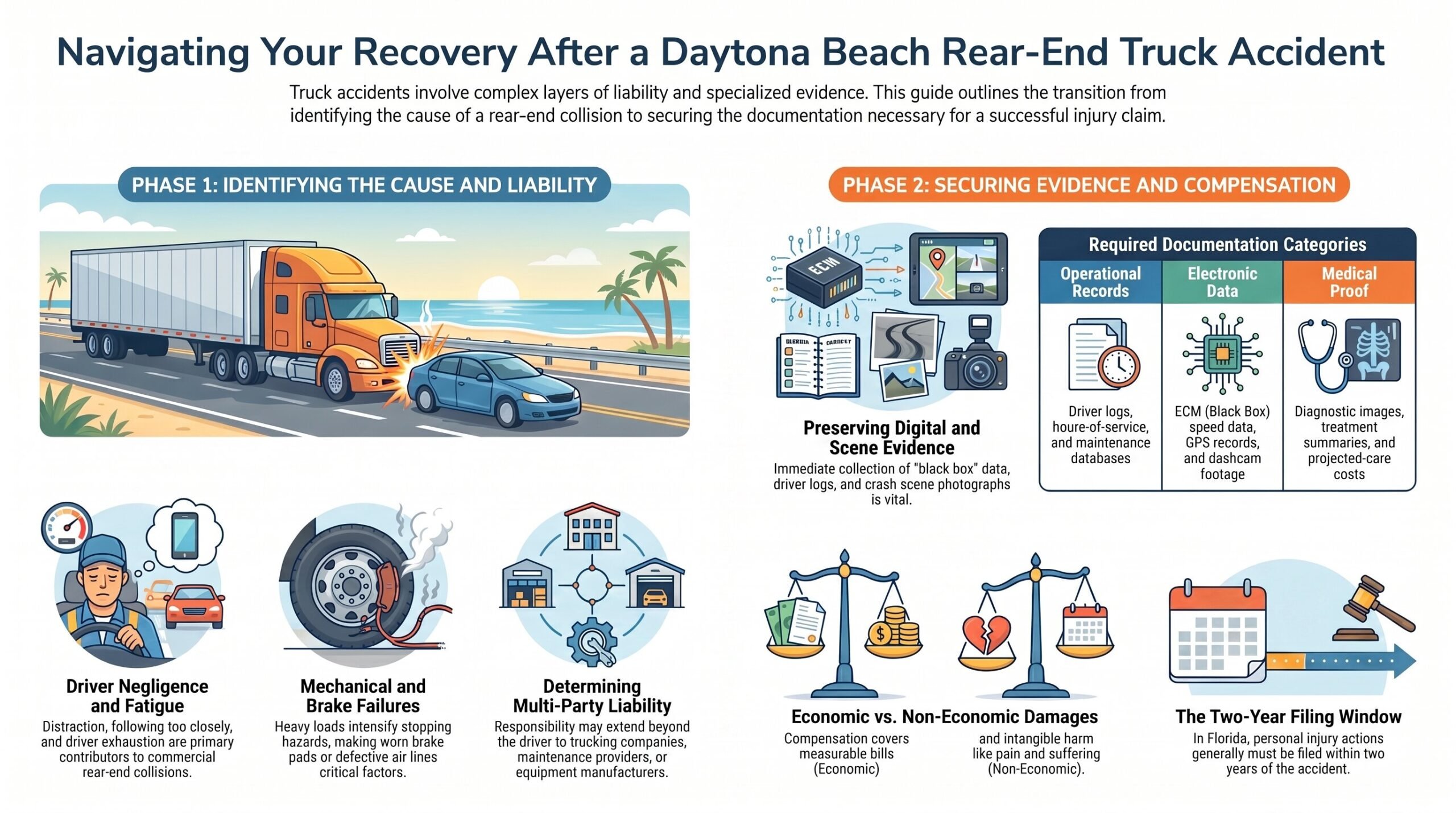
When a rear-end truck collision causes injury, establishing liability and securing fair compensation often requires a detailed investigation. A Daytona Beach rear-end truck accident lawyer can help preserve evidence, communicate with insurers, and coordinate the documentation needed to evaluate an injury claim.
The legal team may review crash reports, vehicle data, maintenance records, driver logs, and available surveillance footage. Witness Statements can provide independent accounts of traffic conditions, vehicle movement, and the moments preceding impact. Investigators may also examine whether fatigue, distraction, unsafe following distance, inadequate training, or mechanical problems contributed to the collision.
Proving Damages requires organized medical records, treatment summaries, employment documentation, and evidence of ongoing limitations. Counsel can work with medical and financial professionals to present the effect of injuries on daily responsibilities, income, and future needs. By handling negotiations and legal correspondence, the firm can reduce administrative burdens while pursuing a resolution that reflects the injured person’s documented losses and supports the family’s recovery.
OUR CONSULTATIONSARE FREE
START YOUR FREE CASE REVIEW

Understanding Daytona Beach Rear-End Truck Accident Injury Cases
Understanding a Daytona Beach rear-end truck accident injury case begins with examining how the collision occurred, who may be responsible, and how the resulting injuries affect the claimant’s life. The analysis may involve the truck driver, trucking company, vehicle owner, maintenance providers, or other responsible parties. Each claim requires careful attention to evidence, including crash reports, photographs, witness statements, medical records, and employment documentation.
Injury cases commonly address immediate treatment, ongoing care, rehabilitation, pain, reduced mobility, and lost income. A claimant’s recovery may depend on establishing a clear connection between the collision and the diagnosed conditions. A documentation checklist can help organize records, deadlines, insurance communications, and related expenses.
Medical cost proof, such as invoices, treatment summaries, and projected-care statements, supports requests for compensation. Legal professionals may also evaluate applicable insurance coverage and liability evidence while helping claimants protect their interests. This structured approach enables informed decisions and promotes fair treatment throughout the claim process.
Common Causes of Daytona Beach Rear-End Truck Accident
Common causes of Daytona Beach rear-end truck accidents include distracted driving, following too closely, and failing to respond to sudden traffic stops. In some cases, brake system failures or other mechanical defects may prevent a truck from stopping safely. Identifying the cause is crucial when evaluating liability and the resulting injuries.
Distracted Truck Drivers
Distracted truck drivers pose a serious risk to motorists traveling on Daytona Beach roads, particularly when a driver fails to monitor traffic while approaching stopped or slowing vehicles. Workzone distraction may occur when construction activity, signage, lane shifts, or roadside workers divert a driver’s attention from the roadway. Cellphone negligence, including texting, dialing, or reviewing messages, can delay a truck driver’s recognition of changing traffic conditions. Other distractions may involve adjusting navigation systems, eating, conversing with passengers, or reaching for objects inside the cab.
Because commercial trucks require significant time and distance to respond, even a brief lapse in attention can produce a severe rear-end collision. Investigators may examine electronic data, witness statements, camera footage, and company records to determine whether distraction contributed to the crash and identify available avenues for accountability.
Following Too Closely
Following too closely is a frequent cause of rear-end truck accidents in Daytona Beach, particularly when a commercial vehicle travels behind traffic at an unsafe distance. Large trucks require substantially more space to stop because of their weight, length, and braking characteristics. When a driver leaves inadequate following distance, even ordinary changes in traffic speed may create a collision risk. Nighttime Visibility can further limit the driver’s ability to recognize vehicles, roadway conditions, or developing hazards in time to respond safely.
Driver Fatigue may also reduce attention, judgment, and reaction speed, making unsafe spacing more likely. Weather, heavy traffic, and unfamiliar roads can compound these concerns. Truck operators and motor carriers have a responsibility to promote safe driving practices that protect motorists, passengers, and everyone traveling through Daytona Beach.
Sudden Traffic Stops
Sudden traffic stops can create a serious rear-end collision risk when a truck driver lacks sufficient time or distance to respond. A vehicle ahead may stop because of congestion, debris, emergency activity, a pedestrian, or an unexpected roadway hazard. In Daytona Beach, dense traffic and rapidly changing conditions can magnify this danger, particularly when nighttime visibility limits a driver’s ability to recognize stopped vehicles. Commercial drivers are expected to monitor traffic patterns, maintain an appropriate following distance, and remain attentive to developing hazards.
Investigators may examine roadway conditions, witness accounts, electronic driving data, video footage, and truck maintenance records to determine how the collision occurred. Clear documentation can help injured individuals and their families understand contributing factors while supporting efforts to obtain appropriate medical care, financial assistance, and accountability after a crash.
Brake System Failures
When a truck’s brake system fails, the driver may be unable to slow or stop the vehicle before striking traffic ahead. Brake failure symptoms can include a soft or sinking pedal, unusual noises, pulling during braking, warning lights, or increased stopping distance. Such conditions may result from worn brake pads, damaged air lines, depleted fluid, defective components, or inadequate maintenance. Commercial trucks require consistent inspections because their weight and cargo can intensify stopping hazards.
After a rear-end collision, a post-accident inspection may help identify whether mechanical defects, maintenance omissions, or improper repairs contributed to the event. Investigators may examine brake chambers, hoses, drums, rotors, electronic systems, and maintenance records. Preserving photographs, vehicle data, and inspection findings can assist injured individuals and their families in seeking accountability and appropriate support.
Don’t Wait. Call Our Daytona Beach Truck Accident Lawyers Now.


Legal Rights of Daytona Beach Rear-End Truck Accident Injury Victims
Daytona Beach rear-end truck accident injury victims may have legal rights to pursue compensation when another party’s negligence caused the collision and resulting harm. Florida law may allow recovery for medical expenses, lost income, property damage, pain, and emotional distress. A careful evaluation can identify responsible parties, applicable insurance coverage, and filing deadlines.
Daytona Beach truck accident victims may pursue compensation for injuries and losses caused by another party’s negligence.
- Victims may document injuries, treatment, expenses, and work-related losses.
- Evidence can include photographs, witness information, medical records, and crash reports.
- Comparative negligence may reduce compensation if a victim shares responsibility for the incident.
- Claims may involve truck drivers, motor carriers, maintenance providers, or insurers.
- A legal representative may protect communications, negotiate fairly, and pursue litigation when necessary.
Prompt attention helps preserve evidence and supports accurate assessment of damages. Victims should avoid signing releases or providing recorded statements before understanding their rights. Families and caregivers can assist by organizing records and supporting consistent medical follow-up. An attorney can explain available remedies while treating each person’s circumstances with diligence, respect, and confidentiality.
Why Do Daytona Beach Rear-End Truck Accident Injuries Happen?
Rear-end truck accident injuries often occur because a commercial truck requires substantially more time and distance to stop than a passenger vehicle. Heavy loads, steep roadway grades, and excessive speed can further increase stopping distance, leaving occupants in smaller vehicles vulnerable to severe impact forces.
Driver conduct also contributes to these collisions. Distraction, fatigue, impairment, aggressive following, and failure to monitor changing traffic conditions may prevent timely braking. In some cases, Vehicle maintenance issues, including worn brakes, defective tires, or malfunctioning lights, can reduce a truck’s ability to stop or warn nearby motorists.
Weather and roadway conditions may compound these dangers. Rain, standing water, congestion, and limited visibility can make a rear-end crash more likely when a truck driver responds too late. Investigators may review black box data, inspection records, dispatch information, and witness accounts to determine speed, braking, following distance, and driver actions. These factors can clarify how preventable conduct caused injuries to those sharing Daytona Beach roads.
Don’t Wait. Call Our Daytona Beach Truck Accident Lawyers Now.
What Should You Do After a Daytona Beach Rear-End Truck Accident Injury?
After a rear-end truck accident injury, the injured individual should seek immediate medical care, even if symptoms initially appear minor. Documenting the accident scene, including vehicle damage, road conditions, and witness information, can help preserve important evidence. Promptly contacting a truck accident lawyer may also clarify legal rights and support the protection of potential claims.
Seek Immediate Medical Care
When a person experiences pain, dizziness, or other symptoms following a truck collision, prompt medical evaluation is important, even if the injury initially appears minor. Some conditions, including concussions, internal bleeding, and soft-tissue damage, may worsen without immediate attention. A healthcare professional can identify injuries, recommend appropriate treatment, and create medical records connecting symptoms to the crash. Following prescribed instructions supports recovery and helps prevent complications.
Treating injuries safely may require emergency care, diagnostic testing, follow-up appointments, or physical therapy. A person should disclose all symptoms, medications, and relevant health information to medical providers. Delaying care can undermine health and complicate an injury claim. Medical records may also help demonstrate damages, but legal guidance remains important because insurance claim deadlines can restrict available remedies. Prompt care protects both well-being and future options.
Document The Accident Scene
If it is safe to do so, an injured person should document the accident scene before vehicles or evidence are moved. Photographs should show vehicle positions, damage, license plates, road conditions, traffic signals, skid marks, debris, and visible injuries. Images from several distances can provide context that close-up photographs may miss. The person should also record the date, time, weather, location, and apparent direction of travel while the details remain clear. Witness statements may preserve observations about the collision, including whether the truck followed too closely or failed to stop.
Names and contact information should be collected respectfully, without pressuring anyone to speculate. Any exchange of insurance documentation should be retained, including the trucking company’s information, policy details, and incident reports. Records should be stored securely and shared only with appropriate representatives.
Contact A Truck Accident Lawyer
A Daytona Beach truck accident lawyer can help an injured person evaluate potential claims, preserve relevant evidence, and identify every party that may bear responsibility for the collision. Legal guidance may also support timely Insurance claim filing while protecting the individual from statements or settlements that could limit recovery. Counsel can review police reports, medical records, electronic logging data, vehicle maintenance histories, and available roadway video. A lawyer may also assess disputed issues, including seatbelt effectiveness, comparative fault, and the severity of resulting injuries.
Prompt consultation helps preserve witness recollections and allows appropriate notices to be sent to trucking companies, insurers, or government entities. Individuals should follow medical recommendations, avoid discussing fault publicly, and retain photographs, bills, correspondence, and employment records for careful claim evaluation.
Don’t Wait. Call Our Daytona Beach Truck Accident Lawyers Now.
Critical Evidence in a Daytona Beach Rear-End Truck Accident Injury Case
A strong Daytona Beach rear-end truck accident injury case depends on preserving reliable evidence that establishes how the collision occurred and the losses sustained. Crash scene documentation, truck driver records, electronic data, and medical treatment documentation can each clarify fault, causation, and damages.
An attorney may assess the following evidence to determine its relevance and reliability:
- Photographs, video recordings, road conditions, vehicle positions, and visible damage from the crash scene
- Driver logs, licensing information, training records, employment records, and prior safety violations
- Electronic control module data, onboard camera footage, GPS records, and dispatch communications
- Medical records, diagnostic results, treatment notes, prescriptions, and rehabilitation documentation
- Witness statements, police reports, inspection records, and evidence concerning vehicle maintenance
Crash Scene Documentation
At the crash scene, prompt and thorough documentation can preserve crucial evidence in a Daytona Beach rear-end truck accident injury case. Photographs should capture vehicle positions, impact damage, skid marks, debris, traffic signals, lane markings, weather conditions, and visible injuries before conditions change. A clear record may help establish how the collision occurred and identify disputed details. Witness statement gathering should occur promptly, with names, contact information, observations, and any relevant statements recorded accurately.
Independent witnesses can provide valuable accounts when drivers describe events differently. Preserving dashcam footage is also important because recordings may be overwritten or lost. Relevant video from nearby businesses, residences, traffic cameras, or passing vehicles should be identified and requested without delay. Medical care and scene safety remain priorities throughout documentation efforts.
Truck Driver Records
Truck driver records can provide important evidence in a Daytona Beach rear-end truck accident injury case by showing whether the driver complied with federal safety requirements and company policies. These materials may include qualification files, training records, medical certifications, disciplinary histories, and drug or alcohol testing results. Hours-of-service records can help determine whether fatigue contributed to delayed braking or unsafe following distances. Investigators may identify logbook violations, inconsistent duty entries, or pressure from a carrier to exceed driving limits.
Company policies and enforcement records may also reveal whether supervisors addressed repeated safety concerns. Records concerning driver cell phones can indicate whether policies restricted mobile-device use while operating the truck. Preserving these documents promptly helps clarify responsibility, supports injured individuals seeking assistance, and allows qualified professionals to evaluate the claim using reliable information.
Electronic Data Evidence
When a rear-end truck collision occurs, electronic data can help establish what happened before impact and whether the driver or carrier violated safety requirements. A vehicle black box may record speed, braking activity, throttle position, seat-belt use, and other events immediately preceding the crash. Investigators can compare this information with roadway evidence, witness accounts, and the truck’s mechanical condition to clarify how the collision developed. Electronic logging devices may also show driving hours, rest periods, and possible violations of service limits.
Maintenance databases can reveal the brake maintenance history, inspections, repairs, and unresolved equipment concerns. Preservation is important because data may be overwritten, altered, or lost when a vehicle is repaired or returned to service. Legal counsel may issue preservation requests and arrange qualified downloads to protect reliable evidence for responsible representation.
Medical Treatment Documentation
Medical treatment documentation is key evidence in a Daytona Beach rear-end truck accident injury case because it connects the collision to the physical harm reported by the injured person. Records should include emergency evaluations, diagnostic images, physician notes, prescriptions, therapy plans, and follow-up findings. Consistent documentation can establish when symptoms began, how they progressed, and whether treatment recommendations were followed. It also supports Preventing Insurance Denials by addressing questions about causation, severity, preexisting conditions, and medical necessity.
The injured person should provide healthcare professionals with an accurate account of the crash and symptoms without minimizing relevant details. Maintaining bills, appointment records, and work restrictions helps demonstrate financial losses. Coordinating Property Damage records with medical evidence can further clarify the collision’s force and circumstances, assisting a fair evaluation.
Long-Term Effects of Daytona Beach Rear-End Truck Accident Injuries
Long-term injuries from a Daytona Beach rear-end truck accident may cause chronic pain, reduced mobility, or permanent disability that may affect daily activities. Survivors may also experience anxiety, depression, post-traumatic stress, or other emotional health challenges requiring ongoing care. Medical expenses, lost earning capacity, and lifestyle changes can create continuing financial and personal difficulties.
Chronic Pain and Disability
A rear-end truck accident in Daytona Beach can cause chronic pain and disability that persist long after the initial injuries appear to have recovered. Neck, back, shoulder, and joint conditions may limit mobility, stamina, concentration, and the ability to perform routine tasks. Some injured individuals require continuing medical care, assistive devices, modified duties, or permanent workplace restrictions. Workplace rehabilitation can help identify safe job functions, develop strengthening goals, and support a gradual return to employment when medically appropriate.
Treatment records should explain how symptoms affect daily activities and earning capacity. Complete insurance documentation, including medical evaluations, therapy records, work restrictions, and wage information, can establish the extent of long-term harm. A Daytona Beach attorney may help organize this evidence and pursue compensation for medical expenses, lost income, disability, and necessary future care.
Emotional and Mental Health
Emotional and mental health effects may continue after physical injuries from a rear-end truck accident have healed. Survivors may experience post-accident stress, anxiety, depression, irritability, or difficulty concentrating, particularly when traffic, trucks, or sudden braking trigger memories of the collision. Sleep disturbances and recurring nightmares can further affect emotional stability and daily functioning. Some individuals may avoid driving or riding in vehicles, while others may remain constantly alert for danger.
These reactions are not signs of weakness; they can reflect the mind’s response to a frightening event. Support from qualified mental health professionals may help identify symptoms and develop appropriate coping strategies. A trauma-informed recovery approach recognizes each person’s experiences, respects individual readiness, and encourages compassionate care from family, providers, and other trusted supporters.
Financial and Lifestyle Challenges
When injuries from a Daytona Beach rear-end truck accident persist, financial and lifestyle challenges may extend well beyond the initial medical treatment. Ongoing medical care, rehabilitation, medication, and transportation expenses can strain household resources, particularly when insurance payments are delayed or disputed. A Job Disruption may reduce income, eliminate benefits, or prevent an injured person from returning to the same occupation. These losses can affect housing stability, family responsibilities, and the ability to support others.
Medical bills and ordinary expenses may accumulate, creating pressure that complicates Debt Recovery and long-term financial planning. Some individuals require home modifications, assistive equipment, or continuing personal care. Careful documentation of lost earnings, future treatment needs, and daily limitations can help clarify the full impact and support informed legal and financial decisions.
Proving Liability in Daytona Beach Rear-End Truck Accident Injury Cases
Establishing liability in a Daytona Beach rear-end truck accident injury case requires evidence showing that the truck driver or another responsible party failed to exercise reasonable care and that the failure caused the collision and resulting injuries. Relevant proof may include crash reports, photographs, vehicle damage, surveillance recordings, electronic logging data, and available driver communications. Evidence preservation should begin promptly because recordings, inspection materials, and other electronically stored information may be overwritten or lost.
Witness statements can clarify traffic conditions, vehicle positions, speed, following distance, and the driver’s conduct immediately before impact. Investigators may also examine whether inadequate maintenance, defective equipment, negligent loading, or unsafe company policies contributed to the event. Medical records and expert opinions can connect the collision to documented injuries and distinguish prior conditions when necessary. A careful review of these sources helps identify each potentially responsible party and supports a clear, fact-based presentation of the injured person’s claim. Witness credibility and consistent documentation remain critical throughout the process.
Dealing With Insurance Companies After a Daytona Beach Rear-End Truck Accident Injury
After a Daytona Beach rear-end truck accident, insurance companies may promptly seek statements, records, and other information that could affect the value or outcome of an injury claim. Injured individuals should provide accurate, limited responses and avoid speculation about fault, symptoms, or recovery. Recorded statements and broad medical authorizations can disclose information unrelated to the collision, so careful review is appropriate before signing or submitting documents.
Claimants should preserve medical bills, wage records, photographs, correspondence, and repair cost estimates. Hardship documentation may help explain transportation difficulties, missed work, household burdens, or other financial consequences connected to the injury. Communications with adjusters should remain factual and professional, while settlement offers should be evaluated against documented treatment, expenses, and continuing needs.
A lawyer may communicate with insurers, identify incomplete investigations, and protect a claimant from pressure to resolve a claim prematurely. Prompt legal guidance also helps preserve relevant evidence, including vehicle data, photographs, witness information, and trucking records, while supporting a fair and responsible resolution.
What to Expect During a Daytona Beach Rear-End Truck Accident Injury Claim Process
A Daytona Beach rear-end truck accident injury claim typically begins with an initial case evaluation to assess liability, damages, and available legal options. The process then involves gathering accident evidence, reviewing medical records, and negotiating with insurers regarding the truck injury claim. If a fair resolution cannot be reached, the matter may proceed toward litigation, requiring structured preparation and court filings.
Initial Case Evaluation
During an initial case evaluation, a Daytona Beach rear-end truck accident lawyer examines the collision circumstances, available evidence, and the injured person’s medical condition to determine whether a viable claim exists. The consultation generally addresses how the crash occurred, the parties involved, reported injuries, and communications with insurers. The lawyer may explain Evidence preservation obligations without conducting the detailed evidence-gathering work addressed later. Medical records help clarify diagnosis, treatment, prognosis, and the relationship between the collision and claimed harm.
The evaluation also considers potential liability, applicable deadlines, available coverage, and whether an insurance denial appears unsupported. A careful attorney identifies immediate risks, explains realistic options, and outlines steps that may protect the client’s interests. This process allows injured individuals and their families to make informed decisions while pursuing fair treatment and accountability.
Gathering Accident Evidence
When a Daytona Beach rear-end truck accident claim proceeds, counsel typically begins gathering evidence that can establish how the collision occurred, who may be responsible, and how the injuries developed. This work may include witness statement collection, preserving accounts while memories remain fresh, and identifying consistent observations. Police report retrieval can provide the official crash description, recorded citations, roadway conditions, and involved parties. Counsel may also request insurance documentation, including policy information, coverage correspondence, and claim materials relevant to available benefits.
Organizing damage photos helps present vehicle deformation, cargo impacts, roadway conditions, and visible injuries in a clear chronological record. Medical records, employment information, and treatment notes may further connect the collision to physical limitations. Careful evidence preservation supports an accurate evaluation and helps protect the injured person’s interests throughout the claim.
Negotiating Truck Injury Claims
Although negotiations may begin after the initial evidence review, the injured person’s legal representative generally presents a demand supported by medical records, wage information, property damage documentation, and evidence of the truck driver’s or carrier’s responsibility. A thoughtful negotiation strategy identifies the claim’s strongest facts while addressing disputed issues directly. Through careful evidence presentation, the representative explains how the collision caused treatment, income loss, vehicle damage, and continuing limitations.
Damage valuation considers past and anticipated medical expenses, lost earnings, diminished earning capacity, and nonfinancial harm. The insurer may accept the demand, request additional documentation, or issue a counteroffer. Settlement timelines vary according to injury recovery, record collection, and insurer responsiveness. Any proposed resolution should be reviewed carefully, including release terms, payment conditions, and its effect on outstanding medical obligations.
Preparing for Litigation
If negotiations do not resolve the claim, the injured person may need to prepare for litigation against the truck driver, trucking company, or another responsible party. An attorney may file a complaint, identify defendants, and formally present the allegations in court. Both sides typically exchange information through discovery, which can include written questions, document requests, depositions, and requests for medical or employment records. Evidence preservation becomes crucial because vehicle data, camera footage, driver logs, maintenance records, photographs, and witness accounts may establish how the rear-end collision occurred.
Counsel will also conduct trial strategy planning, evaluate expert testimony, and assess potential defenses involving fault, causation, or damages. Settlement discussions may continue throughout the case. If no resolution is reached, the matter proceeds to trial, where evidence and arguments are presented to a judge or jury.
Compensation for Daytona Beach Rear-End Truck Accident Injury Damages
Compensation for injuries sustained in a Daytona Beach rear-end truck accident may cover medical expenses, lost income, reduced earning capacity, property damage, and pain and suffering. A careful claim should account for current treatment, anticipated medical care, rehabilitation, and documented effects on daily responsibilities. It may also address vehicle repairs or replacement when the collision causes substantial damage. Evidence such as medical records, employment documentation, photographs, witness statements, and trucking company records can help establish the extent of losses and the conduct that caused them.
When a fatality occurs, surviving family members may have Wrongful death eligibility under Florida law, subject to statutory requirements and applicable deadlines. In cases involving especially reckless or intentional conduct, punitive damages requests may be considered, although they require a stronger showing than ordinary negligence claims. A lawyer may evaluate available insurance coverage, identify responsible parties, and pursue a resolution that supports the injured person and affected family.
Economic vs Non-Economic Damages in Daytona Beach Rear-End Truck Accident Cases
Economic damages include measurable losses such as medical expenses, lost income, property damage, and anticipated future costs. Non-economic damages address less tangible harm, including pain and suffering, emotional distress, and diminished quality of life. Calculating total compensation requires evaluating both categories alongside the accident’s circumstances and the injured person’s ongoing needs.
Economic Damages Explained
Two categories of damages may arise in a Daytona Beach rear-end truck accident claim: economic and non-economic. Economic damages represent measurable financial losses caused by the collision. They may include emergency treatment, hospitalization, prescription medication, rehabilitation, property repairs, and future medical care. Lost wages and reduced earning capacity may also qualify when injuries prevent work or limit a person’s ability to perform prior duties. Medical recordkeeping helps connect treatment to the crash and establishes the cost and duration of necessary care.
Pay stubs, tax documents, repair estimates, invoices, and employment records can further support the claimed amounts. Because insurance claim timelines may impose important deadlines, injured individuals should preserve documentation and submit required materials promptly. A careful review of present and anticipated expenses supports an accurate request for compensation.
Non-Economic Damages Assessed
Non-economic damages address the personal effects of a Daytona Beach rear-end truck accident that cannot be calculated through bills or wage records. They may include physical pain, emotional distress, diminished enjoyment of life, disfigurement, and loss of companionship. Assessment generally considers injury severity, treatment duration, recovery limitations, permanency, and testimony from the injured person, relatives, and medical professionals. Unlike economic losses, these harms lack a fixed market value, so documentation and credible presentation are critical.
Comparative fault rules may reduce an award if the injured party contributed to the collision or resulting harm. Attorneys may use settlement negotiation strategies that emphasize daily limitations, objective medical findings, and the truck driver’s conduct. Such evaluations help decision-makers recognize the human consequences without improperly duplicating amounts addressed through economic damages or calculating total compensation.
Calculating Total Compensation
When determining total compensation in a Daytona Beach rear-end truck accident case, the claim is generally evaluated by combining economic and non-economic damages rather than relying on either category alone. Economic damages may include emergency treatment, rehabilitation, medication, lost wages, reduced earning capacity, property damage, and anticipated medical needs. Non-economic damages address pain, emotional distress, disability, disfigurement, loss of enjoyment, and effects on family relationships.
Documentation, medical opinions, employment records, and credible testimony help establish each component. Comparative Fault may reduce recovery if the injured person contributed to the collision, depending on the applicable legal findings. If negotiations fail, Damages Arbitration may provide a structured method for resolving the amount in dispute. Careful evaluation promotes fair compensation and helps protect the claimant’s ability to meet present and future needs.
When a Daytona Beach Rear-End Truck Accident Injury Case Goes to Trial vs Settlement
A Daytona Beach rear-end truck accident injury case may resolve through settlement or proceed to trial, depending on the strength of the evidence, the disputed issues, and the parties’ willingness to accept an agreement. Settlement often provides a predictable outcome, reduces delay, and allows an injured person to focus on recovery. Counsel may use Settlement negotiation tactics such as presenting documented losses, explaining liability evidence, and evaluating the insurer’s offer against anticipated needs.
Trial may become necessary when responsibility, injury severity, or damages remain contested. The court process permits witnesses, experts, medical records, photographs, and vehicle data to be presented and challenged. Trial evidence timelines can affect preparation because disclosures, depositions, motions, and exhibit exchanges must be completed before testimony begins. A verdict can provide accountability, but it also involves uncertainty, expense, and a longer resolution period. A careful assessment of the client’s needs, available proof, and objectives helps determine whether negotiated resolution or trial best serves the injured person and family.
Florida Laws That May Affect Your Daytona Beach Rear-End Truck Accident Case
Florida law can greatly shape a Daytona Beach rear-end truck accident case by determining how fault is assigned, which insurance benefits may apply, and what damages an injured person may seek.
Several legal principles may influence investigation, negotiation, and litigation:
- Comparative negligence rules may reduce compensation when an injured person shares responsibility.
- Florida trucking regulations govern driver qualifications, inspection, maintenance, hours, and cargo security.
- Vicarious liability may allow claims against an employer for conduct within the driver’s job duties.
- No-fault insurance may provide initial personal injury protection, subject to statutory requirements and exceptions.
- Evidence such as logs, electronic data, maintenance records, and camera footage can clarify causation.
Commercial carriers may also face liability for negligent hiring, supervision, or retention when company practices contributed to the collision. Applicable coverage can involve a truck policy, employer insurance, or other responsible parties. Careful legal analysis helps protect injured people, preserve key evidence, and support fair accountability while serving their interests responsibly.
The Statute of Limitations for Daytona Beach Rear-End Truck Accident Injury Cases
Time limits can determine whether an injured person retains the right to pursue a Daytona Beach rear-end truck accident claim. In Florida, personal injury actions generally must be filed within two years after the accident, subject to statutory exceptions. Claims involving wrongful death, government entities, or particular insurance circumstances may follow different deadlines and notice requirements. Missing an applicable deadline can result in dismissal, even when the evidence strongly supports the injured person’s allegations.
The filing period may also be affected by the date an injury is discovered, the defendant’s identity, or a person’s legal disability. Multiple claims arising from one collision can carry separate limitation periods. Comparative Negligence may influence the amount recoverable, but it does not usually extend the filing deadline. Similarly, participating in a Mediation Process does not automatically suspend limitations periods unless a specific legal rule or written agreement applies. Prompt preservation of medical records, crash reports, and witness information supports accurate evaluation before any deadline expires.
How a Daytona Beach Rear-End Truck Accident Lawyer Can Help You
Protecting a claim after a Daytona Beach rear-end truck accident often requires prompt legal action, particularly when filing deadlines and evidence preservation requirements apply. A Daytona Beach rear-end truck accident lawyer can serve injured individuals by coordinating the claim, evaluating liability, and seeking fair compensation without shifting responsibility onto the victim.
- Investigate driver conduct, vehicle maintenance, loading practices, and trucking-company policies.
- Apply Evidence preservation tips to secure photographs, medical records, electronic logs, camera footage, and witness accounts.
- Explain available damages, including treatment costs, lost income, rehabilitation needs, and lasting impairments.
- Develop Insurance negotiation strategies that address disputed liability, inadequate offers, and commercial coverage issues.
- Communicate with insurers and opposing representatives, allowing the injured person to focus on recovery and family responsibilities.
Counsel may also work with medical professionals, accident reconstruction specialists, and economists when technical evidence is necessary. This structured assistance promotes accountability, protects the integrity of the claim, and supports a resolution that reflects the full impact of the collision. It also helps ensure that service to affected individuals remains organized, informed, and ethically grounded throughout the legal process.
When to Contact a Daytona Beach Rear-End Truck Accident Lawyer
When should an injured person contact a Daytona Beach rear-end truck accident lawyer? Contacting counsel promptly can help protect important rights after a collision, particularly when injuries, vehicle damage, or disputed responsibility are involved. Early guidance supports Evidence preservation, including photographs, medical records, witness information, vehicle data, and available surveillance footage before materials disappear or become difficult to obtain.
A lawyer can also review the statute of limitations that may govern a personal injury or property-damage claim. Waiting too long could limit available legal options, even when symptoms develop gradually. Prompt representation may become especially important after an insurance denial, delayed communication, an inadequate payment offer, or requests for recorded statements and broad medical authorizations.
Professional advice can clarify settlement timing and whether an insurer’s proposal accounts for ongoing treatment, lost income, future needs, and documented losses. Individuals serving injured neighbors and families can encourage timely consultation without pressuring a person to pursue litigation. Early contact helps preserve information and supports informed, careful decisions.
Why You Need an Experienced Daytona Beach Rear-End Truck Accident Lawyer
An experienced Daytona Beach rear-end truck accident lawyer can assess the collision beyond the initial account and identify the parties, evidence, and legal issues that may affect recovery. Truck crashes often involve commercial carriers, drivers, maintenance providers, insurers, and regulatory requirements, making responsibility more intricate than a typical traffic accident. Counsel can preserve electronic logs, camera recordings, inspection reports, and vehicle data before evidence disappears or becomes disputed.
Effective Insurance negotiation also requires a clear understanding of policy limits, liability positions, and the long-term impact of injuries. An attorney can communicate with adjusters while protecting the injured person from premature statements or inadequate settlements. Thorough Medical documentation helps connect treatment, lost income, functional limitations, and future care needs to the collision. Experienced representation allows a claimant to focus on recovery while a legal professional advances the claim, addresses opposing arguments, and seeks fair compensation through appropriate channels. This support can also help families make informed decisions during a difficult period.
How to Choose the Right Daytona Beach Rear-End Truck Accident Lawyer for Your Case
Selecting the right Daytona Beach rear-end truck accident lawyer requires more than comparing advertising claims or initial consultation fees. A careful evaluation should consider experience with commercial trucking collisions, familiarity with federal and state safety regulations, and a record of investigating complex liability issues. The lawyer should explain potential responsible parties, including drivers, carriers, maintenance providers, and manufacturers, without promising a particular result.
Client communication expectations should be established during the initial consultation. Prospective clients can ask who will handle the case, how often updates will be provided, and which communication methods are available. A dependable lawyer should answer questions clearly and describe each decision’s likely consequences.
The legal team should also offer practical evidence preservation tips, such as securing photographs, medical records, vehicle information, witness contacts, and relevant communications. Reviewing the proposed fee agreement, litigation resources, and approach to serving injured individuals can help a client choose counsel prepared to protect the claim responsibly.
About The Law Offices of Anidjar & Levine
The Law Offices of Anidjar & Levine represents individuals injured in Daytona Beach rear-end truck accidents and provides legal guidance throughout the claims process.
Its attorneys evaluate collision circumstances, identify potentially responsible parties, and explain legal options in language clients can understand.
This may include reviewing medical records, accident reports, vehicle data, insurance communications, and evidence concerning driver or trucking-company conduct.
The firm’s Client intake process is designed to gather required information about the crash, injuries, treatment, employment effects, and immediate concerns.
Careful intake helps determine whether further investigation or representation may be appropriate.
Free consultation options may allow prospective clients to discuss their circumstances without an initial legal fee, subject to the firm’s current policies and the nature of the matter.
Frequently Asked Questions
Can I Afford a Daytona Beach Rear-End Truck Accident Lawyer Without Upfront Legal Fees?
A person may afford a Daytona Beach rear-end truck accident lawyer without paying upfront because many injury attorneys work under a contingency fee arrangement. The lawyer generally receives payment only if compensation is recovered, with the fee deducted from the settlement or award. Prospective clients should confirm the percentage, case expenses, and responsibility for costs in writing. A free consultation allows an injured person to evaluate representation, understand potential claims, and make an informed decision.
Will My Truck Accident Case Affect My Employment or Professional License?
A truck accident case does not automatically affect employment or professional licensure, though specific circumstances may create consequences. An employer may review attendance, driving duties, safety requirements, or criminal findings, while insurers and regulators could examine conduct related to the incident. The employment impact often depends on fault, job responsibilities, and disclosure rules. License status may remain unchanged unless authorities impose restrictions, a conviction occurs, or professional standards are violated.
Can Family Members Attend Meetings With My Daytona Beach Accident Attorney?
Family members may attend meetings with a Daytona Beach accident attorney when the client and attorney agree, although confidentiality and strategic concerns may limit participation. Their Family Support can assist with accurate Witness Statements, records, and decision-making, but the client should remain the primary communicator. The attorney can explain how relatives receive Case Updates while preserving Attorney Access, protecting privileged discussions, and ensuring representation remains focused on the client’s legal interests.
What Happens if the Truck Driver Leaves Florida After the Accident?
If the truck driver leaves Florida after the accident, the claim does not automatically end. Counsel can pursue contact through the driver’s employer, insurance carrier, or formal legal procedures, including service in another state. Unauthorized Exit Consequences may arise if the driver violated reporting or court obligations, but departure alone is not necessarily unlawful. Missing Driver Evidence can complicate investigation, making prompt preservation of records, witness statements, vehicle data, and medical documentation especially important for supporting an injured person’s claim.
Are Virtual Consultations Available for Daytona Beach Rear-End Truck Accident Cases?
Yes, virtual consultations are generally available for Daytona Beach rear-end truck accident cases. An Online Consultation allows an injured person to discuss the collision, available evidence, medical treatment, and potential deadlines without traveling to an office. During an Initial Case Review, a qualified legal professional can evaluate critical facts, explain possible claims, and identify immediate steps for preserving evidence. Secure communication may also assist individuals managing injuries, transportation challenges, or an absent truck driver.
—————————
A Daytona Beach rear-end truck accident can result in severe injuries, financial losses, and complex legal issues.
Victims may require immediate medical attention, careful evidence preservation, and knowledgeable legal representation to protect their rights.
An experienced Daytona Beach Truck Accident Lawyer can investigate liability, handle insurance disputes, and pursue compensation for medical expenses, lost income, and other damages.
The Law Offices of Anidjar and Levine carefully evaluate each claim and provide guidance throughout the legal process, helping injured individuals seek a fair and appropriate recovery.